Skip to content

Posts tagged ‘Travel’

A Cretan Odyssey | Part 5 – Spinalonga, The Island of No Return

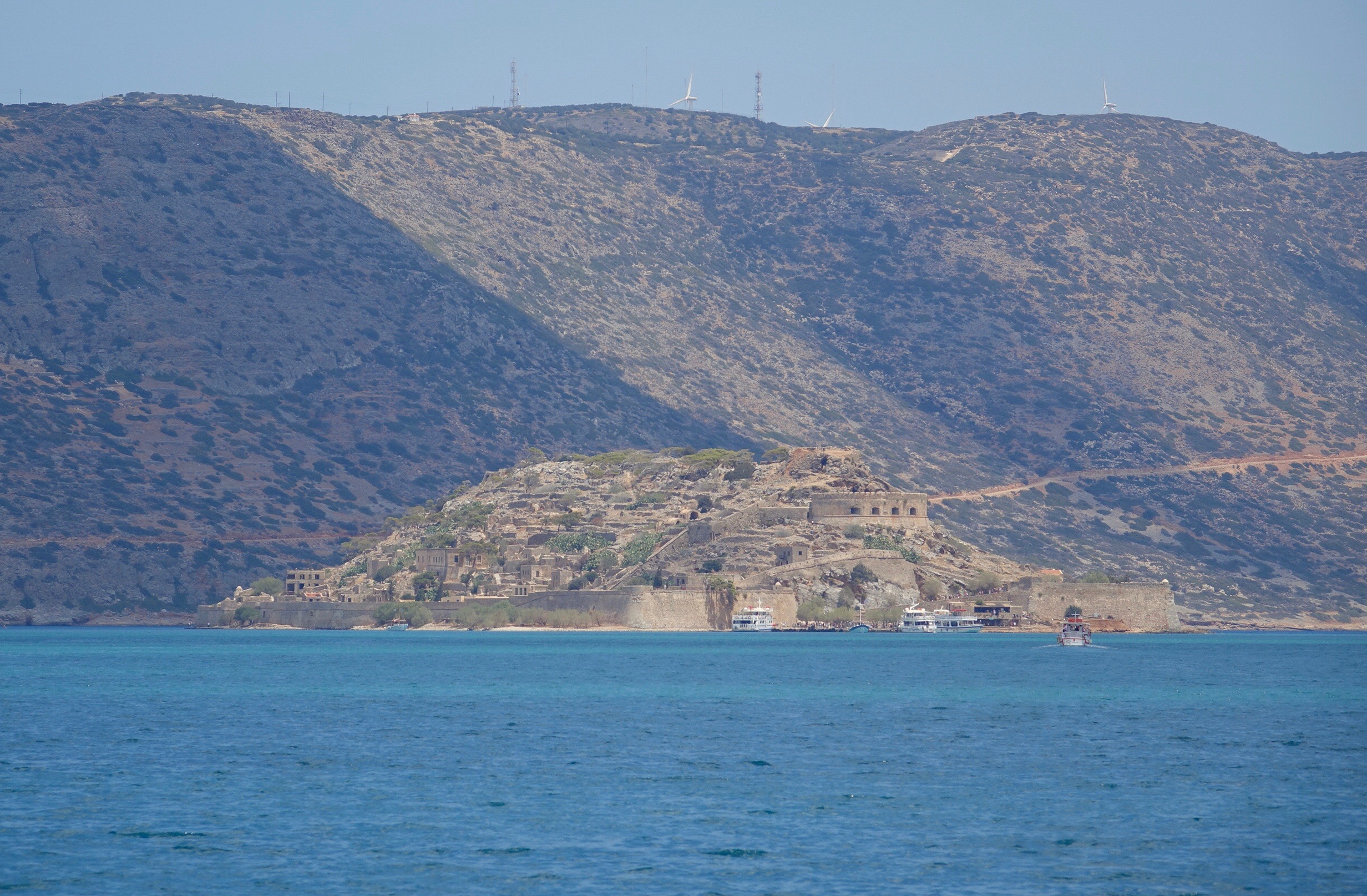
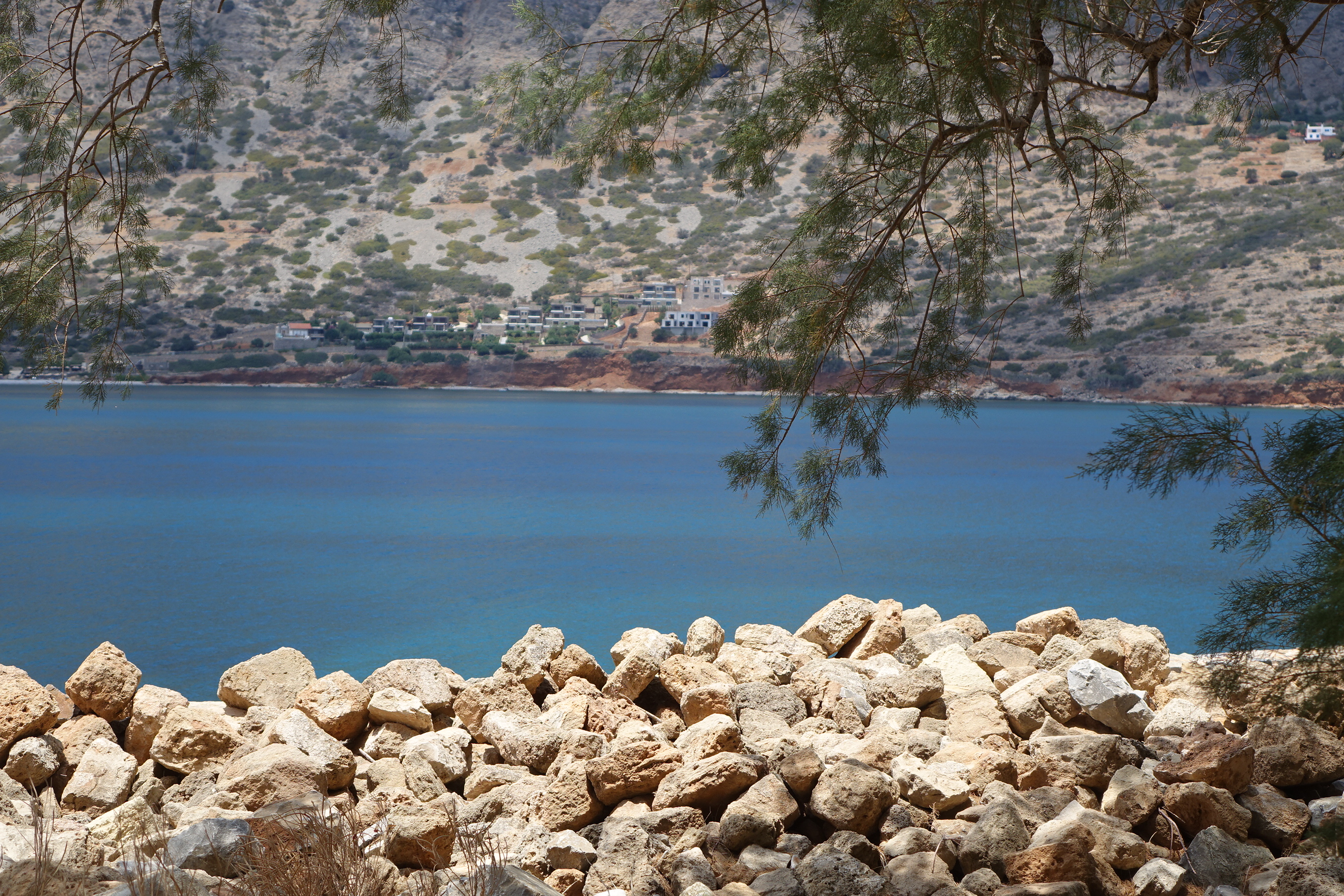
As my last few posts have hopefully demonstrated, the bay of Mirabello in Eastern Crete is every bit as beautiful as the name suggests. And yet its coastline, fractured by little spin-offs of mini mountain islands tracing the coast yet a water’s breadth apart, holds a darker, more ugly secret: Spinalonga. The name sounds like the setting for a fairy tale – a spindle perhaps, upon whose thorny point a princess pricks her finger. But this is no fairy island. It is a place which, up until as recently as 1957, was an island cut off from the mainland not just by sea but by law and stigma: it was the home of Crete’s leper colony, an exile for those afflicted with history’s most devastating illness.

DSC04650DSC04749DSC04741DSC04668DSC04745DSC04685DSC04771DSC04761DSC04679DSC04784

Those of you who have read Victoria Hislop’s bestselling novel, The Island, will already know about Spinalonga. Once a fortified stronghold created by the Venetian occupiers of Crete and later taken over by the Ottomans, it was put to use as an island on which to keep leper suffers forcibly separated from the rest of society. Once diagnosed as having the condition, suffers would be flagrantly torn from their families and shipped off to the island. Few would ever leave it.

As Hislop describes, as the decades went on, Spinalonga went from an utterly savage backwater completely devoid of civilisation to a thriving little town in its own right fit with electricity, shops, a theatre, even a hairdresser. And when the discovery of a cure for leprosy meant that the island was finally abandoned in 1957, all of that civilisation was forsaken to the elements. It was in that state of utmost dilapidation that we found Spinalonga when we took a boat from nearby Eloundia to visit this most dejected of locations.

DSC04710DSC04766DSC04634DSC04688DSC04697DSC04739DSC04734DSC04738DSC04669

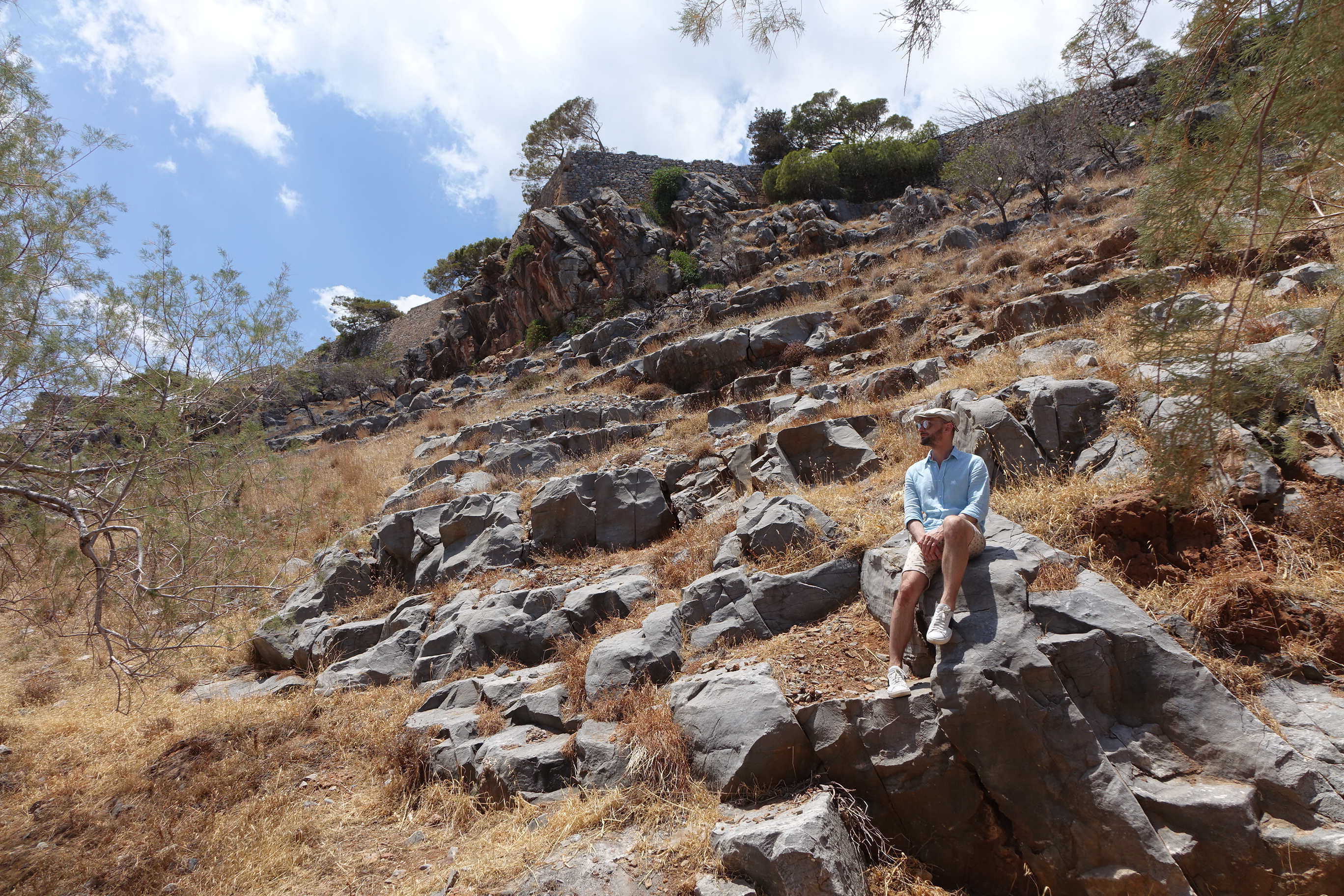
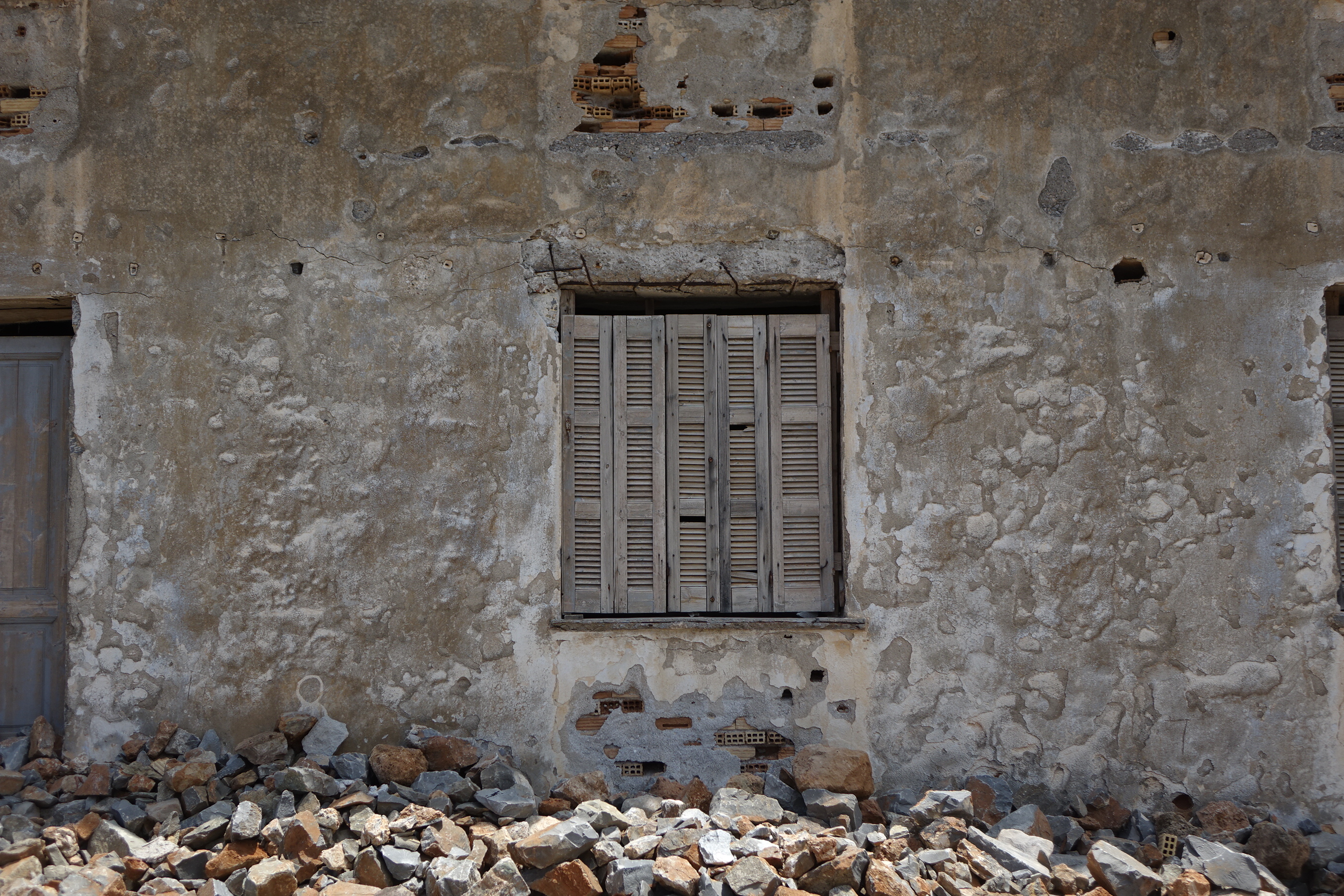
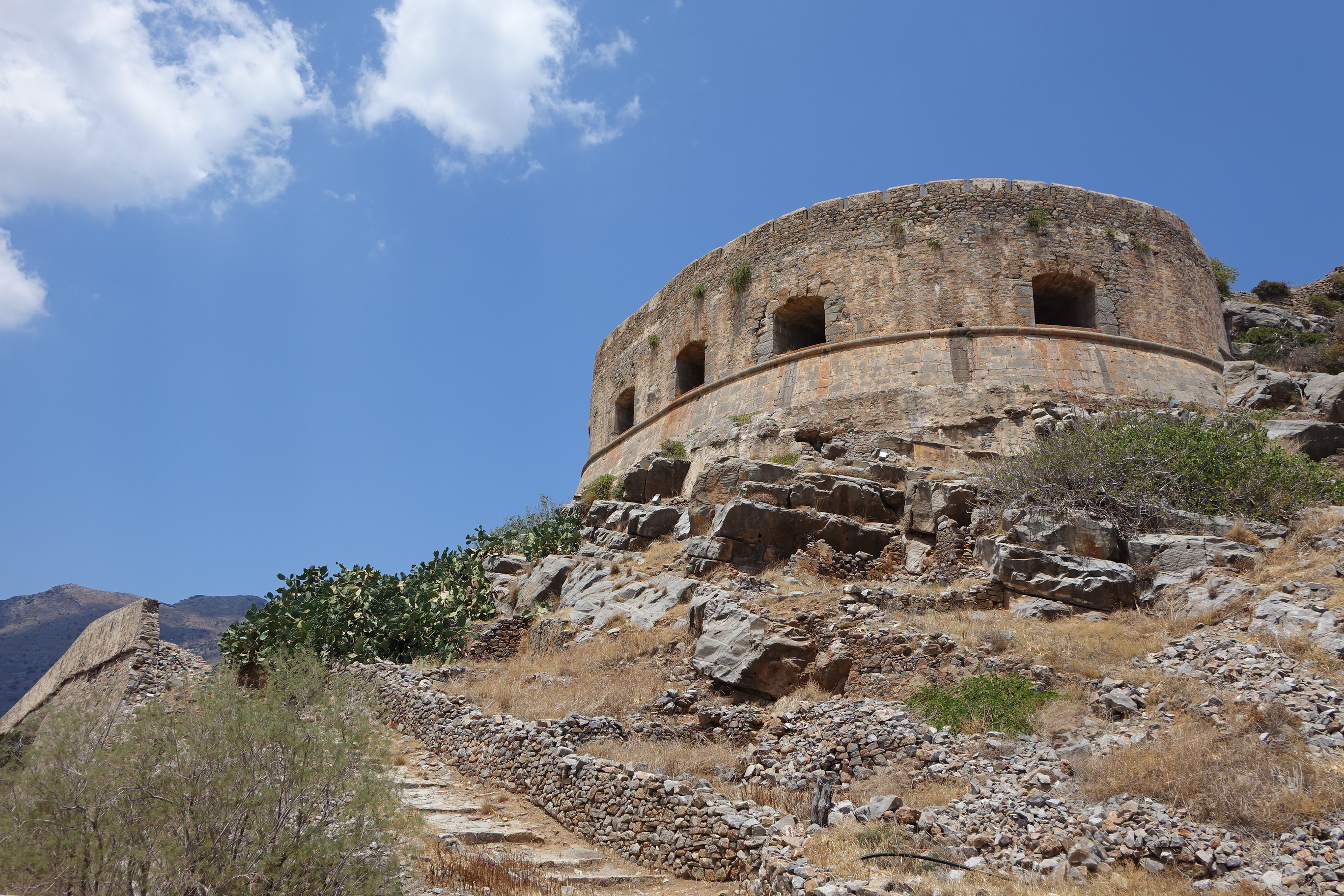
Barren, sun-roasted and rocky, the island on one side was little more than a fortified wall with stark cactus-filled cliffs. However turn landwards and amongst the rubble you could start to see the ghosts of former houses, their shutters half hanging on rusty hinges and their contents long since pillaged. Stone staircases were collapsed under the weight of fallen rubble and punctuated by weeds; the bare bones of wooden beams indicated where once a roof had stood. There is no doubting the feeling of melancholia and claustrophobia which pervades this small tumbledown space, yet few could deny the beauty which was also visible in the stark contrast between rubble and ramshackle, and the stunning turquoise seas which surround the island, and cut it off from the rest of the world.

DSC04731DSC04790DSC04776DSC04765DSC04763DSC04753DSC04746DSC04656DSC04785

We left Spinalonga utterly captivated by the historical significance and emotional impact of the leper island. You cannot escape the sadness which permeates the very fabric of this island of imprisonment and social rebuff. Yet across the Cretan winds, uplifted by the deep ultramarine blue of the island’s surroundings, there is the smallest hint of hope – for Spinalonga’s desertion indicated mankind’s dominance over a disease which had ravaged millions since the beginning of time. And that is surely a cause for celebration.

© Nicholas de Lacy-Brown and The Daily Norm, 2018. Unauthorised use and/or duplication of the material, whether written work, photography or artwork, included within The Daily Norm without express and written permission from The Daily Norm’s author and/or owner is strictly prohibited.

A Cretan Odyssey | Part 4 – Nymph Beach and other wonders

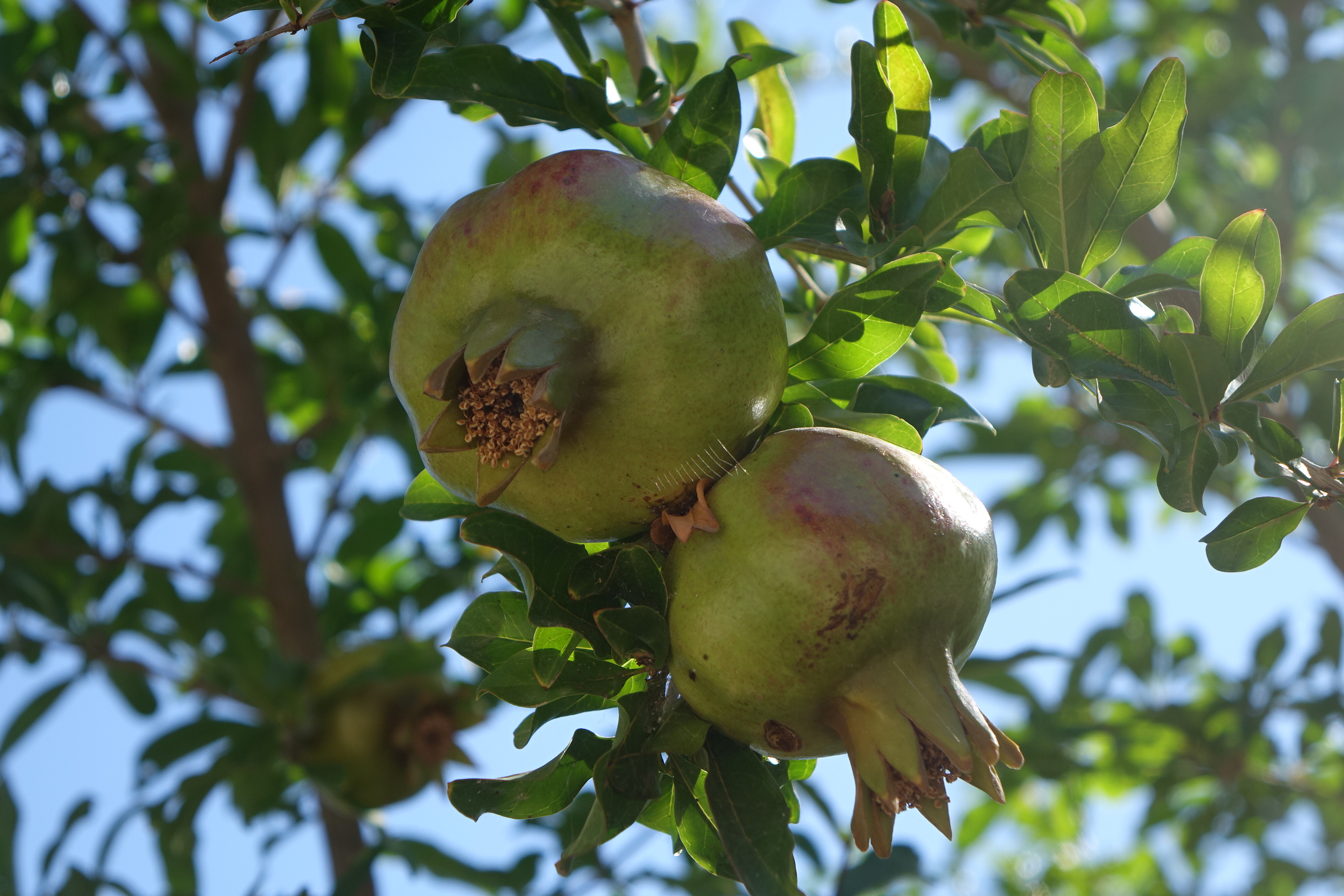
When we had had our fill of our perfectly proportioned, utterly private pool (when that was possible – it actually amounted to being dragged away by the fear that we might otherwise be addressed as the kind of philistine pool-huggers who see nothing of the countries they visit on holiday) we only had to stroll 5 minutes down a little lemon and pomegranate tree lined lane to get to the beach. And what a beach it was. Utterly secluded, populated only by the small number of guests from a nearby hotel, a walk some 10 metres along the shingle shore meant complete privacy in waters as clear as Evian. We became accustomed to visiting the beach both first thing in the morning and in the dying light of day. On both occasions there was a tangible magic to the place as the sun, either in its rise or its descent, sent golden sparkles bouncing across the mirror-like waters. It felt mystical, as though Apollo, god of music and harmony, were present.

DSC04956DSC05016DSC05080DSC04334DSC04999DSC04963DSC04347

Characterised by its rocky promontory, the beach was cosy, enclosed, a safe harbour from winds and an utterly magical place to be. But the mere presence of that promontory had our explorer’s curiosity peeked, and it wasn’t long before we started expiring the cliff tops, an entire plateau covered with olive trees and harsh stones, an ancient biblical landscape tinged with the gold of the Cretan sunshine. We trekked through the landscape, unsure what we would find as the cliffs undulated down to the sea. What we never expected to discover was another beach. This one caught between the dramatic overlap of rocky outcrops and descending hills.

DSC05039DSC04988DSC05032DSC05027DSC05010DSC04328DSC04326

The beach was perfect. It was completely private. Not a sole around, no one in sight, apart from the mystery of a lone towel abandoned on the shore. That mystery was solved a few minutes later as a lady, perfectly toned, wonderfully naked, appeared on the horizon and glided steadily towards the shore. As she approached the edge of the beach she rose from the water, the sparkling sea sliding off her perfectly tanned and silky skin, and she reclined upon that same towel, almost oblivious to our presence. This was no human. Surely this was a nymph, so perfectly was her body adjusted to the molten waters of the bay.

DSC04975DSC04993IMG_1696DSC04323DSC05026DSC05053DSC04342

We strongly felt that we had entered some kind of mystical place when we swam out away from the shore and came face to face with towering craggy cliffs backlit by the descending sun. Once again Apollo’s touch was here, and when we turned back to shore, no sign remained of the nymph, as though the apparition of her fleeting presence had dissipated into the heady evening air. But we never doubted her existence. Nor the magical moment of our visit to what we now know as Nymph Beach. I won’t tell you where it is. Only that it exists, ripe for discovery by those curious enough to find it.

© Nicholas de Lacy-Brown and The Daily Norm, 2018. Unauthorised use and/or duplication of the material, whether written work, photography or artwork, included within The Daily Norm without express and written permission from The Daily Norm’s author and/or owner is strictly prohibited.

A Cretan Odyssey | Part 3 – The Paradise Pool on Mirabello Bay

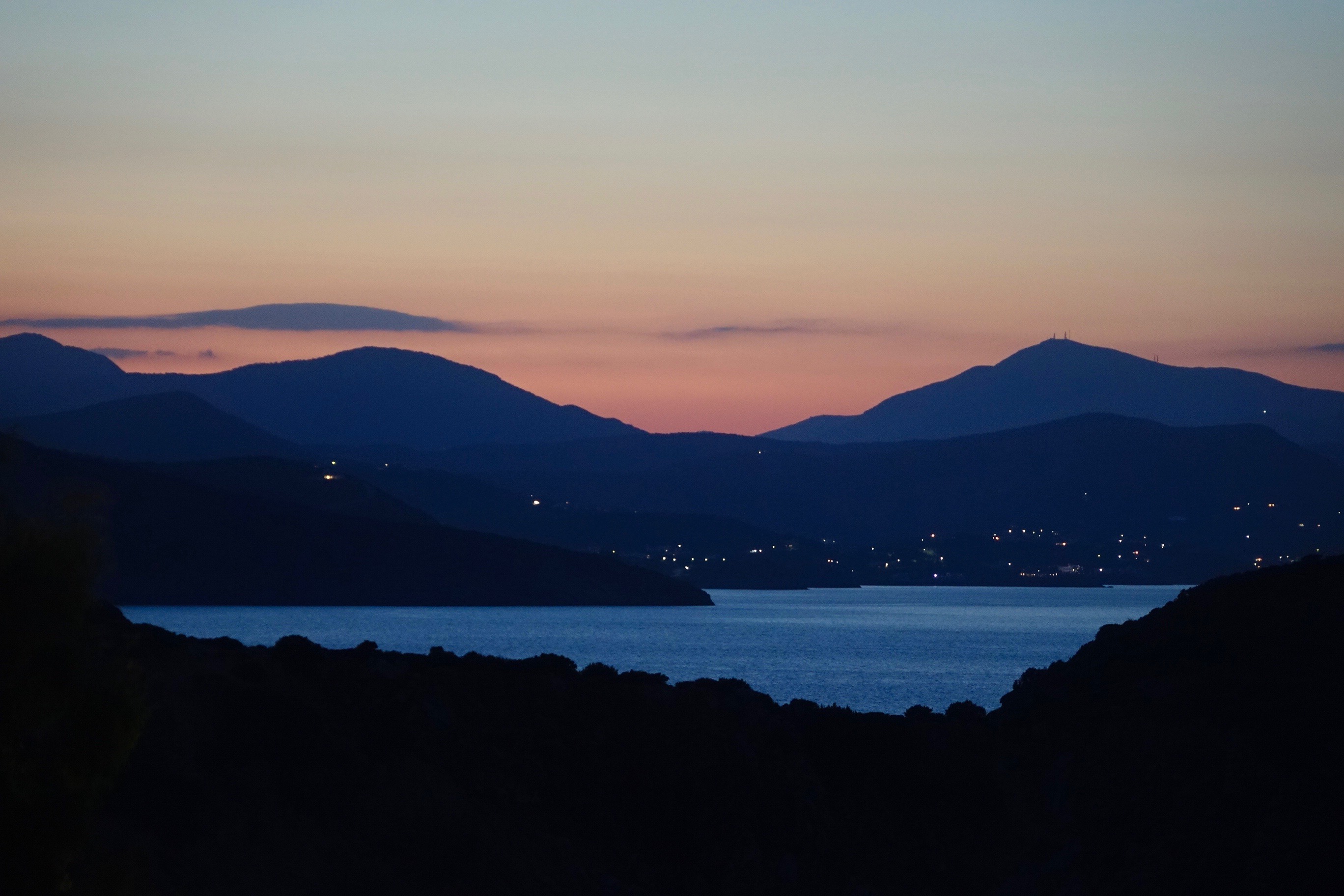
The weather in Crete was peculiar for the summertime. We basked in sunshine most of the time, but always looming close by, like the sword of Damocles threatening to unload itself on our holiday, were dark clouds foretelling of dramatic thunder. Perhaps we should not have been surprised – Crete is the birthplace of Zeus after all, so why shouldn’t he be able to throw a thunderbolt or two down on his homeland, just for reasons of pure nostalgia? Hugging Poseidon’s coast seemed to protect us from Zeus’s sport, but as we drove deeper into the mountains, our encounter with storms was guaranteed. It was under one such dramatic downpour, and having traversed the island from Chania in the West to Agios Nikolaos in the East, that we arrived into the lush, humid valley of our new location near Istron. What we found there may have been wet (but perfumed by the utterly, verdantly fresh fragrance characteristic of post summer rain), but as we arrived at our villa and home for the remainder of our holiday, we knew that we had arrived in paradise.

IMG_1409DSC05067DSC04517DSC04386DSC04363DSC04498DSC04884IMG_1541IMG_1711IMG_1231

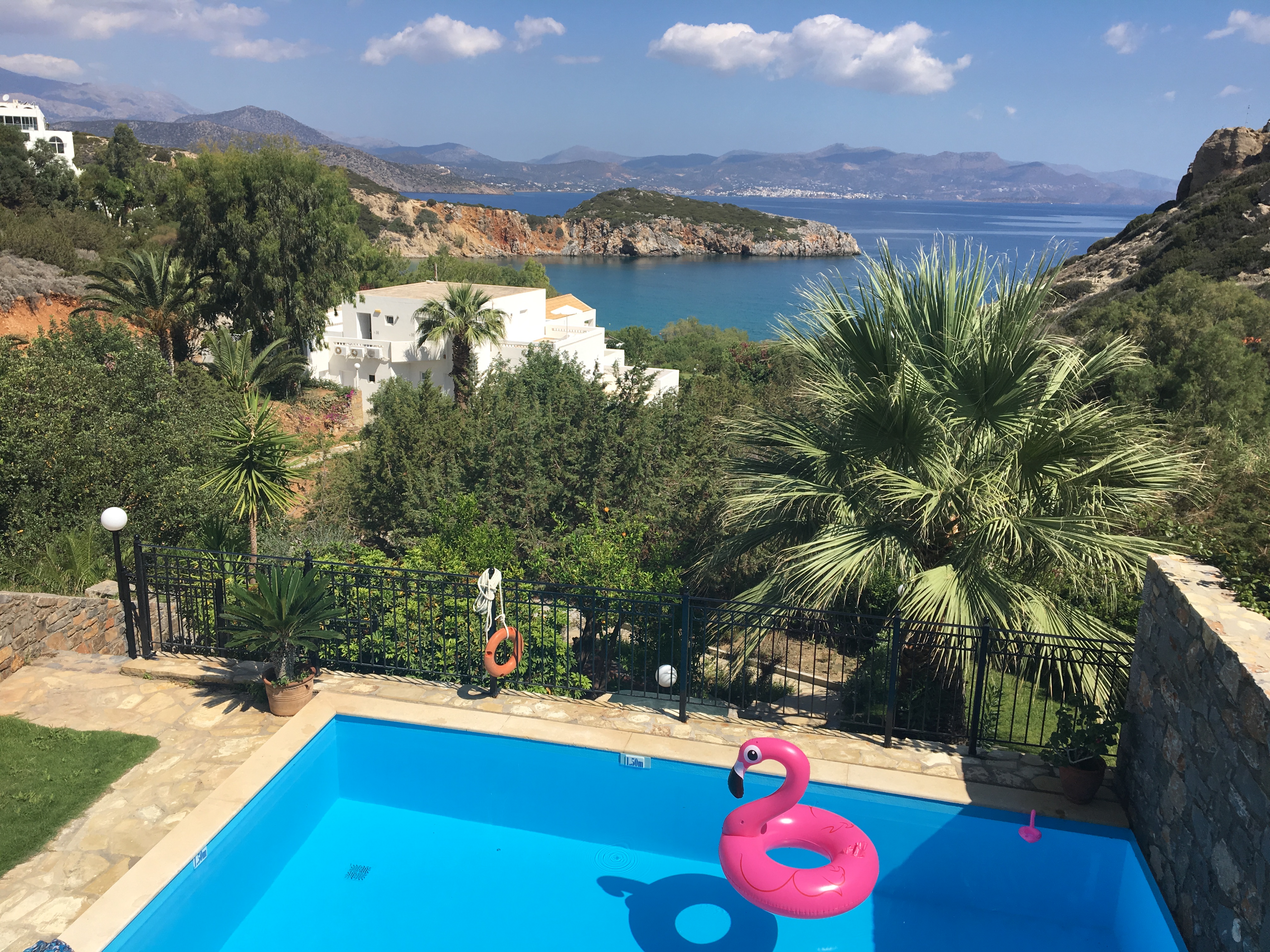
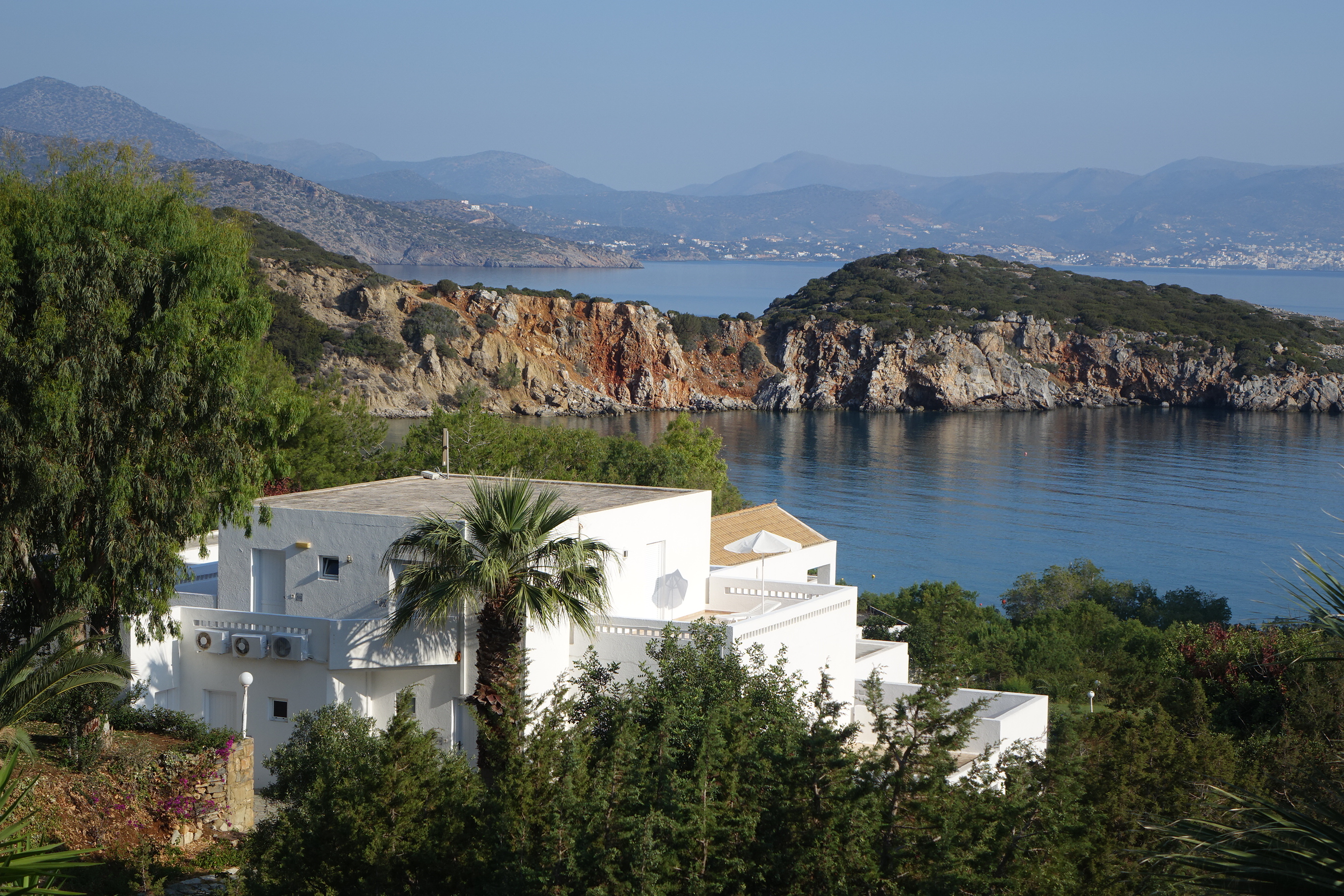
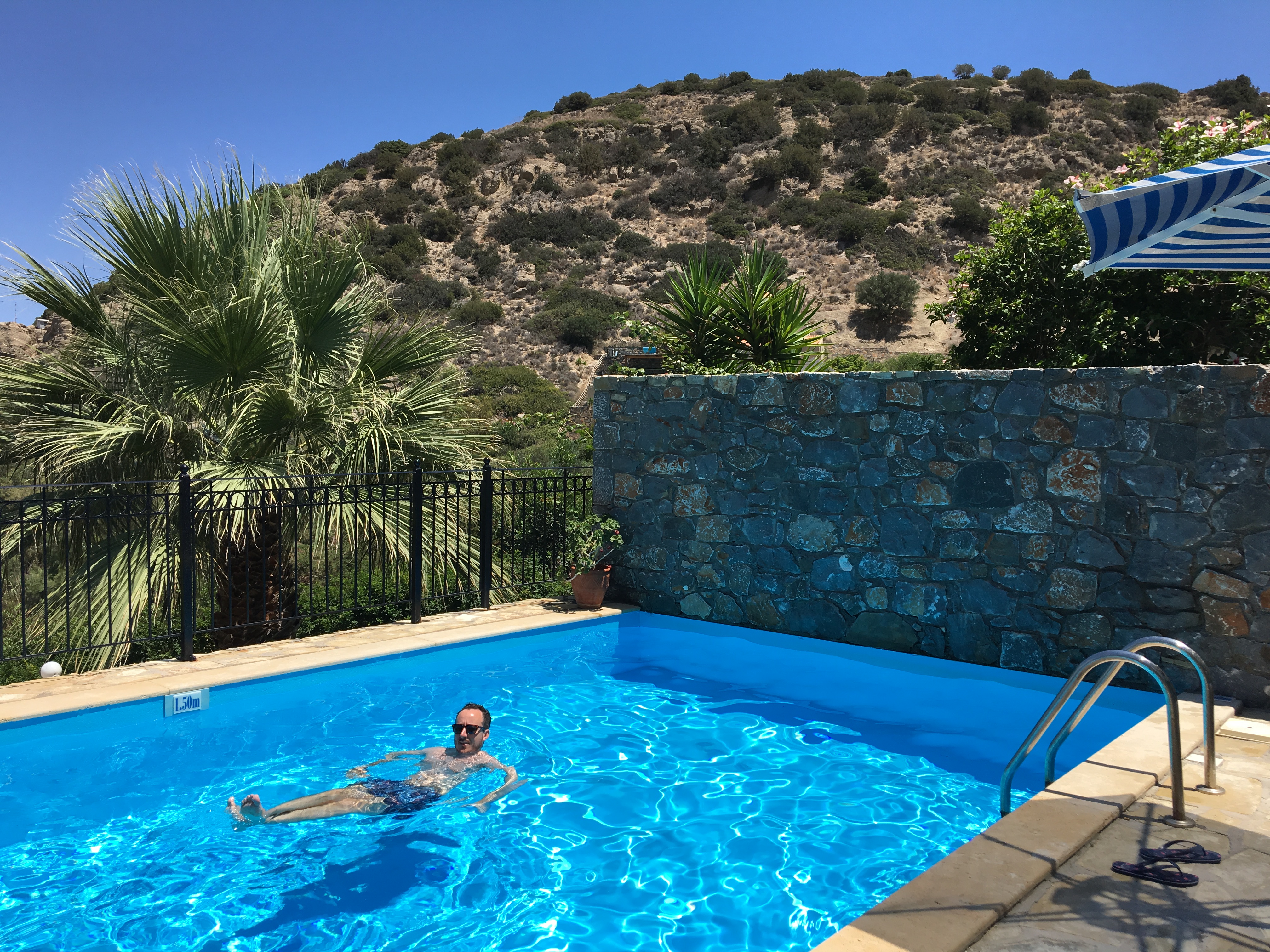
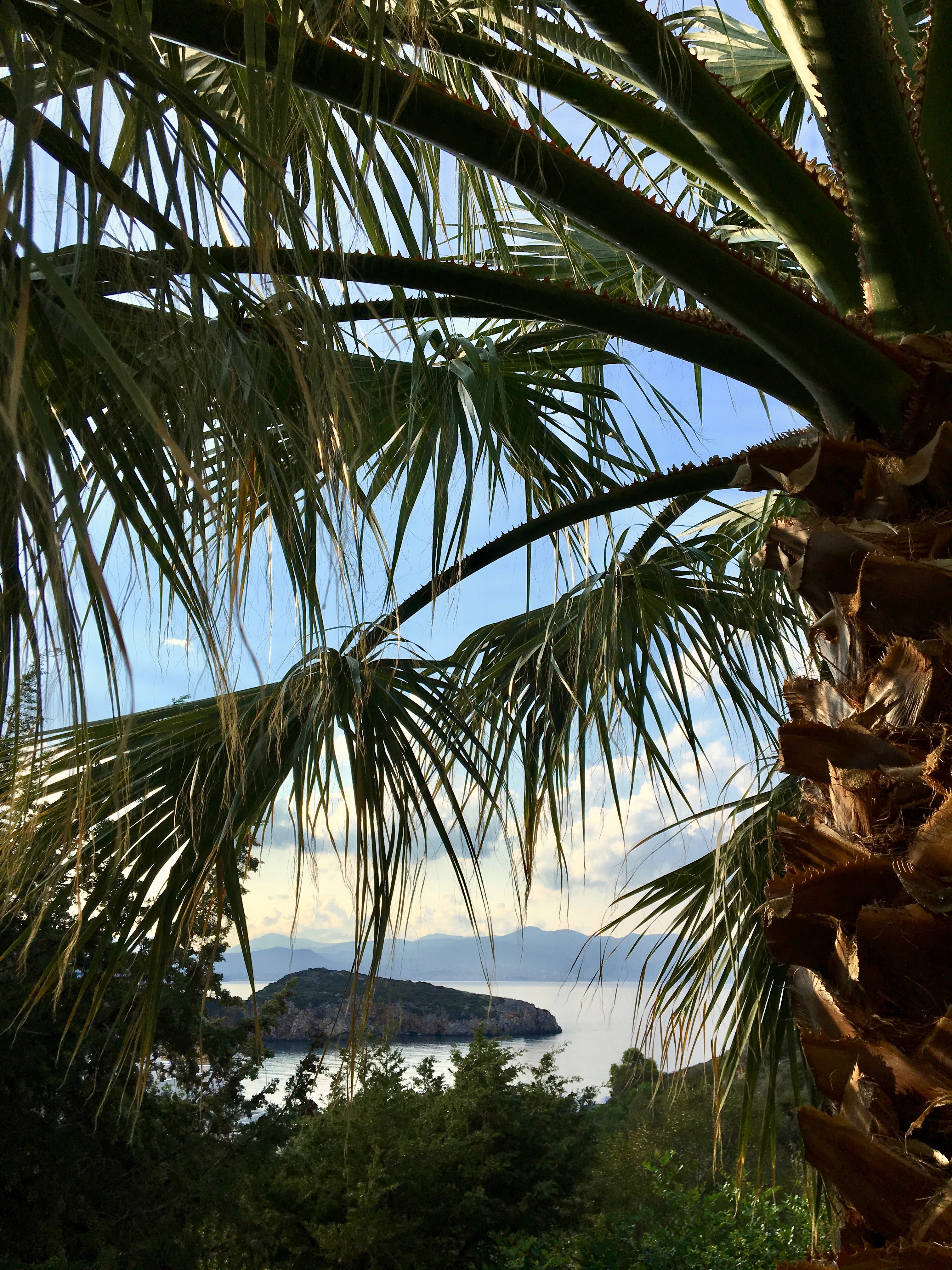
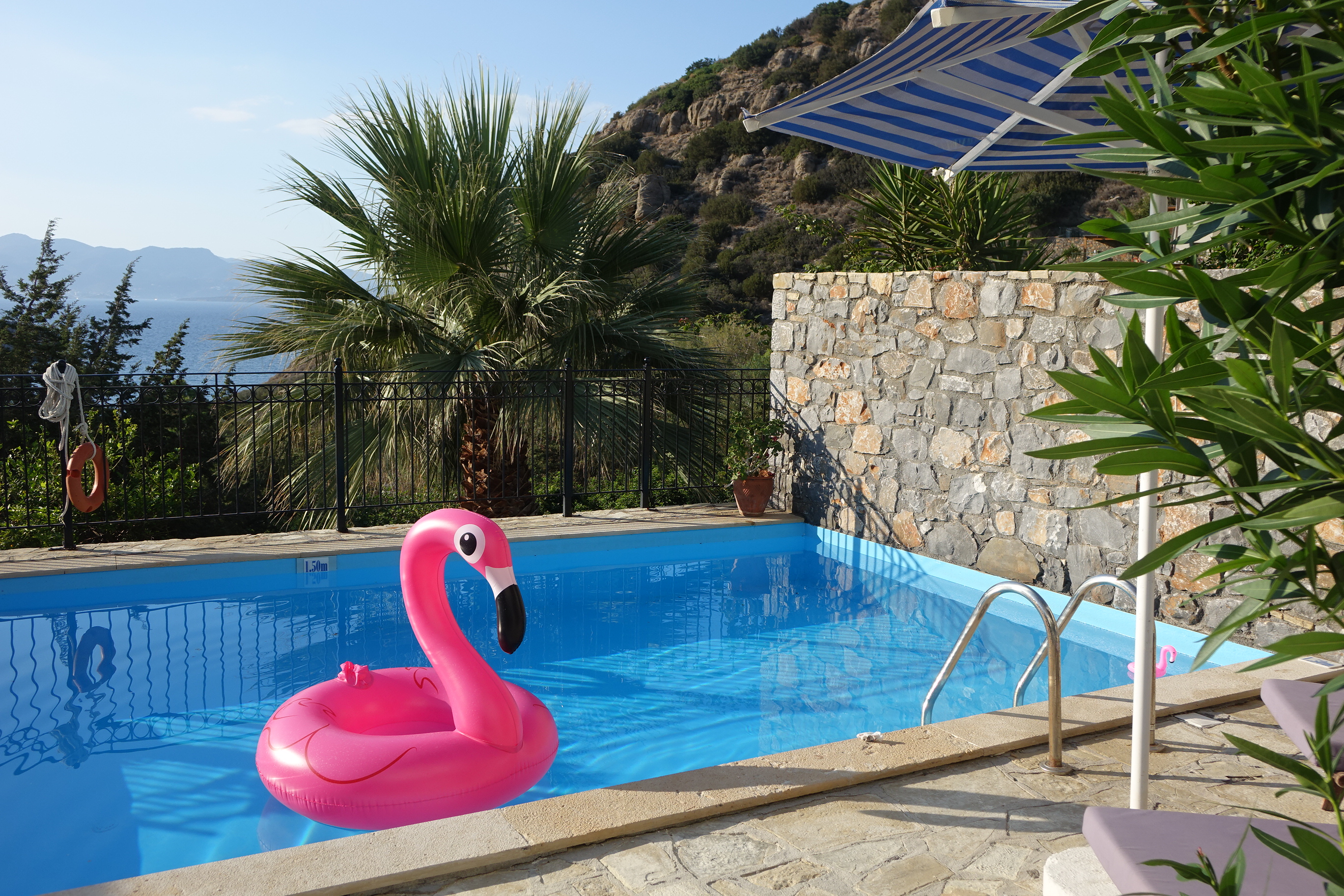
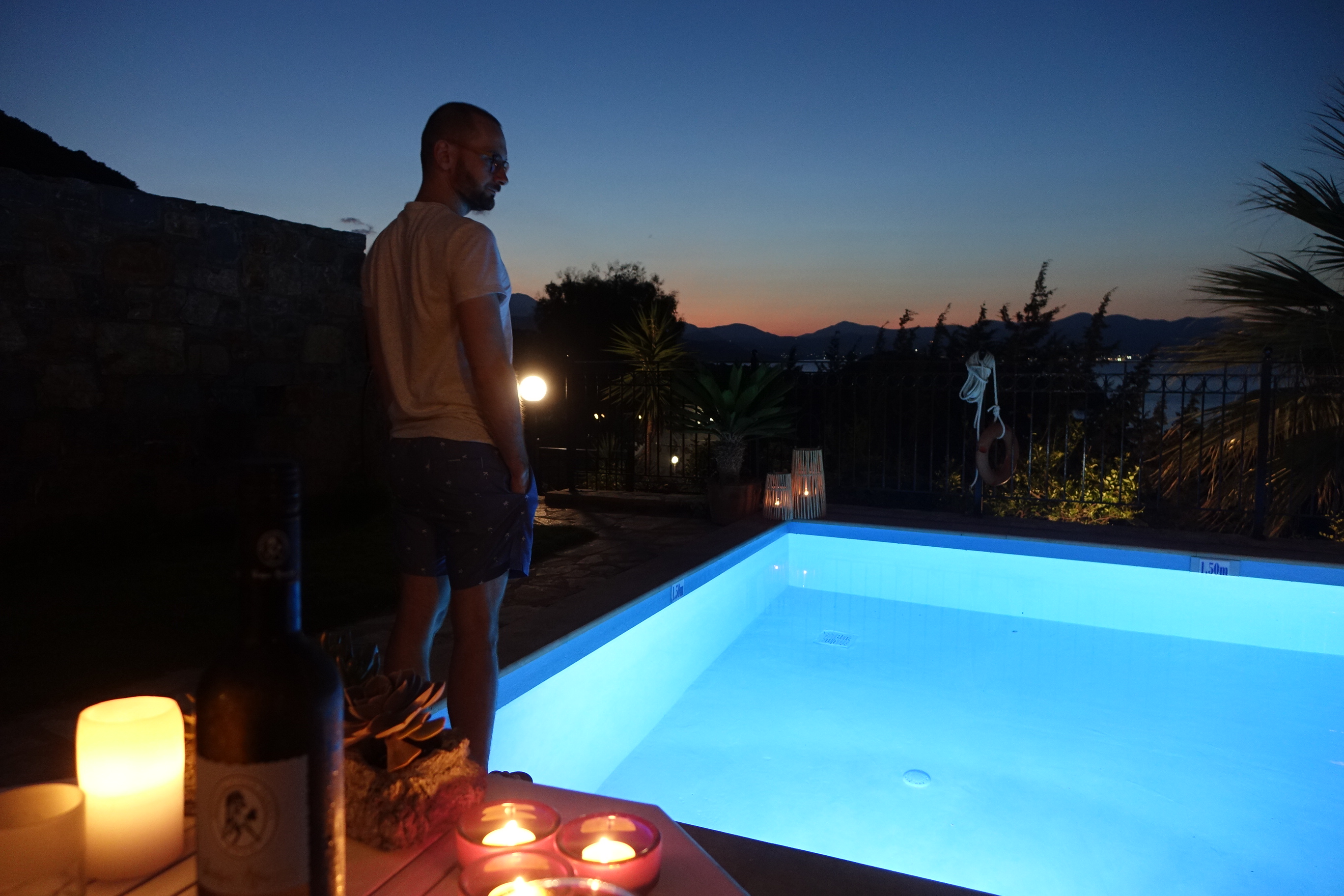
A little self-contained house on two floors with lounges upstairs and down looked onto the most incredible views over Mirabello Bay. There was an indication of other villas nearby, but the lush vegetation meant we felt utterly secluded in this mountainous Elysium… and as we were to learn, the nearby villas were sparsely occupied. But best of all was our pool. 4 by 6 metres of joyous, turquoise happiness all to ourselves. We could swim by day, we could swim by night. It was like a painting by Hockney come alive for our sole and exclusive enjoyment.

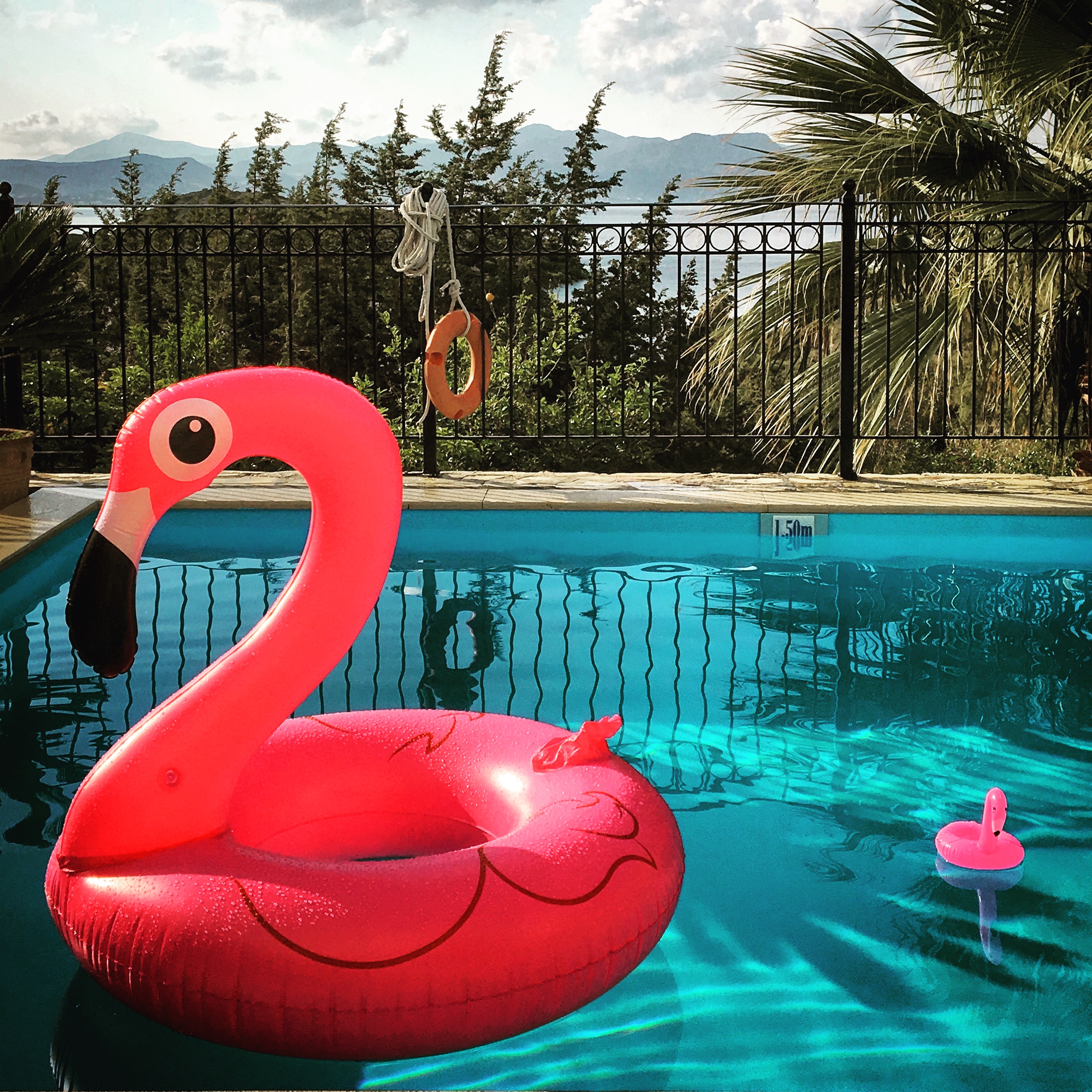
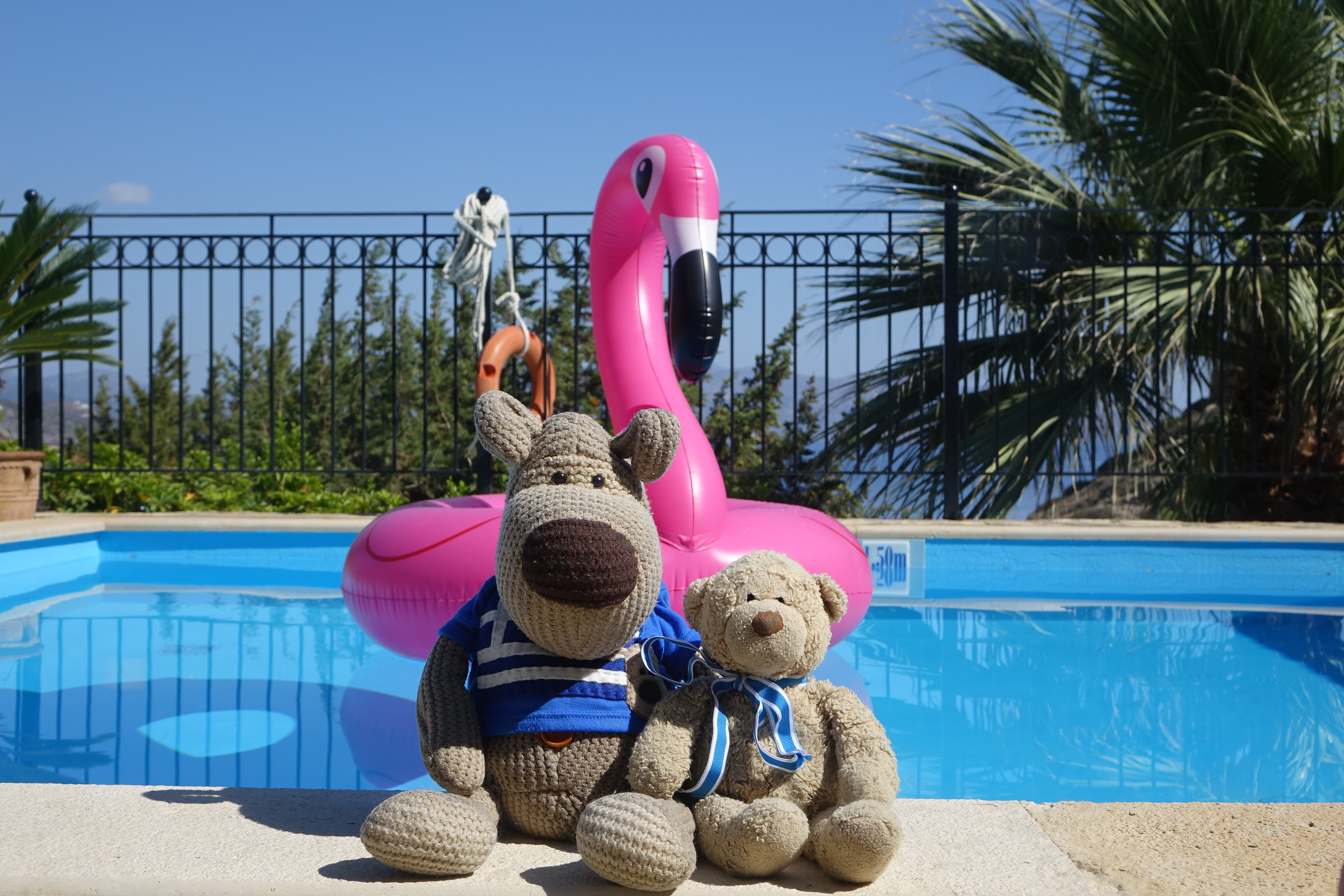
Before we could even unpack our beachwear, we inflated our must-have flamingo inflatable, as well as his baby (niftily designed to hold a drink). Ian Flemingo, as he became known, was a welcome point of additional colour in a landscape which we gazed over in awestruck wonder every morning, lunch, night, dusk and dawn during the four days that followed. And when we had had enough of our pool (not that we ever truly could), it was a mere 5 minute stroll down the lane to the private beach of the swanky hotel in whose grounds our villa was located. The beach, like the valley, was like a mythical paradise to behold…but more about that another day. 

IMG_1333DSC05071DSC04533DSC04943DSC05063DSC04931DSC04922DSC04866DSC04929

In the words of Coldplay, this was para…para…paradise, and the dazzling, sparkling cerulean rectangle of happiness that was our pool played centre-stage. 

© Nicholas de Lacy-Brown and The Daily Norm, 2018. Unauthorised use and/or duplication of the material, whether written work, photography or artwork, included within The Daily Norm without express and written permission from The Daily Norm’s author and/or owner is strictly prohibited.

A Cretan Odyssey | Part 2 – Chania’s Labyrinth

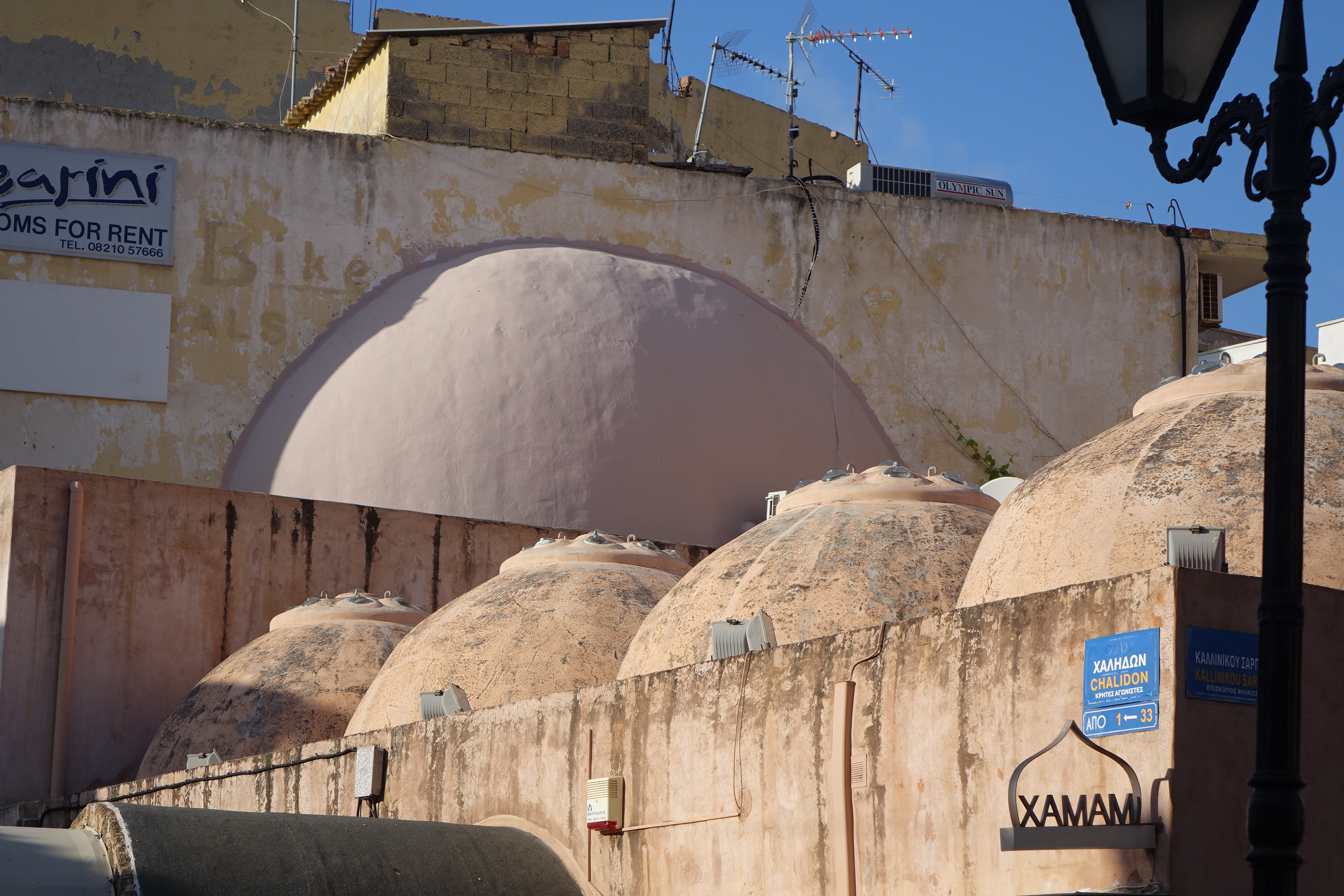
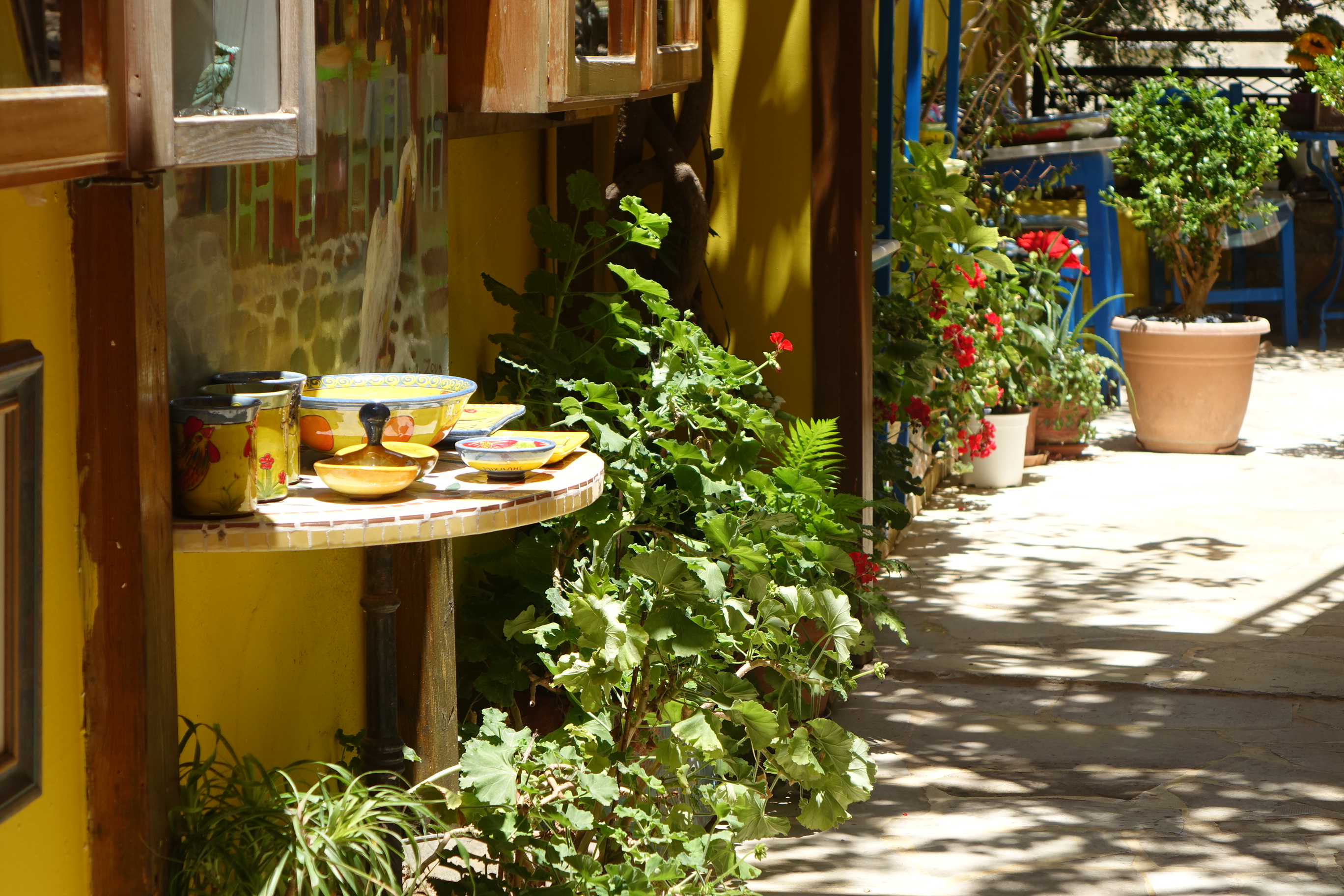
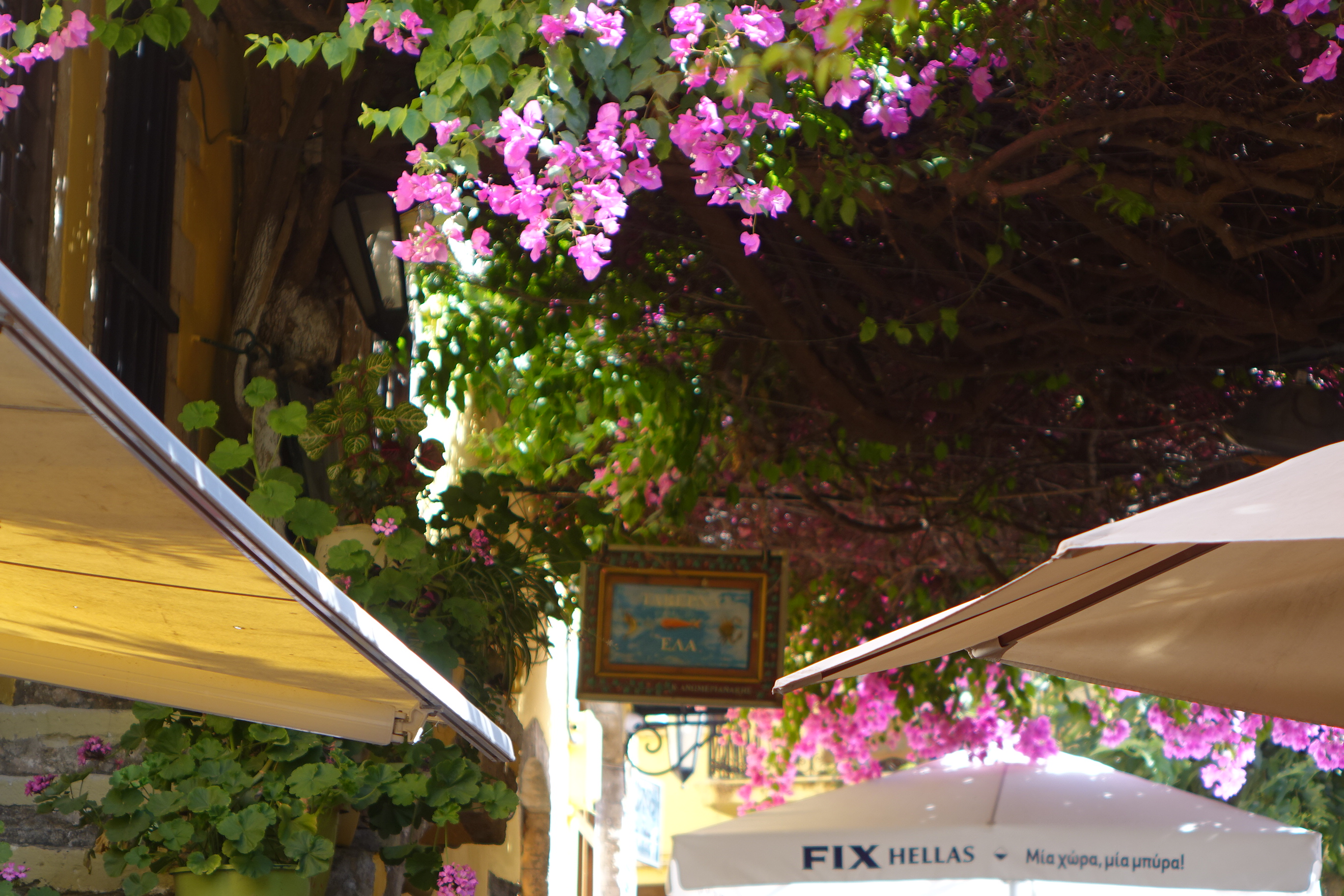
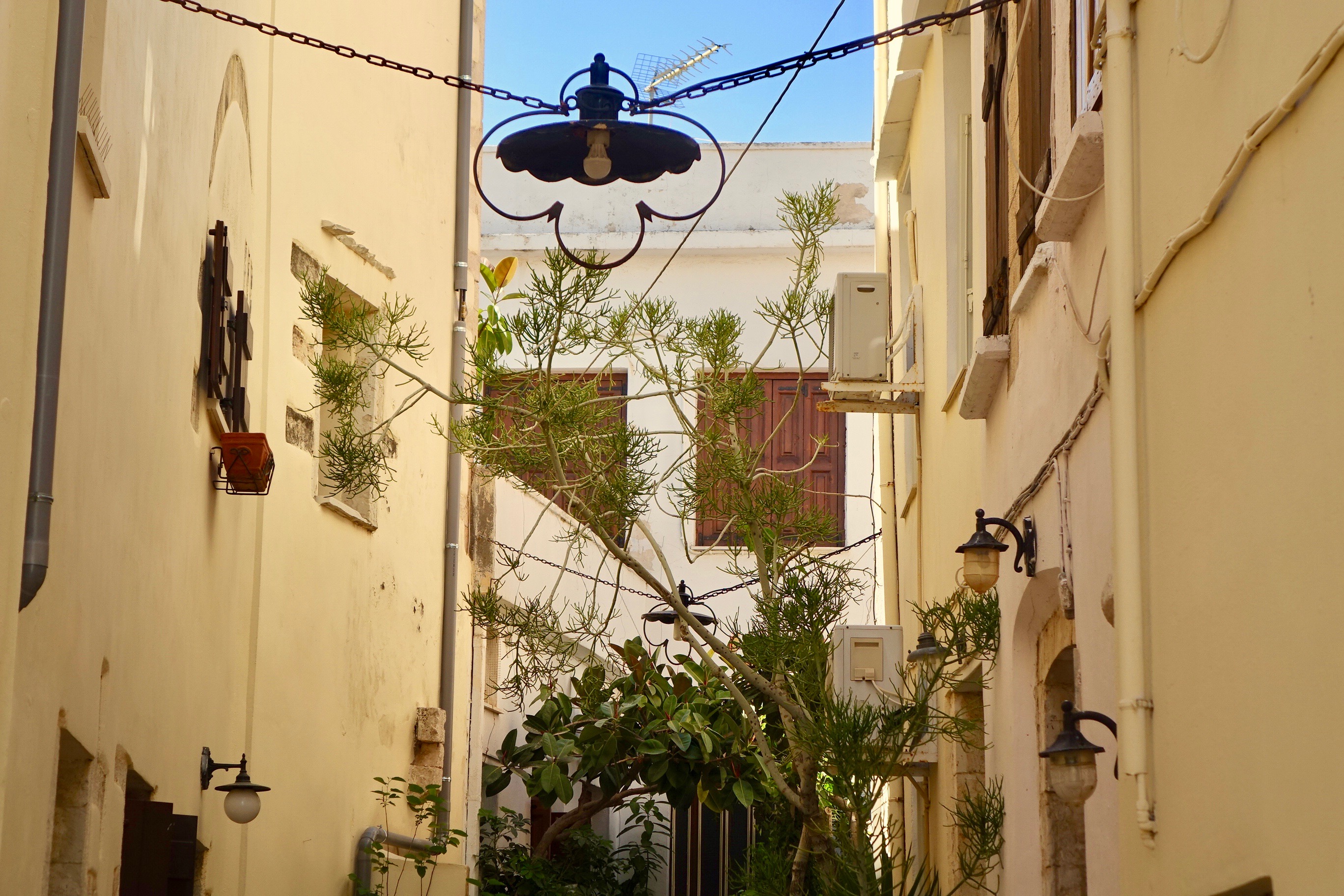
Crete is an ancient land. Its very rocks breathe a thousand tales of nymphs and satyrs, of the birth of Zeus and the anger of Pasiphaë. But the most famous tale of all is spun from the endless twists and turns of the renowned labyrinth, built by master craftsman Daedalus to house the bloodthirsty Minotaur, bastard son of King Minos’ queen. There, somewhere in the labyrinthine grounds of the great Palace of Knossos, Ariadne spun her thread to lead Theseus out of the complex maze, but only after his bravery put the Minotaur to death. Today, there remain many theories about exactly what shape the labyrinth might have taken; some even suggest it was the Palace of Knossos itself. However, one things is certain in modern day Crete: head to the utterly quaint, twisting and convoluted streets of Chania’s old town, and you will feel like you have found the ancient relics of Daedalus’ mastery.

DSC04208DSC04244DSC04200DSC03789DSC03780DSC03768DSC04196DSC04223DSC04210DSC03764

We adored Chania. How could it be otherwise? With cosy little streets, strung with canopies of the pinkest bougainvillea, offset against yellow, blue and dusky pink houses and white-edged cobbled streets, it is a town of picture-perfect quality. Everything about the archetype of postcard Greece is embodied here: the bright blue rickety wooden chairs set outside cafes and tavernas serving Greek salad on blue and white checked table clothes, wine in terracotta pitchers, and lazy cats strewn languidly across the streets in the afternoon sun. Unlike many places which have fallen foul of the ravages of tourism, Chania has upped its game. Its shops and restaurants are positively up-market; there is a real feeling of Capri town or the Amalfi Coast about this town. And our unbroken record of finding perfect eateries, night after night, only confirmed the consistent quality of the place.

DSC03760DSC04214DSC04237DSC04228DSC03765DSC04218IMG_1107DSC03779DSC03767

So while Chania’s true highlight may be its dazzling Venetian harbour, just behind the front line of seaside houses, this maze of quaint alleyways will ensnare with equal charm. This is one labyrinth to enthusiastically get lost in. 

© Nicholas de Lacy-Brown and The Daily Norm, 2018. Unauthorised use and/or duplication of the material, whether written work, photography or artwork, included within The Daily Norm without express and written permission from The Daily Norm’s author and/or owner is strictly prohibited.

A Cretan Odyssey | Part 1 – Chania’s Venetian Harbour

You’ll excuse the long absence of The Daily Norm from your inboxes and browsers: We’ve been on an adventure; an Odyssey if you like, to the birthplace of Zeus and the land of the entrapped Minotaur, haunt of Olympian gods and roaming mystical beasts. For as the year rolls on and the summer reaches a glorious pinnacle, our 2018 travels continue – we’re off to the delectable Greek island of Crete.

Laced with mythological connotations, imbued with the smell of wild oregano, and jangling to the sound of wild goats and the sea which swishes upon its mammoth mountainous coastline, Crete is one of the longest continuously inhabited and historically relevant of all European destinations, as well as one of the Southernmost located. Yet for our summer holiday, it provided all of the luxuries, the aesthetics and the charm that could possibly be required of a modern holiday. Daily Norm readers: I welcome you, to Crete.

DSC04256DSC04122DSC03899DSC03896DSC04061DSC03900DSC03887DSC04264DSC04261

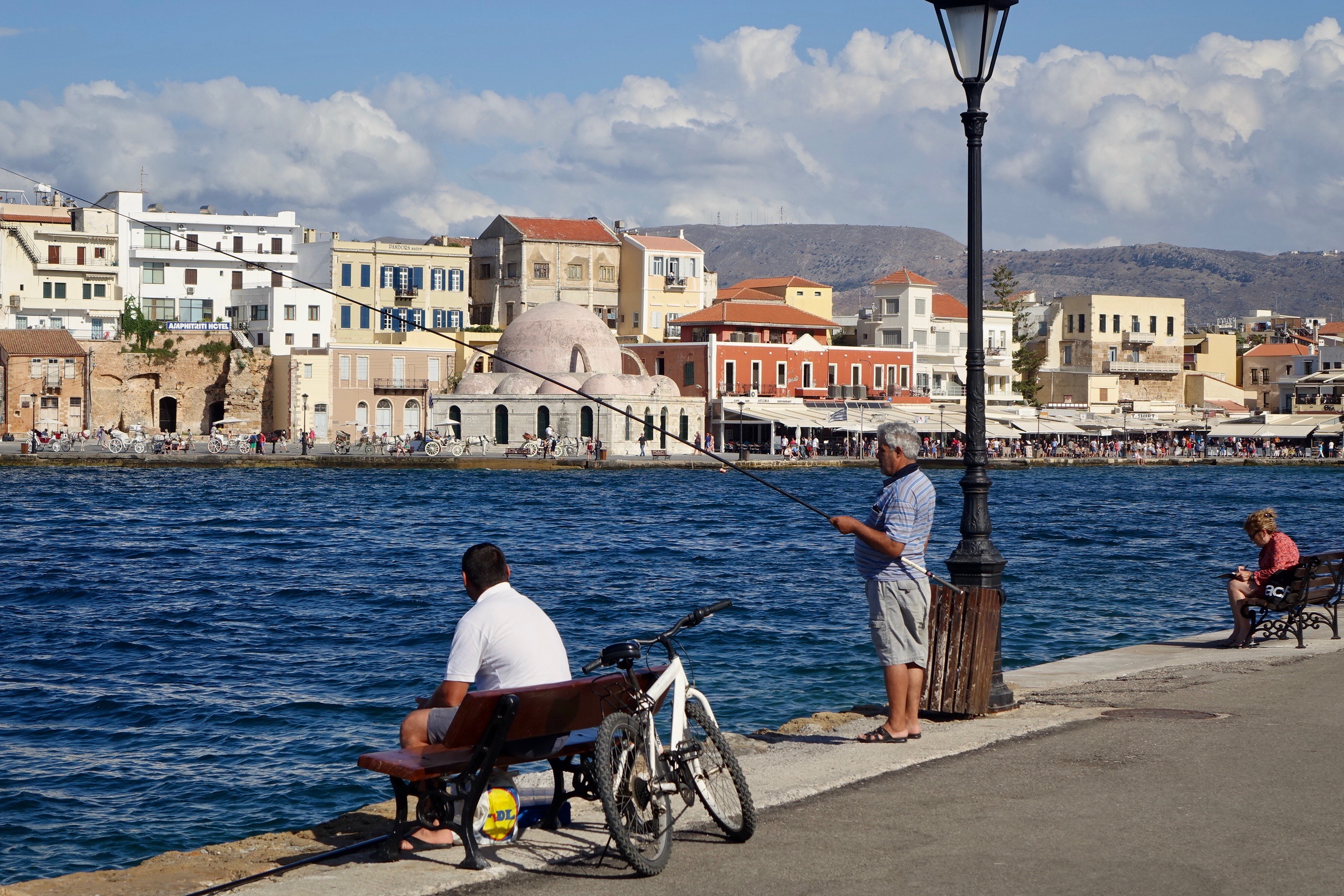
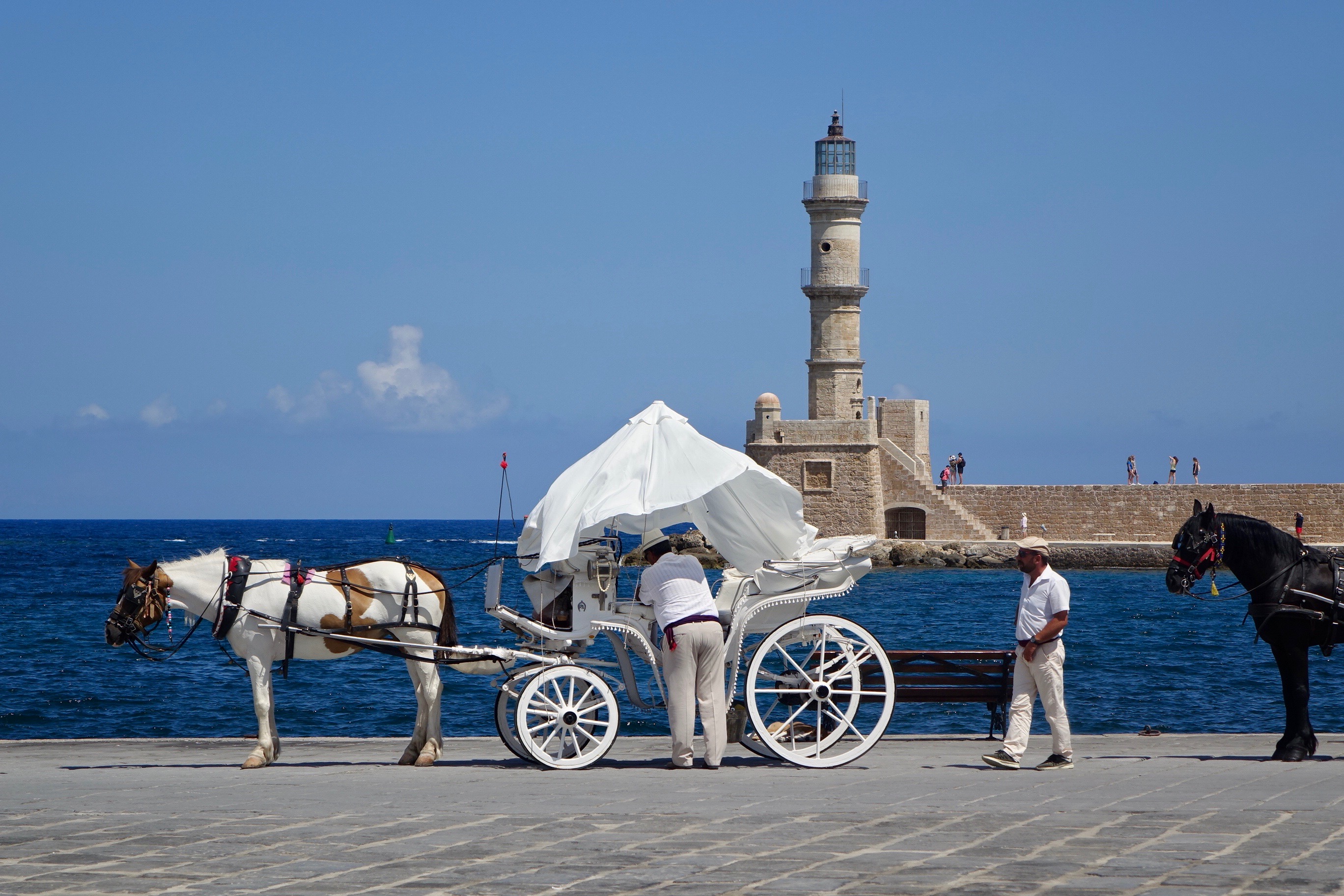
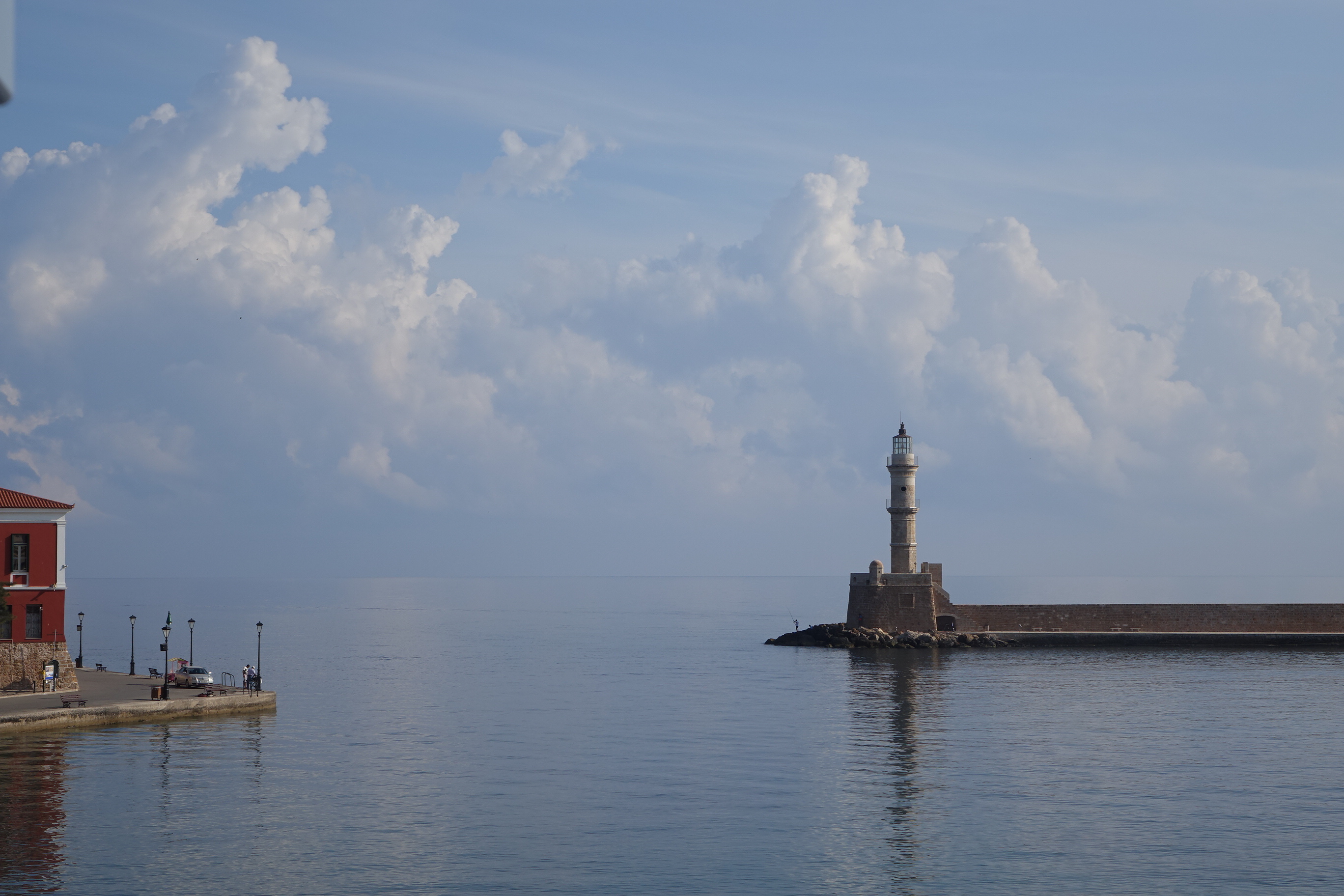
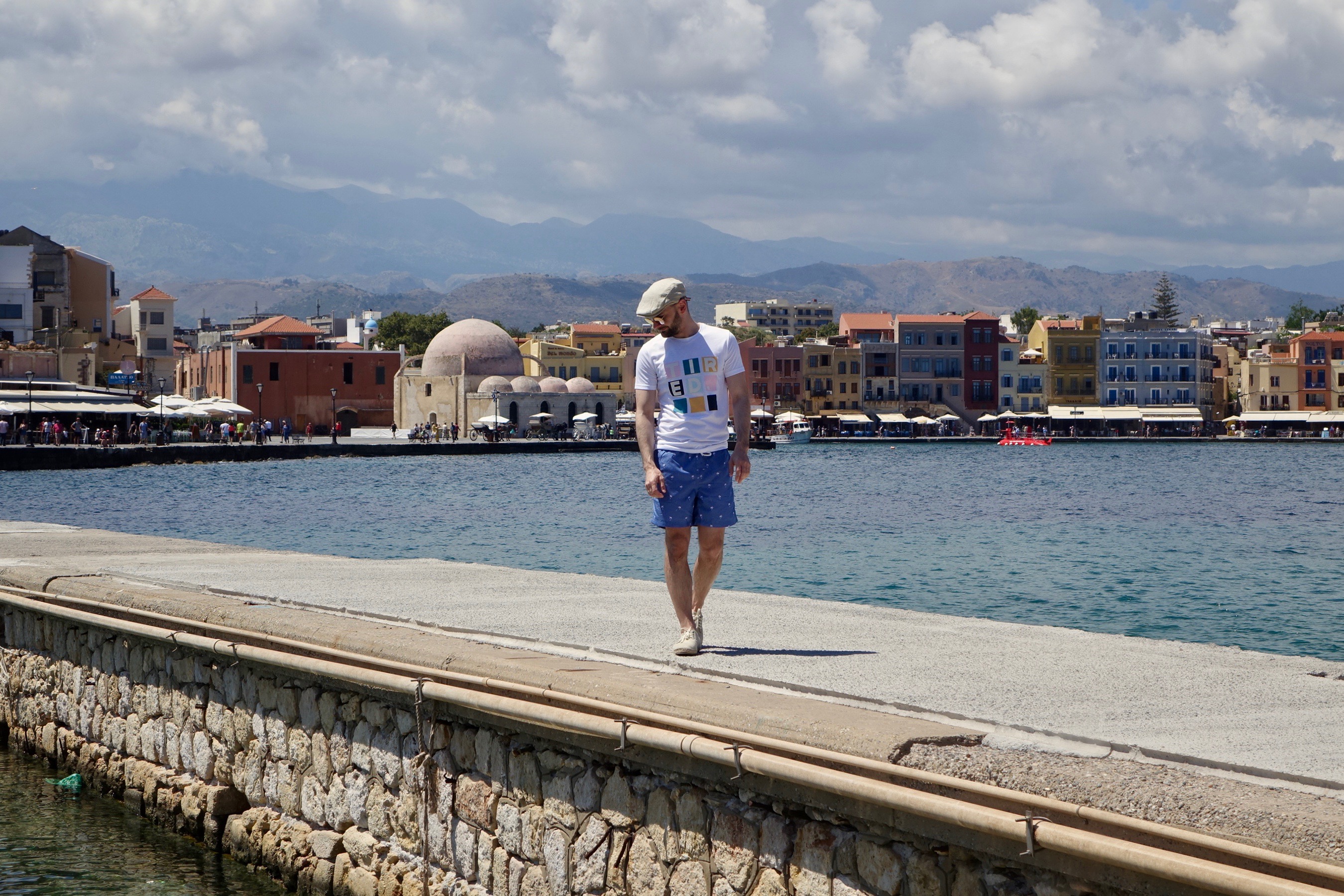
We start our adventure in Crete’s second city: Chania. Sprawling along the coast on the North-Western side of the island, Chania doesn’t feel like a city at all when you’re nestled inside the ancient walls of its richly-encircled old town. The sensation is one of a quaint little village, with picturesque roaming streets winding steadily down to a waterfront which is the beating heart of the city.

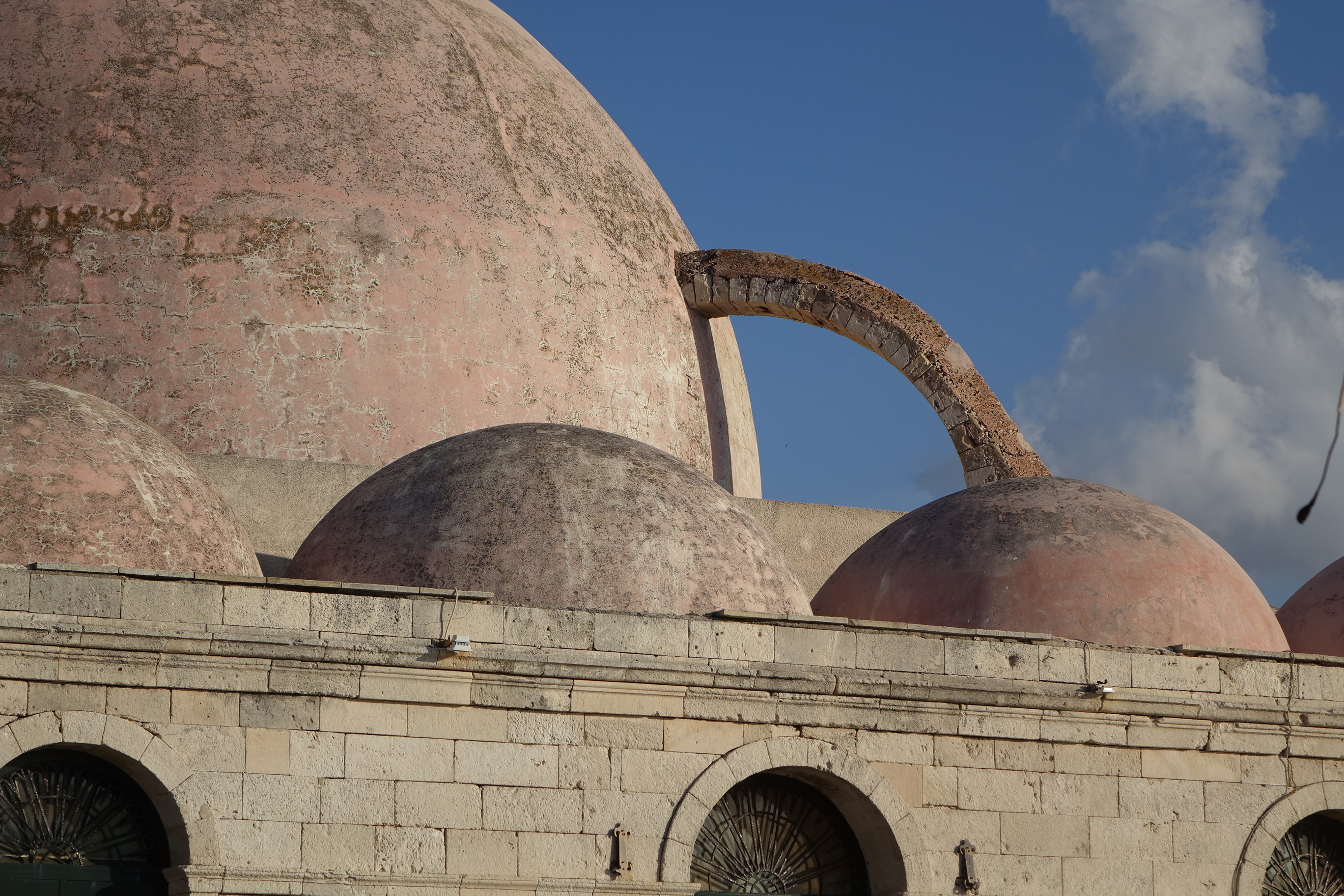
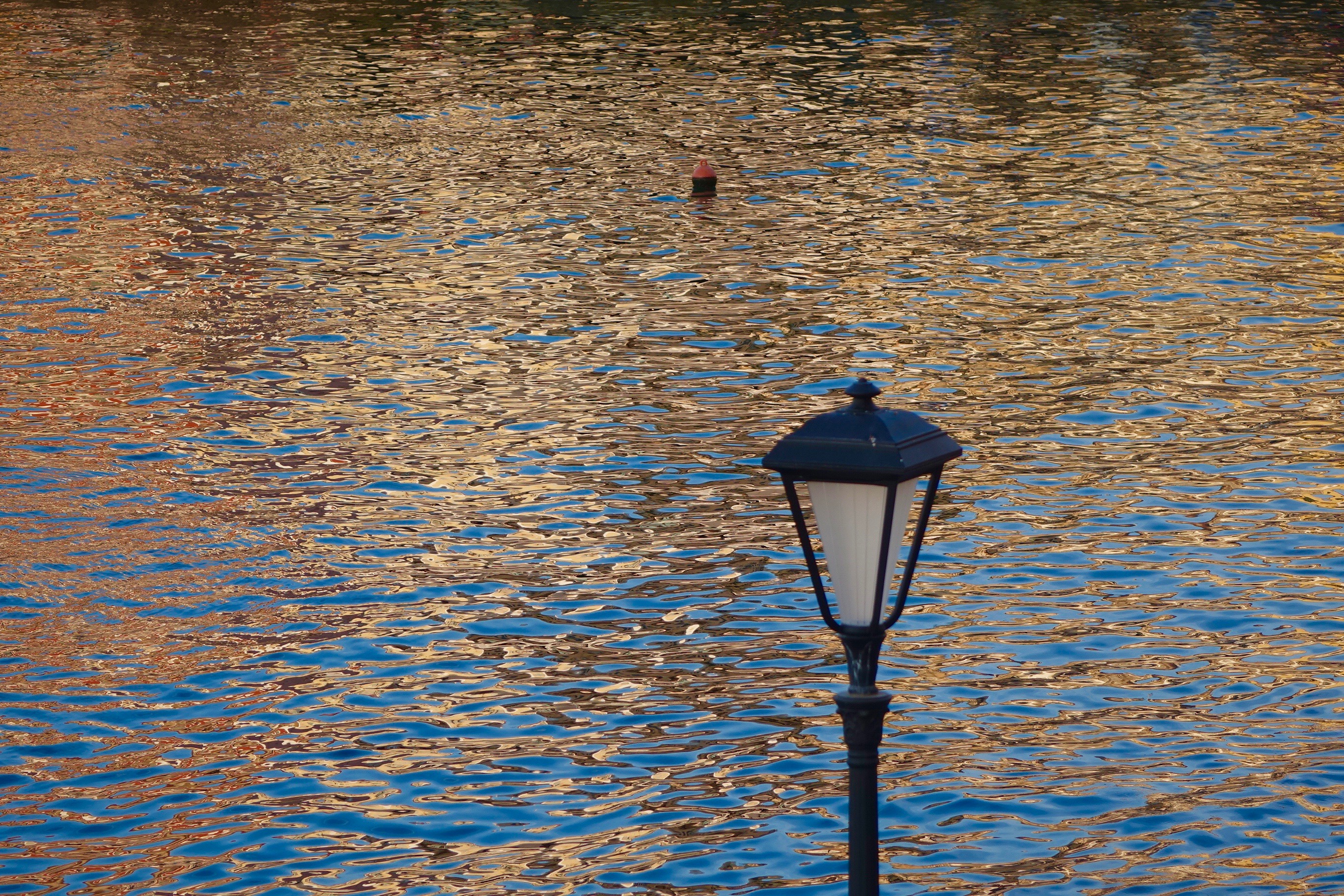
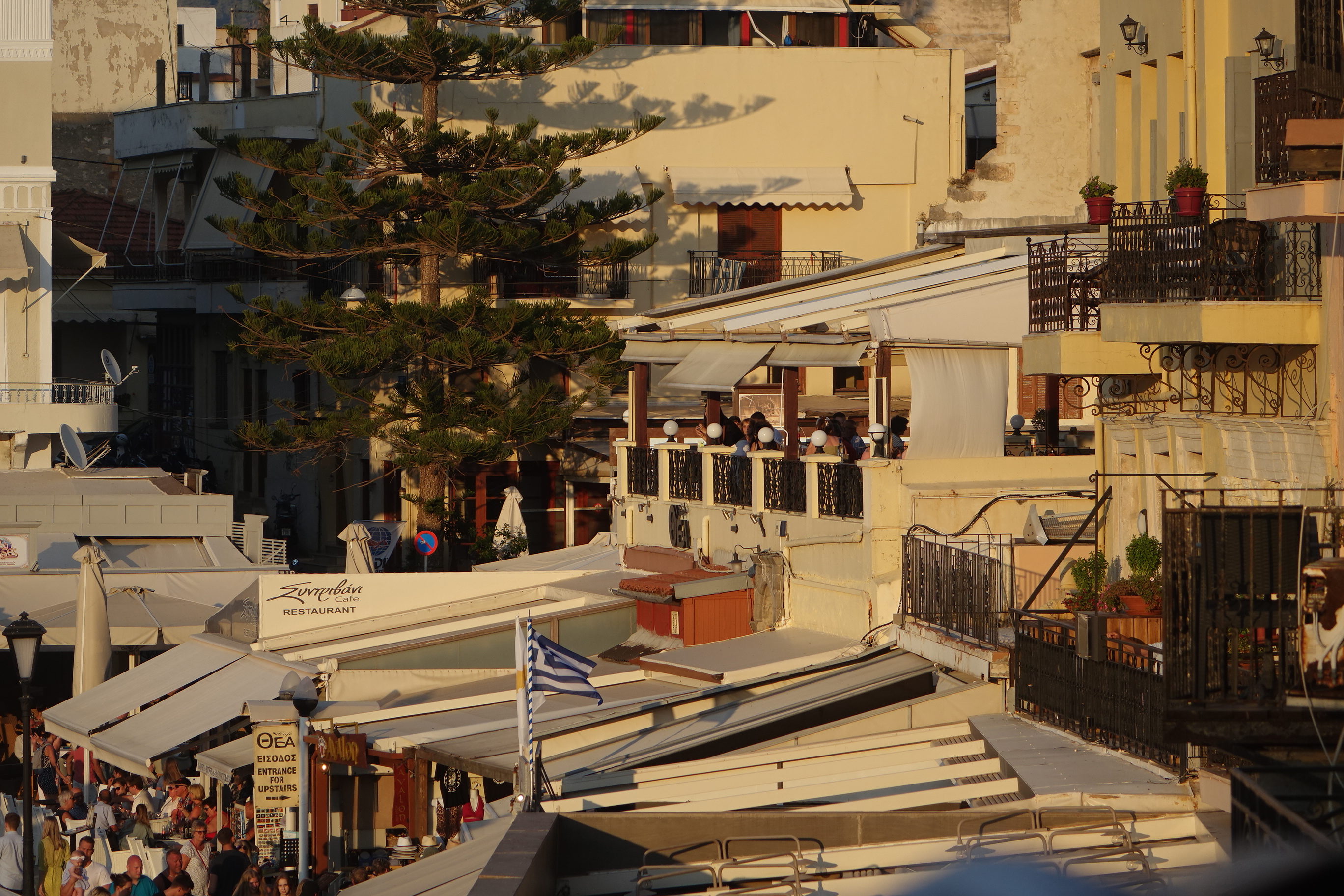
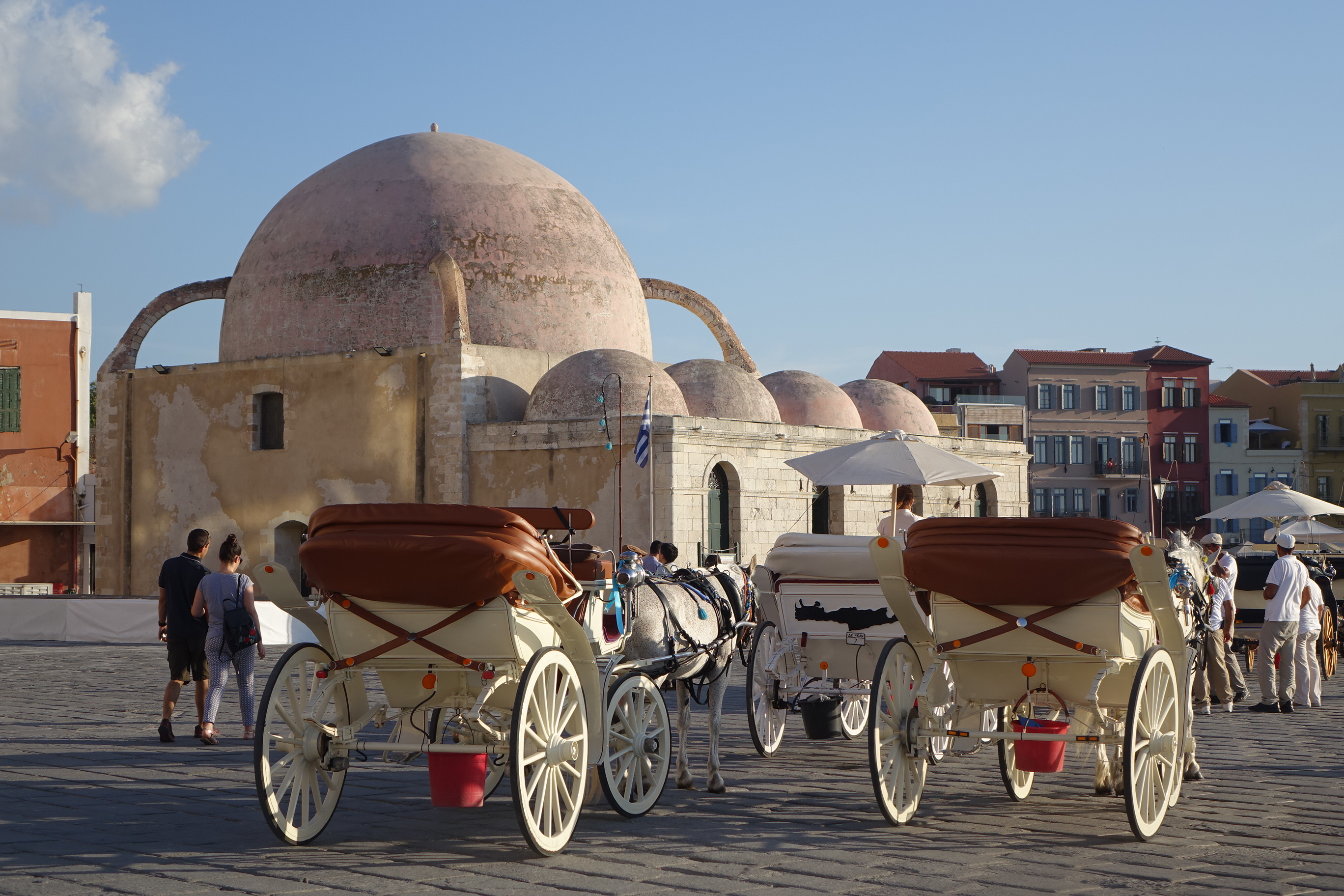
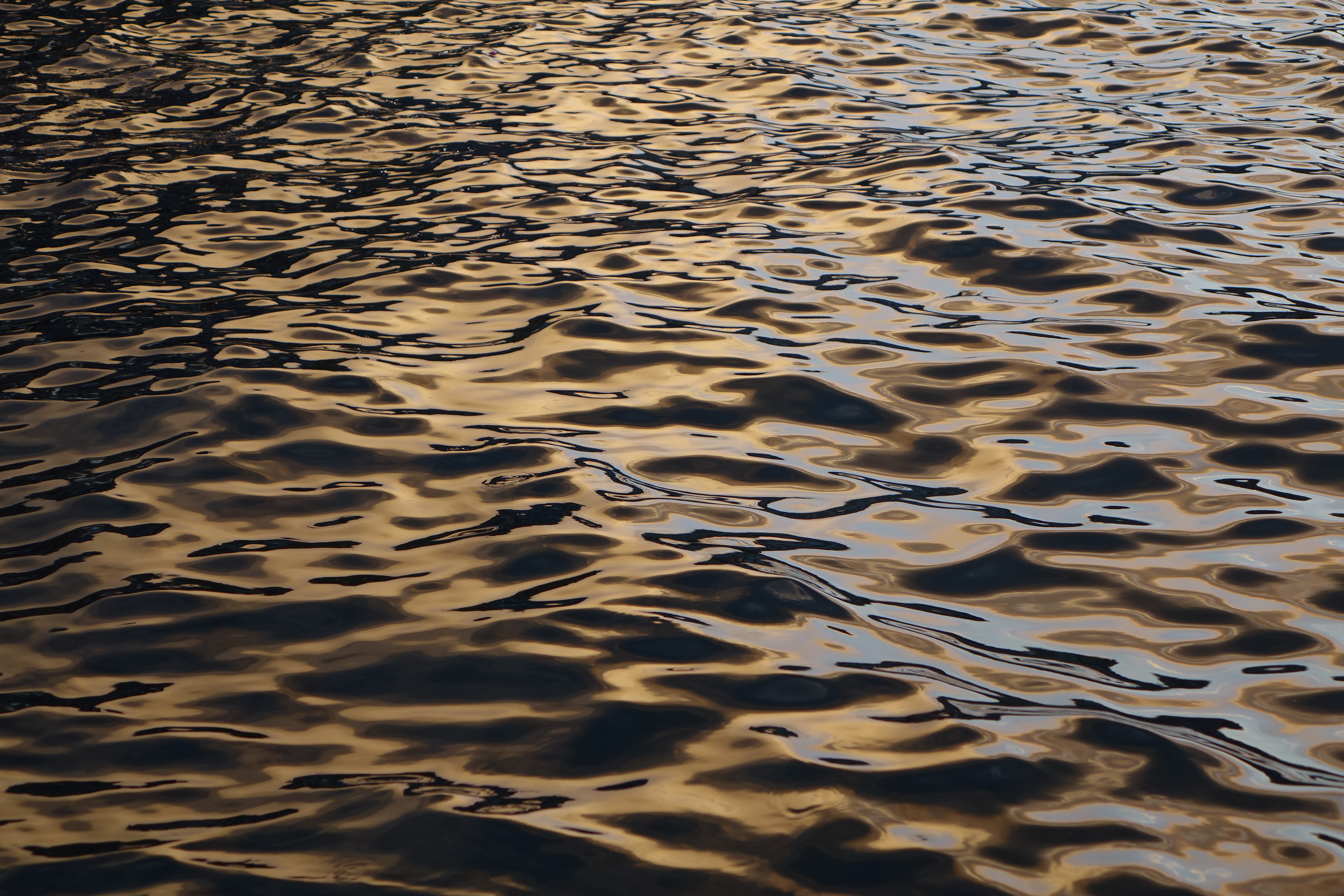
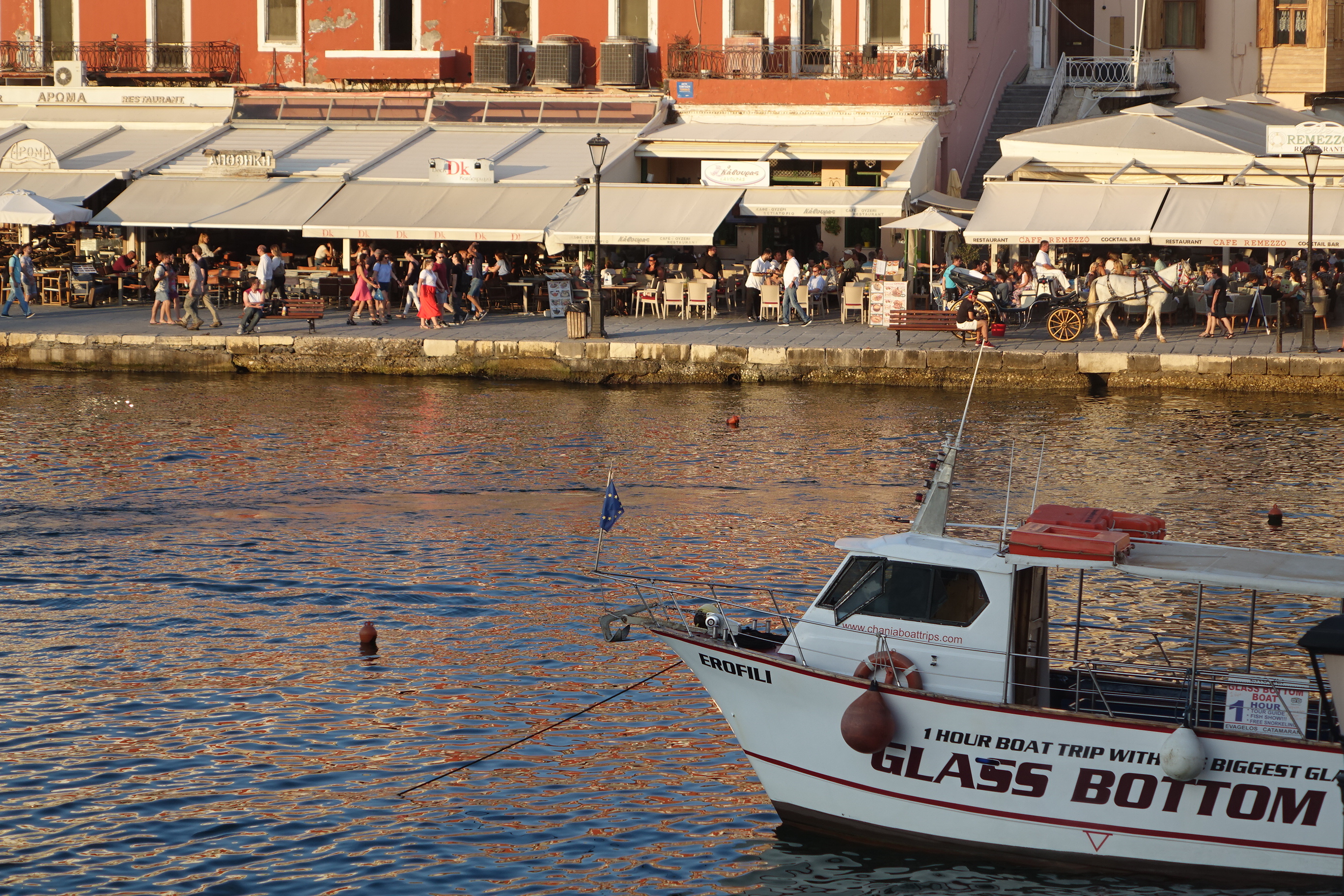
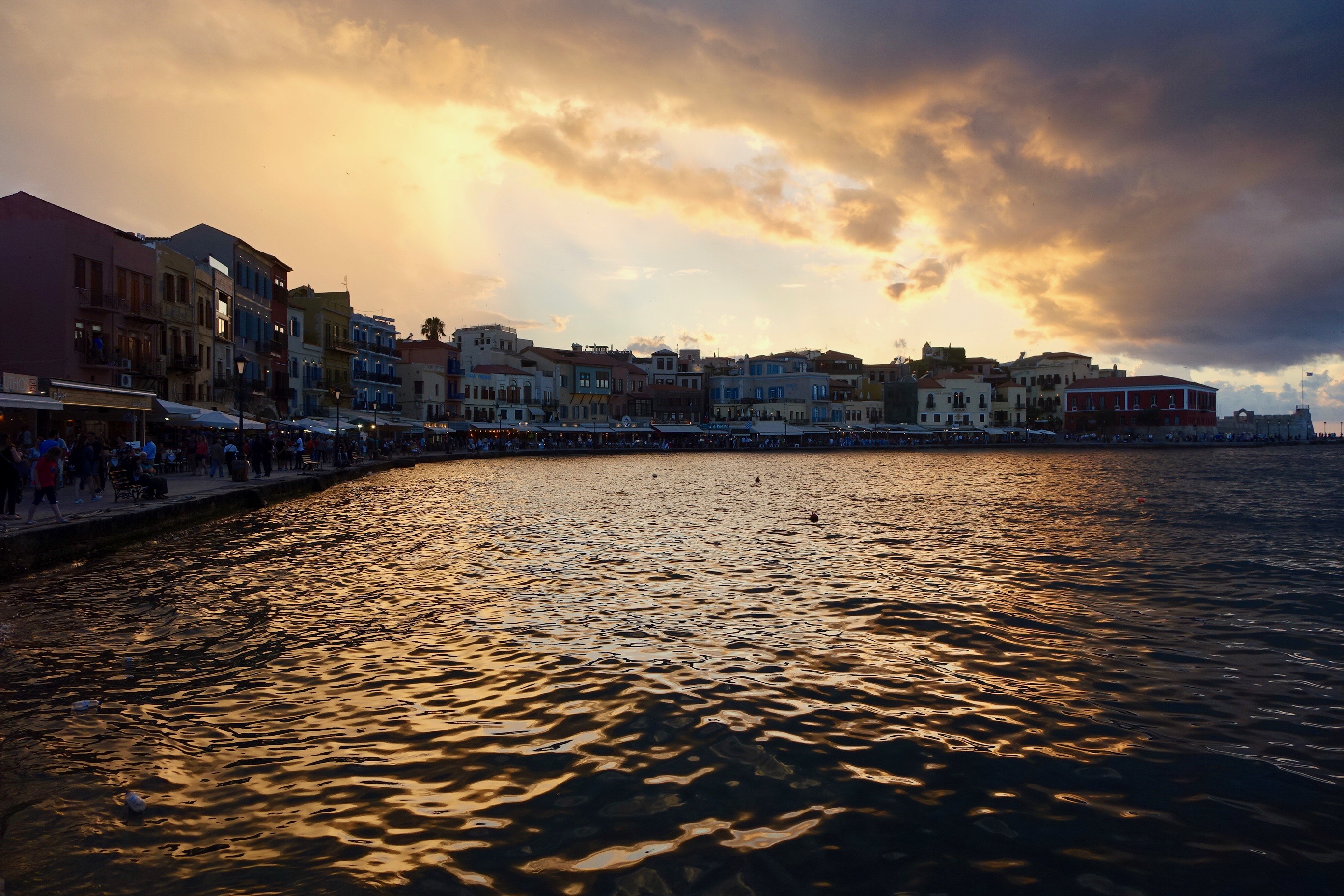
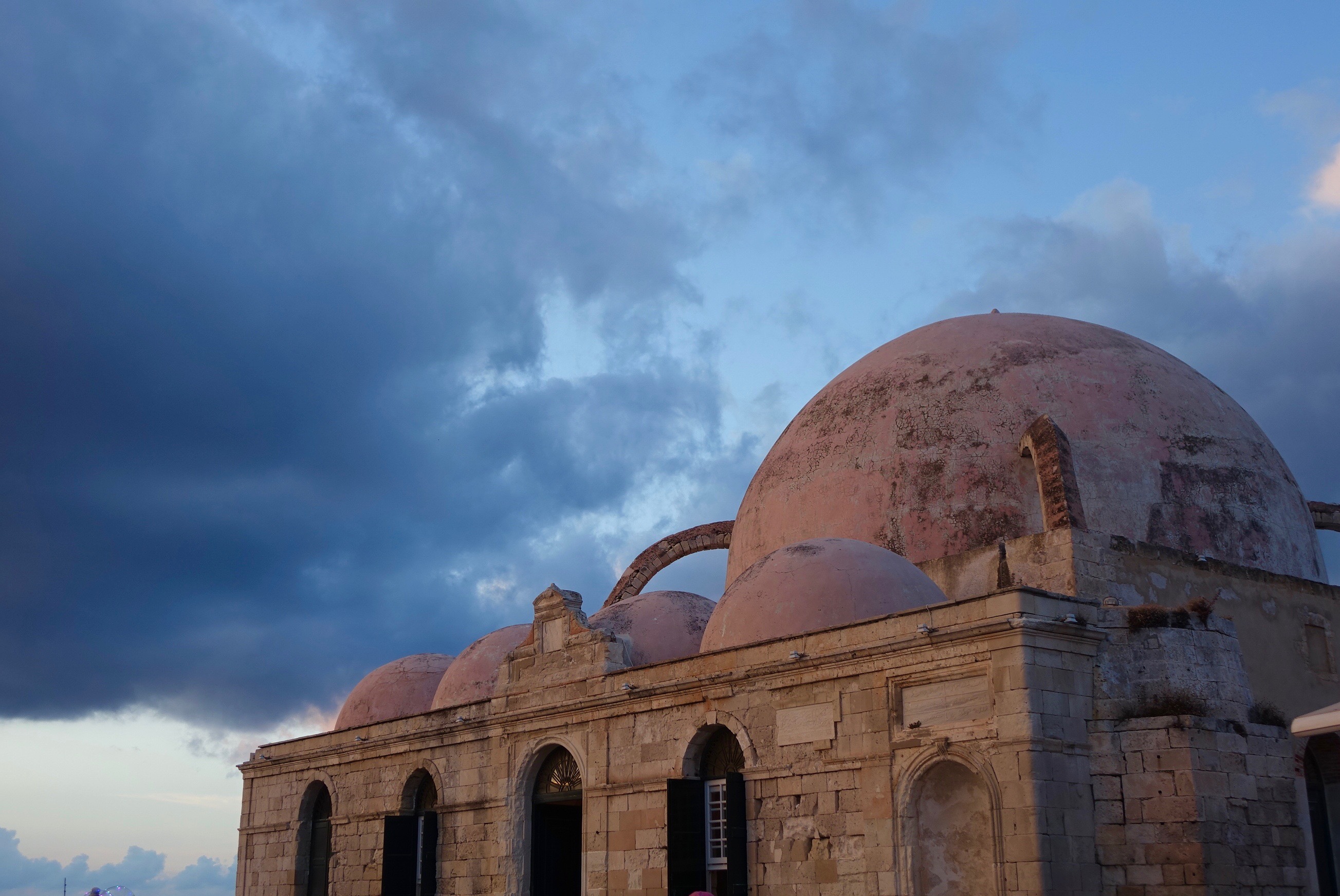
This harbour, so called Venetian because of time of its construction under the dictate of La Serenissima, is understandably the focal point for the city. It is alive at all hours with the bustle of its bars and restaurants whose collective unity beguiles the visitor with a harmonious panoply of sun-drenched little buildings hugging the shore. It is a waterfront which sparkles and ripples as water bounces off the crystal clear sea and makes fun of the straight lines adjacent, and a place imbued with a historical ambience translated through the presence of ancient stone houses and cobbled pavements. But pulling focus on the harbour is undoubtedly the Küçük Hasan Pasha Mosque, a leftover from Ottoman rule, and which today looks like a perfectly balanced candy-pink blancmange which turns ever so butterscotch in the golden evening sun. 

DSC04268DSC04257DSC03885DSC04133DSC03834DSC03897DSC04095DSC04168DSC03892DSC03869DSC04279DSC04255

We were lucky: our hotel room enjoyed the most stunning balcony views over this harbour, affording us the opportunity to revel in the changing faces of Chania’s ancient heart as it metamorphosed from slow and sleepy morning village to a bustling evening spectacle whose lights sparkled across the deep inky waters. We saw its colours dance vividly in the morning sun, and bathed in the golden light of early evening. And we breathed the deliriously fresh seawater perfume which pervaded the entire harbour, morning till night.

Chania’s Venetian harbour was the perfect way to commence our Cretan Odyssey, promising great things were in store from this island of plenty.

DSC03931DSC04278DSC04251DSC04093DSC04100DSC04247DSC04188DSC04142DSC04117DSC04161DSC04054DSC04156DSC03924

© Nicholas de Lacy-Brown and The Daily Norm, 2018. Unauthorised use and/or duplication of the material, whether written work, photography or artwork, included within The Daily Norm without express and written permission from The Daily Norm’s author and/or owner is strictly prohibited.

Norms in Rome | The Piazza Navona

Norms in Rome, Rome in the Norms… such has been the delicious longevity of the Norms’ devoted acquaintance with Italy’s beating heart that the Norms feel permanently wedded to this city of ancient glory and modern glamour. They’ve been in piazzas aplenty, gorged on delectable Roman food fare, explored ruins, historical monuments and strolled riverside. But as the Norms prepare to take their leave of the city, with their bags packed from some summertime travels, these blobby creatures have made one last visit – to a Piazza equal in glory to the spectacle of the Piazza della Rotonda where their adventure began some three months ago… the glorious Piazza Navona.

IMG_0701

Norms on the Piazza Navona ©Nicholas de Lacy-Brown 2018, pen on paper

Retaining the shape of the Stadium of Domitian which lies beneath its current day ground-level manifestation, but filled with some of the most magnificent sculptures of the Roman baroque, the Piazza Navona embodies Rome at its unique best, evidencing like a geological cross-section Rome’s complex trajectory throughout history. Whether it be those exquisite fountains, the countless cafes, or the temporary carousel which appears whenever a festival is in town, the Piazza Navona is the ideal location for the Norms to bid Rome arrivederci…until their inevitable return very soon.

© Nicholas de Lacy-Brown and The Daily Norm, 2001-2018. Unauthorized use and/or duplication of the material, whether written work, photography or artwork, included within The Daily Norm without express and written permission from The Daily Norm’s author and/or owner is strictly prohibited. For more information on the artwork of Nicholas de Lacy-Brown, visit http://www.delacybrown.com 

Folio // Porto from the Rooftops

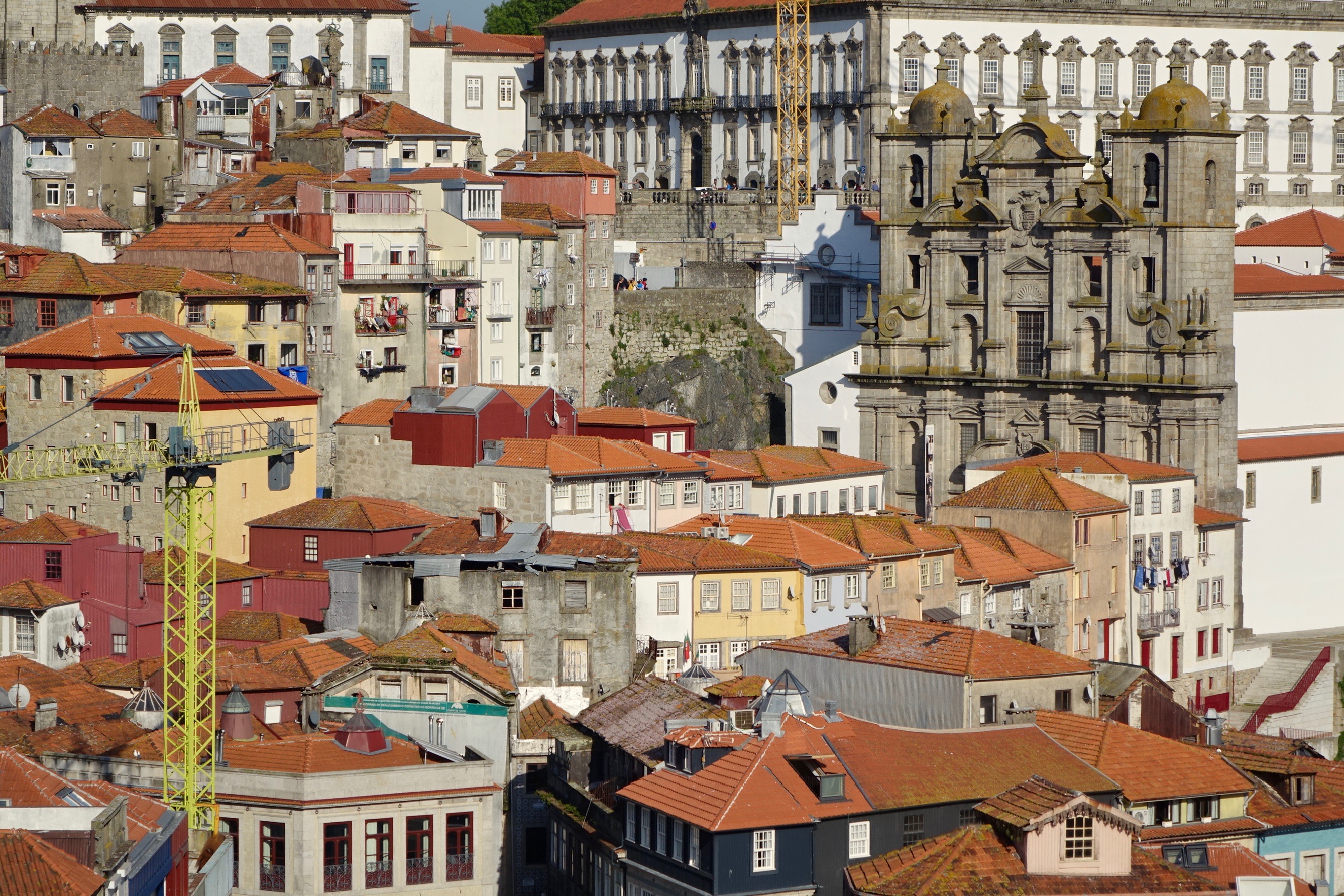
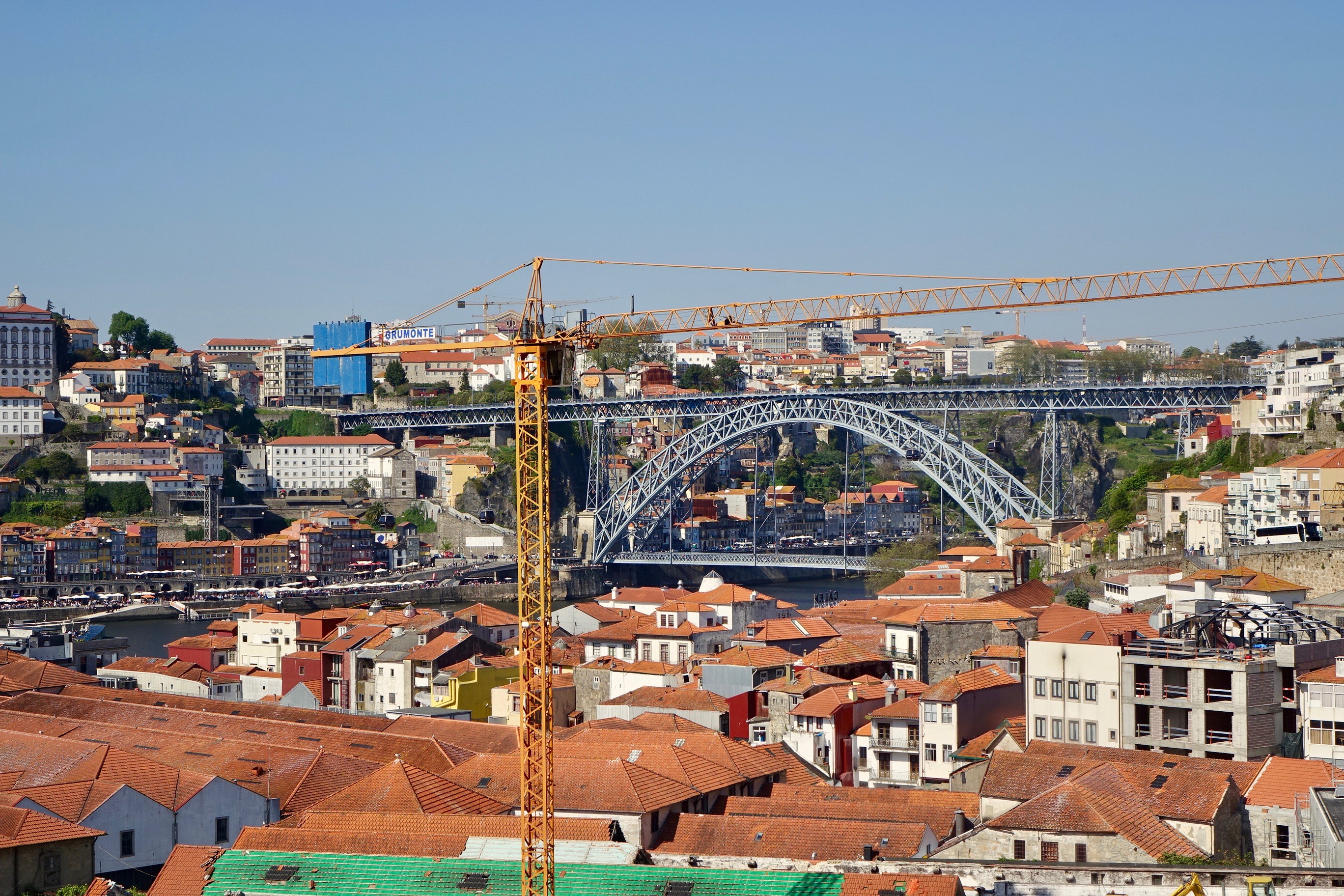
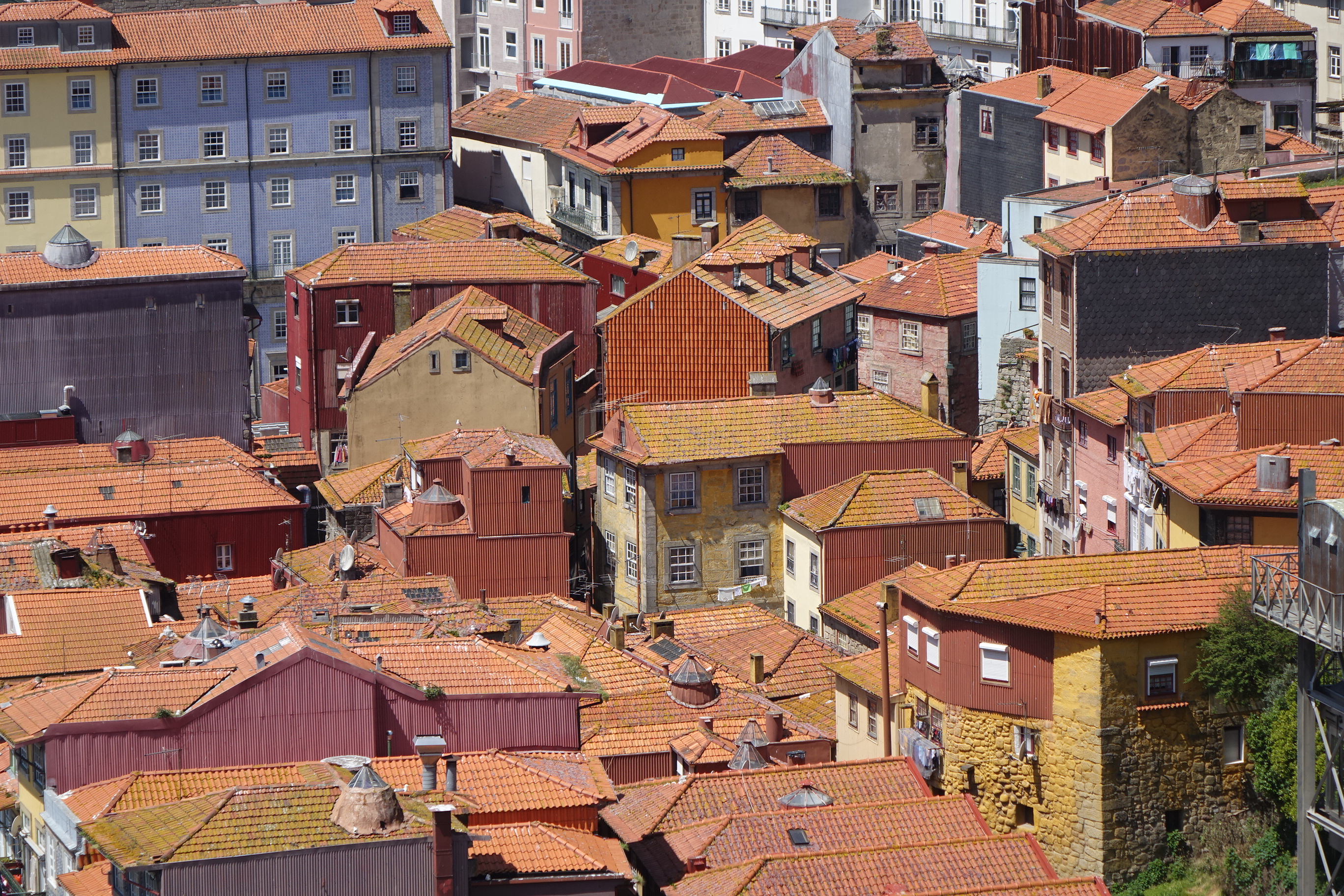
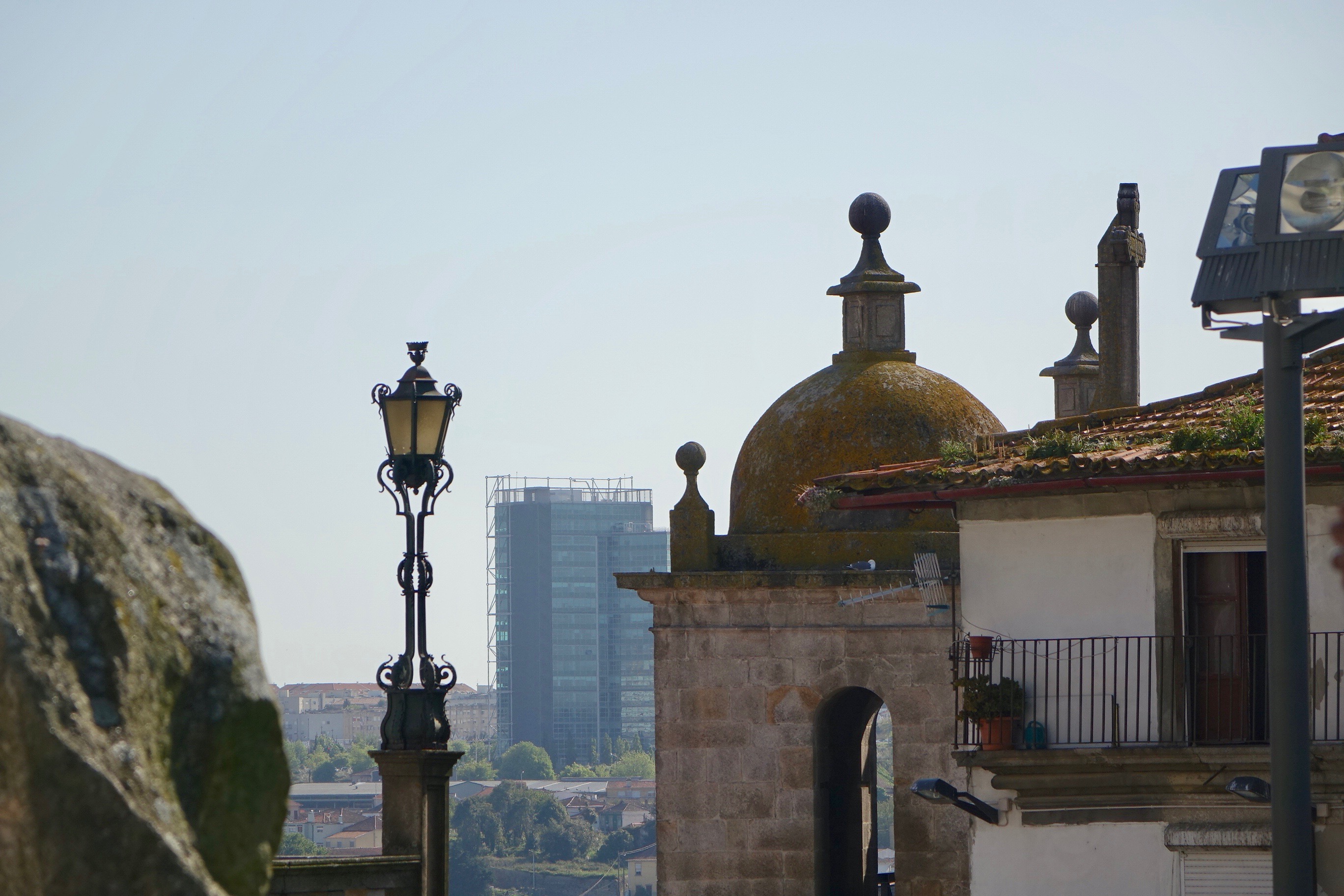
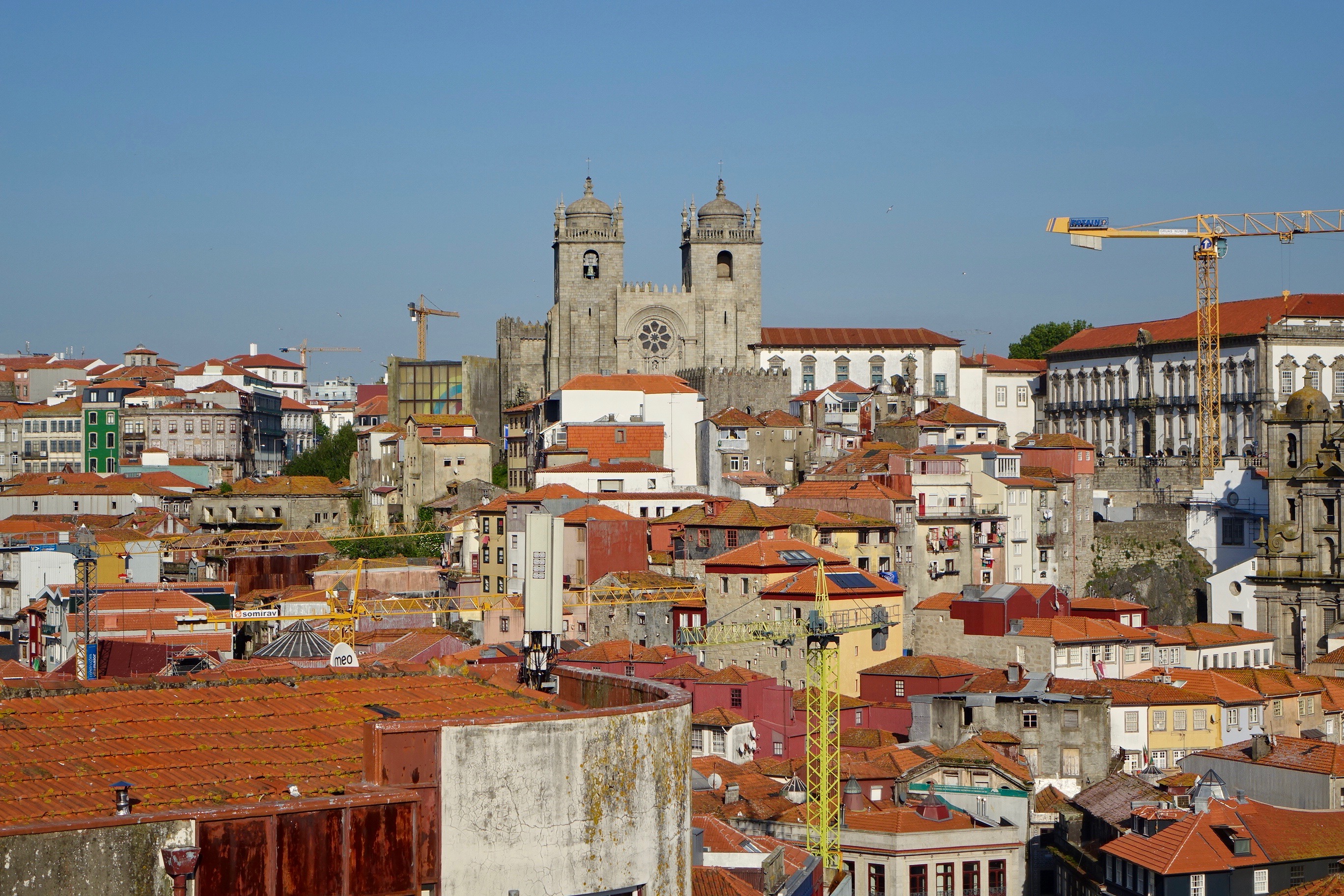
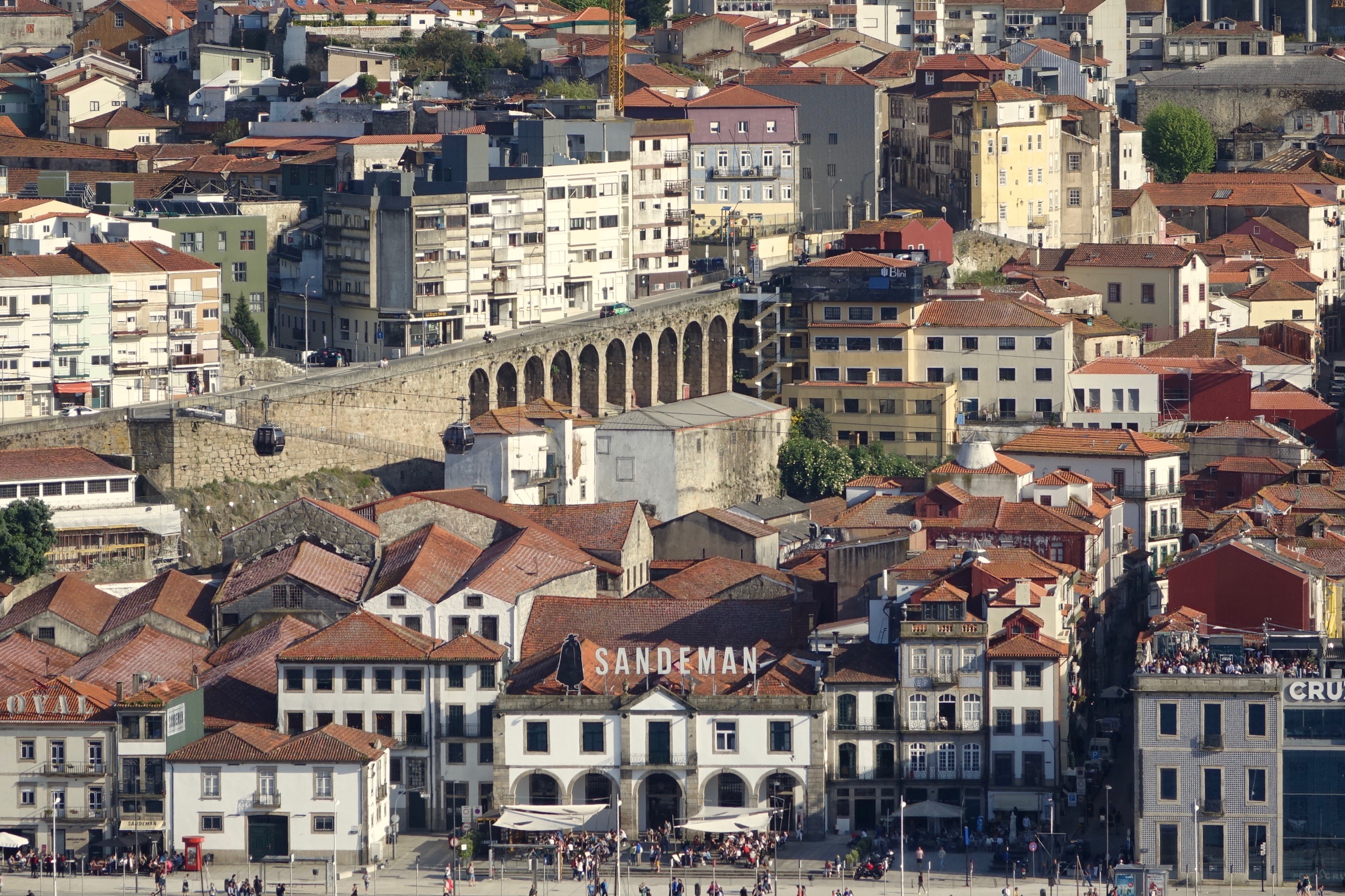
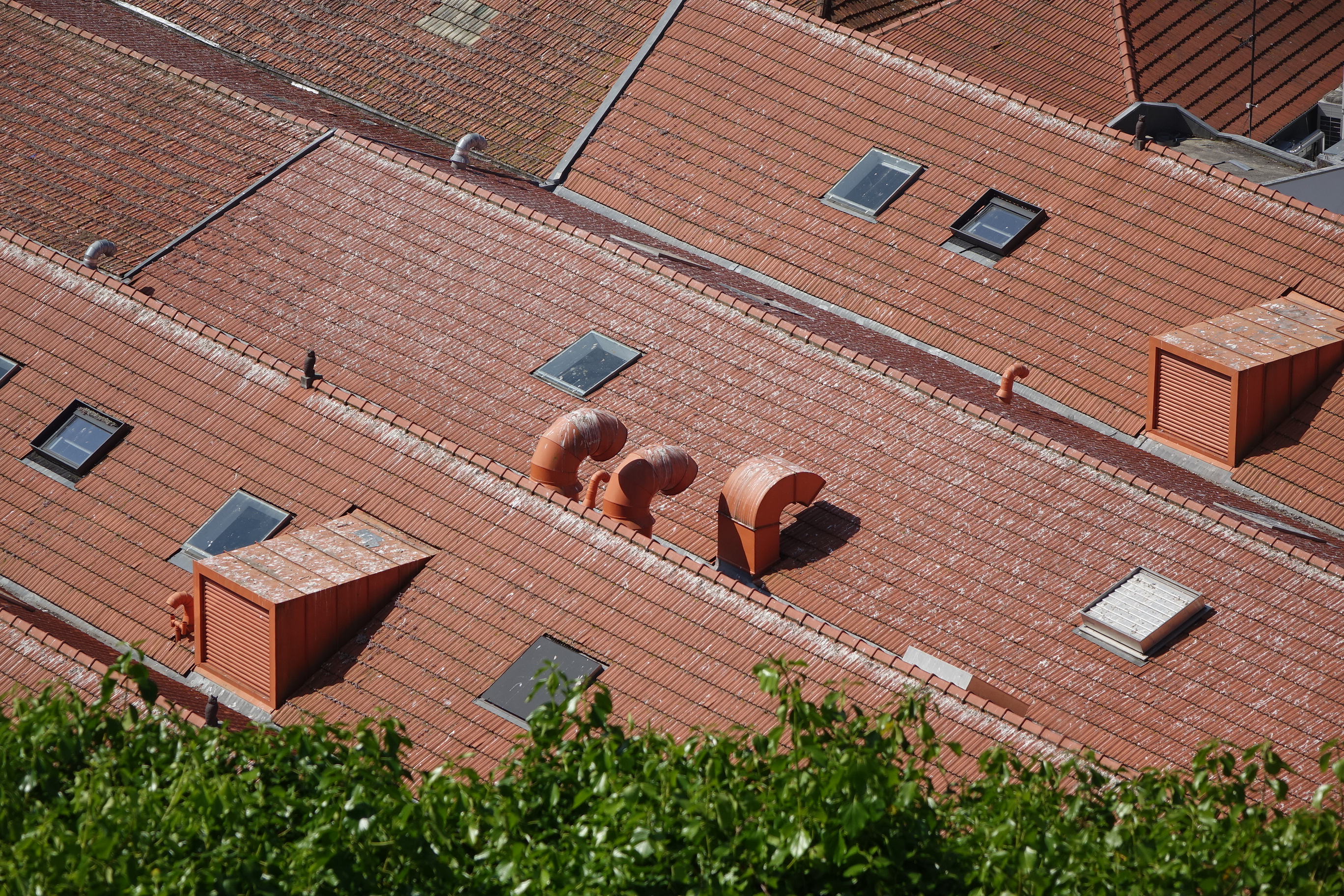
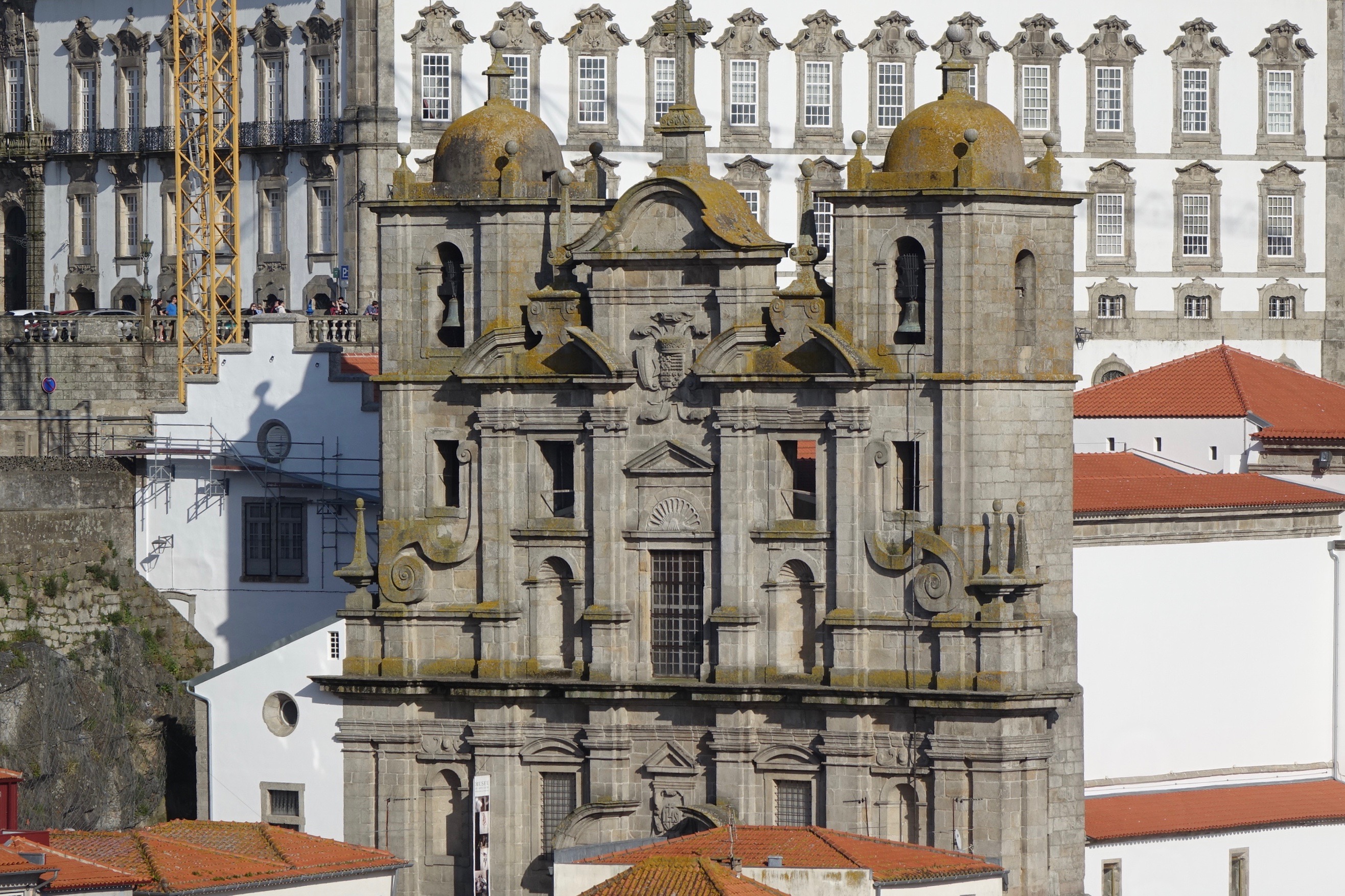
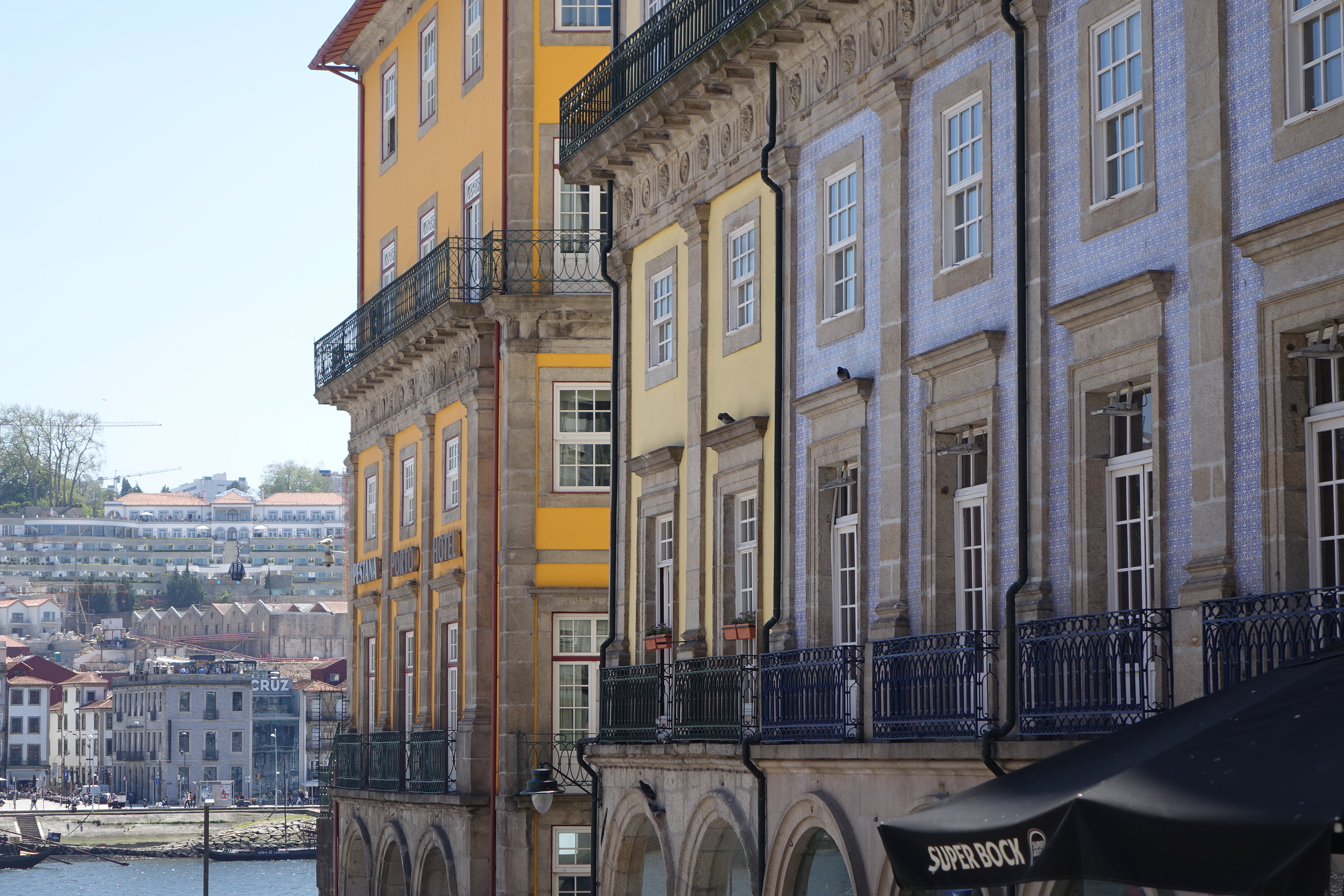
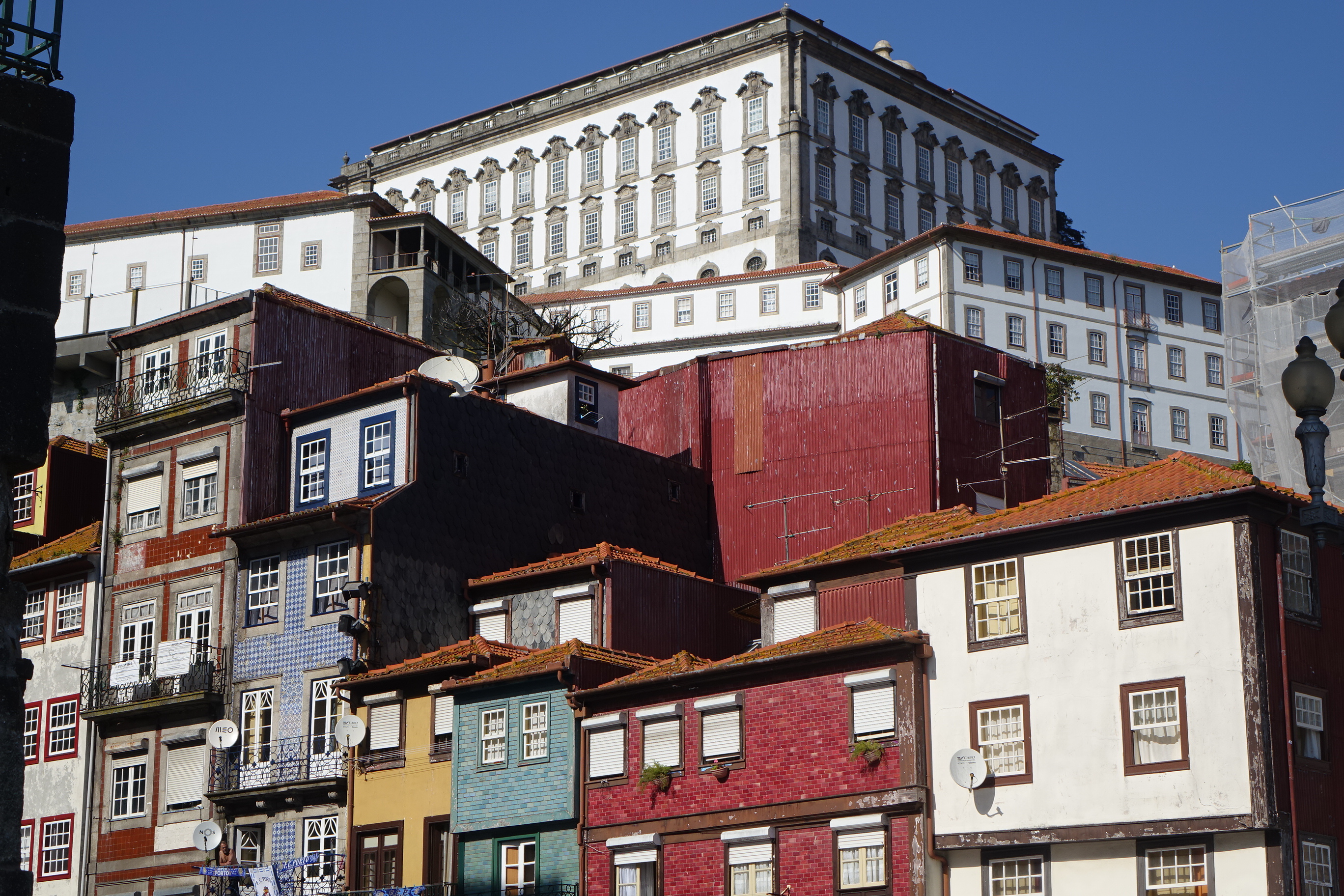
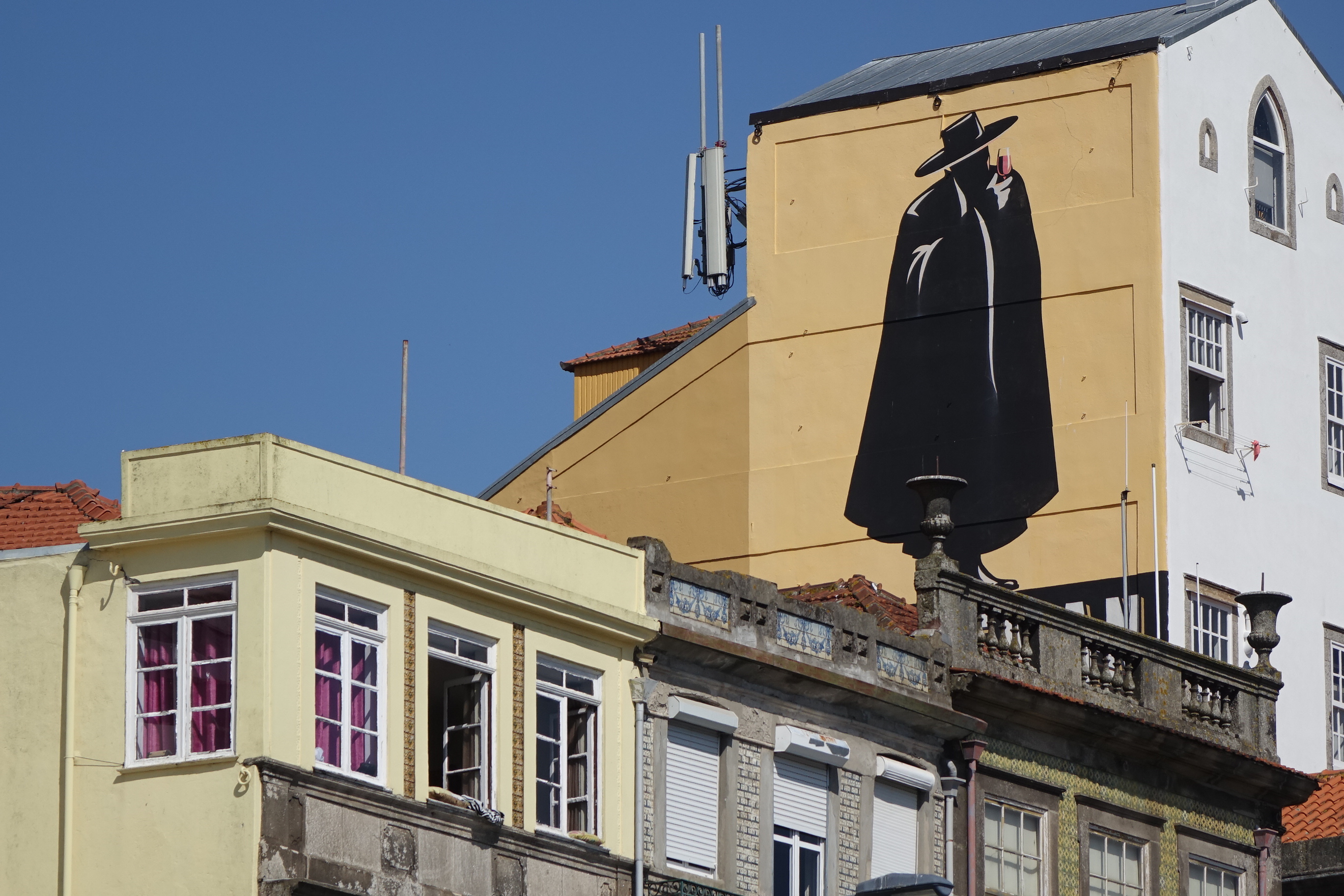
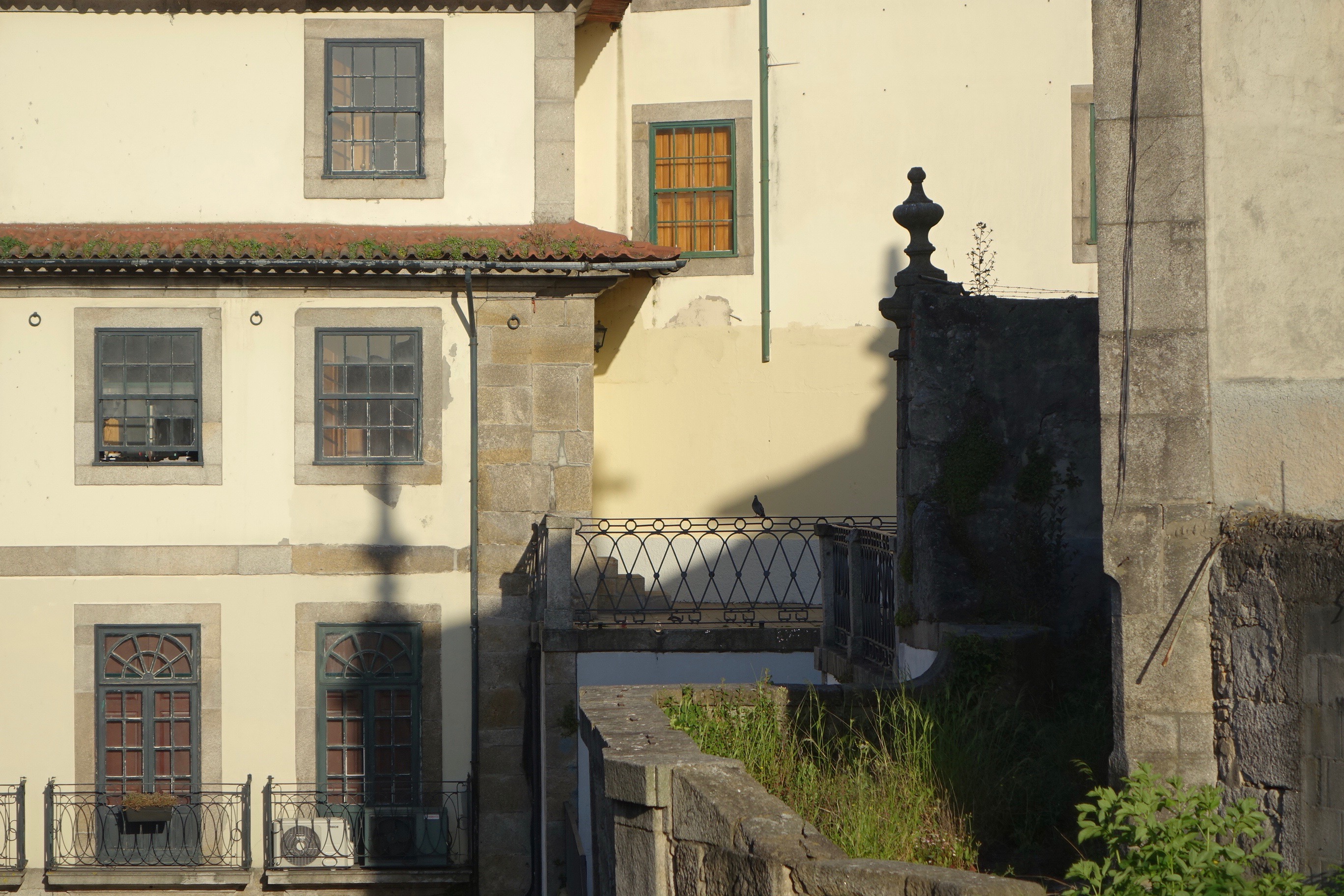
When I look through my photos of Porto, one thing really stands out, even more than the blue and white ceramics which embellish the houses – the rooftops. Swathes of terracotta dominate my photographic collection, and as many will know, I do like a good rooftop, especially when offset by the colours which inherently characterise southern Europe. Porto is no exception for a city resplendent in colour, but what it has more than your average city is a most unusual topography – one which rises and falls over undulating hills so that, even if you’re not climbing up towers and high stories, you can benefit from the most glorious views of warm red roofs and green bushy treetops.

DSC03507DSC03410DSC03257DSC02961DSC03095DSC03501DSC03066DSC02959

This little collection of rooftop photos enjoys a variety of angles, from the Miradouro de Vitoria, an almost hidden street which suddenly opens up into a splendid view over the Ribeira and across to the cellars of the Vila Nova de Gaia, and the spectacular square outside the Sé Cathedral, to the stunning vistas afforded by the Ponte Dom Luís Bridge, and from the heady heights of the dominating Torre dos Clérigos. There, laid out before us, rooftops seemed to jostle for space, vying for light light trees in a forest. And in that forest, cranes seems to rise above the city like new shoots of spring – a sign perhaps that Porto is itself enjoying a new regrowth, as it repairs and reinvents itself in response to its renewed popularity.

DSC03502IMG_0221DSC03505DSC03272DSC03500DSC03249DSC02933DSC02962

© Nicholas de Lacy-Brown and The Daily Norm, 2018. Unauthorised use and/or duplication of the material, whether written work, photography or artwork, included within The Daily Norm without express and written permission from The Daily Norm’s author and/or owner is strictly prohibited.

Folio // Porto, Ceramic City

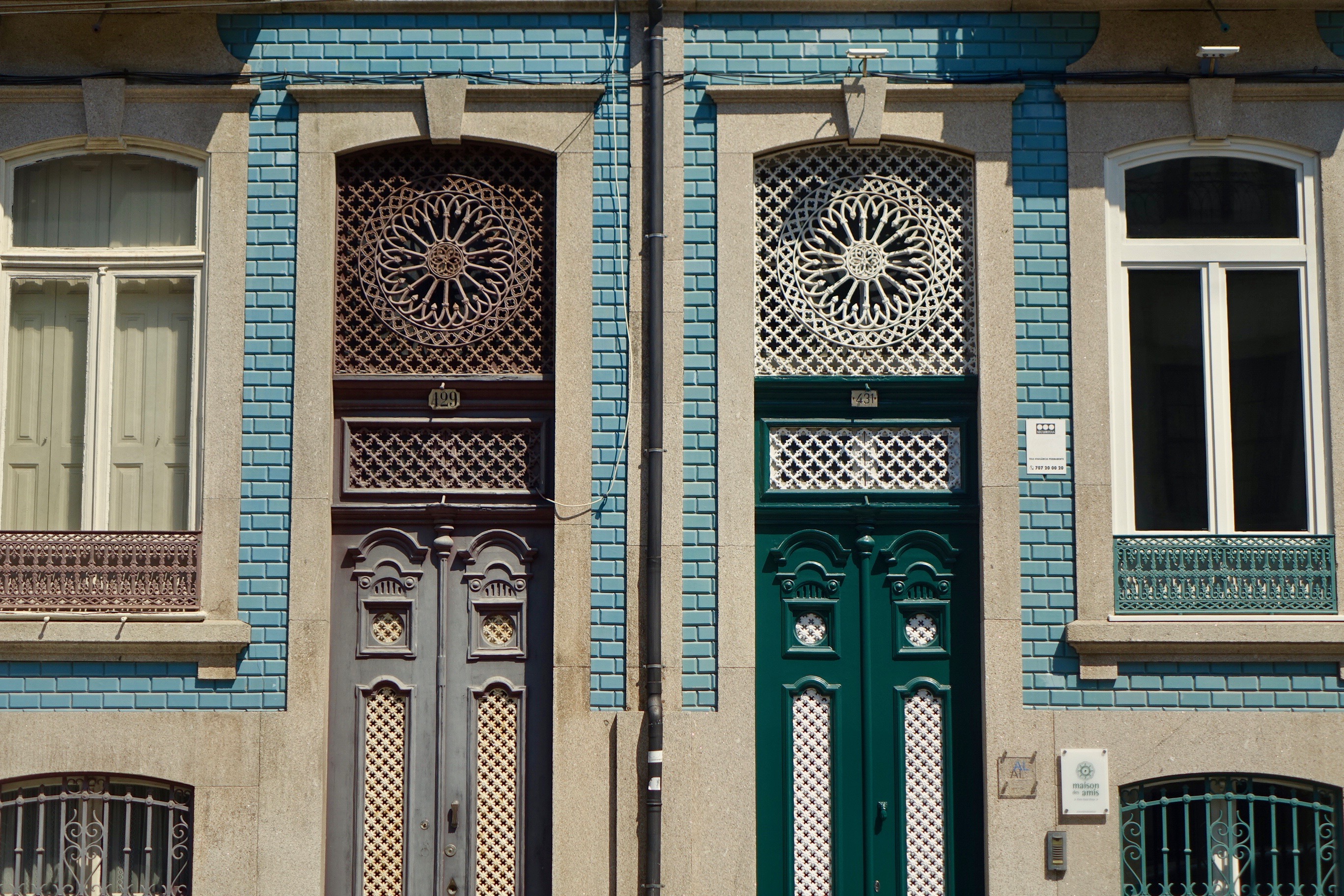
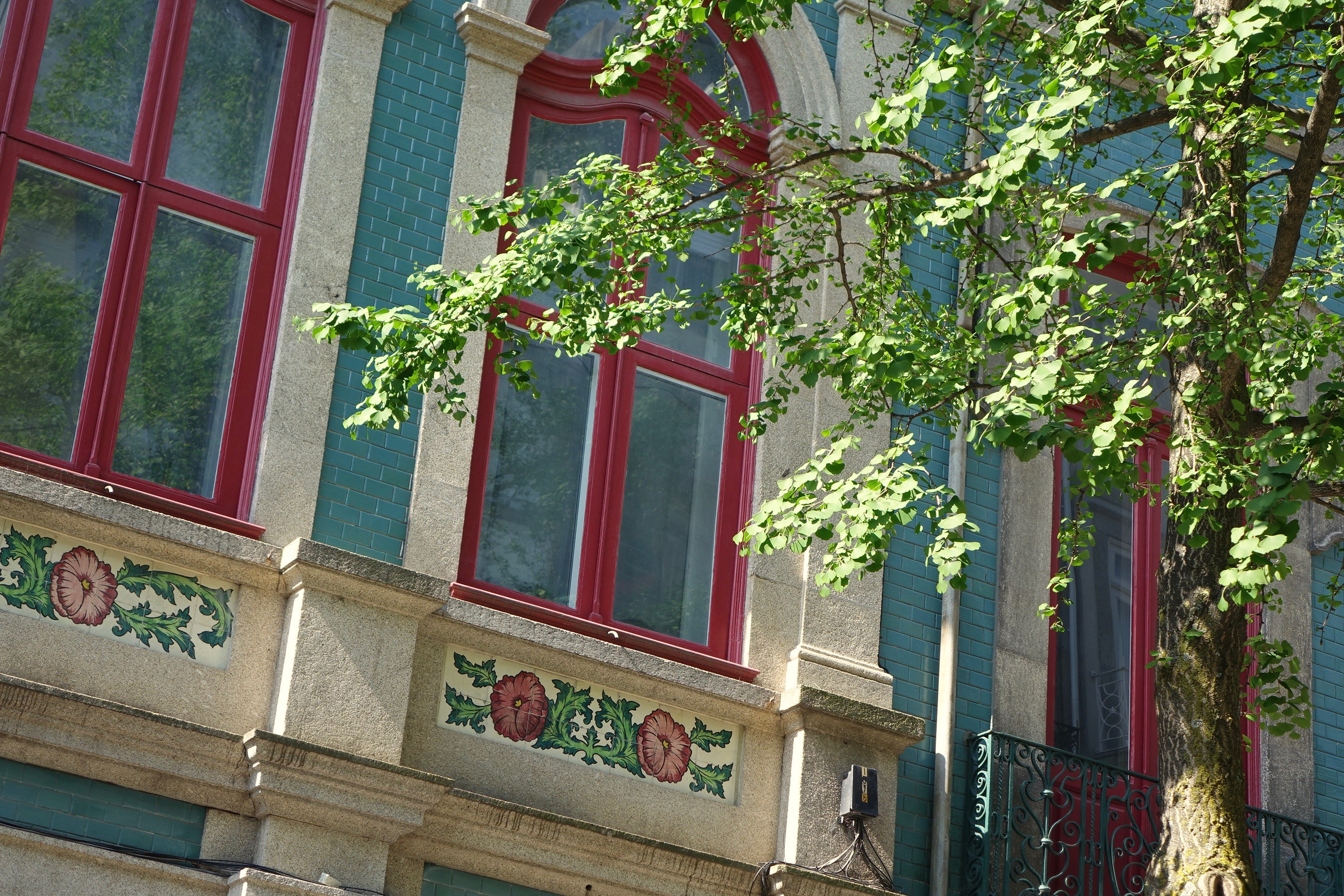
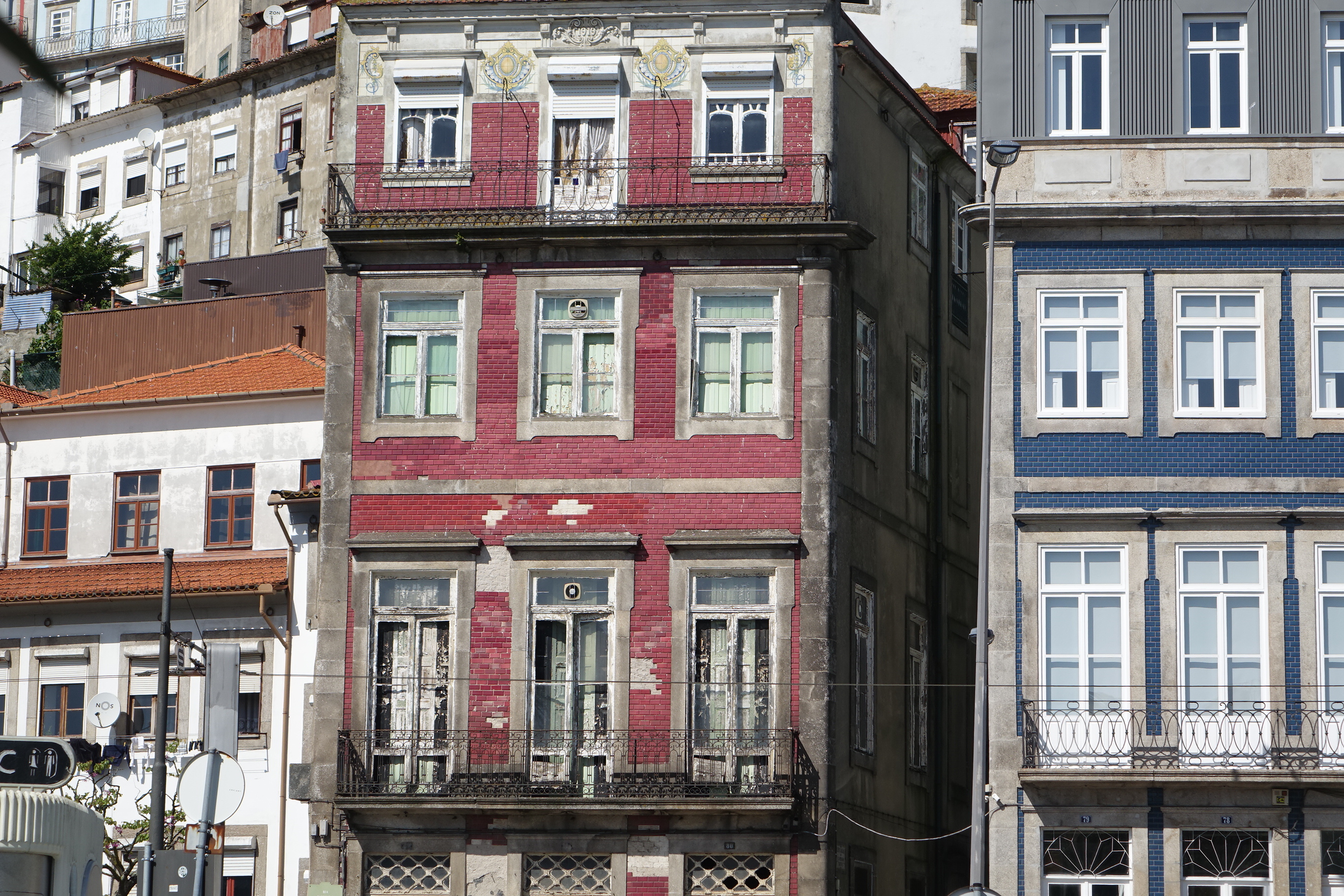
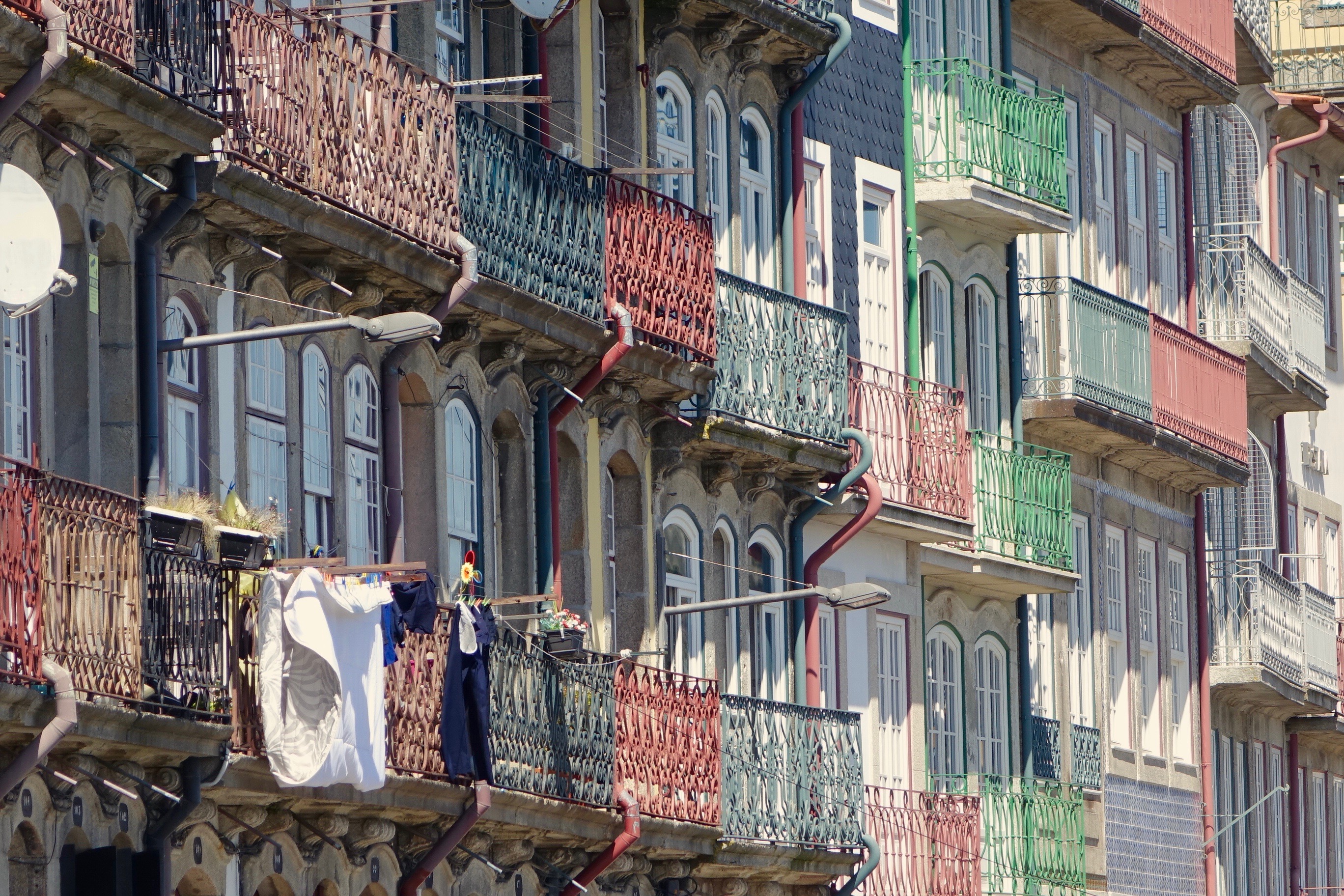
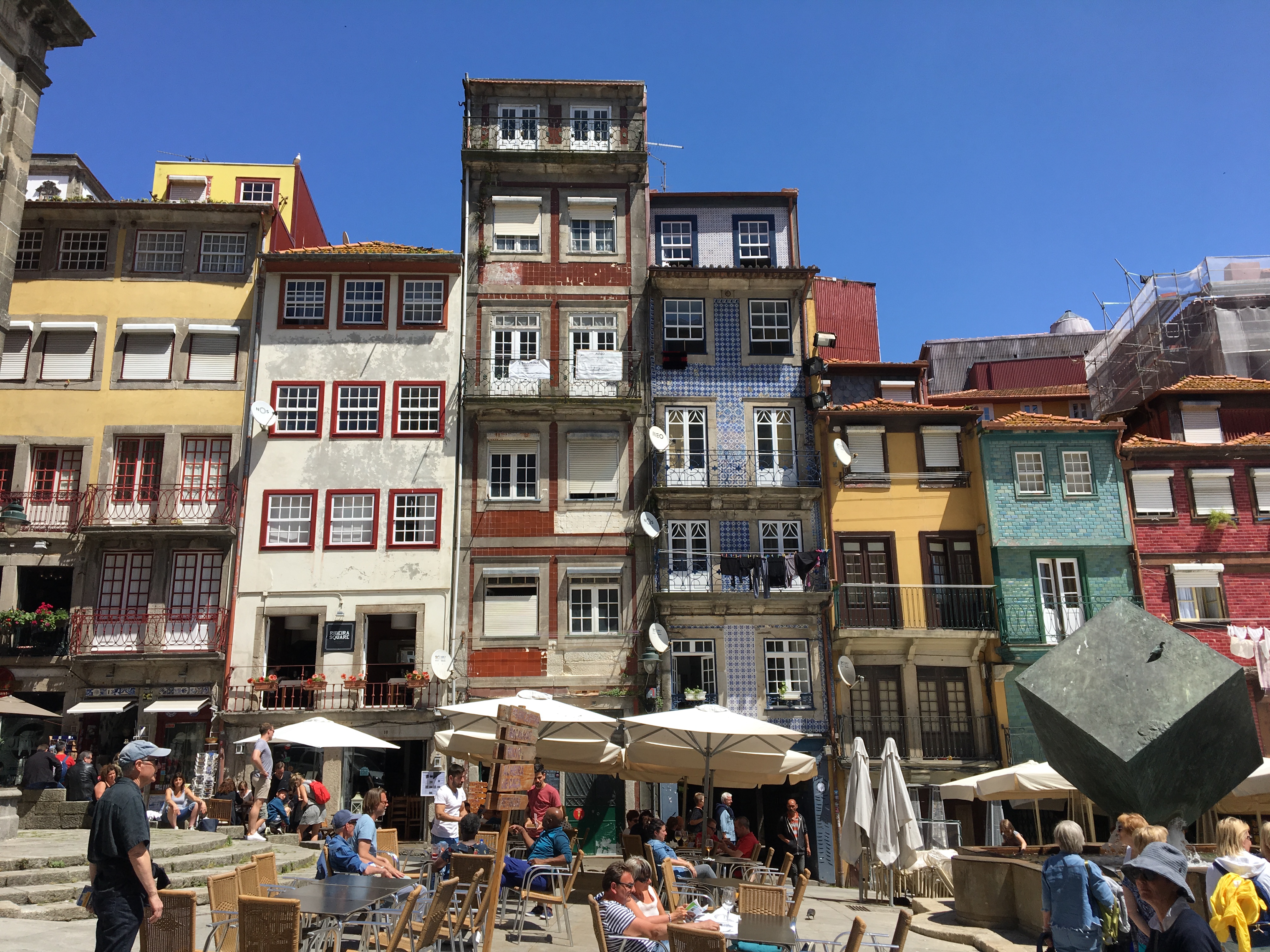
Porto is a city which literally smiles through its tiles. Every facade is alive with the glinting sheen of ceramic glaze. Their colours are abundant, their pattern even more so, and there is barely a house without a tile attached. When one wanders around Porto, gazing in abject fascination at these dazzling facades, one tends to question why we don’t all affix tiles to the front of our houses and buildings? Isn’t this the simplest way to give our exteriors something of the personality within, while – practically speaking – saving the need to repaint every year?

IMG_0218DSC03613DSC02859DSC03221DSC03518DSC03465DSC03526DSC03552

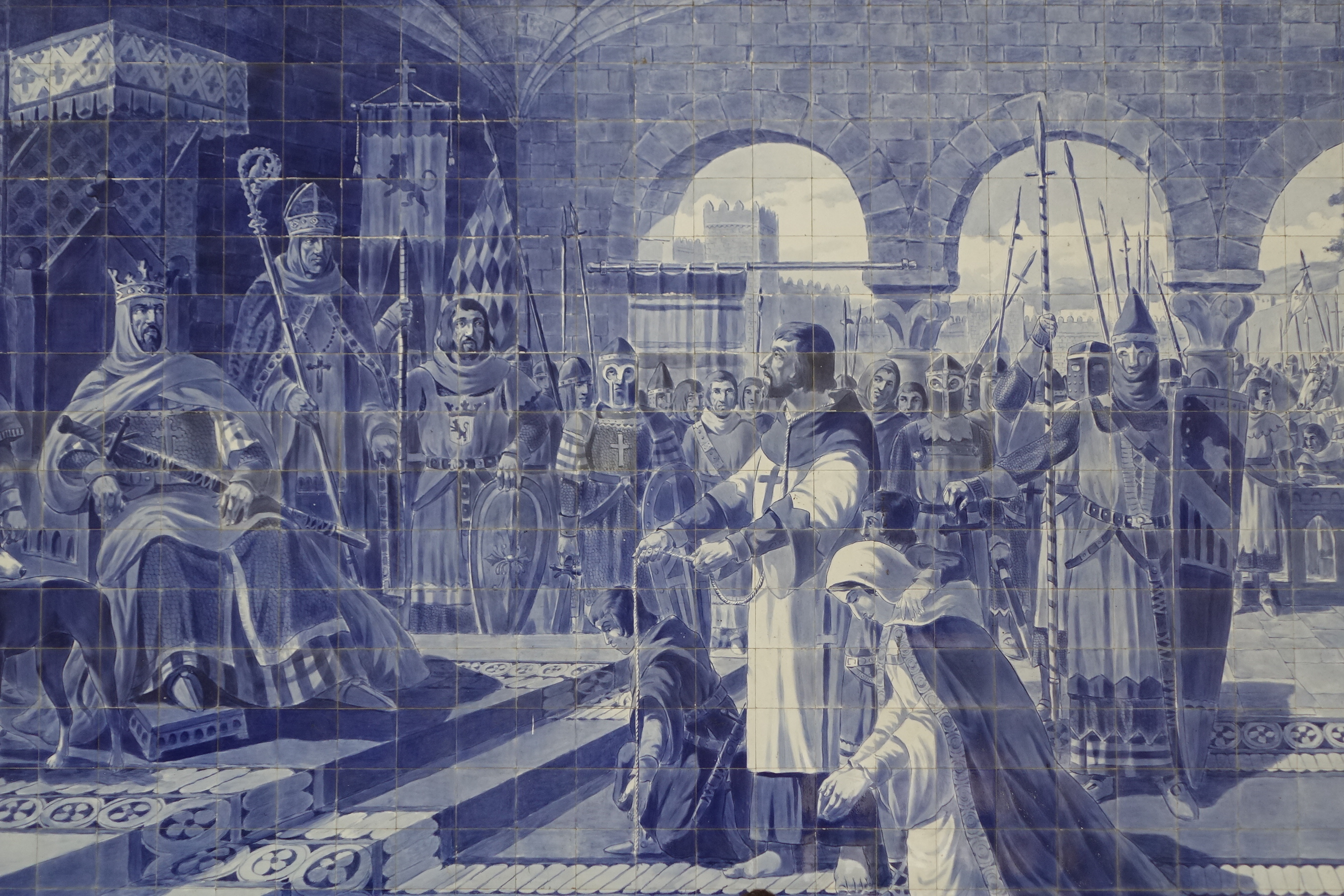
Be they a practical solution or a traditional embellishment, the ceramic tiles of Porto are completely characteristic of the city. From the simple geometric designs and slightly more elaborate three dimensional variations emblazoned on homes to the pure masterpieces of blue and white illustrative design which narrate the walls of churches and (best of all) the San Bento central station, there are tiles to be admired throughout Porto. Here is a folio of my photos of just a few of them.

DSC03036IMG_0087DSC03175DSC02853DSC03039DSC03521DSC02773DSC03159

© Nicholas de Lacy-Brown and The Daily Norm, 2018. Unauthorised use and/or duplication of the material, whether written work, photography or artwork, included within The Daily Norm without express and written permission from The Daily Norm’s author and/or owner is strictly prohibited.
Compendium // Porto > The enchanting Ribeira

As mellow as the perfume of port-filled oak barrels, but as vivacious as the glint and sparkle of that same honeyed wine as it sloshes into an eagerly waiting glass, the Portuguese city of Porto has all of the tempting characteristics of the sweet nectar which put the city on the world’s map. But if Porto was to be described in a palette of colour, its rich amber terracotta tones are to be offset by the bedazzlement of blue and white in its omnipotent ceramic tile-covered buildings, and in the dazzling stretch of the Douro River carving the city in two on its broad sweep down to the Atlantic Ocean.

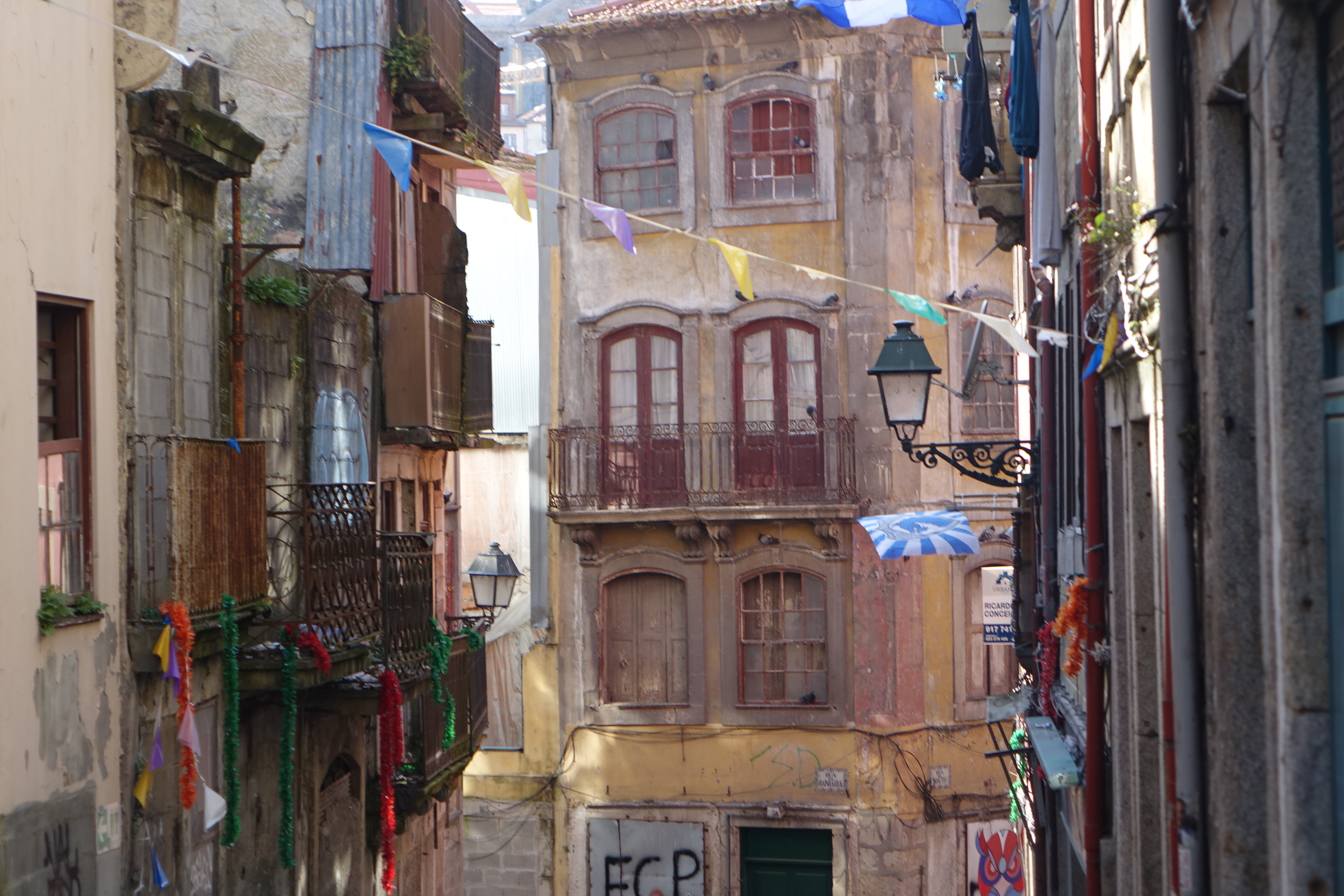
Porto is a city alive with the spirit of its geography, as though enlivened by Atlantic breezes and nourished by the hilly fertile Duoro valley beyond. Its hilly topography has created a city which is topsy-turvy to say the least. Take a step back and houses appear to balance atop one another as streets zigzag along steep hillsides which rise and fall like ocean waves. It’s a city which defies the typical sense of direction, but which is generous to whomsoever gets lost in its maze of streets. For in Porto there is something enchanting to behold at each narrow corner.

DSC02832DSC03488DSC02857DSC02882DSC02765DSC02948DSC03009DSC03019DSC03010

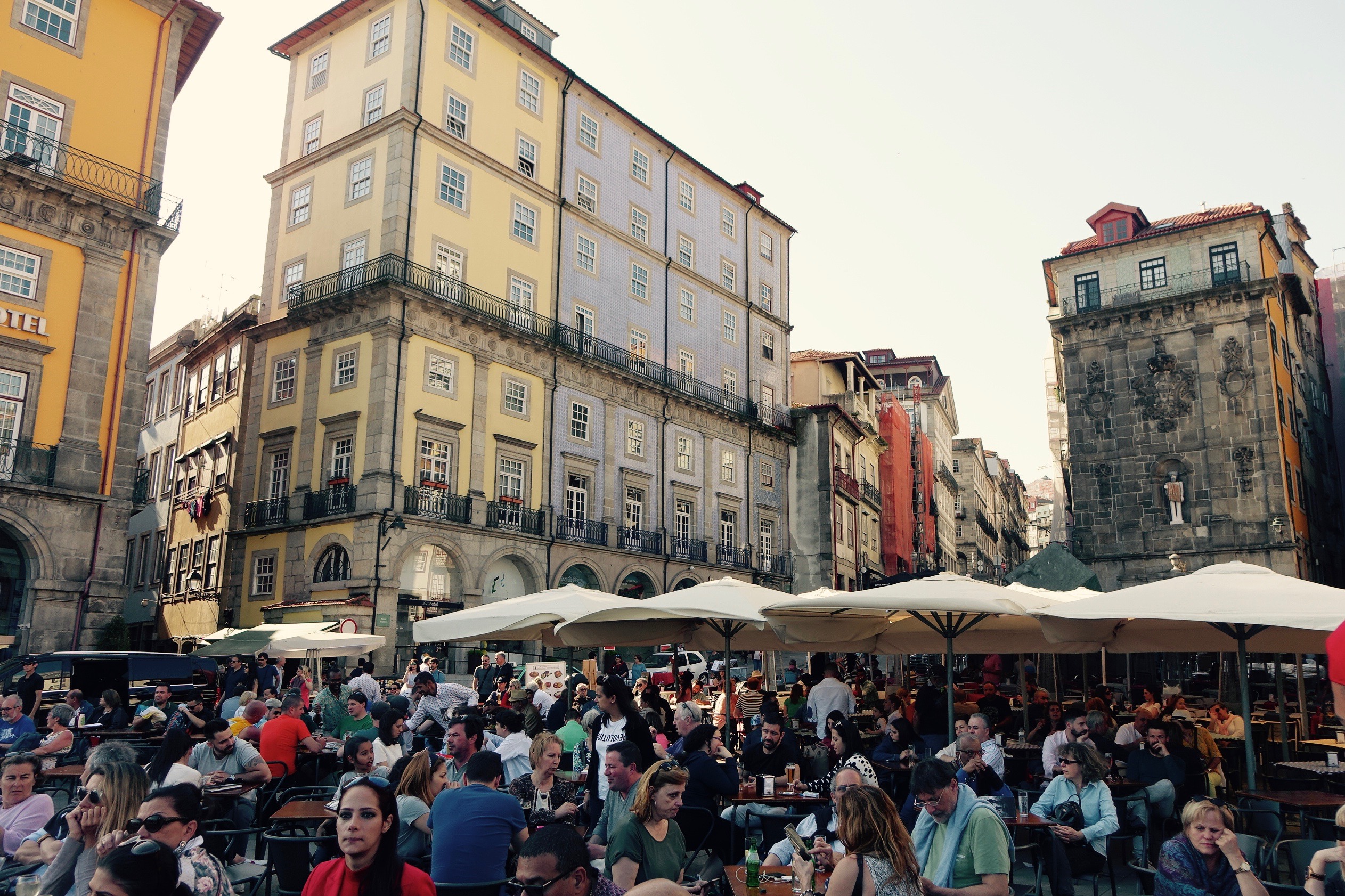
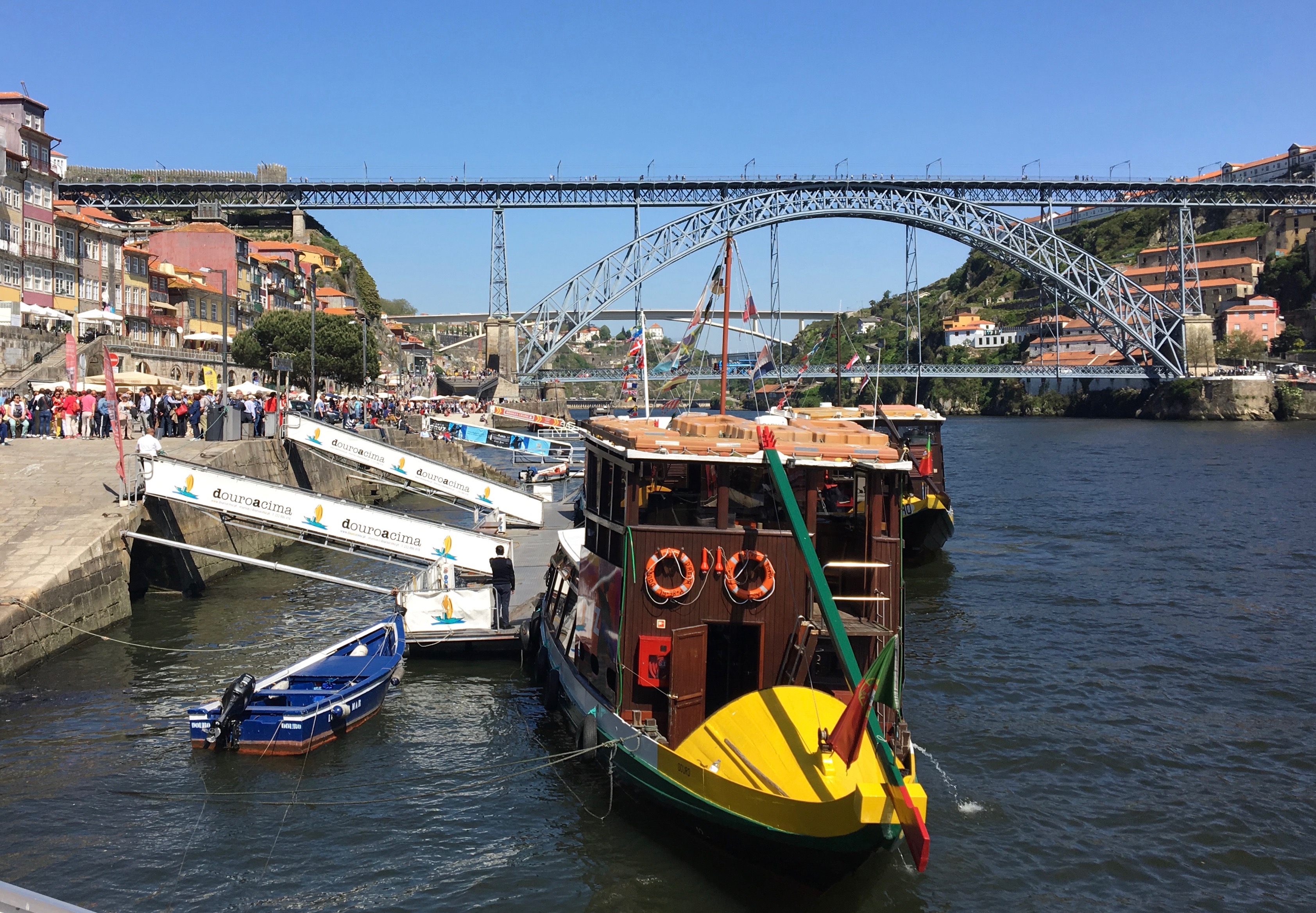
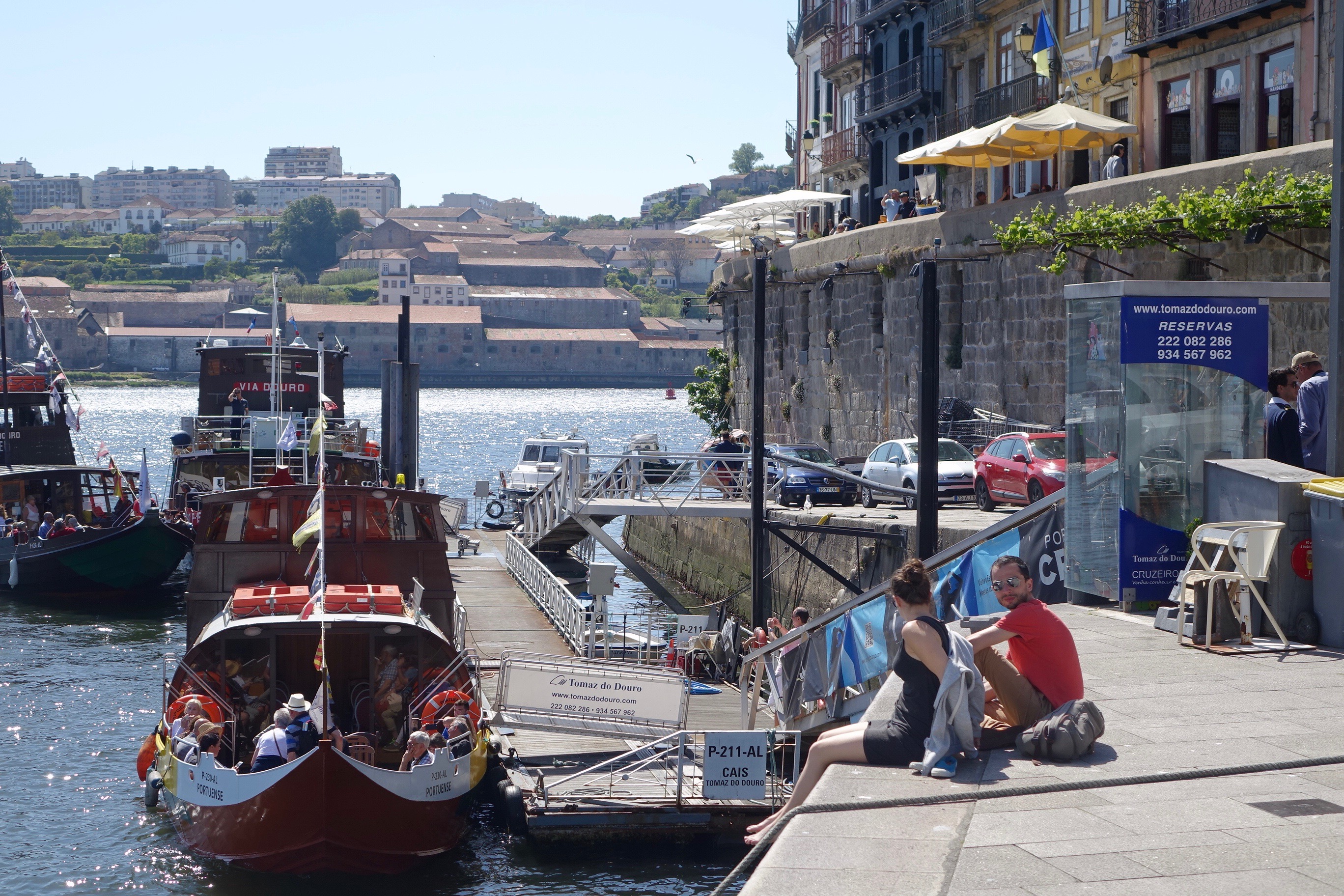
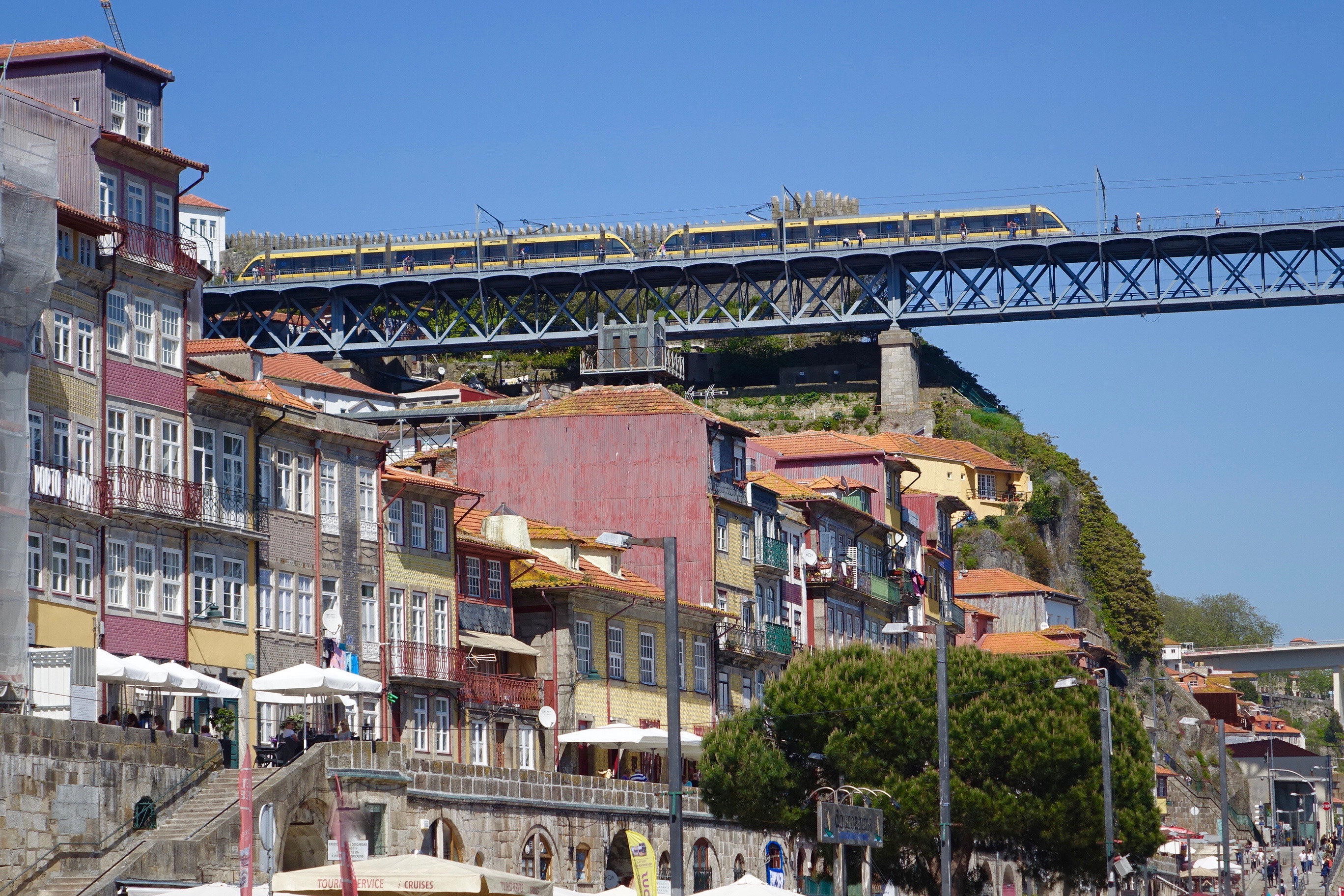
Our new compendium tour starts where that maze is at its most convoluted: in the knotty twist of streets which work their way over and around the hilly slopes which plunge down dramatically into the Duoro river – the Ribeira. Famed throughout the world and appropriately UNESCO protected, the Ribeira area is undaunted by the tourists naturally attracted to its streets and squares, retaining the authenticity of its carefree locals who can be seen enjoying the views and the sun from their ceramic tiled balconies with as much enthusiasm as the zealous tourist.

It is an area which exhibits numerous personalities. At its apex, the fortress bulk of the grand Sé Cathedral and it’s domineering Episcopal palace soar above the twisting mass of narrow lanes below, offering unbeatable rooftop views and an appreciation for Porto’s undulating geography. Delve into the streets beyond, and an impenetrable shadiness is punctuated by light only near the rooftops. However, soon enough, those darker alleys give way onto the soaring light of the riverbank, which is where the true heart of the Ribeira pulsates to the rhythm of street musicians and crowded restaurants, all benefiting from an unrivaled view of the Ponte de Dom Luis I, iron icon of the city.

DSC03460DSC03498DSC02943IMG_9850DSC03471DSC03482IMG_9839DSC02927DSC02851DSC02967DSC02855DSC02812DSC03063DSC02835DSC02800DSC02867

An encounter with the Ribeira marks an ideal introduction to this multifaceted city, suggesting something of the charismatic nuances of Portugal’s second city, as well as the distinct geography which has shaped Porto into a true feast for the eyes at every turn. 

© Nicholas de Lacy-Brown and The Daily Norm, 2018. Unauthorised use and/or duplication of the material, whether written work, photography or artwork, included within The Daily Norm without express and written permission from The Daily Norm’s author and/or owner is strictly prohibited.

Norms in Rome | The River Tiber

When one thinks of Rome, it’s easy to forget the river which twists its way through the centre of the city, carving a divide between the ancient centre on the one side, and Vatican City and the neighbouring area of Trastevere on the other. Yet the River Tiber is as much part of the fabric of the city as the Castel Sant’angelo which sits proudly on its banks, once the mausoleum of Emperor Hadrian himself. Not only did it bring crucial transportation and supplies to the city throughout its burgeoning past, but it was also the source of plague and pestilence, bringing the relentless annual swathe of mosquitoes to the city where malaria routinely reduced the population to a mere fraction of its former self.

Today the River Tiber is one of the most tranquil areas of Rome. Indeed, I have barely ever seen a boat move along its waters, and the river bank, which could be as vibrant as the South Bank in London, is practically deserted, the odd piece of graffiti reminding that the presence of some is not entirely lacking. Yet the banks of the River Tiber are as much a historical treasure as other parts of the city, leading as they do to the ancient Pons Fabricius, the oldest bridge in Rome, together with the mighty Ponte Sant’angelo, lined with glorious sculpture and affording visitors the most stunning view of St Peter’s and the Vatican beyond.

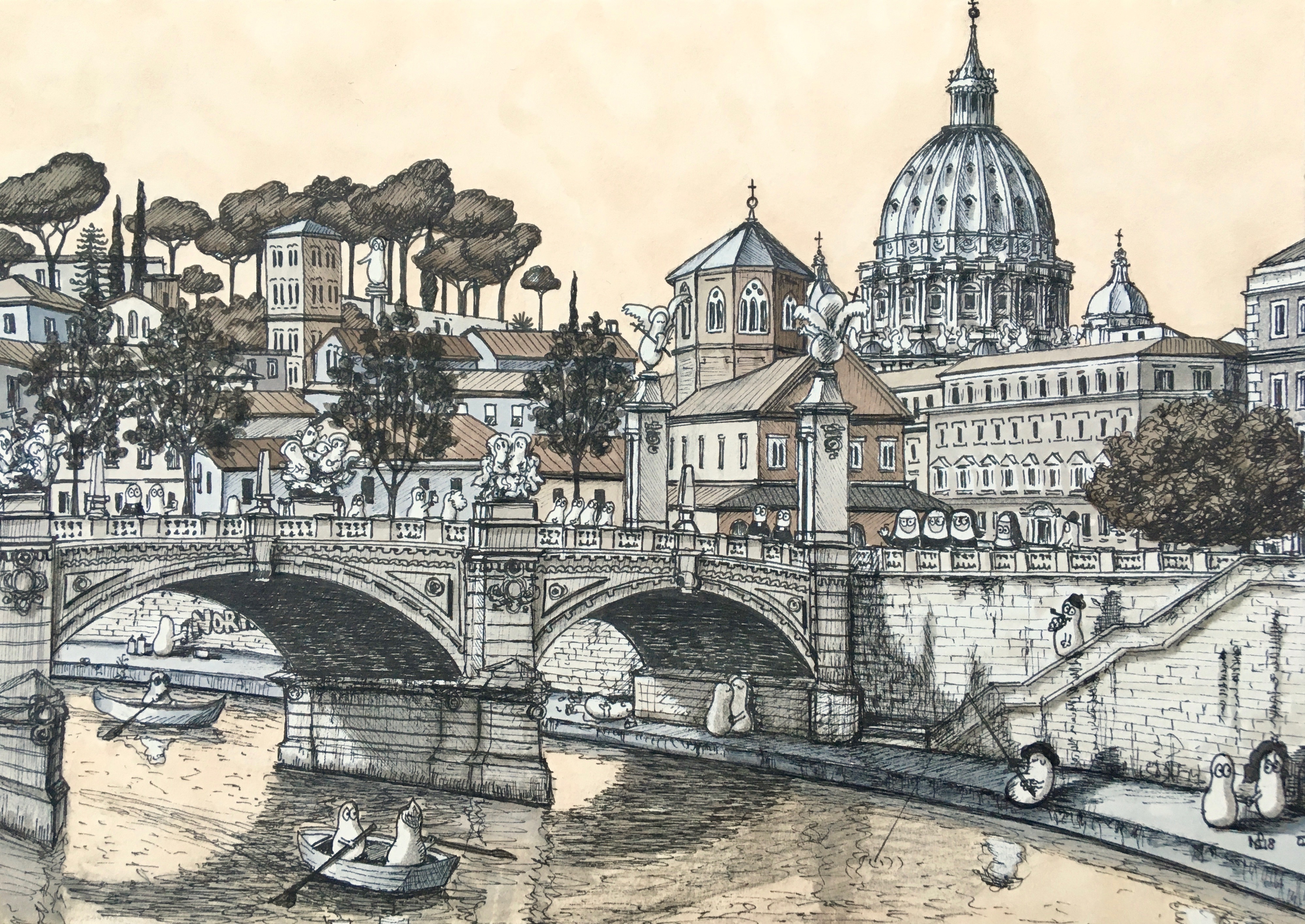
Norms on the Tiber

Norms on the River Tiber (©2018 Nicholas de Lacy-Brown, pen on paper)

It is from that very bridge that this week’s Norm sketch is located, with the dome of St Peter’s accompanied by a panoply of pine trees, Vatican buildings, and a river bank suitably populated by eager Norms. While the bank itself may be a place for the down and outs, the Norms kissing in secret, and the frustrated teenager Norm, spray painting the wall because his creativity has been suppressed at home, its river is a place for recreation and relaxation – these two Norm boats find themselves quite secluded, despite being in the very centre of Rome. Such are the advantages of a river which is integral to the city, but which today is quite forgotten, in the grand Roman scheme of things.

© Nicholas de Lacy-Brown and The Daily Norm, 2001-2018. Unauthorized use and/or duplication of the material, whether written work, photography or artwork, included within The Daily Norm without express and written permission from The Daily Norm’s author and/or owner is strictly prohibited. For more information on the artwork of Nicholas de Lacy-Brown, visit http://www.delacybrown.com