Skip to content

Posts tagged ‘Travel’

Madrid-Salamanca Part III: A frog, an astronaut, and a very cold ice cream

The souvenir shops of Salamanca are full to the brim with little green frogs, largely horrendously bastardised tacky creations with google eyes and a “thumbs up” gesture, frogs donning mortar boards, others wearing baseball caps. You get the picture. So what are all these frogs in aid of? It has nothing to do with the city playing host to a frog-friendly wetland habitat (the river is more likely to play host to the many fag ends and other detritus left over from the revels of Salamanca’s students who regularly gather on its banks in weed-smoking masses). Rather, the humble frog has become the symbol of the city owing to the very inconspicuous inclusion of a tiny carved frog in the stunning plateresque facade of the University. So inconspicuous in fact is the frog that it has long since become the subject of a traditional hunt for any student or visitor to the university: He who finds the frog will, tradition dictates, be lucky. Predictably the tradition has been repeated in every tourist patter, and large groups of tourists are frequently to be found staring up at the sensationally complex facade with strained faces.
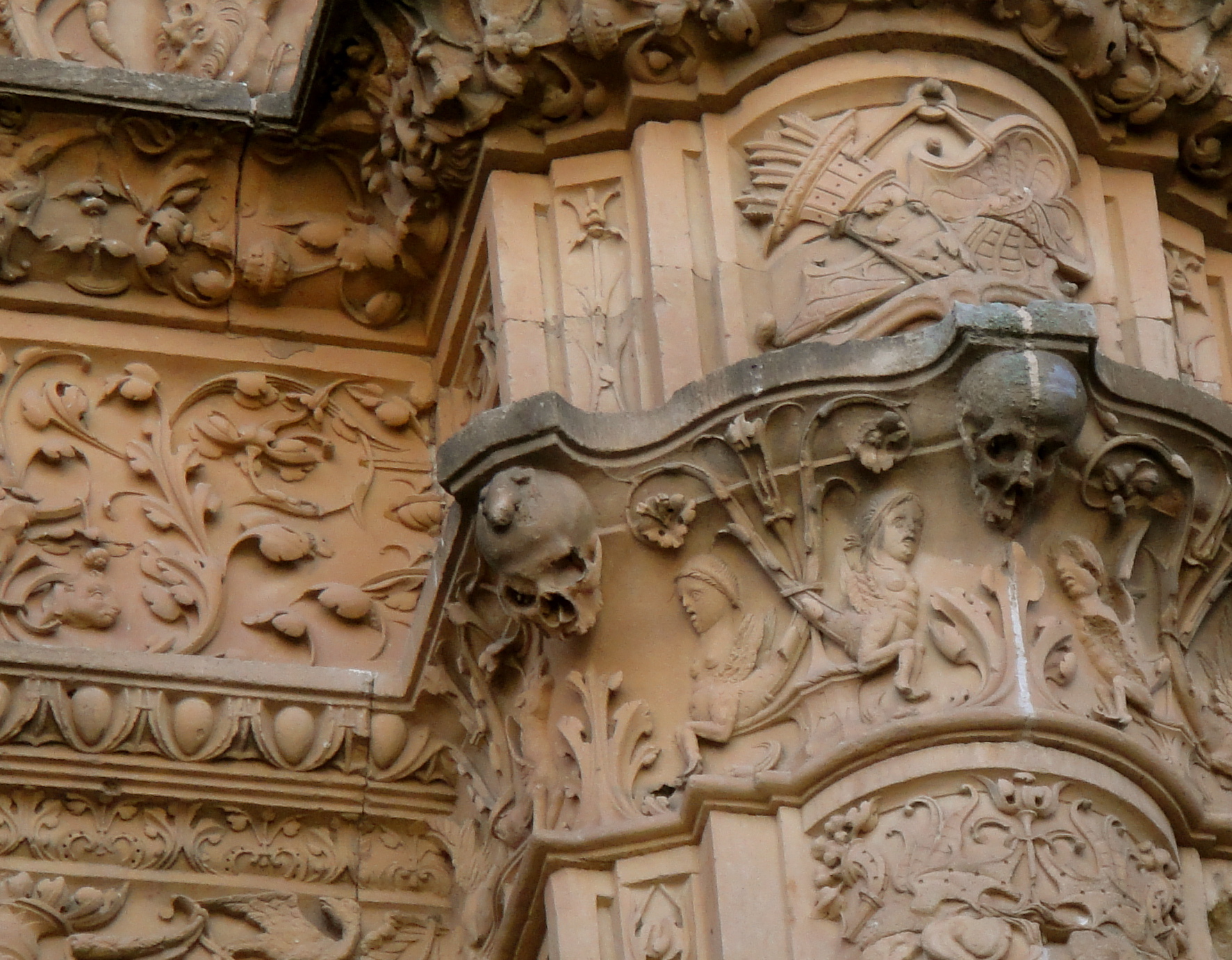
The frog is in here somewhere - can you find it?

The astronaut on the Catedral Nueva

I found the frog straight away. The problem is, I had already visited the university shop, where its location was at least partially given away by the multitude of frog postcards sold therein. Not to mention the fact that all the Japanese tourists were pointing in one direction, which kind of gave the game away. I’m nonetheless hopeful that my quick witted discovery, based on deductions stemmed from postcard clues and the careful observation of tourist behaviour, will lead to luck of some sort. Or perhaps it just emphasises a point I have often made: you make your own luck in life. Well, you may as well try it out – I’ve included a photo above of the general area of the frog (thus giving you a head start) – see if you can find it! You never know what luck it may give you.

Ice cream cone on the facade of the Catedral Nueva

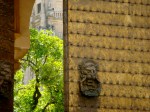
Sensing the potential profitability out of all this froggy fuss, the neighbouring cathedral has not allowed itself to be outdone. Within its equally complex facade, some cheeky renovators recently added an astronaut floating in amongst the pre-existing baroque foliage, as well as a mythical wolf like creature grasping an ice cream cone. I adore both additions, and love the humour which has been so readily embraced by the Cathedral authorities. Can you imagine a similar attempt by restorers of an ancient building in England? English Heritage would be all over them with threats and protestations quicker than an ice cream could melt. The only trouble is, you can spot the renovated pieces of sandstone quickly enough, and thus finding this cheeky twosome amidst the older, more eroded stonework can be done with a degree of ease. This does not detract from their charm however, and unlike the frog, they’re big enough, and sufficiently unweathered enough, to actually appreciate!

Whatever their contents, there is no escaping the stunningly elaborate and incredibly detailed building facades which literally choke the streets of Salamanca with their excessive virtuosity. These “plateresque” facades, so called because they are overtly elaborate, thus resembling silver work or “plata”, are synonymous with 15th and 16th century baroque architecture in Spain, but are all the more stunningly executed in Salamanca in the local Villamayor sandstone, the like of which enabled the stonemason to carve with even more precision, but which also gives a glimmering golden glow to the finished product.
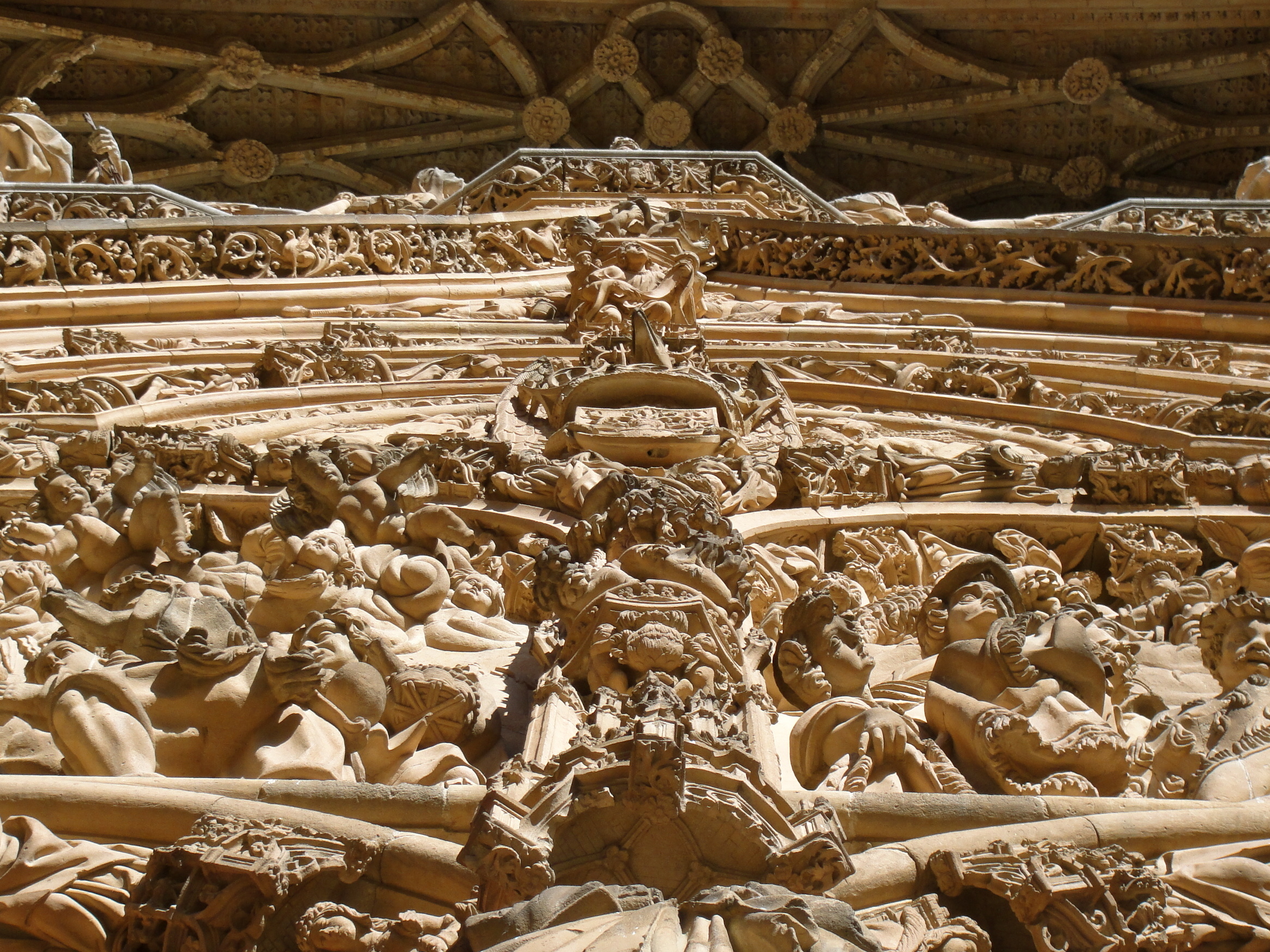
Looking up at the facade of the Catedral Nueva
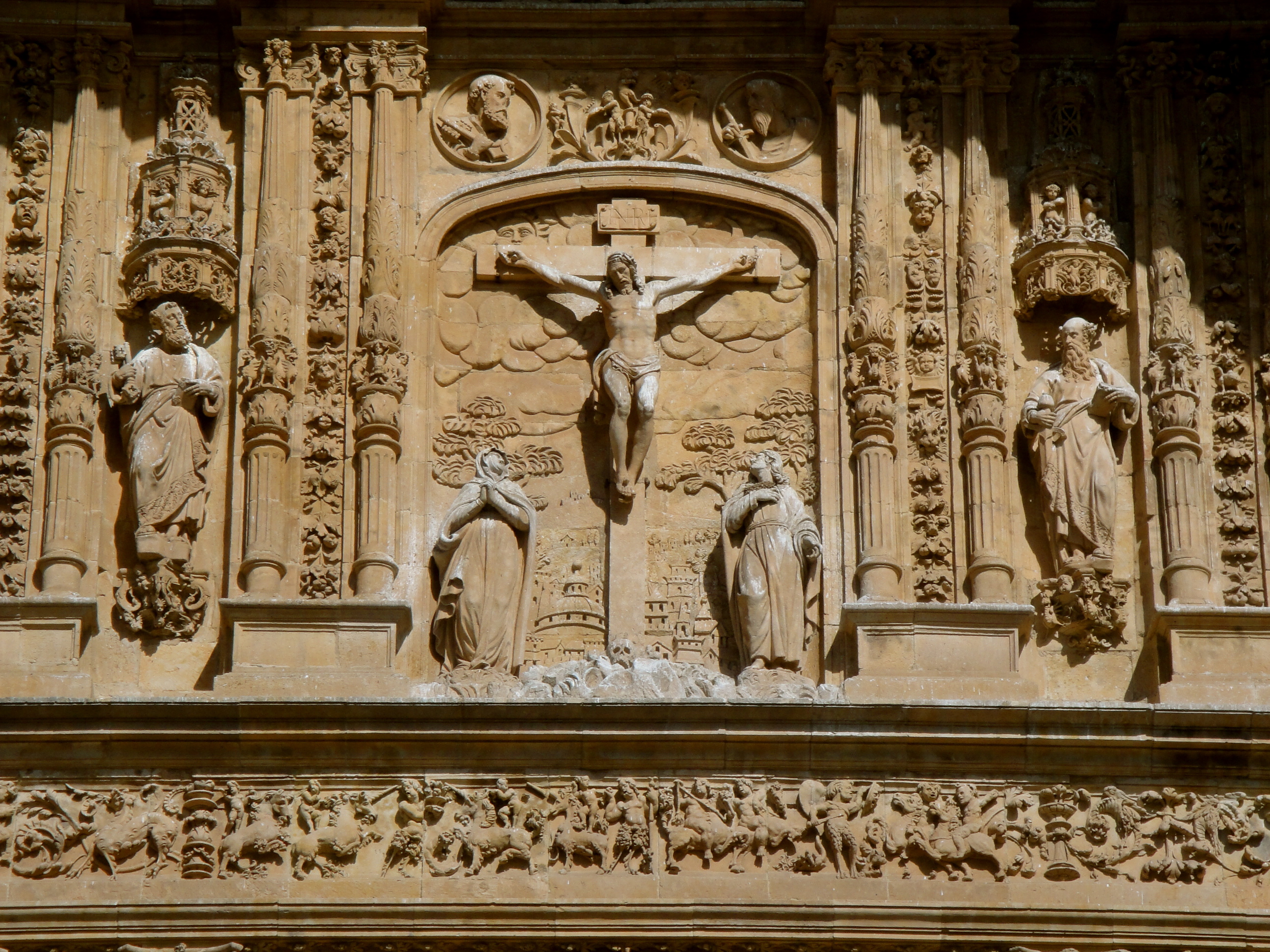
Facade of the Convento de San Esteban

Cloisters in the Convento de San Esteban

Asides from the breathtaking examples of stonemasonry covering the cathedral and the university facade, another standout example is to be found on the facade of the Convento de San Esteban, our next destination. The facade is nothing short of extraordinary, rising like an altar over the southeastern corner of the city, depicting the stoning of San Esteban (St Stephen) as its central motif. The detail of the work is mind blowing – I just hope that it survives the sustained attack of natural erosion upon its delicate forms.

Past this beautiful facade and into the convent, we found an equally stunning Gothic-Renaissance cloister, a space of such tranquility that, with the sun streaming through the long gothic windows and only the sound of quiet birdsong emanating from the carefully tendered gardens, one finds the ability to think and reflect more clearly than ever before. This cloister was like a place of epiphany. I fell almost trancelike into uninhibited introspection as I walked around the cloister and around the magnificent adjoining church, feeling my mind, body and soul slowing to a different pace of life, all the buzz of city life left behind, and my eased spirit released into the tranquil empyrean all around me. It was pretty difficult to leave I can tell you. I felt bad that we had only paid €2 to get in. It seemed an insanely small amount of money for the benefit we had received in return, especially compared with the university, where a €12 admission fee was charged to look around a few dark old classrooms and a library which you can’t enter but are forced to view from behind heavily protective perspex.

Cloisters in the Convento de San Esteban

Back into Salamanca, yet more architectural gems lay in wait – like the Casa de las Conchas, one of the city’s most endearing buildings, named after the several hundred scallop shells which cling to its facade and are even wrought in iron onto the front door. Surely this house had to have inspired Salvador Dali when he went about designing his theatre-museum in Figueres? It is thought that the shell symbolism stems from the shell symbol of the ancient Order of Santiago, of which the house’s original owner, Dr Rodrigo Maldonado de Talavera, was an evidentially proud member. It certainly makes for a novel site in amongst the more complex facades which otherwise dominate Salamanca’s old town.

Casa de las Conchas

With the sun starting to fade and Salamanca taking on that familiar peachy hue, we took the opportunity to gaze at the architectural splendours from afar – walking over Salamanca’s ancient Roman bridge to the other side of the river. Not only were we greeted by the picture-postcard view of the city, we also found a guilty pleasure – an empty children’s playground and a pair of swings. We couldn’t resist squeezing our adult bottoms into those swings and setting off into the air, a feeling of unadulterated childlike pleasure in an adult world, memories of our youth flooding back as the wind swished past us and our stomachs lurched as the swinging motion took hold.

Frogs, astronauts, ice creams and swings – in a city where imposing and austere church buildings dominate, there is still an ascendant feeling of fun, a feeling augmented by the city’s thriving student population which breathes youth and vitality into the arteries of this historical monument to Spain’s rich architectural, educational and religious heritage.

© Nicholas de Lacy-Brown and The Daily Norm, 2005-2012. Unauthorized use and/or duplication of the material, whether written work or artwork, included within The Daily Norm without express and written permission from The Daily Norm’s author and/or owner is strictly prohibited. Excerpts and links may be used, provided that full and clear credit is given to Nicholas de Lacy-Brown and The Daily Norm with appropriate and specific direction to the original content.

Madrid – My photographs

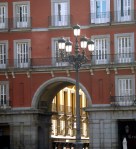
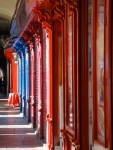
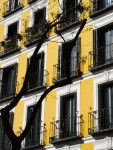
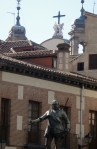
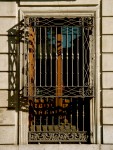
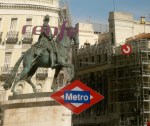
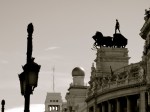
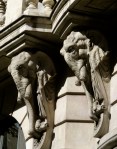
In a welcome intermission from the account of my epic travels from Madrid to Salamanca, I am taking the opportunity to share with all the readers of The Daily Norm a first raft of photographs from the trip, starting with Madrid. From the grandeur of the Gran Via and the Plaza Mayor, to the quotidian offerings of the bustling Mercado San Miguel, Madrid has so much offer both the visitor and the budding photographer. Stunning architectural details and daily city life combine to inspire me with my camera, and despite a short stay in the city, I’ve collected a good few pictures to show you. Enjoy!

© Nicholas de Lacy-Brown and The Daily Norm, 2005-2012. Unauthorized use and/or duplication of the material, whether written work, photography or artwork in any form, included within The Daily Norm without express and written permission from The Daily Norm’s author and/or owner is strictly prohibited. Excerpts and links may be used, provided that full and clear credit is given to Nicholas de Lacy-Brown and The Daily Norm with appropriate and specific direction to the original content.

Madrid-Salamanca Part I: Silk-scarf Chagall’s and perfect palmeras – Thyssen, Prado and a well-needed Retiro

I have got the travel bug again, a bug which generally manifests itself in an urgent need to revisit the country of my parallel existence, Spain. There are a great deal of cities which I have left as yet unexplored on the Iberian Peninsula, but following the recent recommendation of a good friend, whose excellent taste for all things art historical is like the unwavering role of Vogue as a navigator through the undulations of fashion, I settled my sights on a city renowned for its university, its unrivalled and elaborate baroque architecture, and an all-over golden glow emanating from its consistent use of the local “Villamayor” sun-dappled sandstone: the City of Salamanca.

The golden hues of Salamanca's sandstone cathedral

Salamanca, named European Capital of Culture in 2002 and a UNESCO world-heritage site in 1988, is an amber-coloured gem set deep within the rocky central plains of the Castilla y Leon region of Spain. Despite its renown, the city has no airport, and consequently a visit to Madrid was first deemed necessary (you can also fly to nearby Valladolid and take a train to Salamanca from there). We decided to take advantage of Madrid as a channel to Castilla, staying two nights in the Vincci Soho hotel on the Calle Prado within easy reach of the Madrid artistic tripartite: the Thyssen-Bornemisza; the Prado and the Reina Sofia. It’s my fifth time in Madrid, but who can turn down the opportunity to drop in on some of the greatest masterpieces in all the world?

Foyer of the Madrid Vincci Soho

Upon waking in our spacious room complete with two balconies, one looking down to the Thyssen and the other angled towards the lively Plaza Santa Ana (we arrived late the previous night after a delayed flight and an even longer wait for luggage at Madrid airport) we headed enthusiastically into gallery land, stopping only for a sinful coffee at Starbucks (I know, and this coming from me, opponent of cafe chains – but you try getting a humble coffee in a zone of parks, monuments and gallery cafes).

Marc Chagall, Golgotha (1912)

First stop was the Thyssen-Bornemisza, a vast gallery which houses the collections of two respective generations of the Thyssen-Bornemisza family, the largest of which was acquired by the Spanish state in 1993. A temporary show offered a retrospective look at the career of Marc Chagall. I was pleased about this, having only previously seen odd pieces by the Russian artist, and having gazed unknowingly at one of his designs throughout my youth when I admired the bloody red window which brightens up one facade of Chichester Cathedral in my home county of West Sussex.

View from the window in Zaolchie near Vitebsk, Marc Chagall (1915)

The show started fairly well. Chagall experimented with the cubist genre before moving into a more uniquely multi-coloured abstractive approach, all the while retaining figures who are often suspended randomly upon a two-dimensional backcloth. I liked some of his early works. His painting of a crucifixion (“Golgotha”) upon a background of tumultuous green showed originality and a powerful sense of drama (despite being Jewish, Chagall made recurrent references to the crucifixion in his work which he saw as a symbol of persecution of the Jews). I was also attracted by his works illustrating his home town of Vitebsk, with their subdued colour palette. Thereafter I wasn’t so impressed. His works became fairly repetitive and quite cartoony. His paintings featured the same symbols obsessively: badly painted livestock and horses playing the fiddle, embracing couples, and haphazardly executed flowers, all set against a vivid blue or red background. For me, his works resemble the kind of tacky silk scarves you find in arts and craft fairs. Try as I might, I really struggled to connect with his works. This connection was also made slightly harder by virtue of Thyssen’s bizarre decision to split the exhibition between two sites, so that for the second half we had to traipse halfway across central Madrid to the Caja Fundacion.

Marc Chagall, The Blue House (1920)

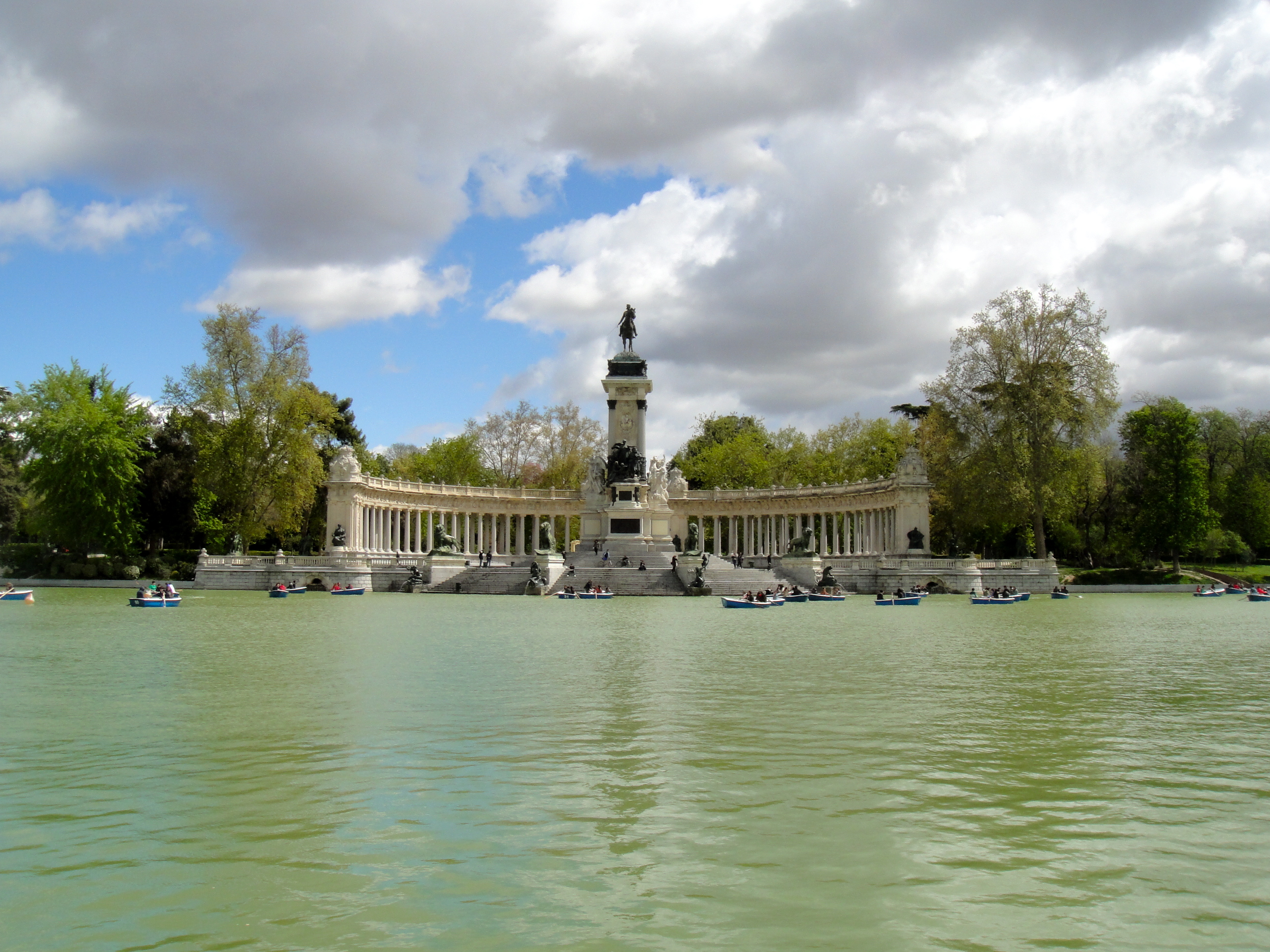
Having done the Chagall, and the rest of Thyssen’s collection, we emerged into a sunny Madrid and feeling full of the joys of Spring, headed to the Retiro park for lunch. Our admiration of these beautifully laid out public gardens including a massive pleasure lake framed by the arms of a vast colonnaded palace was however rudely interrupted by the passing of a rainstorm and accompanying Icelandic winds which swiftly turned Spring into mid-Winter in a heartbeat. Our shelter under a big pine tree proved rather fruitless, to which our damp visage later played testament, but luckily it really was a passing shower. With the sun out again, we and a number of other tourists emerged from our hiding places in the greenery like fairies called to the command of Titania in A Midsummer Night’s Dream, and we headed for the Prado.

The Buen Retiro Park

The Prado is a must for any art lover. The collection is so vast and the highlights so important and and wide-reaching that it frankly tramples the Louvre’s Mona Lisa-centred collection and blows the UK out of the water. Here you find Velazquez’s Las Meninas as well as a huge number of important highlights from his oeuvre: his royal portraits, “buffoons”, crucifixion and so on. Just a few galleries away are some stunning works by my favourite of the old masters: El Greco, a man whose works were so startlingly modern for his day that they wouldn’t look out of place down the road in the Reina Sofia with the Picasso’s. Then there are Goya’s chilling black paintings, and his 2nd and 3rd of May 1808 masterpieces, Bosch’s Garden of Earthly Delights, and vast canvases by Rubens and Van Dyke. But asides from the priceless masterpieces, there are also wonderful examples of 19th century art by lesser known artists, and huge historical masterpieces such as this one, The Execution of Torrijos and His Companions on the Beach at Malaga by Antonio Gisbert, a painting which is so big that it could easily eclipse the average family home.

Antonio Gisbert, The Execution of Torrijos and His Companions on the Beach at Malaga (1887-88) (390cm x 600cm) Prado Gallery, Madrid

Understandably exhausted by the breadth of works on show, we retreated to our hotel for a well-earned rest before heading out, into the evening sun, to explore the livelier side of Madrid. We particularly enjoyed a visit to the bustling Mercado San Miguel, where locals and tourists alike gather to sample seafood delicacies, wines, tapas and pastries. Being as ever the purveyors of all things sweet, we settled for a creamy coffee and two freshly baked palmeras (otherwise known as palmiers or “elephant ears”). Now that is what I call a rounded day of cultural appreciation.

Creamy coffees at the Mercado San MIguel (palmeras had been scoffed by this point)

¡Hasta mañana!

Córdoba: The city which inspired the painting

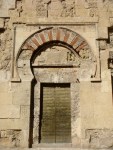
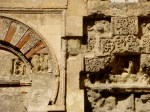
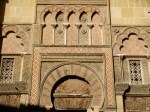
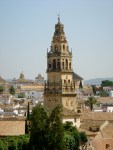
It’s my last dip into the Iberian peninsular before I go all Valentines on you… Following yesterday’s Sunday Supplement in which I introduced my painting, Córdoba, here are my photos of the city which inspired the work.

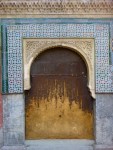
Córdoba is a unique little place. It doesn’t share the same thriving spirit as Seville or Granada for example, at least not in the very self-contained old town which looks and feels very much like a living museum given over to the tourists. Asides from La Mezquita at its centre, there are a few quaint art museums and an excellent archeological museum, but otherwise there is not a huge amount to see. Surprisingly, it did make the short list for Spain’s European Capital of Culture in 2016 which scandalously Malaga, home of the great Picasso Museum, a flashy new airport, a thriving city and a contemporary art museum, did not. Having said this, Córdoba is a crucial visit for those with an interest in Spain’s rich cultural heritage, and in particular its Moorish past. Should you go, be sure to sample Berejenas Fritas – deep fried aubergine served with a syrupy sauce – divine.

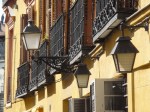
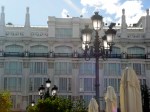
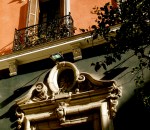
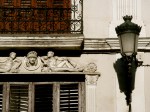
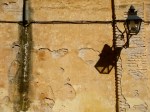
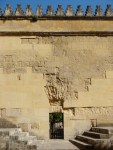
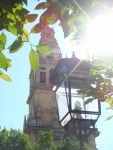
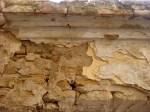
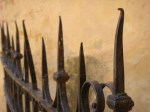
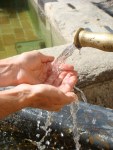
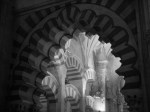
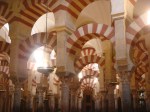
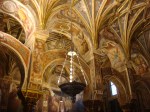
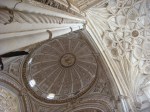
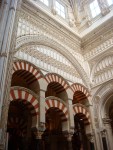
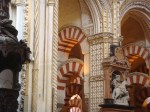
Below are a selection of the photos I took when in Córdoba. If you saw my post yesterday, you’ll recognise the crumbling facades, elegant wrought-iron lamps, the quenching relief of a hotel swimming pool, and that shameful architectural vandalism which took place in the great mosque after the Christian reconquista. This is a city where history is not only preserved, but the wounds of the past are still uncomfortably evident.

© Nicholas de Lacy-Brown and The Daily Norm, 2005-2012. Unauthorized use and/or duplication of the material, whether written work or artwork, included within The Daily Norm without express and written permission from The Daily Norm’s author and/or owner is strictly prohibited. Excerpts and links may be used, provided that full and clear credit is given to Nicholas de Lacy-Brown and The Daily Norm with appropriate and specific direction to the original content.