

Simple floral display which makes a contemporary statement
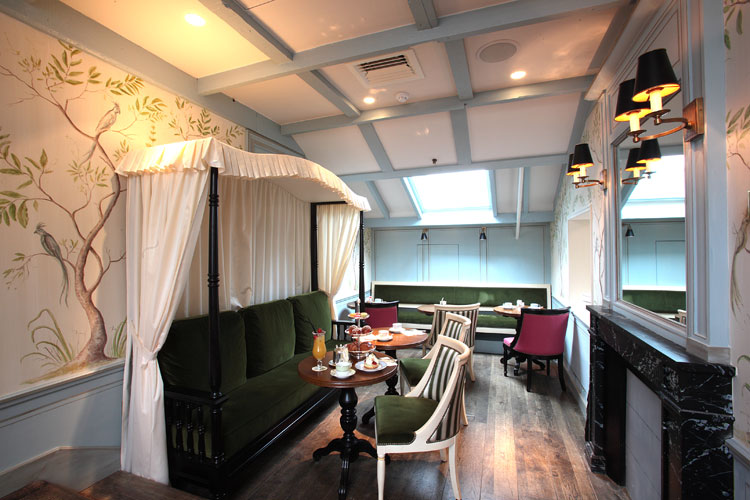
The good thing about a small city trip in a vibrant city is that with the relatively moderate expense of a short trip, so much can be loaded into a short expanse of time that the trip provides all of the ingredients for a sustained period of inspiration and multifaceted memories which live on indefinitely. My recent trip to Amsterdam is one such trip which was worth its weight in gold. Already I’ve been painting Dutch-inspired parody pieces, sketching Norms all over The Netherlands, regularly revisiting my substantial collection of photographs and I am about to embark on a suitably Amsterdam-inspired new Norm canvas. However, one of the greatest inspirations for me was the elegance and sumptuosity of our Amsterdam hotel – the Hotel Estheréa. The interior design of the hotel was faultless both in the downstairs public spaces and in the bedrooms. Since my return, I have scanned the web seeking out the various grand design wallpapers used, the beautiful butterflies which adorned their walls, and am seriously considering whether I too should import an oversized pink chandelier into my home. All of this comes at a price I can currently only dream of, however one important aspect of their design, which I have found cheaper to replicate, is their stunning floral displays. The hotel paid attention to every tiny detail, and during our stay, a fresh import of new flowers were installed throughout the hotel (presumably they do this on a fairly regular basis). One of the most effective displays of flowers, installed variously on several large and small tables alike, was the grouping of numerous small and single-stem vases, each containing one or two stems only. The look which resulted was far more contemporary than a normal vase of flowers.
So, returning home to London, my head buzzing with ideas, I set about searching out a variety of single-stem vases. To collect a small group of 6 or 7 would, I soon discovered, cost well over £100 and involve as many separate orders and correlating shipping charges as I would find vases. So I decided to revert my search to glass bottles. I then found one website which sells a huge range of different shaped bottles, all costing only around €2-€3 each. And so I managed to purchase myself some 14 different shaped and sized bottles, all from the same site, for a total cost of €30 including shipping. They arrived a couple of days later. I bought two cheap(ish) bunches of roses from the local supermarket (which are in plentiful supply at the moment in the lead up to mother’s day). This is the result:
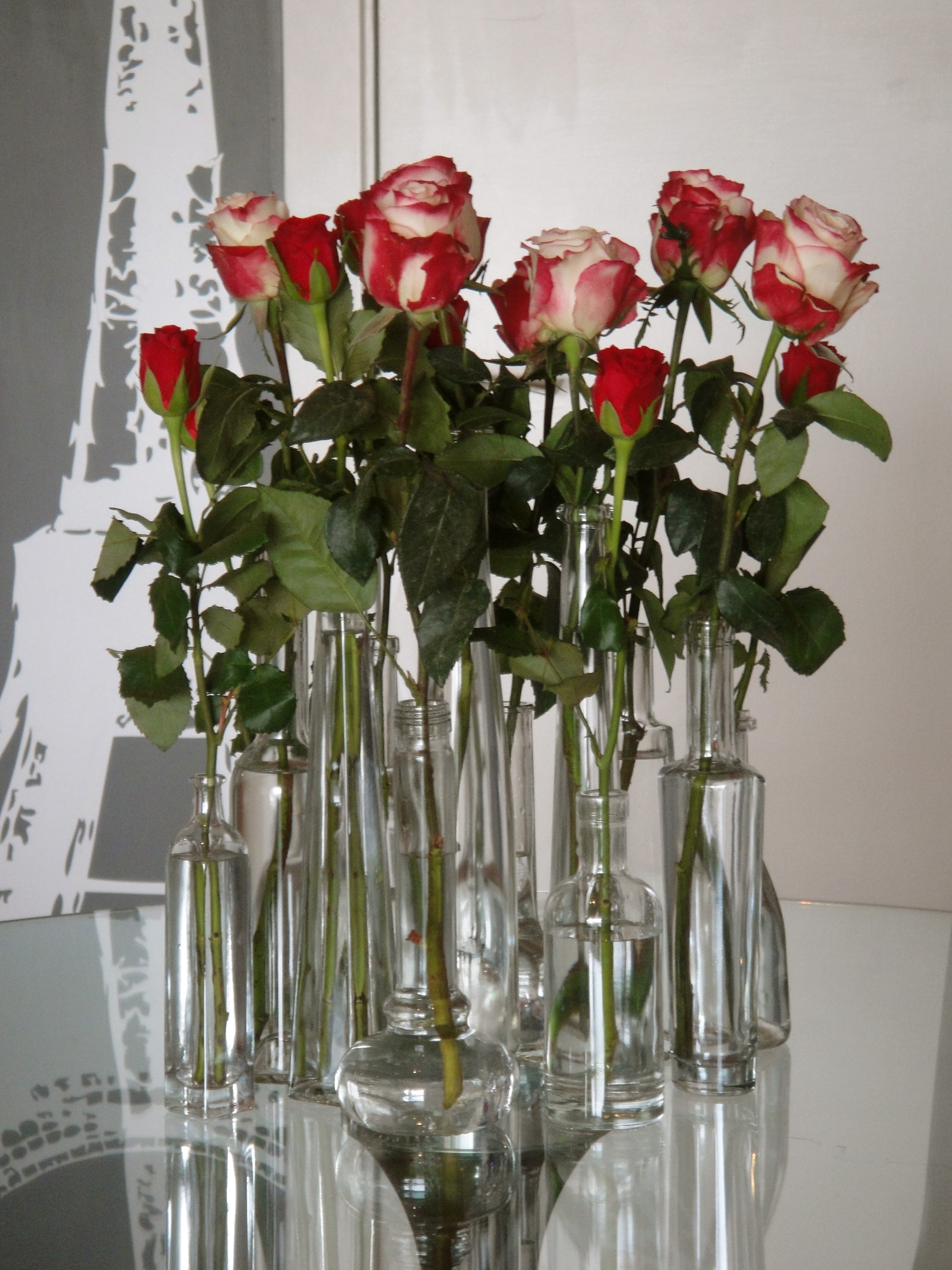


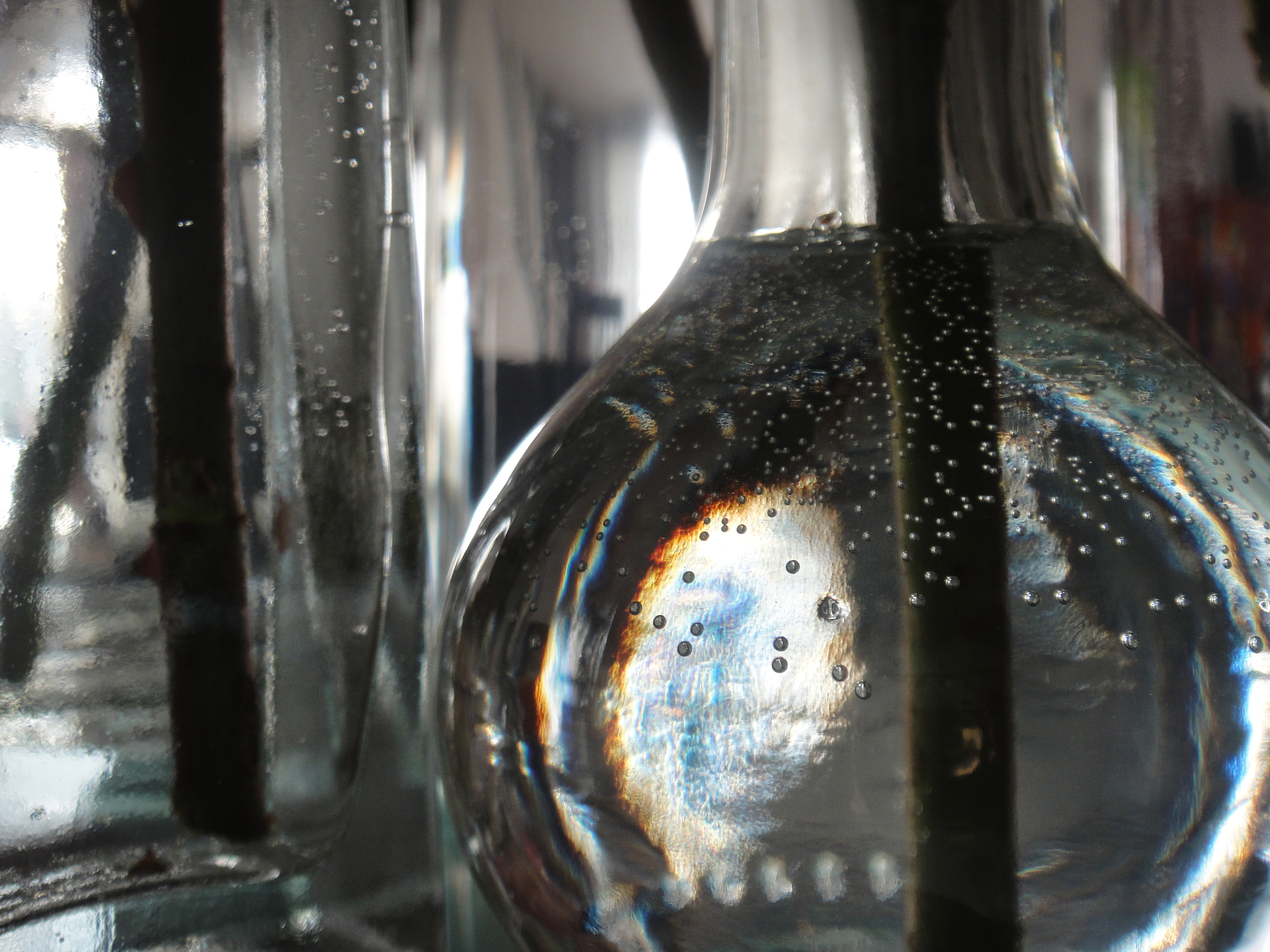
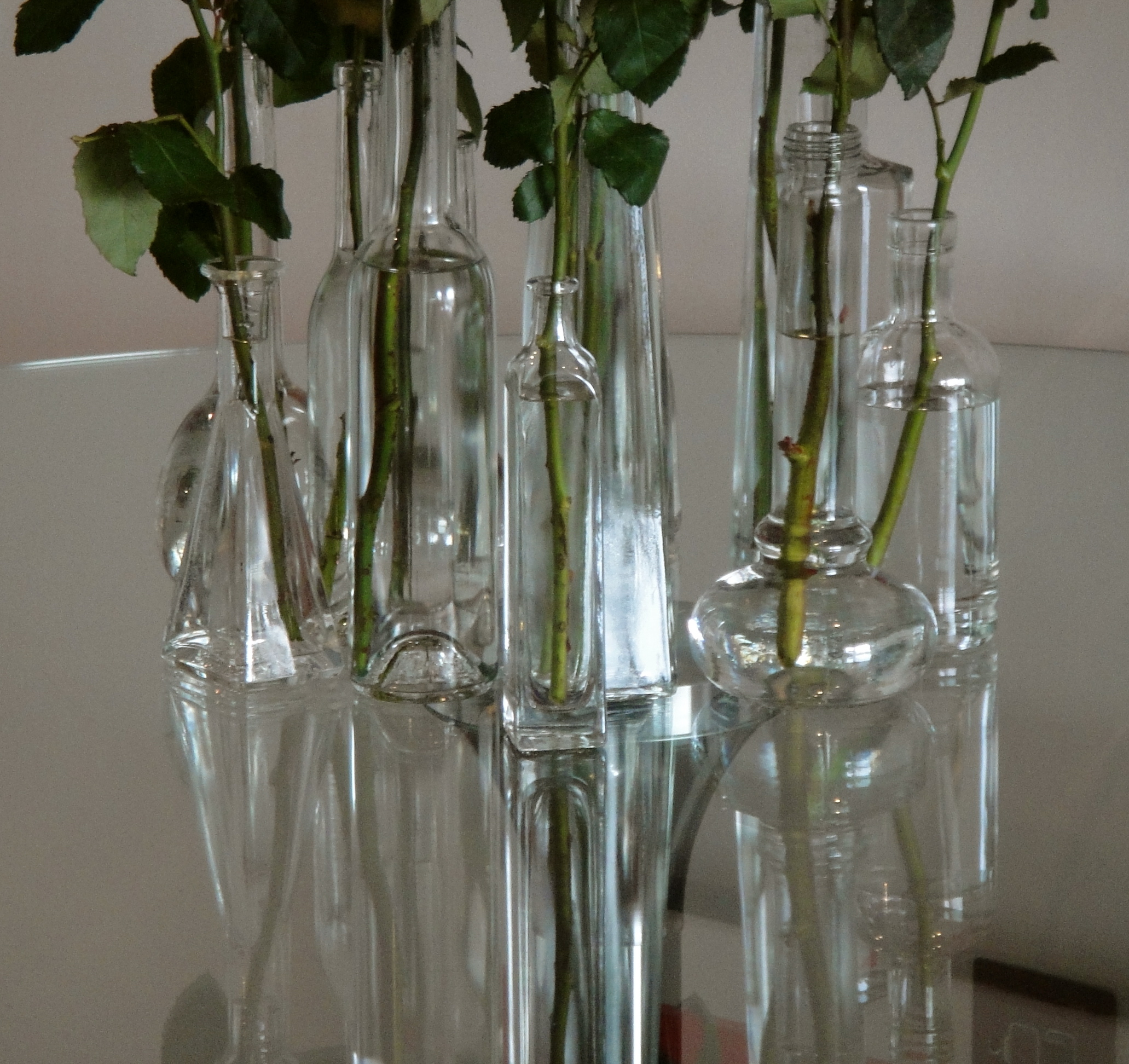
The look is contemporary and fresh. The differently shaped bottles add variety, but the use of a monochrome clear coloured glass ensures a contemporary feel is maintained. The display also feels modern because the flowers are controlled, all standing up straight rather than flopping around en masse in a vase. This control is even better achieved using bottles, since most have a fairly narrow opening.
It’s a great look for my dining table, and one that really wows as a contemporary floral display with a very boutique-chic look. But best of all, the price was definitely not boutique.
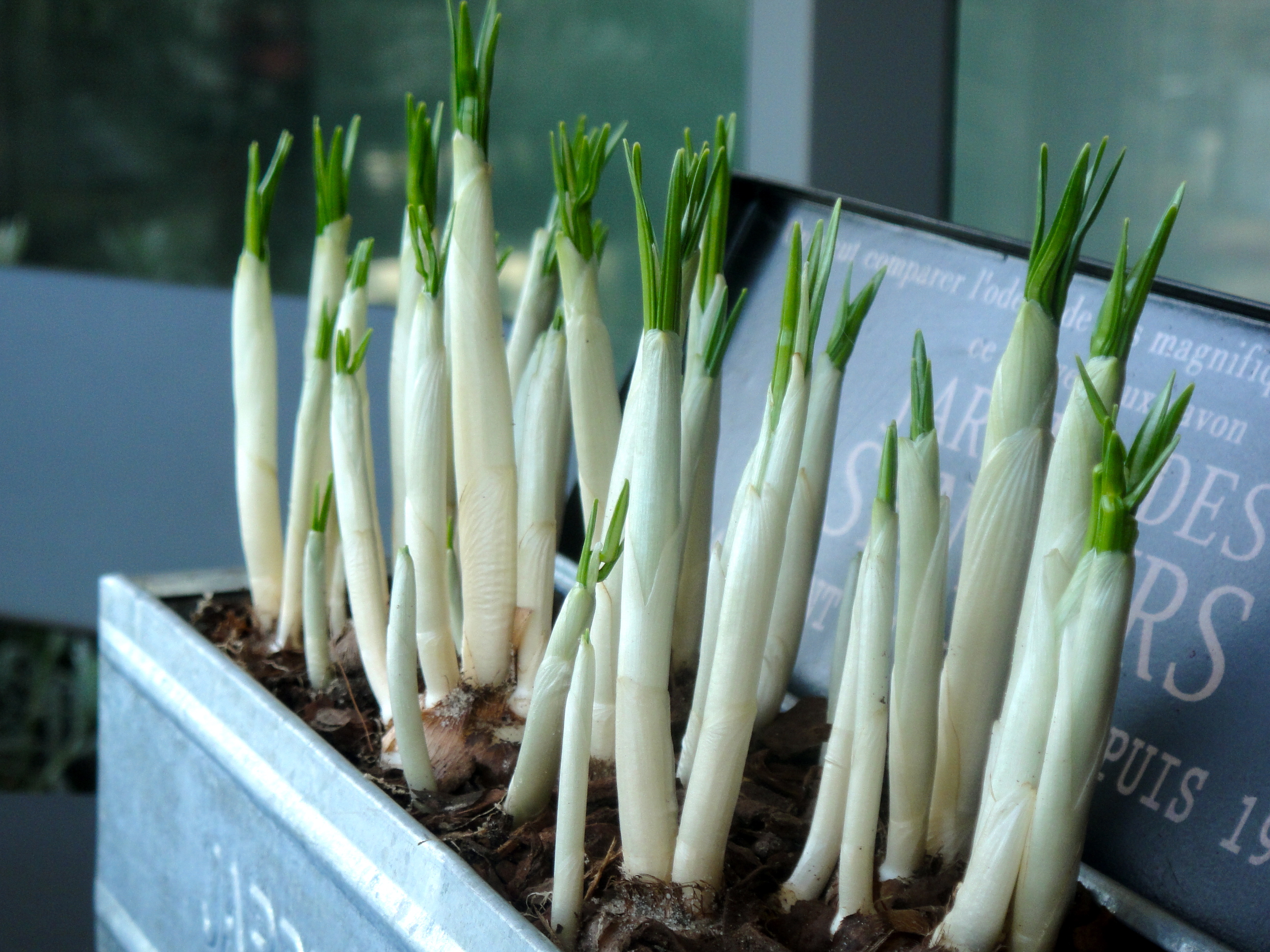
Talking of contemporary, check out my other recent acquisition – white crocuses set in an attractive metal box adorned with french writing. This brings gallic finesse to an otherwise industrial tin, while the yet unopened crocuses provide another modern sleek display piece which I kind of wish wouldn’t flower at all.

In conclusion, Spring is on its way, and in my opinion, there is no better way to breath a bit of life into your home that with fresh flowers, however displayed. Give flowers to your mother this sunday – and if you’re not a mother, remember to keep some back for yourself!
Related articles
- Amsterdam Part IV: The Hotel and the Restaurants (normsonline.wordpress.com)




































 The Daily Norm
Mar 9
Next train stop: The National Gallery (aka waiting room/ hang out/ free for all)
I had a free hour between meetings the other day – no point in heading home only to turn around again (always best to avoid the Northern line, whatever time of the day) so I decided to head into London’s preeminent art space, The National Gallery. One of the pulls of the gallery is the fact that it’s free. It means that you can drop in and out as many times as you like and therefore digest the large collection more easily. Nevertheless, it seems that charging no entry has proved to be one pull too many for the many visitors to the Gallery.
Walking into the National felt very much like walking into one of London’s busiest train terminuses. People were rushing about all over the place. Huge groups were gathered in the foyer, others were walking around, luggage in tow, some were on the phone, others having animated conversation. I put this down to its being a foyer – a meeting place for the masses who have toured the galleries or are about to. But to my consternation, once I began to walk around the galleries, I found the situation to be the same even in the farthest of rooms from the entrance. The galleries seemed to act as a thoroughfare for all and everyone in London. There was a constant feeling of unease and stress as the breeze of countless individuals and large groups rushing through the galleries pervaded the air. Meanwhile, all of the seats in the centre of the galleries would be loaded with people who appeared to have been getting cosy there for sometime. I saw people listening to ipods, half asleep. Others reading books, magazines, newspapers. People were chatting, catching up. Others were sat down, eyes to the floor or on their watch, looking bored to tears. Plenty were texting, others speaking on the phone. Most importantly, only 1 in every 25 people who were in the galleries seemed to take any interest in the art on show whatsoever!
Norms (ignoring Art) at the National Gallery (2012 © Nicholas de Lacy-Brown, pen on paper)
For those, like me, who are interested in the wonderful art on show, all this made for a distracting experience. Appreciating art requires a tranquil calm environment, free from distractions. How else can one enter the world which the artist has created, to consider the artist’s motives, his feelings, emotions and the story being narrated on canvas. Trying to appreciate art here was akin to analysing a Rubens hanging in the midst of a busy underground platform.
Busy impressionist gallery at the National Gallery - but at least here some people are looking at the paintings!
The press has recently applauded the increase in visitor numbers to London galleries. The increase, it is said, has been credited to the move of the Labour Government (i.e. the government whose policies ruined most things in the UK) to make the majority of London galleries and museums free back in 2001. It’s a move which has since been adopted by the coalition government, and money is put aside to subsidise the participating institutions who otherwise lose out on the admission fee.
Don’t get me wrong – open access to art is a wonderful thing. Art has a power like nothing else to enrich lives, to enable escapism to another world, to brighten a day, to enhance emotions. And the freer the access the better. The problem is, no one in the National Gallery seemed to even bother with the paintings. For them, the space was a place to hang out, to rest their feet, to chat with friends, to escape the winter weather. And for those of us who do appreciate art, that was a real distraction.
Saint Sebastian by Gerrit van Honthorst (c.1623)
The National Gallery’s collection is superb. I went along to see Velazquez’s Rokeby Venus having recently painted my own Norm piece devoted to the work. But asides from this, a look round just a few galleries introduced me to some wonderful new lesser known pieces of which I had no prior knowledge. Take Saint Sebastian by Gerrit van Honthorst – what a superb painting. St Sebastian is ever the romantic icon – a beautiful matyr who pulls at the heart strings of his viewer. This sensitive portrayal beautifully captures the moment of his ultimate torment. The soft supple depiction of his well toned flesh contrasts to devastating effect with the violence of the arrows piercing it, blood staining the peachy tones of his perfect skin. And what about Willem Kalf’s Still Life with Drinking Horn. Still lifes may be potentially a bit “past it” but the skill of this piece is astonishing, the lobster painted with startling precision, it’s ruby red shell tantalising all the senses, while the portrayal of horn, glass and drapery shows that the artist’s skills can be turned to any material or texture.
Still Life with Drinking Horn by Willen Kalf
Rokeby Venus, slashed by Mary Richardson in 1914
For me, when a gallery becomes a thorough fare, the magnificence of its art is somehow degraded – not given the respect it deserves. This feeling is increased by the lack of security at the gallery – no bag checks at the entrance, no security gates, and security guards who are present but wouldn’t realistically be able to prevent an attack on a painting – only catch the perpetrator. Has the National Gallery not learnt from past lessons then, such as the devastating attack on the Rokeby Venus at the hands of a suffragette, “Slasher Mary” in 1914? The scars are still visible on the great Venus for all to see. By contrast in Paris, at the Louvre, the d’Orsay, the Pompidou, you cannot enter those galleries without full scale security checks, and of course an admission fee. The result is that the paintings are given the respect they deserve – as masterpieces of the nation.
A difficult debate ensues. Should art be made free to the nation and if so, how can you stop abuse by those who take very little interest in the art on show, or whose interest is laced with violent intentions? I think a security check, at the very least, should be installed, and bags, phones, ipods should not be allowed. Free access should be encouraged, but these paintings must be given the respect they deserve, or the ghosts of all those unhappy artists, turning in their graves, will surely haunt us forever.
Related articles