Skip to content

Posts from the ‘My Art’ Category

8am Wake-up Call

It’s not so much the fact of my brother-in-law’s tragic end that traumatises me as the way I heard the news. It’s the moment that will always haunt me, continues to haunt me even now, 10 months later.

It was the Saturday before Christmas, and there was no more work until after the season itself. I had seen my dear friend Millie the night before, and had gone to bed full of excitement for the season to come. My partner and I had been so enamoured by the romance that comes so easily with the festive season that we fell asleep with Christmas lights still twinkling and the soft choral chants of a cloister monastery singing medieval carols playing quietly on my iPod. And it was to this Elysium of festive tranquility that we awoke that morning, full of happiness for the season to come.

We lay in bed, discussing what we would do that day. How we would finish wrapping presents and go out to savour the spirit of London at Christmas before leaving town. Dominik was checking Facebook, reading my sister’s last message posted online – she too had been wrapping presents till late, waiting for her 3 babies to fall asleep so as not to spoil the surprise.

But 2 minutes later all that was to change. I’ll never forget it. The landline ringing at 8am exactly. It was my family’s number on the caller display. I thought it was a bit early this call, but answered nonetheless, quite innocent of what was to come.

The tone of my mother’s voice told me immediately that something was wrong. Almost gasping for breath, struggling to annunciate between tears, she said the words that have come to haunt me ever since. Nick, she sobbed, something dreadful has happened. Neri was killed in the night.
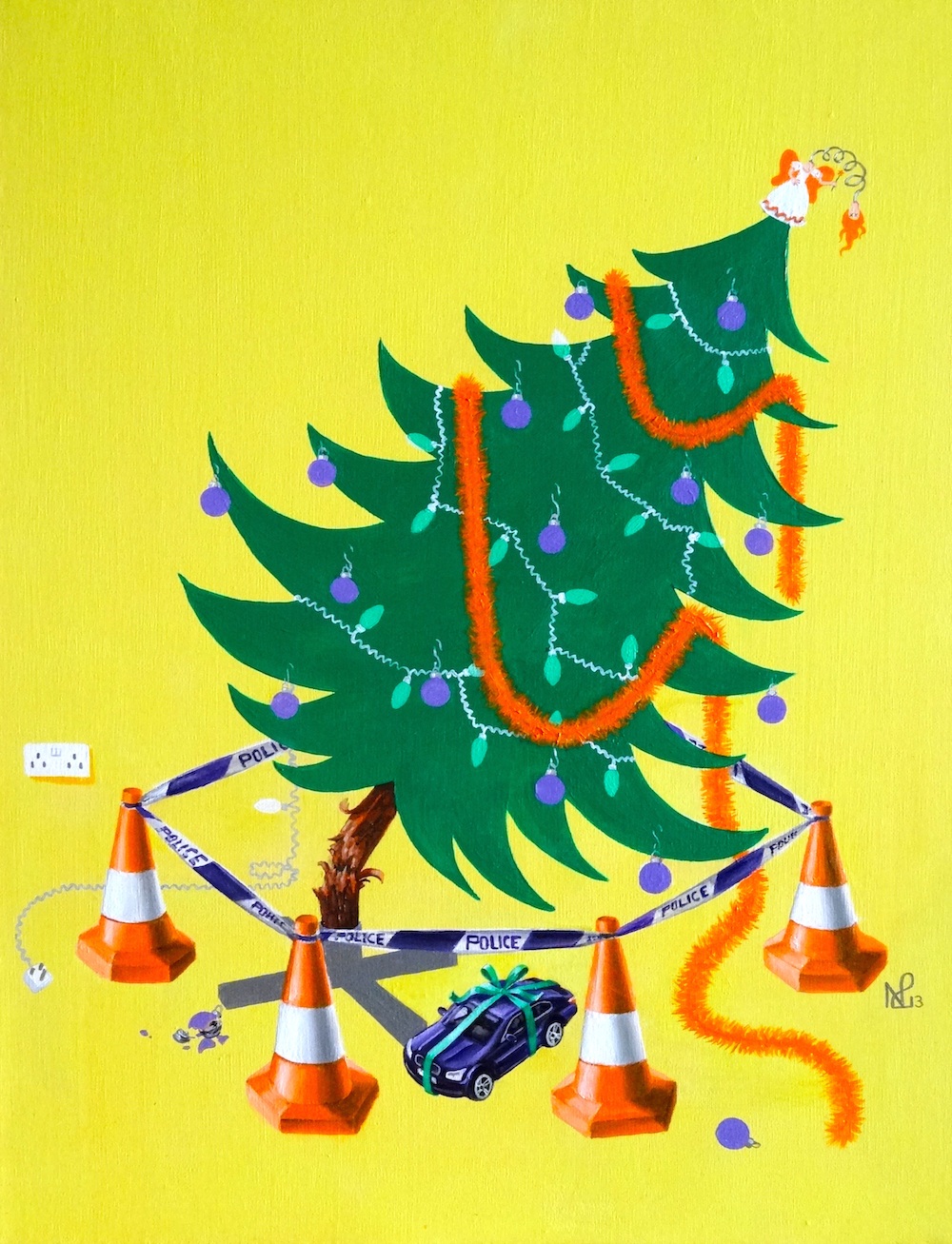
8am Wake-up Call (2013 © Nicholas de Lacy-Brown, acrylic on canvas)

8am Wake-up Call (2013 © Nicholas de Lacy-Brown, acrylic on canvas)

At that moment my world, tangibly, perceptibly, collapsed around me. The hopes and the spirit, the festive joy of Christmas crumbled. All happiness was gone, replaced only by the unquenchable burden of grief.

As the day proceeded and the shock began to take hold, we did not know what to do but to go out. Wandering around the town, London looked the same as it had the days and weeks before. Seeing a city full of the festive spirit, but this time like watching the whole scene unfurl in slow motion. It was as though we were on the outside of a gift shop called Christmas looking in, everyone inside enjoying the warmth and happiness of the season, but our emotions paralysed by the grief which had drowned our souls, as we stood outside in the cold.

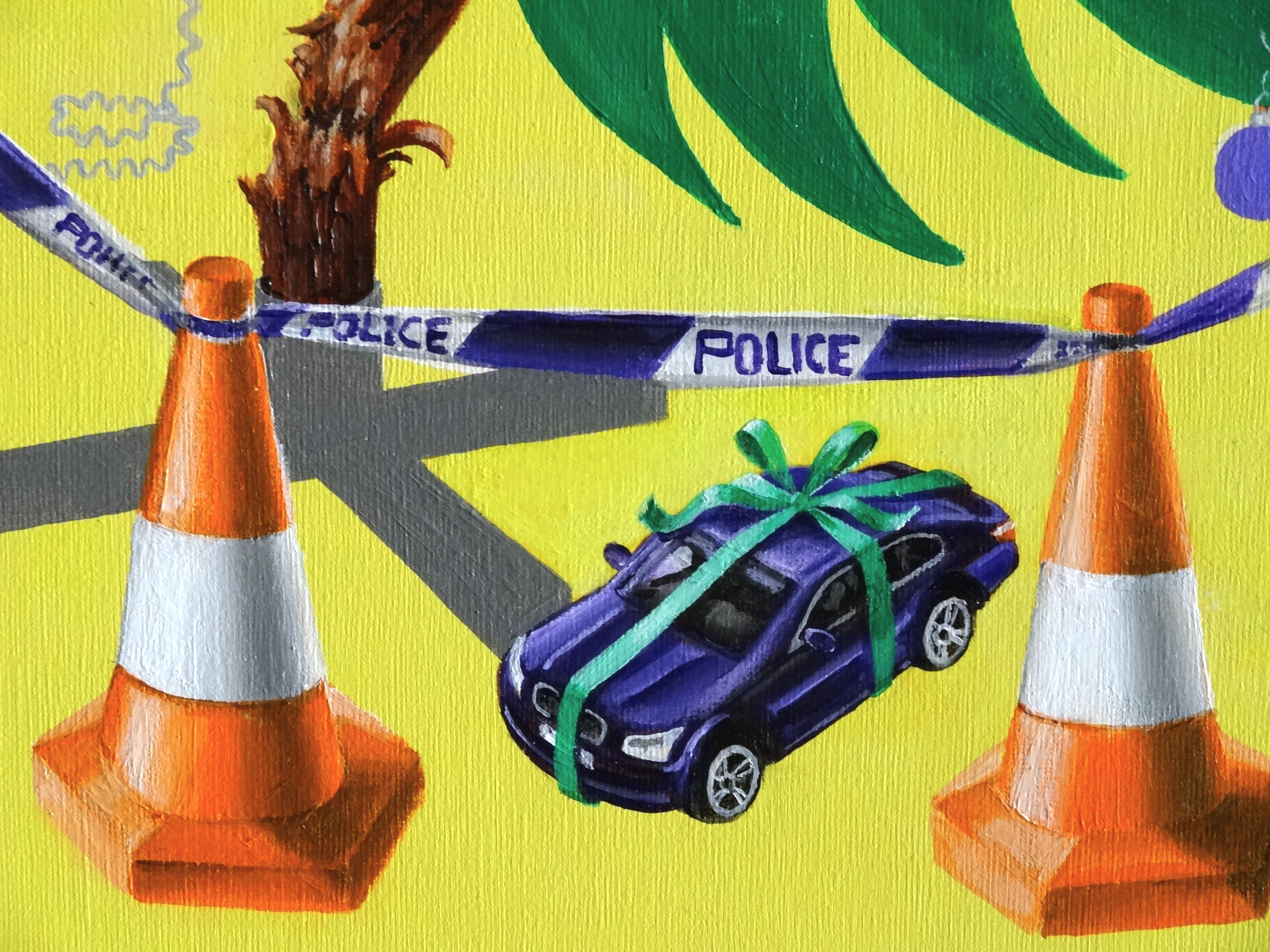
It was the moment when Christmas had ended. Along with so much else. And in this second work, created impulsively in the aftermath of my brother in law’s inquest two weeks ago, I paint the moment when joy, for our family, crumbled before our very eyes. In the simple symbol of a falling Christmas tree, I have attempted to demonstrate how the happiness of Christmas departed us, and our world literally fell apart; the striking colours representing the irony of loss at this, the happiest of all seasons; the only gift under our tree being the ribbon-wrapped car which caused this tragic end. A fate to which we were inescapably tied from that point onwards.
DSC08524

© Nicholas de Lacy-Brown and The Daily Norm, 2001-2013. Unauthorized use and/or duplication of the material, whether written work, photography or artwork, included within The Daily Norm without express and written permission from The Daily Norm’s author and/or owner is strictly prohibited. Excerpts and links may be used, provided that full and clear credit is given to Nicholas de Lacy-Brown and The Daily Norm with appropriate and specific direction to the original content. For more information on the work of Nicholas de Lacy-Brown, head to his art website at www.delacy-brown.com

Return Journey

A little over 10 months ago, just 3 days before Christmas in fact, my brother-in-law was killed in a tragic road traffic accident. It was a tragedy whose catastrophic effects were augmented by the life-changing effect on his three little boys – 2 year old twins and a 4 year old – who in that sudden cataclysmic moment of disaster lost a father, and by the deep heartbreak of his wife, my sister, who lost her husband after only 8 years of marriage. They say that time is a healer – although there are some things which time can never truly mend. It’s as though time acts as a sticking plaster or band aid, only for its thin protection to be unceremoniously ripped away at certain instances of remembrance, one such being the inquest into his death, which we, as his closest family, attended two weeks ago.

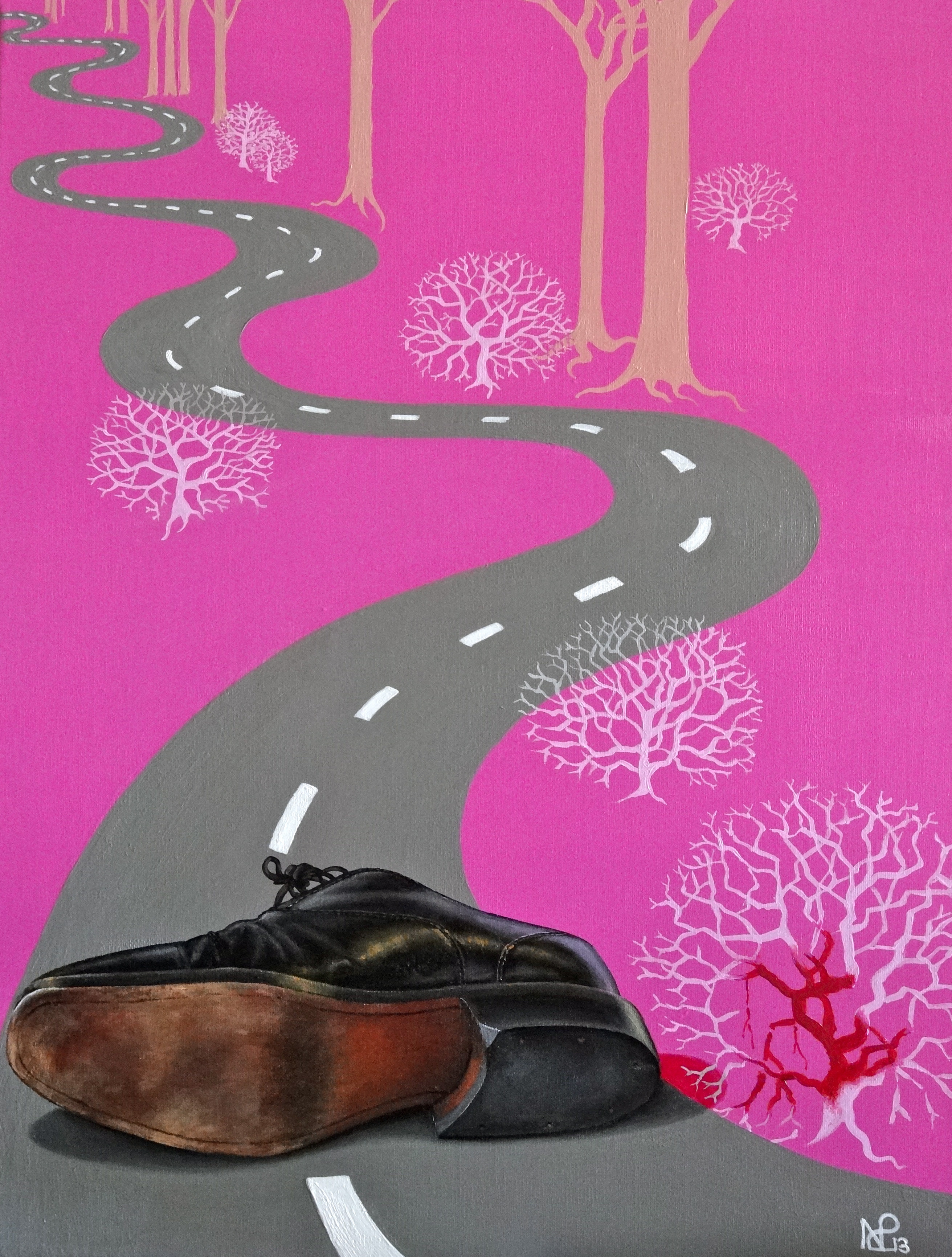
I don’t intend to talk about the inquest – it’s details are too sad for sharing; too grave for the lighter side of the blogosphere in which I like to roam. Yet what I did want to share with you is a painting I made, in immediate response to the hearing, a work which for me sums up the sadness of this death. There may be some who believe that to paint a vision of tragedy somehow lessens or trivialises its impact, but I, like many others, would disagree. For just as some of the world’s most famous paintings have been created in a direct response to, and as catharsis for some of history’s worst obscenities (take for example Picasso’s Guernica, or Goya’s 3rd May 1808), so the process of painting has helped me to respond to the horrors of this family loss, in the same way that painting also enabled me to work through the after-effects of my very serious accident 5 years ago.

Return Journey (2013 © Nicholas de Lacy-Brown, acrylic on canvas)

Return Journey (2013 © Nicholas de Lacy-Brown, acrylic on canvas)

The painting I am sharing today, Return Journey, is a simple but poignant image, and one which I could not get out of my head once it had formed in response to the testimony of one of the witnesses at my brother-in-law’s inquest. She described how she and the passengers in her car had seen my brother-in-law out on the roadside, alive, but in great peril and, worried for his safety, had taken the first turning round a roundabout, driven back up the opposite carriageway, and then retraced the route where they had first seen him alive. But on their return journey, they could see him no longer – all that visibly remained of my brother-in-law was a single shoe lying in the middle of the carriageway. He was no longer to be found. What we now know is that in the short time between seeing him alive and returning to the scene, he had been struck by a car, and killed.

It’s for that reason that I could not get the image of that lone shoe out of my head, and in creating this work, I felt some sense of catharsis in reaction to that dreadful, but necessary inquest. It’s an image imbued with the heavy shadow of tragedy, but a painting of which I am proud as an artist, and as a family member, in dedication to my brother-in-law’s memory.

© Nicholas de Lacy-Brown and The Daily Norm, 2001-2013. Unauthorized use and/or duplication of the material, whether written work, photography or artwork, included within The Daily Norm without express and written permission from The Daily Norm’s author and/or owner is strictly prohibited. Excerpts and links may be used, provided that full and clear credit is given to Nicholas de Lacy-Brown and The Daily Norm with appropriate and specific direction to the original content. For more information on the work of Nicholas de Lacy-Brown, head to his art website at www.delacy-brown.com

Composition No. 11 – Autumn descends

A couple of weeks ago, a forage amongst the undergrowth and autumn tones of London’s Wandsworth Common inspired a whole series of photographs which celebrated the tangible transformation which accompanies the onset of Autumn. While the weather since that gorgeous sunny weekend has been something of a damp squid (and therefore far from ideal in which to appreciate the ruby hues of Autumn), the inspiration of those initially sun-drenched reflections on the season prompted to me to once again take out my gouache paint box, and create the 11th of my “compositions” series: Autumn descends.

Composition No. 11: Autumn Descends (2013 © Nicholas de Lacy-Brown, gouache on paper)

Composition No. 11: Autumn Descends (2013 © Nicholas de Lacy-Brown, gouache on paper)

Against a backdrop of leaves which turn gradually from summery green, through golden tones until they become a rich autumnal red at the foot of the painting – Autumn in full descent – a group of those delightful forest mushrooms which had prompted me to go out foraging in London’s parks grow whimsically in the undergrowth, each angled playfully one way or another, differing in heights, in shapes and sizes, just like the plethora of mushrooms I found here in London.

Looking out of the window now onto a wet and windy London, I can see that Autumn truly has descended. But it’s not all gloom – Autumn is a time of rich colour and seasonal transformation like none other, something which I hope my latest painting portrays.

© Nicholas de Lacy-Brown and The Daily Norm, 2001-2013. Unauthorized use and/or duplication of the material, whether written work, photography or artwork, included within The Daily Norm without express and written permission from The Daily Norm’s author and/or owner is strictly prohibited. Excerpts and links may be used, provided that full and clear credit is given to Nicholas de Lacy-Brown and The Daily Norm with appropriate and specific direction to the original content.

Introducing my revamped website

The Daily Norm has been fairly quiet of late, and certainly far from daily. But the reason for that is all the work that I and my scurrying little Norms in the Daily Norm office have been doing on this blog’s sister website. For www.delacy-brown.com – the official home of my art – has been revamped, and now finally, with content uploaded and fully up to date, it’s ready to go live.

The process of revamping my website has, despite many hours of late night toil, been a rewarding one, as is so often the case when I see so many of my creations all gathered in one place. But where this revamped website differs from previous versions is the proliferation of Norm content which has grown so significantly since I have been producing artwork for this blog – the home of the Norms. And so, while directing you to the Norm sketches section of my new website, I also thought I’d take this opportunity to look back on a few of my favourite Norm sketches from the last two years – an exercise which is even more appropriate since The Daily Norm will be celebrating its two year birthday next month.

Norms on a Tram in the Praça do Comércio, Lisbon (2012 © Nicholas de Lacy-Brown, pen on paper)

Norms on a Tram in the Praça do Comércio, Lisbon (2012 © Nicholas de Lacy-Brown, pen on paper)

Norms in Venice (2012 © Nicholas de Lacy-Brown, pen and ink on paper)

Norms in Venice (2012 © Nicholas de Lacy-Brown, pen and ink on paper)

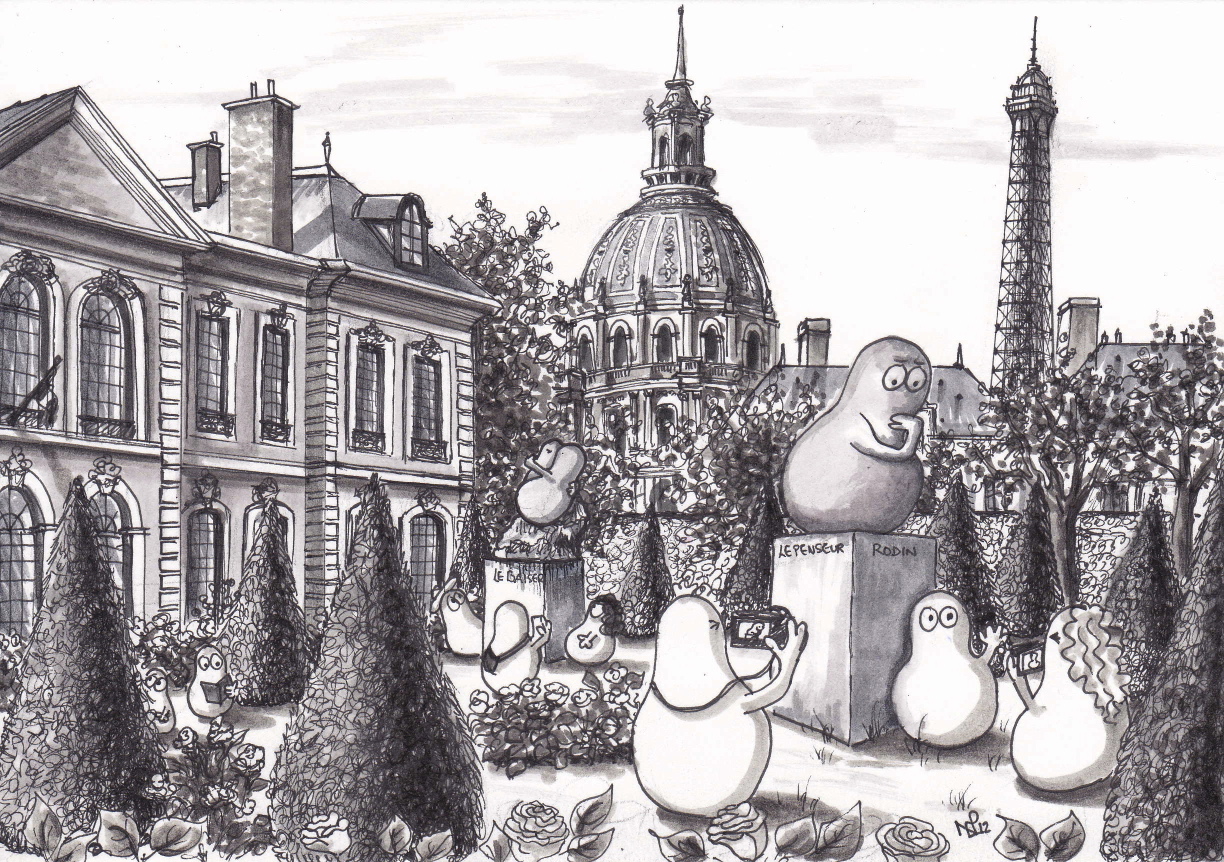
Norms at the Musée Rodin, Paris (2012 © Nicholas de Lacy-Brown, pen on paper)

Norms at the Musée Rodin, Paris (2012 © Nicholas de Lacy-Brown, pen on paper)

Of all the Norm sketches I have even done, my travel images are probably still my favourites, since the travels of these friendly little Norms are synonymous with my own fond travel memories. I love my Norms in Lisbon, for example, which perfectly sum up the charm of the old trams clanking their way around the Portuguese capital; likewise I’m fond of my Norm gondoliers, elegantly steering down Venice’s Grand Canal, and my various Norms in my favourite city of Paris, such as these ones above, looking round the grounds of the Musée Rodin.

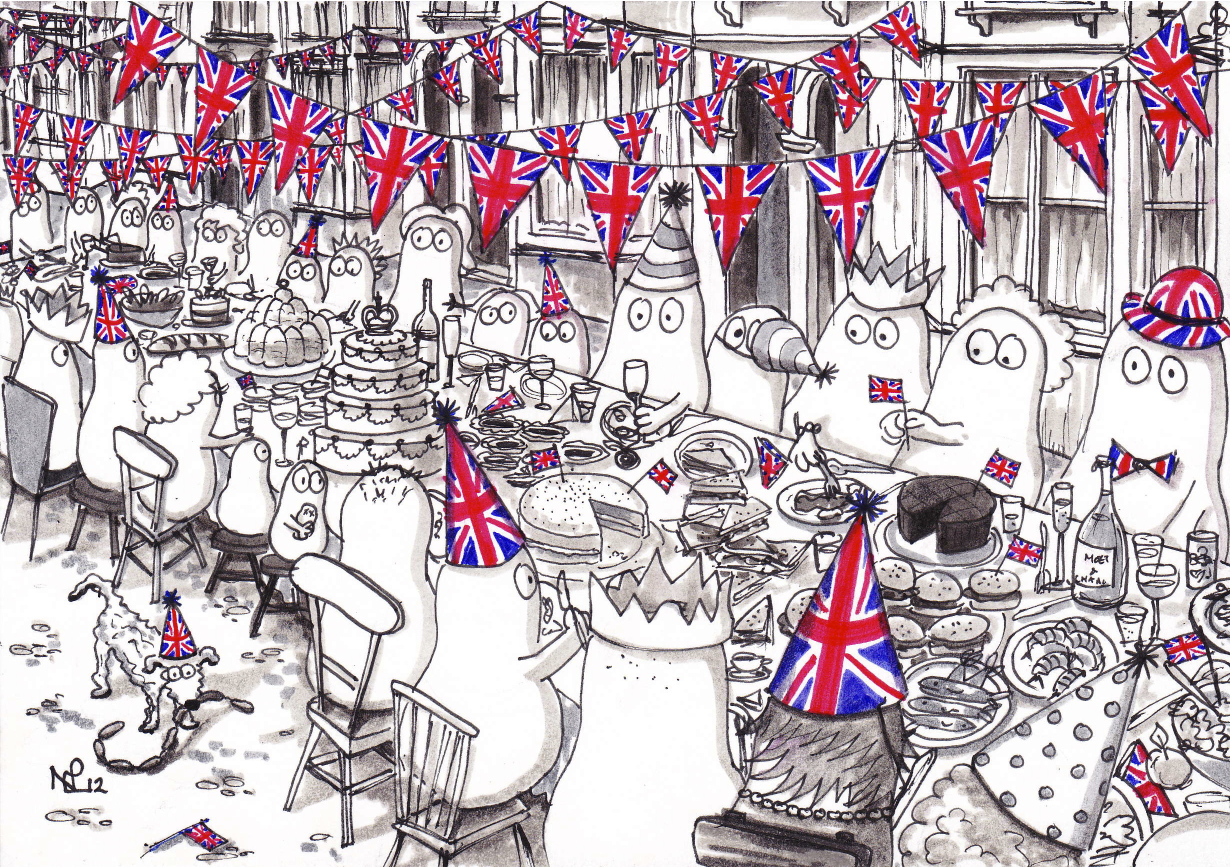
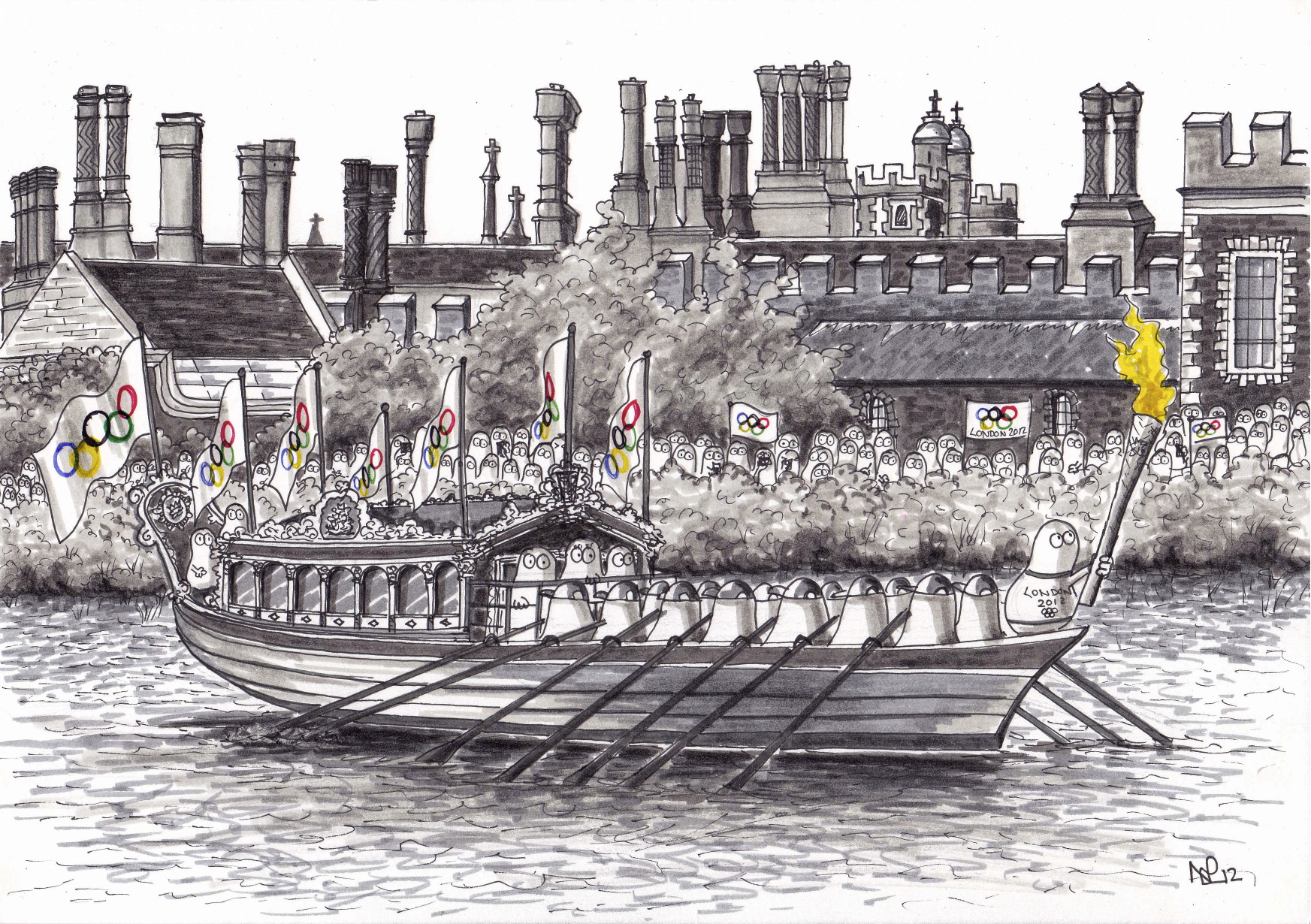
However, my Norm sketches have also been invaluable in enabling me to celebrate the special occasions and life-enhancing experiences of my lifetime; such as Norms at the London 2012 Olympics, and involved in the celebrations of Queen Elizabeth II’s Diamond Jubilee, as well as annual festivities such as Halloween and Christmas.

The Norms' Diamond Jubilee Street Party (2012 © Nicholas de Lacy-Brown) (Pen and pencil on paper)

The Norms’ Diamond Jubilee Street Party (2012 © Nicholas de Lacy-Brown) (Pen and pencil on paper)

Norms at London 2012: The Torch's final journey (2012 © Nicholas de Lacy-Brown, pen on paper)

Norms at London 2012: The Torch’s final journey (2012 © Nicholas de Lacy-Brown, pen on paper)

Normy and Normette ponder the meaning of Dali's Mae West Lips (2013 © Nicholas de Lacy-Brown, pen on paper)

Normy and Normette ponder the meaning of Dali’s Mae West Lips (2013 © Nicholas de Lacy-Brown, pen on paper)

So I leave you with just a few more of my favourite Norm sketches, while encouraging you too look at all of the rest, and the remainder of the comprehensive art content, which can now be found on my revamped, restyled home of my art: www.delacy-brown.com. Look forward to seeing you there!

Norms at the Halloween House of Horrors (2012 © Nicholas de Lacy-Brown, pen on paper)

Norms at the Halloween House of Horrors (2012 © Nicholas de Lacy-Brown, pen on paper)

On the 10th day of Christmas my Normy gave to me, 10 Lords a-leaping (2012 © Nicholas de Lacy-Brown, pen on paper)

On the 10th day of Christmas my Normy gave to me, 10 Lords a-leaping (2012 © Nicholas de Lacy-Brown, pen on paper)

The Nighthawk Norms (after Hopper) (2012 © Nicholas de Lacy-Brown, pen on paper)

The Nighthawk Norms (after Hopper) (2012 © Nicholas de Lacy-Brown, pen on paper)

All photos and written content are strictly the copyright of Nicholas de Lacy-Brown © 2013 and The Daily Norm. All rights are reserved. Unauthorized use and/or duplication of the material, whether written work, photography or artwork, included within The Daily Norm without express and written permission from The Daily Norm’s author and/or owner is strictly prohibited. 

Sunday Supplement – The Heartbreak Diptych

In 2007, I suffered the angst of so many young people in the throws of their first romance: I suffered a horrible heartbreak. At the time, when a short but very intense relationship came to an unceremonious and unexpected end, I thought my world had been torn in two. I spent my days feeling breathless, unable to concentrate and with my stomach in turmoil, as though a little roller coaster ride was traversing the inner contours of my intestines. I would think about the failed romance endlessly, relentlessly engaging in a kind of obsessive postmortem: What went wrong? How could I change things? Was there really no hope for the future? And when, finally, exhausted by the onset of morning depressions and days spent in deep contemplation, I turned to my canvases and represented what I felt in paint.

What had started off as a portrait of my ex, in the bright colours of a Parisian bistro, soon became a tale of my own woe, as I completed the painting in shades of black, white and grey, with a portrait of myself sat melancholy and lonely on a Parisian bench. Appropriately, that self-portrait is represented in stark contrast to the colourful tones of the main portrait of my ex; an illustration of how, in this period of heartbreak, all of the colour and vitality of life had been drained out of me.

Heartbreak II: Paris in Hues of Gray (acrylic on canvas, 2007 © Nicholas de Lacy-Brown)

Heartbreak II: Paris in Hues of Gray (acrylic on canvas, 2007 © Nicholas de Lacy-Brown)

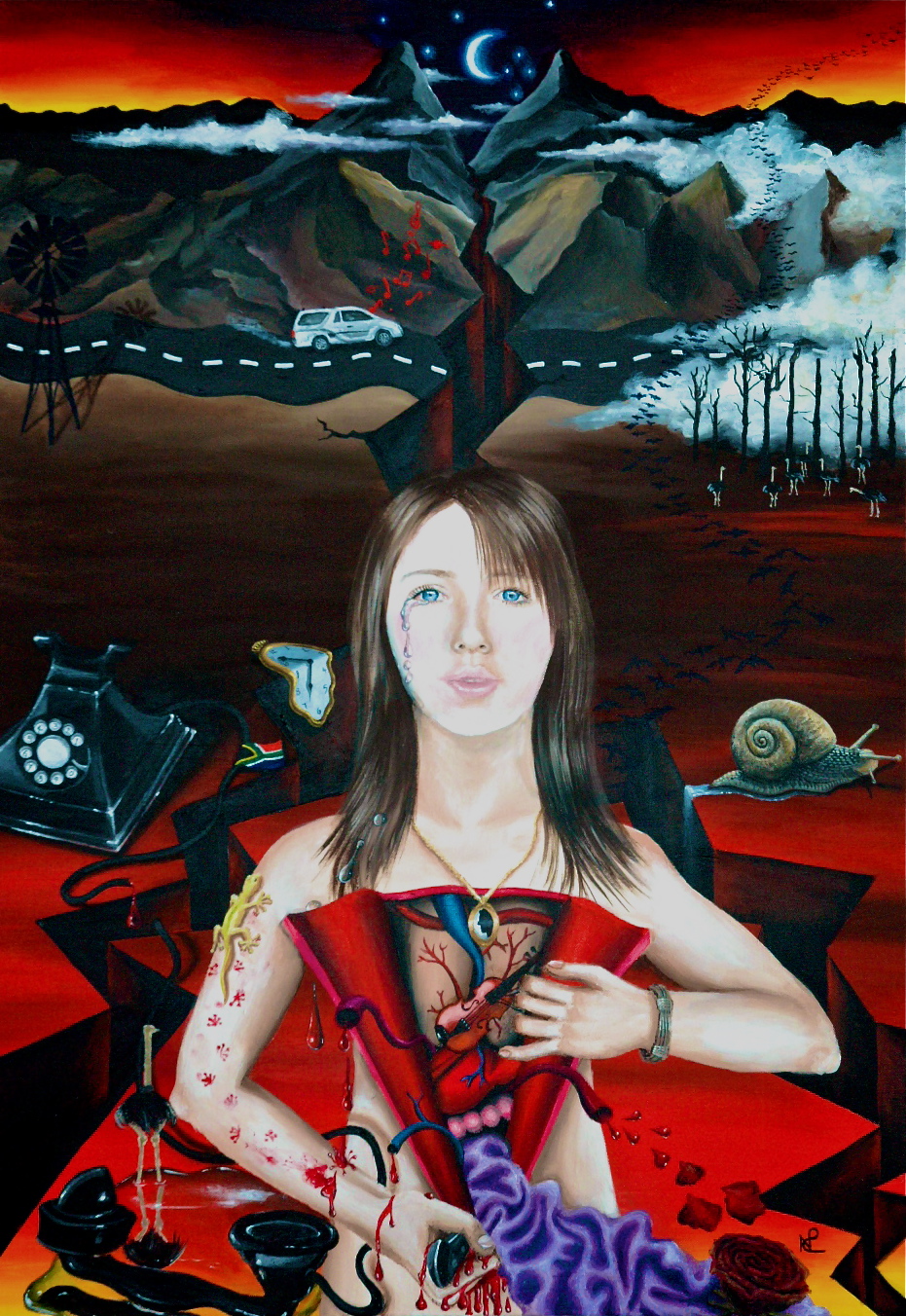
By coincidence, at the time I painted my tale heartbreak, my flatmate was also going through a heartbreak of her own. Almost torn apart emotionally by the strain of her failed romance with longterm South African sweetheart, my portrait of her illustrates, through surreal imagery and references to a dark and brooding South African landscape, the pain and torment she was feeling as she reflected on what the relationship had been, and the hole its passing had left in her very core.

Heartbreak I (2007 © Nicholas de Lacy-Brown, acrylic on canvas)

Heartbreak I (2007 © Nicholas de Lacy-Brown, acrylic on canvas)

Of course looking back on these two paintings now, it is hard to re-engage with those feelings which, at the time, seemed so deep; so central to all existence. With age and maturity, I am able to reflect on what was a mere romantic folly, and recognise that the despair I was feeling wasn’t at the loss of “love”, but at the shock of personal rejection. Yet at the time, the process of painting those emotions was extremely cathartic, and the canvases which resulted are probably two of my most interesting portraits painted to date.

Enjoy your Sunday.

© Nicholas de Lacy-Brown and The Daily Norm, 2001-2012. Unauthorized use and/or duplication of the material, whether written work, photography or artwork, included within The Daily Norm without express and written permission from The Daily Norm’s author and/or owner is strictly prohibited. Excerpts and links may be used, provided that full and clear credit is given to Nicholas de Lacy-Brown and The Daily Norm with appropriate and specific direction to the original content.

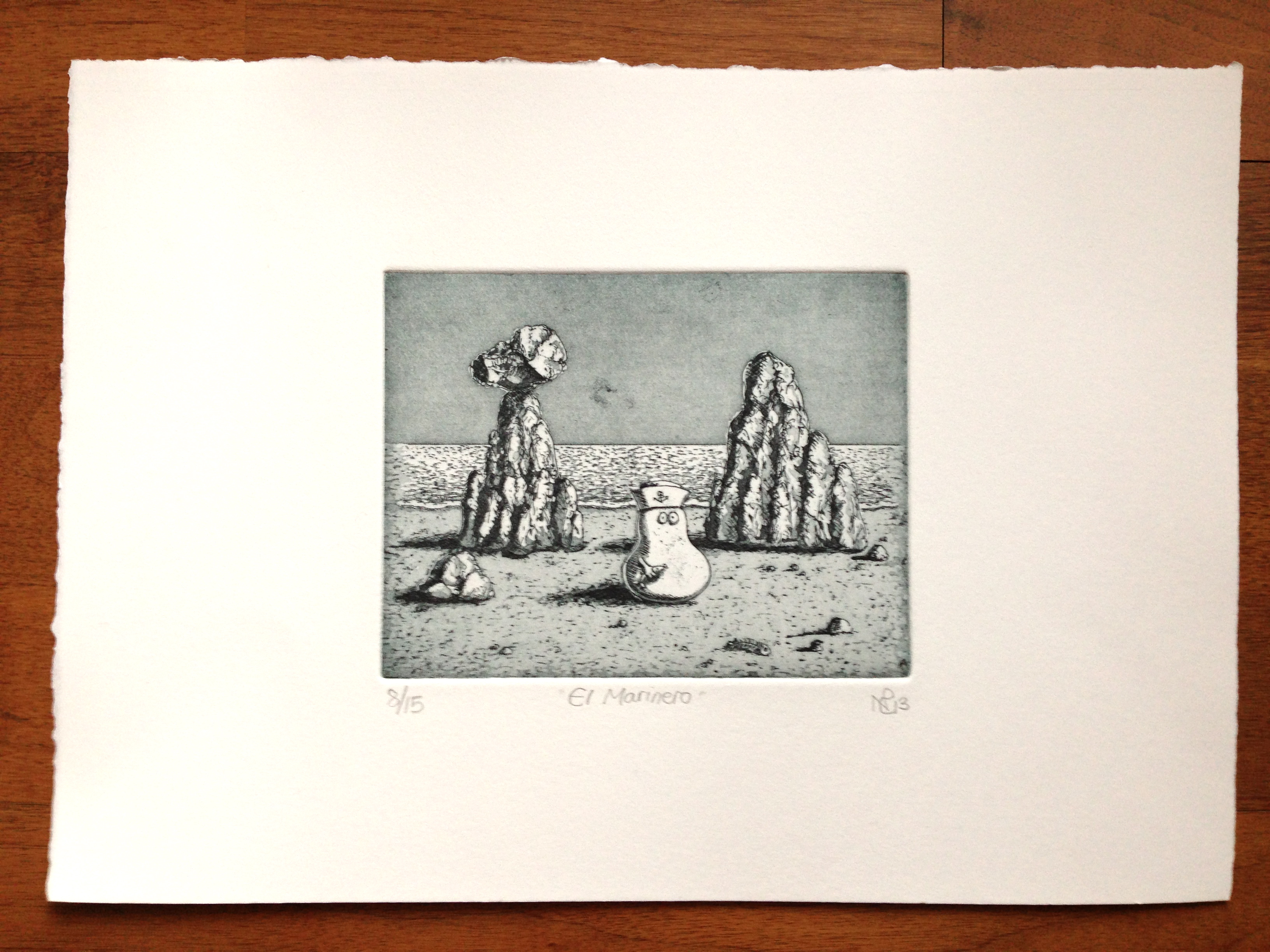
Printmaking Progress III – Editioning El Marinero

Readers of The Daily Norm may remember that in that optimistic time of Spring, long long ago, I discovered the art of printmaking. Having been inspired to give the medium a go by masters of the craft such as Lucian Freud and the ever dark-minded Spanish great Francisco de Goya, and having dappled at first in a little lino cutting, I very soon fell in love with etching, the technique by which acid is used to “etch” an image into a metal plate, which can then be used to print a whole run of that image (albeit seen back to front – something for which careful planning is required). You’ll be forgiven for thinking that my newfound love of the technique was short lived – after all, I haven’t posted any etchings since May, and have, quite unapologetically, become obsessed with gouache paint on paper which I have pursued relentlessly in the creation of my “Compositions” series.

Well, come the autumn, and with my summer travels, sadly, long behind me, I decided the time was right to re-enter the printmaking studio, not just to start projects afresh, but to finish off the ones I started all those months ago.

I have previously told you about etching the line image onto the metal plate (I used zinc, but other metals can be used and this will affect the number of prints which can eventually be made from the plate), and also about the aquatint process by which tone is added to the plate. The final stage of printmaking is printing and editioning – making sure that every single print is printed identically, so that a closed “edition” can be made, and sold through the aid of a single exhibited example.

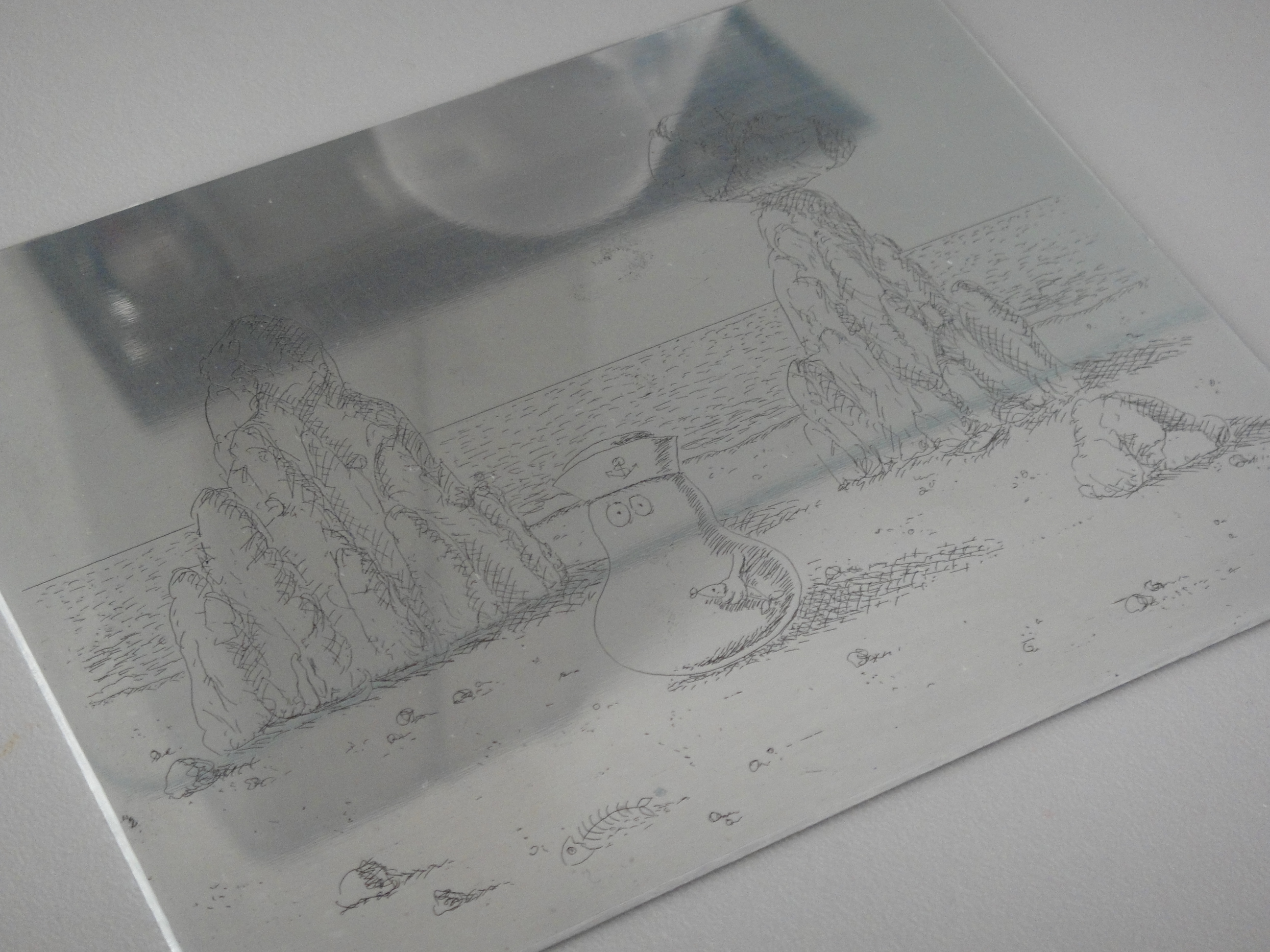
The zinc plate with image etched into it

The zinc plate with image etched into it

First print - before the aquatint was applied

First print – before the aquatint was applied

El Marinero during the aquatinting process

El Marinero during the aquatinting process

Editioning is an intricate and time consuming process. You have to cut yourself paper of an identical size; bathe it in water to ensure the paper takes the ink, but dry it before printing to ensure the ink does not run. You have to smear the plate in filthy oil-based ink, and then gradually wipe it off again, leaving the ink remaining only in the lines. You have to clean the edge of the plate to ensure that the embossment of the paper around the plate is kept pristine. And finally, ensuring you do not dirty your paper with your inky-black hands, you have to run the plate, and the paper through the printing press. All this takes about 15 minutes per print, but once you get a system going, it’s surprising how easily the human body can become like a factory process.

I have now spent several sessions in the studio, making editions of the two zinc etchings I made back in May, and the result I want to share with you today is my first ever plate. When you last saw it, it was a line image only, with no aqua tint adding tone. Now the image is aquatinted and complete, printed as a limited edition set of 15 which, by coincidence, are now available on my online shop to buy.

And a nice close up of the image

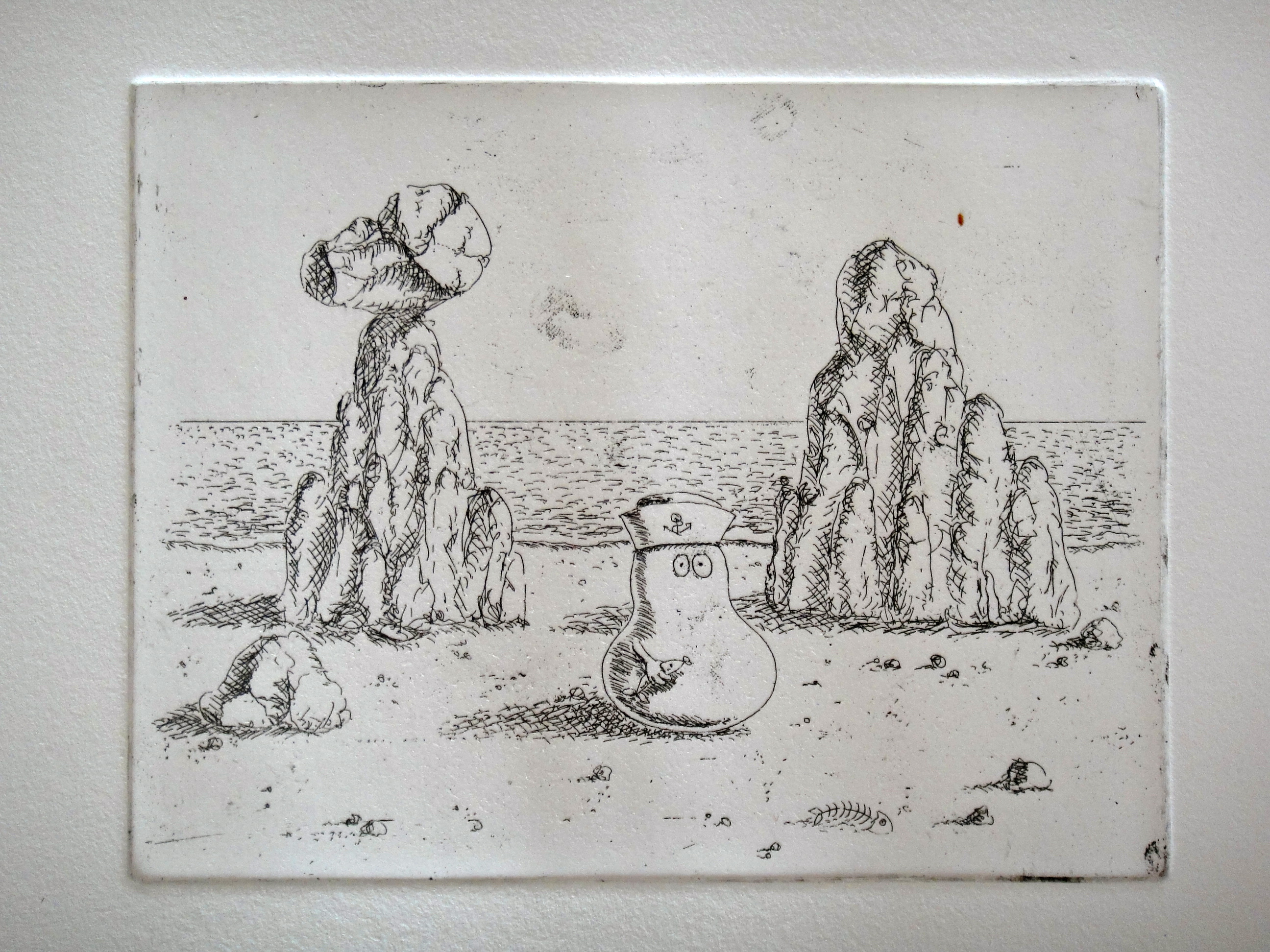
The finished print

IMG_5025

The print, entitled “El Marinero” shows a sailor Norm holding a fish on a mysterious Mallorcan rocky beach. It’s an enigmatic image, with its empty shores and strange rocky forms, but one which I cherish as being my first dalliance into the world of etching, and inspired by the surreally-shaped coves of Mallorca’s stunning coastline. Now I am on my third and fourth etchings respectively (one in zinc, and one in copper) and I cannot wait to complete those and share them on The Daily Norm.

Details of how to purchase your own strictly limited print of El Marinero can be found on my Etsy shop. As a closed edition of 15, it’s an extremely limited set, and hopefully therefore an attractive art investment for your future, as well as a pleasing little gift for another, or of course, for yourself.

Composition No. 10 – Cupolas of Kraków

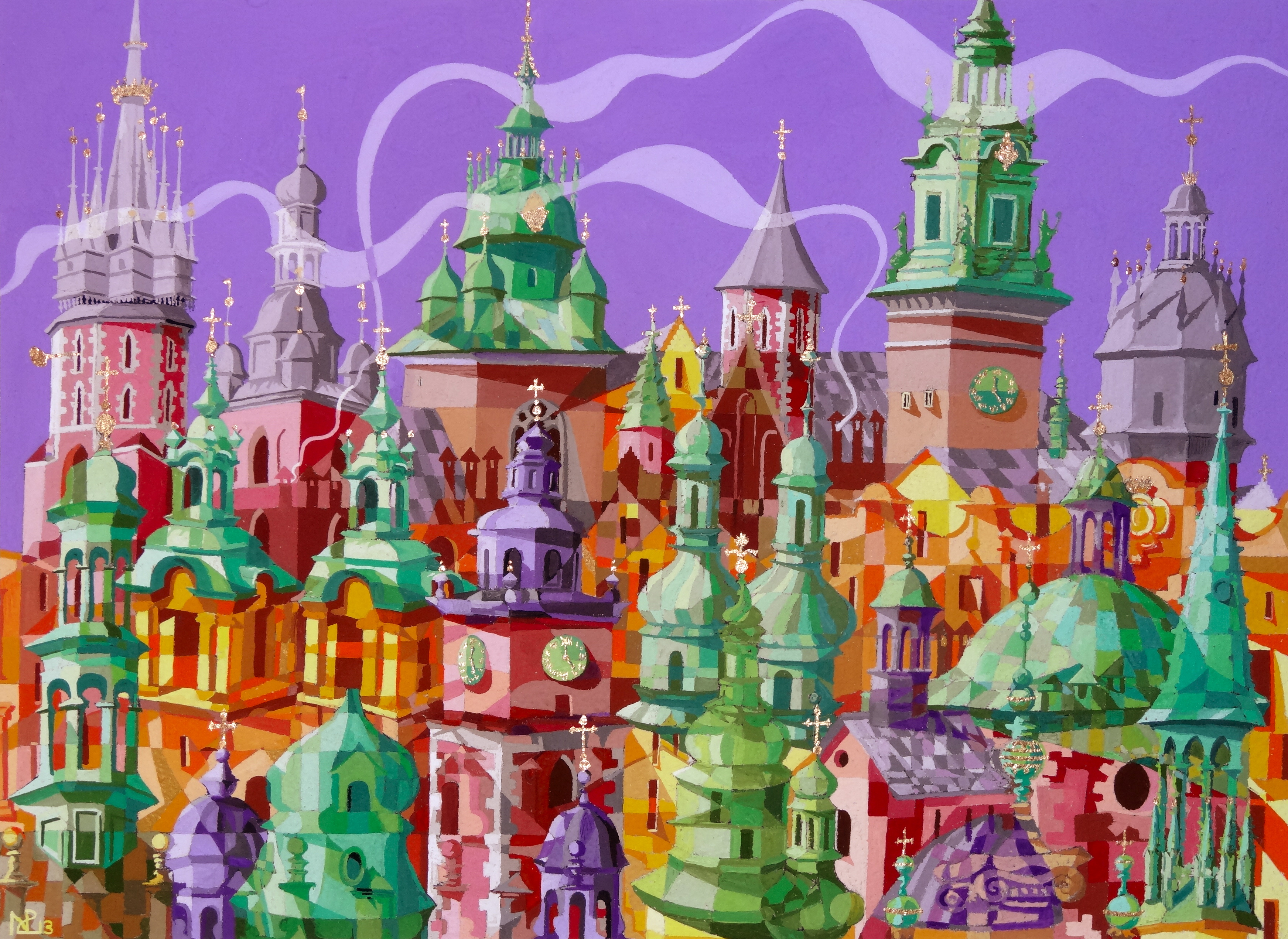
Almost every town or city across the world will have some place of worship at the centre of its community. Very often, a church, a synagogue or a mosque will dominate the town, both in spiritual significance, but also in architectural superiority. In the average Spanish city for example, elaborate bell towers will loom large over the deferential terracotta roof tops of the town below, while even in the highly developed city of London, the globally recognised icon of St Paul’s Cathedral remains at the heart of London’s cityscape horizon. Yet in Kraków, the stunning Polish city with a sprawling, unspoilt historical old town at its heart, you are literally spoilt for choice, such is the array of spiritual icons bursting up all over the city.

While the breathtaking gold-tipped spires of the regal Mariacki church at the centre of the Rynek Główny square and the copper-sculpted embellishments of the Wawel Cathedral are obvious contenders as the city’s spiritual matriarchs, there are so many churches complete with their own flourish of architectural exuberance cropping up all over the city and in between, that the visitor feels almost overwhelmed, literally like a child in a sweet shop full of glistening boiled sweets and sugar-covered jellies. In fact with its turrets and towers, its copper cupolas and its wrought iron domes, Kraków takes decoration to new levels of baroque opulence. Its bell towers are so ornate as to be like multi-tiered wedding cakes iced up with sugar statues of saints, and finished with gold beading and sparkling with jewels; and the use of copper is so prominent in its oxidised green, that for as far as the eye can see, the skyline is splattered by turquoise aqua marines.

Composition No. 10 - Cupolas of Krakow (2013 © Nicholas de Lacy-Brown, gouache on paper)

Composition No. 10 – Cupolas of Krakow (2013 © Nicholas de Lacy-Brown, gouache on paper)

All of this just had to form the basis of the next painting in my “Compositions” series, having already decided that I must surely devote a piece to my time in Kraków. But as far as my gouache paintings go, this one is by far the most complicated. For not only did I want to pack into my Kraków skyline almost every cupola and rooftop which I had so admired in the city (and there are plenty), but I also wanted to follow the theme of my compositions by exploring overlapping objects and cubist interpretations. The result was a piece so complex that in terms of duration, I could probably have completed all 9 of my previous compositions in the time it took to do this one. But with a result so satisfyingly abundant with detail that it compares to the great city itself, I would surmise that the time, and the effort was worth it. Hope you like it!

© Nicholas de Lacy-Brown and The Daily Norm, 2001-2013. Unauthorized use and/or duplication of the material, whether written work, photography or artwork, included within The Daily Norm without express and written permission from The Daily Norm’s author and/or owner is strictly prohibited. Excerpts and links may be used, provided that full and clear credit is given to Nicholas de Lacy-Brown and The Daily Norm with appropriate and specific direction to the original content.

Mallorca Map Commission Part 2 – Palma

If I thought the first of my Mallorca maps was a complex undertaking, with its representation of iconic Mallorca filled with the towns and terrain that characterise that Mediterranean gem of an island, then things weren’t going to get any easier when it came to commencing the second of the two commissions undertaken for Cappuccino Grand Cafe this Summer. This time round it was the capital city of Mallorca (and the Balearics) Palma de Mallorca which needed to be put on the map, as it were, a requisite for Cappuccino’s Mallorcan representation, seeing as the popular café chain has some 5 restaurants and two takeaway branches in the city alone.

Map of Palma de Mallorca (2013 © Nicholas de Lacy-Brown)

Map of Palma de Mallorca (2013 © Nicholas de Lacy-Brown)

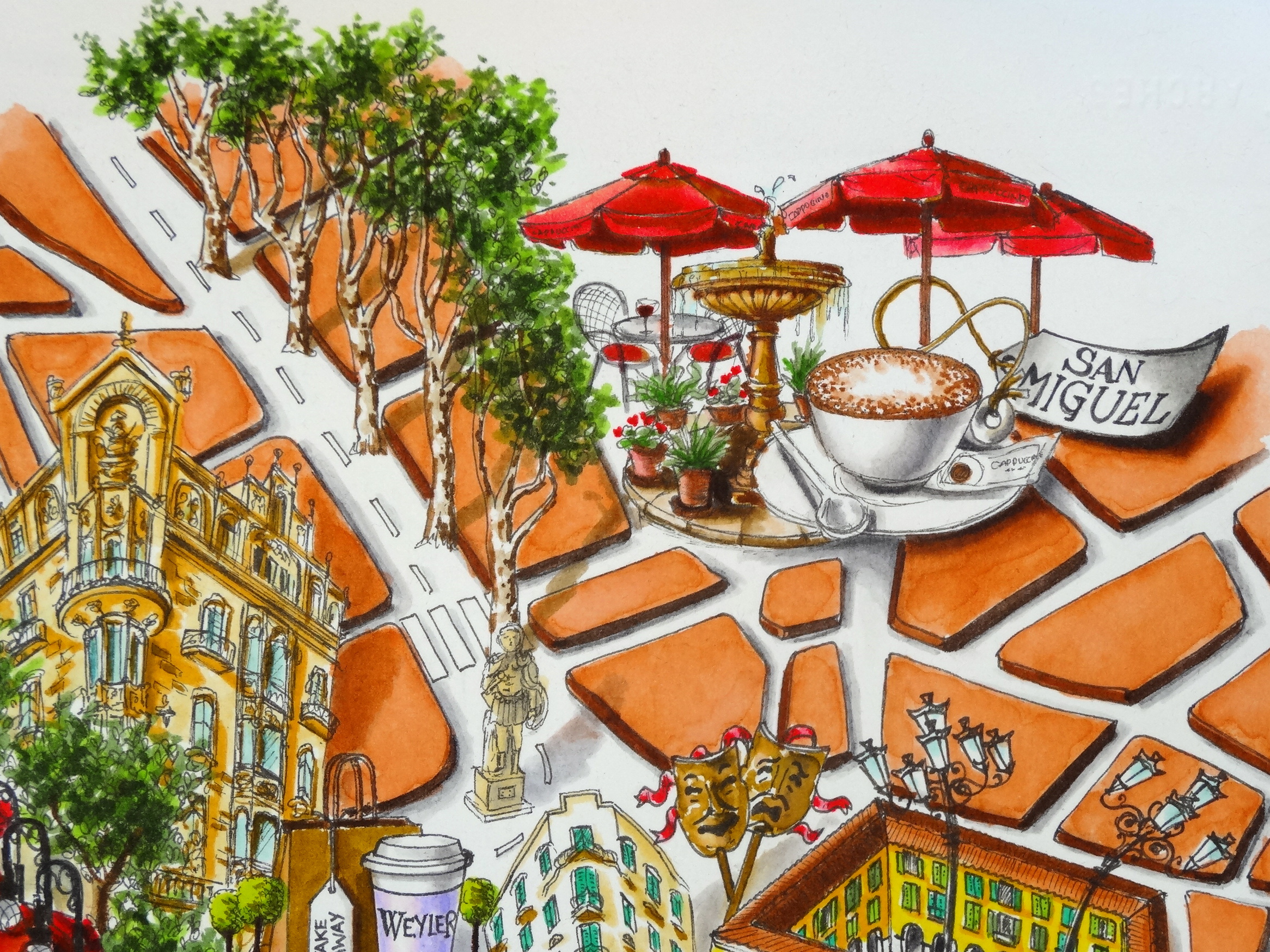
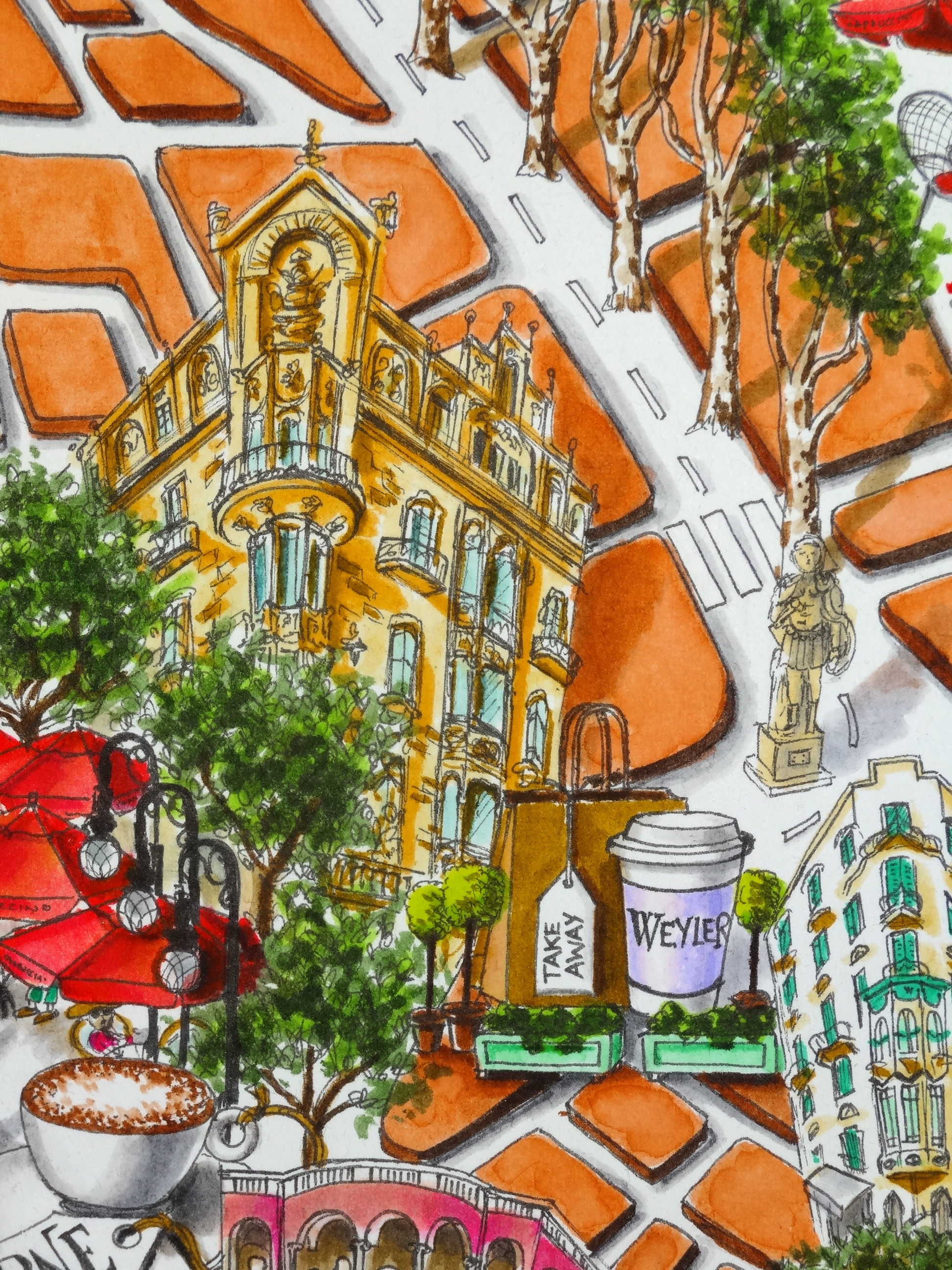
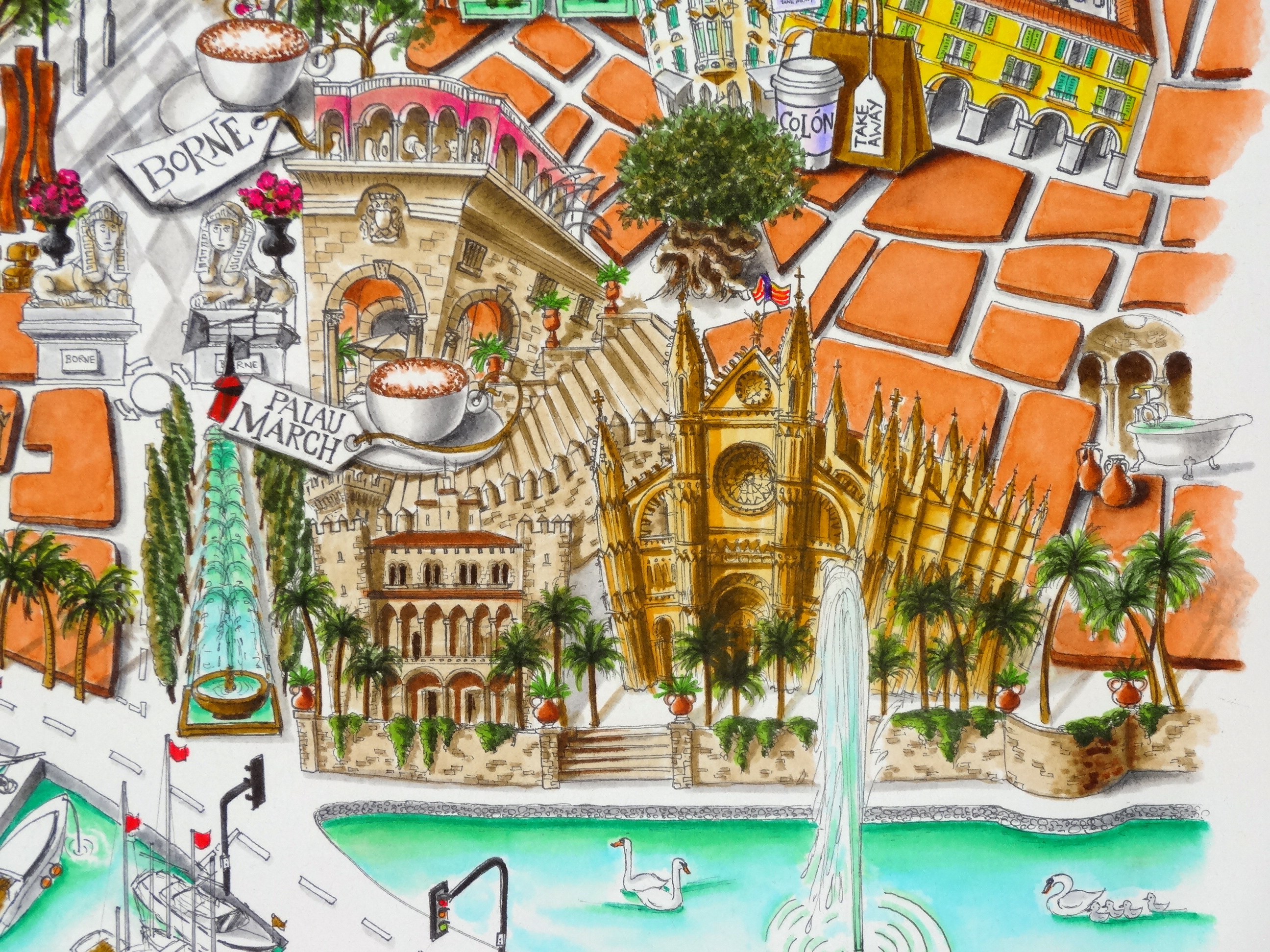
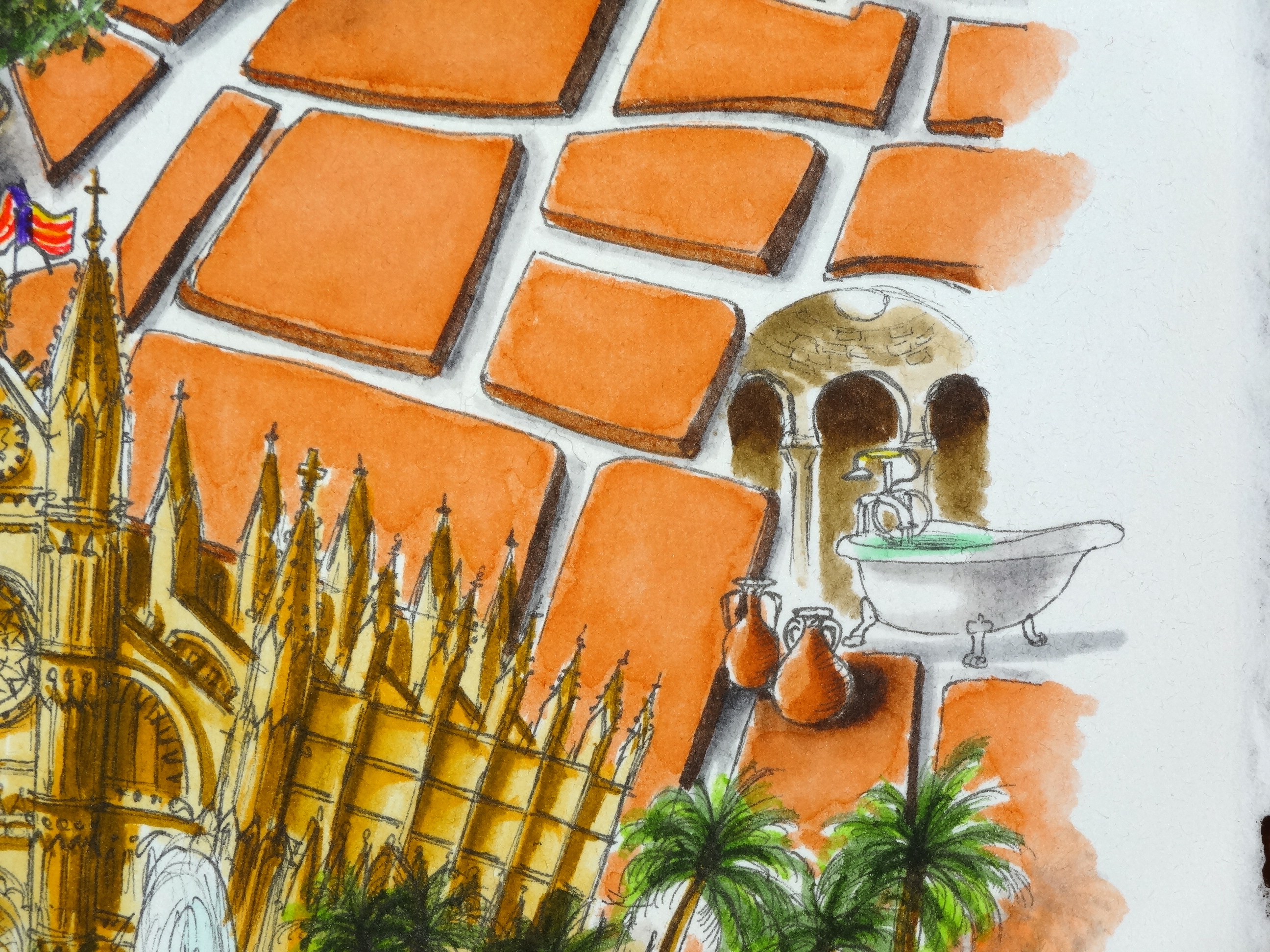
But quite asides from illustrating the cafés characteristically prime locations, the real dilemma for me, when I set about designing the map, was how best to represent the stunning city of Palma in all its architectural and nautical glory, while ensuring that the illustrations of the Cappuccino cafes did not become overshadowed. My solution was to focus on the areas and the architecture which makes the locations of the Cappuccino cafés so desirable, contributing inexorably to the simple joys of visiting one of their branches, sipping a coffee in the vicinity of the ancient Palau March for example, or overlooking Palma’s yacht-crammed marina; and to otherwise reflect the great mass of this sprawling city with simplified terracotta blocks, these hinting at the architectural maturity of the city, while also resembling the terracotta floors which are characteristic of the Med. However, I suppose the pièce de résistance of the map for me is my representation of the River Borne, cutting through the Western half of the city as it makes its way down to the marina beyond. I could not resist the temptation to give this map a surreal twist, lifting the river like a satin ribbon, out of its river bank, undulating and flapping through the air as it approaches the sea.

Cafes in the Borne and Palau March

Cafes in the Borne and Palau March

The Cappuccino HQ at San MIguel

The Cappuccino HQ at San MIguel

The Colon takeaway

The Colon takeaway

The Weyler takeaway

The Weyler takeaway

The Borne - detail

The Borne – detail

The Paseo Maritimo Cappuccino

The Paseo Maritimo Cappuccino

The result of all this is a map which must surely represent a satisfying climax of my Balearic maps, and one whose result is the self-evident result of hours of laborious and detailed work. But with Mallorca, Ibiza and Palma under my belt, the question has to be: where will my map making take me next? With their capacity to capture the essence and character of a place, while reflecting the topography and geography of a location, I have now realised the potential that a map can have for artistic illustration, while reflecting an accurate representation of location and terrain – and frankly, I cannot wait to explore the medium further.

Detail of the cathedral

Detail of the cathedral

Detail of the Marina and the River Borne

Detail of the Marina and the River Borne

The Cappuccino Brand Fusion placed in an iconic modernista shop sign (now home to Colon takeaway)

The Cappuccino Brand Fusion placed in an iconic modernista shop sign (now part of the decor of the Colon takeaway)

Detail of the Cathedral roof and nearby arab baths

Detail of the Cathedral roof and nearby arab baths

Detail of the Es Baluard museum of contemporary art

Detail of the Es Baluard museum of contemporary art

You can see all of my Balearic maps in the Cappuccino Grand Papier, available online, and in everyone of the cafés irresistibly indulgent branches. What other excuse do you need for a weekend in the sun?

© Nicholas de Lacy-Brown and The Daily Norm, 2001-2013. Unauthorized use and/or duplication of the material, whether written work, photography or artwork, included within The Daily Norm without express and written permission from The Daily Norm’s author and/or owner is strictly prohibited. Excerpts and links may be used, provided that full and clear credit is given to Nicholas de Lacy-Brown and The Daily Norm with appropriate and specific direction to the original content.

Mallorca Map Commission Part 1 – Mallorca and Ibiza

I never made a secret of the fact that I love Cappuccino Grand Cafe, the expanding café restaurant business which has taken the island of Mallorca by storm and is now gradually expanding across the sea to Ibiza, mainland Spain and the Middle East. In fact my love affair with the cafe, which begun in their sumptuous beachside Marbella branch, first manifested itself in my painting of Norms dining at Cappuccino Marbella, a painting which was later featured in their first issue of the Cappuccino Grand Papier, the suitably glossy homegrown publication which was published in May.

Imagine my excitement then when Cappuccino then commissioned me to hone both my artistic skills and my love for the café by illustrating a series of maps of the cafés across Mallorca and its elegant capital, Palma, to be featured in Cappuccino’s second magazine this summer.

Excited, I boarded a plane from rainy England to the sun drenched Balearics at the end of last May so that I could properly research each and every detail of the many Cappuccinos the island has to offer. I’d be lying if I said it was an arduous task, exploring as I was not only the many stunning and unbeatable sites the cafe inhabits across the island, but also sampling their rich and varied continental menu in each location. Full of ideas, I returned home to the UK in earnest, opened up my large drawing board, and got to work.

The finished Mallorca Map (2013 © Nicholas de Lacy-Brown)

The finished Mallorca Map (2013 © Nicholas de Lacy-Brown)

The maps were not easy. The level of detail required to properly represent the various cafe locations as well as the Cappuccino brand and all its food took many painstaking hours of work over a series of several weeks. But I was delighted with the results. Yet despite finishing my maps back in June (and July for Palma – check that one out tomorrow), they’ve been the art world’s biggest unveiled secret until their publication in the Second Edition of Cappuccino Grand Papier this August. And now, finally, I can unveil the maps to you in all their many details.

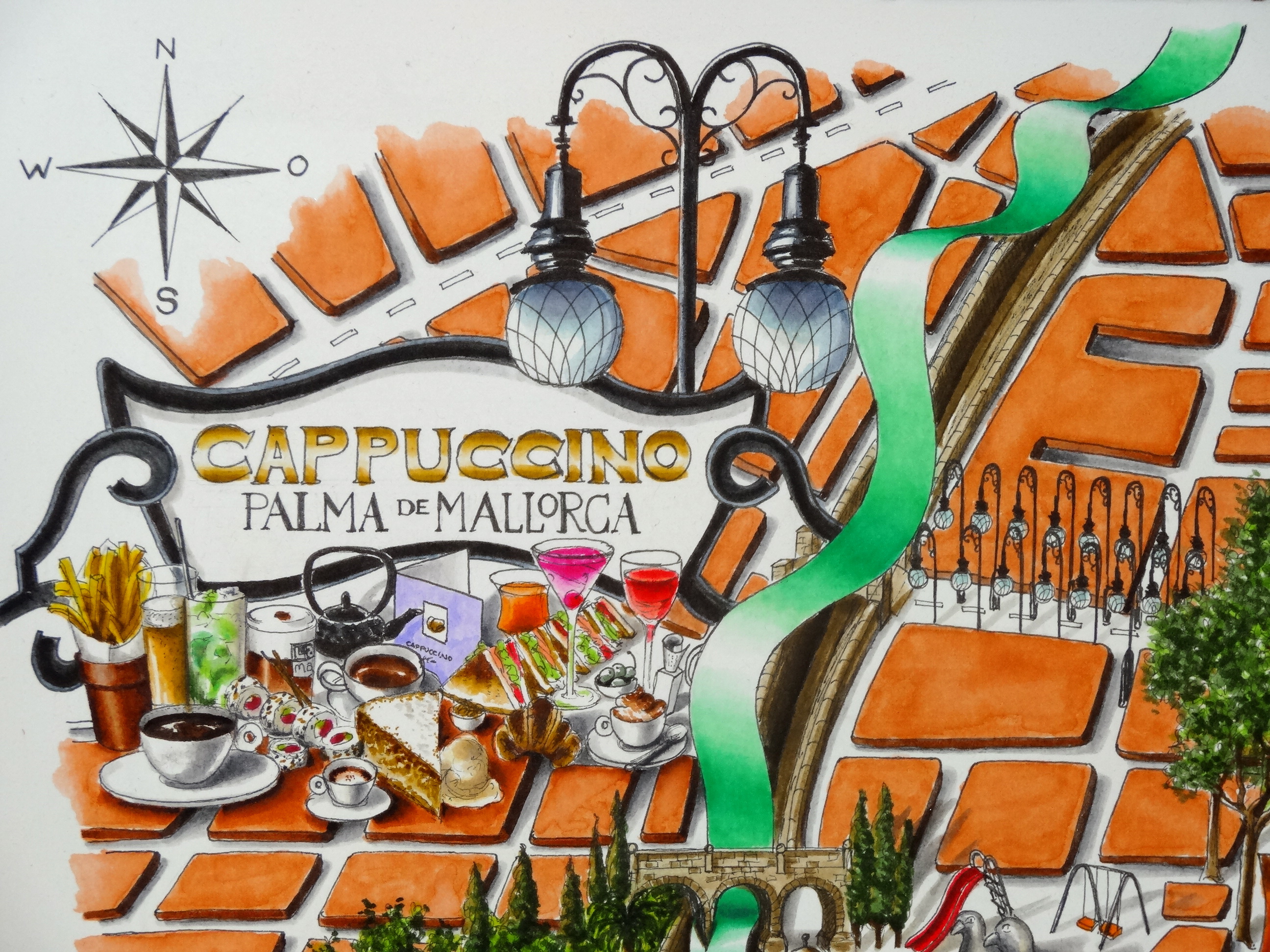
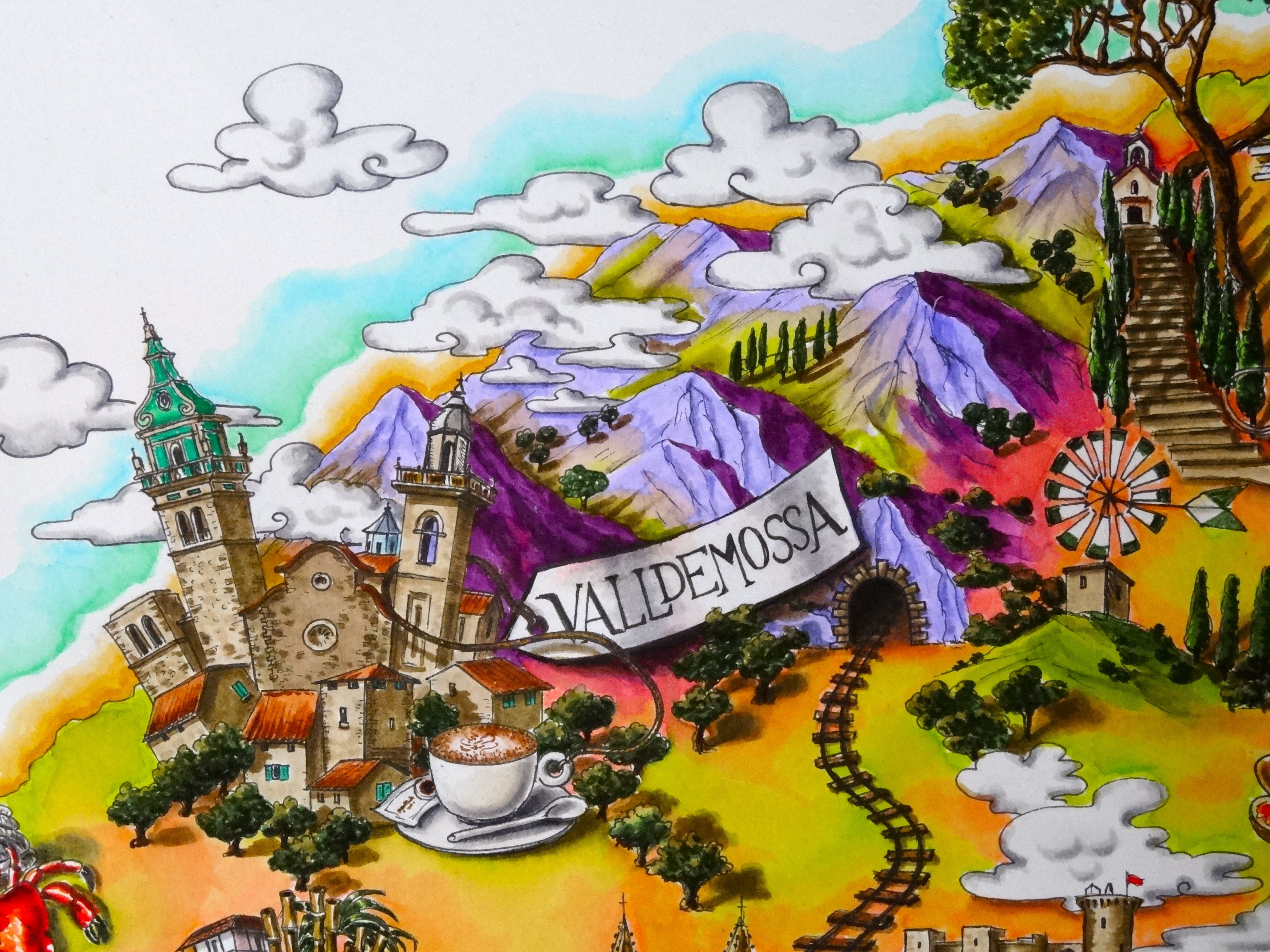
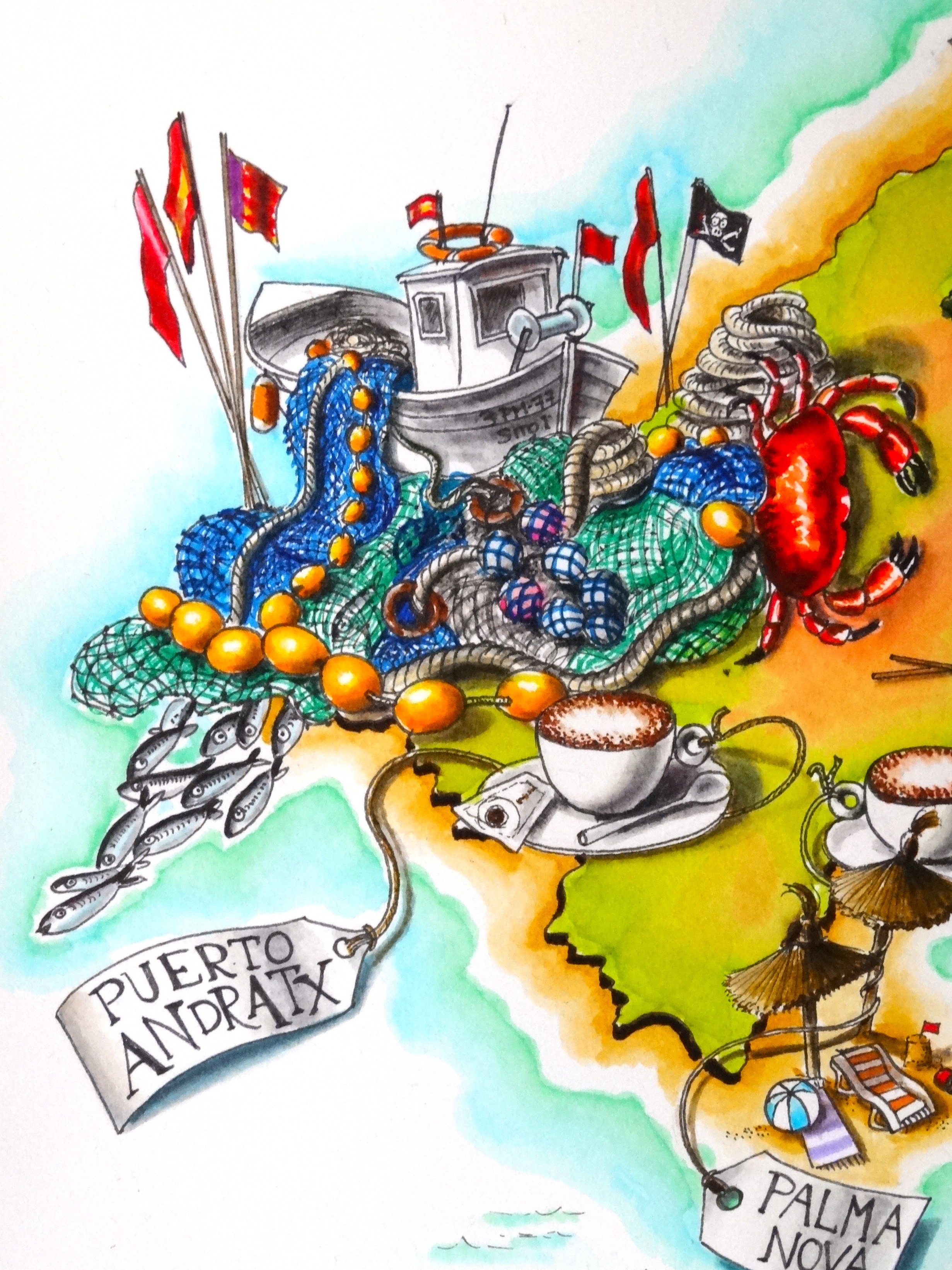
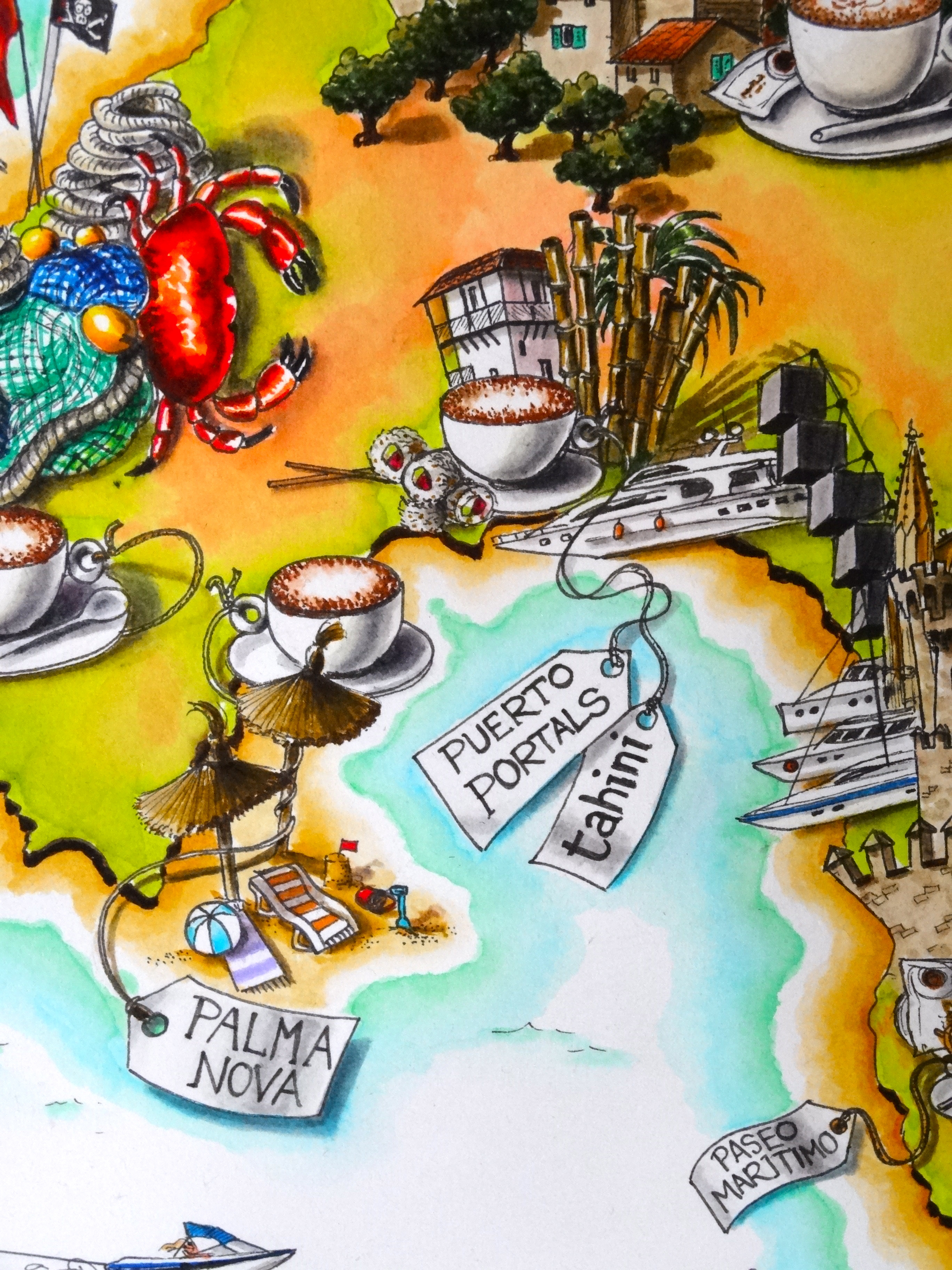
On today’s post I present my map of Mallorca, the idyllic Spanish island from where Cappuccino Grand Cafe was born, and with whom the Cappuccino brand is now synonymous. With branches in the Port of Pollensa, the Port of Andratx, Puerto Portals, Palma Nova, Valldemossa and a great many more in Palma itself, there was plenty of detail to capture on my map. Using icons which characterise the various locations across the island, such as the famous Real Cartuja monastery in Valldemossa (where Chopin and George Sand famously spent a miserable winter), the sumptuous pine trees of Pollensa, and the fishing nets of Andratx’s fishermen’s port, I packed my illustration with both geographical indicators, and of course that all important coffee cup symbolising the location of the cafés.

Valldemossa detail

Valldemossa detail

Puerto Andratx detail

Puerto Andratx detail

Puerto Pollensa detail

Puerto Pollensa detail

Palma detail

Palma detail

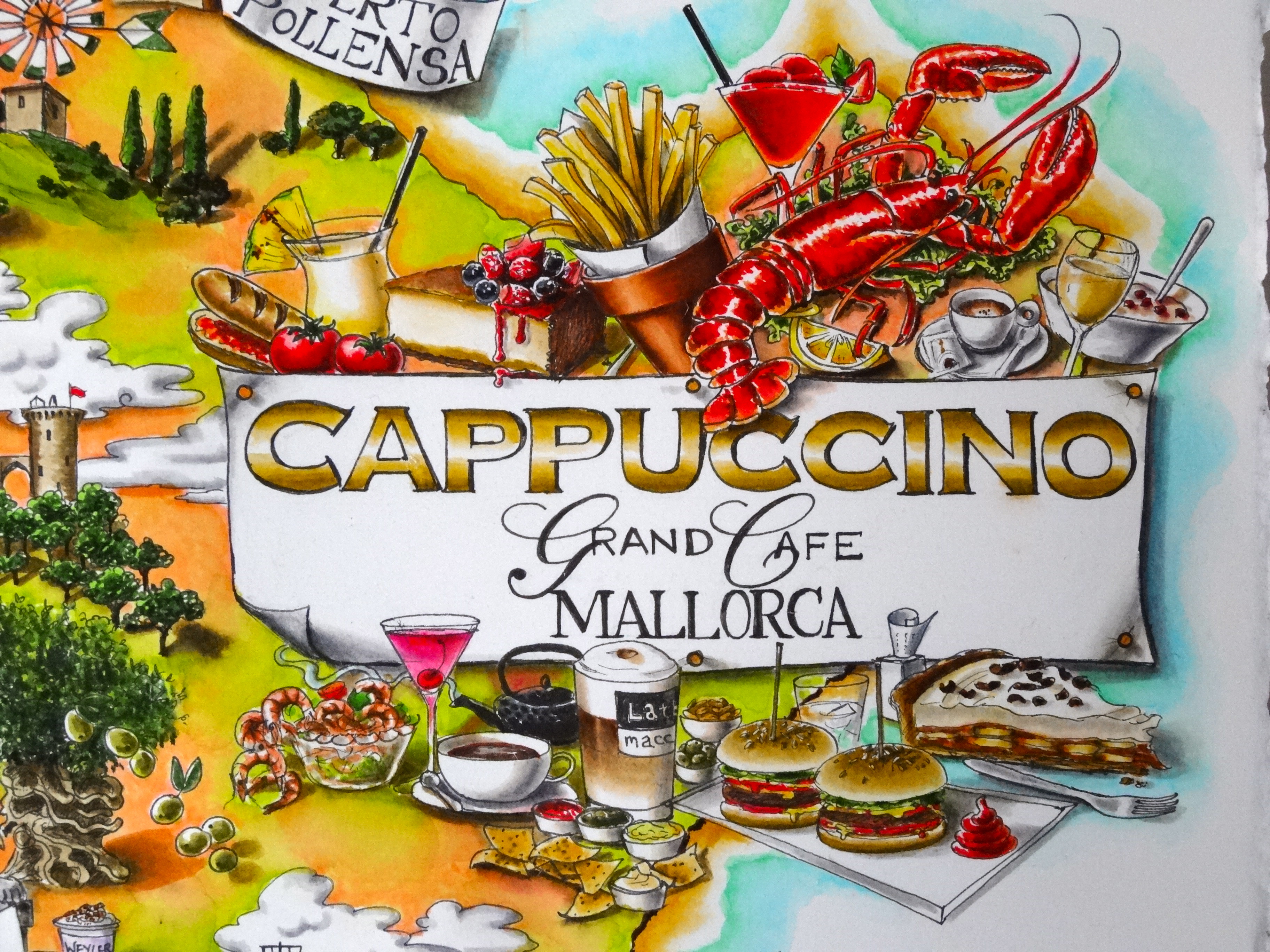
Meanwhile for the map’s title, the brand of Cappuccino is surrounded by a glorious cornucopia of some of the chain’s most iconic offerings, from classic cocktails to its irresistible creamy banoffee pie.

Puerto Portals, Tahini and Palma Nova detail

Puerto Portals, Tahini and Palma Nova detail

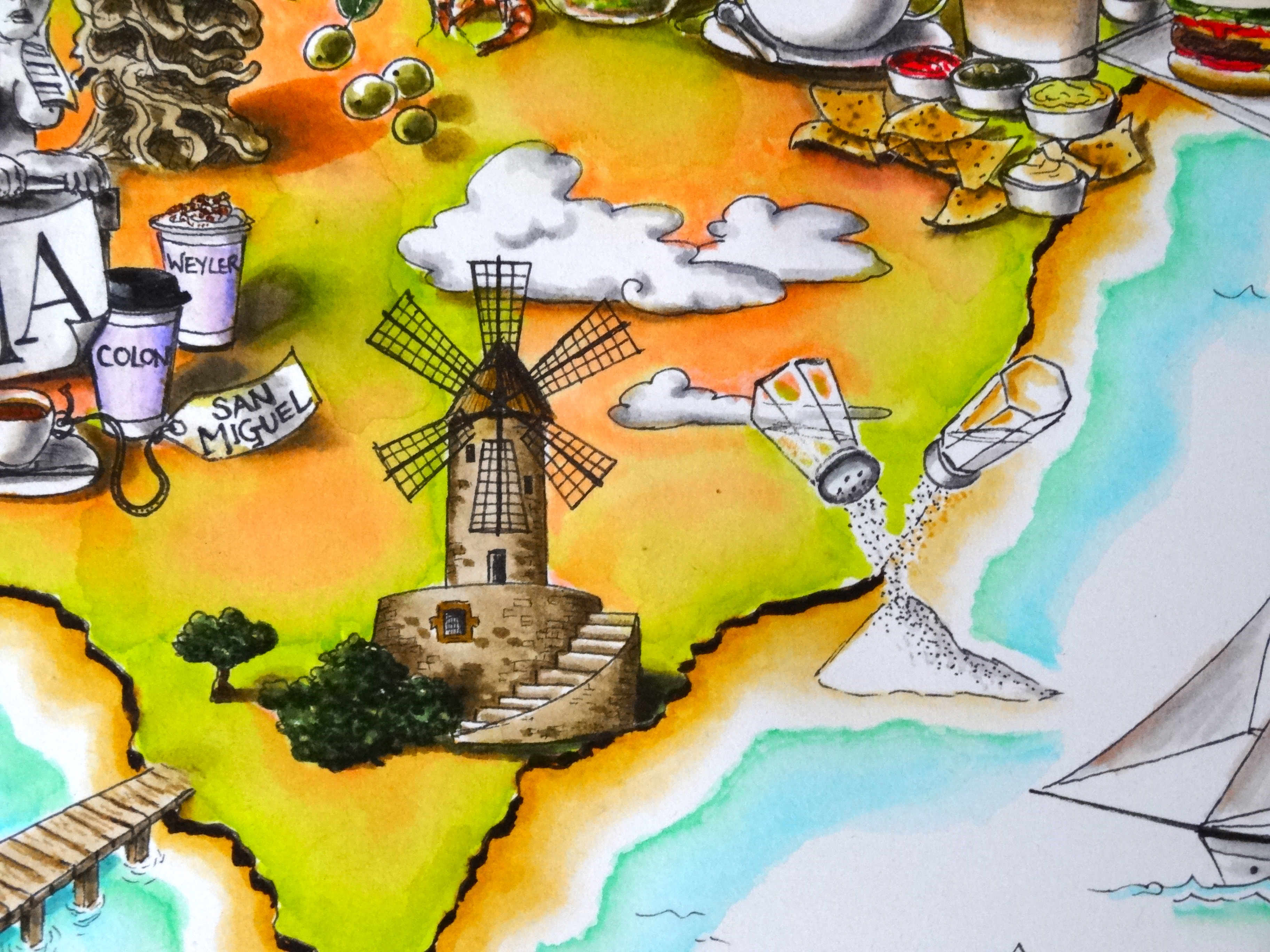
Windmills and sea salt detail

Windmills and sea salt detail

Cappuccino Fusion detail

Cappuccino Fusion detail

And such is the pace of Cappuccino’s current expansion that even while I was designing my map, two new cafes were opened on the nearby island of Ibiza. So a small bolt on map of Ibiza was to follow, including the two new cafes which are perfectly located on the waterside of the island’s stunning Marina Ibiza.

Ibiza (2013 © Nicholas de Lacy-Brown)

Ibiza (2013 © Nicholas de Lacy-Brown)

So without further ado, I leave you to check out the maps. Return to The Daily Norm tomorrow, when I’ll be profiling the second of my Mallorca maps – a focus on the beautiful capital city of Palma. In the meantime, you can see the maps in all their magazine glory in a digital version of Cappuccino Grand Papier. Take some time to flick through – it’s a great magazine!

© Nicholas de Lacy-Brown and The Daily Norm, 2001-2013. Unauthorized use and/or duplication of the material, whether written work, photography or artwork, included within The Daily Norm without express and written permission from The Daily Norm’s author and/or owner is strictly prohibited. Excerpts and links may be used, provided that full and clear credit is given to Nicholas de Lacy-Brown and The Daily Norm with appropriate and specific direction to the original content.

Genius of Geometry: Patrick Caulfield

When I attended the Royal Academy’s Summer Exhibition in 2006, I was completely stunned by an artist to whom the Academy had dedicated a room of its annual summer show: Patrick Caulfield. Born in London in 1936, and died in 2005 (hence the tribute paid to him at the following Summer Exhibition), Patrick Caulfield’s flattened geometric black-lined block coloured works have now become synonymous with the age of British pop-art, although it was a title which Caulfield actually rejected. And he was probably right to. While his works, largely acrylic on canvas, share many of the characteristics of the pop art age (bold colouration, simplified forms, black outlines), pop art promoted and impersonated the commercial world, while Caulfield’s works actually reference art historical notions of representation; from still life to pictorial depth, albeit represented in his characteristic paired down flat colours and simple linear expression.

Early output

Pottery (1969) © The estate of Patrick Caulfield

Pottery (1969) © The estate of Patrick Caulfield

Foyer (1973) © The estate of Patrick Caulfield

Foyer (1973) © The estate of Patrick Caulfield

Café Interior: Afternoon (1973) © The estate of Patrick Caulfield

Café Interior: Afternoon (1973) © The estate of Patrick Caulfield

Wine Glasses (1969) © The estate of Patrick Caulfield

Wine Glasses (1969) © The estate of Patrick Caulfield

Battlements (1967) © The estate of Patrick Caulfield

Battlements (1967) © The estate of Patrick Caulfield

Dining/ Kitchen/ LIving (1980) © The estate of Patrick Caulfield

Dining/ Kitchen/ LIving (1980) © The estate of Patrick Caulfield

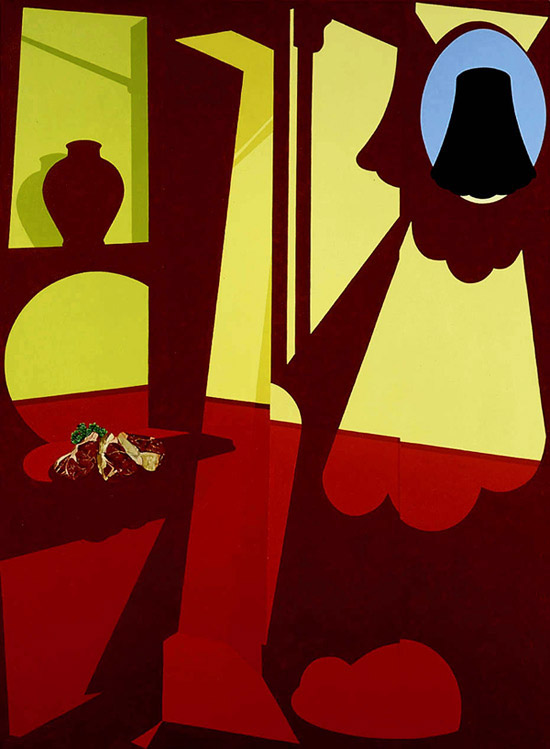
It only took one glance that summer of 2006 at the perfectly painted lines and faultless application of block colours used artfully to depict rooms and places, café scenes and still lifes to know that I was completely in love with Caulfield’s works. While I adored the sparse simple images of his 1960s work, my real admiration was reserved for the knockout creations of the mid 70s, when Caulfield started to play with styles, integrating into his then renowned geometric works hints of trompe l’oeil photorealism. So in works such as Dining/Living/Kitchen for example, Caulfield paints a scene characterised by black outlines, block shadows, dispensed brushwork and anonymous handiwork and inserts into it a casserole dish so perfectly represented that you would swear a photo had been collaged onto the background. This technique is used with spectacular success in After Lunch, where the window (or is it a picture hanging on the wall?) looking onto an Austrian landscape is photorealistic to an awe-inspiring standard, while in Happy Hour, the wine glass at the painting’s centre actually reflects in its sheen a realistic depiction of the bar which, elsewhere in the painting is only represented with paired down flattened forms. Absolutely brilliant.

Tromp L’oeil brilliance

Happy Hour (1986) © The estate of Patrick Caulfield

Happy Hour (1986) © The estate of Patrick Caulfield

After Lunch (1975) © The estate of Patrick Caulfield

After Lunch (1975) © The estate of Patrick Caulfield

Still Life Autumn Fashion (1978) © The estate of Patrick Caulfield

Still Life Autumn Fashion (1978) © The estate of Patrick Caulfield

Interior with a Picture (1985) © The estate of Patrick Caulfield

Interior with a Picture (1985) © The estate of Patrick Caulfield

Second Glass of Whisky (1992) © The estate of Patrick Caulfield

Second Glass of Whisky (1992) © The estate of Patrick Caulfield

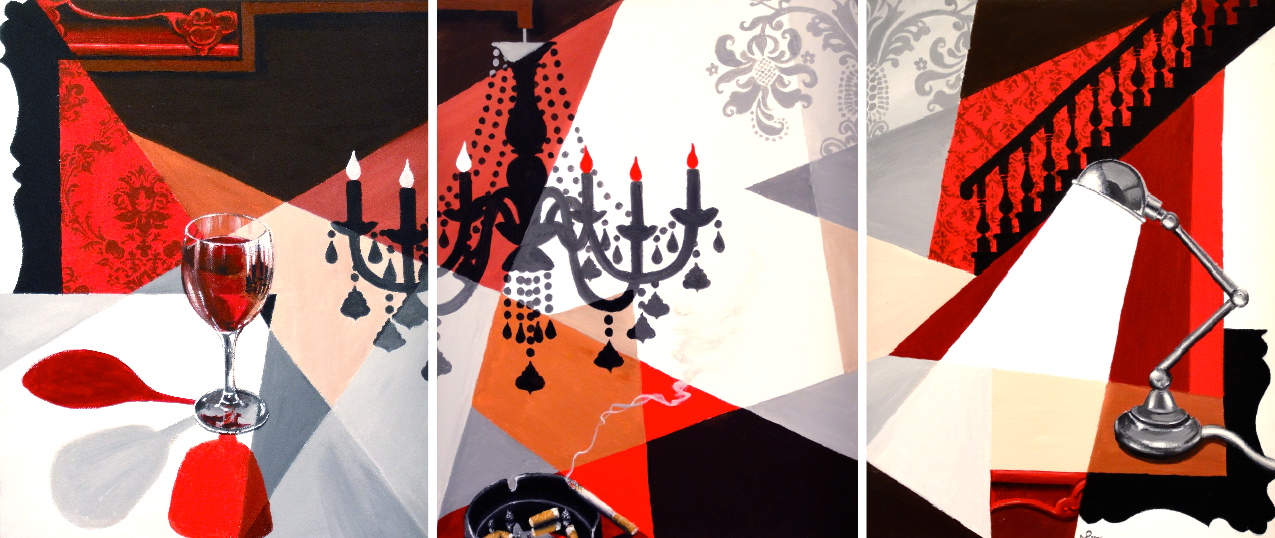
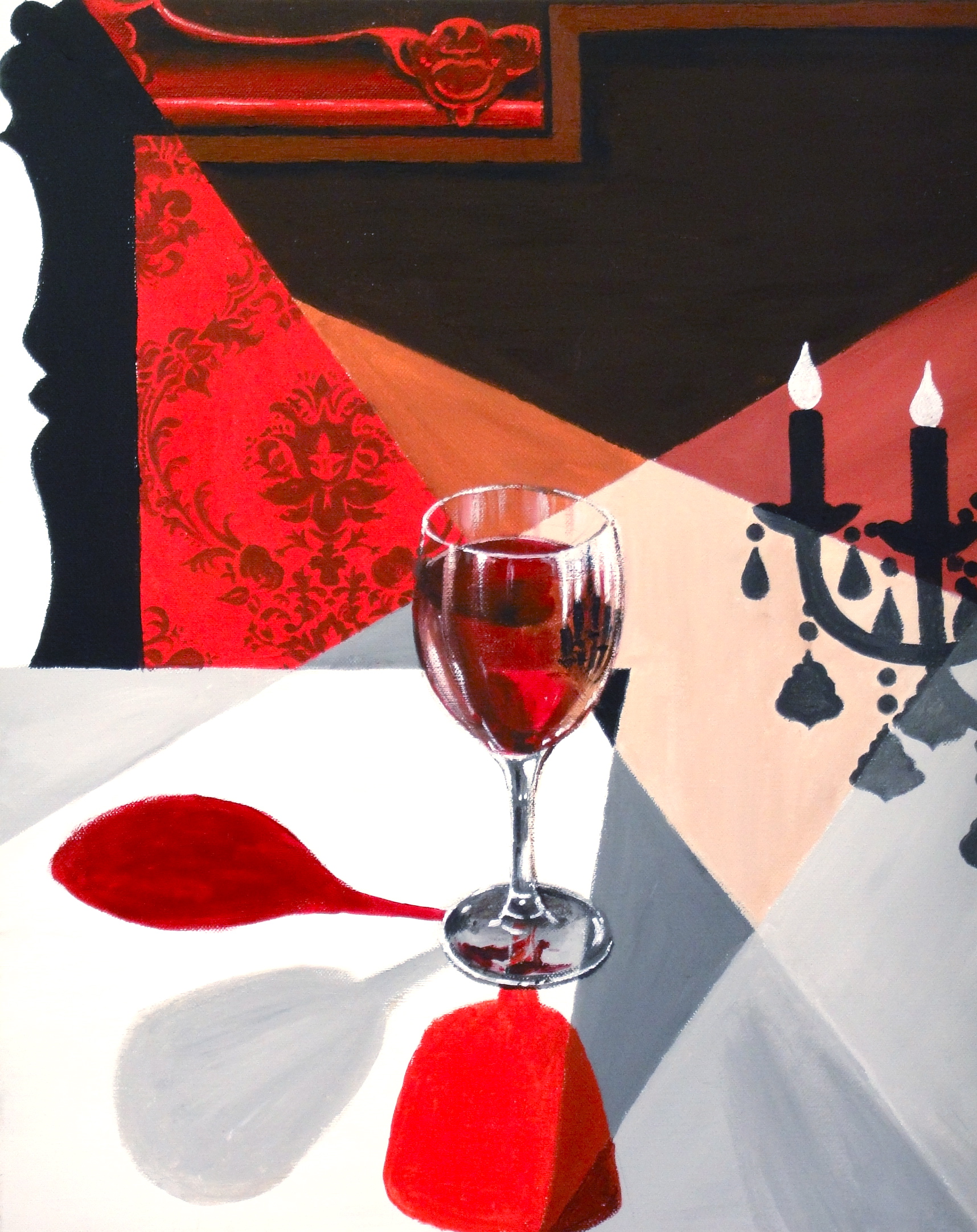
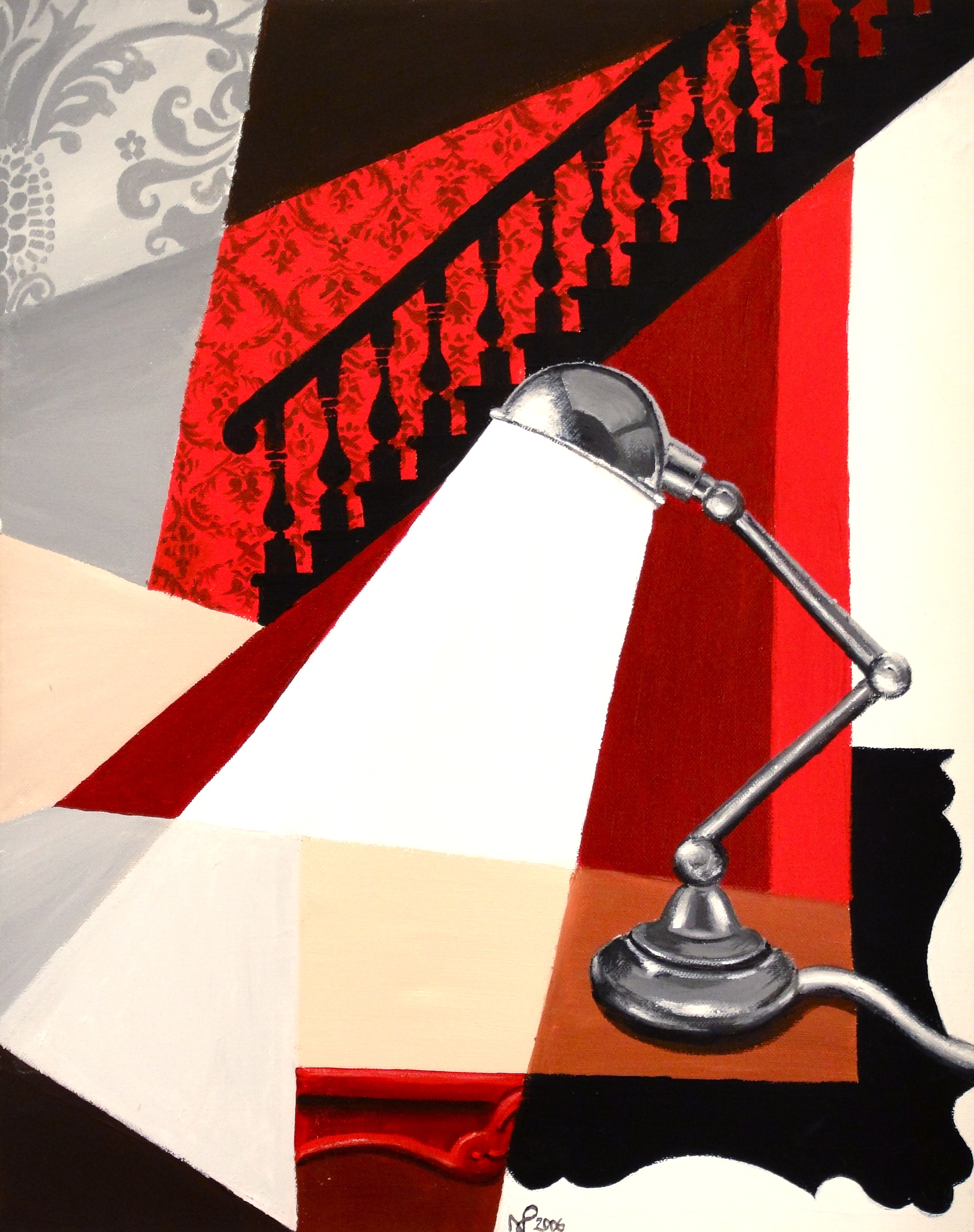
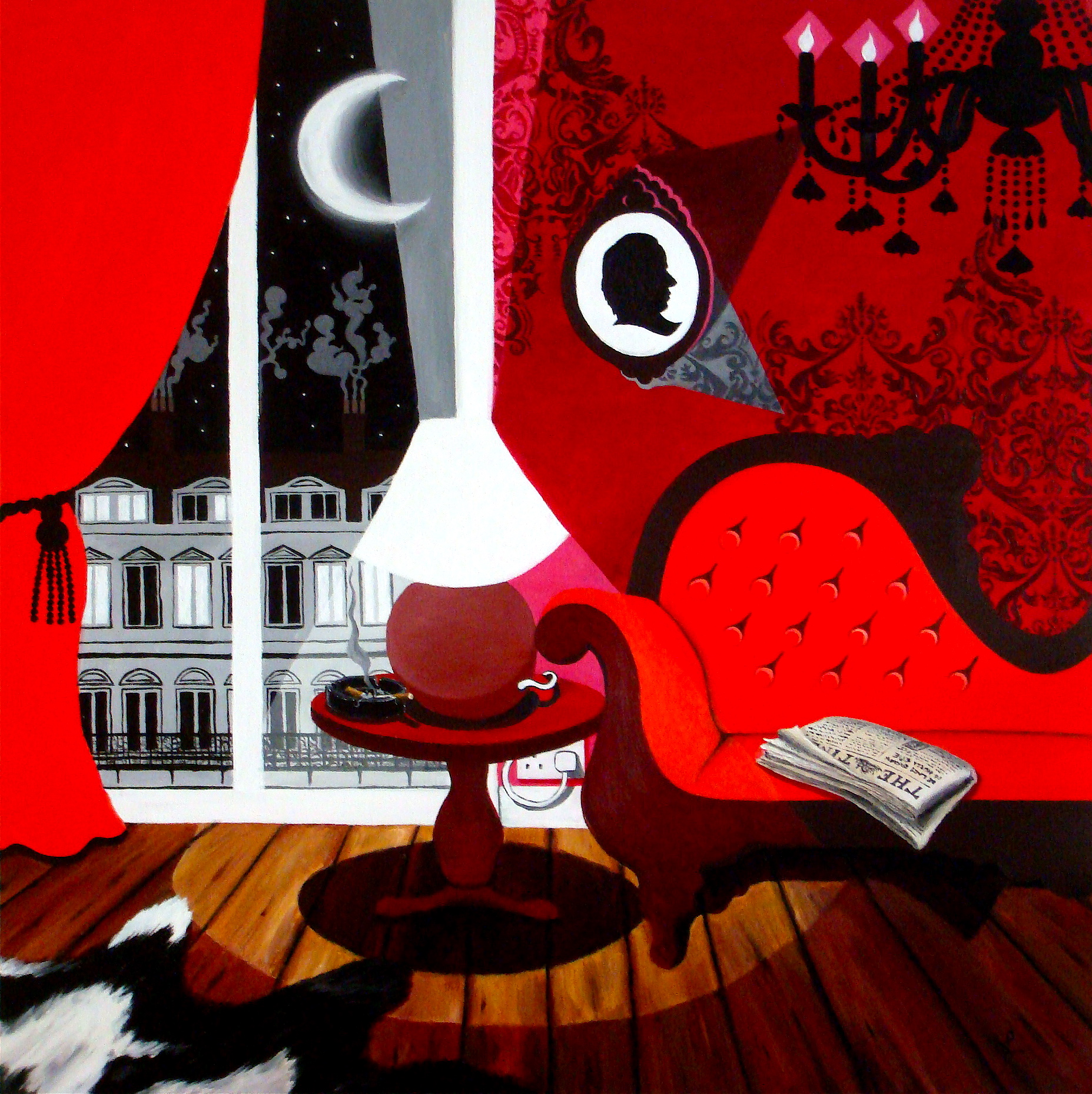
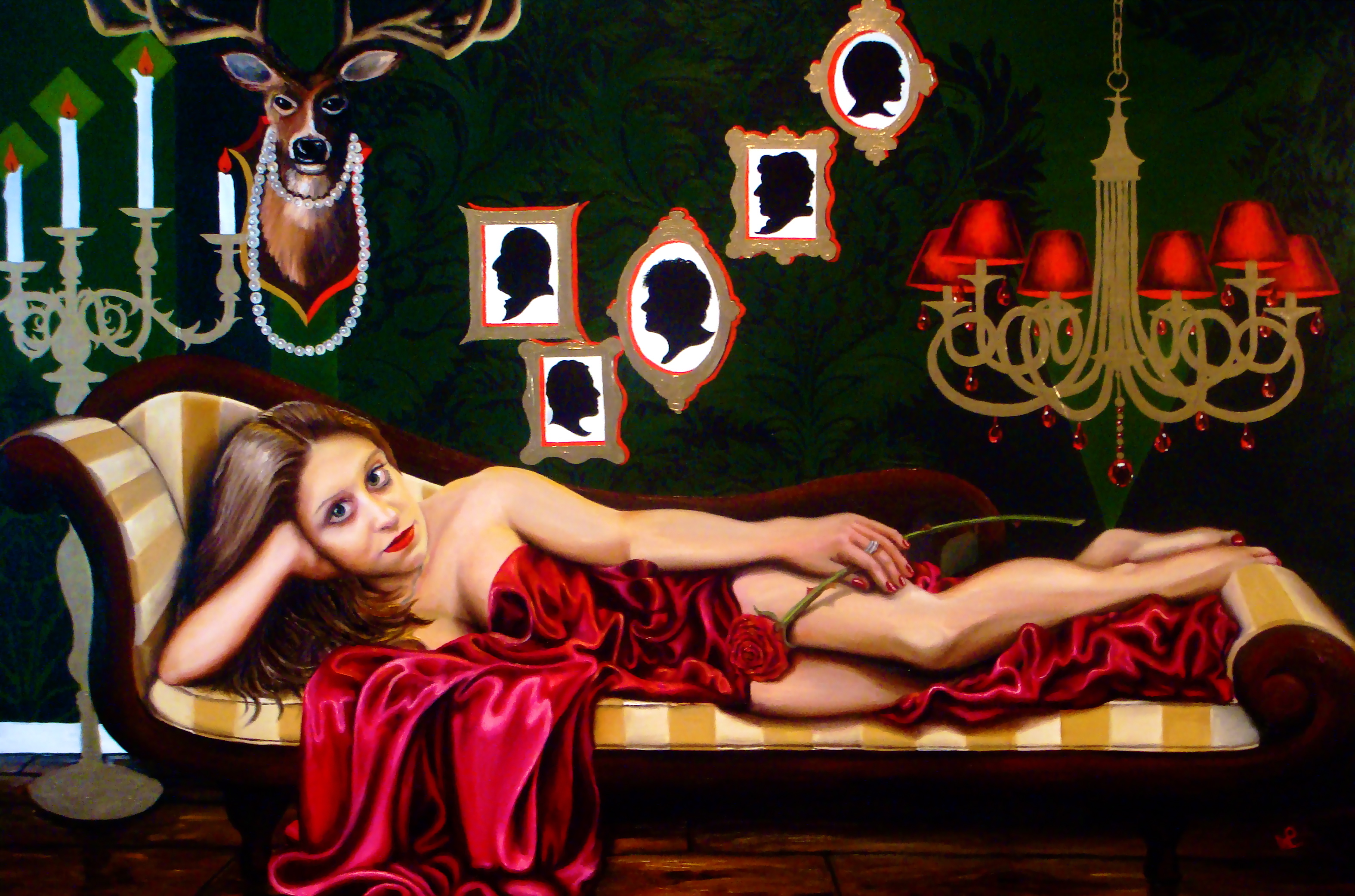
Caulfield’s work not only thrilled me; it also inspired me. I am much indebted to the influence Caulfield had upon my own work – my painting Vintage Q, painted that summer immediately after seeing the RA show, is directly inspired by Caulfield’s technique, while Q4 and Q5, which followed suit, are likewise. Meanwhile, I think much of the interior design I put into place around my apartment flows directly from his mix of contemporary block colours, and interlaced with hints of rich, detailed damask patterns.

Later works: light and shadow

Room 3-95 (1995) © The estate of Patrick Caulfield

Room 3-95 (1995) © The estate of Patrick Caulfield

Trou Normand (1997) © The estate of Patrick Caulfield

Trou Normand (1997) © The estate of Patrick Caulfield

Bishops (2004) © The estate of Patrick Caulfield

Bishops (2004) © The estate of Patrick Caulfield

Hedone's (1996) © The estate of Patrick Caulfield

Hedone’s (1996) © The estate of Patrick Caulfield

Rust never sleeps (1996) © The estate of Patrick Caulfield

Rust never sleeps (1996) © The estate of Patrick Caulfield

Fruit display (1996) © The estate of Patrick Caulfield

Fruit display (1996) © The estate of Patrick Caulfield

So for that reason alone, Caulfield has always stuck in my mind, but imagine my delight when this summer, a solo show held at Tate Britain afforded me the opportunity to see Caulfield’s works all over again. In 5 exquisite galleries, a comprehensive selection of Caulfield’s works took us from his most simplistic 60s creations (a simple grey well reduced to flattened, even more simplified forms; a bend in the road, some castle battlements (above) and so on), to his brilliantly innovative 70s works, where trompe l’oeil dazzles the senses and shines amongst the flatter planes of the large-scale block colour canvases, and then onto the 80s and beyond, when Caulfield began to experiment more with light and shadow, not focusing so much on the thick outlines of black, but expressing an object with shadows and throwing light, albeit in block-colour form.

My works: inspired by Caulfield

Vintage Q (2006 © Nicholas de Lacy-Brown)

Vintage Q (2006 © Nicholas de Lacy-Brown)

Vintage 1 NEW 2011 Vintage 2 NEW 2011 Vintage 3 NEW 2011

Q4 (2007 © Nicholas de Lacy-Brown)

Q4 (2007 © Nicholas de Lacy-Brown)

Q5: Chez Helen (2008 © Nicholas de Lacy-Brown)

Q5: Chez Helen (2008 © Nicholas de Lacy-Brown)

I realise that in writing this review, I am somewhat missing the boat, seeing as the Caulfield show at Tate ended last weekend. But that is no reason why the genius of this brilliant artist should not be applauded to the full – an artist who took 60s simplification in an altogether more mentally complex direction; whose works have become iconic in the chic interiors of London’s cool hotels and boutiques; and whose images have been fundamental in shaping my own creative output as an artist.