Skip to content

Posts from the ‘Travel’ Category

Marbella Twenty-Thirteen | Andalucía’s Gem

While Anglo-Spanish relations may have soured of late over that small little lump of rock Gibraltar which, like many such British overseas territories, remains rather bizarrely a part of the British Empire despite being actually attached to Southern Spain, the sun-baked Iberian Peninsula and in particular the Costa del Sol, remains the number one destination for sun-seeking Brits every summer. Now ordinarily, I would find the concept of coach-loads of drunken sunburnt Britons to be one so sufficiently abhorrent that it should be avoided at all costs. And indeed, along much of Spain’s coast, you wouldn’t see me amongst the larger louts and the empty fish and chips cartons for toffee. But happily there remains one bastion, in amongst this coast of over-developed tourist tat, where champagne, rather than San Miguel is the preferred tipple, and whose old town is so exquisite as to be a gem of Andalucía.
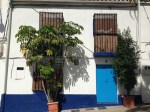
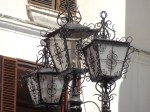
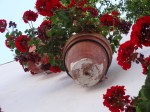
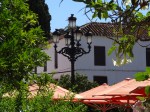
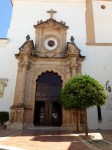
IMG_4185 DSC06497 DSC06240

I am of course talking about Marbella, which despite being more popularly labelled “Marbs” these days owing to the minor polluting influence of visits from the tack-happy residents of Essex, has remained a city synonymous with quality, with the good life, and with the beauty of its streets, its harbours, its beaches and its people. Marbella is undoubtedly one of my favourite cities in all the world, but not for its beaches and gold-plated yacht-filled marinas – rather I am seduced because with its Andalucían flavours, its embrace of Spanish heritage, its collections of art and clusters of small private galleries, and its offerings of some of the most charming plazas and cobbled streets in all of Spain, it is simply a paradise on earth.

Luckily for me, my family have a small old house right in the heart of the winding maze of streets which make up Marbella’s Casco Antiguo (old town), and as a result, over the 11 years in which we have owned the house, I have come to call Marbella my second home. Consequently, there could be no question that I would return to my sunny homeland when I turned the big 3-0 this summer – for two weeks of celebrations which would help to dilute the somewhat daunting horror felt at turning such a ripe old age.
DSC06522 DSC06542 DSC06517

What will follow, therefore, is a series of posts devoted to those two weeks of sea, sun and Spanish seduction, from several collections of photos and a visit to nearby Malaga, to the art works I painted, and the dinners I enjoyed. I start the series with my first set of snaps, these exploring the unhampered charm of Marbella’s old town.

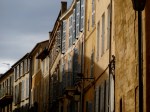
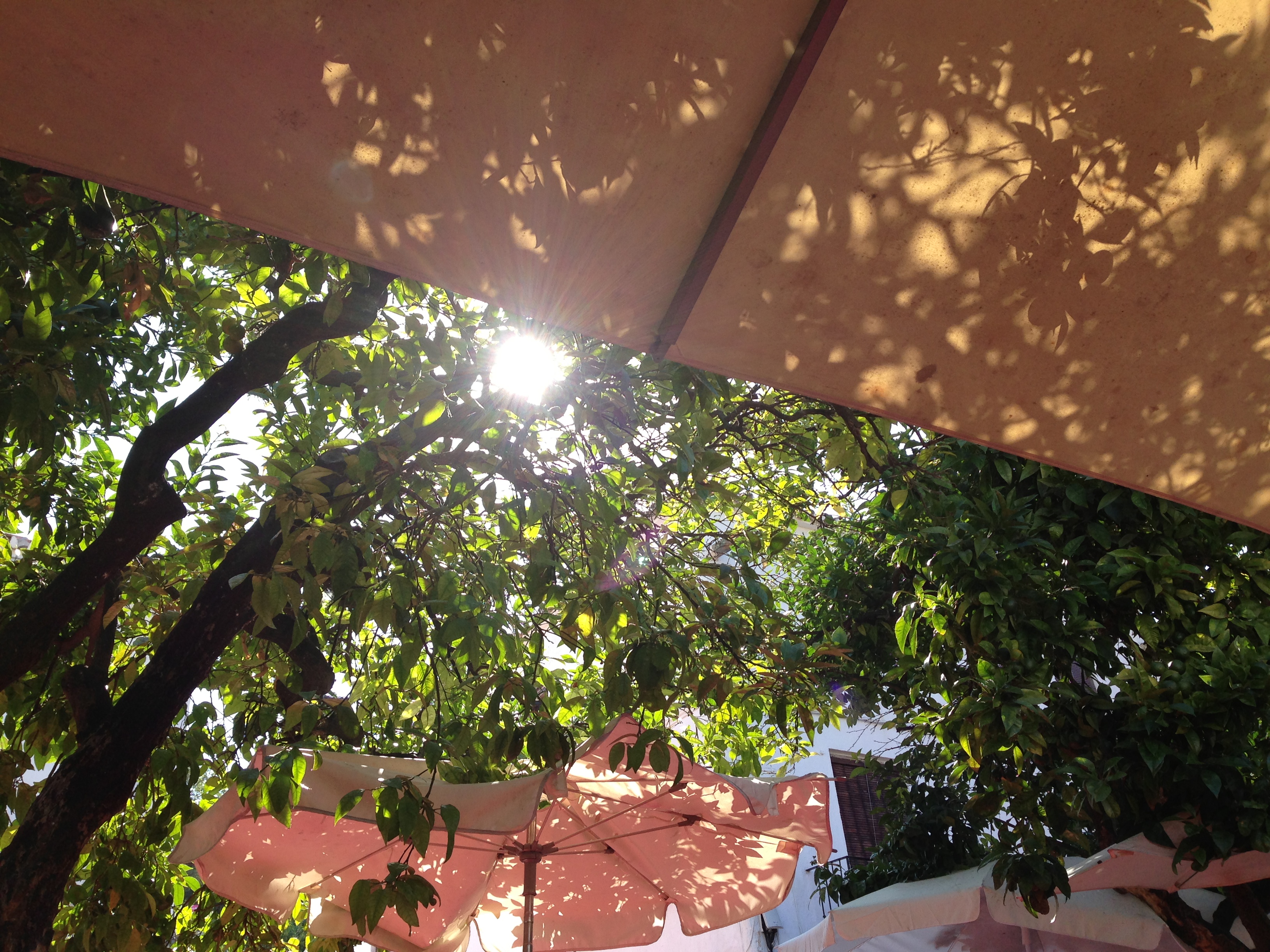
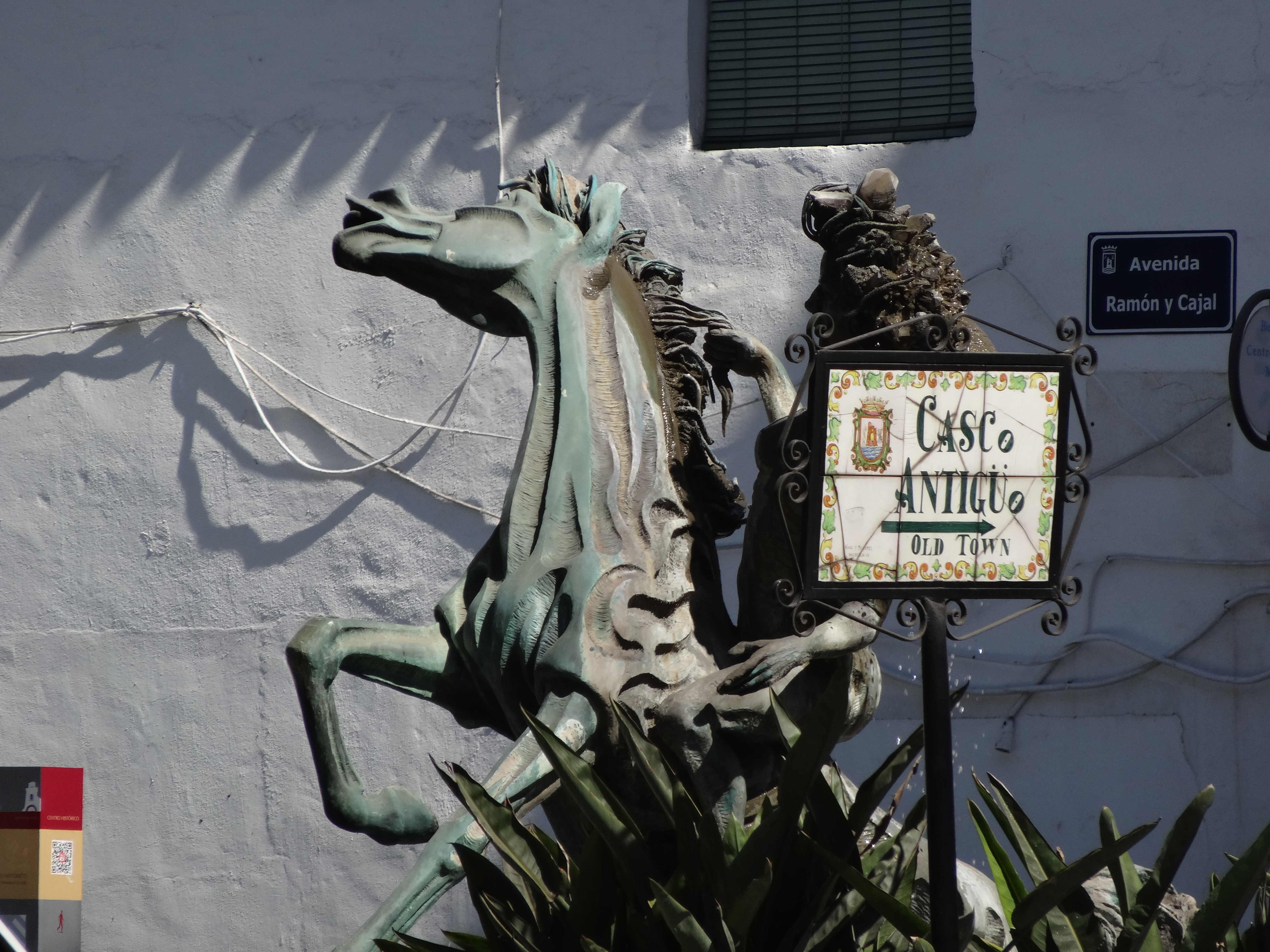
Sometimes, when I walk out of my own front door straight onto the white washed streets of Andalucía, dazzling in their white simplicity against the bluest of skies, and contrasting against the vivid pinks of the abundant floral sprays climbing up the old cracking walls, I have to pinch myself. For living inside of a postcard world always makes you feel a bit like you’re dreaming. Yet in this very knowledge, I cannot help but act like a tourist on every walk around Marbella, for even though I have seen these streets and sights several hundred times before, I cannot help but feel that in my own small way, I must pay homage to their stunning beauty.

The photos on this post are a part of that homage, a dedication to the charming narrow streets, the squares bustling with parasol-covered restaurants and refreshed by the trickle and splatter of the old town’s many stone fountains, to the vivid colours of the richly painted facades, and to the simple glory of old churches, ancient stone walls, and neatly cobbled streets.

All photos and written content are strictly the copyright of Nicholas de Lacy-Brown © 2013 and The Daily Norm. All rights are reserved. Unauthorized use and/or duplication of the material, whether written work, photography or artwork, included within The Daily Norm without express and written permission from The Daily Norm’s author and/or owner is strictly prohibited. 

Provence Odyssey | Aix: Les Photos

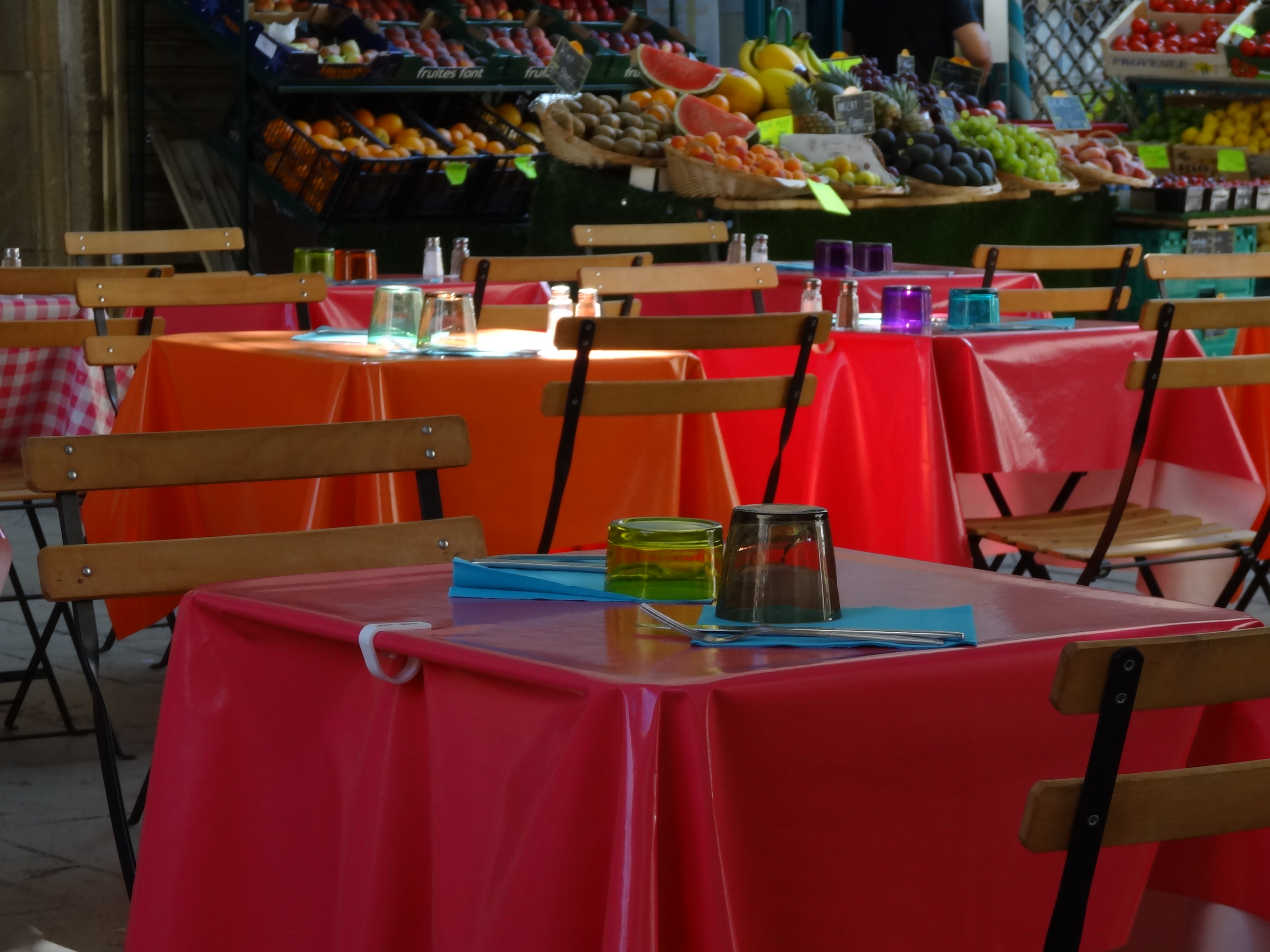
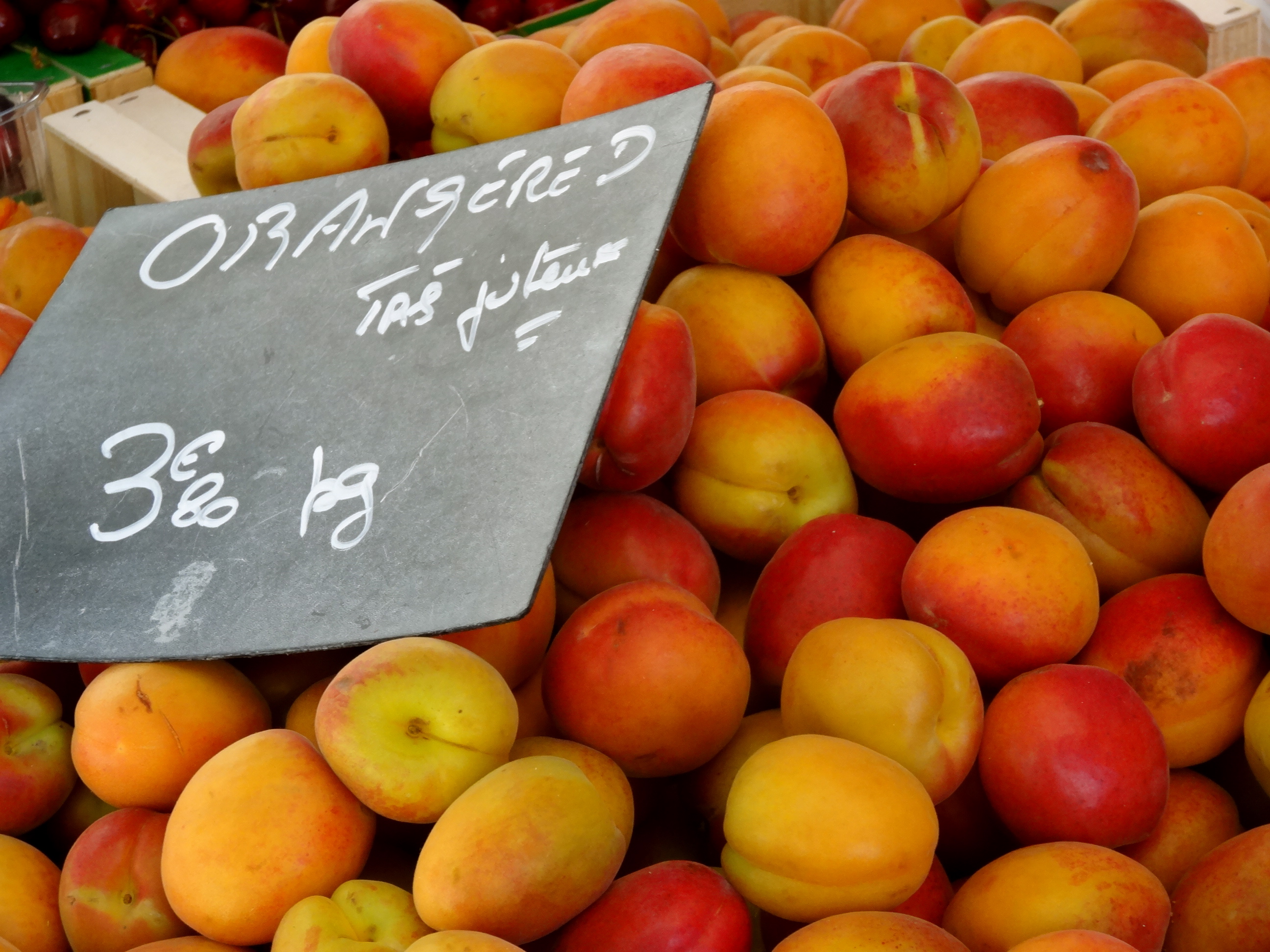
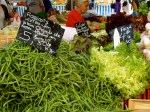
Here at last, after some 22 posts and countless photographs, memories and verbose ramblings, I am finally at the end of my Provence Odyssey write up, with the last of my photograph collections. Of all the cities we visited in Provence, Aix exuded the most life, colour and pure unbridled spirit. While Aix had the pastels and warm colours of its fellow Provençal towns, these were combined with grand elegant palaces, wide boulevards, and an ever bustling abundance of cafes and shops, musicians and entertainers, and best of all a daily food market – a sight which made for such a stunning kaleidoscope of colours, sounds and smells that I could have devoted an entire post to it alone.

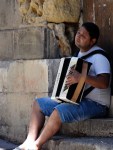
I know I sound like a broken record, but amongst these shots are easily some of my favourites of the trip – just check out those sunflowers, with their huge heavy complex faces, gathered in a bunch so rich in their abundance, their colour and sheer hopefulness that if they didn’t suit a room, it would be worth redesigning the room around them. Check out also the stunning old adverts which are painted onto numerous walls around the city, relics of an age when mass-marketing started coming to the fore, and when classic painted images predated the advent of photography. I also love some of the typical shots of life in the city, from the bride with her wedding dress all puffed up and ruffled, and the melancholy achordian player, singing his heart out in a tired little doorway.

DSC04522 DSC04576 DSC04903 DSC04572

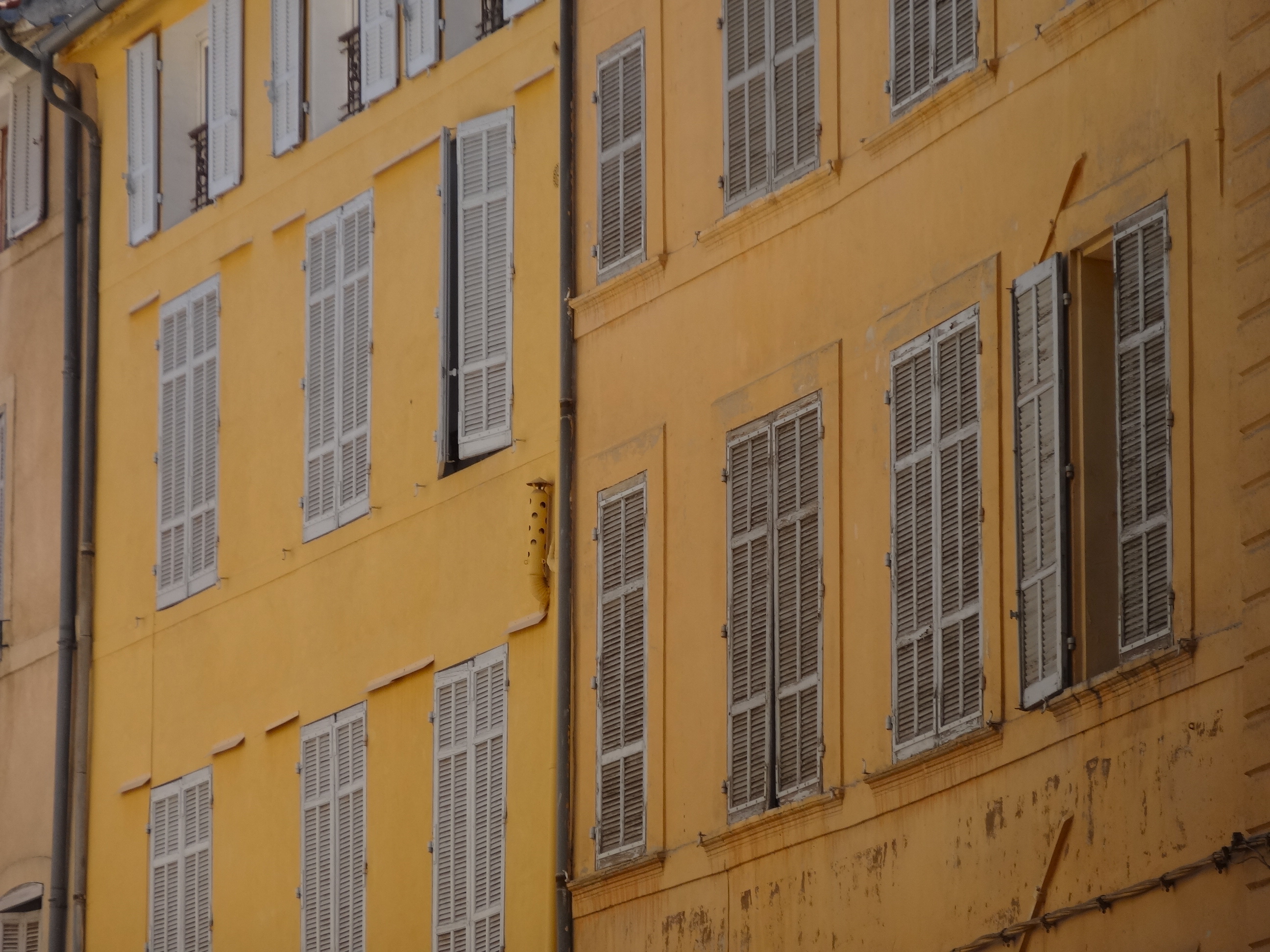
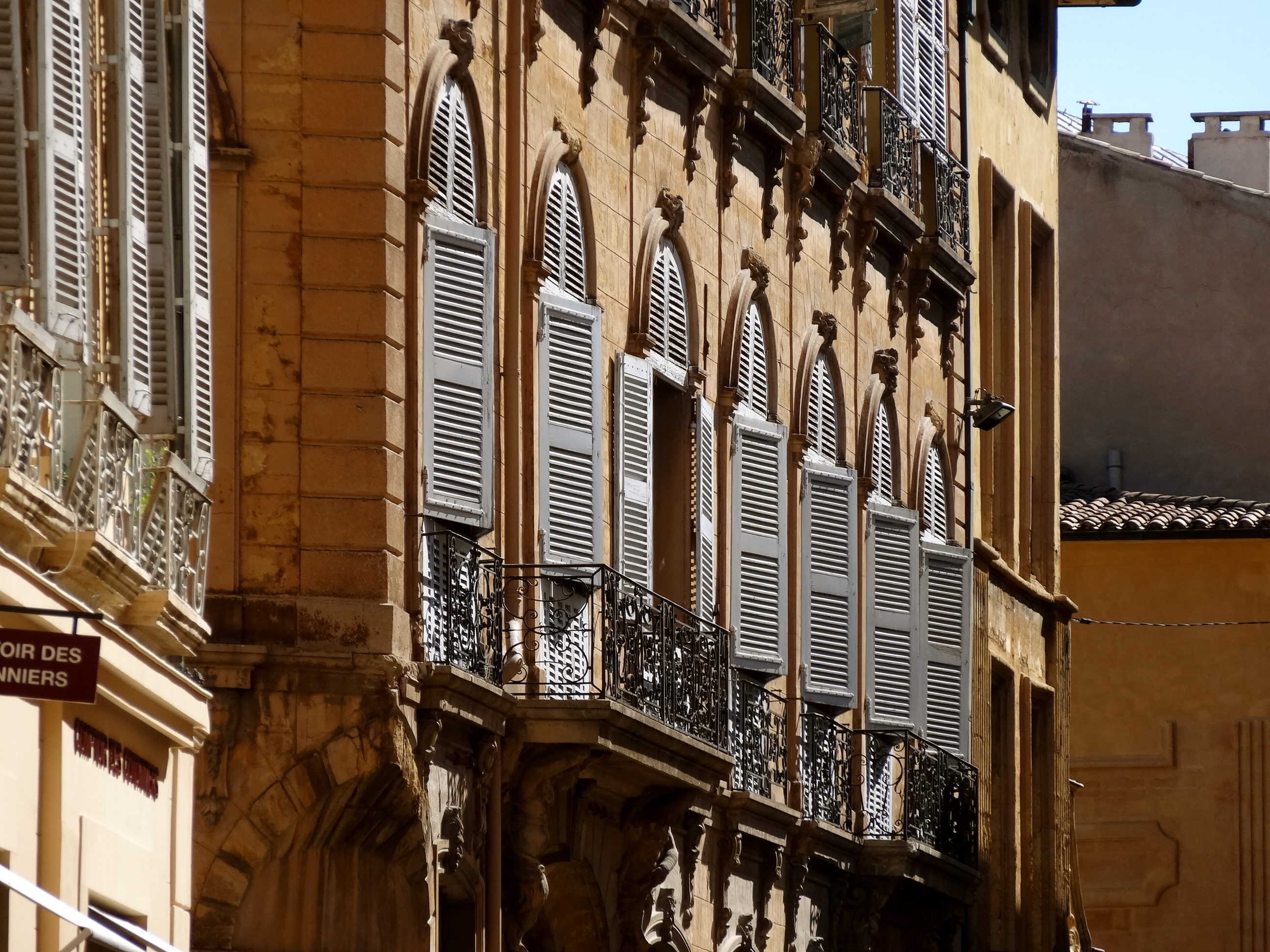
Shutters and fountains, roman artefacts and art nouveau palaces, renaissance sculptures and melancholy musicians – these photos tell the tale of a diverse city, which moves to the beat of its spirited undercurrent, but in doing so loses none of the charm which it exudes from its every fountain, square and boulevard.

This is Aix: My photos.

All photos and written content are strictly the copyright of Nicholas de Lacy-Brown © 2013 and The Daily Norm. All rights are reserved. Unauthorized use and/or duplication of the material, whether written work, photography or artwork, included within The Daily Norm without express and written permission from The Daily Norm’s author and/or owner is strictly prohibited. 

Provence Odyssey | Aix: Day 10 – Au revoir, not goodbye

As the saying goes, let us not say goodbye, but as the French have it, “Au Revoir!”, two words laced with the promise of a return, rather than the abject finality that accompanies the English alternative. Perhaps it is the romance of the French language which encourages such optimism in an otherwise sad parting, or the mere fact that the charm of France makes saying goodbye a near impossibility. Whatever the reason, as we prepared to bid Aix, and Provence farewell at the end of this incredible Provençal Odyssey, we knew, instinctively, that some day we would return. For despite the decent length of our journey, and the multiple sights seen and senses tickled, these days felt like a mere taster of a gigantic feast of pleasure still left undiscovered in Southern France, and for that reason alone, the assurance of a return tends towards reality.

With that ounce of optimism giving us back some bounce in our otherwise sad last steps in the incredible city of Aix, we were minded, as ever, to make the most of our last hours in the city, strolling, at times aimlessly, at others with purpose, in an attempt to take in the very last essence of this place before our departure.

DSC04847 DSC04853 DSC04858

We started our day, perhaps rather morbidly, but yet appropriately I think, by following the last section of the city’s “Cézanne trail” towards the Cemetery of Saint Pierre where the great artist is buried. The visit felt appropriate, not just because, as the final resting place of so many people, it became somewhat symbolic of the end of our Provençal journey, but also because, having been inspired to visit Provence by the significant artistic connections it carries, it felt only right that we would pay homage to the father of them all in his final place of peace; a note of thanks to the father of modern art.

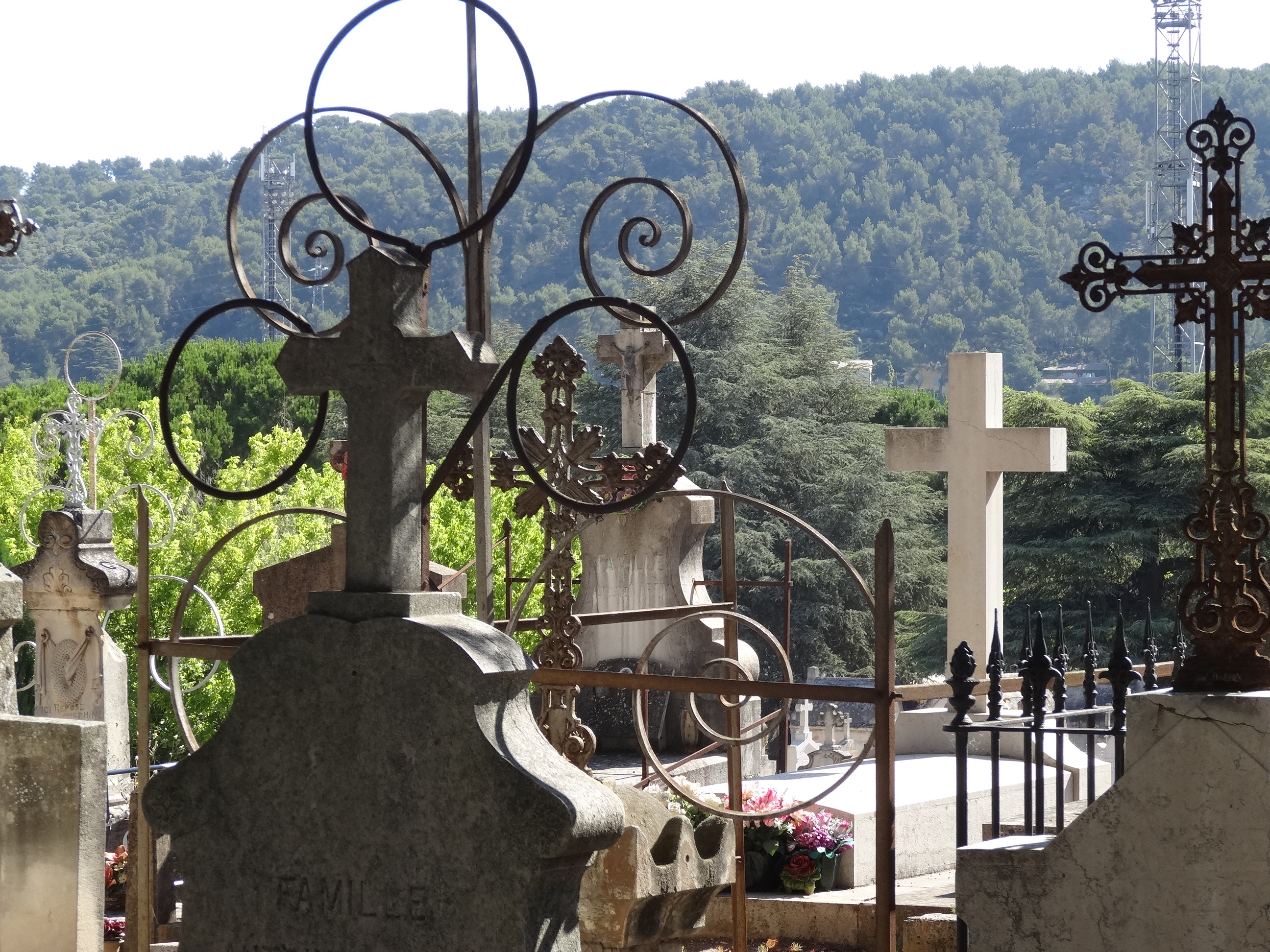
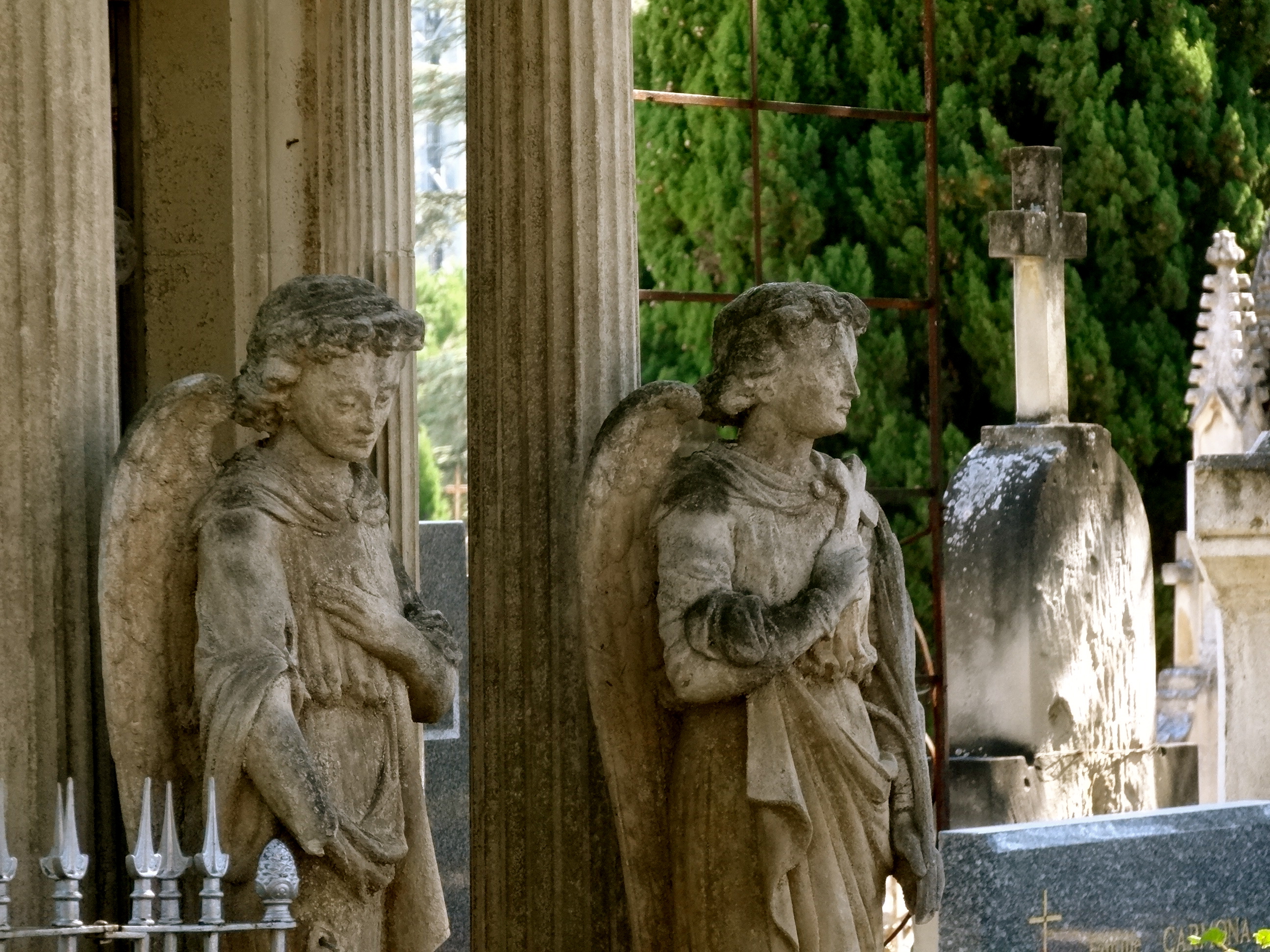
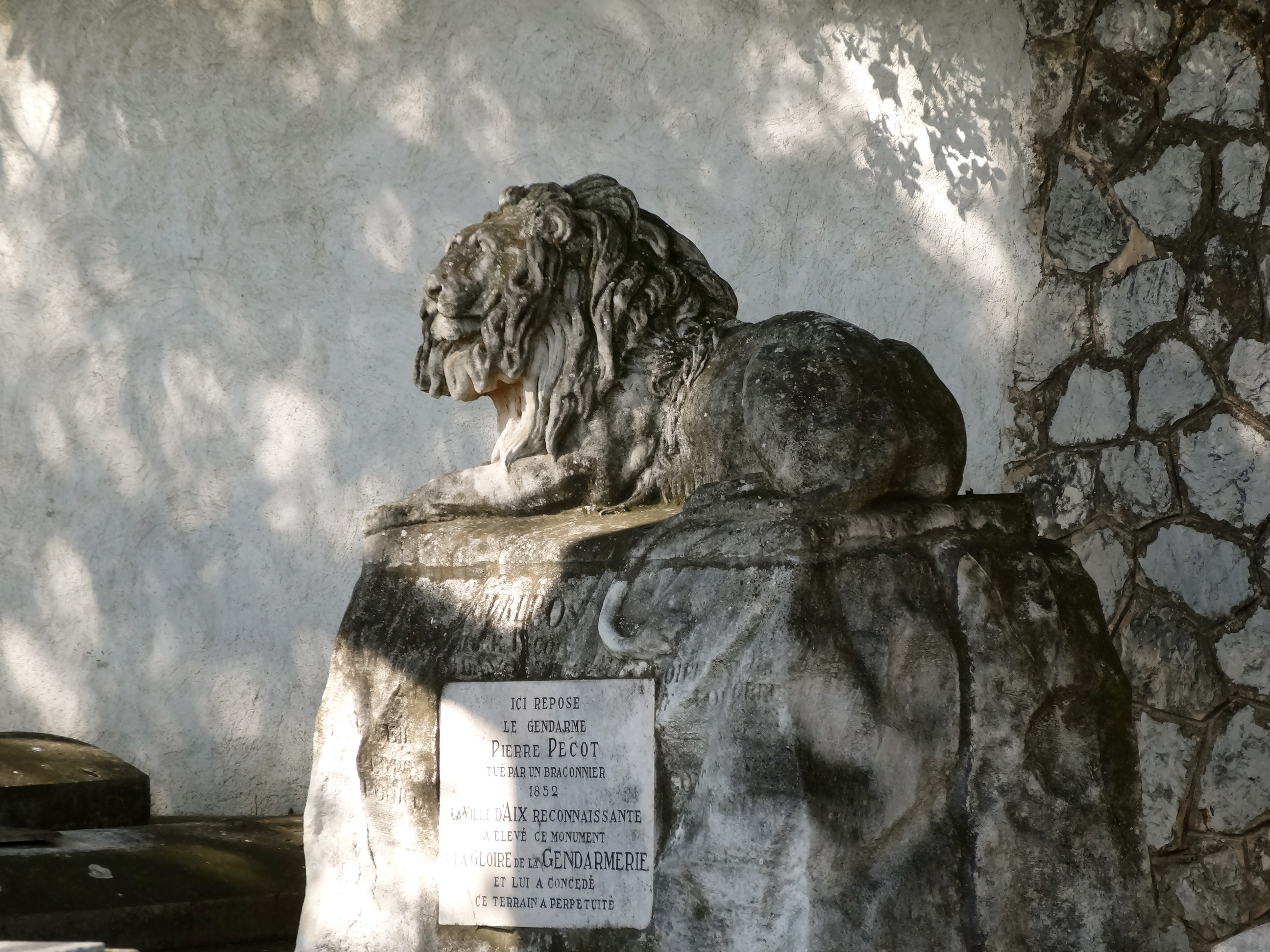
I’ve always rather liked cemeteries, particularly those in the Mediterranean, baked as they are by the glorious sunshine, yet emitting peace and tranquility amongst the shadows of dark cypress trees and pines. This cemetery was no different, providing an almost mesmeric experience as one walked from one elegant grave to another, aware of a family’s sadness in the multiple lives lost here, yet also feeling strangely at peace, somehow contented by the final rest of so many. The cemetery was much bigger than I had supposed, and looking up hill towards the far reaches of the site made for an incredible vista of crosses and little family mausoleums, collectively appearing like a great wave of stone and symbols.

DSC04874 DSC04885 DSC04875 DSC04876 DSC04872

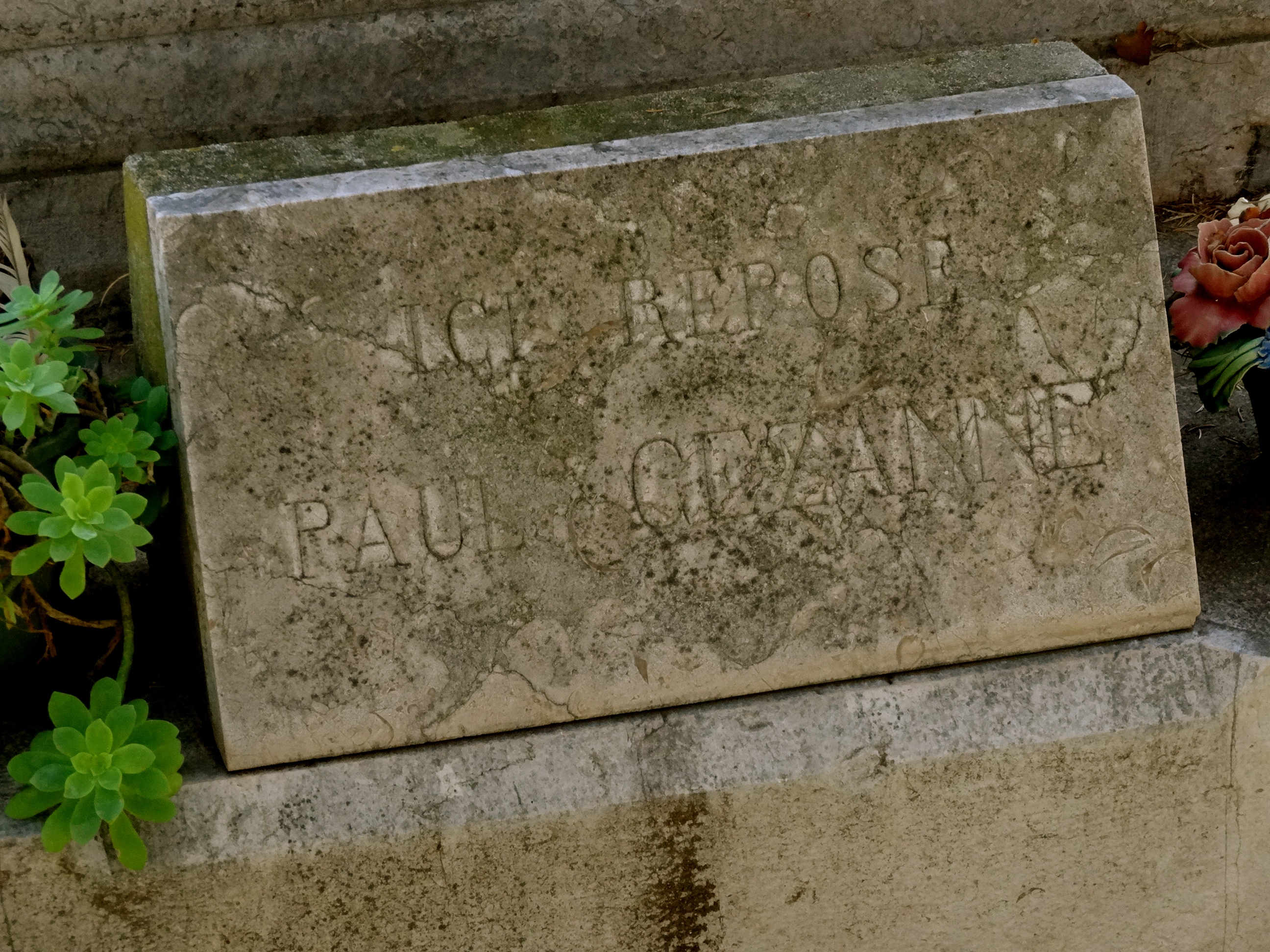
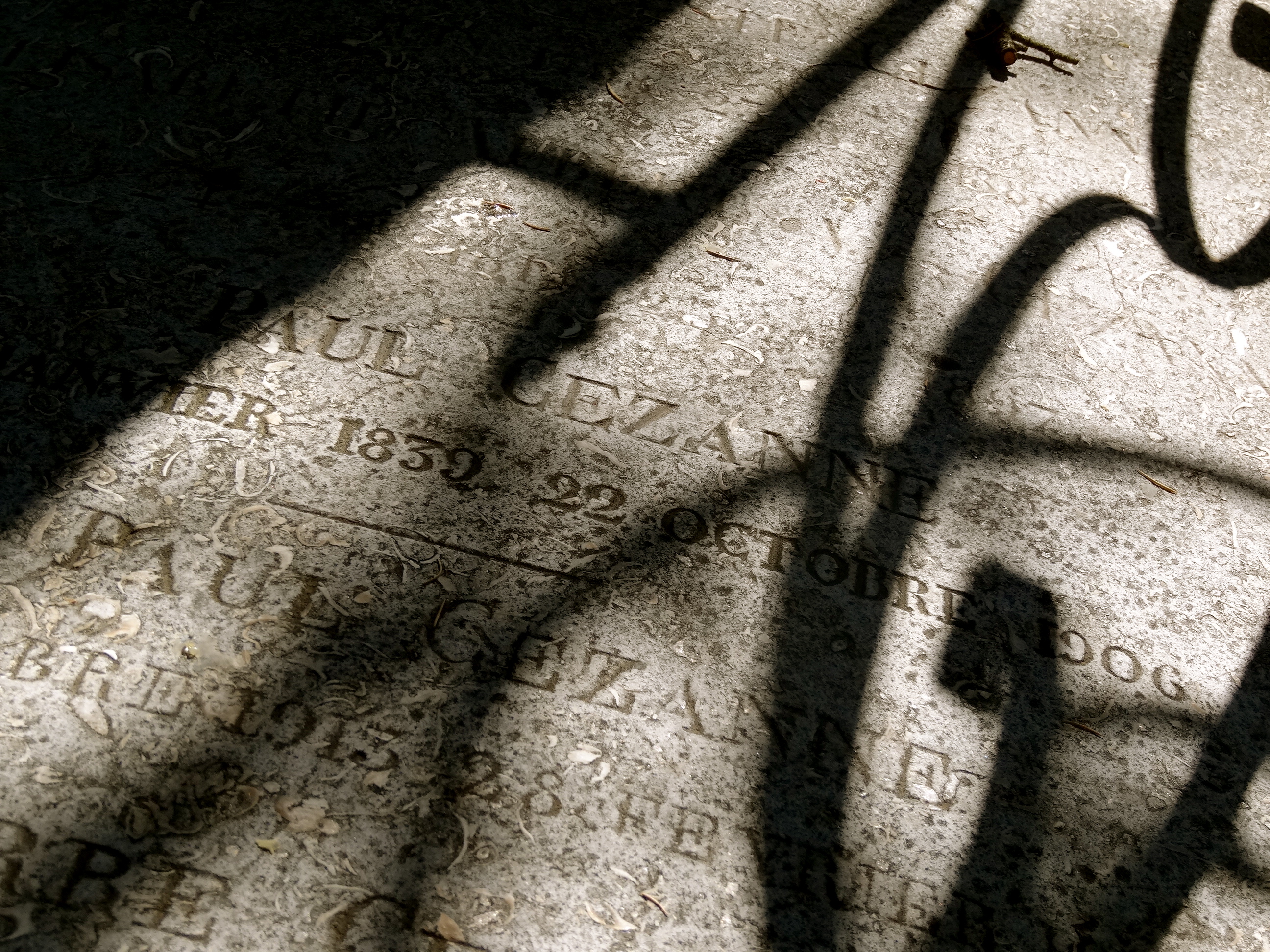
It took us some time to find the grave of Cézanne, a difficulty not helped by the lack of proper signage and the fact that he lies under a surprisingly innocuous gravestone when compared with many of his neighbours’ lavishly decorated headstones, and also strangely devoid of flowers or tributes from other visitors. This is perhaps testament to the sad lack of respect his city had for him in life, and yet he can lie in peace knowing how incredibly significant his life’s work has been for the art world since. Putting at least the lack of flowers to rights, I lay a simple sheaf of lavender upon his grave, feeling at that moment a great connection with the artistic heritage laid down by this man, an artist so often misunderstood but whose genius will live on forever, both in his own work and the work of countless others who followed in his wake.

DSC04878 DSC04881 DSC04884

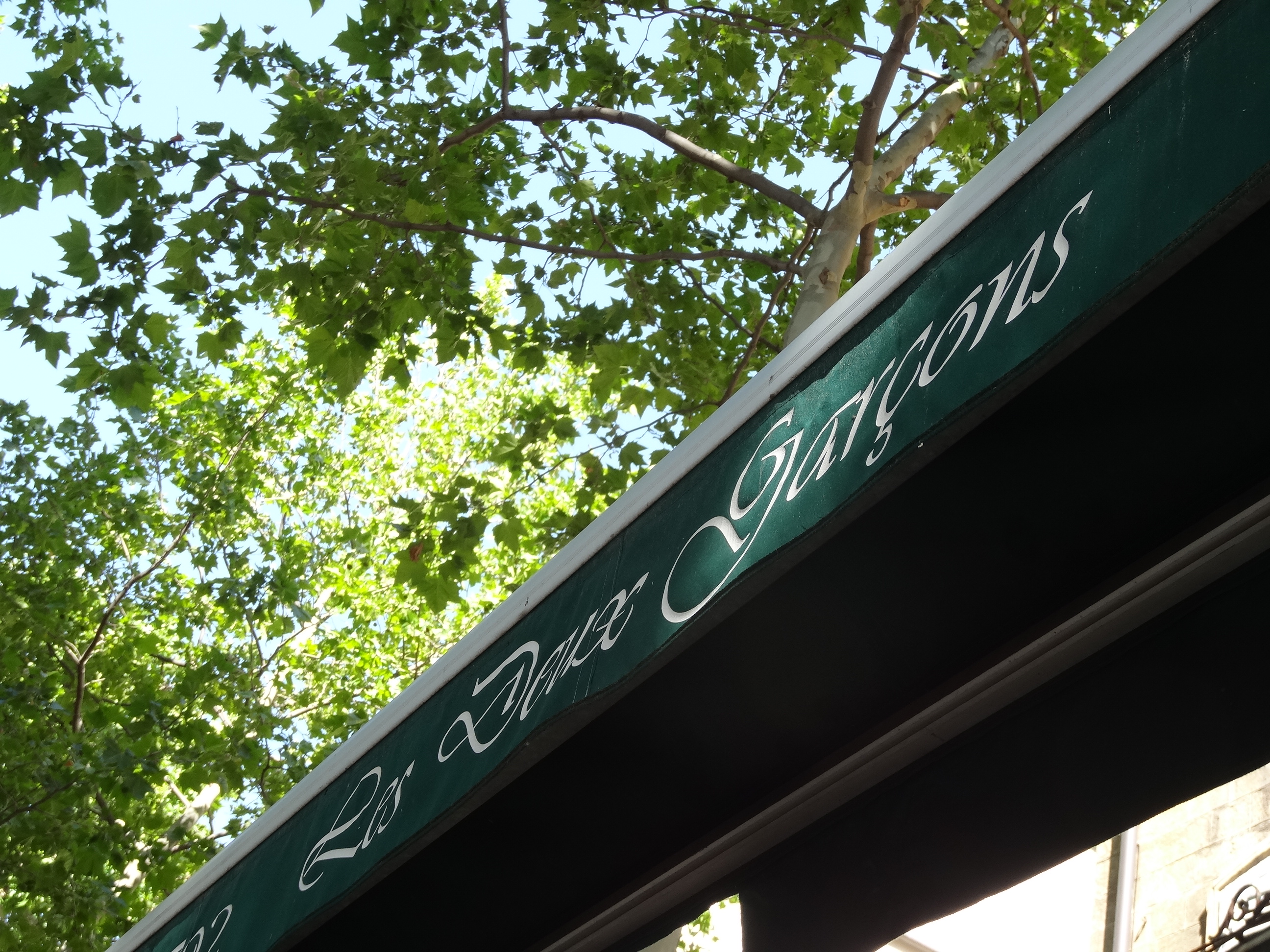
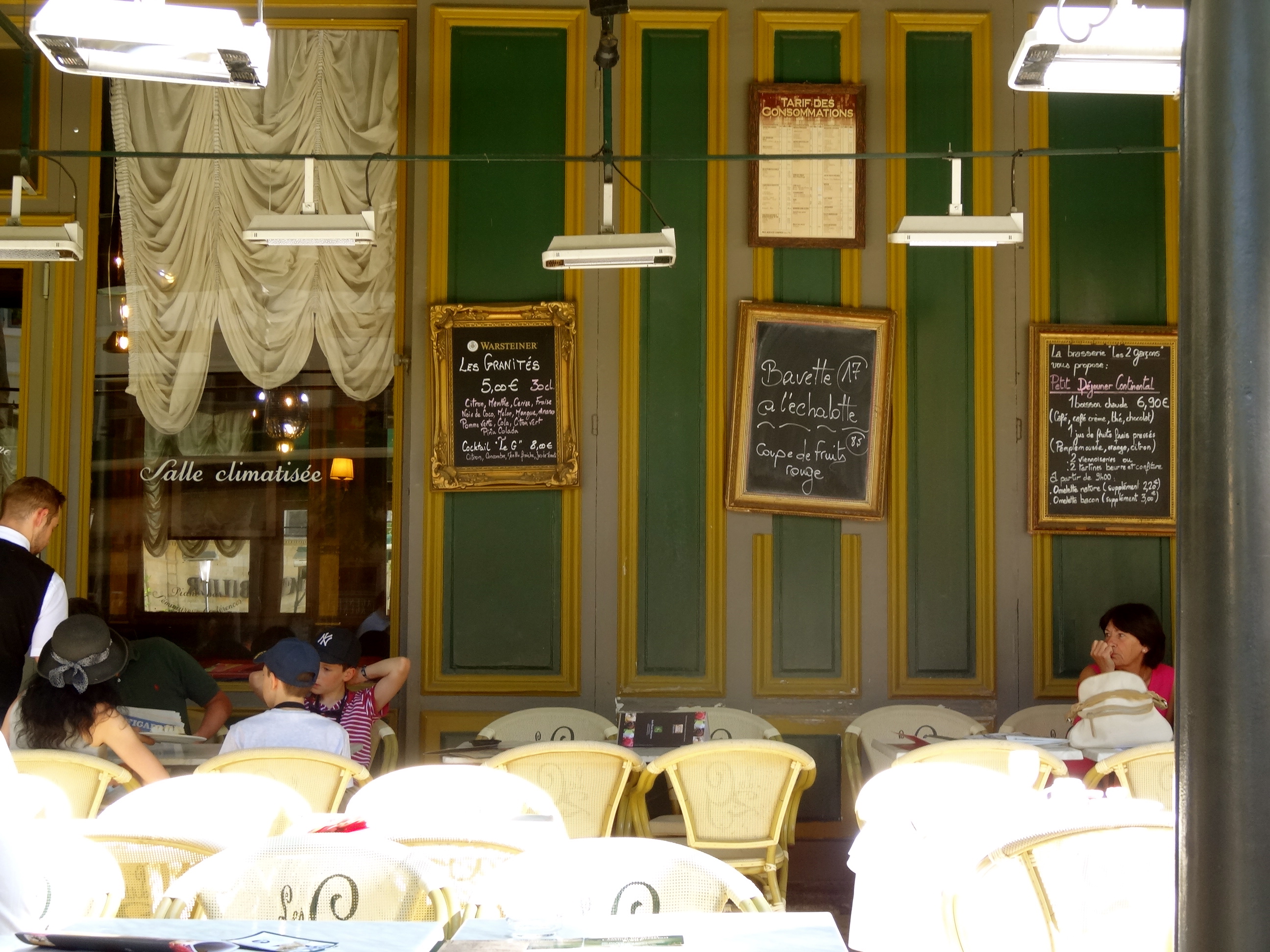
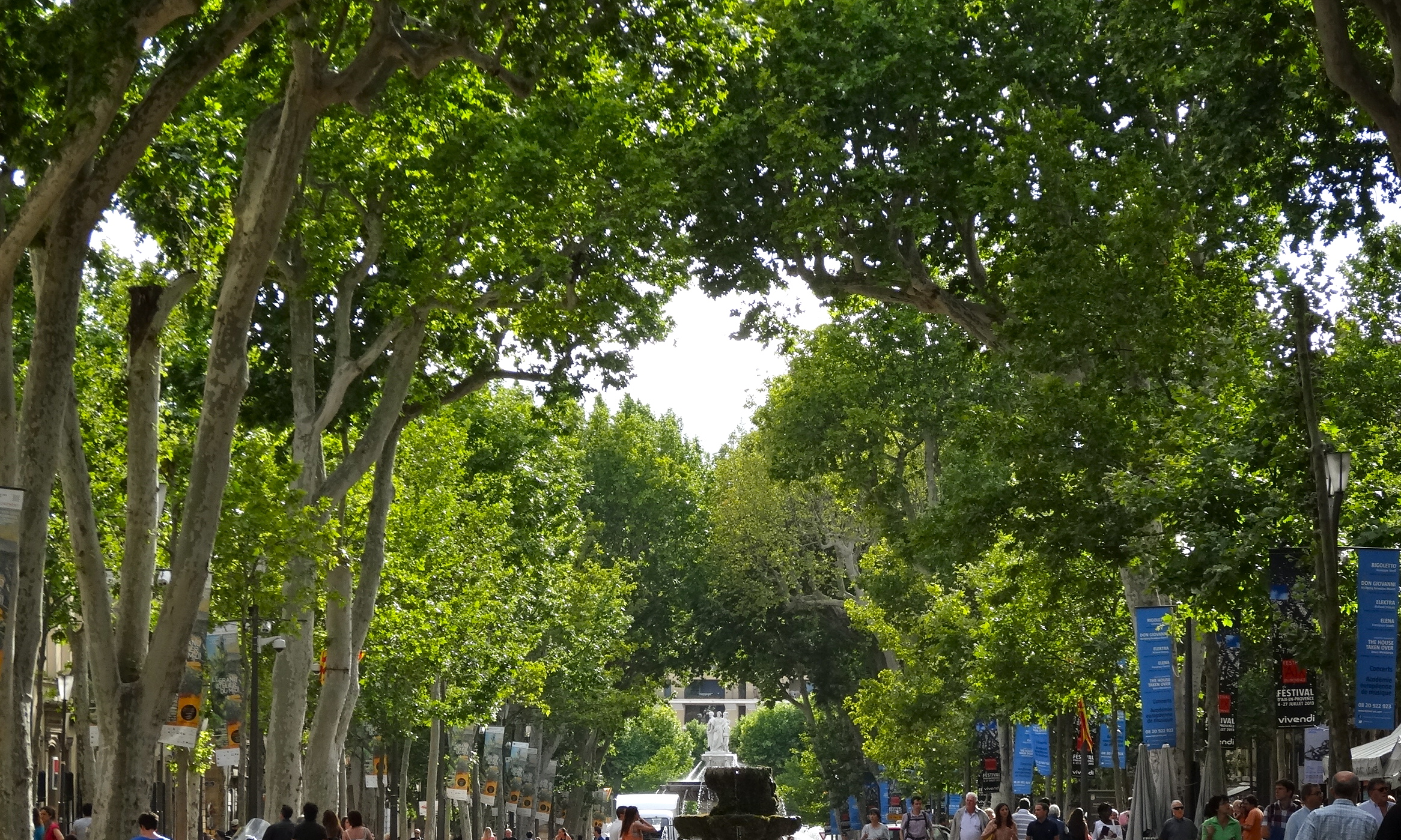
Heading back to civilisation for a final encounter with Aix’s bustling centre, we also felt as though we were resurrecting Cézanne along side us as we headed back to the world of the living. For strolling one last time down Aix’s most prominent avenue, the Cours Mirabeau, with its almost unbroken shelter of plane trees, we dropped in to the Café Les Deux Garçons, the very café where Cézanne would sit each evening to enjoy an aperatif, and where we now went about sipping our last coffee in Aix, gazing upon the chic residents of this city strolling past, breathing the warm fragrant air of Provence, and already planning how, and when we would return to this incredible part of France.

DSC04892 DSC04894 DSC04887

And with that our Odyssey ended; a finale effected with such efficiency that it was almost as though our story ended just as it had begun. For with holidays like this, each and everyone of us has the opportunity to truly live a dream, and when, like any dream, you walk amongst the pages of its imagination, it feels so real – like there is no other world beyond. But as with every dream, at some point you must awaken, as reality floods back in with the harsh light of day. And so it was that our Odyssey ran dry at last, and London life took hold once again. But not completely. For with this blog, through my paintings, my photographs, and of course the sachets of lavender now to be found placed strategically around my flat, the essence of our Provençal Odyssey still lives on, and will continue to do so, sewing itself into the rich patchwork quilt of our memories which will continue giving us comfort for years to come.

Thank you all so much for reading and sharing in our journey. But it’s not quite over yet – come back tomorrow for my last Provence photo collection. Until then.

The Cours Mirabeau

DSC04273 DSC04394 DSC04393

All photos and written content are strictly the copyright of Nicholas de Lacy-Brown © 2013 and The Daily Norm. All rights are reserved. Unauthorized use and/or duplication of the material, whether written work, photography or artwork, included within The Daily Norm without express and written permission from The Daily Norm’s author and/or owner is strictly prohibited. 

Provence Odyssey | Aix: Le Dîner – La Cantine

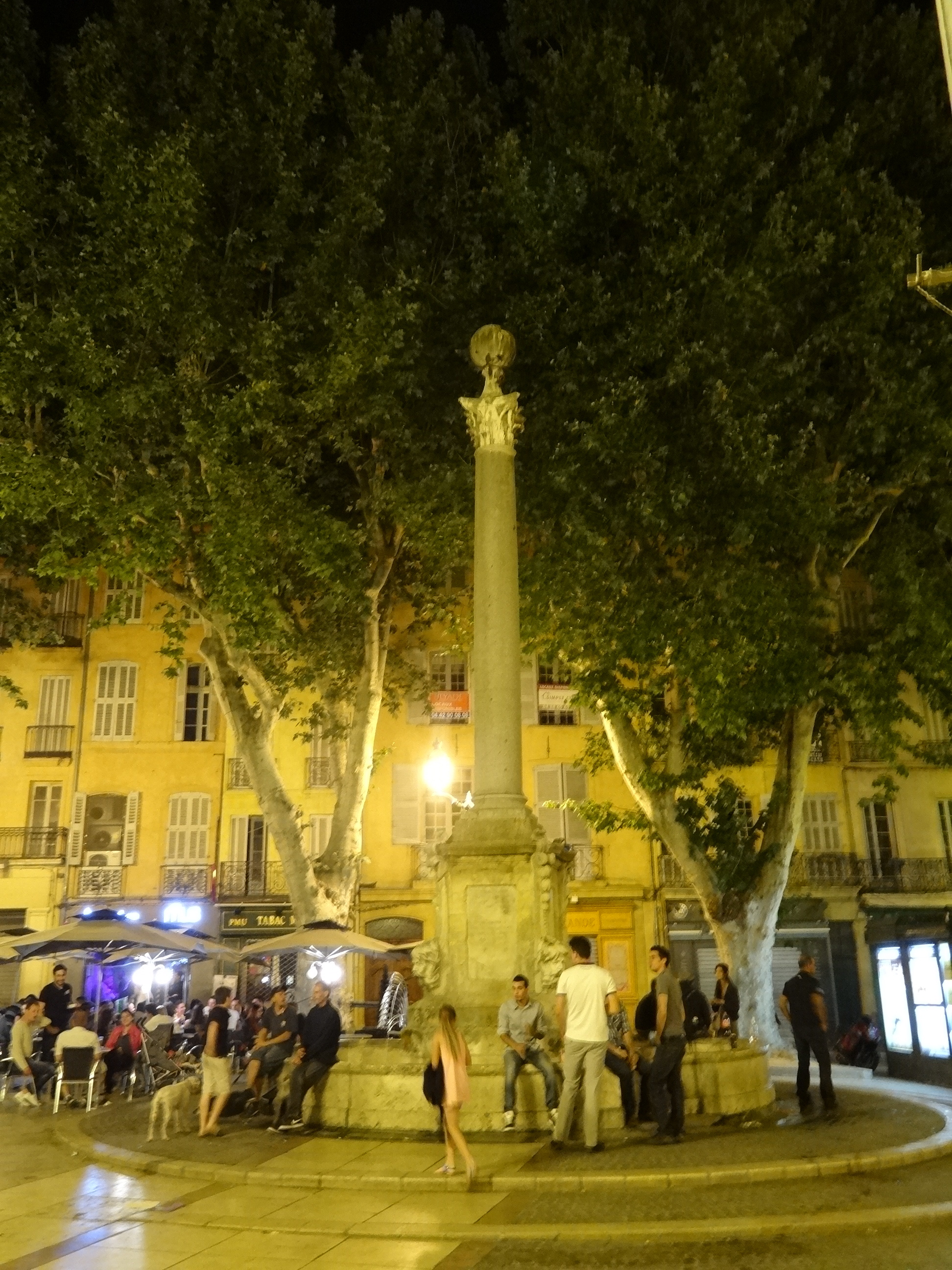
Oh pretty Aix, if only I could write you an ode that befits the glory of your pastel-coloured visage, your night times streets ambient with the warmth of your peoples’ passion, night strollers treading the tango under the shelter of wide plane trees hung with glowing lanterns, around your fountains bustling restaurant tables clustered, and on your honey-painted walls, light reflected from street lamps and cafe candles. Aix, the city of students, of Cézanne, of the chic and the cultured, a city whose spirit is unceasing throughout day and night, and whose elixir of life bursts like electricity bolts through the long boulevards and across your terracotta rooftops.

Ice cream delight!

Ice cream delight!

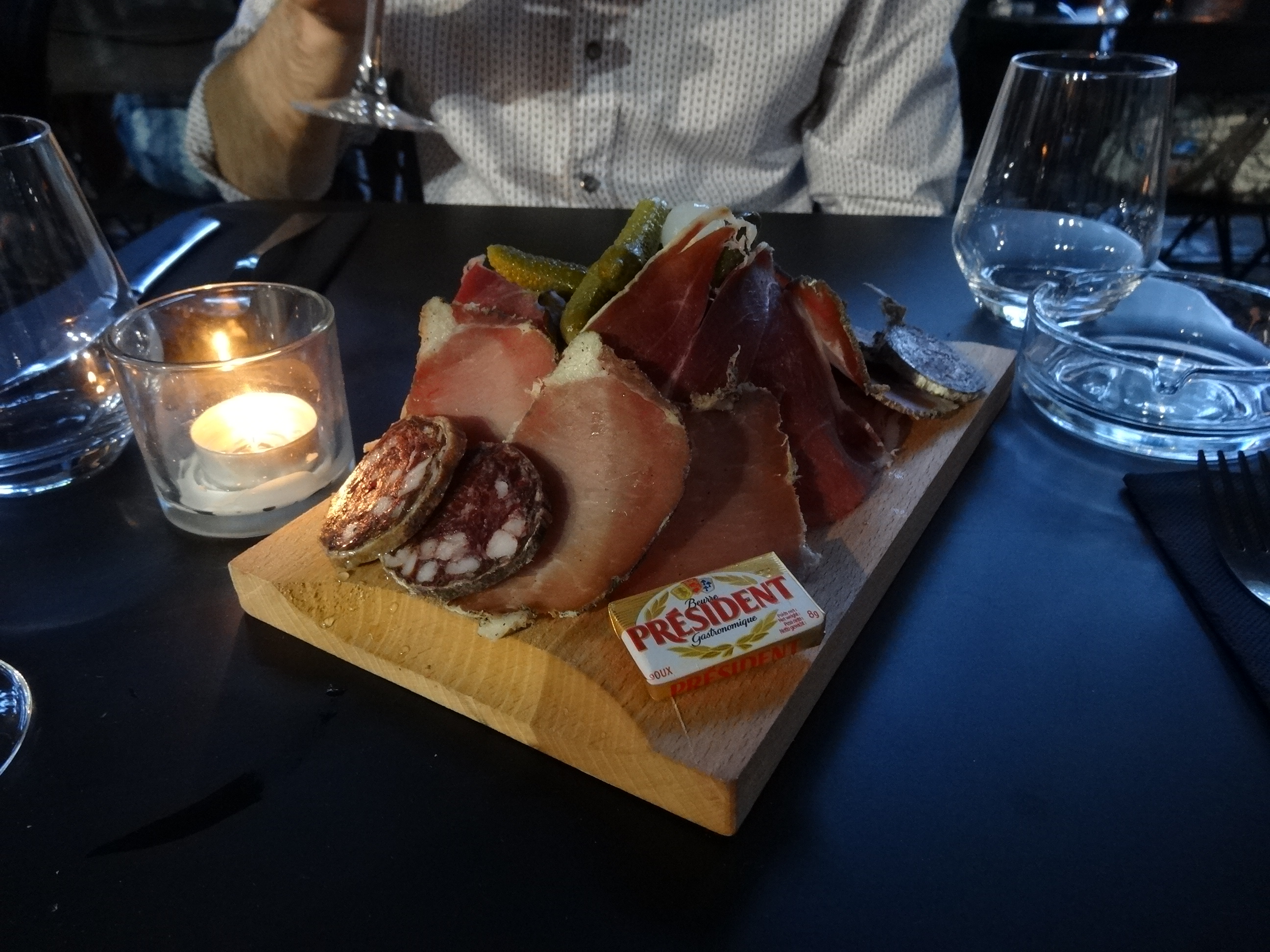
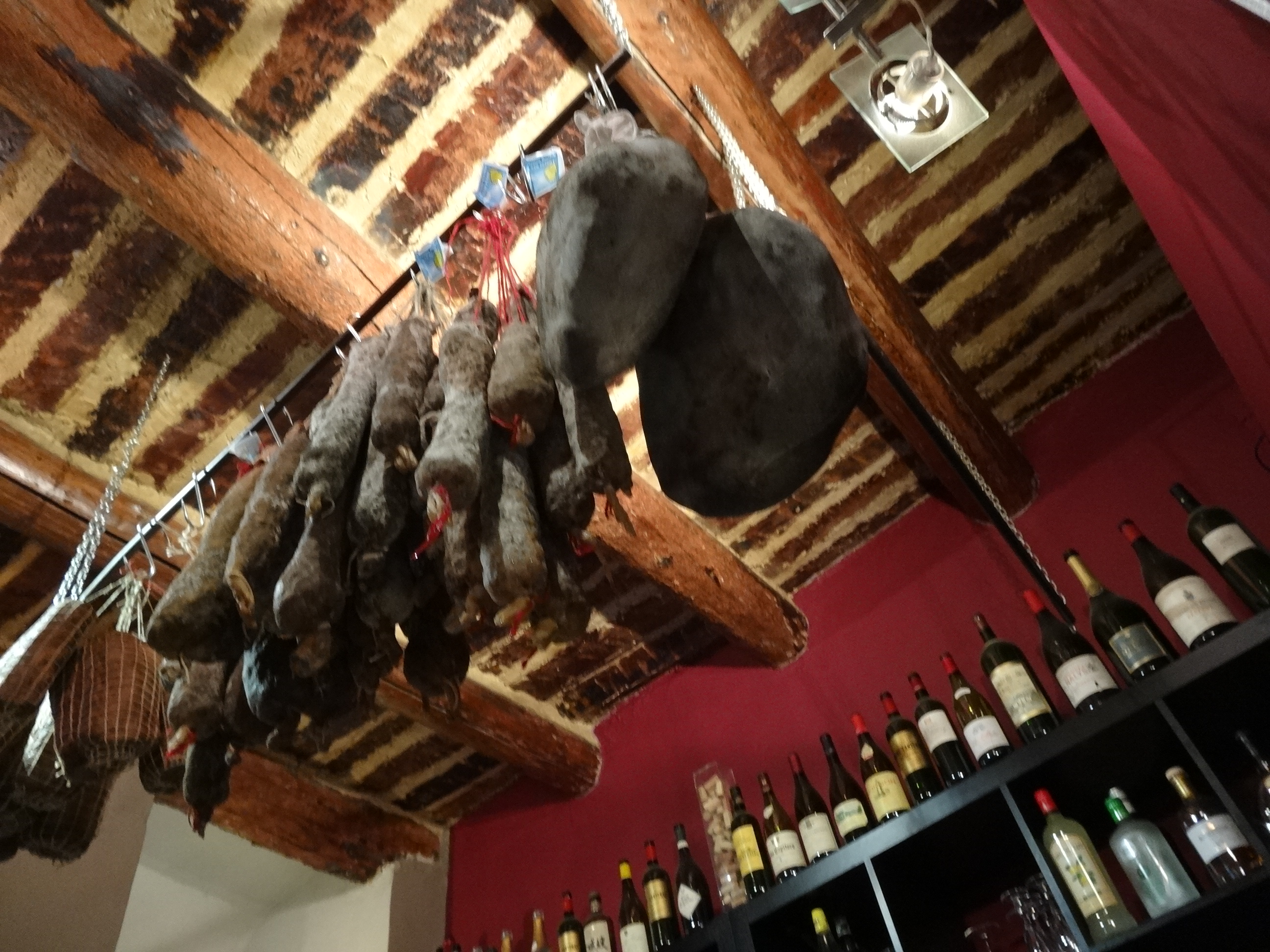
Yes, by evening on our first day in Aix, a passion for Aix had swept over us both, as we wandered its streets and squares captivated by its reflected glory. Finding a gastronomic feast to match our experience was not difficult, and in one large square close to the law courts and the old Hotel de Ville, one restaurant in particular, its tables set out under the natural canopy of trees, candles flickering on its grey tables, drew us to it. The restaurant was La Cantine, offering a mix of corsican, Italian and Provençal food, but with a menu whose platters of charcuterie and oozing local cheeses had about it the casual feel of Spanish tapas.

Dinner at La Cantine

DSC04435 DSC04428 DSC04434 DSC04430 DSC04431

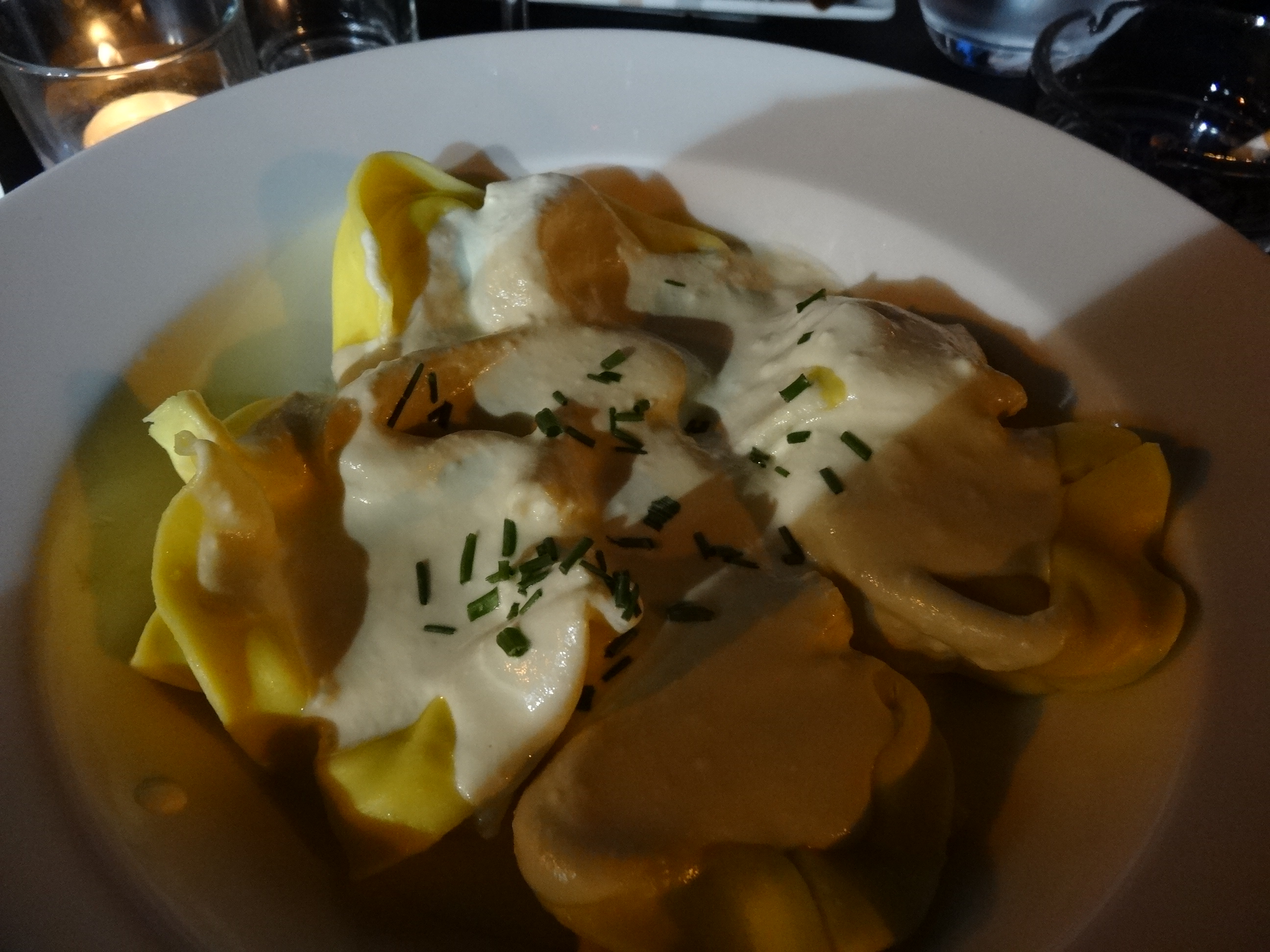
Yet beyond the small tasty samplings of our meat-loaded starter, unctuous main courses more than satisfied our growing hunger at this temple of gastronomic delights – a succulent lamb dish sweetened in honey for Dominik, and for me a pile of perfectly al dente gorgonzola cheese pasta, retaining both a bite to the pasta, but a creamy explosion of rich blue cheese. Exquisite.

For dessert, a fresh tart of strawberries and a salted caramel crunch more than satisfied our now loaded bellies, part filled as they were at the beginning of the evening by spectacular ice cream cocktails, consumed out of the coolest of ice cream containers that I have ever seen.

DSC04797 DSC04804 DSC04803 DSC04798DSC04449

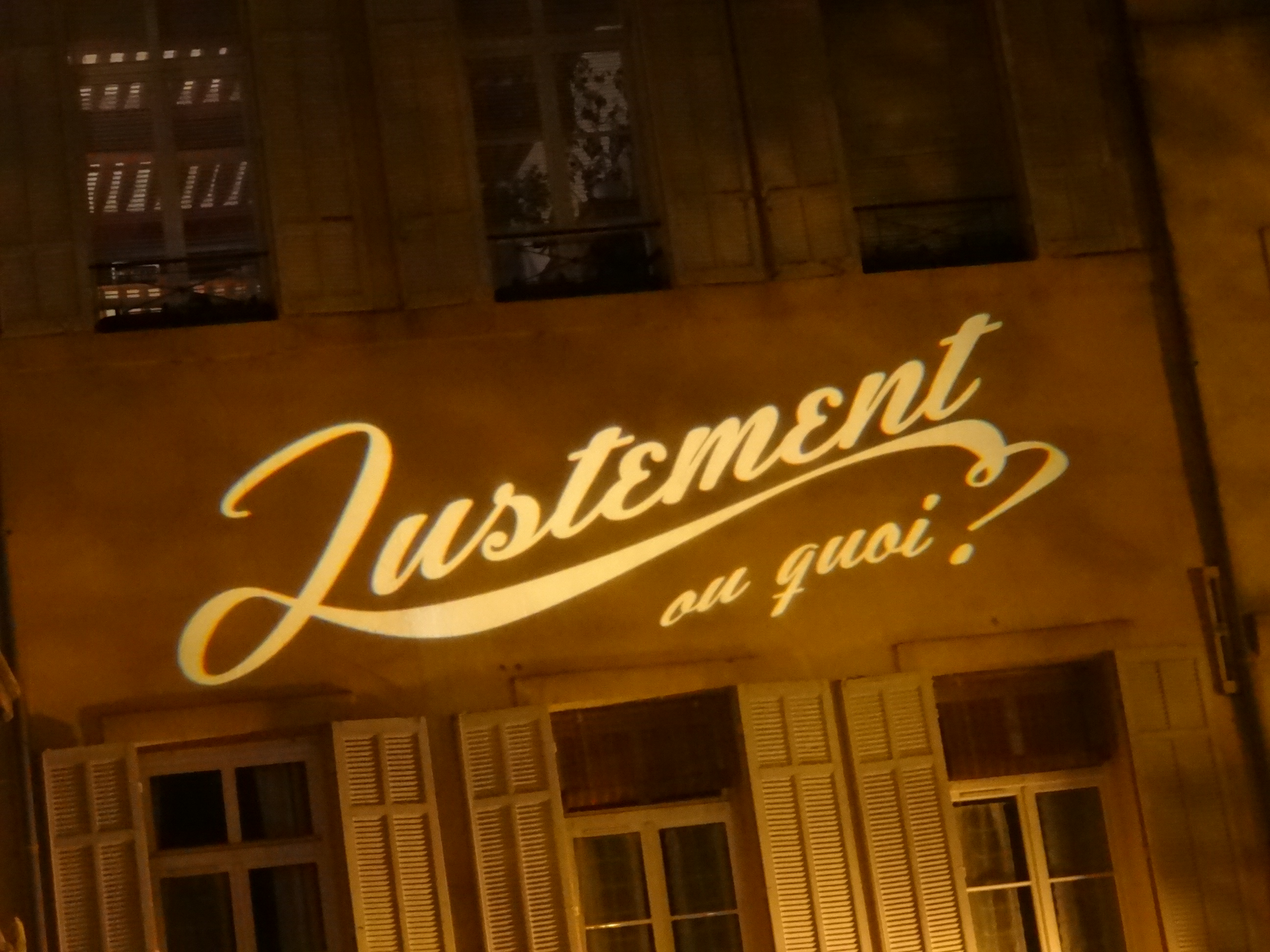
Words cannot alone describe the buzz of this incredible city, nor my remembrances of a dinner eaten to an accompaniment of chirping birds and splashing fountains aptly recreate the pleasure of that evening. So I leave you instead with some night time photos, of a city alive despite the late hour, of buildings shining with glowing projected words cast upon them, and of fountains and cafes full of the crowds who keep Aix pumping long into the night.

Aix by night

DSC04442 DSC04813 IMG_3164 DSC04447 DSC04466Related articles

Provence Odyssey | Aix: Day 9 – In search of Cézanne

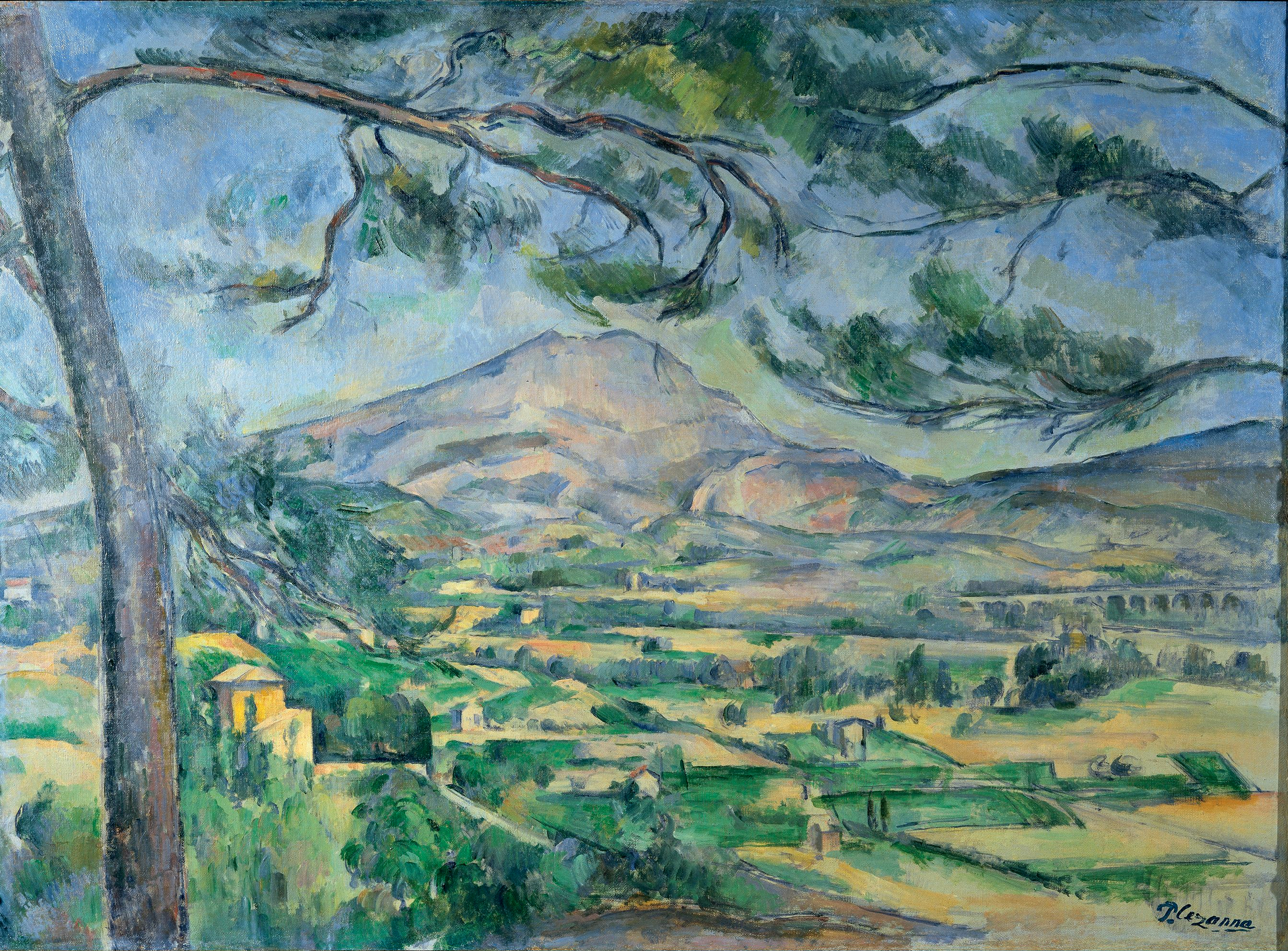
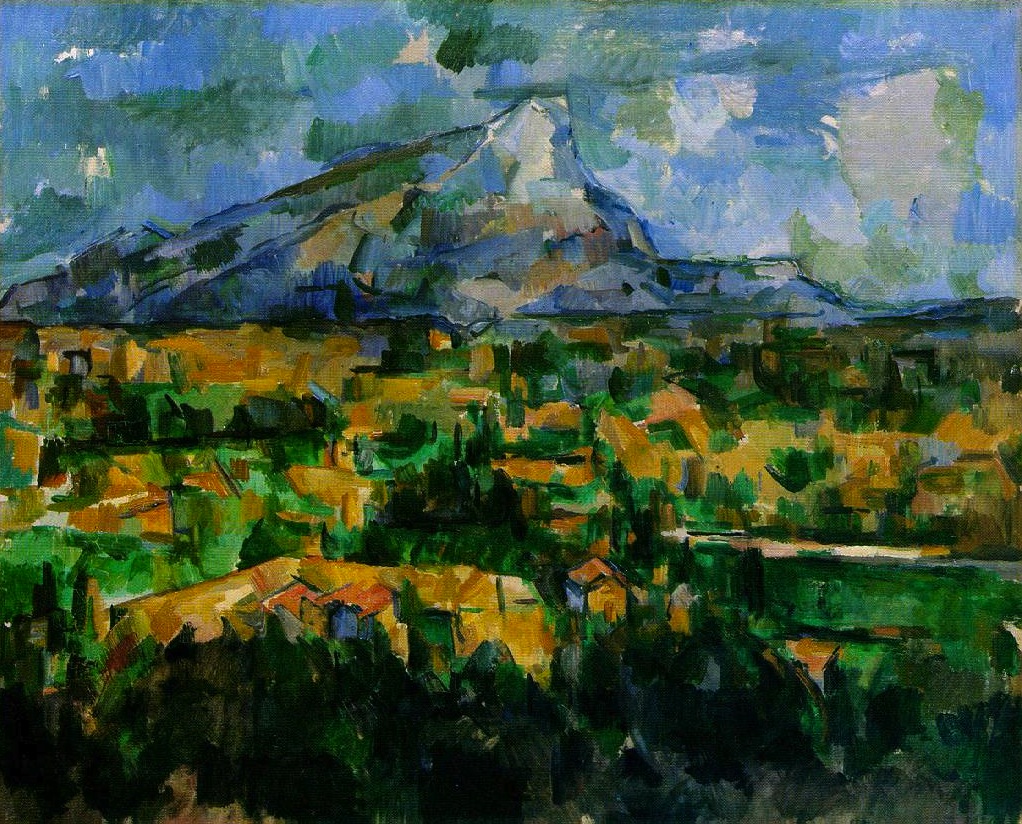
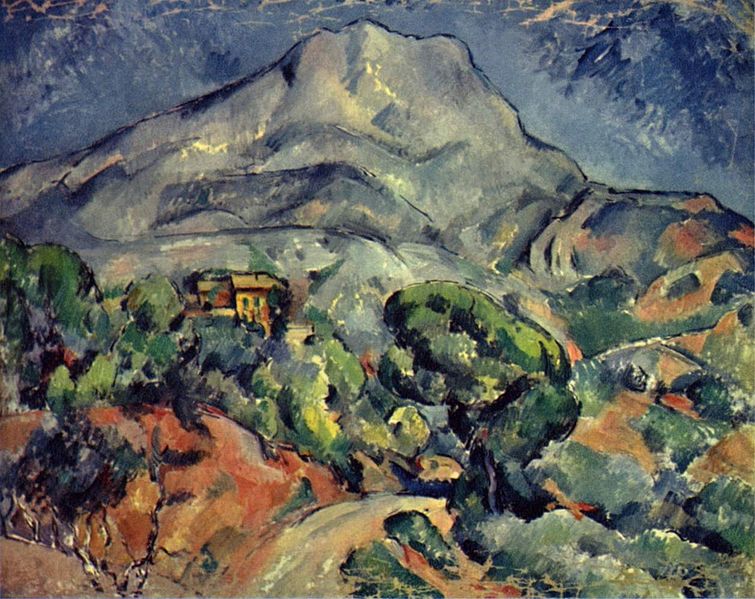
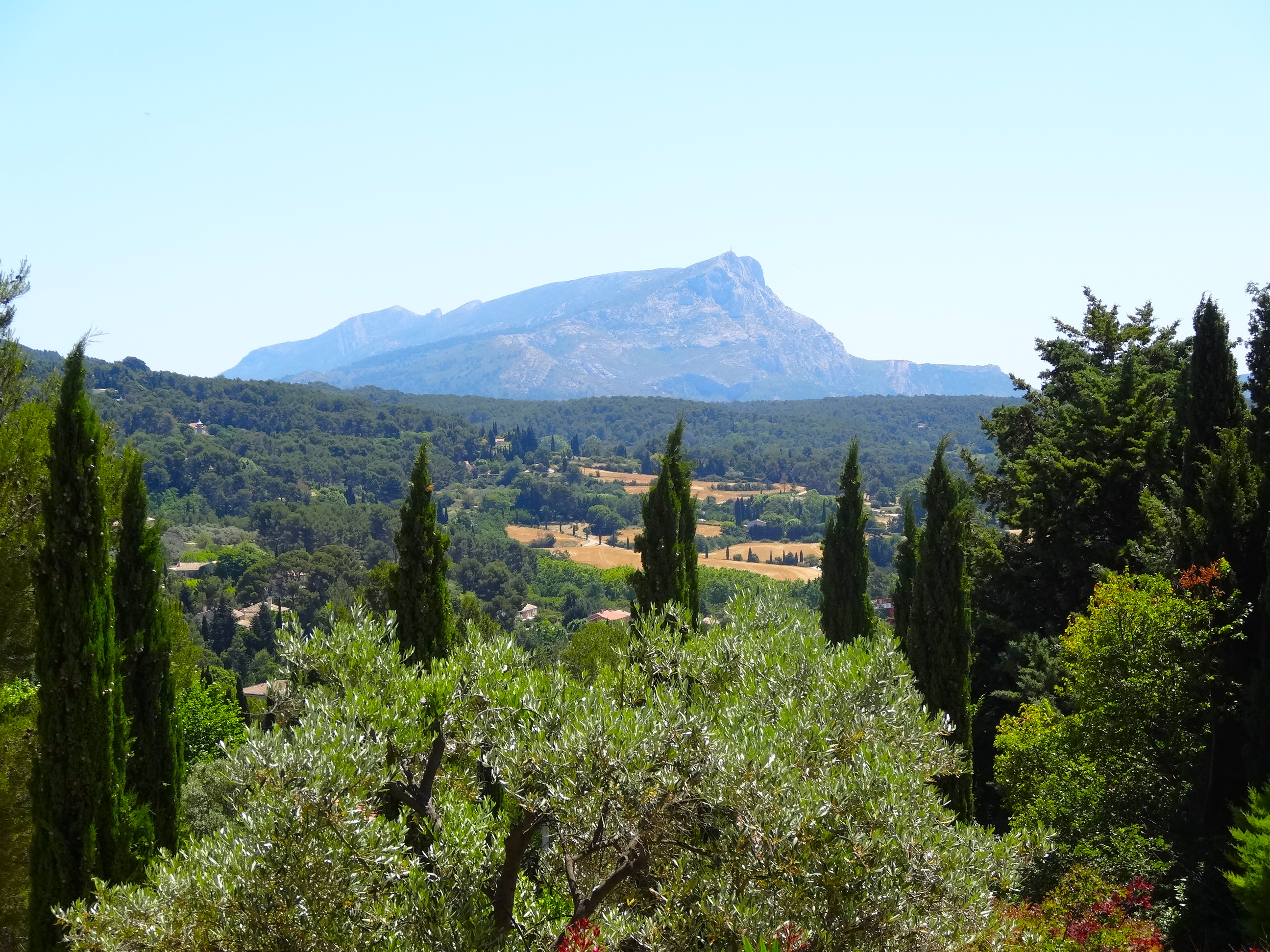
You know that you are approaching Aix when you see the looming multi-dimensional silhouette of the Mont Sainte-Victoire rising up over the horizon. Thanks to the multiple depictions of this magnificent mountain by the city’s most famous son, Post-Impressionist Paul Cézanne, the city of Aix-en-Provence, cosmopolitan gem of Southern France, together with its ever faithful mountainous backdrop, has been placed firmly on the cultural map of Europe. They say that one should leave the best till last, and this we surely did when we made Aix the last stop of our 10 day Provençal Odyssey.

DSC04320 DSC04567 DSC04513 DSC04293 DSC04327

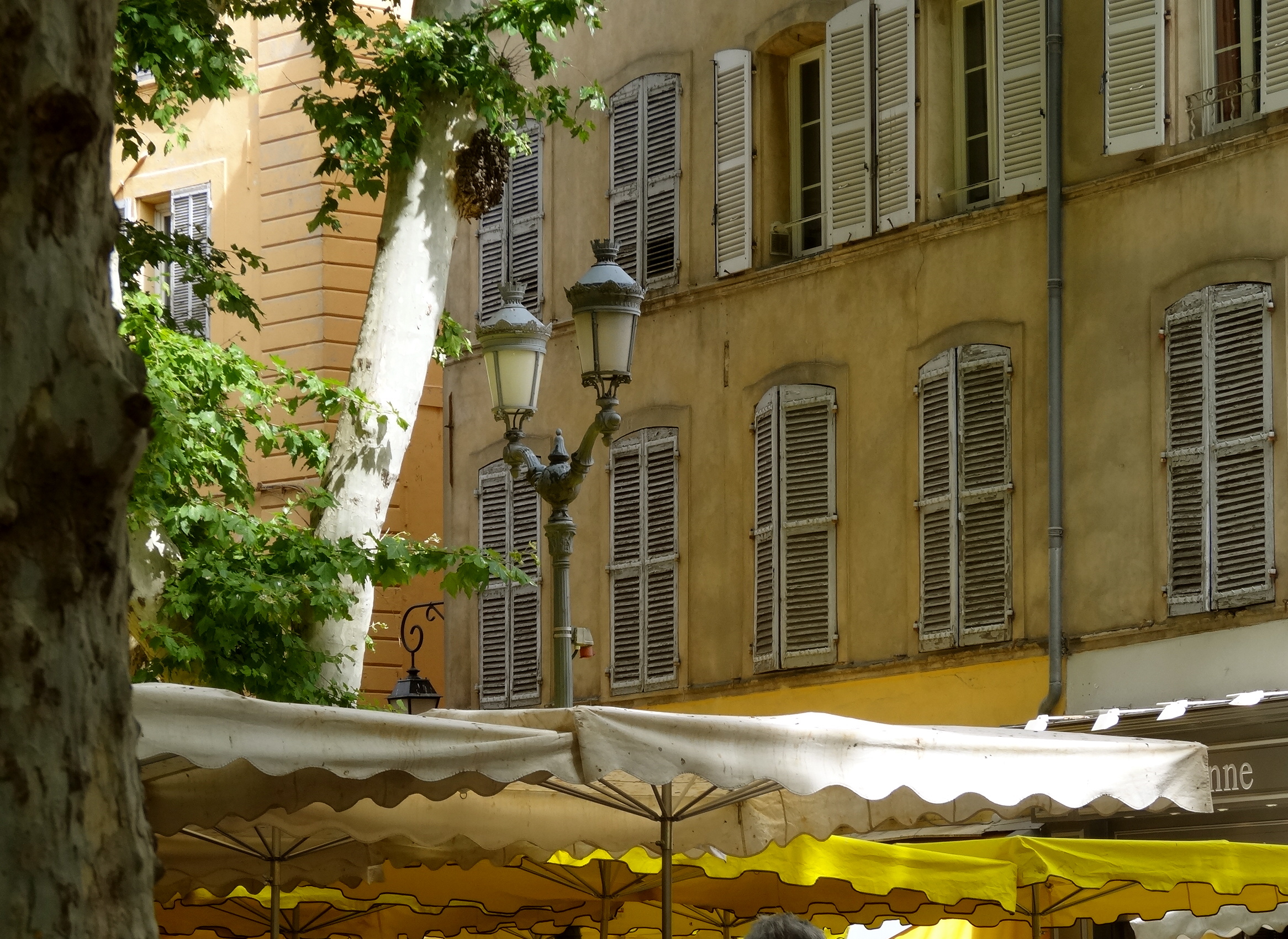
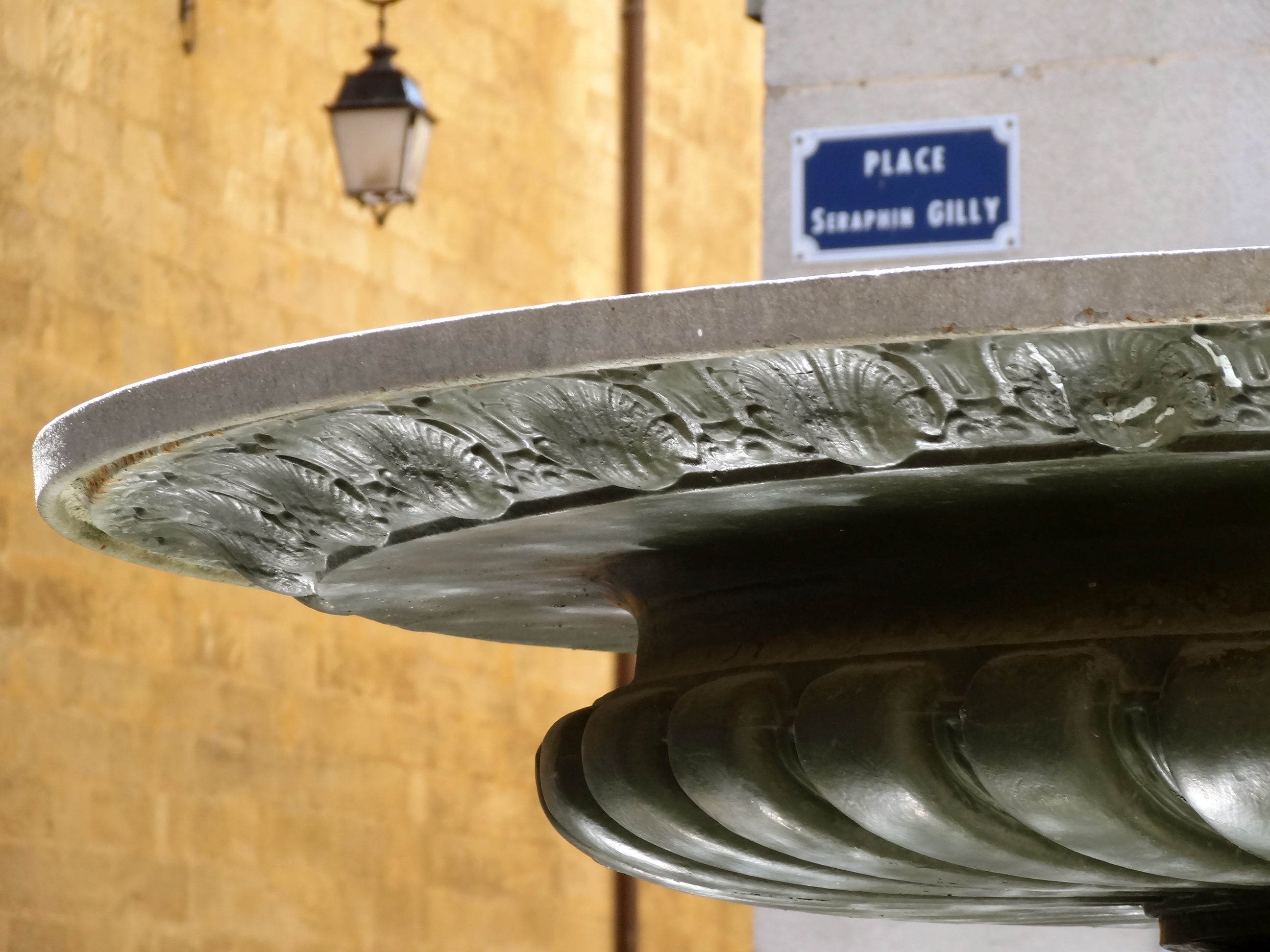
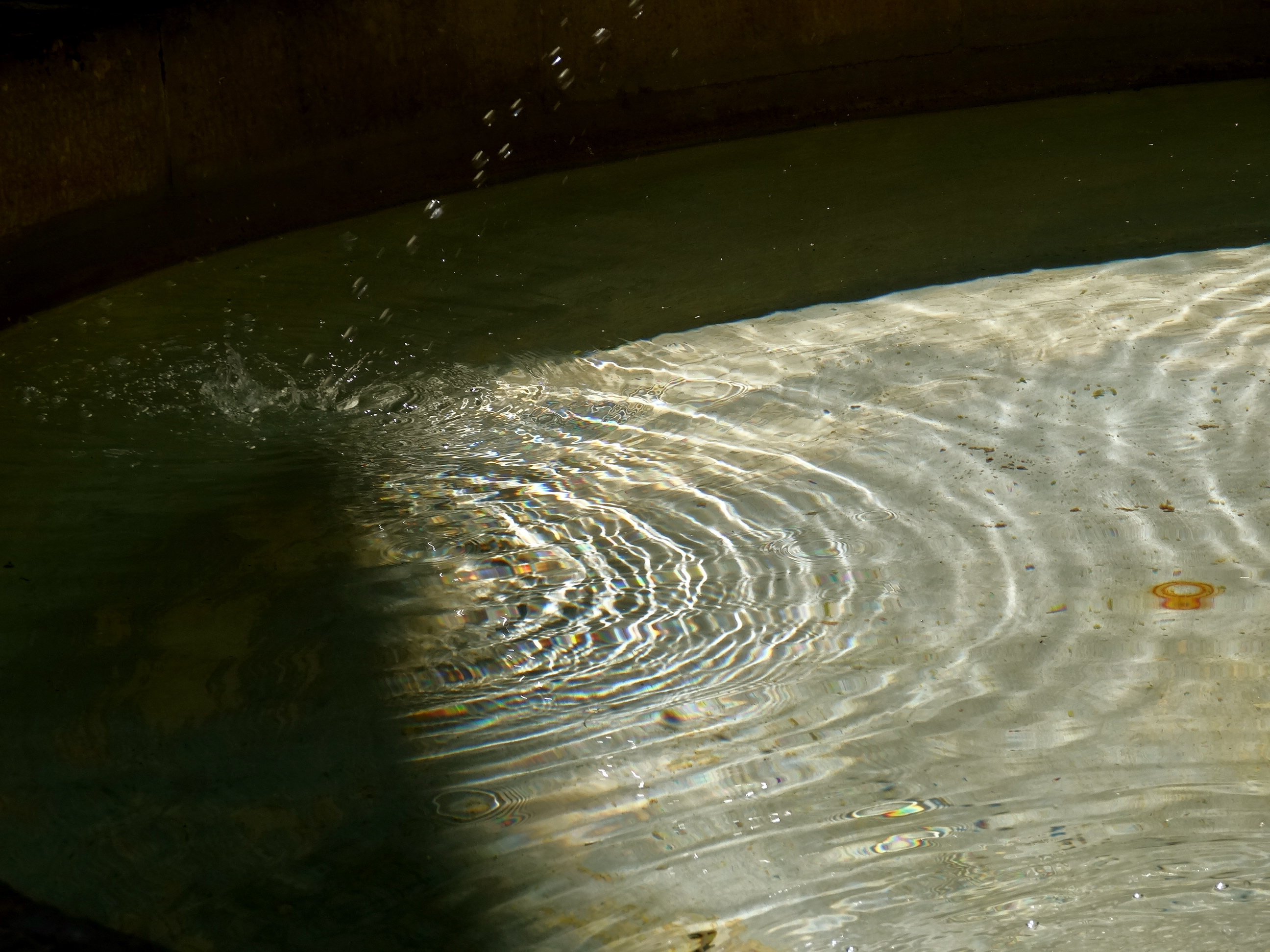
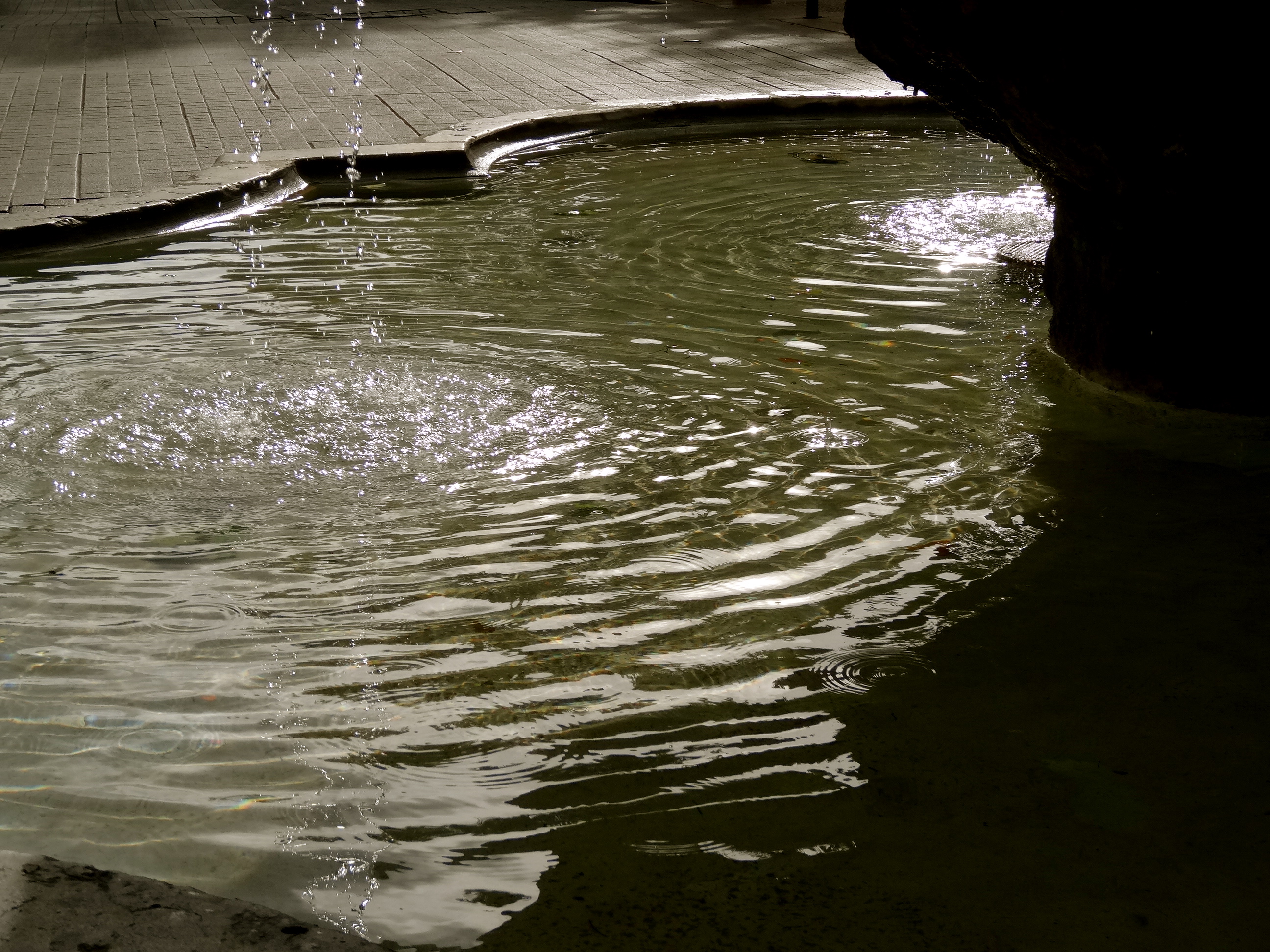
It became immediately clear that Aix is a busy, bustling city, with the sense of something chic and Parisian about it, but at the same time maintaining the sleepy charm of the Provence region. In Aix, the shutters and pastel colours seen across Provence are here in their multitudes, but instead of narrow little streets, here they decorate vast plazas and long tree-lined boulevards. Like the verdant rolling countryside around it, Aix is abundant with plan trees and cypresses, pine trees and olives, yet those trees cast their dappled light not upon fields, but over the exquisitely decorated facades of churches and palaces, of museums and grand cafes, and over the broad pavements which facilitate the art of strolling along shop-lined avenues. And best of all in Aix are the fountains. Said to be the “City of a Thousand Fountains”, the real number is thought to be closer to 100, but Aix is truly abundant in water, in dancing leaping and trickling water, all caught in the great basins of these baroque fountain sculptures, which are at the centre of every square and street.

Aix’s resplendent fountains…

DSC04911 DSC04773 DSC04912 DSC04418 DSC04831 DSC04509 DSC04402 DSC04738

No wonder Aix is so magnificent – it was the capital of Provence one upon a time, and today is an international students’ town, full of culture, cafes and a general air of excitement. And of course one of the greatest pleasures about visiting Aix is to indulge in all that excitement on offer, to perambulate along its fashionable streets, and to sit by its many fountains, sipping upon a coffee or cooling down with an ice cream or two – more about that later. But my first priority on visiting this city was to discover its most famous resident, the somewhat reclusive artist but often called the Father of Modern Art – Paul Cézanne.

Cézanne grew up and spent most of his life in Aix. Of course he did make a trip or two to Paris, and it was there that he first discovered impressionism. However, it was in the heartland of Southern France that Cézanne really felt at home, and it was undoubtedly the rugged scenery of Provence and the immediate surroundings of Aix that helped to characterise Cézanne’s development from the dappled light of Impressionist works, to the rugged geometric depictions of his Post-Impressionist oeuvre. The origins of cubism had been born.

Cézanne’s Mont Sainte-Victoire

Paul_Cézanne_107 mont-sainte-victoire-1897 mt_s-v_4 755px-Paul_Cézanne_210 Paul_Cezanne_La_Montagne_Saint_Victoire_Barnes

Aix, perhaps predictably, relishes its connection with this foremost artistic genius (although sadly it didn’t at the time Cézanne was painting in the city) and today its tourist office provides an excellent and very comprehensive walking tour both through and around the city, picking up on all of the various places of relevance to both Cézanne and his family along the way. Sadly we did not have time to do the whole tour (although I think we may survive not seeing where Cézanne’s mother’s brother’s friend lived), not least because with Aix basking under the reflective glory of nearby Marseille’s status as European Capital of Culture 2013, there were plenty of cultural activities we wanted to pack into our short two-night stay. However, what we did prioritise was two integral aspects of Cézanne’s life and work in Aix: His studio, and the view of Mont Sainte-Victoire itself.

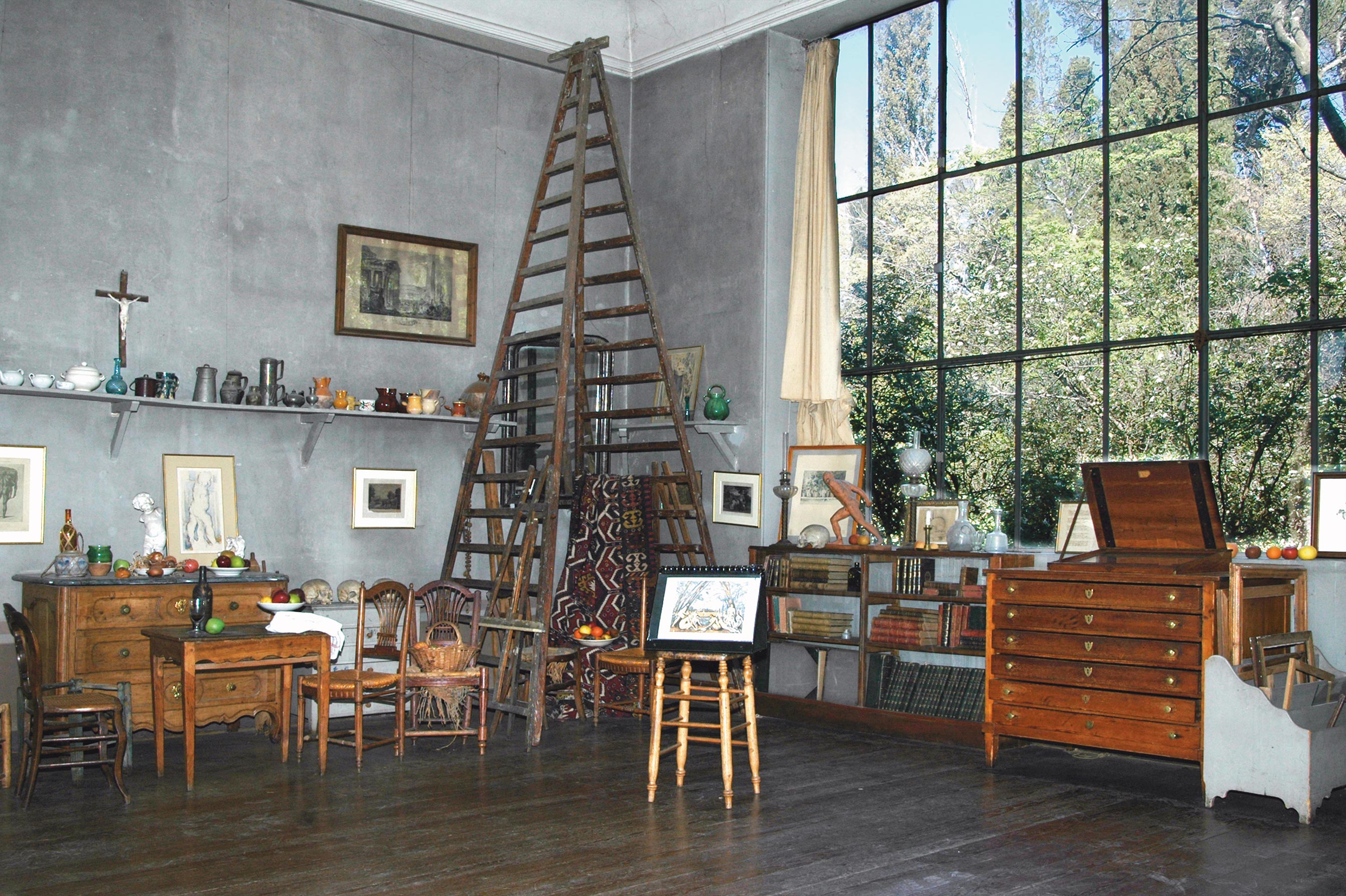
Cézanne’s studio 

3380_Atelier-Paul-Cezanne DSC04644 DSC04657

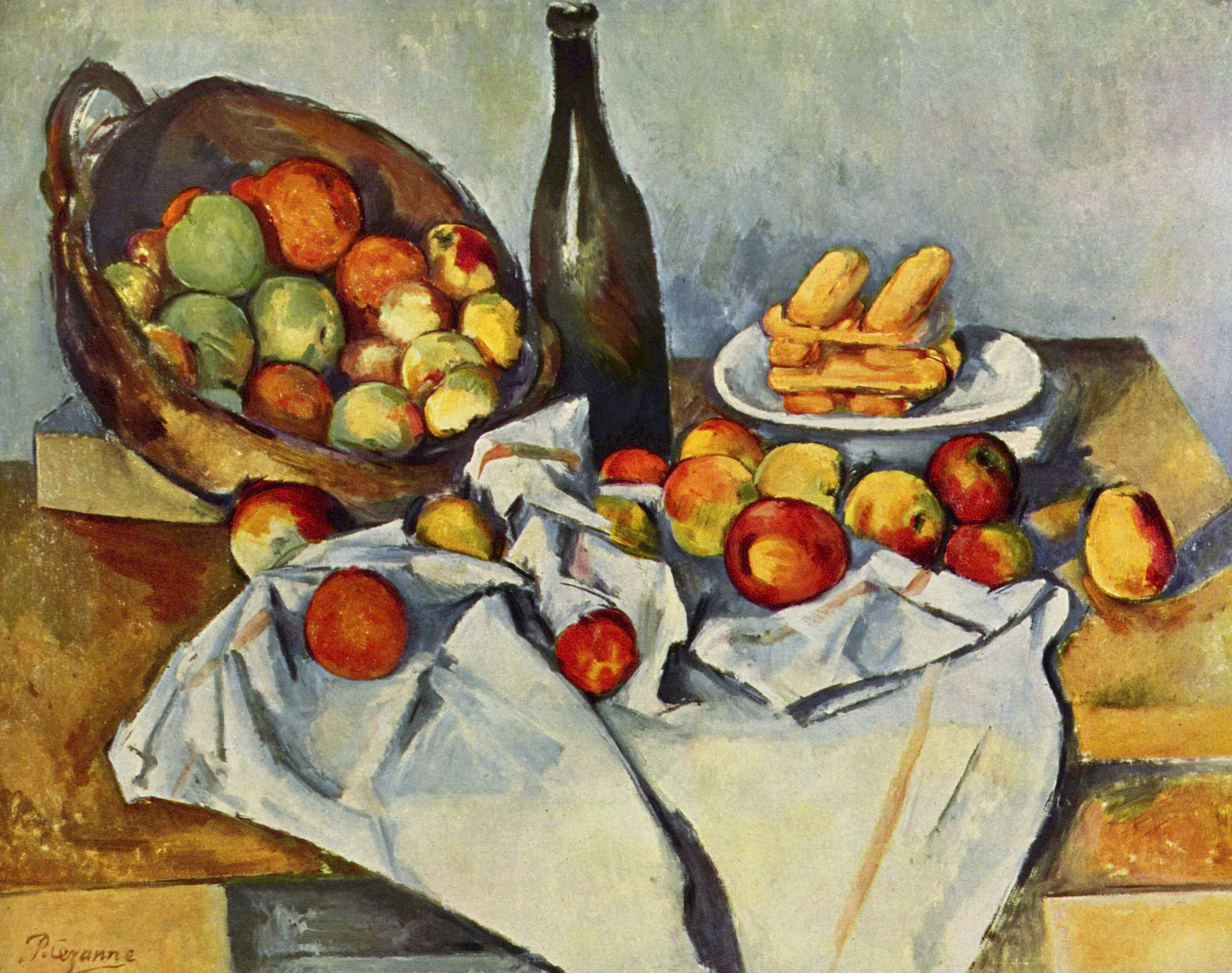
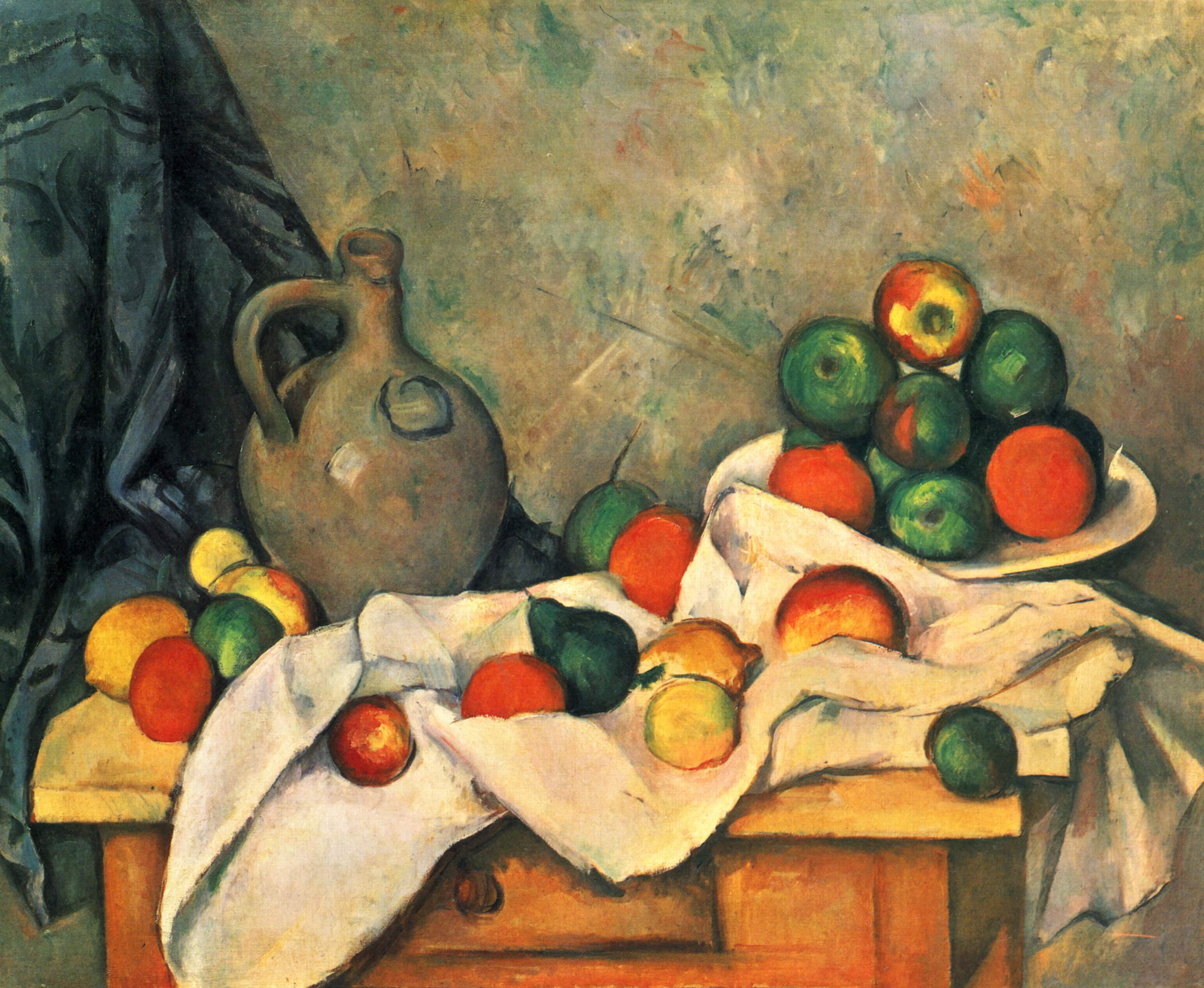
L’Atelier de Cézanne (the studio of Cézanne) is a good 20 minute walk uphill out of Aix, but it’s a walk taking the earnest visitor gradually out into the verdant pastures of suburban Aix, with views of the city growing gradually more impressive as the road rises. The studio itself provides an absolutely fascinating insight into Cézanne. It’s essentially just a one room museum devoted to Cézanne, but not a museum with story boards and animations – this is simply the artist’s studio, with the various props scattered around which he used in his many still life compositions. Of course Cézanne is as much famous for his still life depictions of apples and oranges as he is for the Mont Sainte-Victoire, but those paintings were more often than not depicting fruit clustered around other objects – old pots and bottles, and a broken mannequin.

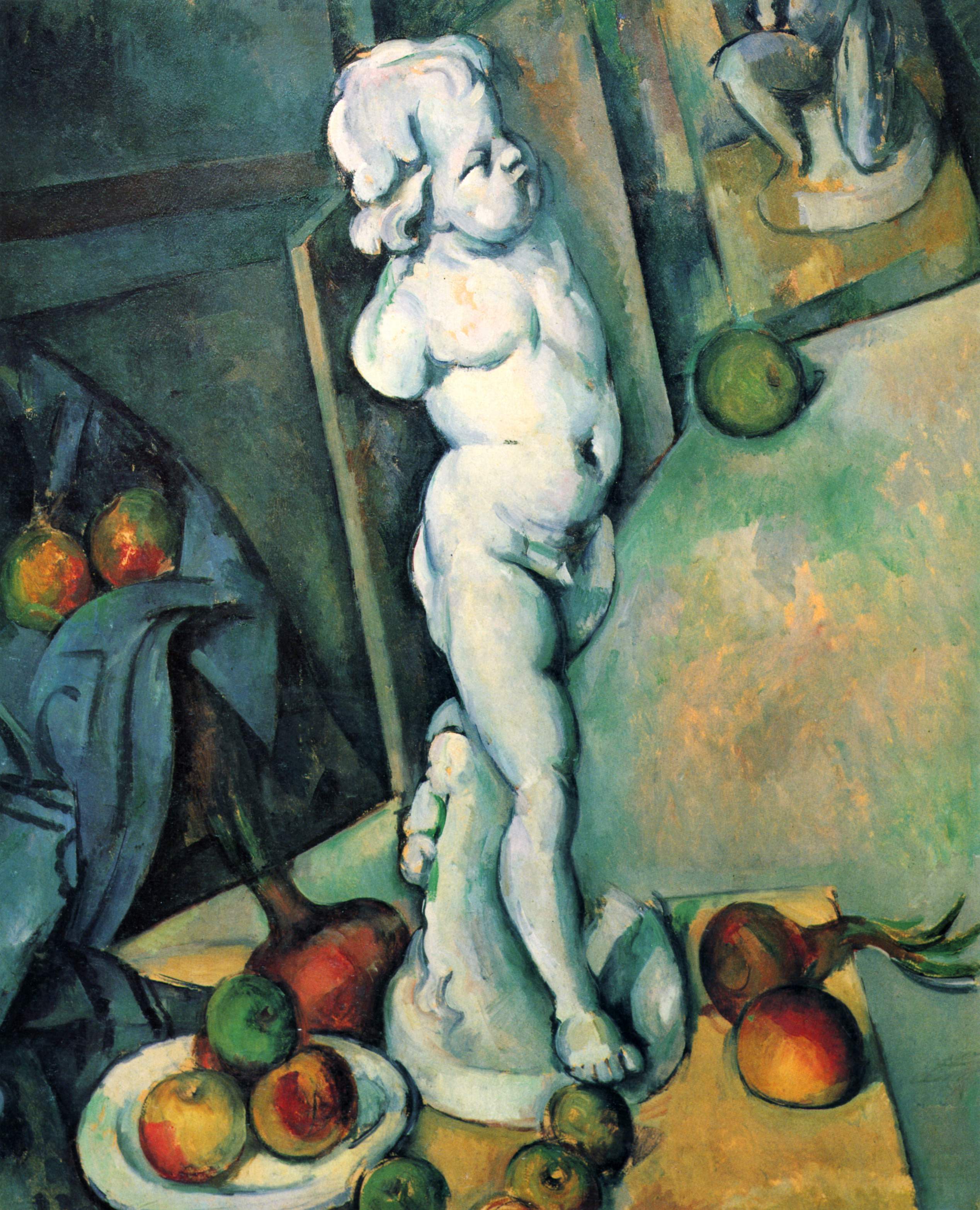
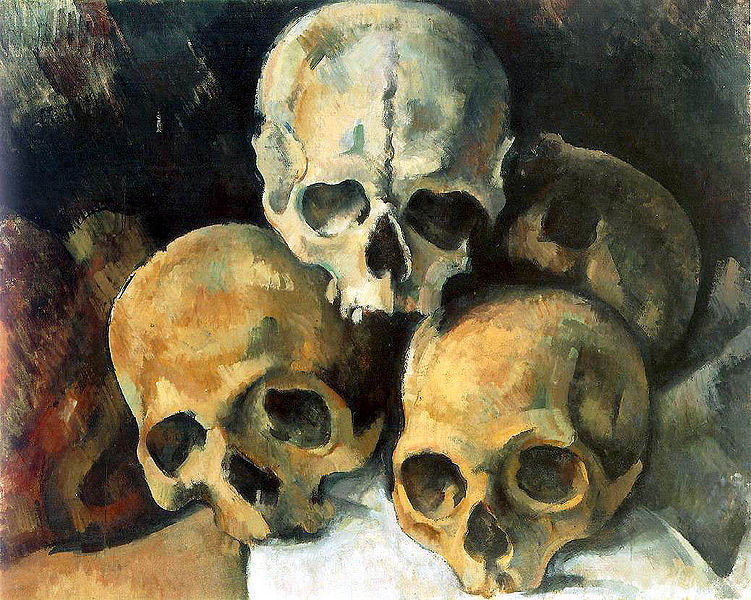
It was consequently fascinating to walk into the studio and see before you those same objects which have now become so well-known to the art lover through Cézanne’s works. That broken mannequin for example was immediately recognisable from the Courtauld’s Still Life with Cherub, and there too were the skulls from his Pyramid of Skulls. It was also fascinating to see the methods of his work in this studio which still smells of oil paint and turpentine – his tall ladder to work on larger paintings, and a large vertical hole in the wall through which larger canvases such as his Bathers series (which were painted at this studio) could travel in and out. Meanwhile, outside of the little studio house, the overgrown gardens really give the impression of the kind of solitude and reclusiveness which Cézanne preferred to maintain throughout most of his working life.

Still Life with Cherub (1895)

Still Life with Cherub (1895)

The Basket of Apples (1890-1894)

The Basket of Apples (1890-1894)

The Pyramid of Skulls (1901)

The Pyramid of Skulls (1901)

Still Life, draper, pitcher and fruit bowl (1893-4)

Still Life, draper, pitcher and fruit bowl (1893-4)

The Bathers (1898-1905)

The Bathers (1898-1905)

Studio done, and the creative air of Cézanne breathed in deeply, we headed up hill for about another 20 minutes to visit what is now called “Le Terrain des Peintres” – literally Painter’s Ground – said to be the exact spot where Cézanne would go to paint the magnificent view of the Mont Sainte-Victoire. Today, the space takes the form of pleasantly manicured garden, with some reproductions of his paintings set around the walls of the gardens. But other than that, it is a quiet spot, blissfully free from the tourist hoards who frequented his studio, probably because of its distance from the city, and its lack of parking for coaches.

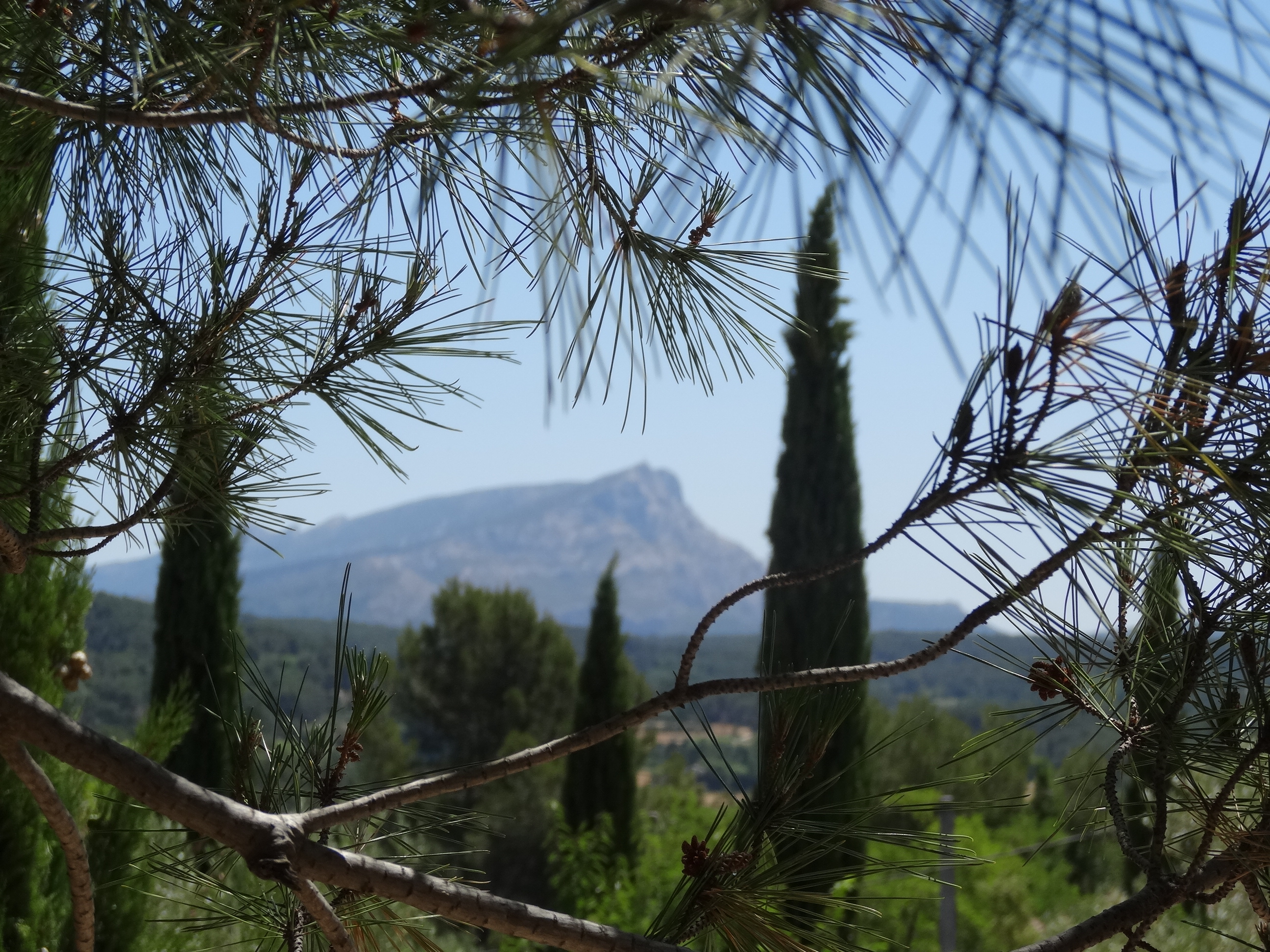
And the view? Just stunning. In that moment, turning around and catching the view of the glorious pastel-shaded mountain rising out of the field-covered horizon, I felt my breath sucked away from me as in this moment of epiphany I felt myself somehow drawn back into an artistic past – a period of artistic revolution, when the dominance of nature was recognised, when shape was reinvented, and when colour rose to the fore. For me, it was a highpoint of this Provençal Odyssey (both physically and metaphorically), the moment when I realised that  a whole century of artistic progression and development owes its dept to this place, to this artist, to the path from impressionism to cubism which he opened up through his genius and his insight, starting as he did so perhaps one of the most important revolutions of all time.

The magnificent Mont Sainte-Victoire

DSC04670 DSC04674 DSC04694 DSC04698 DSC04715

More information on visiting Cézanne’s studio can be found here.

Provence Odyssey | Saint-Rémy: Les Photos

You’ll excuse the photo overload, but of all the photos taken on my Provence trip, I think Saint-Rémy inspired the very best. Below I enclose 30 more of my favourite shots from this stay of 3 nights in the midst of the Provençal countryside, and as those photos aptly portray, it was a time surrounded by the very best of Mediterranean nature, by the quintessentially French sights of street markets, of savon, and of cafes, and an opportunity to be exposed by the Provençal landscape at its very best.

DSC03352 DSC03180 DSC04153 DSC04177 DSC04262

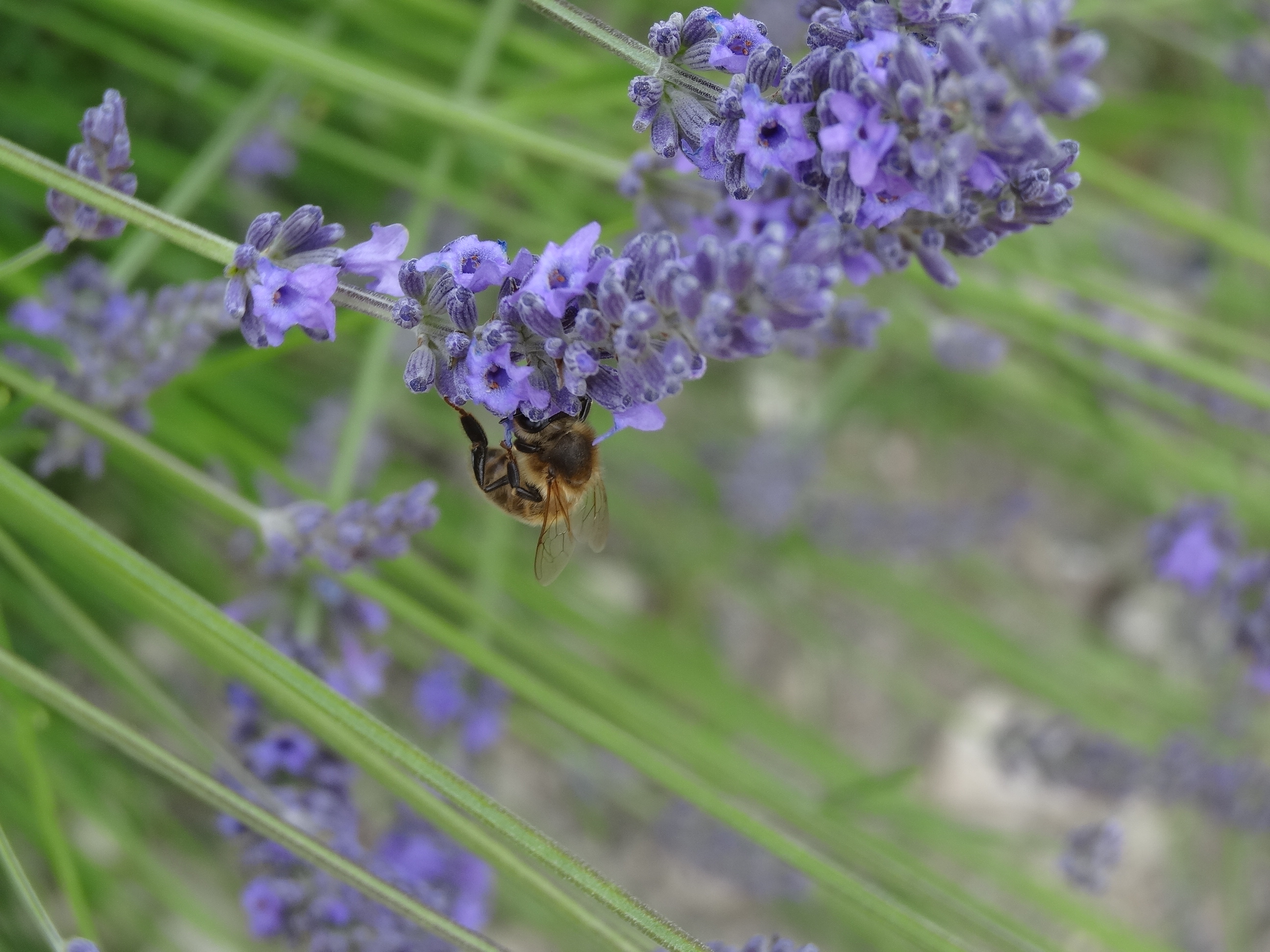
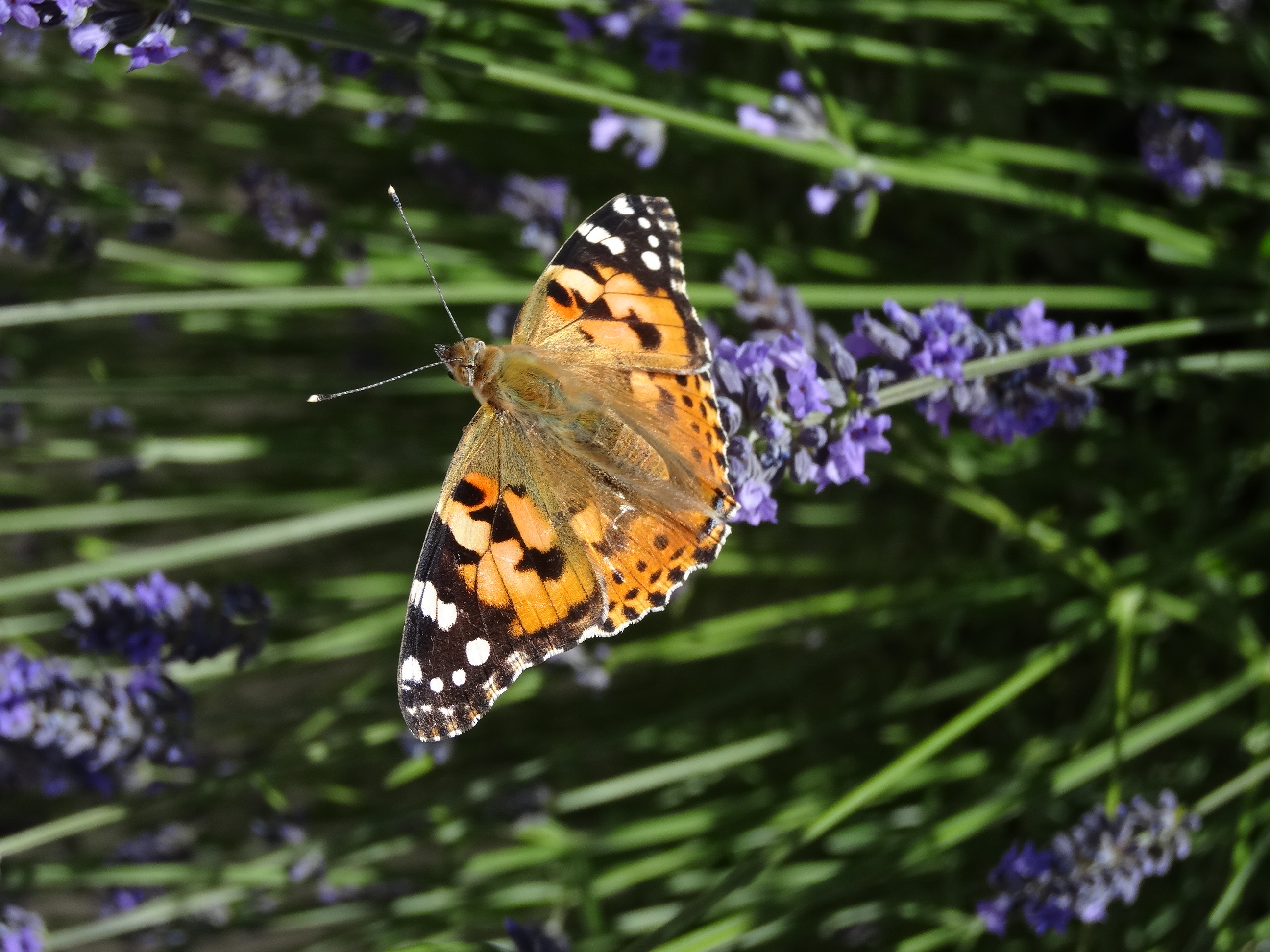
I think these photos pretty much stand alone in expressing the unbridled beauty of the region, and of the ravishing colours which met our every gaze. Of all the shots, I think the image of (what looked to be) a Monarch butterfly perched upon a lavender bushel is one of my favourites, the deep terracotta orange and black lace-like overlay resembling a wash of marmalade on toast upon a bed of the most fragrant lavender pillows. And then there were the bees and the cicadas, the buzzing of the former inescapable wherever lavender burst forth, and the chirping of the latter, the intrinsic accompaniment to paradise; the melody that partners a balmy Mediterranean afternoon.

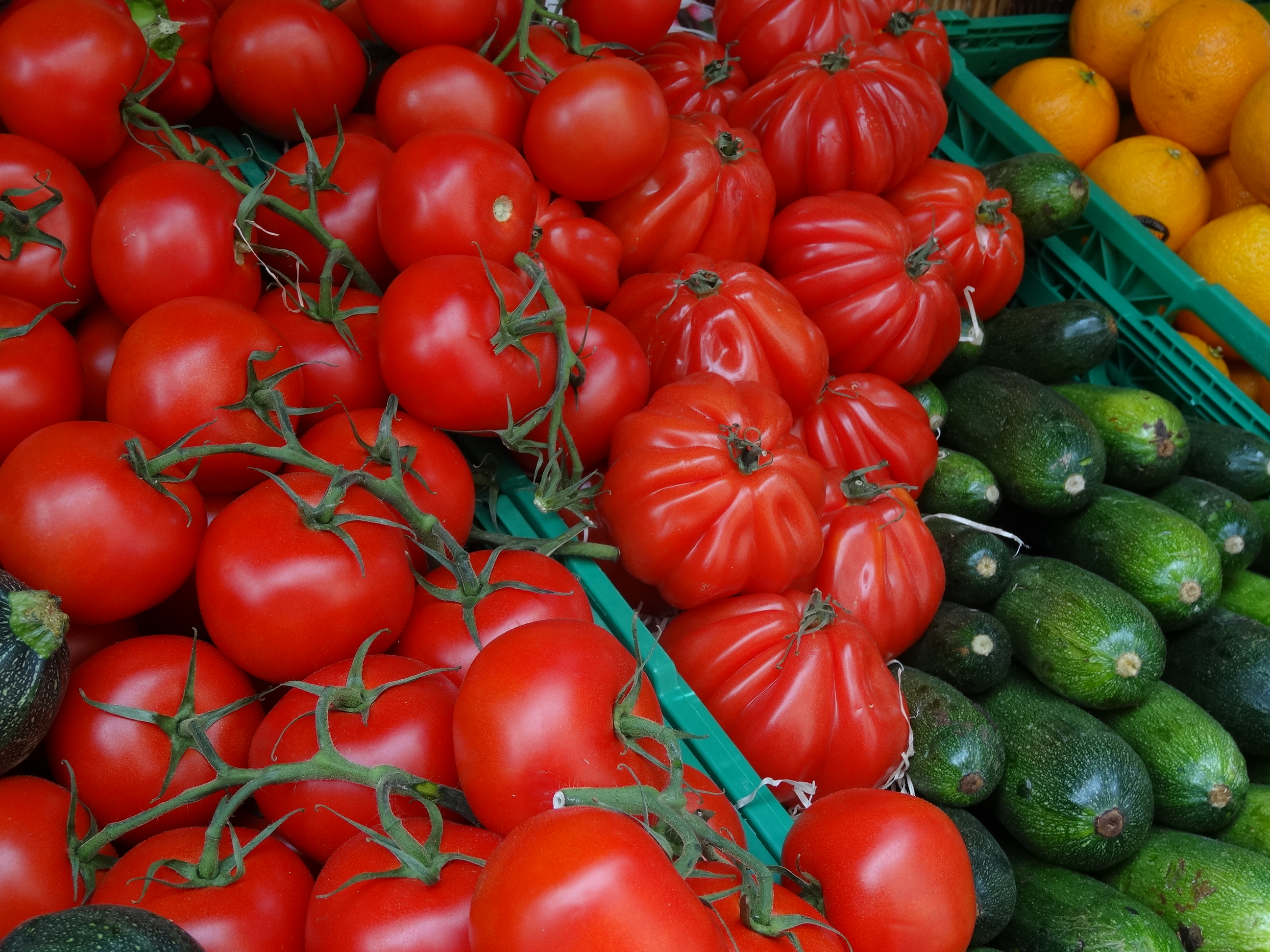
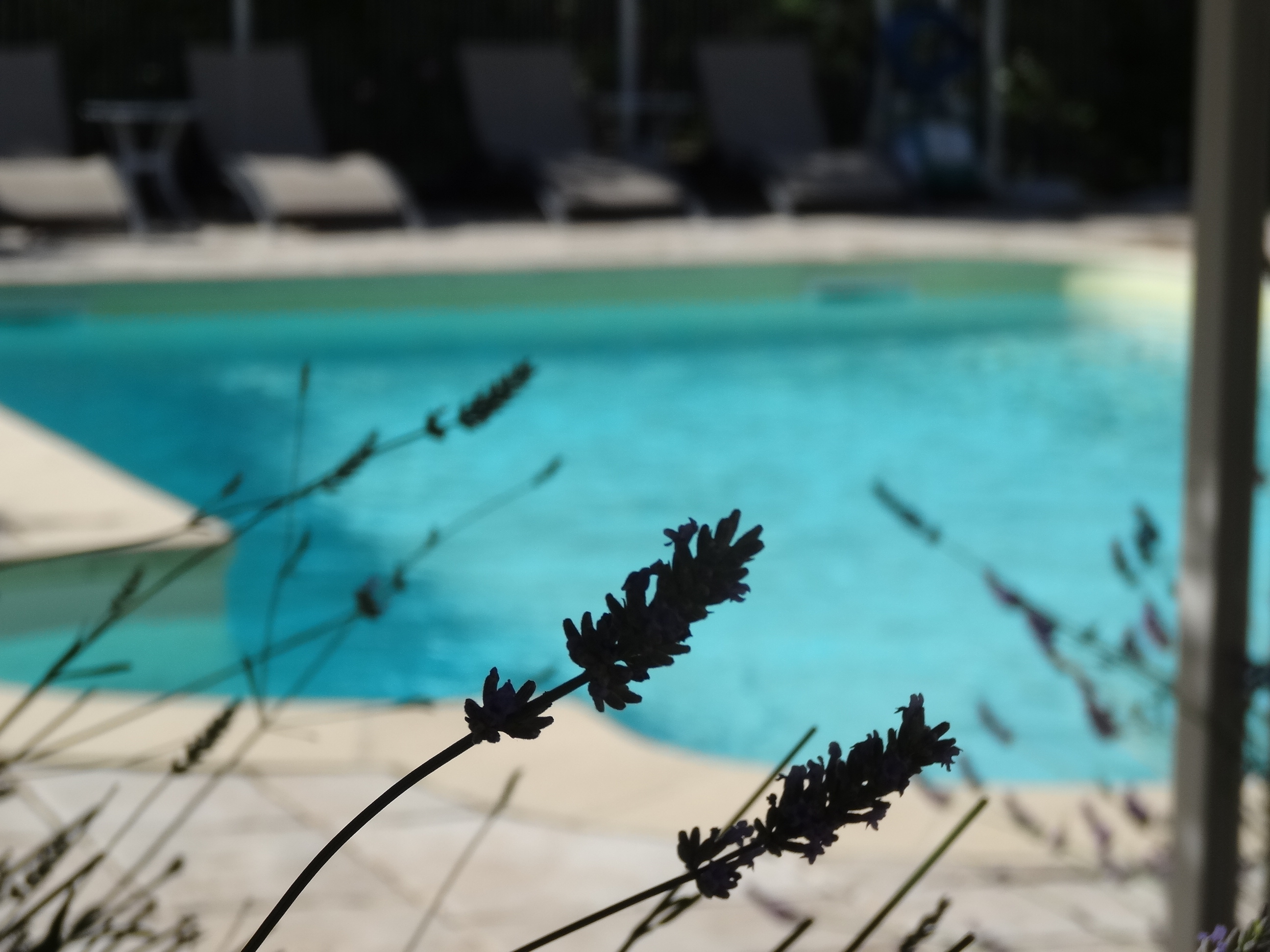
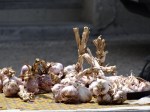
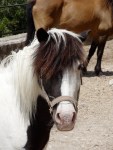
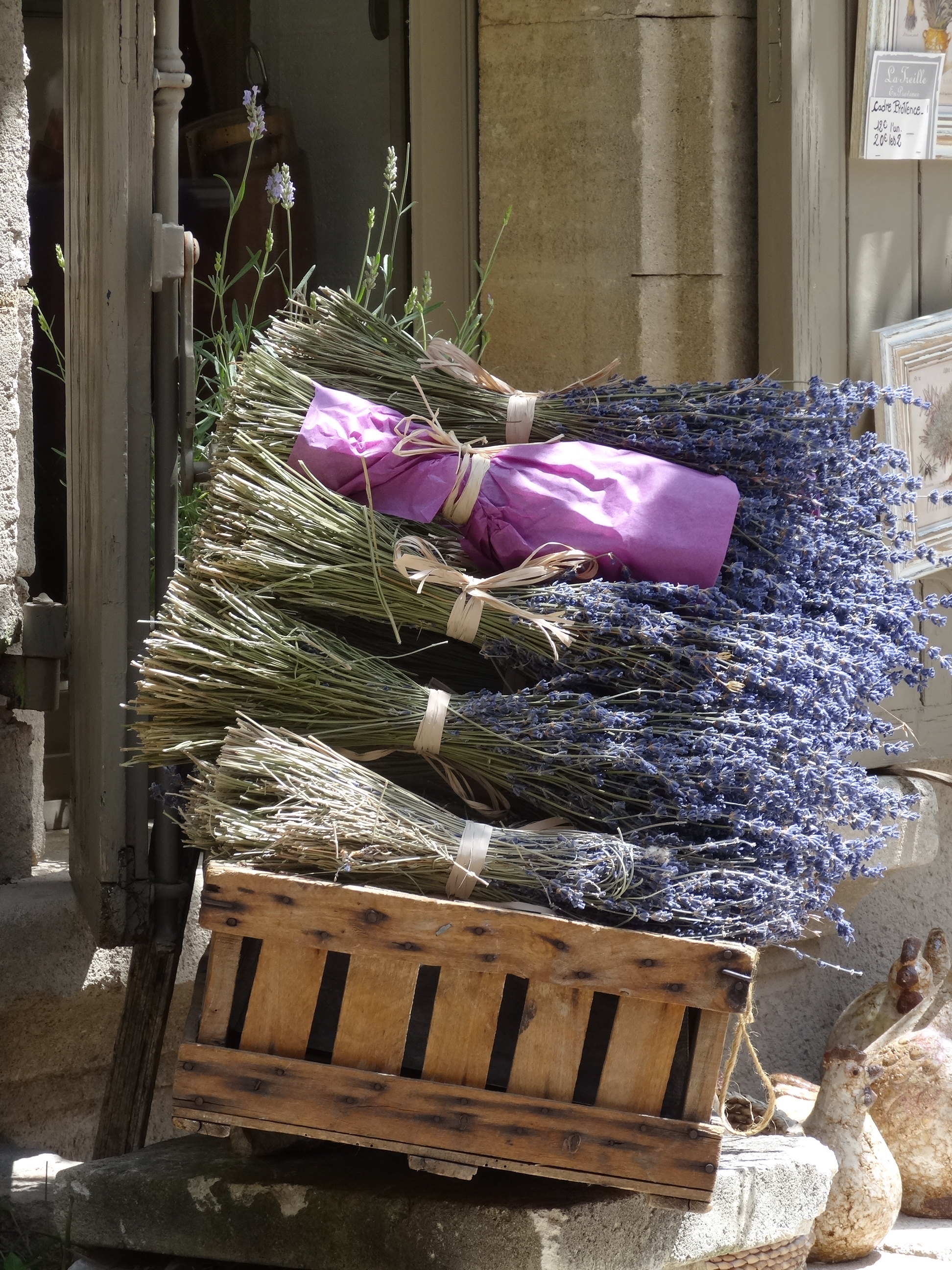
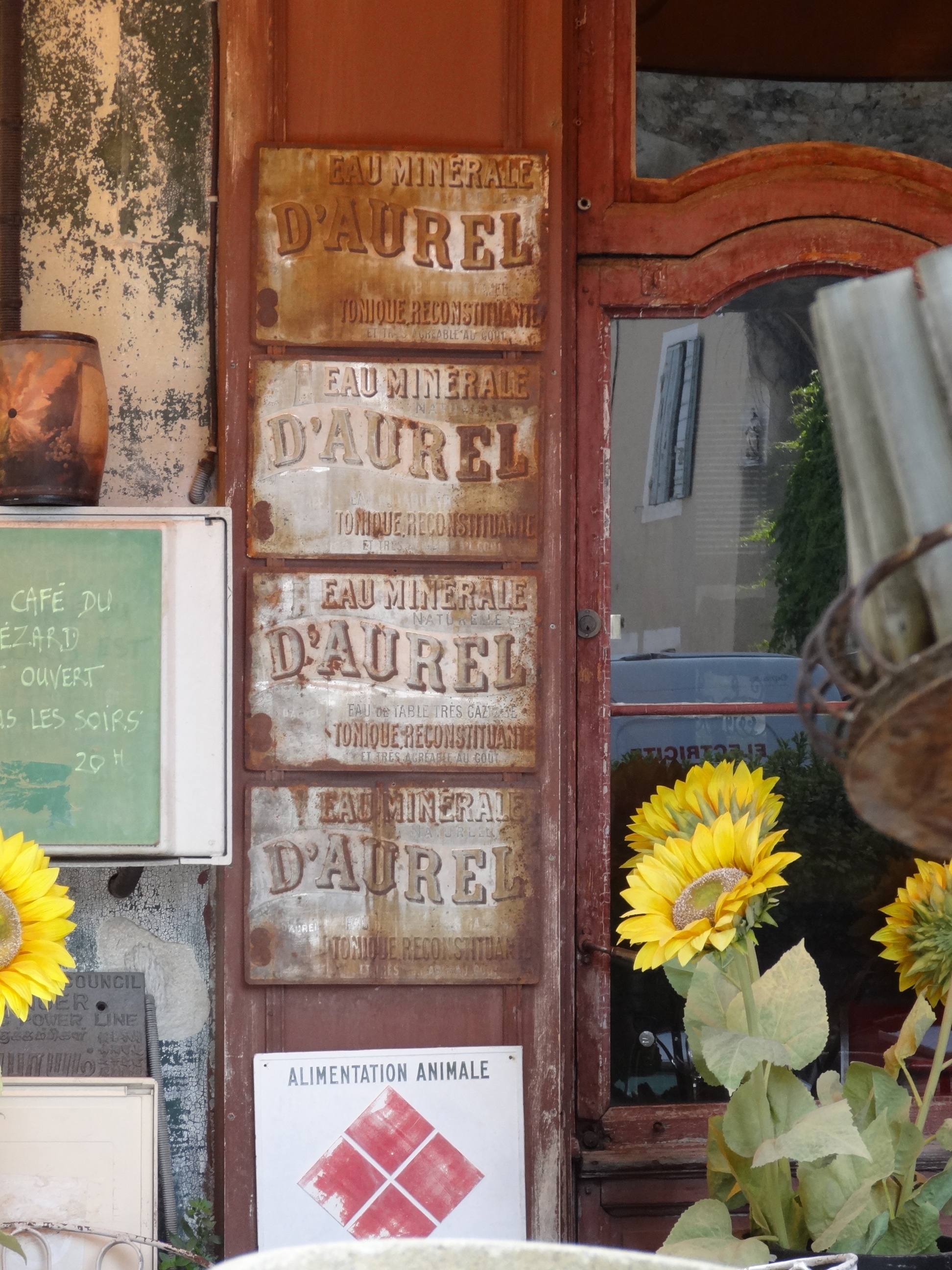
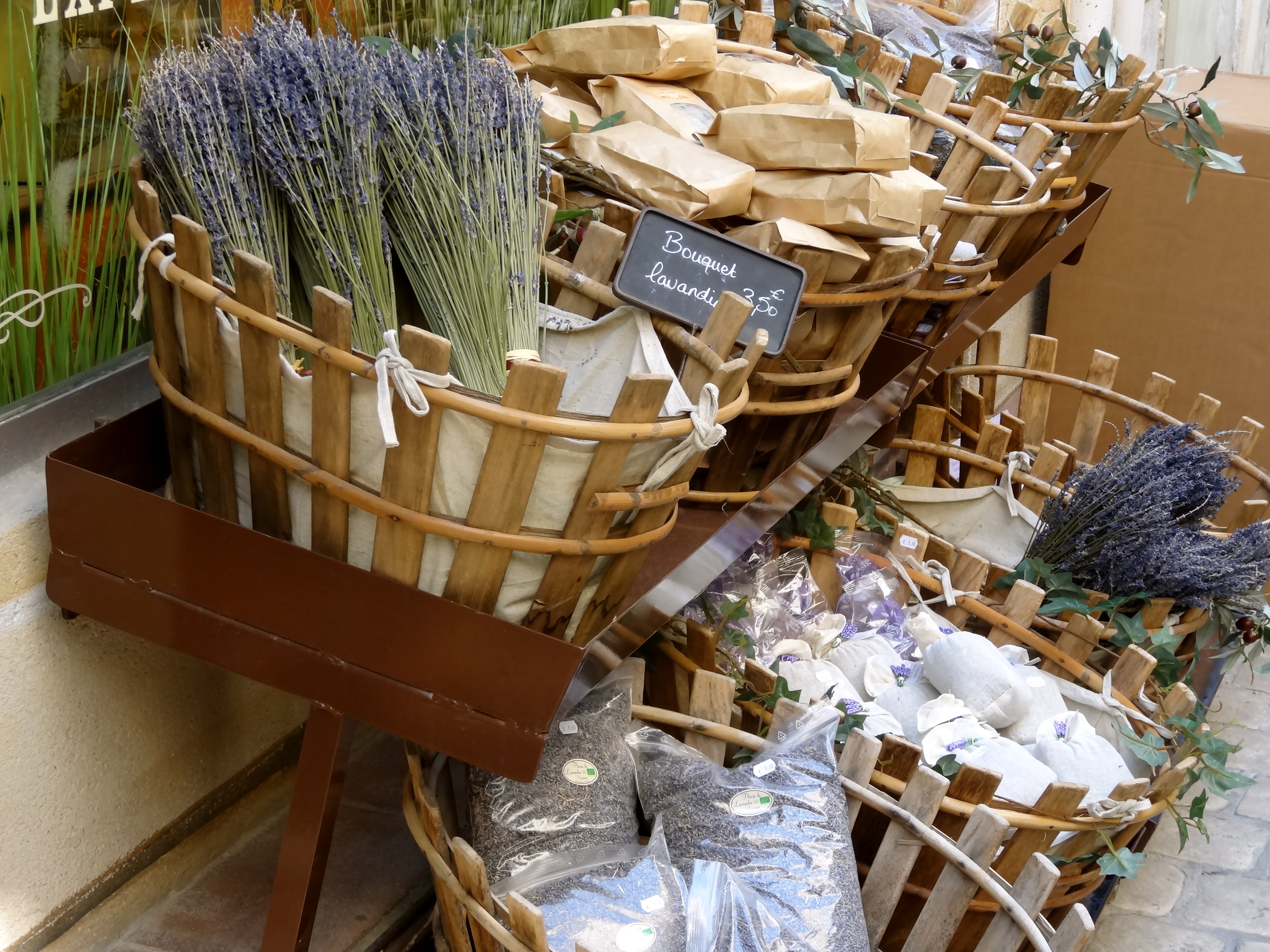
From soft pony faces to the neon cerulean of a sun-dappled swimming pool, old rusty shop adverts to twisted freshly-harvested garlic bulbs, I present to you my third series of Provencal photo collections – Enjoy Saint-Rémy at its best, for we are off to Aix!

All photos and written content are strictly the copyright of Nicholas de Lacy-Brown © 2013 and The Daily Norm. All rights are reserved. Unauthorized use and/or duplication of the material, whether written work, photography or artwork, included within The Daily Norm without express and written permission from The Daily Norm’s author and/or owner is strictly prohibited. 

Provence Odyssey | Saint-Rémy: Day 8 – Picture-Perfect Provence

Much has been said about the surroundings of Saint-Rémy – the startling archeological remains of Glanum on its outskirts, the tranquil beauty of the Hospital of Saint Paul de Mausole, and the incredible beauty of nearby Les Baux – but I have said very little about the little town of Saint-Rémy itself. And it would be unfair not to give this little Provençal gem its fair mention, even though, as perhaps the photos below will demonstrate, the beauty of this town is better illustrated through photos than words.

For Saint-Rémy is one of those picture-perfect little towns about which the guidebooks rave, and the midwinter daydreamer, wrapped up against the cold, can only dream: A town of only 8 or 9 main streets, each winding around a charming central square with a trickling fountain at its centre, and a single local café covering the old cobbles with tables and umbrellas for those seeking solace from the sun. Radiating out from this centre point are clusters of little boulangeries, fish shops and delicatessens, while gift shops sell stylish selections of Marseille soap and bundles of lavender, all wrapped up and ready to go home where their sweet floral scent will imbue even the most dreary of homes with a Provençal perfume.

Saint-Rémy streets

DSC04266 DSC04212 DSC03748 DSC04267 DSC04244 DSC04211

Between the little boutiques, an impressive selection of high-end galleries are to be found – for Saint-Rémy has built itself a reputation as a rather chic Provençal destination, a town whose souvenir shops sell well-packaged, pastel-toned quality nicknacks of France, rather than the garish trade of lesser towns. And in its restaurants, freshly made cakes and pastries line up in the windows like the latest models of a fashion show, and menus de jour almost sparkle with pumped up prices and all the pomp of the promised culinary show.

Chic boutiques

DSC03843 DSC04254 DSC04217 DSC03138 DSC04263 DSC03131 DSC04246

Yes, Saint-Rémy is truly a gem of Provence, a town which is small enough to be unspoilt, charming and deeply atmospheric, yet sufficiently well-developed on the tourist map to bear all of the hallmarks of a sophisticated polished holiday destination. We were pretty much enamoured by the town from our first walk through its centre – by the narrow little streets, the delicately perfumed shops, the pastel-coloured shutters, old shop signs and bustling street markets. And on this, our last day in the town, we returned to those now accustomed haunts, once again gazing through the windows of the little boutique shops, enjoying the gentle pitter-patter of water in the fountain outside the town hall, and having a noisette or two (macchiato coffee) in the shady central square.

In short, we had found picture-perfect Provence, and were determined to make the most of it. For later that day, our planned departure would whisk us away once again, voyaging south to our final destination: the city of Aix. But before that, I leave you with some more of my photographic moments. Adieu.
All photos and written content are strictly the copyright of Nicholas de Lacy-Brown © 2013 and The Daily Norm. All rights are reserved. Unauthorized use and/or duplication of the material, whether written work, photography or artwork, included within The Daily Norm without express and written permission from The Daily Norm’s author and/or owner is strictly prohibited. 

Provence Odyssey | My Journey in Paintings: Beau Les Baux

When I was planning my trip to Provence, I always had in mind the kind of imagined utopia, where Dominik and I would walk, carefree, into lavender fields and poppy fields, he taking a rest amongst the sweet smelling flowers, and me setting out my sketch book and paint box, beckoning the Provençal muse to meet my embrace, inspiring me to transfer the glory of Provence to the blank pages of the sketch book before me. In this sense I suppose I am similar to so many artists who have gone before me; such as Van Gogh, who was so driven by the concept of establishing an artistic community in the region that he painted some of his best works just as decoration for the house which would be at the centre of that movement.

While Van Gogh’s dream was sadly never realised, my own artistic imaginings have, happily, come closer to fruition. After 6 days on the trip, I had already completed two works. As for my vision of utopia, well, Dominik had already found rest in amongst a Poppy field (as the photo below aptly demonstrates!), while in Saint-Rémy, we finally found the opportunity to stroll through lavender fields and olive groves, having got no closer to lavender in both Avignon and Arles than the bags of dried stuff littering up the souvenir shops.

Dominik takes a rest amongst the poppies, Oz style.

Dominik takes a rest amongst the poppies, Oz style.

But once Les Baux entered the equation, my artistic stirrings really began to take another stir, as with one glance at some of the most stunning mountain scenery in all of France, I became involuntarily, but very willingly sucked into another hypnosis of creative motivation, as the sweet-smelling lavender-haired Provence Muse took my hand in hers, and led me to a third page of my sketchbook to complete yet another ode to this paradise.

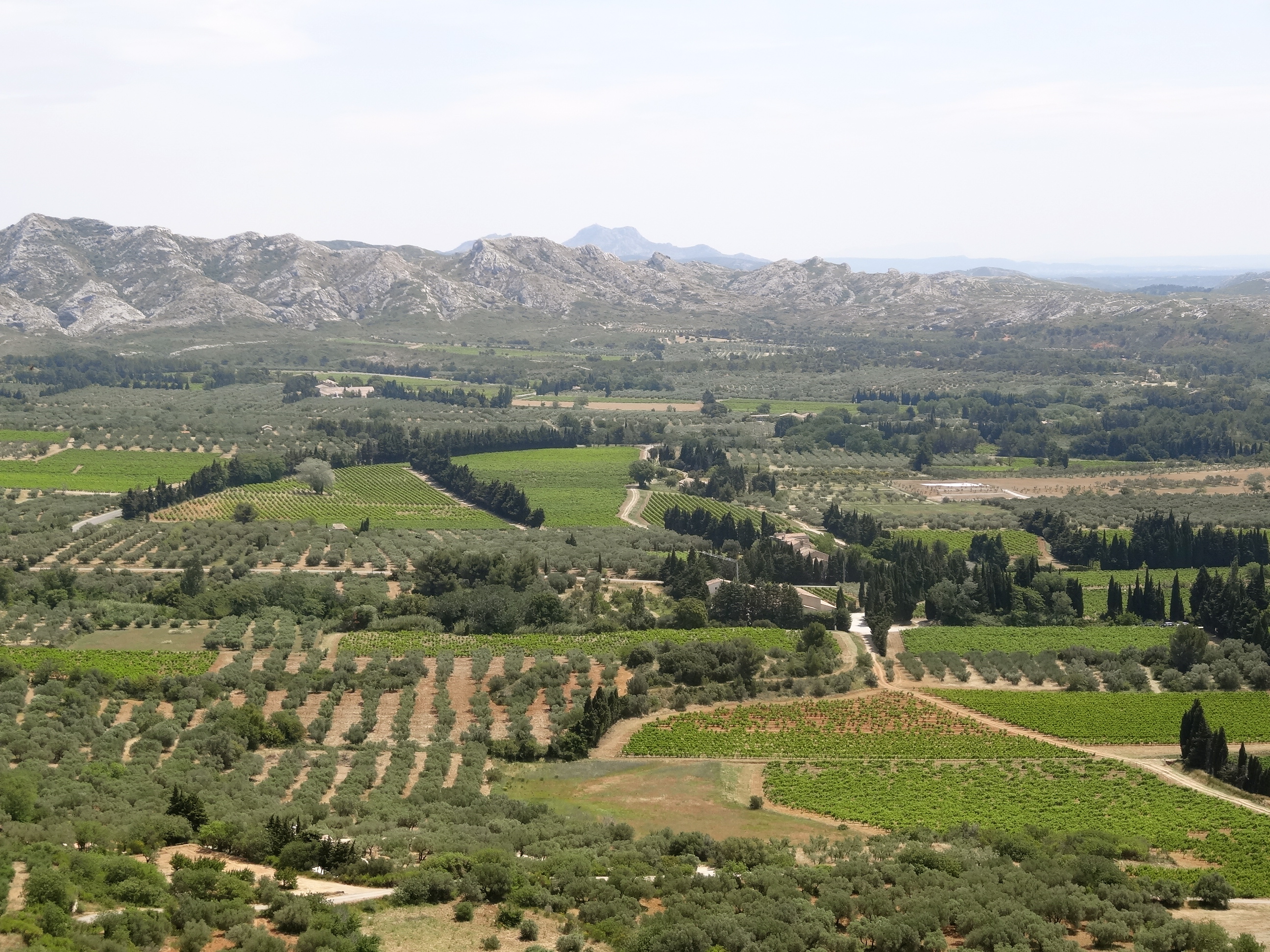
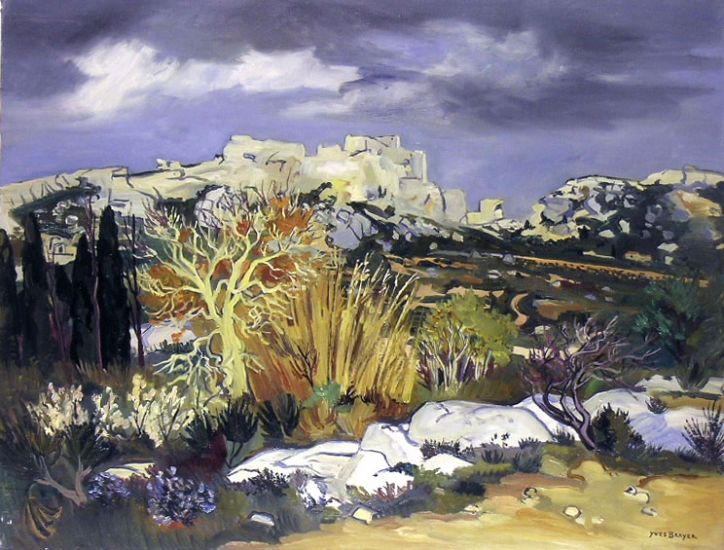
As I described yesterday, Les Baux-de-Provence could not help but inspire artists such as Yves Brayer to manifest the exquisite village and surroundings in paint, but then again Saint-Rémy’s impressive surroundings are surely worth their weight in inspirational gold also. So for my third painting, another of my freely-conceived “compositions” series, I couldn’t help but paint the limestone chateau-topped spur of Les Baux, its stunning surroundings of patchwork-quilt fields, and, in the distance, the ruins of St Remy’s great archaeological site, the Roman town of Glanum.

Composition No. 4 (Beau Les Baux) (© Nicholas de Lacy-Brown, 2013, guache on paper)

Composition No. 4 (Beau Les Baux) (© Nicholas de Lacy-Brown, 2013, guache on paper)

So there you have it: Composition No. 4 (Beau Les Baux). An undulating patchwork landscape, rocky citadel, blue skies and all topped off with a picnic of baguette, cheese, saucisson and of course a little wine. Ah…La Bonne Vie. I hope you enjoy it.

© Nicholas de Lacy-Brown and The Daily Norm, 2001-2013. Unauthorized use and/or duplication of the material, whether written work, photography or artwork, included within The Daily Norm without express and written permission from The Daily Norm’s author and/or owner is strictly prohibited. 

Provence Odyssey | Les Baux: Day 7 – The Belle of the Alpilles

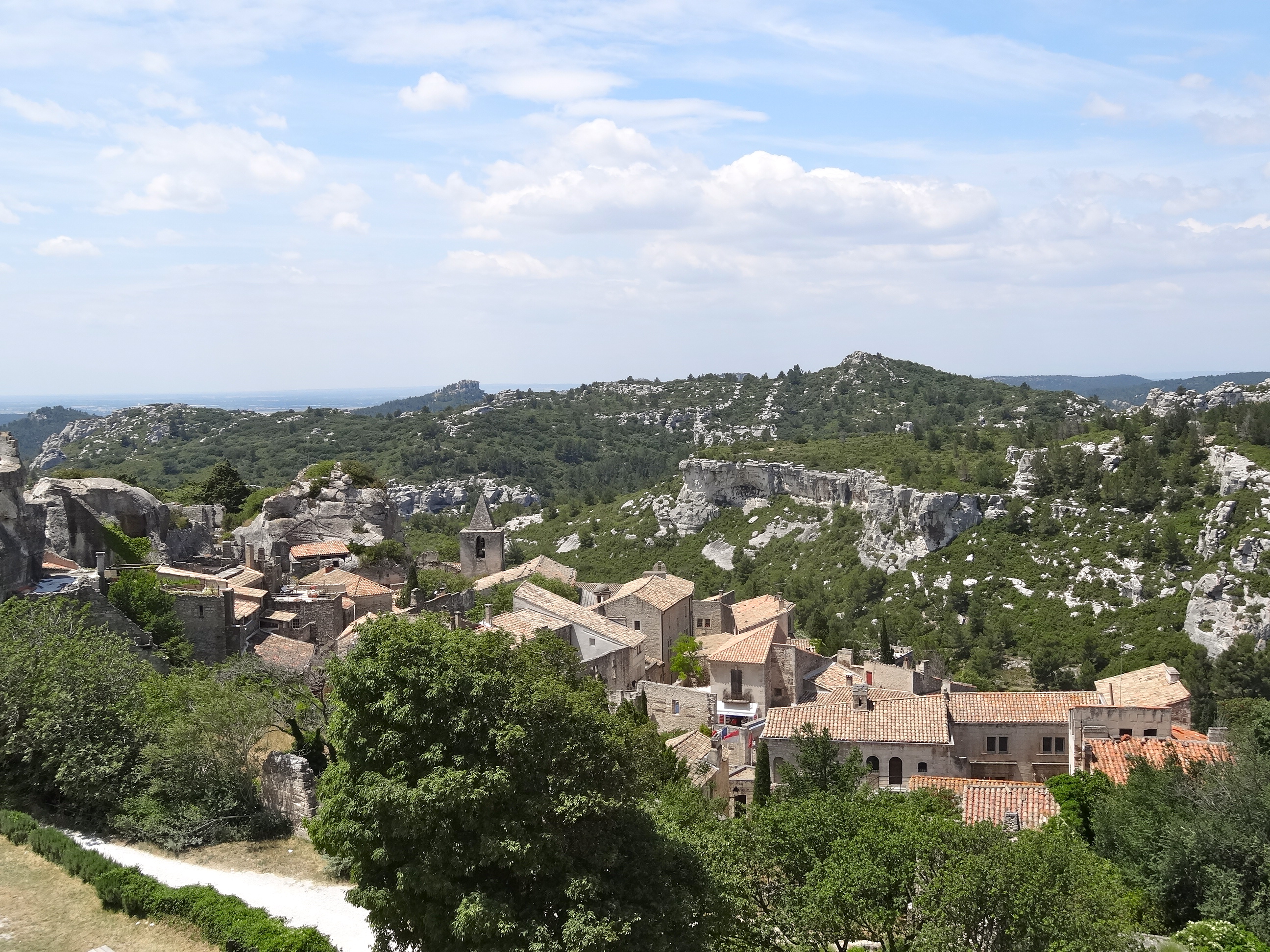
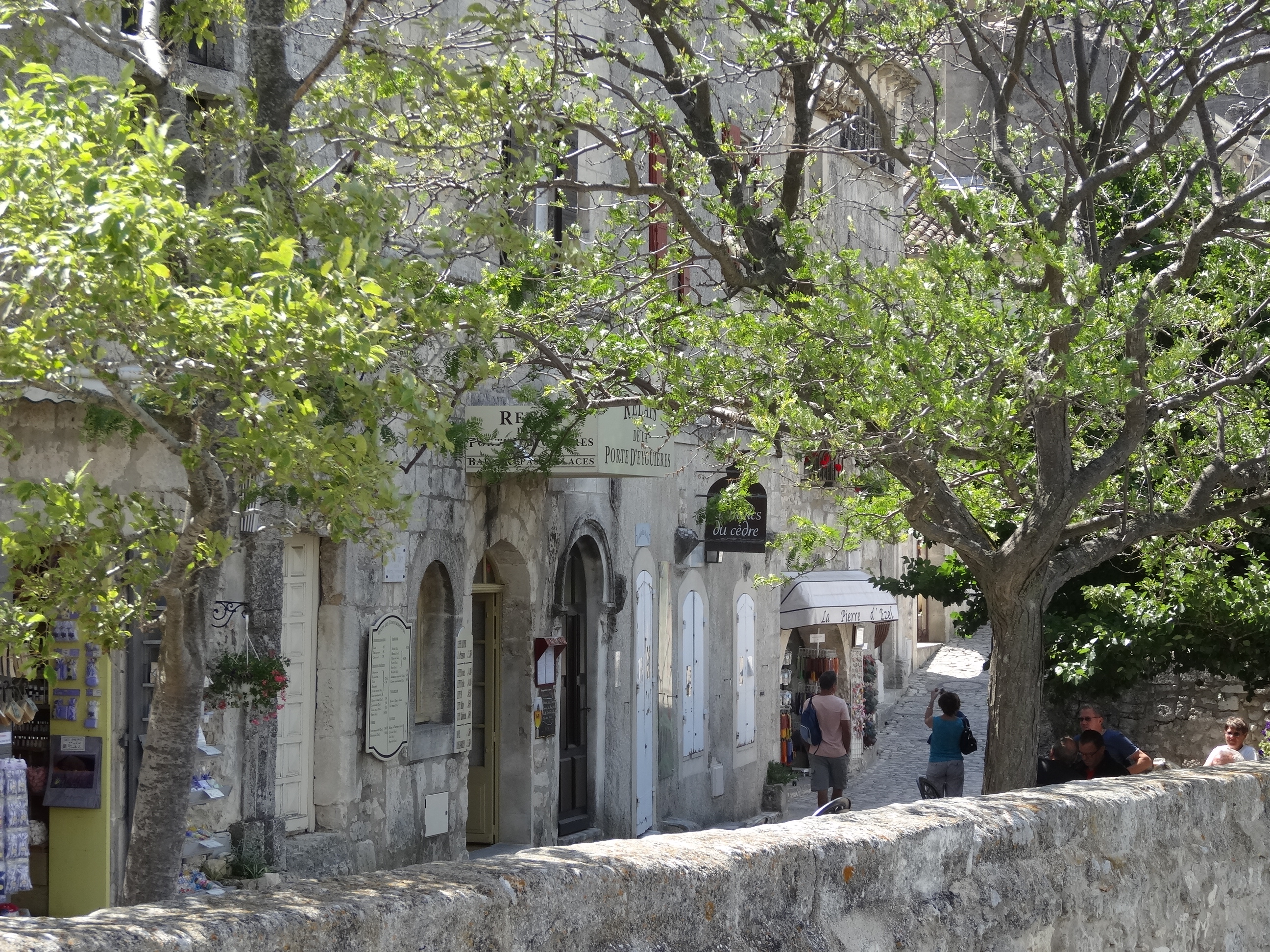
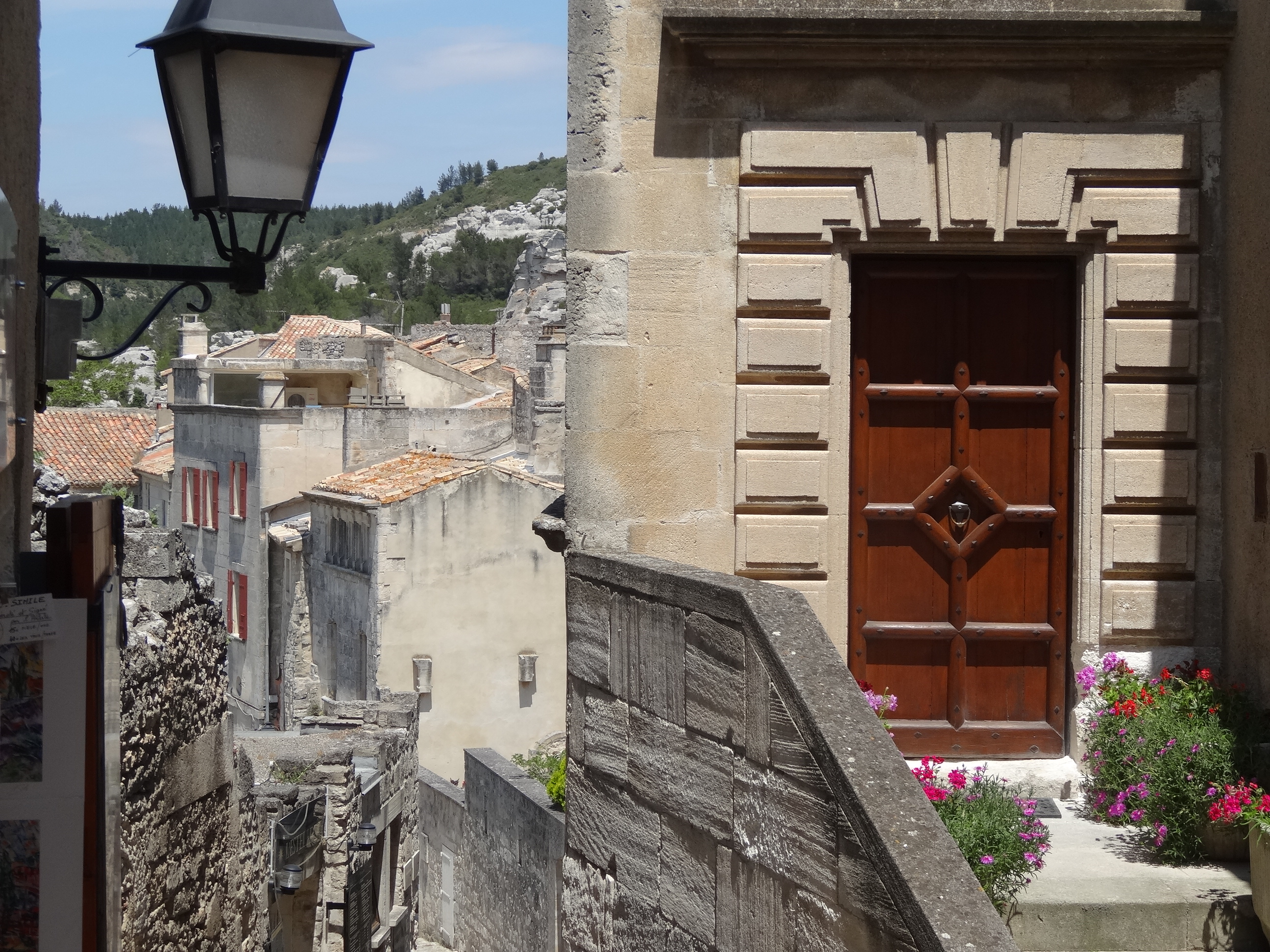
Le Beau – Les Baux: the insurmountable beauty that is Les Baux, a tiny medieval village sitting upon a rocky spur of the Alpilles mountains, and today one of the most visited sites in France. And little wonder, for what this village lacks in size, it more than makes up for in the stunning natural beauty of its surroundings, the almost untouched historical charm of its tiny steep streets, and the incredibly variety and brilliance of its attractions. Yes, Les Baux-de-Provence, only some 10 minutes drive south of Saint-Rémy up various meandering gradually steepening mountain roads receives some 2 million visitors a year for a reason, and given our proximity , staying as we were in Saint-Rémy, there was no way we were going to miss out on this gem in the crown of our great Provence Odyssey.

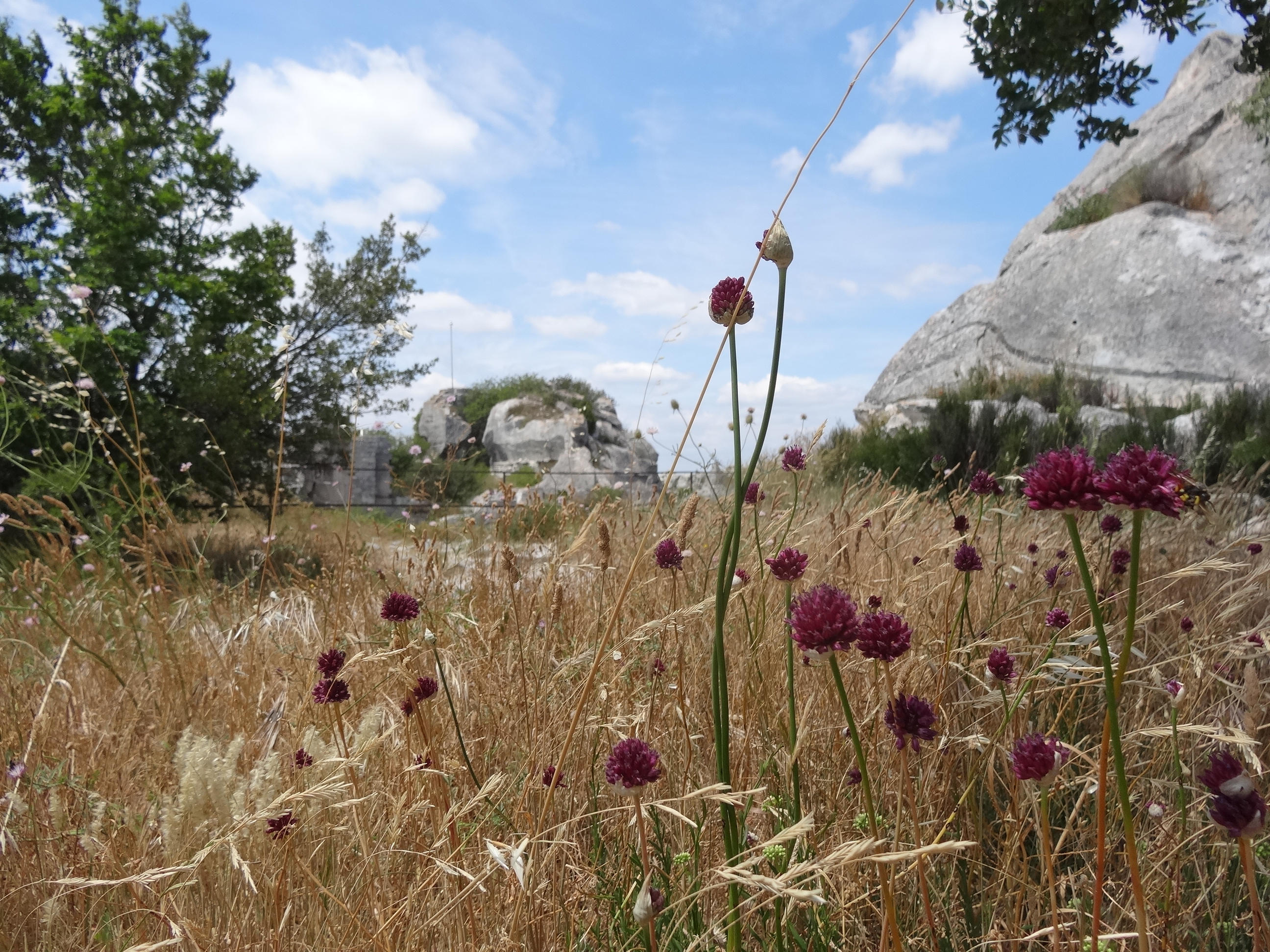
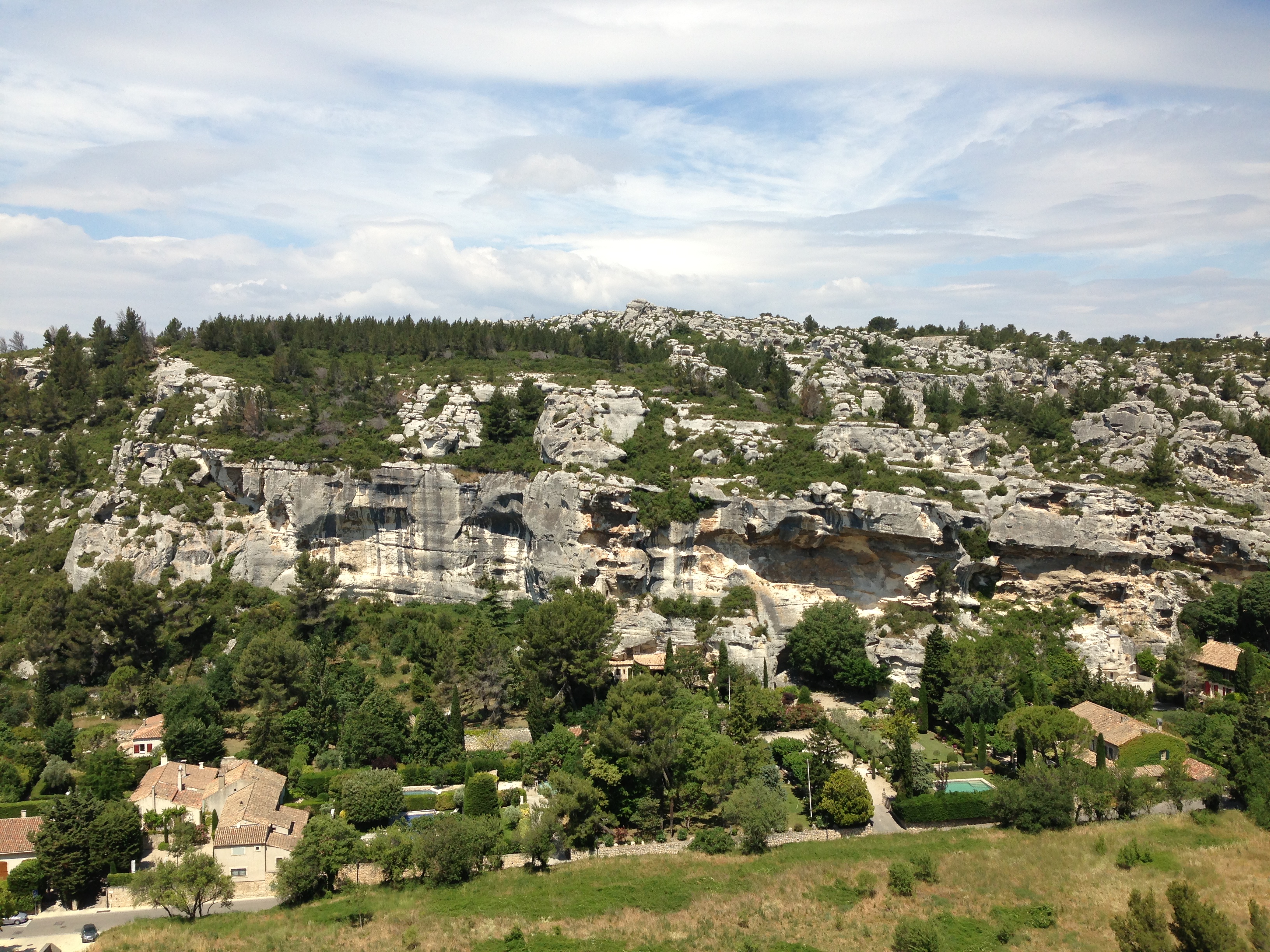
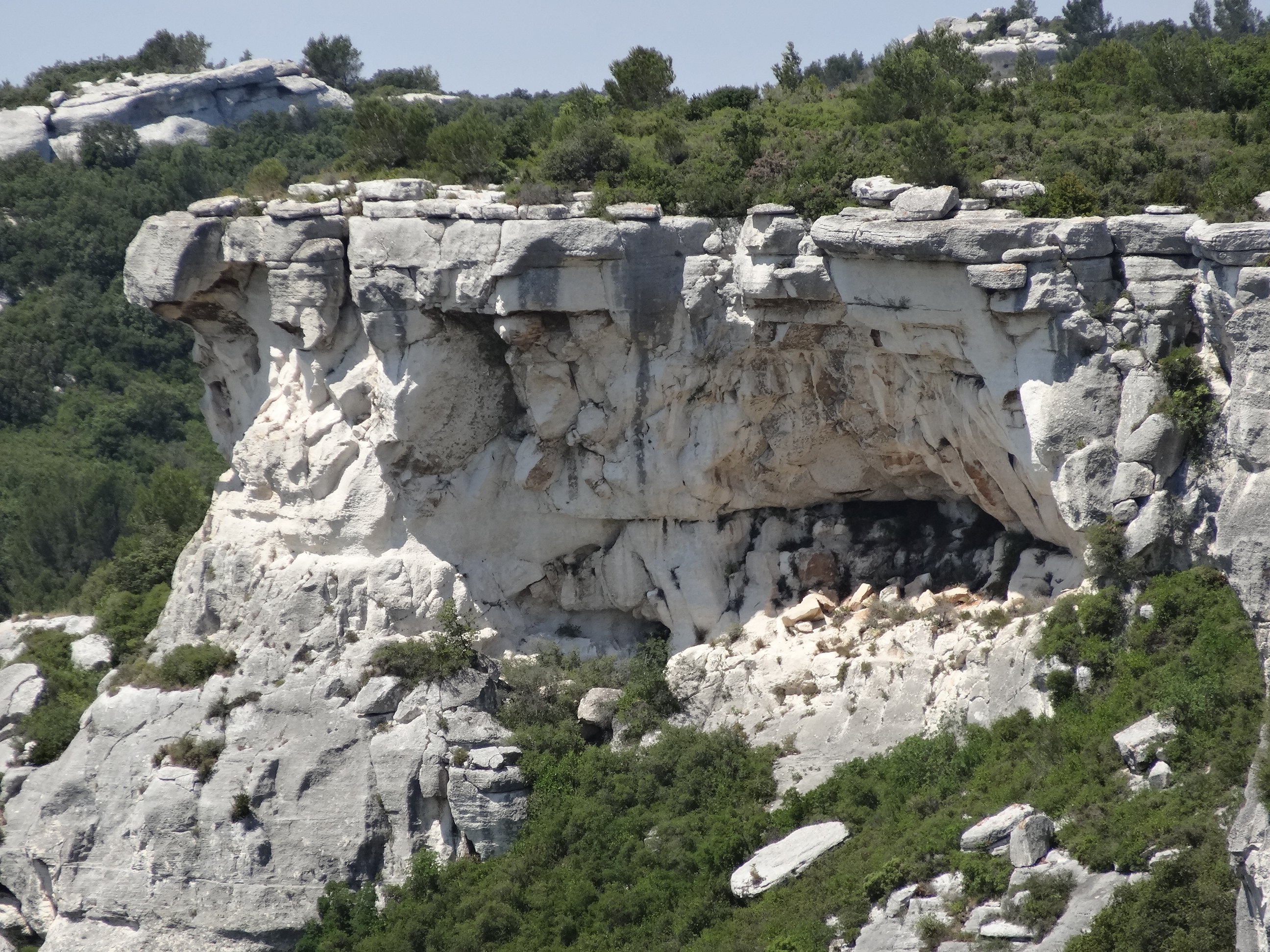
The stunning Alpilles surroundings to Les Baux

DSC03767 DSC03996 IMG_2881 DSC03766

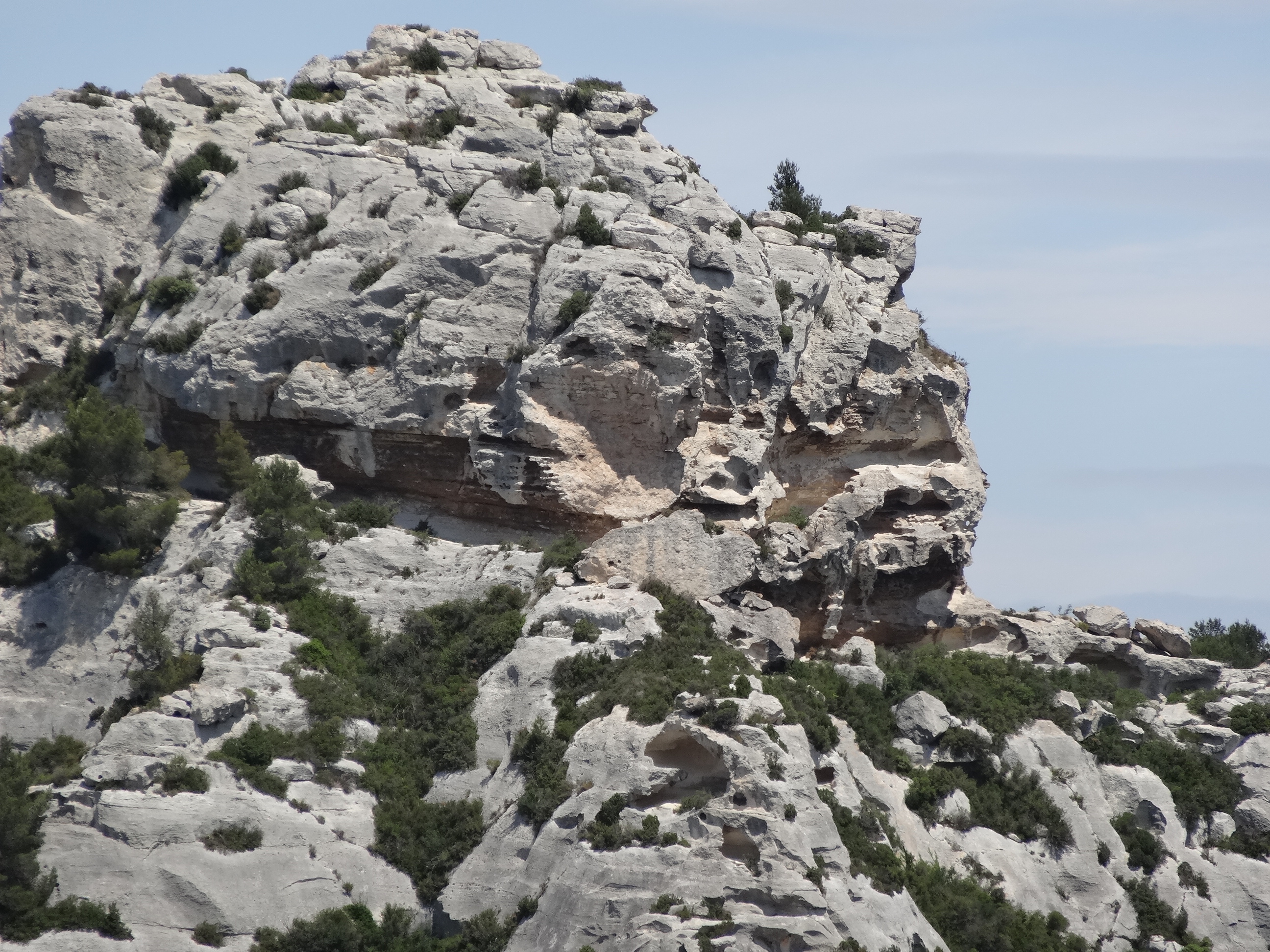
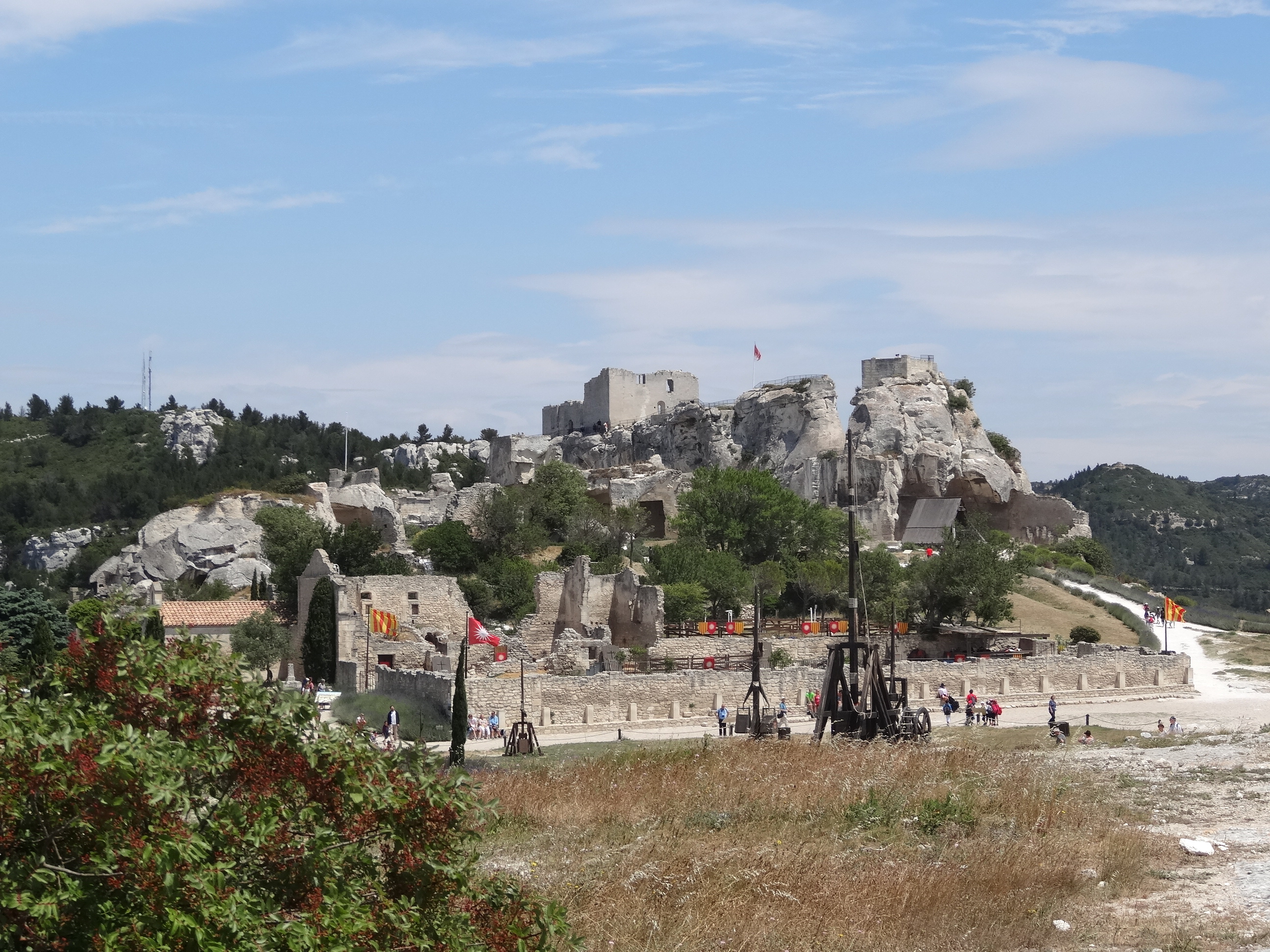
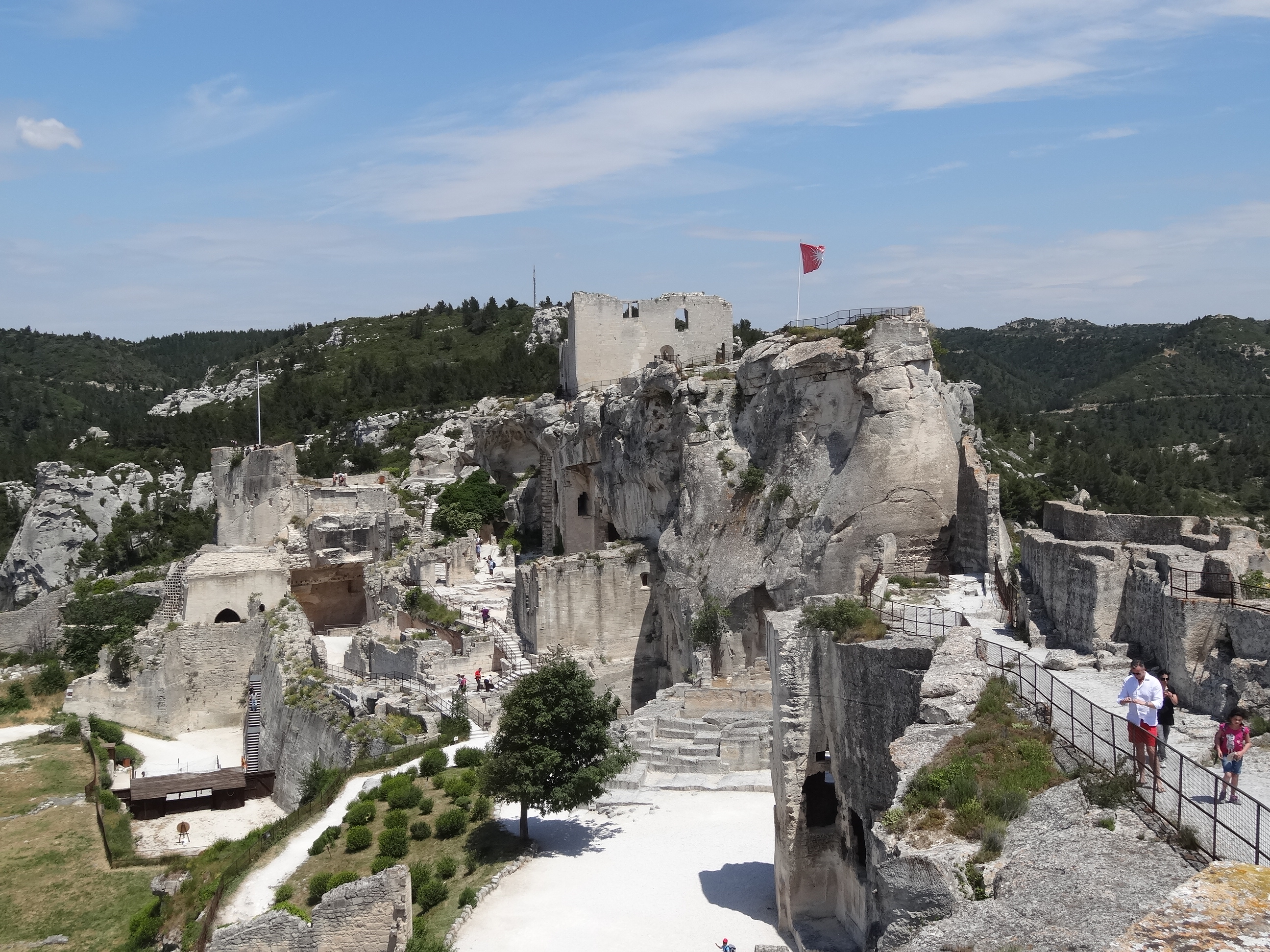
So as day 7 of our trip broke, we hopped into a cab, and made the short journey into the Alpilles mountain range, our eyes gradually widening as the utterly stunning dramatic fortress site came into view – the craggy almost unrecognisable remains of an old castle sat upon a high limestone spur looking like something straight out of a fairytale. Once dropped off in the town and having arranged for the taxi to return some 5 hours later, we set off hungry for this dynamic little town, eagerly exploring its few steep and shop-lined streets, our cameras clicking in harmony as we climbed, not knowing which way to turn at every corner in this labyrinth of unending charm, but finding seductive medieval beauty on every street we took. Our little perambulation inevitably led us towards the top of the rocky spur upon which the village precariously sits, and there through a large ancient gateway, we entered the first of this town’s three excellent attractions – the old ruined Chateau.

The Chateau of Les Baux

DSC03934 DSC03956 DSC03913 DSC03977 DSC03951 DSC03947 DSC03967 DSC03990 DSC03987

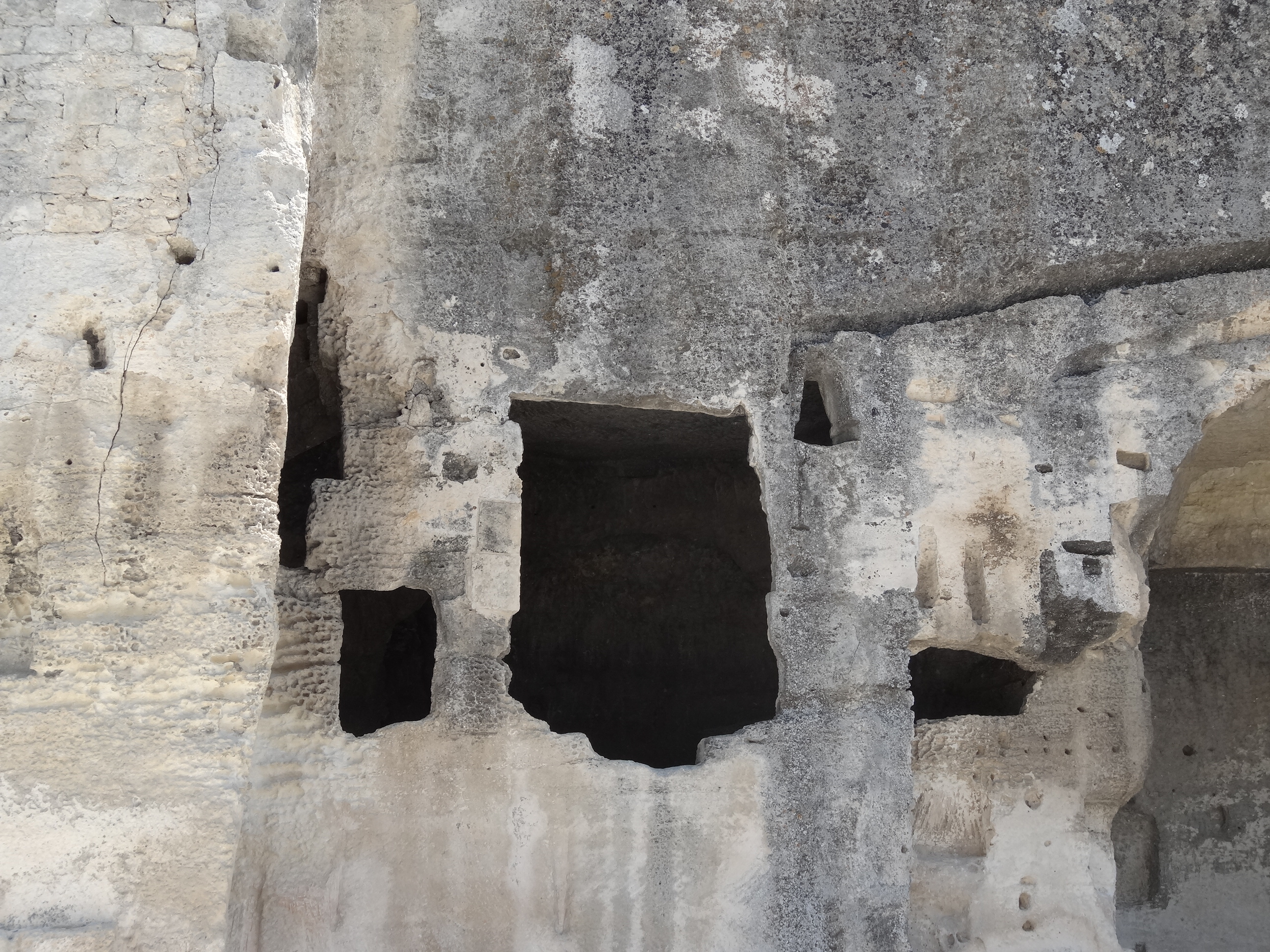
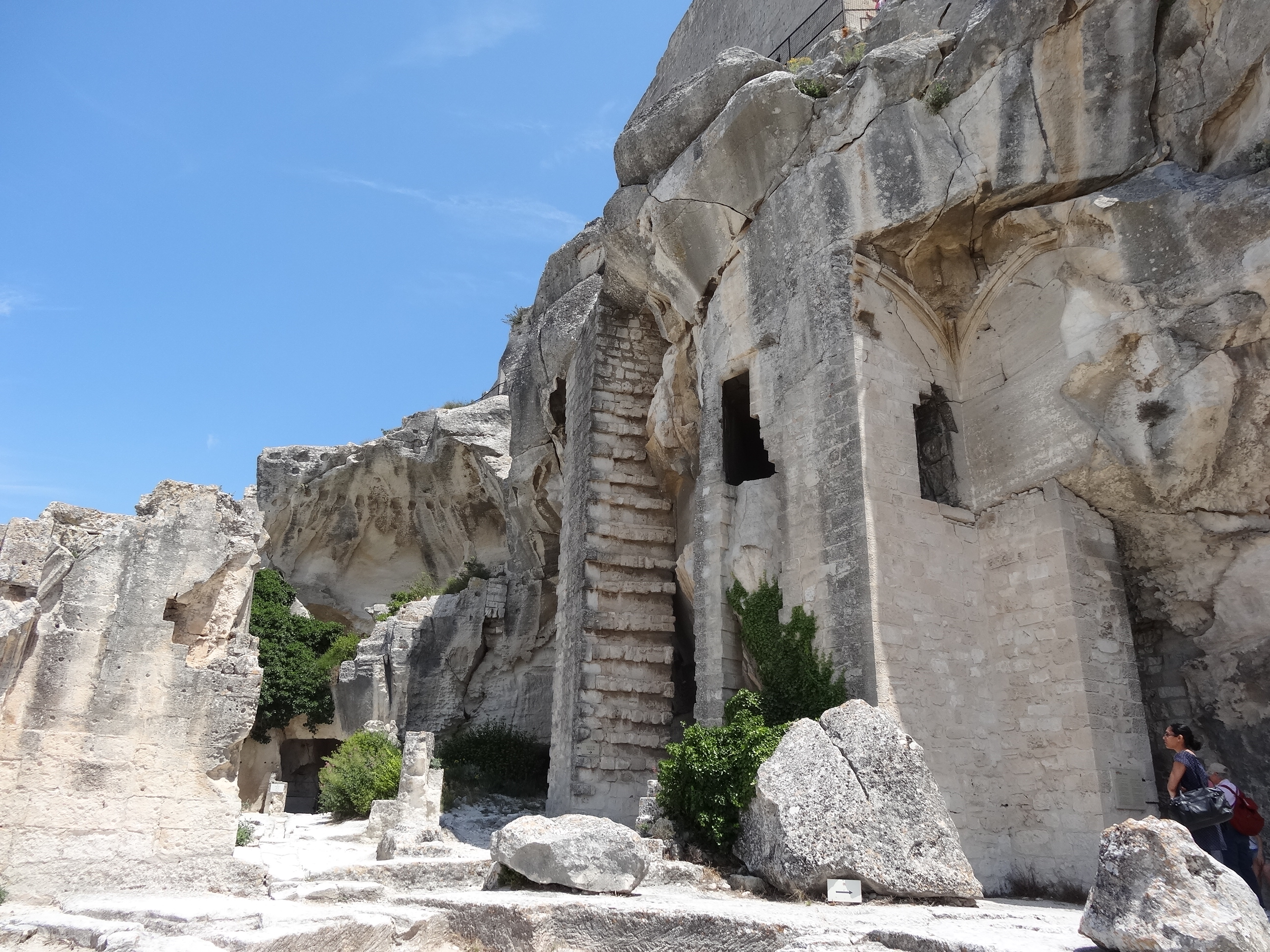
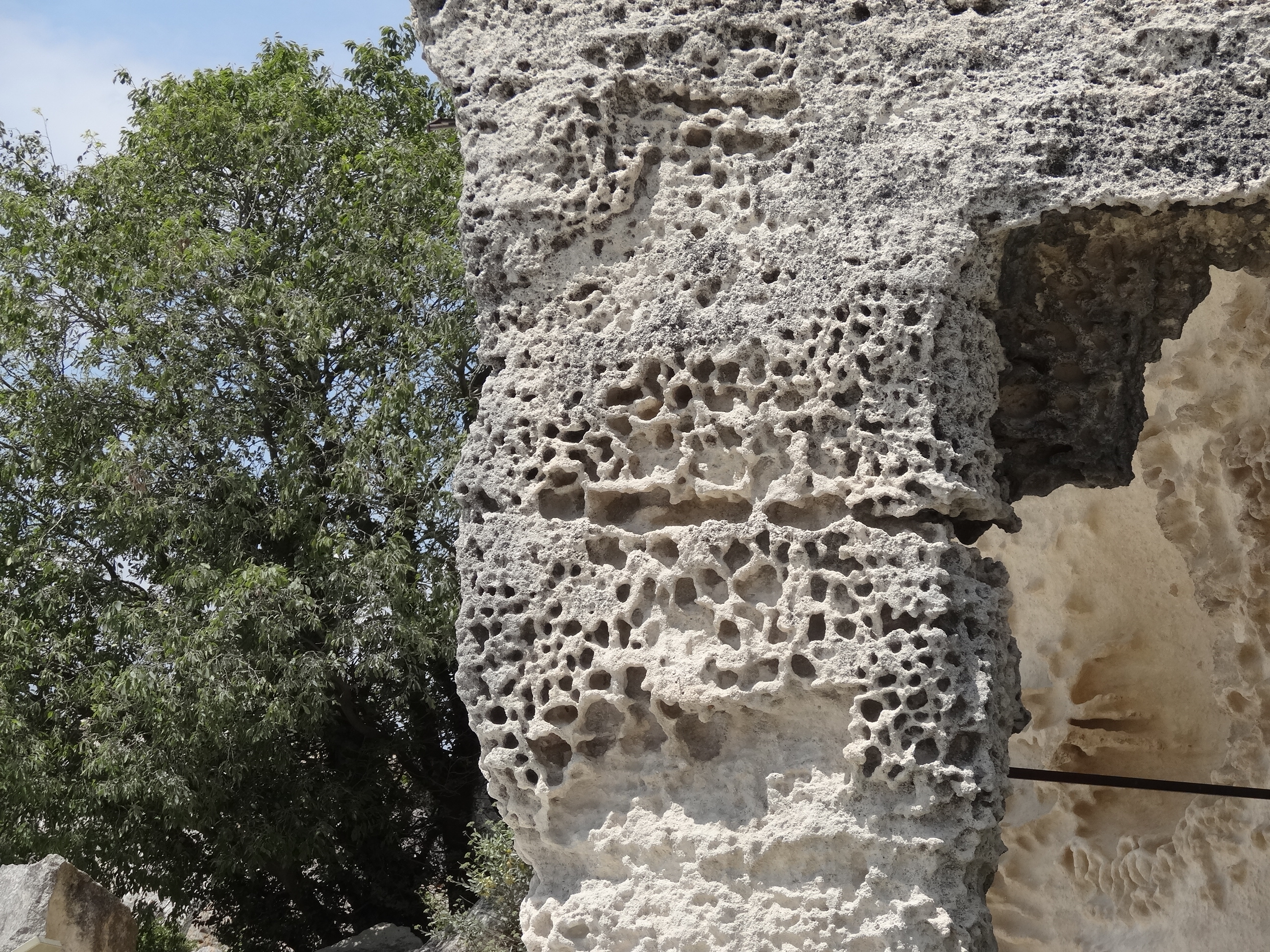
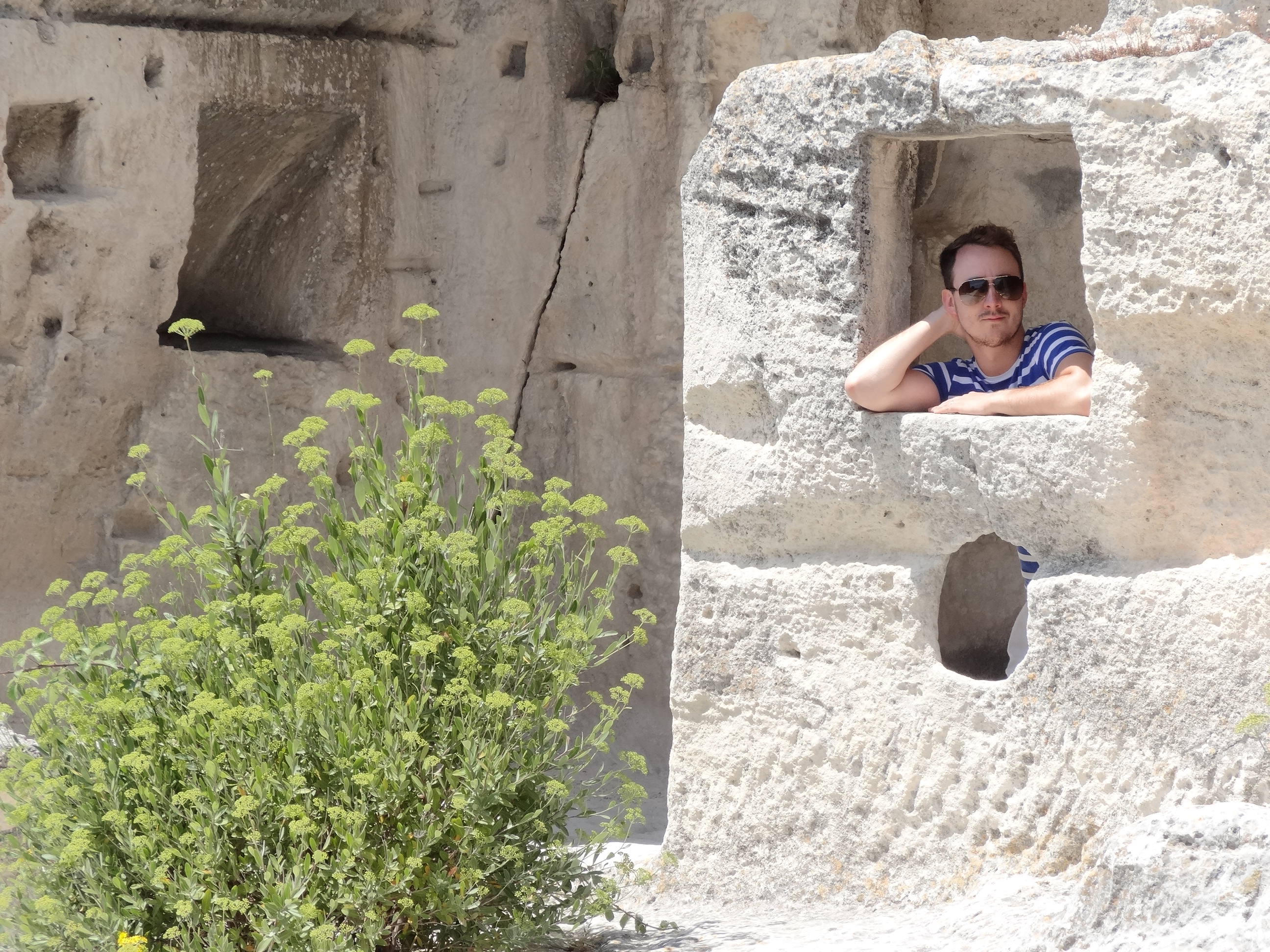
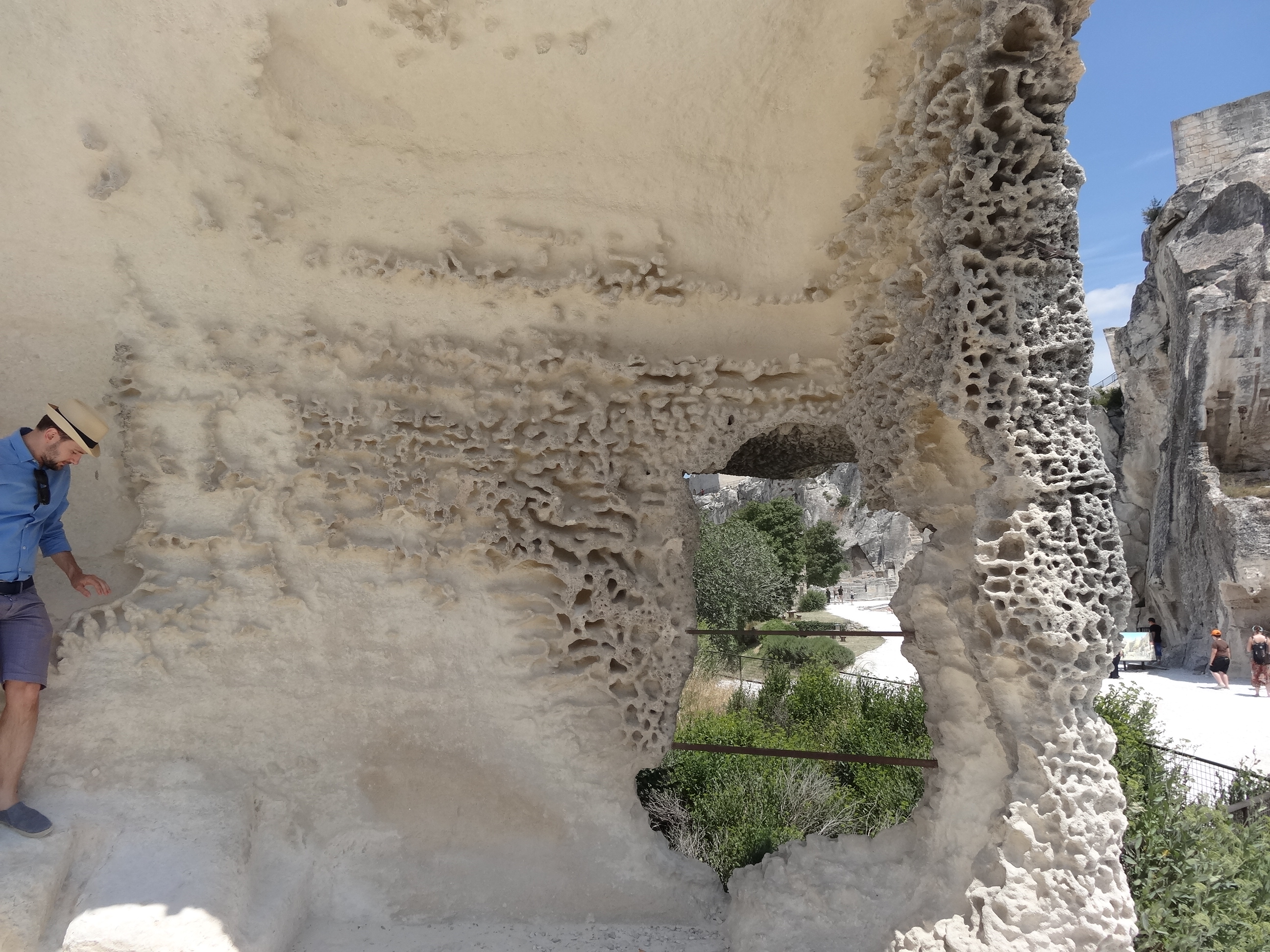
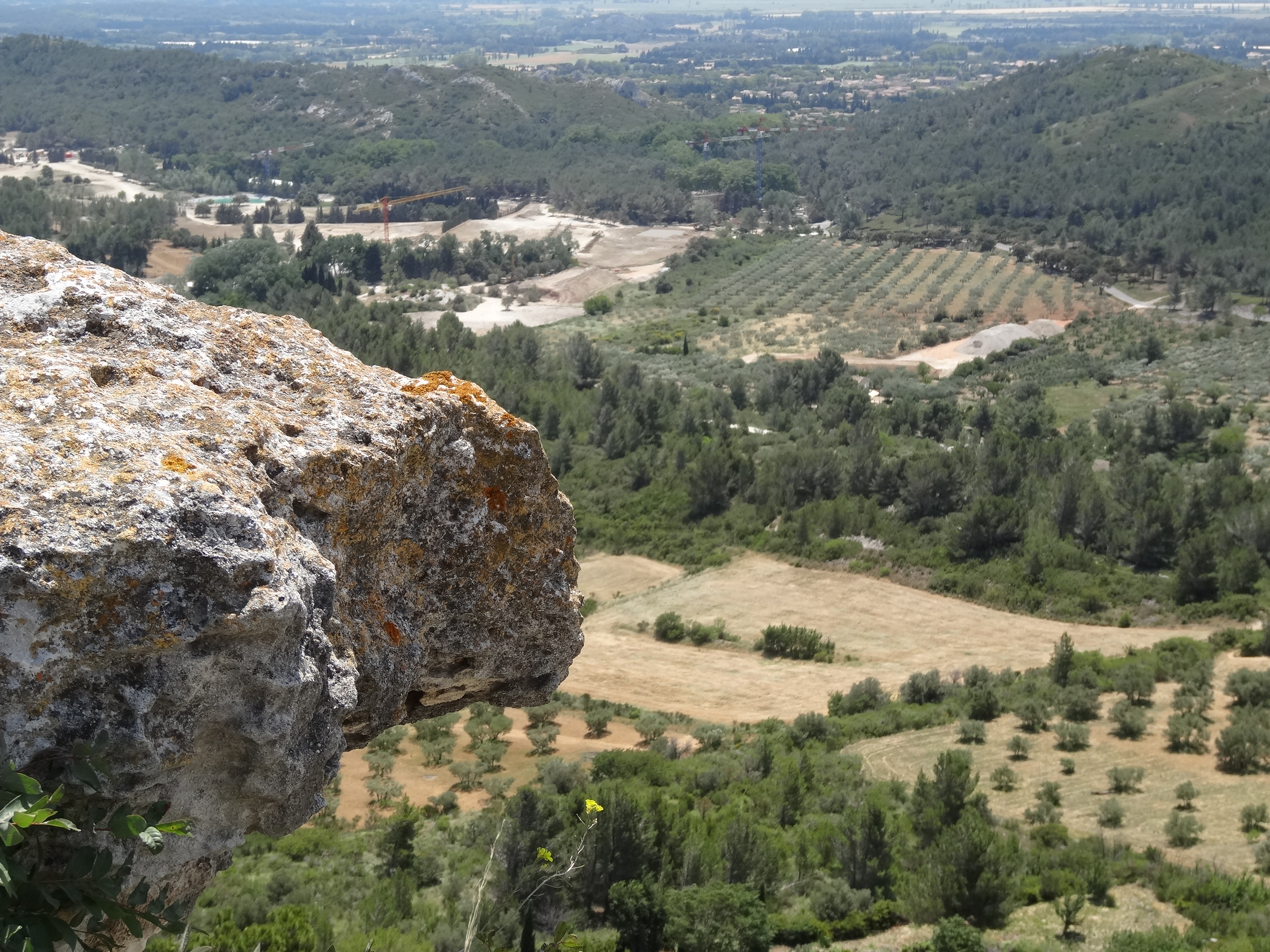
I’m not sure how to describe these visually spectacular ruins, other than to say that they seemed to me a hybrid of half building and half rock, as though the castle had literally been forged out of the craggy limestone rocks of the Les Baux spur, so that misshapen windows and steep perilous staircases began to morph out of the relentlessly hostile limestone, complex in all its greys and ocres overrun with oxygenised dribbles that resembled treacle poured over honeycomb ice cream. Whatever the castle was, today it was far less – a mere shadow of its former glory, yet still retaining the stronghold position of its mighty elevation above surrounding Provence, from whose ruined battlements the views of the encircling patchwork tapestry of wheat fields and olive trees and cypresses and vines were just stunning – I almost teared up at the site of it, although to be fair, the brisk wind at this high altitude probably didn’t help in that respect.

DSC03912 DSC03963 DSC03904 DSC03906

We toured this vast remains for as long as our legs could carry us over the treacherous terrain, largely ignoring the historical facts given to us by an accompanying audio guide in preference for the unique brilliance of the vistas all around. Thoroughly satisfied with the almost incredible sight of these views, we headed back into the cute village streets, whose many terracotta roofs had been seen at such a pretty vantage from the ruined Chateau, but which now provided us with a delicious luncheon, again accompanied by that same jaw-dropping view.

DSC03937 DSC03852 DSC03778 DSC03801 DSC03847DSC03997

With time ticking onwards, and that taxi, we now realised, returning sooner than we would have liked, we proceeded swiftly to the second of the village’s abundant attractions – the Musée Yves Brayer. This eponymously named gallery is the home of many great works by this fantastic Les-Baux based artist, whose landscapes of the surrounding countryside and Les Baux itself bare suitable testament to the stunning location will cannot help but inspire (see my next post-tomorrow), but also included paintings of many of the great cities which have inspired artists, and me, in equal measure across Italy and Spain, including, to my great delight, my beloved Marbella. However, beyond Brayer himself, our visit was well timed, coinciding with Marseille’s European Capital of Culture status for 2013, and here an exhibition held as part of that festival, showing the influence of the French Mediterranean in popular 20th century art, and including some greats including Signac, Dufy and Buffet.

1268937308_les.baux.de.provence H3892-L06152427

Paintings © Yves Brayer

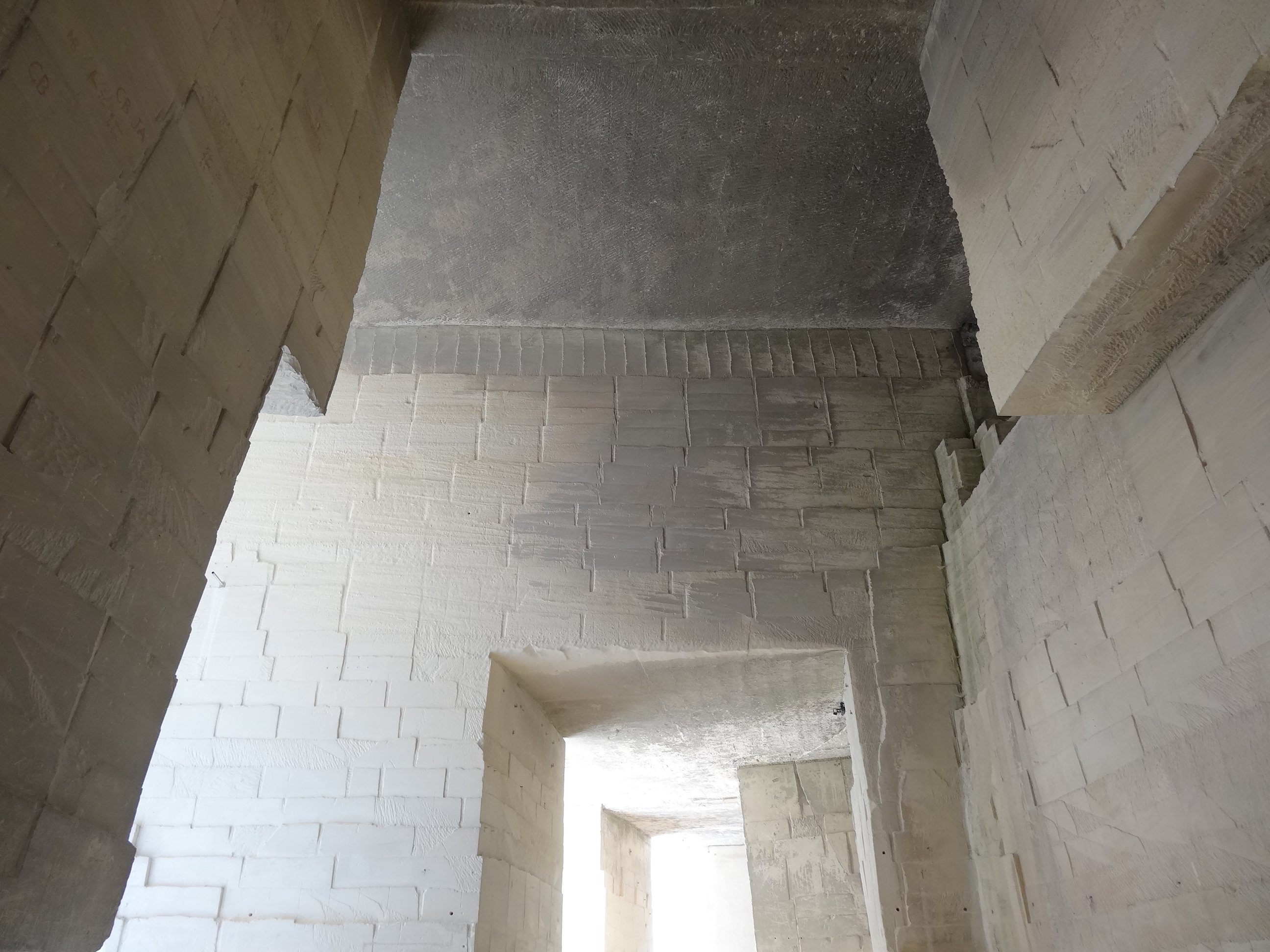
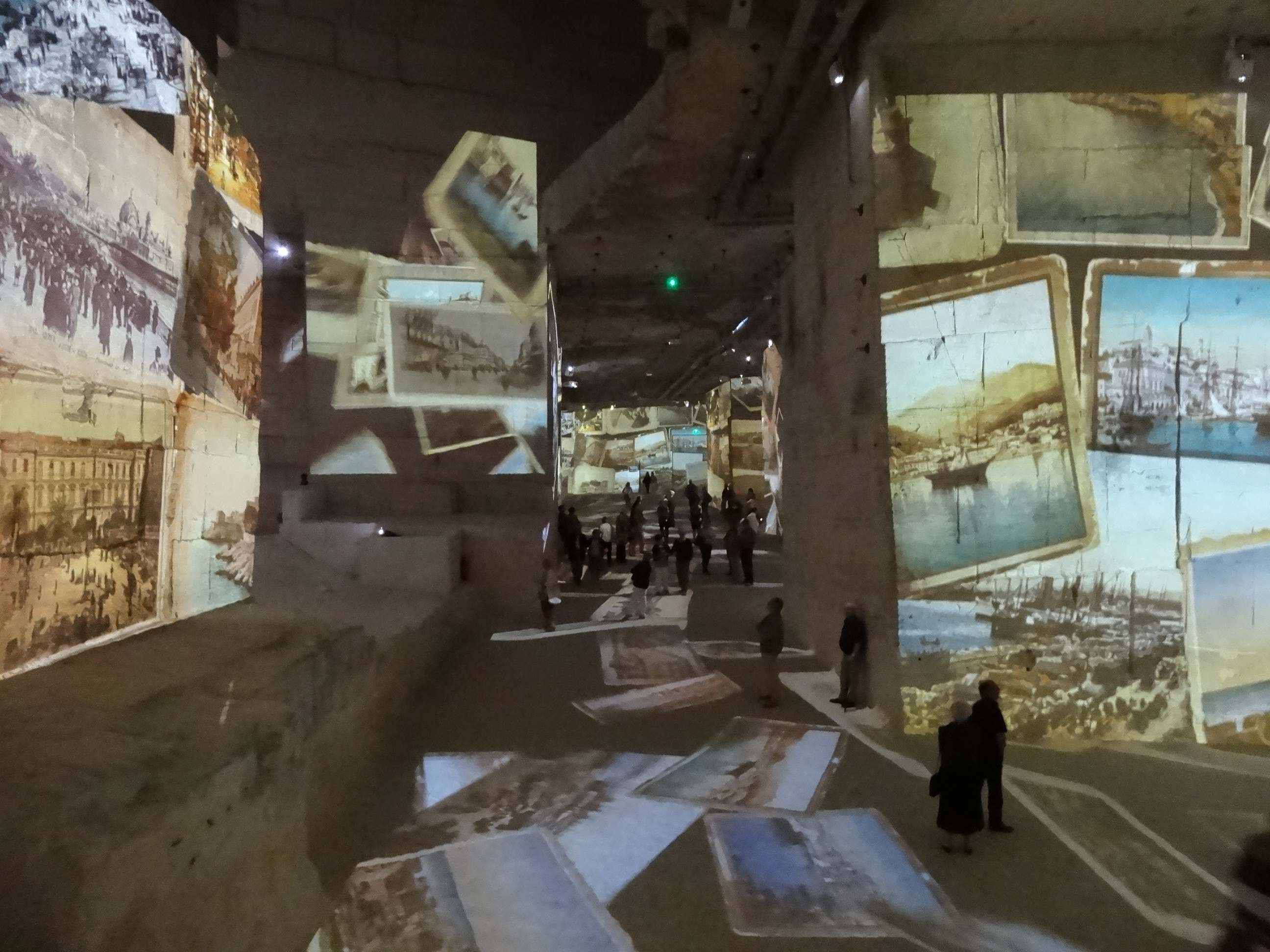
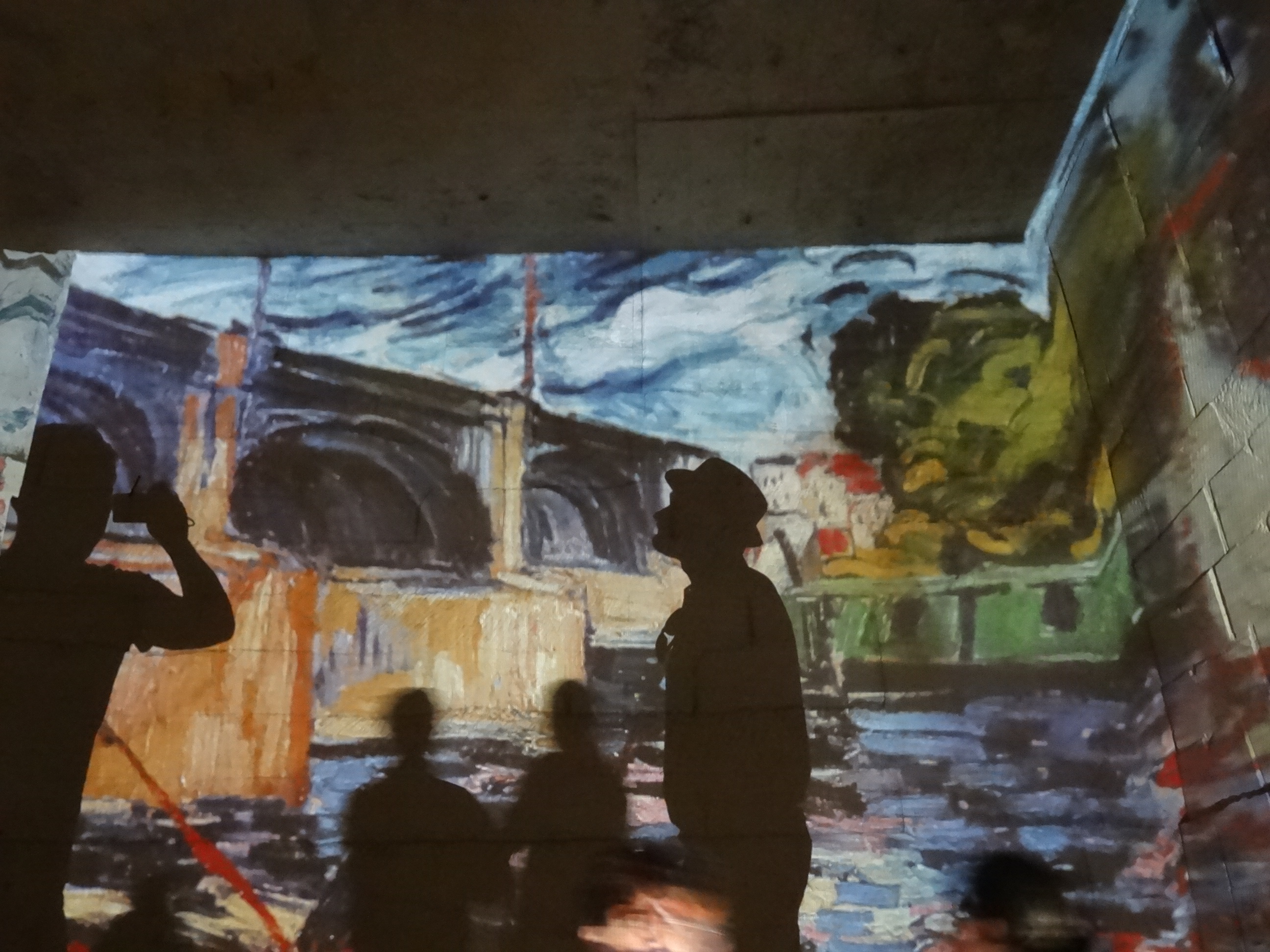
But for the real big art names, and images of their works magnified to a scale quite beyond the imagination, one only has to go to the last of our Les Baux destinations, an attraction so beyond all previous of my life’s experiences that I now struggle in words to describe this immersive, mesmeric, mammoth celebration of art in the most unique of surroundings. I am talking about the Carrières de Lumières – an attraction literally of totally-immersive light and art set within the incredible other-wordly surrounds of Les Baux’s former limestone quarries. These quarries, otherwise known as the Val d’Enfer (valley of hell) and having inspired countless artists and writers in their time including, allegedly, Dante himself, as well as a film by Cocteau, are like vast almost unending cathedrals of stone cut deep into the mountain side.

DSC04068 DSC04071

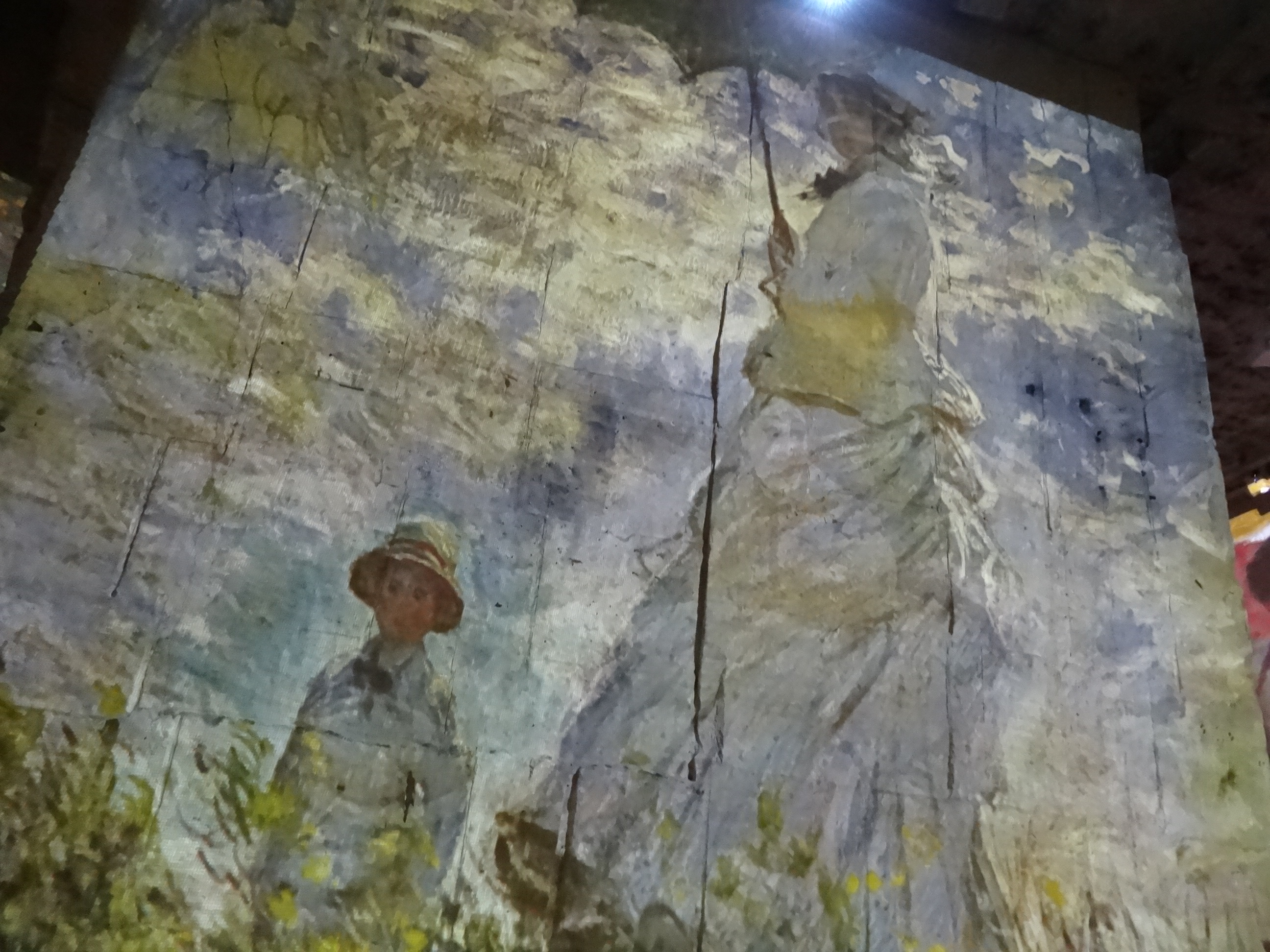
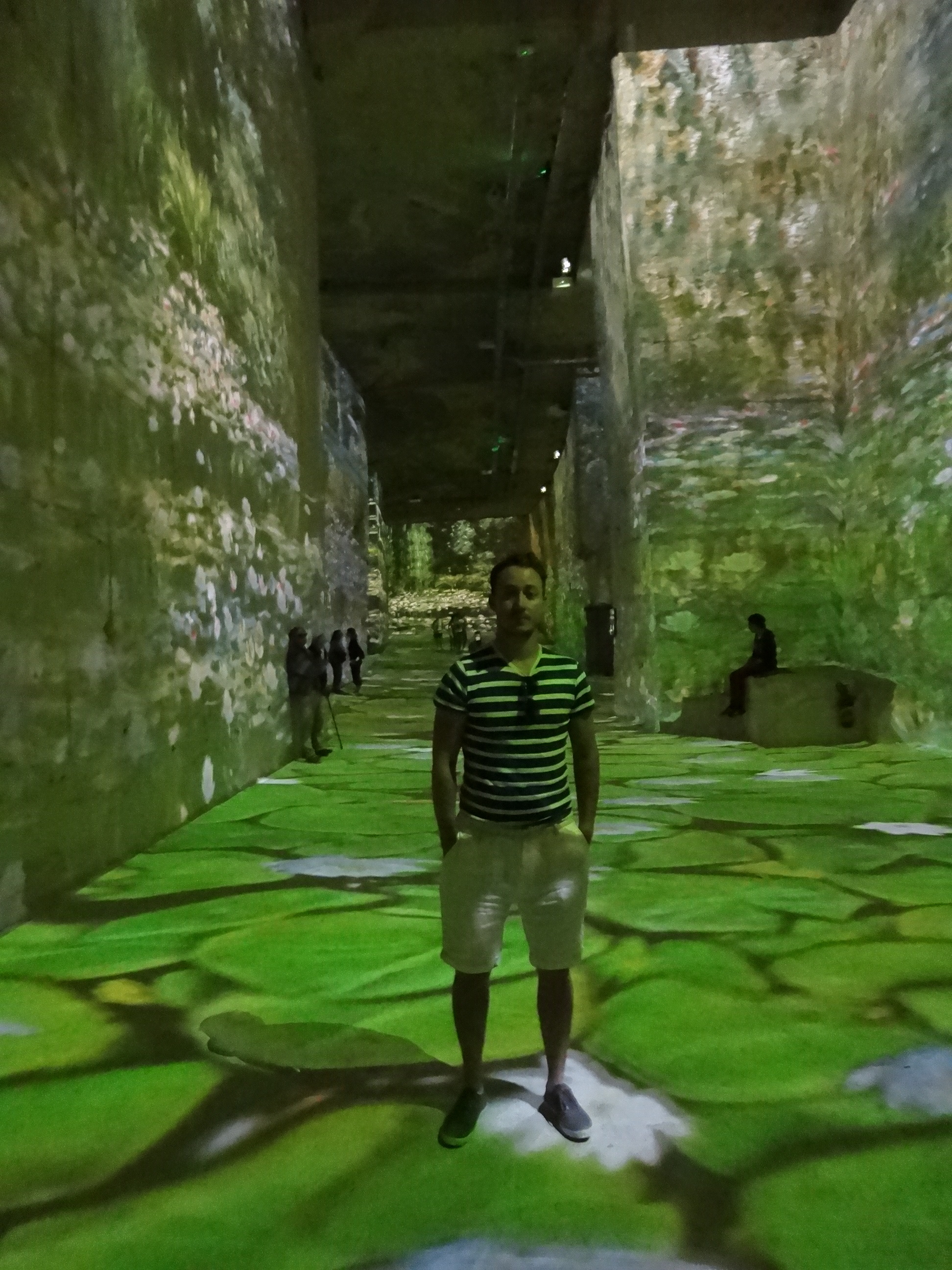
Within these quarries, the Les Baux authorities have realised the most stunning of all attractions, by projecting huge images of some of France’s greatest artworks onto the walls and the floors of this vast space accompanied by stirring classical music. When you walk in, through a dark curtain, and suddenly find yourself literally surrounded by light, by art, and by music, every sense is awoken by this extraordinary audio-visual experience. Monet, Chagall, Matisse, Renoir – all were there, but seen in a totally new light, their vast scale bringing art to life, and the music echoing around the limestone masses creating immersive theatre which couldn’t help but pull you into its emotional swathe.

DSC04102 DSC04105 DSC04088 DSC04052 DSC04082 DSC04098 DSC04085 DSC04119

It was an incredible experience, and one which, along with the beautiful village of Les Baux, will stay with me for many years to come. What a stunning artistic centre; a tiny medieval village, seeped in the past, but now exploring new routes of artistic discovery in ways that only the French do well. Bravo!

All photos and written content are strictly the copyright of Nicholas de Lacy-Brown © 2013 and The Daily Norm. All rights are reserved. Unauthorized use and/or duplication of the material, whether written work, photography or artwork, included within The Daily Norm without express and written permission from The Daily Norm’s author and/or owner is strictly prohibited. 
Provence Odyssey | Saint-Rémy: Day 6 – The Grandeur of Ancient Glanum

You join us in the Provençal village of Saint-Rémy-de-Provence, a picturesque little town, at one time home to none other than Vincent Van Gogh, whose insatiable appetite for Provence’s mighty colour palate was more than satisfied by the staggering beauty of these undulating landscapes, peppered with olive trees and cypresses, with fields of golden wheat and others with lavender, and stood in the midst of them all, the towering limestone massif of Les Alpilles, a 24-km chain of mountains between the Rhone and Durance rivers.

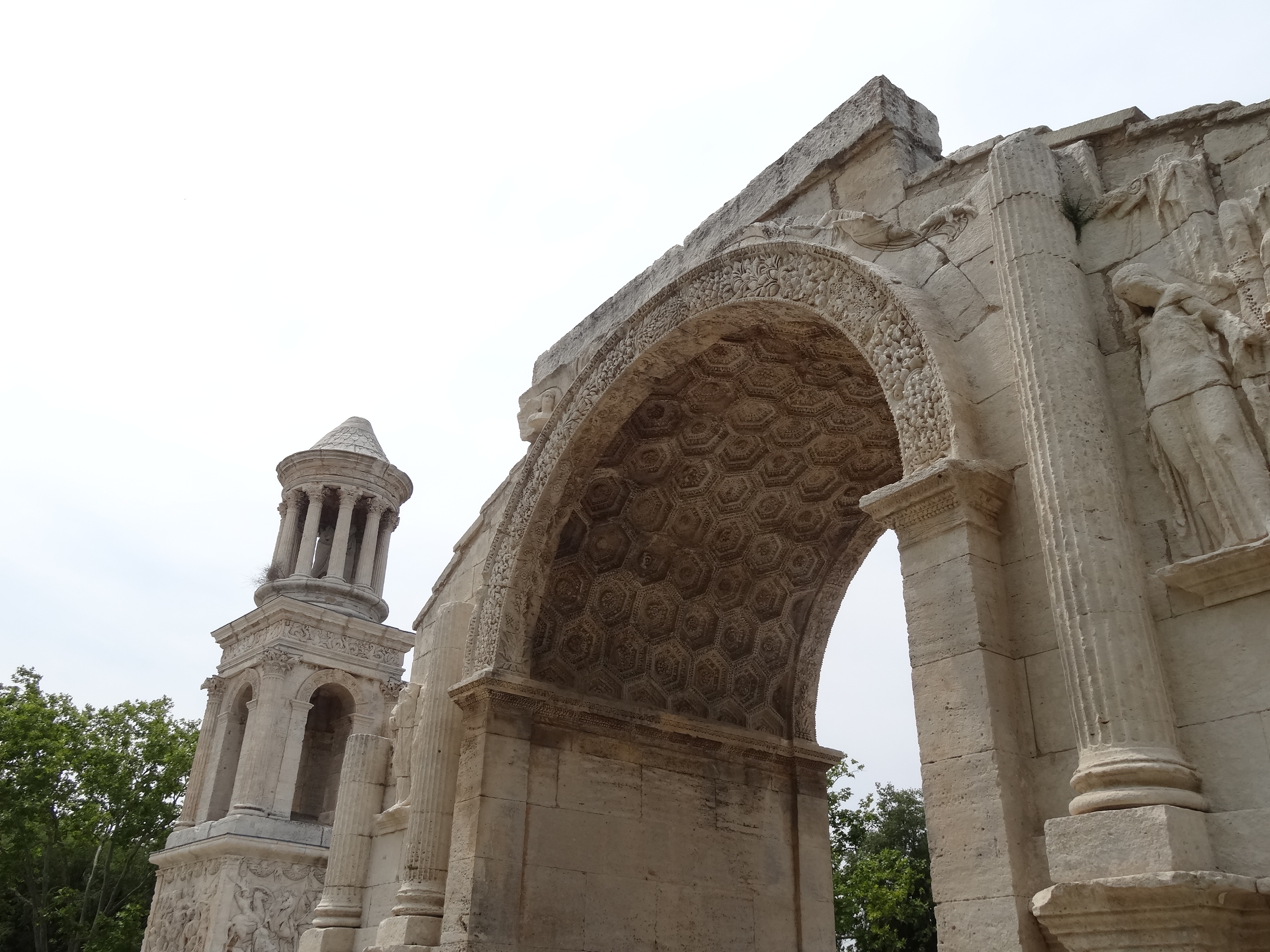
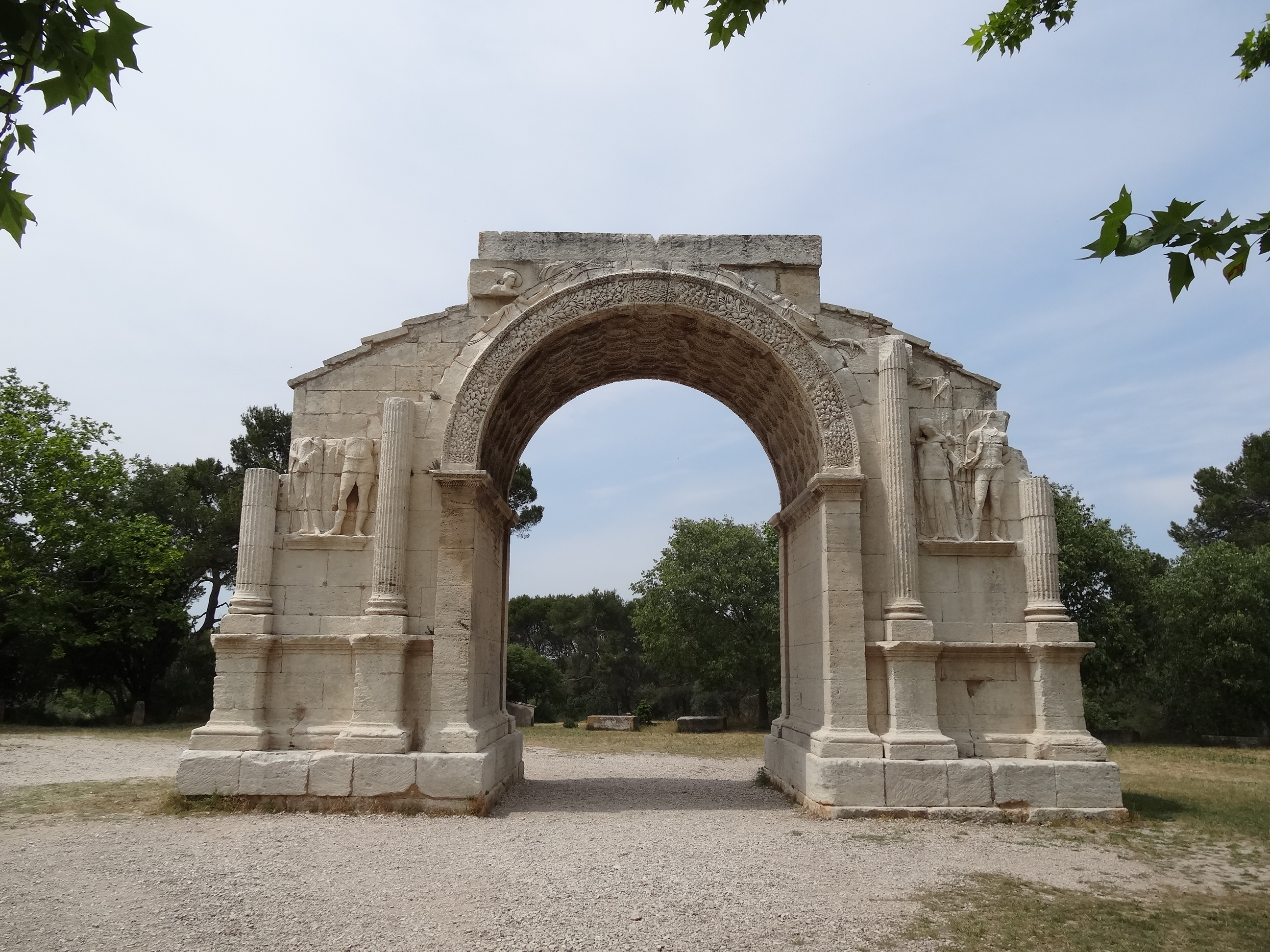
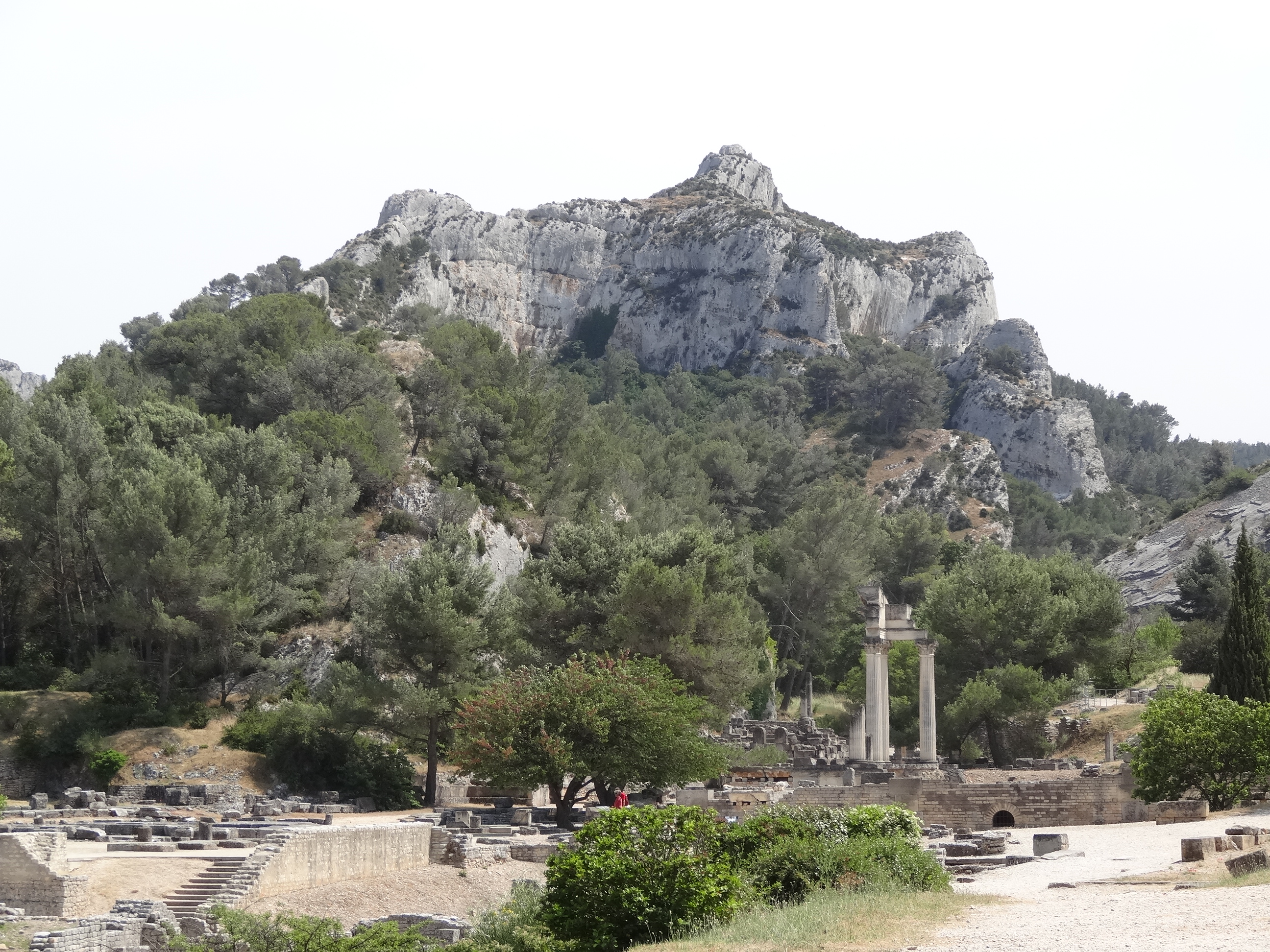
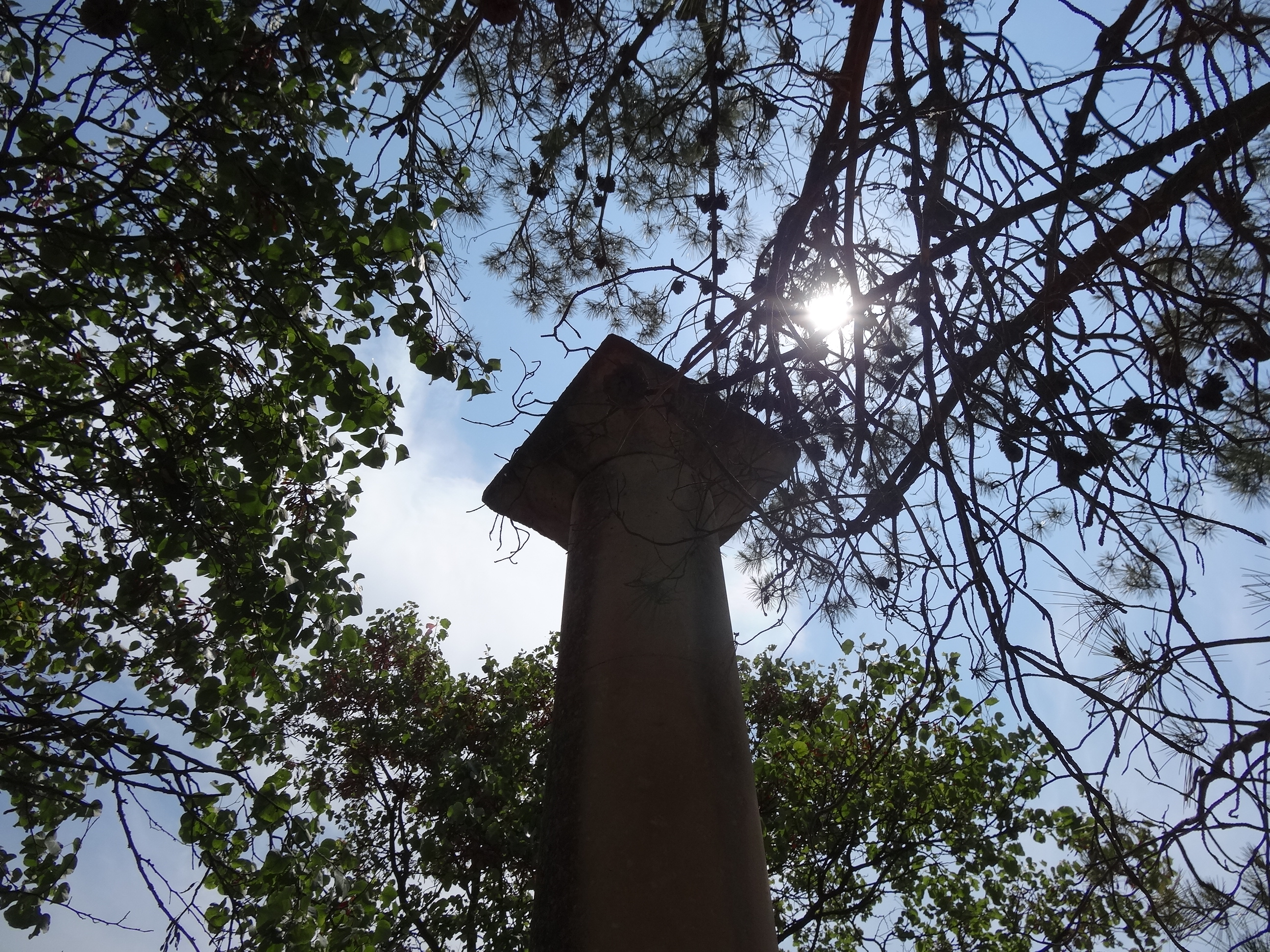
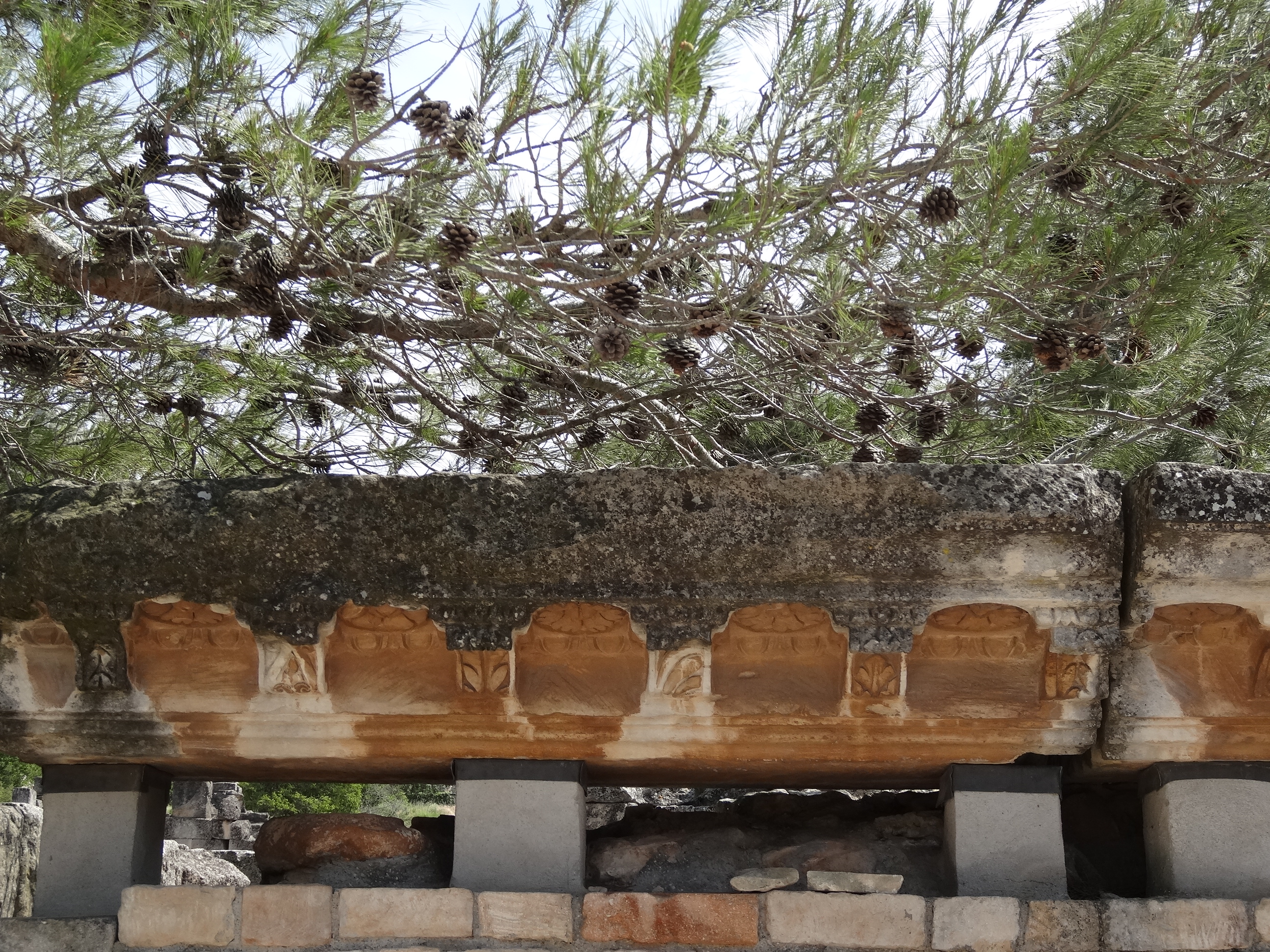
Yet while the mighty majesty of the Alpilles mountain range towering above the horizon has the power to hold tourists and artists alike in its all-conquering grip, there is something else set amongst the foothills of this great imposing mountain range which has the power to inspire awe-struck admiration in equal measure: this time a structure built not by nature, but by man, but a structure so ancient and yet still so classically magnificent in all its detail and grandeur that it appears to have defied nature itself. For as it turned out, Van Gogh is far from being Saint-Rémy’s only attraction: For a mere stroll along from Saint Paul de Mausole, where Van Gogh was an inpatient for a year between 1889-1890, are the incredible ancient remains of the Roman town of Glanum, an archeological site which is so comprehensive that it is a rival to Pompeii; an ancient monument so beautiful that it glows like a precious crystal in the midst of the limestone hulk of the Alpilles around it, the vast mountains into which this ancient Roman town appeared to integrate so seamlessly as though nature herself had intended it.

DSC03508 DSC03520 DSC03524

The gateway to the Glanum remains is pretty startling: a triumphal arch built during the reign of Augustus and the Mausoleum of the Julii, said to be one of the most perfectly intact mausoleums remaining from ancient Rome. Both monuments are brilliant in their complexity and incredibly intact – and yet these imposing structures stand innocuously by the main road from Saint-Rémy to Les Baux, with no cordons, no tickets and no guards. The result is a superb opportunity to interact with the indomitable grandeur of Roman architecture, and to do so quite freely with neither impediment nor cost. And yet it worries me – for how long can these incredible structures remain in their current excellent state of preservation, when they are so unguarded from harm?

DSC03525 DSC03526 DSC03531 DSC03527 DSC03529

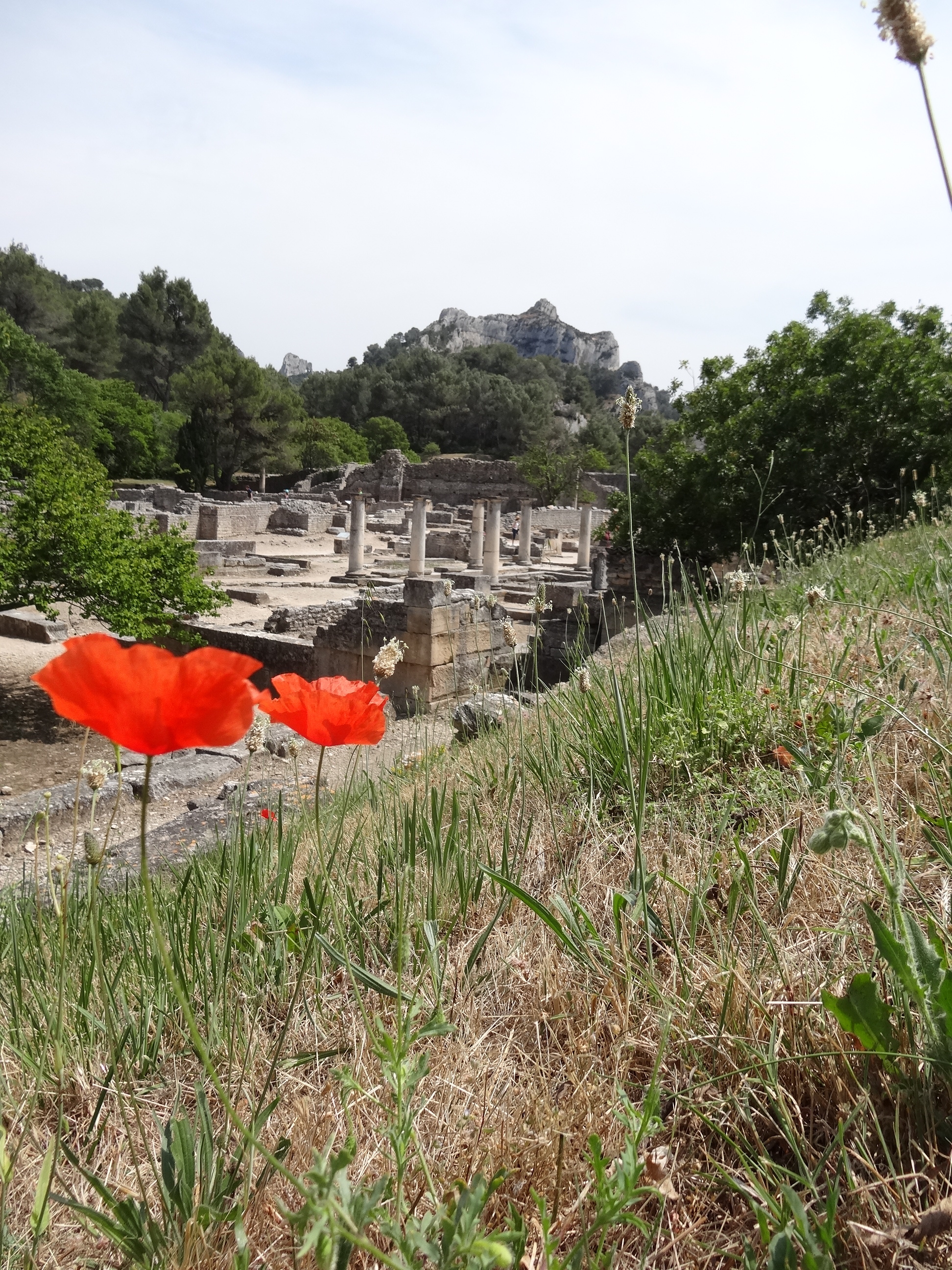
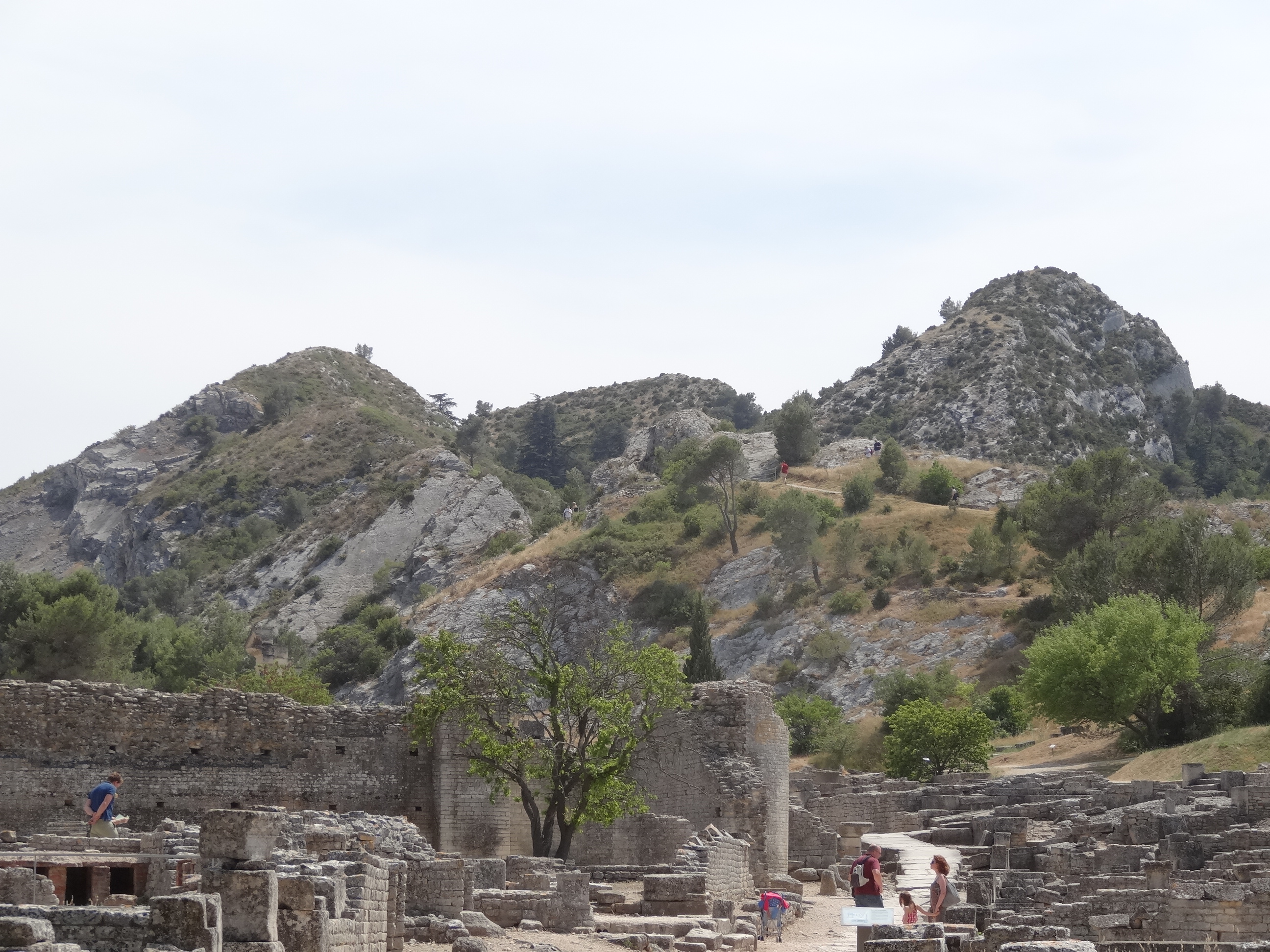
While this magnificent arch, which once formed the Northern entrance to the town of Glanum, was free to see, the remains of the town were not – but such was to be expected from an archeological museum almost as vast as the great remains of Pompeii and Herculaneum. And what they may have lacked in Pompeian decoration, they surely made up for in scale, in the variety of buildings discovered and on view, and in the magnificent setting of this town which, carved literally into the steep sides of the Alpilles must surely be strong competition for Pompeii’s Vesuvius-backdrop.

DSC03554 DSC03559 DSC03564 IMG_2825 DSC03655

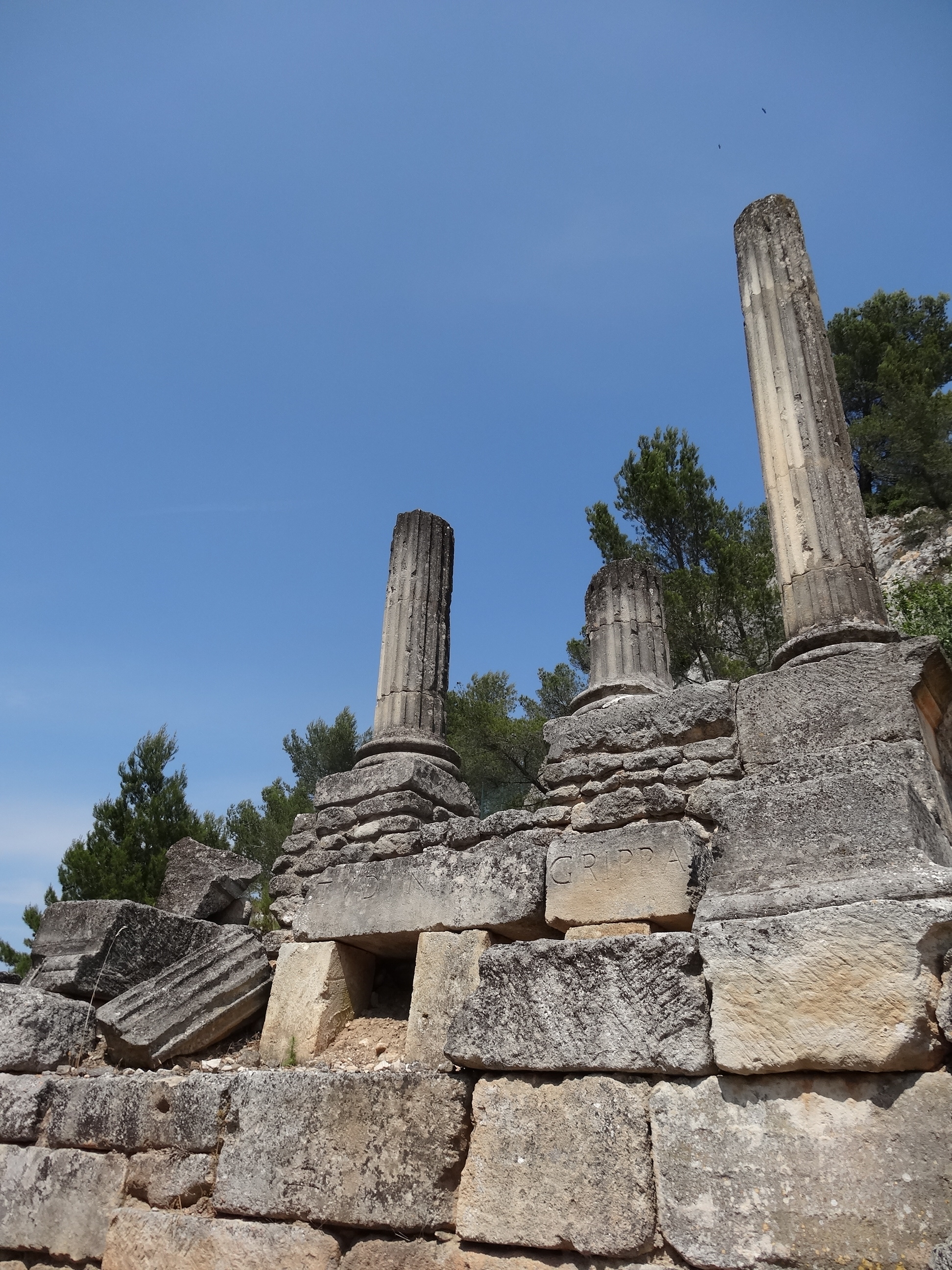
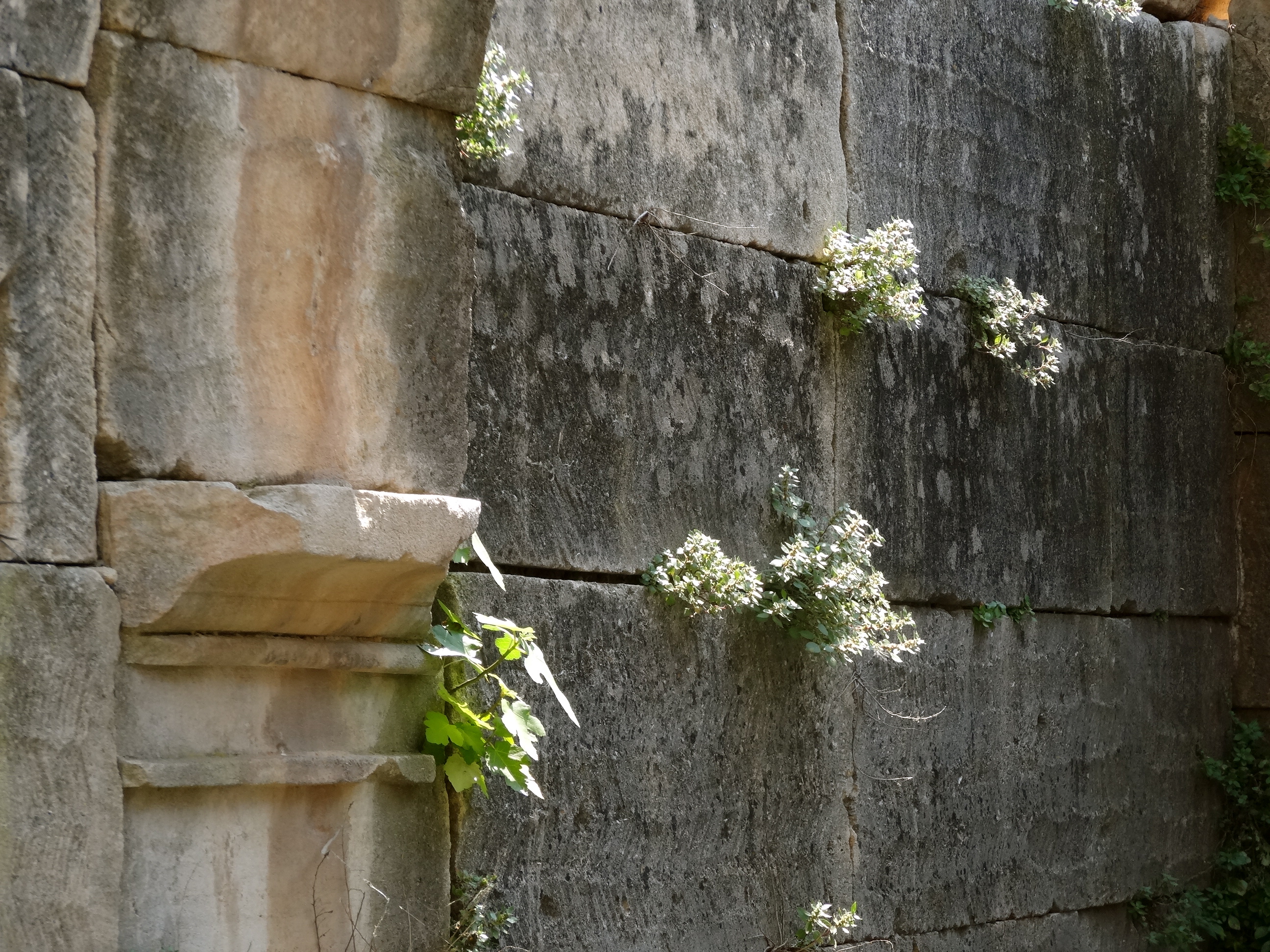
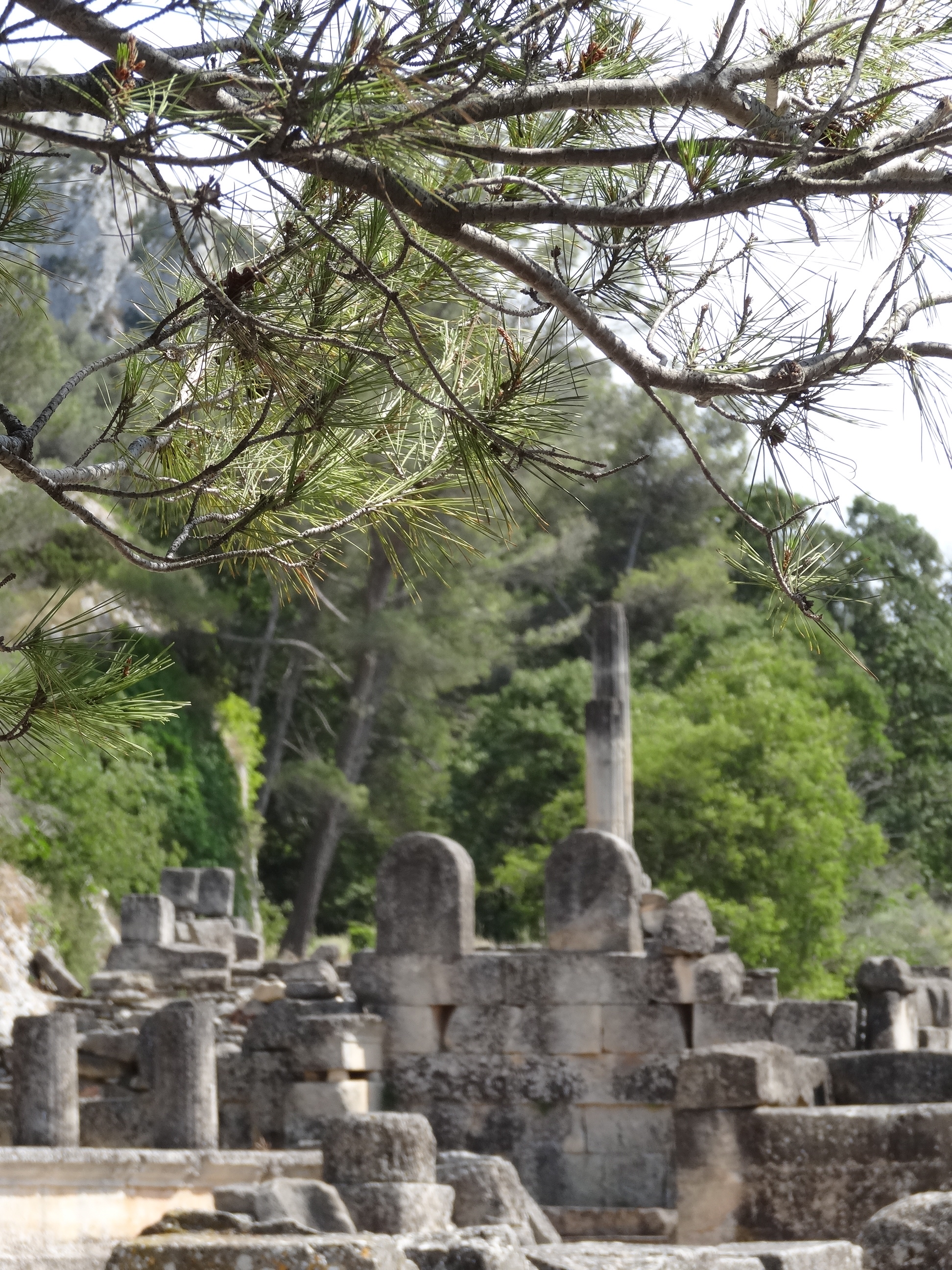
Glanum, which today includes monuments aplenty, half-preserved temples, the remains of public baths, the roman forum, and several houses, was built in 27 BC but abandoned in 260 AD when it was overrun and destroyed by the Alamanni. Subsequent floods and weather conditions meant that the abandoned ruins of the town gradually became covered with sediment and mud, and there it lay, undiscovered, until excavations began to rediscover the town in 1921. Now it is one of Provence’s most visited sites, and one can see why. The scale of the find is pretty unique, and the ability to scale the steepsided valley of the Alpilles and see the town from above, with the modern Saint-Rémy in the distance is particularly special.

DSC03638 DSC03623 DSC03578 DSC03688 DSC03577 DSC03611 DSC03641 DSC03575 IMG_2814

We adored Glanum, and for us it provided a much unexpected cultural delight on the outskirts of a little town already proving to be so abundant in sensual delights for the earnest visitor. A hearty slice of history in an area so exuding charm; a man-made ancient monument which so artfully augments the beauty of its celestial natural surroundings.

DSC03591 DSC03612 DSC03644All photos and written content are strictly the copyright of Nicholas de Lacy-Brown © 2013 and The Daily Norm. All rights are reserved. Unauthorized use and/or duplication of the material, whether written work, photography or artwork, included within The Daily Norm without express and written permission from The Daily Norm’s author and/or owner is strictly prohibited.