Skip to content

Posts tagged ‘Art’

Interpretation No. 13 – Ibiza Town

Busy times are upon us in the Spring-awakened island of Mallorca, and with the high season just around the corner, all of the businesses across the Balearics are preparing for the onslaught of tourists in their thousands. For The Daily Norm that means something of a quieter pace of life, as my creativity is diverted and energies exhausted on the multiple requirements of work. Nonetheless, I have happily retained the odd hour for a little personal engagement in private creations, and next off the easel is the 13th gouache in my collection of “interpretations” – landscapes reinterpreted with a simpler finish and flattened matt colours.

I started this little landscape as soon as I came home from the island of Ibiza. My first time on the island left me much enamoured, despite the fact that in low season it was worse than deserted, not least in the historical old town from which this view originates.

Interpretation No. 13 - Ibiza Town (2015 © Nicholas de Lacy-Brown, gouache on paper)

Interpretation No. 13 – Ibiza Town (2015 © Nicholas de Lacy-Brown, gouache on paper)

© Nicholas de Lacy-Brown and The Daily Norm, 2001-2015. Unauthorized use and/or duplication of the material, whether written work, photography or artwork, included within The Daily Norm without express and written permission from The Daily Norm’s author and/or owner is strictly prohibited. Excerpts and links may be used, provided that full and clear credit is given to Nicholas de Lacy-Brown and The Daily Norm with appropriate and specific direction to the original content. For more information on the work of Nicholas de Lacy-Brown, head to his art website at www.delacy-brown.com

Orient: Painting the landscape of Mallorca

I have become enchanted, some might even say obsessed, with the landscape of Mallorca. How could I be otherwise? I have the advantage of living in one of the most perfectly compact, incredibly diverse and utterly breathtaking naturally beautiful islands in the world. From crystal clear waters on fine sandy beaches, to mountain ranges so sensational that they have been protected by UNESCO, Mallorca is a pure paradise of landscapes, and a world apart from the beach babe reputation it gained over the years.

Unsurprisingly, as an artist newly arrived in Mallorca, I have an incredible thirst to paint the land around me. No wonder that I have some 5 paintings currently on the go in my light-infused studio which is blissfully big enough to allow so many projects to proceed at any one time. And the latest to achieve completion, and now my second major oil painting of Mallorca since my arrival at the end of last year is this one: Orient.

Orient (2015 © Nicholas de Lacy-Brown, oil on canvas)

Orient (2015 © Nicholas de Lacy-Brown, oil on canvas)

Based on the stunning scenery of the Tramantana mountains amidst which I was lucky enough to spend a working week back in January, this painting depicts one of the breathtaking views I encountered. So utterly perfect because of its symmetry and its central view of one such beautiful mountain, this view reminded me of the landscape near Aix-en-Provence which has the Mont Sainte-Victoire at its centre, and which so fascinated Cezanne that he painted countless renditions of it. Similarly enchanted by this view, I never had any doubt that I would apply it to canvas, and here is the finished result. Now I can’t wait to complete another.

© Nicholas de Lacy-Brown and The Daily Norm, 2001-2015. Unauthorized use and/or duplication of the material, whether written work, photography or artwork, included within The Daily Norm without express and written permission from The Daily Norm’s author and/or owner is strictly prohibited. Excerpts and links may be used, provided that full and clear credit is given to Nicholas de Lacy-Brown and The Daily Norm with appropriate and specific direction to the original content. For more information on the work of Nicholas de Lacy-Brown, head to his art website at www.delacy-brown.com

Interpretation No. 12 – Capuchin Monks, Amalfi

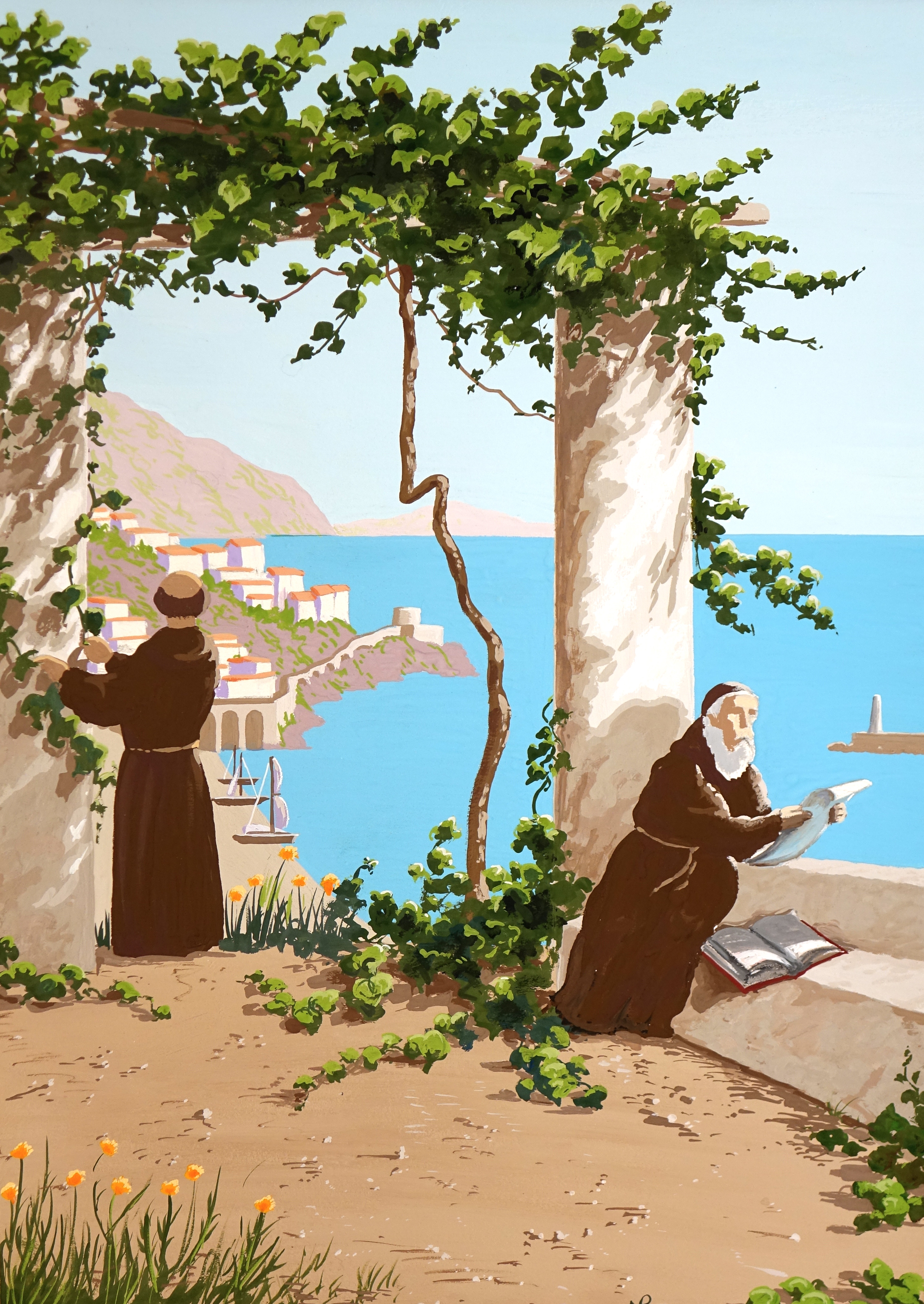
The heady days of Amalfi coast indulgence are now too many days behind me to count – it must be at least 250 rather forlorn days since I sampled the paradise of Amalfi, Capri and Positano during a blissful week on the Italian coast last summer. And it has been almost as long since I last thought to paint the place, even though it was on my hotel balcony on the Amalfi Coast that my collection of interpretations began. It was therefore something of a blast from the past when, opening up sketch book the other day in order to start a new gouache project, I discovered a half finished gouache painting based on the Amalfi Coast, left sadly uncompleted.

My feeling with paintings is that each painting has its time, and even when a project goes unworked for some time, it should always be left until the time is again right to continue it. A painting should never be destined for the bin. So when I reopened this hitherto unfinished work, I so enjoyed the breath of fresh Italian air that gushed open my opening it that I decided that the time was right to finish it off, even if it meant completing the Amalfi scene here in my new home of Mallorca.

Interpretation No. 12: Capuchin Monks, Amalfi (2014-15 © Nicholas de Lacy-Brown, gouache on paper)

Interpretation No. 12: Capuchin Monks, Amalfi (2014-15 © Nicholas de Lacy-Brown, gouache on paper)

The painting, which will be the 12th in my collection of gouache interpretative landscapes, was actually based on an old engraving we picked up in Amalfi just before catching a boat back home to Positano. Being a city renowned for its ancient homemade papers, we could not resist buying a print on Amalfi’s finest, and as soon as we found this image, I was captivated. There was something about the alluring tranquil activity of the Capuchin monks depicted, one tying back a vine and the other reading before a view of Amalfi, that made me want to recreate this idyllic scene of the joie de vivre for modern times.

The original engraving we purchased in Amalfi (c. 1880, artist unknown)

The original engraving we purchased in Amalfi (c. 1880, artist unknown)

A gouache interpretation was born and now, thanks to my rediscovery of the image, it is completed. I am pleased with the relative simplification I have achieved by repainting the scene in broad flat gouache colours, and I have to say that the colour has certainly brought this 19th century engraving back to life. It could almost be modern day except that, sadly (or not for those rich enough to stay there), the Capuchin Monastery of Amalfi is today the swish Gran Hotel Convento di Amalfi, a place from which this view can still be very much enjoyed, albeit sadly without the monks.

© Nicholas de Lacy-Brown and The Daily Norm, 2001-2015. Unauthorized use and/or duplication of the material, whether written work, photography or artwork, included within The Daily Norm without express and written permission from The Daily Norm’s author and/or owner is strictly prohibited. Excerpts and links may be used, provided that full and clear credit is given to Nicholas de Lacy-Brown and The Daily Norm with appropriate and specific direction to the original content. For more information on the work of Nicholas de Lacy-Brown, head to his art website at www.delacy-brown.com

February in Paris – Part 3: Sonia Delaunay at MAM

Anyone having a quick peruse of my own personal artwork will know that I am a huge lover of colour. As far as I am concerned, what point is there in having colour available if it is only to be muddied and diminished with blacks and browns? No doubt sharing my opinion were some of the boldest expressionist and modernist painters of the 20th century, whose bold use of colour was at first seen as terribly scandalous but which eventually came to characterise an entire generation of art, when the boundaries of accepted aesthetic values were pushed to new extremes.

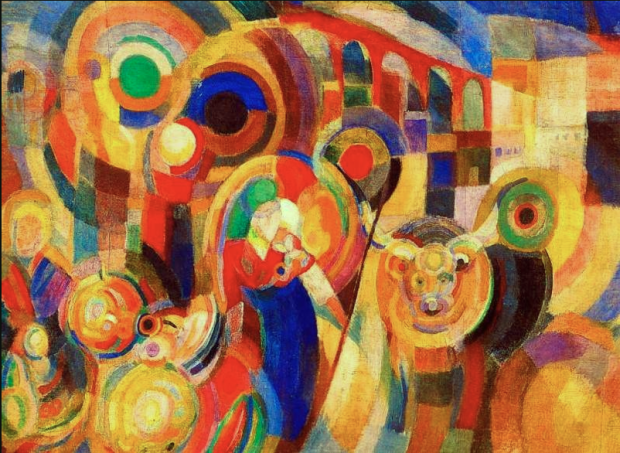
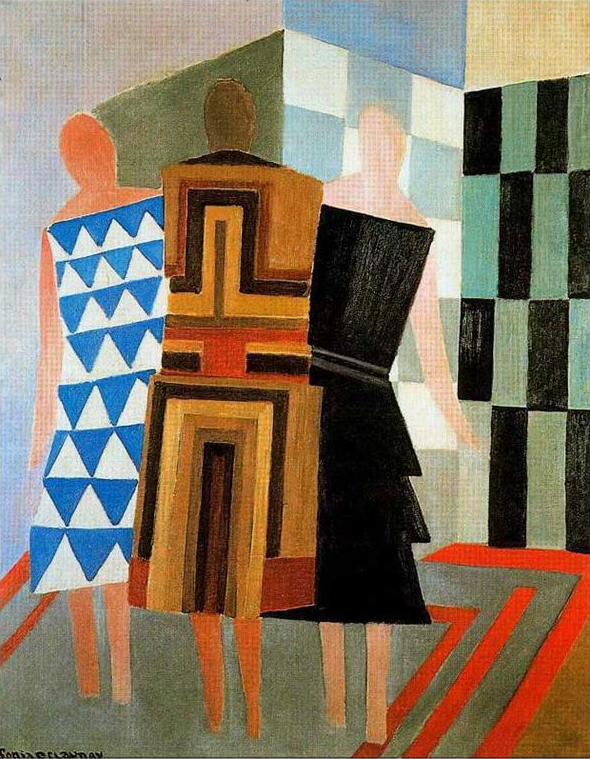
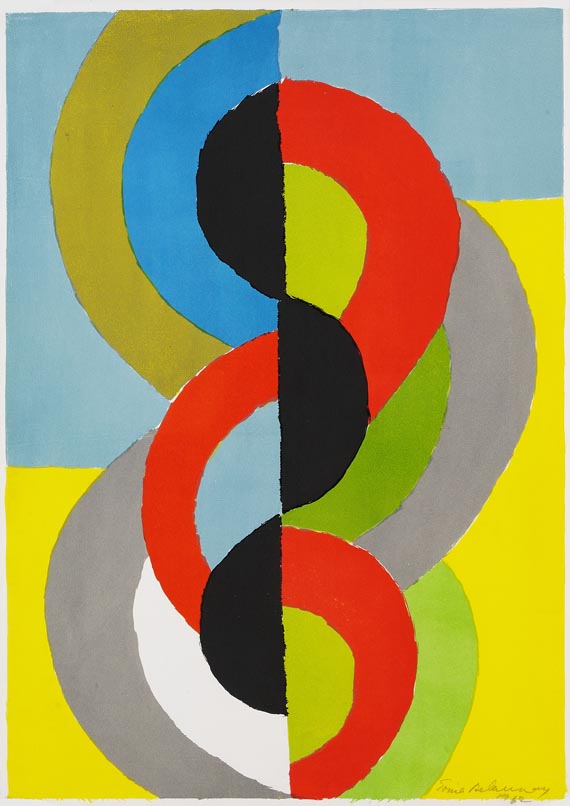
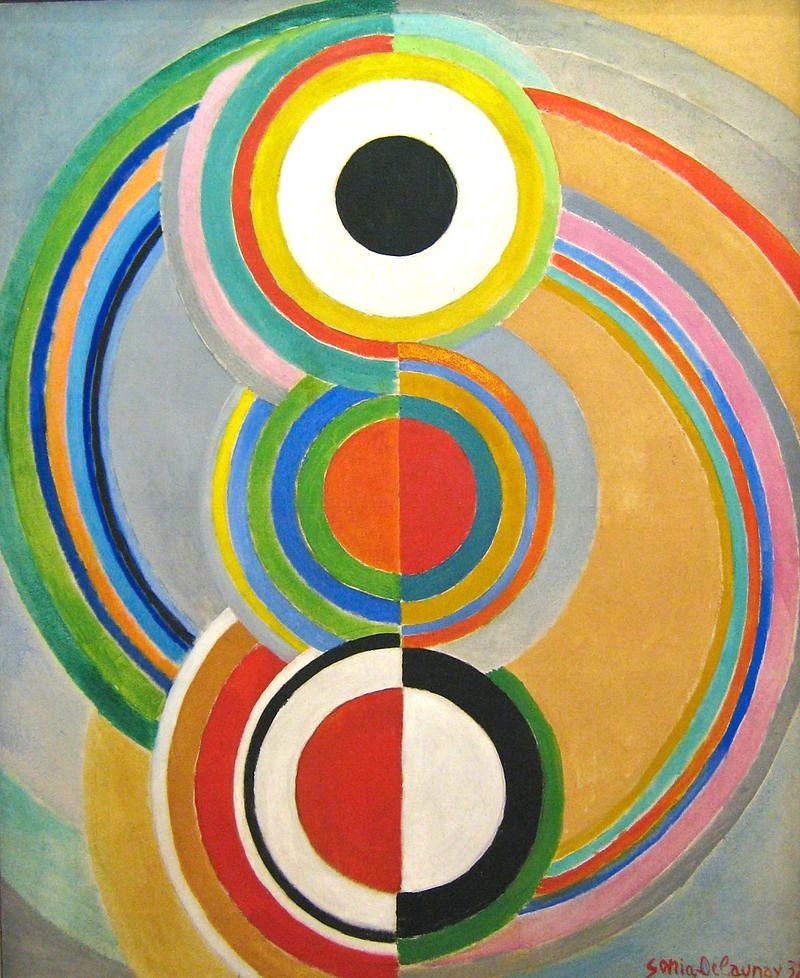
Chief amongst them were a tremendous twosome – what today may be termed a “power couple” – two of the greatest proponents of modernist expressionism and of the power and glory of pure colour: Robert and Sonia Delaunay. Together, these two artists, who married in 1910 and in 1912 proclaimed the birth of Simultanism, refocused the attention of the art world on the dynamic power of colour, using the strength and unique characteristics of colours as an end in themselves rather than a means of expressing something else. The paintings and other artworks which resulted are progressively abstract explosions of structured colour which, by virtue of their use of a full panoply of rainbow hues, are full of expressive happiness and boundless energy.

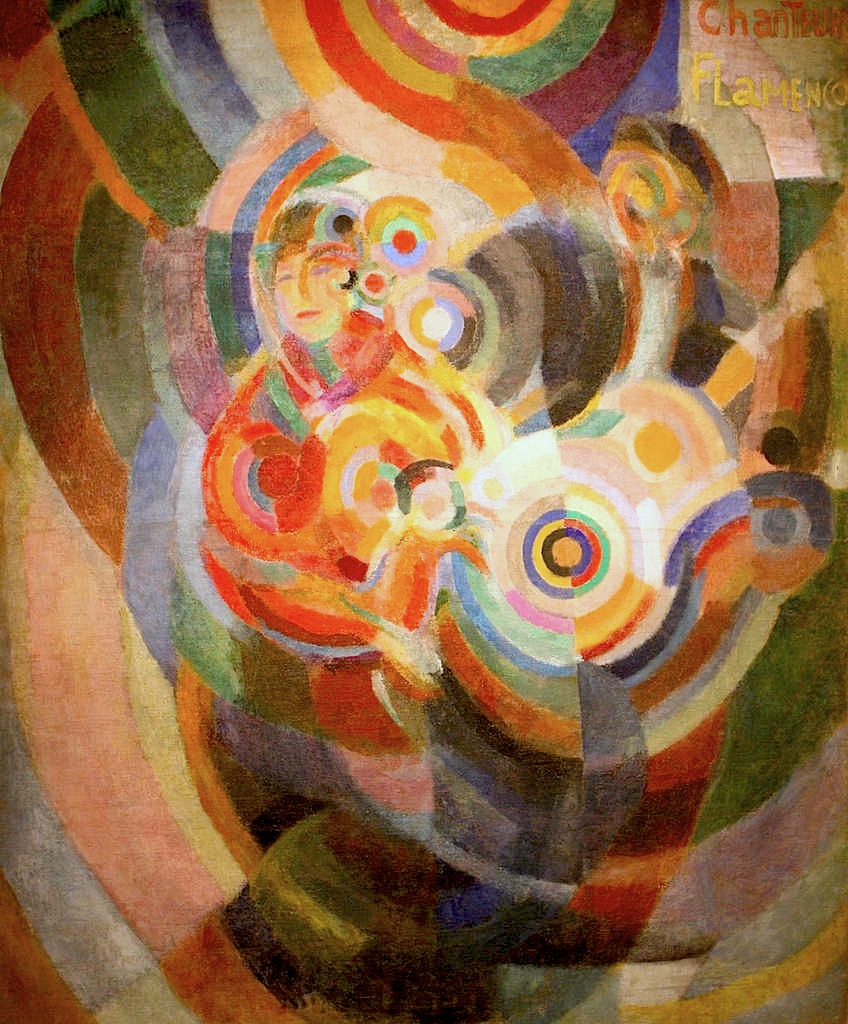
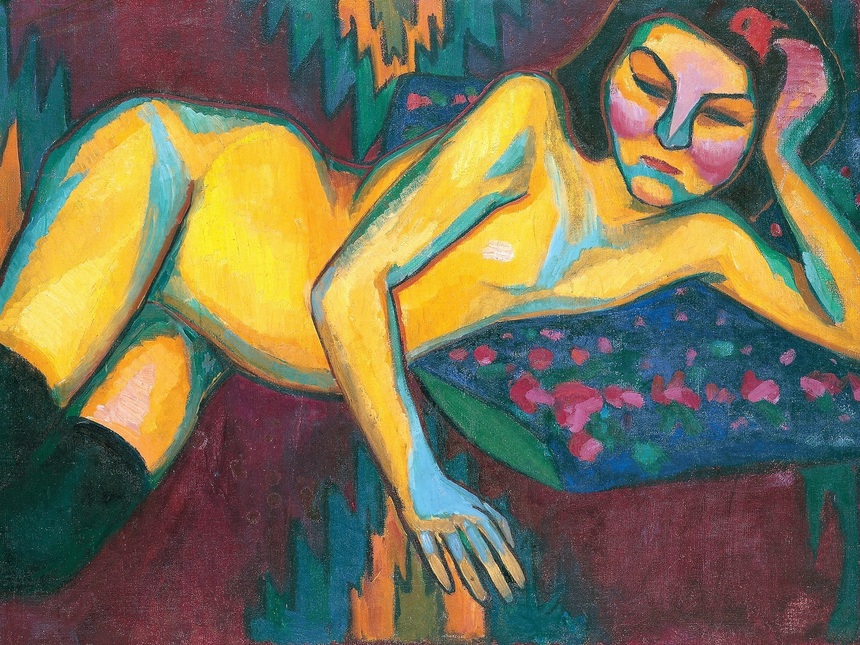
delaunay-11SAMSUNG DIGITAL CAMERAflamenco1Sonia_Delaunay_femme

Of course as is often the case with a power couple, there is often one of the two who history overlooks, and few could argue that it was Sonia who remained in the shadow of her husband for many years during and following their successful careers, a fact which is not ignored by the Museum of Modern Art in Paris (MAM) who were therefore determined to stage a bigger and even more significant Sonia Delaunay retrospective when they opened their Sonia expo a few months ago.

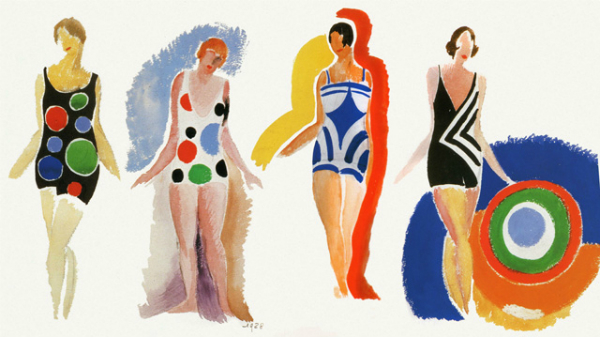
The result is an exhibition which is every bit as full of the Delaunay dynamism and energy as the paintings themselves. It is a show which demonstrates that although it was Robert Delaunay who conceptualised abstraction as a universal language, it was Sonia who experimented with it in all sorts of media, including posters, clothes and objects, and much of the MAM show comprises Sonia’s dapple in fashion, for which she designed countless zany fabrics and original outfits, as well as her determination to include abstraction and colour within the household, and as a backdrop to theatre, parties and other everyday recreational activities.

Screen shot 2015-02-18 at 23.51.50 sonia-delaunay-motifs-tissus sonia-delaunay-robes-940x669 410807408 SoniaDelaunay-maillots-1928800px-Sonia_Delaunay,_Rythme,_1938 "sonia-delaunay-p</p

For me, the main success of the MAM show is its collection of Sonia’s paintings which, when seen as a group, vibrate full of the energy and exhilaration which results from bringing together so many electric colours in one room. I particularly love how her consistent use of coloured circles is occasionally adapted to more figurative imagery, such as her abstract image of flamenco dancers, where the use of circles adds to the feel of fast sweeping dance movement. I was also interested to see how the genesis of her work was so much more figurative than it was abstract, but that even from the very beginning, her use of colour remained strong, so that even the simplest of portraits contain a face or skin tone loaded with a palette full of colour.

And it is for this unyielding uninhibited use of colour that I love the work of both Sonia and Robert Delaunay. But right now Sonia’s work is hogging more of the spotlight, an quite rightly too – every person deserves their place in the sun.

sonia

Sonia Delaunay: The Colours of Abstraction is only open for another few days at the Musée d’Art Modern de la Ville de Paris, closing on 22 February 2015. But worry not, for come April the retrospective will reopen in London’s Tate Modern, running until August.

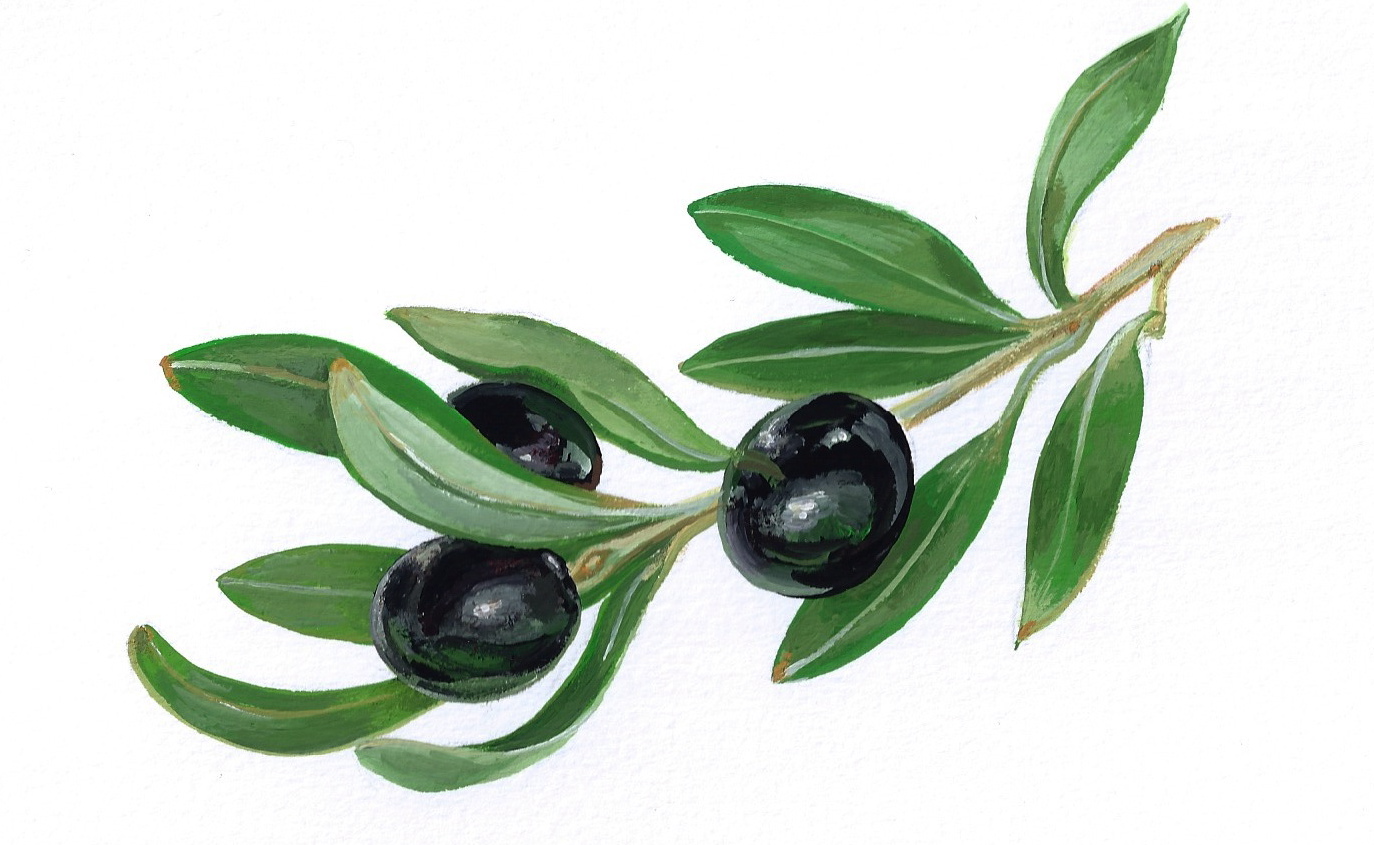
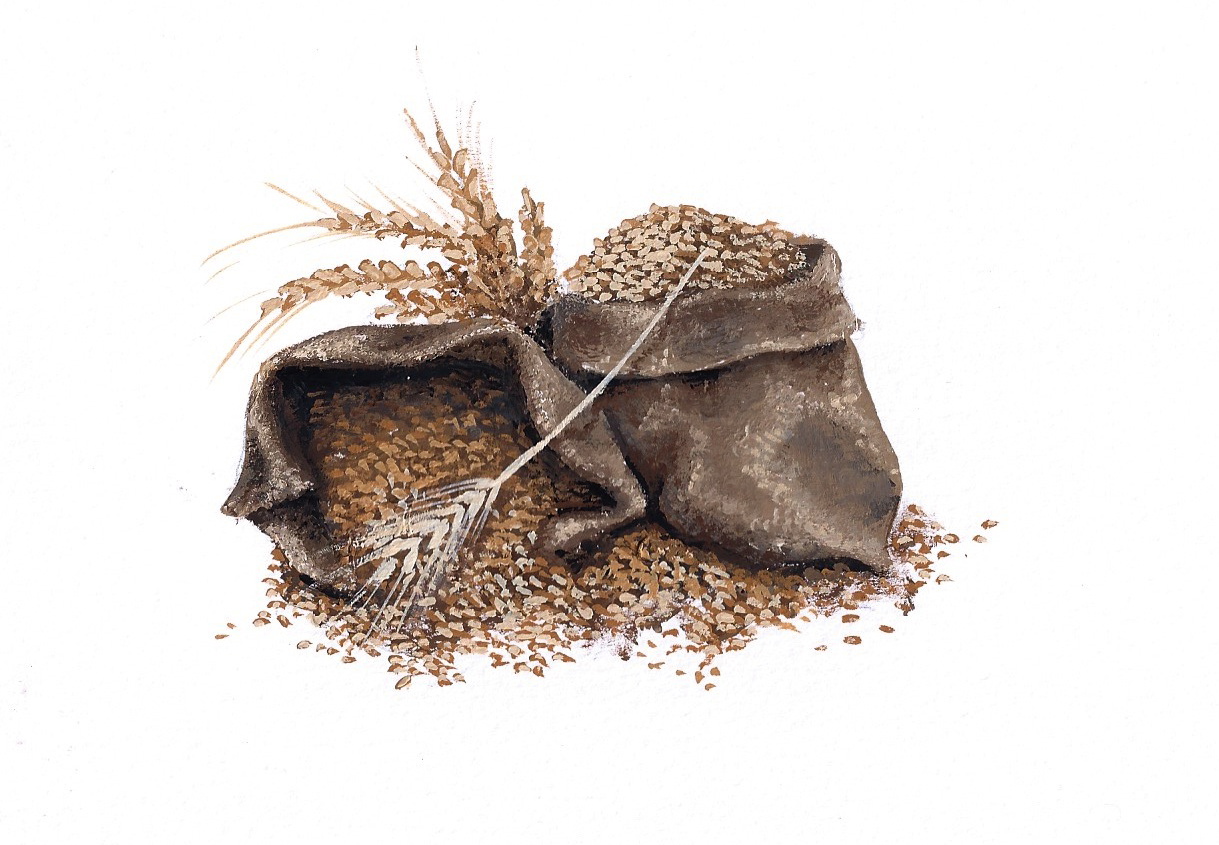
Mallorca Sketchbook: Olives and Grain

To call these little paintings “sketches” is perhaps something of a misnomer, not least for my sketchbook which is traditionally full of black and white line drawings. However, my move to Mallorca has undoubtedly coincided with a rush of colour into my life, and the drawings I am doing now are more colourful in their creation. They are also painted – these two little detailed sketches are painted in my new favourite medium for quick artwork: gouache.

Representing very much two staples of Mediterranean cuisine, these little paintings illustrate the grain which goes into Mallorca’s local bread, and the black olives which are so plentiful all over the island.

Black olives (2015 © Nicholas de Lacy-Brown, gouache on paper)

Black olives (2015 © Nicholas de Lacy-Brown, gouache on paper)

Grain (2015 © Nicholas de Lacy-Brown, gouache on paper)

Grain (2015 © Nicholas de Lacy-Brown, gouache on paper)

© Nicholas de Lacy-Brown and The Daily Norm, 2001-2015. Unauthorized use and/or duplication of the material, whether written work, photography or artwork, included within The Daily Norm without express and written permission from The Daily Norm’s author and/or owner is strictly prohibited. For more information on the work of Nicholas de Lacy-Brown, head to his art website at www.delacy-brown.com

Arrival – Painting the moment when the Mallorca Move sunk in

In the time since we arrived in Mallorca a little over 2 months ago, I have been constantly creating. Such are the benefits of stepping into an intrinsically creative role as Artistic Director of an amazingly dynamic company. But the time for painting for my own personal collection has not been so profuse. Yet I knew that I was going to paint very soon after we arrived. It was in fact on the Tuesday following our arrival on a Saturday evening that a painting first appeared in sharp focus in my mind.

We had stepped out on a walk one afternoon in search of water. Living in a city next to the sea, an awareness of the ocean is continuous, and yet an immediate proximity with the water is not always so easy. Here in Palma, before you get to the sea, you need to traverse roads and parks, jogging lanes and a busy harbour. But on that afternoon, we walked our way through one section of the harbour, passing yacht clubs and huge boats being renovated for the summer, only stopping when we came to the water’s edge.

Arrival (2015 © Nicholas de Lacy-Brown, oil on canvas)

Arrival (2015 © Nicholas de Lacy-Brown, oil on canvas)

There, sitting with my legs flopped over the harbour edge mere inches from the surface of the water, I gazed directly into the sinking sun before me as it plummeted behind the hillside silhouette and the outline of Bellver castle sitting atop the city. The sky was glowing more and more yellow, and as the light darkened, the water became more like silky liquid ink, and the reflections upon it were golden. It was in this moment that I allowed myself to dream, to wander from reality into a moment of a pure epiphany; a time in which it dawned on me for perhaps the first time how our lives had changed for the better, and how we had moved to a paradise of Mediterranean harbours, of white gleaming yachts, and sunshine.

And there it was. An image of that same view floated into my mind. It was always intended to be a simple image – just the water, the sun, the reflection, the sunset and the cluster of white yachts bobbling upon the water. Yet in that simplicity there is carried a weighty realisation – that we had made the big leap to a new life and a new beginning – It was the moment of our true arrival.

© Nicholas de Lacy-Brown and The Daily Norm, 2001-2015. Unauthorized use and/or duplication of the material, whether written work, photography or artwork, included within The Daily Norm without express and written permission from The Daily Norm’s author and/or owner is strictly prohibited. Excerpts and links may be used, provided that full and clear credit is given to Nicholas de Lacy-Brown and The Daily Norm with appropriate and specific direction to the original content. For more information on the work of Nicholas de Lacy-Brown, head to his art website at www.delacy-brown.com

2014: My year in photos

It has become something of a tradition on The Daily Norm to spend the last day of the year looking back at photos capturing the 364 days before it, reflecting on all of the splendid and captivating sights which have made up the year. And perhaps more than any other that has gone before, 2014 has been a year which the camera has loved. For when I look back at my photos of the last 12 months, I am met with an overwhelming body of diverse and beautiful shots which encapsulate a year overflowing with incredible sights and experiences.

I count myself very lucky to have seen and experienced all that has passed in a single year. From the quaint dark streets of Barcelona in February, my travels took me to the incredibly unique medieval citadel of Dubrovnik, the jaw-droppingly beautiful Amalfi Coast (including Positano, Ravello and Capri), the inspiringly-vertiginous mountain town of Ronda in Southern Spain, the vine-rich planes of coastal Tuscany, the floral festival of Pilar in Zaragoza, and the much applauded Czechoslovakian beauty that is Prague. And travels asides, it was the year when I held my first solo art exhibition in 6 years – a huge amount of work which dominated the first half of the year, but a wonderfully satisfying artistic and commercial success which will mark out this year as a creatively significant one.

The famous clock of Capri's main piazza

The ultimate ripples, Palma de Mallorca

Paradise on earth - Capri

Floral walkway, Positano

Colour profile, Marbella

Grape harvest in Castagneto Carducci

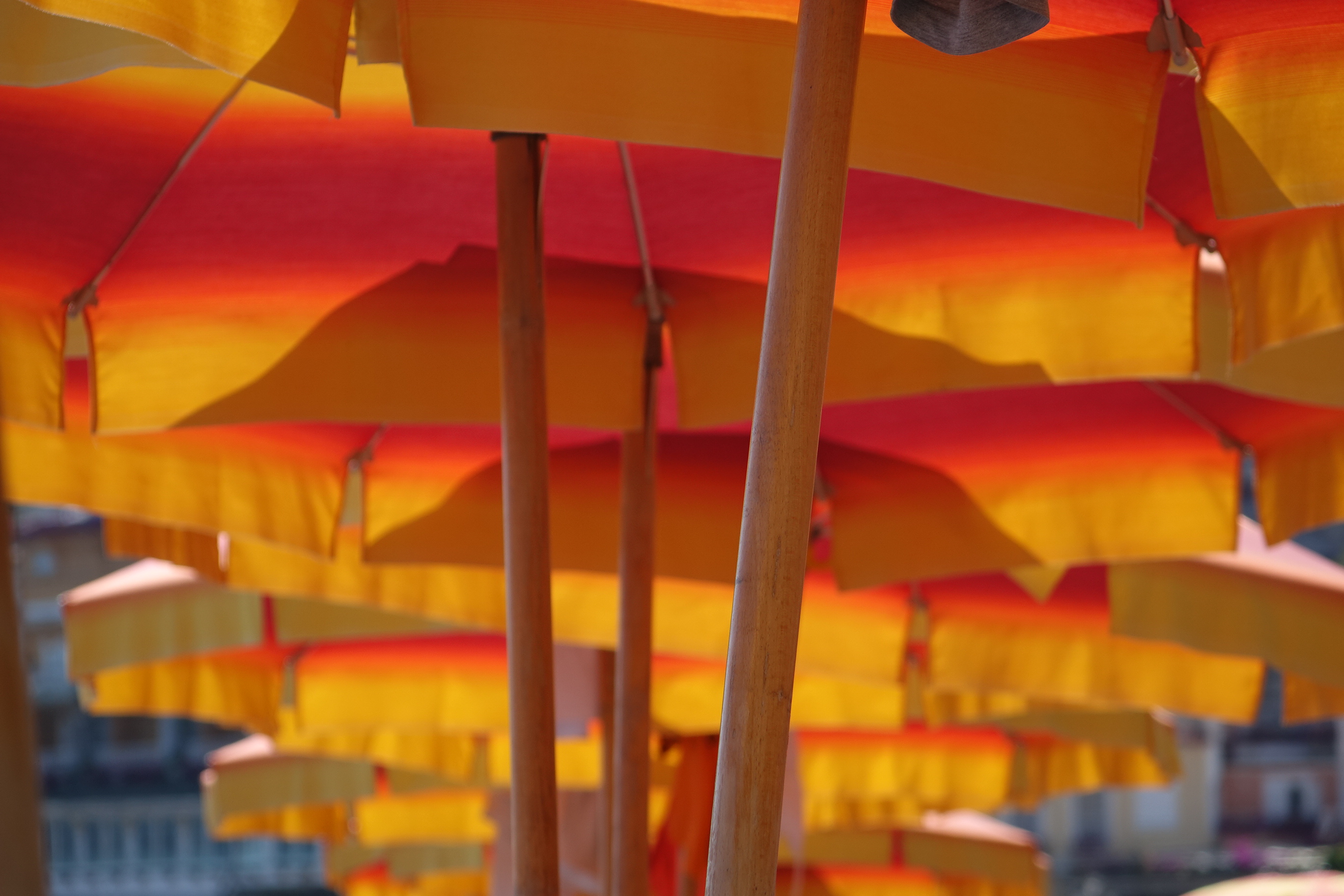
Beach umbrellas, Positano

However, appearances can be misleading, and when I look back on these photos, in particular those taken while travelling around Europe, I remember those holidays as escapes into unreality, moments of happiness snatched and nourished in between a stark reality which was becoming more and more difficult to endure. Once my exhibition was over, I found myself faced with a career which failed to inspire me, a city which made life a daily grind, and my partner feeling increasingly depressed for the same reasons. And it was this realisation, and a very unique opportunity that came from it, which triggered perhaps the most significant of all experiences that 2014 brought: our move to Mallorca. A life changer on so many levels; a bundle of new experiences which have only just begun.

And so it is sitting here in sunny Mallorca that I make this review, delightedly gathering up my memories of the year full of the positivity which has accompanied our move to a new life in Spain. Fast forward 365 days, and I look forward to telling you all about it.

Happy New Year to you all!

All photos and written content are strictly the copyright of Nicholas de Lacy-Brown © 2014 and The Daily Norm. All rights are reserved. Unauthorized use and/or duplication of the material, whether written work, photography or artwork, included within The Daily Norm without express and written permission from The Daily Norm’s author and/or owner is strictly prohibited.

Conscience and Conflict: Pallant House explores British Artists and the Spanish Civil War

As the year draws to a close, it is only natural to look back on the highs and lows, and to review everything a little. When it comes to exhibitions, I wouldn’t say that 2014 was necessarily the strongest of years in the UK. I was left a little disappointed by a number of exhibitions I attended, especially at the Royal Academy and Tate Britain. However that is not to say that there were not a number of sure hits. My top 5 exhibitions of the year (in no particular order) have to include the Matisse Cut-outs at Tate Modern, Malevich at Tate Modern, Egon Schiele at the Courtauld, and Rembrandt at the National Gallery. But for the final of the 5, one further exhibition has managed to squeeze into my year’s hit-list, just before 2014 expired: Conscience and Conflict: British Artists and the Spanish Civil War at the Pallant House Gallery in Chichester.

As far as modern world history goes, the Spanish Civil War is too often overshadowed by the longer, larger Second World War that followed it. But none can underestimate the significance of this conflict which, in effect, lasted decades beyond the cessation of fighting, and not least because this was one conflict where the Fascists won the war, right on the doorstep of democratic civilisation. And it was this fear – the very real concern that fascism might win at a time when two major fascist dictators were already installed in Germany and Italy, and when a greater world conflict seemed more than likely – that inspired the artistic reaction amongst British Artists that is the focus of this excellent exhibition.
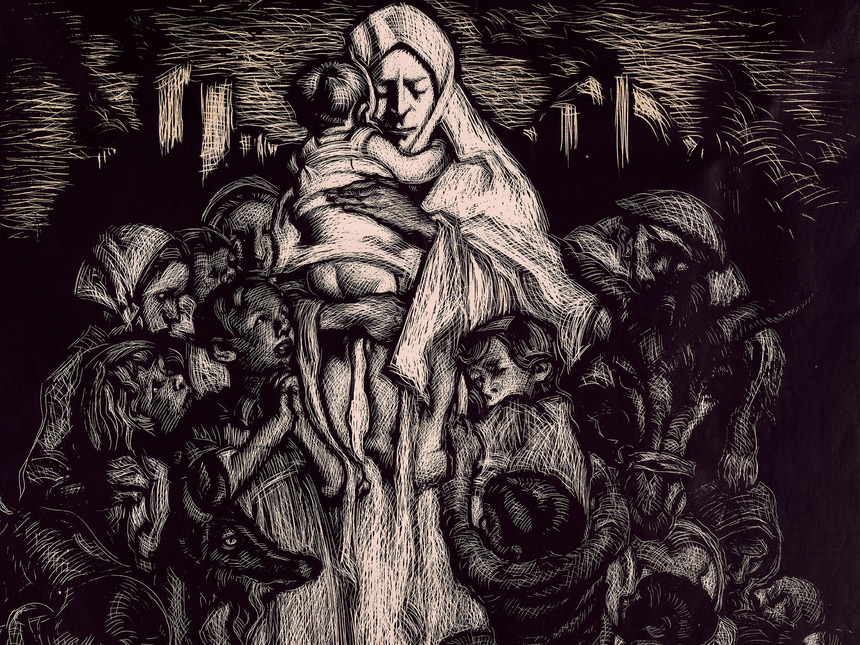
Frank Brangwyn: For the relief of women and children in Spain (1936-7), detail
Frank Brangwyn: For the relief of women and children in Spain (1936-7), detail

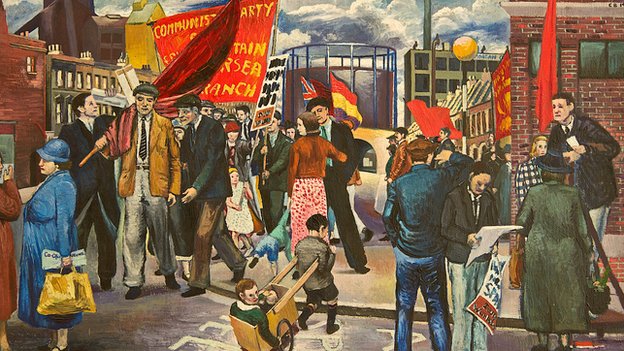
Clive Branson, Demonstration in Battersea (1939)
Clive Branson, Demonstration in Battersea (1939)

Merlyn Evans, Distressed Area (1938)
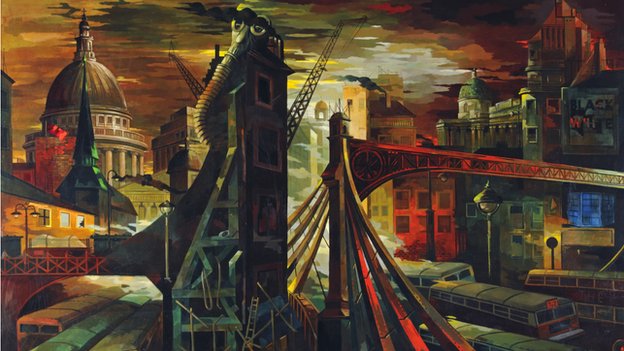
Merlyn Evans, Distressed Area (1938)

Walter Nessler, Premonition (1937)
Walter Nessler, Premonition (1937)

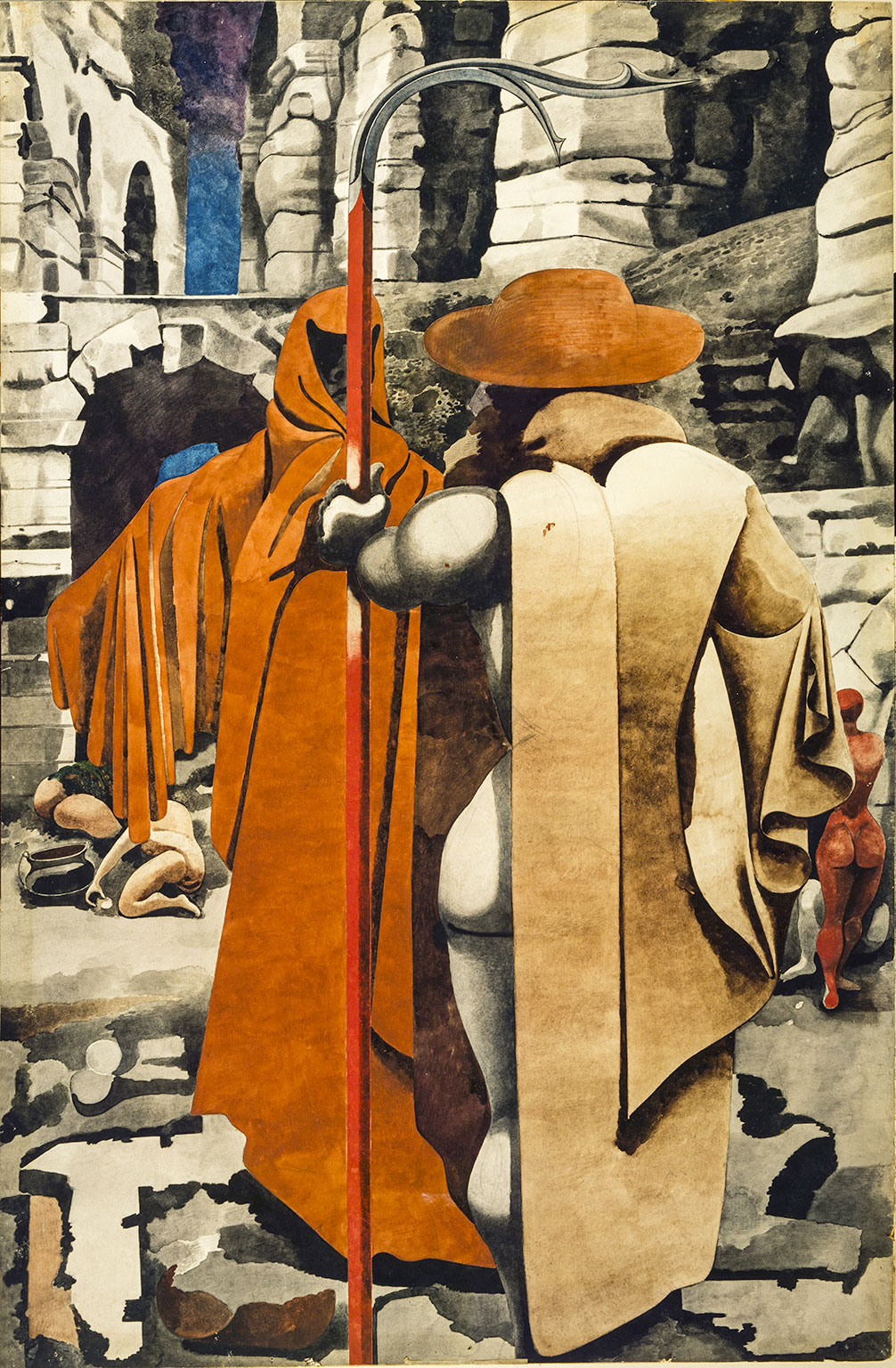
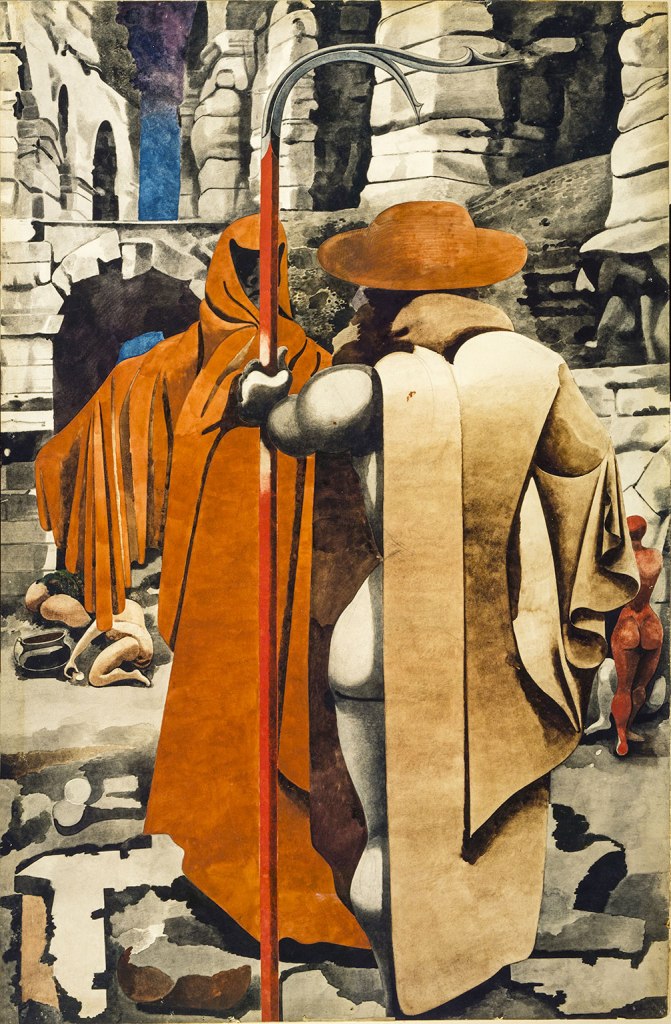
Edward Burra, The Watcher (1937)
Edward Burra, The Watcher (1937)

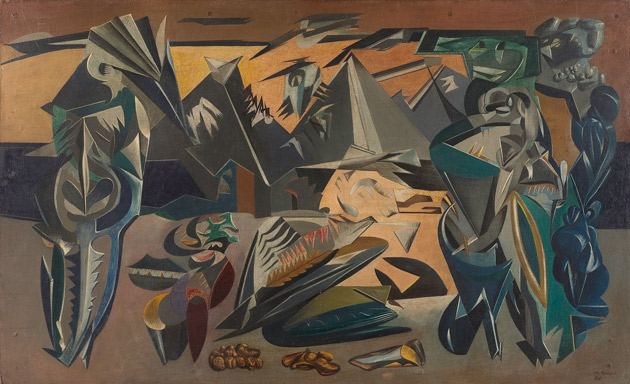
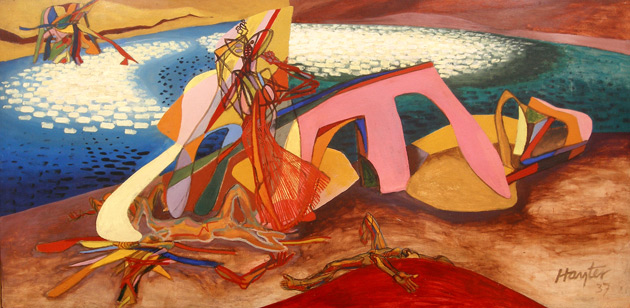
Stanley William Hayter, Paysage Anthropophage (Man-eating landscape) (1938)

Stanley William Hayter, Paysage Anthropophage (Man-eating landscape) (1938)

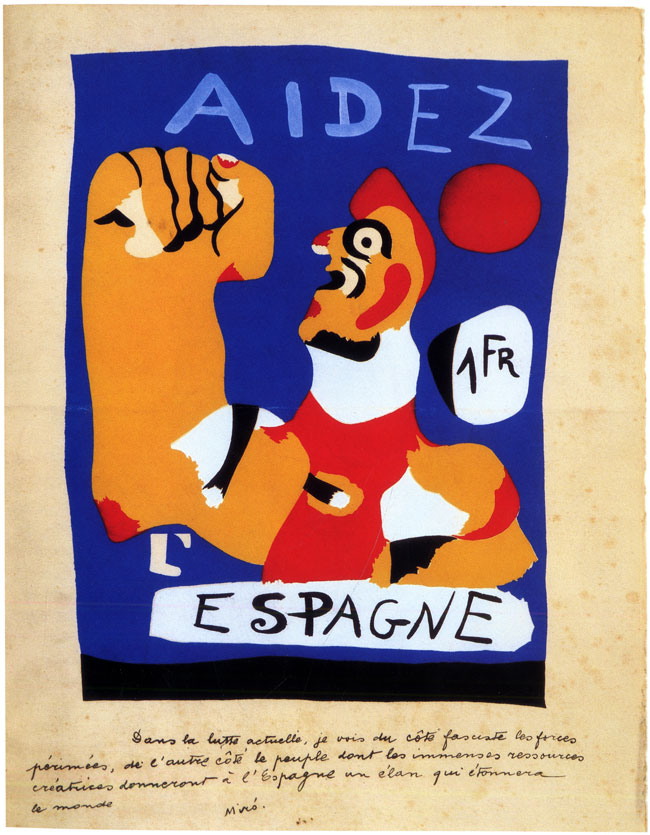
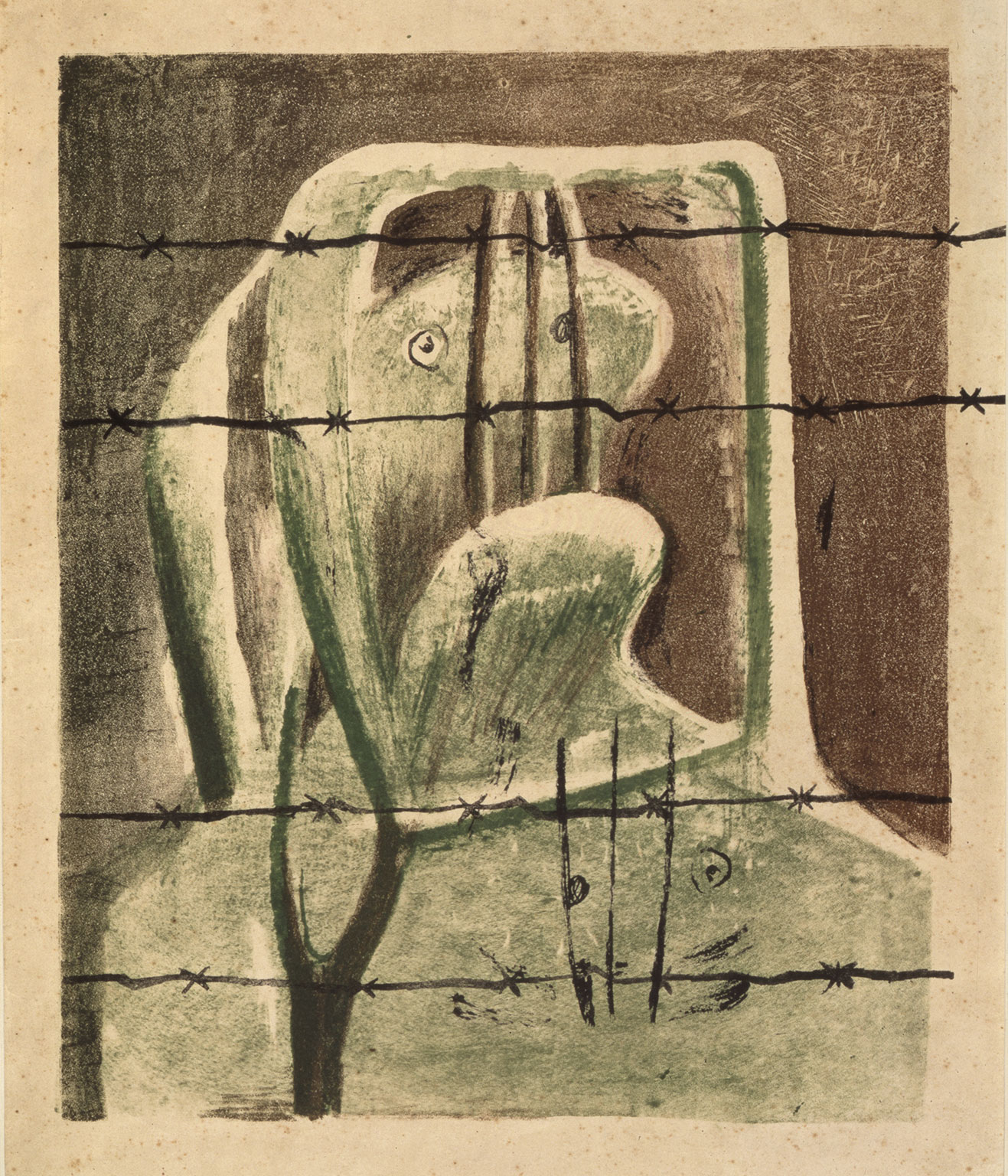
For British Artists between 1936-9 were reacting not just to the horrors of the war, often with surreal images (Edward Burra’s brilliant watercolours being a prime example), destroyed landscapes (Merlyn Evans), and distraught victims (Henry Moore and Picasso), but also to the innate frustration that the British Government had adopted a non-interventionist policy. This felt like utter madness when the fascist leaders of Europe were actively intervening in the Fascist cause, and caused artists of Britain to uprise, creating brilliant propaganda posters supporting the Republican Cause and, ultimately, fighting in the war themselves.
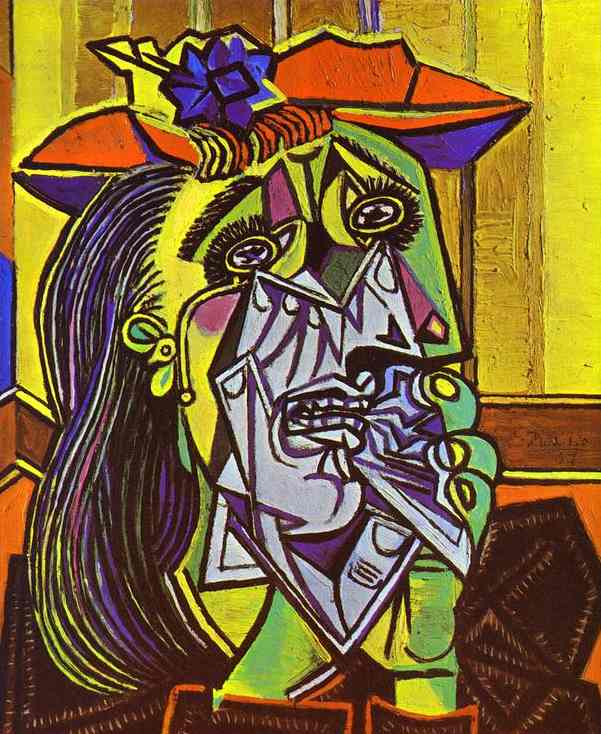
Pablo Picasso, Weeping Woman (1937)
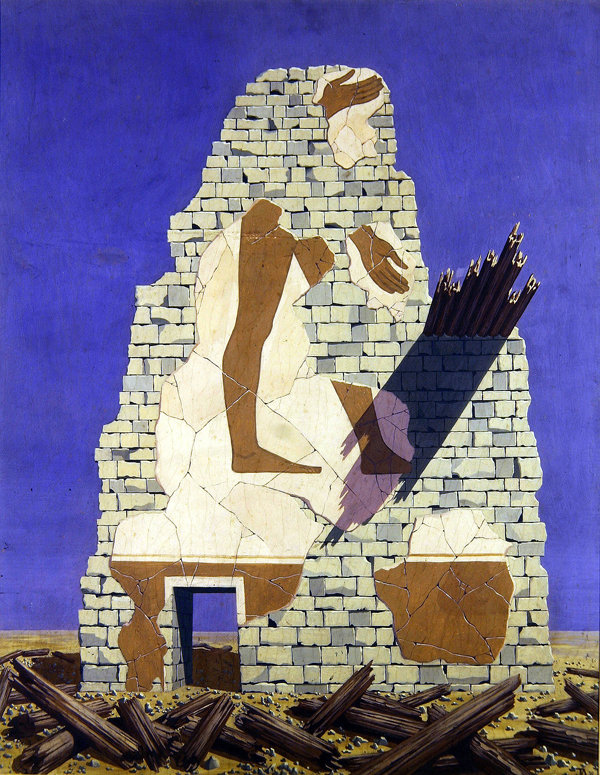
Pablo Picasso, Weeping Woman (1937)

John Armstrong, Invocation (1938)

John Armstrong, Invocation (1938)

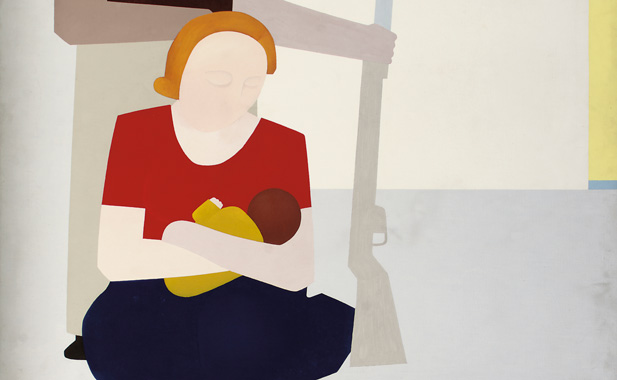
Alastair Morton, Spanish Civil War (1939)

Alastair Morton, Spanish Civil War (1939)

Joan Miro, Aidez L'Espagne (Help Spain) (1937)

Joan Miro, Aidez L’Espagne (Help Spain) (1937)

Henry Moore, Spanish Prisoner (1939)

Henry Moore, Spanish Prisoner (1939)

So this is an exhibition of posters and of paintings, all sharing the high tensions and morbid premonitions of the time. How apt, for example, was Walter Nessler’s Premonition in 1937, in which he imagined London suffering the same bombardment as had destroyed the Basque town of Guernica only weeks before. How right he was, for only 3 years later, his imagined landscape would become a stark reality for Blitzed London. Those tensions are also brilliantly played out in posters such as Brangwyn’s For the Relief of Women and Children in Spain, which uses the catholic imagery of Mary to emphasise the war’s human plight, especially amongst Spanish Children, and of course in Picasso’s Weeping Woman, painted at the same time as the most famous of all reactions to the war, Guernica, and which makes for a sensational focus of this exhibition.

Conscience and Conflict has only 6 weeks to go, but it’s a truly brilliant exhibition, and if you can’t make it your last favourite of 2014, make it your first of 2015. The exhibition closes on 15th February 2015.

Mallorca Photo Folio: The blues and the beiges

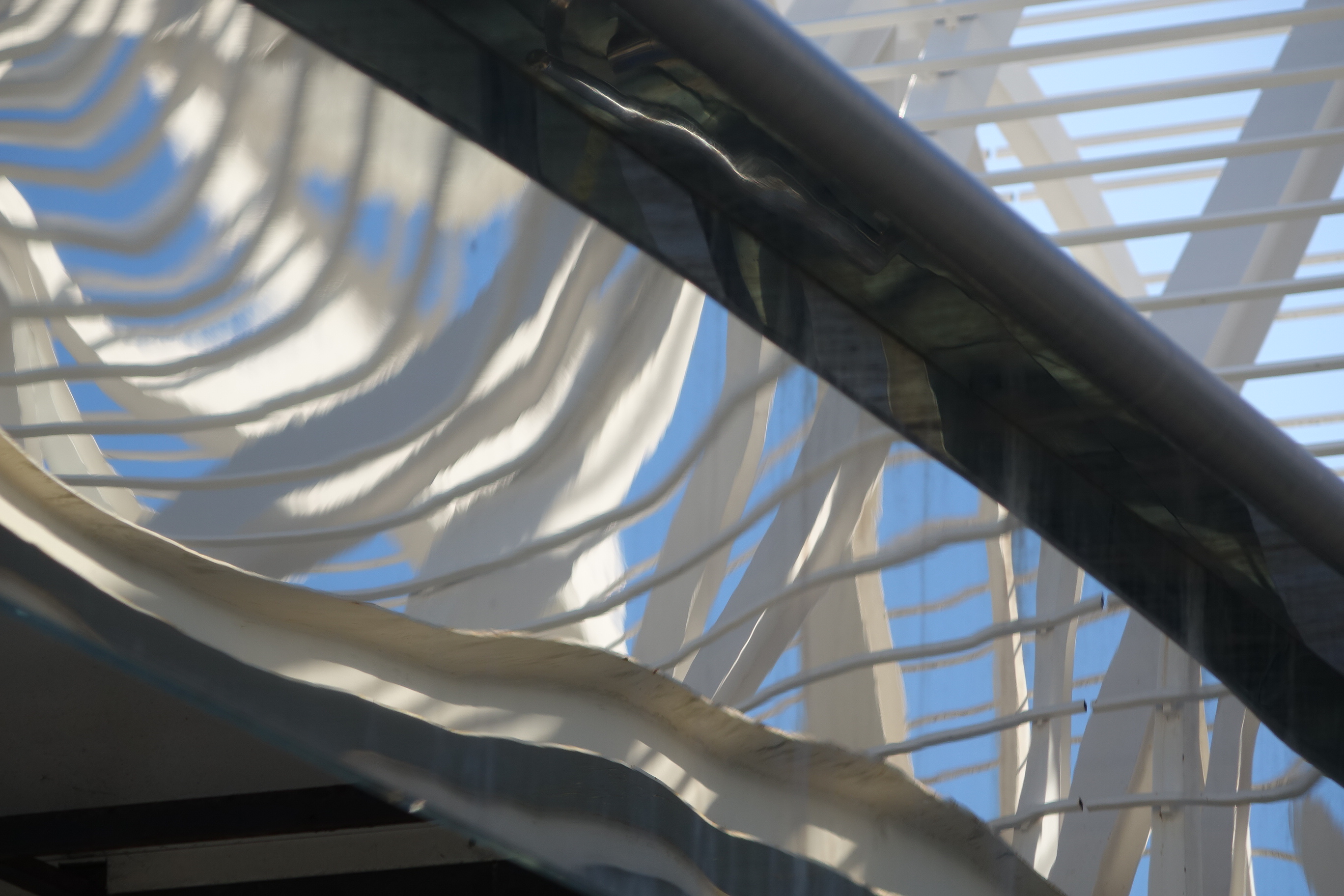
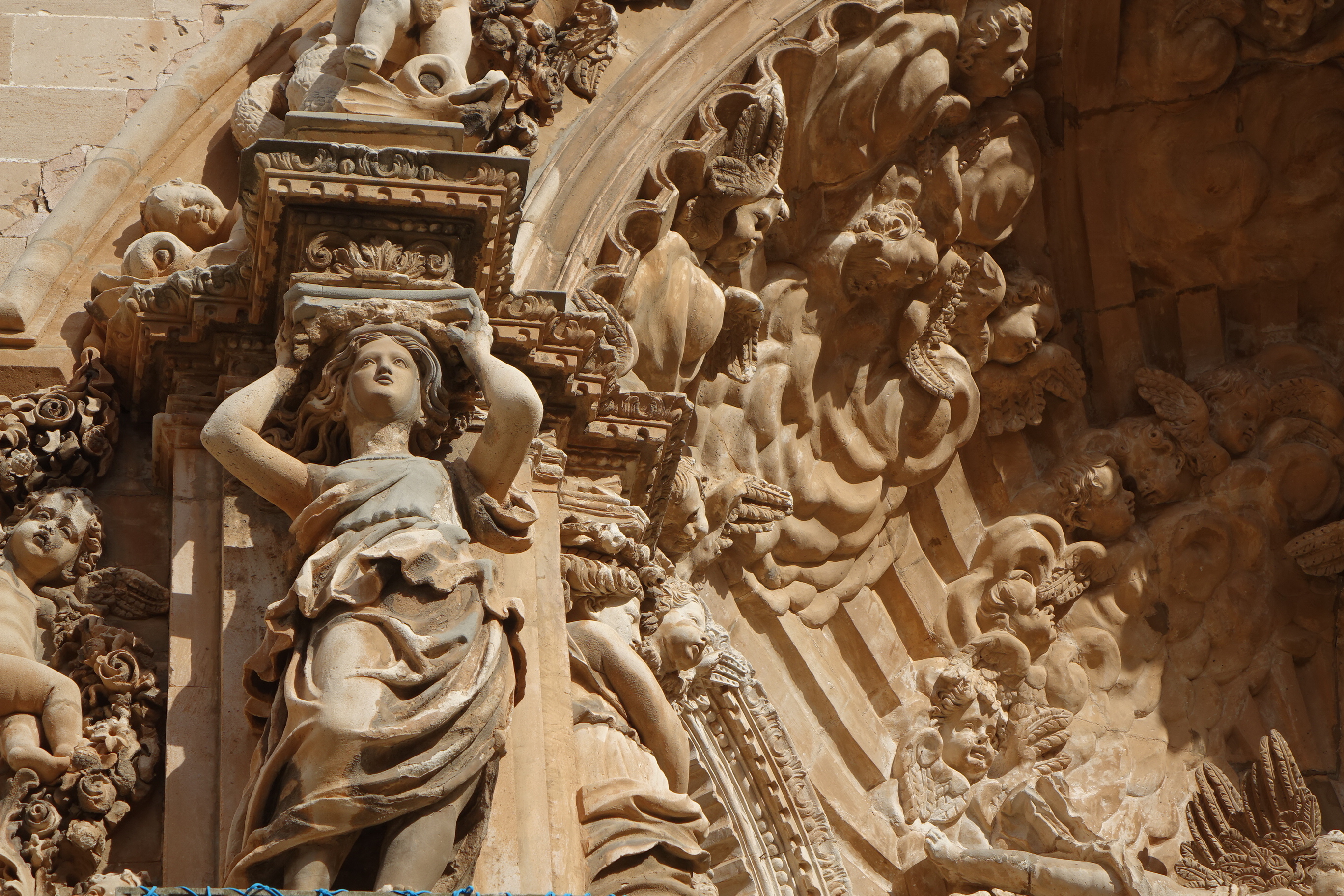
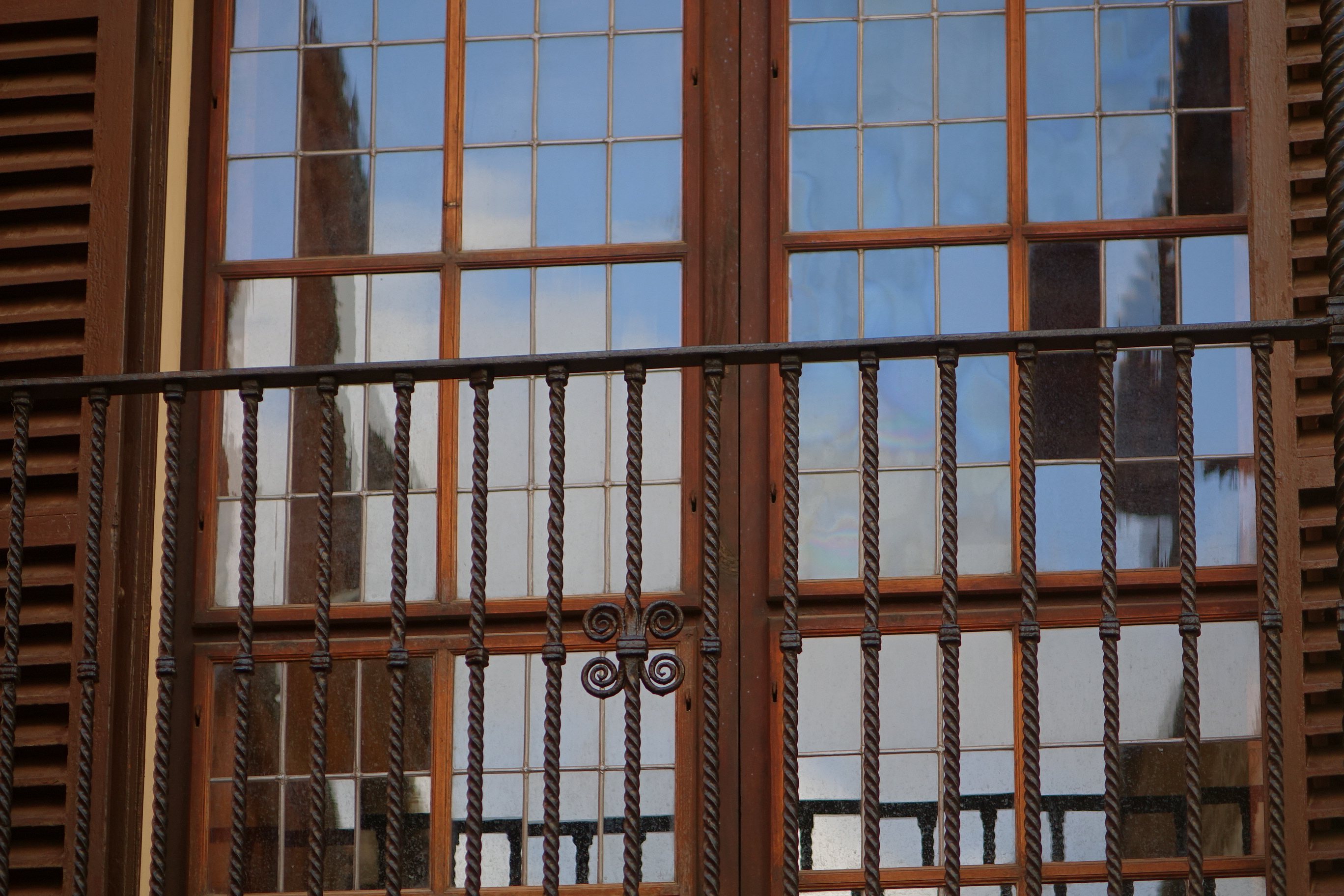
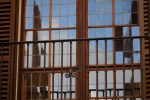
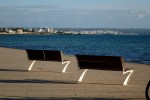
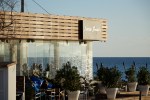
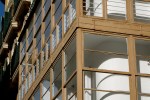
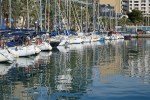
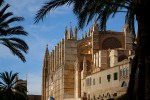
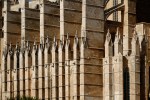
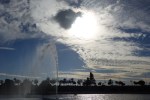
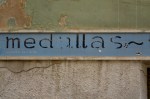
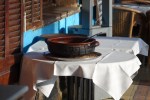
Having done the silver, and posted the greens and reds, it’s onto the blues and the caramalised gold-tinged beiges in my exploration of the colour palette of Palma de Mallorca, and perhaps of all the colours I have collected, these two are the easiest to represent. For Palma de Mallorca’s old town is a unison of golden ochres glowing from its old historical palaces and churches, and blues, which sparkle back from the expanse of sea which runs alongside the city, and the cerulean sky which shines so brightly above its many horizons. Here, the blues glow in the wood framed windows of the ancient town houses, while the beiges reflect like caramel in the molten water of the Mediterranean. These colours may be opposite ends of a colour spectrum, but in the Mediterranean, they are a fully harmonised affiliation.
DSC02181 DSC02472 DSC02219 DSC02301 DSC00905

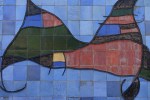
So here are my photos which show these two colours at their very best. The glorious golden cathedral of Palma de Mallorca glowing against a bright blue sky; an old much used earthenware pot standing in readiness full of food against a painted blue cafe wall; the multi-tiled tribute to the sea by Mallorcan resident Juan Miro. The modern blues buildings and the ancient beige stone; the yellow sun reflected through windows and the windows reflected in the blue sea. Blue and beige: a happy symphony.

All photos and written content are strictly the copyright of Nicholas de Lacy-Brown © 2014 and The Daily Norm. All rights are reserved. Unauthorized use and/or duplication of the material, whether written work, photography or artwork, included within The Daily Norm without express and written permission from The Daily Norm’s author and/or owner is strictly prohibited.

No detail too small: the intricate spectacle of a Neapolitan Nativity

In a large number of countries the Nativity scene (Belem in Spain, Presepe in Italy) is as big a part of the Christmas festivities as the lights switch-on in London’s Oxford Street or the Christmas tree at the centre of a family home. Having gone to Catholic school as a boy, I still remember the prominence with which the Nativity set was placed in the front entrance, and how perplexed I was (and remain) that the teachers remained insistent that the Jesus figure should not be placed in the manger until Christmas Day: but this is a school I thought – who on earth is going to see it during the holidays?

Despite the fact that the tradition of setting out a nativity is centuries old in many a catholic country, the general belief is that it all began in Italy where St Francis of Assisi is credited with creating the first nativity scene in 1223 at Greccio, Italy. There he is said to have recreated the birth of Christ through placing people dressed in the various nativity roles in a cave. A tradition was born, and perhaps for this reason, it is arguable that Italy has remained the predominant master of the nativity craft. This is not least in Naples where, in the famous Via San Gregorio Armeno, the entire street is given over to the craftsmen who make every intricate detail of the characters and setting of the Neapolitan presepe. 

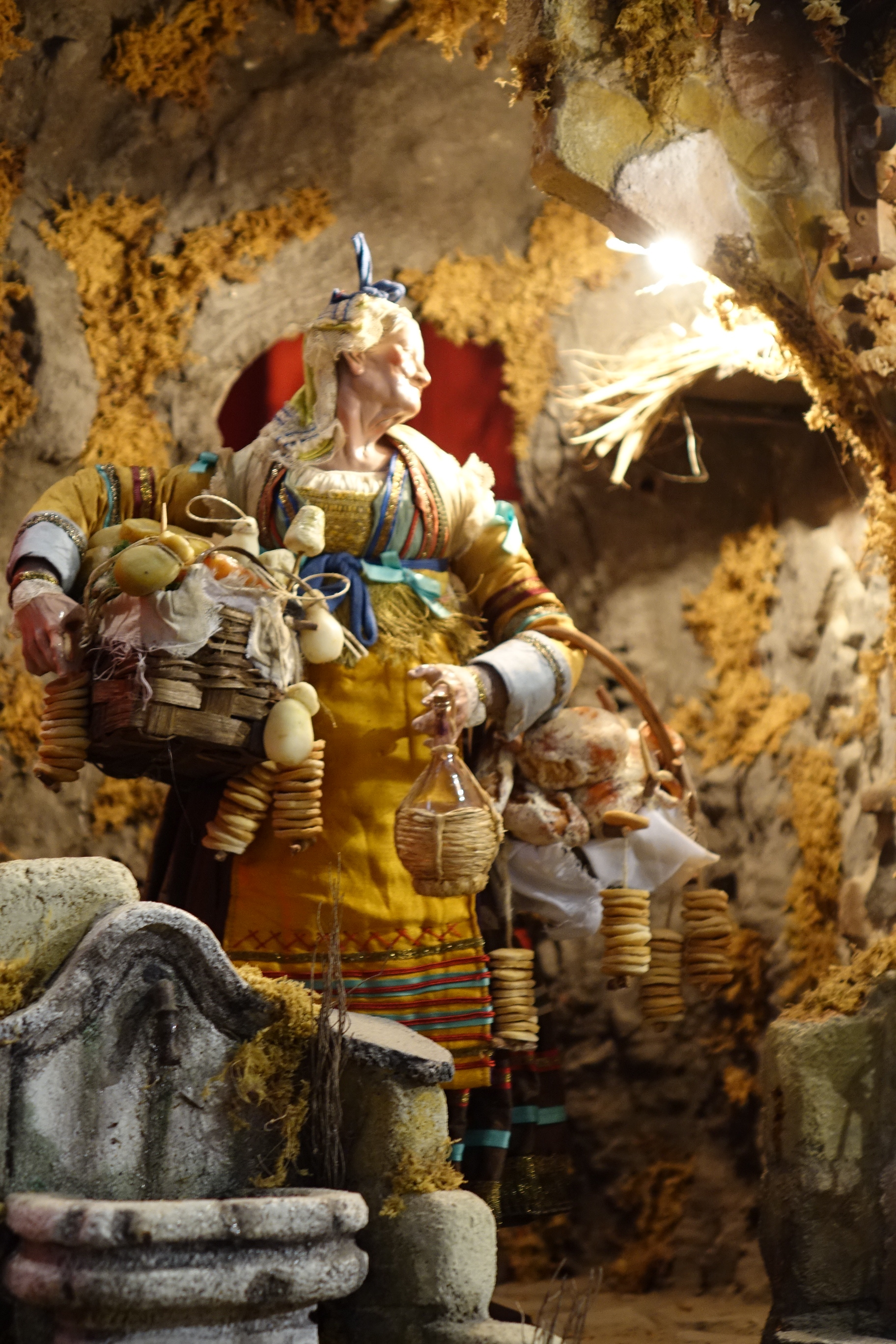
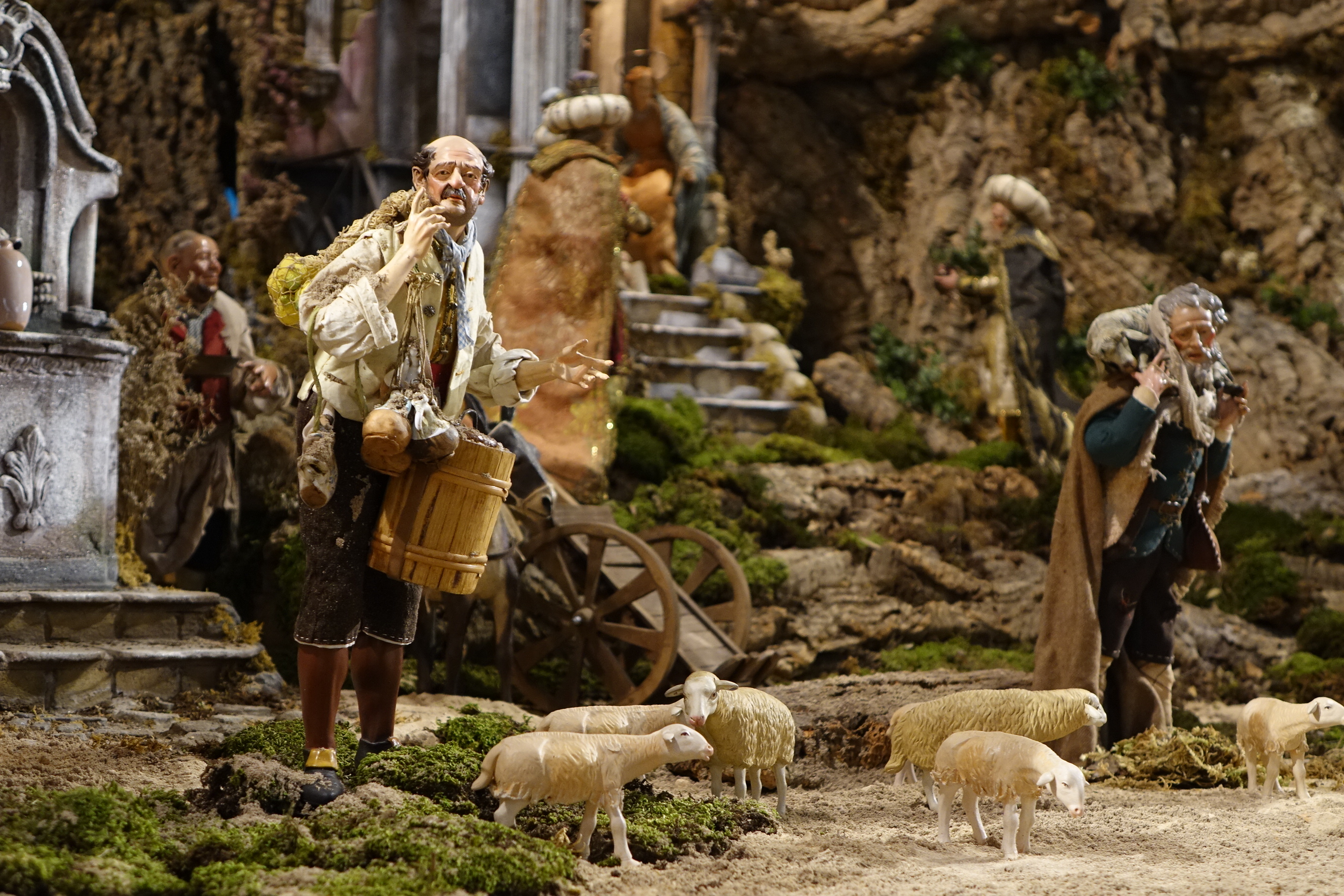
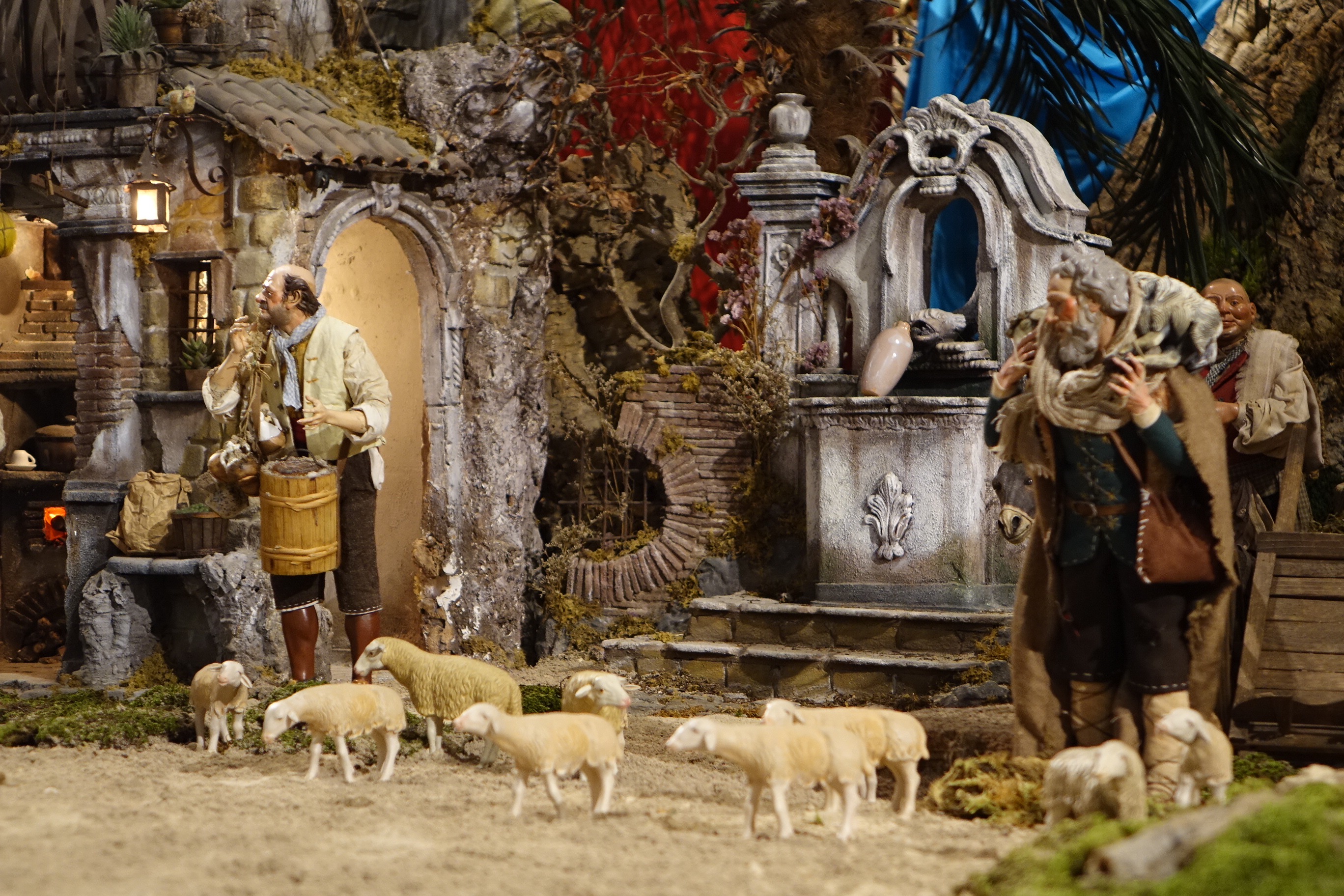
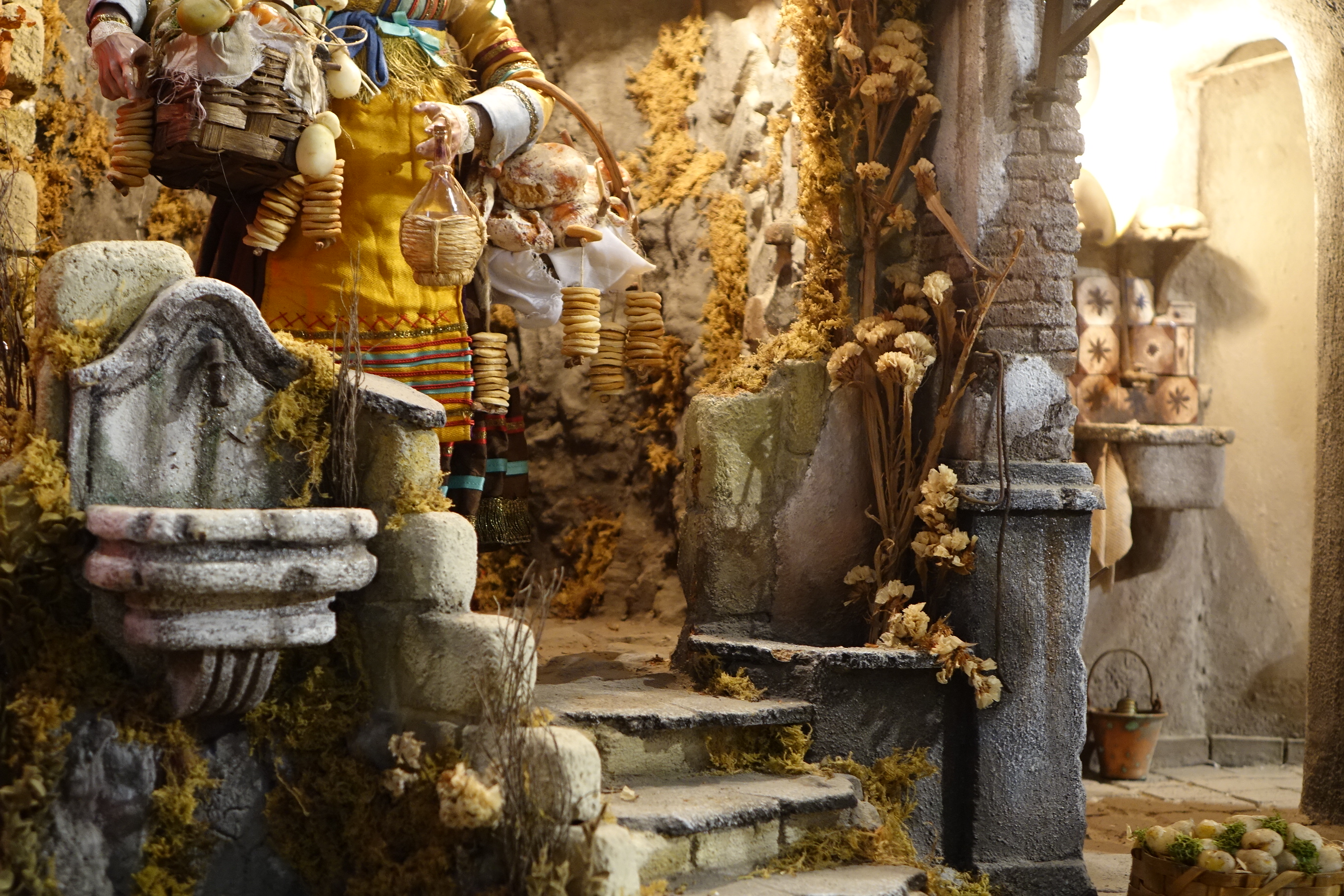
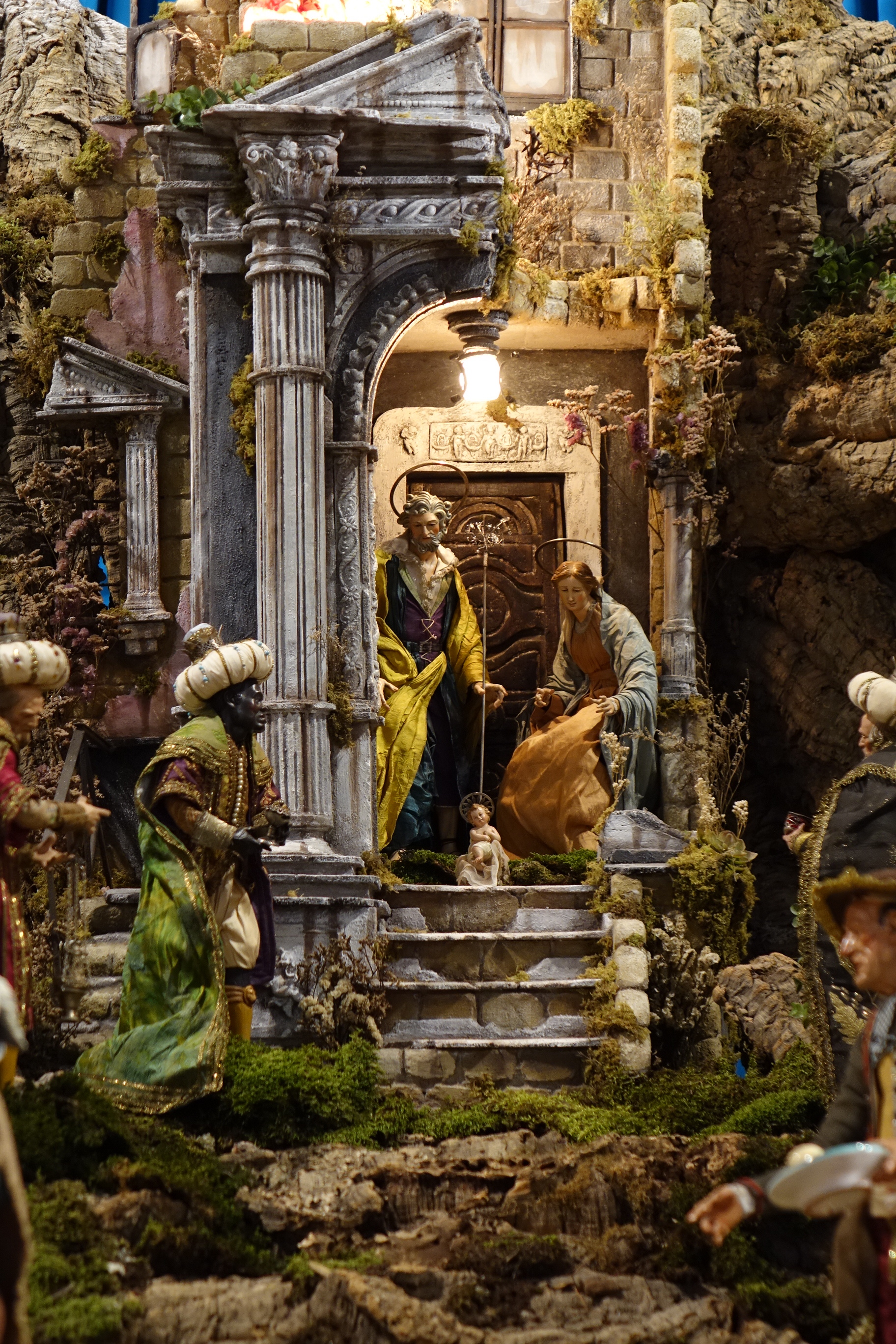
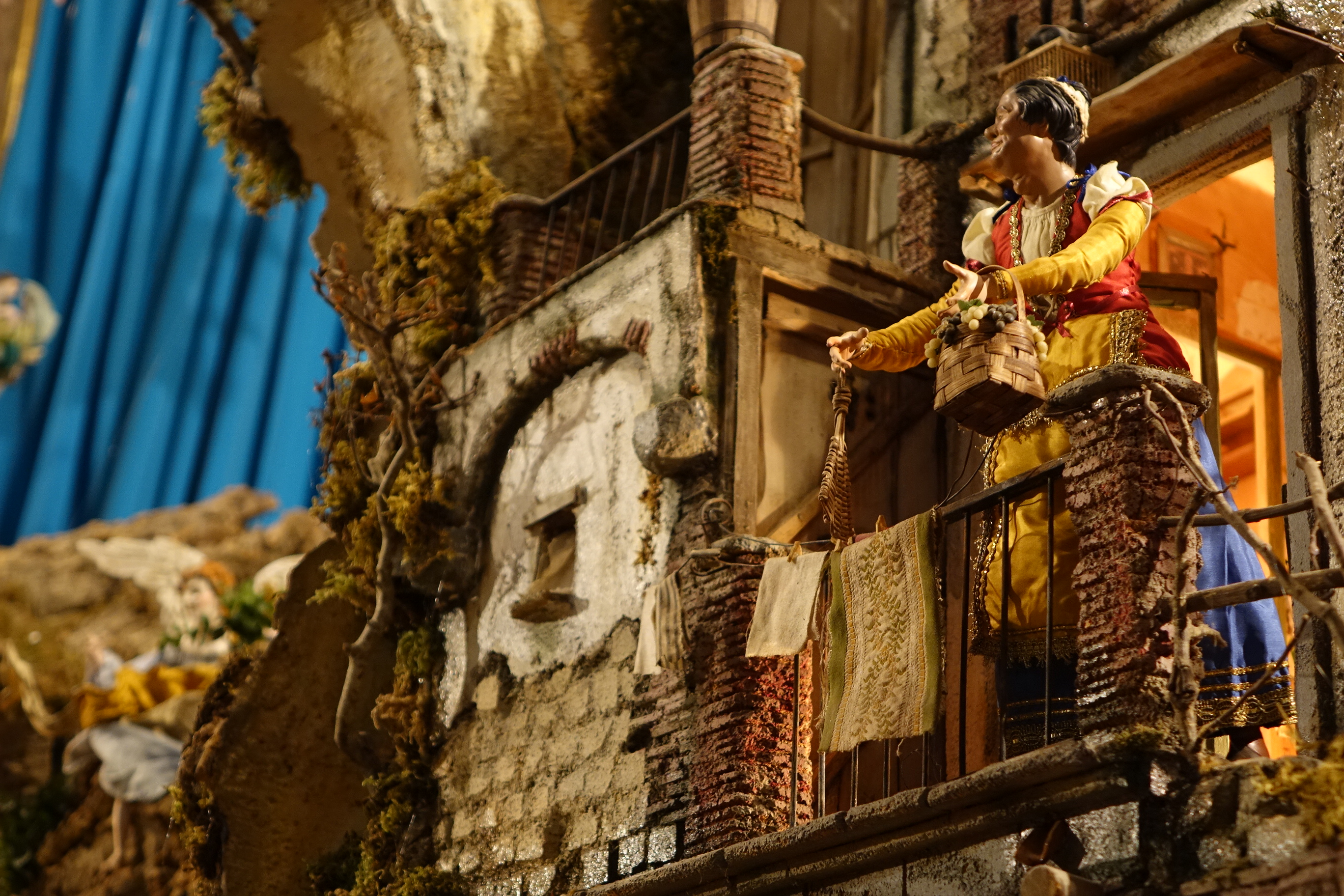
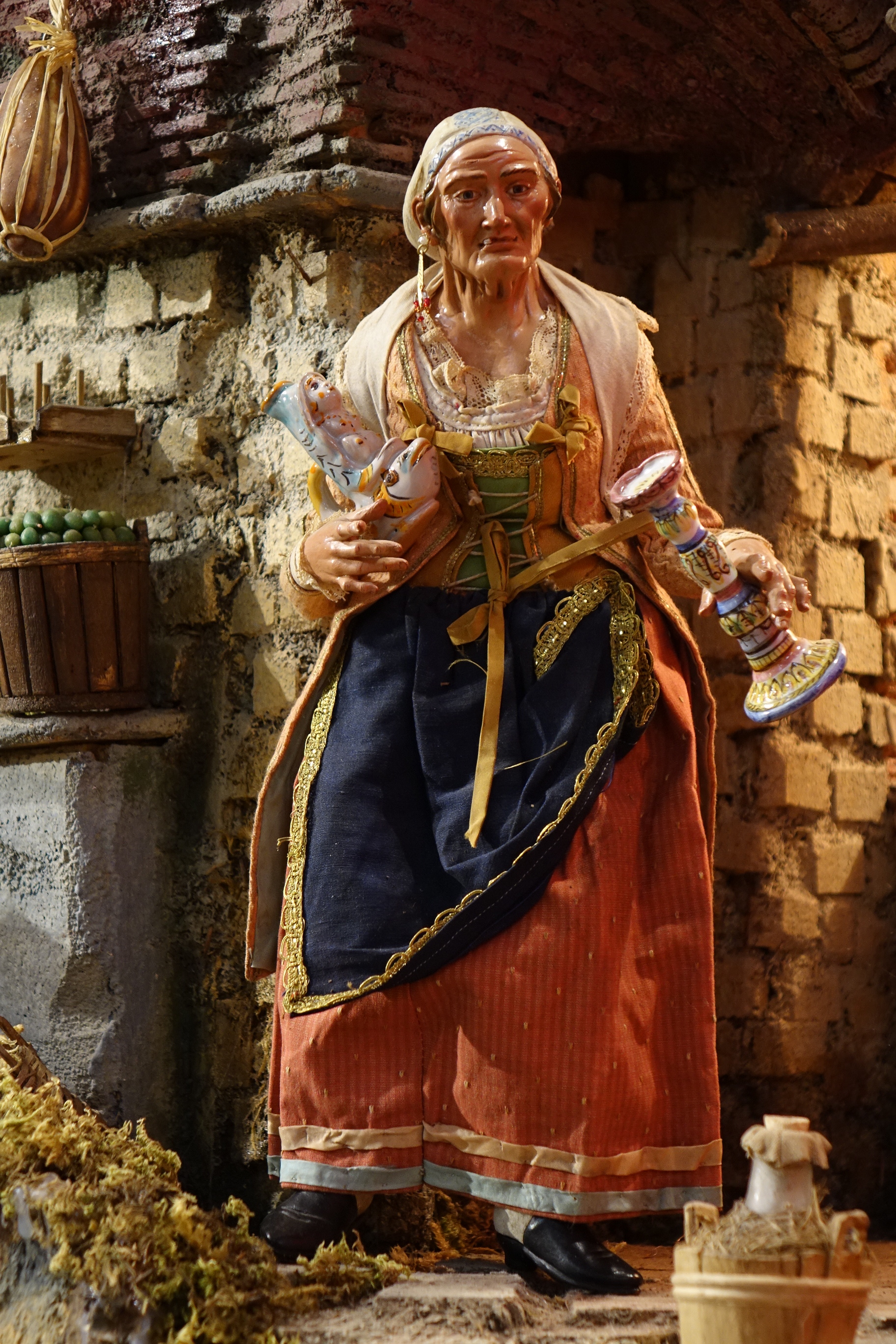
DSC02526 DSC02529 DSC02532 DSC02548 DSC02545 DSC02560 DSC02558 DSC02535

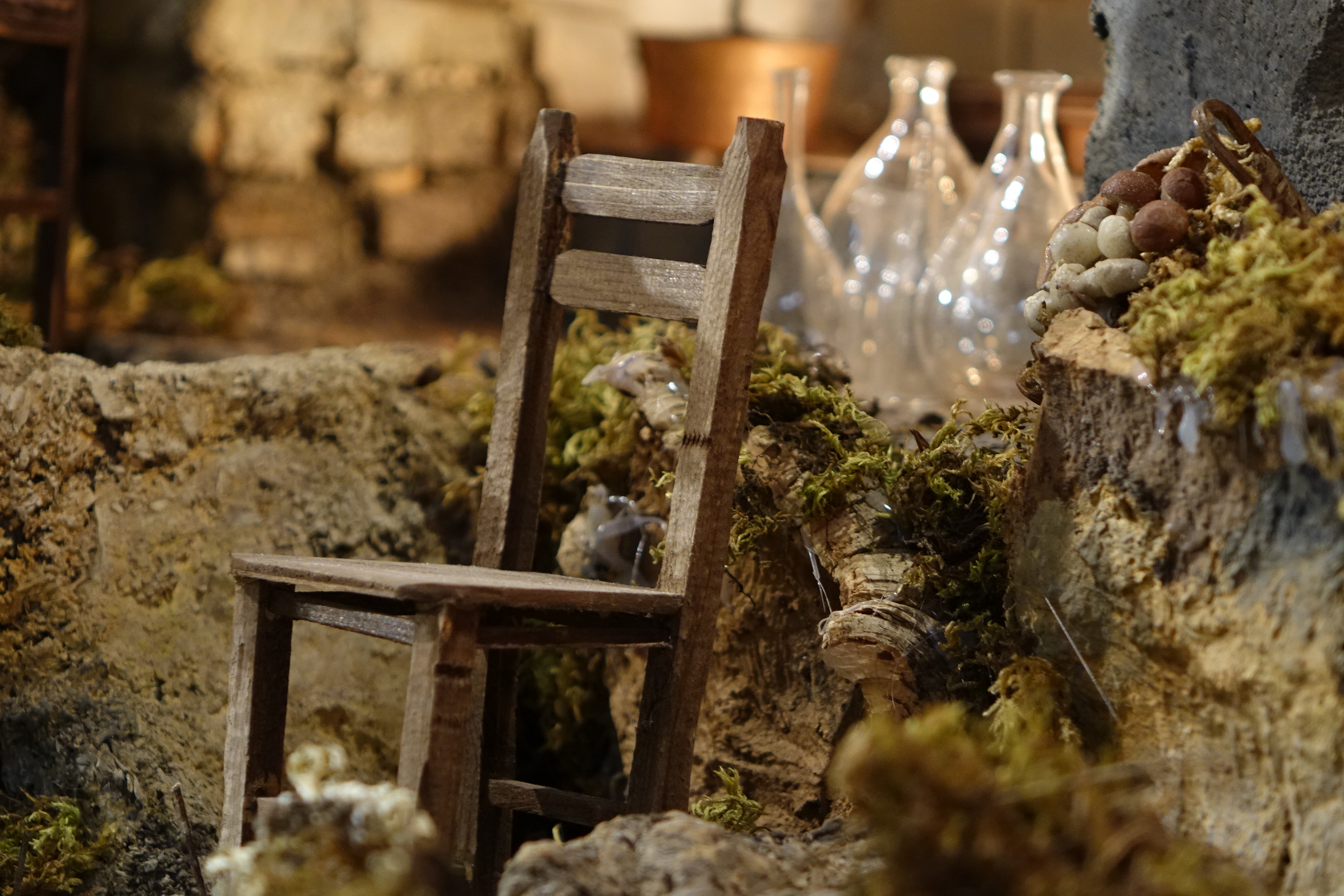
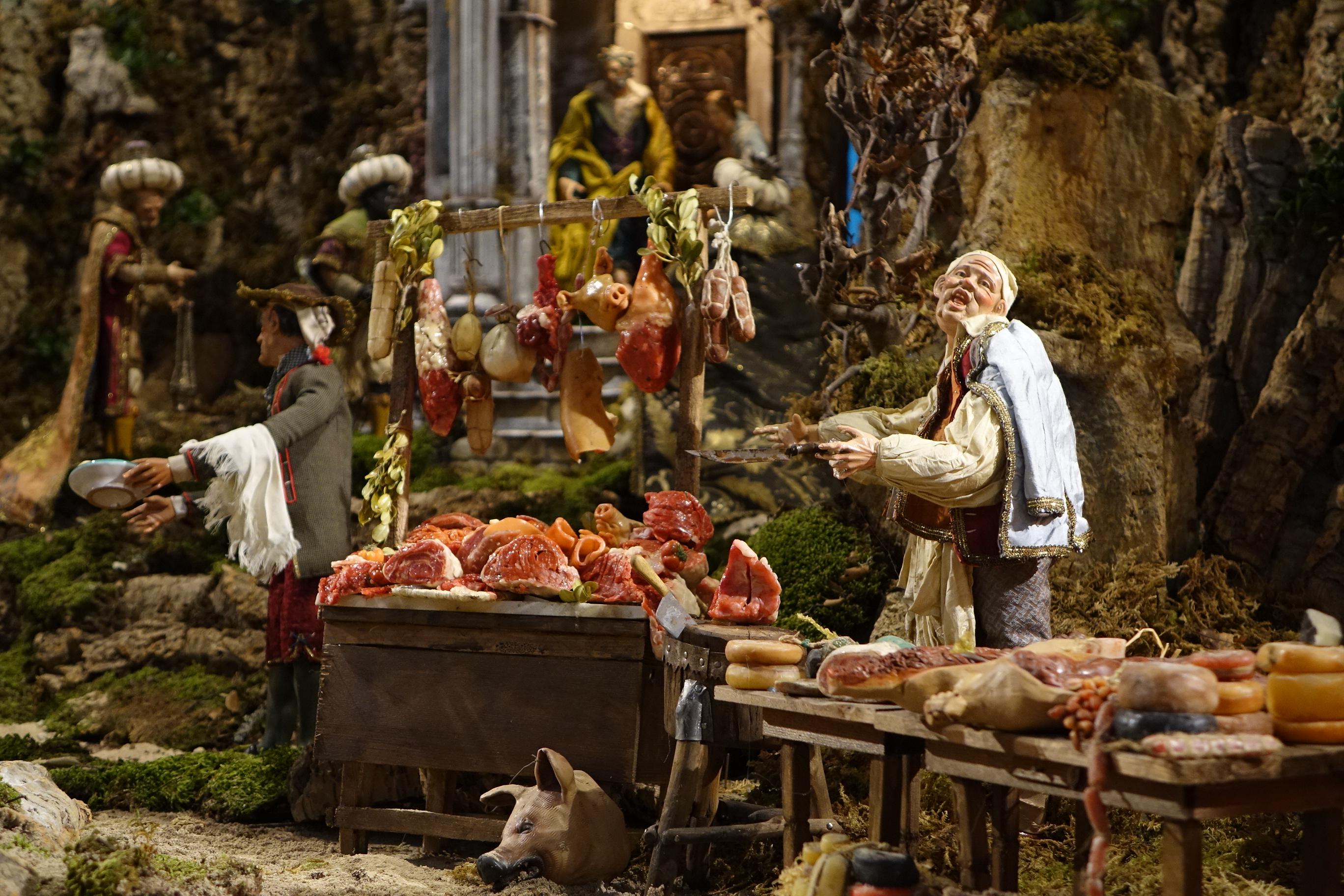
While last Christmas I braved the crowds who had crammed their way up the dark side streets of the Spaccanapoli to get a view of this famous Neapolitan craft, this year I have had the fortune to see their masterpieces at far closer a proximity. For here in Palma de Mallorca, but 2 minutes from my flat in an inconspicuous church on the Carrer de San Miquel, there is a Neapolitan gem of its own. Set out across a mountain plane simulated from the supple bark of a cork tree, and comprising a phenomenal range of architectural features and carefully characterised figures, this Nativity demonstrates why the Neapolitan craft remains so renowned. Not a single detail of street life has been missed, from the slimy pig’s head sold by the Butcher, to the bag of eggs swung by the old housewife. What tickles me are the gruesome details of their lined faces, and their masterful expressions – so full of personality you’d swear they were alive. 

DSC02567 DSC02564 DSC02562 DSC02555 DSC02537 DSC02540 DSC02527

In fact Palma de Mallorca holds the nativity or Belem dear to its heart, with a trail tracing once fantastic Belem to another across the city. But few could deny that the real brilliance of Belem craft has been mastered by the Neapolitans, as the nativity photos above demonstrate so well. 

All photos and written content are strictly the copyright of Nicholas de Lacy-Brown © 2014 and The Daily Norm. All rights are reserved.