Skip to content

Posts tagged ‘Art’

BP Portrait Prize – Hyper-photorealism is all very well, but I want to see the Artist’s soul on the canvas

As something of a postscript to my post on Friday about the Queen’s Portrait exhibition is a short note about another exhibition currently showing at the National Portrait Gallery, the BP Portrait Prize (It’s clever marketing that requires an exhibition’s integral name to be precursored by the name of an international petrol conglomerate, although I’m not too sure how happy I am having to represent said marketing on my own blog just by nature of naming the exhibition). Anyway, I digress. The exhibition, which is now in its thirty-thid year, features some 55 works selected from an open submission of 2,187 international entrants. The sole requirement of entry is that the work is a portrait, painted in the last year.

The height of photorealism – Lindsay Lohan © Ben Ashton (2012)

This year, like most years before it, the Judges of the Prize seem to have been unashamedly seduced by the skills of artists painting photorealistically, rather than with soul. It’s now as predicable an aspect of this show as the British summer is full of rain that when you wander into the exhibition, you double-take, wondering whether you have strolled into a photography exhibition rather than a painting one. The artist paints so fantastically well, and plies his craft with such faultless skill, that one cannot see a single brush stroke and one would swear blind, even upon being 10 centimetres distance from the canvas, that this is a photo before you. This is all very well – there is no denying the skill, and absolute kudos needs to be given to these artists for executing the works with such sophistication – but the problem for me is that, if I wanted to see an exhibition of photos, I would be elsewhere. It is also, to my mind, the inherent problem of the annual offerings of the BP Portrait Prize, and what, for me, makes it all a bit boring.

These paintings do not look like paintings, and as such they do not strike me as bursting with the emotional impact that a very paint-plastered canvas exudes. In the manic multitude of Van Gogh’s plentiful brush strokes, you can identify with the bursts of energy expressed by the artist when he went about executing the work, while in the fragmented, abstracted portraits of Picasso, you can identify with an artist bursting with innovation, with a rebellious streak who wants to give more, to change art as we know it, to pioneer new forms of expression.

Swallow, © Alexandra Gardner 2012

By contrast when you look at the works hung in the BP Portrait prize, first you need to challenge your preconception that the work is actually a photograph, and then you spend your time staring at the work wondering how it is painted. But all of this emphasis somewhat takes away from the story of the sitter. The emotion is somehow lost in the perfection. When you can see no sign of an artist’s presence on the canvas, it becomes craftsmanship, and not art. It loses it’s soul. I compare these works to an exquisitely well crafted table – I would glance at the work and admire the virtuosity of the craftsman, but I would not attempt, nor be able to engage with the work in the same way as I can when an artist’s soul is poured onto a canvas.
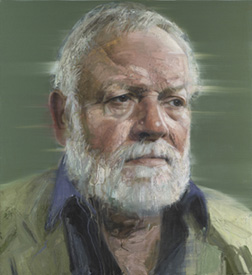
The Dialects of Silence (Portrait of Michael Longley) © Colin Davidson 2012

There were some exceptions in this year’s show, and it is therefore unsurprising that these were my standout favourites. In Colin Davidson’s The Dialects of Silence (Portrait of Michael Longley), there is a superbly executed focus on his sitter’s melancholy eyes, which are practically photographic, but then as the work spans outwards, it becomes more and more fragmented, as swathes of paint are hastily applied to the canvas, but with no less effect. This work demonstrates both the soul of the sitter, and the passion of the artist, and that is why, for me, it works incredibly well as a portrait worthy of artistic merit. I also liked Alexandra Gardner’s Swallow which had something of the Gauguin about it. Yes it’s just a portrait, but the insertion of the striking yellow wall paper and the presence of a swallow around the sitter’s neck makes you interact with the work, wondering about the significance of the swallow, and no doubt captivated by the use of bold colour, and realism contrasting with the two dimensional black outline which circumnavigates the figure.

Mr Kitazawa’s Noodle Bar, Tokyo
© Carl Randall

However my favourite work of the show was undoubtedly this one, Carl Randall’s Mr Kitazawa’s Noodle Bar, Tokyo. This “group portrait” is startlingly original for a number of reasons: the viewpoint from above, its composition: customers on the right, servers on the left, the slice of city life seen through the window, and the exclusive use of black, white and shades of grey. I love the apathetic, indifferent stares of the customers, minding their own business, indulging in quick dinner in a hostile urban environment, thinking no doubt about work and the pressures around them. On the left we are met with the equally impassive stares of the workers, tired after cooking all day and bored of the relentless monotony of their work. But in the middle of this we have this almost embrace, the only human contact in the whole work, when the worker gives a bowl of food to a customer, or the other way round – because they both hold the bowl with two hands, it is akin to a loving embrace, a fusion of worker and customer, and composition-wise it provides the work with a horizontal variance to otherwise brash vertical lines. Brilliant.

Is that a photo?: Silent Eyes © Antonios Titakis (2012)

If the BP Portrait Prize included more works like this every year, it would be a startlingly interesting show. But as ever with exhibitions judged and chosen by a group of outdated art professionals and even a representative from BP (who clearly knows so much about art) we will continue to be shunned by a group of high-gloss works which, like any photo, reflect the viewer and push him away, rather than a show of works which, because an artist has bared his soul or painted a scene of such dynamic composition and interest, the viewer is captivated and invited in. For me, it’s this relationship between artist and viewer which is not just integral to the power and purpose of art, but central to the very definition of what “art” really is, whether it be triggered by a portrait, a landscape or an abstract clutter. Remove the soul of the artist, and the painting becomes just one more image to add to the ever changing visual landscape of the fast-moving world around us. A fleeting encounter, without a lasting impact.

The Queen: Art and Image – at the National Portrait Gallery

You can’t blame the National Portrait Gallery for cashing in on HRH Queen Elizabeth this year. Since her Diamond Jubilee celebrations at the beginning of this month, the popularity of the Queen has been at an all time high – in fact over  90% of those recently polled stated that they were satisfied with the Queen, figures which represent the significant surge of support which is now felt for the Royals in England. In the meantime, tourist numbers lingering outside Buckingham Palace, visiting Windsor Castle, and pouring into souvenir shops all over London have soared . So adding an exhibition of portraits of the Queen into the mix seems like an obvious choice, not least because, having been the subject of at least one official portrait in every of her reign, as well as the subject of numerous photographs and unofficial tributes, there are so many portraits to choose from!

Queen Elizabeth II (Cecil Beaton, 2 June 1953)

I therefore went along to the NPG’s exhibition, The Queen: Art & Image today expecting 60 official portraits lined up, each recognising a gradual change in the Queen’s image, from glamourous young Queen in her 20s, to the Nation’s favourite grandmother. However to my surprise, the exhibition was a little light on the official portraits. In fact it was a little light on paintings altogether, instead concentrating on the Queen’s image, as masterminded  by officials, and seen through the lens of the paparazzi, captured on camera. That is not to say that the exhibition was not historically narrative and collectively interesting.

Queen Elizabeth II (LIghtness of Being) © Chris Levine (2007)

Queen Elizabeth II (Equanimity) (© Chris Levine, 2007)

The show begins and ends with the masterful 3D works of Chris Levine, Lightness of Being and Equanimity. These have to be amongst my favourite portraits of the Queen. The way they are mastered – a print on a lightbox, multilayered so that the Queen’s posture changes as you move around the work, is startlingly realistic. It has never been so possible to feel as though you are meeting the Queen, when in reality such an opportunity is stored away in a box of other pipe dreams such as the big retirement mansion and everlasting fame. Every wrinkle is there to see, but unlike the horrendous portrait by Lucian Freud, also included in the show, the portrait is truthful and yet still utterly glamorous, not least Lightness of Being which captures the Queen, eyes briefly closed, in white ermine, white pearls, and her glittering crown. Even her hair glimmers with a silver sheen rather than dull grey.

Queen Elizabeth II (Dorothy Wilding, 1952)

From this impressive start, the exhibition heads back to the 1950s and thus begins a chronological exploration of the Queen’s changing image and public portrayal. I suppose thinking about it, a load of official portraits would have always been a little contrived, as artists seek to flatter and do deference in the employ of this almost supernaturally important sitter, while photographs capture the Queen as a real person, a loving mother, happy relaxed tourist and here, in the 1950s section, as a glamourous, almost Hollywood worthy young Monarch, with a perfect figure and natural celebrity smile.

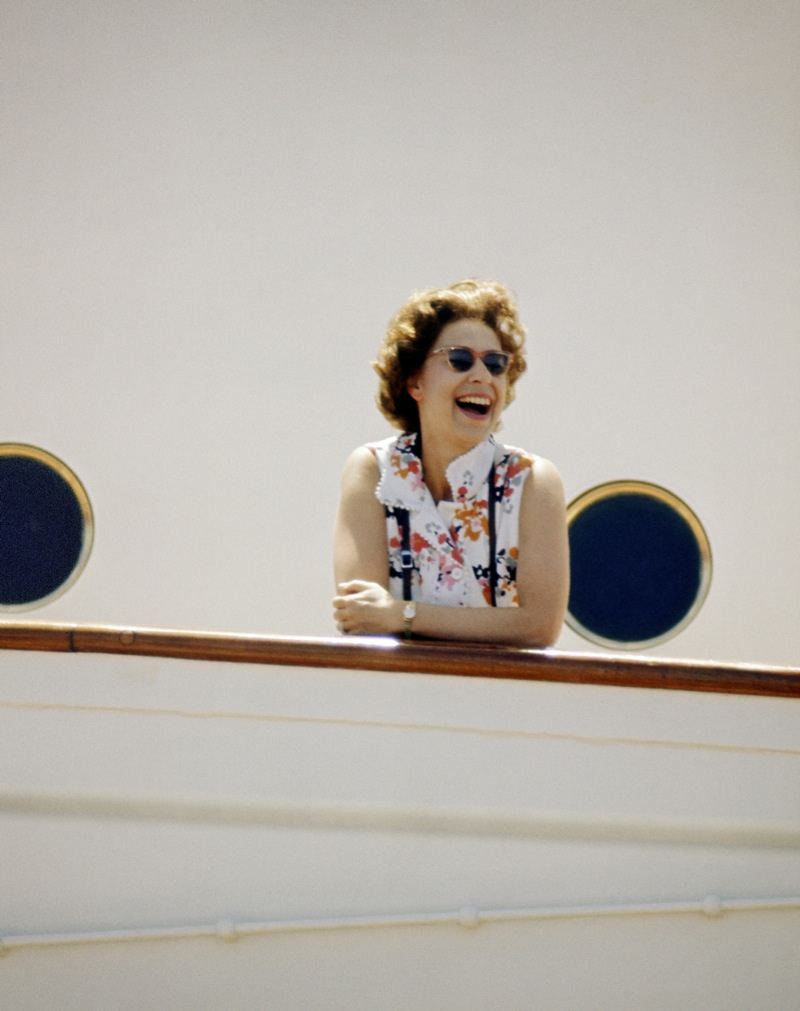
It is from this point that we begin to see the Queen mature from glamorous young starlet into a rounded family woman, but one who had to bare the full weight of the royal responsibility of her solitary role, as many of the portraits demonstrate. Through the 60s and 70s, her posture becomes more official, and her stride seems more confident and self-assured. Still, moments of rare relaxation, such as the Queen laughing on the decks of her beloved Yacht Britannia are captured during this period, which was probably the last decade of uninhibited happiness before the traumas of the future descended upon her.

Queen Elizabeth II by Patrick Lichfield (1971)

Elizabeth I (this is not a typing error btw) by Gerhard Richter 1966

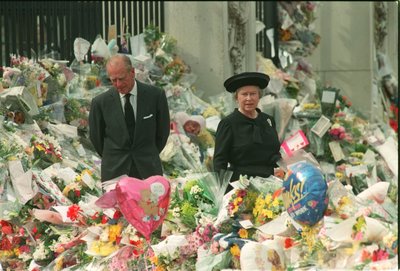
Queen and Prince Philip survey floral tributes after the death of Diana, Princess of Wales © Peter Nichols, 5 September 1997

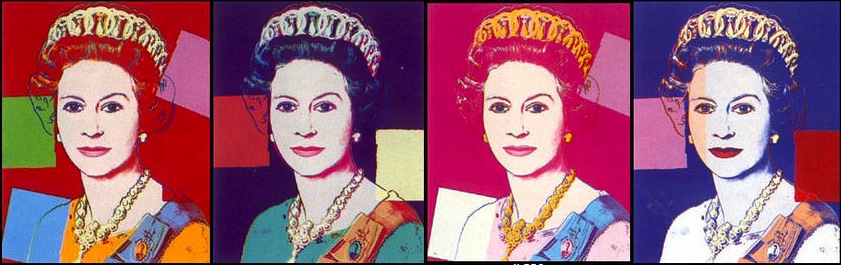
Moving into the 1980s, you see the Queen fall into the shadow of Princess Diana, the attention of the public transferring to this more volatile of characters. In the meantime the Sex Pistols released a single, God Save the Queen, with controversial lyrics suggesting the Queen belonged to a “fascist regime” (the artwork for which is included in the exhibition), Gilbert and George betrayed the Queen and Prince Philip in the shape of the “cross potent” (a symbol of the Austrian Fascist party) and Andy Warhol hinted at the superficiality of the Queen in his series of lithographs of the Queen painted as part of his fixation on the cult of celebrity. Onto the 90s, when most of the Queen’s children’s marriages fell apart and her beloved Windsor Castle sustained severe fire damage. While who could have predicted the shock of the late 90s, when Princess Diana tragically died, and the Queen fell victim to a media hunt as the papers decried her failure to show her face in the immediate aftermath. The turbulence of the period is captured by the exhibition, and it is perhaps appropriate that Lucian Freud’s portrait, the ugliest of the them all, is hung at the end of this period.

Queen Elizabeth II, Andy Warhol (1985)

Queen Elizabeth II, Lucian Freud (2001)

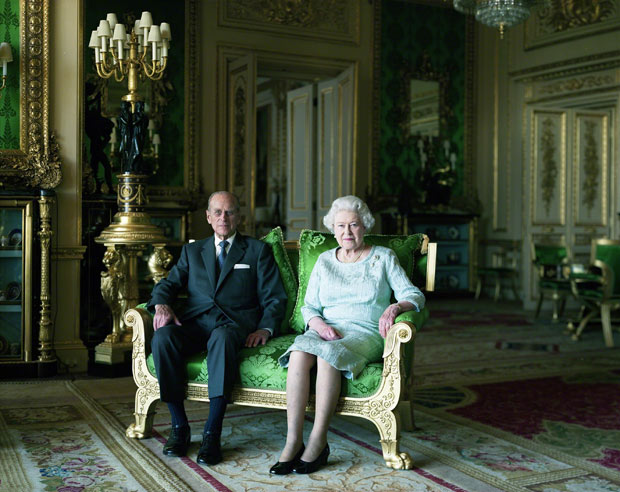
Onto the new millennium, where things get good again. The popularity of the Queen surges, and the portraits of the Queen become more respectful, portraying the Queen as a genuine person, a consistent and beloved figurehead, and a cherished icon of not only the nation, but the world. Here hangs another of my favourites and one of the most recent portraits by Thomas Struth, commissioned especially for the Diamond Jubilee. The photograph, which features Prince Phillip and the Queen slightly off centre, sat relaxed on a green, rather elaborate sofa, is delightfully accessible, like a family portrait – you can see every vein, every wrinkle of both sitters, suggesting a warm, human aspect, which is always surprising in those who seem so inaccessible. I also love the portrait for demonstrating the bond between Phillip and the Queen, who sit fairly formally, but who are nevertheless the clear support of one another, forming a single union with a bond which is clear for all to see.

Prince Phillip and Queen Elizabeth II, Windsor Castle © Thomas Struth 2011

I loved too this portrait by Annie Leibovitz (2007) which, with its solitary and dramatic background, and with the Queen dressed in a cloak, references the paintings by Annigoni, and photographs by Cecil Beaton placed at the beginning of the show. And thus, as the exhibition ends, the portraits come full circle, as we see a Queen as much loved now, as then, a Queen who inspires in us all a deep sense of reverence and respect, and for we British, is someone of whom we can be resolutely proud.

Queen Elizabeth, Annie Leibovitz (2007)

The Queen: Art & Image is on at the National Portrait Gallery until 21 October 2012.

The Daily Sketch: Summer Solstice?

Summer Solstice? Could have fooled me. The calendar may show June 21st, but this year’s longest and lightest day of the year  had something decidedly dark about it, as thick grey clouds lingered over the UK all day, burgeoning upon us a winter’s worth of damp, windy wet weather. And all this on the first day of summer? No wonder then that at Salisbury’s infamous prehistoric monument, Stone Henge, the usual crowd of slightly “buzzing” pagan (“new age”) revelers were somewhat down in numbers, and perhaps a little dizzier than usual as the much promised summer got lost somewhere around mainland Europe, as the skies in Britain unfolded around them, and the solstice sunshine was irreverently blanketed in a thick layer of obstinate, wet cloud. But such is the English summer. The first day brings with it what promises to be another few months of depressing drizzle, with the following inevitable results: rained-off Wimbledon, squidgy Olympic opening ceremony, water-logged open air theatre and an August from the ice age. God bless the Brits – try as we might, life in the Summer outdoors is never quite going to work for us. Still, the weather can never take the strawberries and cream away from us. Even if they are imported from Egypt. Pimm’s anyone?

Norms celebrating “Summer” Solstice, at Stone Henge (2012 © Nicholas de Lacy-Brown, pen on paper)

Sunday Supplement: St Ives

We Brits are so accustomed to heading down to Gatwick and jetting out to the Mediterranean, the French Countryside or the Aegean Sea for our summer holidays that we forget what we have on our doorstep. It’s not that we can be blamed – look at us now. Mid-June, almost the longest day, and last week we had temperatures in the region of 12 degrees. Last Monday in fact that skies were so dark as they spouted out a continuous torrent of abusively heavy rain that I felt as though apocalypse had fallen. However on the rare occasion that the weather actually behaves in correlation with the seasons, England can do summer holiday like each of its European neighbours.

I love my photo of old women on a bench – so marvellously English

There’s nothing quite like an English summer – Pimms in the garden on a setting sun, when the grass goes slightly dewey and the sunlight dapples on the dinner jackets and ballgowns of attendees to Glyndebourne Opera, or open-air Shakespeare in Regent’s Park; picnics under willow trees, next to ponds quietly humming with the sounds of multi-coloured dragonflies dancing across the surface of lily-pads; and the coast. The English coast is emblematic of old-school summer holidays, as men took out their handkerchiefs and tied knots in the corners to make a hat providing scant protection of their bald-batches, children risked breaking their teeth on a lump of sticky-sweet “rock” complete with writing running through the middle, and others took up exploring in rock-pools searching for crabs and shrimps and other creepy crawlies which lurk in amongst the rocks and seaweed when our extreme tidal system takes the sea way out beyond the beach.

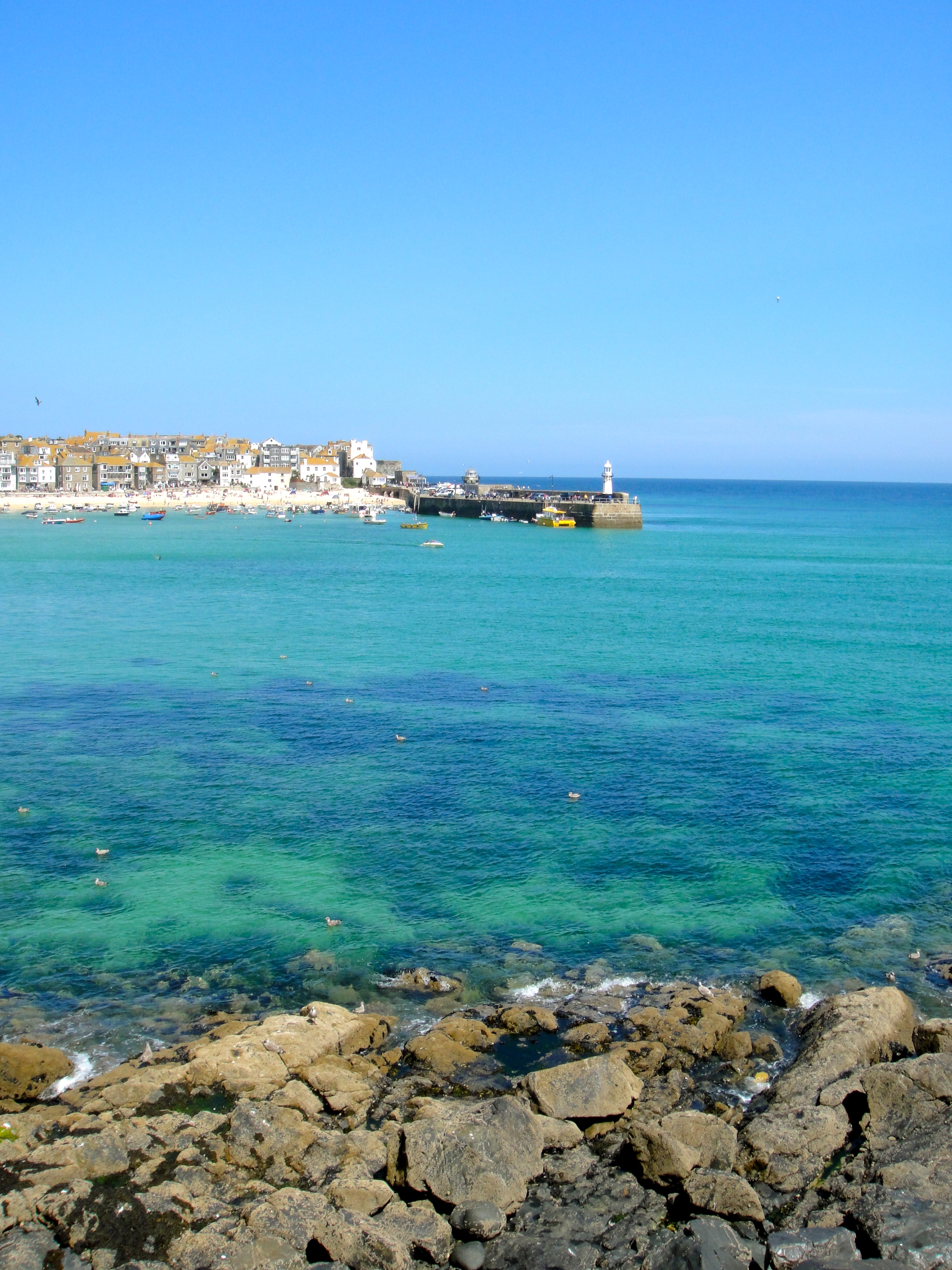
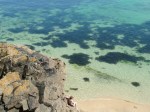
Yes, this IS English sea!

Together with this tradition, you expect to find plenty of seaweed, lots of rocks and stones and a slightly dull tinge to the seawater, making it altogether a more English, slightly less comfortable affair. But last year when I headed down to Cornwall, right at the bottom of our fair nation, I was flabbergasted by the site of such a stunning coastline, with such sapphire-sparkling crystal-clear turquoise waters that I could have been in the Caribbean. No wonder then that the little harbour town of St Ives has proved such an inspiration to generations of artists (Barbara Hepworth and Ben Nicholson being two foremost examples of modern times) that the world-famous Tate Gallery has set up an outpost there.

Well when I stayed last year, I too became inspired by the burst of very mediterranean colours that were all around me and, when I was, ironically, sat in the garden of my family home in Spain on the Mediterranean itself, I took to my canvas and recollected the beauty of what I had seen in Cornwall a few weeks before.

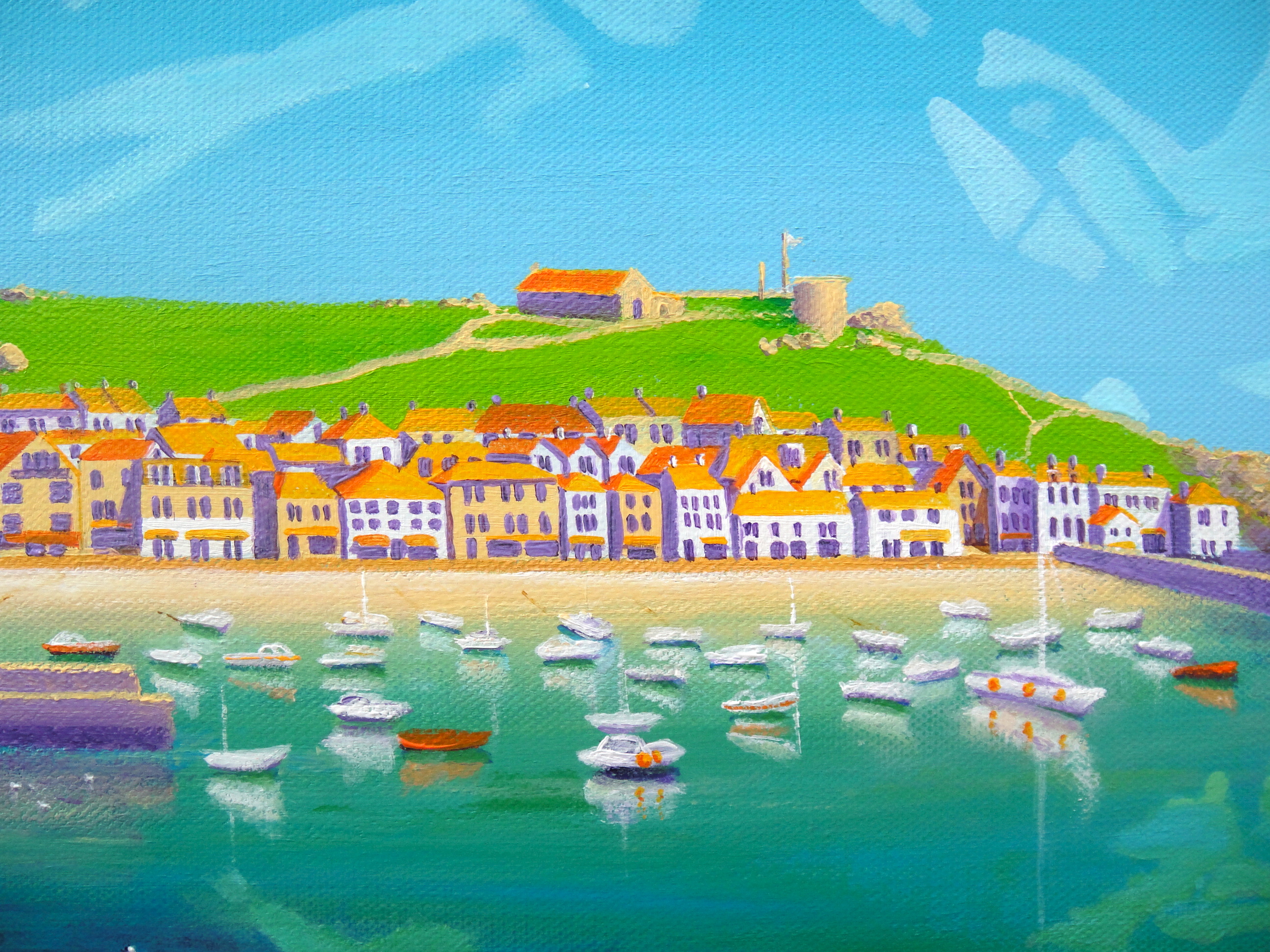
St Ives (Cornwall) (2012 © Nicholas de Lacy-Brown, acrylic on canvas, 60 cm x 50 cm)

My painting of Cornwall uses a simple colour palate with fresh oranges, greens and purples, while the turquoise qualities of the sea are reflected in all their beauty. I’ve introduced something of a cubism element when tackling the many rocks which frame the coast and most unusually of all, I’ve actually painted an impression of how the light dappled upon the canvas when I sat painting it in my parents’ garden, with the light cast through the intricate mesh of the jasmine tree. In this way I have forever captured a St Ives imbued with the light of the Med where I was inspired to paint it.

Detail of the harbour (© Nicholas de Lacy-Brown)

Detail of the town and lifeboat pier (© Nicholas de Lacy-Brown)

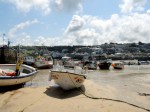
In addition, take a look at this little gallery of some of my photos from St Ives so you can see what inspired it.

Have an amazing Sunday.

© Nicholas de Lacy-Brown and The Daily Norm, 2001-2012. Unauthorized use and/or duplication of the material, whether written work or artwork, included within The Daily Norm without express and written permission from The Daily Norm’s author and/or owner is strictly prohibited. Excerpts and links may be used, provided that full and clear credit is given to Nicholas de Lacy-Brown and The Daily Norm with appropriate and specific direction to the original content.

Salamanca: My Painting – Homage to a sandstone city in oil on canvas

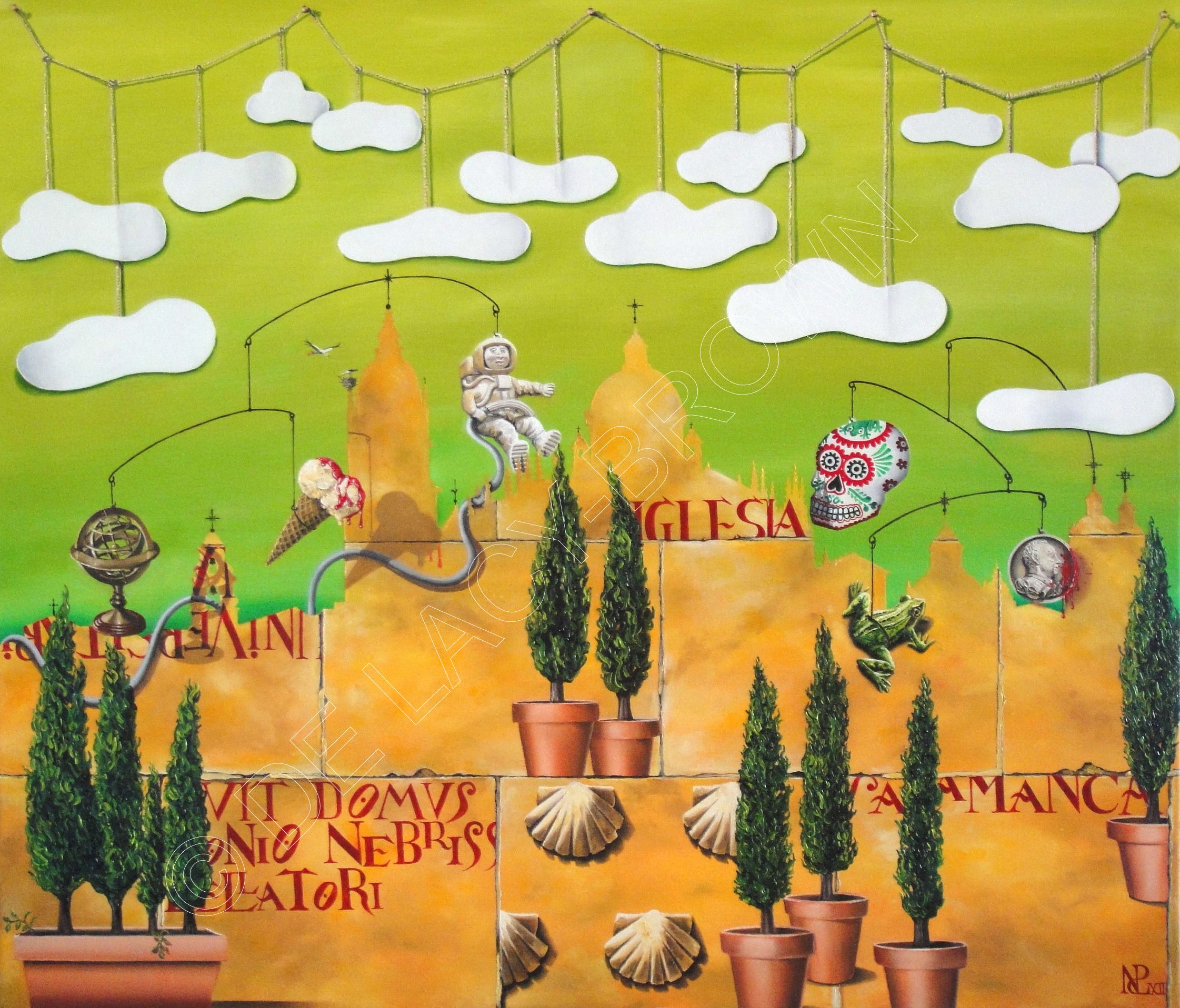
It’s been two months since I returned from the golden glowing sandstone Spanish city of Salamanca. There was so much to inspire me when I walked those elegant historical streets. When I gazed, mesmerised through my hotel window onto the stunning baroque Cathedral, the sun setting upon its orange stonework, and cypress trees gently waving from side to side in the evening breeze before it, a painting came to my mind. I rushed to make a quick sketch which I still have on the back of a reservation print out for the restaurant we were dining at that night. My painting of Salamanca was to contain what to my mind was the essence of the city – a kaleidoscope of dappled, marbled oranges and golds in a landscape uniquely built from the local Villamayor sandstone, a city bursting with historical artefacts flowing from the dual powerhouses of church and university. It is a city which is elegant in its antiquity, and yet bursting with fresh new life from its greenery, its strong local life, the pull of tourism and the thriving university population which resides there. This was my inspiration and shortly after returning from Spain I set to work on a large 105 cm x 90 cm canvas. I finally finished  the work over the long Jubilee Weekend. And here, exclusively, is the result, as I present my first (non-Norm) painting of 2012…
Salamanca (2012 © Nicholas de Lacy-Brown, oil on canvas, 105 cm x 90 cm)
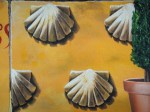
Dominating the centre of the canvas is a silhouetted skyline of the city, recognisable by the Cathedral spires and the intricate turrets, domes and baroque roofing of the nearby University. Rather than paint the detail of the buildings, I constructed the skyline out of a wall of villamayor sandstone bricks, in the same way that each building of the city is constructed. Those individual bricks act as a window onto different features of the city. On one brick you see the conch shells of the famous Casa de las Conchas, while on others, parts of the hand painted street letterings are featured, infamous for their historical use of pigs blood and olive oil.

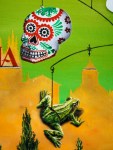
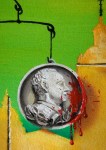
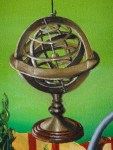
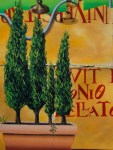
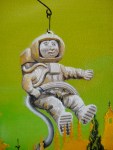
In the meantime, out of the Cathedral and the university, the ironwork crosses become large mobile-like structures, inspired by the great maker of mobile art, Alexander Calder. On these mobiles hang various symbols of the city. The astronaut and the ice cream which are usually imbedded in the intricate plateresque facades of the Cathedral and the University’s famous sandstone frog are all featured, as well as the skull upon which the frog sits (my painted skull is inspired by the Mexican Dia de los Muertos celebrations for which houses and graves are adorned with beautifully decorated hand painted skulls like this one). Represented too is the tradition of learning at the University, embodied in the Orrery (one of which I bought while in Salamanca as a souvenir of the city) as well as the famous Plaza Mayor, represented by the infamous bust of Fascist leader Franco which can be found amongst the busts of Spanish rulers around the square, and the inclusion of which causes such controversy that it is regularly vandalised. My Franco too has been vandalised, but is that paint on his face or blood on his hands? Finally the painting is generously sprinkled with various groups of cypress trees, tidily placed in terracotta pots at various spots across the canvas as well as a curtain of clouds sweeping across a clear green sky. Ooh and look out for the little stork’s nest embedded amongst the spires of the cathedral – the storks are a customary feature of the city and do not appear to cause the residents any hassle – in fact some churches have baskets placed on top of their spires to aid the storks in building a safe and secure nest!

So there it is, and above, so you don’t miss the details, are more photos showing the various individual aspects of the painting. I hope you like the painting and, more importantly, let me know what you think! I’ve already started a new work, so look out for that over the coming months.

© Nicholas de Lacy-Brown and The Daily Norm, 2001-2012. Unauthorized use and/or duplication of the material, whether written work or artwork, included within The Daily Norm without express and written permission from The Daily Norm’s author and/or owner is strictly prohibited. Excerpts and links may be used, provided that full and clear credit is given to Nicholas de Lacy-Brown and The Daily Norm with appropriate and specific direction to the original content.

Sunday Supplement: High Perspective (Viewed from 21c)

Having recently been voted the top city to visit in the world (as if we didn’t know it already), after last weekend’s Jubilee spectacular and, of course, with the olympics almost on our doorstep, it seems only appropriate that in this week’s Sunday Supplement, I feature one of my paintings which features the city of London as its central theme.

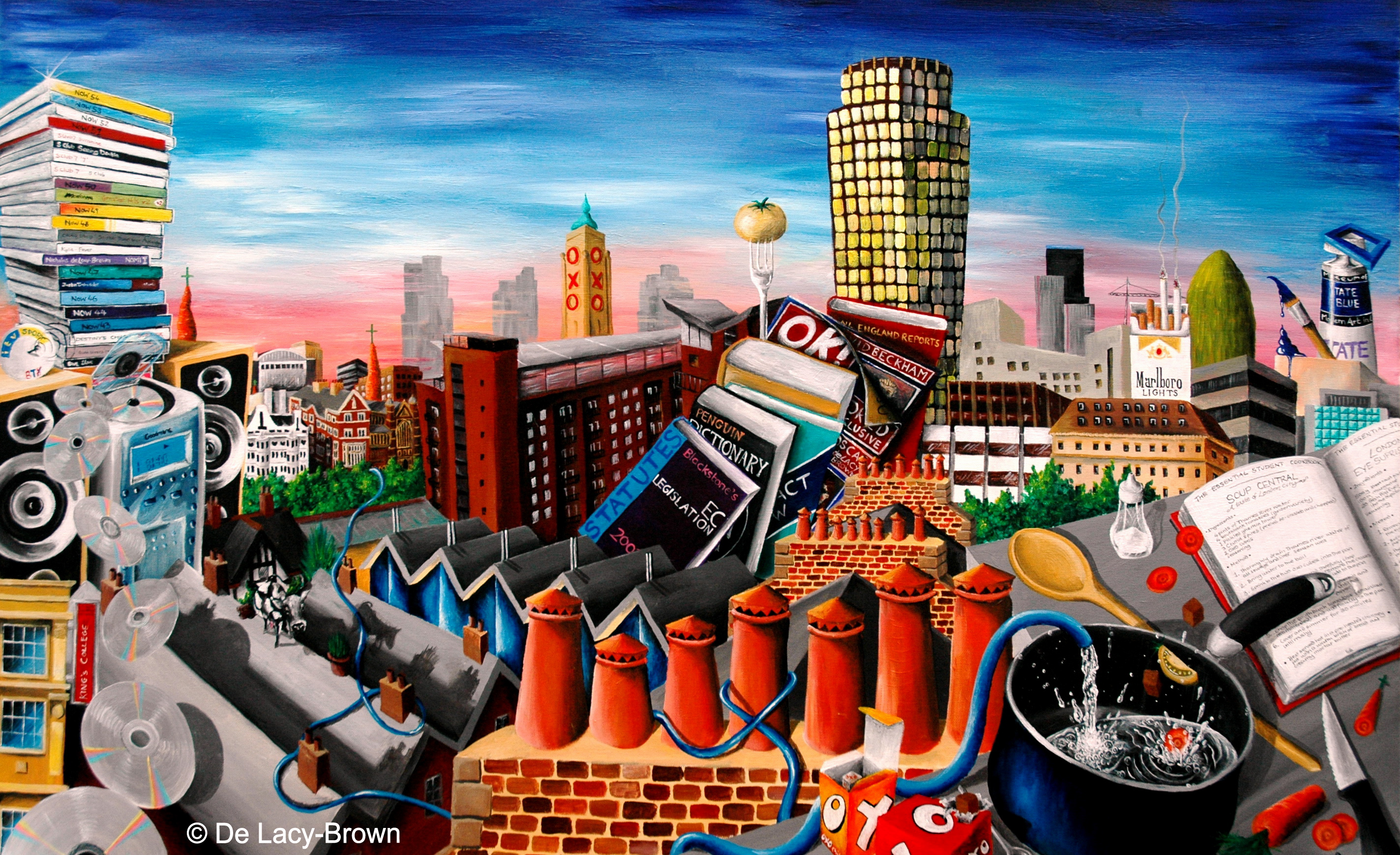
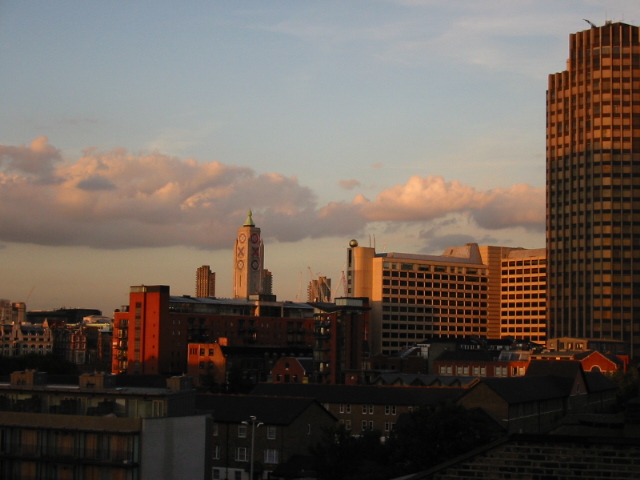
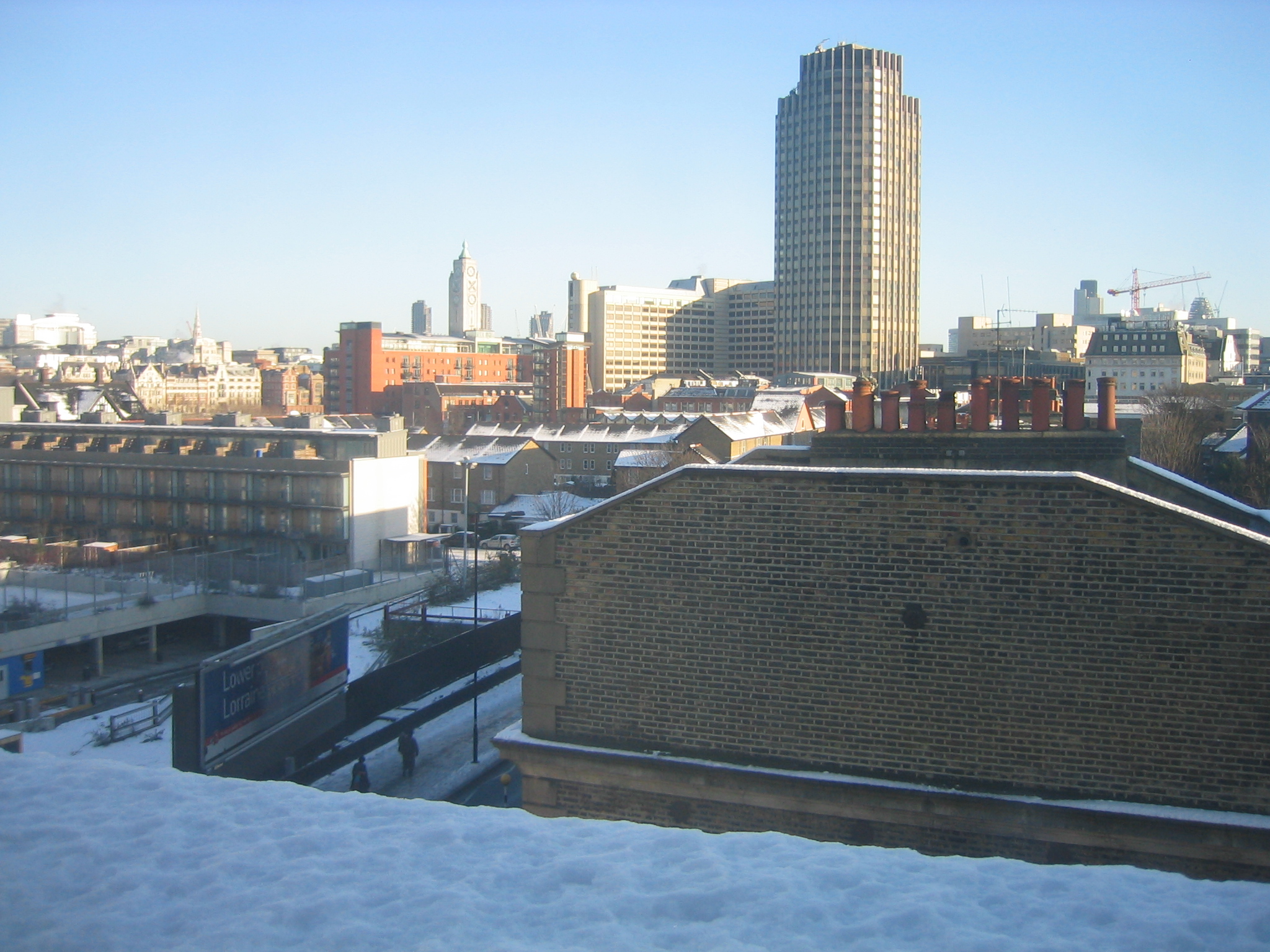
I moved to London ten years ago this September, when I came to study law at King’s College London. I was thrilled when, full of anticipation at what was to be my first day moving away from home in order to start university, I entered my student digs to find this view before me: a perfect vista over London’s south bank complete with the skyscrapers of the city and the tower of Tate Modern, all framing the iconic “Oxo Tower” at the centre. It was as though this room had been chosen for me as an artist, despite the reason for my studies being the pursuit of law. Over that year, I saw this incredible view change over the seasons, as buildings became blanketed with snow, shrowded in a thick mist, and glimmering with the soft hues of pinky golden sunsets and bright midday sun. At the end of my academic year, when my first year law exams were finally over, I imported a canvas into my room and sat down to paint this representation of my view.

High Perspective (Viewed from 21c) (2003 © Nicholas de Lacy-Brown, acrylic on canvas)

It’s not a straight forward landscape: far from it. Rather I used symbols to represent various landmarks rather than paint them directly as I saw them. The GMTV tower on the left for example was replaced with the stack of CDs which my friends and I were listening to during that year, this being a pertinent representation because the GMTV studios are where so many entertainment shows are filmed. Similarly I replaced the Tate tower with a tube of paint, and one of the large publishing headquarters with a stack of magazines (and a couple of law books to show willing). A predominant theme running through the work is food. This was inspired by the Oxo tower itself, named after the stock cube which, in the days when London’s south bank was a hive of industrial activity, would no doubt have been manufactured at the site. Since these stock cubes are frequently incorporated in soups and stews and casseroles, I started reinterpreting the London skyline as various vegetable ingredients which could then be added to the dish which is being cooked in the bottom right hand corner of the work. Instead of the golden balls on the corners of one south bank building, golden tomatoes take their place; similarly London spires become carrots and Norman Foster’s famous “gherkin” building is painted as just that. Finally, since I could see where the river was, but couldn’t actually see the water itself (owing to buildings blocking the view), I imported the water into the scene with the aid of a very long hose pipe which spirals through the roof tops and chimneys before finally adding much needed liquid into the saucepan on my windowsill.

The view as it really was back in 2002

And covered in snow…

So there you have it, one of my most prominent London works, and actually one of my most valuable painting sales when it was sold at exhibition in Mayfair in 2008. Not to worry though – if you like the work and wish you had the original brightening up your lounge, there are limited edition prints of the work available on my main art website, here.

Have a great Sunday and come back to The Daily Norm this coming week for a load of food and art-based posts including the unveiling of my newest painting!

© Nicholas de Lacy-Brown and The Daily Norm, 2001-2012. Unauthorized use and/or duplication of the material, whether written work or artwork, included within The Daily Norm without express and written permission from The Daily Norm’s author and/or owner is strictly prohibited. Excerpts and links may be used, provided that full and clear credit is given to Nicholas de Lacy-Brown and The Daily Norm with appropriate and specific direction to the original content.

National pride in a Diamond Jubilee Spectacular

As the Diamond Jubilee weekend draws to an end, there is a unanimous consensus that London has never looked so good, nor love for the Royal Family reached such an all-time high. Today’s climax of the Diamond Jubilee celebrations brought with it all the spectacular pomp and ceremony for which Britain is famed around the globe, awe-inspiring parades of gold and red, plush uniforms, glittering livery, grandly dressed horses and the stunning uniformity of hundreds of cavalry riding with precision along union jack flapping and crowd-lined streets. At its centre, the Queen and the Royals were a delight to watch, humbled and stunned by the incredible show of public support, as they made their way back to Buckingham Palace which last night played host to an unbeatably brilliant star-stunned concert and fireworks spectacle, and which today brought the celebrations to a glorious climax with the Queen’s balcony appearance and Royal Air Force fly past.

Words alone cannot properly express the full glorious extent of the past weekend, when spirits have run so high, and all the British and millions from Commonwealth countries around the world have joined together in giving shared thanks to the Queen for 60 years in which she has sacrificed herself for the good, the stability and the strengthening of all her peoples. The party which has resulted shows that London knows how to celebrate, even when times are down, and as the Diamond Jubilee has awed across three days of brilliant spectacle, we can only now sit back and look forward in feverish anticipation towards the Olympic festivities which are still to come.

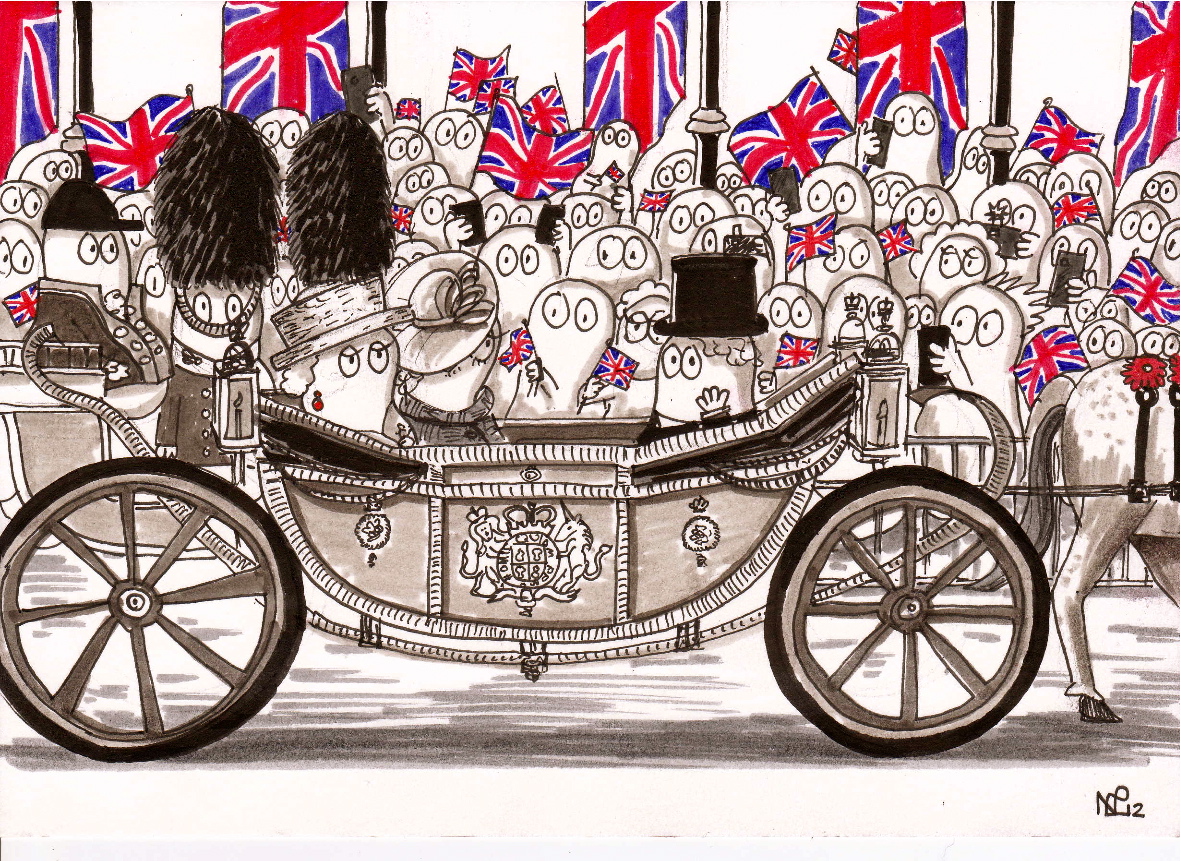
Norms fly the flag for the Diamond Jubilee procession (2012 © Nicholas de Lacy-Brown, pen on paper)

Since words are insufficient to express the brilliance with which London erupted into Jubilee carnival this weekend, I have scanned the internet, collecting together a series of photos which show just how incredible London looked as millions celebrated this weekend. But before you take a look at those, cast your eye over this little sketch which I made as the celebrations progressed. For in Norm world, they too have celebrated the Diamond Jubilee, lining the streets, waving the flag, and celebrating 60 fantastic years of their Queen. Long may it continue!

Note: these photos (apart from my sketch above) are from the internet. Appropriate copyright for the images is shown where the source was indicated on the bottom of the photos. Where a source is not indicated, the copyright belongs to either the BBC or the Daily Mail websites. 

Out and about with my iPhone – Part II

It was William Blake who wrote of England’s green and pleasant lands, words which have since been transposed into the rousing melody of “Jerusalem” by Hubert Parry.

I will not cease from mental fight, 
Nor shall my sword sleep in my hand, 
Till we have built Jerusalem
In England’s green and pleasant land

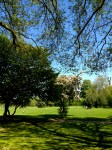
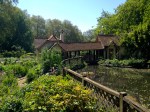
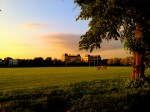
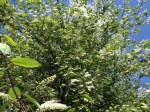
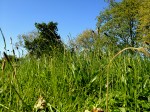
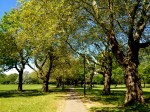
Now, as I walk around my surroundings, down in suburban South London, I find the final bars of that great hymn circling relentlessly inside my head, as all around me, after a month of unseasonably consistent rainfall, England has literally burst into the most pleasant, lusciously green landscape I have seen in recent memory. The tree boughs are so heavily weighted by a cornucopia of vivid green leaves and fresh, unfurling buds that they almost touch the ground. The grass is rich and thick, full of daisies and dandelions, betraying not a single batch of earth in between its lustrous verdant carpet. And all around the air is full of blossom, as it is gently warmed by a balmy early-summer sun, bringing with it ripe rememberings of childhood summers past, when with my family I would enjoy effortless evenings amongst the thickly sheltered forests of Hampshire and the Isle of Wight, picking bunches of wild flowers, and going to bed with a head full of fresh summer air and the imaginings of a Midsummer Night’s Dream.

All this comes to mind as I revel in this newly revitalised greenery surrounding me, even here, on the outskirts of London. And freshly inspired, with an excellent camera phone in my pocket, I have roistered the benefits of having a camera continuously by my side, so that for every scene of early-summer beauty before me, I can capture it like the work of art it is, a still life framed forever, to share with you on The Daily Norm.

These photos are just a few from a mass I have taken while enjoying the unseasonably warm weather we have had recently in the UK, as finally we were given a break from months of rainy monotony, and gave the summer a brief chance to shine through. I hope you enjoy them.

© Nicholas de Lacy-Brown and The Daily Norm, 2001-2012. Unauthorized use and/or duplication of the material, whether written work or artwork, included within The Daily Norm without express and written permission from The Daily Norm’s author and/or owner is strictly prohibited. Excerpts and links may be used, provided that full and clear credit is given to Nicholas de Lacy-Brown and The Daily Norm with appropriate and specific direction to the original content.

Deconstructed Norm Sculptures in a Setting (after Henry Moore)

Henry Moore, the British sculptor, is famous the world-over for his semi-abstract rounded bronze figures and organic wood-carved nudes. His indisputable popularity as one of the greatest sculptors of our age is demonstrated by the sheer proliferation of his works on public display in town centres and parks and the gardens of large country estates throughout the UK and around the globe. His organic, satisfying rounded forms do not offend polite society, but instead offer the right about of minimalist abstraction mixed with sentimental femininity and human characterisation. His sculptures often dominate the landscape, while inviting passers by to interact with the various holes and curves intrinsic to Moore’s work. They are like a Picasso abstract come to life, or a Michelangelo mother and child melted into a tender rounded form.

Henry Moore, Five Figures in a Setting (1937)

Yet it is not his sculptures which attract me. Don’t get me wrong – I love his works. They are satisfyingly curvaceous, with a mixed attraction of sharp edges and smooth polish, a recognisably humanised form with a metaphysical expressionless finish, open to interpretation, and perfectly executed from every angle. But for me, the real stars of any Henry Moore show are his sketches.

Henry Moore, Shelter Sketch Book (1967)

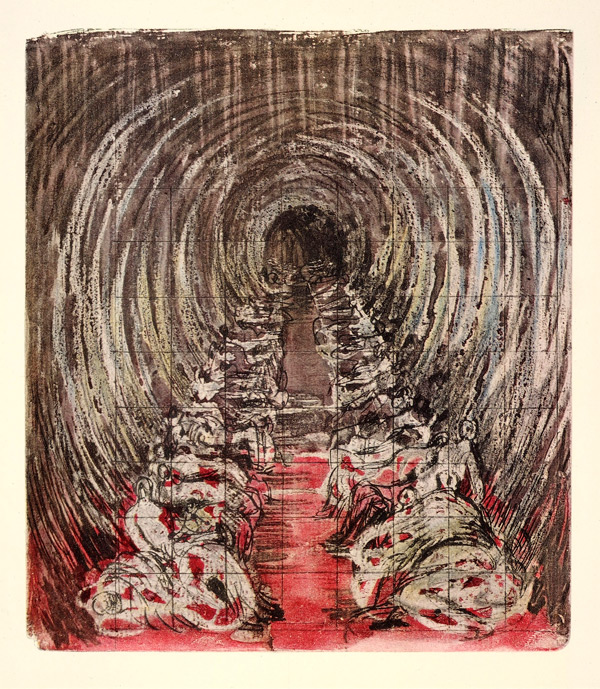
Often he sketched when ideas came into his head. Consequently Moore left us with a great variety of sketches in which we can see Moore exploring the various organic forms which are now famous sculptural manifestations, as well as plenty of rough drawings devoted to the mother and child image that so obsessed him, and paintings in which Moore appears almost to capture his three-dimensional forms, imprisoning them within an eternal two-dimensional abstract landscape. Come the second world war, and Henry Moore was made an official war-artist for Britain, but not as a sculptor. Instead Moore would head down to the packed tube stations, where thousands would huddle, every night, using the dark tunnels and airless platforms of the London underground as make-shift bomb shelters. There he captured moving scenes of humans at one in their vulnerability, trying to sleep through their anxiety, curled up together for moral support.

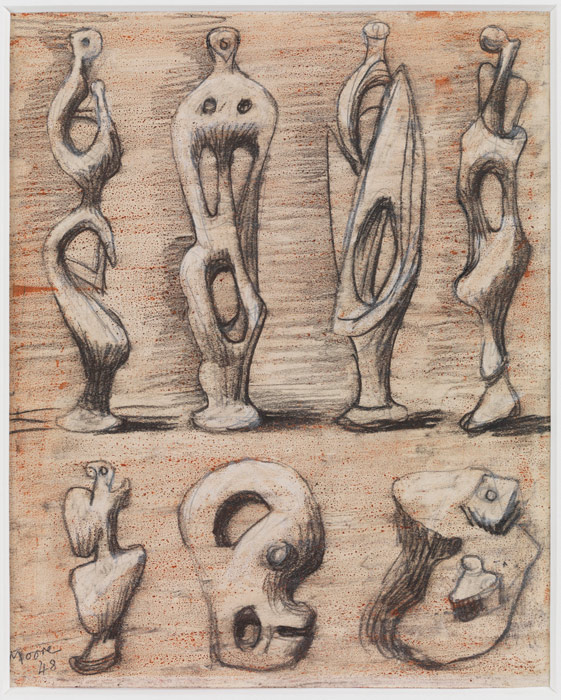
Henry Moore, Standing Figures and ideas for Sculpture (1948)

Moore’s sketches offer us an invaluable insight into the great sculptor’s mind at times when he would pour his sculptural imaginings straight onto paper, some of which eventually made it into three-dimensional form, but many of which never made it beyond the confines of pen on paper. But these sketches are far more than just studies or ideas. They are works of art in themselves, capturing moments of intense human emotion, with a dark intensity and an often surreal setting. They are artistic masterpieces worthy of as much attention as the finished sculptural articles which have become a staple of British art all over the world.

Ever inspired by the wonderful art around me, I sketched my own Moore-inspired sculptural forms. Taking the humble Norm as the basis for my drawing, I deconstructed my Norm, presenting the customary rounded figure as a body with strings and a hollow inside, a head, two large eyes, the Norm’s characteristic single hand, and a crescent-like structure which I like to think of as an expression of a Norm’s eye-lashes. The result is a sketch full of the abstract surrealism which Moore’s own works promote, but with that hint of Norm playfulness, some strings and a blood-red hollow, all set within a shady landscape leading to nowhere. If only Moore had seen it. The Deconstructed Norm would have been slowly rusting somewhere in a park by now. Unless it was made of metal, in which case it would have been nicked…

Deconstructed Norm Sculptures in a Setting (after Henry Moore) © 2012, Nicholas de Lacy-Brown, pen, pencil and watercolour on paper

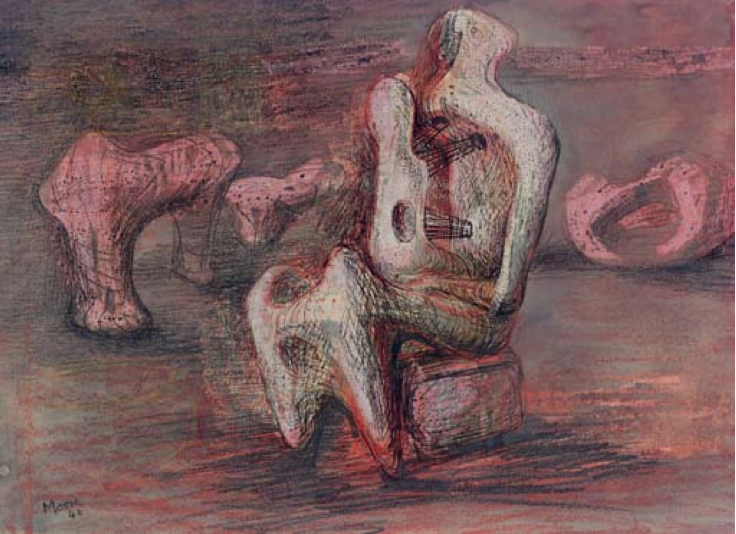
I leave you with a mere handful of some of Moore’s incredible works on paper. Until next time…

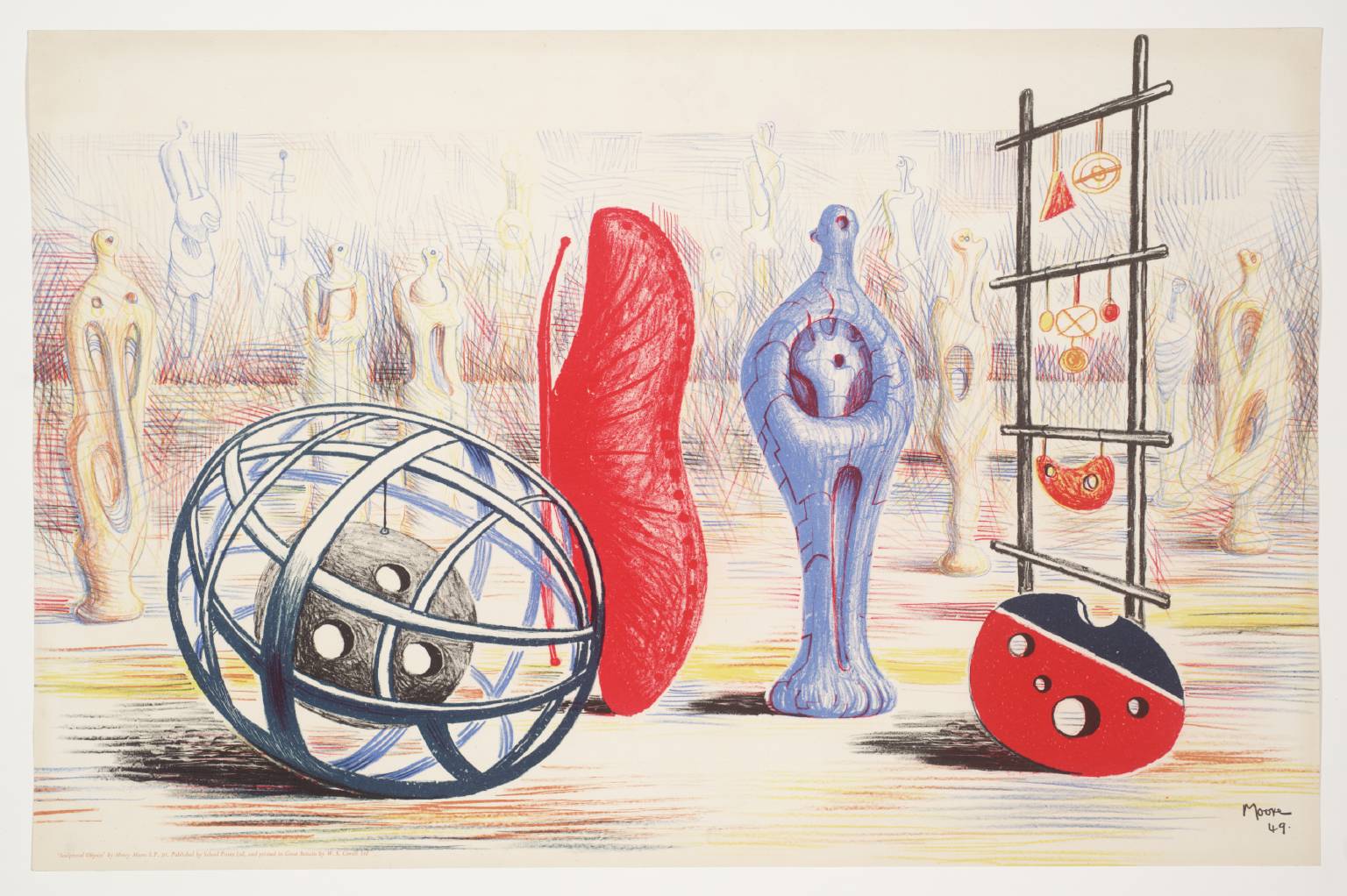
Henry Moore, Sculptural Objects (1949)

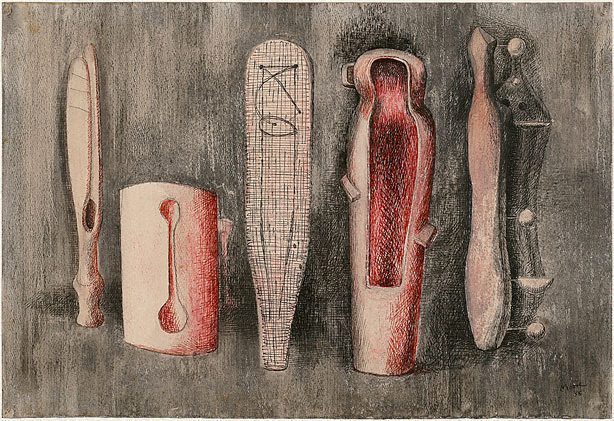
Henry Moore, Sculptural Ideas, hollow form (1938)

Henry Moore, Mother and Child; Drawing for a sculpture in wood and string (1949)

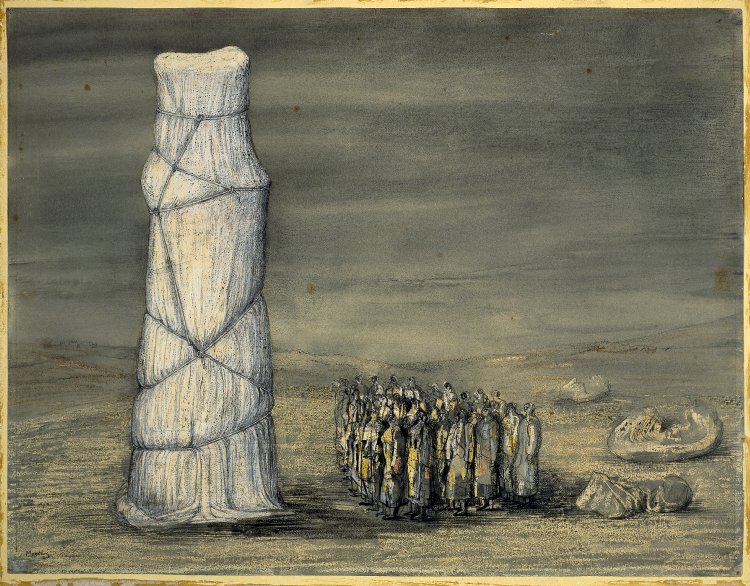
Henry Moore, Crowd Looking at a Tied-uo Object (1942)

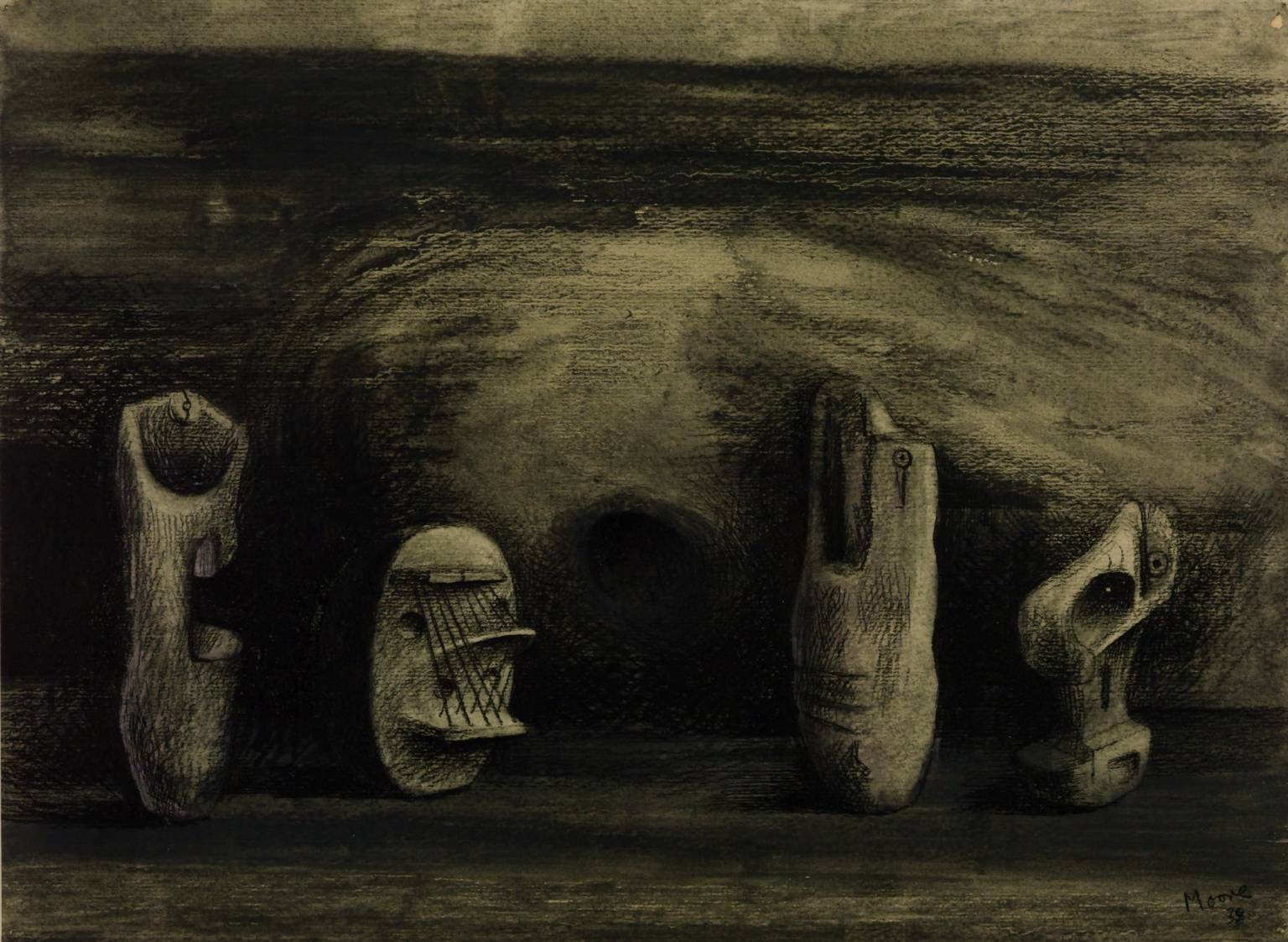
Henry Moore, Four Forms, drawing for a sculpture (1938)

Henry Moore, Ideas for Sculpture in a Setting (1938)

A baby showered with a chequerboard of tropical cupcakes

We English don’t easily accept the idea of being influenced by America. We’ve always been the slightly supercilious older brother of our younger indefatigable sibling across the pond, wincing at the loosening of our Queen’s erudite parlance, the widening of the vowels, the advent of stuffed-crusts, of bagels and Reese’s peanut butter cups, the creator of drive-thru culinary culture and the over-eager stentorian expression which makes the refined of Kensington tut condescendingly. Yet it’s an indubitable fact of English life that the influence of the big U-S-of-A is all around us, in our music, in our food, on TV, in politics and on the high street, and no more so is this influence felt than in the way we party. The US gave us candy-abundant halloween and fairy light-filled dazzling Christmas spectaculars. And the latest craze which is doing the rounds is the Baby Shower.

According to wikipedia, a Baby Shower is generally thrown either shortly before or shortly after a baby is born. Only women are invited (!) and the new mother in question is “showered” with presents. So when my dear friend Sarah gave birth to a beautiful baby girl, Ruby, a few months ago, and announced that she would finally bring her angelic daughter down to London to be celebrated amongst our vivacious friendship circle, I decided that this baby shower business ought to be tried and tested, refined in the way that only the english know best. For starters we had men, and quite right too. In the modern world, with fathers playing an increasingly dominant role in the daily task of bringing up their children, why shouldn’t they too be showered with gifts and praise and plenty of sweet treats? Presents were showered aplenty – little cute girly outfits and some alcoholic indulgence for papa (when he’s off duty, naturally) and my gift – a norm sketch of course – devoted to little Ruby.

Welcome Ruby (© 2012 Nicholas de Lacy-Brown, pen and ink on paper)

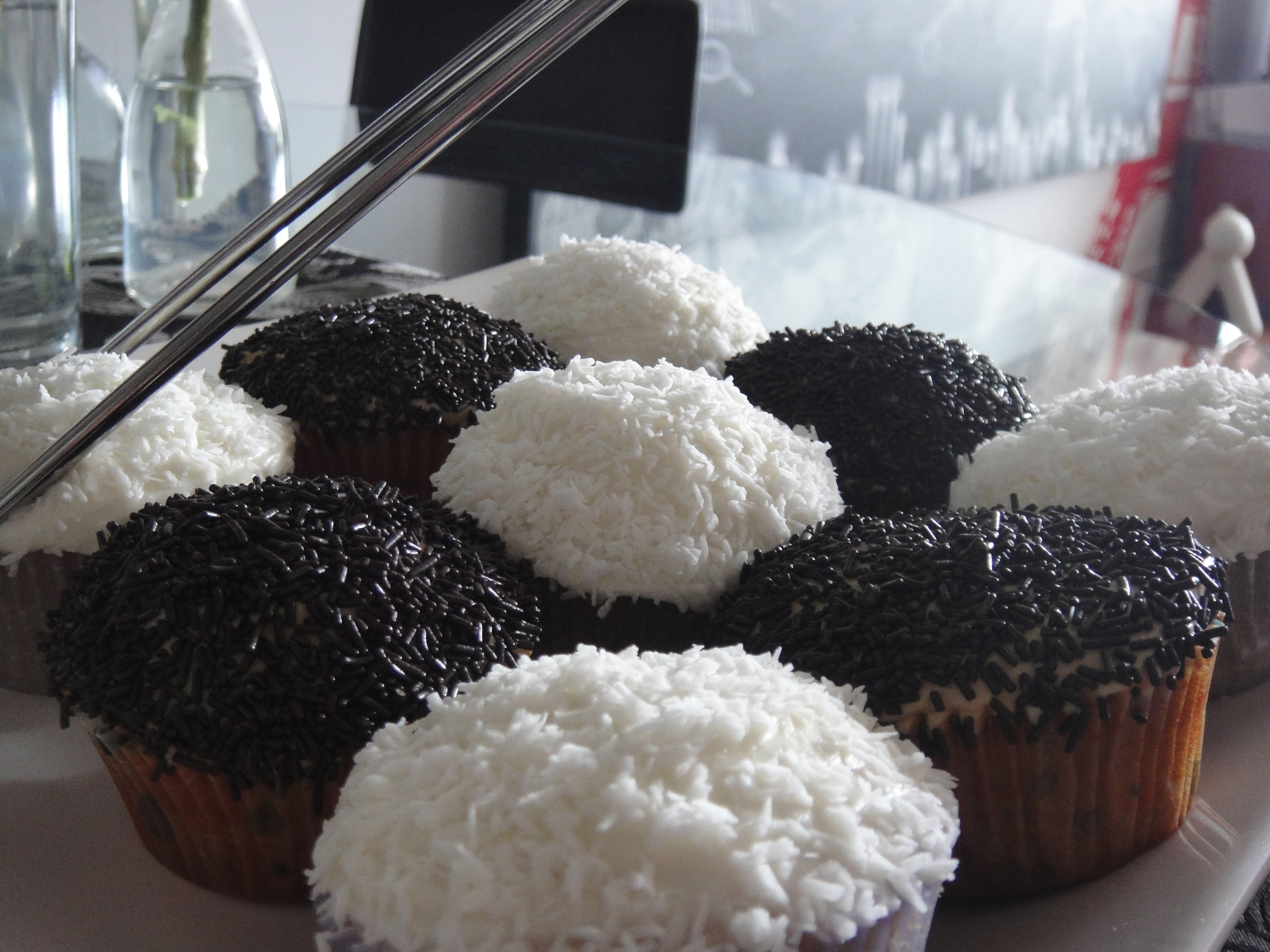
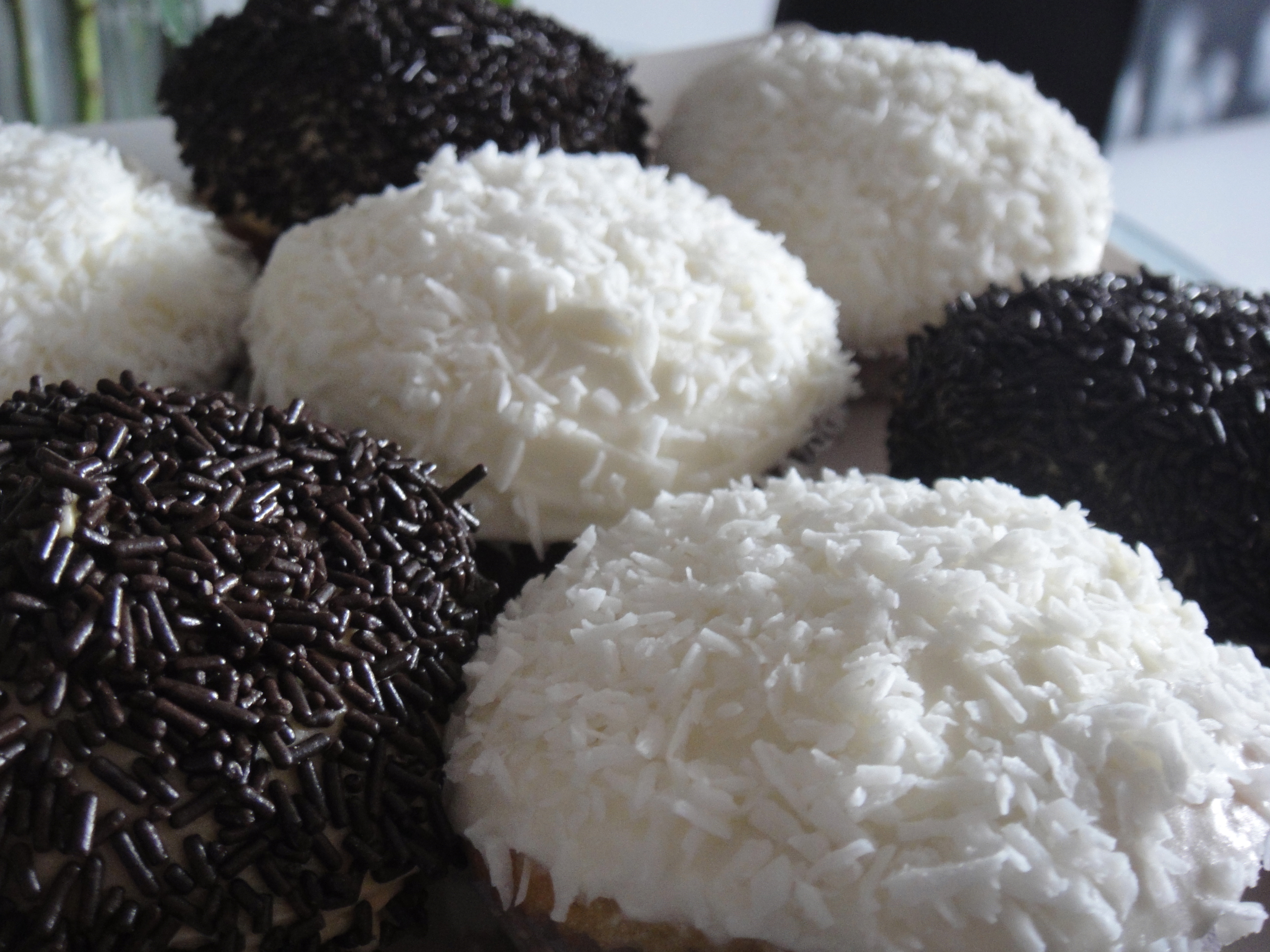
As for the sweet treats – cupcakes went all tropicana, as I chose flavours referencing the mixed and culturally rich heritage of Ruby’s parents – I made one batch of tropical cupcakes –  pineapple and coconut cupcake referencing Sarah’s Jamaican heritage and father Truong’s South Pacific patrimony – while tropical banana meets England’s now demised Hungry Monk restaurant, inventor of the infamous Banoffee Pie, inspiration for my second selection – a banoffee cupcake, loaded with indulgent dulce de leche and a gingery spiced banana sponge. Tropical flavoured, but London refined, these cupcakes were the epitome of english chic, served like a chequerboard of black and white, with one cake covered in coconut and the other in chocolate vermicelli. The fruit in both, and additions of creamy coconut milk and indulgent full fat milk respectively, made these cakes moist and delicious, while the butter cream icing was a suitably indulgent celebration of the beautiful new life in our midsts.

My recipes were adapted from London’s favourite purveyor of cupcakes, the Hummingbird Bakery. To make the pineapple and coconut cupcake, take 140g caster sugar and beat in 40g unsalted butter. Then add 120g plain flour, a pinch of salt, and 1 and a half teaspoons of baking power and mix everything together with an electric mixer. Once everything is combined, gradually mix 120ml of coconut milk and half a teaspoon of vanilla essence into the flour mixture, and finally add and mix in one egg (I actually used a bit more coconut milk – my mother always told me that the softest sponge mixtures always drip of the mixing spoon like syrup, and therefore I always add a bit more milk to achieve this effect – but it’s a matter of personal taste). Prepare 12 paper cupcake cases. Chop up 8 rings of tinned pineapple into small chunks and disperse evenly in the bottom of the paper cases. Pour the cake mixture on top and place in the oven at 170 degrees celsius for around 20-25 minutes. Test with a skewer to make sure the cakes are cooked. The skewer should come out clean. Once the cakes are cooled, make your butter icing. Beat 250g icing sugar with 80g unsalted butter with an electric mixer. Slowly add 25ml of coconut milk and whisk until very white and light and frothy (around 5-10 minutes). Paste onto the cake with a palette knife and sprinkle liberally with desiccated coconut.

The banoffee cupcakes are pretty similar. 140g of caster sugar should be added to 80g of unsalted butter. Then add 120g plain flower, a teaspoon of baking powder, a pinch of salt, a teaspoon of ground ginger and a teaspoon of ground cinnamon. Mix until well combined and then slowly add 120ml of whole milk and two eggs. Separately mash up approximately one largish banana (around 120g peeled) and stir into the cake mixture. Spoon into paper cases and cook at 170 degrees for around 20 minutes. For the icing, beat 250g icing sugar with 80g unsalted butter. Then, if you want to make your icing indulgently dulce de leche, take a small can of condensed milk and simmer on a low heat for 3 hours (yep, this takes patience) without opening the can. Make sure the water doesn’t dry out in the pan and the tin is always covered with water or the tin will explode. After three hours, open up the can and you should find yourself with a tin full of caramel deliciousness. Add a few tablespoons of this to your butter icing mixture depending on how sweet and rich you want it. Build up on your cakes with a palette knife and sprinkle chocolate vermicelli liberally over the cakes.

And there you have it. Uber sophisticated tropical cupcakes, perfect for the summer, whether a baby is forthcoming, newly arrived, or just a distant pipe-dream.

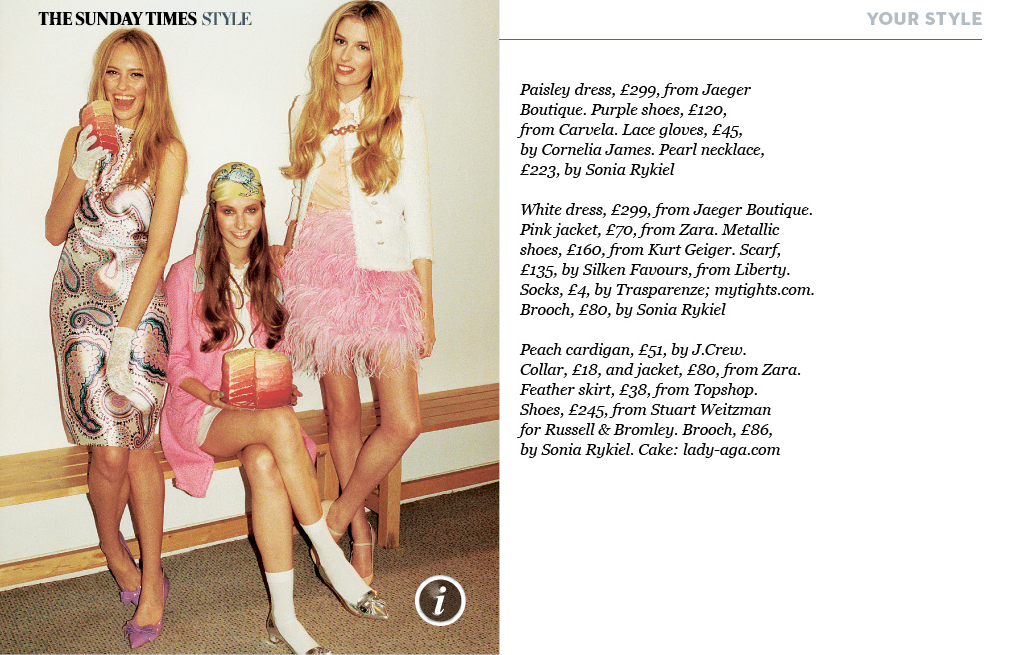
PS: Talking of uber-chic cupcakes, I am SO proud of my friend Celia whose red-velvet multi-layered ombre cake made it into this week’s Sunday Times style section as shown here… amazing!