Skip to content

Posts tagged ‘Artist’

Interpretation No. 14 – Deia

How could I not paint Deia? Such was my jaw-dropped awe at this village on the slopes of a rocky Mallorcan paradise that i wanted to rush home and start 40 paintings simultaneously. But while more will surely follow, with time short, I opted for the “something is better than nothing” option and set about painting a small gouache landscape to enter my collection of interpretations. Rather than paint the main cluster of Deia’s buildings, such is the image which frequents the most postcards, I opted instead to paint the surrounding mountains and smaller settlements, finding these to be by far the most inspirational. However catching the mountain light and the vast scale of nature’s backdrop was not easy, and while I am fairly satisfied with this initial attempt, I surely need to try my hand at other views of this incredible place. Until then…

Interpretation No. 14 , Deia (2015 © Nicholas de Lacy-Brown, gouache on paper)

Interpretation No. 14 , Deia (2015 © Nicholas de Lacy-Brown, gouache on paper)

© Nicholas de Lacy-Brown and The Daily Norm, 2001-2015. Unauthorized use and/or duplication of the material, whether written work, photography or artwork, included within The Daily Norm without express and written permission from The Daily Norm’s author and/or owner is strictly prohibited. Excerpts and links may be used, provided that full and clear credit is given to Nicholas de Lacy-Brown and The Daily Norm with appropriate and specific direction to the original content. For more information on the work of Nicholas de Lacy-Brown, head to his art website at www.delacy-brown.com

Orient: Painting the landscape of Mallorca

I have become enchanted, some might even say obsessed, with the landscape of Mallorca. How could I be otherwise? I have the advantage of living in one of the most perfectly compact, incredibly diverse and utterly breathtaking naturally beautiful islands in the world. From crystal clear waters on fine sandy beaches, to mountain ranges so sensational that they have been protected by UNESCO, Mallorca is a pure paradise of landscapes, and a world apart from the beach babe reputation it gained over the years.

Unsurprisingly, as an artist newly arrived in Mallorca, I have an incredible thirst to paint the land around me. No wonder that I have some 5 paintings currently on the go in my light-infused studio which is blissfully big enough to allow so many projects to proceed at any one time. And the latest to achieve completion, and now my second major oil painting of Mallorca since my arrival at the end of last year is this one: Orient.

Orient (2015 © Nicholas de Lacy-Brown, oil on canvas)

Orient (2015 © Nicholas de Lacy-Brown, oil on canvas)

Based on the stunning scenery of the Tramantana mountains amidst which I was lucky enough to spend a working week back in January, this painting depicts one of the breathtaking views I encountered. So utterly perfect because of its symmetry and its central view of one such beautiful mountain, this view reminded me of the landscape near Aix-en-Provence which has the Mont Sainte-Victoire at its centre, and which so fascinated Cezanne that he painted countless renditions of it. Similarly enchanted by this view, I never had any doubt that I would apply it to canvas, and here is the finished result. Now I can’t wait to complete another.

© Nicholas de Lacy-Brown and The Daily Norm, 2001-2015. Unauthorized use and/or duplication of the material, whether written work, photography or artwork, included within The Daily Norm without express and written permission from The Daily Norm’s author and/or owner is strictly prohibited. Excerpts and links may be used, provided that full and clear credit is given to Nicholas de Lacy-Brown and The Daily Norm with appropriate and specific direction to the original content. For more information on the work of Nicholas de Lacy-Brown, head to his art website at www.delacy-brown.com

Interpretation No. 12 – Capuchin Monks, Amalfi

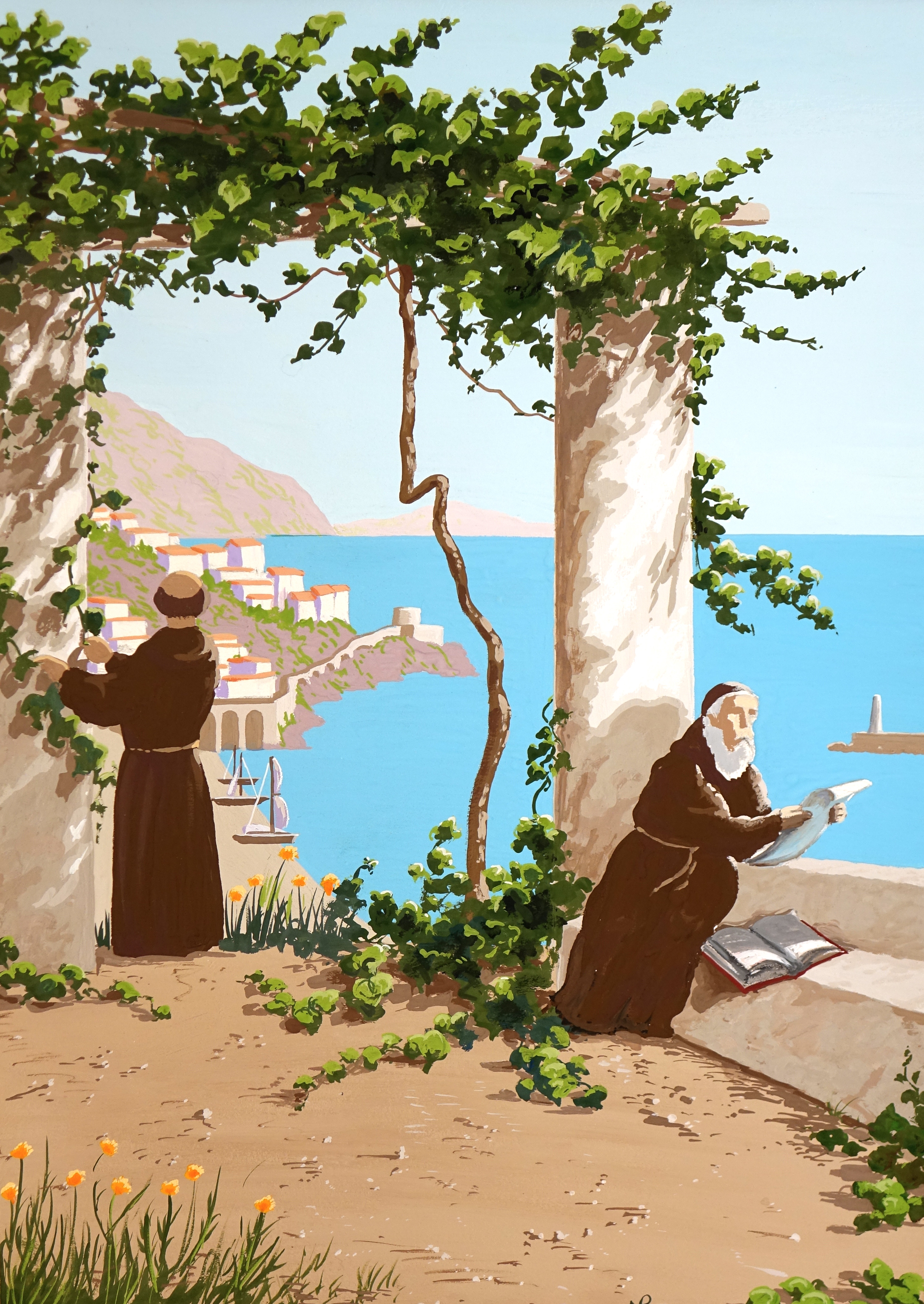
The heady days of Amalfi coast indulgence are now too many days behind me to count – it must be at least 250 rather forlorn days since I sampled the paradise of Amalfi, Capri and Positano during a blissful week on the Italian coast last summer. And it has been almost as long since I last thought to paint the place, even though it was on my hotel balcony on the Amalfi Coast that my collection of interpretations began. It was therefore something of a blast from the past when, opening up sketch book the other day in order to start a new gouache project, I discovered a half finished gouache painting based on the Amalfi Coast, left sadly uncompleted.

My feeling with paintings is that each painting has its time, and even when a project goes unworked for some time, it should always be left until the time is again right to continue it. A painting should never be destined for the bin. So when I reopened this hitherto unfinished work, I so enjoyed the breath of fresh Italian air that gushed open my opening it that I decided that the time was right to finish it off, even if it meant completing the Amalfi scene here in my new home of Mallorca.

Interpretation No. 12: Capuchin Monks, Amalfi (2014-15 © Nicholas de Lacy-Brown, gouache on paper)

Interpretation No. 12: Capuchin Monks, Amalfi (2014-15 © Nicholas de Lacy-Brown, gouache on paper)

The painting, which will be the 12th in my collection of gouache interpretative landscapes, was actually based on an old engraving we picked up in Amalfi just before catching a boat back home to Positano. Being a city renowned for its ancient homemade papers, we could not resist buying a print on Amalfi’s finest, and as soon as we found this image, I was captivated. There was something about the alluring tranquil activity of the Capuchin monks depicted, one tying back a vine and the other reading before a view of Amalfi, that made me want to recreate this idyllic scene of the joie de vivre for modern times.

The original engraving we purchased in Amalfi (c. 1880, artist unknown)

The original engraving we purchased in Amalfi (c. 1880, artist unknown)

A gouache interpretation was born and now, thanks to my rediscovery of the image, it is completed. I am pleased with the relative simplification I have achieved by repainting the scene in broad flat gouache colours, and I have to say that the colour has certainly brought this 19th century engraving back to life. It could almost be modern day except that, sadly (or not for those rich enough to stay there), the Capuchin Monastery of Amalfi is today the swish Gran Hotel Convento di Amalfi, a place from which this view can still be very much enjoyed, albeit sadly without the monks.

© Nicholas de Lacy-Brown and The Daily Norm, 2001-2015. Unauthorized use and/or duplication of the material, whether written work, photography or artwork, included within The Daily Norm without express and written permission from The Daily Norm’s author and/or owner is strictly prohibited. Excerpts and links may be used, provided that full and clear credit is given to Nicholas de Lacy-Brown and The Daily Norm with appropriate and specific direction to the original content. For more information on the work of Nicholas de Lacy-Brown, head to his art website at www.delacy-brown.com

Mallorca Sketchbook: Olives and Grain

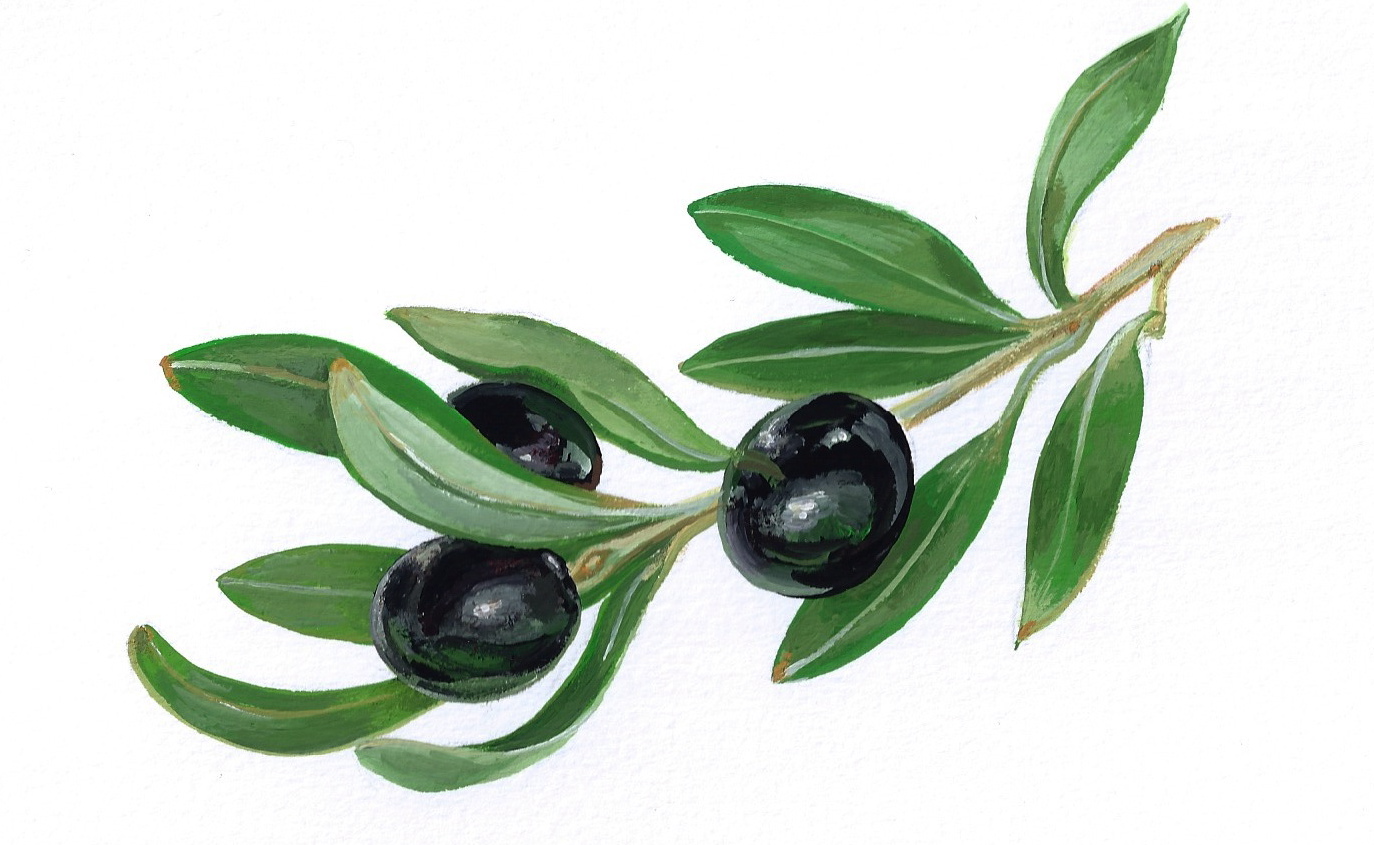
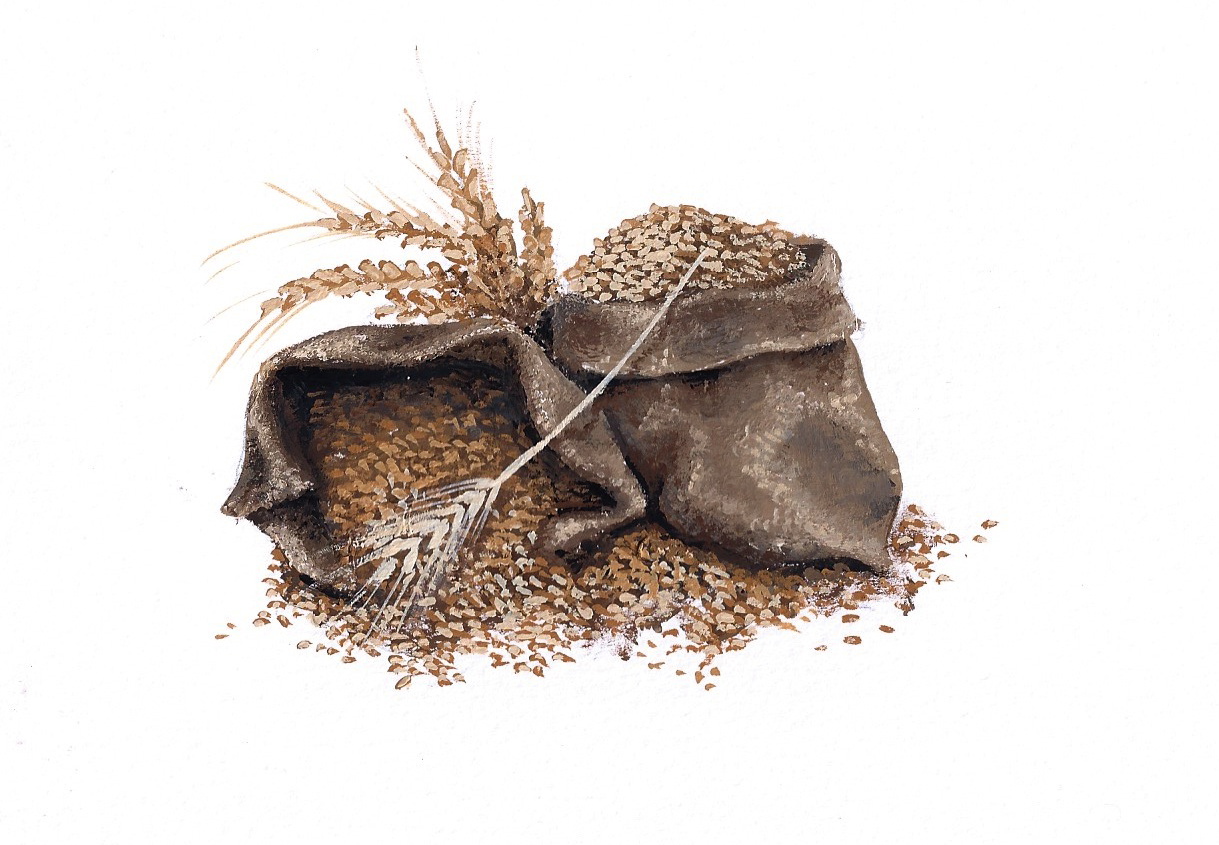
To call these little paintings “sketches” is perhaps something of a misnomer, not least for my sketchbook which is traditionally full of black and white line drawings. However, my move to Mallorca has undoubtedly coincided with a rush of colour into my life, and the drawings I am doing now are more colourful in their creation. They are also painted – these two little detailed sketches are painted in my new favourite medium for quick artwork: gouache.

Representing very much two staples of Mediterranean cuisine, these little paintings illustrate the grain which goes into Mallorca’s local bread, and the black olives which are so plentiful all over the island.

Black olives (2015 © Nicholas de Lacy-Brown, gouache on paper)

Black olives (2015 © Nicholas de Lacy-Brown, gouache on paper)

Grain (2015 © Nicholas de Lacy-Brown, gouache on paper)

Grain (2015 © Nicholas de Lacy-Brown, gouache on paper)

© Nicholas de Lacy-Brown and The Daily Norm, 2001-2015. Unauthorized use and/or duplication of the material, whether written work, photography or artwork, included within The Daily Norm without express and written permission from The Daily Norm’s author and/or owner is strictly prohibited. For more information on the work of Nicholas de Lacy-Brown, head to his art website at www.delacy-brown.com

Arrival – Painting the moment when the Mallorca Move sunk in

In the time since we arrived in Mallorca a little over 2 months ago, I have been constantly creating. Such are the benefits of stepping into an intrinsically creative role as Artistic Director of an amazingly dynamic company. But the time for painting for my own personal collection has not been so profuse. Yet I knew that I was going to paint very soon after we arrived. It was in fact on the Tuesday following our arrival on a Saturday evening that a painting first appeared in sharp focus in my mind.

We had stepped out on a walk one afternoon in search of water. Living in a city next to the sea, an awareness of the ocean is continuous, and yet an immediate proximity with the water is not always so easy. Here in Palma, before you get to the sea, you need to traverse roads and parks, jogging lanes and a busy harbour. But on that afternoon, we walked our way through one section of the harbour, passing yacht clubs and huge boats being renovated for the summer, only stopping when we came to the water’s edge.

Arrival (2015 © Nicholas de Lacy-Brown, oil on canvas)

Arrival (2015 © Nicholas de Lacy-Brown, oil on canvas)

There, sitting with my legs flopped over the harbour edge mere inches from the surface of the water, I gazed directly into the sinking sun before me as it plummeted behind the hillside silhouette and the outline of Bellver castle sitting atop the city. The sky was glowing more and more yellow, and as the light darkened, the water became more like silky liquid ink, and the reflections upon it were golden. It was in this moment that I allowed myself to dream, to wander from reality into a moment of a pure epiphany; a time in which it dawned on me for perhaps the first time how our lives had changed for the better, and how we had moved to a paradise of Mediterranean harbours, of white gleaming yachts, and sunshine.

And there it was. An image of that same view floated into my mind. It was always intended to be a simple image – just the water, the sun, the reflection, the sunset and the cluster of white yachts bobbling upon the water. Yet in that simplicity there is carried a weighty realisation – that we had made the big leap to a new life and a new beginning – It was the moment of our true arrival.

© Nicholas de Lacy-Brown and The Daily Norm, 2001-2015. Unauthorized use and/or duplication of the material, whether written work, photography or artwork, included within The Daily Norm without express and written permission from The Daily Norm’s author and/or owner is strictly prohibited. Excerpts and links may be used, provided that full and clear credit is given to Nicholas de Lacy-Brown and The Daily Norm with appropriate and specific direction to the original content. For more information on the work of Nicholas de Lacy-Brown, head to his art website at www.delacy-brown.com

Norms: The Saints Collection | Saint Nicholas

It’s a public holiday in Spain today, which can’t be bad going this close to Christmas. And the reason for the break? Why jolly old Saint Nicholas of course, a saint with whom I share both a name and no doubt a love of gift giving, and whose feast day on the 6th December is timed perfectly with the arrival of Christmas spirit across the world.

So what better excuse, thought I (as if one were needed), to relaunch a further instalment of my now close to sold-out Norm Saints Collection than to create St Nicholas Norm himself.

St Nicholas Norm (2014 © Nicholas de Lacy-Brown, pen and gold paint on paper)

St Nicholas Norm (2014 © Nicholas de Lacy-Brown, pen and gold paint on paper)

Better known these days as the red-robed, large tummied, jolly old Santa Clause whose name derivates from the Dutch Sinterklaas, itself from a series ofelisions and corruptions of the transliteration of “Saint Nikolaos”, the original Saint Nicholas was far less colourful, but no less generous. The various legends surrounding the saint include his secret payment of the dowries of three daughters of a wretched poor man in order to prevent them from entering into prostitution, as well as the rescue of three boys who were being incarcerated in a tub by an evil butcher who planned to make them into pies in a kind of precursor tale to Sweeney Todd. Thus, in traditional depictions, three boys are often shown in a tub, and St Nicholas is often shown clutching three bags of coins to represent the dowries he generously bestowed upon the three girls. And naturally, true to form, both images appear in my Saint Norm depiction.

But asides from specific legends, St Nicholas is known throughout Christendom as the patron Saint of Children, and indeed of sailors, so references to both appear in this sketch, while his routes in the Orthodox world are reflected in my somewhat festive orthodox skyline. All in all, a Christmassy Norm Saint for the Christmas Season.

© Nicholas de Lacy-Brown and The Daily Norm, 2001-2014. Unauthorized use and/or duplication of the material, whether written work, photography or artwork, included within The Daily Norm without express and written permission from The Daily Norm’s author and/or owner is strictly prohibited. Excerpts and links may be used, provided that full and clear credit is given to Nicholas de Lacy-Brown and The Daily Norm with appropriate and specific direction to the original content. For more information on the work of Nicholas de Lacy-Brown, head to his art website at www.delacy-brown.com

Zeno Brains and Oracle Stones: Jan Fabre at La Llotja

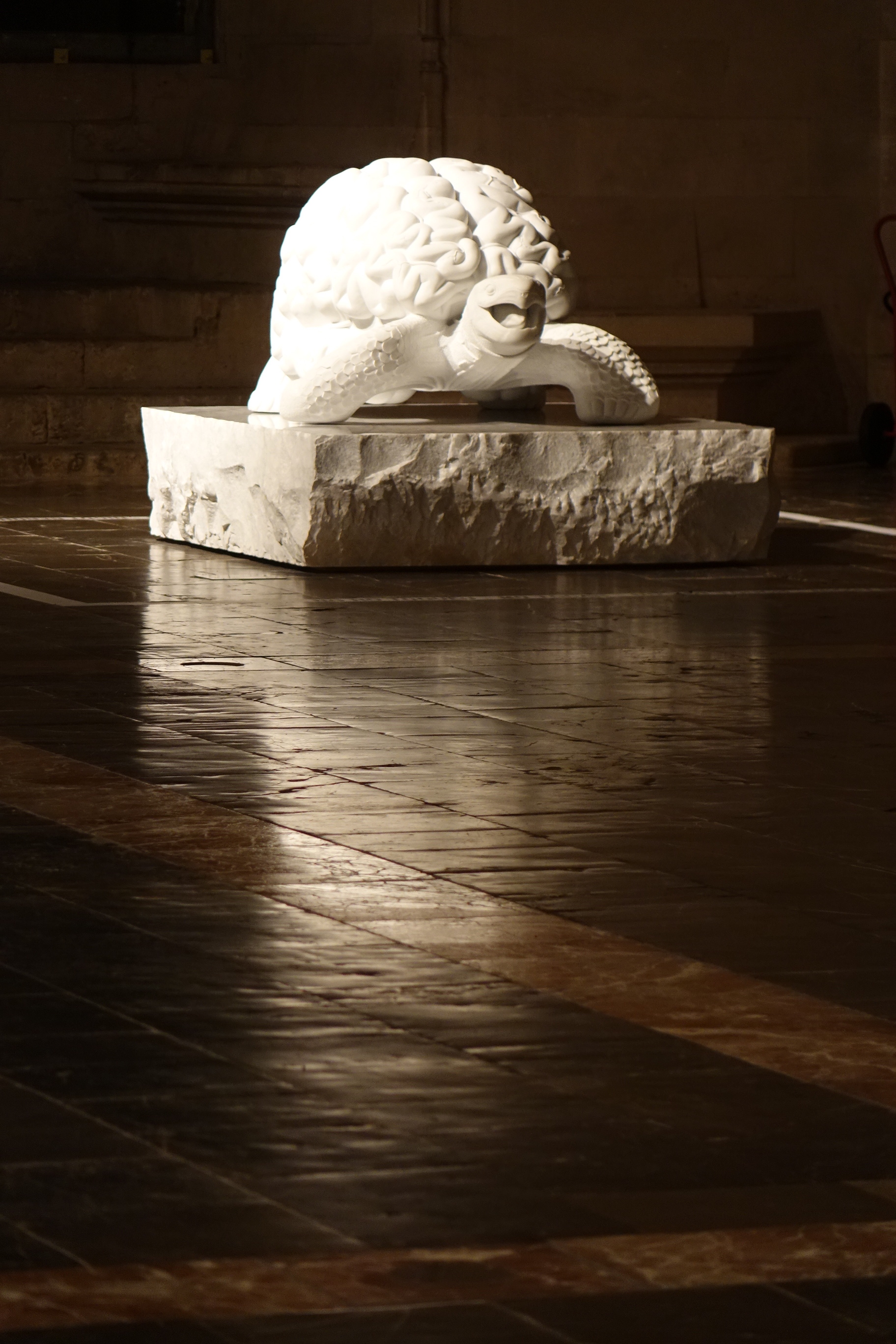
Jan Fabre is a multitalented creator. Having successfully dappled in writing, performance, and screenplays, he has also shown himself to be a prolific artist, skilled in drawings and installations quite asides from his stunning sculpture work. He is also tremendously successful. He was the first contemporary artist to be given a solo exhibition at the Louvre in Paris (“L’ange de la métamorphose”) and has participated several times in the Venice Biennale, and twice in the Kassel Documenta. Yet most importantly of all (for me at least), his incredible thought-provoking works are now on show in Palma, in the haunting lofty space that is La Llotja – the old 15th century maritime exchange, on the city’s waterfront.

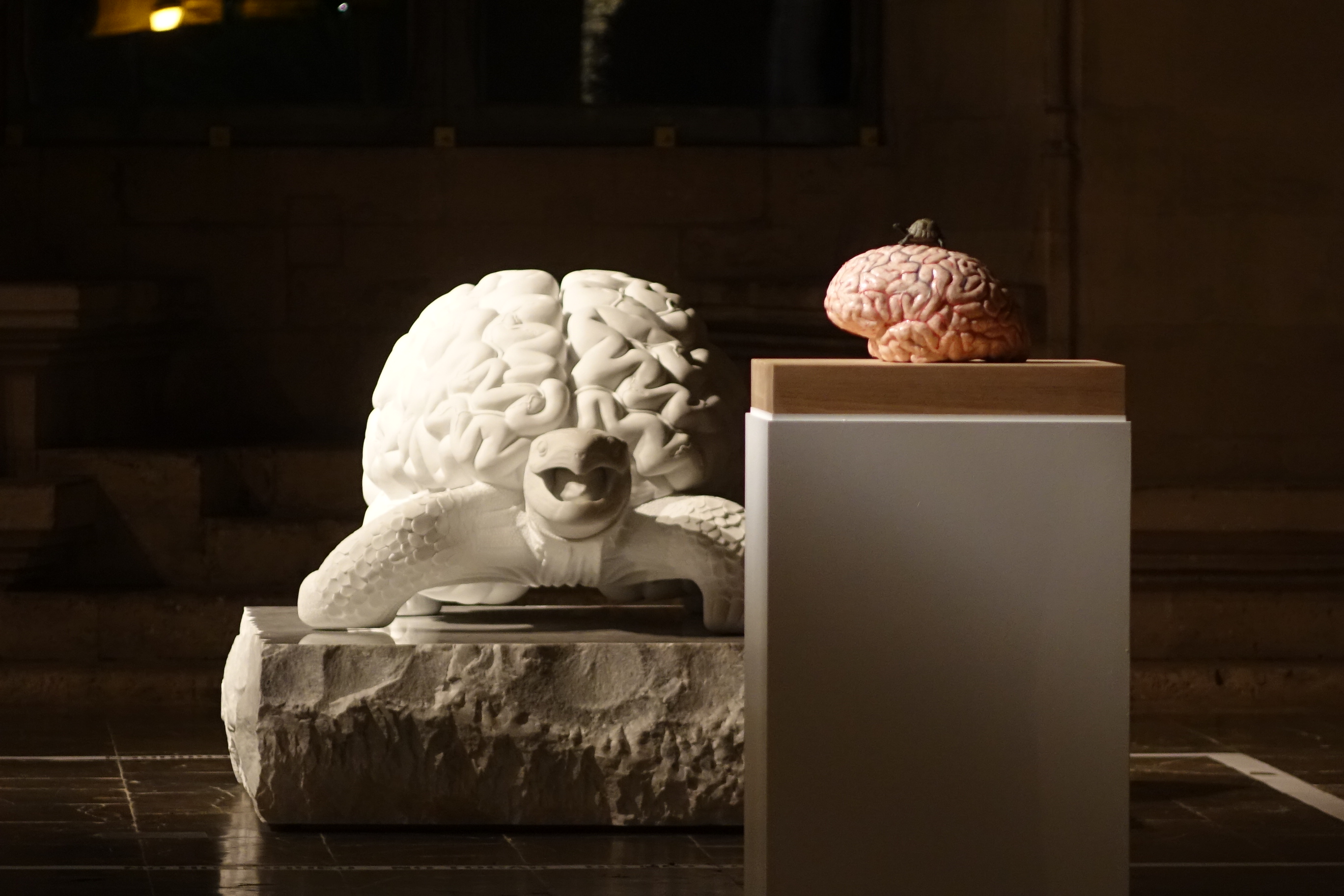
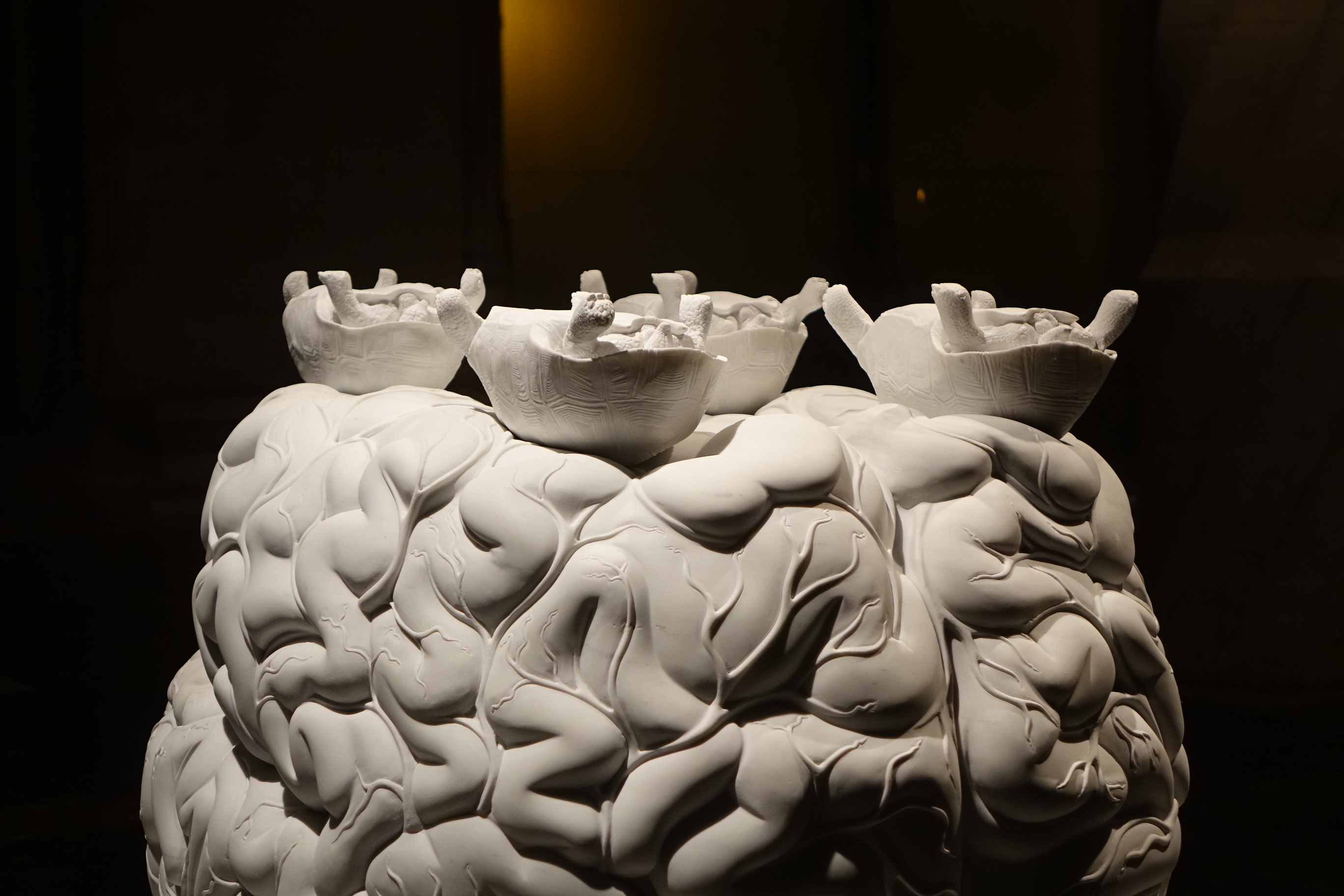
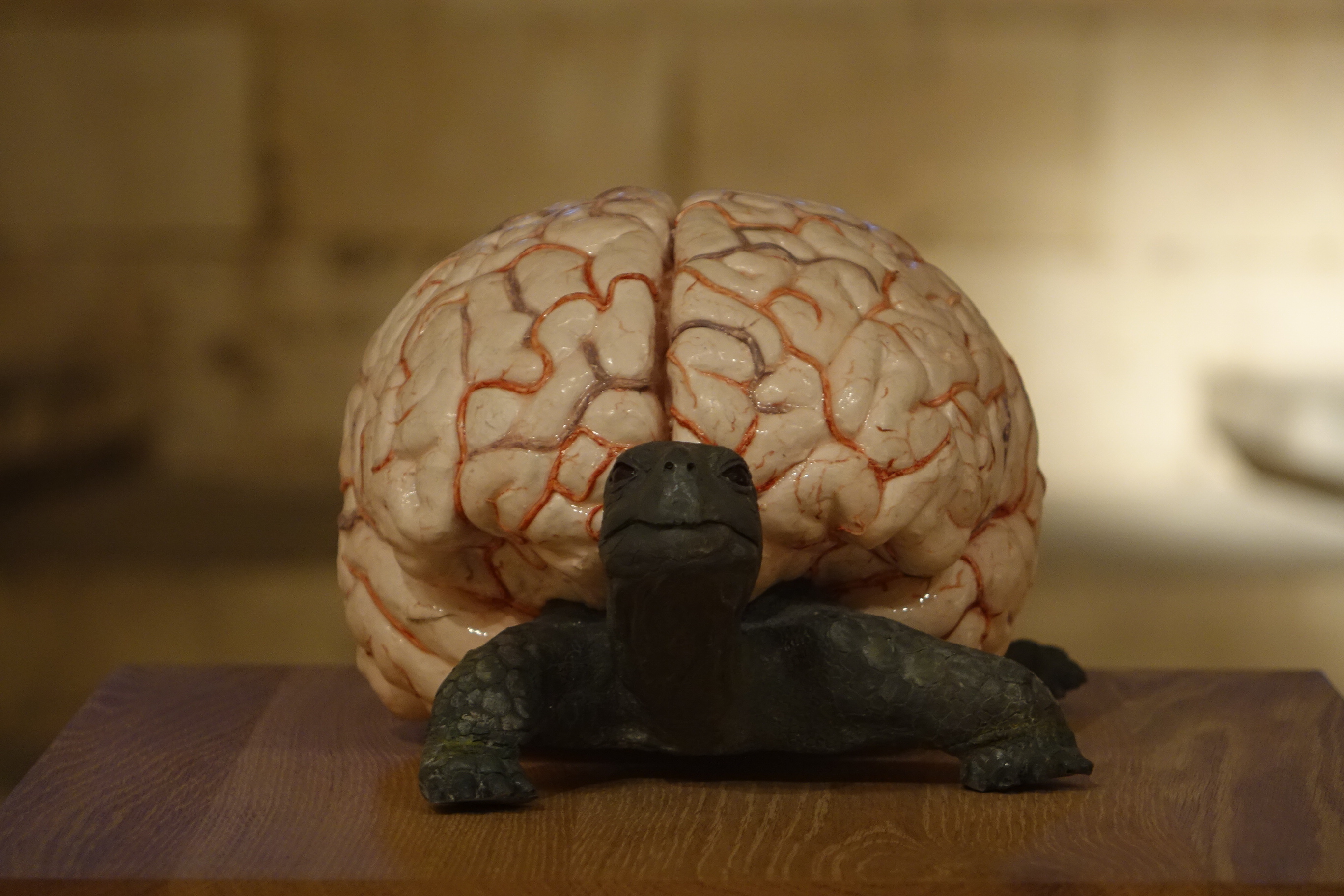
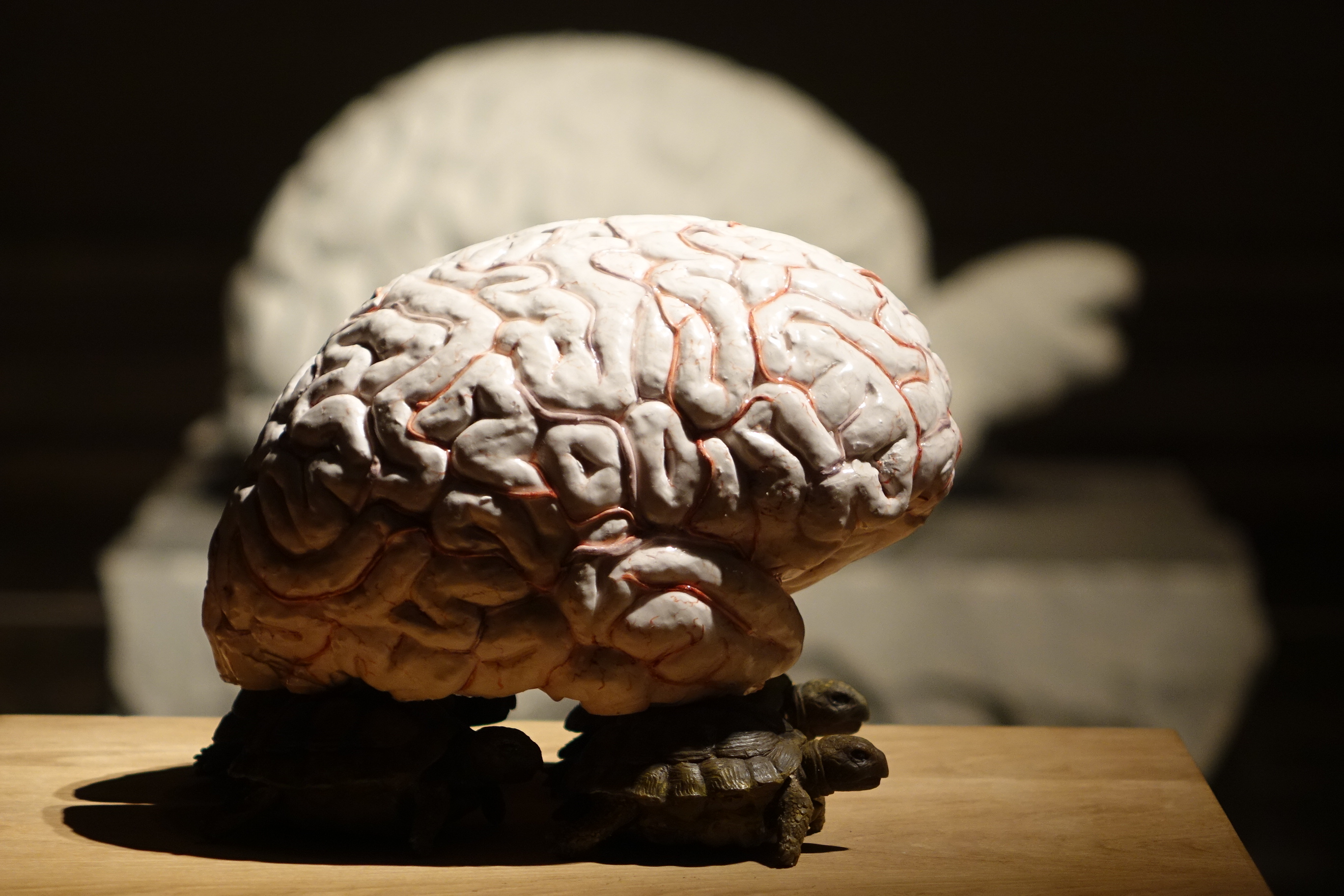
His Palma exhibition, Zeno Brains and Oracle Stones, is as enigmatic as it is enticing. After perusing the internet for some time, I have found myself quite unable to find any coherent explanation of what the exhibition is about, nor what the artist intended to represent. And yet the show, which comprises some 9 sculptures revolving around the same theme: the tortoise and the brain, makes for a stunning sight. This is not least because of the space: given over to these simple sculptures in marble and stone, illuminated powerfully in the otherwise dark cavernous space, the whole installation feels almost spiritual as each sculpture sits soulfully in wait, a focused spotlight falling upon its cold stone surface in the darkness. But the sculptures themselves are so enigmatic that they call out for engagement and interpretation.

DSC01305 DSC01309 DSC01321 DSC01315 DSC01302

Fabre gives us tortoises on a brain, tortoises under a brain; a tortoise whose shell is made out of a brain, and another who carries a brain precariously on its shell. There are tortoises lying upside down atop a brain, and others pushing a brain away as though in an attempt to alleviate the world of this unnecessarily complex organism. So why the brain and why the tortoise? Well they are both as old as time, and perhaps both inexplicable as a manifestation of nature’s creativity. They also look pretty similar working in unison – a partnership evidently explored by Fabre in these various sculpted manifestations. But there is almost something sinister and monstrous about the works, and while I am not completely invested with an understanding of how the works reflect Kafka’s Metamorphosis, as is suggested by the brochure accompanying the exhibition, I can see the plight of Gregor Samsa in the upturned tortoises, reminding of how that poor man awoke one fated morning finding himself unable to get up from his back which had metamorphosed into the shell of a hideous beetle.

DSC01330 DSC01319 DSC01318 DSC01311 DSC01325

But as ever, the enigma of this work is integral to its power, and much of the reason why I love it. And if you wish to see it you must be quick, for the exhibition will end on 21 December 2014. Yet another reason to get yourselves to Mallorca before the year is out.

Sorolla: The Colour of the Sea

When I made my life-changing move from London to Mallorca earlier this month, I moved to a place equally as enriched by culture as the city from which I came. In fact comparing the size of Palma de Mallorca to London, you could quite easily declare Palma to be disproportionately abundant in art. Everywhere you walk in amongst the maze of streets in the old town, a flashy new contemporary art gallery or dusty quaint antique shop emerges, and of course the city lays host to Es Baluard, one of Spain’s most significant contemporary art spaces. However Palma is also home to one of the La Caixa Foundation’s finest art galleries, set within the stunning art nouveau setting of the old Gran Hotel building, and its exhibition diary is easily as significant and varied as that of a much larger city. And La Caixa’s current exhibition, Sorolla: The Colour of the Sea is no exception.
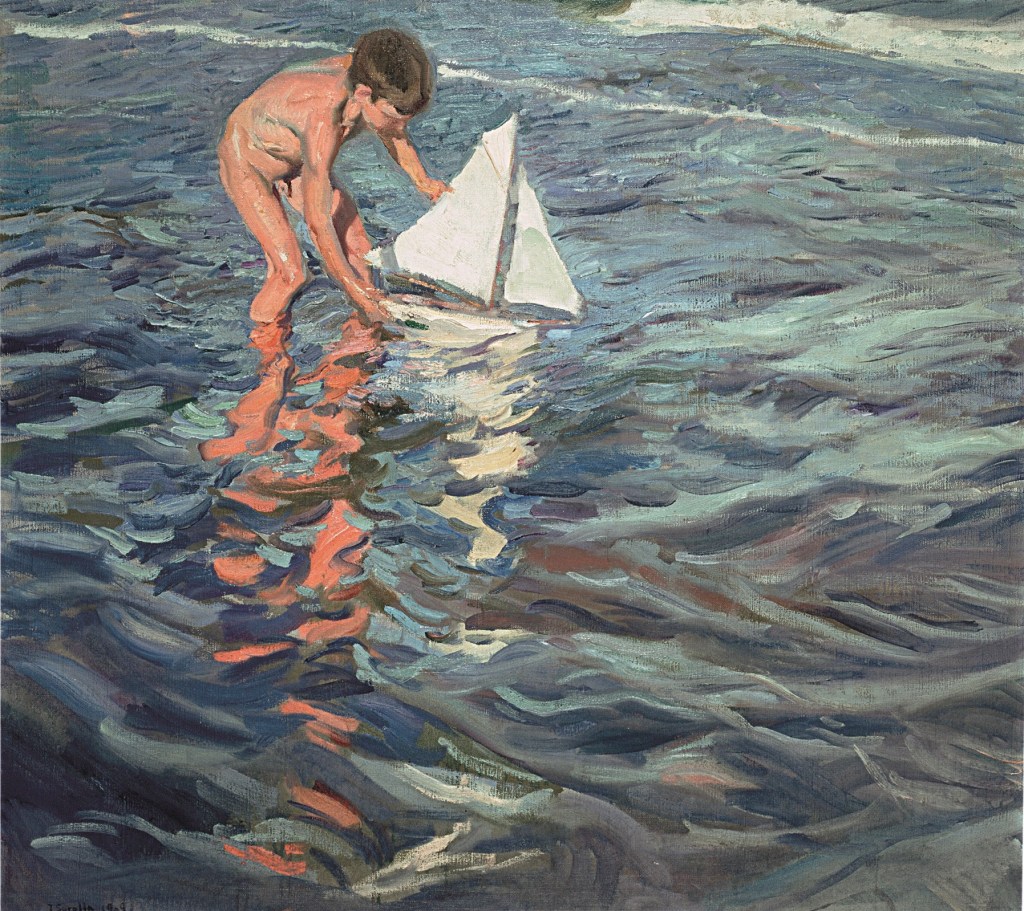
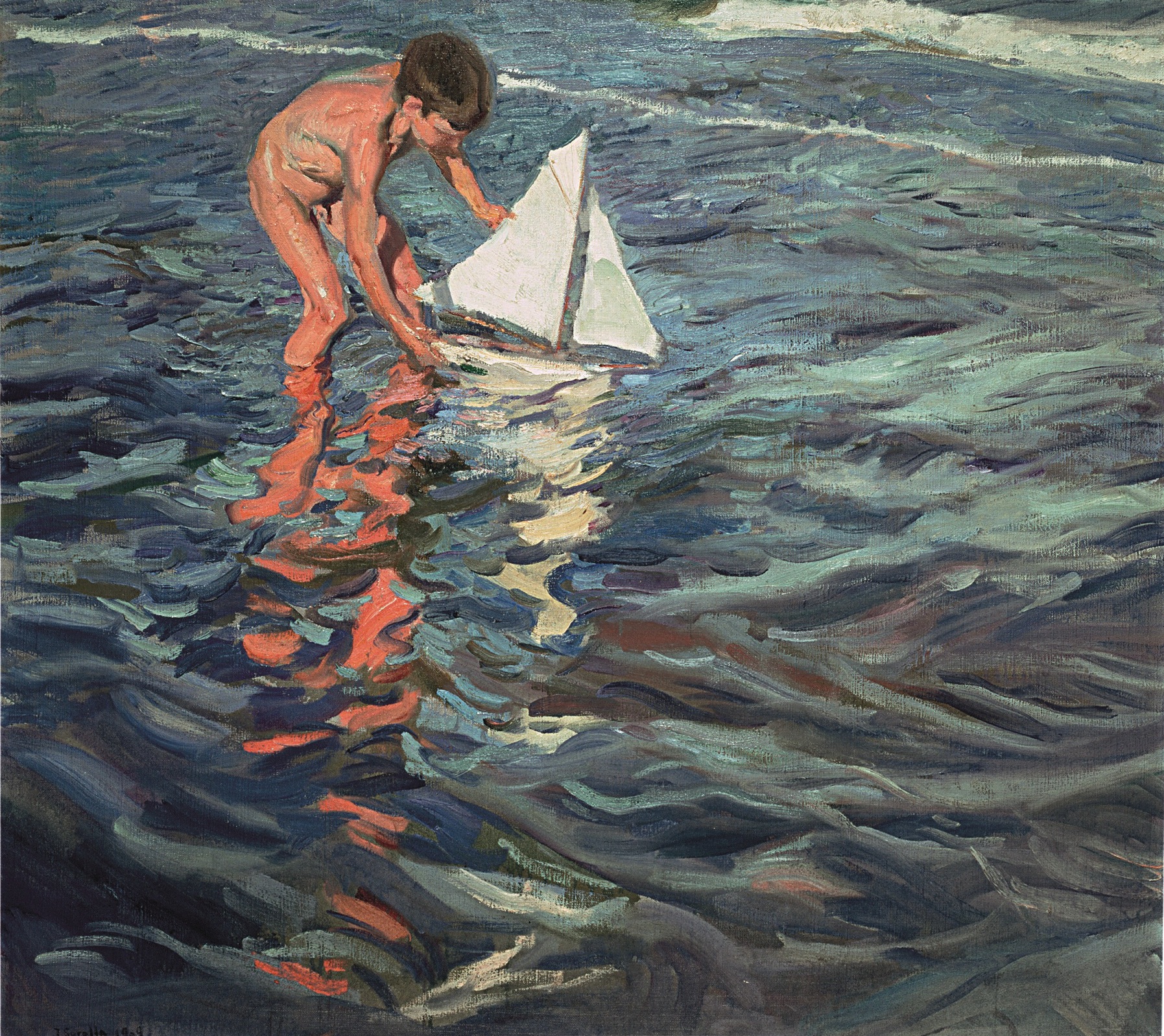
Joaquín Sorolla. El balandrito, 1909. © Fundación Museo Sorolla

Joaquín Sorolla. El balandrito, 1909. © Fundación Museo Sorolla

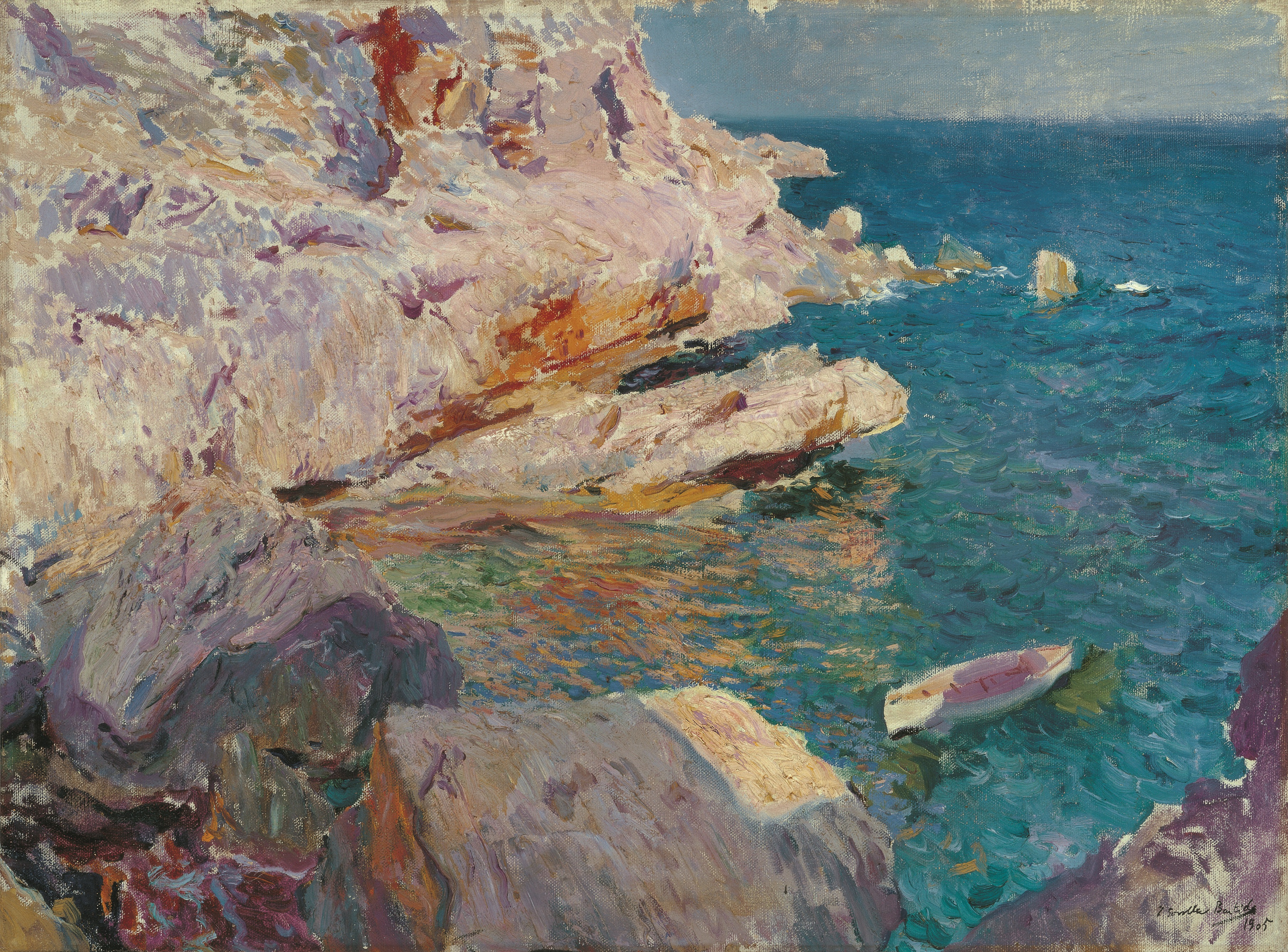
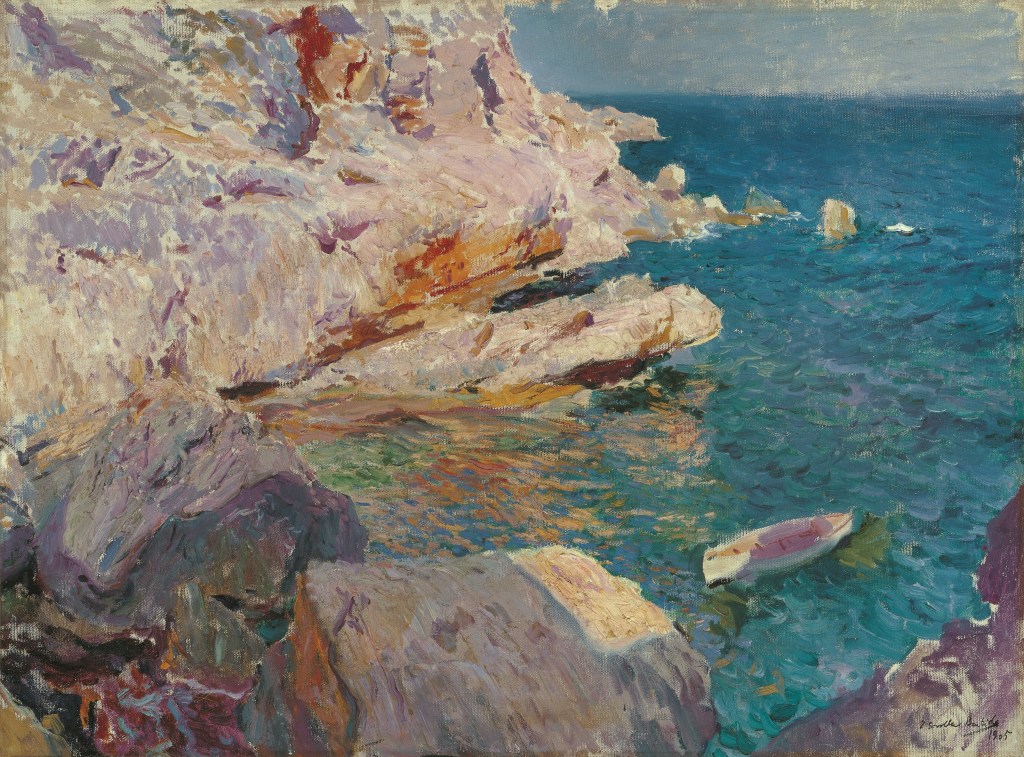
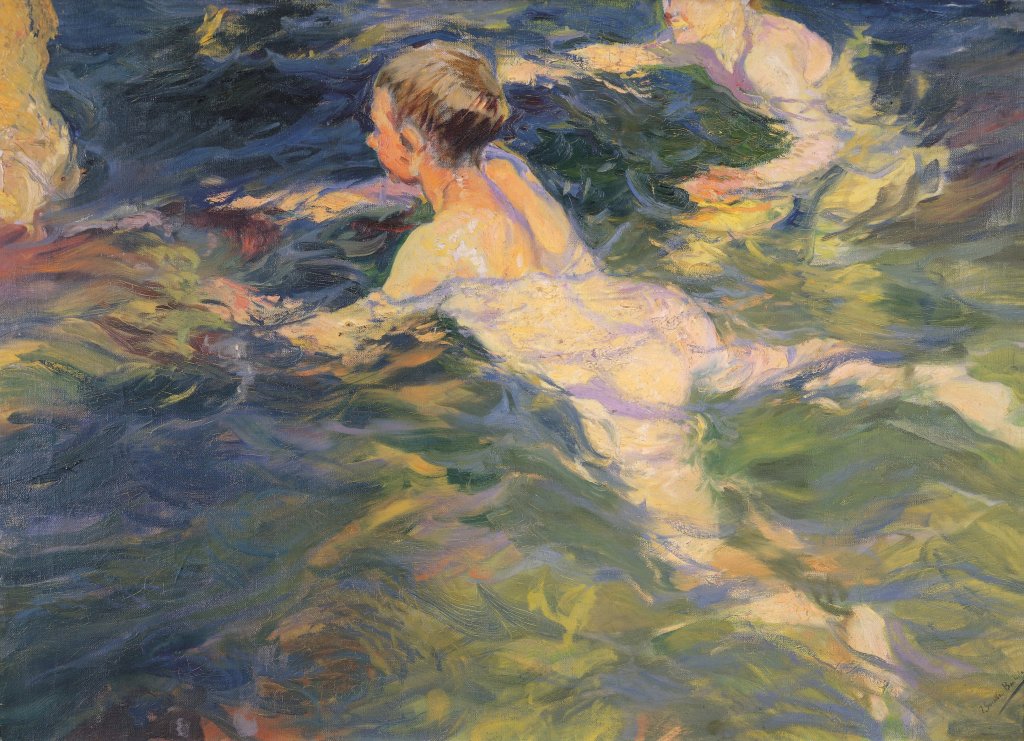
Exploring the oeuvre of Spanish master, Joaquin Sorolla, the exhibition focuses on what the artist, famous for the luminosity of his light and the proficiency of his landscape, painted best: the sea. Sorolla was born in Valencia in 1863 and as such was painting at a time when impressionism was at its height. Often compared to his friend, artist John Singer Sargent, Sorolla painted both people and landscapes with great sensitivity, and captured a startling degree of light. In painting the sea, Sorolla managed to capture a luminosity which I have always found so difficult when working on coastal images myself. Take his 1904 Estudio del Mar for example: This simple painting of waves breaking upon the shore is alive with the current of water, and magnificently captures the many colours hidden within the ordinary blues of the water. Similarly, his 1905 painting simply entitled Mar depicts shallower waters magnificently, with the light glinting over the surface and the dark purples suggesting rocks lurking just beneath.
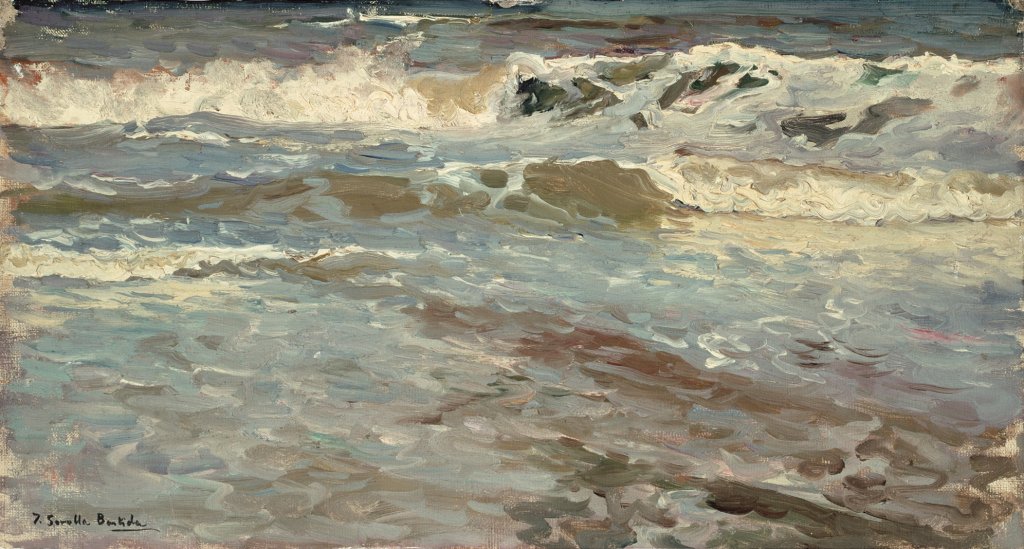
Joaquín Sorolla. Estudio de mar, Valencia. 1904. © Fundación Museo Sorolla

Joaquín Sorolla. Estudio de mar, Valencia. 1904. © Fundación Museo Sorolla

Joaquín Sorolla. Mar (Jávea). 1905. © Fundación Museo Sorolla

Joaquín Sorolla. Mar (Jávea). 1905. © Fundación Museo Sorolla

No wonder this exhibition is called “the colour of the sea”, and no better example exists of just how rich those colours can be than Sorolla’s depictions of Mallorca itself, such as his painting of the Cove at San Vincente. If you hadn’t been to Mallorca, you might assume that these superb aqua marines and subtle mauves of the surrounding mountainous landscapes were made up, but I can assure you that they are very much representative of reality. Even my lucky November dip in the sea last weekend proved that much.
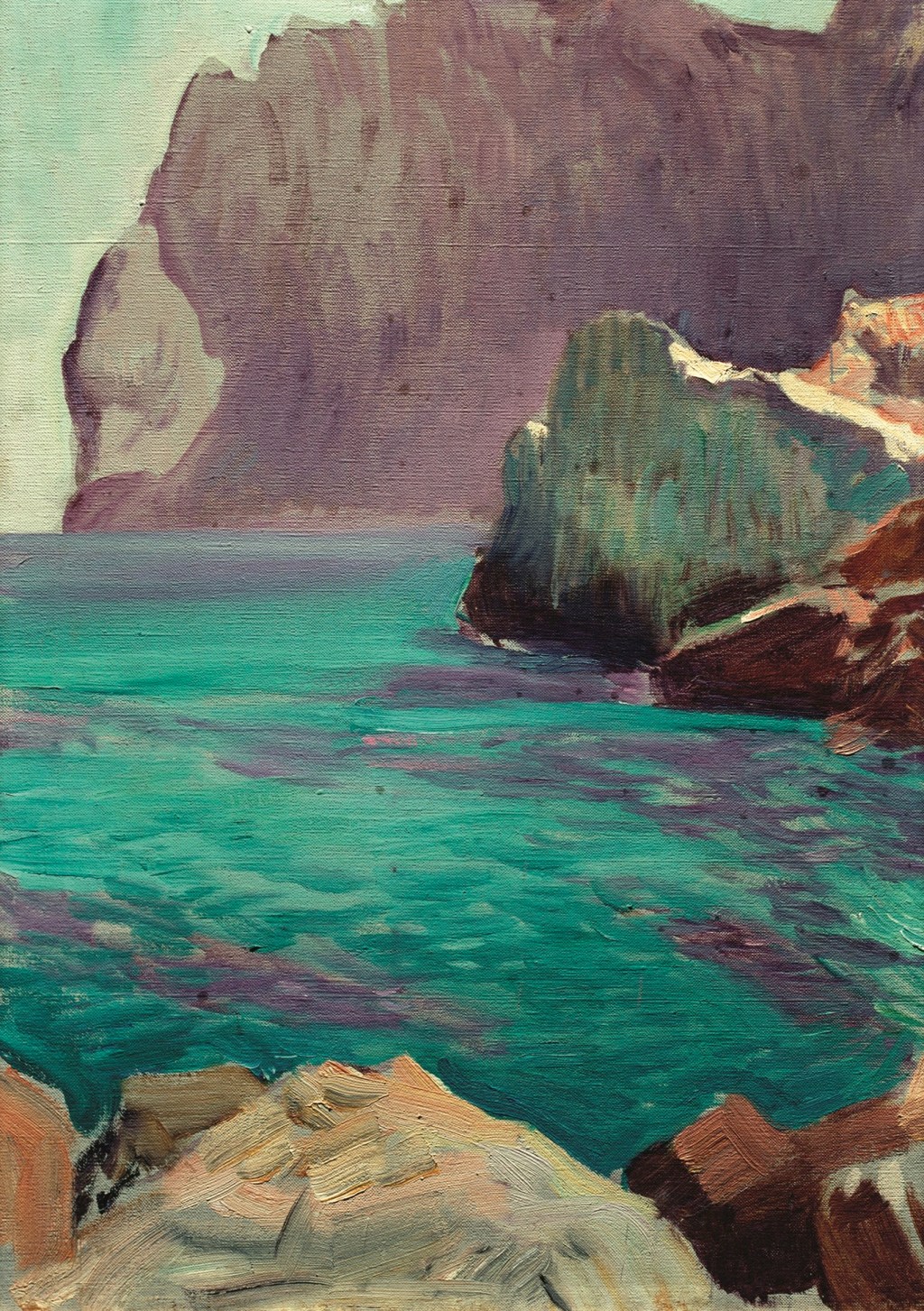
Joaquín Sorolla. Cala de San Vicente, Mallorca. 1919. © Fundación Museo Sorolla
Joaquín Sorolla. Cala de San Vicente, Mallorca. 1919. © Fundación Museo Sorolla

Joaquín Sorolla. Rocas de Jávea y el bote blanco, 1905.  © Colección Carmen Thyssen-Bornemisza en préstamo gratuito al Museo Carmen Thyssen Málaga

Joaquín Sorolla. Rocas de Jávea y el bote blanco, 1905. © Colección Carmen Thyssen-Bornemisza en préstamo gratuito al Museo Carmen Thyssen Málaga
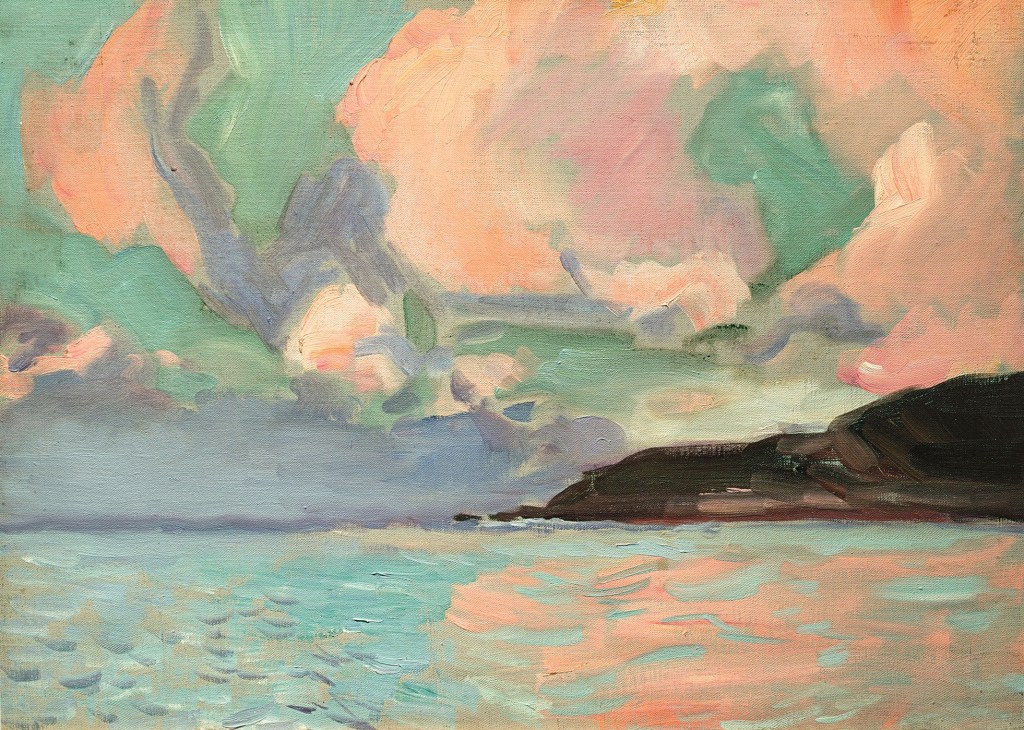
Joaquín Sorolla. Mar de Zarauz. 1910. © Fundación Museo Sorolla

Joaquín Sorolla. Mar de Zarauz. 1910. © Fundación Museo Sorolla

Awash with mediterranean light, Sorolla’s seascapes are alive with the fresh coastal air and tranquil dance of the waves. Seen as a group, you could almost be excused for feeling as though you were on the beach, watching Sorolla painting (he invariably took his canvases down to the beach, hence why they are probably so imbued with the naturalistic light that one sees in reality). However, it’s not just Sorolla’s landscapes which come alive before your eyes. For as this exhibition shows, Sorolla was also particularly adept at portraying people naturalistically, and this is seen no more so than in works such as Saliendo del baño, where a mother dries her child after a dip in the sea, and Pescadora con su hijo – a brilliantly realistic depiction of a mother masking her eyes from the sinking late afternoon sun.
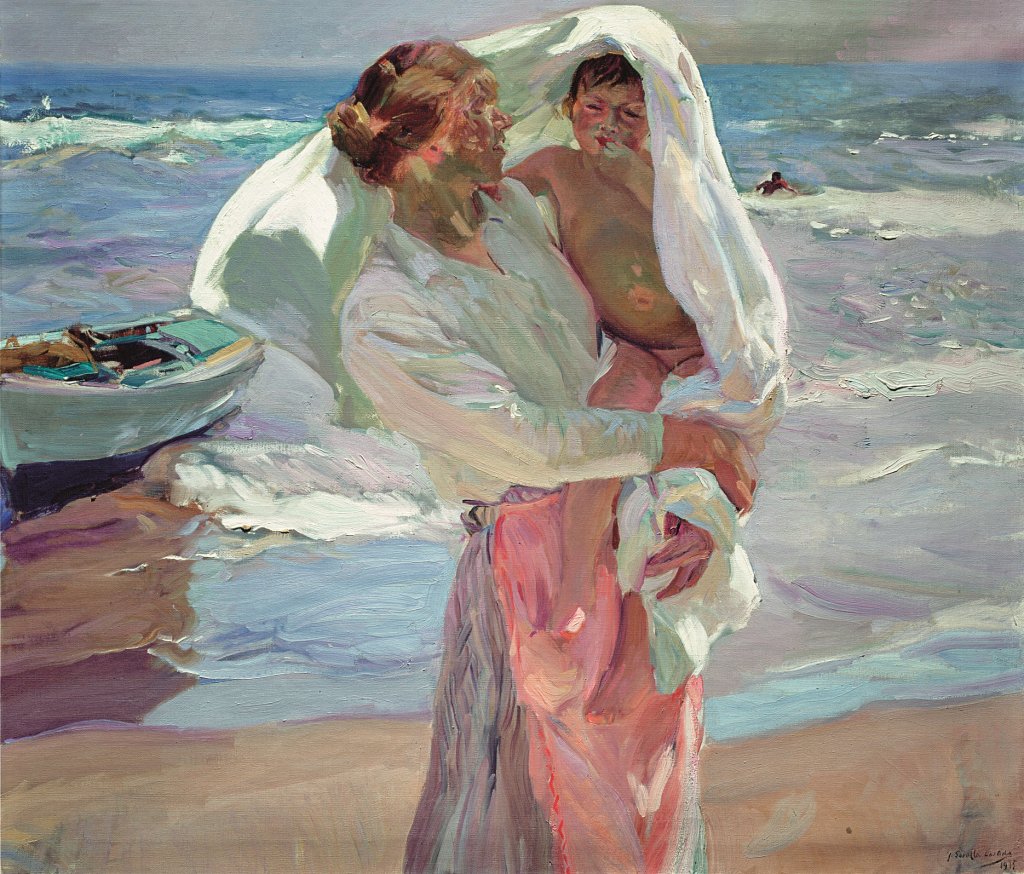
Joaquín Sorolla. Saliendo del baño. Firmado y fechado. 1915. © Fundación Museo Sorolla

Joaquín Sorolla. Saliendo del baño. Firmado y fechado. 1915. © Fundación Museo Sorolla

Joaquín Sorolla. Pescadora con su hijo, Valencia, 1908 © Fundación Museo Sorolla
Joaquín Sorolla. Pescadora con su hijo, Valencia, 1908 © Fundación Museo Sorolla

Joaquín Sorolla. Nadadores, Jávea. 1905. © Fundación Museo Sorolla

Joaquín Sorolla. Nadadores, Jávea. 1905. © Fundación Museo Sorolla

So even if you come to Mallorca and the weather is not at its best, this superb exhibition has the power to transport you right to a sunny day on the coast. Although let’s face it, with Mallorca’s track record of brilliant sunny record all year around, you should probably be able to do both.

Sorolla: The Colour of the Sea runs at La Caixa Foundation Palma until 8 February 2015.

The Barbican Triptych

It was around 16 months ago when, following a work social function held within the Barbican Estate in the City of London, my colleague, who also lives there, commissioned me to depict the Barbican on canvas. 

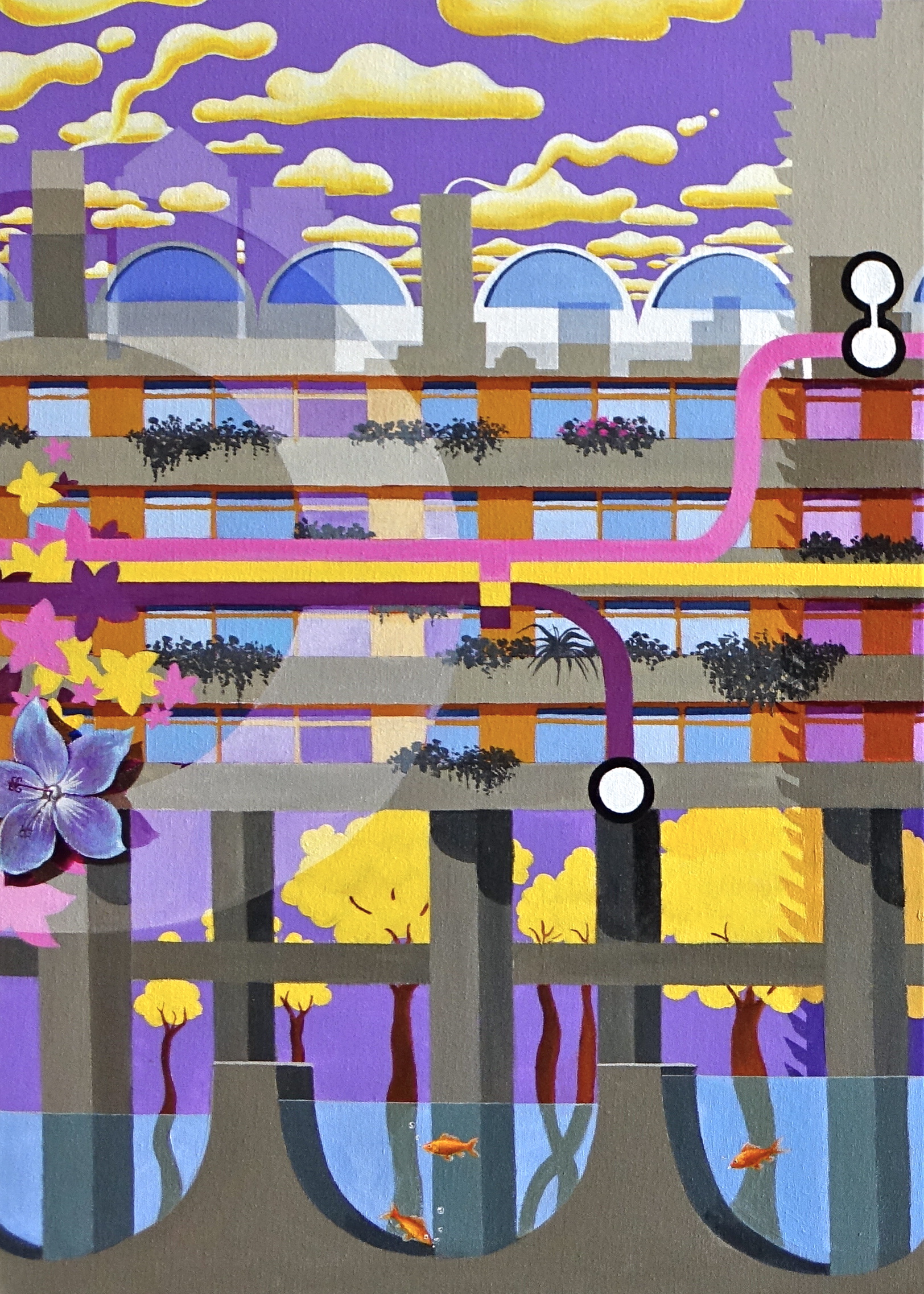
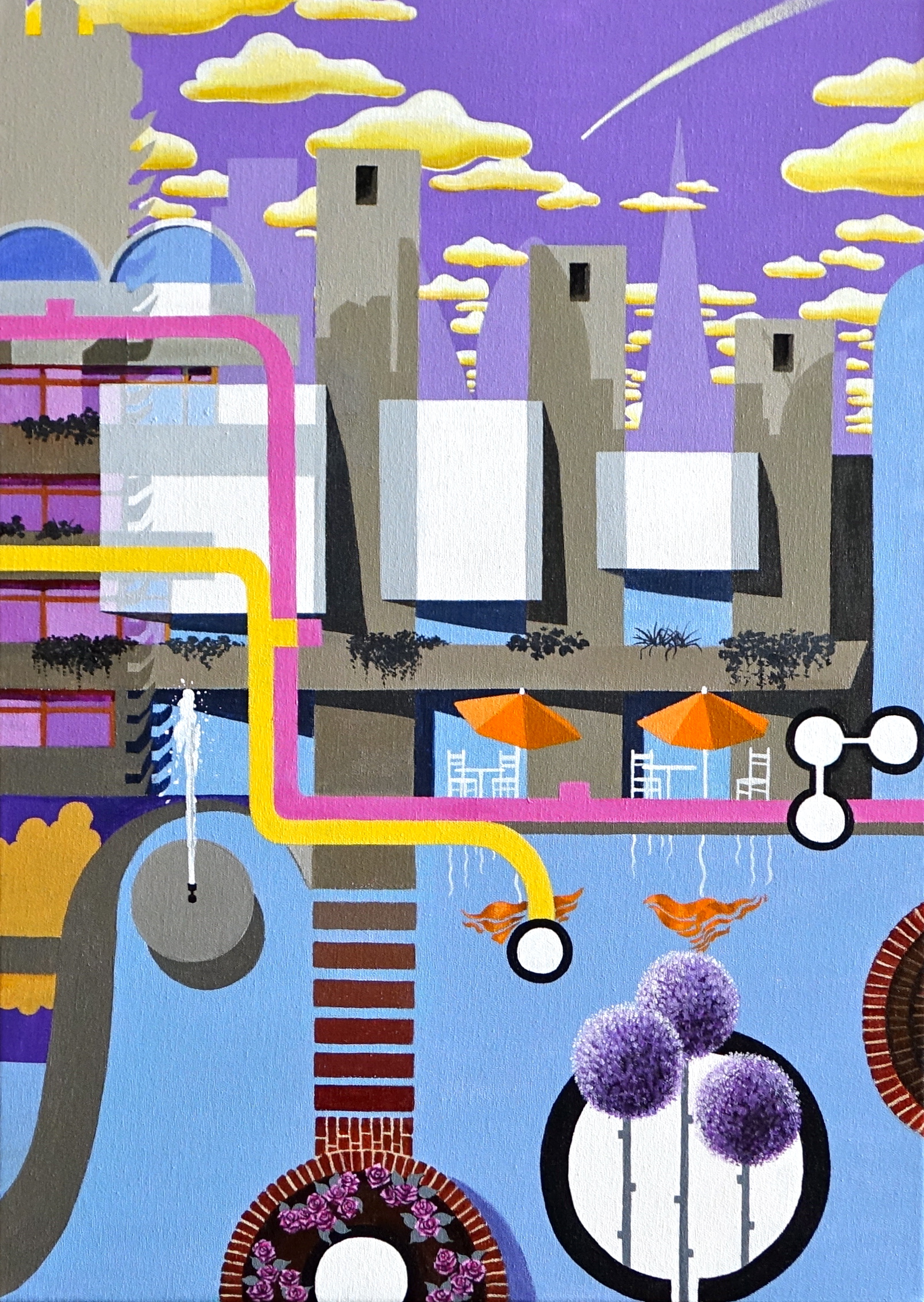
It was something of a challenge. Chief amongst the challenges was the scale of the piece – a hefty triptych to feature on a large blank wall – exciting in prospect, but less so when I was already working full time with only evenings and the occasional weekend free to paint. Second was the problem of inspiration. The Barbican does not fall under what one would ordinarily term “beautiful”. Built in the style typical of the 60s and now given the rather unflattering title “brutalist architecture”, the Barbican estate is all grey concrete, sharp jagged edges and high rise. However, the site, built to fill in one of many huge expanses of the City devastated by the Blitz in WW2, is undoubtedly iconic, and as I started to muse upon a possible approach to capturing the architecture on canvas, I noticed how the architecture formed a harmony of shapes, from a variety of circles and semi circles, as well as straight horizontals and the teeth like edges of its famous three towers. And then it came upon me – what other London icon is comprised of simplistic lines and circles? Why the Underground. An idea was born. 

The Barbican Triptych (2013-14 © Nicholas de Lacy-Brown, acrylic on canvas)

The Barbican Triptych (2013-14 © Nicholas de Lacy-Brown, acrylic on canvas)

My Barbican Triptych is both a homage to the architectural shapes of the Barbican and the city in which it is located. Along the horizon of all three canvases, the famous skyline of the City can be seen, while across the piece, another London icon dominates: the famous map of the Underground. Taking the idea further, I chose to paint the work in predominant shades of purple, pink and yellow, these being the likes (Metropolitan, Hammersmith & City and Circle) that pass through the tube station at the Barbican, while occasionally where round sunken flower beds would ordinarily be found in the Barbican’s waterways, these have been replaced with the famous black ringed circle stops of the tube map. 

The painting not only reflects the architecture of the Barbican but channels the plentiful water which can be found at the Estate, starting from the waterfall on the right and flowing up through fountains and past the main cultural centre of the Estate to the fish ponds on the far right. It also includes the plentiful flowers which today make the architecture less brutal, and the plants which flow from the various residential balconies there. 

The Barbican Triptych = Canvas 1 (2013-14 © Nicholas de Lacy-Brown, acrylic on canvas)

The Barbican Triptych – Canvas 1 (2013-14 © Nicholas de Lacy-Brown, acrylic on canvas)

The Barbican Triptych - Canvas 2 (2013-14 © Nicholas de Lacy-Brown, acrylic on canvas)

The Barbican Triptych – Canvas 2 (2013-14 © Nicholas de Lacy-Brown, acrylic on canvas)

The Barbican Triptych - Canvas 3 (2013-14 © Nicholas de Lacy-Brown, acrylic on canvas)

The Barbican Triptych – Canvas 3 (2013-14 © Nicholas de Lacy-Brown, acrylic on canvas)

It may have taken well over a year to complete but I am so proud of the final result. And somewhat appropriately, this painting was the last of many I have completed while living in London. How apt then that rather than the Mediterranean setting which tends to be the staple of my work, this painting should be made in homage to the city which, up until last weekend, was my home of 12 years. My final swan song to London. 

© Nicholas de Lacy-Brown and The Daily Norm, 2001-2014. Unauthorized use and/or duplication of the material, whether written work, photography or artwork, included within The Daily Norm without express and written permission from The Daily Norm’s author and/or owner is strictly prohibited. Excerpts and links may be used, provided that full and clear credit is given to Nicholas de Lacy-Brown and The Daily Norm with appropriate and specific direction to the original content. For more information on the work of Nicholas de Lacy-Brown, head to his art website at www.delacy-brown.com


Intelligent Insight: Grayson Perry – Who Are You?

Following on from his superb show, Tomb of the Unknown Craftsmen at the British Museum in 2010 is the latest collection of brilliantly insightful works by artist and craftsman Grayson Perry. This time fitting seamlessly into the collection of the National Portrait gallery, peppered throughout the museum therefore encouraging visitors on a kind of magical mystery your through the space, Perry’s new exhibition, Who are You? once again shows that Grayson Perry is one of the most intelligent artists of our times. Made in conjunction with a series of channel 4 documentaries reflecting on a series of individuals each struggling with some particular facet of their individuality, these “portraits” are very appropriately located within the hallowed halls of the London’s temple of portraiture. Ranging from etching to tapestry, enamel portrait to glazed pottery, they show Perry at his adroit best. But beyond the skilled execution of these works is the messages they so sensitively and intelligently portray. 

Line of Departure (2014 © Grayson Perry)

Line of Departure (2014 © Grayson Perry)

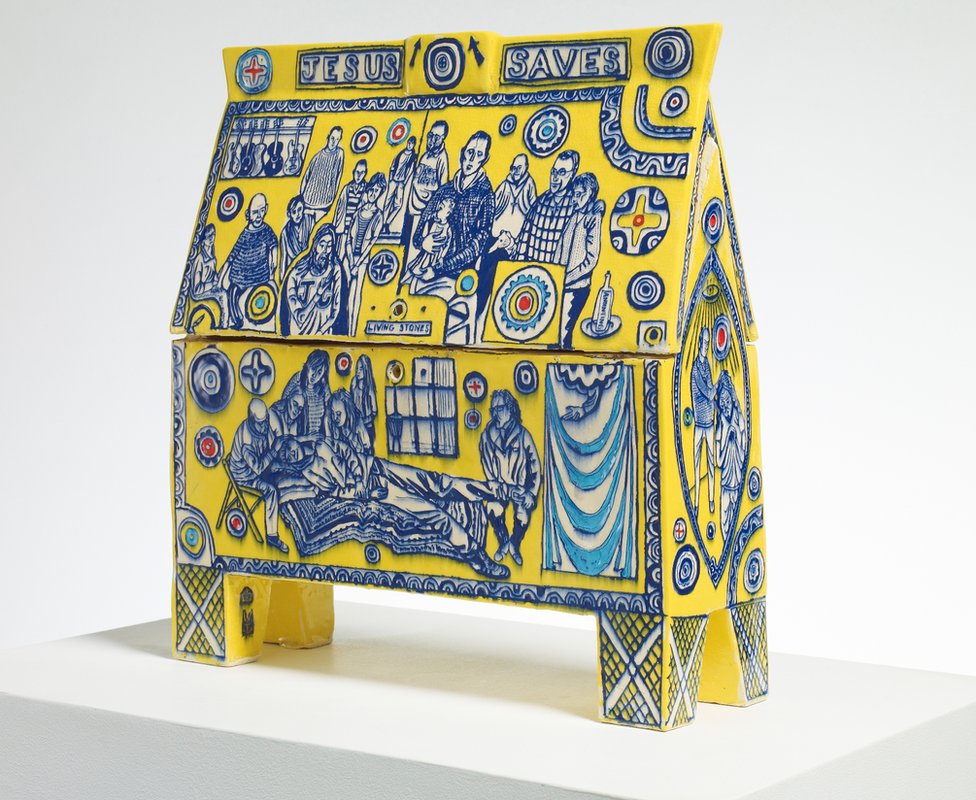
Jesus Army Money Box (2014 © Grayson Perry)

Jesus Army Money Box (2014 © Grayson Perry)

The Earl of Essex (2014 © Grayson Perry)

The Earl of Essex (2014 © Grayson Perry)

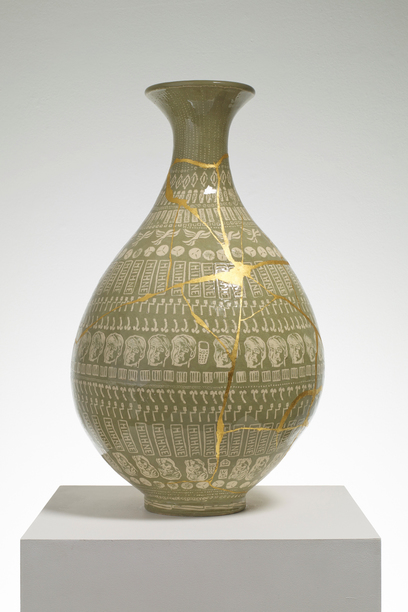
The Huhne Vase (2014 © Grayson Perry)

The Huhne Vase (2014 © Grayson Perry)

In mounting the show, Perry tells how he chose sitters who were each on some kind of identity journey. People who had changed religion or gender, physical or mental facilities, lost status or belonging to a group who are actively trying to change the way others see them. Thus Perry presents a vase representing the fall from grace of politician Chris Huhne, who was imprisoned for perjury after asking his wife to take the blame for a speeding offence he had committed. The vase shows his image and that of his car registration plate repeated over and over like the tire tracks of his car. It was smashed and pieced back together again in gold demonstrating Huhne’s downfall but also the fact that his new fragility in a world dominated by generic status figures will make him a richer more complex individual. There too Perry gives us a miniature enamel portrait hidden away in glass cases with others far older. It portrays XFactor star Rylan Clark as the Earl of Essex because, as Perry says, celebrity is the aristocracy of the day. 

But amongst my favourites was the Ashford Hijab, a brilliantly drafted black, white and red design on a silk scarf (appropriately) illustrating the draw of Islam for young white middle aged women who are sick of consumer culture and sexualised scrutiny of women and seek instead the comparative calm and integral values of Islam. So it shows one woman leading her family towards Mecca, her hijab being the metamorphosis of a road which in turn transforms from the outlet shopping centre of consumer culture from which she flees. Brilliant. 

The Ashford Hijab (2014 © Grayson Perry)

The Ashford Hijab (2014 © Grayson Perry)

Memory Jar (2014 © Grayson Perry)

Memory Jar (2014 © Grayson Perry)

I also loved Memory Jar, the vase sensitively portraying the effects of Alzheimer’s on a couple, as the disease ravages the mind of one man leaving his wife deprived not only of his personality and mental functions, but also destroying their shared memories. As Perry says, two people are the guardians of their shared memories. Once one person goes, so does the poignancy of the memories, and in depicting this he shows a kind of demon cutting up the family photos of the couple also reflected on the vase. It’s a stunning piece. 

And of course mention has to go to Comfort Blanket, a huge banknote tapestry representing everything that is so intrinsic to British culture and which makes the country such a stable, lawful, integral place, drawing people from all over the world. Of course fish and chips looms large, as well as words like “fair play” and “Posh and Becks”. Everything on it was so English I stood in awe at how masterfully Perry had managed to capture the essence of an entire nation in one tapestry. It also felt particularly poignant for me, an Englishman, as I prepare to leave England to move overseas in only a few days time. 

Comfort Blanket (2014 © Grayson Perry)

Comfort Blanket (2014 © Grayson Perry)

Grayson Perry: Who are You? is showing at The National Portrait Gallery until 15 March 2015. Entrance is free.