Skip to content

Posts tagged ‘De Lacy-Brown’

Every Artist needs his teddy bear

The superb Grayson Perry exhibition at London’s British Museum (reviewed on my blog last week) proved an indubitable fact of life: Every Artist needs his teddy bear. Perry was unabashed in making his teddy, Alan Measles, the pivotal focus of his playful, yet sophisticatedly philosophical exhibition, feeding off the time in childhood when every young person’s mind is alive with the kind of imaginative creativity that most of us in our adult life can only dream of. It is only as children, unaware of the true gravity which attaches itself to most issues arising in everyday life, that we are free to run wild in the lush pastures of our imaginings, without responsibility, or worries upon our shoulders. To an extent, every creative Artist continues this spirit of childlike creativity throughout the duration of his career. However very few make their contemporary artwork in retrospective homage to the initial creations of their past. Grayson Perry does this with style, as well as sociological insight. But perhaps more importantly, he is not scared to emphasise the continuing importance of his teddy bear in his life and art at an age when he himself has young children, no doubt with their own cherished bears.

Pupillage: When the Bar took Centre-Stage (detail of Fluffy) (2011 © Nicholas de Lacy-Brown)

I loved Grayson Perry’s exhibition because it embodied much of my attitude to life. I trained as a lawyer, and outwardly, I try, at least, to exude an public face of professionalism. But at home, and therefore as an artist, I indulge utterly and without compromise in the introspective world of my imagination, my desires and my aspirations. Home life for me is all about cosiness, and the loving security of my relationship. And as welcome accessories to that relationship, two very cherished teddies are held dear. Meet Bilbao: a cute knitted puppy, given to me by my partner when I was in hospital, and Fluffy, living up to his namesake – a chirpy little bear with ever enquiring eyes and a sweet inquisitive nature. These two little creatures follow my partner and I when we go on holiday, and they are always close by when I paint. It is no surprise therefore that they have featured in my artwork, and in my photography, and it is in homage to the public outing of Grayson Perry’s teddy bear, that I write this post, showcasing the role of my teddies in my work.

Pupillage: When the Bar took Centre-Stage (Oil on canvas, 2011 © Nicholas de Lacy-Brown)

The first painting to feature one of my teddies is this one, which focuses on my time as a Pupil Barrister in London. For the non-British lawyers amongst you, this is a year specific to the Bar profession, when a young lawyer spends a year in a Barristers chambers undertaking intense training in the run up to full qualification. It is a tiring, arduous and, at times, traumatic year. The pupil is constantly assessed, always on the move, and tirelessly trying to impress his superiors. This painting embodies the pressures, depression and anxiety I felt that year. Pink legal ribbon ties me to the slave-ball emblem of the career. My body has become a marble bust as I have sought to metamorphose into the lawyer expected of the Establishment, while turning my back on myself. The profession has taken centre-stage in my life, while in the bottom left hand corner, my Partner, represented by Fluffy, has been sidelined, although the ribbon around his neck represents the extent to which my Partner too has become enslaved to the repercussions of this hectic career.

Separatism: Catalonia and the Basque Country (2009, Oil on canvas, © Nicholas de Lacy-Brown)

Separatism: Catalonia and the Basque Country (detail of Bilbao) (2009, Oil on canvas, © Nicholas de Lacy-Brown)

The next painting to feature a teddy is my work Separatism, based on the fractious political history and continuing stresses persisting in the partly autonomous regions of Catalonia in North-East Spain, and the Basque Country in the North of the country. The work, which formed part of my España Volver collection (2009) focuses on various features of the regions as well as the conflicts which have erupted in the past including the bombings instituted at the hands of terrorist separatist organisation, ETA. The rich diversity of the culture in these regions spins into a central vortex, while all around it, images from the two regions are fragmented like a jigsaw puzzle, except where the pieces are held together demonstrating signs of peace and unity in the regions. The image focuses on the architectural and gastronomic strengths of the regions, as well as famous sights such as La Concha in San Sebastián (Donostia) and Gaudi’s Sagrada Familia. Meanwhile a spiralling red ribbon curls through the centre of the painting representing political red tape which, over the years, has hindered and complicated political progress. My teddy Bilbao is a small detail of the painting, wandering into the work in the bottom section. He floats in a safety ring in the seas of the rich coastline common to both Spanish reasons, and close to the marine symbolism which represents the maritime history which both regions also hold dear. His inclusion in the painting does not carry any special significance, but as he is named after the Basque Country’s great city of Bilbao, he thought it appropriate that he make an appearance.
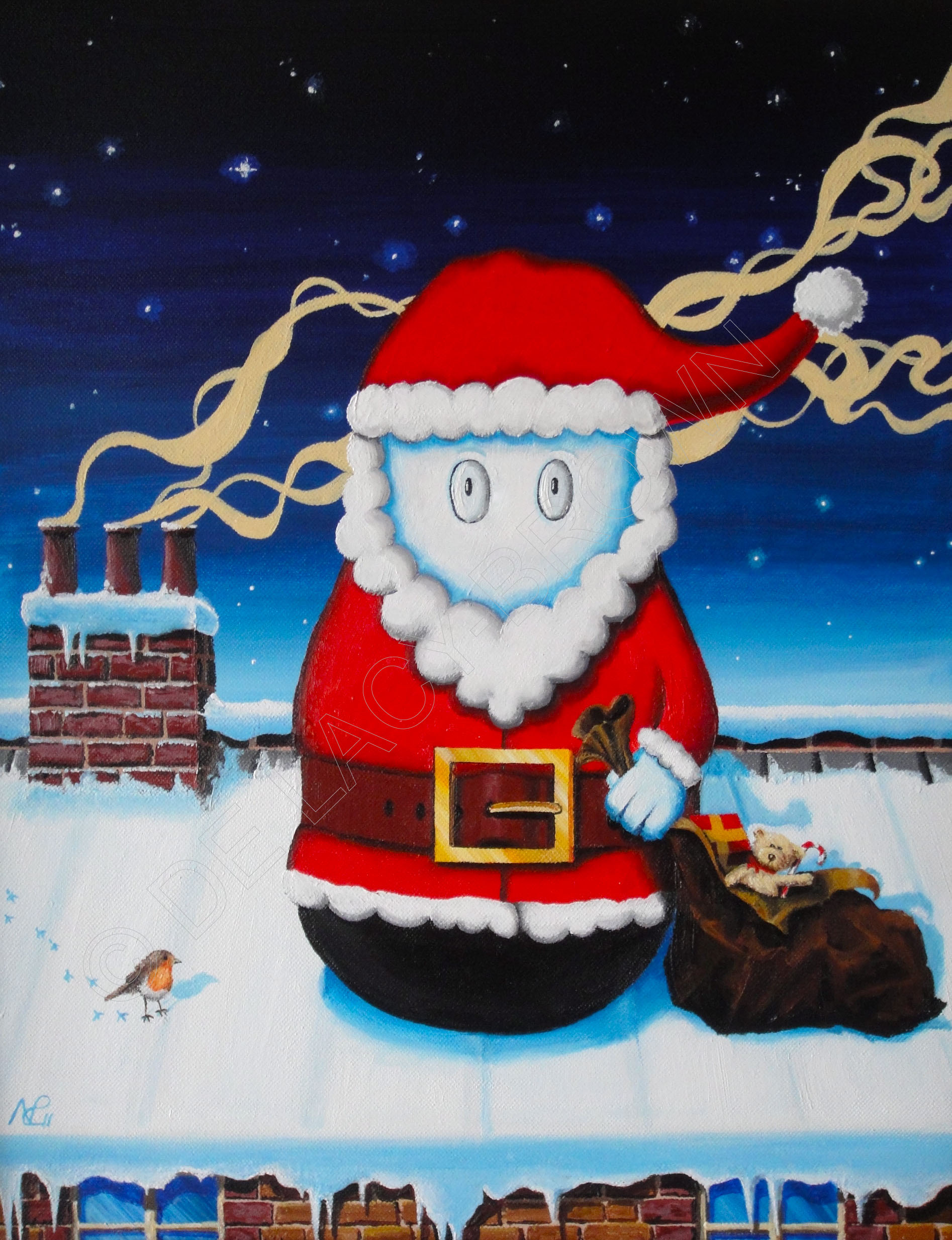
Santa Norm (2011, acrylic on canvas) © Nicholas de Lacy-Brown

Finally, there is last year’s Christmas painting, Santa Norm, in which, appropriately, Fluffy makes an appearance in Santa’s sack of toys for all the girls and boys. Luckily, Fluffy already has a very loving home to go to.

I leave you with a selection of photographs of Fluffy and Bilbao taken on travels and at home. Enjoy being childish in life. Because we grow up fast and life is too short to take it seriously. Until next time…

© Nicholas de Lacy-Brown and The Daily Norm, 2005-2012. Unauthorized use and/or duplication of the material, whether written work or artwork, included within The Daily Norm without express and written permission from The Daily Norm’s author and/or owner is strictly prohibited. Excerpts and links may be used, provided that full and clear credit is given to Nicholas de Lacy-Brown and The Daily Norm with appropriate and specific direction to the original content.

Norm Profile: Robot Norm

Following on from my previous posts last year profiling some of my old Norm portraits, that is those painted in 2005-6, the last to feature (it was a limited collection) is Robot Norm. It somehow seems appropriate to profile this Norm now, futuristic as he is, at the same time as we are all heralding in a New Year full of possibilities, new advances, inventions and more and more things and places to explore, and in my case, to paint and photograph. Robot Norm was sold when it was first exhibited back in 2006 at my solo exhibition, Between Me and My Reflection. I believe he is now hanging somewhere in Southampton, and hope that he is very happy there.

Robot Norm (2006, Acrylic on canvas, © Nicholas de Lacy-Brown)

Robot Norm follows the same, illustrative style of my original Norms collection. In common with all Norms, he has only one arm, but unlike his Norm counterparts, he is an automaton, engineered, no doubt, by other Norms, but still retaining the Norm-like curvaceous shape. He is fitted with all the mod-cons which a Robot could possibly need – a dial pad, an electronic extendable arm, and an antennae, no doubt for receiving commands, yet his body is somewhat roughshod in its construction, with sheets of metal pinned like a patchwork into one metal whole.

Read more

January blues? Dream of the summer

There is only one way to get through these cold winter days, bleak and grey as it was in London today. Either book a summer holiday, or dream of one. Or better still, create summer in your home. Christmas is over, New Year is done. What else do we have to look forward to? With this rather depressing thought in mind, I went about stimulating each of my senses with the promise of a forthcoming 2012 summer.

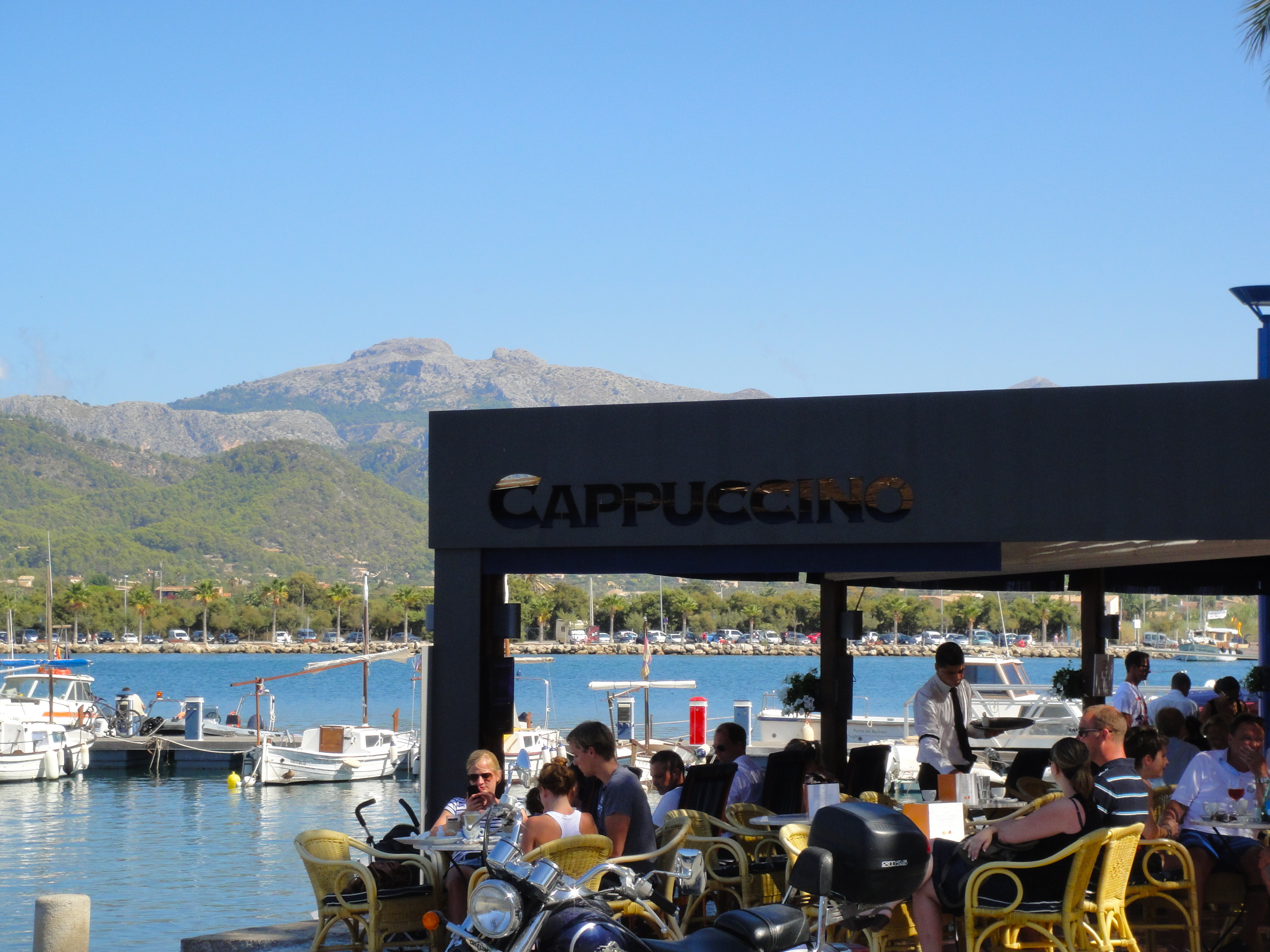
Beloved Cappuccino... this one in Mallorca's Port d'Andratx

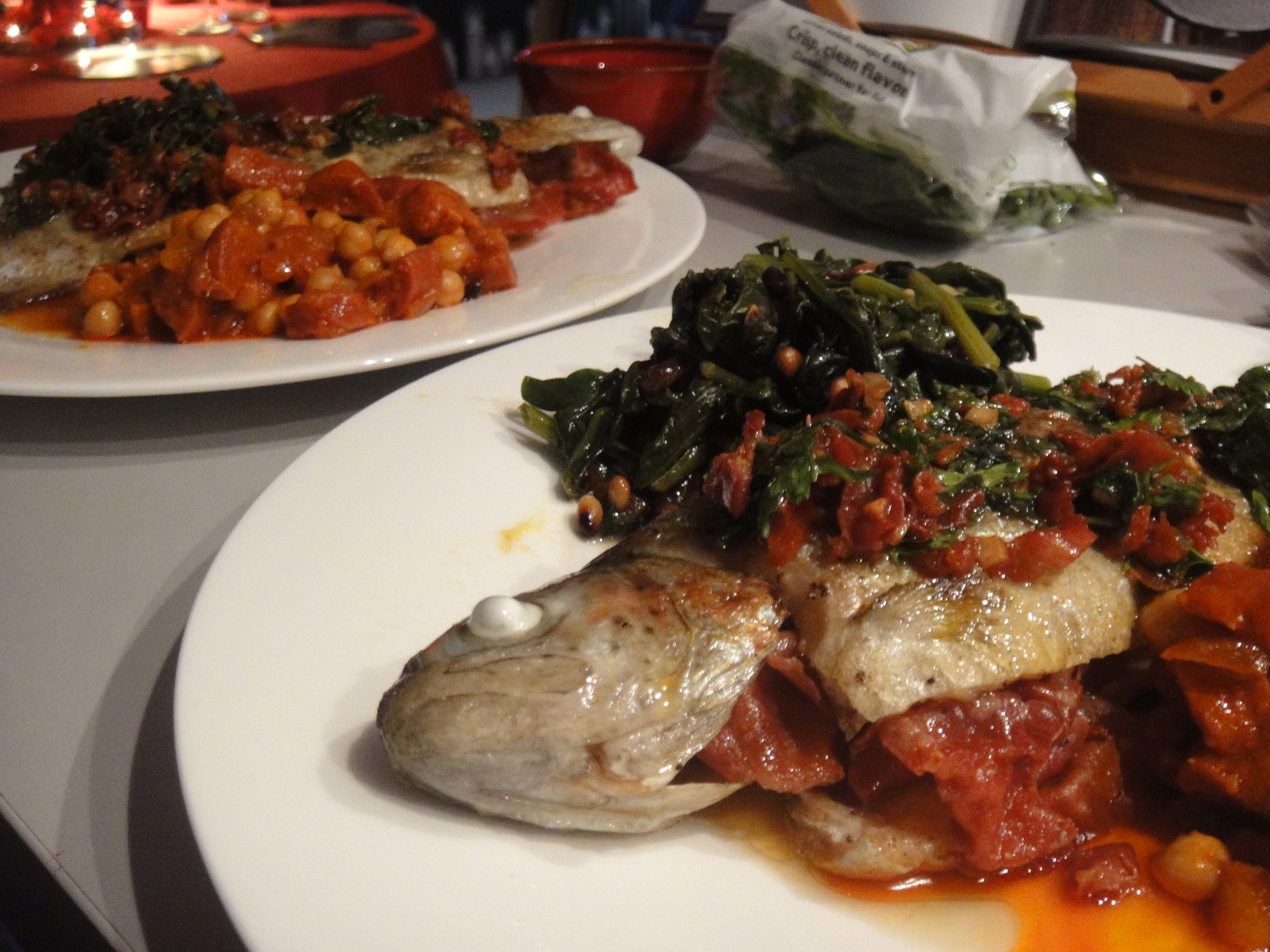
Ears: on the CD player, I played the albums of Cappuccino, the ultimate in Buddah-bar cool, emanating from the chic Mallorcan coffee chain, its music reminding me of long evenings spent under the stars in the Marbella version of the cafe chain, cicadas chirping and the warm mediterranean waves lapping upon the sandy shore as I drank wine and ate almond tart. The second and third senses crying out for satisfaction are smell and taste, and what could be better now than to put away the spicy Christmas chutneys and dried up cold meats, and open a good old Spanish cook book. Entering my third day of a Spanish festival of cooking, today it was Andalucian spiced stuffed aubergines, patatas bravas and a good rioja, the summer smells of cooking garlic and a spiced tomato bravas sauce pervading the cold winter air of my flat.

Spanish cooking: Trout stuffed with serrano ham, with chorizo chickpeas and andaluz spinach

Fourthly and all importantly: sight. It’s my summery paintings which get an airing now. Marbella – the town’s long sandy beach, lined with cafes and unusual art deco architecture, the town supported by the stunning backcloth of its Sierra landscape, its buzzing Paseo Martimo reflected into a wide, sparkling expanse of mediterranean sea. On the beach, Henry Moore inspired sculptures soak up the warm rays of an all-encompassing joyful sun, banishing thoughts of winter and reminding all concerned of the joie de vivre of summer.


El Faro de Marbella (with Sunbathing Henry Moore's) (oil on canvas, 2010 © Nicholas de Lacy-Brown)

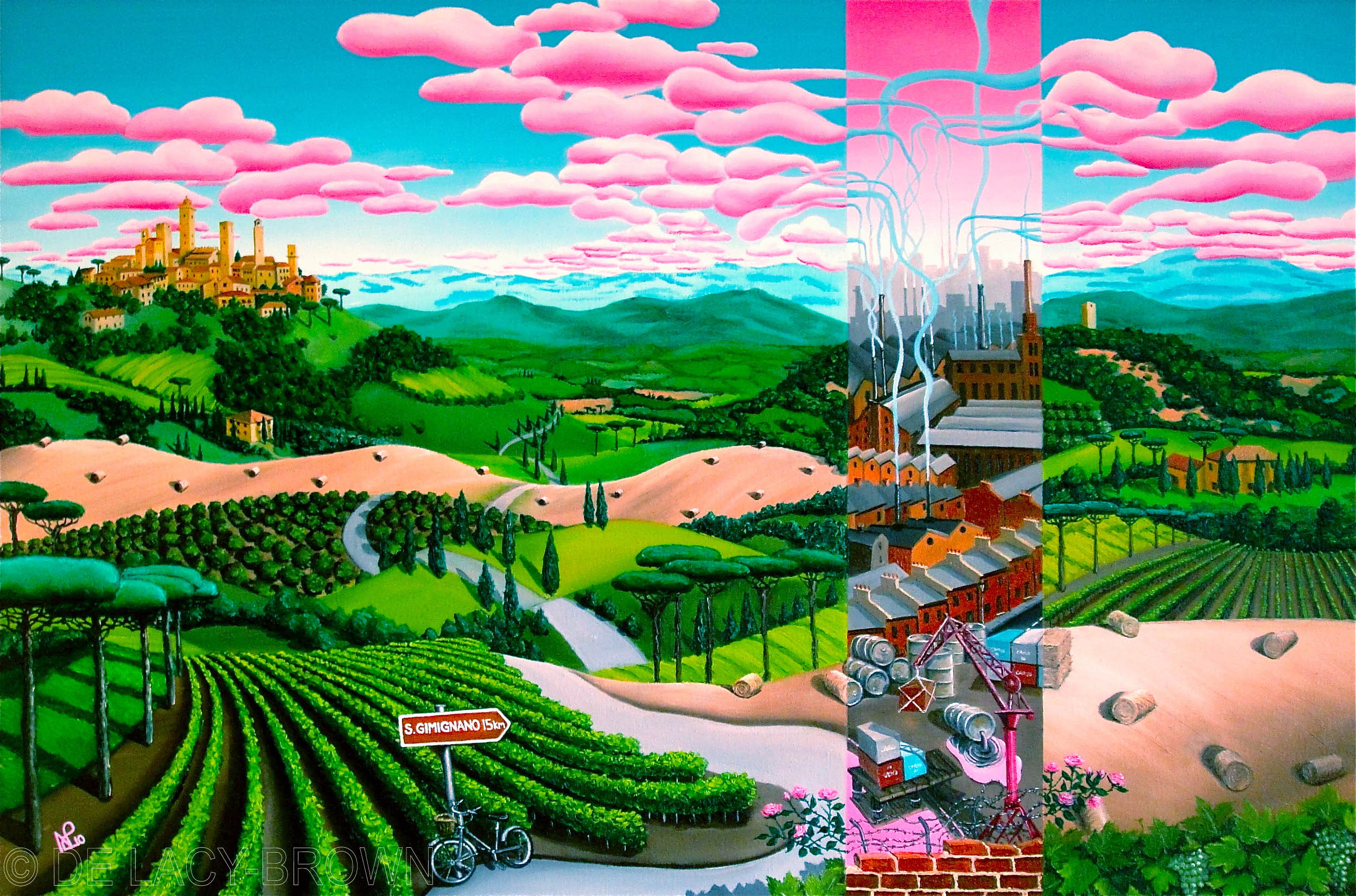
Over the Mediterranean, my mind is racing to Tuscany, and my painting Tuscany Wharf captures the essence of that place I love. Hills rolling elegantly into one another, lush green rolling landscapes broken up by perfectly lined up grape vines and bales of hay, while from beyond the windy road interspersed within the valleys, the glorious towers of San Gimignano emerge, a medieval spectacle, one tower after another, climbing in an apparent ascendancy to heaven itself. And as if to remind me in my daydream of summer of the bleak reality of the English landscape around me, a slice of northern industrial England cuts through Tuscany’s rolling hills, cypress trees replaced with chimneys, hills with terraces, and roses with barbed wire, the polluting plumes emitted by factory chimneys managing to escape, pouring out into the previously clear turquoise Tuscan sky.

Tuscany Wharf (15km to San Gimignano) (oil on canvas, 2010 © Nicholas de Lacy-Brown)

Back to Spain for the evening, and as the sun sets over a peachy bellini-tinted sea, a postcard floats in the air recollecting memories of a Spanish summer holiday spent indulging in thirst-quenching sangria, ice cold San Miguel, and an unctuous paella, while the evenings are spent whisked away by the rhythmic hypnosis of a flamenco dancer’s wailing cries, or the swish, ballerina movement of the Toreador’s vivid red cape.

Souvenir of Spain (oil on canvas, 2010 © Nicholas de Lacy-Brown)

Ahh to dream of the Summer. Check out more of my paintings at my main site www.delacy-brown.com. In the meantime, I’m off to dream of summer…and look for cheap holidays online!

Postscript: Today WordPress included my blog in Freshly Pressed! Thank you so much WordPress and for all those who have previously and subsequently supported my blog and posted comments. Your support means so much. Please come back for more artistic jinks at The Daily Norm!

© Nicholas de Lacy-Brown and The Daily Norm, 2005-2011. Unauthorized use and/or duplication of the material, whether written work or artwork, included within The Daily Norm without express and written permission from The Daily Norm’s author and/or owner is strictly prohibited. Excerpts and links may be used, provided that full and clear credit is given to Nicholas de Lacy-Brown and The Daily Norm with appropriate and specific direction to the original content.

2011: My year in photos

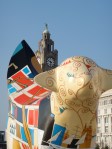
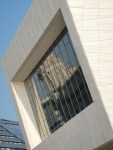
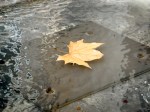
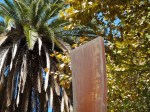
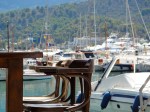
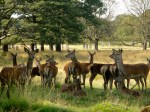
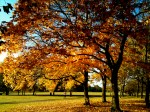
It’s the last day of 2011, and for my second review of the year that’s almost behind us, I’ve looked back on all the photos I’ve taken this year and selected a few of my favourites. In this way, I can share with you my year. It’s been a pretty good year for me in some ways – trips to Paris, Mallorca, Madrid and Marbella as well as Liverpool and Cornwall in England. All made for some inspirational scenes which begged to be captured on my camera. But so to does home continue to inspire, the autumnal glow of nearby Clapham Common and Richmond Park offering stimulating riches with which the lens so easily engages. So please enjoy the photos I have set out and in the meantime I trust that all the readers of The Daily Norm will enjoy a superb New Year’s Eve and have a very prosperous 2012. My little online paper has only been running a short while, but I am truly appreciative of all the support garnered so far. Please continue to drop in on my Norm-world in 2012 and help to spread all things artistic, aesthetic and beautiful around the globe. Happy New Year!

© Nicholas de Lacy-Brown and The Daily Norm, 2005-2011. Unauthorized use and/or duplication of the material, whether written work, photography or artwork, included within The Daily Norm without express and written permission from The Daily Norm’s author and/or owner is strictly prohibited. Excerpts and links may be used, provided that full and clear credit is given to Nicholas de Lacy-Brown and The Daily Norm with appropriate and specific direction to the original content.

Da Vinci Season – Part 2: National Gallery exhibition review

Christmas is fast upon us, people are rushing around shopping like maniacs, there are now gigantic queues for macaroons at Ladurée on Piccadilly (I thought this madness only occurred on the Champs Élysées. We did however queue for 3 boxes…) and people are allegedly selling Waitrose Heston Blumenthal Christmas puddings for millions on ebay. However something else is in the air in London, and now, scattered across my coffee table and desk, where newly arrived Christmas cards should be taking central place, postcards of the masterpieces of Leonardo Da Vinci are fanned all over, renaissance music replacing carols on the CD player, and an open, full scale catalogue of Da Vinci’s works enables lavish Leonardo indulgence at every turn of the glossy pages. Yes, as promised, I have visited the much hyped National Gallery blockbuster, and now I can firmly pronounce myself to be a huge Da Vinci fan.

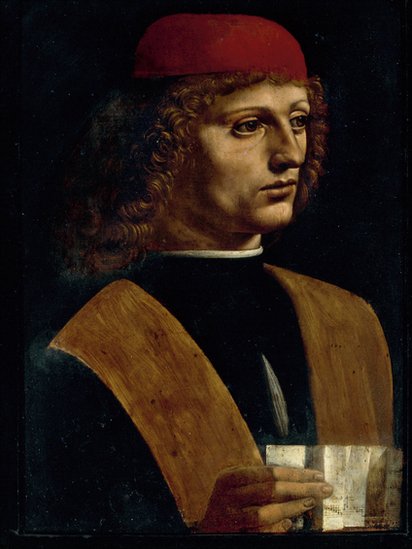
The Musician (Da Vinci, around 1486-7)

The exhibition, Leonardo Da Vinci: Painter at the Court of Milan, is not, at least to my mind, the exhibition of the decade as some commentators have lauded it. Nothing can quite surpass last year’s The Real Van Gogh at the Royal Academy which displayed a vast collection of mind-bogglingly superb works, nor indeed Tate’s incredibly comprehensive 2005 Frida Kahlo retrospective. It is, however, almost undoubtedly the exhibition of 2011. Unlike the close competitor – Tate’s Miro retrospective – Da Vinci did not go arrogantly off the rails towards the end of his career and start burning canvases or indeed painting them white with a single wiggly black line running somewhere across centre. No, for with the Da Vinci show, we are shown, from one work to another, what an undeniable master draftsman and painter this man was (asides from his various other mathematical, scientific, architectural, and engineering plaudits, to name but a few). Considering, compared to most artists, Da Vinci painted only a handful of works, each and every one is executed to an exceptional standard. Even in their various degrees of preservation, it is possible to see how superbly Da Vinci catches the light on his sitter’s skin, how accurately he has utilised his advanced knowledge of the human anatomy and perfect mathematical ratios to capture the very essence of human expression in his portraits, and how brilliantly, through detailed studies and sheer artistic brilliance, he was able to paint the most perfect drapery, clothing and overall compositional balance.

Da Vinci, Drapery Study for an angel (1495-8)

The paintings on show are far and few between, but we know this before entering. To have displayed 9 of only 15 surviving paintings is a coup for the National, and one can’t really ask for more. Take the Mona Lisa from the Louvre, and it would be like ripping Big Ben away from the Houses of Parliament. However, by reason of their sheer rarity, the sight of one, glowing majestically against a plum painted wall (the lighting is, by the way, very well executed) sends excitement through the audience in the same way that one becomes suddenly star struck when seeing a previous nobody reality TV star in a supermarket (I speak from experience – and no, I am not trying to suggest that Da Vinci’s paintings could ever be considered inconsequential). Then, filling the galleries besides are a great number of preparatory sketches and paintings executed by Da Vinci’s pupils and assistants. However the sketches are far from fillers (much like the use of endless sketches and scientific memorabilia in the recent Royal Academy Degas Ballerina show). Rather, they are crucial to understanding how Da Vinci managed to achieve such polished results, as well as gaining an insight into his thought processes (for example, this wonderful drapery study shows his intention for an altered composition for his painting, The Virgin of the Rocks in its second version, an alteration which, owing to pressure from his patrons, was never actually realised –  the original compositional planning for which can now be seen, using xray, under the paint of the final version). They are also crucial, no doubt, to proving the provenance of the various paintings, all of which seem to have undergone some level of doubt as to whether Da Vinci actually painted them.

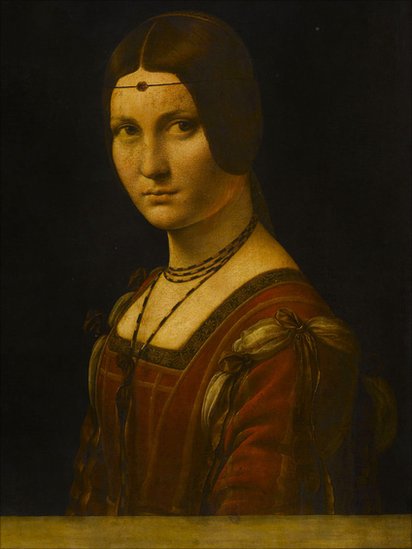
The Belle Ferronniere (Da Vinci, around 1493-4)

Having said that, the sketches are small, as, indeed, are the majority of the paintings, and, predictably, one does find oneself becoming ever so slightly aggressive in trying to get within a metre’s distance of a work. While the National Gallery has been quite careful to limit the visitors to the show (and the huge queue for the daily released tickets which spirals outside is testament to the Gallery’s strict policy when it comes to letting in too many people all at once) there are still an awful lot of people all vying to have their fill of each and every detail of this show. Thus, I did find that one became unavoidably sucked into a sort of revolving carousel around the various exhibits, so that, like a slow conveyor belt, you could get your moment before a painting before being politely shoved forward by the belly of the man standing behind as he/it got a little too close for comfort. Break off from the conveyor and you would find it difficult to get close to a painting again for a while. And thus my eyes were not so much veiled by tears, as one commentator predicted I would, but rather by the sight of people’s heads. But then it’s alright for the reviewers isn’t it – they get to see the exhibition among only a handful of other critics. No wonder they were overcome with emotion – at how bloomin lucky they were to get the exhibition to themselves! Still, I’ve experienced worse, and for the National it does provide the added bonus that more people will buy the expensive exhibition catalogue in order to actually get a good look at what was on show.

Admirer looking at Lady with an Ermine as exhibited at the National

So what was on show at the exhibition? Well the exhibition was broadly split into 7 galleries, each room centralised around one or two Da Vinci masterpieces. In the first room, we met The Musician which is allegedly unfinished, but looks pretty good to me. In the next room, the stunning Belle Ferronniere was hung just across from my favourite, Lady with an Ermine, the two ladies almost competing with one another for who would be judged most beautiful as they had probably competed in life, the lady with an ermine being Cecilia Gallerani, mistress of Duke Ludovico Sforza, and the Belle Ferronnere thouht to have been the Duke’s wife. The Belle Ferronniere is a stunning work, her pose so confident, petulant almost, as though challenging Cecilia Gallerani, whose portrait was literally hung in the direction of La Belle’s gaze, to usurp her role as primary lover to the Duke. Both exhibit truly modern, strongly characterised poses, particularly considering the century in which they were painted.

Da Vinci's unfinished Saint Jerome (around 1488-90)

In the next room, the evidently unfinished Saint Jerome takes centre stage, but even in this state of incompletion, the painting demonstrates how accurately Da Vinci painted the human anatomy. It also proves a useful demonstration of Da Vinci’s working techniques and the stages he undertook in building up layers of paint on a canvas. Moving through into the exhibition’s central gallery, two much larger, more complex compositions are hung opposite one another is a fantastic pairing which is a unique achievement of the Gallery’s show: Da Vinci’s original Virgin of the Rocks, usually to be found in the Louvre in Paris, has been hung with the second version of the same composition, which is owned by the National Gallery. This allows for a direct comparison to be made of the two “rocks”. Personally my favourite was the National Gallery’s later version, where the colours were brighter, and the details more refined such as the little flowers in the foreground. Nonetheless, this version has been recently restored, hence the enhanced colours and more obvious details.

Read more

Da Vinci Season – Part 1: Norms do… The Lady with an Ermine

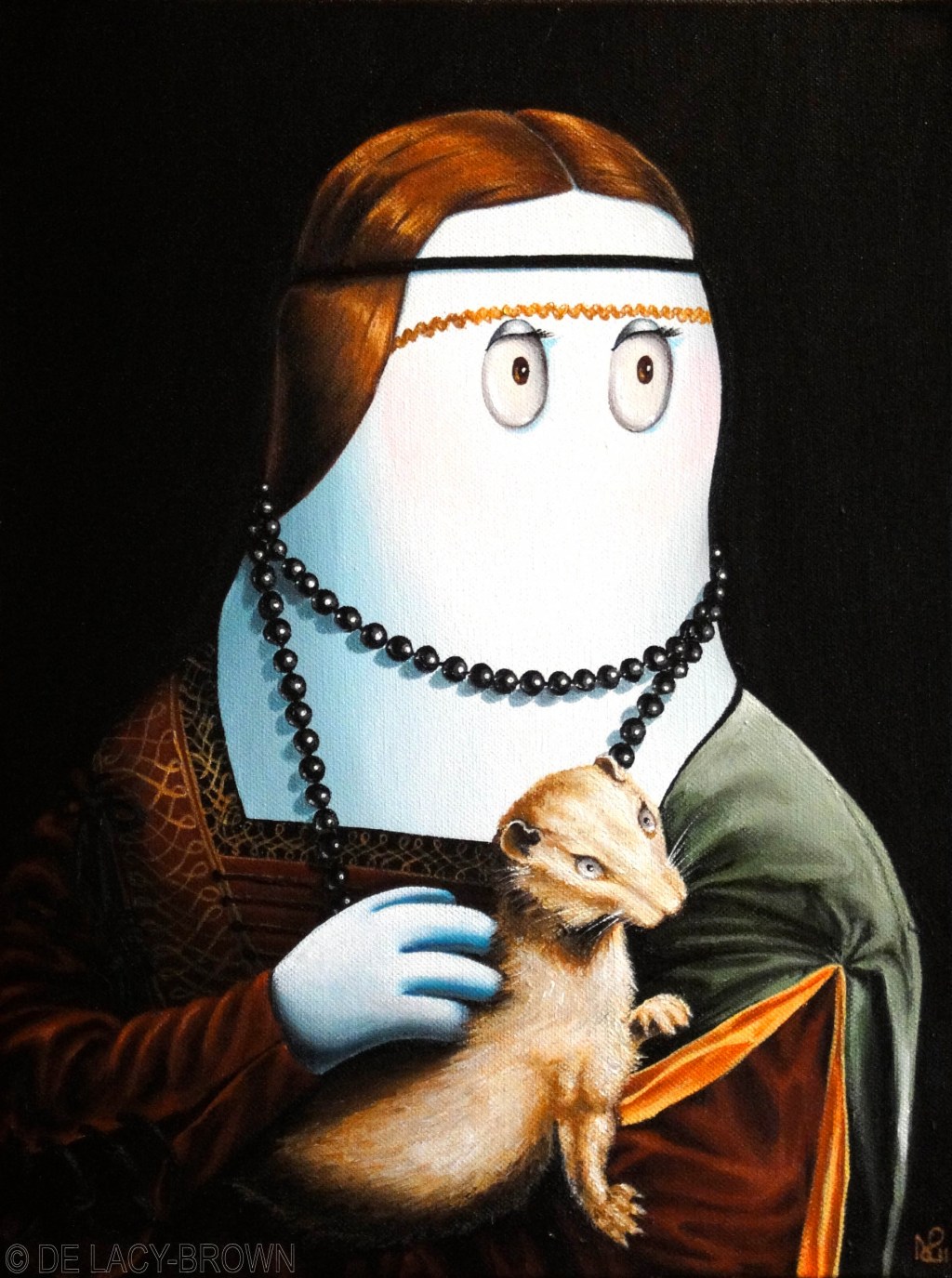
Da Vinci is back in vogue in London. The exhibition Leonardo da Vinci: Painter at the Court of Milan which is currently running at London’s National Gallery has received unprecedented high praise across the board. Critics are calling it a once-in-a-lifetime opportunity to see so comprehensive a collection of Da Vinci’s remaining masterpieces in one show. One art critic’s review was so expressive with superlatives and emotional exasperation that it read as though she had been party to some kind of religious transmogrification. The paintings, she said, were so stunning that one could barely take them in through eyes which were uncontrollably veiled with tears of unrepressed joy. Or something like that. High praise indeed, and with 5 stars across the board, what better way to grasp at some last minute Christmas sparkle than by attending the exhibition itself, a visit upon which I shall embark tomorrow. While you will of course be the first to receive my review of the show for which tickets are allegedly selling for £400 each online (yes, the temptation to sell is there – for these two tickets I could get a 5 star weekend in Milan, let alone see a show about nine paintings and a load of sketches… but naturally I am opting, in good conscience, for the  cultural extravaganza of the year), in the meantime, Part 1 of my seasonal homage to Da Vinci is in the form of the good old Norm parodies which you now know and love. Yes, today, the Norms bring you: Norm Lady with an Ermine.

Norm Lady with an Ermine (after Da Vinci) (acrylic on canvas, 2011 © Nicholas de Lacy-Brown)

And by way of comparison, here is Da Vinci’s stunning original masterpiece…

The Lady with an Ermine (Leonardo Da Vinci)

Da Vinci’s masterpiece was painted in around 1489-1490 and is usually to be found housed in the Czartoryski Museum, Kraków, Poland. It is in fact the central masterpiece of the Museum’s collection, and it’s inclusion in the London show is said to be the greatest coup for London curators of all their achievements in putting the show together. However, her inclusion was not without difficulty, and the Lady with an Ermine’s visit to London  comes only as a result of huge democratic efforts, not just on the part of the National Gallery, but on behalf of the UK Government’s diplomats and foreign office officials.

Read more

Sunday Supplement: Christmas Double

For this week’s Sunday Supplement, it is in the spirit of Christmas that I bring you not one but TWO de Lacy-Brown paintings to add a little artistic fulfilment to your weekend. And, seeing as this will be the last Sunday Supplement before the big day itself (I am anticipating being ever so slightly too merry and/or stressing in the kitchen next Sunday to blog…and I suspect you will be too busy in similar scenarios to read the good old Daily Norm) I bring you two paintings from my collection which have the great festival of Christmas at their core. Some way apart, the first, painted in a more illustrative style, was created in 2002, while the second, painted in 2010, features a much more matured, realistic style of representation.

Ice Skating at Somerset House (acrylic on canvas, 2002 © Nicholas de Lacy-Brown)

The first work, above, was painted when I was in my first year at university in London. Studying at King’s College London on The Strand, I was lucky enough to be situated bang next door to what has become one of the most iconic sights of London’s Christmas celebrations: the ice skating rink at Somerset House. Flanked on all sides by the stunning Neo-classical masterpiece of Somerset House, the rink in the building’s huge cobbled courtyard is utterly atmospheric, reminding of the days of Dickensian London street scenes which, thanks to the likes of A Christmas Carol, have become synonymous with the traditional view of Christmas all around the world. At night, the rink glistens under turquoise lights, flame lanterns flickering on either side, and a tree, usually sponsored by Tiffany & Co. the jewellers, sparkling at the foot of the ice. It’s a wonderful place to skate, and it is something I really miss doing every Christmas since my accident in 2008 precluded me from engaging in such a risky activity. This painting however represents the jovial, whimsical joy of the skating I remember. However, if you ever got the rink as empty as this these days, you’d be very lucky…

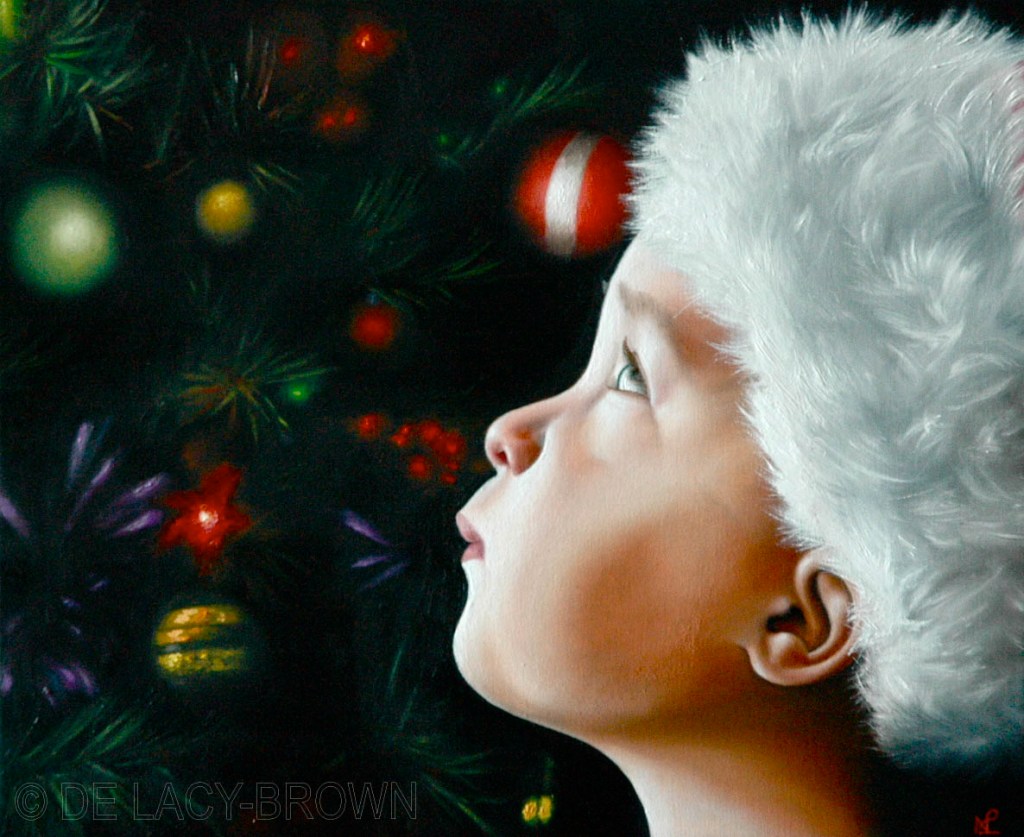
Alexander, Enchanted by Christmas (oil on canvas, 2010 © Nicholas de Lacy-Brown)

The second painting of this week’s Christmas double-whammy is my later portrait of my nephew Alexander when he was just 18 months old. It captures a magical moment when he encountered the large family Christmas tree for the first time. Utterly entranced by the feast of new colours, objects and lights on view, he was literally stopped in his tracks as he took in the wonder of Christmas before him. Painted in a more photo-realistic fashion, I have tried to capture the furry white brim of the cute santa hat he was wearing, while blurring out the tree lights in the background. It was a beautiful moment. As ever, Christmas really is enhanced by the joy you can see reflected in a child’s eyes. However I may feel differently come this time next week, when I have three toddlers running rings around me, fighting for presents and playing catch with the baubles.

Postscript: If you like the painting of Somerset House above, and would like to own a high quality giclee print of the image, there are some available for sale via my Etsy online shop.

© Nicholas de Lacy-Brown and The Daily Norm, 2002-2011. Unauthorized use and/or duplication of the material, whether written work or artwork, included within The Daily Norm without express and written permission from The Daily Norm’s author and/or owner is strictly prohibited. Excerpts and links may be used, provided that full and clear credit is given to Nicholas de Lacy-Brown and The Daily Norm with appropriate and specific direction to the original content.

Norms in Heaven and Norms in Hell

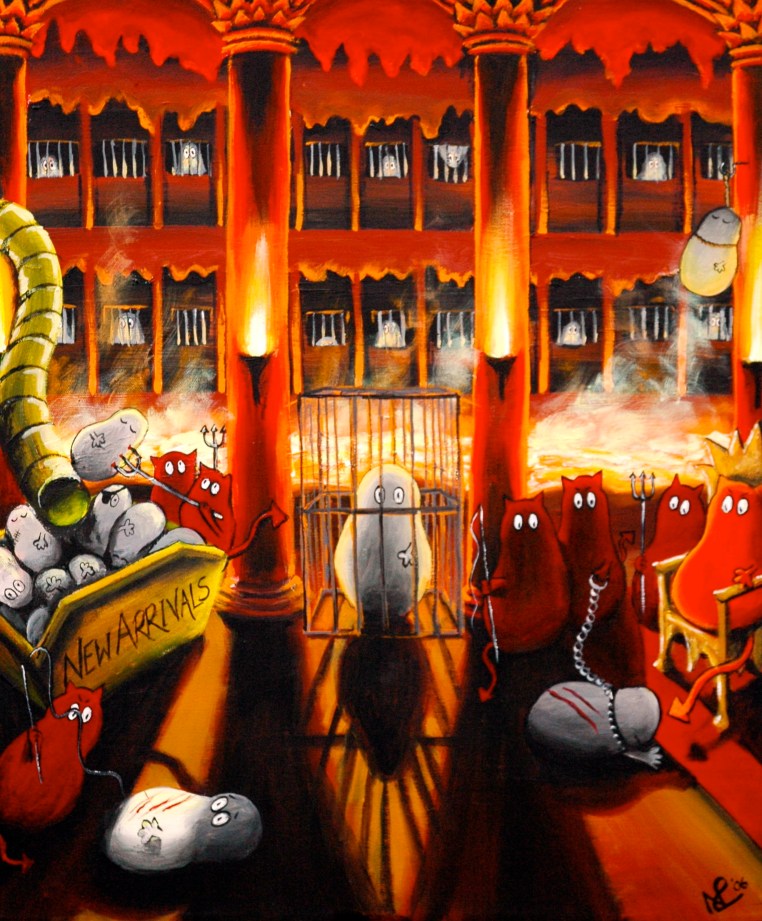
Back in 2005/6 when the Norms were born, my Norm-riddled imagination went all Last Judgment on me, and a diptych with all the foreboding power of the archetypal Renaissance altar-piece was the imploding result: Norms in Heaven and Norms in Hell.

Norms in Heaven (acrylic on canvas, 2005 © Nicholas de Lacy-Brown)

Norms in Heaven features 10 serene angels, floating amidst fair-weather clouds, radiant in their angelic glory, relishing in the celestial music flowing from the golden instruments of three, while for two, the propagation of love is their priority, one one-handed Norm angel holding cupid’s bow, while the other helps to pull back the arrow in readyness for its launch into Elysium. However, even in this scene of paradise, there is always a foreboding reminder of what awaits those whose sins make them unworthy for the great pleasures of this joyful nirvana… the gateway to hell, guarded in all his intrusiveness redness by a demon Norm, a portentous warning of the visions of horror awaiting the viewer in the second half of the diptych…

Norms in Hell (acrylic on canvas, 2006 © Nicholas de Lacy-Brown)

For its audience of innocent little earthly Norms, Norms in Hell would be a shocking warning of the fate that awaits those who do not behave. For those Norms whose sins have necessitated a descent into the abyss, their arrival is through a rubbish shoot where their dead, rotten souls pile up in a New Arrivals skip. From there, demon Norms, eager to torture their newly arrived victims, spear the Norms through their side, before awakening their souls to a life of eternal damnation. Thereafter they will be subjected to the most terrifying of horrors, such as the scene of flogging on the left, being hanged from a column and left to roast in the fires of hell, or being caged up only to await an audience with Satan Norm himself, whose punishments deal the deepest and most appalling blows of all. Meanwhile the scene is dramatically lit by the glow of a lava river flowing behind, while on the other side of this burning deluge, further damned souls can be seen in their torment, behind bars, awaiting further retribution for their depraved and iniquitous lives.

Read more

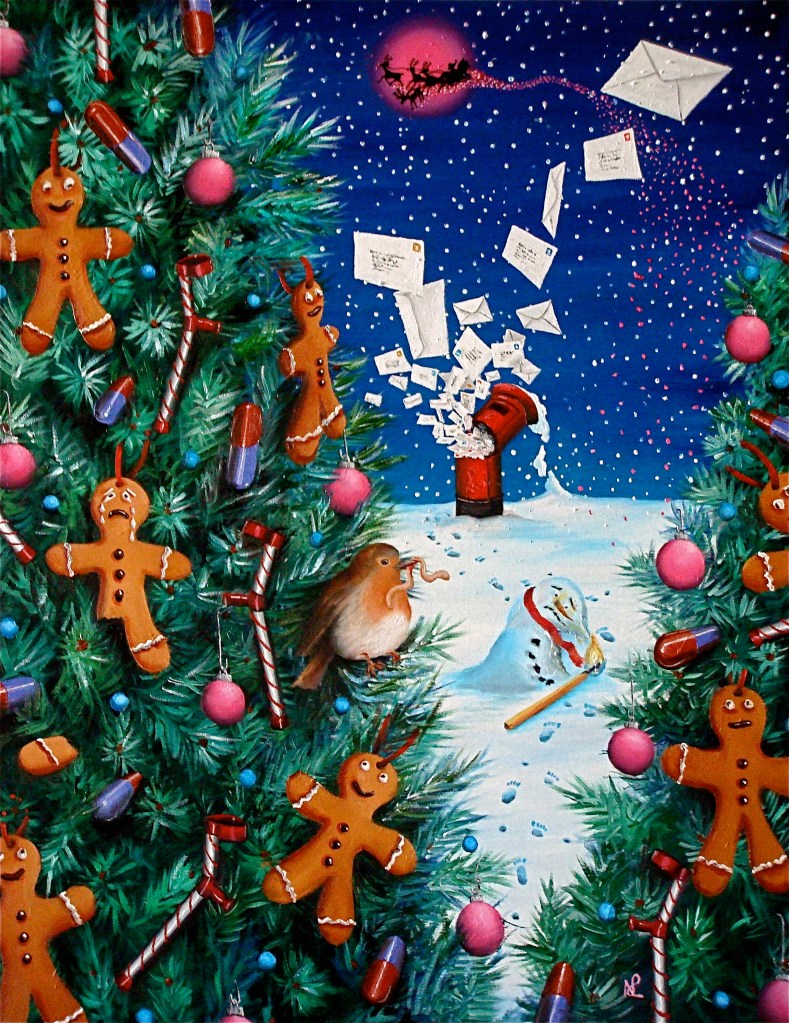
Sunday Supplement: Merry Christmas, Goodwill to all (Gingerbread) Men

Following on from my recent Christmas tree posts, it seems suitable that for this week’s Sunday Supplement, I introduce you to the work: “Merry Christmas, Goodwill to all (Gingerbread) Men” (2008, oil on canvas). On it’s face, it’s a typical Christmas scene. Christmas trees hung with decorations and gingerbread men, snow scattered widely on a crisp winter’s night, Santa’s sleigh riding through the sky. But this is not a typical Christmas. Look closer and the images represented betray a sense of suppressed panic and bitterness. Off-centre, but at it’s heart, a gingerbread man with a broken right leg is iced with tears of apparent despair, while around him, he is surrounded by gingerbread men staring in his direction, their chocolate smiles still adhered mockingly to their faces. Also on the tree, candy canes are replaced with candy crutches, and where baubles should hang, pink ibuprofen tablets share branches with blue and red antibiotics and blue amitriptylene. On the tree perches the archetypal red-breasted robin, but he too appears menacing, caught in the act of murder of the still-living worm clasped in his beak. Between the two trees a further unsettling scene emerges, as a snowman struggles against the lit match which lays at his side, apparently placed there by whomsoever has left the footprints in the snow, footprints which betray a limp in the right foot because only the ball of the foot appears to impact the ground. Meanwhile above a British post box is cracked open, Christmas cards and other correspondence flying through the air, while above, a supposedly magical scene of santa and his sleigh is interrupted by the fall of one of his reindeers mid-flight.

Merry Christmas, Goodwill to all (Gingerbread) Men (Oil on canvas, 2008 © Nicholas de Lacy-Brown)

This is not the stereotypical scene of Christmas. It is in fact one of ten paintings which I created in the direct aftermath of a very traumatic road traffic injury of which I was the unwitting victim in May 2008. Just as I was walking past a very large structural concrete wall, a lorry crashed into it, causing the wall to collapse on top of me. I sustained severe crush fractures to my right leg as well as various other, more superficial injuries. I was lucky to be alive. What got me through the months of severe post-traumatic recovery was, and continues to be, my art. When I painted 10 paintings based on my accident, I was able to pour out my personal grief and frustration onto canvas. Each of the 10 canvases I painted represent a particular stage of my recovery. In this festive-themed painting, I recollect my first Christmas experienced after the accident and in particular my insecurity at being surrounded by a busy city at Christmas time, when I was visually and physically impeded by a very large illizarov external fixator which I was required to wear on my leg for 9 months. As I began to return to London society, I became more and more aware that people would stare at my leg in horror. They would never speak to me about my accident, but just stare – it made me feel like a leper. And all this at at time when society encouraged “goodwill to all men”. I expressed my feelings in this image of a gingerbread man, his leg broken, and all the gingerbread men around him staring, unfeeling, making his suffering all the worse.

At the same time I was ever conscious that my social life had been destroyed by my disabilities, an image I expressed in the broken letter box, its lost letters a sign of my broken friendships and lost social ties. Meanwhile the snow, the baubles and the crutches are all representative of the multitude of medication and medical aids I was required to take and use at that time. The foot steps in the snow are mine. Am I then an agent of my own self-destruction? Or am I facing up to the inevitability of life’s often bleak, stark reality?

For me, the accident was a distinct and painful reminder that we all take things for granted. I took my healthy right leg for granted until it was too late. I also took my mobility for granted. After two years on crutches and a life of mobility difficulties ahead, I now recognise how difficult life is for those with limited mobility, particularly in big cities and on public transport. I also realised that for people with disabilities, the last thing they want is to be looked at differently by other people in society. The purpose of my blog is not to lecture, rather it is to share the art and culture and beauty of life. But what I would say is: enjoy your  Christmas, your new year, and your life. Never take anything for granted, and if you see someone hobbling along a street with crutches or a bad limp, don’t stare. If you’re interested, just ask… If they’re like me, victims of accidents and disabilities would much rather talk about their experience than be marginalised because of it.

© Nicholas de Lacy-Brown and The Daily Norm, 2005-2011. Unauthorized use and/or duplication of the material, whether written work or artwork, included within The Daily Norm without express and written permission from The Daily Norm’s author and/or owner is strictly prohibited. Excerpts and links may be used, provided that full and clear credit is given to Nicholas de Lacy-Brown and The Daily Norm with appropriate and specific direction to the original content.

Sunday Supplement: Road Traffic Control

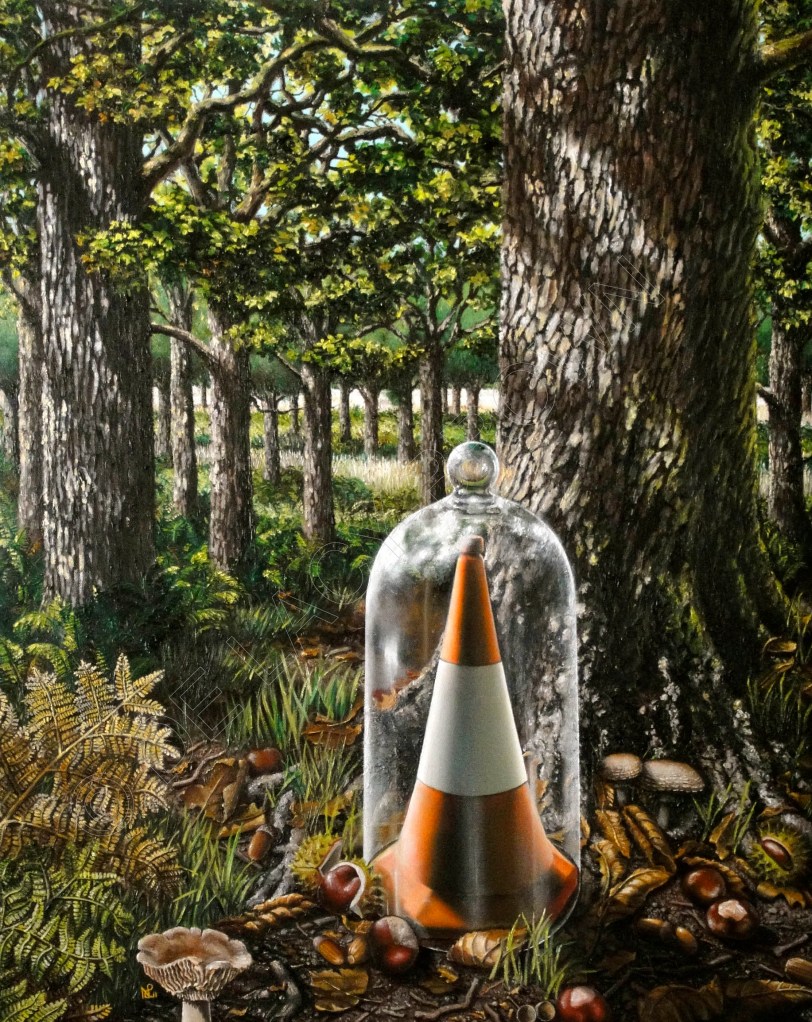
In the continued spirit of the Sunday Supplement’s exploration of some of my more detailed non-Norm work, this Sunday I am presenting a painting which I literally finished two days ago, having been working on it on and off since the first week of October: Road Traffic Control (Autumn in Richmond Park). The work was inspired by an early autumn day in Richmond Park – it was in fact the day of the mini heat wave in the UK with temperatures of 29 degrees on 1 October. This made for the rare sensation of feeling summer on the skin, but with the eyes seeing autumn hues bathed in glorious sunlight. It made for wonderful visual results in Richmond Park, which is in itself a unique and vast bucolic landscape in amongst the urban jungle that is London surrounding it. As soon as I got home, I started work on this canvas.

Road Traffic Control (Autumn in Richmond Park) (Oil on canvas, 2011 © Nicholas de Lacy-Brown)

Read more