Skip to content

Posts tagged ‘Exhibition’

Ibrahim El-Salahi: A Visionary Modernist

Following hot on the heels of Tate’s superb mini-exhibition of Saloua Raouda Choucair, an artist previously unknown to so many art-buffs in the UK (but whose work completely revolutionised my approach to my work, and got me thinking about how I can use gouache in my paintings) comes another retrospective exhibition of a relative unknown as far as big art names go: Ibrahim El-Salahi, whose significant 7-room solo show has recently opened at Tate Modern in London. And what a success it is.

Coming from Sudan (born 1930), El-Salahi’s retrospective is Tate Modern’s first retrospective dedicated to an African modernist. It will also most likely be the first many visitors to the show will have heard of this Modernist artist. Yet El-Salahi’s work is nothing short of stunning – a visual delight of painting, drawing and calligraphy which comes together in a retrospective which exhibits a level of imaginative expression the likes of which I have not seen since discovering the works of Dali. The complexity of some of his drawn black and white images is nothing short of stunning – a mix of figurative and more expressive forms, but culminating to form a visual assault on the viewer whose eyes simply do not know where to begin in the appreciation of these works.

Reborn Sounds of Childhood Dreams I (1962-3) © Ibrahim El-Salahi

Reborn Sounds of Childhood Dreams I (1962-3) © Ibrahim El-Salahi

Centred on the recent acquisition of Tate Modern, the significant piece entitled Reborn Sounds of Childhood Dreams (1961-5), the exhibition starts off with the artist’s most recent works before delving backing in time to paintings loaded with African earthly brown tones, burnt umbers and yellow ochres representing, as El-Salahi himself says, the African foundations which pervade his work. But asides from the African earthy colours and the occasional tribal mask, El-Salahi’s early work exhibits a complexity of imagery which extends way beyond the continent which has so characterised his work. Islamic imagery, for example, is featured strongly, with Islamic lettering and the crescent moon prominent throughout the show, while perhaps the strongest influence comes from a surprisingly significant immersion in Western culture, an exposure encountered when El-Salahi won a scholarship to London’s Slade School of Art in the 1950s, with particular references to Picasso’s jarred cubist figures showing through from then onwards.
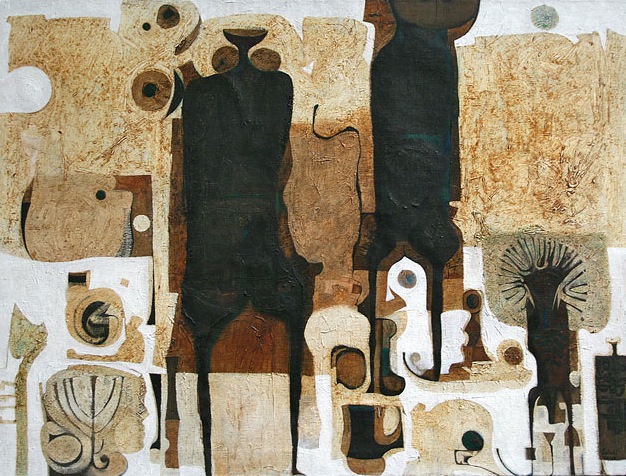
They Always Appear (1966-8) © Ibrahim El-Salahi
They Always Appear (1966-8) © Ibrahim El-Salahi

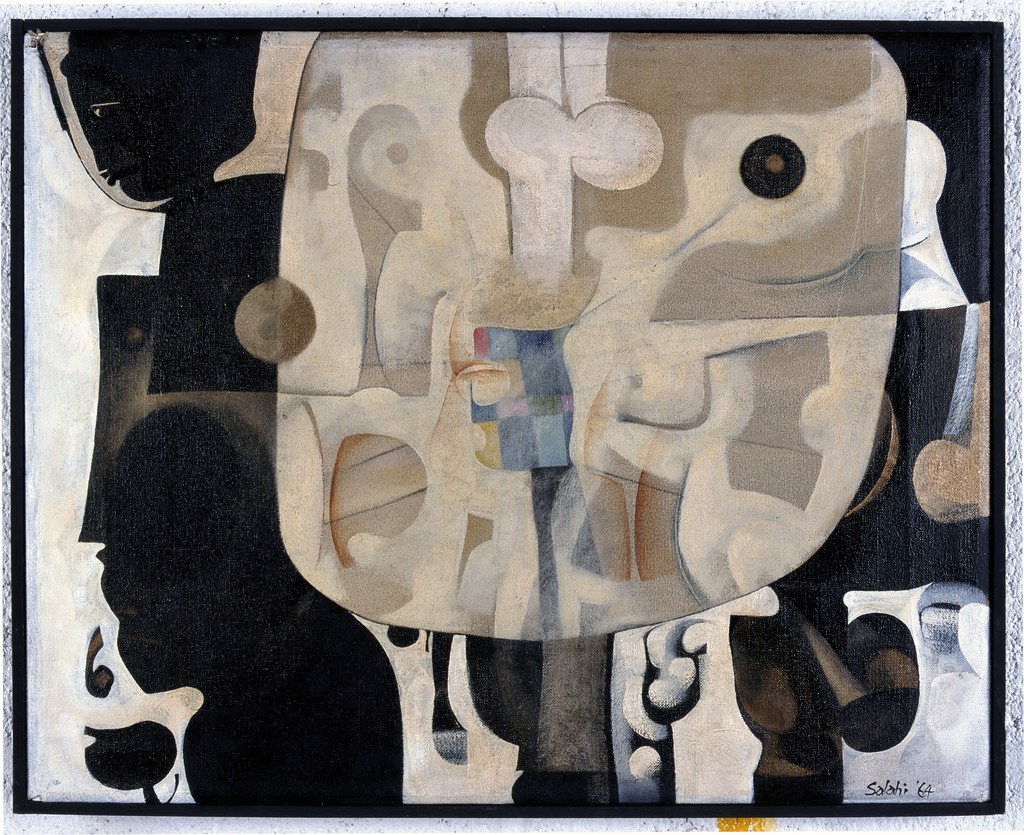
Al-Kas (1964) © Ibrahim El-Salahi

Al-Kas (1964) © Ibrahim El-Salahi

The Last Sound (1964)  © Ibrahim El-Salahi
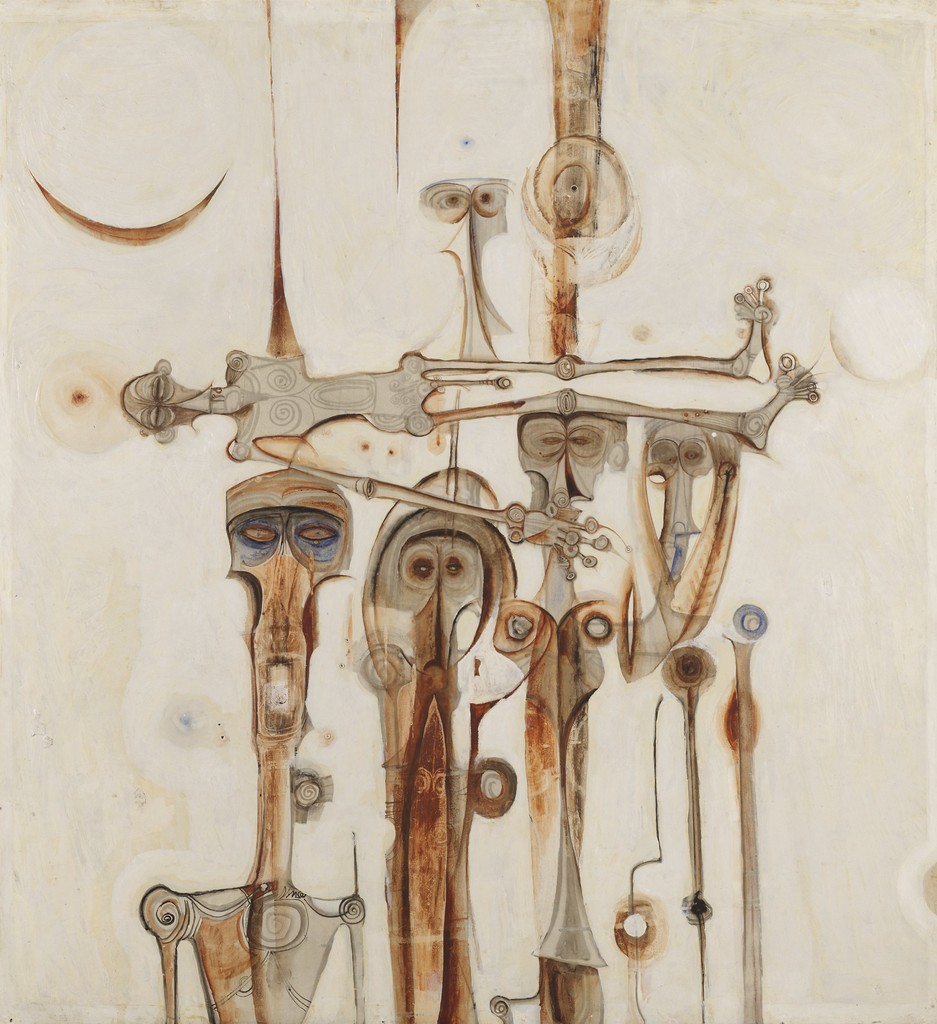
The Last Sound (1964) © Ibrahim El-Salahi

Funeral and the Crescent (1963) © Ibrahim El-Salahi

Funeral and the Crescent (1963) © Ibrahim El-Salahi

Vision of the Tomb (1965) © Ibrahim El-Salahi

Vision of the Tomb (1965) © Ibrahim El-Salahi

The exhibition moves to the 1970s, a difficult time for El-Salahi when he was compelled to return from London to Sudan to take up the role of Deputy Undersecretary of Culture at the Sudanese Ministry of Information, under the military dictatorship of General Gaafar Nimeiry. However, his tenure ended abruptly in the mid-70s when, in the aftermath of a failed military coup, El-Salahi was accused of anti-governmental activities and imprisoned for 6 months. The art works which follow are abruptly different from the warm earthy umber works of the previous room. Stripped of colour, these black and white works, generally drawn in ink on paper, appear to reject the warm colours of El-Salahi’s African heritage, but are nevertheless some of the most powerful works in the show, demonstrating incredibly skilled draughtsmanship and imagination which is beyond what most of us are capable of. Apparently El-Salahi would begin these works by drawing a small image, the likes of which would gradually expand outwards as he would add paper to allow the image to spread.

The Inevitable (detail) (1984-4) © Ibrahim El-Salahi

The Inevitable (detail) (1984-4) © Ibrahim El-Salahi

21_reborn_sounds_2_full_1024x362

From Visual Diary of Time-Waste Palace (1996-7) © Ibrahim El-Salahi

From Visual Diary of Time-Waste Palace (1996-7) © Ibrahim El-Salahi

In the 1990s, El Salahi, now in self-imposed exile from Sudan, moved to Oxford, and there, inspired by the verdant British countryside began a series of tree-inspired images. With these, El Salahi injected colour back into his work, and also dappled in more linear, geometric forms. This in turn led to the present, where El Salahi appears to be returning to the earthier browns of his earlier period, but also dapples again in some of the more detailed black and white ink on paper works. But whether brown, black or white, these works, based on a recent trip to Granada in Spain and largely depicting Flamenco (which of course has its routes in Islamic culture, as does Granada itself) are without a doubt the most stunning works of the exhibition. I was held utterly spellbound by one work depicting Granada in those same umbres and ochres, but with a black and white clustered group of flamenco dancers at its centre, their arms thrust upwards in a burst of energy so reminiscent of that point of duende, their figures perfectly arched into the passionate hold of a flamenco dancer in her final crescendoed cry. Dazzling. Spectacular – one of the best works I have ever seen at Tate. Tragically, I can find no image of this work online, which makes it all the more important that you head along to the show to share in these incredible artworks.
exm-main-0012_elsalahi_web_banner_0

Ibrahim El-Salahi: A Visionary Modernist is on at Tate Modern until 22 September 2013

Life and Death in Pompeii and Herculaneum

The stories of Pompeii and Herculaneum are renowned throughout the world. The very mention of their names is synonymous, not with the towns standing on their site today (Ercolano, in the case of the latter), but with the catastrophic volcanic eruption from Mount Vesuvius in Southern Italy which totally obliterated these small Roman cities on 24 August, AD 79. It is an eruption which has gone down in tectonic history as one of the most devastating eruptions in the last two millennia, an event whose very details were captured in the contemporary writings of Pliny the Younger, as well as in the rich geological history which the layers of ash and pumice which spouted out of the volcano can now provide. However, perhaps the greatest irony of this eruption was that in causing the total destruction and devastation of two Roman cities, and then blanketing the burnt urban carcass in several metres of dense ash and pumice, the eruption had the converse effect of actually preserving, sometimes perfectly, a imprint of Roman urban life, providing one of the largest ever discovered archaeological hauls of Roman remains so rich and diverse in its breadth that it provides 21st century audiences with a truly unique insight into societal life some 2,000 years ago.

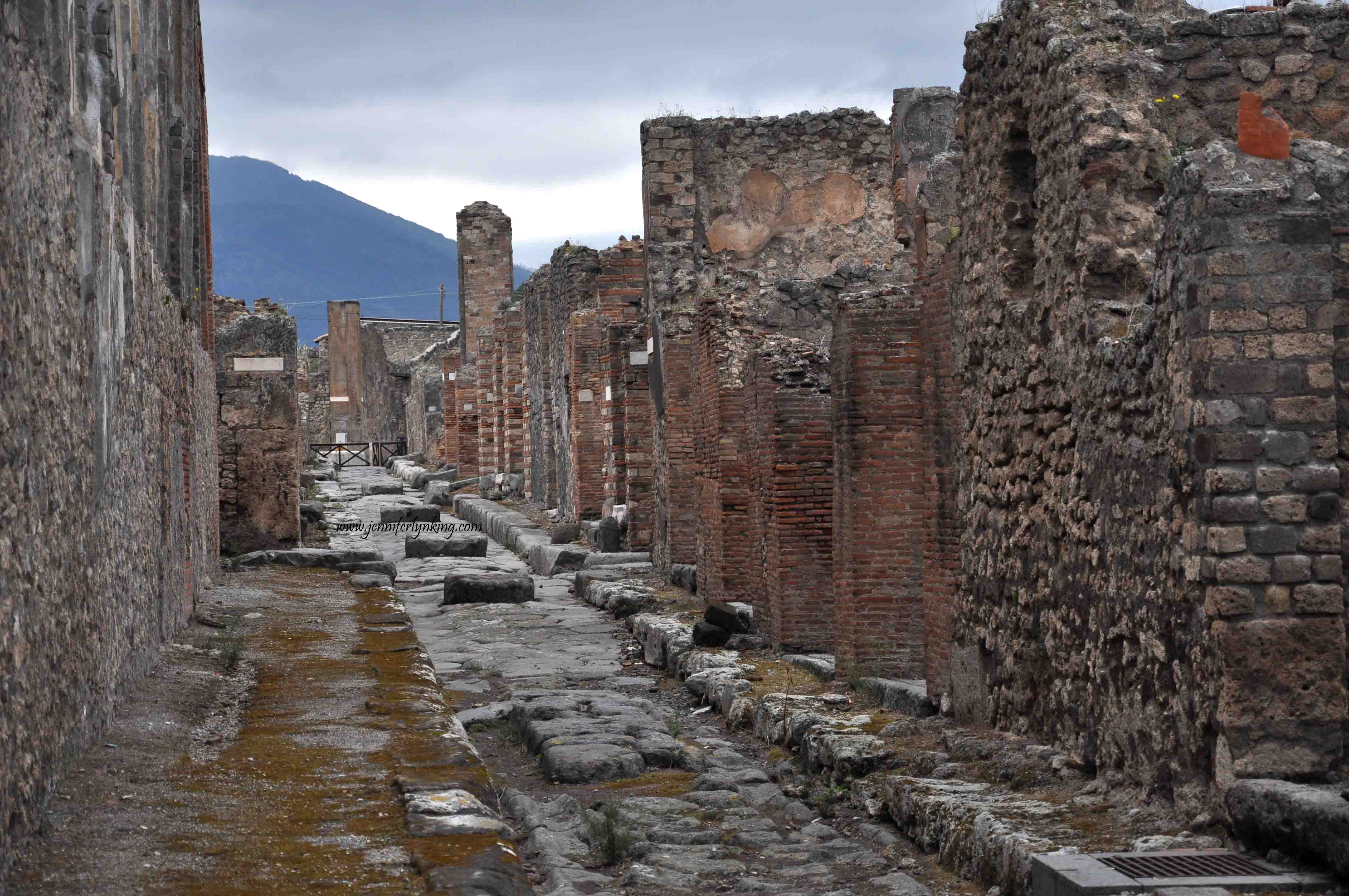
Pompeii today

Pompeii today

It is this rich collection of excavated artefacts around which the British Museum’s latest blockbuster exhibition, Life and Death in Pompeii and Herculaneum, is centred, a singularly unique exhibition and a first of its kind, because so many of the pieces on show have never been seen outside of Italy before. The exhibition results from the direct collaboration between the British Museum and the Archaeological Superintendancy of Naples and Pompeii, and consequently some absolute gems of Pompeian and Herculenean society are now in London for the first time.

7581646784_0e07b3c010_zConcentrating on the daily lives of the Romans living in these doomed cities, the exhibition is cleverly curated so that the various items on display are grouped thematically into the rooms of a “house” in which they would have been found. In meeting this objective, the layout of the show is based on a reconstructed idea of what a real Pompeian house (the so called “House of the tragic poet”) would have looked like. Consequently, after a large cinematic presentation which provides a well-animated introduction to the show, you start off in what would have been a Roman street, where various paraphernalia of trading life can be seen. Then, heading inside, you enter the atrium, the hall way of a Roman house which would have been flooded with light owing to the skylight which plunged through the centre of most Roman atriums. In this room, the objects on show included some stunning marble statues with barely a chip or scratch in sight, mosaics which would have lined the hallway floor reminding visitors to “Beware of the Dog”, and frescoes depicting the possible Roman occupants of the houses – here what is thought to be the baker Terentius Neo and his wife.

b01r5pxl_640_360

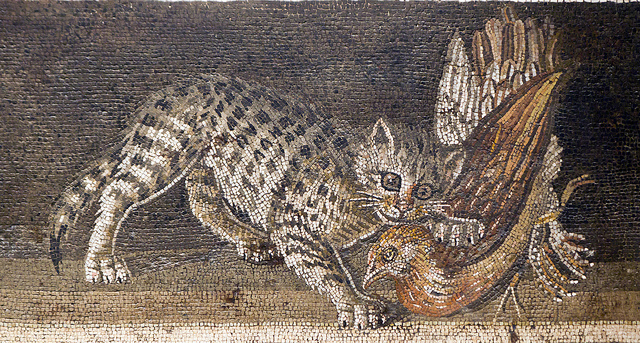
To the right of the atrium, a gallery set out as the bedroom included some quite incredibly preserved Roman wooden furniture, including a rocking baby crib and a stool, as well as an elaborately carved bed stead (all now heavily carbonated). Meanwhile to the left, what would have been the salon area for entertaining included an explanation of what has since become known as the “Pompeian style” of interior design, which comprises exquisitely detailed mosaic flooring, and walls painted with highly realistic and often stylised frescoes in four principal styles, all sharing common themes of richly elaborate pattern together with boxes showing pastiches and scenes from life or mythology, as well as the use of deep colours, generally rich reds and golds and blues. detailI was completely awestruck at just how sophisticated Roman art was – the shadows and tone of human skin as painted on these frescoes rivals anything done in the renaissance, and makes the art of the medieval era, which of course came along hundreds of years after the Roman empire fell, look completely childish and naïve. As for the mosaics, some of the pieces on show were nothing short of astounding, not least a mosaic depicting sea creatures, with its incredibly realistic depiction of fish and other ocean creatures of every size and variety – I love the powerful composition with a staring octopus at the centre appearing almost to enter into battle with the lobster.

fishmosaicnaples 800px-Nilotic_scene_MAN_Napoli_Inv9990_n04 6572054559_b91ac9b238_ztheatre mask

But perhaps my two favourite rooms of this “house” were the garden area, which came decked with some luscious garden frescoes, and the kitchen, which was packed with some incredibly contemporary looking cooking paraphernalia. I loved the tranquillity of the garden space, and can imagine how beautiful it must have been to stroll around colonnaded walkways, painted with these verdant green frescoes, depicting birds and lush plants, while at the centre a fountain would trickle, a sign of ultimate wealth in its extravagant use of precious water for entertainment.

Art-mainpic_2474008b pompeii_garden Art-bird_2474096b

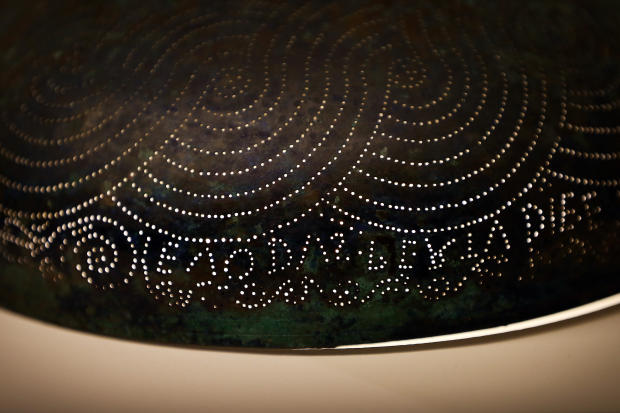
As for the kitchen, I was astounded to see what had been discovered from Pompeii and Herculaneum – actual figs, ripe on the day of the eruption, now preserved as carbon forms under the ash; and a loaf of bread, still imprinted with the name of the slave who baked it! The utensils too were fascinating to see – what looks like a colander for straining vegetables, but punctured with holes forming their own elaborate pattern into the metal; and there too was a pot ingeniously conceived just for the fattening up on dormice (which would then be roasted and ate dipped in honey).

Colander detail

Colander detail

Carbonated bread

Carbonated bread

But after this fascinating stroll through Roman life, the inevitable ending to the story follows suit, like the inescapable tide of history washing over Roman life like the pyroclastic surge catapulted down the volcano, wiping out city life in seconds. The “death” part of the exhibition is as poignant as the “life” section is revealing. Particularly startling are the plaster casts of the dead, found in Pompeii. These casts were made from filling in the gap left in the hardened ash once the bodies underneath rotted away. What we had before us then wasn’t an actual body, but a shadow of one; a poignant and again unique insight into the death of these now faceless humans, cowering away from the extreme heat at that moment of their instant death. Who could not be saddened by the sight of a whole plaster cast family, with the baby still shown laden in its blanket. And don’t forget the dog – that poor animal met his fate in the same way too. Incredibly and moving stuff, that brings us face to face with the tragedy that was Pompeii and Herculaneum, AD 79.

123764081_Pompeii_398154b BRITAIN-ITALY-HISTORY-ARCHAEOLOGY-POMPEII Pompeii and Herculaneum at the British Museum Pompeii1

This exhibition is a must see for anyone living in London or soon to visit. On until 29 September 2013, it still has a fair stretch to go, but be not complacent – it’s extremely popular and advance booking is essential. You can get your ticket on the British Museum website. Unless you’re heading Italy-way anytime soon, this exhibition comes highly recommended as a unique insight into a civilisation now dead, but not lost.

Manet: Not exhibited in his lifetime

Glancing through the current Manet retrospective, Manet: Portraying Life, at the Royal Academy, there is one consistent feature which is perhaps even more noticeable that the works themselves: How many of the paintings are labelled “Not displayed in his lifetime”. Why the Royal Academy is so insistent on spelling this out with such apparent alacrity is unclear. But what it demonstrates is that the majority of works comprising this so called “first ever retrospective devoted to the portraiture of Edouard Manet” are what I call “filler works” – paintings which are either unfinished or merely preparations for other works, and none of which the artist had ever intended to be exhibited for public consumption.

It is therefore with some unease that I looked upon these works, which the Royal Academy tries to pass off as paintings worthy of the not insignificant £15 entry-price, the cynic inside me recognising that what we have here is merely a means by which a show that, fundamentally, consists of one room’s worth of finished and accomplished works, is padded out to fill a much bigger space. And even that space is not filled particularly well.

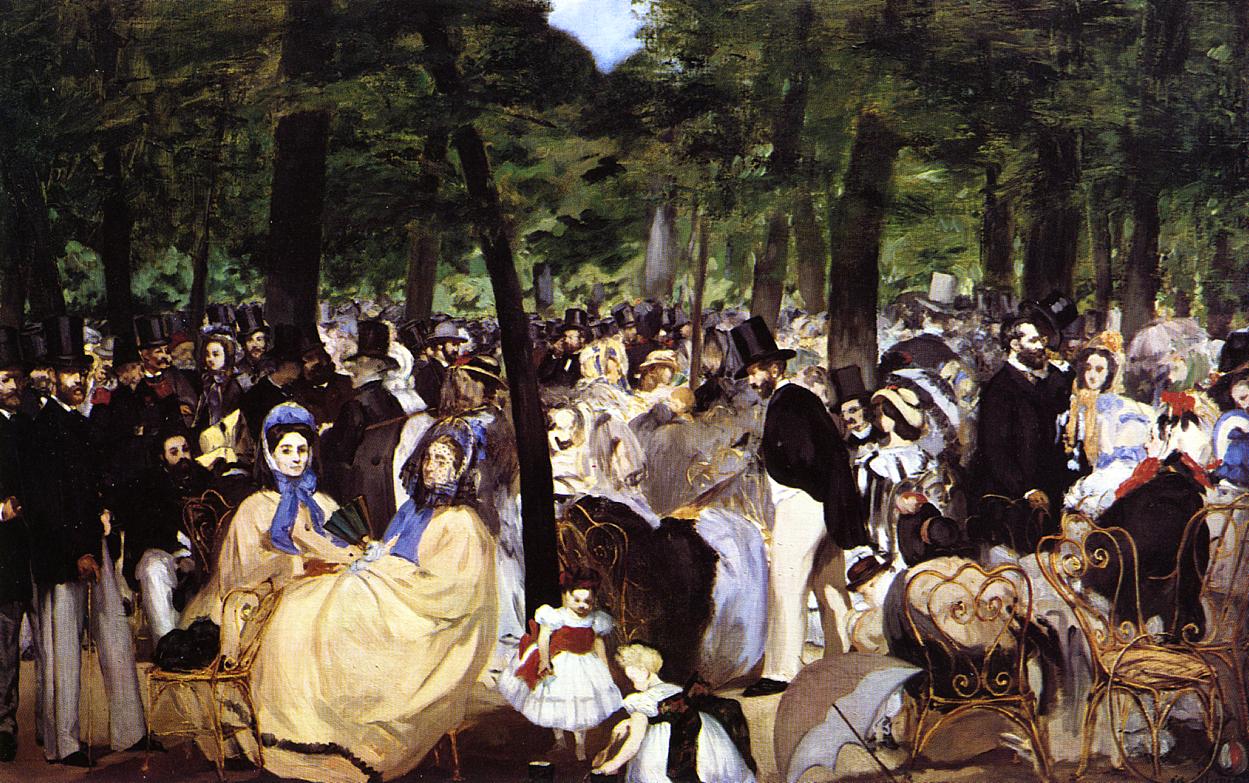
Music in the Tuleries Gardens (1862)

Music in the Tuleries Gardens (1862)

In the second large gallery, for example, the Royal Academy make the slightly unfathomable decision to present Music in the Tuleries all on its own, spotlight upon it, surrounded only by blank walls. I could understand this kind of hang for a masterpiece such as Le Dejeuner sur l’Herbe, which almost single handedly changed the history of art (and sadly lacking from this show), but for this painting? Sure enough, it’s a skilled group painting, giving us a very realistic snapshot of modern day life one sunny afternoon, lacking in the previous contrived composition of the grand historical paintings which were favoured in the time Manet painted it. But the Royal Academy do not succeed in making any significant point worthy of this solo hang. And what’s worse, this painting belongs to London’s National Gallery, so visitors can normally walk up and see the painting whenever they like, without the crowds attracted to the RA, and for free.

But this was not the worse of it. The following gallery was hung, not with paintings, but with a chronology of Manet’s life, and a desk on which copies of the exhibition catalogue could be surveyed – why exactly I’m not sure: after all, isn’t it better to look at the paintings themselves when you have them in front of you?

Unfinished: Portrait of Carolus Duran (1876)

Unfinished: Portrait of Carolus Duran (1876)

But asides from the unpalatable cheek with which the RA filled it’s space and passed off the show as a great survey of Manet’s career, I also felt a deep sense of unease, not as a punter, but as an artist – because so many of these works are so clearly unfinished, unprepared for public consumption. I can imagine Manet now, turning in his grave, horrified at the prospect of these unfinished preparations being gazed at and criticised as though they were finished works. And all for the sake of a buck or too.

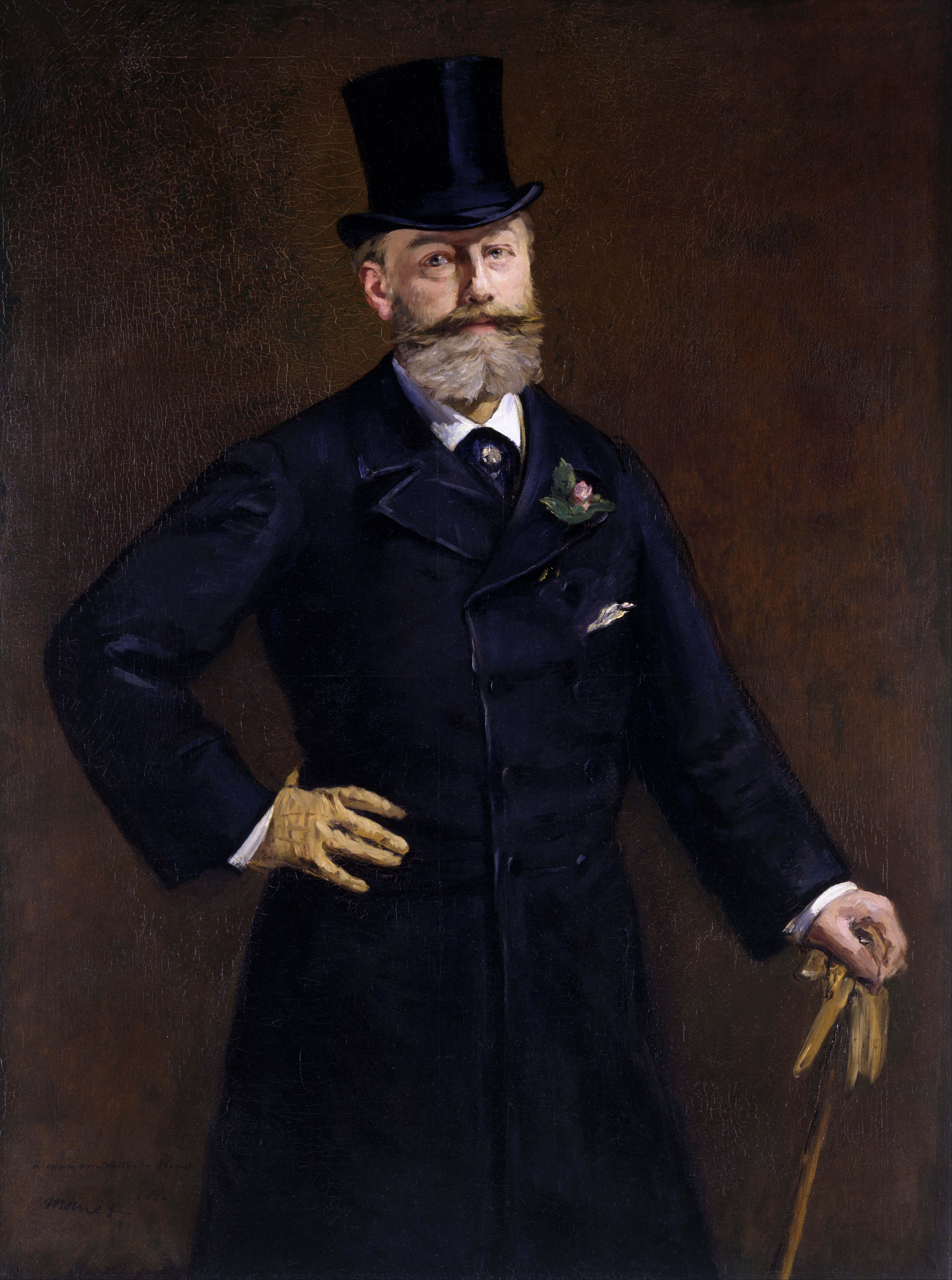
Portrait of M. Antonin Proust (1880)

Portrait of M. Antonin Proust (1880)

The Luncheon (1868)

The Luncheon (1868)

Madame Manet in the Conservatory (1879)

Madame Manet in the Conservatory (1879)

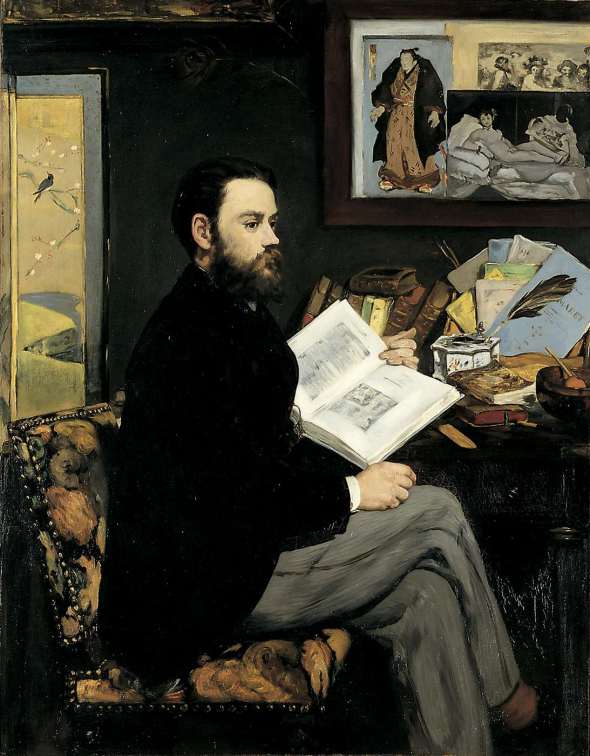
Emile Zola (1868)

Emile Zola (1868)

All that said, the finished works which are on show are masterful Manet’s, apt demonstrations of the artist’s skill at capturing real life, real characters and a sense of the time in which he painted. You get the portrait of M. Antonin Proust (not to be confused with the acclaimed author) – a dandy about town, a man proud and professional in his polished appearance; then there’s Suzanne Leenhoff (later Madame Manet), sat, happily contented in the garden of Manet’s home, her cheeks rosy and her gaze tranquil.

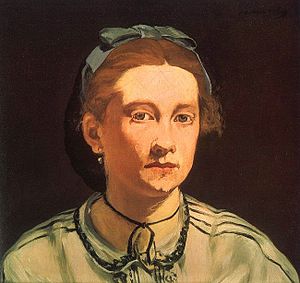
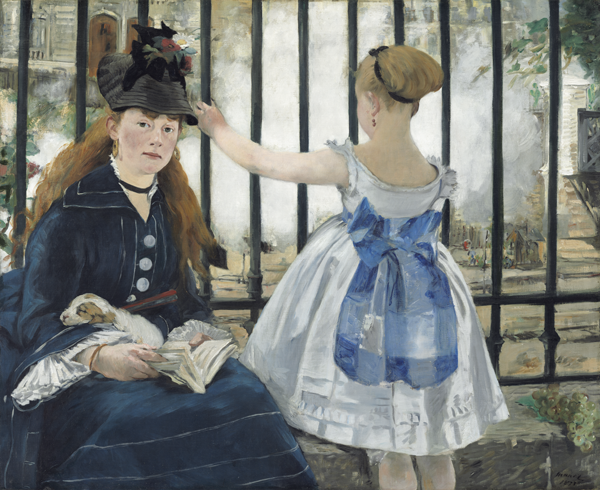
300px-Edouard_Manet_088Then of course there’s Manet’s most infamous sitter of all: Victorine Meurent, who gets a whole gallery to herself in this show. While sadly, and very obviously lacking the two great masterpieces of Manet’s oeuvre in which she features (Le Dejeuner sur l’Herbe (although the Courtaulds inferior and much smaller copy is here) and Olympia), the paintings which are on show present the model with the confidence and audacity which must have attracted the artist to her – the wiley stare, straight out of the canvas, almost judging, daring the viewer to respond. Then there’s Victorine dressed as a street-seller, an accomplished character portrait in which the cherries held to her mouth appear almost as a provocation, a subliminal message inviting us to read a story into her steely gaze,  as well as the wonderful Railway portrait, in which the railings adjoining the railway appear to take centre stage, and the air of noisy, smoky, modern industry appears oddly juxtaposed with the apparent calm and tranquillity of Victorine and her sleeping puppy.

Street Singer (1862)

Street Singer (1862)

The Railway (1883)

The Railway (1883)

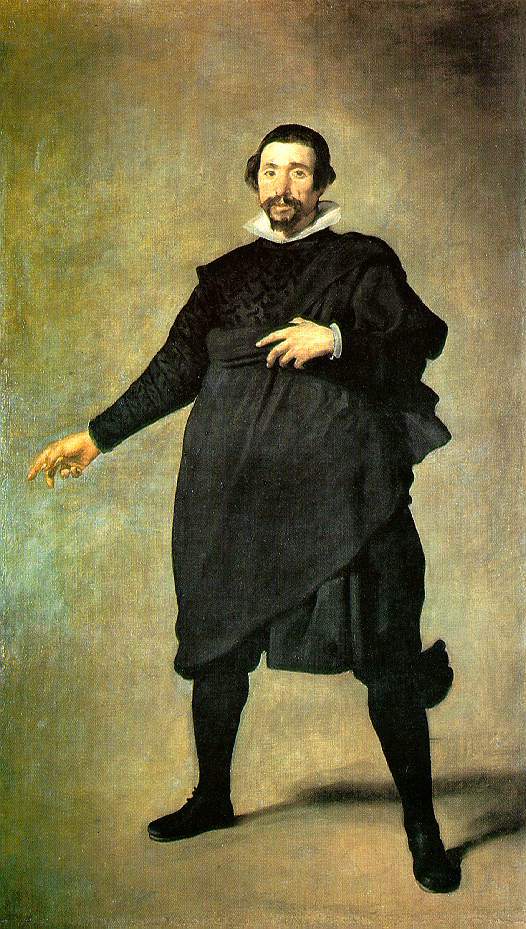
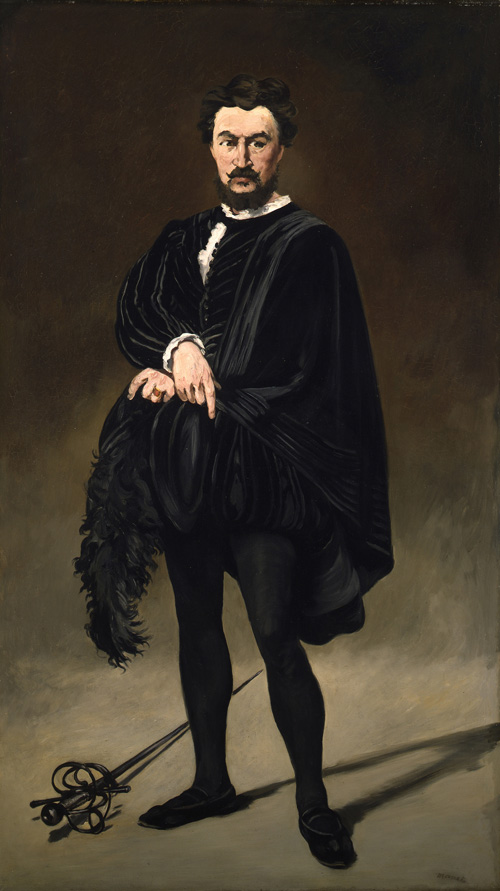
As a Manet lover (need I remind you of my Norm version of both Manet’s Le Dejeuner sur l’herbe and my juxtaposed Manet character Norms sat in Cappuccino Grand Café ?) I was of course familiar with many of the few finished works on show. But one thing that I took out of the show which I had not fully appreciated before was just how influenced Manet had been by Spanish art. Taking a trip to Spain, organised by Zacharie Astruc who’s portrait is also on display, Manet was very quickly inspired by Velazquez, who he saw as a master of painting black in all its surprising variety of shades, as well as other greats such as Goya and Ribera. Following on from this, one can really start to see the Spanish influence infiltrating into Manet’s work. Take the portrait of Rouviere as Hamlet for example, and look how it compares to this portrait by Velazquez. Then of course there’s the portrait of Victorine in the costume of an Espada, again sadly not included in the exhibition, an a portrait of Emilie Ambre as Spain’s favourite operatic diva, Carmen. As an artist much inspired by the Spanish golden age of art, I am well able to understand the effect that Spanish art must have had on Manet, helping him to surge forward as the revolutionary artist he was, in a claustrophobic French art scene which had yet to be struck by the poignancy of Spanish art.

Portrait of Zacharie Astruc (1866)

Portrait of Zacharie Astruc (1866)

Diego Velazquez, The Jester Pablo de Valladoid (1635)

Diego Velazquez, The Jester Pablo de Valladoid (1635)

The Tragic Actor (Rouviere as Hamlet) 1865

The Tragic Actor (Rouviere as Hamlet) 1865

Victorine Meurent in the costume of an Espada (1862)

Victorine Meurent in the costume of an Espada (1862)

Spanish influence: Emilie Ambre as Carmen (1880)

Spanish influence: Emilie Ambre as Carmen (1880)

Of course it is difficult for us, well informed of the contemporary art which followed, to understand just how revolutionary Manet was as an artist, painting in the age when grand history paintings and allegorical images were all the rage. His paintings were so real, so unpretentious a snapshot of the life and the world around him, that many gallery goers took to attacking his paintings with umbrellas. Yet still Manet ploughed on, forging the path which impressionists and expressionists and the whole world of modern art pursued in his wake. This exhibition does not make any statement half so bold as the mighty oeuvre of Manet in itself, but putting asides the unfinished sketches, and concentrating on the completed masterpieces, those works of Manet which are on show are easily strong enough to make an impression all by themselves.

Manet: Portraying Life is on at the Royal Academy until 14 April 2013.

Paris: la visite d’art – Exhibition 1: Hopper

I don’t need a reason to visit Paris. The beauty of the winding cobbled streets of Montmartre echoing with accordion melodies, the charm of the boutique-filled Marais, the glory of the sweeping River Seine, and the regal grandeur of the Louvre, the Napoleonic boulevards, the sandy parks and the super-sized fountains… I could just walk around the place, breathe in the atmosphere, and munch upon macarons year after year, month after month. I never grow tired of Paris.

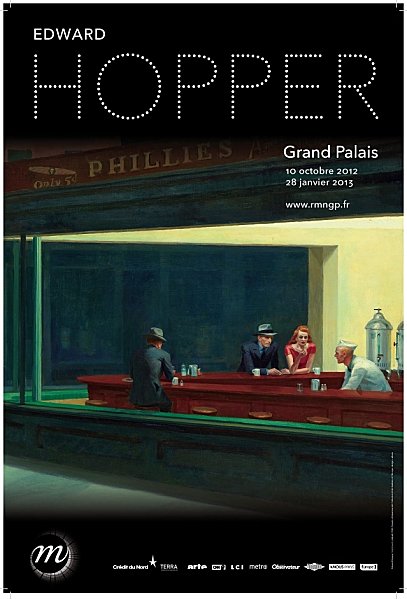
affiche-hopperAnd yet this year, Paris’ artistic offerings provided me not only with an excuse to make my second trip to the city in the space of 12 months, but made it a requirement. For the exhibitions which have graced the Paris art scene this autumn/winter have frankly been second to none – a Hopper retrospective at the Grand Palais, an exhibition focusing on the “bohemians” of 19th century Paris, also at the Grand Palais, a show of the significant artistic productivity, including Picassos aplenty, of occupied Paris during the second world war at the Modern Art Museum and, most significantly of all, a Salvador Dali retrospective at the Pompidou. I have waited all my life for that one. Yet by comparison, what did we have in London in the so called “cultural olympiad” of 2012? A show of Hockney’s “bigger picture”, which was always so crowded that the most you could see of his bigger pictures was his clumsy brushstrokes pushed almost up against your nose, a premature retrospective of the great pretender, Damien Hirst, and a further foray down the well-trodden path of the Pre-Raphaelites for the 5th time in as many years.

So off to Paris I went with my partner, full of anticipation for what lay ahead – 3 days; 3 exhibitions – an anticipation which was fulfilled many times over.

Now it would be an injustice to try and feature the three shows I saw all in one post – the Dali exhibition alone should have a whole blog of its own. So I will take you through the shows one by one, sharing the joy of Paris’ cultural agenda for those of you who cannot make the trip, and making a strong case for the prompt purchase of exhibition tickets for those who can.

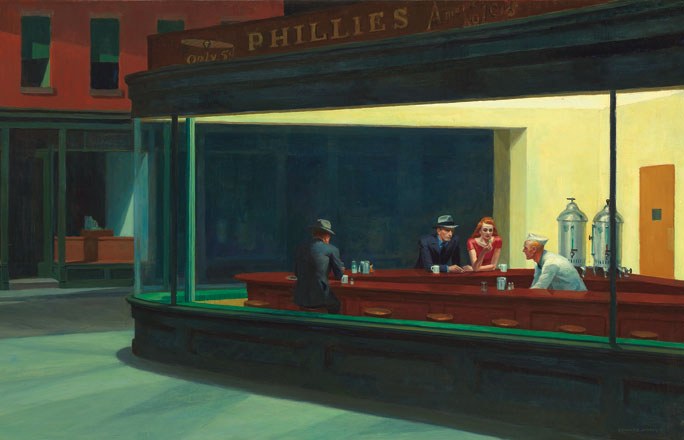
So up first – Edward Hopper at the Grand Palais. Hopper (1882-1967) the all-American painter, best known for his depictions of introspective early 20th century city dwellers, lost in a world of thought in an often artificial unnatural urban space, has long fascinated me, ever since I “accidently” hung on to a catalogue lent to me by my friends, Sarah and Truong, of this artist previously unknown to me. Of course at least two paintings are recognisable to us all – House by the Railroad (1925) – the quite reclusive, slightly sinister victorian house which is said to have inspired Hitchcock’s Psycho house, and a number of haunted house parodies ever since; and Nighthawks (1942), the quintessential Hopper masterpiece, with its four mysterious figures, enigmatic relationships, and strangely unnatural nighttime glare. But asides from those popular references, I did not know Hopper, yet wished to be better acquainted.

House by the Railroad, 1925 (© MOMA, NY)

House by the Railroad, 1925 (© MOMA, NY)

Nighthawks, 1942 (© Art Institute, Chicago)

Nighthawks, 1942 (© Art Institute, Chicago)

In staging this significant retrospective (featuring 160 works, that was almost Hopper’s entire life’s output – he was a notoriously fastidious and slow painter), the Grand Palais was providing the ultimate in Hopper shows, allowing not only an acquaintance with this fine artist, but a chronological embrace through each stage of his artistic career. 

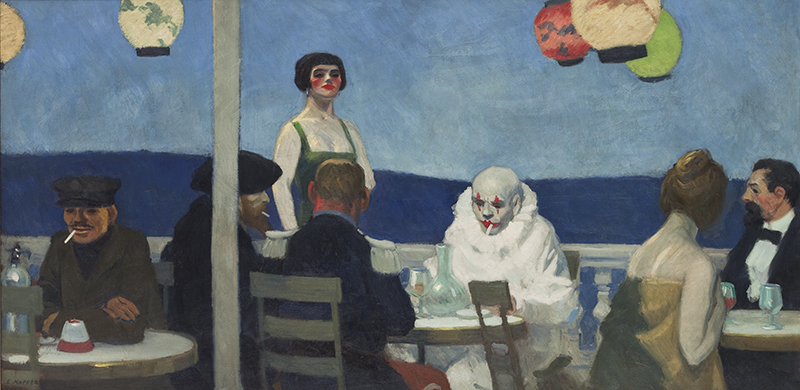
An early work - Soir Bleu, 1914 (© Whitney Museum of American Art)

An early work – Soir Bleu, 1914 (© Whitney Museum of American Art)

First up, we were shown his early works – painted around the beginning of the 20th century and suitably inspired by Paris and artists like Degas and Pissarro, Hopper dabbled in his earliest cityscapes – broad brushed meditations on a captivating city, yet rather subdued, although already mastering an effective contrast of sunlight and shadow. But soon enough, Hopper turned to illustration, finding that his paintings were not selling. Here, we see Hopper as the caricaturist and illustrator, both mediums in which he was able to demonstrate great skill as a draftsman and social commentator. It was only in the 20s that he began to paint seriously again, and finding greater success as he did so. From this point in the show onwards, there begins a vast array of Hopper paintings, spoiling the viewer with their breadth and sheer number.

Manhattan Bridge Loop, 1928 (© Addison Gallery of American Art)

Manhattan Bridge Loop, 1928 (© Addison Gallery of American Art)

The City, 1927 (© University of Arizona Museum of Art)

The City, 1927 (© University of Arizona Museum of Art)

From Williamsburg Bridge, 1928 (© Met Museum of Art, NY)

From Williamsburg Bridge, 1928 (© Met Museum of Art, NY)

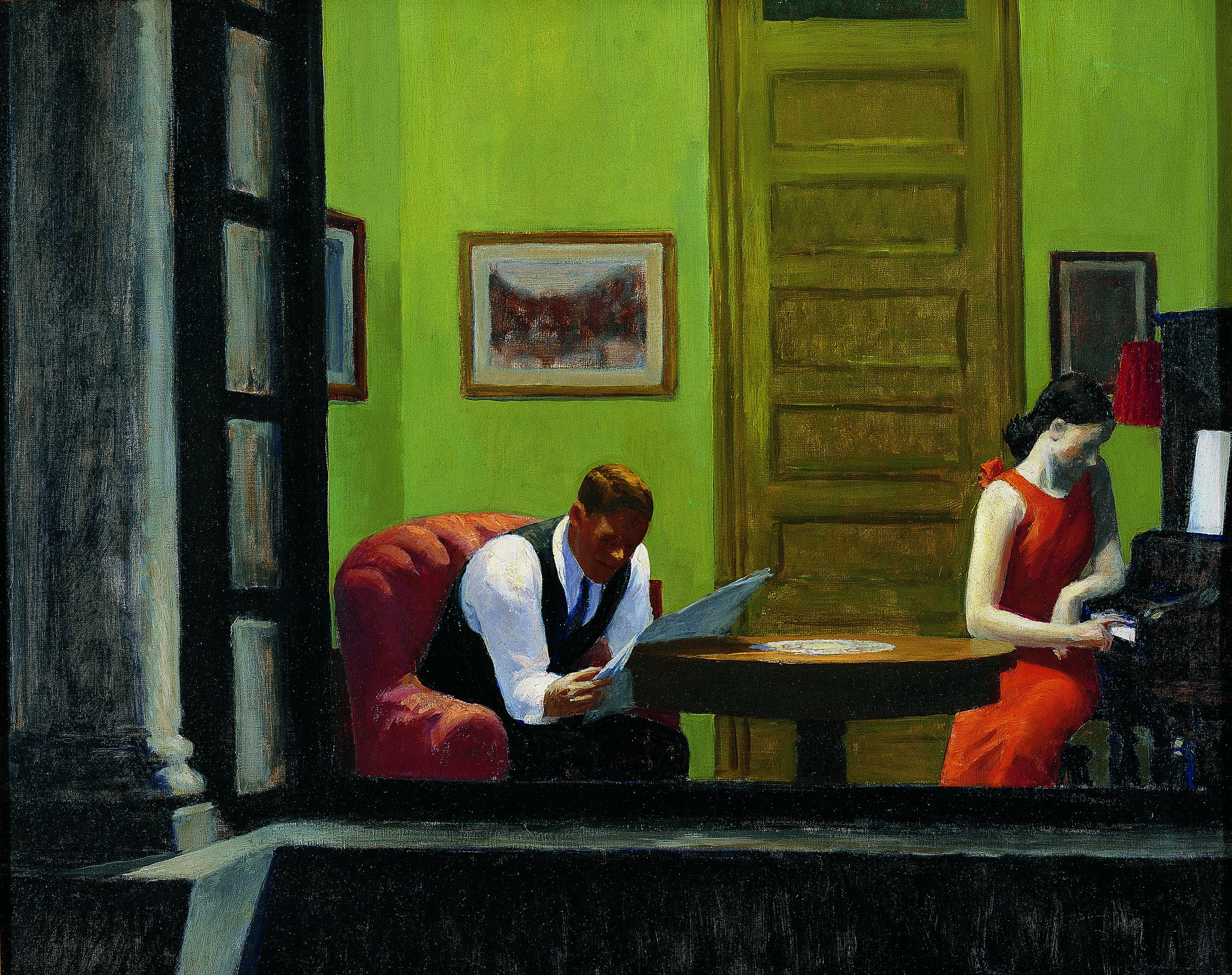
The paintings can almost be split, both chronologically and thematically. In the first set, Hopper’s paintings are conspicuous through their absence of people. Hopper had turned to urban scenes in his native America, concentrating on everyday scenes, roads, highways, lonely houses, and managing to capture the spirit of both suburban America and central city spaces, yet with the often noticeable lack of inhabitants. This then is to be contrasted by the later raft of works, in which the person takes centre stage in his paintings, as Hopper becomes almost voyeristic, appearing to intrude into scenes of great personal contemplation and introspection, as the characters he portrays stare, apparently into space, or couples appear together, yet both lost it seems in their own world.

Room in New York, 1932 (© Sheldon Museum of Art, University of Nebraska)

Room in New York, 1932 (© Sheldon Museum of Art, University of Nebraska)

Summertime, 1943 (© Delaware Art Museum)

Summertime, 1943 (© Delaware Art Museum)

These are the paintings which really made Hopper’s name – the lonely people – the built up urban scenes which nonetheless leave us with a feeling of emptiness and solitude. They are like a commentary on that time, as though Hopper is making a statement about the commercialisation and urban growth which was happening all around him – the more it grows, the lonelier the people caught up in the growth feel. The smaller the spaces, the inhabitants sink into themselves. In this respect, Hopper perhaps anticipated the pop-art of later years, yet doing so more as a resigned critic than as a celebrant of popular culture.

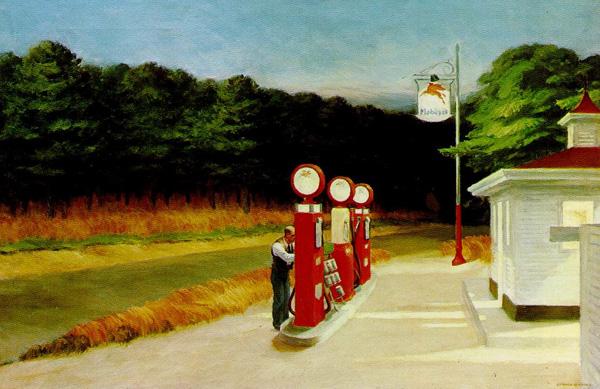
Gas, 1940 (© MOMA, NY)

Gas, 1940 (© MOMA, NY)

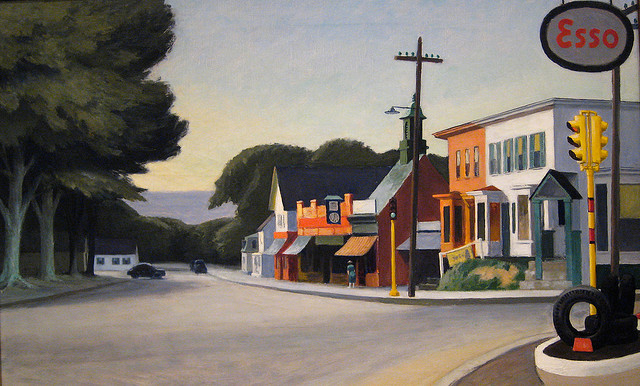
Portrait of Orleans, 1950 (© Fine Arts Museum of San Francisco)

Portrait of Orleans, 1950 (© Fine Arts Museum of San Francisco)

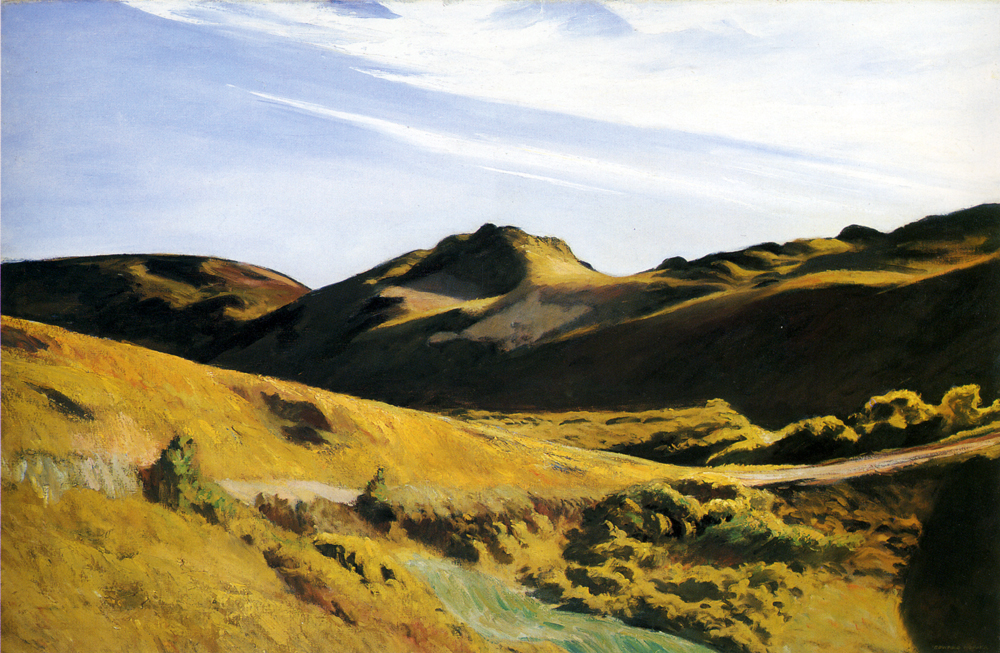
Personally, while I found Hopper’s people fascinating to consider, their stories open to so much interpretation, and Hopper’s intentions likewise, I couldn’t help but feel that too often his figures had something of a cartoony look about them, almost as though Hopper couldn’t quite kick the habit of his earlier days as an caricature artist. Rather, by far my favourite paintings were the solitary landscapes, the soulless cityscapes with not a person to be seen, the forest road interspersed with a jarring petrol station, the rolling landscape of The Camel’s Hump which was, by far, my favourite of his works.

Lighthouse Hill, 1927 (© Dallas Museum of Art)

Lighthouse Hill, 1927 (© Dallas Museum of Art)

The Camel's Hump, 1931 (© Utica (NY))

The Camel’s Hump, 1931 (© Utica (NY))

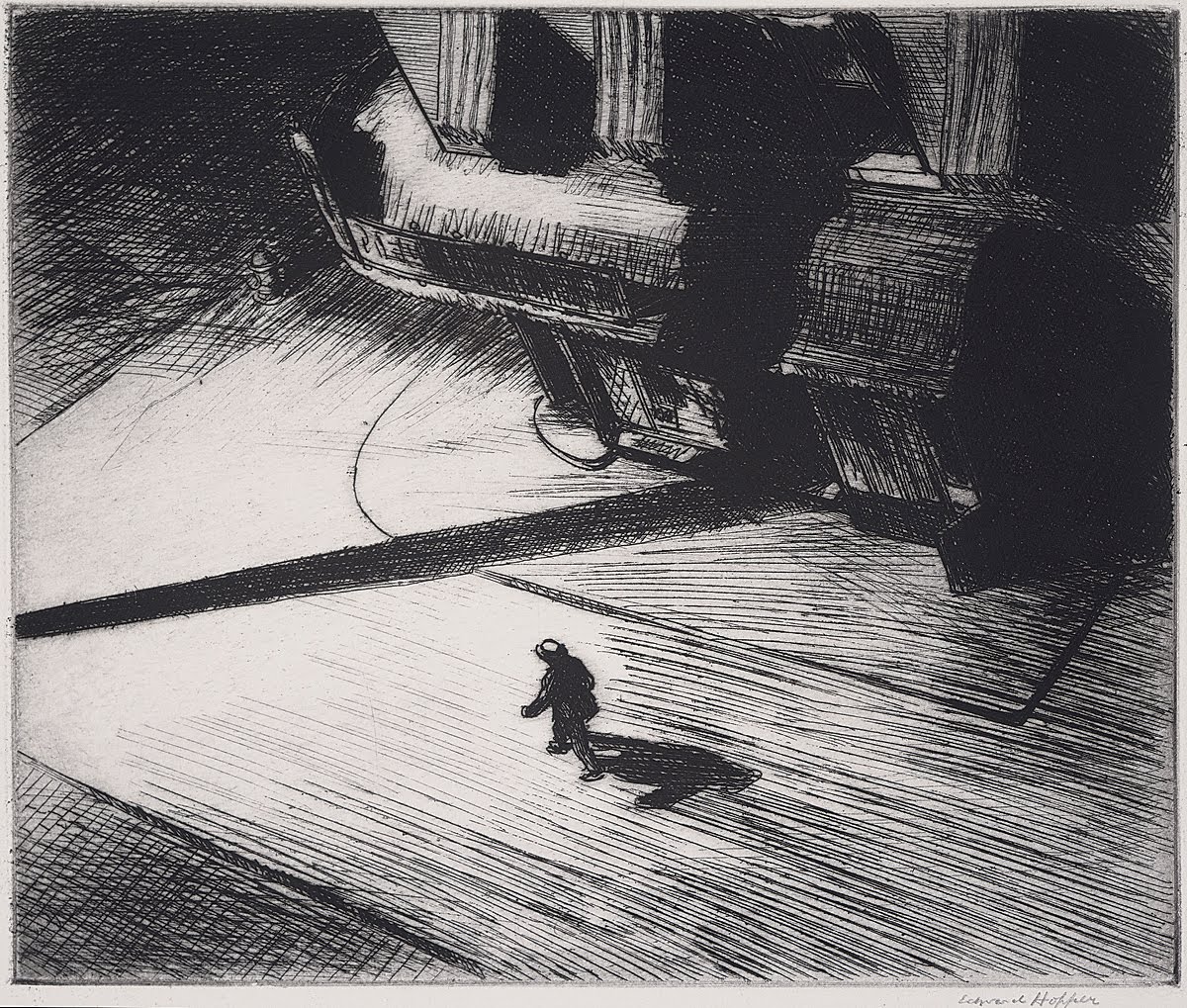
However likewise I loved a small gallery which showed some of Hopper’s etchings. This is quite bizarre, being that I have previously been drawn to Hopper by his great use of colour. Yet for me, Hopper’s etchings were more like a window onto his soul as an artist, whereas with his paintings, so often we look through opaque glass, misunderstanding his intentions and the messages he attempts to portray. Through his etchings we can enjoy his interaction with nature, appreciate the small details of life which fascinated him, and also track something of the thought process which underlay some of his later works. Take Night Shadows for example, which, in all its start Hitchcockian glory, appears to be something of a precursor to the enigmatic mystery which pervades many of his later paintings, especially the Nighthawks.

Night Shadows, 1921 (etching, © Philadelphia Museum of Art)

Night Shadows, 1921 (etching, © Philadelphia Museum of Art)

Whether it’s the inscrutable figures or the stark urban landscapes which do it for you, Hopper is a very likeable artist. His works are uncontroversial; they are inherently mysterious yet still very accessible; they beg questions, but provide no answers, and for that reason will continue to enagage audiences for many years to come. Yet so many of these works come from collections across America, and therefore for the European viewer, this is likely to be the best opportunity there will be for some years to engage with Hopper this side of the pond. So I urge you to go along, and make sure you book tickets in advance – did I mention that the show is so popular that we had to queue for almost an hour, just to get in on our pre-booked time slot?

The exhibition runs at Paris’ Grand Palais until 3 February 2013. You can buy your tickets here. Alternatively, if you can’t make it, the exhibition comes with its own mobile App which can be downloaded (at least from the itunes app store) and will guide you around the show with commentary and pictures – so even if you can’t make it to Paris, you’ll feel like you’ve done the show from the comfort and solitude of your very own armchair. Now Hopper would have loved that image.

Wellcome Death: A Self-Portrait

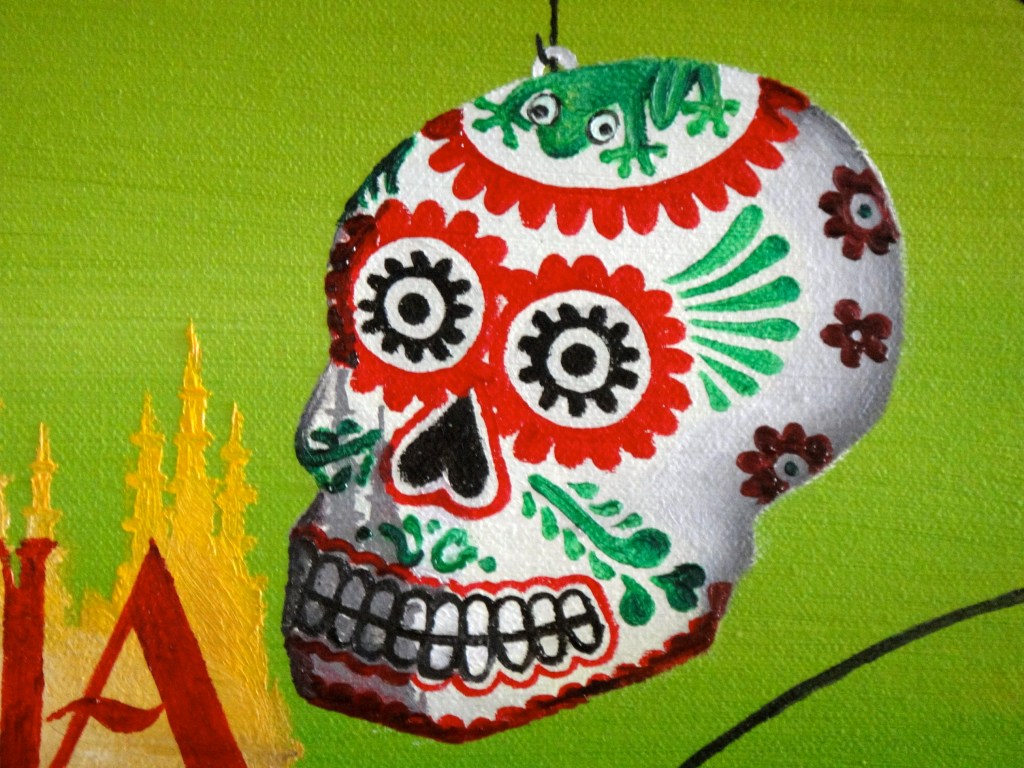
When one of my favourite friends, fellow blogger Celia, told me that she was going to spend her honeymoon in Mexico during “Dia de los Muertos” I got almost as excited as if I were going myself. Ever since developing an early obsession with the art of Frida Kahlo, and in turn the film Frida starring Salma Hayek, I have been fascinated by the Mexican celebration of the dead, in which they make and paint brightly coloured papier mache skulls, masks and skeletons, often adorned with hearts and flowers and all number of patterns, and parade them out in the streets. I even painted a Muertos skull in my recent painting of the city of Salamanca in Spain (below). Having never been to Mexico, I half-heartedly asked Celia to bring be back a “Muertos doll” never actually expecting that on her honeymoon, she would give me a second thought.

Salamanca (2012 © Nicholas de Lacy-Brown, oil on canvas, 105 cm x 90 cm)

Salamanca (2012 © Nicholas de Lacy-Brown, oil on canvas, 105 cm x 90 cm)

DSC08541But last week, amazing as she is, and freshly returned from the tropics of that South American paradise, she presented to me what must be the ultimate in double whammy presents – a Frida Kahlo doll with a Muertos skeleton face (pictured)! The doll is frankly amazing, combining all the fun and spirit of Kahlo’s works, including the occasional morbidity which creeps into her often pain-expressing paintings. No sooner had I lovingly placed said doll alongside my Frida Kahlo art catalogue on my book shelves (from the Tate Modern expo some years back), I then heard about another exhibition which has recently hit the streets of London – not of Kahlo, but of Death.

My Frida doll!

My Frida doll!

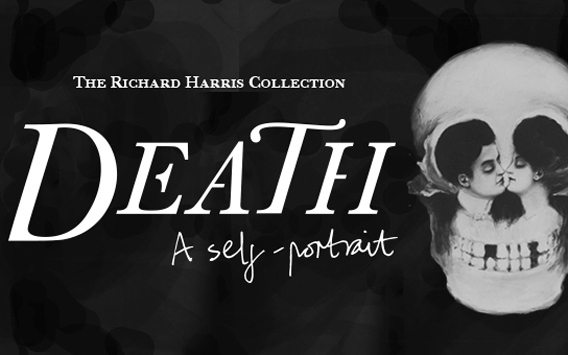
I know what you’re thinking, death, as the subject of an exhibition? Isn’t that likely to be morbid, or heartwrenching, or just plain scary? Well if you’re thinking those things, you probably don’t know the Wellcome Collection on Euston Road in London, a superb gallery adjunct of the Wellcome Trust, who regularly organises fascinating exhibitions of art and curiosities with a decidedly medical theme. The latest exhibition explores the theme of death and our preoccupation both with death, and combating death, in society.

WC_Death

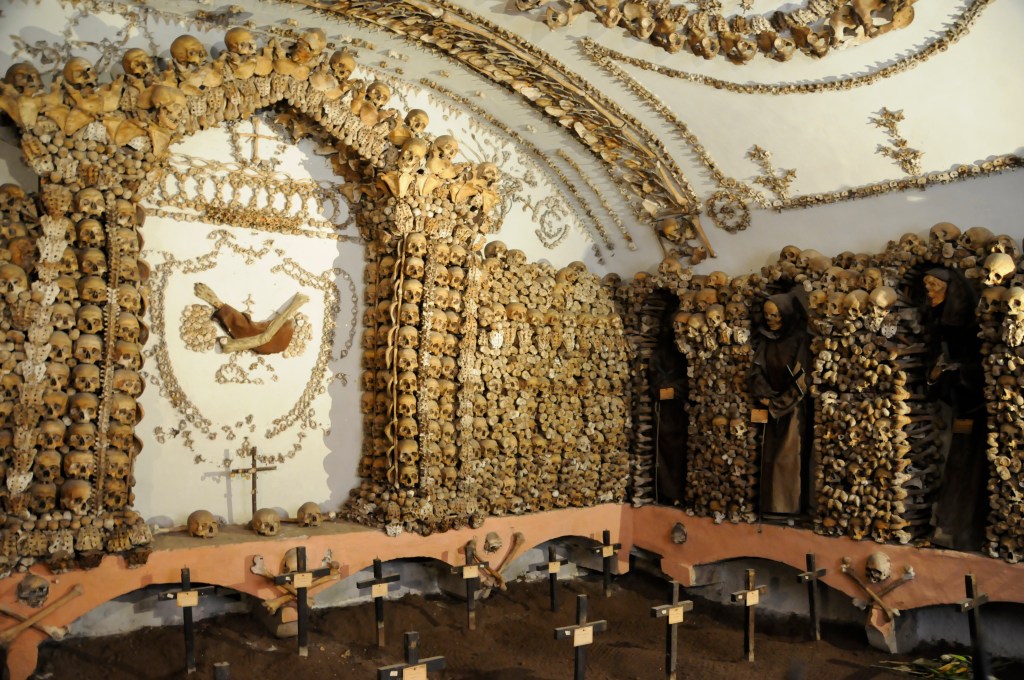
The exhibition comprises the vast and varied collection of Richard Harris, a former antique print dealer from Chicago and explores the subject in a brilliantly diverse array of mediums, themes and expressions. Upon entering the gallery, we were met by Jodie Carey’s 2009 work, In the Eyes of Others (2009), a giant chandelier made entirely of bones. Sadly, the bones were not real bones, but rather plastic reproductions, and therefore this did not have quite the same effect as a chapel I once visited in Rome, the Capuchin Crypt, made entirely from human bones (very morbid, but unusually architecturally beautiful). However, it set us up for a show which ranged from the oldest of 15th century art, to ambitious contemporary pieces.

In the Eyes of Others by Jodie Carey (2009)

In the Eyes of Others by Jodie Carey (2009)

The Capuchin Crypt, Rome

The Capuchin Crypt, Rome

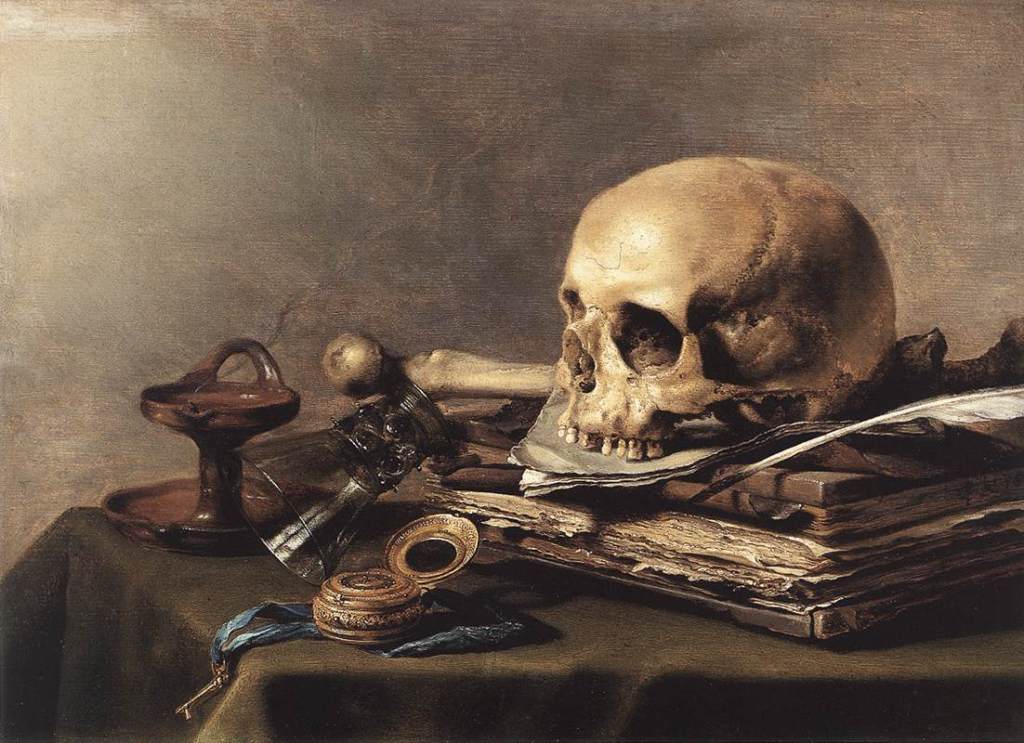
The first room explored the theme, Contemplating Death, comprising examples from throughout history of memento mori (Latin for “remember you will die”), the well-advised reminder to us all that we should seize the day because all of us, inevitably, will be dead one day. This ranged from the classically painted Vanitas still life from 16th century Belgium, the skull sat amongst the clutter of Saint Jerome’s cell by Dürer.

Vanitas still life

Vanitas still life

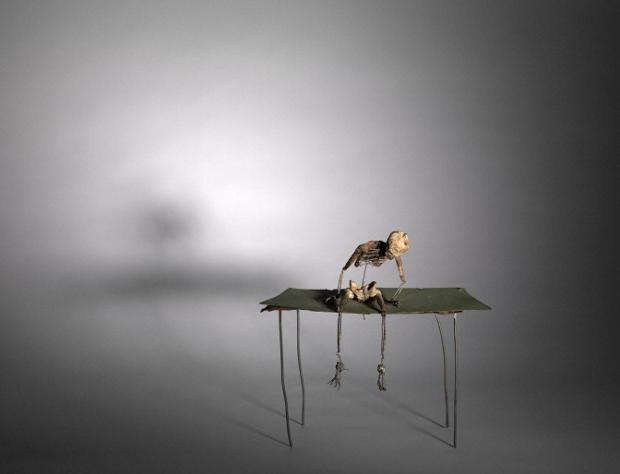
Up next was the Dance of Death, a room which focused on the universal certainty of death, regardless of status in life. This included many a depiction of the Danse Macabre, in which feverish revelry united humans with skeletons, works intended to dissuade people from self-indulgence and vanity in life. I loved the beautiful, almost introspective solace of the dead skeleton sat upon a table in June Leaf’s sculpture, Gentleman on Green Table (1999-2000), as well as the Mondongo Collective’s The Skull Series, in which a huge sculpted scull made from plasticine was, upon closer inspection, a detailed exploration of the influence of the US and Europe upon the world.

June Leaf, Gentleman on Green Table

June Leaf, Gentleman on Green Table


Mondongo Collective, The Skull Series. Number eight from a series of 12. Plasticine

Mondongo Collective, The Skull Series. Number eight from a series of 12. Plasticine

For me, the third room, which explored the representation of death in its most violent form, was by far the most powerful and engaging works of the lot. Featuring some examples of the series The Disasters of War (Los Desastres de la Guerra) by Francisco Goya, this room gave us confrontational and often hard-to-view representations of war and death agony. Goya’s etchings are a brilliant and deeply moving representation of Napoleon’s invasion of Spain at the beginning of the 19th Century. Seeing these images gives some indication of why Goya, having experienced the horrors of war, went from being sycophantic portrait painter of polite society, to creator of the stunning and deeply disturbing Black Paintings held within Madrid’s Prado gallery.

Goya, Tampoco (1810-20)

Goya, Tampoco (1810-20)

Detail from one of Goya's Black Paintings

Detail from one of Goya’s Black Paintings

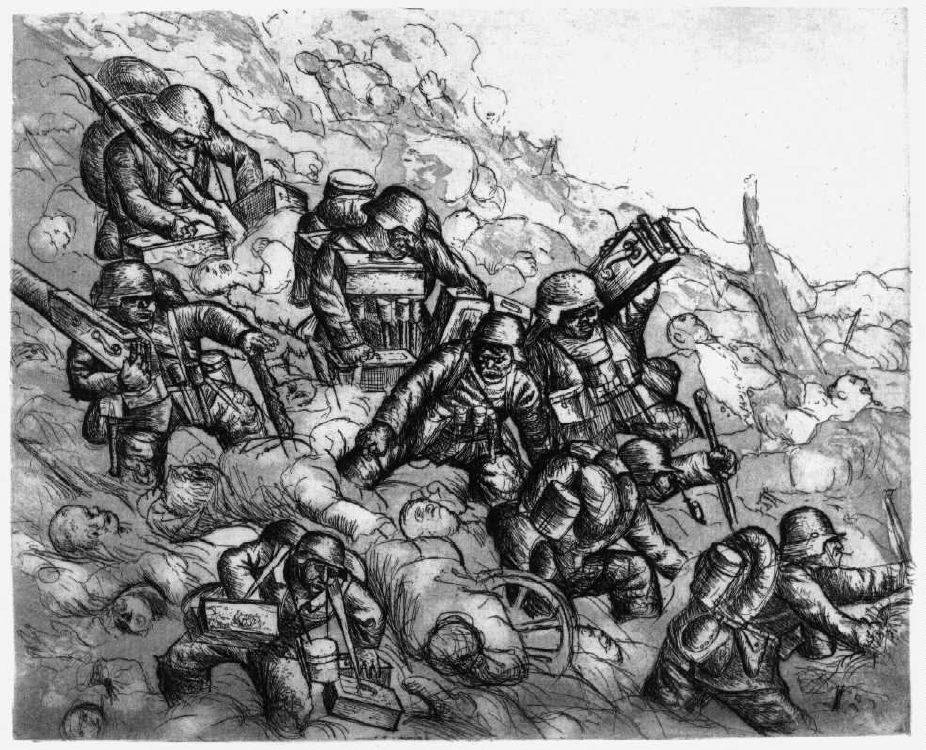
Goya’s etchings have since influenced a number of artists, including Picasso and the Chapman Brothers, but perhaps none more so than German artist Otto Dix, whose series of 51 etchings entitled Der Krieg (War) based on his gruesome experiences in the trenches during WW1, were also on display alongside the Goya works which inspired them. Dix’s etchings were incredibly moving, and unapologetic in their gruesome and violent portrayal of war, death, and devastating injury. All in black and white, these works didn’t need the vivid red of blood to convey the horror of the WW1 deathtol. Rather, in their monochromatic greys and blacks, they perfectly portrayed the grim horror of those times.

war301

Dix, Wounded Soldier

Dix, Wounded Soldier

Dix, Machine Gunners Advancing

Dix, Machine Gunners Advancing

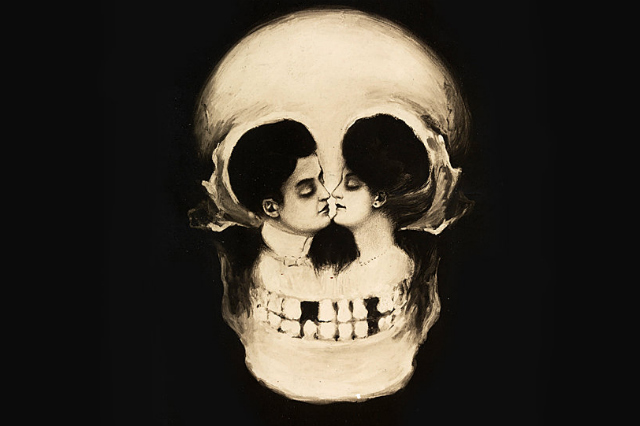
It was perhaps with some relief that the fourth gallery showed us a lighter view of death – in fact, rather unusually, death’s relationship with eroticism as representations of death were shown intertwined with the nude and appearing to infiltrate the embrace of lovers. In this room, I loved the little optical illusion postcards which reminded me a bit of Dali. The skull appears in each to be the most prominent symbol, but look again and you can see a perfectly innocent domestic scene, which bears no relation at all to the skull which it at first appears to represent.

deathwellcome

La Vie et la Mort, Leben und Tod (Postcard c.1900-10)

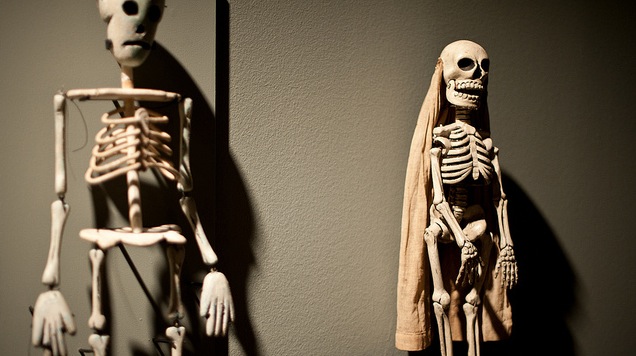
The final room was a representation of the Dia de los muertos festival which has so fascinated me, along with other cultural representations of death in society around the world. I was particularly drawn towards Dan Salvo’s photos of shrines and elaborate altars (known as ofrendas) which are designed to welcome the spirits of those who have departed. I also loved the wall of Muertos dolls straight out of Mexico.

Press+Preview+Death+Self+Portrait+Exhibition+IzQ7EoHlYYxl 8187392941_767eaca1e2_z 8187378029_e3d0f9c713

So with some greater sense of joy, we left the exhibition, full of joys of the Mexican carnival, that was at least until we saw the last wall of the show which gave statistics about the causes of death around the world. Then our joy turned to slightly less jovial stark realism mixed with scientific curiosity as, captivated, we spent a good 5 minutes fascinated by the statistics which show that, far from the horrors of war, the greatest killer of mankind is the role of disease, illness and other irreparable physical conditions. Now if that isn’t a reminder to seize the day, I don’t know what is.

Death: A Self-Portrait is on at the Wellcome Collection until 24 February 2013
 

Too twee for me: The Sterling-Clark Impressionism collection at the RA

The problem, in my view, with Impressionism is not the fact that its most renowned images are regularly plastered across every kind of tourist paraphernalia and household object you can possibly imagine – often the most iconic images are icons for a reason – because they broke boundaries, they inspired, they recalled an essence of something past, a nostalgic ambience, a time of great creative fluidity.

Rather, the problem with Impressionism is that having begun as an artistic revolution, breaking new boundaries, taking art from the confines of bourgeois society, the closed-class snobbery of  institutionalised selection committees and the drawing rooms of the aristocracy and using it to celebrate the lives of the ordinary, of the downtrodden, of the true foundations of society, and steering draftsmanship from perfectly executed depictions to looser, more energetic and living impressions, much of Impressionism became the victim of its own success.

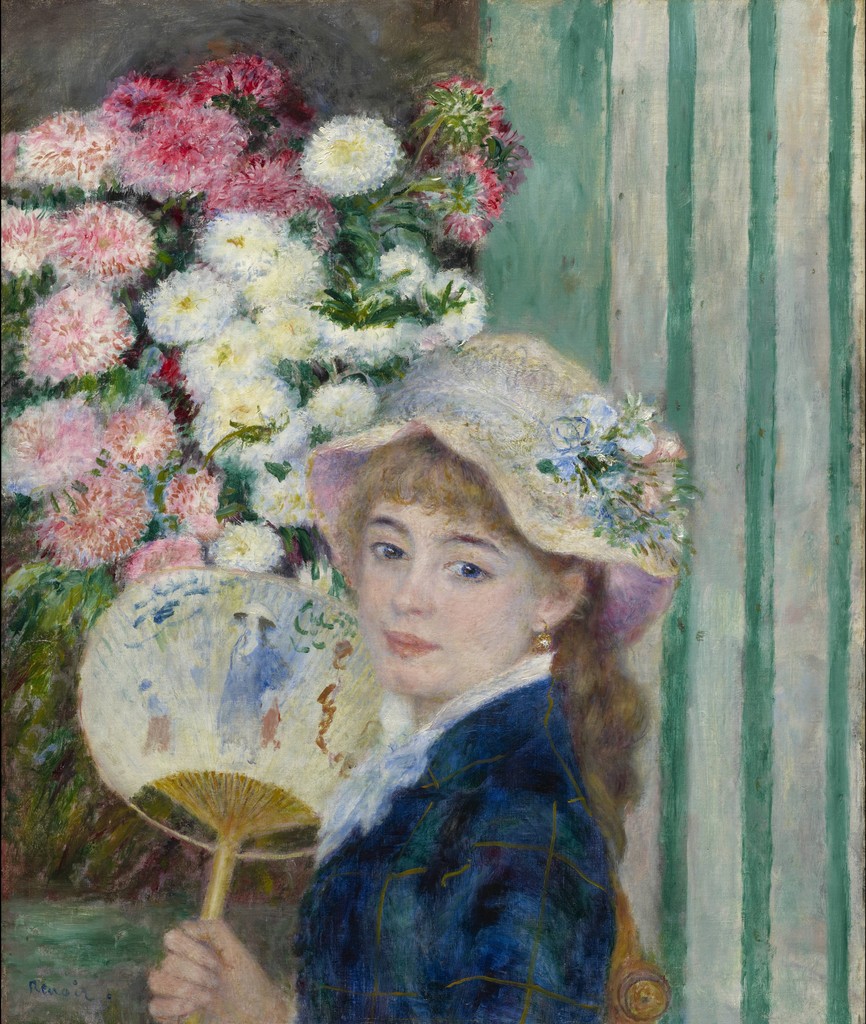
Renoir started painting ghastly portraits of rotund, rosy-cheeked women, twee, floral-sweet pictures which would fit nicely onto a chocolate box were they not so likely to induce the viewer to vomit. Monet, meanwhile, became overly obsessed with his damn lillies, to the extent that in trying to capture the subtle pinks and purples of mist over a pond, he ended up painting canvas after canvas which were reminiscent of the kind of floral fabric preferred by members of the WI and other polite conservative society. Van Gogh’s work became clumsier and clumpier, Cezanne’s became repetative, Degas started dabbling in pictures of nude women which were almost sadist, and Manet, poor thing, was confined to painting flowers, although to be fair, he was too ill to work on bigger canvases.

Pierre-August Renoir, Girl with a Fan (1879)

Pierre-August Renoir, A box at the Theatre (1880)

Anyway, the point I am making is that for the most part, having started off as revolutionaries, the Impressionists’ later work all too often conformed to a new form of the conservatism they were trying to escape in the first place – placating their former critics with twee works of flowers, pink-tinged landscapes, and pretty women, nude or in flowing dresses. And it is exactly these works which were the favourites of Sterling and Francine Clark and which, as a result, are the focus of the Royal Academy’s latest show in London, which showcases some major works from the Sterling and Francine Clark Art Institute in Williamstown, Massachusetts (I believe because the Sterling-Clark is undergoing some form of renovation).

Henri de Toulouse Lautrec, Waiting (1888)

Those who have raved about this exhibition tend to have been on the older, more conservative side. And it is easy to see why they are seduced – some of these works may even feel a bit racy for a few of them – just look at Toulouse Lautrec’s Waiting, with a woman leaning despondently over her glass of absinthe. Quite the scandal compared with Renoir’s pleasant smiley female offerings hanging close by. But not to worry, that’s about as lascivious as this show gets. Sadly.

Robert Sterling Clark (1877-1956) came from a wealthy New York Family whose fortune derived from the Singer sewing machine company. He began collecting art after he settled in Paris in 1910 and where he soon became the chum of famous art dealers Knoedler and Durand-Ruel who introduced him to the innovative work of the Impressionists which had finally broken into the mainstream at that time. In fact Renoir, whose works Clark adored (he eventually collected some 39, 21 of which are at the RA) was by that time so popular that looking around at the sales receipts interestingly exhibited by the RA, you can see that Clark was paying astounding sums such as 100,000 dollars for Renoirs, even then. As the collection, added to with the help of his French wife, Francine, grew, Clark had it in mind to open a museum. He did this in 1955, in Massachusetts, providing a permanent home for his many Impressionists works including Monets, Manets, Toulouse Lautrecs as well as various more classical pieces. Disappointingly, his collection is very experimental – he had one Gauguin on show, and even that was a traditional(ish) portrait of a woman.

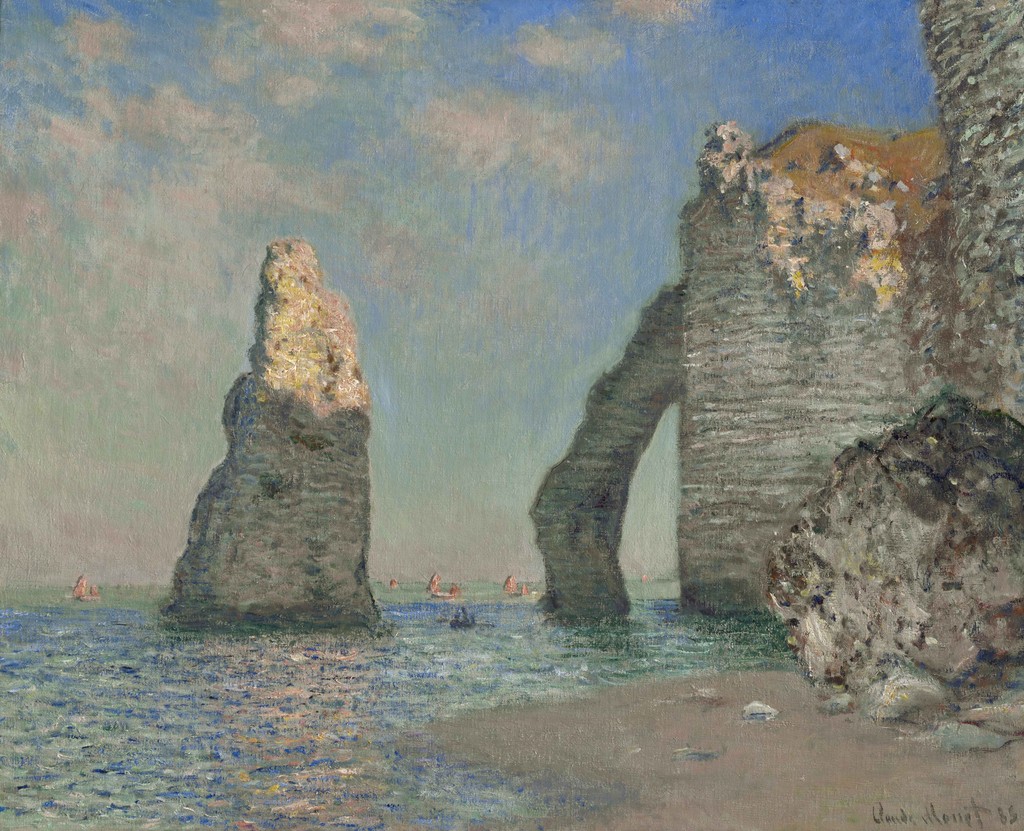
Claude Monet, The Cliffs at Etretat (1885)

Edouard Manet, Interior at Arcachon (1871)

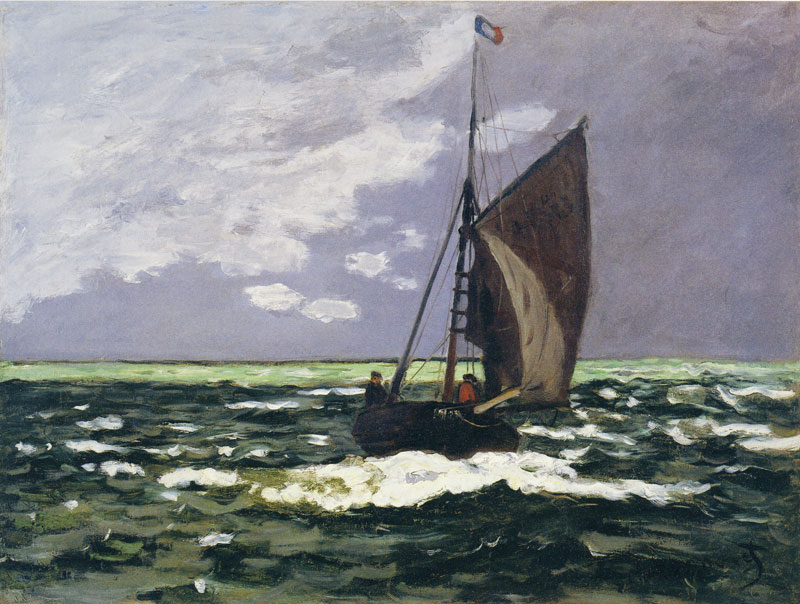
Claude Monet, Seascape: Storm (1860-67)

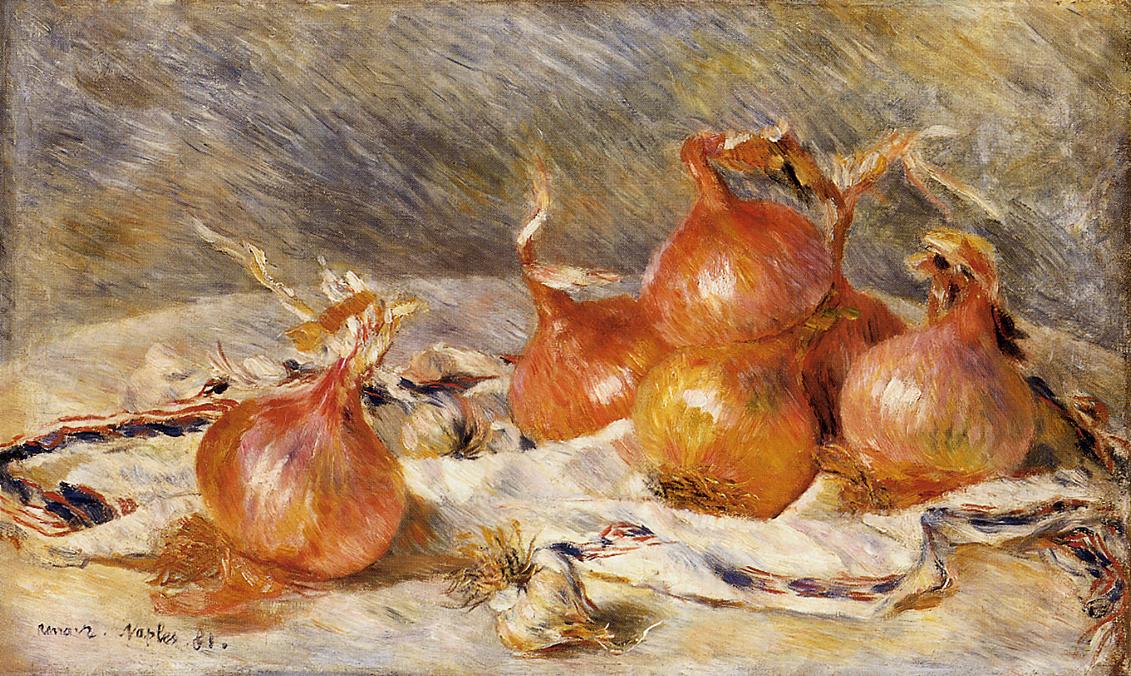
In fact Clark obviously had a penchant for paintings of women. After the initial gallery of flowers, onions and various fairly dull landscapes by Pissarro and Monet, the main bulk of the small exhibition are portraits of women. Asides from the insipid offerings of Renoir, there are, mercifully, some far more enticing works by other artists, both big-wig impressionists and less well-known painters. Two incredibly evocative Toulouse-Lautrec works are on show, both offering quite stark views of a woman in the shady quarters of Montmartre, one, Carmen, who confronts the viewer straight on, while the other, nameless, is just waiting – what for, we don’t know. From the hunched over pose and the glass of absinthe before her, are we to assume she is waiting for luck to come her way, or even death to end her suffering?

Of the other portraits of women, my favourite had to be Crossing the Street by Giovanni Boldini. Boldini, an Italian artist who settled in Paris, loved painting the sights and sounds of the salacious neighbourhood of Pigalle on his doorstep, and this beautiful portrait of a woman, raisng the hem of her petticoat as she crosses the cobbled street, is so wonderfully evocative, and brilliantly painted, exhibiting both an impressionistic, roughly painted background, and a precise and focused detailed and sympathetically painted portrait. I also adore the little details – the shop sign, the dog, the Dandy in the carriage – it’s a wonderful turn back in time to a Paris of bohemian romance and delightful decadence mixed with poverty and decay.

Giovanni Boldini, Crossing the Street (1873-75)

James Tissot, Chrysanthemums (1874-76)

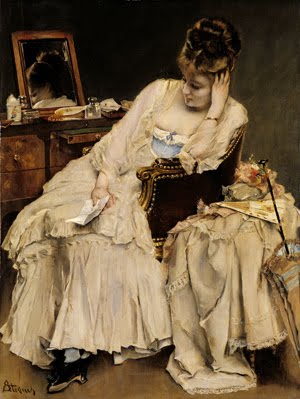
Likewise mention has to go to the lesser known artists who nevertheless created two portraits really worth visiting this show to see – James Tissot’s Chrysanthemums, a brilliant depiction of a woman, looking at the audience as though disturbed, surrounded by a great swathe of multicoloured hairy-headed flowers painted with great fantastic technical skill. Also check out Alfred Steven’s Memories and Regrets, in which a woman, as the name suggests, appears to have been sent into a daydream of remembering prompted by the letter in her hand, a personal and private moment interrupted only by the presence of we, the viewer, introduced to the scene thanks to the technical rendering of Steven’s portrayal.

Alfred Stevens, Memories and Regrets (1874)

Like any show, this one has its highlights, and whether it be that the paintings of the lesser known artists exhibit the most skill in their execution, or just because, since they are not tourist fodder like their more well known impressionist colleagues, they represent something of a breath of fresh air, those paintings by the likes of Boldini, Tissot and Steven are definitely, for me, the stars of the show.

As for the other impressionist works on show – well these paintings are all very safe, and for that reason I find them boring. But for lovers of the chocolate box impressionism which is so firmly engrained onto the consciousness of every tourist and gallery visitor around the world, this show gives you impressionist staple which you will undoubtedly enjoy. But don’t forget your Renoir souvenirs on the way out.

Pierre-August Renoir, Onions (1881)

From Paris: A Taste for Impressionism continues in the RA’s Sackler Wing Galleries until 23 September 2012.

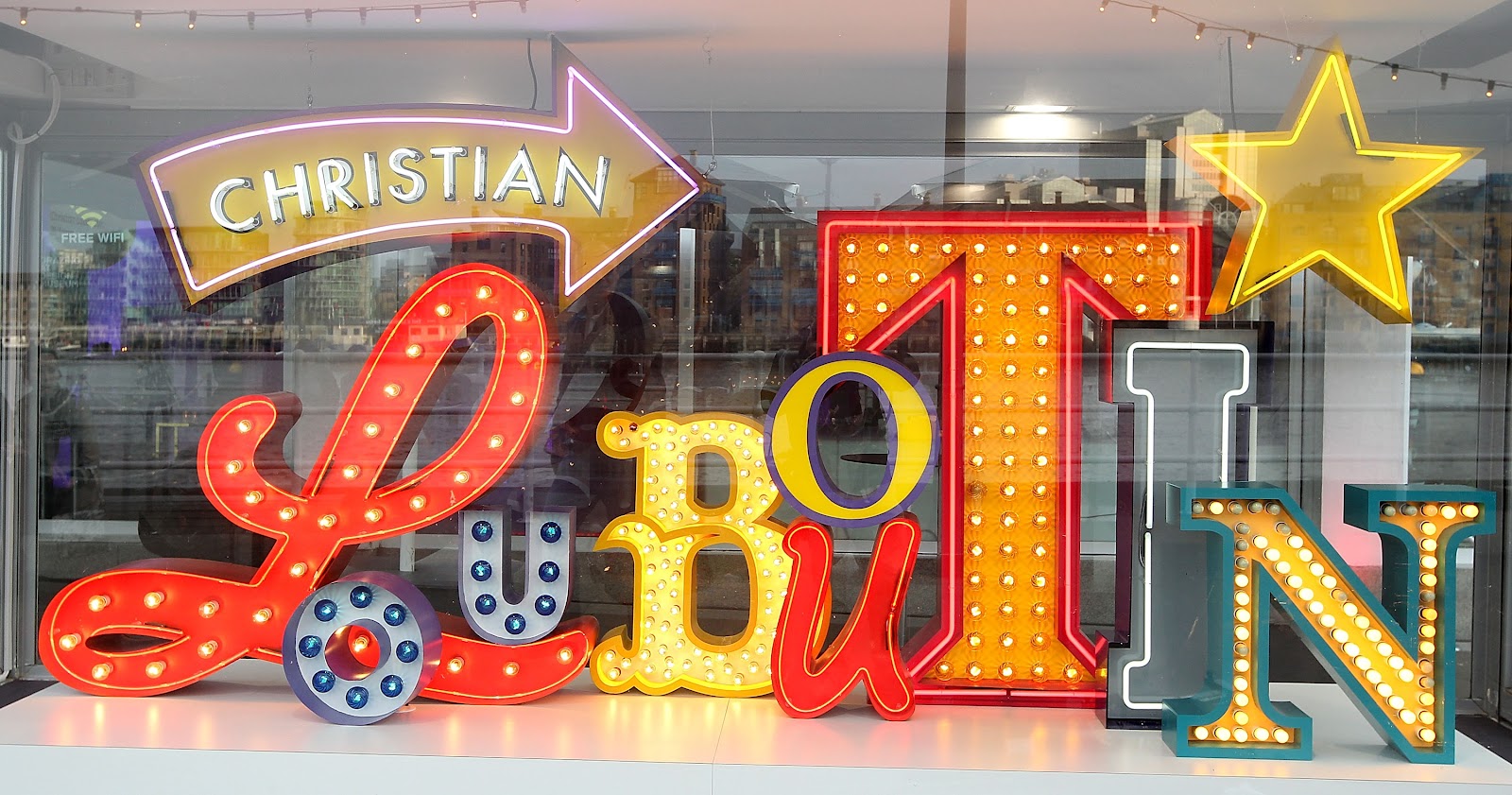
It’s all in the Sole: Christian Louboutin celebrates 25 years at London’s Design Museum

Glossy red lips, emblematic red telephone boxes, and the sumptuous vivid spiraling red of a voluptuous red rose. There is something about red which strikes a devilishly powerful impact. In fact scientists declare that red is the colour most instantaneously attractive to the human eye: and it’s true. Look around a room, survey the rainbow of colours and shades all around you, and the first colour you notice will always be red. No wonder then that throughout the ages, it’s the scarlet woman, the red lights of shady backstreets and the unctuous red-painted lips of Hollywood prima donnas that have become so indubitably emblematic of seduction, attraction and the height of munificent glamour.

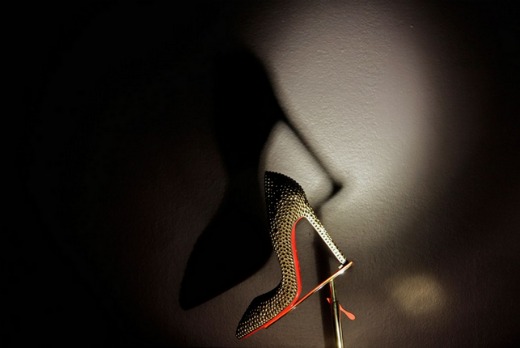
No wonder then that when one, previously unknown French Cameroonian son of an ébéniste (ivory wood carver) turned shoe-maker decided to place a seamlessly lacquered vivid red sole on the bottom of his women’s shoes, he became an instant hit. When you see a woman in high polished black stilettos sauntering down the street, and as her shoes lift with each step, you see a hint of glossy red, you know that the woman has taste – instantly glamourous, emblematic of sexy chic and seductive sophistication, that red sole can only mean one thing, and have only one maker – it’s a work of art, and it’s made by Christian Louboutin.

Fetish shoes

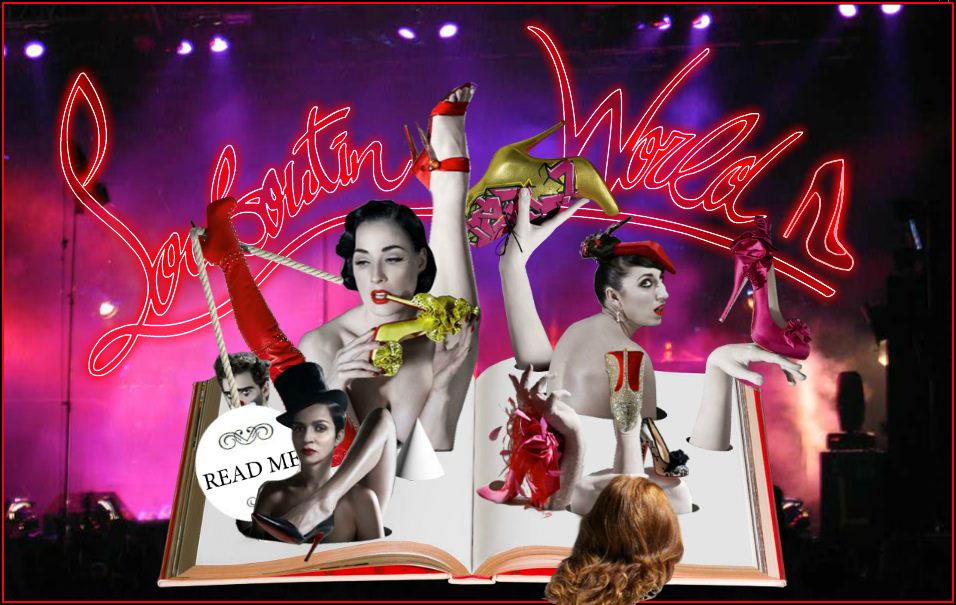
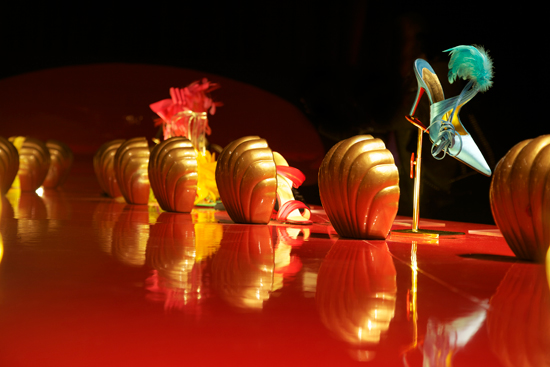
Yes, Louboutin, iconic French designer and the man who made red soles his signature, is now celebrating an illustrious 20 years of shoe design, during which time he seized the shoe, and in particular the daringly high stiletto, and lifted it into a new ascendancy of design significance, when, through darlingly innovative designs, and unhindered imaginative genius, he made the shoe the star of the show, as well as the means to make a woman’s legs, and figure, beautiful.  Such is the theatricality of his designs, that it comes as no surprise that in celebrating 20 years of iconic shoe design, London’s Design Museum on the South Bank has put on the show of all shows, like a retreat into the cabaret of 1900s Paris at the Moulin Rouge, as a vast illuminated stage, a playground carrousel, and a garden of delights play host to shoes and only shoes, singled out and exhibited in all their fantastically original glory.

The Dita Von Teese hologram

The exhibition exudes the playfulness of Louboutin. At its centre is a wonderfully raunchy Hologram video of the deliciously sexy Dita Von Teese, herself spectacularly bedazzled in a pair of sparkling diamond-encrusted Louboutin’s, demonstrating just how seductive a woman in these shoes can become. Meanwhile at the back of the show is a den of iniquity, a naughty display of fetish shoes designed to push a woman to the maximum of pain and pleasure and panda to every man (or woman’s) every sexual desire when shoes are their ultimate proclivity. I loved the little garden, when crazy platformed shoes were displayed like fantasy creatures in Alice’s wonderland, and the recreated studio of Louboutin himself, where a vast array of objects, instruments and other paraphernalia provide daily inspirations for his ingenious creations.

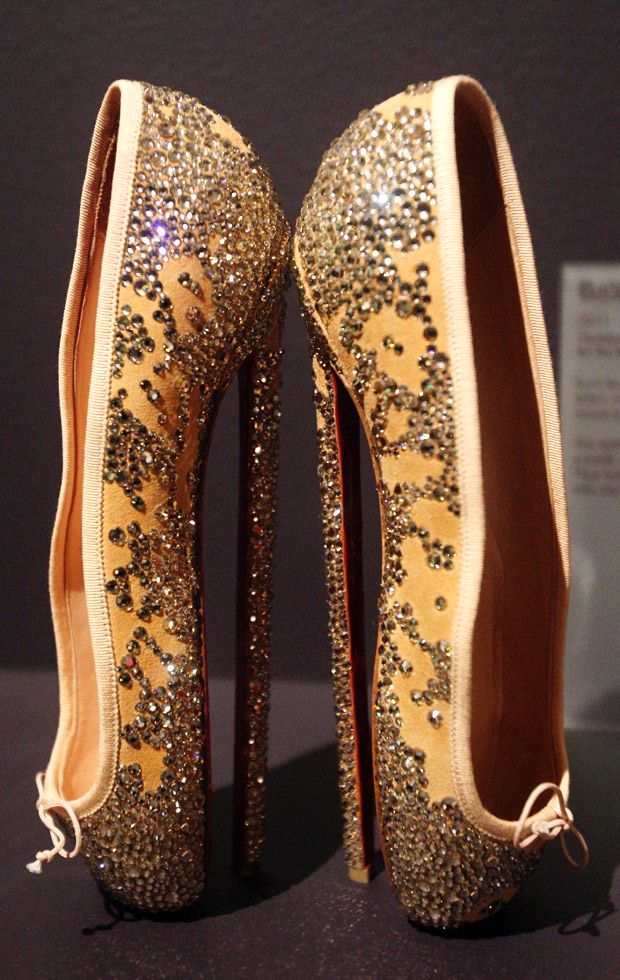
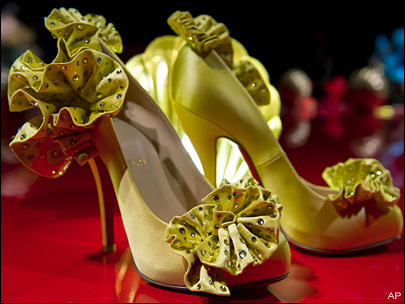
But amongst all of this showmanship, let us not forget that the stars of the show are the shoes – and there were so many beautiful designs it’s hard to choose from amongst them. But being something of a magpie, I was instantly attracted to all those which sparkled, while the delicate sophistication of shoes and boots covered in lace held a particular attraction. But amongst all of these design gems, from hugely built-up platform boots, with corset-style laces crisscrossing up to the thigh, to sleek yellow open-toed stilettos bursting with tropical flowers, perhaps one of my favourites was the most understated of all, the simple, sleep shiny black stiletto, albeit with that trademark red sole and a frighteningly high 5 inch heel.

The shoes amazed, the red soles seduced, and the diamonds and studs aplenty dazzled, yet when I left the exhibition, I still came out wondering why and how Louboutin had hit upon the red sole that has become his signature. How did he stumble upon it? What was his inspiration? All of this goes unexplained in the history of Louboutin’s 20 year retrospective, and at £125 a pop, I wasn’t about to put my hands in my pocket and pay for the vast (and admittedly very beautiful) exhibition catalogue to find out. Besides, I was too busy trying to escape from the unnecessarily copious groups of “girly” women, giggling all over the place and drooling over shoes they could barely ever afford, enjoying themselves far too much and occasionally yelping as though on a hen night. This is art darlings, take your window-shopping to Aldo.

So why is Louboutin worthy of my praise? I am after all a man. I’ve never worn a stiletto, let alone owned one, and, unless I undergo some kind of hither unanticipated breakdown in my life, never intend to. Well the answer is simple – it’s because Louboutin has suspended his shoes into a design ascendancy which goes way beyond dress choice. These shoes are art, pure and simple, and best seen encircled by a spot light, up on a little stage or under a glass cloche where they belong, preferably sans foot, sans sweat and definitely sans ground surface to scratch that perfect lacquered red sole.

Christian Louboutin is on at the Design Museum, Shad Thames, London until 9 July.

Summer Exhibition at the RA: How a private view can make the mediocre marvellous

I’ve said it before, and I’ll say it again: When the viewing conditions are right, even the most mediocre of art can appear wonderful. When your mood is carefully massaged by fortuitous circumstances, your mind will be opened, and you’ll look for the positives in everything. Look what happened a few months back with the huge David Hockney exhibition at London’s Royal Academy: On my first visit, the gallery was so packed I came out spitting blood (almost literally as the hustle in the giftshop between usually restrained “Friends” of the RA to grab as much Hockney merchandise as possible almost ended up in fisticuffs). What was all the fuss about Hockney? He can’t even paint, I thought, bitterly. However, when I went back a few weeks later at the behest of my partner, first thing in the morning, tactically skipping the first couple of rooms and emerging, victoriously from the crowds into an empty exhibition beyond, I began to see what all the fuss was about. The paintings were so atmospheric, airy, colourful, pleasing. It was all about the viewing conditions.

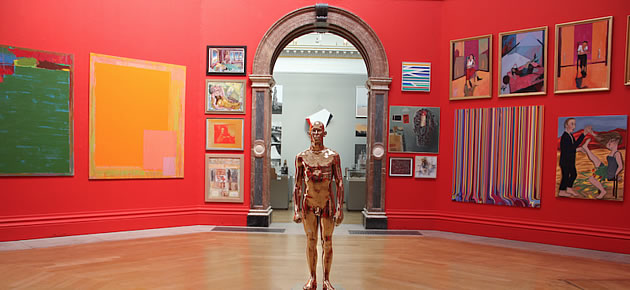
The central Matisse-red gallery complete with sculpture by Leonard McComb RA

The same, now, can be said for my experience of the Royal Academy’s most famous annual offering, the Summer Exhibition, which I attended, with my mother, last night. So used to the unseemly crush of packed-in spectators, all vying for space in the Small Weston Room to see the small paintings squeezed unapologetically onto the wall from floor to ceiling, I would always leave the Summer Exhibition feeling resentful. Why had I just spent good money to go along and see a load of same-old mediocre paintings, small canvases of flowers and ovens and animals, not to mention Tracey Emin’s hideous, crass doodles and the repetitive works of the closed-club Royal Academicians? But not this year. Yes, the same old Royal Academicians still dominate, and yes, the ridiculously crap works of Tracey Emin, now named “Prof. Tracey Emin RA” after her recent ascendancy to the role of RA Professor of Drawing (what a joke) are still conspicuous by their unashamed lack of skill (and because of the hundreds of “sold” dots stuck to the frame because people seem to think scrawled depictions of half-vaginas are valuable), but the difference this year was that I attended on a private view. There were literally 80 of us in the entire venue, and those rooms are big. Once the small gathering had dispersed around the place, we frequently found ourselves quite alone in the huge Royal Academy galleries.

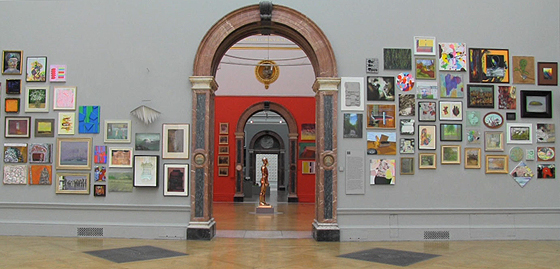
The “wave” hanging of small paintings

It was wonderful! Feeling so airy, ephemeral, and almost important, we glided around the galleries in such a good mood that we actually started to point out details of all the paintings, noticing the colours and the skill involved, complementing, and sometimes even tempted to buy and generally loving the whole affair. We were also treated to a talk by the charming Harry Baxter (an “artist educator” at the RA) whose insight into the exhibition made the whole thing instantly accessible and immediately unpretentious. This year’s show, the 244th in the RA’s history was, he explained, a homage to the small and the beautiful, an intentional contrast to the Hockney “Bigger Picture” exhibition where crowds had crammed into the galleries to see vast paintings made up from multiple small canvases. The focus on “small” can only be a good thing – it meant that rather than squeeze into the tiny rooms with hundreds of others to see all the small works, this year the huge central galleries were given over to countless small paintings (some 1,500 in all) which were hung around the walls like a wave of moving art. It wasn’t quite a Salon floor-to-ceiling hang, but it was an all-embracing journey from one artist’s expression to another’s.

So amidst all this good feeling, what were my favourite works? Top of the list has to be Buffalo Grill by Scottish artist Jock McFadyen, not least because I used to eat in one such of the French chain restaurant bang opposite the Moulin Rouge in Paris. This huge green canvas, with an off-centre, almost hazy image of the American-looking chain restaurant made for quite an impact in a gallery in which it easily dominated. It’s almost like the blur of the restaurant viewed from a fast-moving car, and yet the top of the restaurant is crisp and clear, like an after-image of the place stamped onto your retina.

Buffalo Grill (2004) © Jock McFadyen

Top of my list of sculptures, meanwhile, was the super-shiny bronze creation by Leonard McComb RA, Portrait of a Young Man Standing. Only a shame that it has the very modest price tag of £600,000. Against a red painted central gallery (apparently painted as such in homage to Matisse) and reflecting in its polished surface the paintings hung all around it, the sculpture looked truly remarkable. Second place for sculpture had to be given to Professor David Mach RA, whose cheetah made from coathangers, Spike, is an incredible feat of innovation (as was the brilliant recreation of the head of Michelangelo’s David built from the heads of matches, also by David Mach).

Top half of Leonard McComb’s Portrait of a Young Man Standing

David Mach RA, Spike

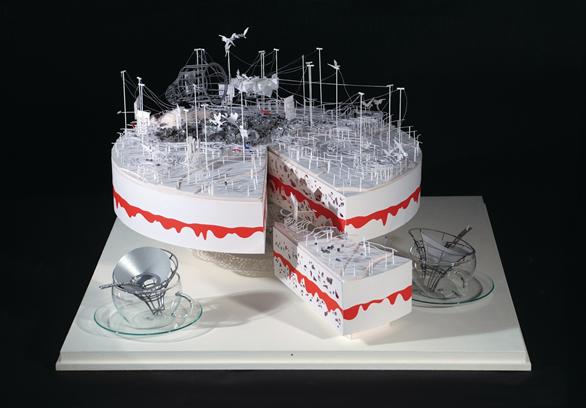
The architecture gallery was pretty interesting this year, bordering more on the surreal, not least with CJ Lim’s Dream Isle: London, the Victorian Sponge Cake which was a model imagining just that – a city shaped like a sponge cake! Also amongst the architecture were the predictable inclusions of Olympic stadiums and other Olympic buildings, as well as the new King’s Cross station concourse.

C J Lim, Dream Isle: London, the Victorian Sponge Cake

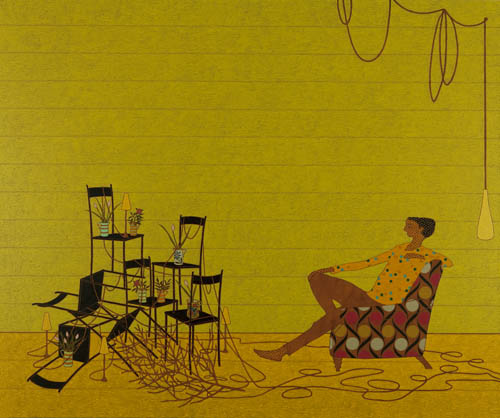
I also loved this by Graham Crowley…

Red Drift No. 3, © Graham Crowley

And this by one of my favourite Royal Academicians, Stephen Chambers RA

Stephen Chambers RA, I Know Trouble (And She’s My Friend)

While this, by Tracey Emin, appalled me…

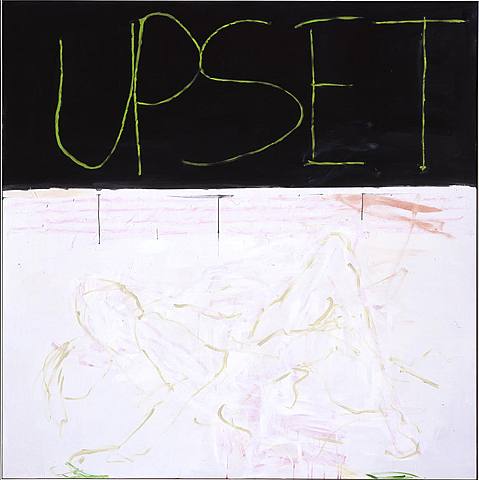
Upset, by “Prof” Tracey Emin RA

I could go on, and there is of course plenty to look at, and to mention, but hopefully the photos I have included in this post will provide a hint of the wonders on show (except of course for Tracey Emin’s “Upset” which is included purely for the purposes of demonstrating how a totally talentless media novelty can rob some poor talented unknown of a huge amount of wall-space and all the opportunities that go with it).

The Royal Academy don’t always get it right, but with this year’s Summer Exhibition, they really seem to be progressing. Perhaps it’s because of the new president, Christopher Le Brun, or maybe it’s just because of the space all around me, the exclusivity and of course the complementary wine… It’s a question which remains as yet untested, but if you want to have a punt, go and visit the show – as the name suggests, it’s on all summer, and you can find out all of the details here.

BP Portrait Prize – Hyper-photorealism is all very well, but I want to see the Artist’s soul on the canvas

As something of a postscript to my post on Friday about the Queen’s Portrait exhibition is a short note about another exhibition currently showing at the National Portrait Gallery, the BP Portrait Prize (It’s clever marketing that requires an exhibition’s integral name to be precursored by the name of an international petrol conglomerate, although I’m not too sure how happy I am having to represent said marketing on my own blog just by nature of naming the exhibition). Anyway, I digress. The exhibition, which is now in its thirty-thid year, features some 55 works selected from an open submission of 2,187 international entrants. The sole requirement of entry is that the work is a portrait, painted in the last year.

The height of photorealism – Lindsay Lohan © Ben Ashton (2012)

This year, like most years before it, the Judges of the Prize seem to have been unashamedly seduced by the skills of artists painting photorealistically, rather than with soul. It’s now as predicable an aspect of this show as the British summer is full of rain that when you wander into the exhibition, you double-take, wondering whether you have strolled into a photography exhibition rather than a painting one. The artist paints so fantastically well, and plies his craft with such faultless skill, that one cannot see a single brush stroke and one would swear blind, even upon being 10 centimetres distance from the canvas, that this is a photo before you. This is all very well – there is no denying the skill, and absolute kudos needs to be given to these artists for executing the works with such sophistication – but the problem for me is that, if I wanted to see an exhibition of photos, I would be elsewhere. It is also, to my mind, the inherent problem of the annual offerings of the BP Portrait Prize, and what, for me, makes it all a bit boring.

These paintings do not look like paintings, and as such they do not strike me as bursting with the emotional impact that a very paint-plastered canvas exudes. In the manic multitude of Van Gogh’s plentiful brush strokes, you can identify with the bursts of energy expressed by the artist when he went about executing the work, while in the fragmented, abstracted portraits of Picasso, you can identify with an artist bursting with innovation, with a rebellious streak who wants to give more, to change art as we know it, to pioneer new forms of expression.

Swallow, © Alexandra Gardner 2012

By contrast when you look at the works hung in the BP Portrait prize, first you need to challenge your preconception that the work is actually a photograph, and then you spend your time staring at the work wondering how it is painted. But all of this emphasis somewhat takes away from the story of the sitter. The emotion is somehow lost in the perfection. When you can see no sign of an artist’s presence on the canvas, it becomes craftsmanship, and not art. It loses it’s soul. I compare these works to an exquisitely well crafted table – I would glance at the work and admire the virtuosity of the craftsman, but I would not attempt, nor be able to engage with the work in the same way as I can when an artist’s soul is poured onto a canvas.

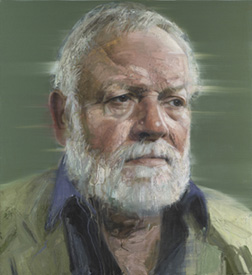
The Dialects of Silence (Portrait of Michael Longley) © Colin Davidson 2012

There were some exceptions in this year’s show, and it is therefore unsurprising that these were my standout favourites. In Colin Davidson’s The Dialects of Silence (Portrait of Michael Longley), there is a superbly executed focus on his sitter’s melancholy eyes, which are practically photographic, but then as the work spans outwards, it becomes more and more fragmented, as swathes of paint are hastily applied to the canvas, but with no less effect. This work demonstrates both the soul of the sitter, and the passion of the artist, and that is why, for me, it works incredibly well as a portrait worthy of artistic merit. I also liked Alexandra Gardner’s Swallow which had something of the Gauguin about it. Yes it’s just a portrait, but the insertion of the striking yellow wall paper and the presence of a swallow around the sitter’s neck makes you interact with the work, wondering about the significance of the swallow, and no doubt captivated by the use of bold colour, and realism contrasting with the two dimensional black outline which circumnavigates the figure.

Mr Kitazawa’s Noodle Bar, Tokyo
© Carl Randall

However my favourite work of the show was undoubtedly this one, Carl Randall’s Mr Kitazawa’s Noodle Bar, Tokyo. This “group portrait” is startlingly original for a number of reasons: the viewpoint from above, its composition: customers on the right, servers on the left, the slice of city life seen through the window, and the exclusive use of black, white and shades of grey. I love the apathetic, indifferent stares of the customers, minding their own business, indulging in quick dinner in a hostile urban environment, thinking no doubt about work and the pressures around them. On the left we are met with the equally impassive stares of the workers, tired after cooking all day and bored of the relentless monotony of their work. But in the middle of this we have this almost embrace, the only human contact in the whole work, when the worker gives a bowl of food to a customer, or the other way round – because they both hold the bowl with two hands, it is akin to a loving embrace, a fusion of worker and customer, and composition-wise it provides the work with a horizontal variance to otherwise brash vertical lines. Brilliant.

Is that a photo?: Silent Eyes © Antonios Titakis (2012)

If the BP Portrait Prize included more works like this every year, it would be a startlingly interesting show. But as ever with exhibitions judged and chosen by a group of outdated art professionals and even a representative from BP (who clearly knows so much about art) we will continue to be shunned by a group of high-gloss works which, like any photo, reflect the viewer and push him away, rather than a show of works which, because an artist has bared his soul or painted a scene of such dynamic composition and interest, the viewer is captivated and invited in. For me, it’s this relationship between artist and viewer which is not just integral to the power and purpose of art, but central to the very definition of what “art” really is, whether it be triggered by a portrait, a landscape or an abstract clutter. Remove the soul of the artist, and the painting becomes just one more image to add to the ever changing visual landscape of the fast-moving world around us. A fleeting encounter, without a lasting impact.

The Queen: Art and Image – at the National Portrait Gallery

You can’t blame the National Portrait Gallery for cashing in on HRH Queen Elizabeth this year. Since her Diamond Jubilee celebrations at the beginning of this month, the popularity of the Queen has been at an all time high – in fact over  90% of those recently polled stated that they were satisfied with the Queen, figures which represent the significant surge of support which is now felt for the Royals in England. In the meantime, tourist numbers lingering outside Buckingham Palace, visiting Windsor Castle, and pouring into souvenir shops all over London have soared . So adding an exhibition of portraits of the Queen into the mix seems like an obvious choice, not least because, having been the subject of at least one official portrait in every of her reign, as well as the subject of numerous photographs and unofficial tributes, there are so many portraits to choose from!

Queen Elizabeth II (Cecil Beaton, 2 June 1953)

I therefore went along to the NPG’s exhibition, The Queen: Art & Image today expecting 60 official portraits lined up, each recognising a gradual change in the Queen’s image, from glamourous young Queen in her 20s, to the Nation’s favourite grandmother. However to my surprise, the exhibition was a little light on the official portraits. In fact it was a little light on paintings altogether, instead concentrating on the Queen’s image, as masterminded  by officials, and seen through the lens of the paparazzi, captured on camera. That is not to say that the exhibition was not historically narrative and collectively interesting.

Queen Elizabeth II (LIghtness of Being) © Chris Levine (2007)

Queen Elizabeth II (Equanimity) (© Chris Levine, 2007)

The show begins and ends with the masterful 3D works of Chris Levine, Lightness of Being and Equanimity. These have to be amongst my favourite portraits of the Queen. The way they are mastered – a print on a lightbox, multilayered so that the Queen’s posture changes as you move around the work, is startlingly realistic. It has never been so possible to feel as though you are meeting the Queen, when in reality such an opportunity is stored away in a box of other pipe dreams such as the big retirement mansion and everlasting fame. Every wrinkle is there to see, but unlike the horrendous portrait by Lucian Freud, also included in the show, the portrait is truthful and yet still utterly glamorous, not least Lightness of Being which captures the Queen, eyes briefly closed, in white ermine, white pearls, and her glittering crown. Even her hair glimmers with a silver sheen rather than dull grey.

Queen Elizabeth II (Dorothy Wilding, 1952)

From this impressive start, the exhibition heads back to the 1950s and thus begins a chronological exploration of the Queen’s changing image and public portrayal. I suppose thinking about it, a load of official portraits would have always been a little contrived, as artists seek to flatter and do deference in the employ of this almost supernaturally important sitter, while photographs capture the Queen as a real person, a loving mother, happy relaxed tourist and here, in the 1950s section, as a glamourous, almost Hollywood worthy young Monarch, with a perfect figure and natural celebrity smile.

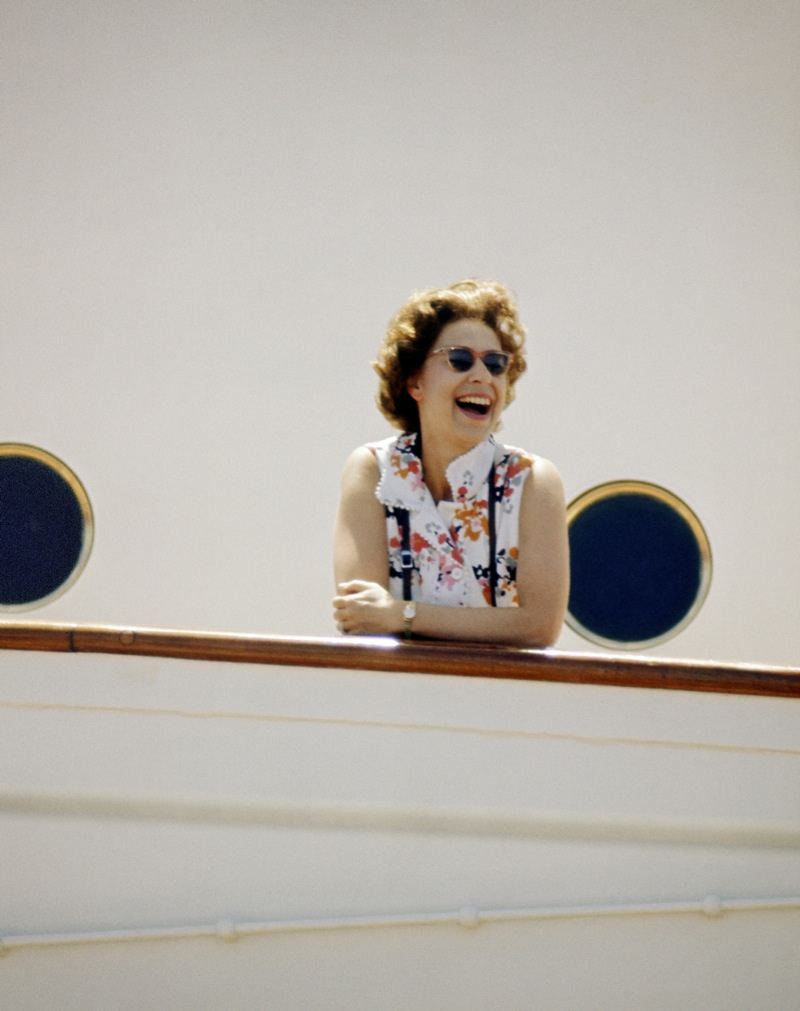
It is from this point that we begin to see the Queen mature from glamorous young starlet into a rounded family woman, but one who had to bare the full weight of the royal responsibility of her solitary role, as many of the portraits demonstrate. Through the 60s and 70s, her posture becomes more official, and her stride seems more confident and self-assured. Still, moments of rare relaxation, such as the Queen laughing on the decks of her beloved Yacht Britannia are captured during this period, which was probably the last decade of uninhibited happiness before the traumas of the future descended upon her.

Queen Elizabeth II by Patrick Lichfield (1971)

Elizabeth I (this is not a typing error btw) by Gerhard Richter 1966

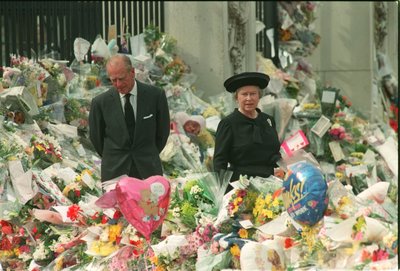
Queen and Prince Philip survey floral tributes after the death of Diana, Princess of Wales © Peter Nichols, 5 September 1997

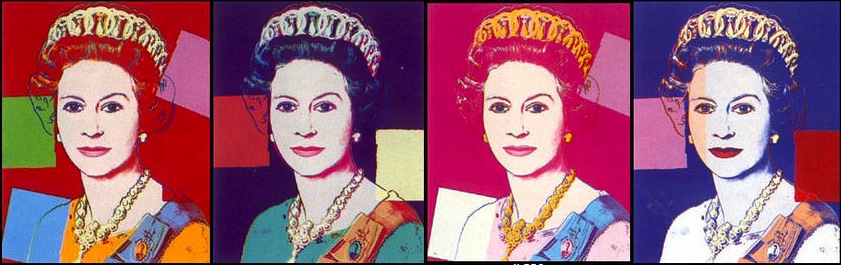
Moving into the 1980s, you see the Queen fall into the shadow of Princess Diana, the attention of the public transferring to this more volatile of characters. In the meantime the Sex Pistols released a single, God Save the Queen, with controversial lyrics suggesting the Queen belonged to a “fascist regime” (the artwork for which is included in the exhibition), Gilbert and George betrayed the Queen and Prince Philip in the shape of the “cross potent” (a symbol of the Austrian Fascist party) and Andy Warhol hinted at the superficiality of the Queen in his series of lithographs of the Queen painted as part of his fixation on the cult of celebrity. Onto the 90s, when most of the Queen’s children’s marriages fell apart and her beloved Windsor Castle sustained severe fire damage. While who could have predicted the shock of the late 90s, when Princess Diana tragically died, and the Queen fell victim to a media hunt as the papers decried her failure to show her face in the immediate aftermath. The turbulence of the period is captured by the exhibition, and it is perhaps appropriate that Lucian Freud’s portrait, the ugliest of the them all, is hung at the end of this period.

Queen Elizabeth II, Andy Warhol (1985)

Queen Elizabeth II, Lucian Freud (2001)

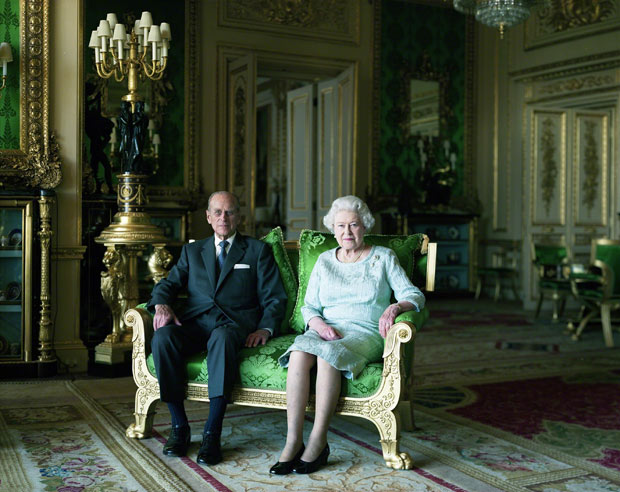
Onto the new millennium, where things get good again. The popularity of the Queen surges, and the portraits of the Queen become more respectful, portraying the Queen as a genuine person, a consistent and beloved figurehead, and a cherished icon of not only the nation, but the world. Here hangs another of my favourites and one of the most recent portraits by Thomas Struth, commissioned especially for the Diamond Jubilee. The photograph, which features Prince Phillip and the Queen slightly off centre, sat relaxed on a green, rather elaborate sofa, is delightfully accessible, like a family portrait – you can see every vein, every wrinkle of both sitters, suggesting a warm, human aspect, which is always surprising in those who seem so inaccessible. I also love the portrait for demonstrating the bond between Phillip and the Queen, who sit fairly formally, but who are nevertheless the clear support of one another, forming a single union with a bond which is clear for all to see.

Prince Phillip and Queen Elizabeth II, Windsor Castle © Thomas Struth 2011

I loved too this portrait by Annie Leibovitz (2007) which, with its solitary and dramatic background, and with the Queen dressed in a cloak, references the paintings by Annigoni, and photographs by Cecil Beaton placed at the beginning of the show. And thus, as the exhibition ends, the portraits come full circle, as we see a Queen as much loved now, as then, a Queen who inspires in us all a deep sense of reverence and respect, and for we British, is someone of whom we can be resolutely proud.

Queen Elizabeth, Annie Leibovitz (2007)

The Queen: Art & Image is on at the National Portrait Gallery until 21 October 2012.