Skip to content

Posts tagged ‘Norms’

The Daily Sketch ITALIA – Norms in Sicily

It’s been a long and varied trip which has seen the Norms traverse the boot of Italy and cross the Med to the funny shaped ball the boot appears to be kicking – Sicily. Sicily is famous for various things. It has its juicy large lemons, its very hot climate, its ever omnipotent grumbling volcano, Mount Etna, and the very sinister undercurrent of Cosa Nostra, the Sicilian Mafia. Consulting their guidebooks, our tourist norms sensibly opted for the obvious sightseeing choice of Sicily – the stunning ruins of a Greek theatre in the little picturesque town of Taormina. There they were treated to an incredibly preserved ancient architectural artefact, as well as the beautiful view of the coast below, and an ever smoking, snow-capped Mount Etna lording over the landscape beyond. What they did NOT expect to stumble across was this sinister scene – two members of the Sicilian Mafia teaching one poor Norm the tragic lesson of what happens when you cross Cosa Nostra. Having stumbled across this ghastly operation, the Norms have made up their mind – it’s time to pack up their bags and head home for Blighty… if they get out alive, that is.

(Gosh I do like a good cliff hanger)

Norms in Sicily (2012 © Nicholas de Lacy-Brown, pen and ink on paper)

© Nicholas de Lacy-Brown and The Daily Norm, 2001-2012. Unauthorized use and/or duplication of the material, whether written work, photography or artwork, included within The Daily Norm without express and written permission from The Daily Norm’s author and/or owner is strictly prohibited. Excerpts and links may be used, provided that full and clear credit is given to Nicholas de Lacy-Brown and The Daily Norm with appropriate and specific direction to the original content.

The Daily Sketch ITALIA – Norms at the Vatican

Just a hop across Rome’s River Tiber, along the Ponte Sant’ Angelo, is a entirely different city. An entirely different country in fact – Vatican City, home of the Pope, head of the Catholic Church. The Vatican is undoubtedly stunning. The immense Basilica of St Peter, and Bernini’s elaborately colonnaded St. Peter’s Square awes with all of the intended spectacle which is only appropriate for the centre of one of the world’s most prominent religions. The Vatican is home to some of the greatest art collections ever known to man – the Belvedere Torso, Michelangelo’s Sistine Chapel ceiling, and Raphael’s vast School of Athens, as well as the peculiar site of the Vatican’s own troop of security, the puffy-costumed, beret-wearing Swiss Guards. But something our tourist Norms could never have hoped to witness, on their brief visit, was a parade of Pope Norm and the full school of eminent Cardinal Norms themselves. Spectacle never got bigger than this.

Norms at the Vatican (2012 © Nicholas de Lacy-Brown, pen and ink on paper)

© Nicholas de Lacy-Brown and The Daily Norm, 2001-2012. Unauthorized use and/or duplication of the material, whether written work, photography or artwork, included within The Daily Norm without express and written permission from The Daily Norm’s author and/or owner is strictly prohibited. Excerpts and links may be used, provided that full and clear credit is given to Nicholas de Lacy-Brown and The Daily Norm with appropriate and specific direction to the original content.

The Daily Sketch ITALIA – Norms in Rome

Travelling southwards, down the Mediterranean coast of Tuscany and taking a sharp inland turn from Civitavecchia, the Norms have finally found themselves in the renowned capital city of Italy, the one and only Roma. And what a city it is. Crammed full of antiquity, artistic and cultural heritage from centuries of history played out within its seven famous hills. From the great Roman Empire which once ruled the western world, and the remnants of which still litter the city unapologetically, to the great Religious heritage flowing from the foundation of the Catholic Church in the nearby Vatican City, and the catholic fervour and religious architectural splendour which has no doubt resulted. With its chic café culture near the Spanish Steps, the romantic brilliance of the Trevi Fountain, and the grandeur of the “wedding cake” Altare della Patria building, Rome is a city offering everything.

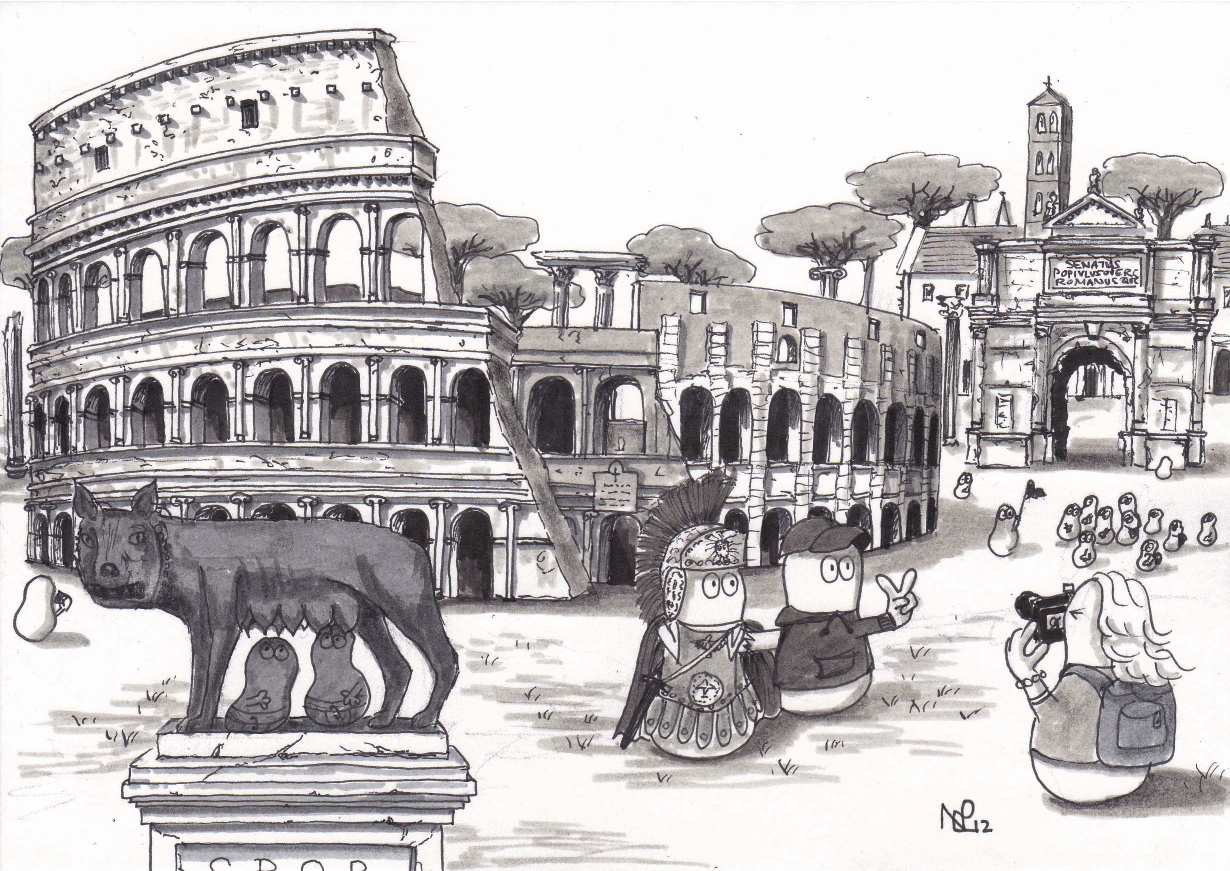
For the Norms, the centre of their visit (being that Gladiator is by far their favourite film) has to be Rome’s most famous symbol, the Coliseum, the spectacular amphitheatre straight out of Ancient Rome. Not so directly linked to Rome, but inspired, nonetheless by that great age, are the tourist-touting “centurion” dressed Norms who collect outside the great arena, posing for photos for a few extra coins in their purse. This less than soldierly activity has nonetheless attracted the attention of these tourist Norms who have their photo taken with one said Centurion with the great Coliseum providing the perfect Roman backdrop, alongside a sculpture of the founders of the great city, Romulus and Remus (Norms) suckling upon their mother wolf as tradition demands. You’ve gotta love it.

Norms in Rome (2012 © Nicholas de Lacy-Brown, pen and ink on paper)

© Nicholas de Lacy-Brown and The Daily Norm, 2001-2012. Unauthorized use and/or duplication of the material, whether written work, photography or artwork, included within The Daily Norm without express and written permission from The Daily Norm’s author and/or owner is strictly prohibited. Excerpts and links may be used, provided that full and clear credit is given to Nicholas de Lacy-Brown and The Daily Norm with appropriate and specific direction to the original content.

The Daily Sketch ITALIA – Norms in Pisa

You don’t have to travel far from Firenze to hit the city’s Mediterranean neighbour: Pisa. These days everyone travels to Pisa for one reason – a certain leaning tower, built as the campanile to an equally stunning cathedral and baptistry all situated in the Piazza del Duomo of this otherwise basically nondescript city. The tower, which was built with only 3 metres of foundations on weak sub-soil, tilts some 5.5 degrees and is without a doubt probably the most famous symbol of Italy next to Rome’s Coliseum.

No wonder then that the Norms decided to give the tower a visit on their tour through Italy, but they did not anticipate quite how much the tower leans. In fact, when they stood in the tower’s shadow, they could have sworn that the tower was actually starting to lean closer and closer towards them. As other tourist Norms look by in shock and bemusement, some taking photos, others staring at the unique angle of the building, we are left to wonder, will the tower topple and squash those poor norms under the weight of its colonnaded majesty? Like all good stories, we are left on a cliff-edge at the point of this sketched snap-shot, with the leaning tower still intact to inspire the admiration and incredulity of us all.

Norms in Pisa (2012 © Nicholas de Lacy-Brown, pen and ink on paper)

© Nicholas de Lacy-Brown and The Daily Norm, 2001-2012. Unauthorized use and/or duplication of the material, whether written work, photography or artwork, included within The Daily Norm without express and written permission from The Daily Norm’s author and/or owner is strictly prohibited. Excerpts and links may be used, provided that full and clear credit is given to Nicholas de Lacy-Brown and The Daily Norm with appropriate and specific direction to the original content.

The Daily Sketch ITALIA – Norms in Florence

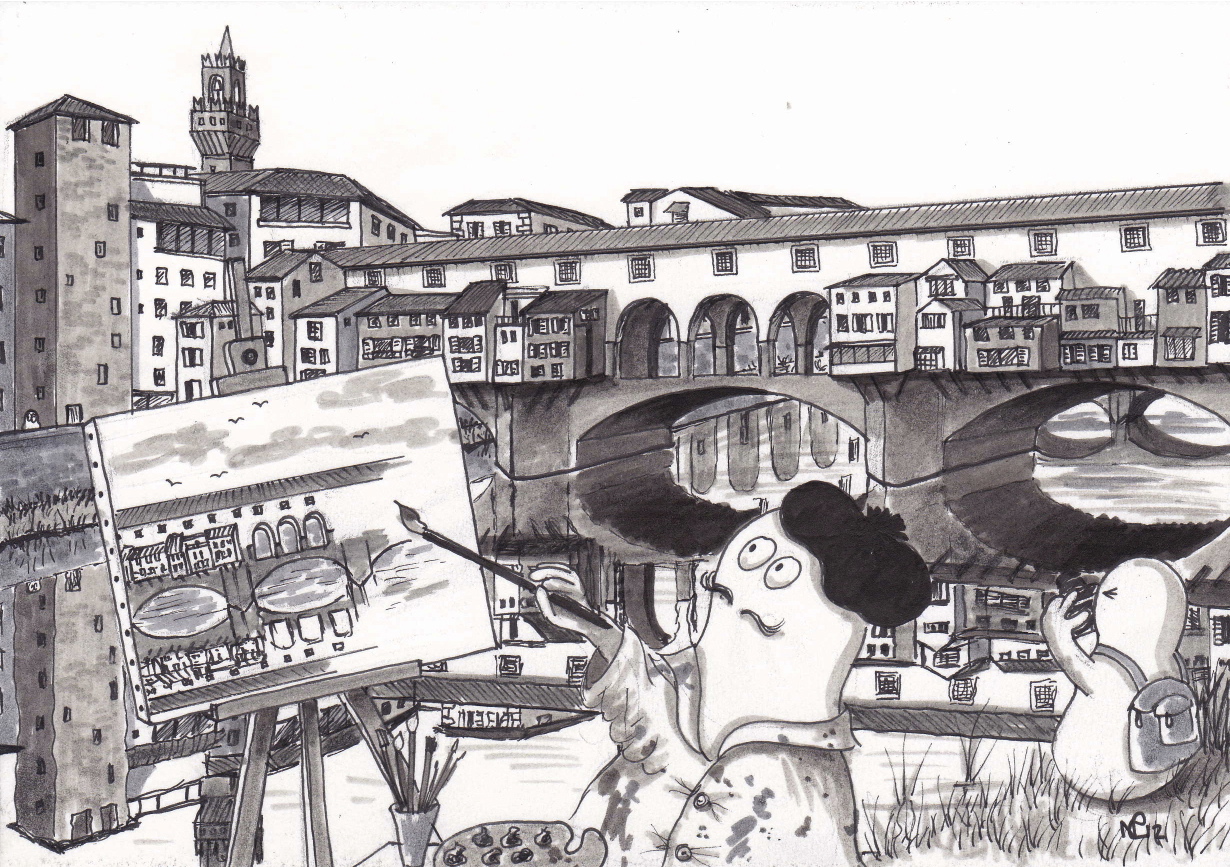
Next on the Italian tourist trail, the Norms have headed for Florence, for shopping in Milan was deemed inappropriate in the current economic climate. Taking inspiration from the significant artistic and architectural heritage of a city which was at the centre of the thriving artistic Renaissance, producing masterpieces such as Michelangelo’s David, the Giotto frescoes of Santa Croce, Botticelli’s Venus and the vast collections of the Medici tribe, this Norm has turned all artist, setting up his easel on the banks of the River Arno. From there he can enjoy a perfect view of the famous Ponte Vecchio, a street of merchants suspended across the river, and atop of which a secret corridor links the Palazzo Vecchio to the Palazzo Pitti – genius! Patiently, Artist Norm is recreating this magnificent view across the surface of his canvas, while a fellow tourist prefers the medium of photography to capture his impression of Florence, a city which is so beautiful, that it needed to be captured twice, reflected in double form in the waters which run peacefully through its centre.

Norms in Florence (2012 © Nicholas de Lacy-Brown, pen and ink on paper)

© Nicholas de Lacy-Brown and The Daily Norm, 2001-2012. Unauthorized use and/or duplication of the material, whether written work, photography or artwork, included within The Daily Norm without express and written permission from The Daily Norm’s author and/or owner is strictly prohibited. Excerpts and links may be used, provided that full and clear credit is given to Nicholas de Lacy-Brown and The Daily Norm with appropriate and specific direction to the original content.

The Daily Sketch: Summer Solstice?

Summer Solstice? Could have fooled me. The calendar may show June 21st, but this year’s longest and lightest day of the year  had something decidedly dark about it, as thick grey clouds lingered over the UK all day, burgeoning upon us a winter’s worth of damp, windy wet weather. And all this on the first day of summer? No wonder then that at Salisbury’s infamous prehistoric monument, Stone Henge, the usual crowd of slightly “buzzing” pagan (“new age”) revelers were somewhat down in numbers, and perhaps a little dizzier than usual as the much promised summer got lost somewhere around mainland Europe, as the skies in Britain unfolded around them, and the solstice sunshine was irreverently blanketed in a thick layer of obstinate, wet cloud. But such is the English summer. The first day brings with it what promises to be another few months of depressing drizzle, with the following inevitable results: rained-off Wimbledon, squidgy Olympic opening ceremony, water-logged open air theatre and an August from the ice age. God bless the Brits – try as we might, life in the Summer outdoors is never quite going to work for us. Still, the weather can never take the strawberries and cream away from us. Even if they are imported from Egypt. Pimm’s anyone?

Norms celebrating “Summer” Solstice, at Stone Henge (2012 © Nicholas de Lacy-Brown, pen on paper)

Diamond Jubilee Weekend: Let the street parties begin!

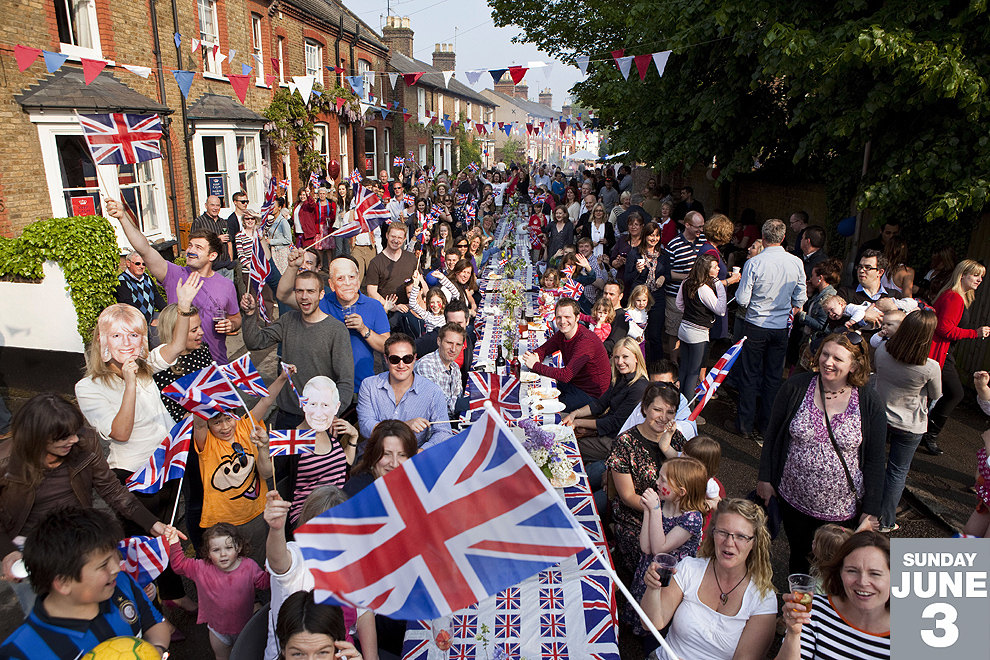
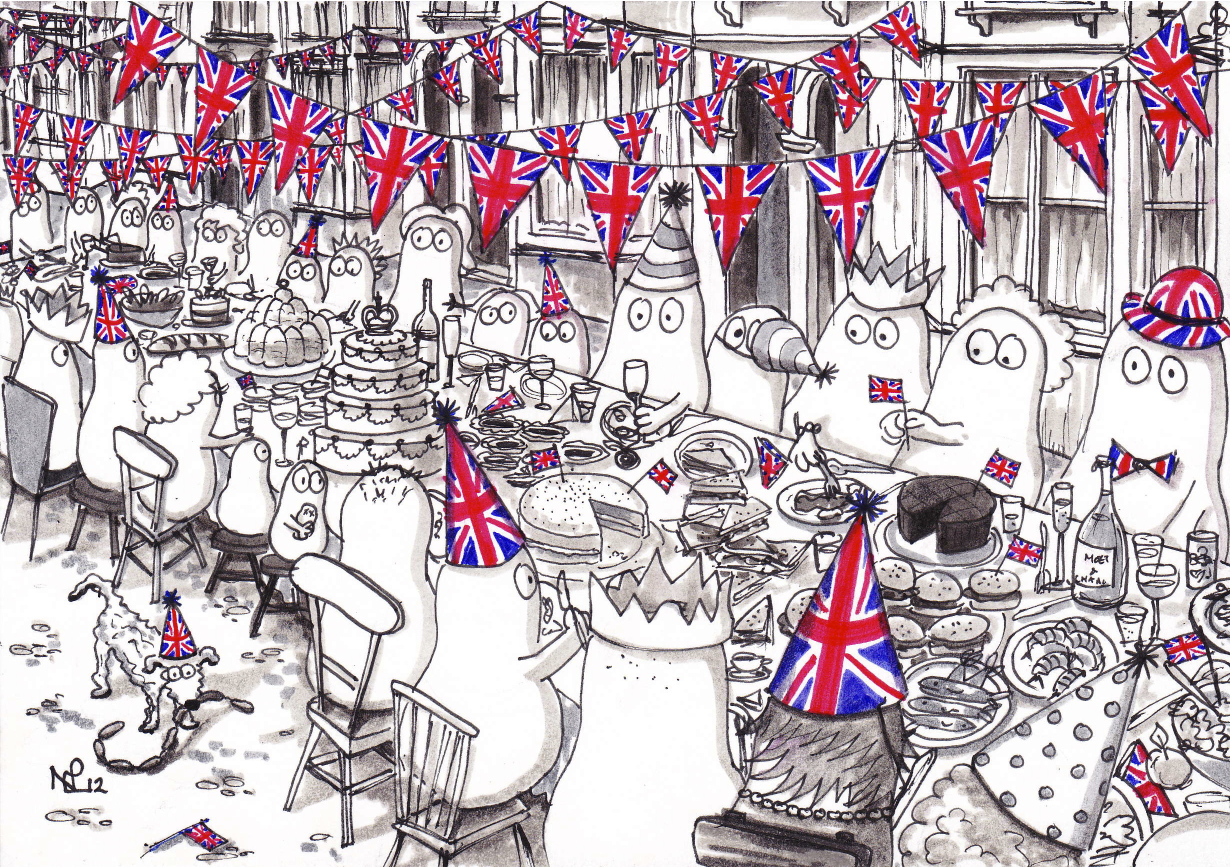
They’ve strung out the bunting and covered cup cakes and cookies and muffins in red, white and blue. The tables are being set up where cars normally dominate, huge, long white sheets become makeshift tablecloths on a street-long banqueting space, the dishes are assembled, each decorated with a token miniature union jack, and the cars are formally banished, as neighbours gather together for the event of the decade: the Diamond Jubilee Street party is here!

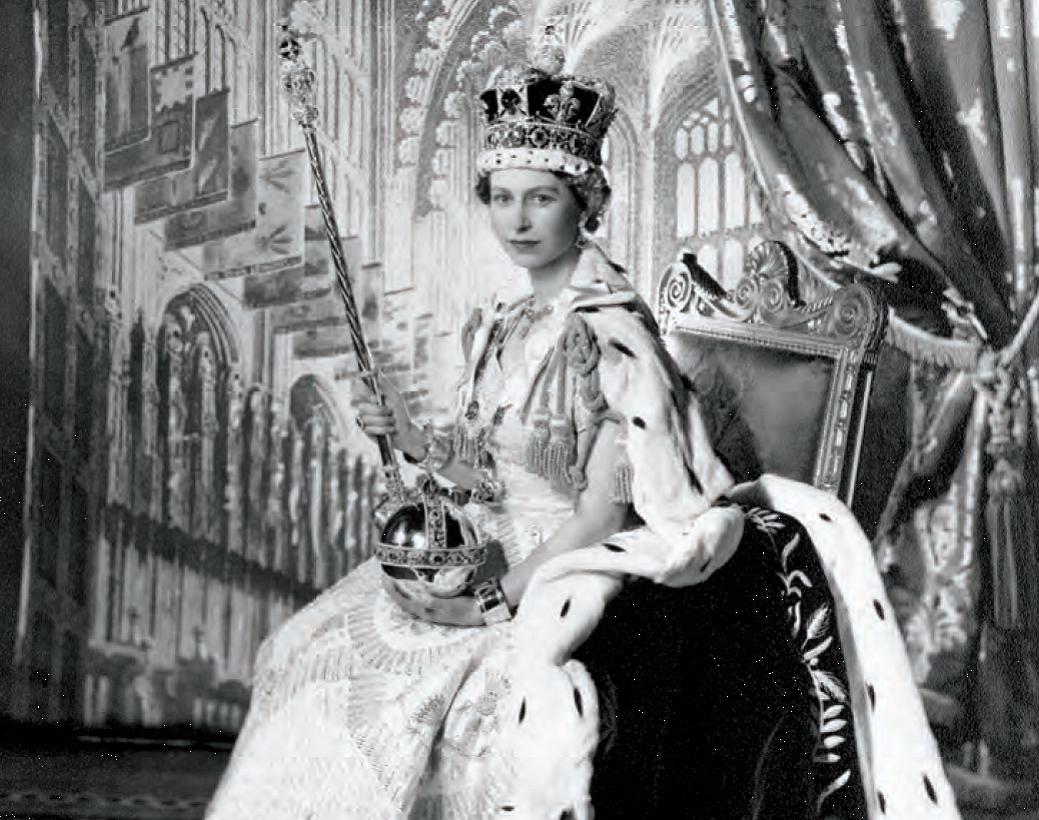
It’s a rather anachronistic tradition, but one which is all the more necessary now that neighbourhoods have become soulless and people who live side by side barely know each other’s names. Back in the middle of the 20th Century, when the street party was a more regular occurrence (notable street parties included celebrations at the close of the Second World War and the Queen’s Coronation itself, in 1953) street parties were probably more of a naturally organised occasion. Neighbours lived in one another’s front rooms, borrowing cups of sugar, nosing into each other’s gossip, and standing around on the street corners, having a chat. But as society has become gradually more transient, with people moving around for career changes, schooling changes, and moves abroad as part of the gradual trend towards globalisation, the idea of neighbourhood has been relegated to soap dramas on TV. In today’s age, with neighbourly relations at an all time low, and english reserve causing a general aptitude towards individual isolation, that the age of the street party is starting to catch on again, as people harp back to the old days, seeking a return to the days of neighbourhood values, when your street was a haven, a place where children played safely, and people felt the support not just of their closer relatives, but of the people living all around them.

The Norms’ Diamond Jubilee Street Party (2012 © Nicholas de Lacy-Brown) (Pen and pencil on paper)

What with the Golden Jubilee ten years ago, the Royal Wedding last year, and the Diamond Jubilee now upon us, the street party is on the up, and this weekend will see the union jack go into overdrive, not just in London, but all over the UK. Naturally, the Norms are not likely to miss out on the action, and here in Normville, the Norms have missed none of the Jubilee spirit, stringing out the bunting, decking the tables with cakes, and sandwiches, jellies and bottles of bubbly, as they fly the flag high in honour of a magnificent 60 year reign of our Queen, Elisabeth II. May the jubilee weekend begin!!

The coronation of HRH Queen Elizabeth II

A street party back in 1977 for the Silver Jubilee

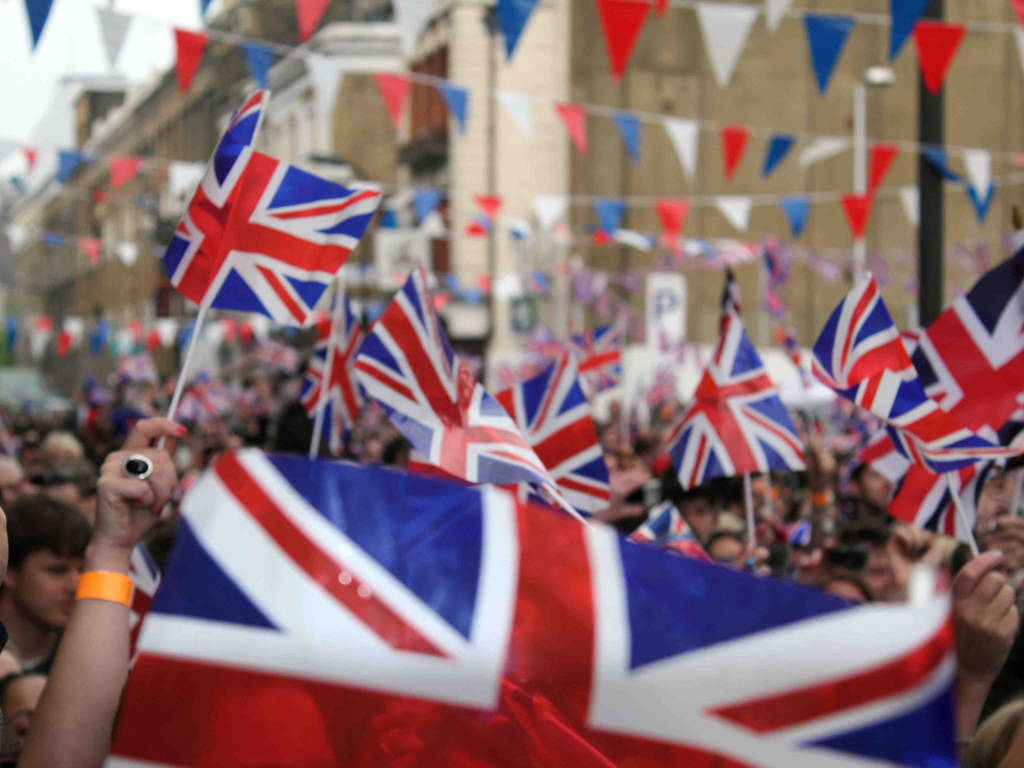
London is filled to bursting point with bunting and union jacks

PS For the best jubilee cake ever known to man, check out the award winning cake made by my dearest friend Celia on her blog, Lady Aga.

© Nicholas de Lacy-Brown and The Daily Norm, 2001-2012. Unauthorized use and/or duplication of the material, whether written work or artwork, included within The Daily Norm without express and written permission from The Daily Norm’s author and/or owner is strictly prohibited. Excerpts and links may be used, provided that full and clear credit is given to Nicholas de Lacy-Brown and The Daily Norm with appropriate and specific direction to the original content.

Deconstructed Norm Sculptures in a Setting (after Henry Moore)

Henry Moore, the British sculptor, is famous the world-over for his semi-abstract rounded bronze figures and organic wood-carved nudes. His indisputable popularity as one of the greatest sculptors of our age is demonstrated by the sheer proliferation of his works on public display in town centres and parks and the gardens of large country estates throughout the UK and around the globe. His organic, satisfying rounded forms do not offend polite society, but instead offer the right about of minimalist abstraction mixed with sentimental femininity and human characterisation. His sculptures often dominate the landscape, while inviting passers by to interact with the various holes and curves intrinsic to Moore’s work. They are like a Picasso abstract come to life, or a Michelangelo mother and child melted into a tender rounded form.

Henry Moore, Five Figures in a Setting (1937)

Yet it is not his sculptures which attract me. Don’t get me wrong – I love his works. They are satisfyingly curvaceous, with a mixed attraction of sharp edges and smooth polish, a recognisably humanised form with a metaphysical expressionless finish, open to interpretation, and perfectly executed from every angle. But for me, the real stars of any Henry Moore show are his sketches.

Henry Moore, Shelter Sketch Book (1967)

Often he sketched when ideas came into his head. Consequently Moore left us with a great variety of sketches in which we can see Moore exploring the various organic forms which are now famous sculptural manifestations, as well as plenty of rough drawings devoted to the mother and child image that so obsessed him, and paintings in which Moore appears almost to capture his three-dimensional forms, imprisoning them within an eternal two-dimensional abstract landscape. Come the second world war, and Henry Moore was made an official war-artist for Britain, but not as a sculptor. Instead Moore would head down to the packed tube stations, where thousands would huddle, every night, using the dark tunnels and airless platforms of the London underground as make-shift bomb shelters. There he captured moving scenes of humans at one in their vulnerability, trying to sleep through their anxiety, curled up together for moral support.

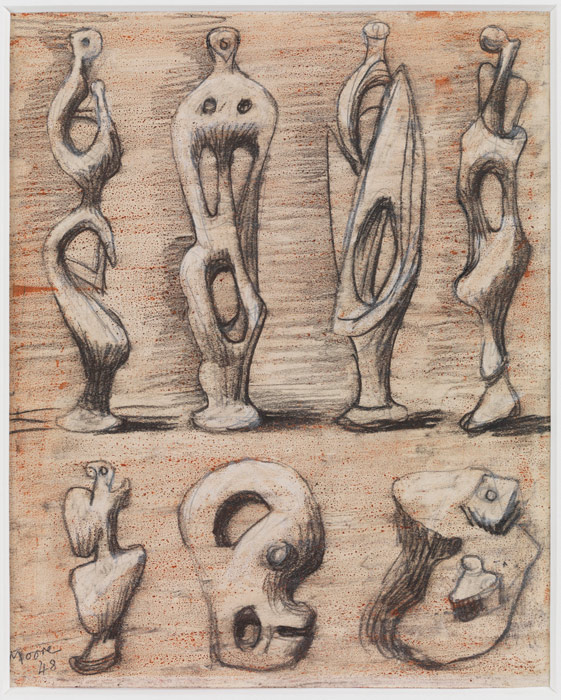
Henry Moore, Standing Figures and ideas for Sculpture (1948)

Moore’s sketches offer us an invaluable insight into the great sculptor’s mind at times when he would pour his sculptural imaginings straight onto paper, some of which eventually made it into three-dimensional form, but many of which never made it beyond the confines of pen on paper. But these sketches are far more than just studies or ideas. They are works of art in themselves, capturing moments of intense human emotion, with a dark intensity and an often surreal setting. They are artistic masterpieces worthy of as much attention as the finished sculptural articles which have become a staple of British art all over the world.

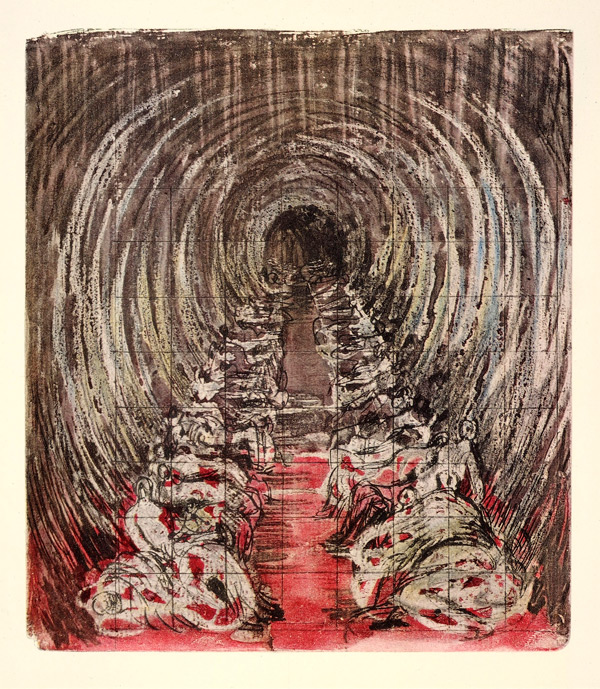
Ever inspired by the wonderful art around me, I sketched my own Moore-inspired sculptural forms. Taking the humble Norm as the basis for my drawing, I deconstructed my Norm, presenting the customary rounded figure as a body with strings and a hollow inside, a head, two large eyes, the Norm’s characteristic single hand, and a crescent-like structure which I like to think of as an expression of a Norm’s eye-lashes. The result is a sketch full of the abstract surrealism which Moore’s own works promote, but with that hint of Norm playfulness, some strings and a blood-red hollow, all set within a shady landscape leading to nowhere. If only Moore had seen it. The Deconstructed Norm would have been slowly rusting somewhere in a park by now. Unless it was made of metal, in which case it would have been nicked…

Deconstructed Norm Sculptures in a Setting (after Henry Moore) © 2012, Nicholas de Lacy-Brown, pen, pencil and watercolour on paper

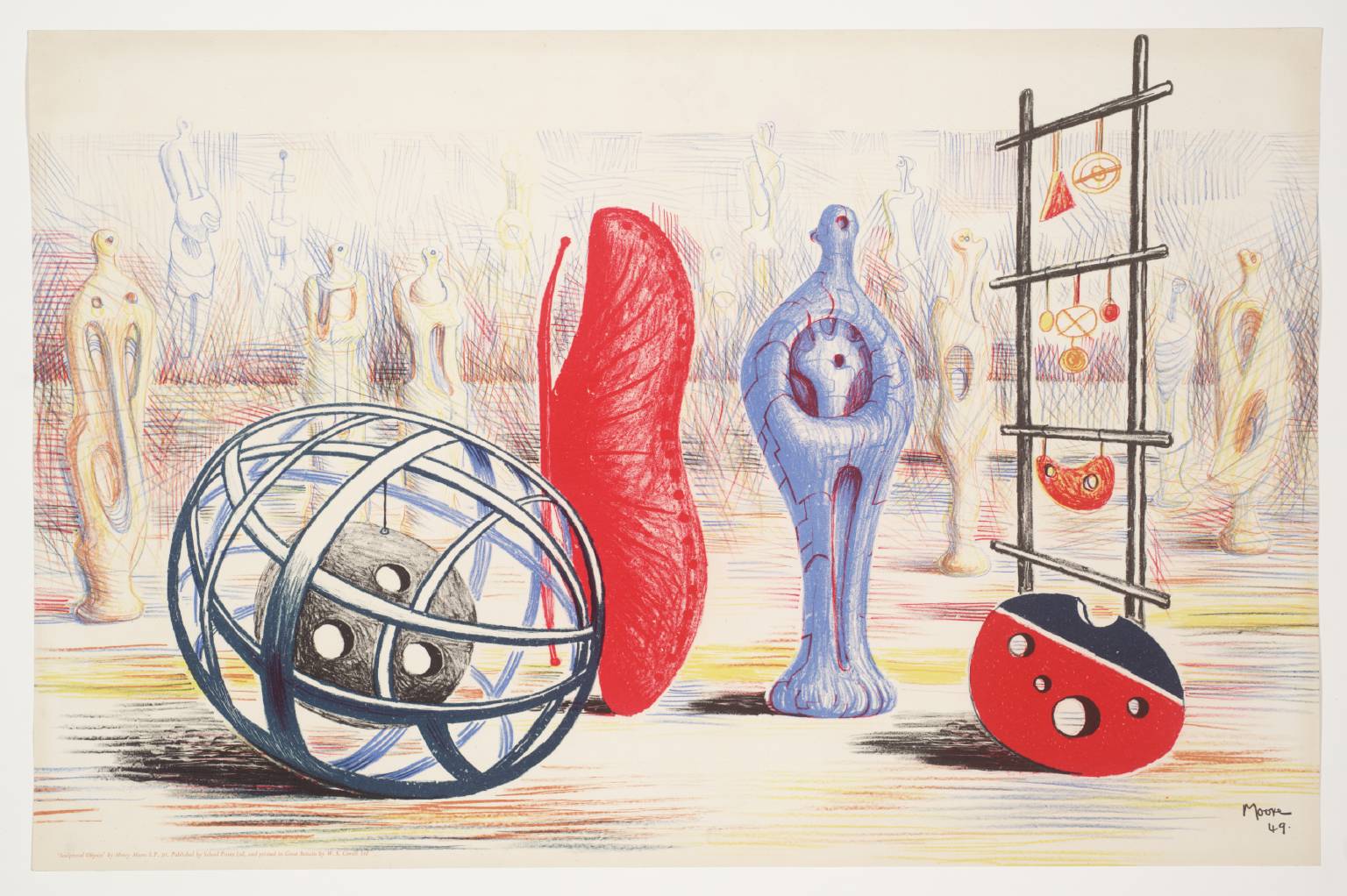
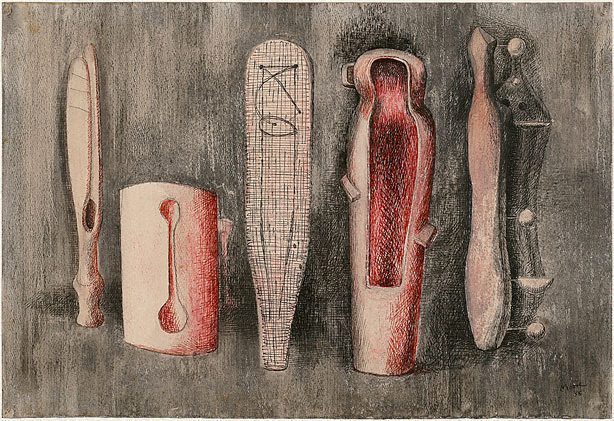
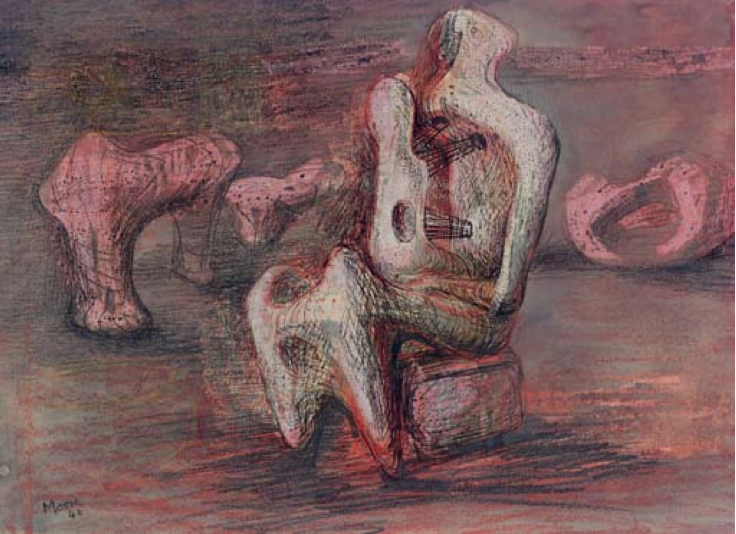
I leave you with a mere handful of some of Moore’s incredible works on paper. Until next time…

Henry Moore, Sculptural Objects (1949)

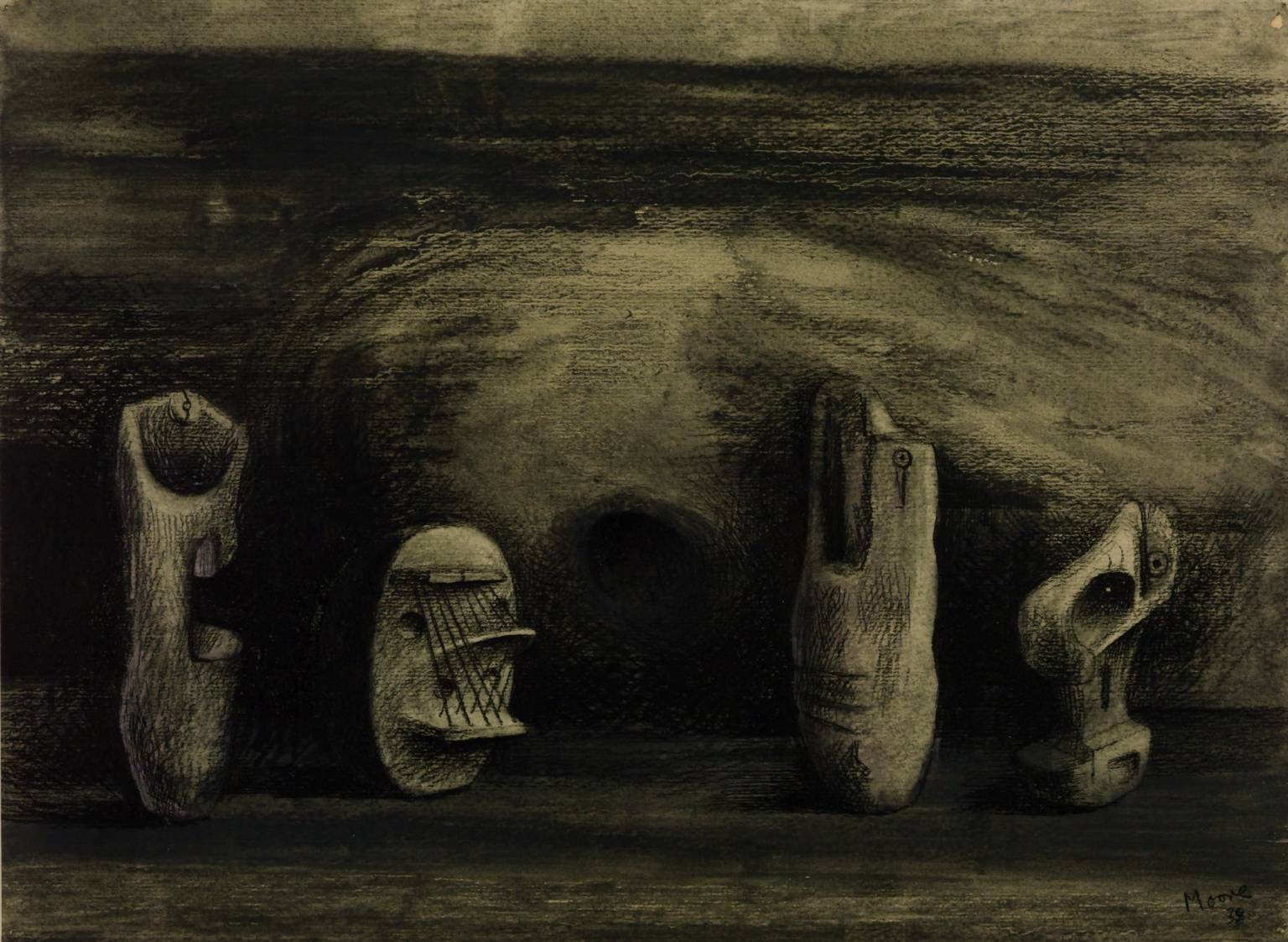
Henry Moore, Sculptural Ideas, hollow form (1938)

Henry Moore, Mother and Child; Drawing for a sculpture in wood and string (1949)

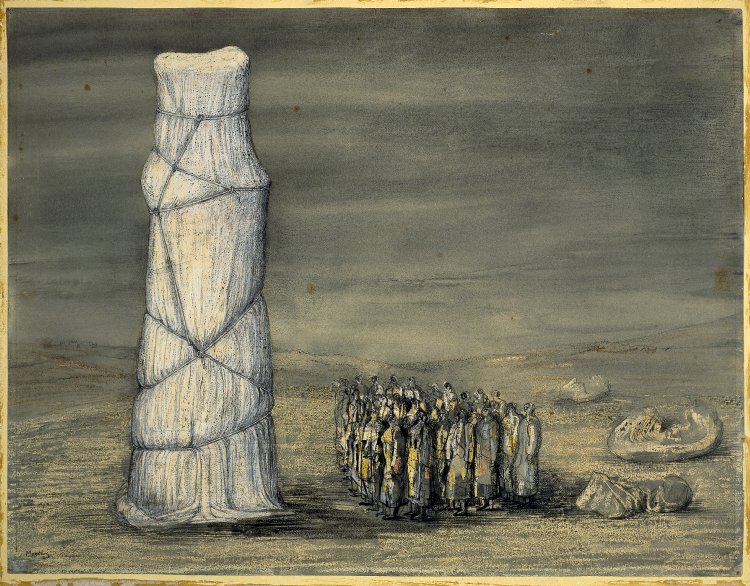
Henry Moore, Crowd Looking at a Tied-uo Object (1942)

Henry Moore, Four Forms, drawing for a sculpture (1938)

Henry Moore, Ideas for Sculpture in a Setting (1938)

A baby showered with a chequerboard of tropical cupcakes

We English don’t easily accept the idea of being influenced by America. We’ve always been the slightly supercilious older brother of our younger indefatigable sibling across the pond, wincing at the loosening of our Queen’s erudite parlance, the widening of the vowels, the advent of stuffed-crusts, of bagels and Reese’s peanut butter cups, the creator of drive-thru culinary culture and the over-eager stentorian expression which makes the refined of Kensington tut condescendingly. Yet it’s an indubitable fact of English life that the influence of the big U-S-of-A is all around us, in our music, in our food, on TV, in politics and on the high street, and no more so is this influence felt than in the way we party. The US gave us candy-abundant halloween and fairy light-filled dazzling Christmas spectaculars. And the latest craze which is doing the rounds is the Baby Shower.

According to wikipedia, a Baby Shower is generally thrown either shortly before or shortly after a baby is born. Only women are invited (!) and the new mother in question is “showered” with presents. So when my dear friend Sarah gave birth to a beautiful baby girl, Ruby, a few months ago, and announced that she would finally bring her angelic daughter down to London to be celebrated amongst our vivacious friendship circle, I decided that this baby shower business ought to be tried and tested, refined in the way that only the english know best. For starters we had men, and quite right too. In the modern world, with fathers playing an increasingly dominant role in the daily task of bringing up their children, why shouldn’t they too be showered with gifts and praise and plenty of sweet treats? Presents were showered aplenty – little cute girly outfits and some alcoholic indulgence for papa (when he’s off duty, naturally) and my gift – a norm sketch of course – devoted to little Ruby.

Welcome Ruby (© 2012 Nicholas de Lacy-Brown, pen and ink on paper)

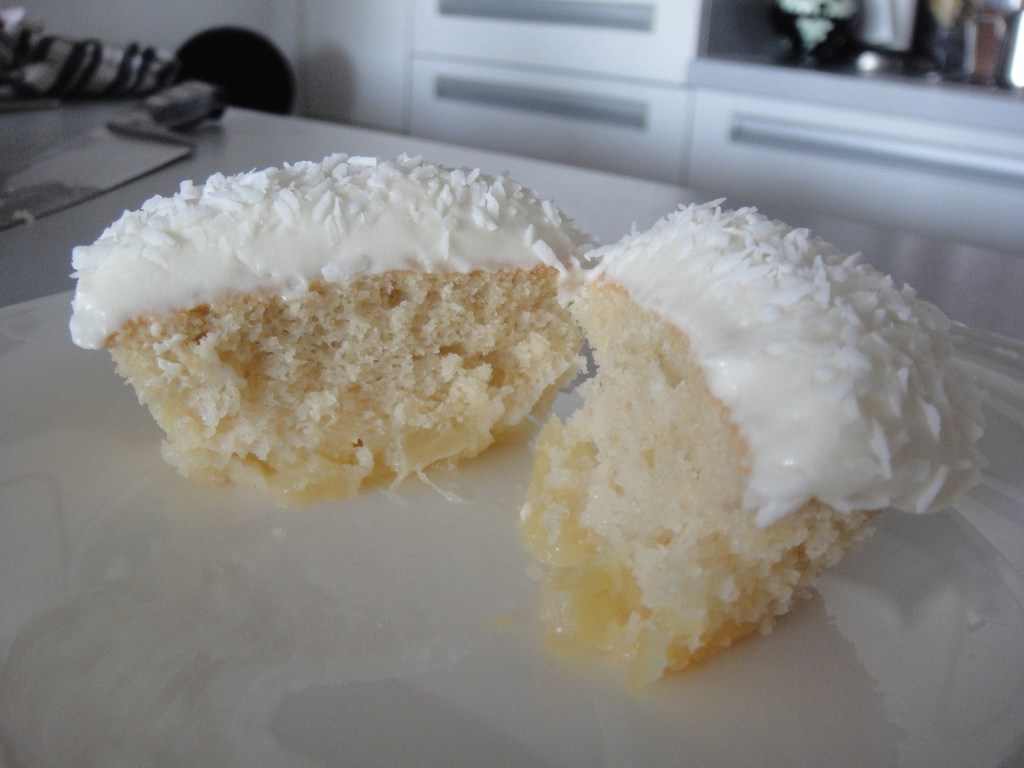
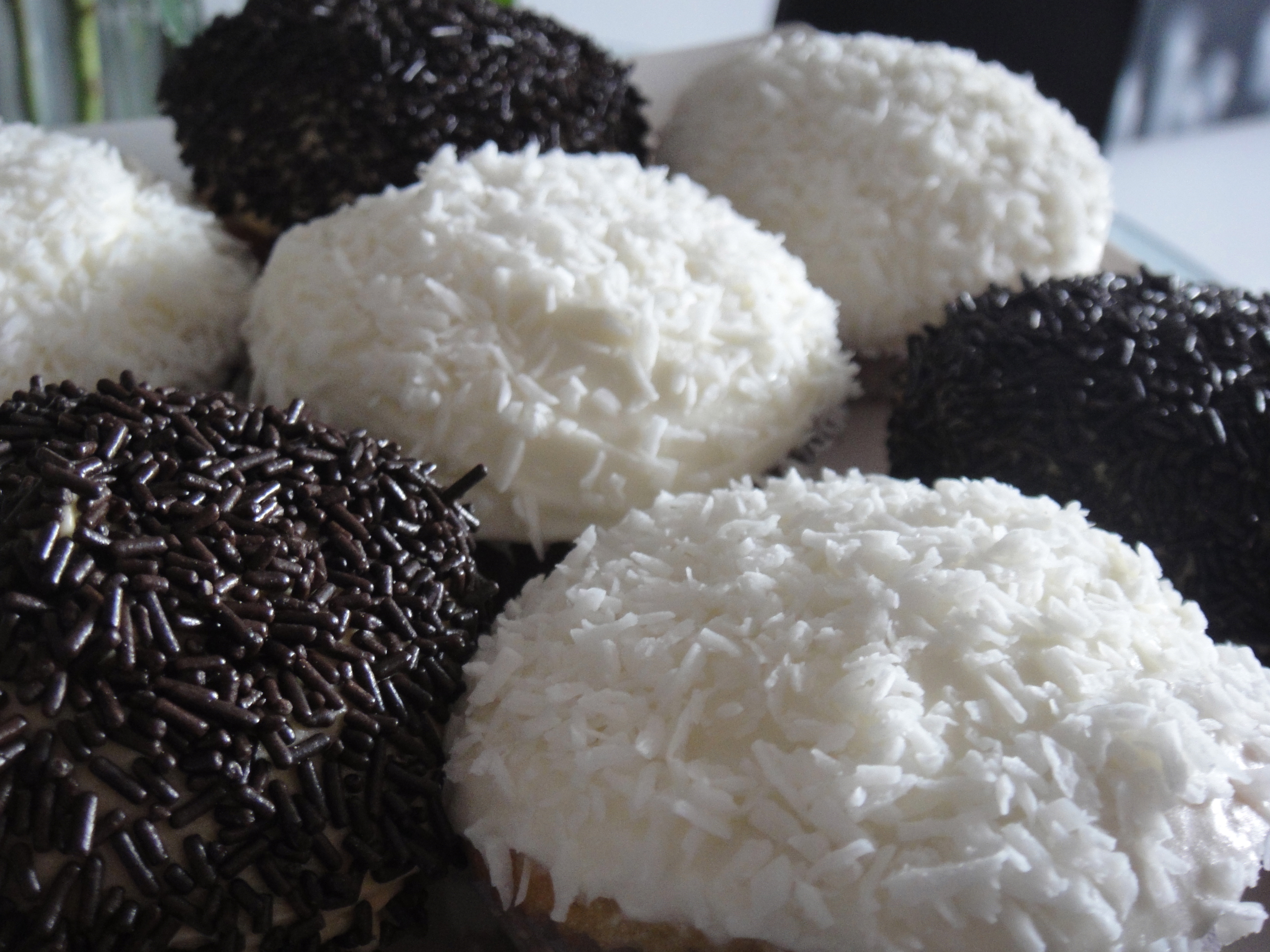
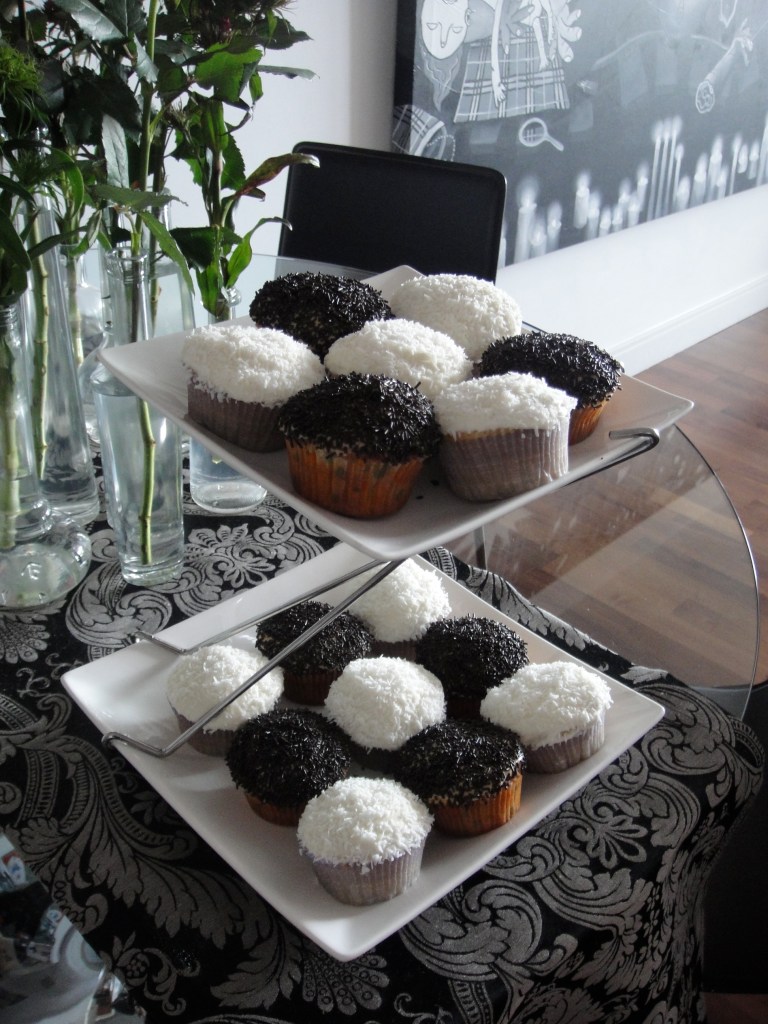
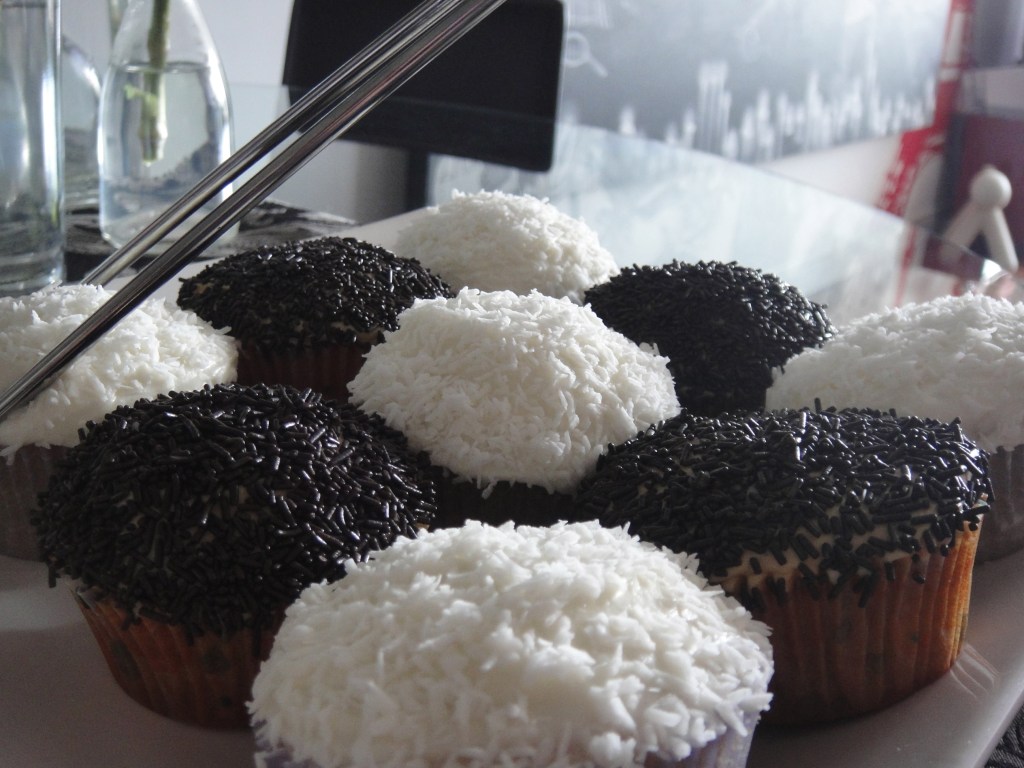
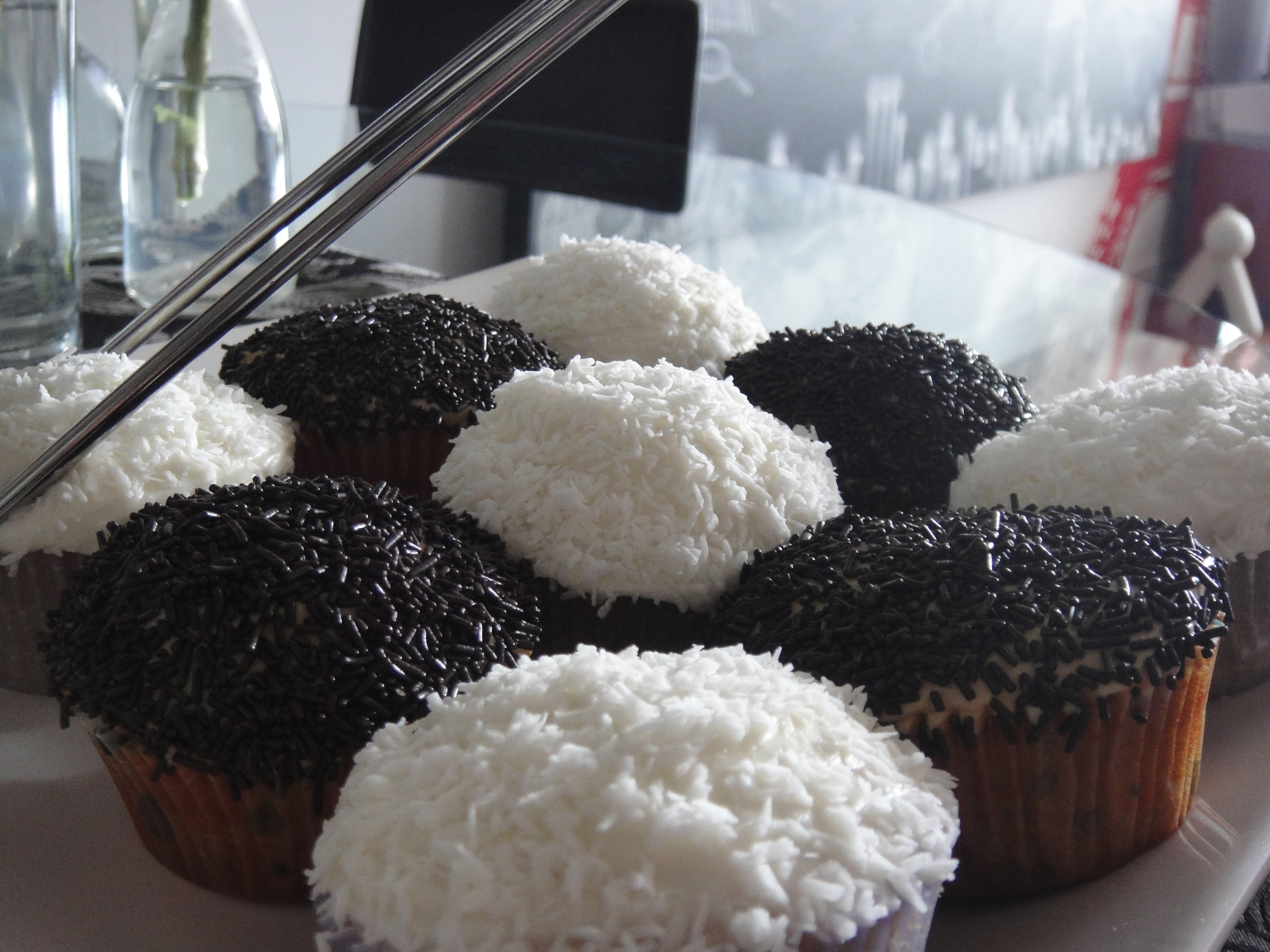
As for the sweet treats – cupcakes went all tropicana, as I chose flavours referencing the mixed and culturally rich heritage of Ruby’s parents – I made one batch of tropical cupcakes –  pineapple and coconut cupcake referencing Sarah’s Jamaican heritage and father Truong’s South Pacific patrimony – while tropical banana meets England’s now demised Hungry Monk restaurant, inventor of the infamous Banoffee Pie, inspiration for my second selection – a banoffee cupcake, loaded with indulgent dulce de leche and a gingery spiced banana sponge. Tropical flavoured, but London refined, these cupcakes were the epitome of english chic, served like a chequerboard of black and white, with one cake covered in coconut and the other in chocolate vermicelli. The fruit in both, and additions of creamy coconut milk and indulgent full fat milk respectively, made these cakes moist and delicious, while the butter cream icing was a suitably indulgent celebration of the beautiful new life in our midsts.
My recipes were adapted from London’s favourite purveyor of cupcakes, the Hummingbird Bakery. To make the pineapple and coconut cupcake, take 140g caster sugar and beat in 40g unsalted butter. Then add 120g plain flour, a pinch of salt, and 1 and a half teaspoons of baking power and mix everything together with an electric mixer. Once everything is combined, gradually mix 120ml of coconut milk and half a teaspoon of vanilla essence into the flour mixture, and finally add and mix in one egg (I actually used a bit more coconut milk – my mother always told me that the softest sponge mixtures always drip of the mixing spoon like syrup, and therefore I always add a bit more milk to achieve this effect – but it’s a matter of personal taste). Prepare 12 paper cupcake cases. Chop up 8 rings of tinned pineapple into small chunks and disperse evenly in the bottom of the paper cases. Pour the cake mixture on top and place in the oven at 170 degrees celsius for around 20-25 minutes. Test with a skewer to make sure the cakes are cooked. The skewer should come out clean. Once the cakes are cooled, make your butter icing. Beat 250g icing sugar with 80g unsalted butter with an electric mixer. Slowly add 25ml of coconut milk and whisk until very white and light and frothy (around 5-10 minutes). Paste onto the cake with a palette knife and sprinkle liberally with desiccated coconut.

The banoffee cupcakes are pretty similar. 140g of caster sugar should be added to 80g of unsalted butter. Then add 120g plain flower, a teaspoon of baking powder, a pinch of salt, a teaspoon of ground ginger and a teaspoon of ground cinnamon. Mix until well combined and then slowly add 120ml of whole milk and two eggs. Separately mash up approximately one largish banana (around 120g peeled) and stir into the cake mixture. Spoon into paper cases and cook at 170 degrees for around 20 minutes. For the icing, beat 250g icing sugar with 80g unsalted butter. Then, if you want to make your icing indulgently dulce de leche, take a small can of condensed milk and simmer on a low heat for 3 hours (yep, this takes patience) without opening the can. Make sure the water doesn’t dry out in the pan and the tin is always covered with water or the tin will explode. After three hours, open up the can and you should find yourself with a tin full of caramel deliciousness. Add a few tablespoons of this to your butter icing mixture depending on how sweet and rich you want it. Build up on your cakes with a palette knife and sprinkle chocolate vermicelli liberally over the cakes.
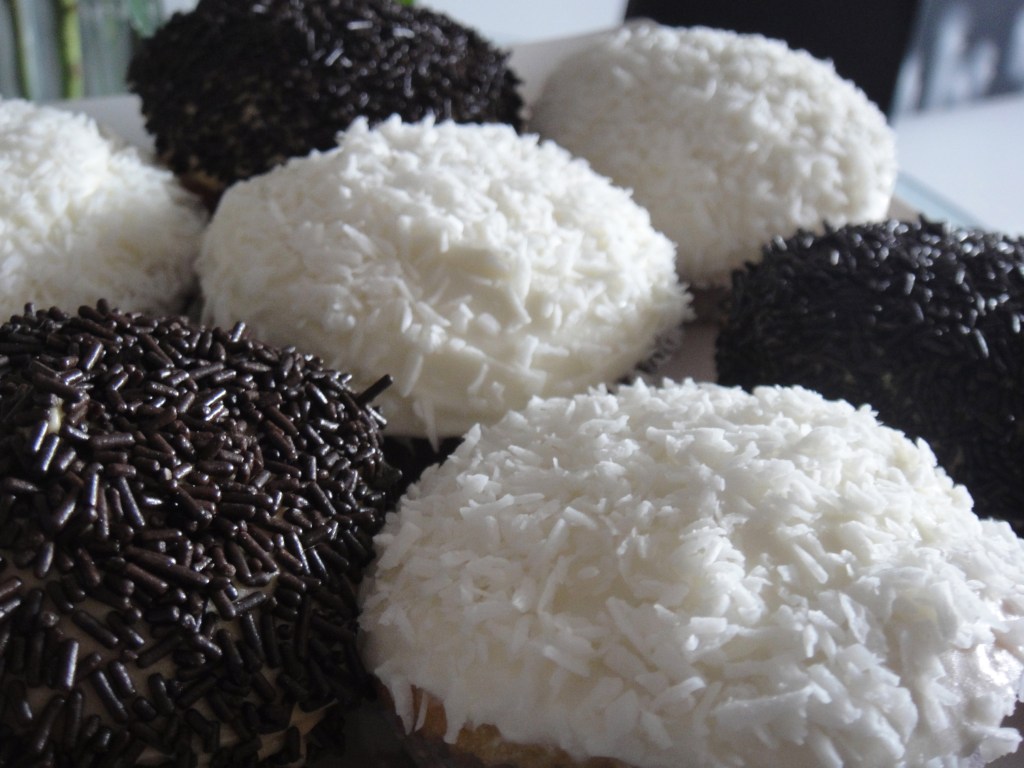
And there you have it. Uber sophisticated tropical cupcakes, perfect for the summer, whether a baby is forthcoming, newly arrived, or just a distant pipe-dream.

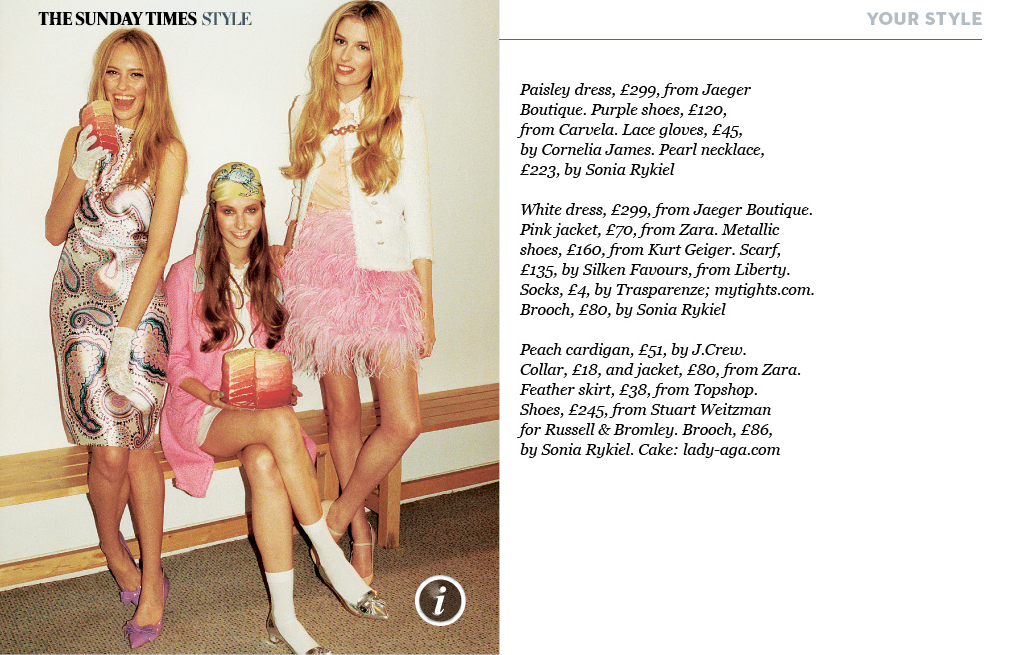
PS: Talking of uber-chic cupcakes, I am SO proud of my friend Celia whose red-velvet multi-layered ombre cake made it into this week’s Sunday Times style section as shown here… amazing!


The Daily Sketch: Norms at the Damien Hirst Exhibition

It’s all very well a gallery playing host to these rotting cow heads and life cycles of flies with their maggots and detritus and moving little black bodies, but what if the little scientific show-in-action managed to escape from the careful confines of its Damien Hirst supervised glass tank? Even when we visited Hirst’s room full of butterflies at Tate Modern last weekend, we managed to walk out of the room with part of the exhibit attached to our backs (a butterfly landed on my partner… and was swiftly rescued by a Tate attendant before we walked off with potentially one of the most valuable butterflies in the word unknowingly upon our person). So what if those pesky flies managed to escape too? Sadly in Norm world, this question was not just posed in theory alone. All that rotting caused a flap of the tank to come open (or perhaps it was sabotage?!) and for one poor Norm who took the insects’ peculiar fancy, he found himself the number one lunch attraction for a very hungry group of flies.

Norms at Tate Modern (2012 © Nicholas de Lacy-Brown, pen on paper)

And just in case you don’t know which Damien Hirst “artwork” I am talking about, herewith, the offending article… I swear that blood must cause havoc for a gallery’s wooden floors…

Damien Hirst, A Thousand Years (1990)

So let this be a lesson to you all ye who dare to enter Tate Modern’s latest Damien Hirst retrospective. It’s all well enough to stop and stare, but those ghastly flies are but a pane of glass away from a role reversal whereby you become the attraction! Of course while you’re there, be sure to look out for  the Norm in Formaldehyde, which will surely be the highlight of your experience. Here’s a picture of it (one I made earlier).
The Physical Possibility of a Norm in Formaldehyde (after Damien Hirst) (2011 © Nicholas de Lacy-Brown, pen on paper)

© Nicholas de Lacy-Brown and The Daily Norm, 2001-2012. Unauthorized use and/or duplication of the material, whether written work or artwork, included within The Daily Norm without express and written permission from The Daily Norm’s author and/or owner is strictly prohibited. Excerpts and links may be used, provided that full and clear credit is given to Nicholas de Lacy-Brown and The Daily Norm with appropriate and specific direction to the original content.