Skip to content

Posts tagged ‘Spain’

Mallorca (Part X) – Photography Focus 3: Favourite Shots

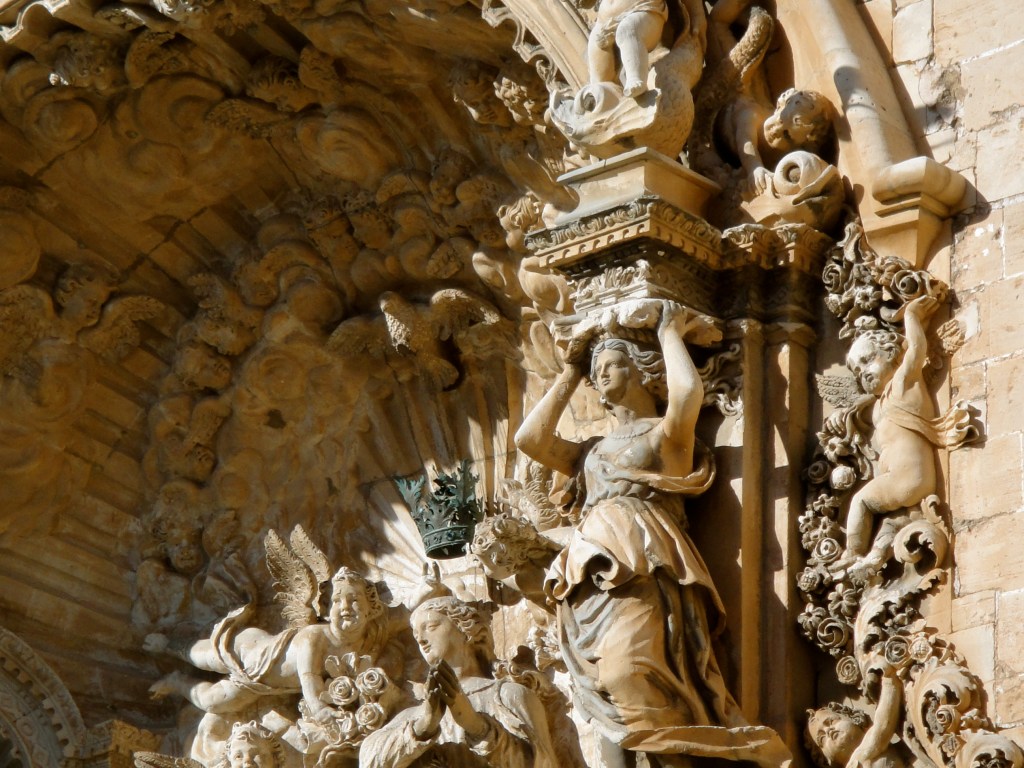
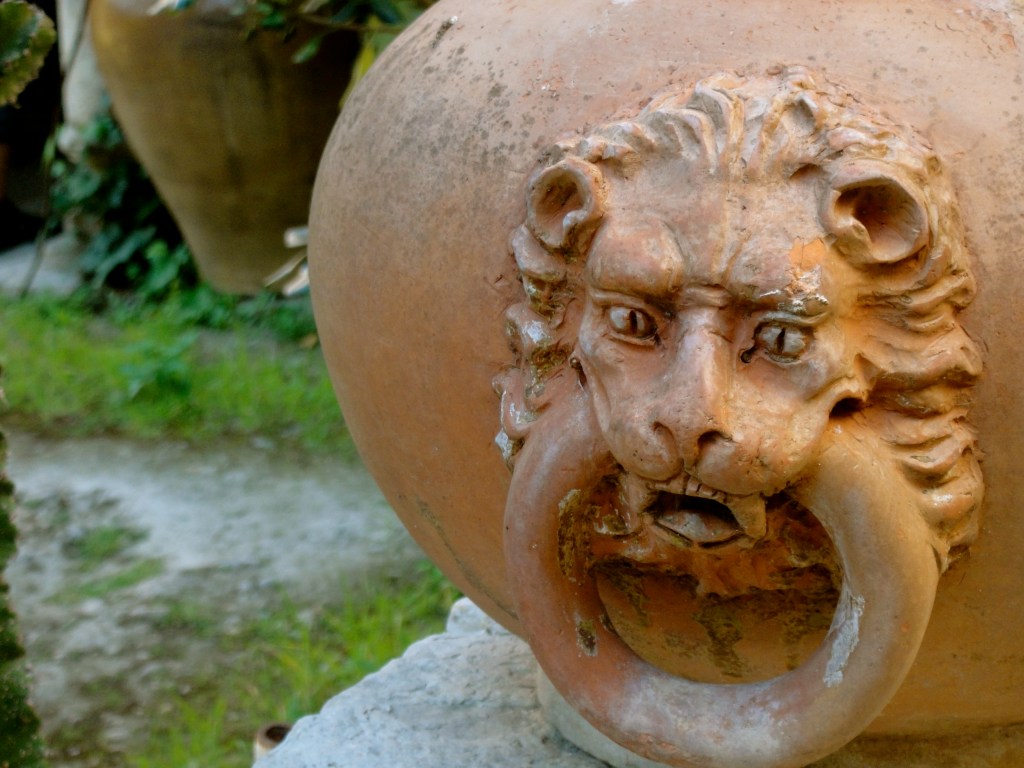
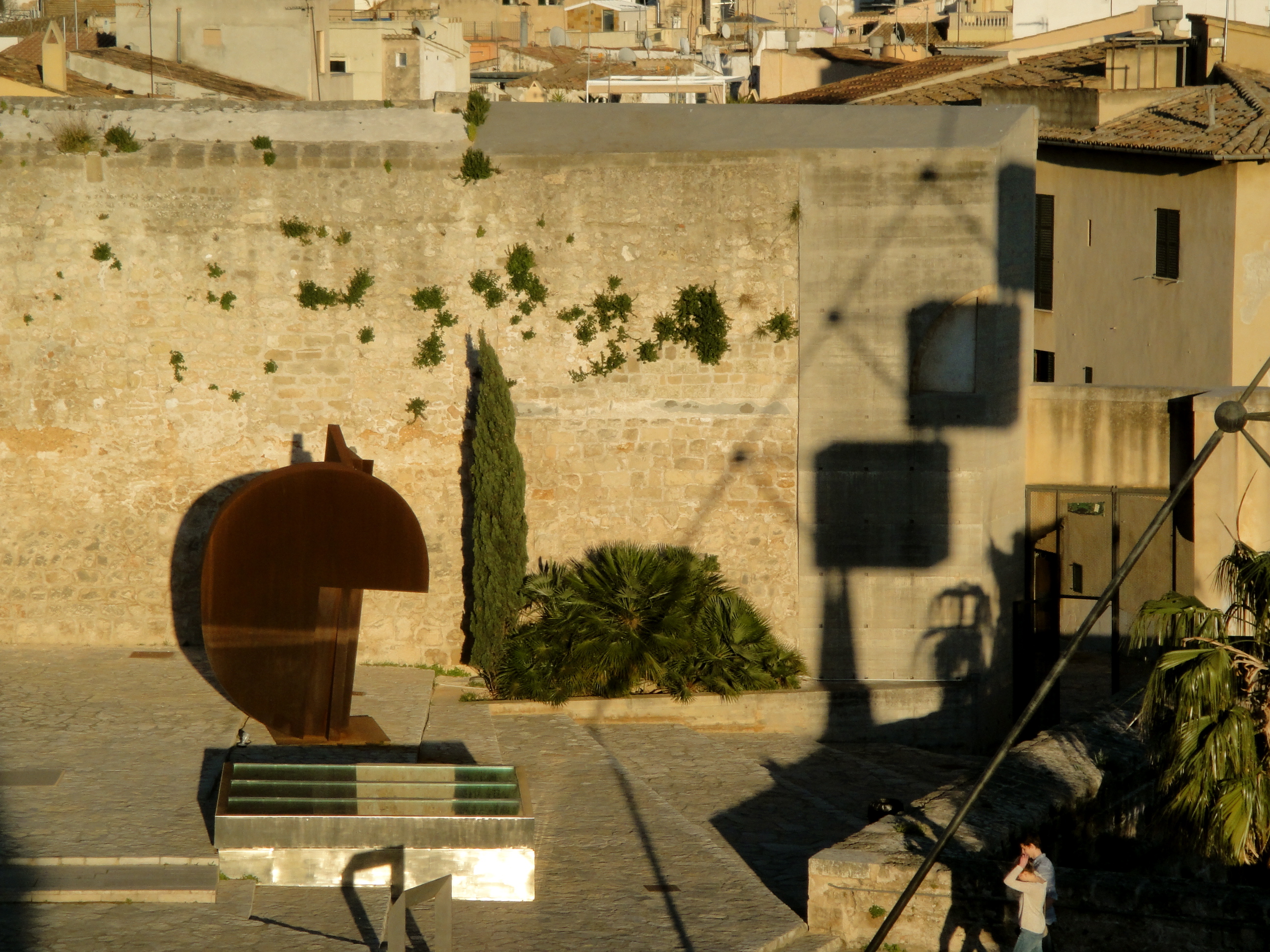
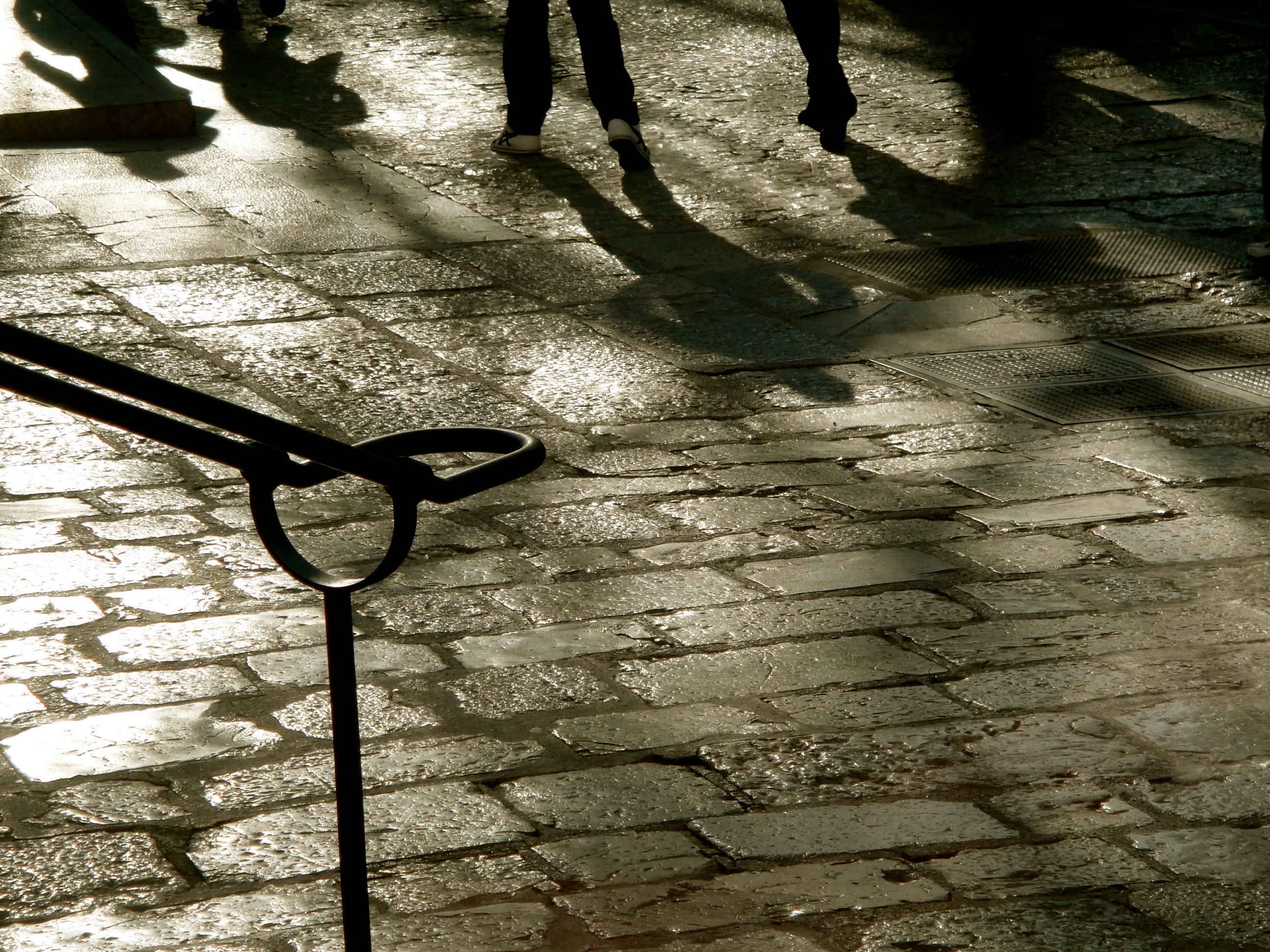
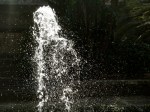
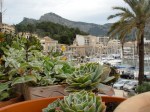
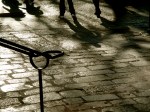
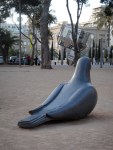
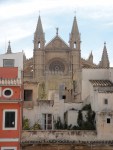
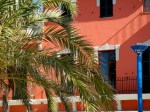
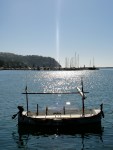
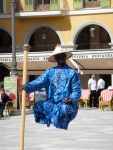
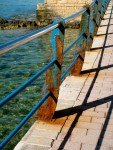
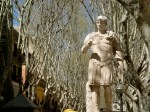
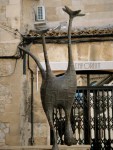
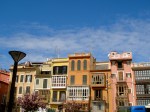
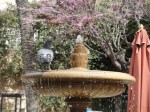
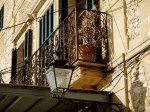
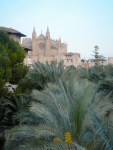
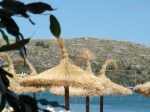
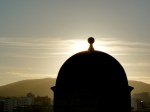
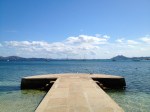
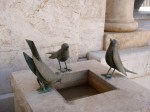
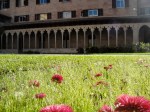
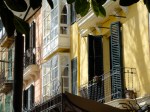
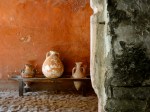
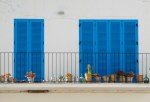
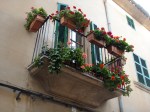
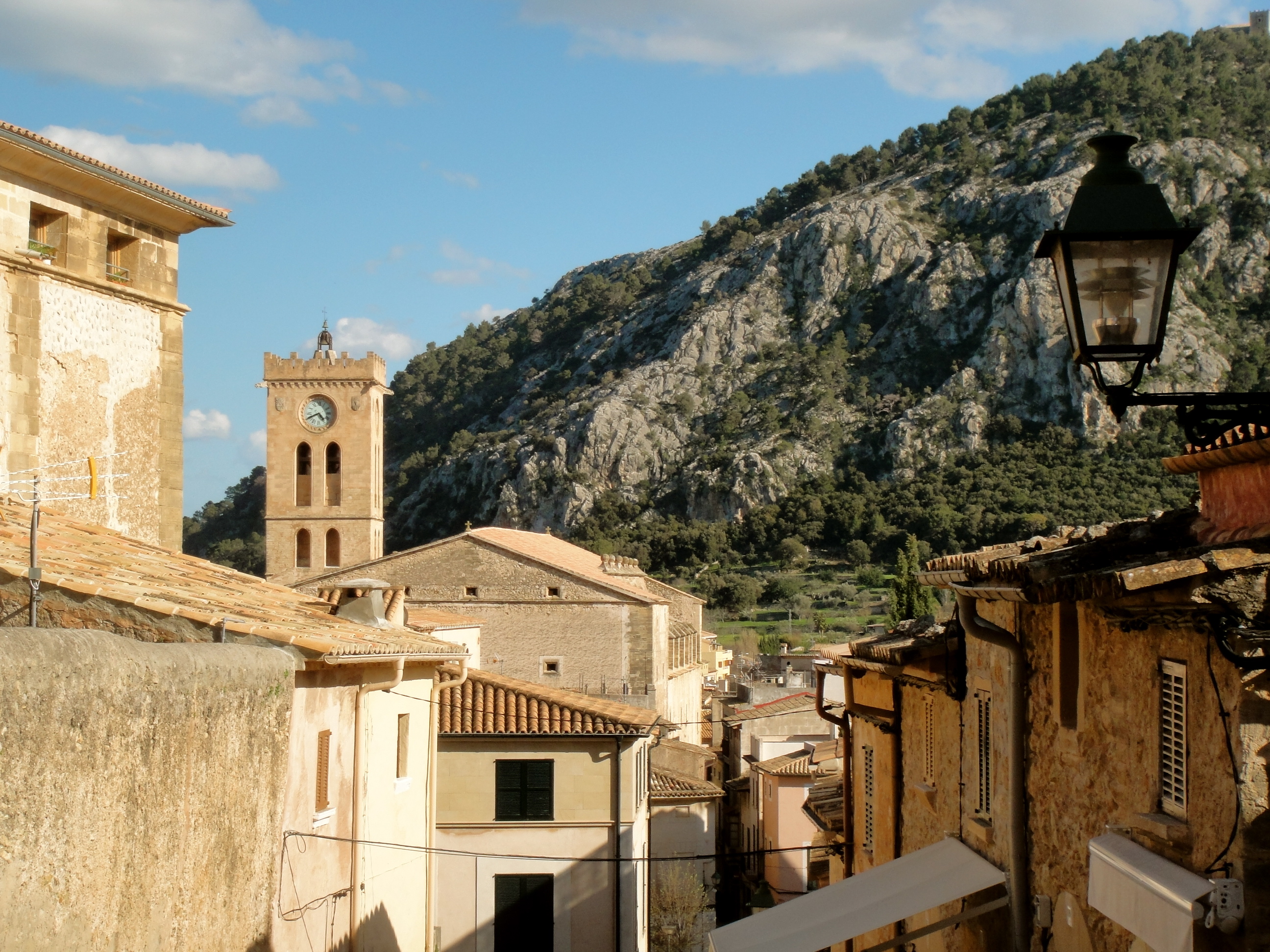
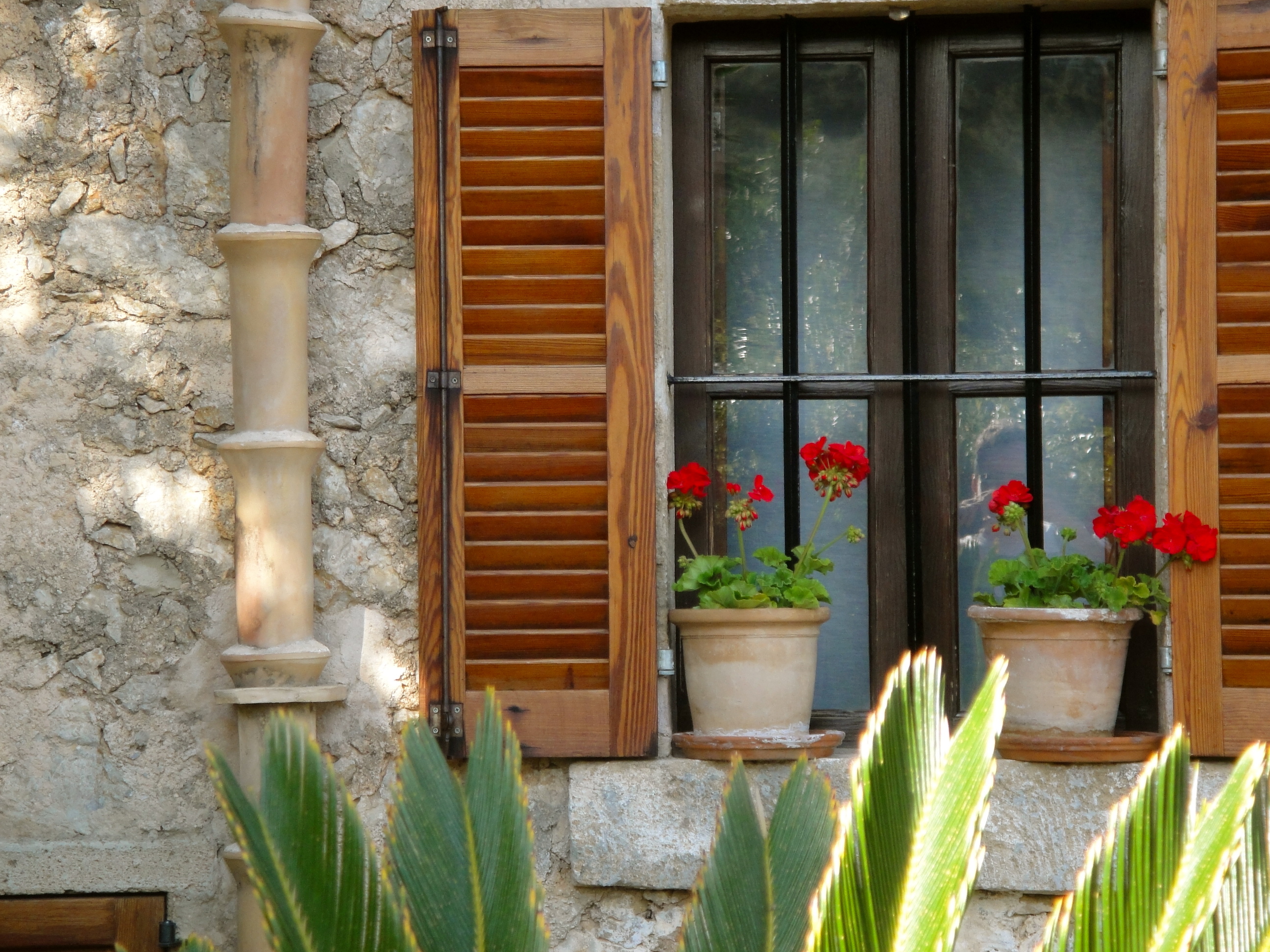
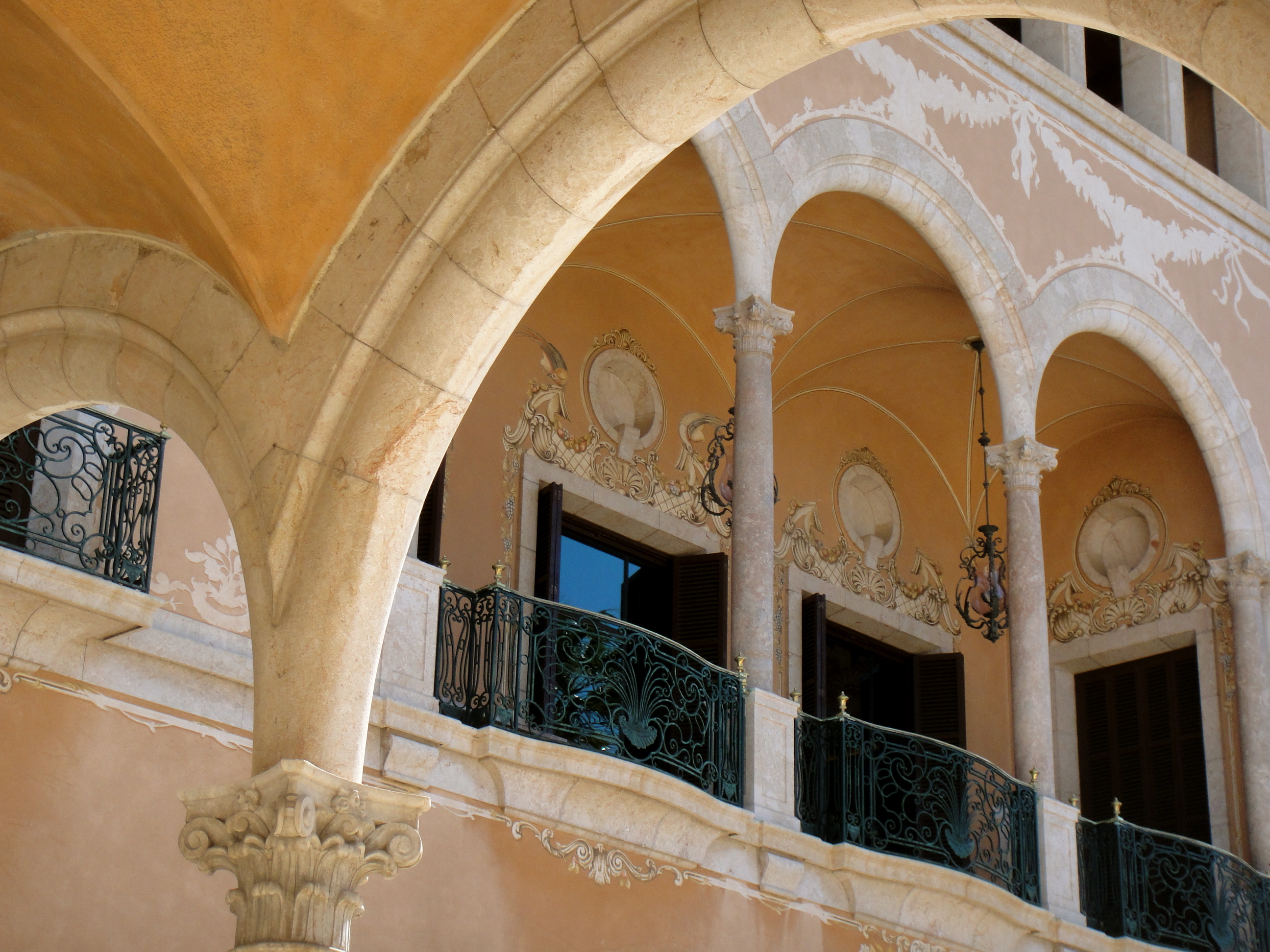
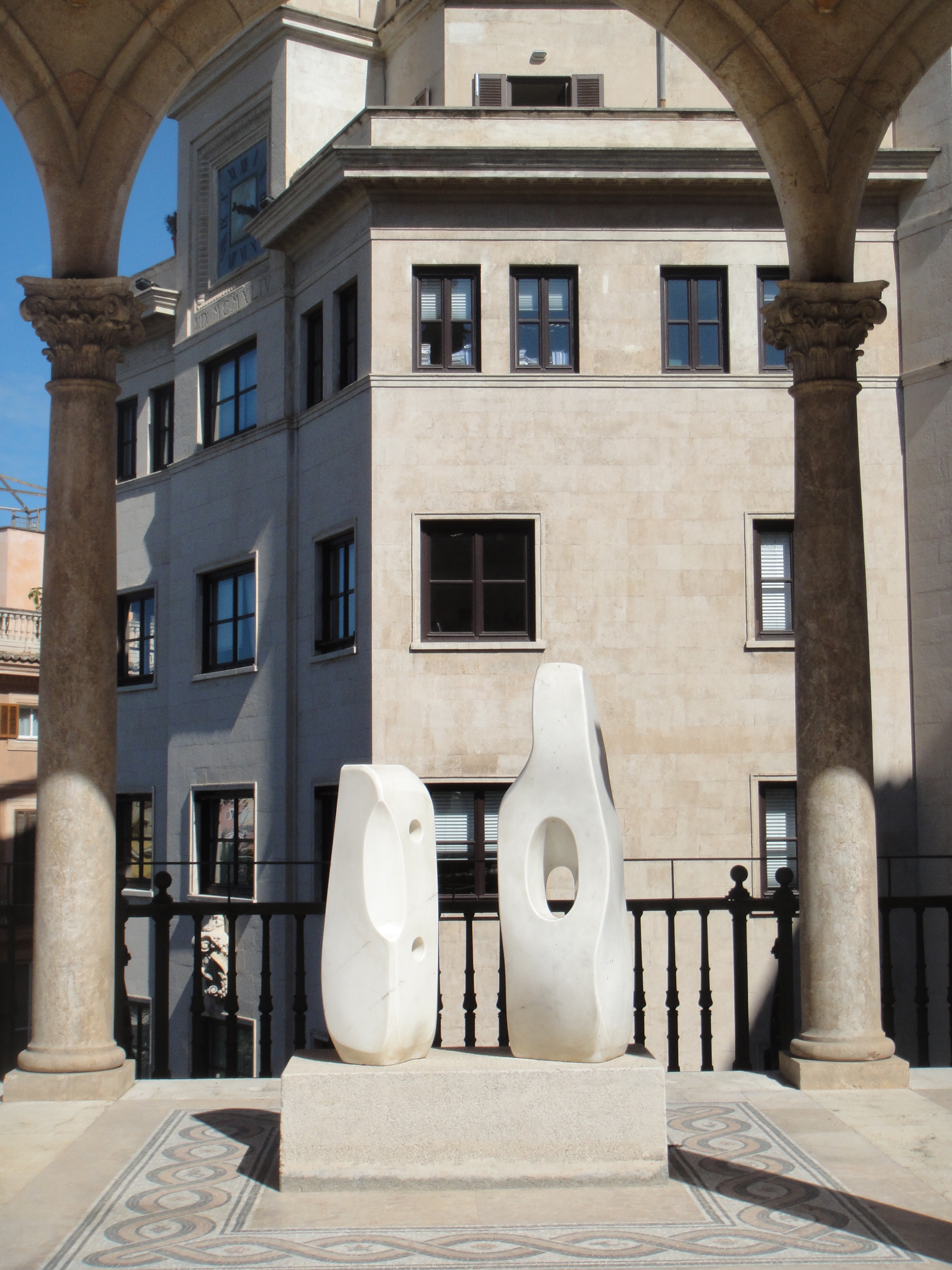
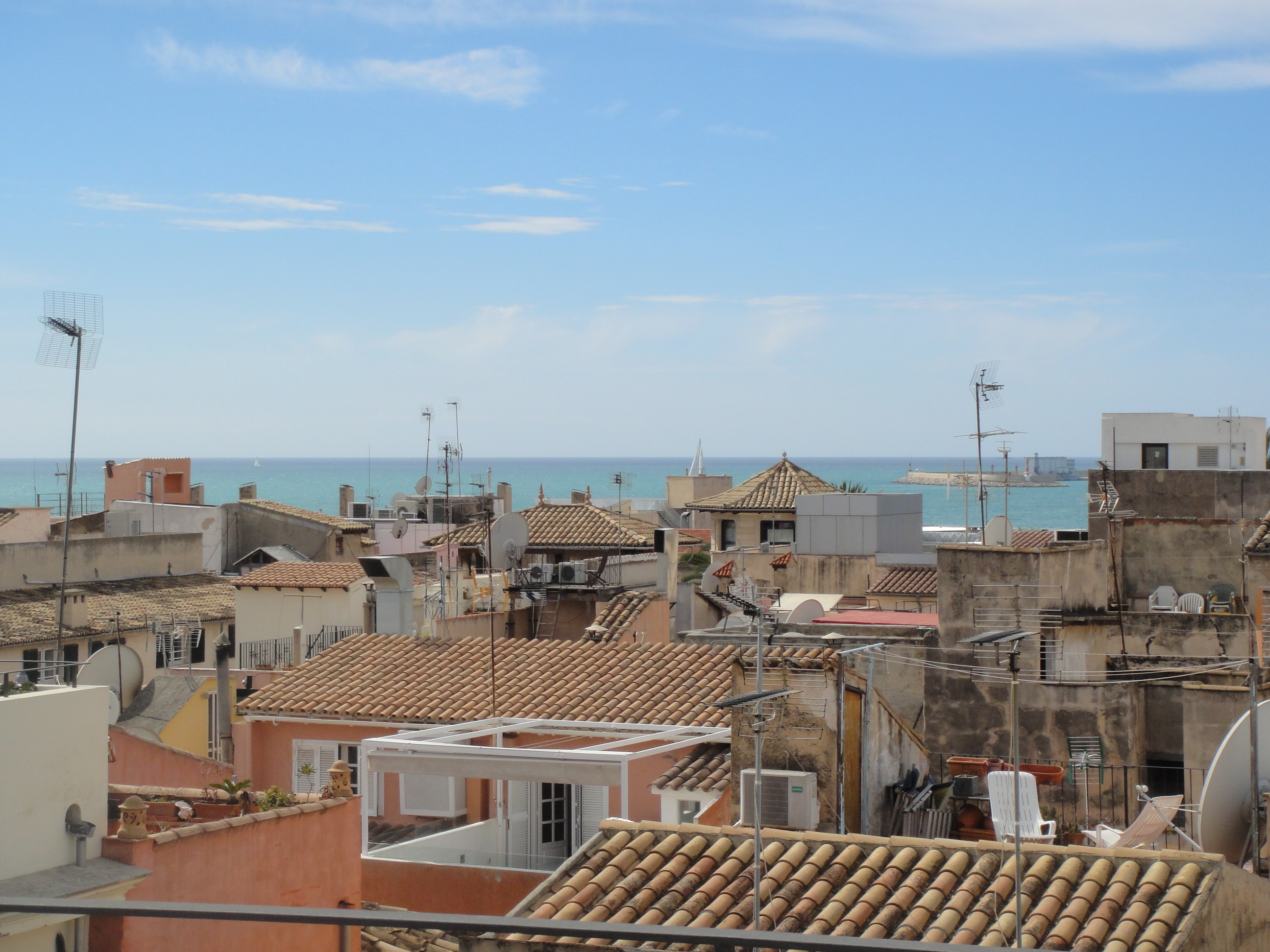
A super-season of Mallorca posts closes with a collection of some of my favourite photographs of the bunch. Consistent with the photographs posted with my 9 previous Mallorca posts, these shots are characterised by the indefatigable spread of resplendent colour across the island, by the elegant historical streets of Palma and by the luscious coastal scenery. They exude the caressing warmth of an early summer’s sunshine, creating complex images interlaced with delicate shadows which add a second dimension to the subject captured; they are a manifestation of the tradition and charm which is inherent within every narrow street or cracking green shutter, in the ritualistic Easter parades, and the dominating influence of religious ideals; and they are a an assemblage of now cherished memories, tastes and sensations, collected together for prosperity.

DSC05749 DSC07136 DSC06231 DSC07130DSC05714

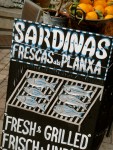
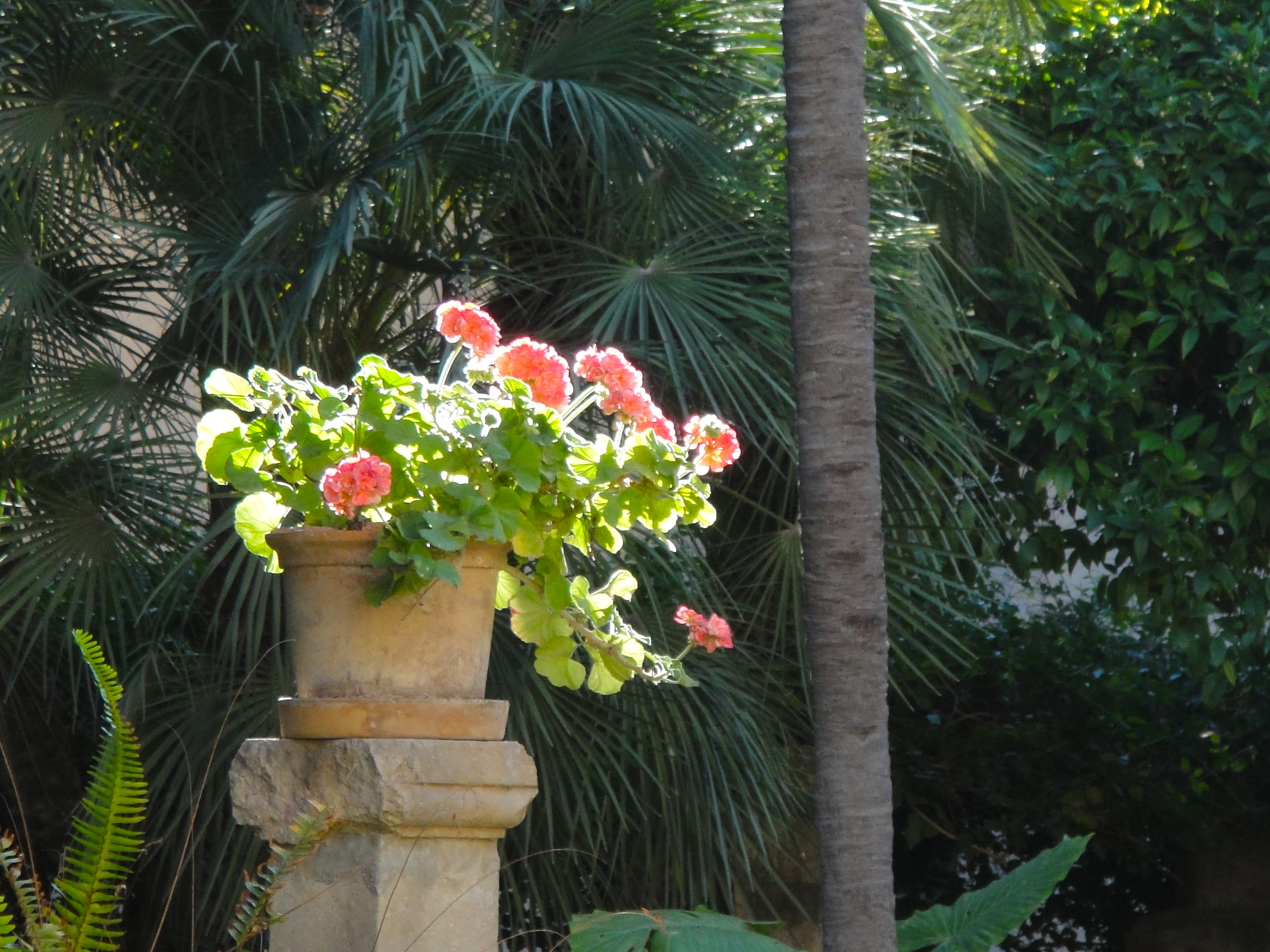
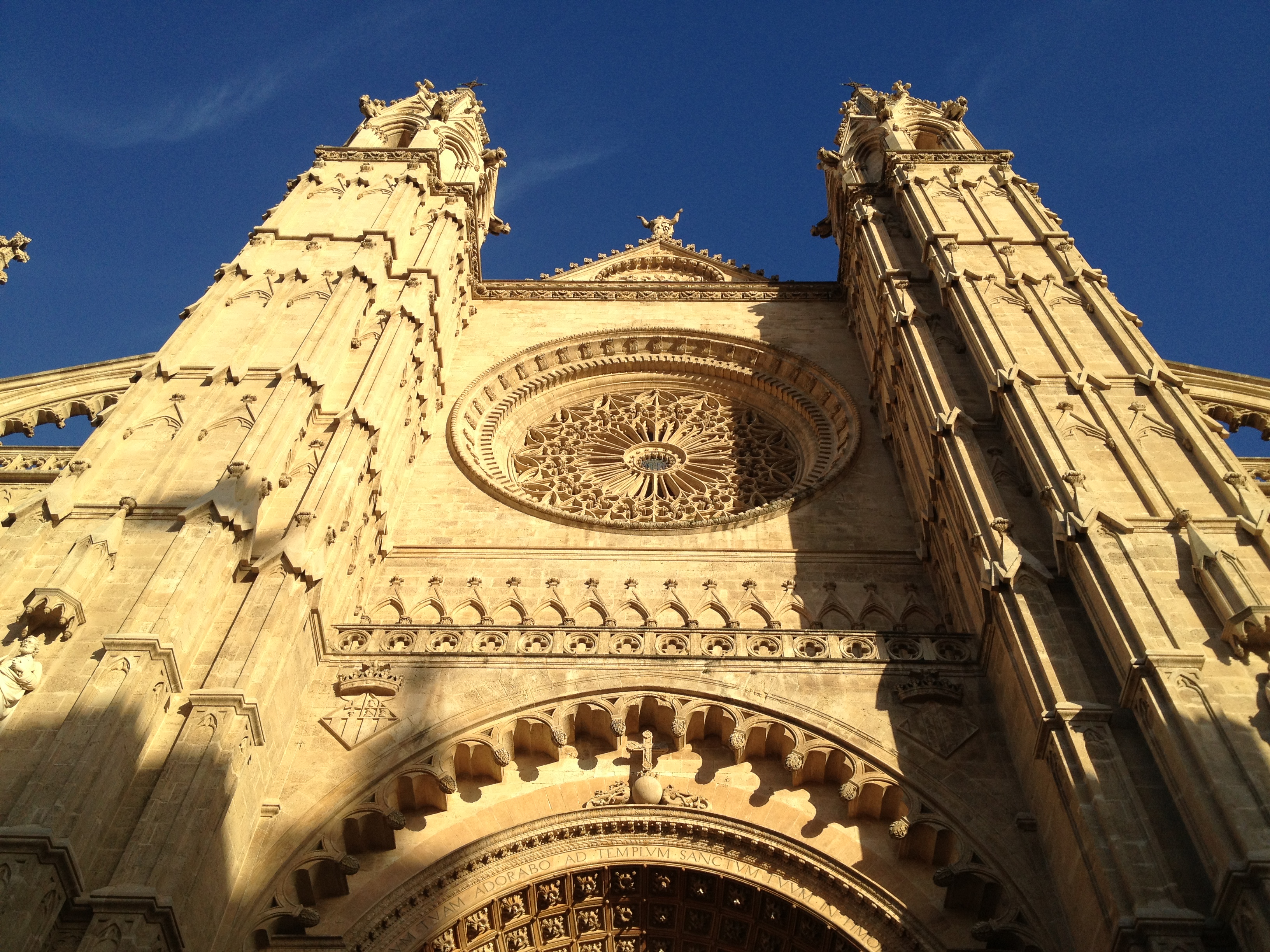
From lush cacti by the dazzling Mediterranean sea and sundrenched geraniums in a picturesque patio garden, to the perfectly geometric classical architecture of the Cathedral and the palaces of Palma, to sunsets, and plant pots and fountains and street furniture, these are the details of Mallorca which caught my eye, small hidden gems which can so often be lost in the spread of a wider landscape or ignored by comparison with the grand spectacles on offer all around: Art in themselves, but made all the more desirable within the carefully measured composition of a photograph. I hope you enjoy them as much as I did taking them.

Thanks to everyone who followed my Mallorca trip on the Daily Norm. For now, it’s back to England, the land of the Norms who are surely due a post or two. But coming soon not too long down the line: Provence. See you then!

All photos and written content are strictly the copyright of Nicholas de Lacy-Brown © 2013 and The Daily Norm. All rights are reserved. Unauthorized use and/or duplication of the material, whether written work, photography or artwork, included within The Daily Norm without express and written permission from The Daily Norm’s author and/or owner is strictly prohibited. 

Mallorca (Part IX) – Day 5: Picture-Perfect Pollença

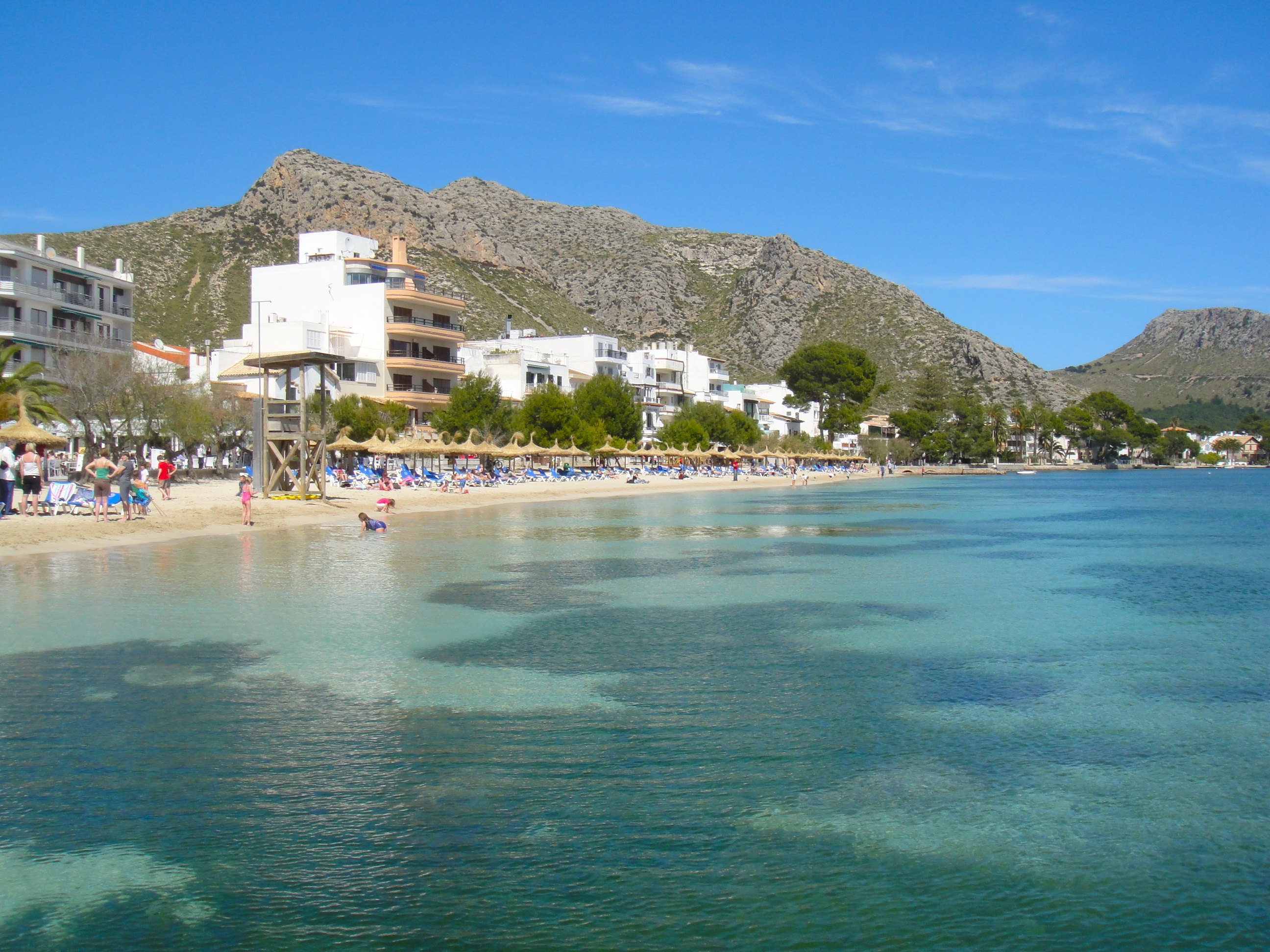
What is about to follow should carry a health warning. A place which is so inexplicably stunning that photographs can barely carry the burden of the beauty that they must nurture between their two dimensions; a landscape of such paradisal similitude that words alone can barely acknowledge the almost unfathomable idyll of this earthly heaven. What is about to follow is the town and port of Pollença on Mallorca’s Northern coast.

Since first seeing a photo of  the port of Pollença, its faultless panorama of distant misty mountains behind a crystal aquamarine sea, in a booklet advertising the various branches of my favourite of all cafés, Cappuccino Grand Café, I knew that I had to visit. But tucked away in a little natural marina, surrounded by vast rocky outcrops and large irregularly shaped mountains, and situated at the very Northern tip of the island, Pollença seemed to me as it looked: an almost unobtainable dream-town, far from reach, and always left to another trip. But on this triumphant return to Mallorca, I was determined to make the journey to this paradise on earth, no matter the effort it took, and in so doing feast my eyes on the town which had inspired writers like Agatha Christie, and artists like Anglada-Camarasa, while also enabling me to tick the final Cappuccino of Mallorca off my list – the last of the café’s branches in which I would unapologetically indulge.

DSC07150 DSC07103 IMG_4011

As it turned out, Pollença wasn’t all that difficult to get to from Palma. All it took was a direct bus service from Palma’s main transport hub in the Plaça España and a journey of around 1hr 15 mins (at the cost of around 6 euros each, one way). The only downside was that the buses weren’t regular. We took a bus at around 12.30, but were restricted to taking a return bus at around 19.15 (since the only one in between would only have given us just over an hour in the port) – however this extended stay gave us time to explore the town of Pollença in addition to the port, something which I wouldn’t have missed for the world.

Now I won’t lie. When we reached the port and got out of the bus, I wasn’t sure we had arrived in the right location. Assuming the port to be something of elysium, I was surprised when we were dropped off in a busy run of the mill seaside resort, with souvenir shops and restaurants aplenty. My partner and I exchanged seriously sceptical glances – maybe we would have to take that early bus back after all. But we shouldn’t have worried. Just a short stroll eastwards out of the centre and the beach starts getting nice – really nice. The waters make you want to rip off your clothes there and then and jump in the crystal cerulean elixir, the soft golden sand tempting you to roll about in its soft embrace, feeling its tiny clean granules slink and slip their way between your toes and into every fold of your clothes.

DSC07025 DSC07082 DSC07108

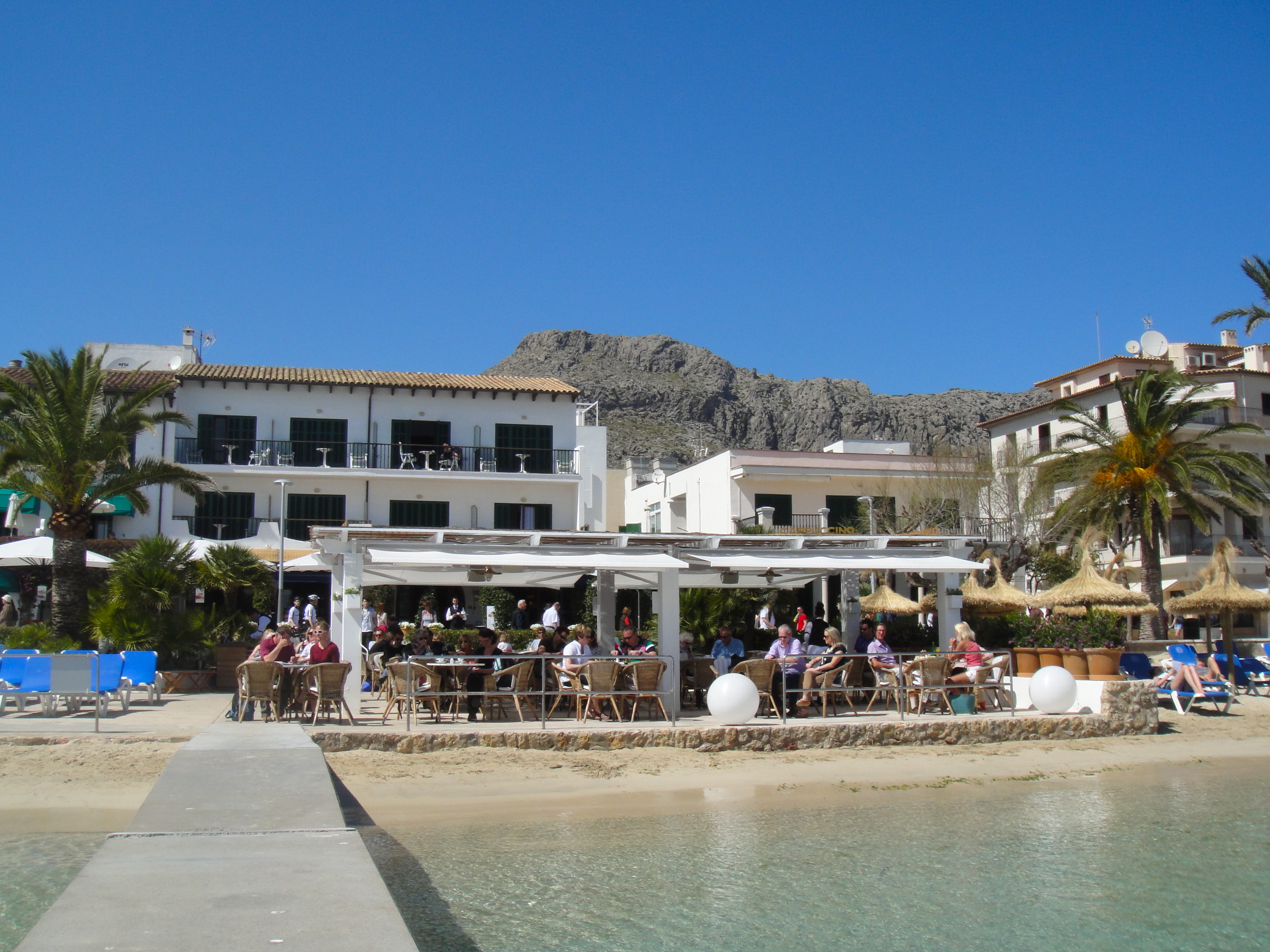
But of course we resisted, for what we saw, looming in the distance like a heavenly mirage in a dessert was Cappuccino, in a location every bit as splendid as the photographs suggested – set in a decadent old hotel directly overlooking the waterfront, and benefitting from tables jutting out to sea on a little decked pier, a pier on which, to our great fortune, a table in the front line seemed to wait for us, beckoning us to sit and enjoy what must have been one of the most stunning views I have ever enjoyed over lunch.

And so there, listening to the tranquil jazz of Pepe Link’s Cappuccino soundtrack, back on their finest albariño white wine, and tucking into yet more samplings from their faultless kitchen, we were in such an ecstacy of pleasure that for a time, we actually went silent. How on earth can life be so beautiful? Is it truly possible to be sat in front of a earthly view of paradise, benefiting from the full strength of a glorious Spring day’s sun, when only a couple of hours away in the UK, it was snowing?!

DSC07146 DSC07047 DSC07041 IMG_4010 DSC07079 DSC07028 DSC07144

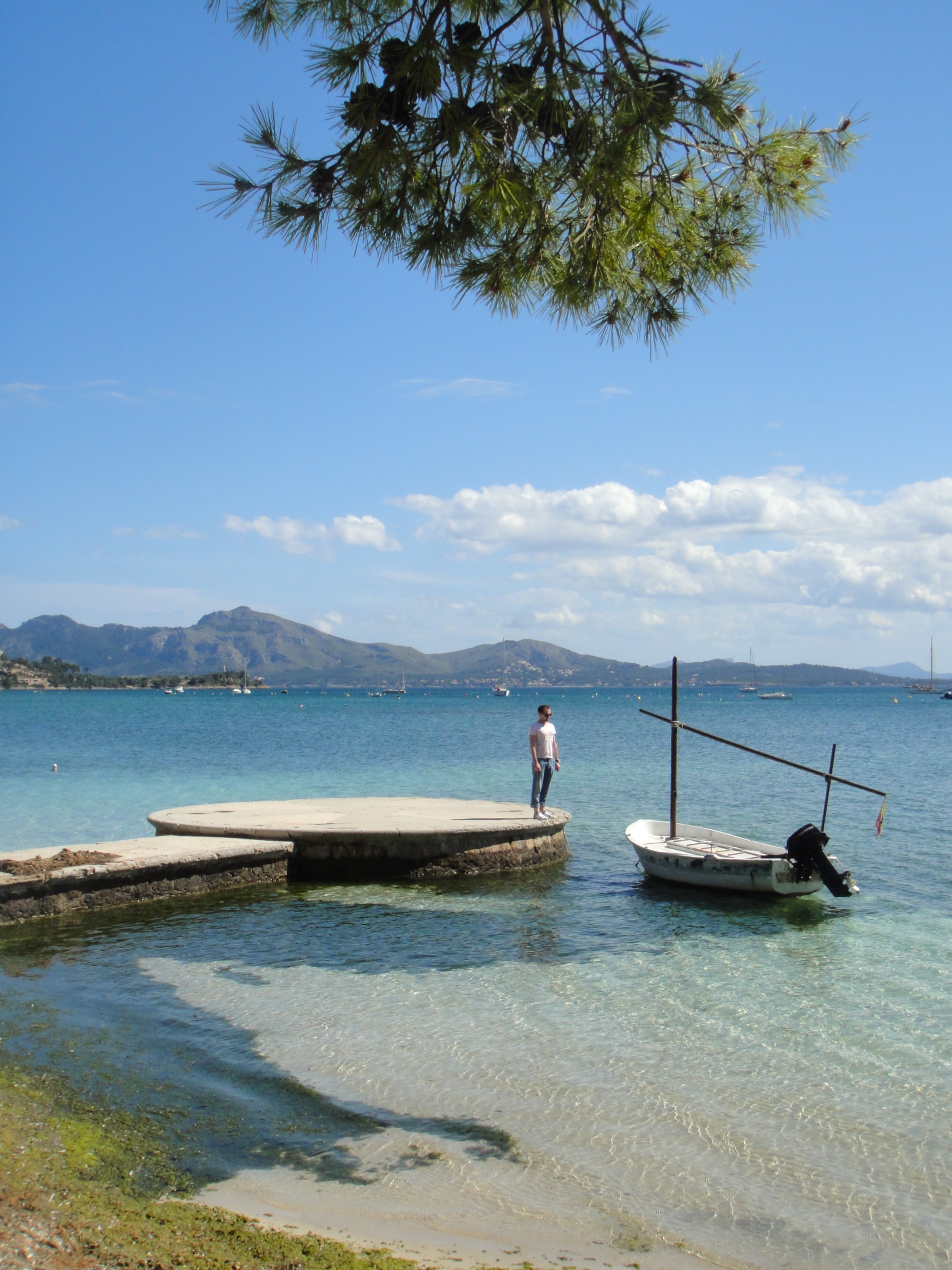
Our disbelief at the beauty of Pollença’s Cappuccino was only augmented further when, taking the “pine walk” along the almost 180 degrees curve of the bay, we found ourselves ambling along a path dappled with sunshine as it bled through the branches of lush, hanging pines extending over the sea, contrasting in deep verdant tones against the pure paradisal blues of those waters. I have never seen sights like it.

DSC07099 IMG_4042 DSC07078 DSC07121 DSC07105 DSC07112 DSC07090 DSC07128

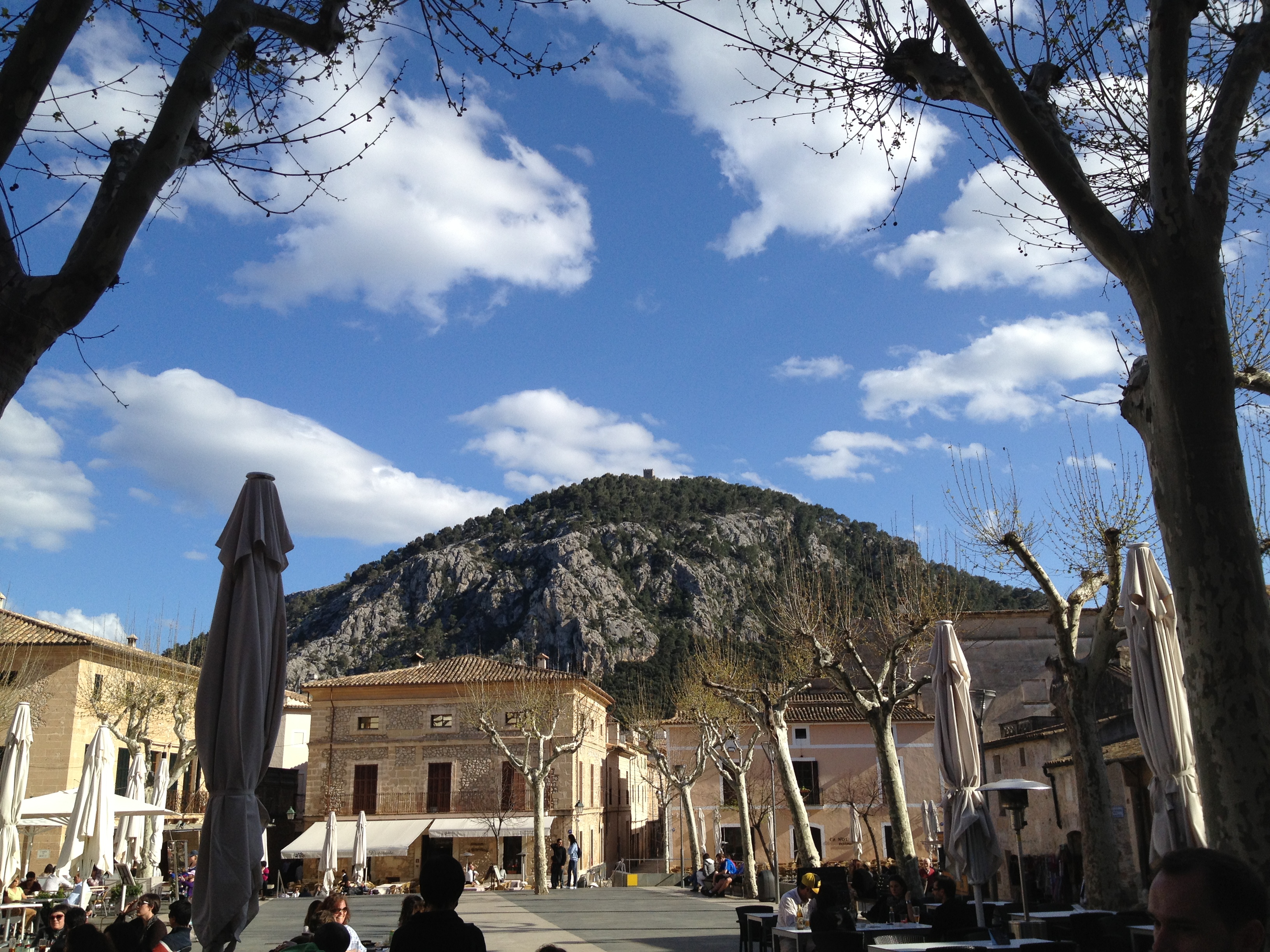
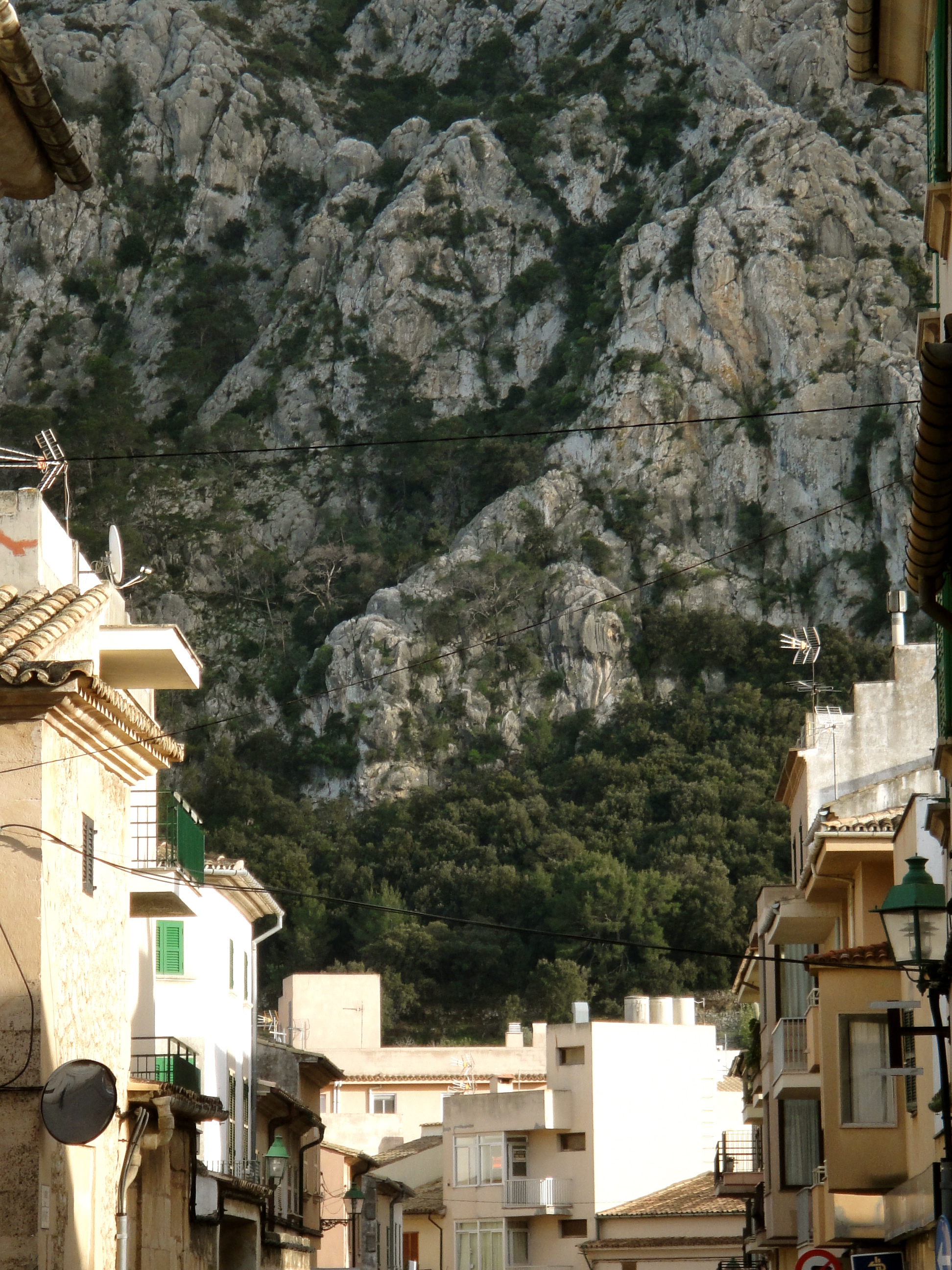
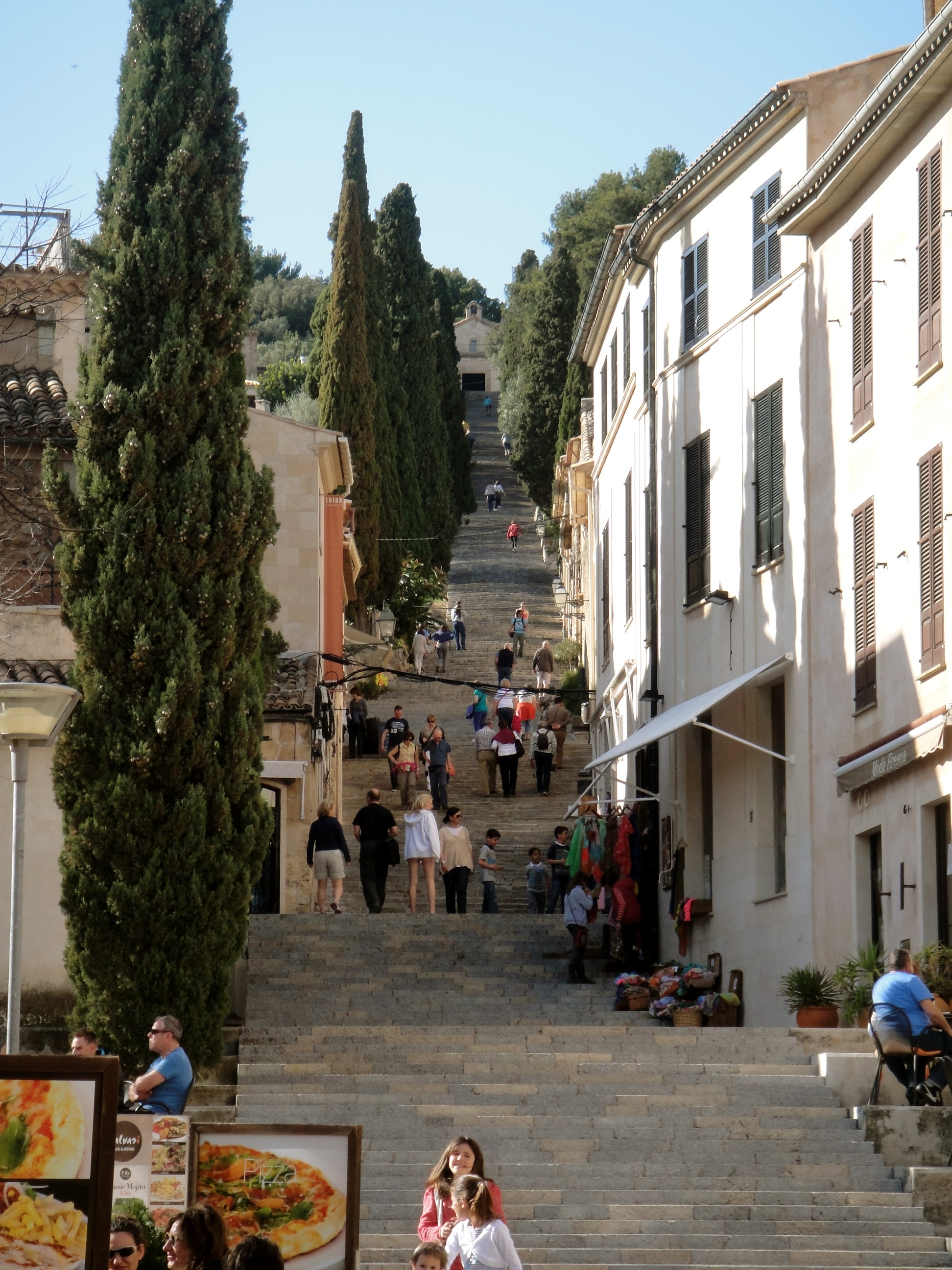
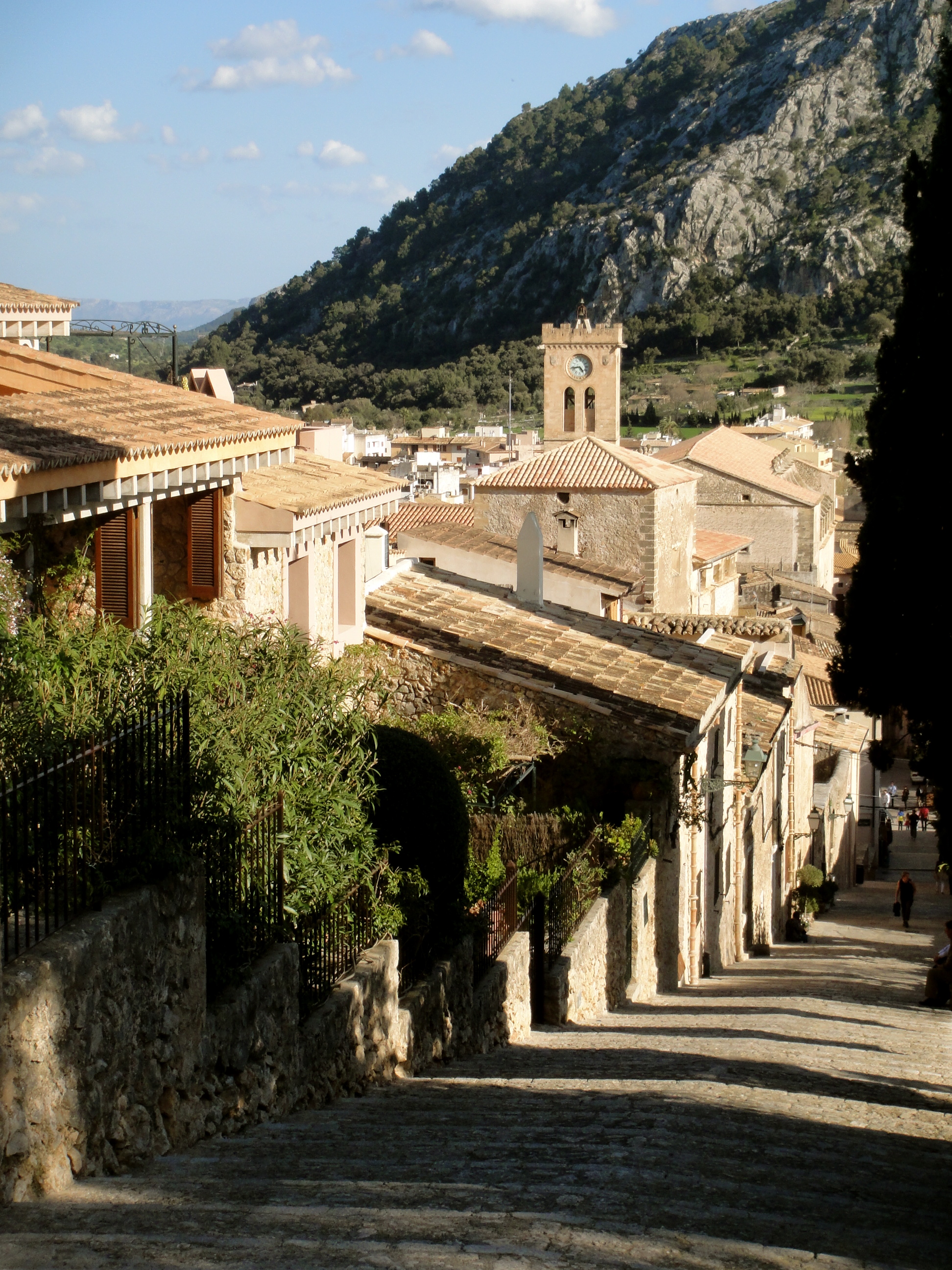
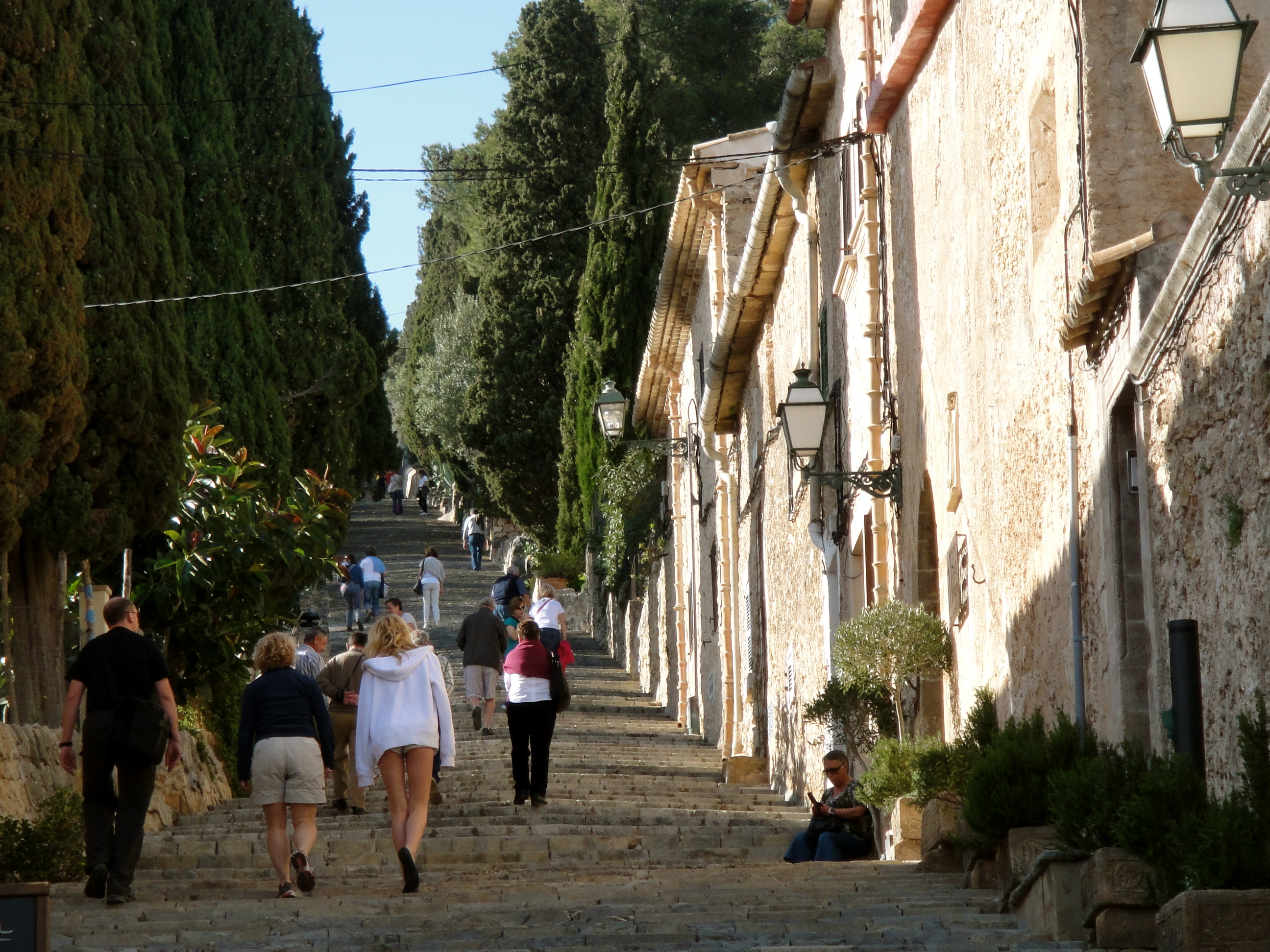
While we could easily have stared at the port of Pollença all day, time was inevitably ticking fast, and with only 2 hours until that bus back to Palma, we thought we had better visit the town of Pollença itself. Situated around 6km inland from the port, Pollença is a small labyrinthine town which benefits from a stunning situation against a backdrop of foreboding granite mountain cliffs, rising like a volcanic explosion out of the ground behind the town. At its centre, a charming Plaça Major is full of bustling little cafes and nobbly looking trees, while all around, little narrow streets are flanked by green shutters and cosy stone houses. But undoubtedly the most stunning sight of Pollença, and something which for us was completely unexpected, is the Escalera del Calvari, a steep straight 365-step cypress-lined stairway which leads up to a simple chapel and some pretty spectacular views. The staircase is understandable the town’s most treasured landmark and makes for something of an aweinspiring sight when you turn out of the Plaça Major and see the steps looming in the distance.

IMG_4052 DSC07167 DSC07200 DSC07162

Of course as soon as we saw the stairs, we knew we could not leave Pollença without reaching the top, and that is exactly what we did, bounding at first up those steps before slowing down to an agonising but thrilling climb, turning every few steps to see the view of the town, transforming from stone houses to roof tops, flanked more and more by the bigger and stunning mountains as we got higher – all the way to the top where the view, stretching all the way out to sea was just phenomenal.

DSC07181 DSC07180 DSC07165DSC07170

And it was up there, at the top of the Calvary stairs, that I had a realisation of just how perfect this trip to Mallorca had been, each day an adventure of some new and beautiful location, a trip on which Palma had become like a home to us, and Mallorca had opened its arms to us in a gastronomic, artistic and historical embrace. And here we were, each day getting better and better until, at the very end, we climaxed at this highpoint of the trip, both physically and metaphorically, at a high point of the island, looking over the roof tops of beautiful Pollença, and with a trip of truly treasured memories now behind us.

And as for the journey down – while yes, it felt almost symbolic, forewarning of our return home to reality the following day, we were also able to stride confidently, knowing for certain that this will not be our last ascent of that stairway, nor our last adventure on this wonderful island. With so much more to explore, and such joy in the repetition of revisiting those places we have loved so much, how could we not return to the incredible island of Mallorca?

DSC07183 DSC07178 DSC07182

All photos and written content are strictly the copyright of Nicholas de Lacy-Brown © 2013 and The Daily Norm. All rights are reserved. Unauthorized use and/or duplication of the material, whether written work, photography or artwork, included within The Daily Norm without express and written permission from The Daily Norm’s author and/or owner is strictly prohibited. 

Mallorca (Part VII) – Day 4: Palma, city of art

After two days of travel both Westwards along to Andratx, and Northbound along the rickety mountain pass of the Ferrocarril de Soller, we thought that it was probably about time we stayed put in Palma for once. After all, the city is close to bursting at the seams with cultural, gastronomic and historical attractions for the discerning city visitor, so it was only right that we should spend a day pursuing such pleasures (also, being that the Saturday was the one day between an almost solid block of Easter public festivals when all the museums were actually open, we thought we had better make the most of it).

I’ve already mentioned that Palma is a city which is exceptionally well-endowed with art aplenty, especially in proportion to its size. In Palma, not only do you have the temple to contemporary and modern art that is Es Baluard, but in addition there are two museums founded by the formerly super-rich March family, one by Juan March and the other by his son Bartolomé, both of which boast an impressive array of contemporary art; there are various bank-owned foundations, displaying, usually for free, their own permanent collections and temporary exhibitions; and in addition there are a spattering of privately owned art galleries and collections rising up all over Palma’s elegant historic streets.

The Palau March
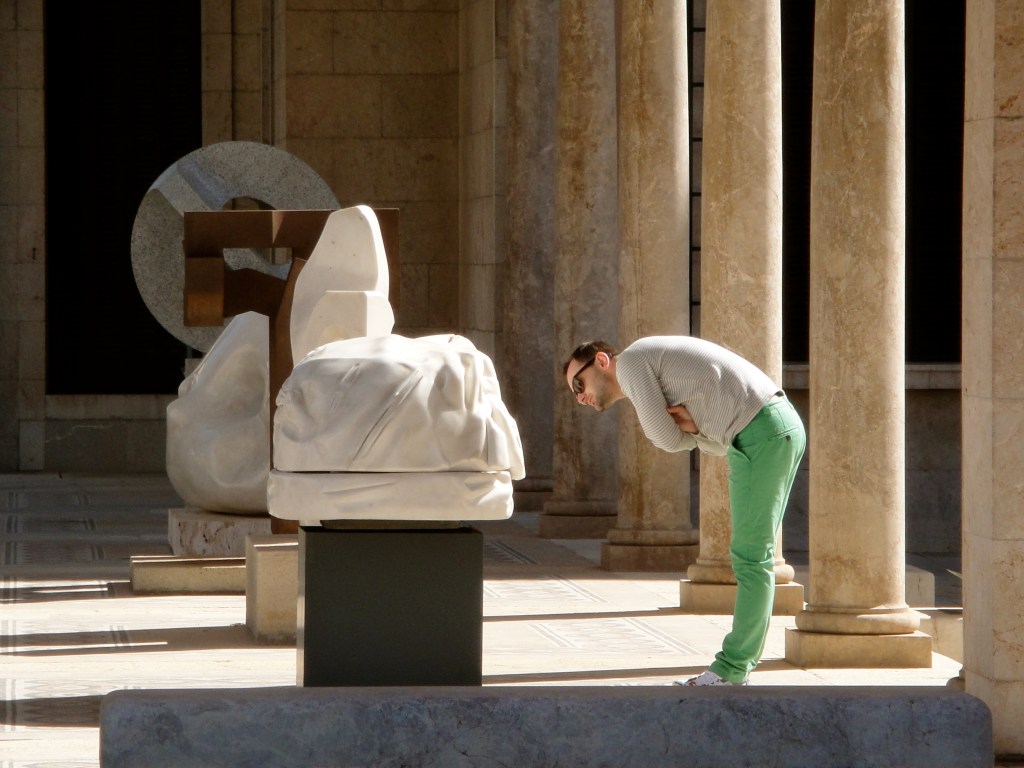
The Palau March

Sculpture out on the terrace of the Palau March

Sculpture out on the terrace of the Palau March

DSC06715

It was to the two March centres of art that we ventured first, starting with the impressive Barbie pink, colonnaded private palace of the Bartolomé March household, the Palau March, which sits astride both the Almudaina palace and the Cathedral, thus demonstrating from its position alone just how unfathomably rich Señor March must have been.

Upon entering the palace, you arrive on an open colonnaded terrace with commanding views over the Avenida Antoni Maura and the port beyond it, views which could however be missed, such are the array of attention-grabbing contemporary sculptures on display. Amongst March’s fine collection are some of the biggest names of 20th century sculpture, from an organic, curvaceous twin structure by Barbara Hepworth, to an impressive bronze torso by Rodin. However, of the various sculptures on show, our favourite had to be the sculpture by Joan Robert Ipousteguy (Untitled, 1920), an entirely captivating piece, were an almost fused interlocked embrace of two lovers carved in a smooth rounded marble is interrupted by the odd hole or chasm, inviting the viewer to peer into the sculpture for the details which lay, almost hidden from view, inside the marble, such as the passionately intertwined tongues of the kissing lovers, to a view of a small air pocket, seemingly created in the gaps between their bodies, in which defined body parts can just about be made out. How the sculptor achieved such startling detail in the most inaccessible of places I will never know.
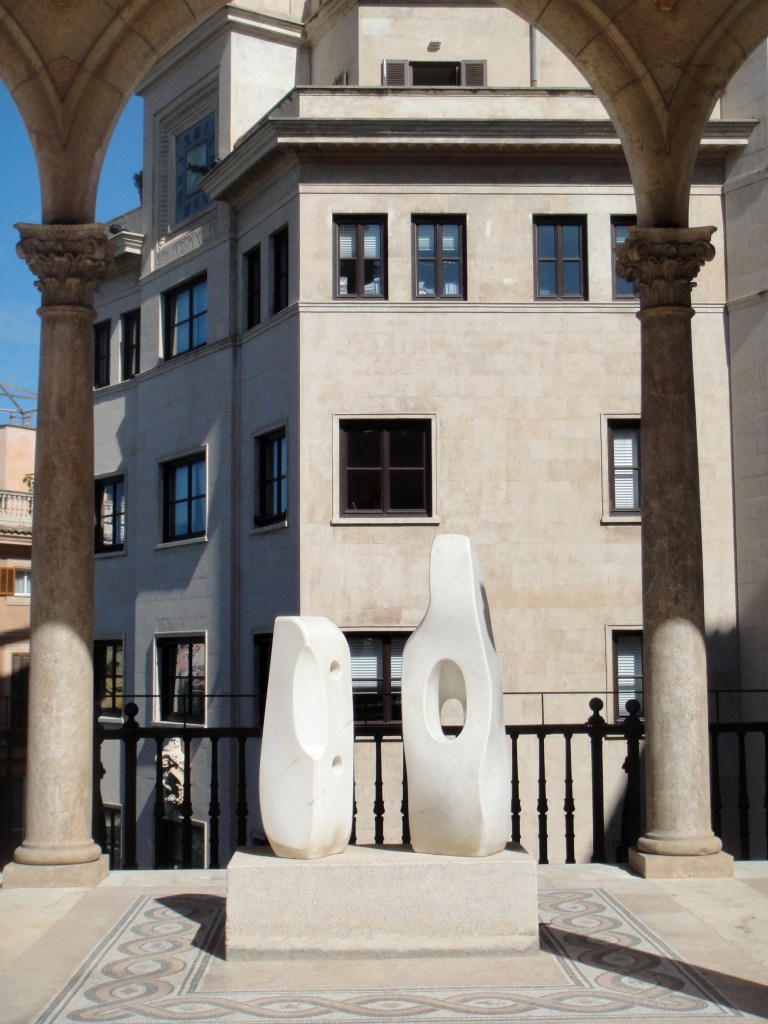
Hepworth, Autumn (1966)

Hepworth, Autumn (1966)

Joan Robert Ipousteguy (Untitled, 1920)

Joan Robert Ipousteguy (Untitled, 1920)

Inside the Ipousteguy

Inside the Ipousteguy

Rodin torso

Rodin torso

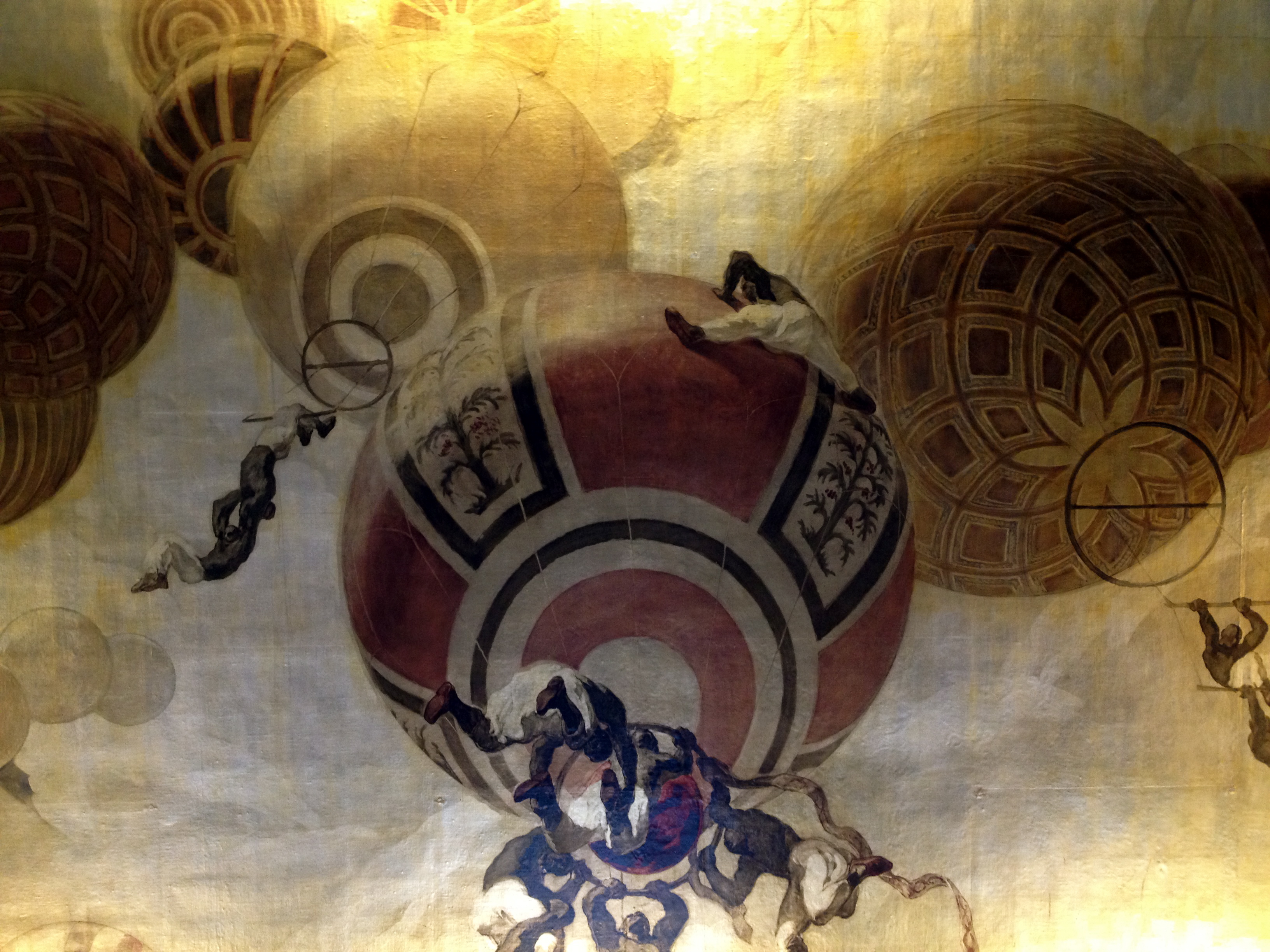
Having been enthralled by the sculpture on the outside, we were equally captivated in the inside of the palace, first by a vast 18th century Neopolitan nativity scene, full of fantastic details, including scenes of whole villages, shops, dwellings and landscapes asides from the main nativity scene; second by a collection of superb Dali print works, which were religiously charged throughout. Then, moving upwards through the palace, we gazed in wonder at some of the ceiling frescos which had been painted there, as recently as the 1940s. One scene in particular, in which a series of gymnasts hanging off variously sized hot air balloons were rising and falling in the illusionary airspace, was particularly original in its depiction – it certainly beats the normal scenes of cherubs and angels.

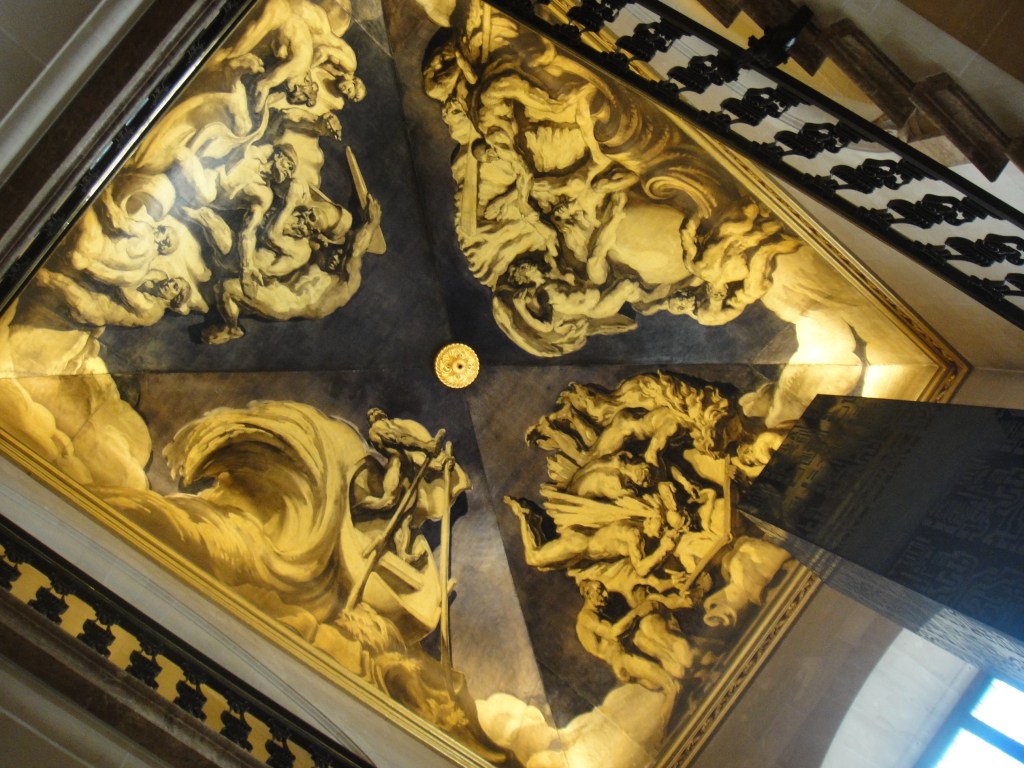
IMG_3883 DSC06725

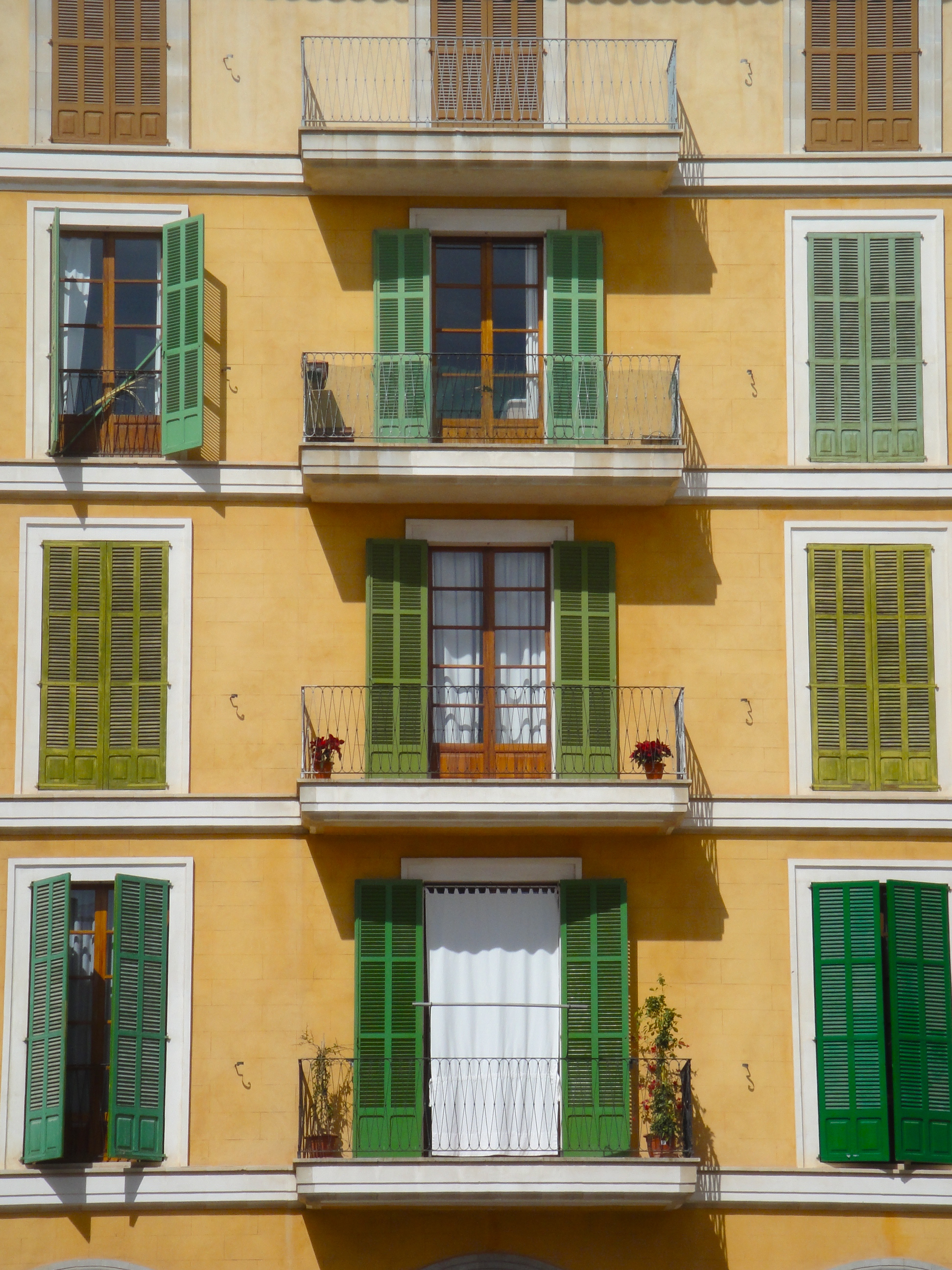
Leaving the palace, and soaking in sunshine over a cafe on a cobbled terrace beyond, we headed up through the colourful yellow and green Plaça Major, full of street performers and excitable tourists and locals alike, past Palma’s ancient olive tree, and onto the second of the March cultural foundations, this time founded, from what I can gather, by Bartolomé’s father, Juan March. His collection forms the Museum of Contemporary Spanish Art a superb collection of the Spanish greats such as Dali, Picasso and Miro as well as many lesser well-recognised names. While the collection is quite small, it’s free to see, and held within the beautiful old palace where Juan March was born.

The Plaça Major
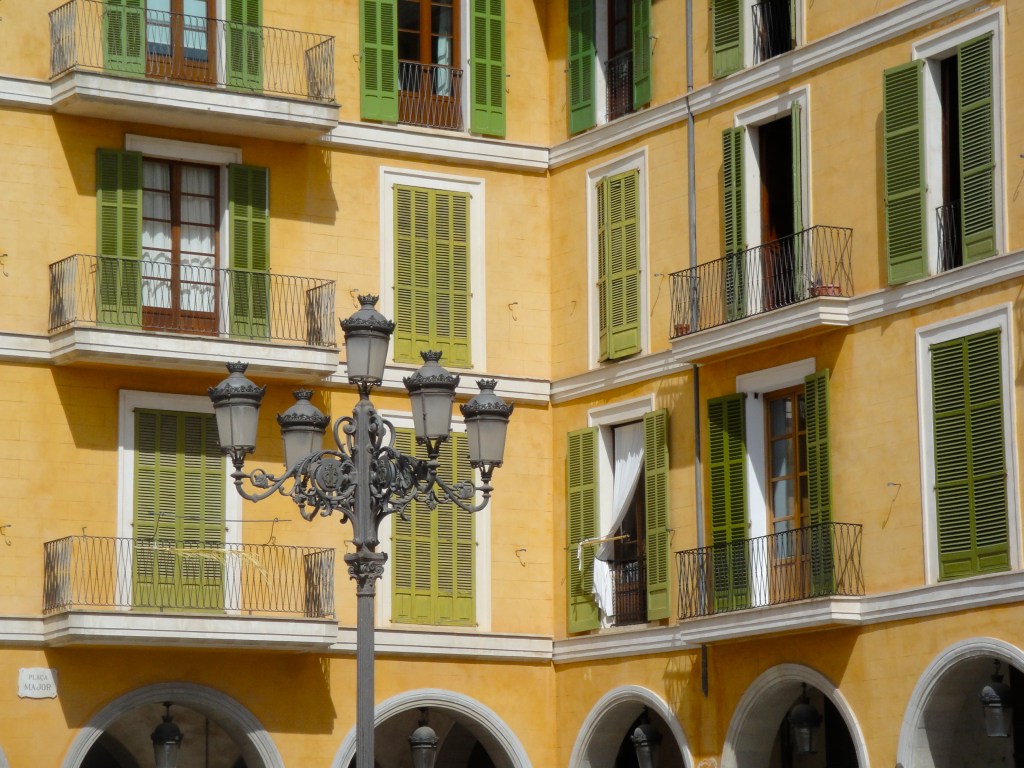
The Plaça Major

DSC06462 DSC06458

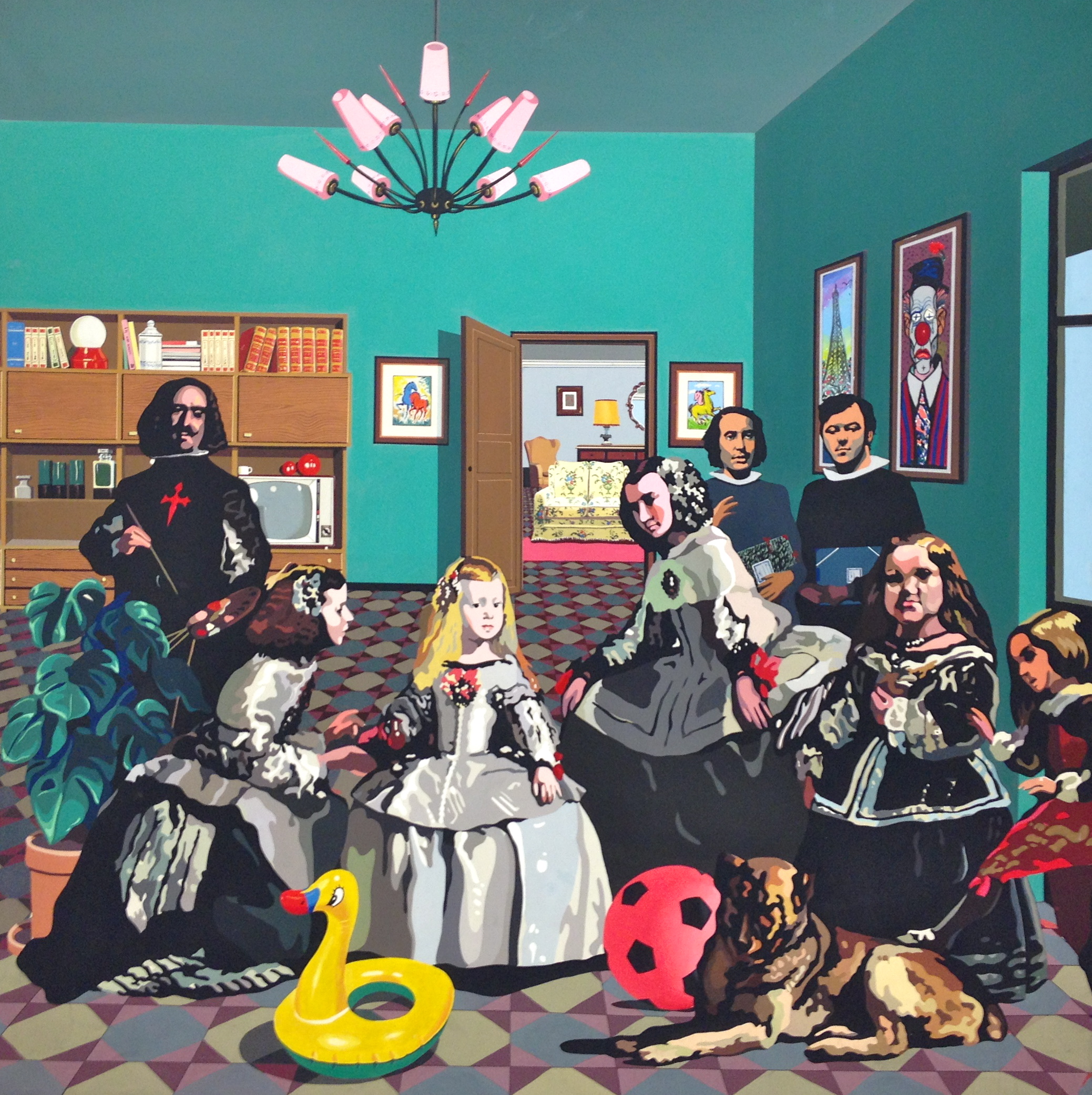
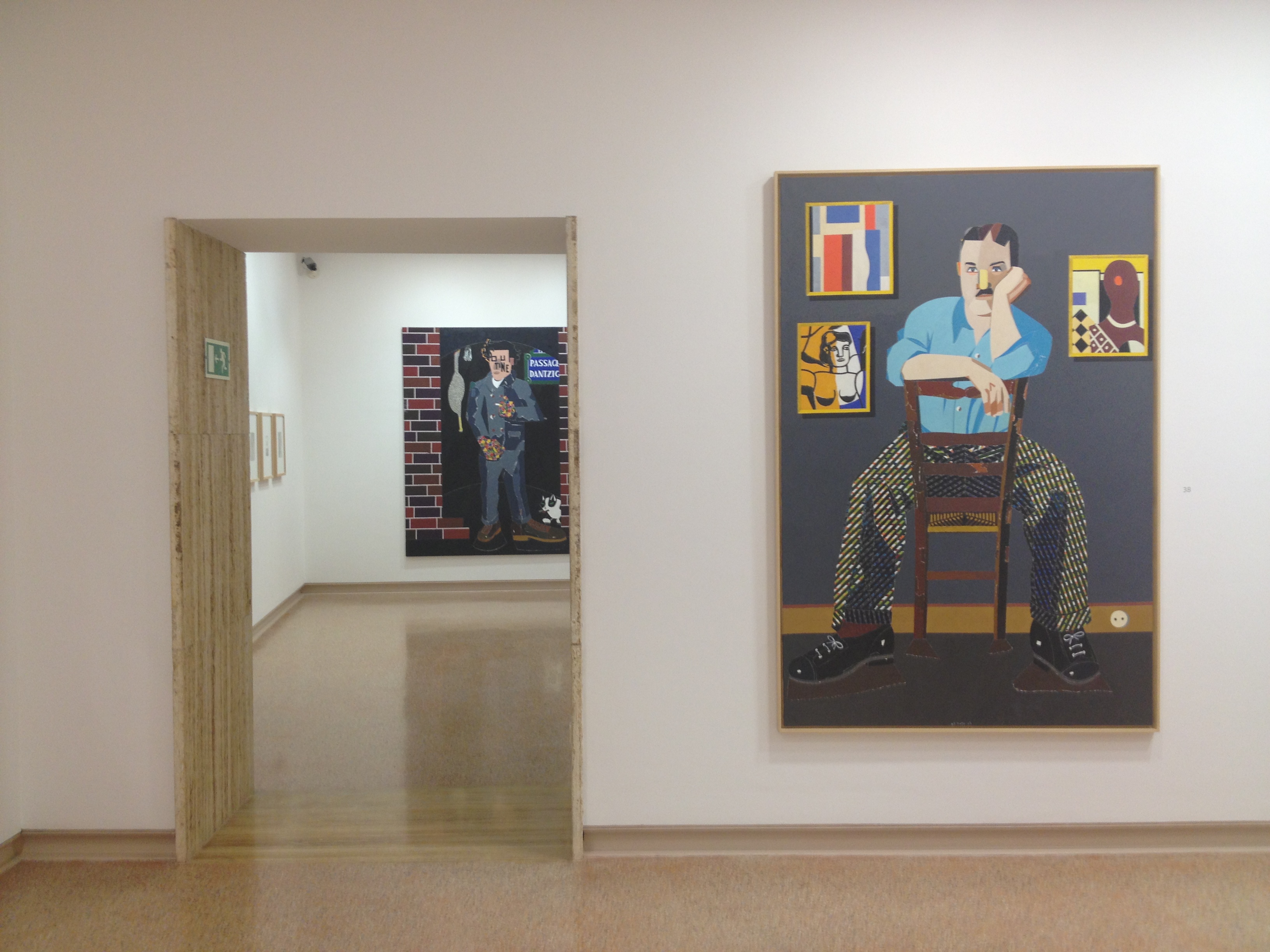
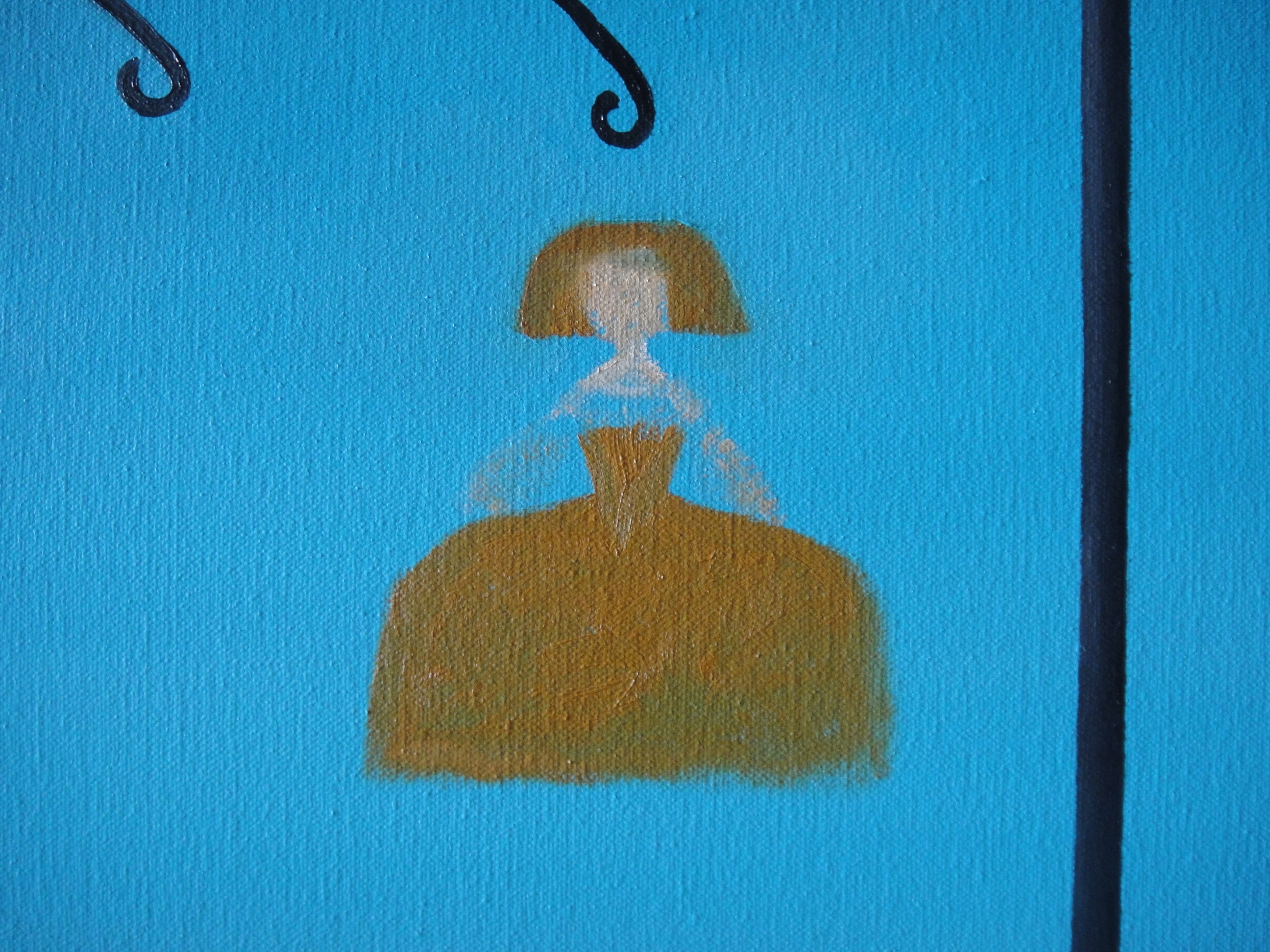
My particular favourite of the collection was the transformation of Velazquez’s famous Las Meninas into a modern domestic scene by Spanish art duo, Equipo Cronica. As I have since discovered, this is one of many reimaginations that the duo have made of Las Meninas and other iconic Spanish works. We also thoroughly enjoyed a temporary exhibition of the work of artist Eduardo Arroyo, who through both photography and painting created a whole series of magnificent portraits, of both famous artists and personalities, and people personal to his own life. I particularly enjoyed his photographs, covered with round stickers to create a polka-dot veil, semi-obscuring the portrait, a little like Lichtenstein but taken one step further. Also particularly original and whimsical were his painted parodies of artists such as Van Gogh and Fernand Leger.
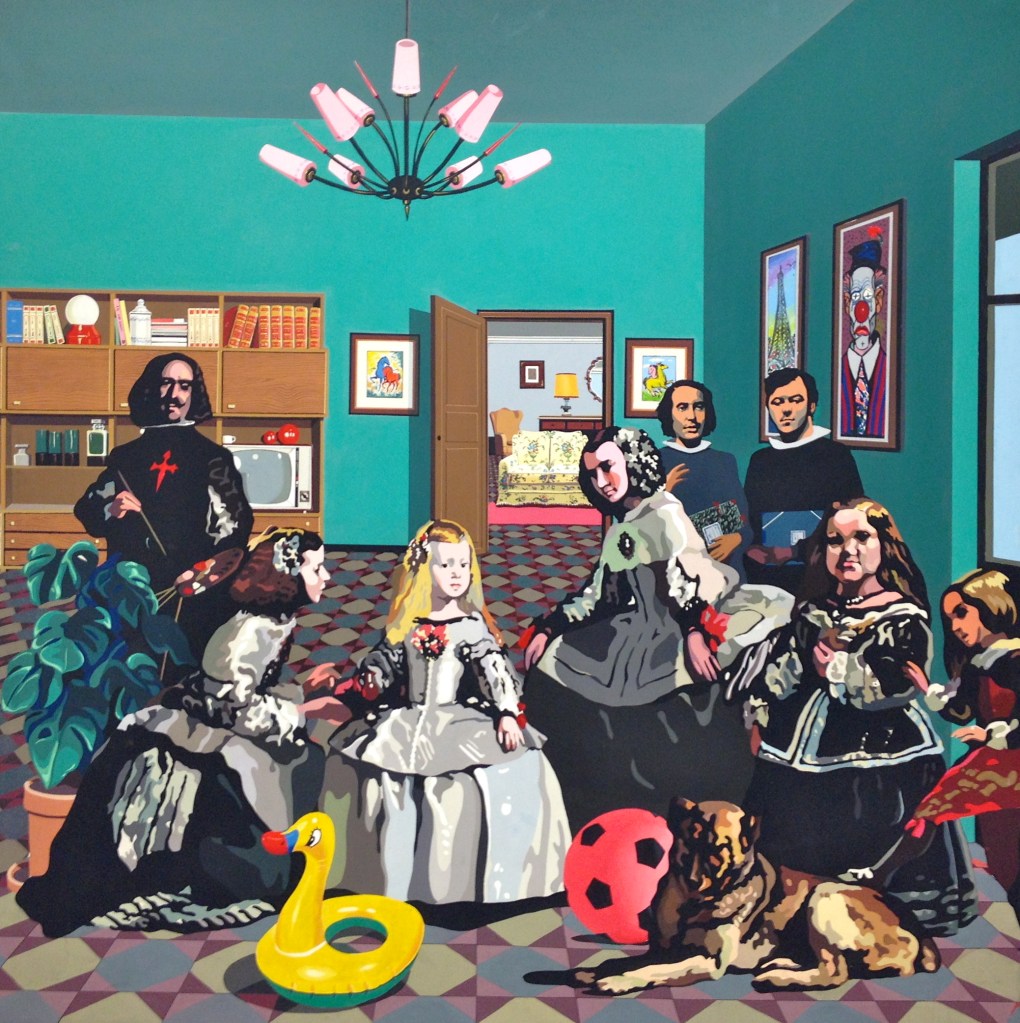
Equipo Cronica, The Little Room (1970)

Equipo Cronica, The Little Room (1970)

The Eduardo Arroyo exhibition
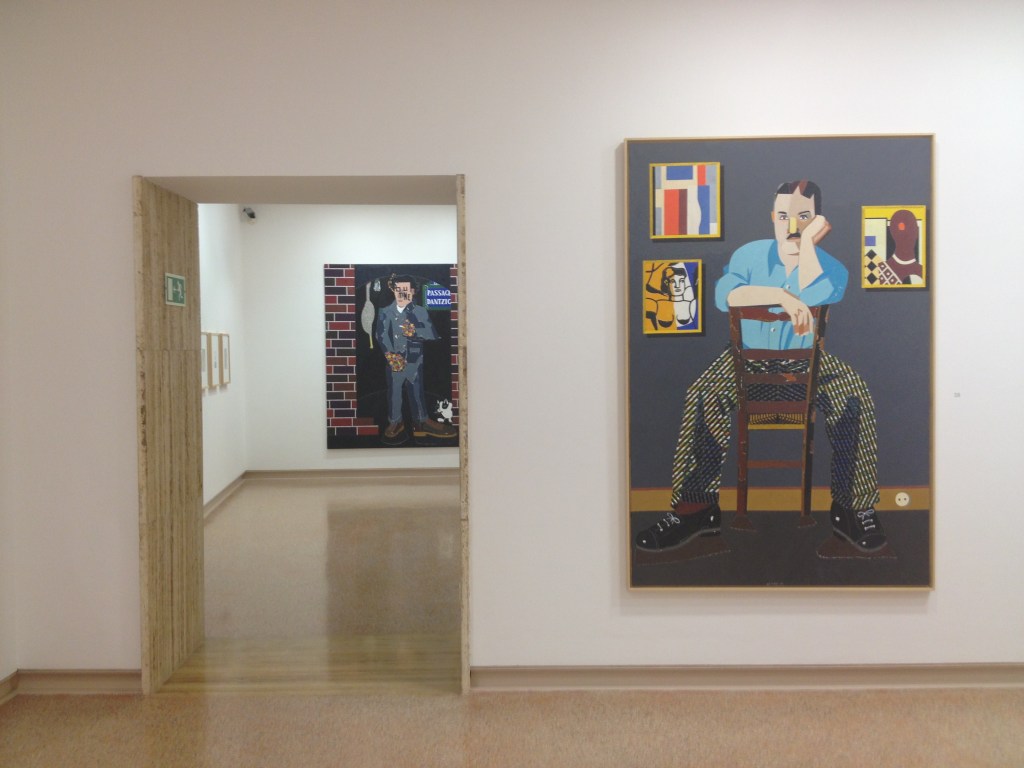
The Eduardo Arroyo exhibition

Eduardo Arroyo's portrait of Leger (in the foreground)

Eduardo Arroyo’s portrait of Leger (in the foreground)

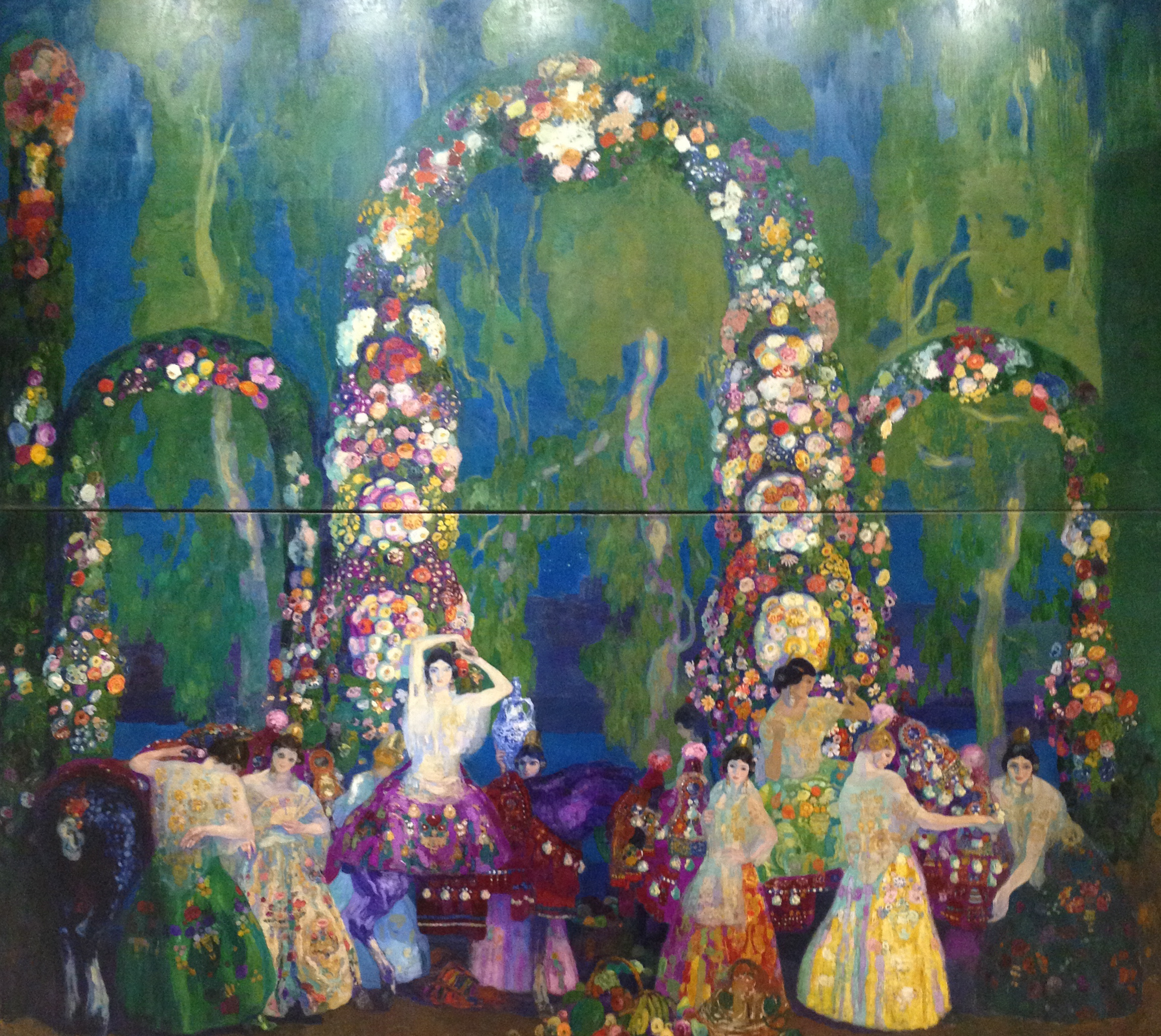
Subsequently, and I’m not entirely sure how (it’s exhausting me even describing it), we wandered into yet another art gallery following the March foundation, this time the Fundacio La Caixa, a brilliant cultural foundation run by the Caixa bank and held within the stunning modernist building which used to house Mallorca’s Gran Hotel (see my photography post tomorrow for more on Palma’s modernismo architecture). The foundation lays on various temporary exhibitions throughout the year, such as the one currently on show examining past and modern high rise buildings and towers. But my favourite aspect of the foundation is their permanent collection, and in particular the works of Mallorcan artist Anglada-Camarasa, who painted vast canvases literally alive with a plethora of vivid colours used to describe pictorially the spirit and fervour of Spanish gypsy culture, flamenco, fiestas, and Valencian costume.

Anglada-Camarasa's vast work, Valencia (1910)

Anglada-Camarasa’s vast work, Valencia (1910)

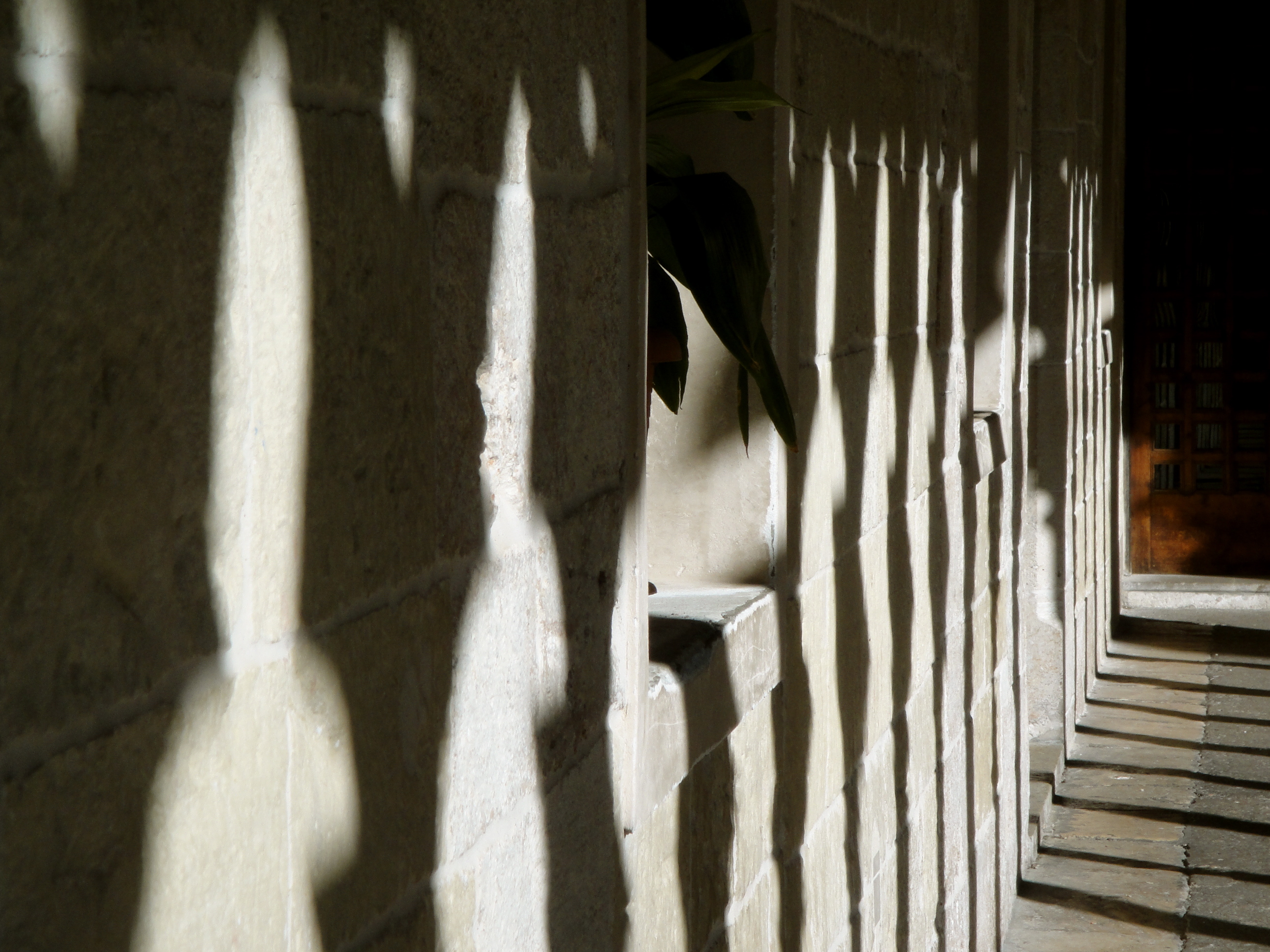
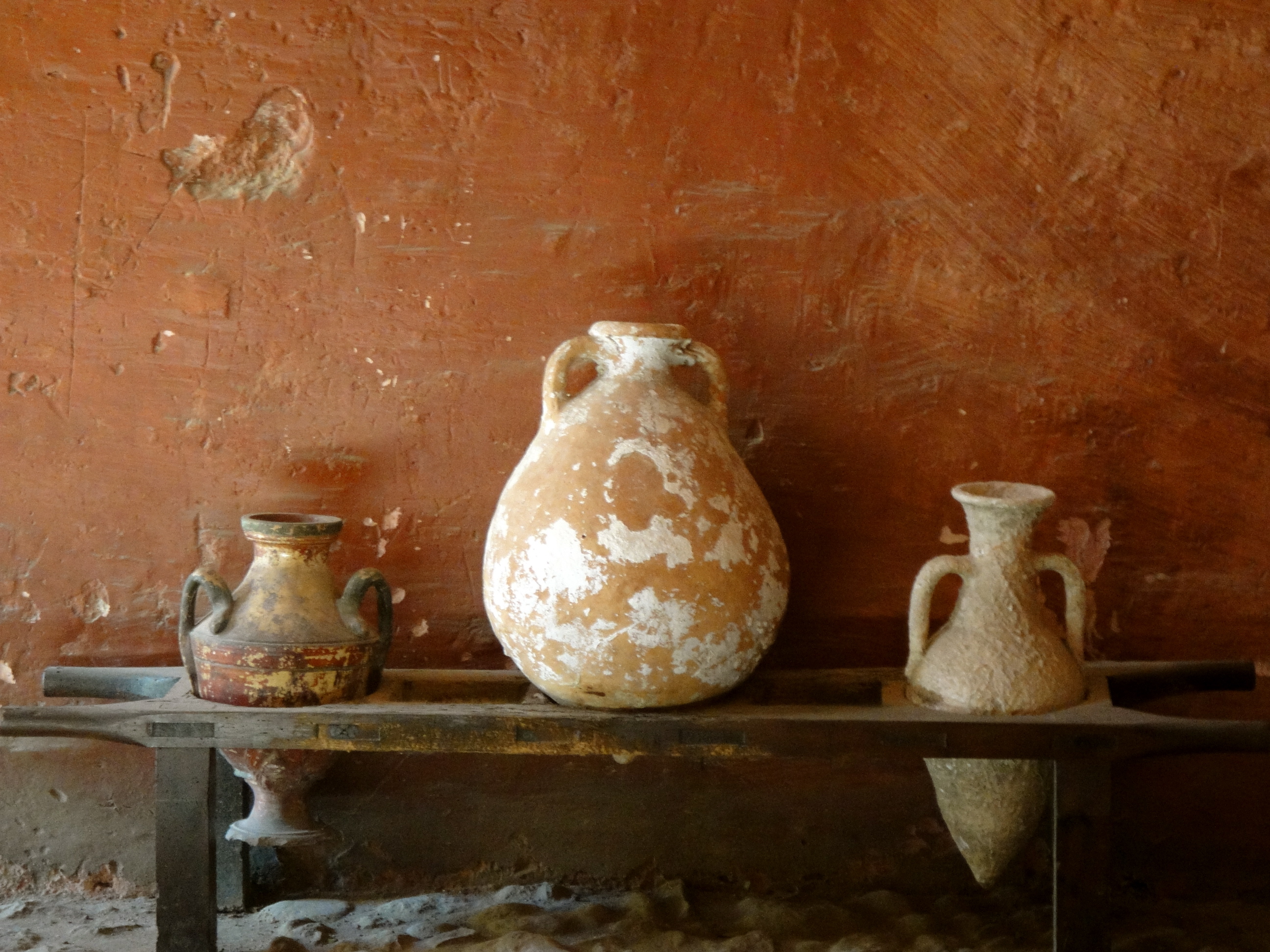
Exhausted, and almost overwhelmed by the artistic capacity of what is fundamentally a small Spanish city, we lunched and rested before setting out for more of a tranquil afternoon within the shady narrow back streets of the historic core of Palma in the vicinity of the Cathedral. There, not far from the Plaça Major, we indulged in a time of contemplation in the stunningly tranquil sun-dreched cloisters of the Real Convento de San Francisco, followed by a further dalliance with history`in the nearby Arab Baths, the last surviving wholly-Moorish building in the city, and also with its own seductively serene gardens in which to enjoy the sunshine dappled through the verdant hanging palms, lush ferns and vivid pink geraniums.

The cloisters of the Real Convento de San Francisco

The cloisters of the Real Convento de San Francisco

DSC06870 DSC06884

...and the Convent's stunning exterior

…and the Convent’s stunning exterior

DSC06896 DSC06897 DSC06895

The Arab baths and gardens

IMG_3973 DSC06906 DSC06916 DSC06899 DSC06920 DSC06940 DSC06943

Finally, believing the day’s activities to be at an end, Palma pulled out yet a further artistic treasure from its magic hat of apparently ceaseless culture – the Museo Can Morey de Santmarti which holds a vast and completely impressive collection of some 200 lithographs, etchings and other prints by Salvidor Dali. And thus ending the day as we had begun it, we gazed again at the thrilling works of this Surrealist master, but this time doing so almost on our knees, such was the exhaustion of our legs after so comprehensive a day of artistic and historical discovery – a state of physical exhaustion which is clearly testament to the sheer abundance and variety of attractions on offer in this utterly compelling Mallorcan city.

All photos and written content are strictly the copyright of Nicholas de Lacy-Brown © 2013 and The Daily Norm. All rights are reserved. Unauthorized use and/or duplication of the material, whether written work, photography or artwork, included within The Daily Norm without express and written permission from The Daily Norm’s author and/or owner is strictly prohibited. 

Mallorca (Part VI) – Food Focus 2: Simply Fosh

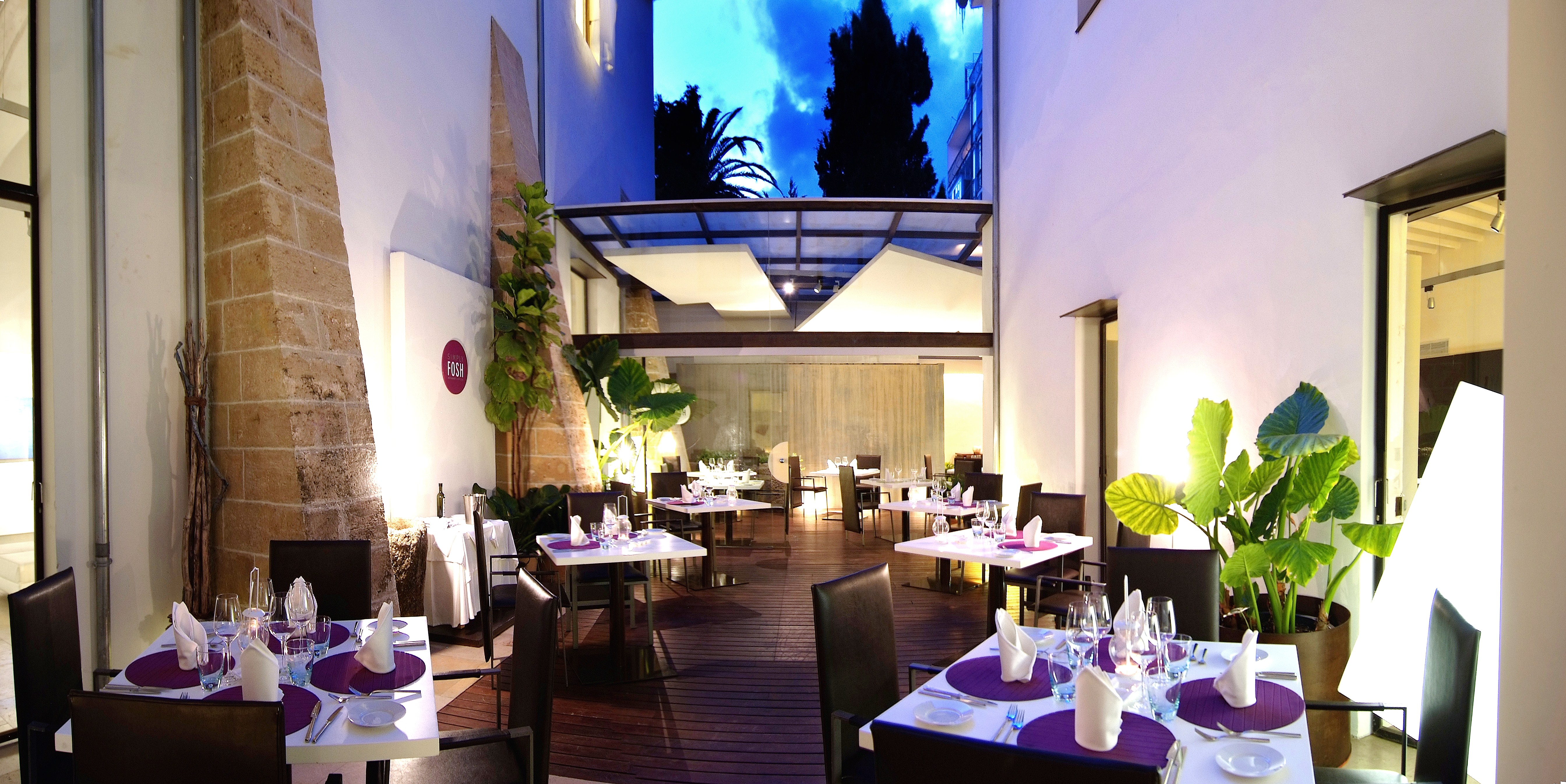
Ranked a cool number 4 of Palma’s best restaurants on TripAdvisor, as rated by the discerning food-loving public themselves (Forn de Sant Joan, I should have said the other day, is number 5, and deservingly so), Simply Fosh is the eponymous creation of chef, Marc Fosh. Housed in the cool, minimalist surroundings of the chic Hotel and converted 17th century Convent de la Missio, and bedecked with moody artwork showing close ups of Mallorcan salt on stark black backgrounds, as well as a cascading wall of water and, at least in the summer, an open-air courtyard, Simply Fosh is a restaurant which sets out to impress.

Whether or not the restaurant name is meant to imply that the restaurant emulates the heart of its chef, pure and simple (it’s one of a chain of 4 restaurants, the remainder of which are perhaps less “Foshy”) or whether its objective is pure simplicity is unclear, but one thing is certain: asides from the minimalist surroundings of the restaurant, the food, impressive in complex flavours and a finely finessed presentation, is far from simple.

simply-fosh-rest-palma-de-mallorca-22

We were delighted with this meal which, from beginning to end was accompanied by smooth, efficient service, and which provided a selection of stimulating dishes which, while not always scintillatingly innovative in flavour excitement, certainly pleased with a consistently high standard of ingredients and an excellent presentation.

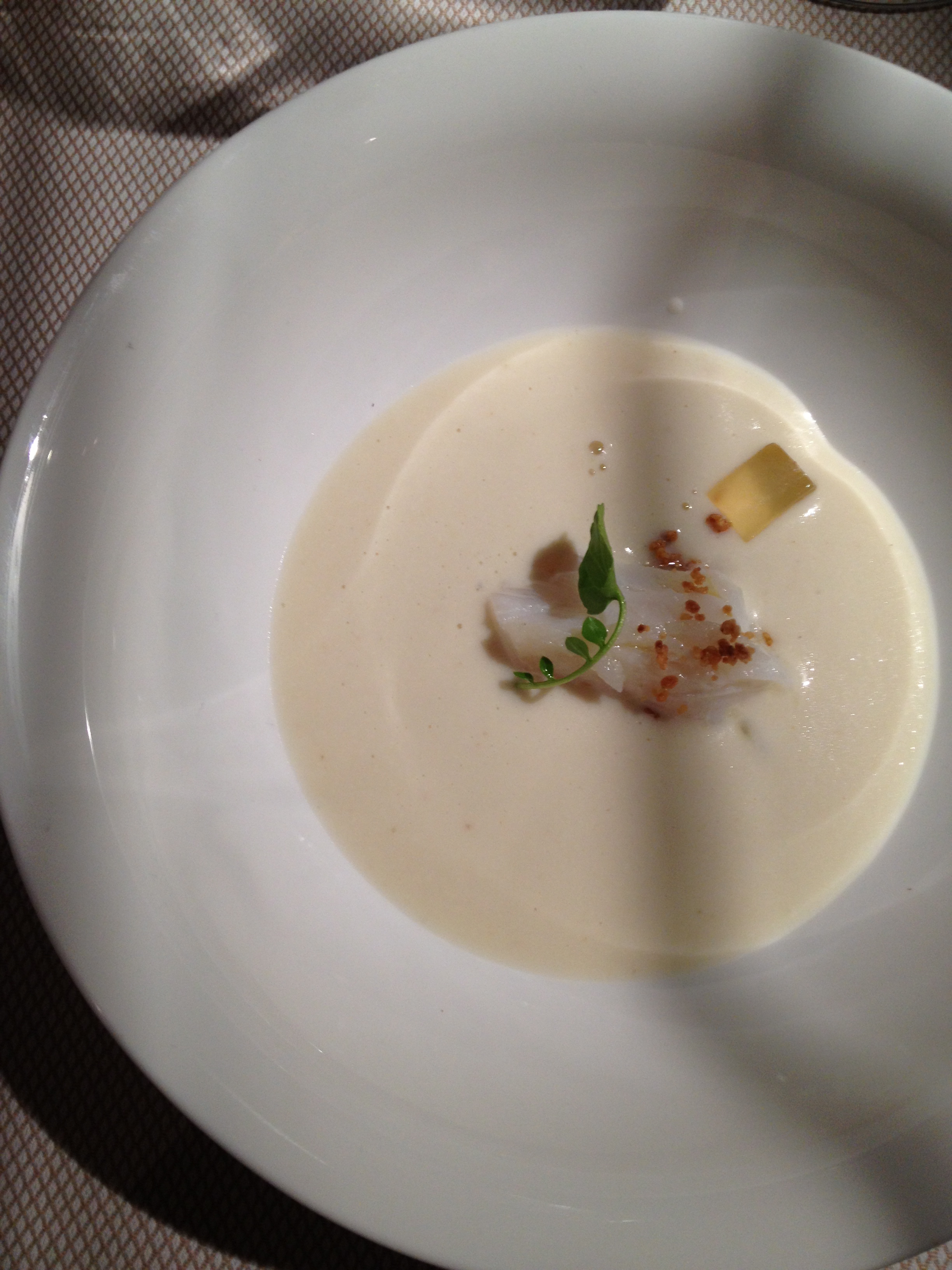
Once settled with a bottle of ice-cold Albariño which the attentive waitress helped us choose, patiently giving us a number of choices to try (I wish I had made a note of the wine – it had an exquisite bouquet) we were first tantilised by an amuse bouche of celery soup, served with a taster of cod with and small cube of lime and vodka jelly and some almond dust for texture. The dust worked like a typical Spanish “picada” to granulate this otherwise velvety soup and work against the cool lime zing. I wasn’t getting the vodka flavour though which, to be fair, was probably a good thing.

Celery soup amuse bouche

Celery soup amuse bouche

Next up we opted for two chilled soups. My partner had the special of the day, which was an exciting yellow gazpacho, served with what appeared to be a dam of super-fresh, almost undercooked langostines, a bank of fluffy cous-cous, and a sweet thai and mango salad. The gazpacho was amazing – my partner even controversially declared it to be better than the authentic gazpacho we had devoured so enthusiastically in Cordoba in 2010, and henceforth declared to be the best in all of Spain. While the yellow gazpacho has now presented itself a keen contender for that crown, I was less impressed with the white version, a chilled Ajo Blanco with Soller prawn & aubergine ravioli and marinated pears. The flavours of the cold garlic weren’t shining through as they should (perhaps catering for the lesser garlic-tolerance of Mallorca’s predominantly English/German clientele?) and the presentation, while initially pretty, became something of a drowned unsightly swamp when the soup was poured over the ravioli, which promptly fell apart and descended into a mush. Still, the flavours weren’t bad, and I completed the dish with moderate relish.

Yellow gazpacho

Yellow gazpacho

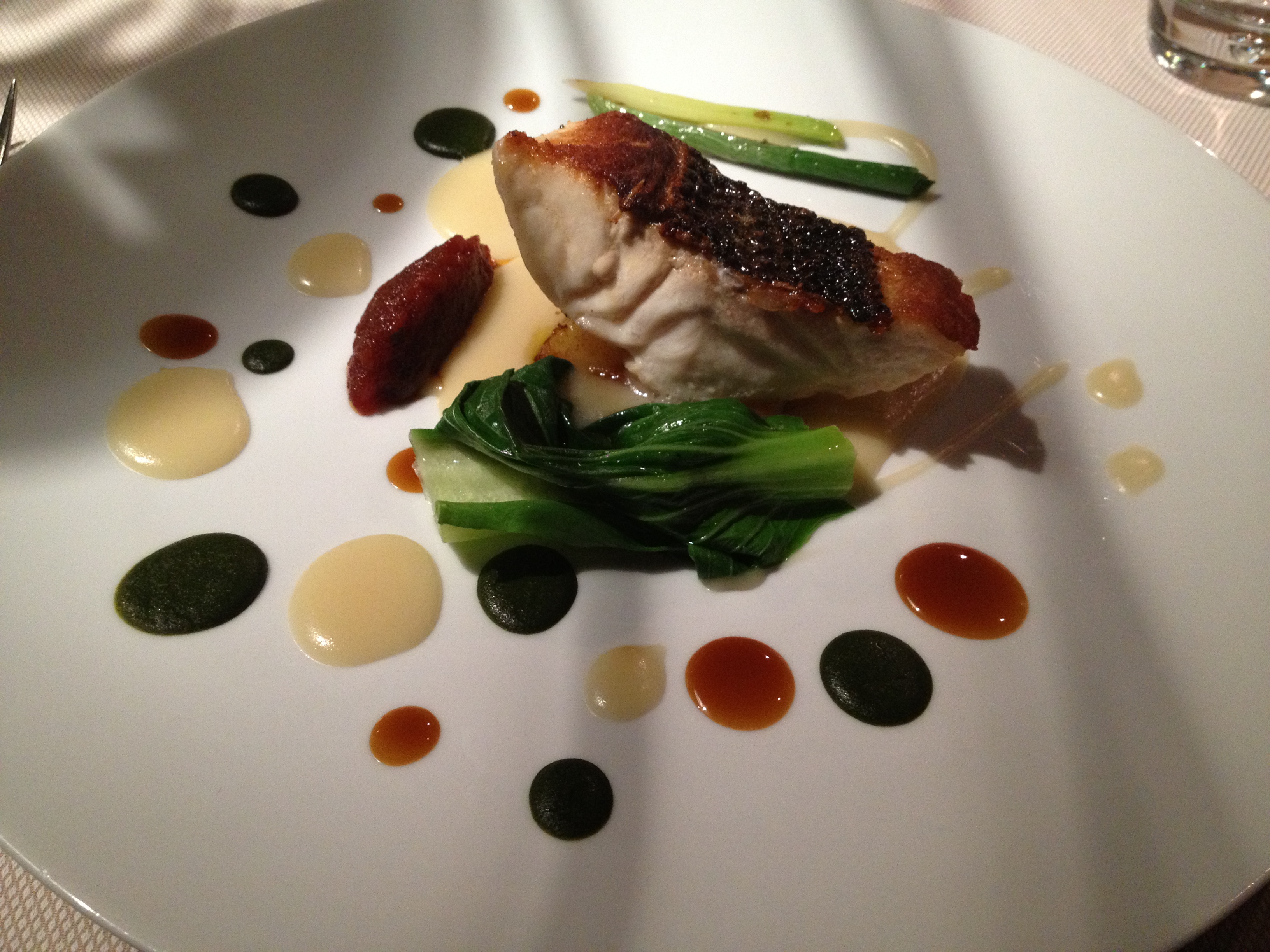
Up next were the mains. My partner struck gold again with wild sea bream with parsley, licorice and parmentier of anchovies – the flavours were beautiful balanced, and the various complex sauces jovially presented in an almost polka-dot formation. My choice, a corn-fed chicken breast with celariac, chestnuts and cranberries, was very well cooked and also beautifully presented, but I think, on reflection, I made a bad choice, because the mixture of chestnuts and cranberries was just too christmassy to be fully enjoyable on what I was at least pretending was a warm summer’s evening, while in the meantime, I found the celeriac sauce a little too cloying.

Sea bream

Sea bream

The Chicken

The Chicken

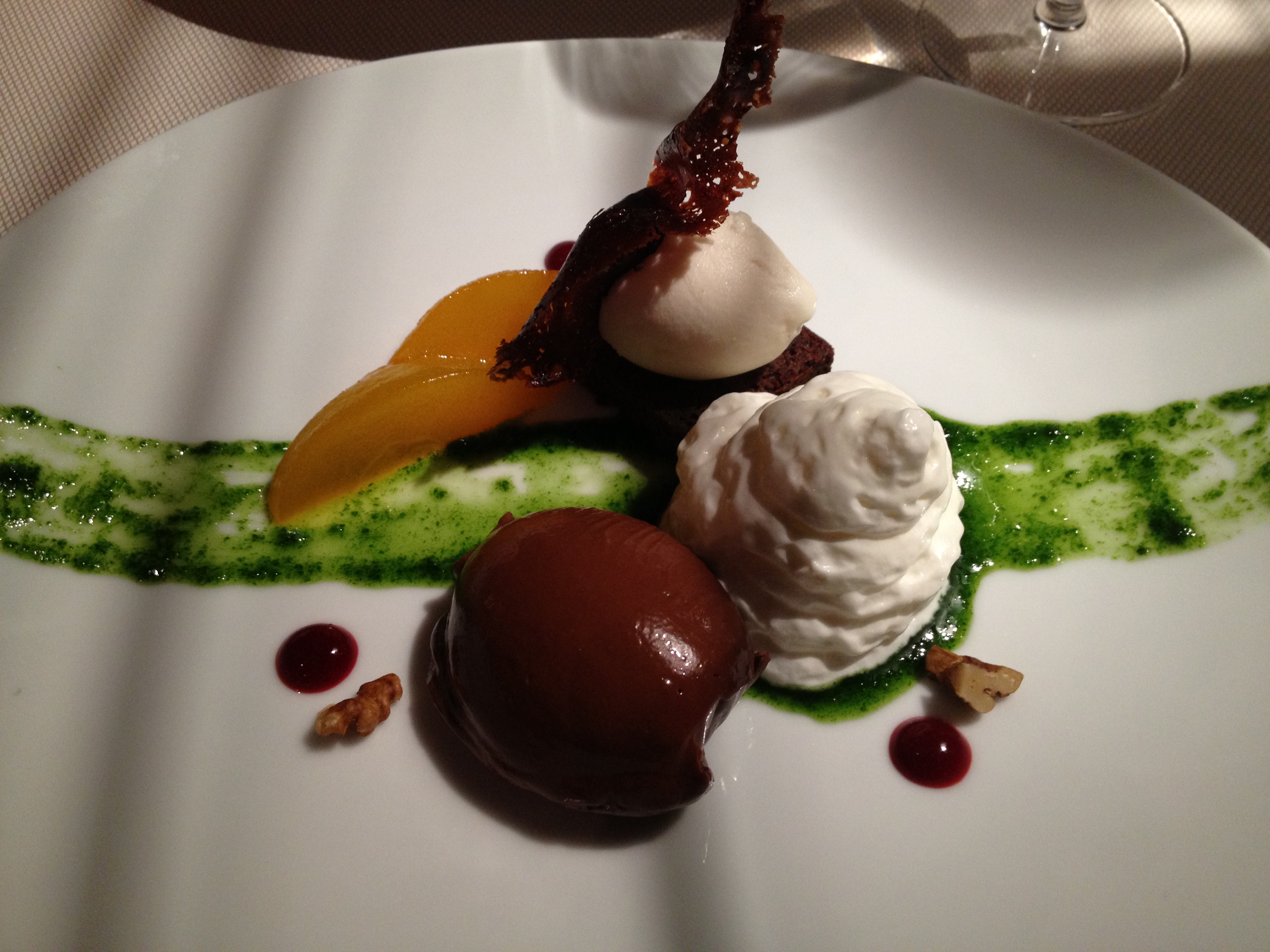
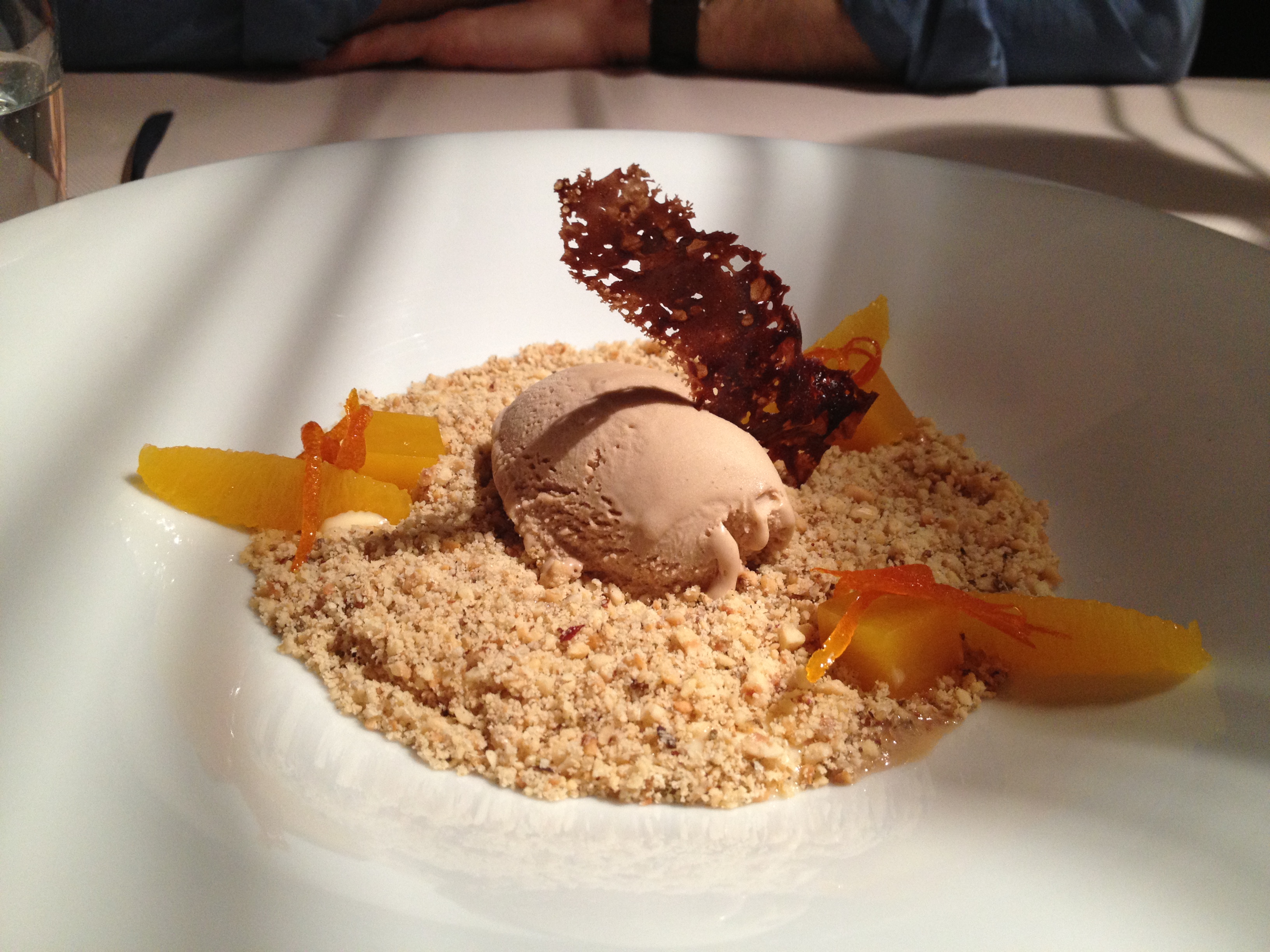
But with dessert, an uninterrupted sugar binge of dynamically indulgent proportions was to follow, with my chocolate “cremoso”, a rich chocolate mousse perfectly balanced alongside marinated pears, a moorish walnut ice cream and light yoghurt mousse, while a coriander reduction made for a very innovative twist. Meanwhile my Partner had equal success with a dessert of almond cream on a sandy bed of spiced hazelnut, littered with a pieces of orange and caramel which resembled seaweed and coral washed upon the hazelnut beach by a current of bergamot flavourings.

Chocolate "cremoso"

Chocolate “cremoso”

Almond cream

Almond cream

And with that gastronomic manifestation of the mediterranean coast, full of its Moorish flavours and citrus undertones, we left the restaurant with a satisfying flavour of Spain lingering on our tongues, and the pleasant intoxication of that chilled Albariño embracing our souls and tugging our eye-lids towards sleep. Another day, another amazing Mallorcan meal, and still two more days to go. La Dolce Vita.

Simply Fosh is on the Carrer de la Missio, in central Palma, close to the Plaça de España. You can call 971720113 or reserve online.

Mallorca (Part V) – Day 3: Moorish Mallorca and the Sóller Ferrocarril

Palma de Mallorca is every bit a city living for the present. Its vibrant city streets are bursting with a thriving cosmopolitan cafe culture and lined with all the latest shopping brands, at its centre it welcomes visitors through a state-of-the-art transport hub, and its galleries and architecture have very clearly embraced the modern art movement, from the avant garde to the daringly contemporary. Yet at its very core, Mallorca, and in particular its capital city, is an island rich in historical heritage, from the few surviving influences of the Moorish occupation, and the gothic spendour of grand churches like La Seu, through to the exquisite examples of modernista architecture which are bounteous in and around Palma’s centre.

Today we went on a voyage back in time, both metaphorically, and literally, starting the day by exploring Palma’s Moorish heritage, followed by a journey on Palma’s century old Ferrocarril de Sóller, a rickety old railway which takes visitors from the centre of Palma, through some stunning mountain passages, across to the idyllic little town of Sóller on the North coast of the island.

The Almudaina

The Almudaina

and its Moorish gardens

and its Moorish gardens

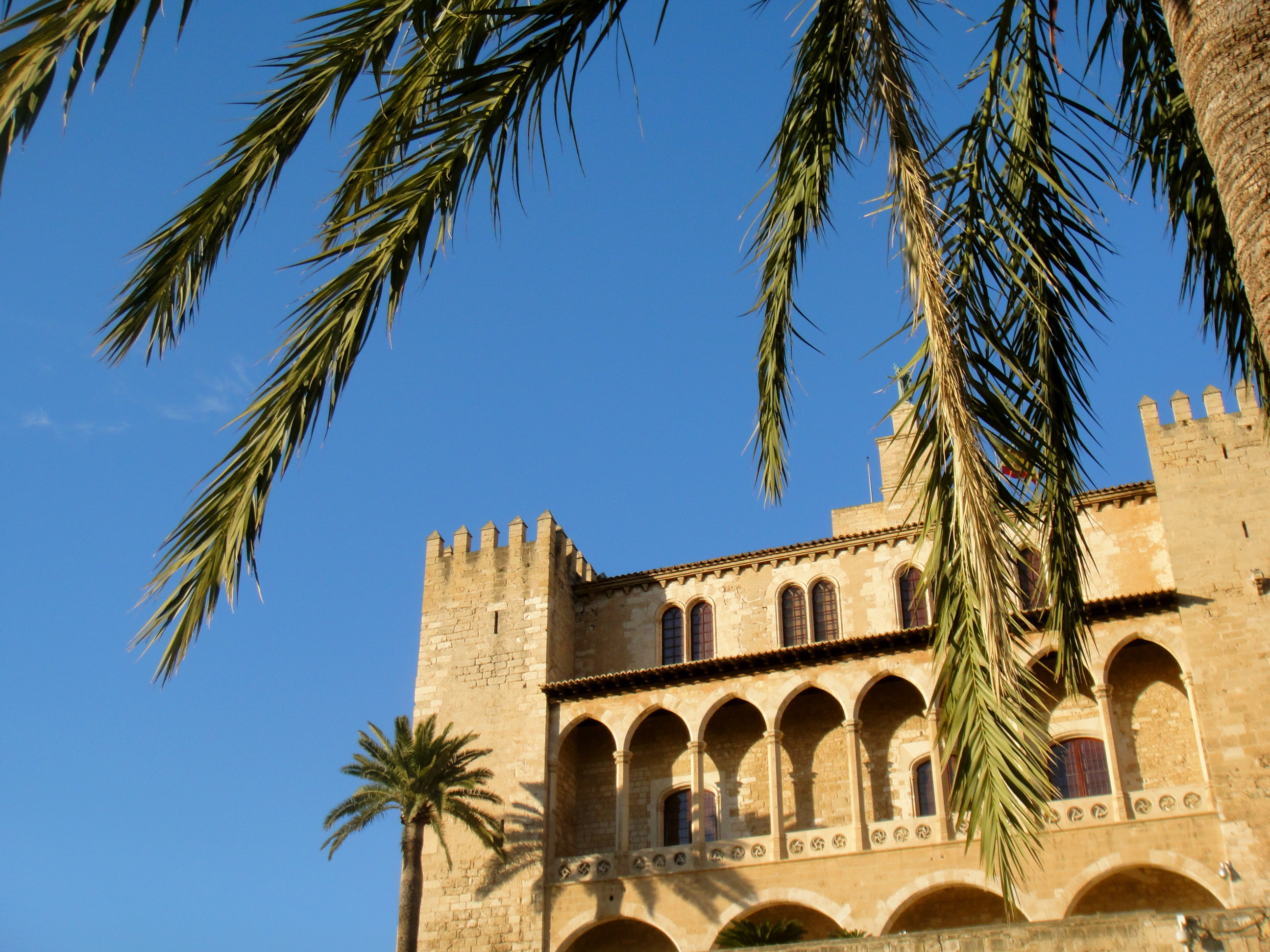
Unlike some of the cities in the South of Spain, it’s not always terribly obvious that Mallorca was once ruled by the vast Moorish kingdom of Al Andalus, before being wrestled back from Moorish rule by the Christians as part of the 2-century long reconquista in 1229. However, one not insignificant building sat bang opposite Palma’s iconic cathedral makes the connection to Mallorca’s Moorish past more obvious: the Palau de l’Almudaina. The palace is, in its very fabric, a manifestation of Palma’s long and complex occupational history, with its Roman foundations built in 123 BC, its Moorish enlargement, and a series of changes and refits being made to the building across the centuries, from the reconquista, right up to the last major restoration in the 1970s. Today, what was for centuries a royal palace for Mallorca’s Kings (for example when the kingdom of Mallorca was annexed to Aragon) is now largely a museum, but retaining as it does the essence of Moorish Spain, it provides something of a bubble of tranquility in an otherwise bustling city.

DSC05982 DSC06003 DSC06002

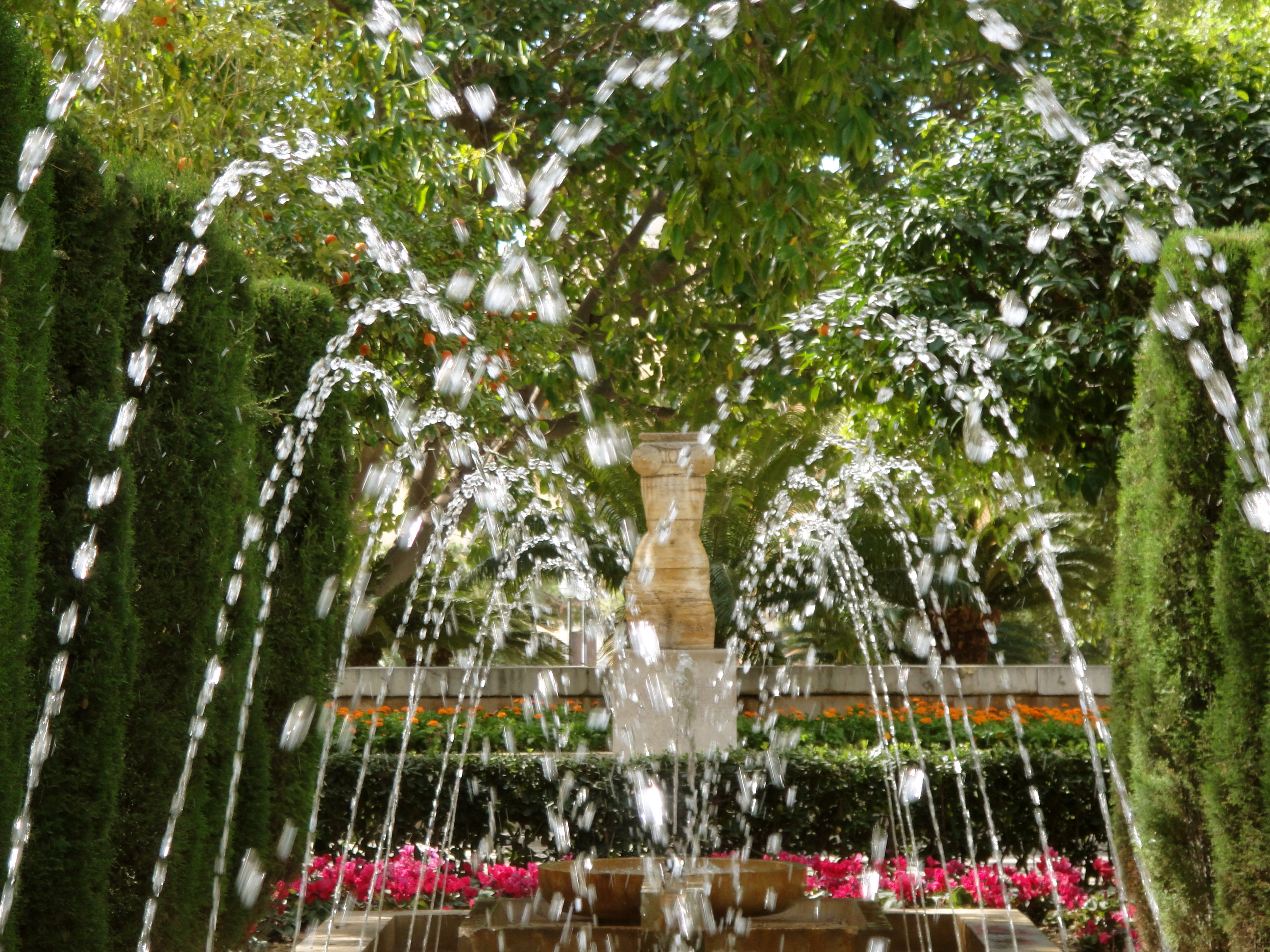
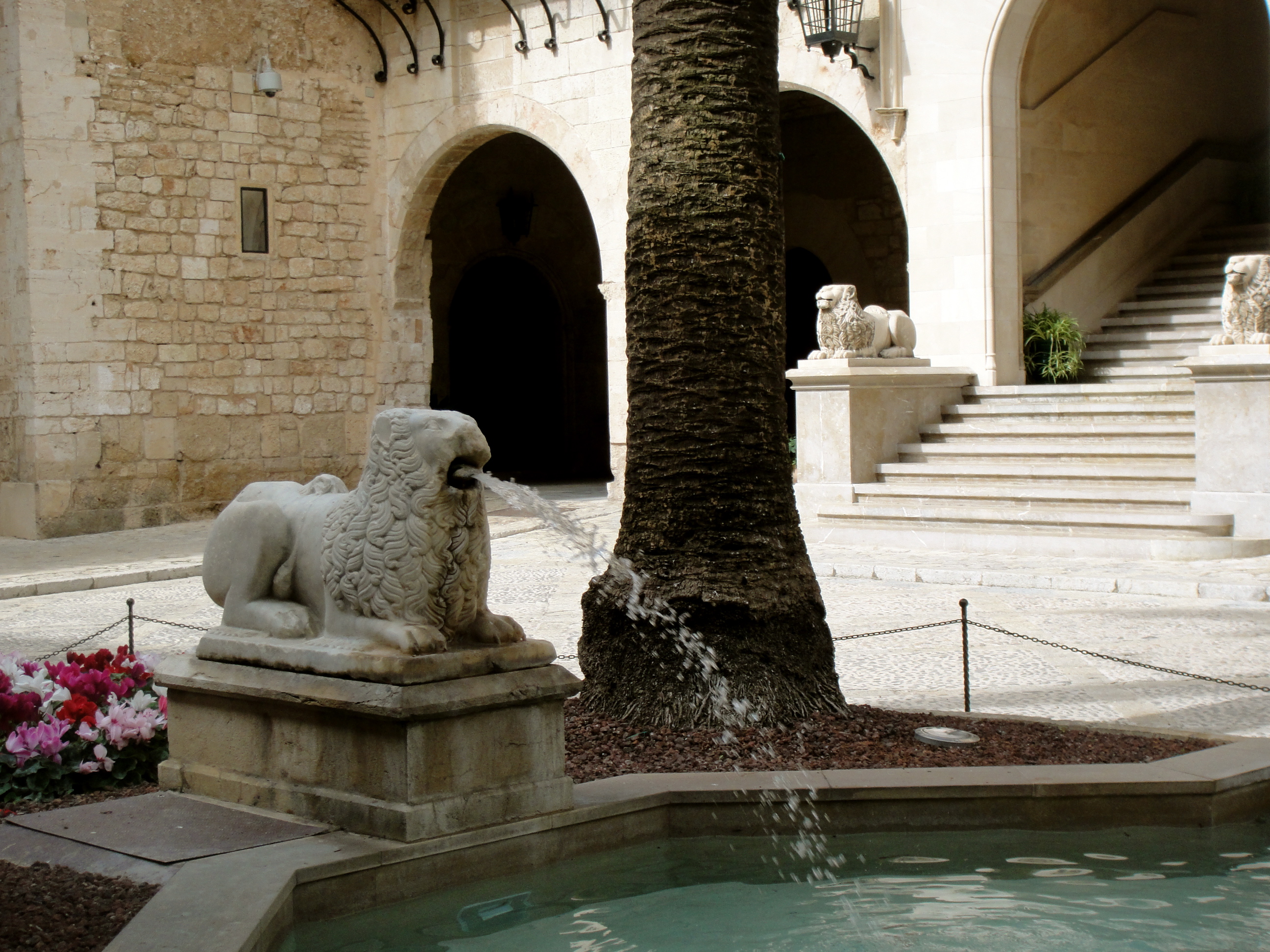
We started by exploring the beautiful gardens which extend horizontally along the lower terraces of the palace, from the bottom of the Passeig de Born to the sea. Stunning in their tranquility, and bearing all the hallmarks of a perfectly geometric Moorish design, these gardens are thankfully free to enter and consequently form the backdrop of one of my favourite walks in Palma. Meanwhile, inside the vast stone palace, a roof terrace planted with cacti and aromatic herbs provides a picture-perfect vantage out to sea, while at the centre of the palace, a courtyard garden is a regal proclamation of the building’s importance, with its stone lions and grand central water feature. The rest of the palace was a little sparse, what with its large lofty banqueting halls and various stone chambers. It was interesting to see how more recent inhabitants had attempted to introduce some comfort to the cold interior with large rugs and soft furnishings. Still it’s no surprise that today the palace is better used as a museum piece rather than as a place of work or residence.

DSC06363IMG_3738 DSC06393 DSC06371 DSC06391

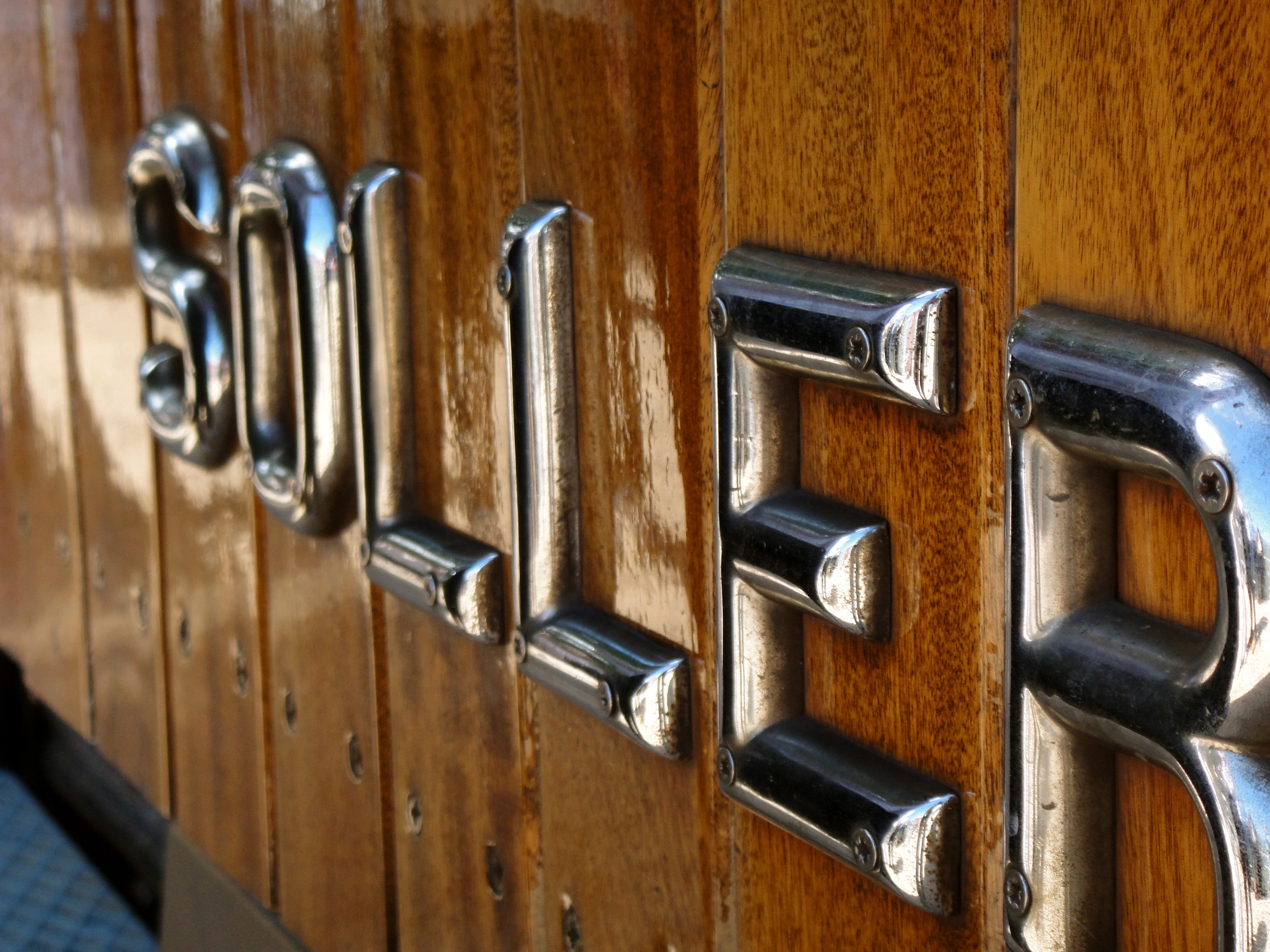
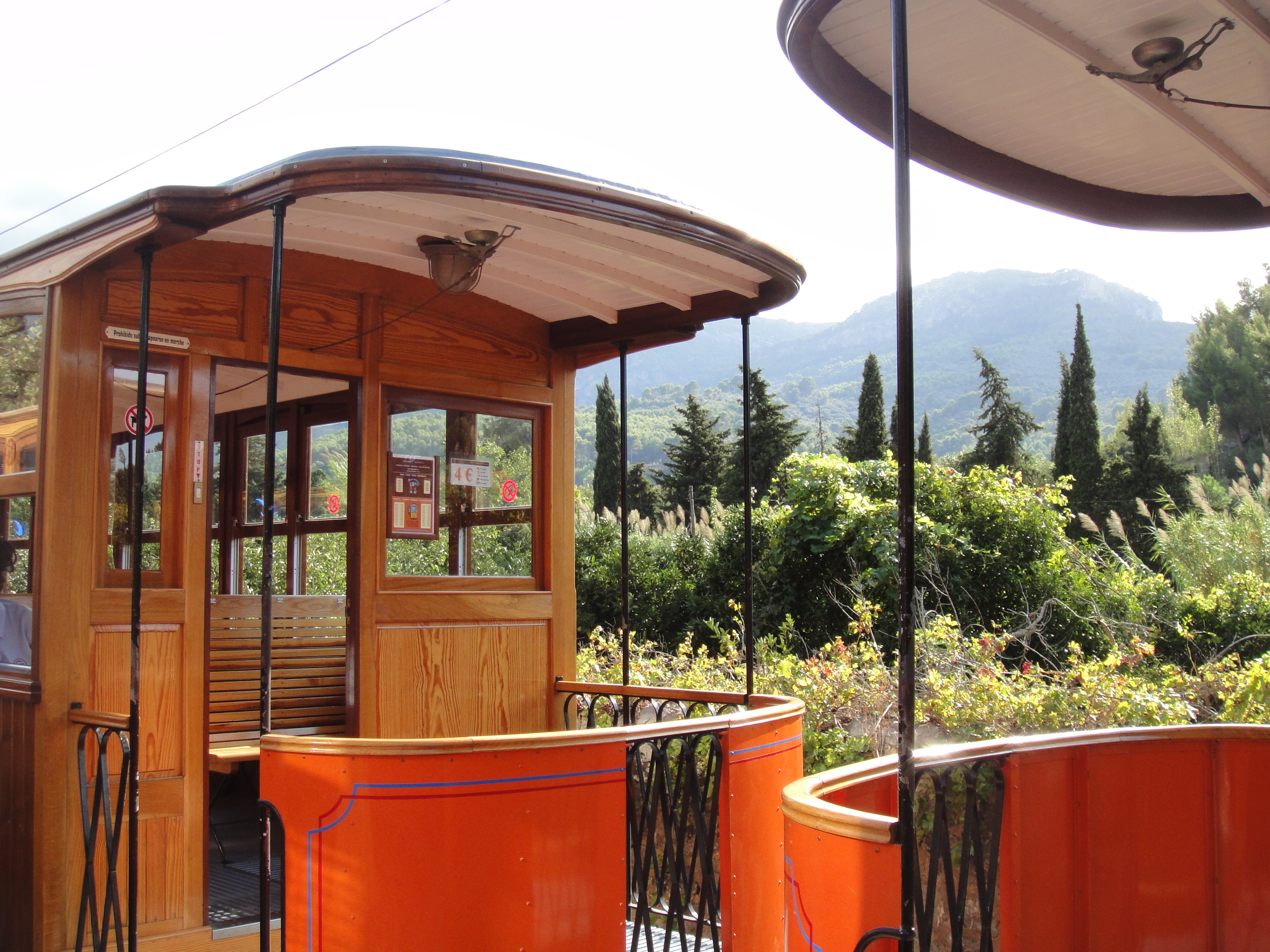
The clock was ticking and up in the Plaça España, Palma’s main transport hub, a rickety old train was awaiting us. Passing under the Victorian-looking wrought iron gateway spelling out the name of the Ferrocarril de Sóller, we made our way onto a delightful wooden train which looks and feels like something straight out of an Agatha Christie novel. The railway, which these days serves largely tourists, has been running for 100 years, providing the remote Northern town of Sóller with a life-line link to Palma, originally so that the town could sell its bounteous harvest of citrus fruits and almonds in the capital. The trains which now take tourists along the 27 kilometre route are almost exactly the same now as they were then (save for the electrification of the railway in 1929). As you travel along the old rumbling rail track, initially through Palma, but then through the dense countryside before ascending through a completely stunning mountain pass, it feels like you have gone back in time.

The Ferrocarril de Soller

The Ferrocarril de Soller

DSC06485 DSC06609

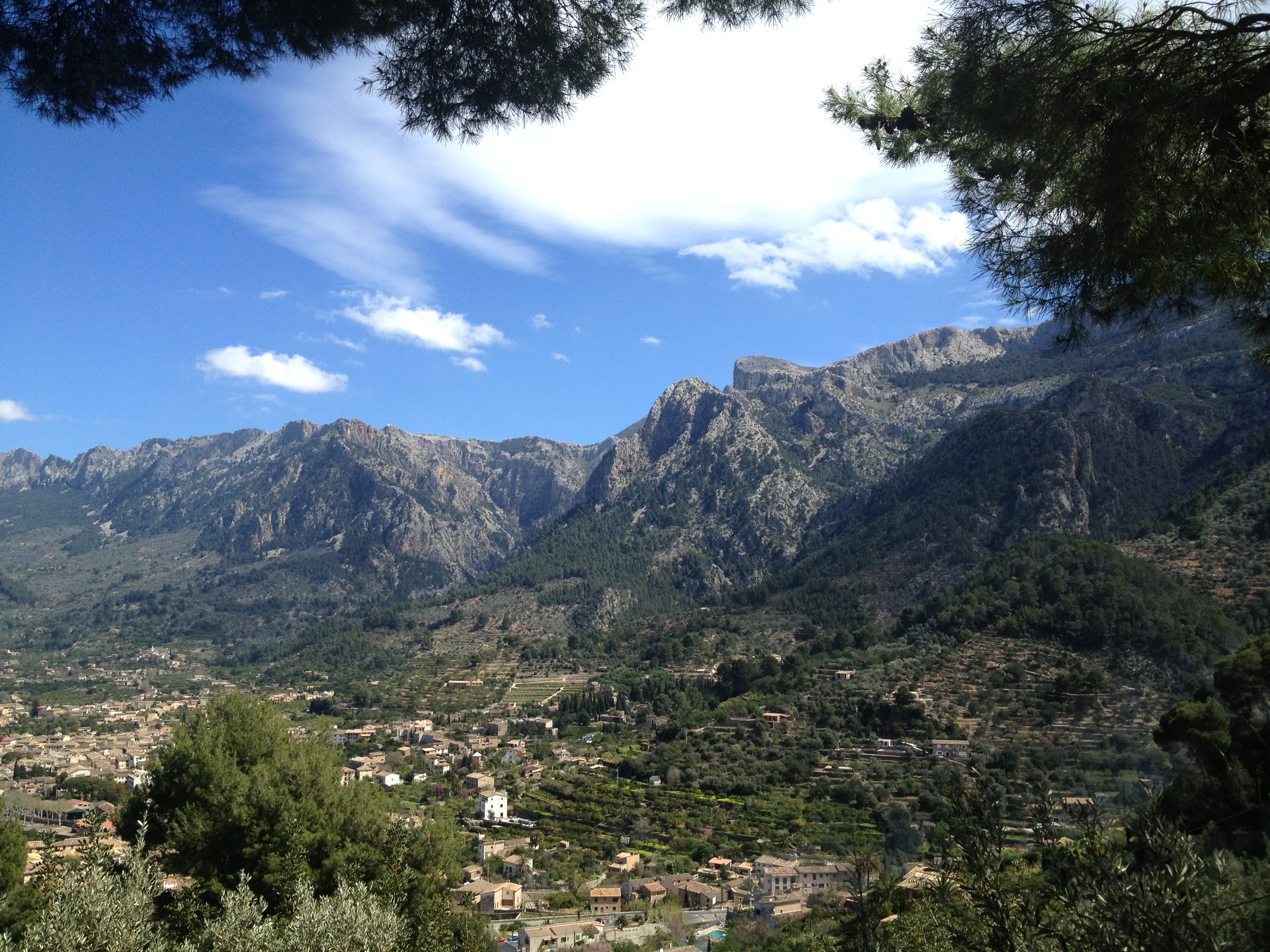
Around midway through the journey, the train heads into a narrow dark tunnel under a huge mountain (one of 12 tunnels on the journey) and coming out the otherside the train stops so that passengers can literally gawp in disbelief at the completely stunning panorama which unveils itself beyond the rail tracks. The vista is like none other I have ever experienced. The gigantic mountains, which rise up almost incessantly to the skies, make us, mere mortals, feel like tiny insects in their wake, while in the sprawling valley below, the idyllic town of Soller springs up amongst splatterings of citrus trees and almond trees in full bloom. Breathtaking is certainly the word.

IMG_3744 DSC06490 IMG_3740

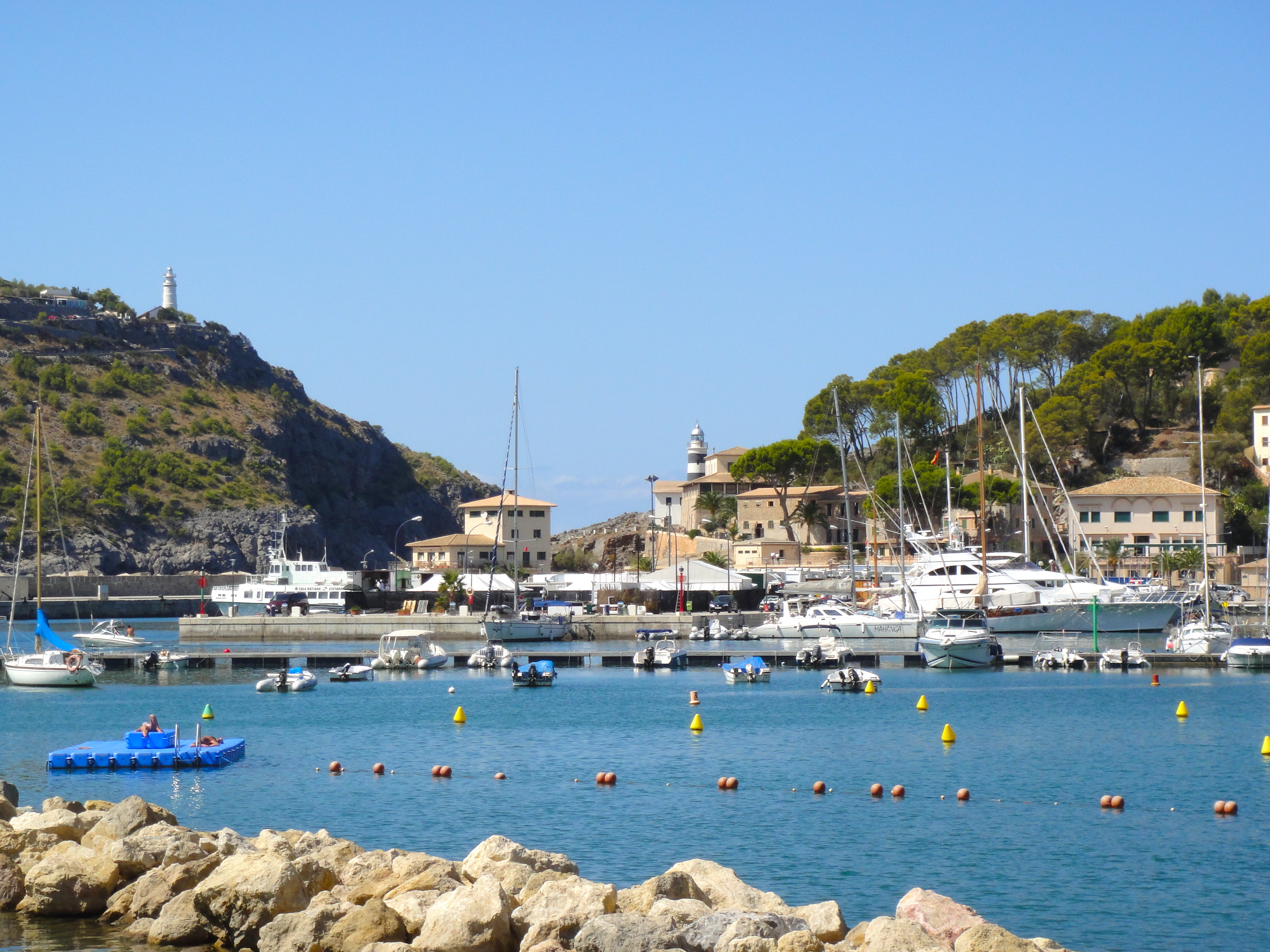
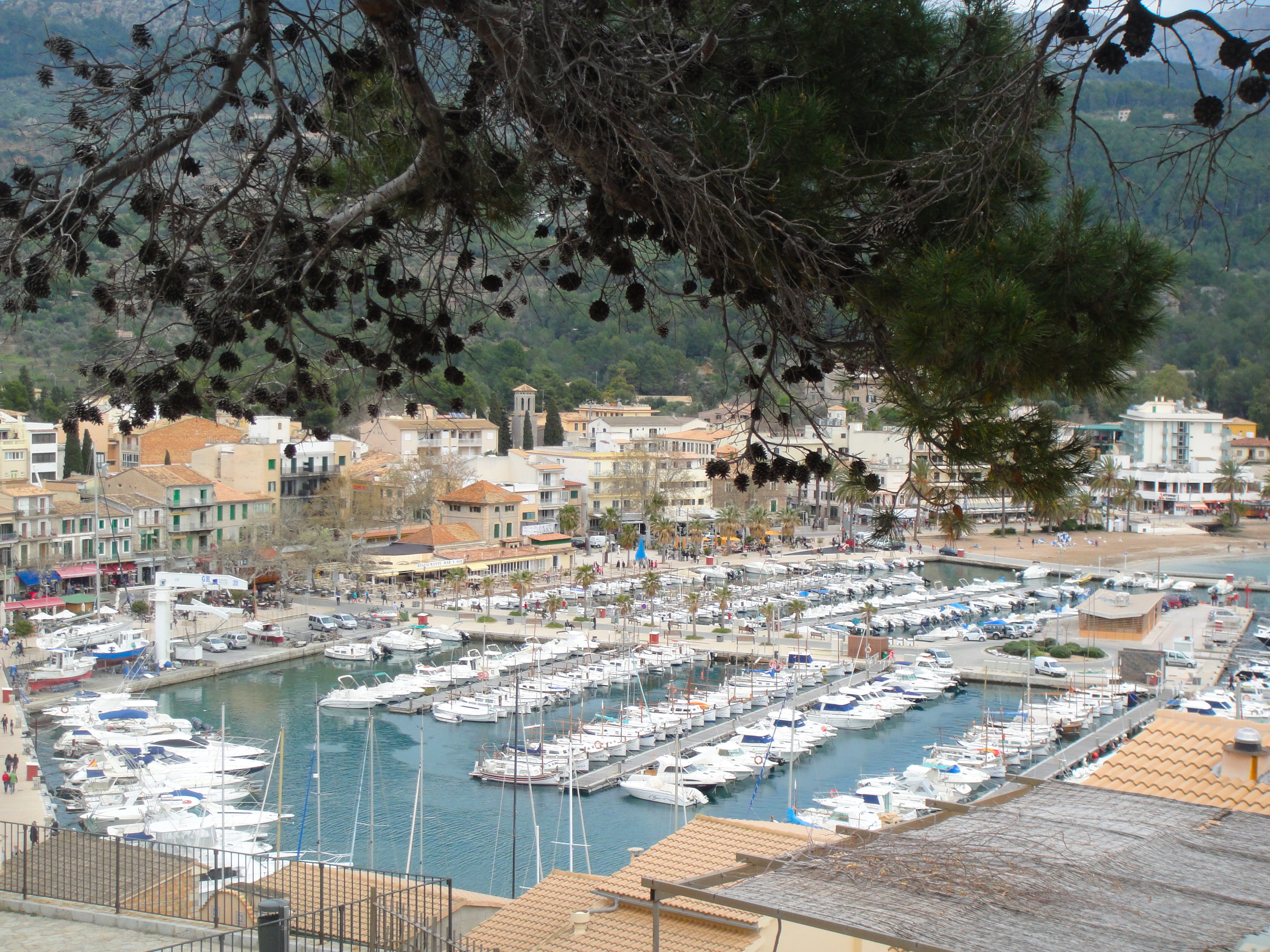
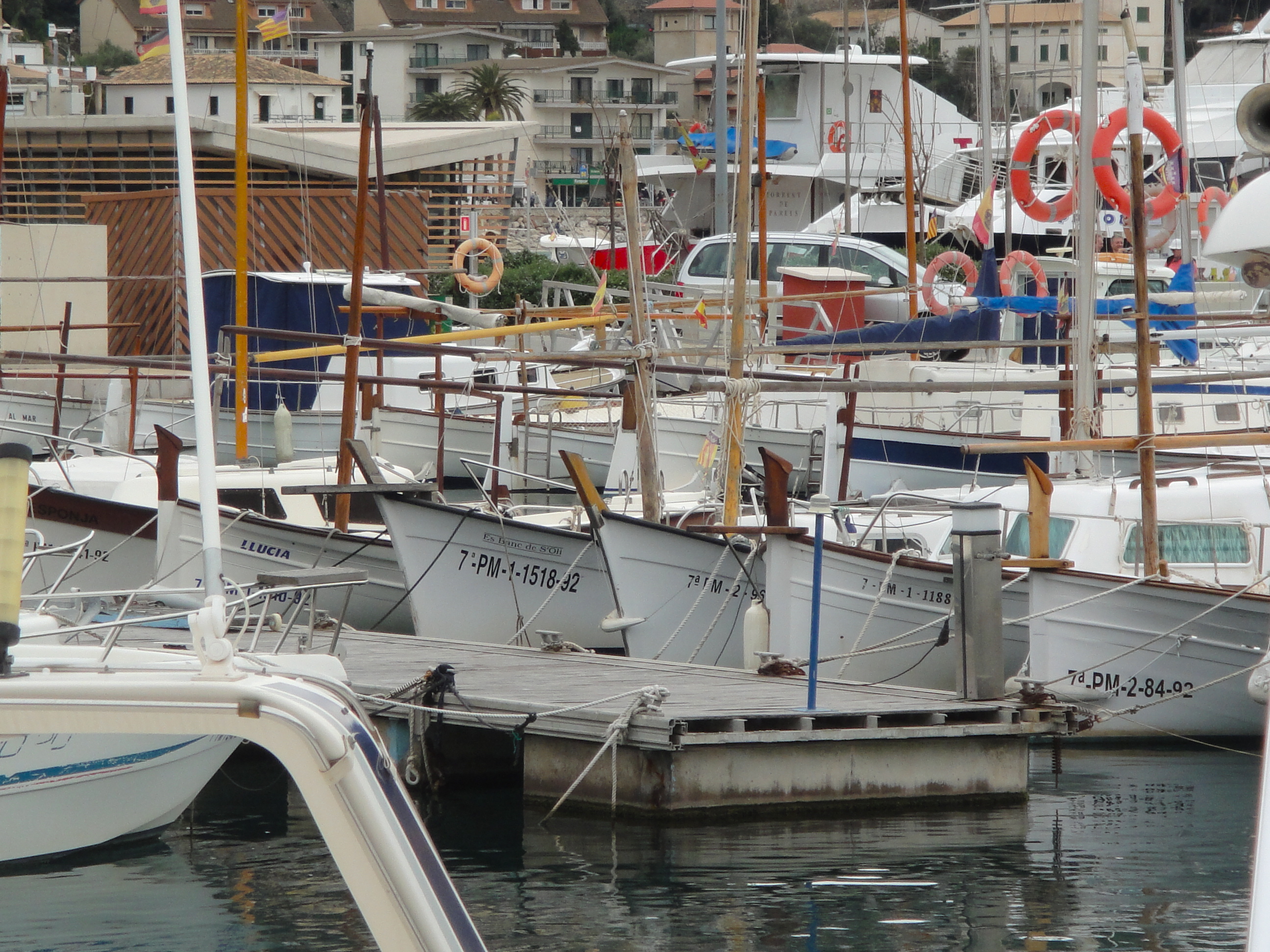
From there, the train made its slow spiralling way down the mountain side before arriving in the centre of Sóller, where another rickety old tram awaited to take us to the beautiful little port, another natural harbour like the Port d’Andratx, but this time hemmed in by even larger mountains giving the impression of a cosy, idyllic port-side paradise. Down on the port, alongside pastel coloured buildings reminiscent of the French Riviera and next to the quietly lapping waters, rows of yachts and fishing boats, we sat out to eat another utterly hedonistic luncheon, sipping upon a chilled bottle of albariño and eating innovative tapas, such as “hairy prawns” coated in a crisp angel’s hair and dipped in wasabi mayonnaise, and a juice-dripping melon with salty-sweet serrano ham.

The tram

The tram

DSC04493 DSC04514

and the harbour

and the harbour

DSC04477 DSC04460 DSC04450 DSC04490

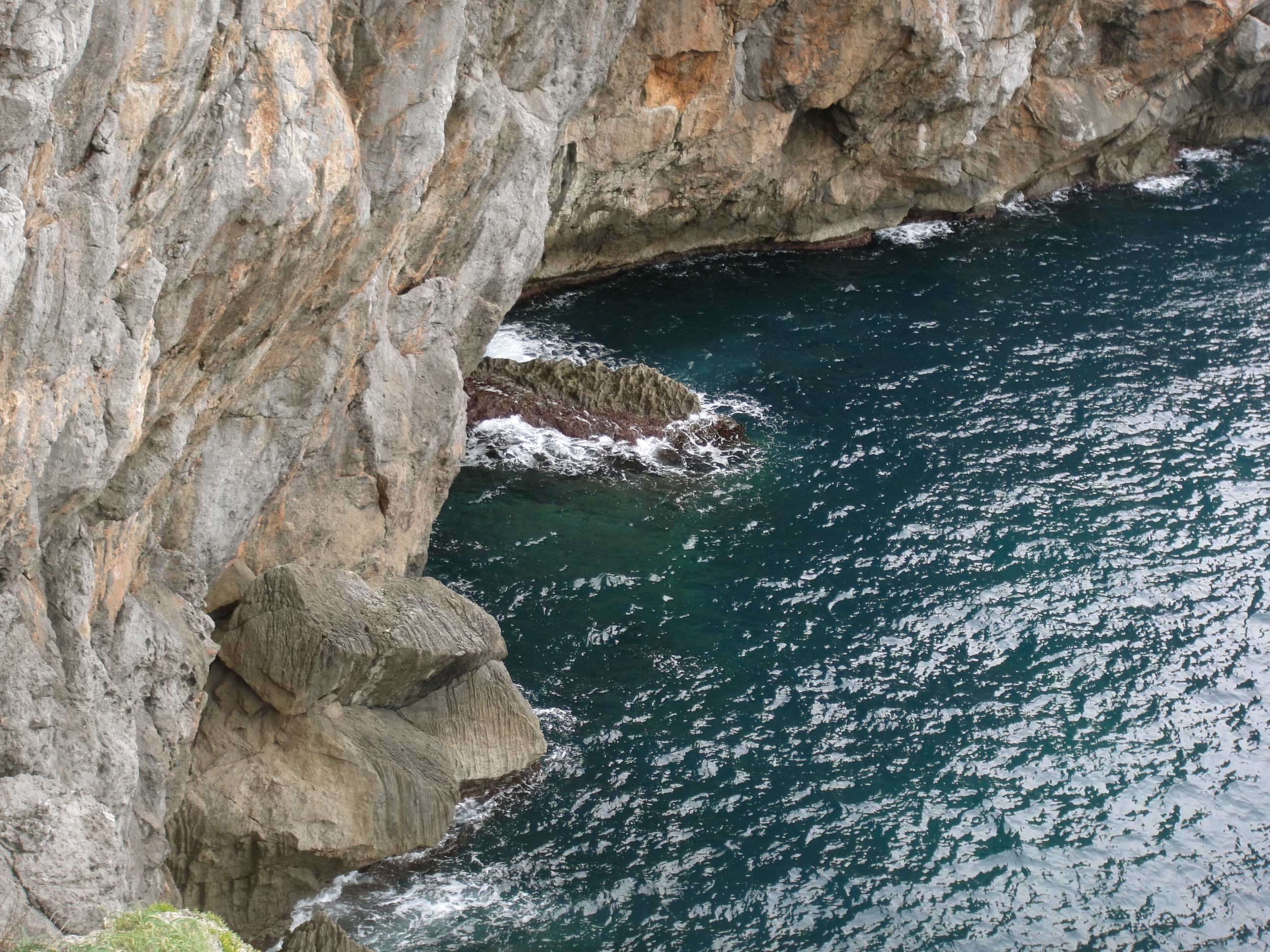
After lunch, and with time on our hands until the rambling little train journey back to Palma, a stroll along the harbour side turned inadvertently into a hike up the steep slops of the little streets between the shops and houses as our adventurous side kicked in. And once at the top where we could climb no further, we were greeted by a stunning view over the other side of this narrow natural harbour, so that while, one one side, we could look back to the tranquil little port, on the other we could look out to the severe ruggedness of a stark, sheer cliff drop down to an unforgiving sea thrashing against the rocks. Hard to believe that these two ocean environments were only a narrow strip of land apart.

One side...

One side…

and the other

and the other

With that discovery, we took a little tram back into Sóller, having just enough time to look around the little town centre, and gaze in admiration at the unusual Modernista architecture of the Sant Bartomeu church by Gaudi-fan architect Joan Rubio i Bellver, and also appreciate the unbelievably comprehensive collection of both Picasso ceramics and Miro lithographs which were held in beautiful galleries either side of the Ferrocarril railway station – can you believe the wonder of this place, where even the train station has an art gallery stuffed full of priceless Spanish art? And with that final hurrah we boarded the train home, allowing the rumbling train, the darkening evening and the pinkening skies to slowly lure us into a semi-hypnotic state of calm and utter satisfaction, as after a day of historical adventure we travelled, through the most stunning mountain passes, back to the future.

The Ferrocarril de Sóller is a must-see of Palma. For more details, look at the website here. Trains run every day, fairly regularly (5/ day in the winter, going up to 7/day over the summer).

In the meantime, I leave you with some more photos of the day…

Moorish arch at the Almudaina

Moorish arch at the Almudaina

The Port de Soller

The Port de Soller

The port viewed from a plant-filled balcony

The port viewed from a plant-filled balcony

The colourful buildings of the port

The colourful buildings of the port

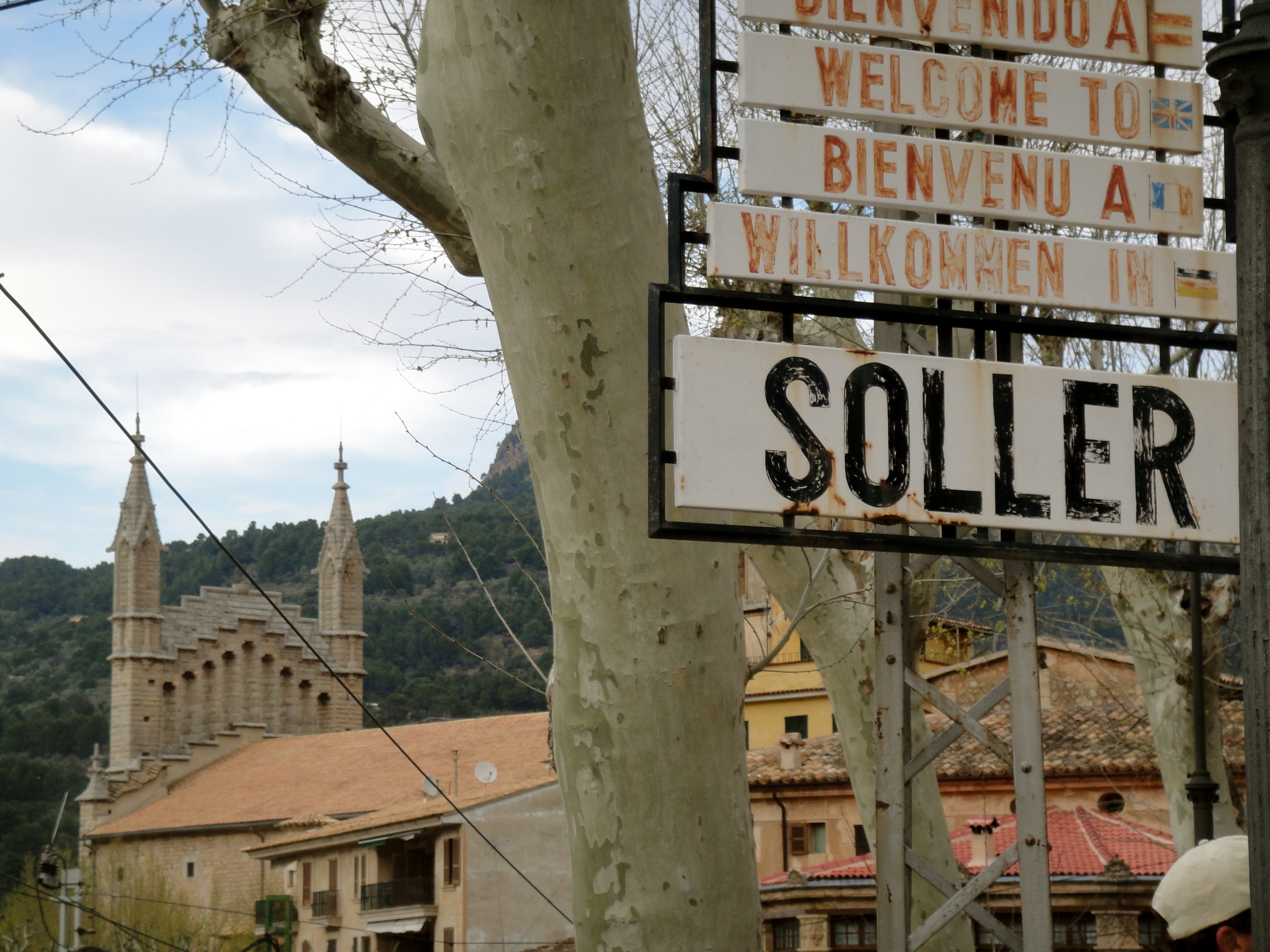
The church in Soller

The church in Soller

DSC06604 DSC06555 DSC06543

And finally, the sunset on the journey home

And finally, the sunset on the journey home

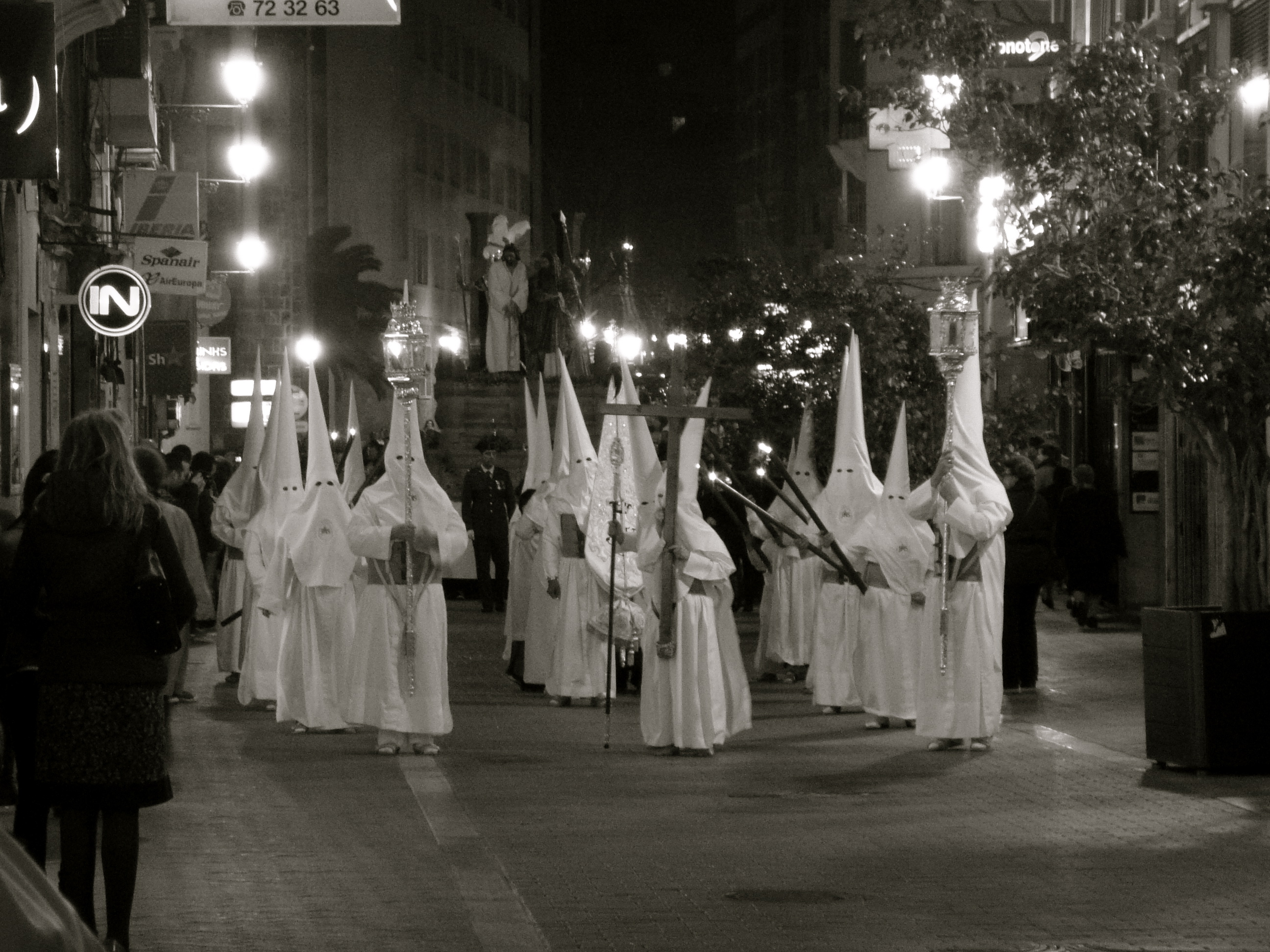
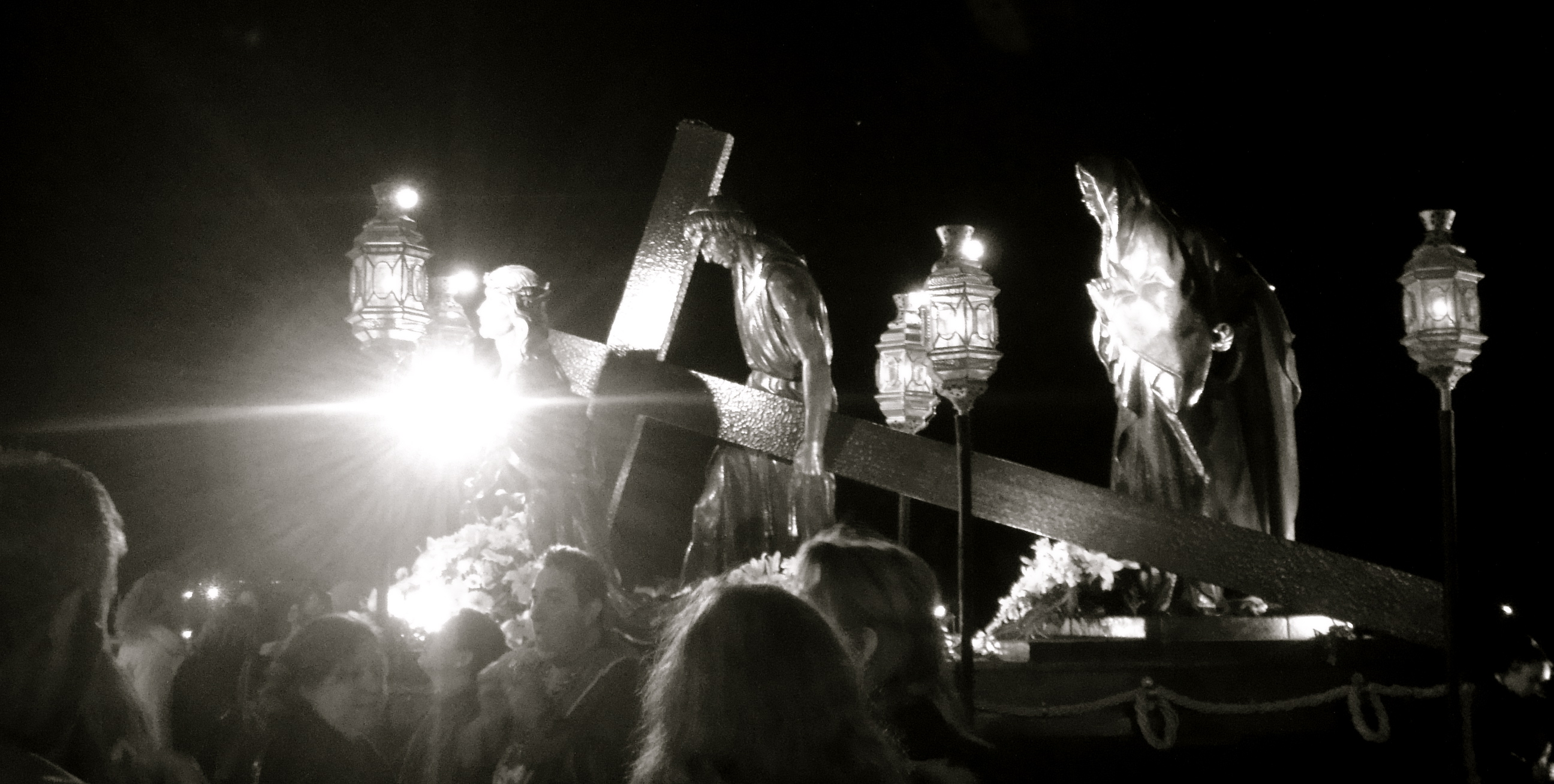
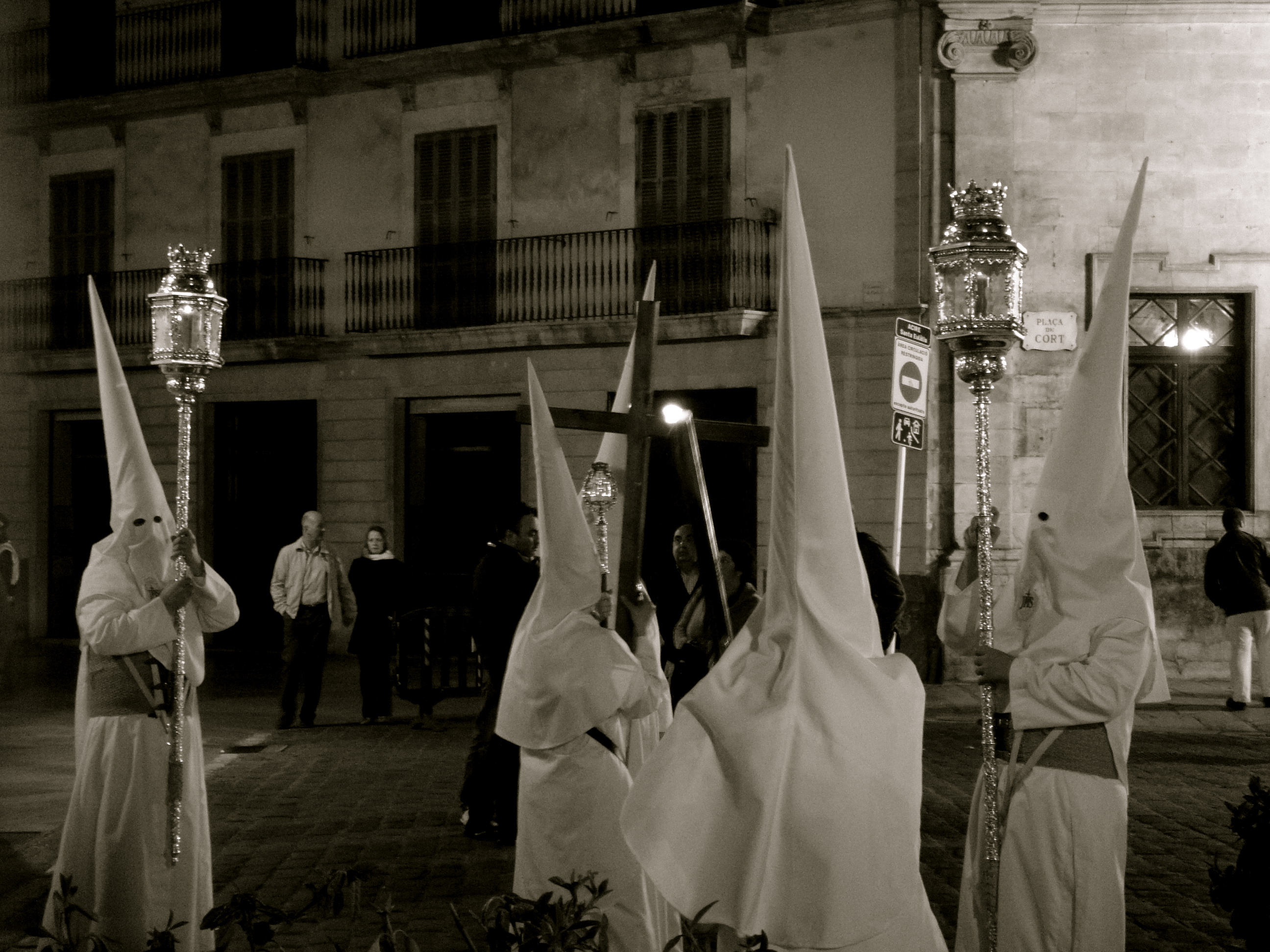
Mallorca (Part II) – Photography Focus 1: Semana Santa

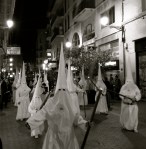
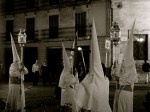
I’ve never made a secret of the fact that I love the way the Spanish celebrate Easter. Their Semama Santa (Holy Week) processions are amongst the most atmospheric and moving sights that you will see in Spain. Originating in Southern Spain and still at their grandest in Seville, the processions have been overshadowed elsewhere by a common misconception that the nazareños, those participants who dress in pointed hoods by way of penitence for their sins, and who march along silently holding candles alongside the huge tronos (floats) are, or at least resemble, the dreaded Ku Klux Klan.

It’s true that the resemblance is uncanny, but that is where the resemblance ends. The sanctity and purity of these stunning Spanish spectacles do not deserve to be overshadowed by a hideous clan of bigots who ripped off the costume for their own immoral pursuits. Rather, while the hooded figures of the Spanish parades certainly lend something of a sinister feel to the spectacle, they are integral to the magical solemnity which results.

Knowing as I do that the parades are at their biggest in Andalucia, I wasn’t really expecting to find any processions in Mallorca. However, as we ventured out for dinner on our first night, the very familiar drum beat of a Semana Santa procession began to ring in my ears, and as we approached our pre-designated restaurant, we met, by sheer coincidence, a procession just as it passed through the very same street.

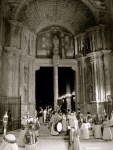
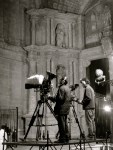
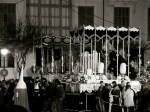
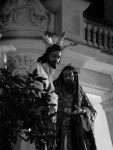
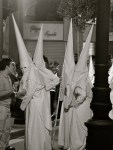
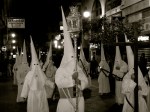
DSC05779DSC06330 DSC06324 DSC05841 DSC06334DSC05827

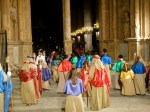
The processions in Mallorca are smaller than the Andalucian affairs, but lose none of their power as a result. This is created largely thanks to the brass bands which play stirring, chromatic melodies which are enough to bring tears even to the eyes of even the most hardened atheist. Meanwhile, the pointed nazareños amble slowly along, burning a passage of candles as they process, and behind them, a life-size statue, normally Jesus or Mary, is carried along on a trono (throne). In Andalucia, these are carried by a number of men baring the huge weight of both the statute and its often elaborately gilded platform. Here I was interested to see that the tronos were carried by men actually hidden underneath the platform, and surrounded by curtains, so that all that could be seen of the men were their feet making the painstaking journey through Palma’s streets.

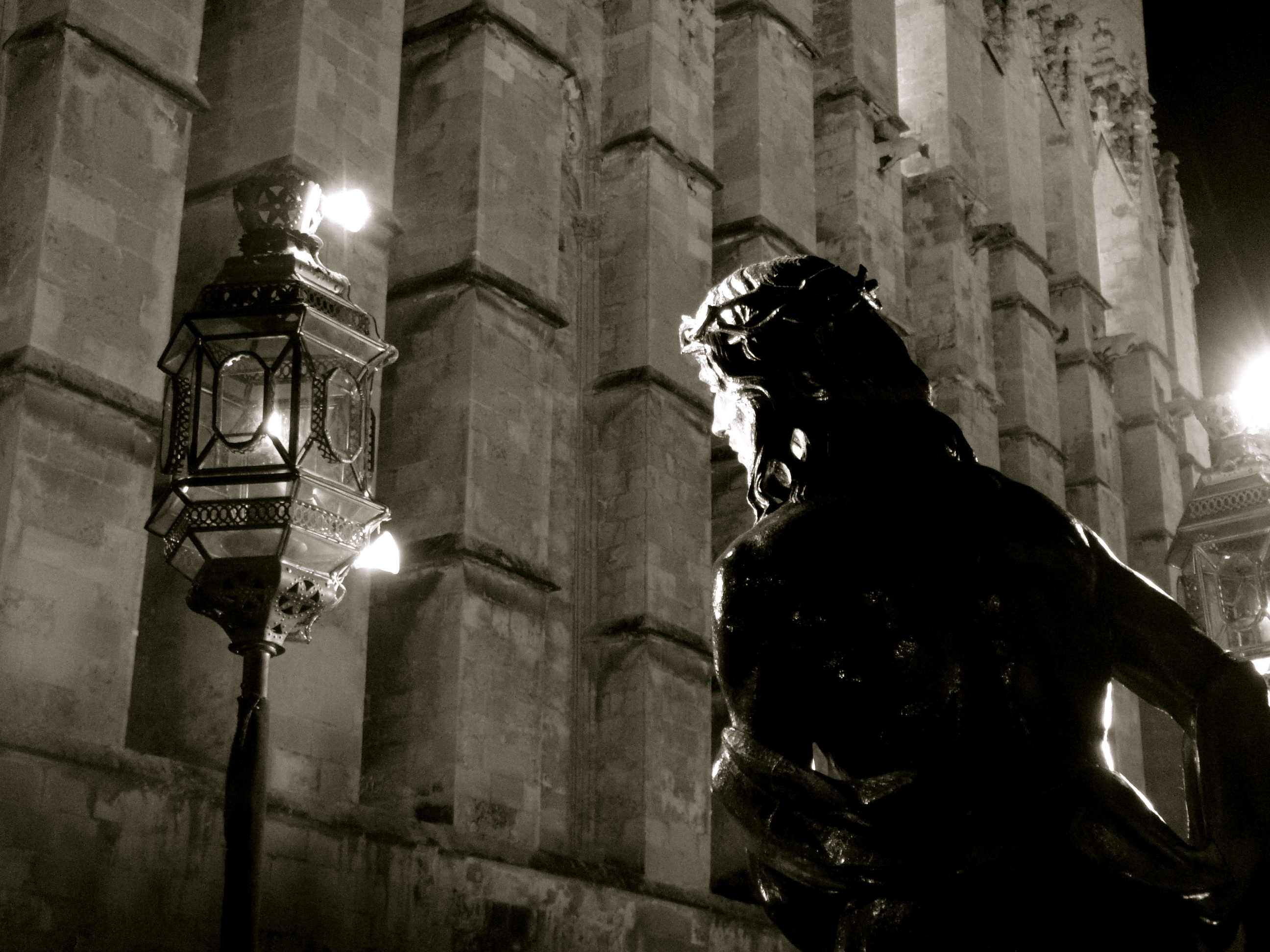
These powerful processions are not easy to capture on camera, being that it is often dark, and the parades are always moving. However, I managed to take a few shots which I feel encapsulate the atmosphere and pomp of these wonderful spectacles. Testament to their rich tradition, and also by way of building in further atmosphere, I have taken these shots in black and white, something which I feel really lends itself to the solemnity and distinctive quality of the occasion. Without further ado, I leave you with a gallery of shots.

All photos and written content are strictly the copyright of Nicholas de Lacy-Brown © 2013 and The Daily Norm. All rights are reserved. Unauthorized use and/or duplication of the material, whether written work, photography or artwork, included within The Daily Norm without express and written permission from The Daily Norm’s author and/or owner is strictly prohibited. 

Mallorca (Part I) – Day 1: Banoffee bienvenido back to the good life

Mallorca, the biggest of Spain’s Balearic Islands, is too often mistaken for being the haunt of booze-loving Brits, in pursuit of 24/7 clubbing, imported fish and chips, and roasting themselves red in the sunshine. Sure, that horribly embarrassing stain on the island presents itself in the form of the town of Magaluf and its immediate surrounds, but being that the town is on a self-contained peninsular, it can be very easily avoided. In the meantime, the rest of the island presents some absolute gems, natural landscapes which are so stunning, colourful and gigantic in scale and spectacle that the phrase picture-perfect doesn’t quite cover it. Meanwhile, in a semi-circular bay south of the island, the Mallorcan capital of Palma is a cultural hot bed, a city of effluvious and dynamic gastronomic, artistic, architectural and historical offerings and which, for the capital of a small island which is only 59 miles across, is quite incredibly self-sufficient in state of the art transportation, contemporary accommodation, boutique shopping and served by an ample airport close by.

Flying across mountainous Mallorca

Flying across mountainous Mallorca

It was to Mallorca, and more specifically its capital, Palma, that my partner and I went this Easter, escaping the unseasonably depressing frost-bitten lows of the current UK climate, welcoming in 2013’s official summer-time with temperatures which more appropriately beckoned in the summer season, and weather which showered gold sunlight upon an already magnificent city.

Day one was more of a half day, but that’s not bad. Despite getting up later than I would otherwise drag myself out of bed for work, and after ambling along to the airport for a midday flight, we were in Mallorca at 3pm local time, stripping off the layers of winter gloom, both clothing and spiritual depression, as we emerged into the glowing sunshine.

A short bus ride (made longer by the fact that we weren’t overly sure where to hop off) took us central to our hotel, the super chic Scandinavian owned Hotel Tres, where two roof terraces and a glass-sided plunge pool forged into the side of the terrace gave us ample platform to gawp at the stunning city-centre view of the immense gothic cathedral, La Seu, and gaze in wonder at the potent blue sky.

La Seu seen from the roof of the Hotel Tres

La Seu seen from the roof of the Hotel Tres

Palma viewed from above

Palma viewed from above

The pool of the hotel

The pool of the hotel

La Seu

La Seu

The hotel's inner courtyard

The hotel’s inner courtyard

DSC05937

Our welcome to Palma was affirmed by a trip to the nearby Grand Cafe Cappuccino under the sun-drenched colonnades of the Palacio March. Cappuccino, my favourite cafe chain, which emerges from Mallorca but can also be found in my beloved Marbella and Valencia, is bound to feature often in my account of Mallorca. For we intend to make a point of sampling as many of the chain’s exquisitely atmospheric branches across the island as possible, whether they be by the beach or in the city centre. For Cappuccino is a café of consistently high quality, with a soundtrack compilation by Pepe Link which is effortlessly cool, mixing cool jazz and bossa nova with trendy club vibes in the evening. The service is always smooth, and the height of efficiency and the waiting staff easy on the eyes. And above all things the coffee and the food is well worth travelling to Mallorca for.

DSC05720

The umbrellas and atmosphere of Cappuccino Grand Cafe

The umbrellas and atmosphere of Cappuccino Grand Cafe

DSC05736 DSC05699

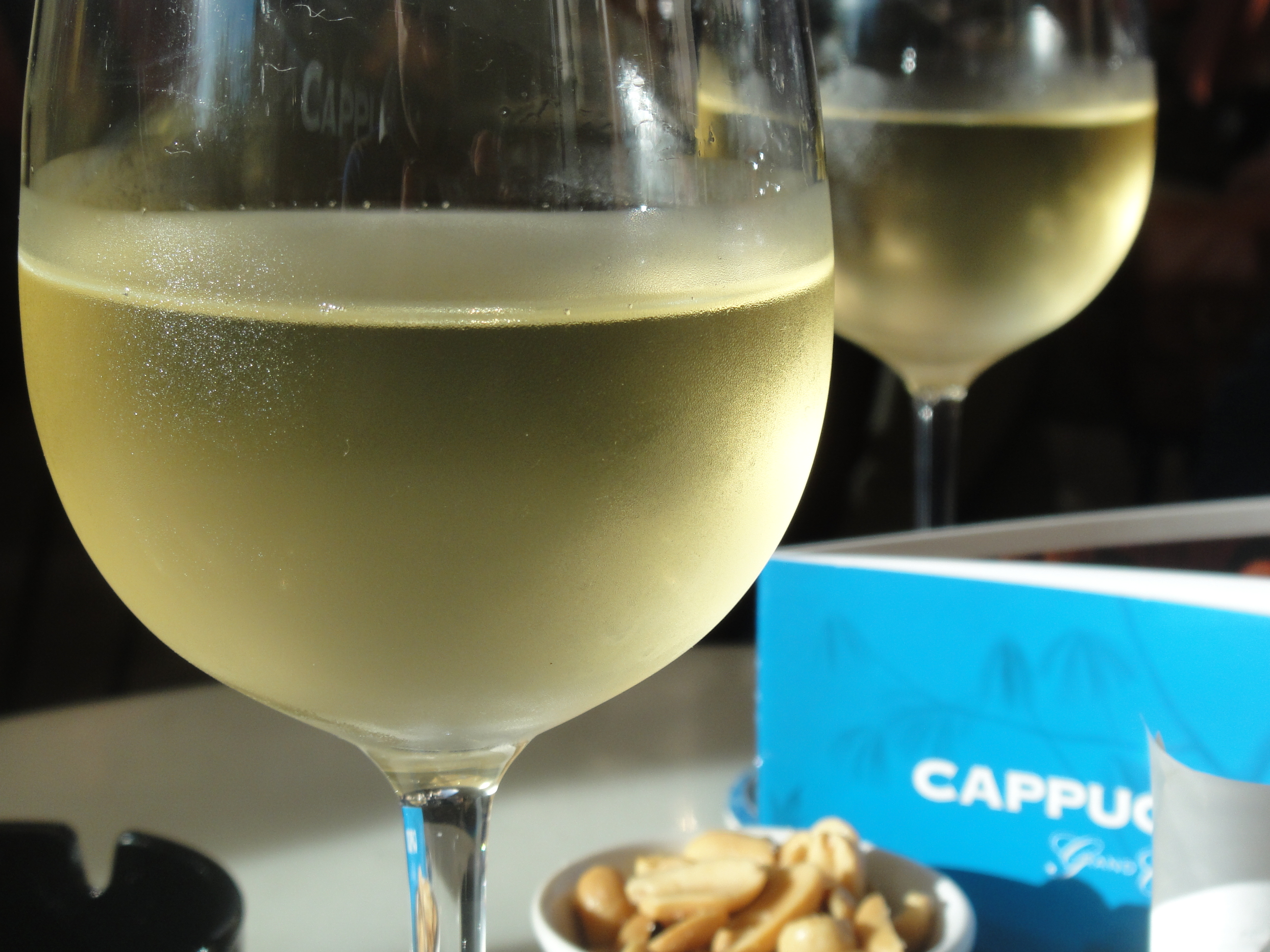
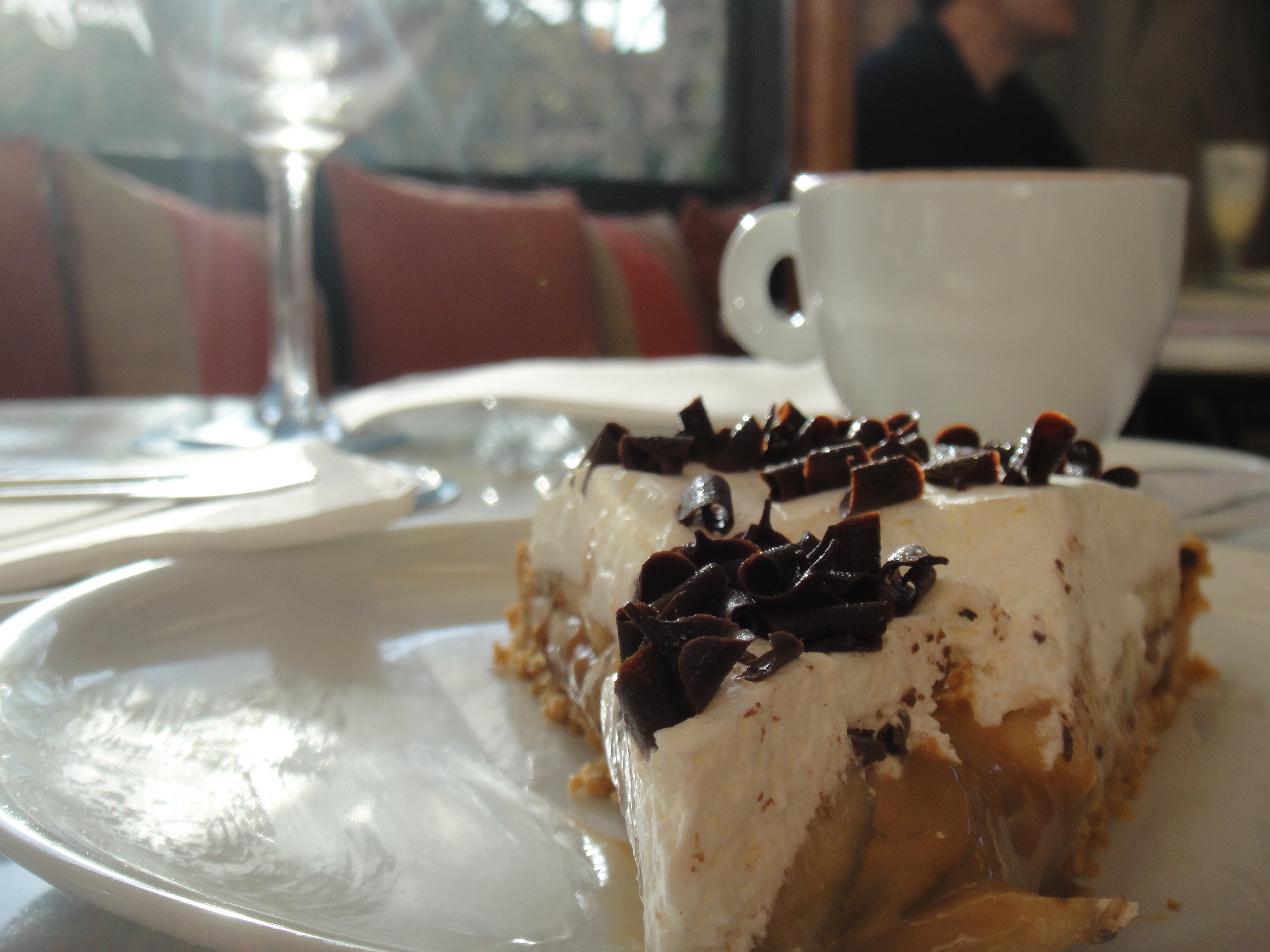
So there it was, under the hazy sunshine of an early Spring evening, that we were served what we had long been waiting for – two glasses of white wine, a plate of super-fresh sushi (sure beats airplane food) and the ultimate in dessert indulgence – an oozing, abundant, creamy and crumbly banoffee pie, a plate of such spectacular hedonistic pleasure that in that moment, as the cool caramel, smooth banana, heady cream and buttery biscuit base hit our palates, we were welcomed back to the good life, the ultimate in Spanish sun-drenched pleasure.

Worth travelling the world for

Worth travelling the world for

DSC05710

That incredible oozing banoffee

That incredible oozing banoffee

DSC05728

Welcome to Mallorca, the sunshine island, of crystal clear waters, lush mountainous landscapes, and a hearty Spanish vibe. Many posts will surely follow as I share with you my diary account of the trip, and above all things my vast panoply of photos. I therefore hope that through The Daily Norm, you too will journey with me straight into a Mallorcan summer, taking your first virtual holiday of the Spring.

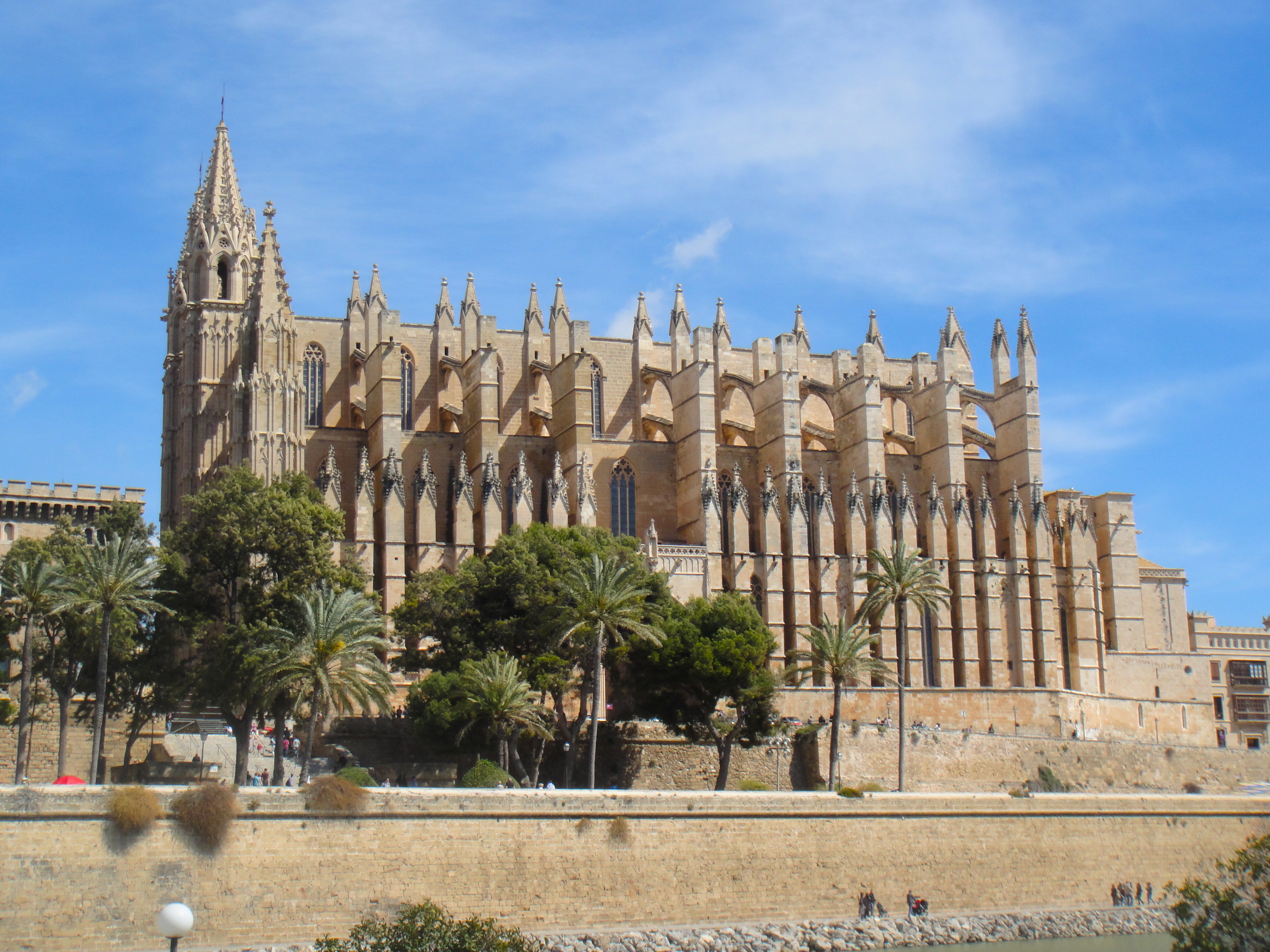
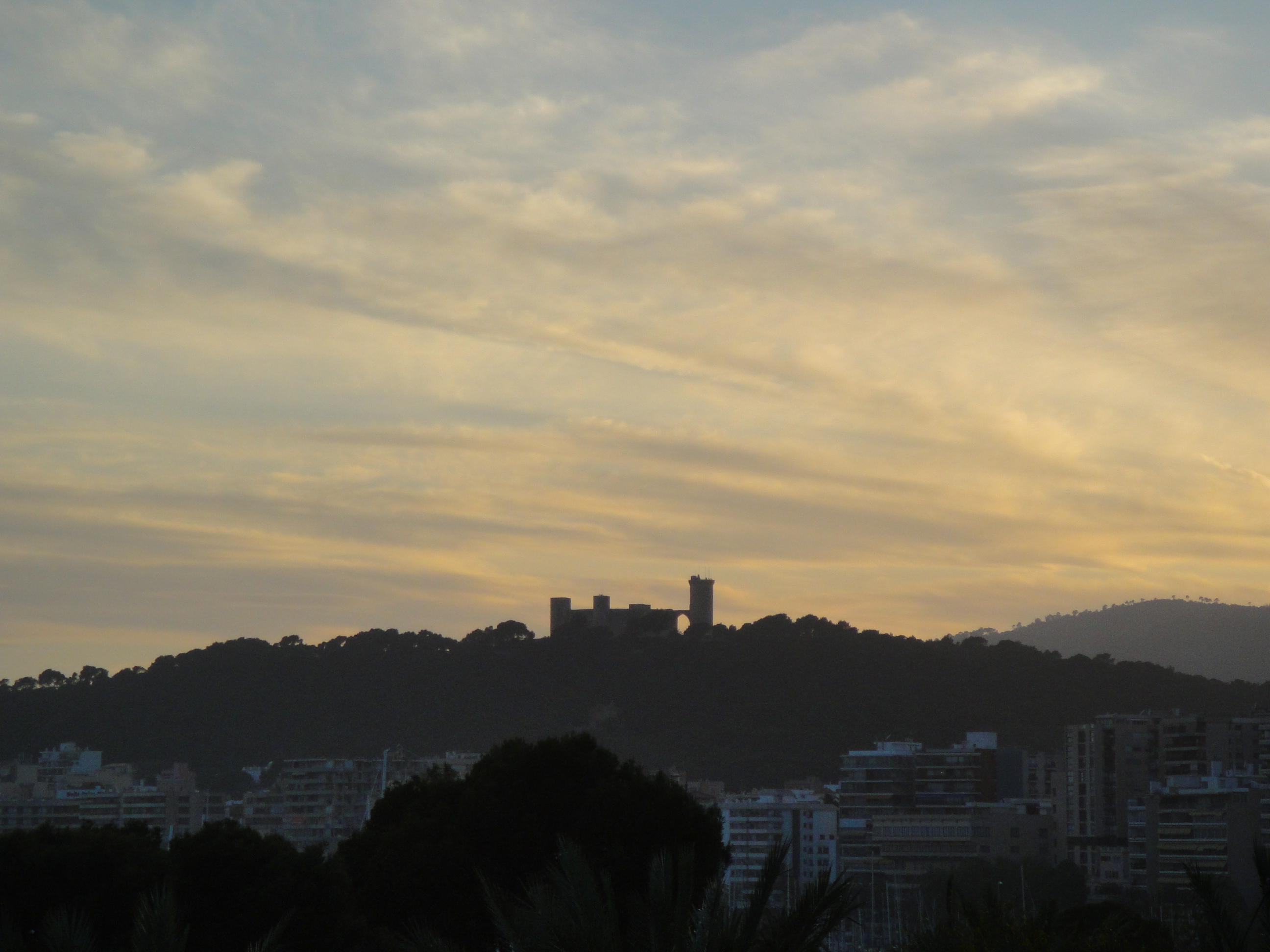
I leave you with a few more photos of our walk that first afternoon, seeing the magnificent cathedral of Palma from up close and all around, revelling in the vivid blue skies, and gazing over to Bellver castle at sunset. There is much to follow…so see you there!

The cathedral up close

The cathedral up close

DSC05759

And from the side

And from the side

DSC05750

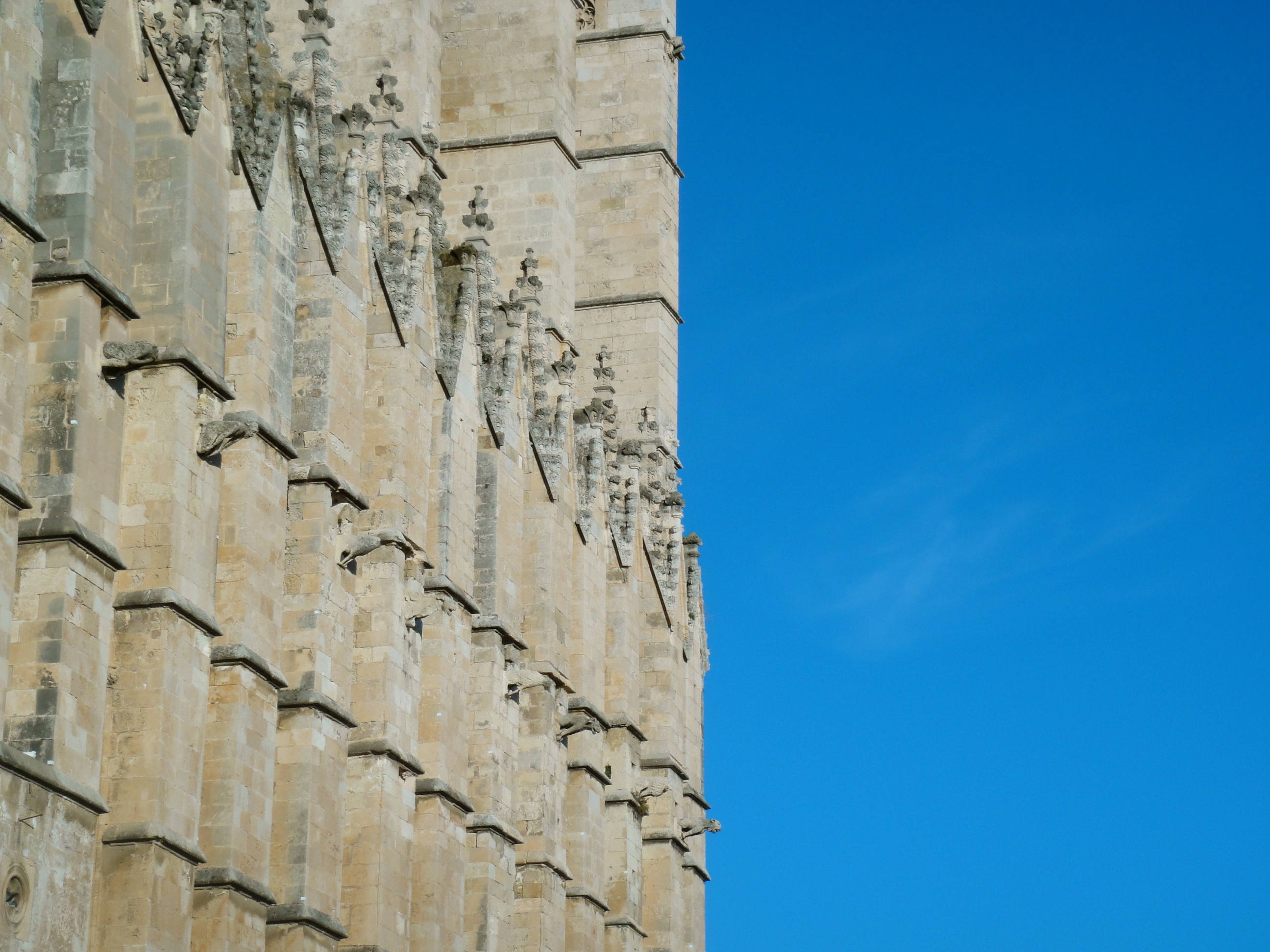
Stunning gothic details make La Seu particularly distinctive

Stunning gothic details make La Seu particularly distinctive

Bellver Castle

Bellver Castle

All photos and written content are strictly the copyright of Nicholas de Lacy-Brown © 2013 and The Daily Norm. All rights are reserved. Unauthorized use and/or duplication of the material, whether written work, photography or artwork, included within The Daily Norm without express and written permission from The Daily Norm’s author and/or owner is strictly prohibited. 
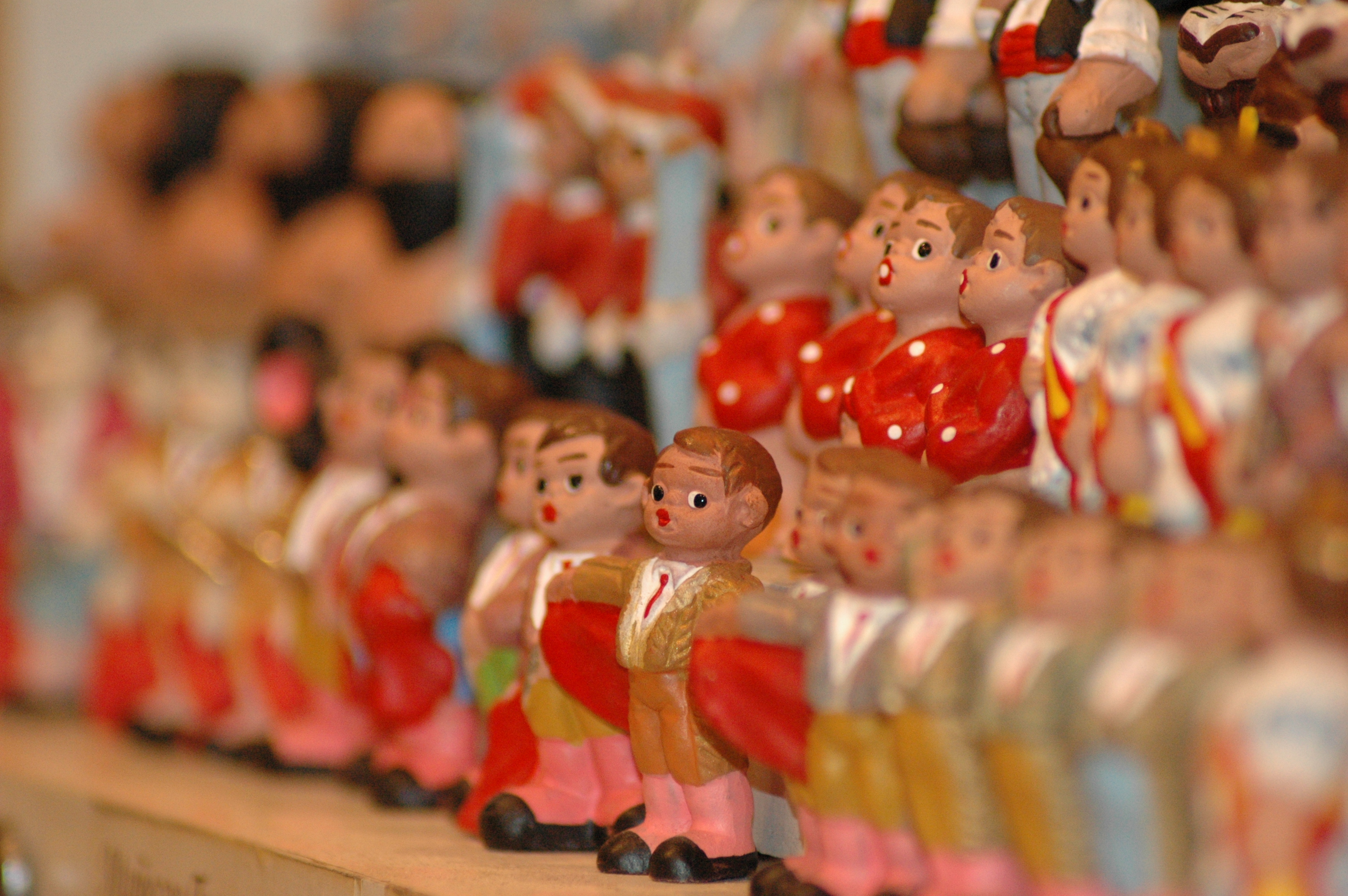
Dulces de Convento

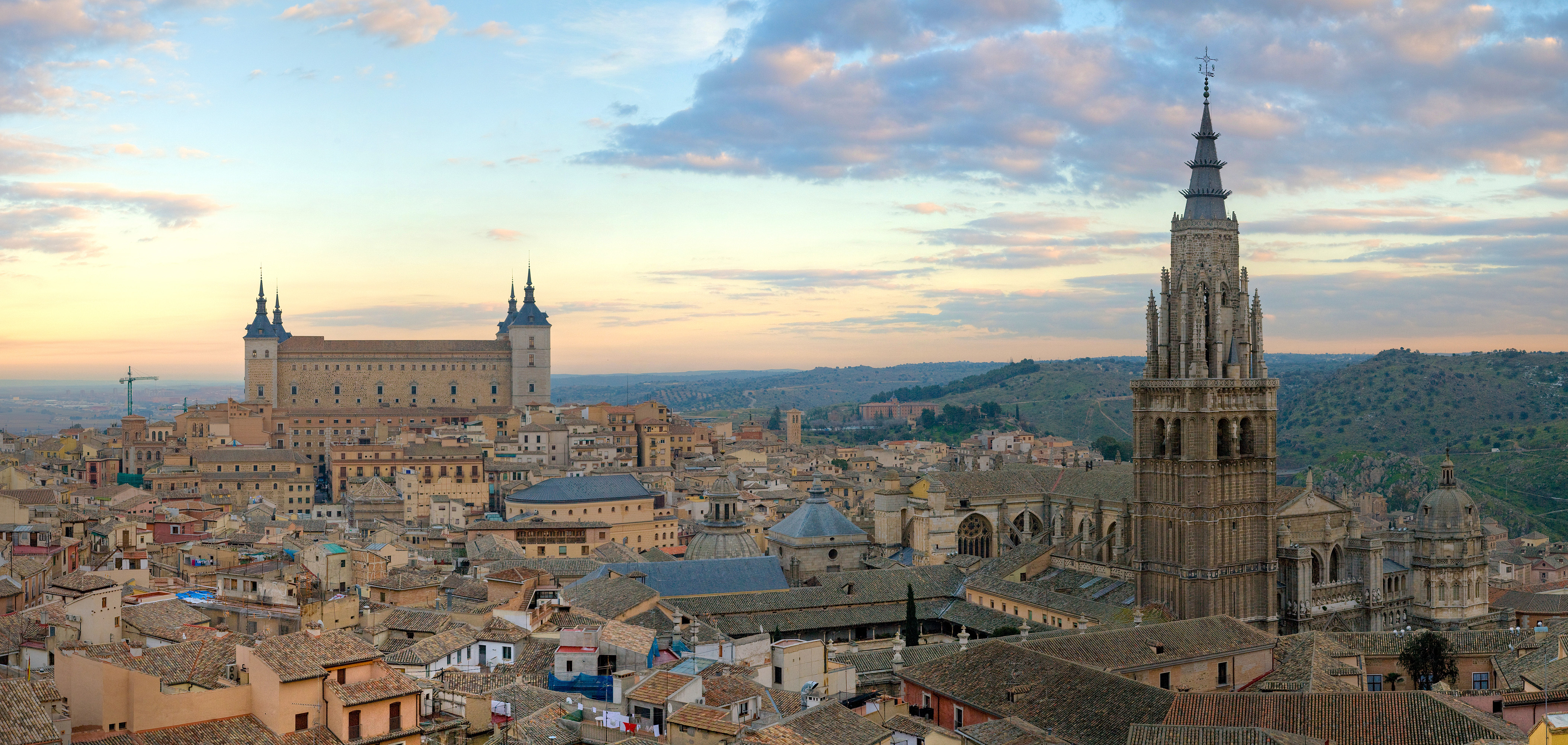
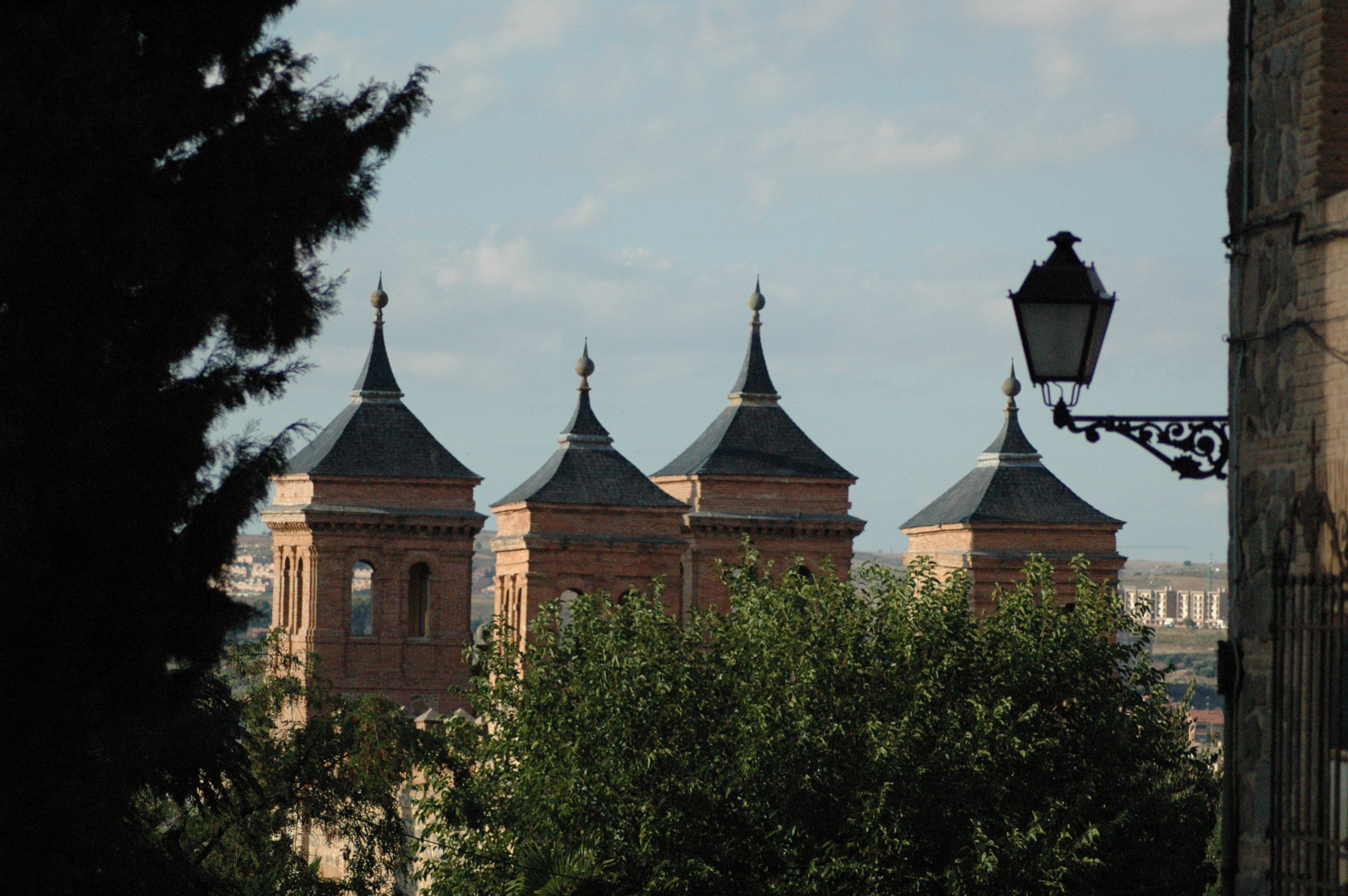
I’m not sure what it is about Easter which makes me think of Spain’s greatest export, marzipan, as I gather that the little soft almond sweets are more the preserve of Christmas time than Semana Santa. But then again, mazapan, as the spanish call it, is a sweet originating from the closed convents of one of Spain’s most fervently religious strongholds, Toledo, and it is perhaps understandable therefore that my mind drifts to this very sacred city around this Easter time.

IMG_3673

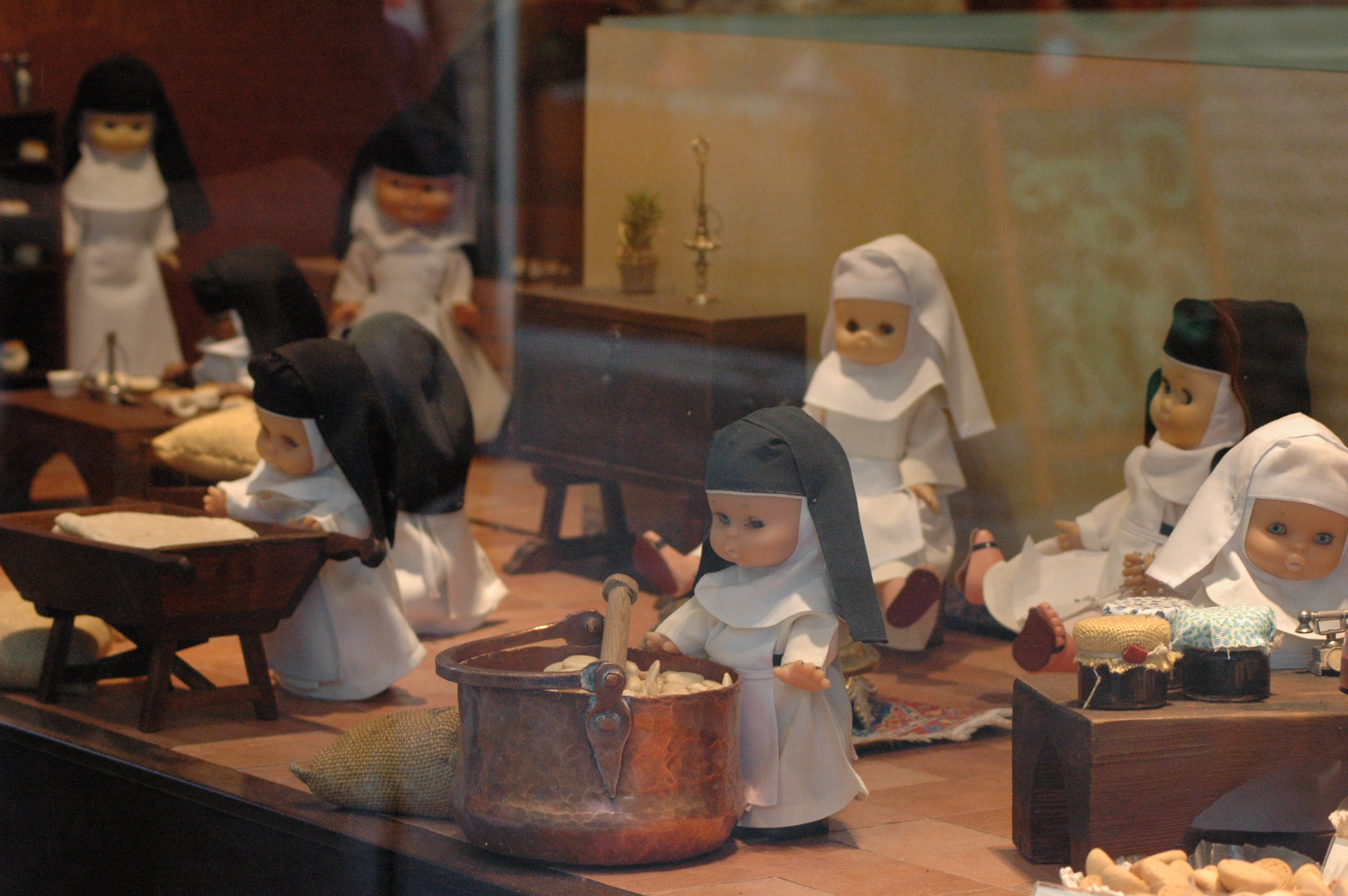
I was never a great lover of marzipan as a child – perhaps the almond flavours were too bitter for my very junior tastes. But when I visited Toledo a few years ago with my mother, I became completely seduced by these little sweet treats, which could be found everywhere, from little corner shops to cafes filled with little (slightly surreal) dolls of nuns captured in the act of marzipan making.

The beautiful city of Toledo

The beautiful city of Toledo

DSC_0193

A Toledo cafe

A Toledo cafe

DSC_0309 DSC_0308 DSC_0391

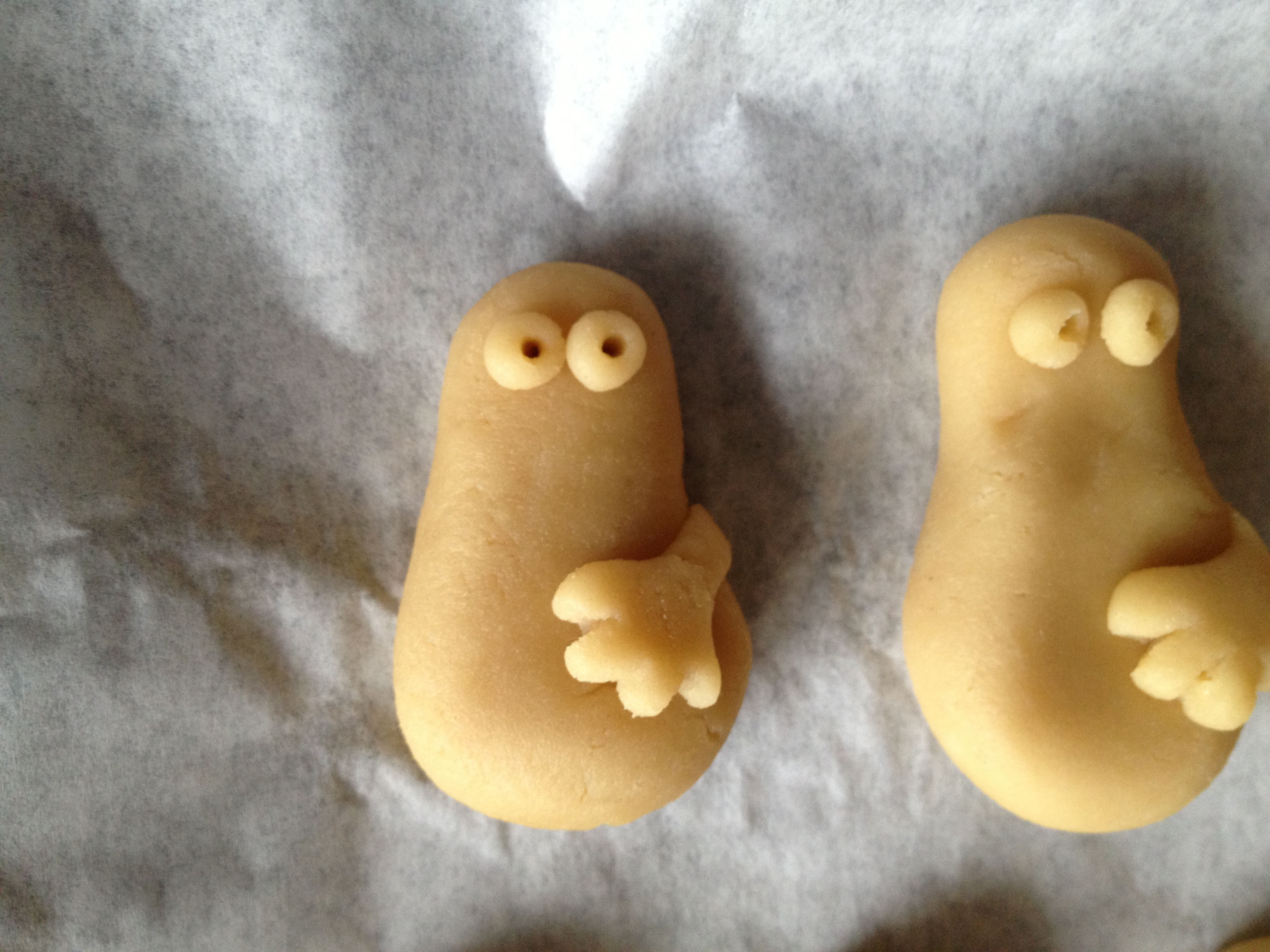
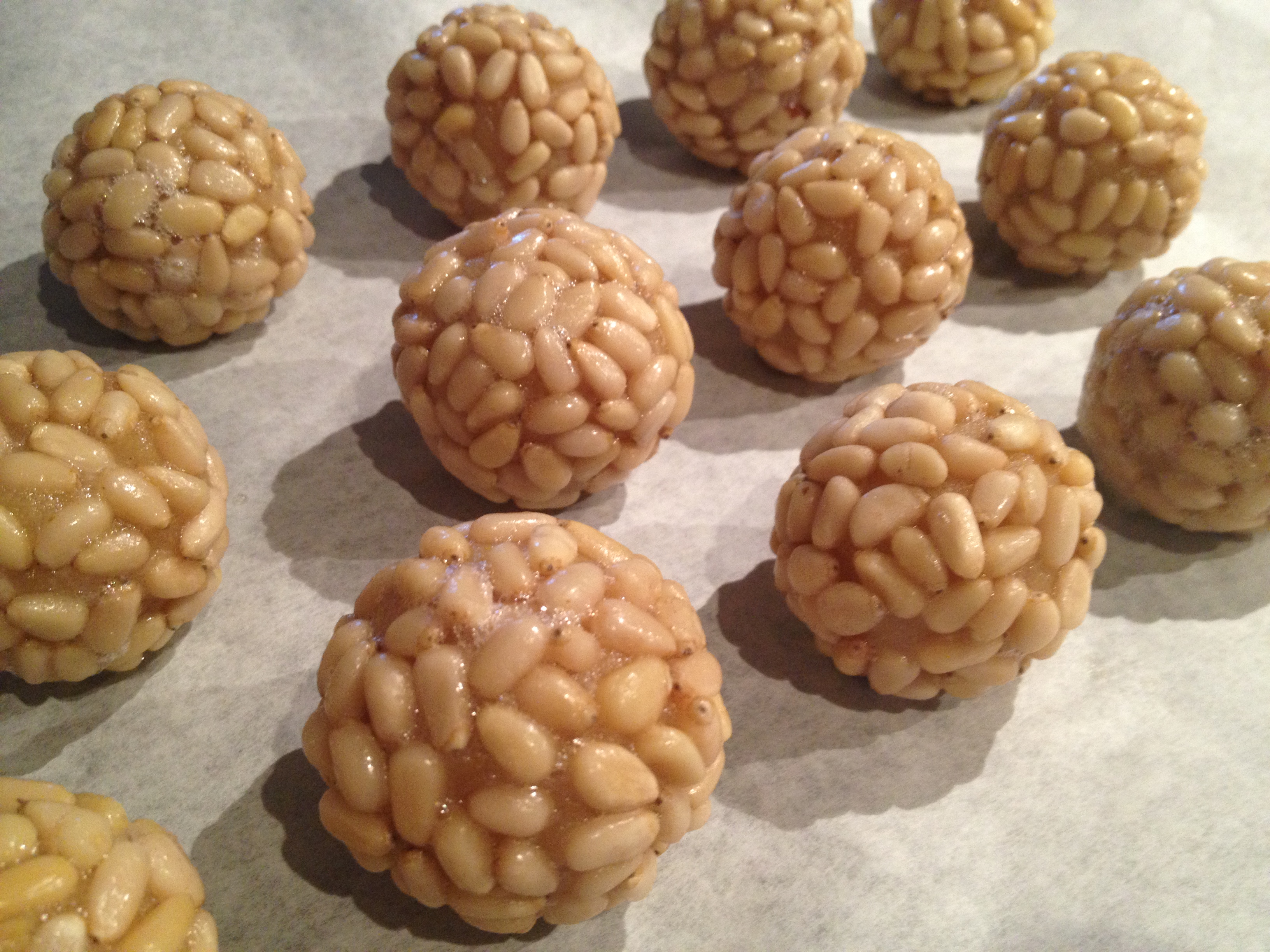
While marzipan lasts a fair length of time (they contain no dairy, so stay fresh for a while), even those I bring back from Spain each visit in earnest do not last for long (partly because I scoff them fairly rapidly). It’s come a great relief therefore to learn that marzipan is so easy to recreate in your own home – if you’ve got some ground almonds and sugar, you’re pretty much there. For an Easter treat I decided that the Norms needed to become manifested as marzipan forms. But feeling like a little variety, I also made these delicious panellets de piñones – a succulent, slightly coarser lemony marzipan surrounded by a pine nut shell – delicious!

Mazapan de Toledo

My marzipans are adapted from the recipes of Claudia Roden (in her 2012 book, The Food of Spain) which are in turn a treasure-trove of recipes collected from across the multifarious gastronomic regions of Spain. For the Marzipan Norms, all you need to do is whizz up 200g of ground almonds with 200g of icing sugar in a food processor. Add around 3 drops of almond extract (being careful not to add more as the flavour can become overpowering very quickly) and 2-3 tablespoons of water, one at a time. You don’t need much water as the almond oil holds the mixture together. Knead into a smooth soft paste and then you are ready to start modelling.

My Norms, awaiting their fate

My Norms, awaiting their fate

IMG_3626

The beauty of marzipan is that the world is quite literally your oyster. You may want to model yours into Norms, but equally, why not try little balls, or as in Toledo itself, how about a mixture of figuritas shaped into fish, snails, shells, saint’s bones…whatever takes your fancy. Once they’re shaped, leave the marzipan figures out on a baking tray. They’ll soon go harder on the outside. After a few hours, lightly whisk up the whites of one egg with a tablespoon of icing sugar and brush a very little on the marzipans to create a glaze (you really don’t need much). Place them under the grill for a minute or in the over at 200C for 2 minutes until slightly browned.

Panellets de Piñones

IMG_3667

These panellets are a delicious, slightly more complex version of plain marzipans, but the method is similar. Whizz up 200g ground almonds with 150g caster sugar and the grated zest of 1 lemon, with 2.5 tablespoons of water. Plend for a few minutes until the almond oils start to really bind the paste. Break this into equal sized pieces and roll into balls (I got around 16 at around 4 cm in diameter each). Then comes the tricky bit. Roll the balls in a lightly whisked egg white and then into a bowl of around 200g of pine nuts. Press as many as you can into the marzipan in the palms of your hands. But inevitably some with fall off so you’ll have to fill the gaps with the nuts by hand, pressing them in slightly. This is slightly time consuming and fiddly, but SO worth the effort. Once you have a complete “shell” of pine nuts, roll again in egg white and set out on a baking tray.

IMG_3653

Once all your balls are all covered, pop them into an oven at 200C for 10 minutes until slightly golden. Once done, you’ll need to leave them to cool slightly before taking them off the tray, or they will quickly break apart.

IMG_3676

All that remains is for me to wish everyone reading The Daily Norm a Happy Easter, and a fiesta of unapologetically unrestrained chocolate egg and marzipan indulgence!

Autobiographical Mobile: My painting diary – Day 19: Infanta España

The third of my passions, represented upon the left arm of my autobiographical mobile, is my indisputable love affair with Spain, and with art history. If my heart lives in Paris, then my soul resides in Spain. The chromatic, melancholy chords of a flamenco guitar reach straight into my soul, transporting me to a place of almost otherworldliness tranquility, a land enriched with Moorish heritage, baked in the unyielding summer sun, bearing the scars of a bloody civil war and the ardor of a religious inquisition, wafting afresh with the scents of garlic and pigs and pimenton, sweet syrups and blossoming orange and almond trees, and giving birth to some of the greatest creative minds ever known. Spain is every bit a part of me as the country of my birth, and continues to inspire me in so many areas of my creative manifestation.

DSC_0477

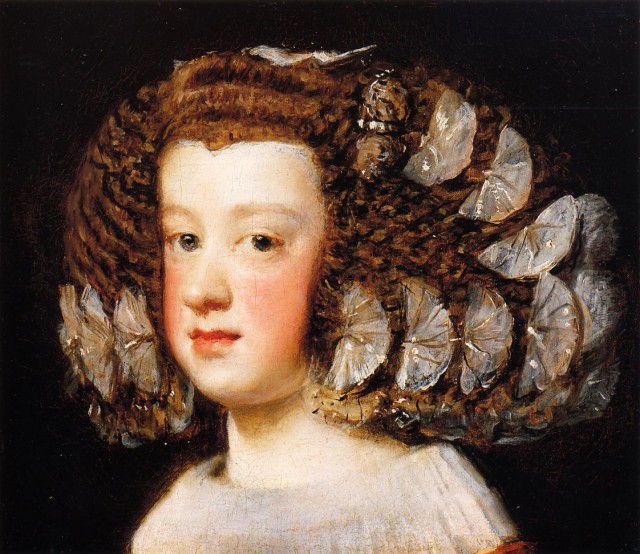
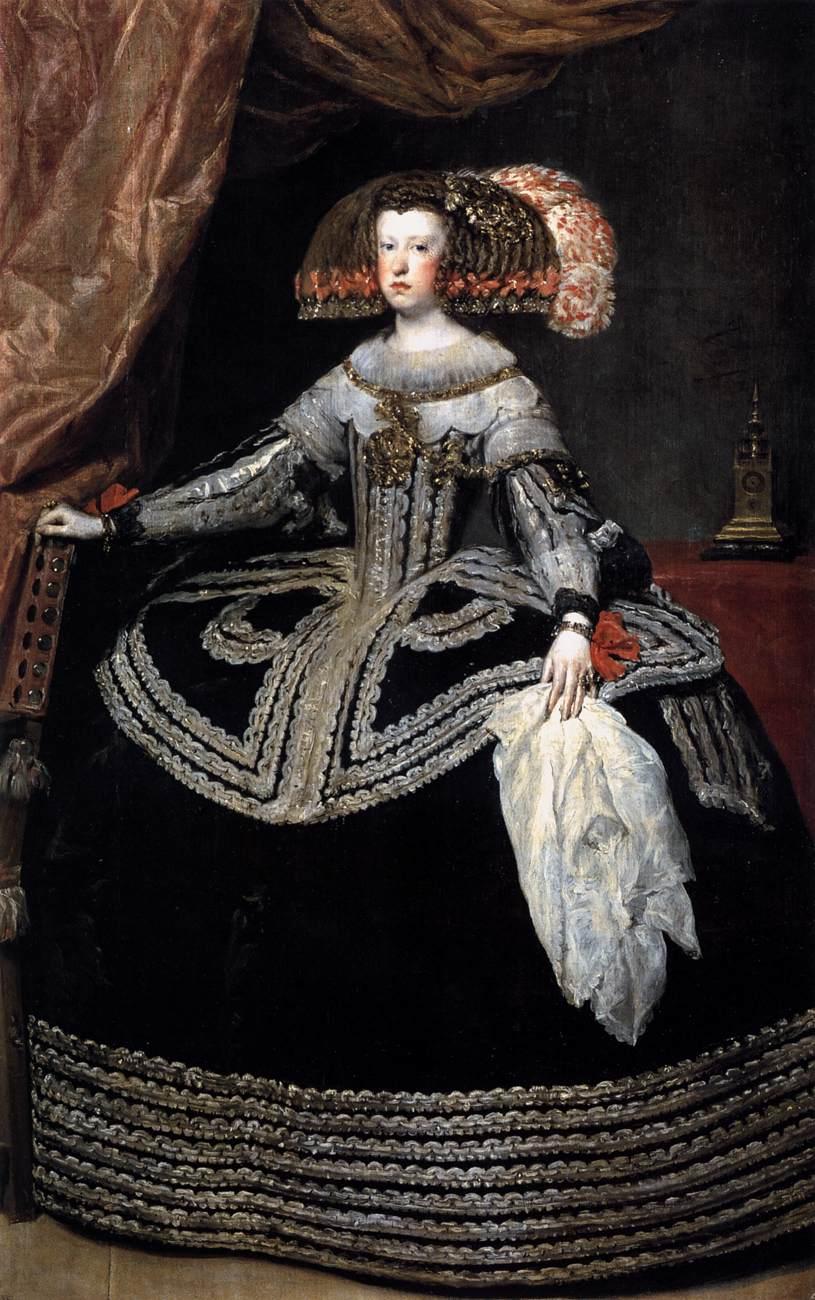
Since Spain occupies so many of my thoughts and pleasures, it is unsurprising that in pursuing that other great passion – art history – I have enjoyed a particular focus on the art of Spain, from the incredible innovation of El Greco and the dark, disturbing black paintings of Goya, to the iconic court portraits of Velázquez’s big-skirted princesses, the exquisite surreal mastery of Dali and the fragmented multi-faceted masterpieces of Picasso.

Velázquez's original Infanta portraits

Velázquez’s original Infanta portraits

357136 Diego Velazquez - Infanta Maria Teresa queen-mariana-of-austria-16531354741336843

Las Meninas

Las Meninas

Only one image could perfectly capture these dual loves of Spain and art history: Velázquez’s Infanta, the now iconic image of the Spanish Royal Princess in the court of King Philip IV. These world-famous portraits, centrepieces of Madrid’s Prado gallery and culminating in the breathtaking masterpiece, the group portrait Las Meninas, have inspired countless generations of artists, amongst them Dali and Picasso. I painted my own version of the Velázquez greats in the form of Infanta Norm, and could not resist exploring the image again in this representation of Spain.

Infanta Norm (After Velázquez) (2011, acrylic on canvas) © Nicholas de Lacy-Brown

Infanta Norm (After Velázquez) (2011, acrylic on canvas) © Nicholas de Lacy-Brown

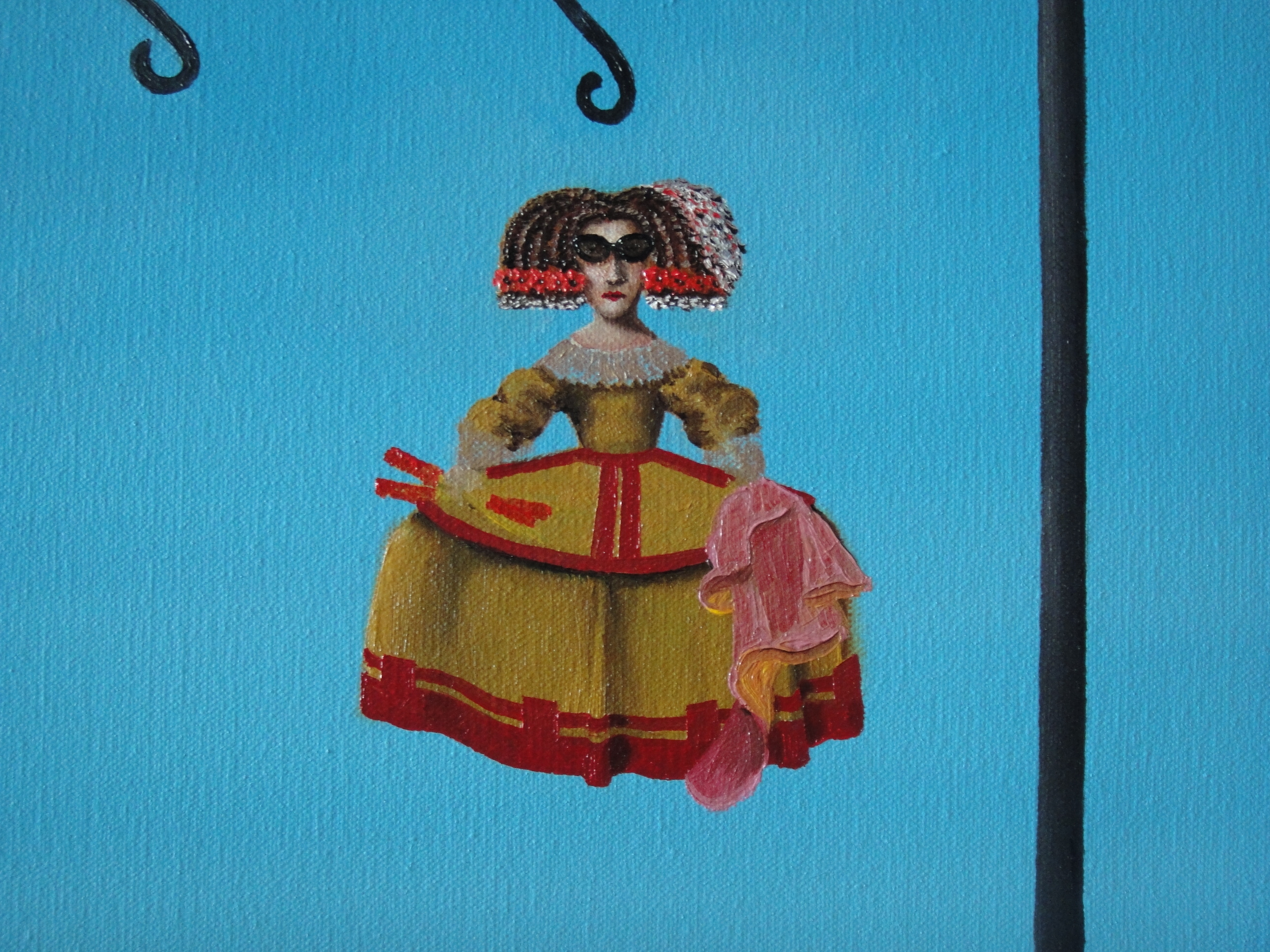
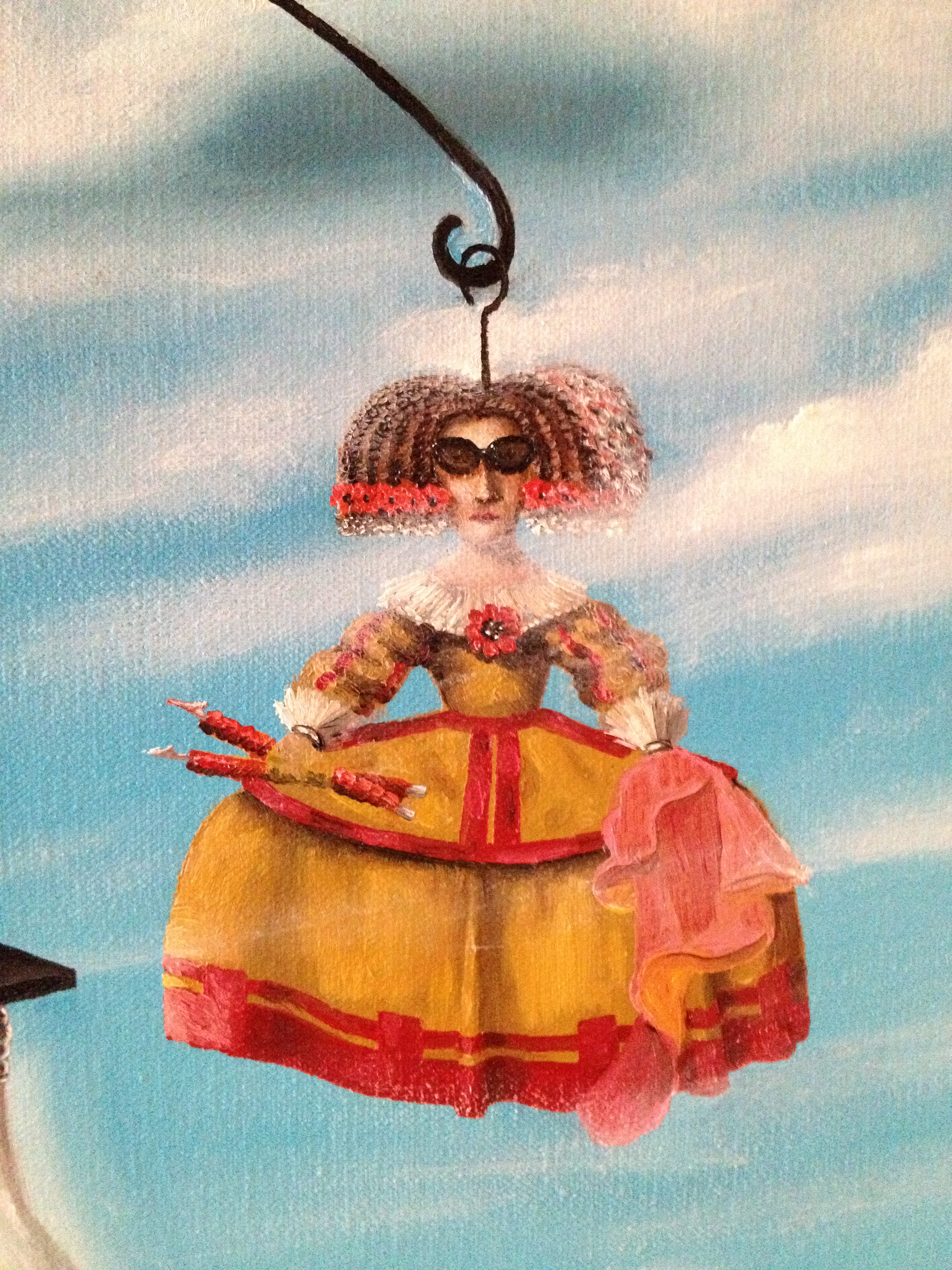
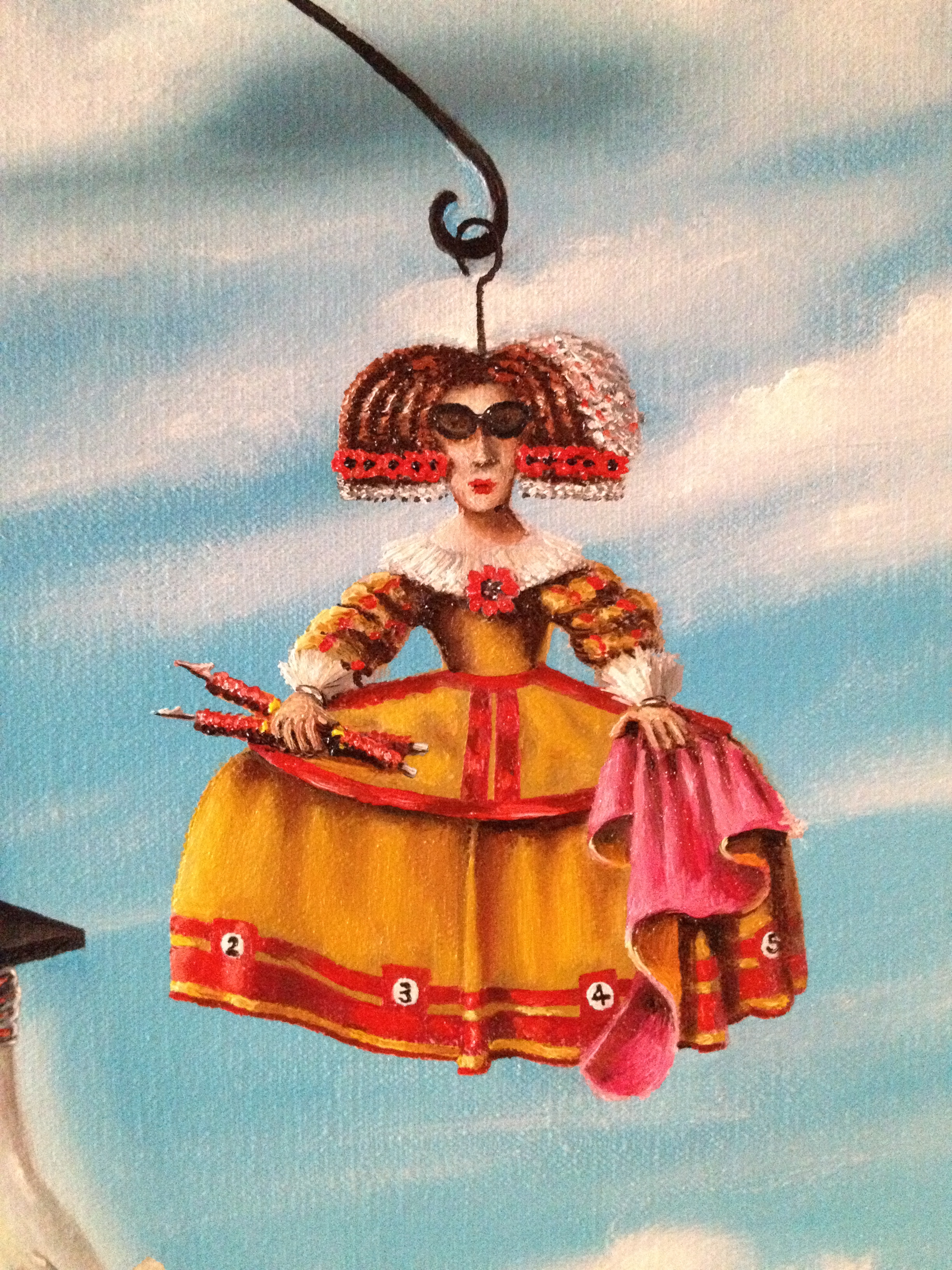
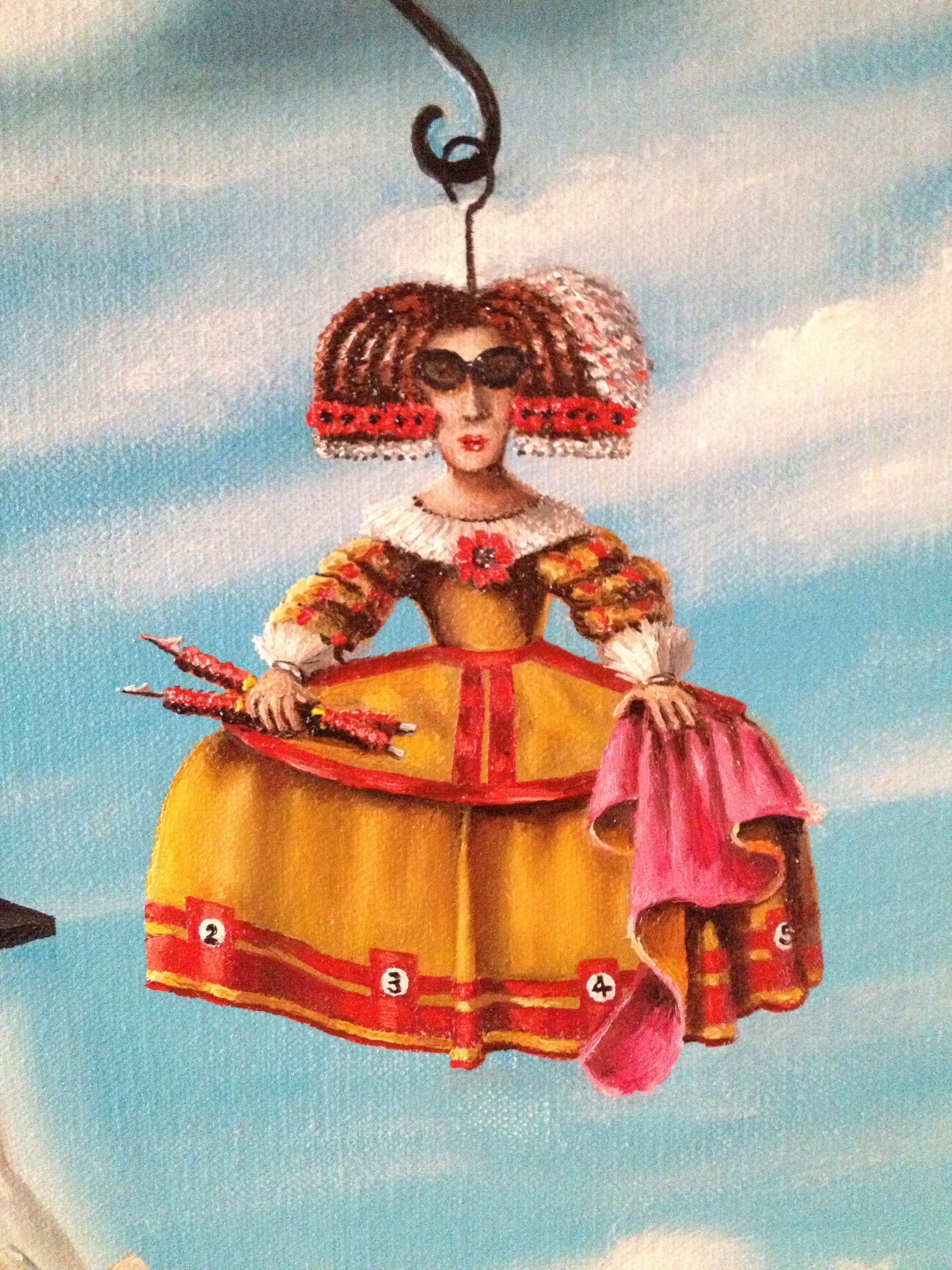
My new image of the Infanta is also a representation of Spain, with her dress painted to resemble both the colours of the Spanish flag and also a bull ring. I always loved Bullfighting as a teenager, and while the bloody sight of death in the afternoon was always a shocking one for someone unused to such a spectacle, there is no denying the elegance of the matador’s costumes (the traje de luces), the contrast of red against the black of the panting bull, the grand parades of the picadores, and the wonderful pomposity of the emboldening paso doble playing in the background. By way of further representation of the Corrida, my Infanta España holds the banderillas which are inserted into the taunted bull, and the pink and gold capote (cape) which is waved in front of its maddened eyes.

My Infanta España in progress

DSC02005 DSC02009 DSC02029 IMG_3618 IMG_3632

The finished Infanta España

The finished Infanta España

But Spain isn’t just about the bull fighting. Also represented is Spain’s all important tourism industry, here illustrated through my Infanta’s rather fetching sunglasses. We British could do with a bit of that sun right now…

Until next time – Viva España!

Marbella 760

© Nicholas de Lacy-Brown and The Daily Norm, 2001-2013. Unauthorized use and/or duplication of the material, whether written work, photography or artwork, included within The Daily Norm without express and written permission from The Daily Norm’s author and/or owner is strictly prohibited. Excerpts and links may be used, provided that full and clear credit is given to Nicholas de Lacy-Brown and The Daily Norm with appropriate and specific direction to the original content.
Dodging the rain: A weekend in Marbella

Even by my standards, booking a last minute trip to Marbella in southern Spain for a mere weekend seemed extravagant. Was it really worth trekking some 1000 miles out of London for just two days? The forecast on my phone had already dispelled any hope of a weekend in the sunshine, and the 2.5 hour flight time is always inevitably extended 3 fold by the time needed for check in and security on one end, passport control and the luggage carousel on the other, as well as multiple additional journeys linking airports both from and to my permanent and holiday accommodation. But unperturbed by these concerns, I set out last Friday lunchtime from Westminster tube station (taking the afternoon off work to give me a head start), quite determined to make a jolly good go of it. Joining my family (who are staying longer) on a trip to our Spanish holiday home, it was my intention to squeeze in the best bits of a Mediterranean holiday into a tight weekend, ready to back at work in London again the following morning. So how did it go?

IMG_3477

Just look at those colours

Just look at those colours

I love these cacti planted by the sea

I love these cacti planted by the sea

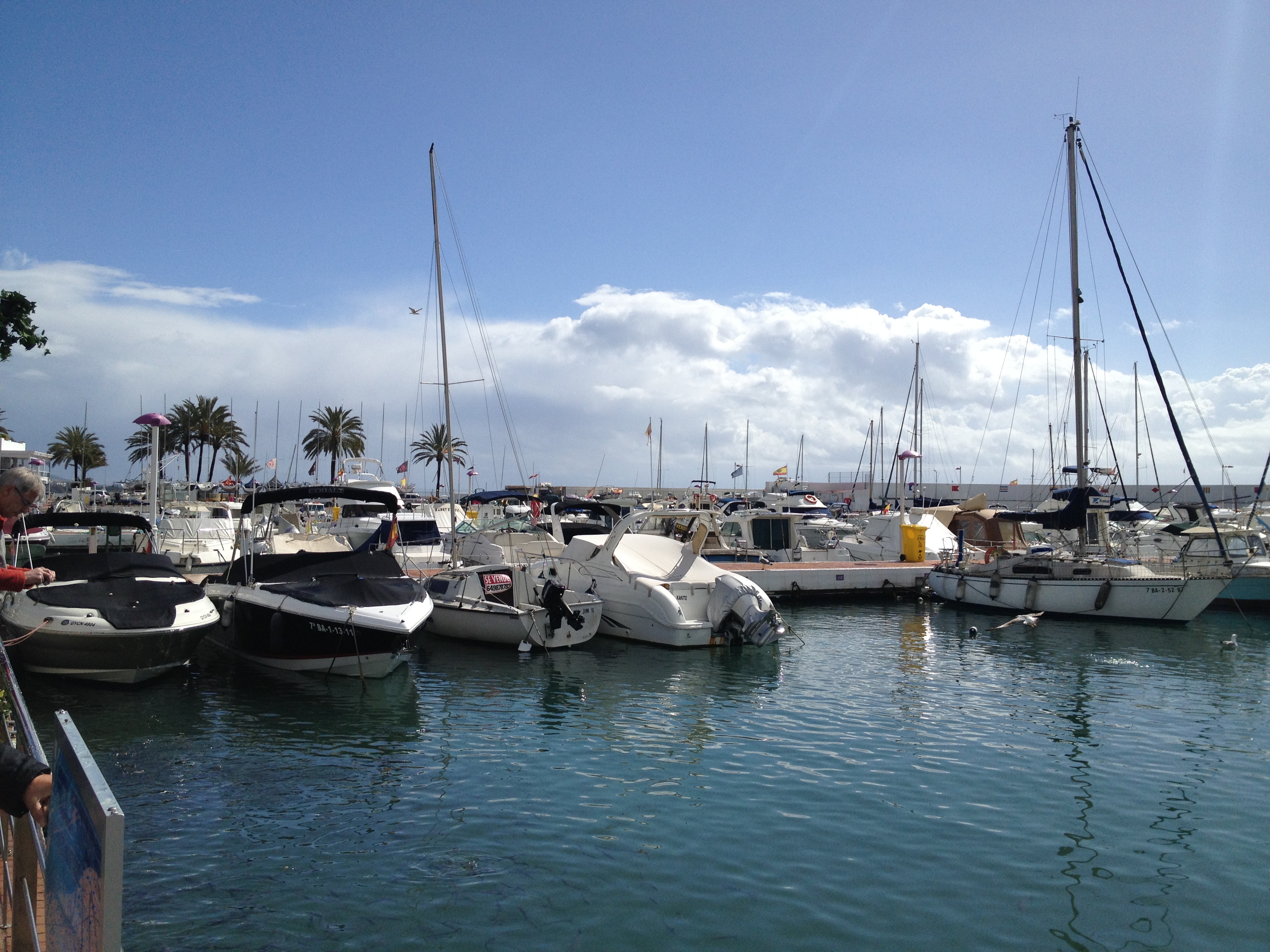
The Marina

The Marina

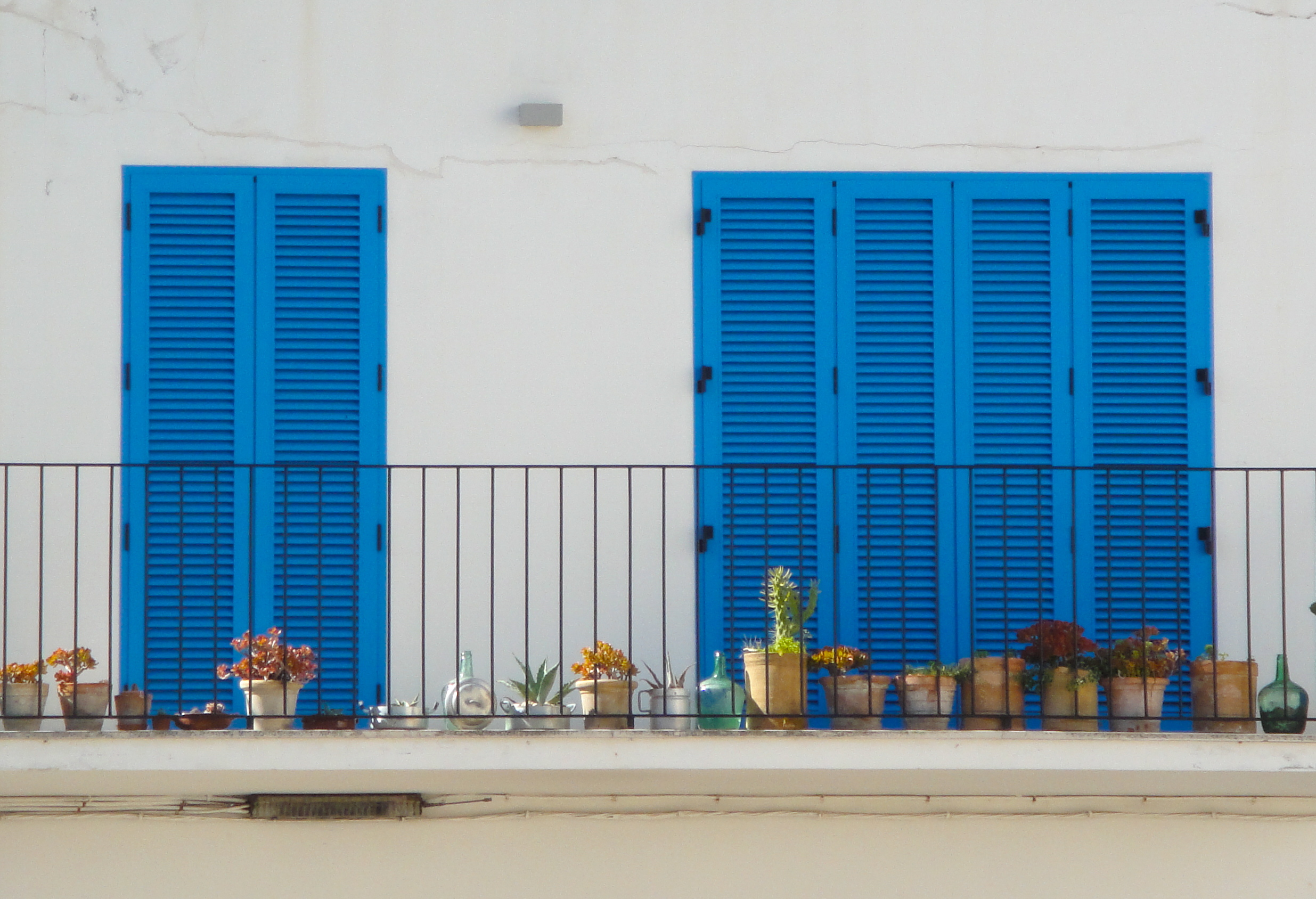
Despite 15 hours total travel and days spent constantly dodging the rain and running into the sunshine, I had a fantastic weekend as these photographs are testament. No sooner had I stepped out of my taxi into the quaint old town streets of Marbella, and eagerly breathed in the fresher air perfumed with the citrus scent of orange blossom and the subtle hint of garlic being cooked up in the old town cottages, I knew that in a matter of hours I had been transported to another world.

Albeit snapped quickly on my iphone, this small selection of photographs is testament to a weekend which had its fill of glorious spring-time sunshine, blues and turqoises the vibrancy of which you’d be hard pushed ever to find on the streets of London, food fit for a king and, inevitably, a fair dose of rain. Being that the trip was only 2 days, I felt constantly energised not to waste a single minute. Consequently from the moment of my arrival at 10pm on Friday night, I made the most of my stay, heading straight away to the nearest tapas bar where with a glass of full-bodied rioja in one hand and a fork-full of manchego, serrano ham and octopus salad in the other, I toasted the weekend of all weekends, the stress and worries and cold of London swept well away, and the summer pleasures which reignite with every new burst of sunshine slowly creeping through my wintered pale skin.

Some food highlights…

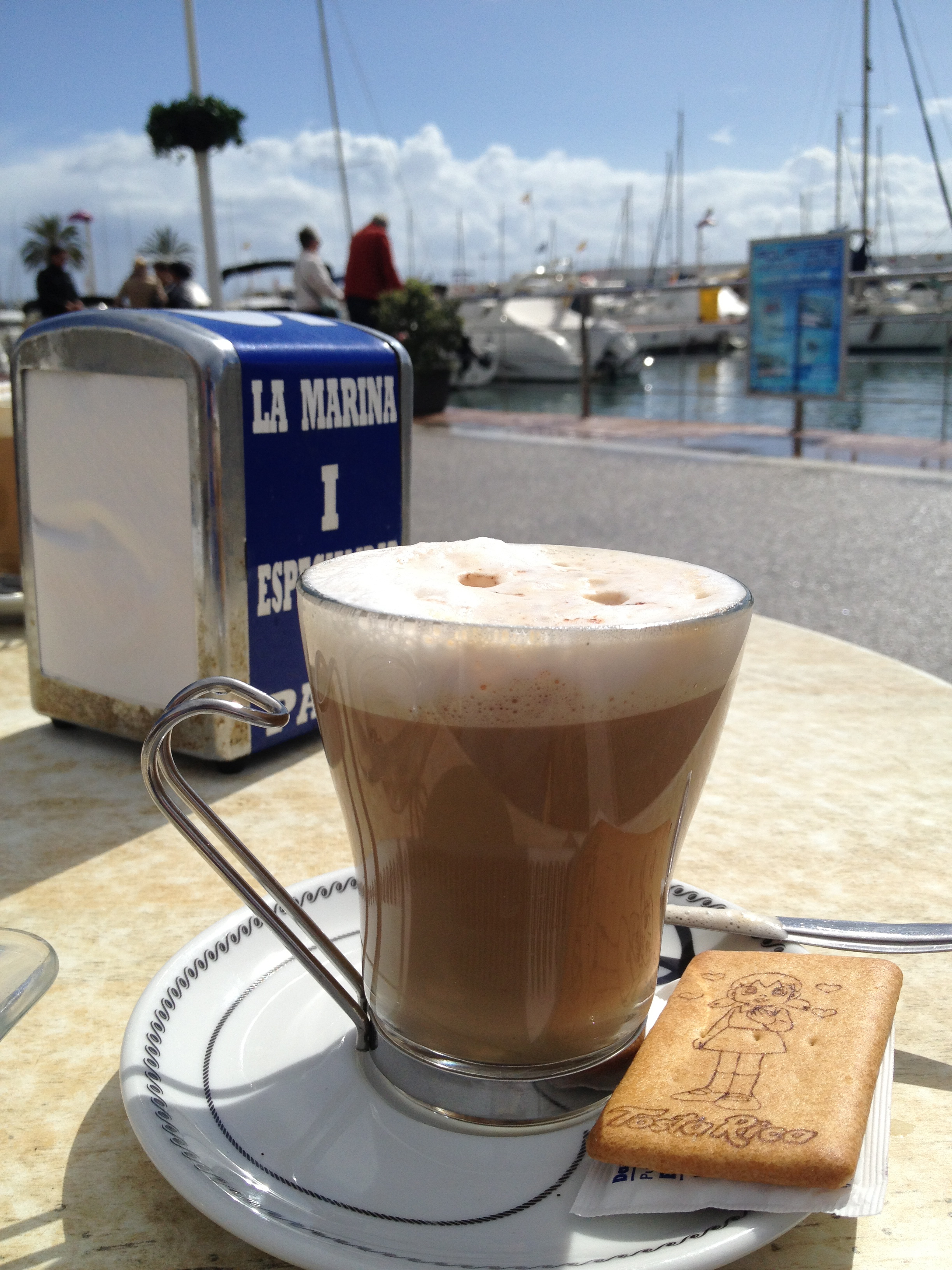
Coffee by the Marina

Coffee by the Marina

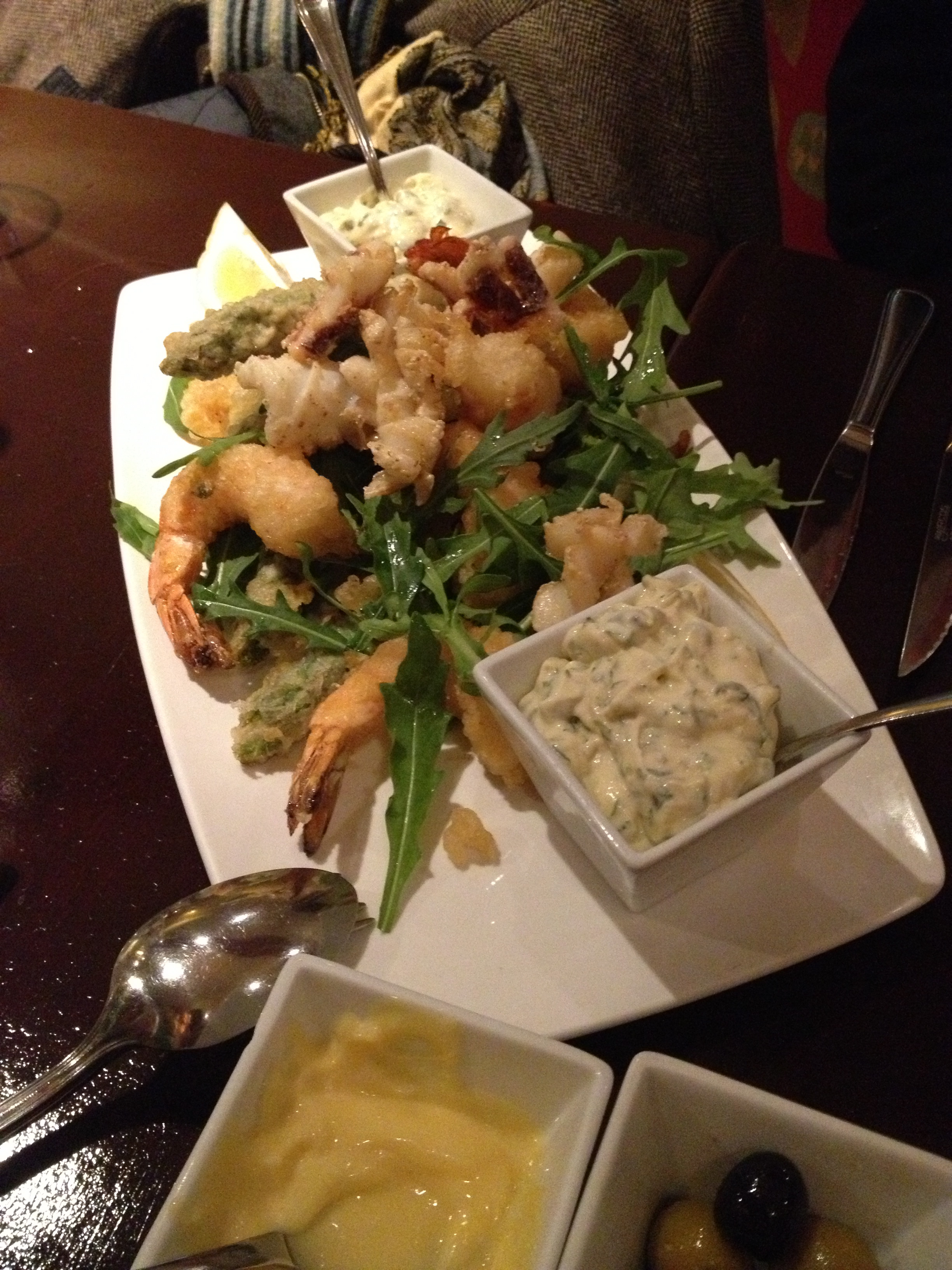
A Fritura Mixta (squid, prawns and asparagus)

A Fritura Mixta (squid, prawns and asparagus)

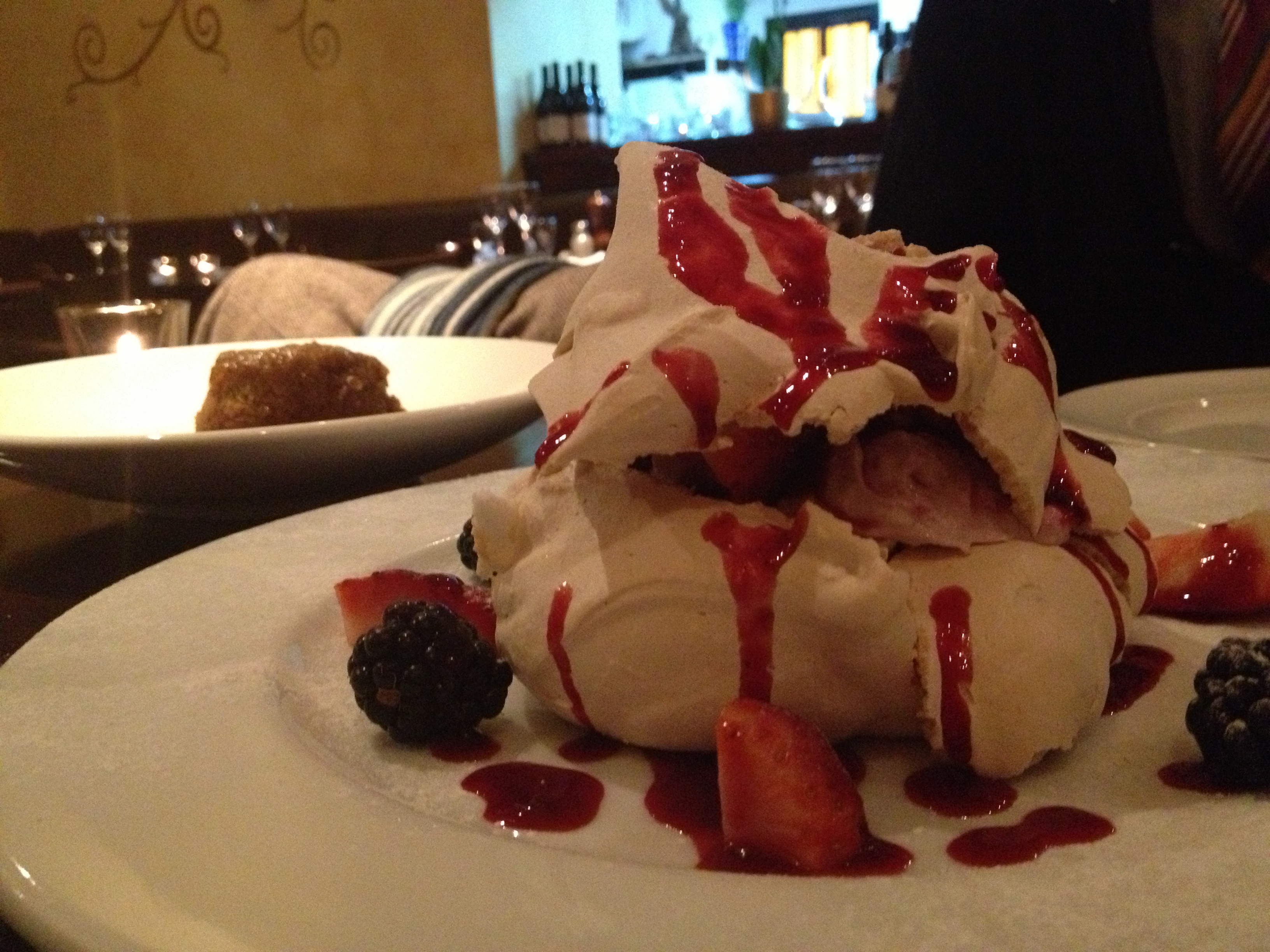
Zozoi's indulgent pavlova

Zozoi’s indulgent pavlova

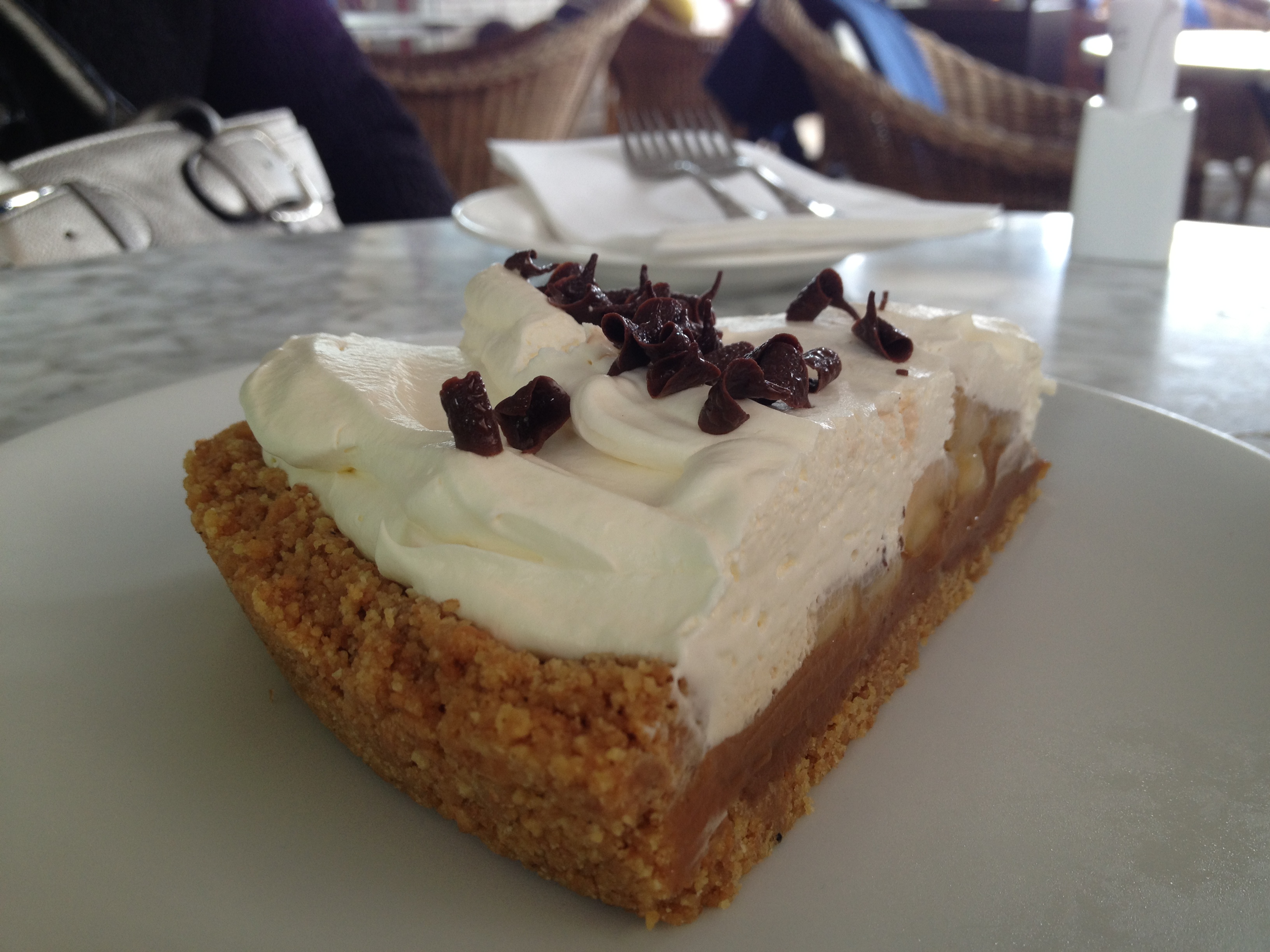
Cappuccino's Tarta de Platano is to die for...

Cappuccino’s Tarta de Platano is to die for…

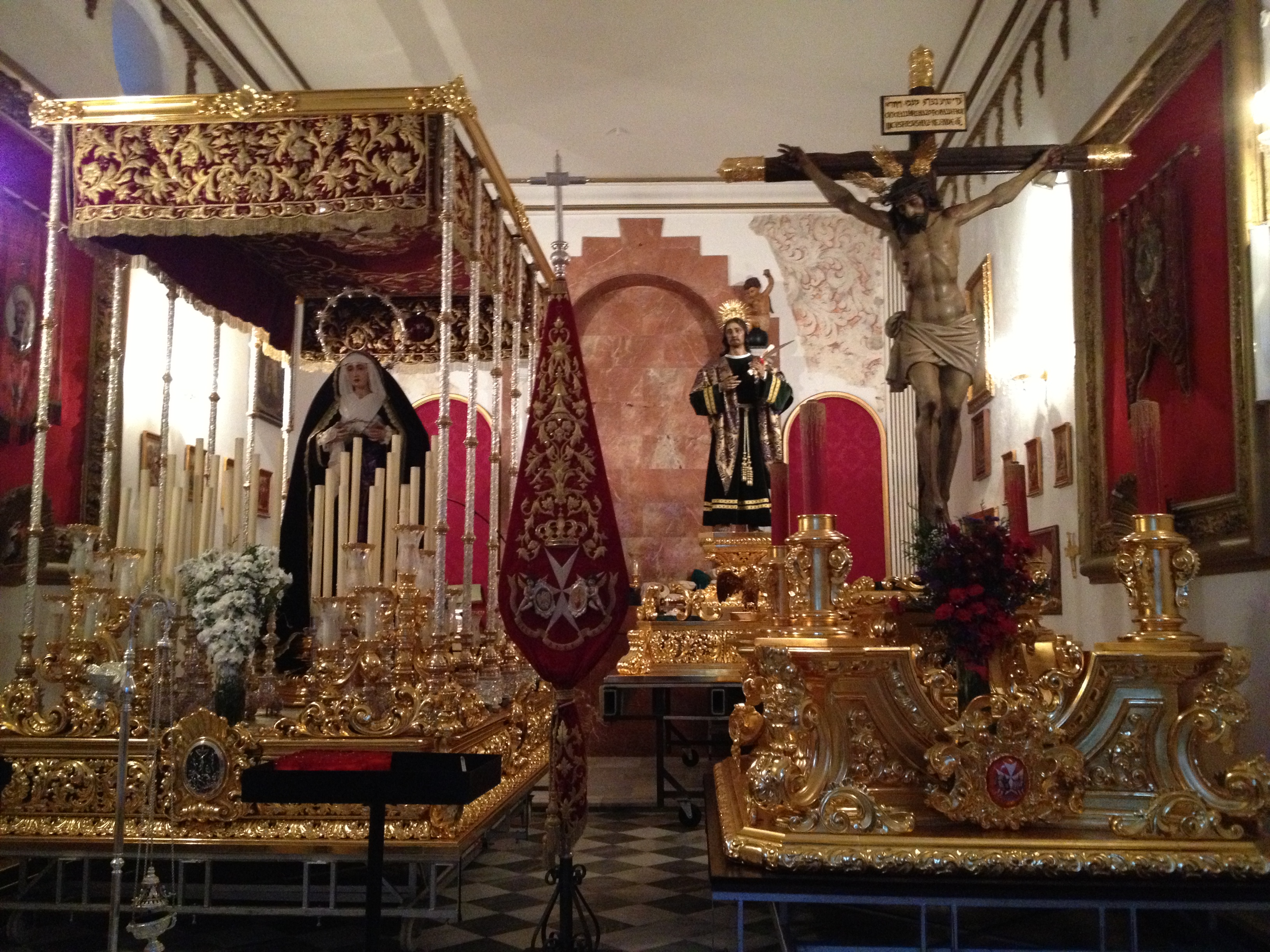
From Friday night onwards, a shamelessly indulgent trip of restaurant trips, coffees by the marina, lunch by the seaside and dinners in quaint old eateries commenced. Strolling through the old town streets I sucked in every scent and visual delight, poking my head into old churches to see the tronos of the town’s easter parades already set out, ready to be adorned in flowers for the forthcoming Semana Santa parades, pricking up my ears to the rhythmic sounds of flamenco wafting from the doors of a nearby bar, and revelling in the tranquil atmosphere and picturesque pleasures of this awfully quaint old town.
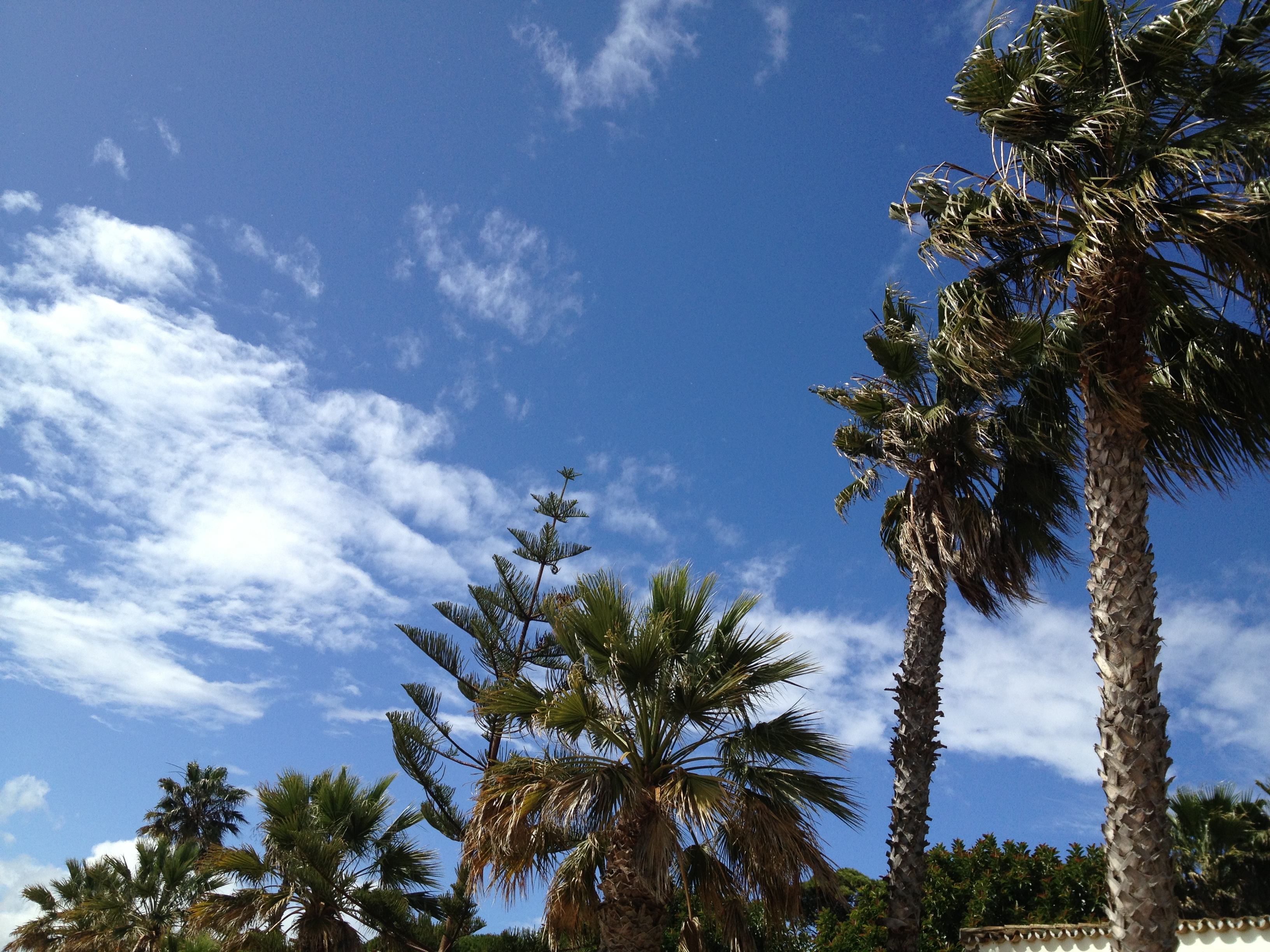
Blue skies (and a little wind)

Blue skies (and a little wind)

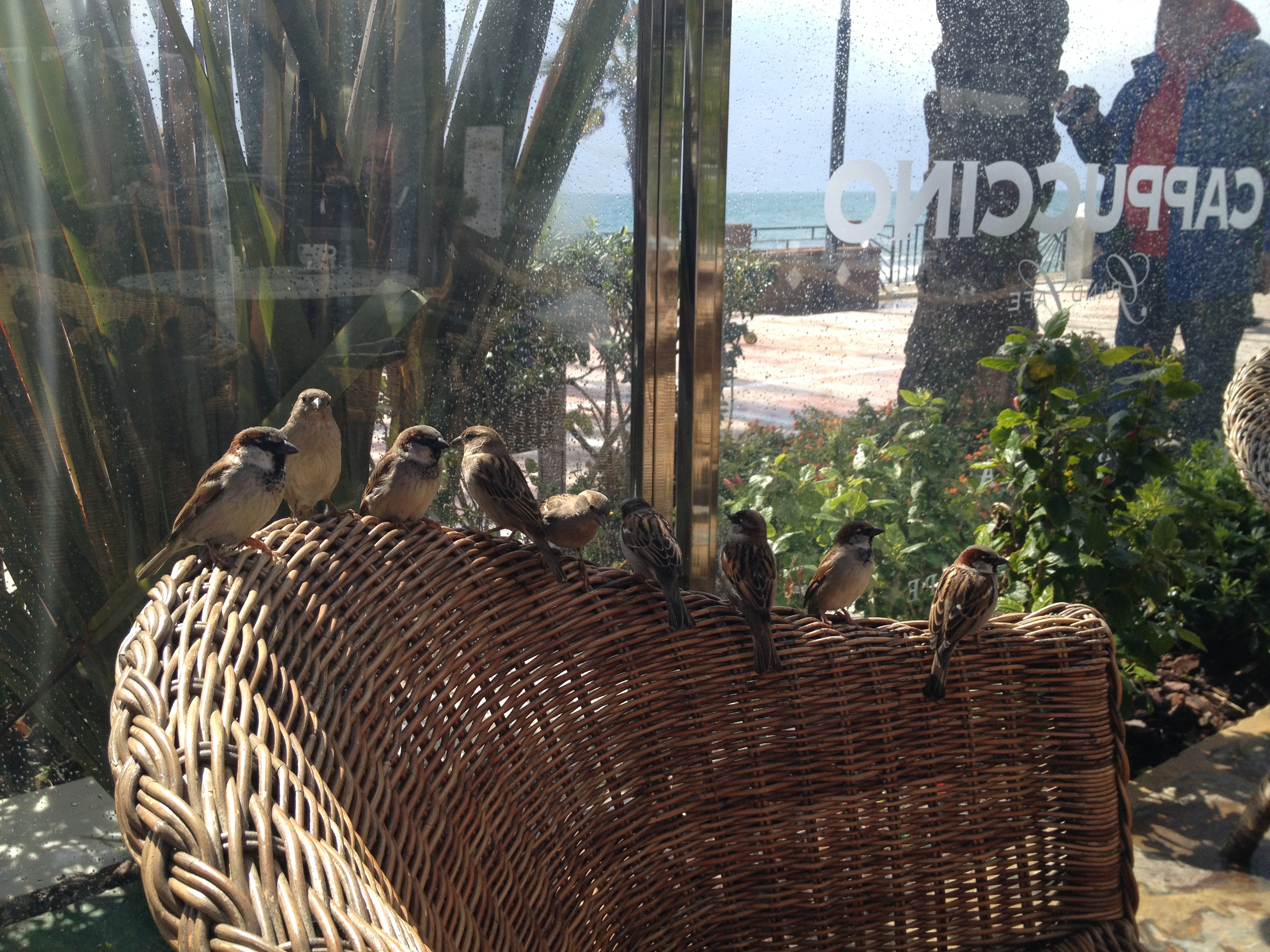
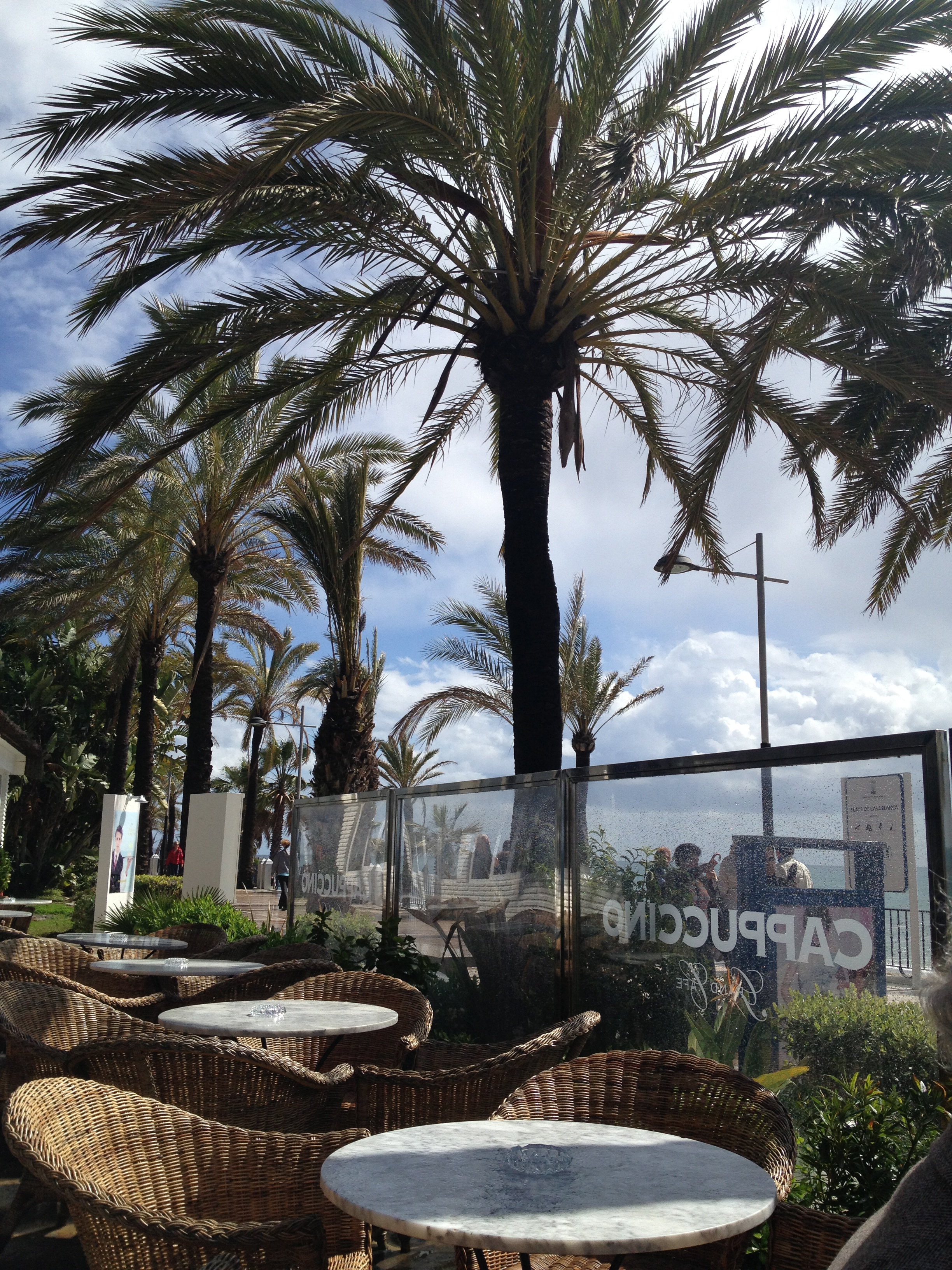
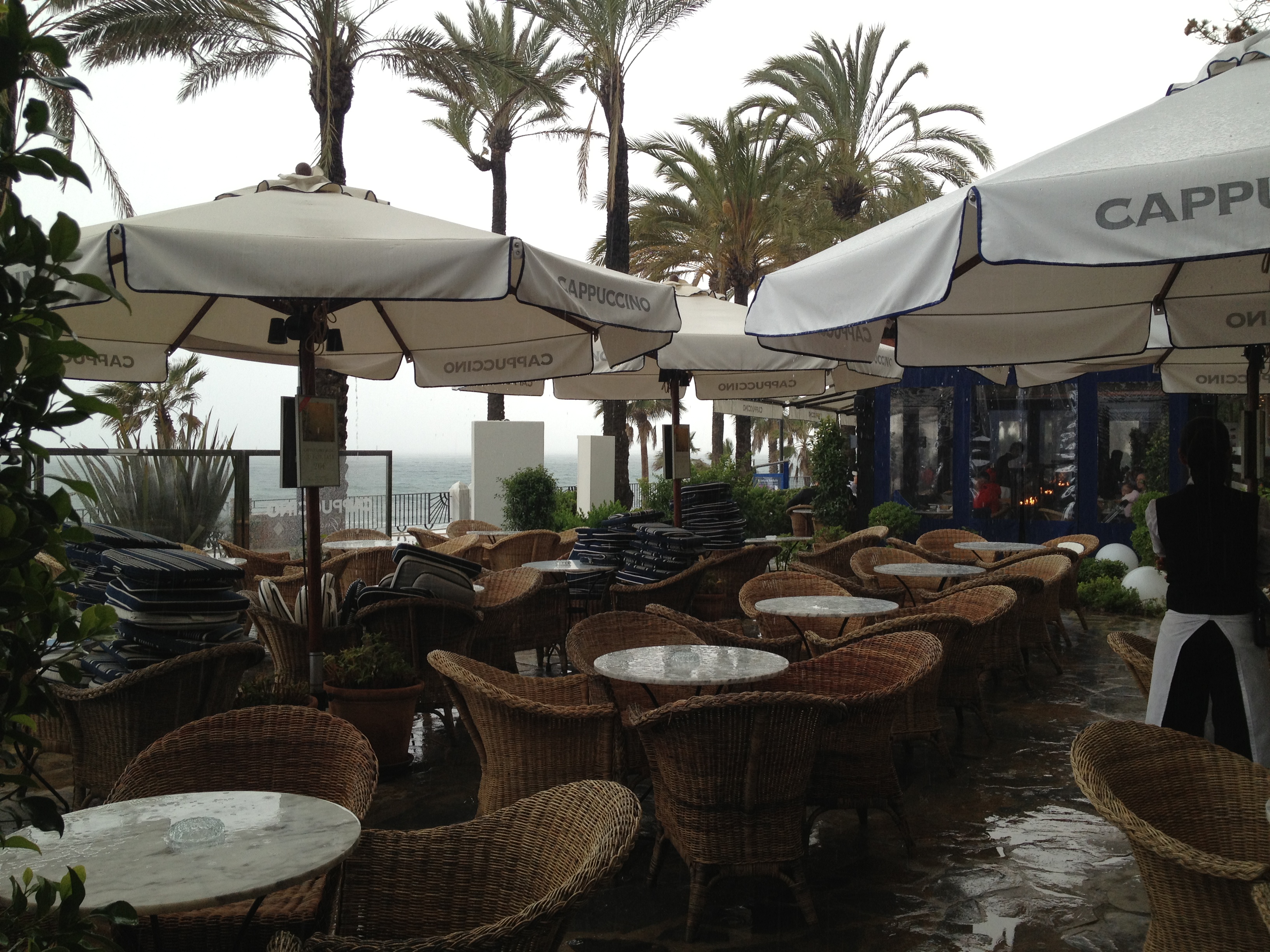
Some birds drop in on lunch at Cappuccino Grand Cafe

Some birds drop in on lunch at Cappuccino Grand Cafe

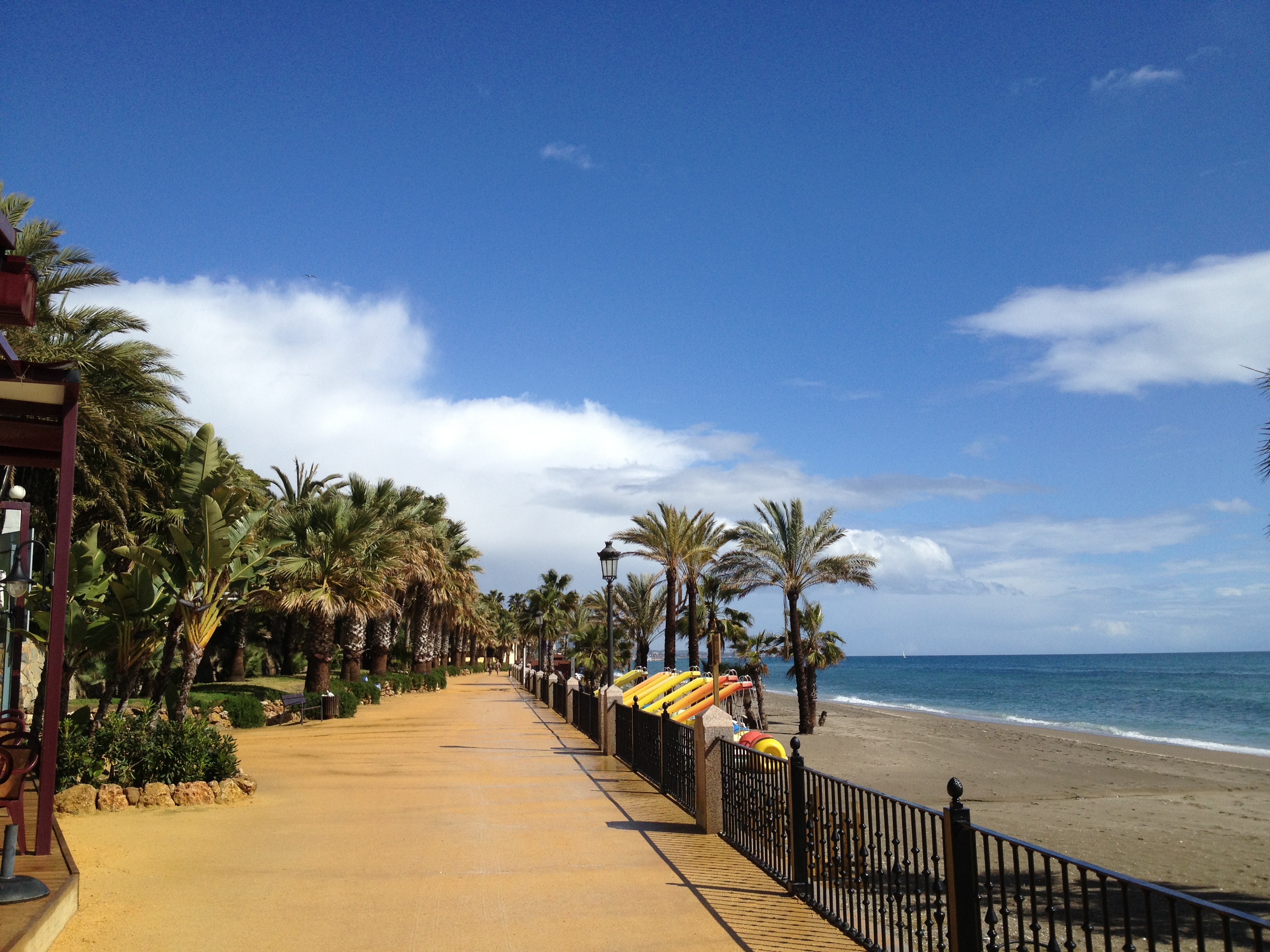
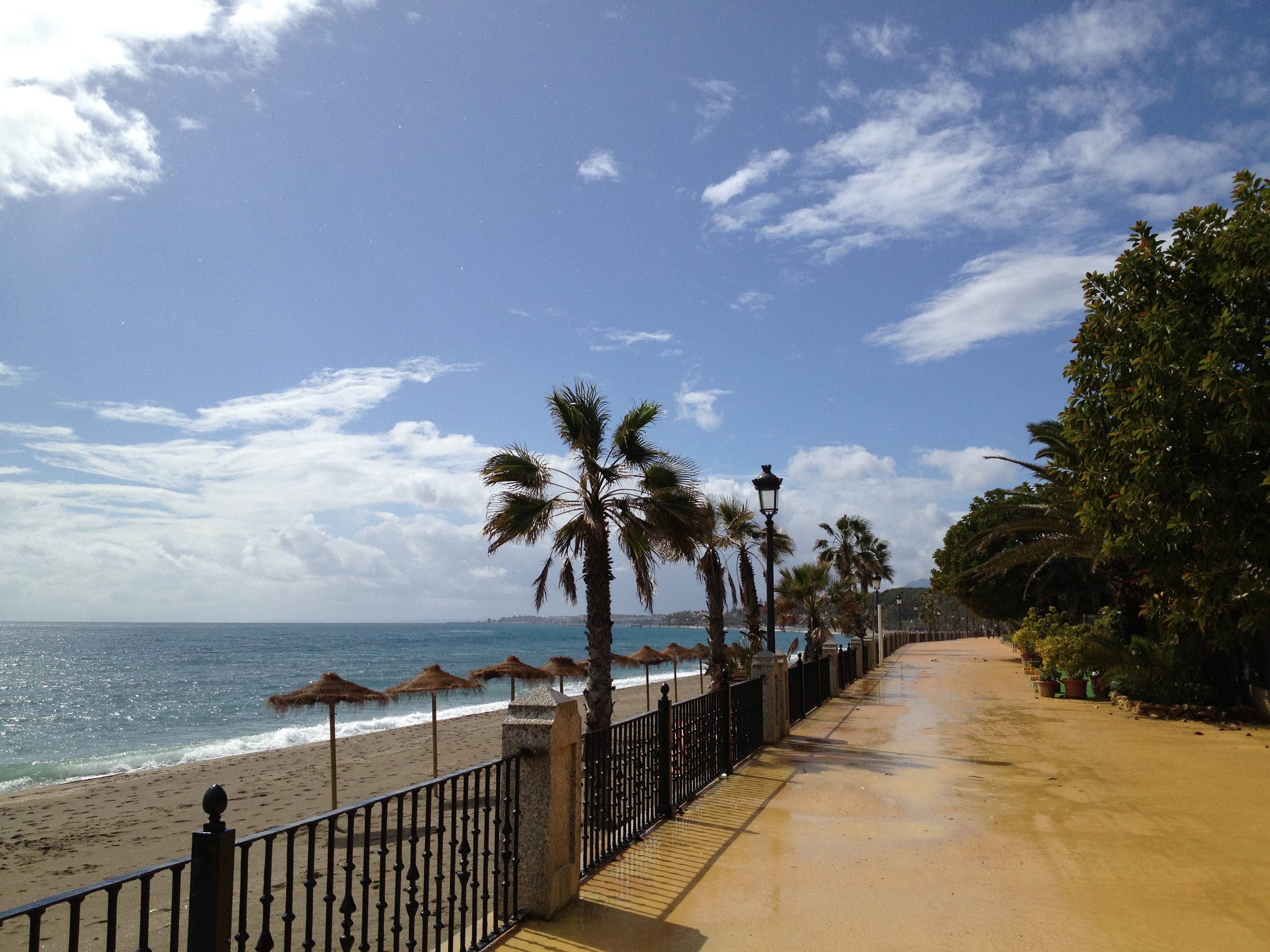
The Paseo after a recent rain shower

The Paseo after a recent rain shower

The Alameda park after a shower

The Alameda park after a shower

IMG_3420

Tronos ready for Semana Santa

Tronos ready for Semana Santa

So was it worth the effort? Of course it was! Leaving at 4.15pm on the Sunday for a 7.45pm flight back to London, I sat on a coach back to Malaga with my stomach doing inevitable cartwheels at the thought of leaving so soon, but equally delighted at how succinctly and fortuitously I was able to dip into this paradisal environment for a small weekend. It wasn’t sunny all the time, and quite often we would eat one course outside in the sun and run inside for dessert as a storm cloud passed over – but this added to the fun and pleasure of this Spring weekend, in which clement temperatures, even under the clouds, made me feel like I was somehow tricking the seasons.
One minute in the sun...
One minute in the sun…

And a few minutes later its drenched in rain

And a few minutes later its drenched in rain

Paradoxical March - sunshine in the rain

Paradoxical March – sunshine in the rain

They say good things come in small packages, and for this weekend in Marbella, the words wrung beautifully true. Back now in London, horrendously cold, I feel not exhausted but enlivened by this mini-holiday in Spain – a hint of the summer, just at the time when we frozen Londoners need it most. Viva España, perfectly accessible for the holidays, and for a mere weekend too.

On the plane ready to go back to London

On the plane ready to go back to London