Skip to content

Posts from the ‘My Art’ Category

Autobiographical Mobile: My painting diary – Day 16: Water reflection and Enid

The 2013 return to my latest large-scale painting is well and truly kick-started now. After last week’s update on the progress of my autobiographical mobile painting, I am now able to report on another day’s technical painting work on the canvas which has taken over my artistic output for the last 9 months.

Day 16 of work saw me concentrate on the lower right-hand corner of the panel. There, having completed my large cliffs, it was now time to undertake the rather arduous chore of reflecting the cliffs into the pool of water below. I like this watery area… it has a sense of darkness and mystery for me, a bit like a large lake in a cave, a sense which is no doubt heighted because of the vast area of hostile rock face above.

IMG_3034In order to undertake the reflection, I started by practising a very small rock area in one of the little pools in the centre of the canvas (I anticipate that there will be a fair few rock pools by the time the canvas is finished). Having tested the art of reflection in that small area, I went on to the vast reflection of the right-hand cliff. It’s not easy to repeat what you have painted before, but all the more so to do so in reverse, as a reflection requires. It requires you to almost go back on yourself, to flip over every angle and to mirror every shade and colour, while ensuring that proportions are kept the same.

It took me most of the morning to repaint the cliffs in the pond. Once finished, I achieved what looked to me like a mirror reflection, but was not watery enough. The distinction between water and a mirror of course in the propensity of water to move, and therefore even on a still day, the reflection in water is bound to be distorted compared with a normal mirror reflection. Deciding that I’d give my scene a gentle sea breeze, I set about distorting my reflection with various ripples, many of which I created through dragging a dry brush over the surface of what I had just painted. This was a slightly scary moment, especially when I’d just spent the whole morning meticulously painting the reflected area. And of course if I got this bit wrong, the smudges of dark and light oil paint would dirty the canvas and it would be sometime before I could correct it.
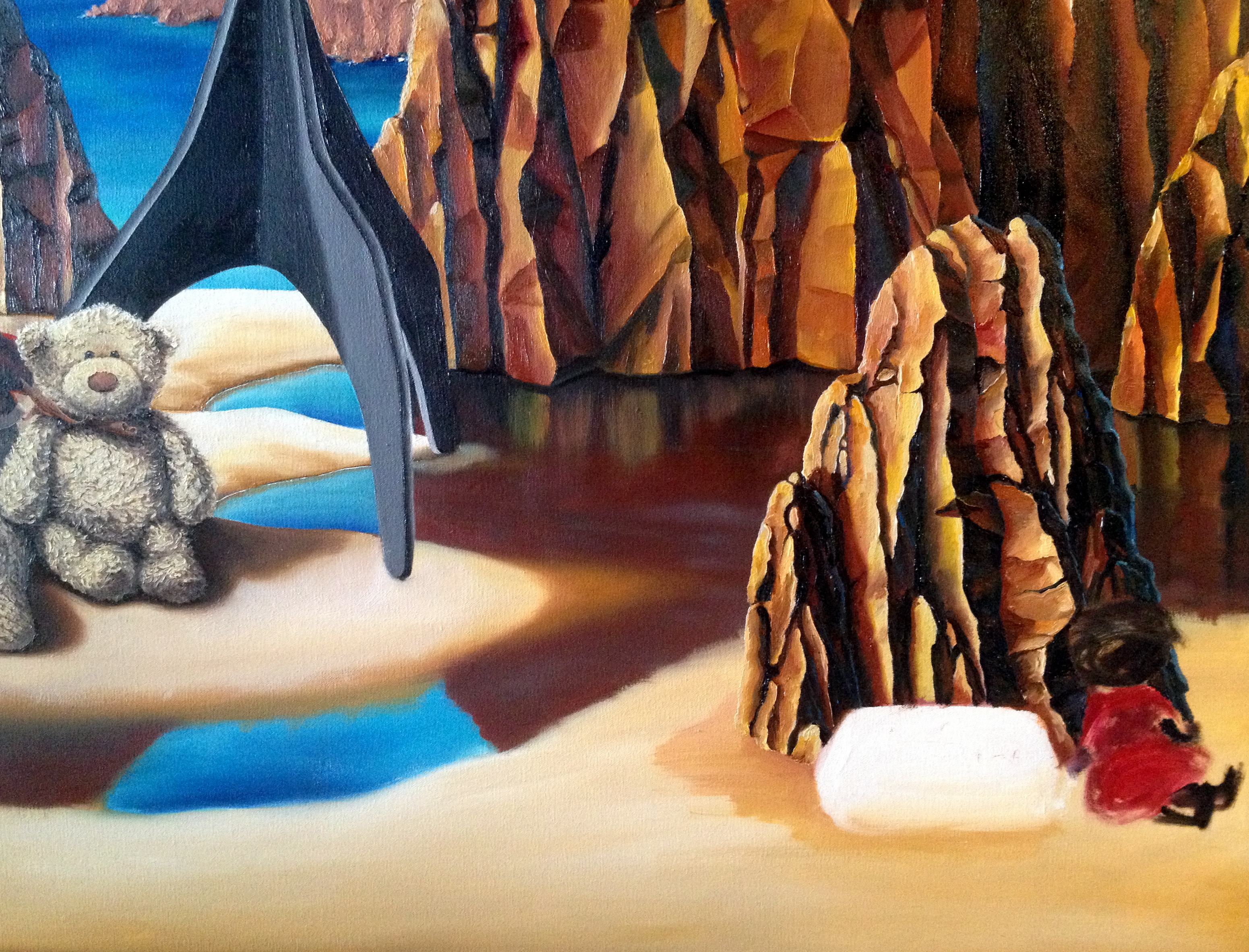
At the beginning of the day

At the beginning of the day

First stage of reflection done
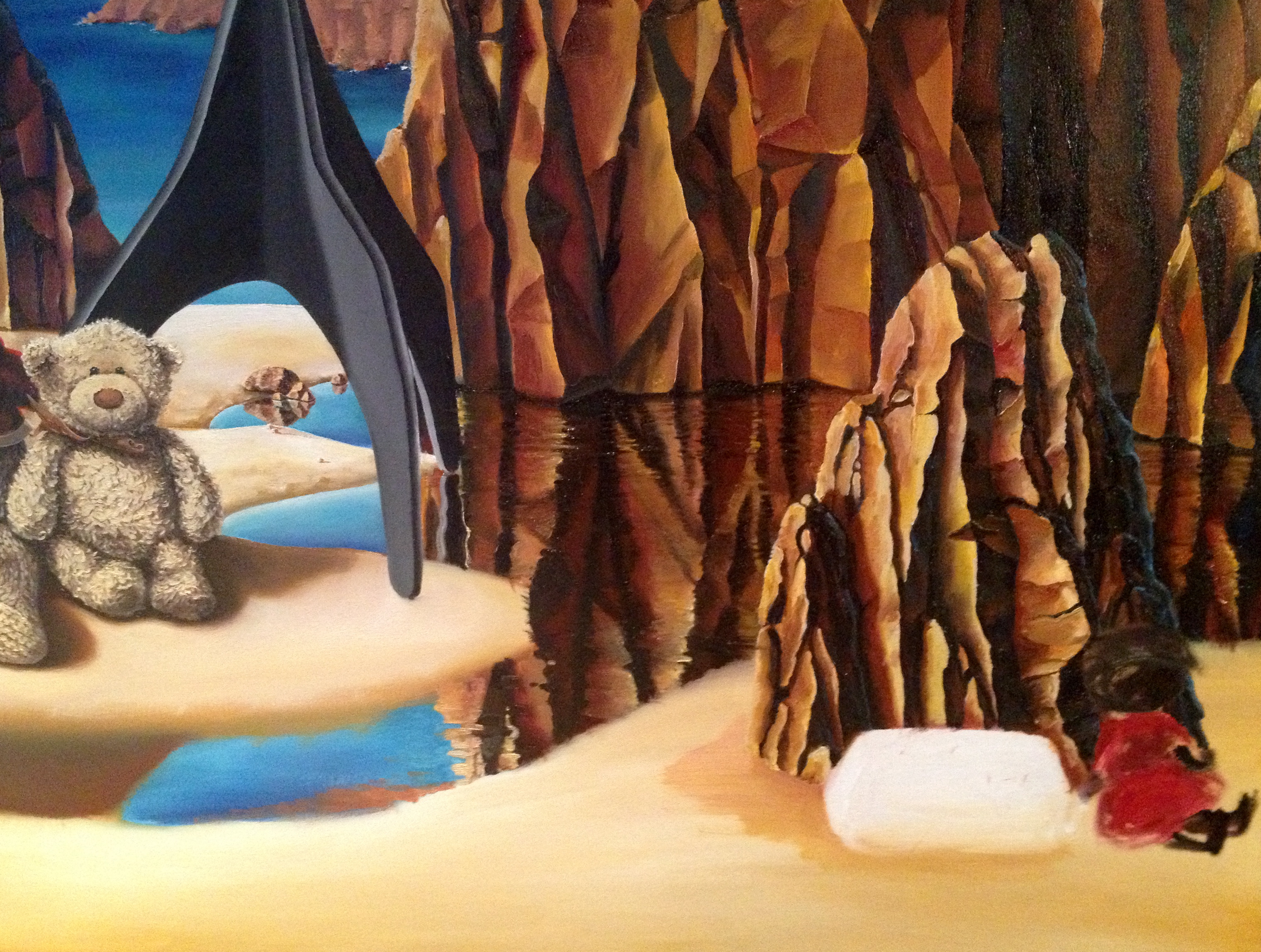
First stage of reflection done

Made into a watery reflection

Made into a watery reflection

Sufficiently pleased with my watery reflection for now (it will undoubtedly change as other details of the image materialise and alter), I moved on to a detail at the foot of the canvas. While Bilbao and Fluffy, my teddies at the centre of the canvas, represent myself and my partner (they were our gifts to each other at the early stages of our relationship and now follow us around the world), Enid, the little “golly” down on the right, is a representation of my mother, and my childhood.

Enid in reality

Enid in reality

My mother, who herself has a large collection of gollies, some from her childhood, gave me Enid for a birthday present some 10 or so years ago. I was so pleased with her, I used to take her travelling with me. That was at least until travelling with a golly aroused too much anxiety on my part – This was in part because people displaying gollies in their windows have been arrested and accused of racial hatred… Is this the world gone “politically correct” mad? Perhaps so, and frankly it’s not a debate I want to entertain on my art blog, but all I know is that I grew up with gollies being to me, at most, as harmless as teddies and barbie dolls. My sister and I used to have golly picnics, where we would gather all the family’s gollies together and picnic with them, like your typical teddybears’ picnic. And I used to collect golly badges which one could only obtain having collected a sufficient number of vouchers from the jars of Robertson’s Jam. They are, needless to say, no longer available, but perhaps for that reason I alone, I prize my collection.

IMG_3057 IMG_3058

So in representing both my Mother, and my childhood, Enid is an integral feature of this autobiographical canvas. She’s all finished now, save for her label, to which I will add writing when the paint is dry.
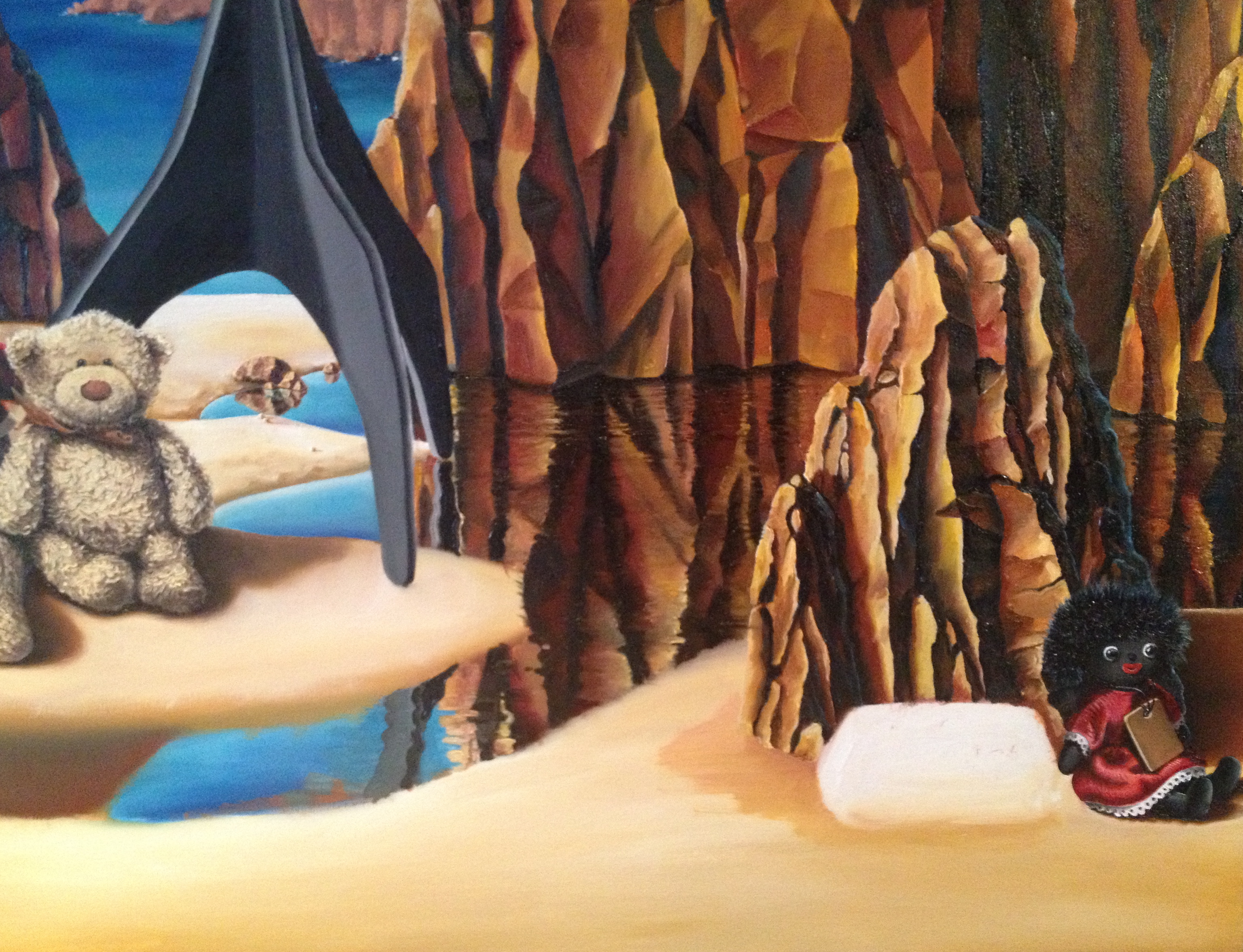
Enid completed

Enid completed

And that was my day’s work. More to come, I hope, soon.

© Nicholas de Lacy-Brown and The Daily Norm, 2001-2012. Unauthorized use and/or duplication of the material, whether written work, photography or artwork, included within The Daily Norm without express and written permission from The Daily Norm’s author and/or owner is strictly prohibited. Excerpts and links may be used, provided that full and clear credit is given to Nicholas de Lacy-Brown and The Daily Norm with appropriate and specific direction to the original content.

Autobiographical Mobile: My painting diary – Days 8-15: The sky and the cliffs

It’s been a long time since I last posted the progress of my Autobiographical Mobile painting – the large canvas on which I am painting something of a representational narrative of my life. The reason for this absence is not forgetfulness, more a lack of time to paint. Such is the continuous treadmill of modern life, that time to paint becomes slimmer and slimmer, and as daily work predominates the days of the week, its potential to sap at my creative energies extends further still, into the evenings and the weekends. I find it hard to paint on these dark winter’s evening, working in artificial light, when hunger pangs in my tummy and fatigue pulls at my eyelids. And at the weekends I find my time is filled with the many menial activities for which the week no longer allows time. And so my autobiographical mobile, itself a rather ambitious task, is taking its time to develop. Nevertheless, since I last featured the painting in October, some significant changes have manifested.

The painting after Day 1

The painting after Day 1

And with the "Calder" mobile, Fluffy and Bilbao

And with the “Calder” mobile, Fluffy and Bilbao

One benefit of having a painting slowly develop, hanging around my home from week to week, is that I have more time to contemplate its development. It was during the autumn that I developed a growing sense of unease about the work, finding gradually that the colours did not work. The pastel shade of the cliffs was too insipid, and the sky lacked depth. Both had to change.

So as I set to work on the painting after some weeks of rest, I first tackled the sky. Even though this meant largely undoing much of the work I had completed on the “Calder” mobile, I found the addition of clouds gave the flat blue sky more depth, more character and a greater balance.

The sky with the addition of clouds (and further work to the articles hanging from the mobile)

The sky with the addition of clouds (and further work to the articles hanging from the mobile)

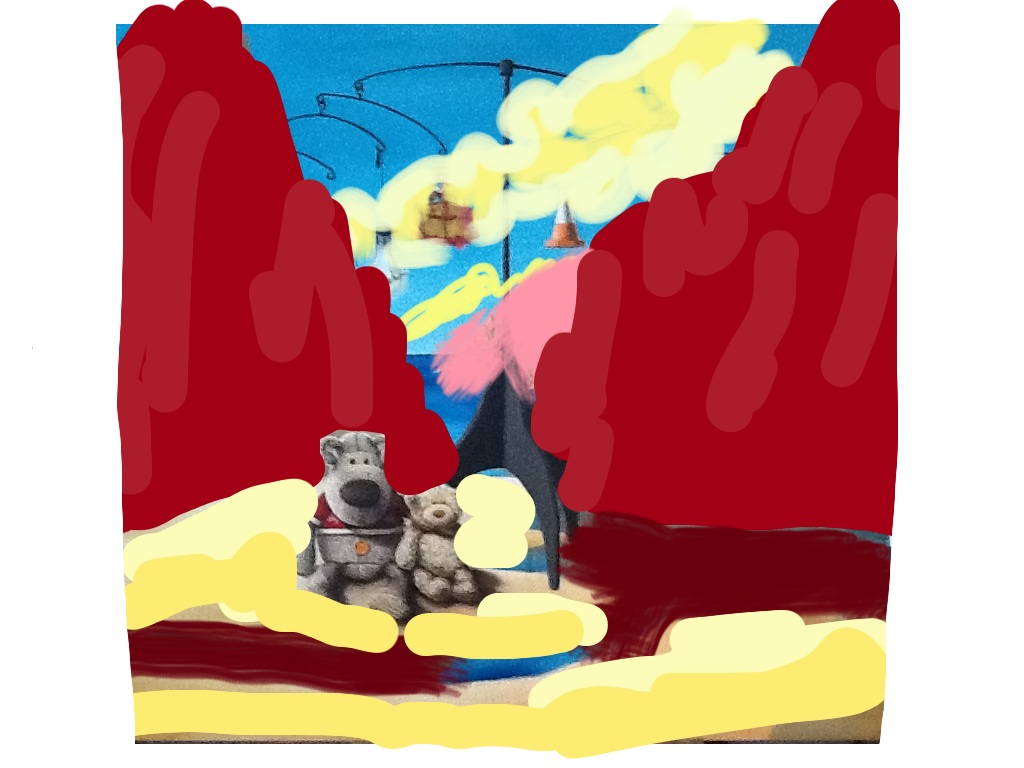
Satisfied now by my sky, I turned to the cliffs. It is one of the great benefits of modern technology that I can plan the direction of my painting midway through its progress, without even touching brush to canvas. With the aid of a paint application on my iPad and some very quick finger work, I was able to try out several new colour schemes with a view to assessing how the work would look with a bolder colour palate. I knew the insipid pastels of my background were no longer working with the bold modernist contrast of my central mobile, but I wasn’t sure which colour direction to take with the background. Here were a few iPad ideas…

photo image image1

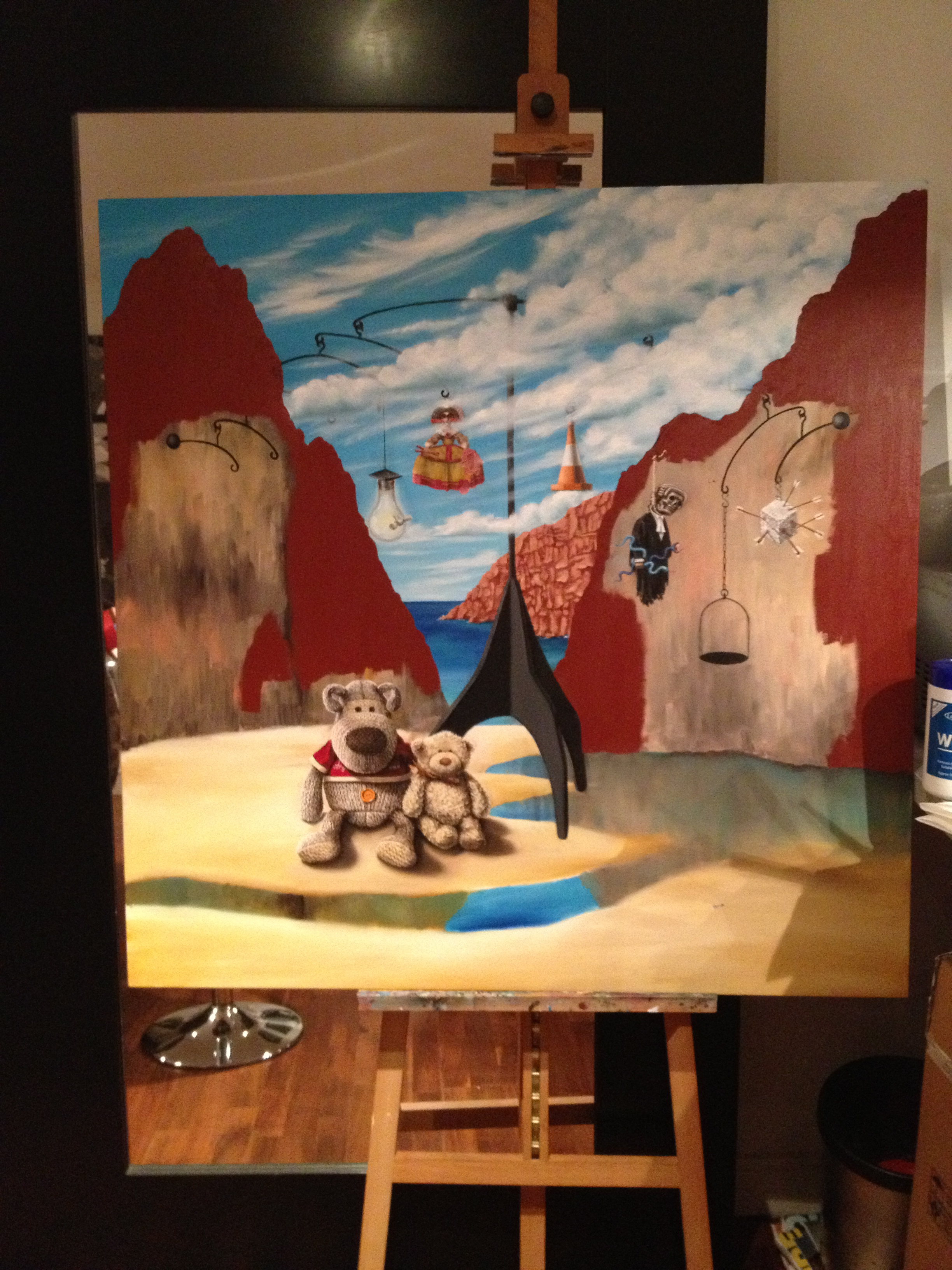
In the end, opting for a richer brown-red cliff face, I set about covering the pinkier pastels of the pre-existing background. Just applying a plain coat of Indian Red required me to carefully paint around the already completed elements of my mobile and autobiographical symbols.

IMG_2511

With a new base coat applied, and much more satisfied with the richer colour balance upon my canvas, I set about working on the textural surface of my cliffs. Part inspired by the cubism of the early 20th Century, and wanting to create a more jarring, robust environment for my slightly surreal beach scene, I found myself drawn to create a multi-textured cracking, angular surface from a rich array of reds, browns, oranges and beiges. The total surface of the vast cliffs took me several days to complete, and even now I am forever changing and rebalancing sections.

IMG_2533

For the final touches of my cliffs, I added a number of large, self-standing almost obelisk-like boulders, increasing the detail and textural variance of these rocky surfaces the closer they got to the foreground.

The finished cliffs

The finished cliffs

At the end of all of this, I started to repaint my mobile structure, now much abused by the reinvention of the background all around it. Finally with the cliffs done, I can turn to the sand, the pools, and the all important mobile and the items which, hanging from its various tendons, will tell my story.

Until next time.

Sunday Supplement – The Spanish Double

For the last few weeks on a Sunday, I have been exploring the collection of 10 paintings I created during my convalescence from an accident between 2008-2010. True, the subject matter is not easy to write about, nor, possibly, easy to read, but I hope you will agree that these paintings are amongst the most worthy of my works for further exploration and examination. They are, after all, a representation of a potent threshold in my life. When I underwent not just physical change but mentally was forced to mature and re-evaluate life in a way I have never before considered necessary.

In today’s Sunday Supplement, I am featuring two of my accident paintings which almost formed a sub-category of their own. Both were painted, unlike the other 8, when I was convalescing in Spain, both have Spanish titles, both are painted with acrylic paints, rather than oil, and the result of the colours used makes them, in my opinion, a bit more “pop art” in finish.

Desayuno del Norte

Desayuno del Norte (2008 © Nicholas de Lacy-Brown, acrylic on canvas)

In the first of the two, Desayuno del Norte (“Breakfast of the North”), I cross-referenced a Lowry-inspired Northern industrial landscape with symbols of breakfast “desayuno”, while mixing in images direct from the legal world to which, at the point of painting this work, I had prematurely returned. Of all my accident paintings, this is perhaps the hardest to explain. It was a mood, a time experienced – a collection of various representations which at that time drove me to paint. In the purple-grey background, a sense of my depression and frustration at that time is shown, a time which is appropriately catalogued as Christmas by the holly on a jug of sticky dark gravy which pervades the piece. The industrial landscape is proliferated with an abundance of mauve smoke, while from one of the bigger chimneys in the foreground, the question “why me?” looms large.

While in the accident paintings before this one, I had painted feet, here, I paint a trainer – the specially fitted trainers which were integral to enabling me to travel into work and get around each day, along with the crutch, whose presence cuts across the canvas on the right. Meanwhile, in referencing breakfast throughout the painting, the eggs mark a note of the fragility of my recovery, the blood-like jelly pouring from the trainer suggests my continuing pain, the orange represents my location at the time of painting – Marbella in Southern Spain – and the Marmite gives a clue as to my fading appetite and loss of weight  – it was the only thing I could often bring myself to eat, spread on the toast hovering somewhere below it. Meanwhile, running throughout the painting are the double yellow lines of road markings – these representing prohibition and interdiction – a cessation of my liberty, both physically and in my profession in the overtly constrictive legal world of London’s Bar.

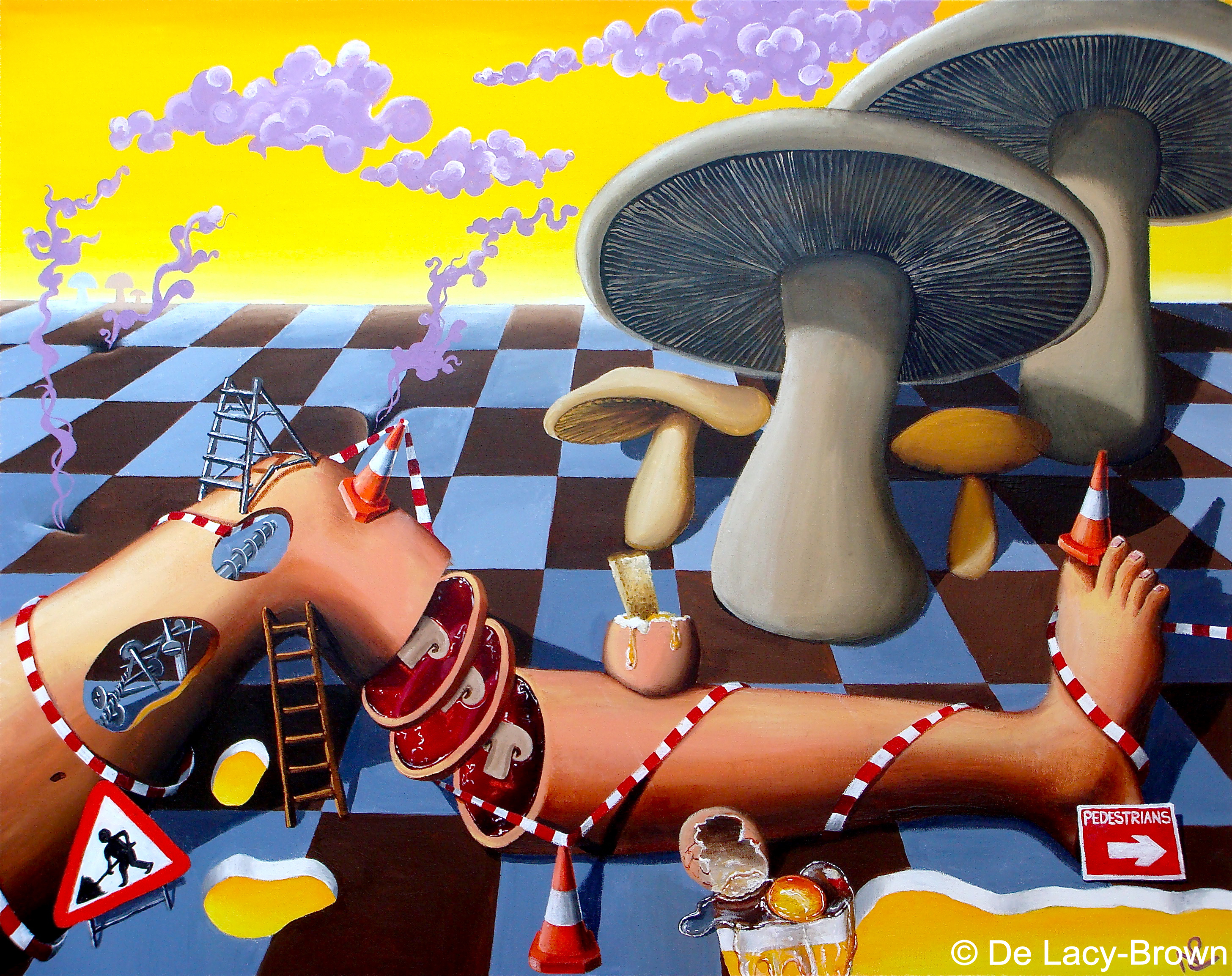
La Marcha de los Champiñones 

La Marcha de los Champiñones (2009 © Nicholas de Lacy-Brown, acrylic on canvas)

Road traffic symbols are continued in the second painting of this series, La Marcha de los Champiñones (“The March of the Mushrooms”), which represents two major events of my continuing convalescence a year after the original accident – first the fact that my leg became wracked with infection, and secondly that I was required to have my leg re-broken, in order to correct a fixed flexion deformity which had occurred during the healing process (in other words, the leg had healed at a fixed angle, and was unable to lie straight). In this work, I show my leg being re-broken, cut here into slices, each slice revealing, by way of the mushroom-symbol, the spread of infection throughout the limb. Meanwhile, on the outside, huge mushrooms loom over the slightly surreal scene, as the spread of infection becomes worse.

The road traffic symbols in the meantime become more prevalent in this piece. The leg is cordoned off behind road-works ribbon and a road-works warning sign, while the tools and paraphernalia of the workman are all around, including the various pins which were, in reality, holding my leg together (as shown by “windows” allowing the viewer to peer into my metal-ridden leg). A sign diverts pedestrians past the works, but also reminds viewers that throughout my convalescence, one of the worst experiences encountered was the continuous stares of pedestrians on the street, forever gawping at my leg encased in its pins and illizarov frame and covered with dressings and scars.

Meanwhile, the egg which was solid in Desayuno del Norte, has now cracked. The fragility of my steady recovery had given way, and I was back to square one.

© Nicholas de Lacy-Brown and The Daily Norm, 2001-2012. Unauthorized use and/or duplication of the material, whether written work, photography or artwork, included within The Daily Norm without express and written permission from The Daily Norm’s author and/or owner is strictly prohibited. Excerpts and links may be used, provided that full and clear credit is given to Nicholas de Lacy-Brown and The Daily Norm with appropriate and specific direction to the original content.
Introducing my new painting: The Gentleman (in Paris)

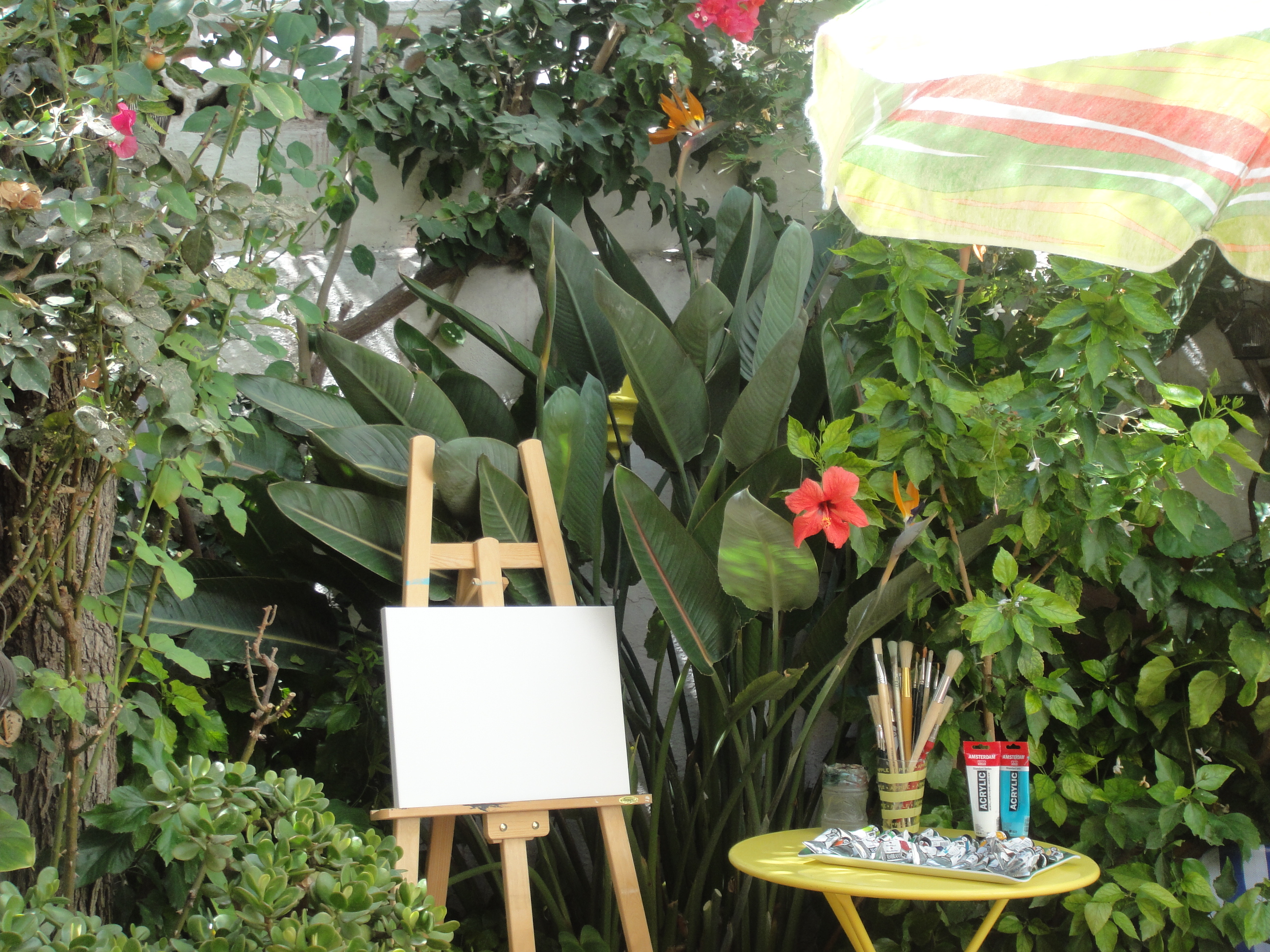
For those keen-eyed amongst you, particularly those reading my recent Spanish posts and my various tapas recipes, you may have noticed (as I know a couple of my regular readers did) in the background in the garden of my Marbella house stood a little easel and upon it a small canvas – from the early photos, when just a blank canvas was present, to the latter shots which showed me making some progress on the work as the balmy days of my holiday whiled onwards.

A canvas awaits me – in my garden in Spain

As the idea developed, and owing to the sad reality that our holiday was only 9 days long, my painting became more compelx, and when I left Marbella, the work was only half done. Luckily the canvas fit in my case (although no doubt contributed to my excess of baggage weight for which the ever unreasonable British Airways charged me a 50 euros flat penalty fee, even though my partner’s luggage was massively underweight) and I continued work in London. Be my life in London as it is – full of work and busyness, it has taken me some time to complete the painting, even though I rushed home most evenings to fit in a few hours of work.

However, having had last weekend to myself, I finally managed to complete the work, a work which I now call The Gentleman (in Paris).

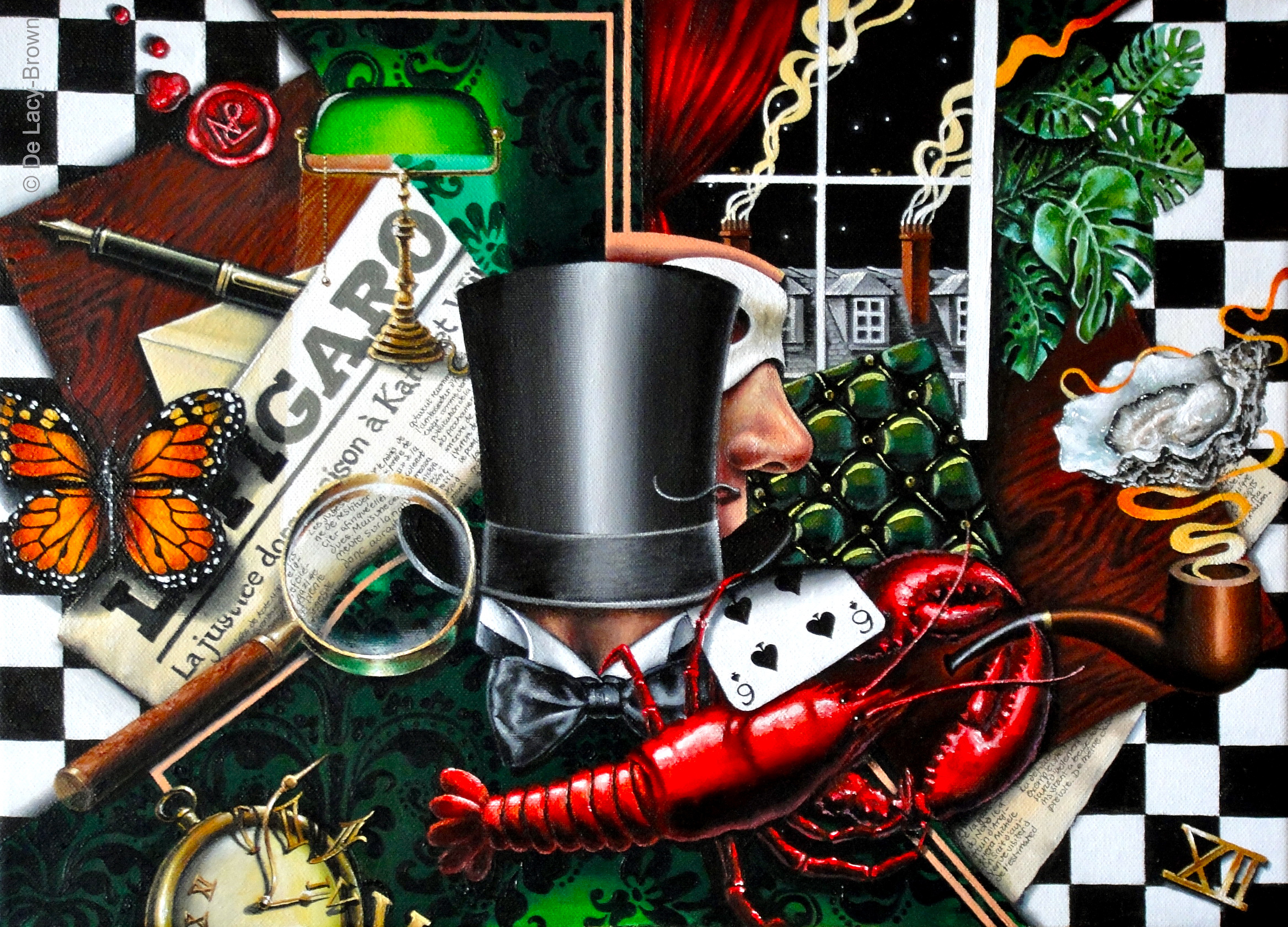
The Gentleman (in Paris) 2012 © Nicholas de Lacy-Brown, acrylic on canvas

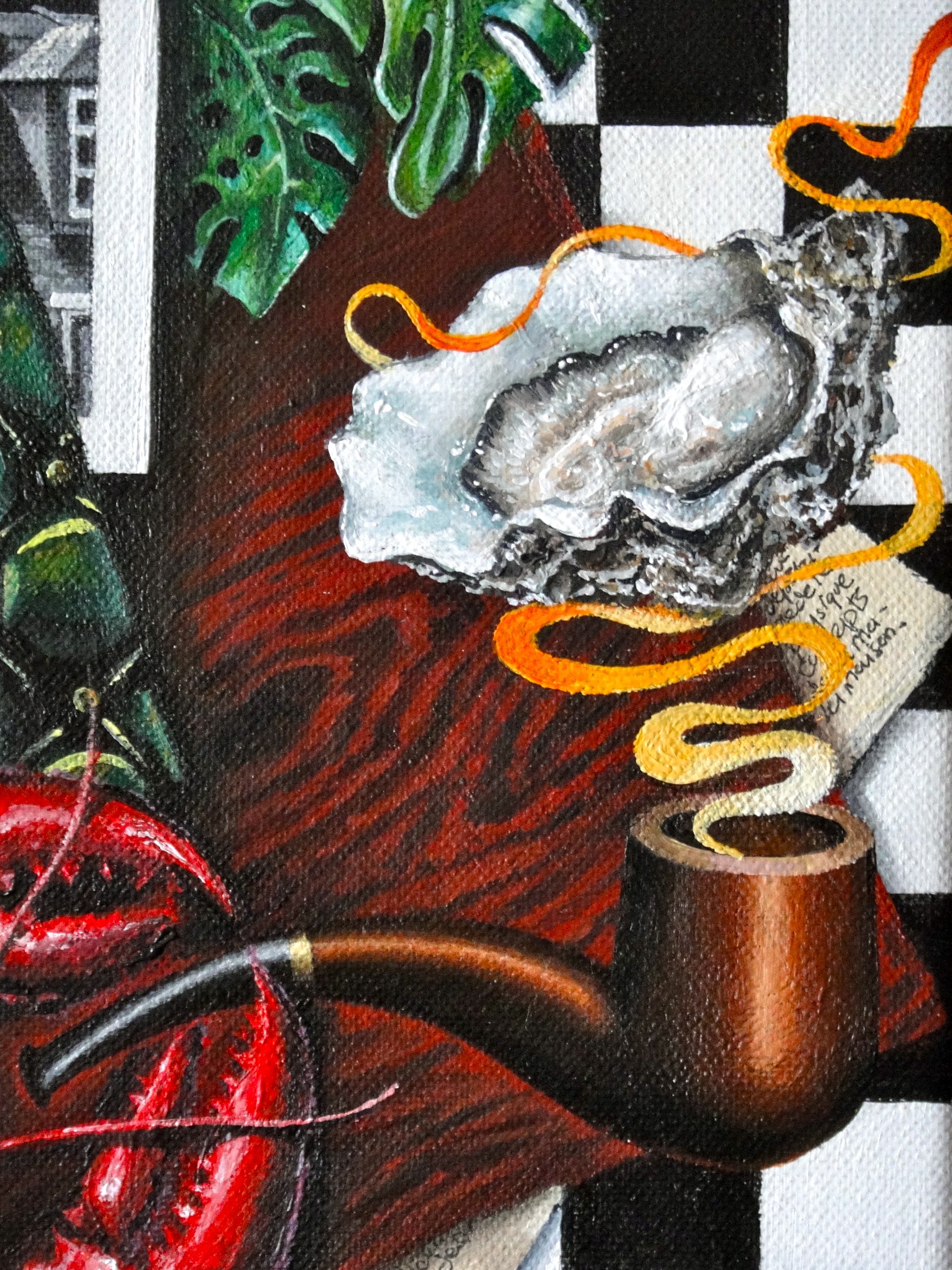
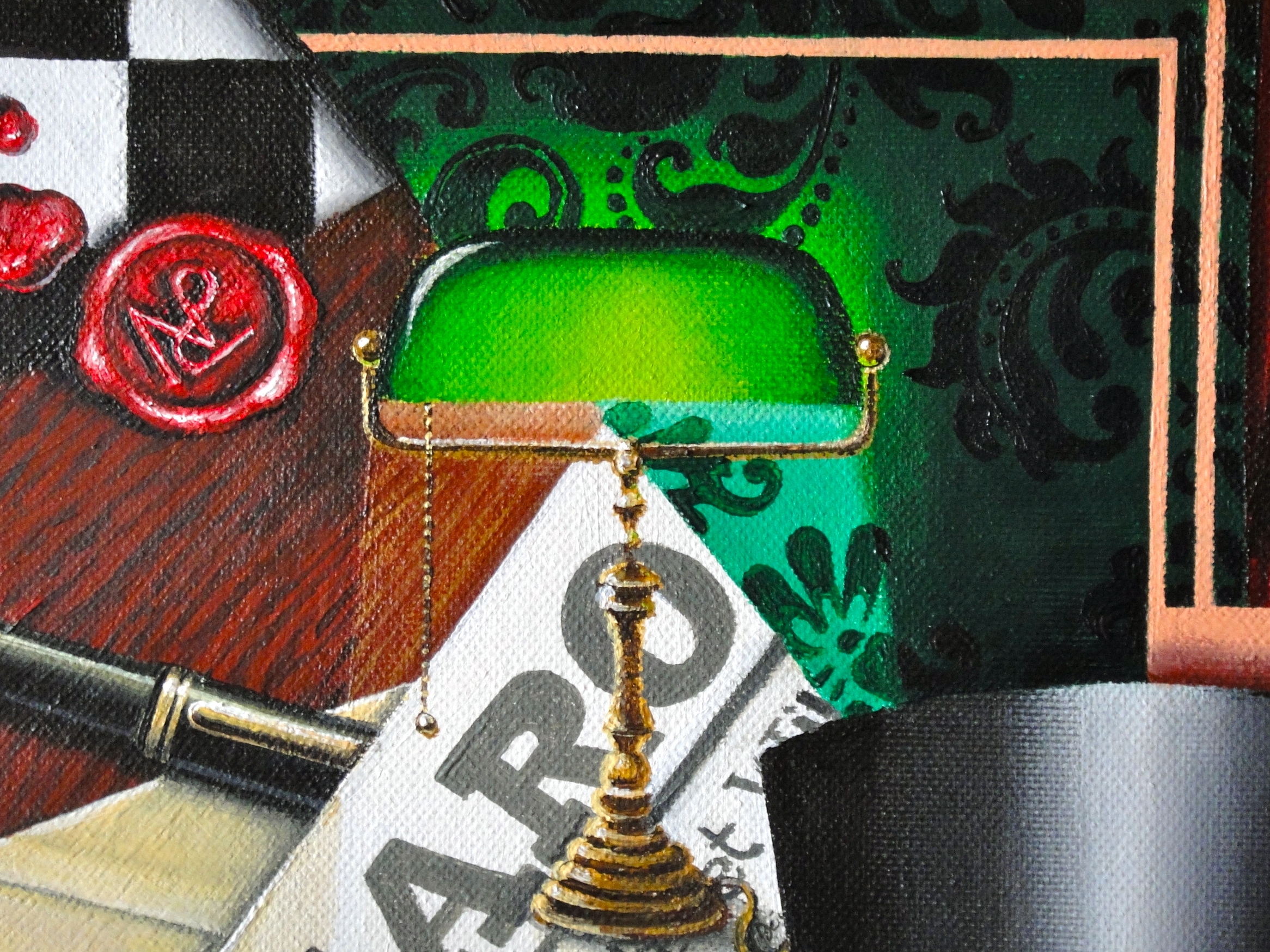
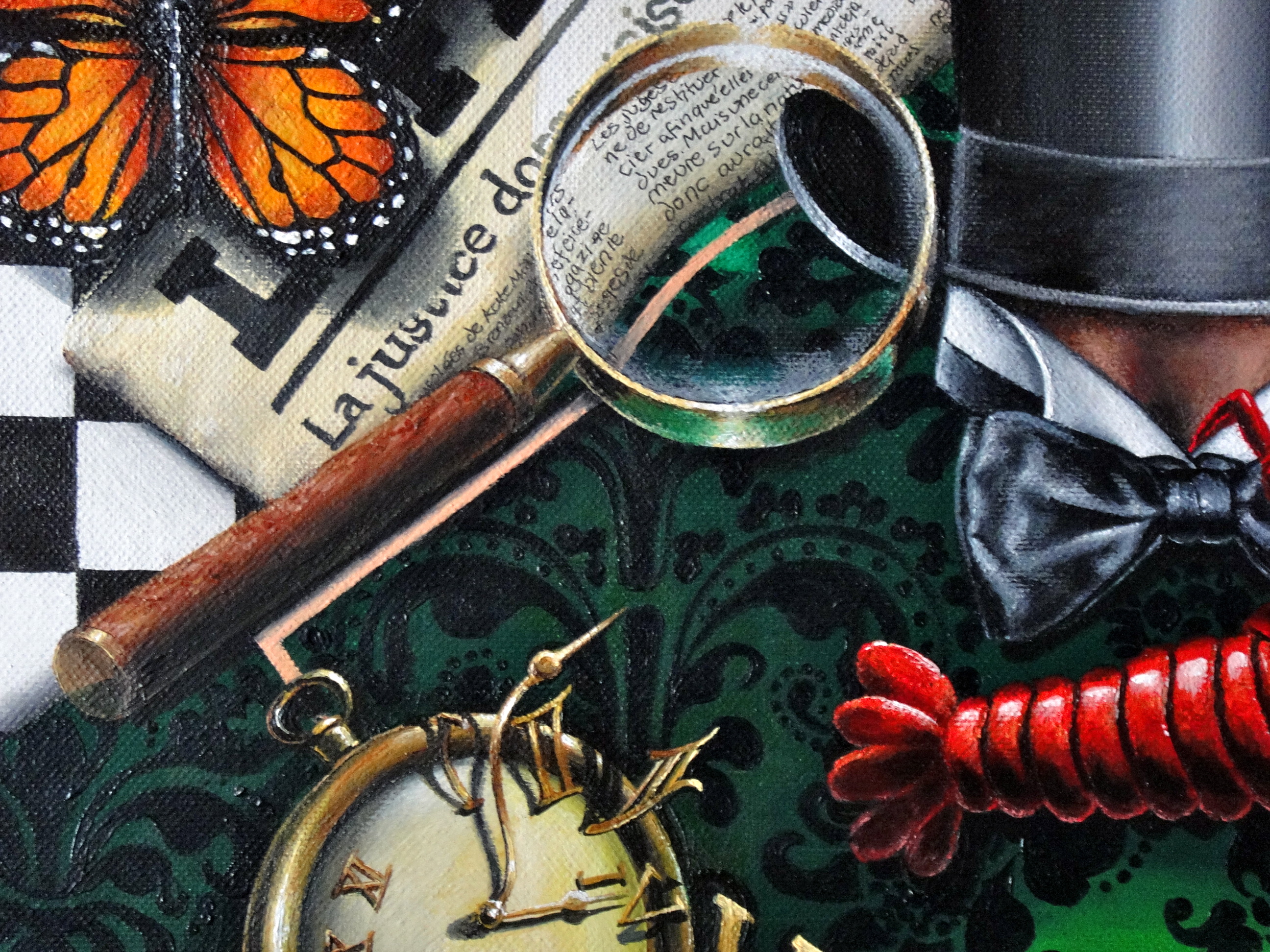
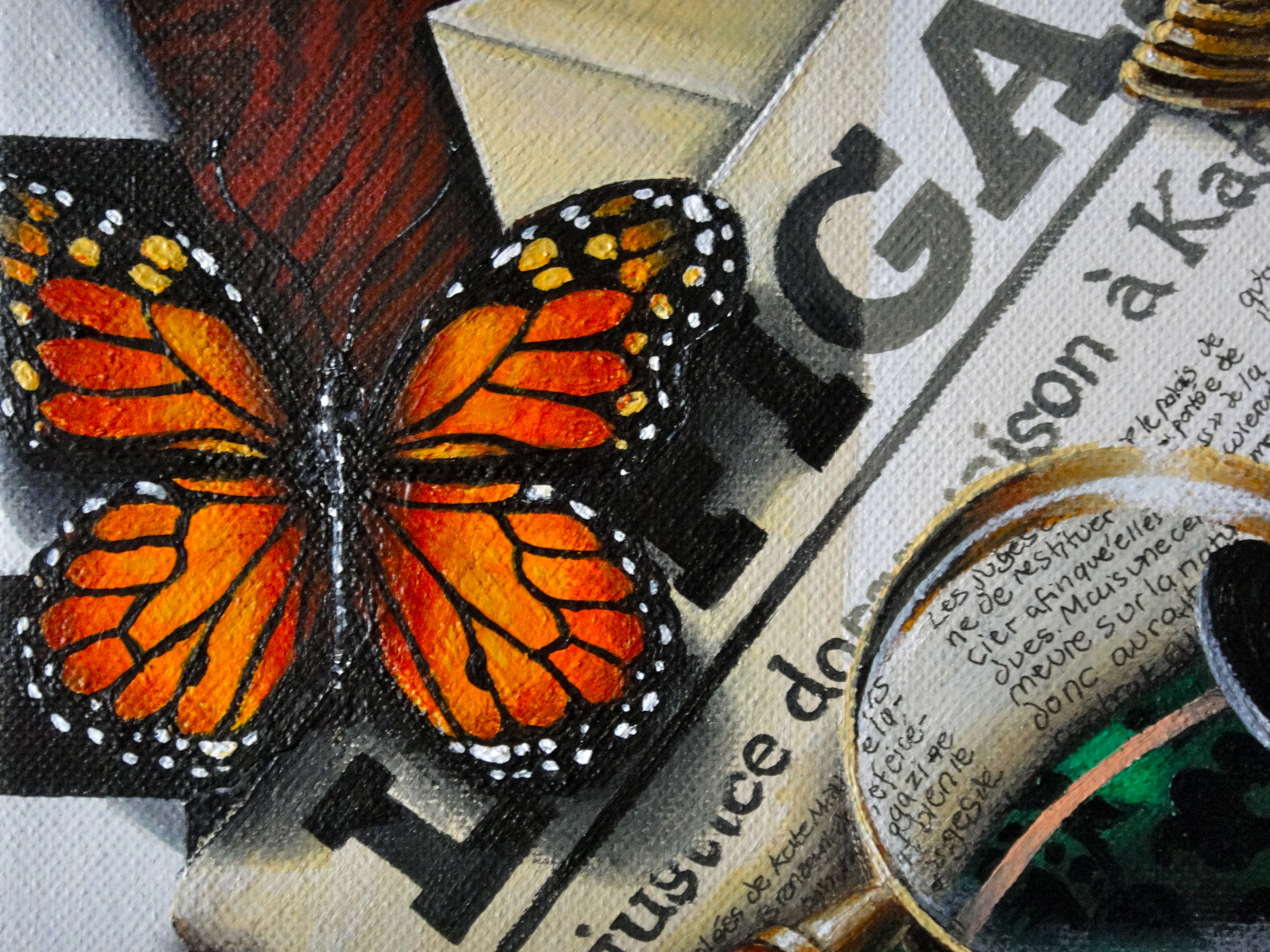
Inspired by the icons of a time I hold dear, a yesteryear when men were gentlemen, when to go out to dinner was a time of dressing up in a top hat and gloves, when chivalry was at the forefront of society and manners were a thing held in the highest of esteem. It was a time when in a Gentleman’s study, such as this one, a Chesterton desk chair would be found amidst the paraphernalia of a professional’s equipage: a pipe, a magnifying glass, a pocket watch, some butterfly specimen and an emerald green desk lamp, an expensive fountain pen and even more expensive culinary delicacies such as lobster and oysters, all set against a black and white floor, a hefty wooden desk, rich damask green wallpaper, verdant plant life and a floor to ceiling window view of the Paris chimneys beyond. And of course, because it’s Paris, the Gentleman has to keep up with the French news in Le Figaro. Meanwhile at the heart of the image, representations of the Gentleman himself: his top hat, a bowtie and wing-collared shirt, and his face, masked in the enigmatic disguise of a masquerade ball.

Explaining this painting is a little like explaining one’s impulses. This is an image which came to my mind in Spain which always provides me with sufficient relaxation and creative stimulation to get my artistic juices running. And even though the resulting painting is far from Spanish, it nonetheless digs deep in my imagination, placing on canvas a time, a place with which I can feel an inexplicable evocation, like an experience which recalls the strongest of emotions, even though it never happened. In this way, I use painting to make sense of the deepest of subconscious sentimentality, helping me to both explore myself, and pay homage to the depth of my creativity.

I leave you with a few shots of the painting’s details. I hope you like it.

© Nicholas de Lacy-Brown and The Daily Norm, 2001-2012. Unauthorized use and/or duplication of the material, whether written work, photography or artwork, included within The Daily Norm without express and written permission from The Daily Norm’s author and/or owner is strictly prohibited. Excerpts and links may be used, provided that full and clear credit is given to Nicholas de Lacy-Brown and The Daily Norm with appropriate and specific direction to the original content.

Autobiographical Mobile: My painting diary – Days 2-5: Bilbao and Fluffy

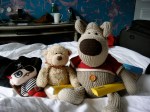
For those of you who are long term readers of The Daily Norm, you may remember, either from my post in which I extolled the virtues of a good teddy bear, or from their occasional appearance in my photos of daily life, that I have two very important little teddies who follow me around in my life – Bilbao, a little dog, given to me by my Partner as I came round from a rather hideous sixth leg operation semi-conscious in my hospital bed, and Fluffy, a little teddy (once far fluffier than he is now, much loved and slightly matted) who I gave to my partner as a thanks for all those bedside vigils and the much required care which followed by post-operative state. Ever since, these two little characters have been our constant companions in life, and inevitably, they have crept into my art too.

Bilbao and Fluffy, pose for their portraits

Last week I started my painting diary in what will be almost like an autobiography on canvas – a large painting which aims to explore various components of my life, past and present. Because they represent the contentment and stability of my home life, Bilbao and Fluffy are integral features of my story, and were therefore the first characters to make it onto canvas as my painting progressed to the semi-finished Mallorcan background of last week’s post, to the more detailed work which I have now started.

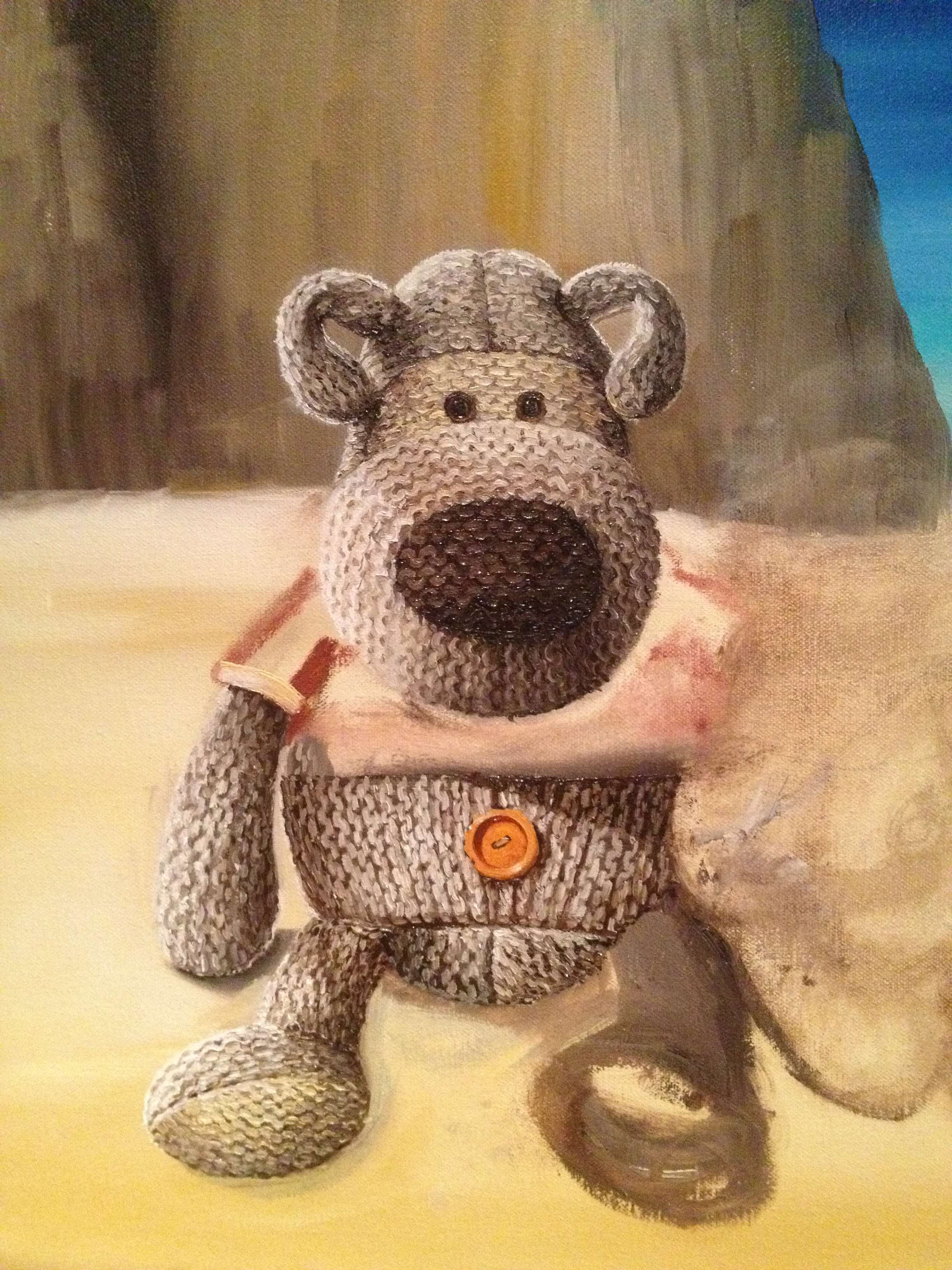
I thought this would take me around a day to achieve, but as I started to paint Bilbao, it soon dawned on me what a daunting undertaking it would be to paint all of his knitted body. He took me FOREVER to paint. At the end of day two I had managed to paint his head, which then floated around disconcertingly bodyless for a whole night, all the more freaky for having successfully captured that twinkle in his eye.

By the end of day three, I had done most of his body (bar one leg, the angle of which I found difficult) and his little red t-shirt (I needed to be careful this didn’t bleed into the beige of his knitting).

Bilbao was finished on day four, comme ça…

And Fluffy, thank goodness, didn’t take half as long, and I completed him, together with crumpled little ribbon, pretty swiftly on day five.

So there you have it, the painting so far, slowly progressing and presenting patience-trying technical demands from the start. Who would have thought that two cute teddies would prove to be such a painting challenge?

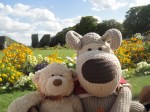
I leave you with a few photos of Fluffy and Bilbao in different locations throughout the world, just in case you weren’t already convinced that I am slightly eccentric.

Hoping to be able to update you with more painting progress soon. Until then…

© Nicholas de Lacy-Brown and The Daily Norm, 2001-2012. Unauthorized use and/or duplication of the material, whether written work, photography or artwork, included within The Daily Norm without express and written permission from The Daily Norm’s author and/or owner is strictly prohibited. Excerpts and links may be used, provided that full and clear credit is given to Nicholas de Lacy-Brown and The Daily Norm with appropriate and specific direction to the original content.
Autobiographical Mobile: My painting diary – Day 1: Mallorca

Since I started The Daily Norm last year, in those unenriched days when my interaction with the abundant world of the blogosphere was only just beginning, I have featured a fair number of my own paintings on my blog, attempting, as I have posted their photos, to explain some of the meaning behind what are often quite complex painted images. For my latest painting, I am changing tack.

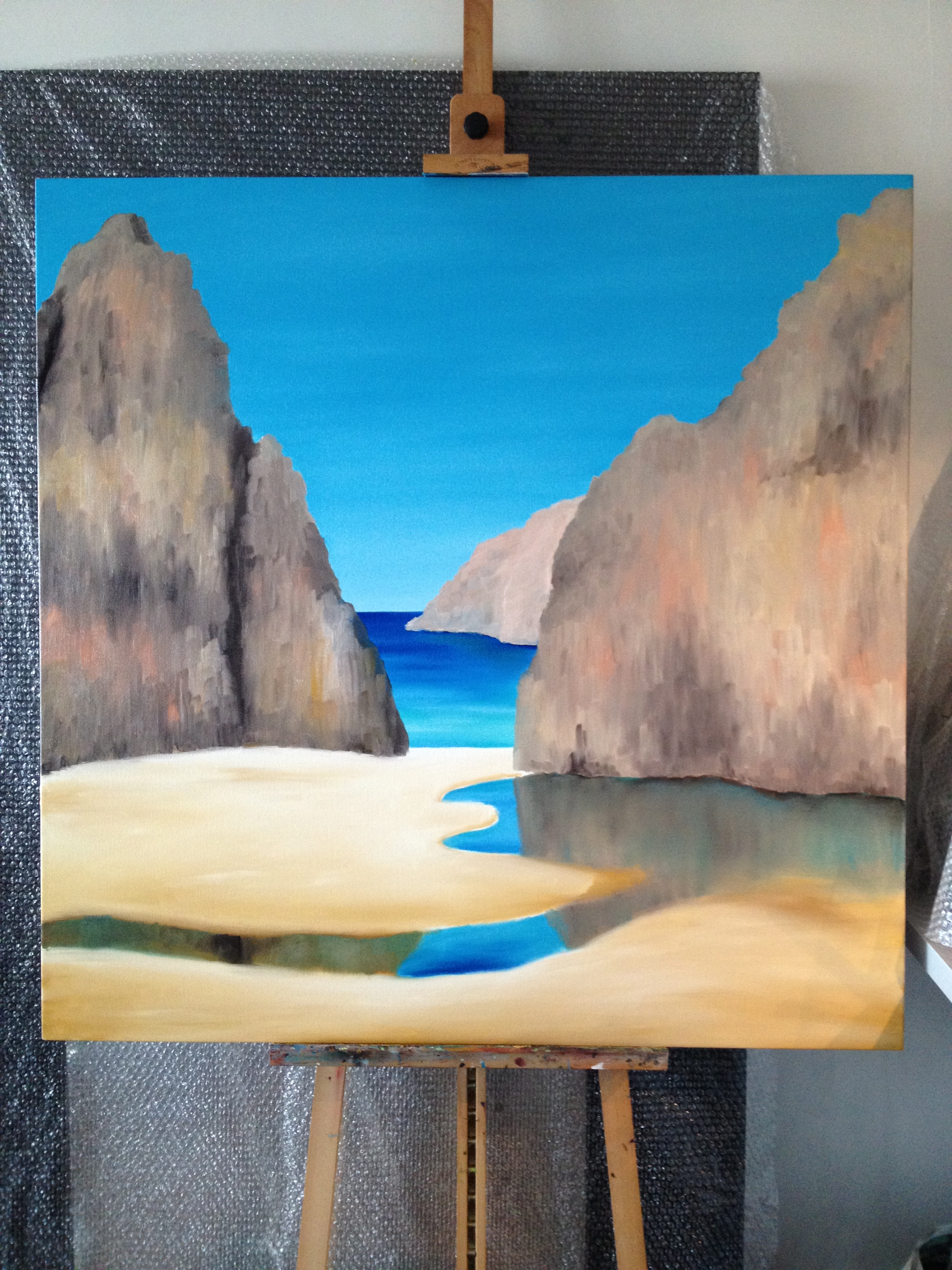
In my current  work, which has now been sitting upon my easel for some weeks, I am exploring an autobiographical subject matter on a grand scale (the canvas is 120cm x 120 cm, so a fair size for my lounge-come-studio to take when you consider that when I paint, I basically take over my kitchen – leading to some interesting food results when the paint gets too close to the oven top). Because the work is essentially a self-portrait albeit explored through a catalogue of symbols on a large Mediterranean background, I anticipate working on the canvas for some time before it is finished, particularly as painting is not my day job. Since that will mean a sparsity of artwork available for Daily Norm consumption in the foreseeable future, and because I plan to paint a plethora of details, I thought it would be equally relevant to blog about the painting as it progresses, rather than ramble at length when it is eventually finished.

First layer done – the Mallorcan inspired background

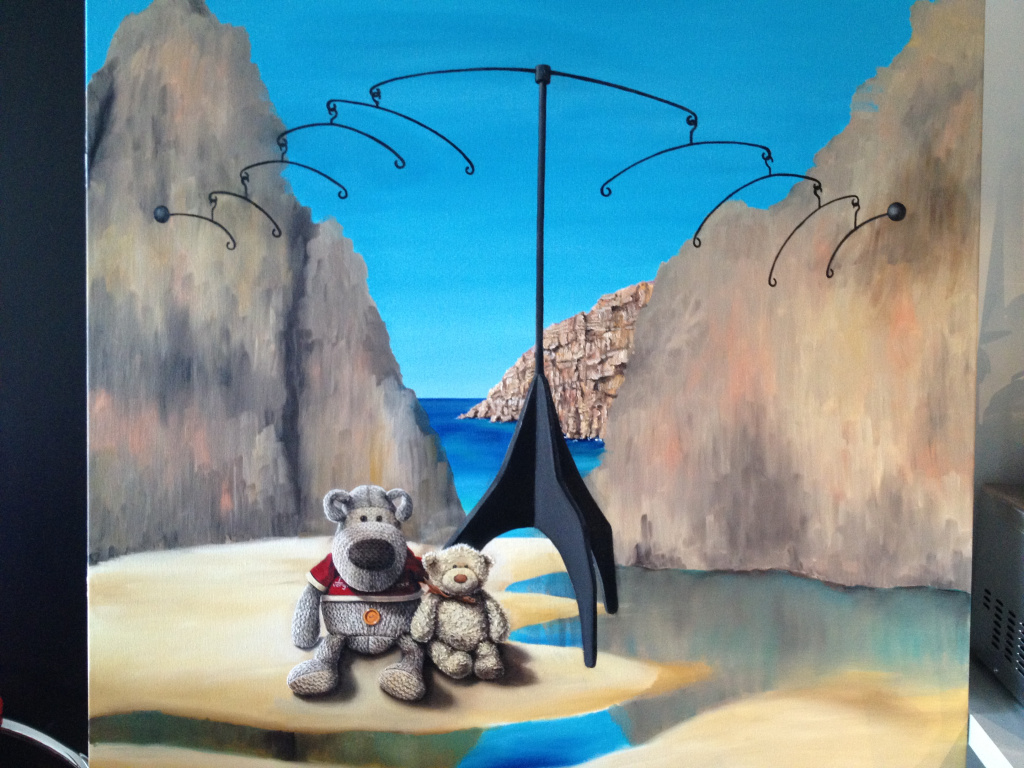
You join me then in what is the first post of my painting diary, a set of hopefully regular accounts cataloguing my progress on the work. In my first instalment, I present the background of my work. I decided to set the piece on a quiet, rocky beach, somewhere on the island of Mallorca. The background is far from finished – this is just a sketch of where the finished scenery will be set, but it provides enough structure, allowing me to build the details of the painting on top of it, layer by layer.

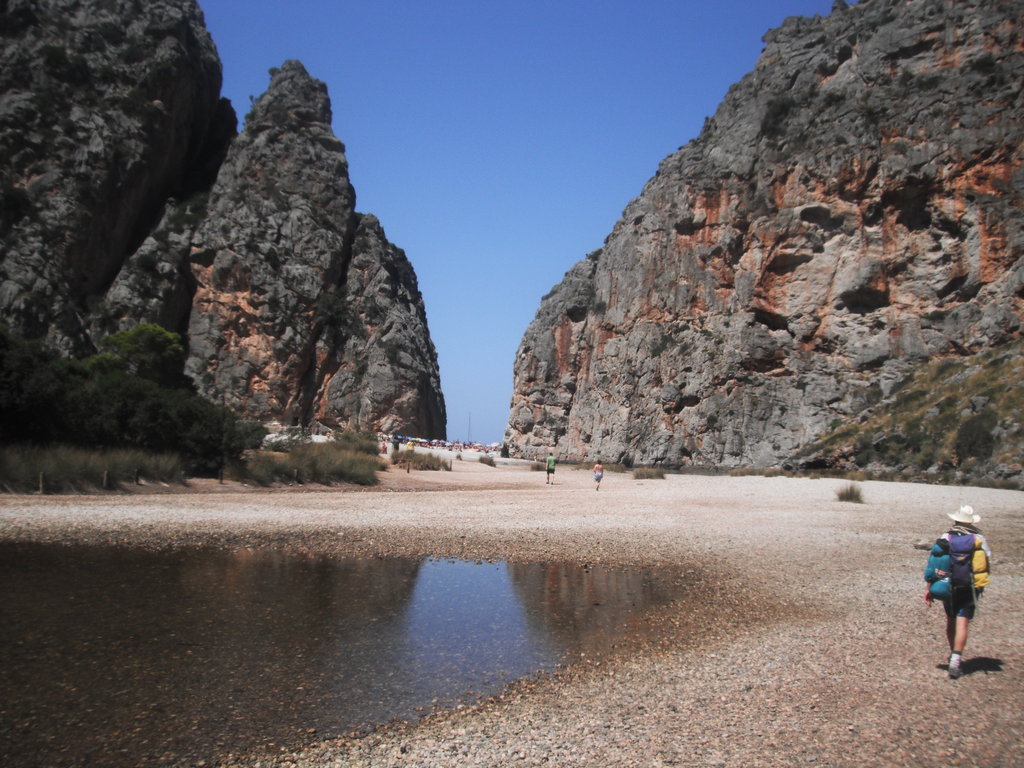
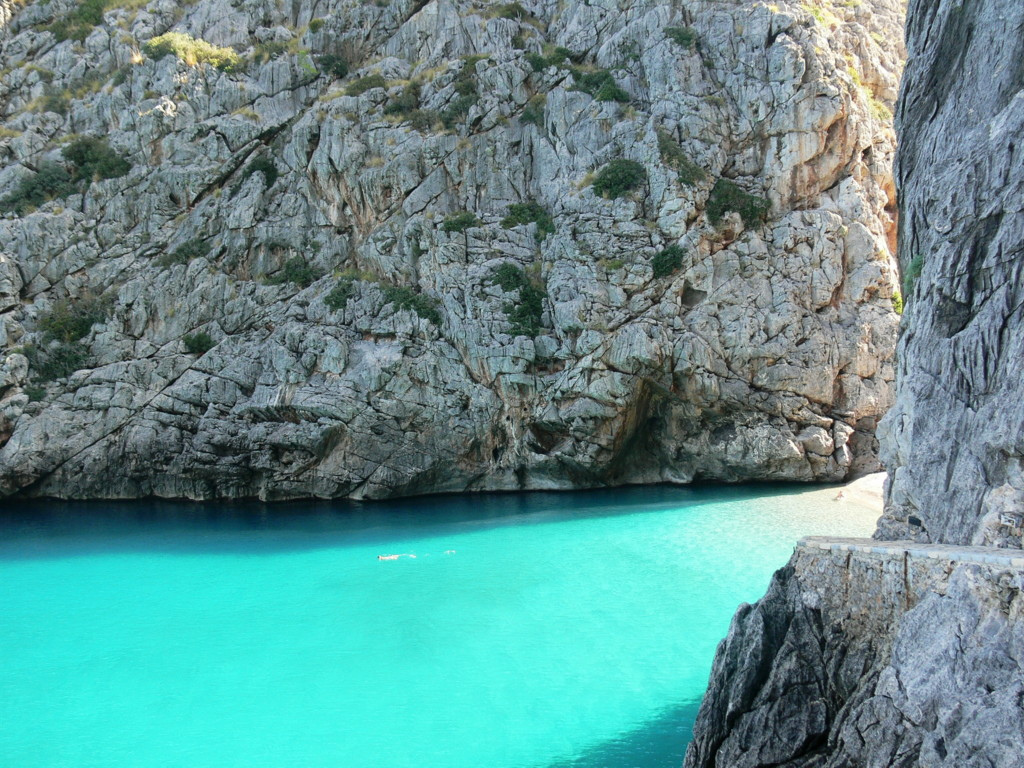
The background is loosely based on Torrent de Pareis, a beach in Northern Mallorca which provides stunning natural scenery but which, for the purposes of my painting, provides the right balance of solitary surrealism to cast the perfect backdrop to my self-analysing piece.

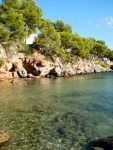
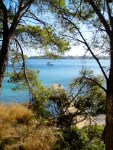
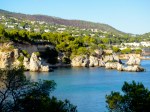
The Torrent de Pareis in reality

And its crystal clear waters

Since the painting will be a take on my story, it’s only appropriate that I should set it in the Mediterranean and on Spanish soil since Spain has, for most of my life, proved to be a consistent inspiration in my art and in my aspirations for life. While I have spent the majority of my time in Andalucia, my trip to the island of Mallorca this time last year inspired me more than any other. Expecting an island full of package holiday tourists and English menus, I was surprised, if not stunned by the incredible coastal scenery to be found around the island (once we fled from the ugly shadows cast by Magaluf and other tourist dystopias). The waters are such an incredible shade of blue, and the rocky covey beaches so idyllic and colourful, that seeing is believing. I accordingly enclose just a few of the shots I took of Mallorca’s incredible coastal scenery last summer – the colours alone are an art form in themselves. I just hope that my painting does Mallorca justice, even as just a background to a far deeper work.

See you for the next instalment of my painting diary.

© Nicholas de Lacy-Brown and The Daily Norm, 2001-2012. Unauthorized use and/or duplication of the material, whether written work, photography or artwork, included within The Daily Norm without express and written permission from The Daily Norm’s author and/or owner is strictly prohibited. Excerpts and links may be used, provided that full and clear credit is given to Nicholas de Lacy-Brown and The Daily Norm with appropriate and specific direction to the original content.

Salamanca: My Painting – Homage to a sandstone city in oil on canvas

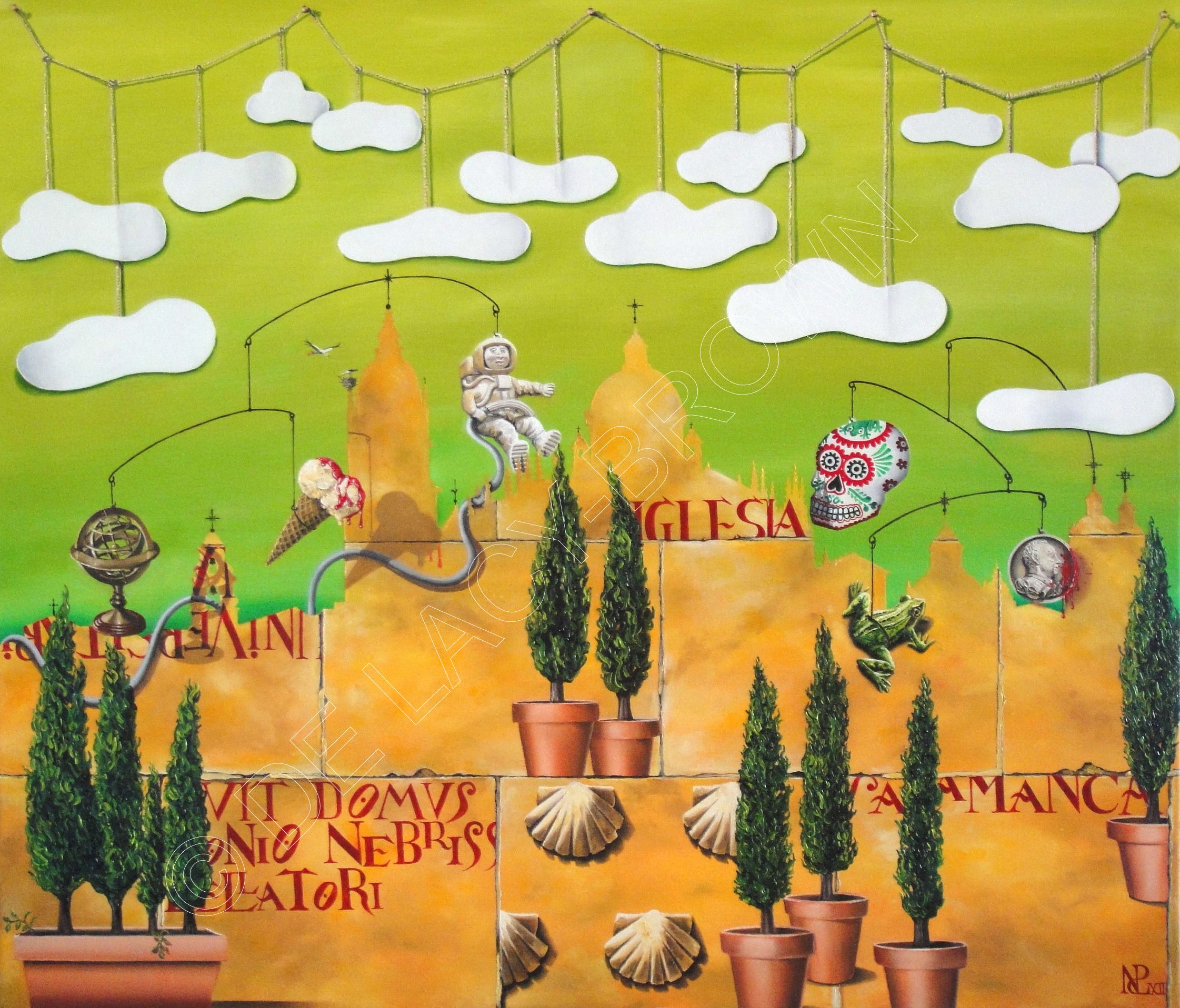
It’s been two months since I returned from the golden glowing sandstone Spanish city of Salamanca. There was so much to inspire me when I walked those elegant historical streets. When I gazed, mesmerised through my hotel window onto the stunning baroque Cathedral, the sun setting upon its orange stonework, and cypress trees gently waving from side to side in the evening breeze before it, a painting came to my mind. I rushed to make a quick sketch which I still have on the back of a reservation print out for the restaurant we were dining at that night. My painting of Salamanca was to contain what to my mind was the essence of the city – a kaleidoscope of dappled, marbled oranges and golds in a landscape uniquely built from the local Villamayor sandstone, a city bursting with historical artefacts flowing from the dual powerhouses of church and university. It is a city which is elegant in its antiquity, and yet bursting with fresh new life from its greenery, its strong local life, the pull of tourism and the thriving university population which resides there. This was my inspiration and shortly after returning from Spain I set to work on a large 105 cm x 90 cm canvas. I finally finished  the work over the long Jubilee Weekend. And here, exclusively, is the result, as I present my first (non-Norm) painting of 2012…

Salamanca (2012 © Nicholas de Lacy-Brown, oil on canvas, 105 cm x 90 cm)

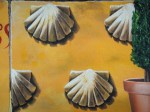
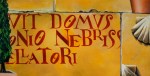
Dominating the centre of the canvas is a silhouetted skyline of the city, recognisable by the Cathedral spires and the intricate turrets, domes and baroque roofing of the nearby University. Rather than paint the detail of the buildings, I constructed the skyline out of a wall of villamayor sandstone bricks, in the same way that each building of the city is constructed. Those individual bricks act as a window onto different features of the city. On one brick you see the conch shells of the famous Casa de las Conchas, while on others, parts of the hand painted street letterings are featured, infamous for their historical use of pigs blood and olive oil.

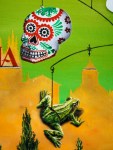
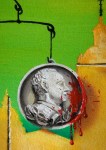
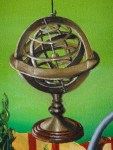
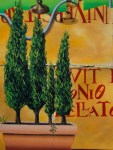
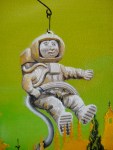
In the meantime, out of the Cathedral and the university, the ironwork crosses become large mobile-like structures, inspired by the great maker of mobile art, Alexander Calder. On these mobiles hang various symbols of the city. The astronaut and the ice cream which are usually imbedded in the intricate plateresque facades of the Cathedral and the University’s famous sandstone frog are all featured, as well as the skull upon which the frog sits (my painted skull is inspired by the Mexican Dia de los Muertos celebrations for which houses and graves are adorned with beautifully decorated hand painted skulls like this one). Represented too is the tradition of learning at the University, embodied in the Orrery (one of which I bought while in Salamanca as a souvenir of the city) as well as the famous Plaza Mayor, represented by the infamous bust of Fascist leader Franco which can be found amongst the busts of Spanish rulers around the square, and the inclusion of which causes such controversy that it is regularly vandalised. My Franco too has been vandalised, but is that paint on his face or blood on his hands? Finally the painting is generously sprinkled with various groups of cypress trees, tidily placed in terracotta pots at various spots across the canvas as well as a curtain of clouds sweeping across a clear green sky. Ooh and look out for the little stork’s nest embedded amongst the spires of the cathedral – the storks are a customary feature of the city and do not appear to cause the residents any hassle – in fact some churches have baskets placed on top of their spires to aid the storks in building a safe and secure nest!

So there it is, and above, so you don’t miss the details, are more photos showing the various individual aspects of the painting. I hope you like the painting and, more importantly, let me know what you think! I’ve already started a new work, so look out for that over the coming months.

© Nicholas de Lacy-Brown and The Daily Norm, 2001-2012. Unauthorized use and/or duplication of the material, whether written work or artwork, included within The Daily Norm without express and written permission from The Daily Norm’s author and/or owner is strictly prohibited. Excerpts and links may be used, provided that full and clear credit is given to Nicholas de Lacy-Brown and The Daily Norm with appropriate and specific direction to the original content.

Semana Santa – inspiration for my art

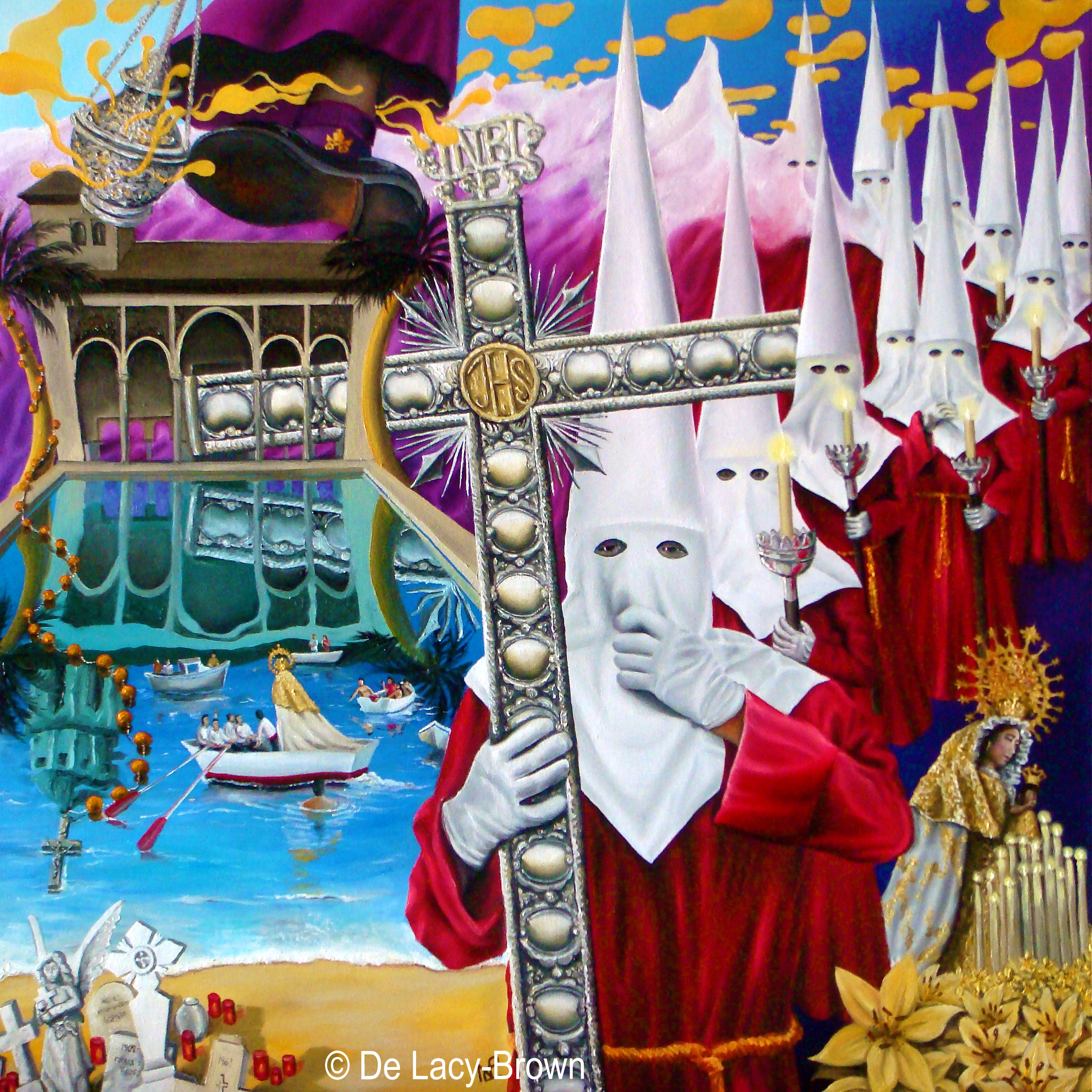
Yesterday, I introduced you to the endlessly fascinating and enduringly captivating Spanish processions which run through the streets of countless Spanish towns during this special week, Semana Santa, approaching Easter Sunday. From the moment I first saw one of these processions, I was overwhelmed by the spectacle. On the one hand, the hooded figures, marching by candlelight besides a wax figure of a dead or dying Christ make for a disturbing, slightly sinister sight. But look beyond the costume, to the breadth of participants involved, and to the widespread interaction of all of Spanish society which comes out to see the processions, and one is filled with an overwhelming sense of warmth and emotion. All of this combined makes for a substantial source of inspiration, and it is for this reason that Semana Santa has cropped up in my art work so often. I’ve now featured the parades in four of my major works and several smaller works. Nonetheless, I still don’t feel like I have truly captured the sheer scale and wonder of the spectacle, but hope that one day I will create a piece with which I can be truly satisfied.

Catholicism, Catholicism (España Volver II) (2009 © Nicholas de Lacy-Brown) Oil on canvas

In this, the second canvas from my España Volver collection, Catholicism, Catholicism,  the Semana Santa processions forms the centrepiece of what is a generalised depiction of the continuing importance of Catholicism in Spain’s current culture, as well as its historical significance. Here the nazareños are shown metamorphosing from the Sierra mountains behind the city of Granada, the site of one of Catholicism’s most significant defeats over Muslim rule during the reconquista. To the right of the nazareños is a typical statue of Mary as paraded through the streets on tronos. This is not to be confused with the Mary sent out to sea by fishermen as depicted on the left on the canvas, this detail depicting the festival of Maria del Carmen, whereupon fishermen across the Costa del Sol give thanks to Mary for keeping them safe every July.

My depiction of Semana Santa in Catholicism, Catholicism was in turn based upon this study I made a few months before of a group of nazareños during Marbella’s Domingo de Ramos (palm sunday) procession.

Grupo de Nazareños (2009 © Nicholas de Lacy-Brown) Oil on canvas

A Semana Santa procession also features rather prominently in the third canvas of my Seville Tryptic, appropriately so since the Semana Santa processions in Seville are by far the most famous.

Seville Triptych - Canvas III (Oil on canvas, 2010 © Nicholas de Lacy-Brown)

It surprises me that so few people outside of Spain actually know what these processions are. When most English people see my paintings, they think I’ve portrayed the Ku Klux Klan – as if. This observation causes me relentless frustration, and I hope that through my art, photography and now my blog, I can help to share Spain’s Easter spectacles around the world.

That’s all for now. But check The Daily Norm this Easter Sunday, where a special Sunday Supplement will feature my most substantial (and recent) depiction of Semana Santa.

© Nicholas de Lacy-Brown and The Daily Norm, 2005-2012. Unauthorized use and/or duplication of the material, whether written work or artwork, included within The Daily Norm without express and written permission from The Daily Norm’s author and/or owner is strictly prohibited. Excerpts and links may be used, provided that full and clear credit is given to Nicholas de Lacy-Brown and The Daily Norm with appropriate and specific direction to the original content.
War in my Art: Works inspired by Birdsong

Having reflected for the majority of last week’s posts on the subject of war, I made the decision to seek inspiration further by visiting London’s Imperial War Museum. There, tucked away behind the major exhibitions of planes, military instruments, uniforms, the holocaust and even a WW1 trench reproduction, is a collection of war art to rival all of London’s major galleries. There is something about war as a subject matter which loads each and every painting with a heavy significance, because you know that for these images to have been produced, the painter has either lived through the hell portrayed, or at least witnessed it first hand. Consequently the pain which is captured is visceral, the emotions cutting, cynical, raw. Yet these works are undoubtedly beautiful. At the centre of the IWM’s collection is Sargent’s gigantic work, Gassed, an incredible, moving image, which shows soldiers who have been temporarily blinded after a gas attack helping to guide one another with in caterpillar-like line, while all around them, soldiers similarly afflicted fill both the foreground and background. It’s scale is startling, but the small moments of human kindness in desperate times are even more striking.

John Singer Sargent, Gassed (courtesy of Imperial War Museum, London)

This painting is not unique in it’s superb captivation of WW1, and as you stroll around the collection at the Imperial War Museum, paintings which you may never have seen before seem somehow familiar – for it is clear that as the memory of war slips further and further into the past, with survivors now few and far between, and photographic and film accounts being scarce and of poor quality, it is the paintings of war which now take centre stage in helping a modern audience to imagine the apocalypse of trench warfare. It is, for example, immediately clear to me that the cinematography in Spielberg’s new film, Warhorse, is inspired by the haunting trench landscapes of Paul and John Nash.

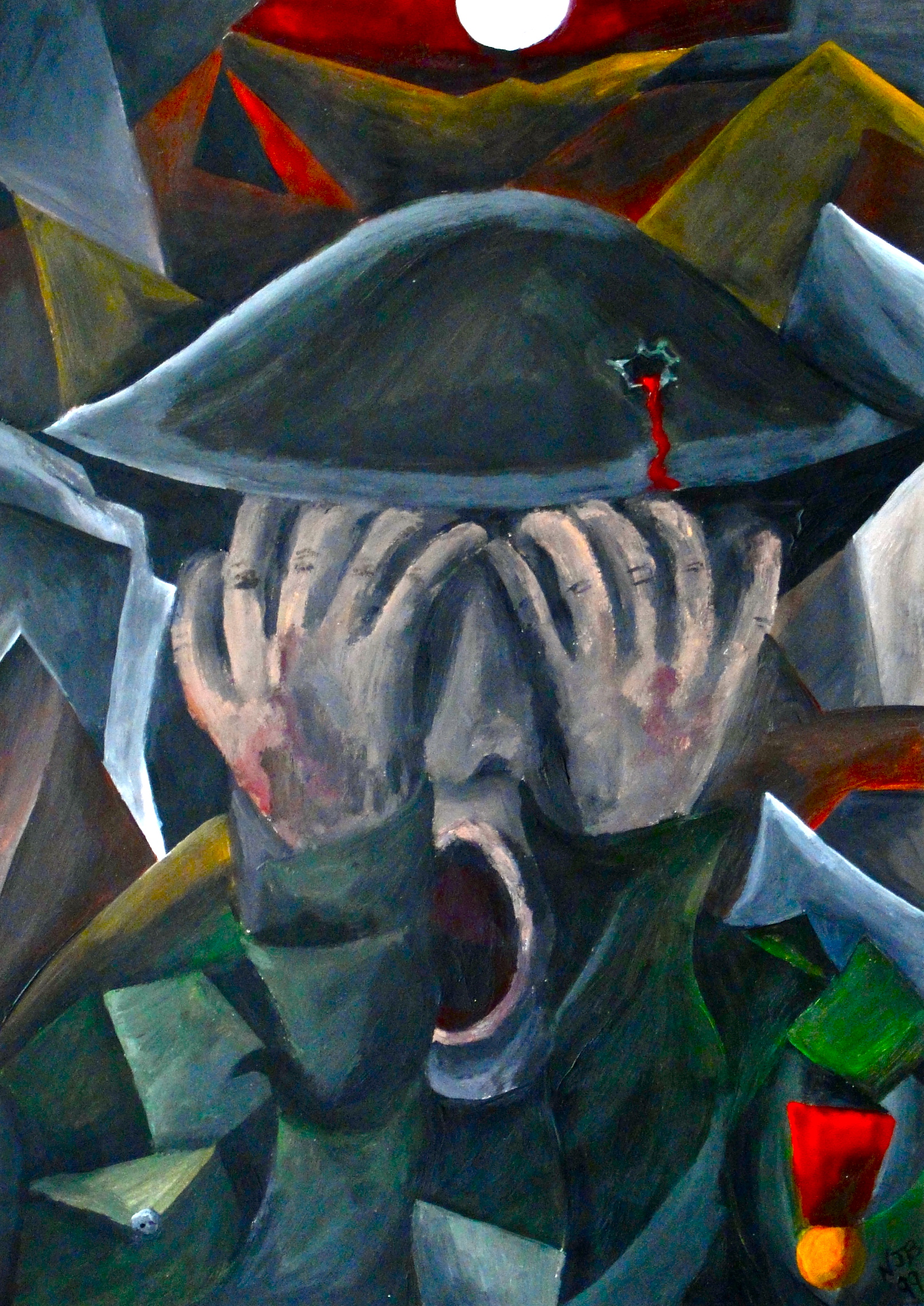
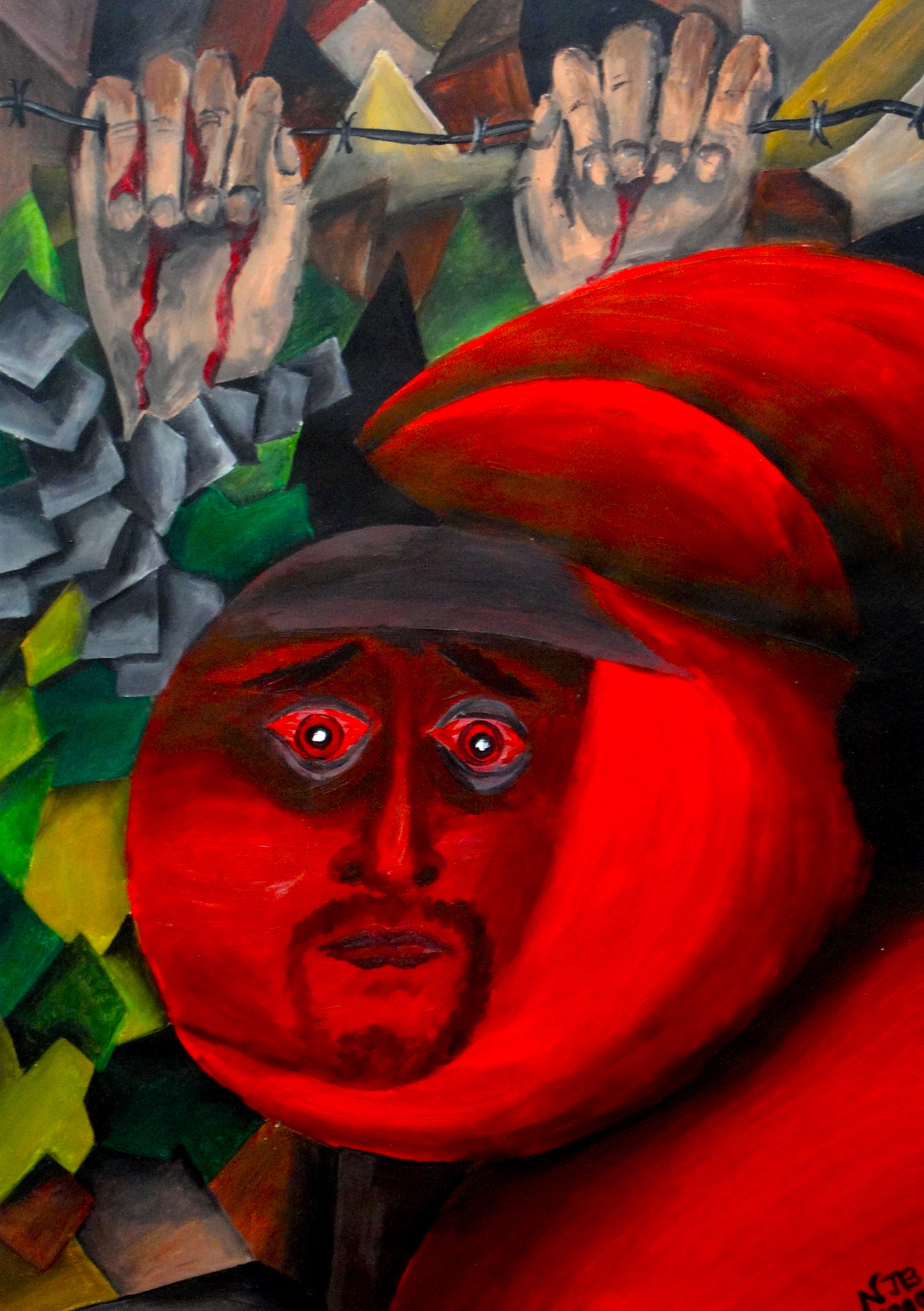
Yet before I even set eyes on the Imperial War Museum’s collection, I was myself emotionally engaged with the subject of war, and sufficiently inspired to begin painting it as a young artist. The source of my inspiration was the novel Birdsong by Sebastian Faulks. The novel is the only book every to have made me cry. It’s depiction of war is so striking, so accessible, that it is impossible not to be caught up with the plight of its characters and the horror of war. For a 15 year old reading the story, I was unintentionally drawn wholeheartedly into this evocative re-imagining of the First World War, even though so many people in my generation appreciate little about it – for most they think WW1 is all about wearing a poppy every 11/11. And when I finished the novel, one of those rare moments of inspiration flooded into my head – I knew immediately that I wanted to paint a tryptic based on the scenes conjured in my head. And the fact that I then painted war without pictorial reference is, I suppose, testament to what a superbly descriptive writer Sebastian Faulkes is. Having at last got home to my parents’ house in Sussex, I was able to photograph the paintings which resulted from that inspiration. I painted them at the age of 15, before I really appreciated that I might have artistic talent, and certainly before I took it seriously. Nevertheless, I like the paintings to this day probably since their imagery, like their subject matter, has timeless significance.

Screaming Soldier - A Victim of War (acrylic on paper, 1999 © Nicholas de Lacy-Brown)

Trench Rat (acrylic on paper, 1999 © Nicholas de Lacy-Brown)

The Truth Behind the Poppy (acrylic on paper, 1999 © Nicholas de Lacy-Brown)

Following these works, I moved onto another tryptic of war paintings, this time depicting the First and Second World Wars and the Cold War. I donated the collection to the history department of my old school Our Lady of Sion School in Worthing, where I believe they are still hanging to this day. Sadly I don’t have any photos of the works, but before I donated them to my school, the paintings attracted the interest of Worthing Town Hall. As a result, the works were exhibited in a special exhibition marking Remembrance Sunday in November 2000. A photograph of me with the Mayor of Worthing and the pictures hanging on the wall behind us was on the front page of the local Newspaper that month. That paper was then painted into the background of another of my very early works in which I mourned the death of my guinea pigs. So here it is, the only picture I have left of that second war tryptic.

Cinnamon and Nutmeg (acrylic on canvas, 2000 © Nicholas de Lacy-Brown)

The conclusion of this post is, I suppose, the potential of a well-written novel to empower the mind, and to recreate past tragedy in the minds of innocent, often unappreciative generations. That novel, Birdsong, is not only a must-read. It is also now a must-see, a televised adaptation having premiered on BBC television last Sunday which is every bit as beautiful, sensitive and poignant as the novel, and so much more powerful in its portrayal of war than the current cinematic offering, Warhorse. 


War on canvas: Guernica – history repeating itself

On the 5th February 2003, when the US Secretary of State, Colin Powell, took to the stage at the UN headquarters in New York to present America’s case for war against Iraq, one thing was missing, or at least appeared to be missing from the much-photographed press area outside the Security Council chamber. For concealed beneath a baby-blue banner containing the UN logo erected for the occasion was a tapestry reproduction which had hung proudly in its place for almost 20 years. Appropriate? Maybe, as the masterpiece carefully concealed is easily the most striking, anti-war demonstration ever created, a work which art historian Herbert Read described as “a cry of outrage and horror amplified by a great genius” and by the ‘genius’ himself as “an instrument of war against brutality and darkness”. The artist? Picasso. The masterpiece: Guernica.

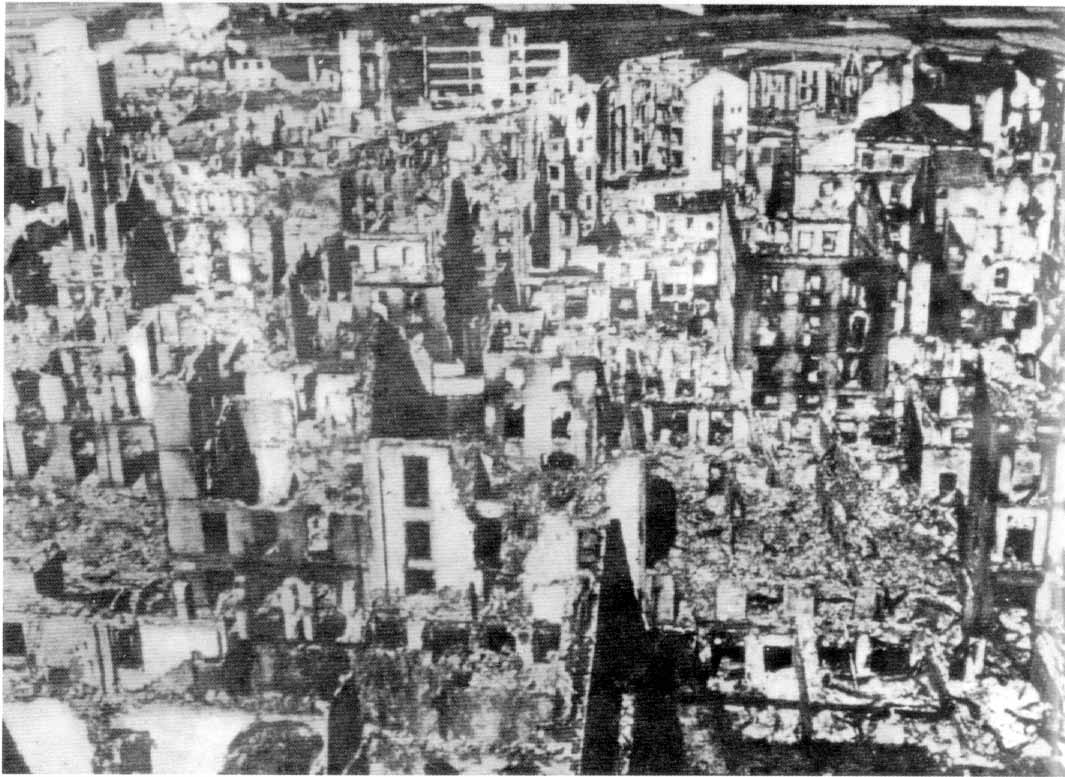
Between 4:30 a.m. and 7:45 a.m. on the 26th April 1937, in the midst of Spain’s vicious Civil War, the Basque village of Guernica was brutally attacked by an unprovoked raid of German bombs and gunfire on the orders of the Nationalist leader, General Franco. One third of the population of the village, some 2300 people, were either killed or severely injured, and the old town was utterly destroyed. At 7:39 am on the 11th March 2004, the first of 10 bombs exploded in a train packed with Madrid’s early morning commuters. Almost 200 people were killed in this horrendous massacre, innocent lives destroyed, families ripped apart and Spain, targeted in this ‘second Guernica’ by an unprovoked attack of terrorist means. The similarities are striking. Both the fascist regime of Franco along with his Nazi and Italian fascist support and the terrorist organisation of Al Qaeda sought to intimidate and terrorise and take whatever innocent lives were necessary in pursuance of their iniquitous objectives, while both attacks have rendered Spain the victim of unspeakable horror and its attackers the subject of international abhorrence and outrage. So while Colin Powell and the advocates of the Iraqi war may have felt more comfortable in covering up this phenomenal anti-war masterpiece when they promoted a new war in which similar scenes of horrific slaughter would be an inevitable result, there can be no doubts of the unquestionable relevance which the painting has in today’s violent and nonsensical world.

Guernika – the basque town in ruins after the bombing

Memorial to victims of Madrid 3/11

In this post, I will begin by exploring Picasso’s use of intrinsically nationalistic themes in Guernica, which present such a powerful portrayal of the suffering not just in Guernica, but for the nation of Spain as a whole. Secondly I will go on to illustrate the continuing relevance of these nationalistic sentiments, highlighted most powerfully by the events of the 11th March in Madrid, which inspired my own interpretation of Picasso’s work, ‘Segunda Guernica’ .

Read more