Skip to content

Night at the Royal Ballet: The Dream/ Song of the Earth

When I was invited to spend the evening at London’s Royal Opera House to see a double-bill Royal Ballet performance of The Dream and Song of the Earth, I was more excited by the prospect of enjoying the sumptuous surroundings of the Royal Opera House (which, owing to hefty prices, I rarely get to enjoy) rather than the ballet itself. I’ve always considered myself more of an opera man dismissing the love of ballet as being confined to those fanatics with a familiarity of and appreciation for the technical aspects of dance. Last night I found the Royal Opera House to be as stunning as anticipated. From the startlingly modern, elegantly dazzling Paul Hamlyn Hall, where champagne takes centre stage, and the glass and iron structure is like a diamond preserved from the Victorian era, to the sumptuous surroundings of the plush red and gold auditorium: this theatre is without a doubt the jewel in London’s crown. But for me, the real stunner of the evening was, to my surprise, but quite appropriately, the preserve of the performance on stage.

The stunning Paul Hamlyn ("floral") hall interior

The Dream

In their performance of The Dream, set to the well known music of Mendelssohn (the wedding march now being played out all over the world as a newly married couple descend magnificently down the church aisle) the Royal Ballet provided a whimsical, tight and aesthetically joyous production, a cornucopia of visual delights, and a perfectly danced narrative of Shakespeare’s renowned Midsummer Night’s Dream tale. But in Song of the Earth, the Royal Ballet did not just present a ballet performance, but an indubitable work of art, a stunning rendering of moving sculpture, a work of poetry told through the human form. It was mesmerising, haunting and moving all in one. I left the ballet a changed man.

Oberon and Puck - The Dream

So why was it so good? Well I am a quite the philistine when it comes to the technical adroitness of a ballet dancer, but it was immediately obvious from both performances that the Royal Ballet does not cut corners when it comes to quality. In their performance of The Dream, the ballerinas danced with such poise and light delicacy that the distinction between dream and reality blurred as a stage full of flitting fairies appeared to come to life. This was no doubt enhanced by the beautiful and complex scenery coupled with low misty lighting which perfectly epitomised the fairytale grotto of childhood imaginings. This performance was definitely the more traditional of the two, but it did not lack allure because of it. Rather, the charm of the corps de ballet, identically dressed in diaphanous luminescent little tutus, tinged with forest shades of greens and turquoise, was like the coming to life of a Degas pastel. The romance of the ballet was thereafter confirmed, as I imagined myself as something of a Degas, ready to leap up into the wings and paint the dancers at work.

Edgar Degas, Blue Dancers (1893)

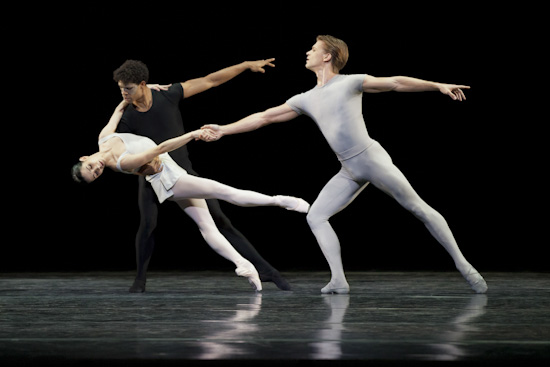
But in Song of the Earth, greater forces combined to conjure a startling production of mesmeric power. Here the music, the lighting, the stark scenery, the stripped down costumes and the athletic skill of the dancers all joined forces to create an awe-inspiring tour de force of emotional exploration. Song of the Earth is a ballet choreographed by the ballet supremo Kenneth Macmillan (1929-92). It is set to the haunting, often chromatic and deeply stirring score by Mahler. His 1908 composition (“Das Lied von der Erde”), was itself based upon six ancient chinese poems which had been translated into German the previous year by Hans Bethge. The poems, which dealt with themes of living, parting and salvation touched Mahler deeply at a time when he was embroiled in his own personal melancholy, having lost one of his children to scarlet fever and diphtheria and being himself close to death with a significant heart defect. The significant emotional journey along which Mahler was relentlessly embarking during this time bleeds through, in every tender and painful detail, into the score. In the Royal Ballet’s performance, the songs are intermittently sung by a tenor and contralto. When combined with dance, the result is magical.
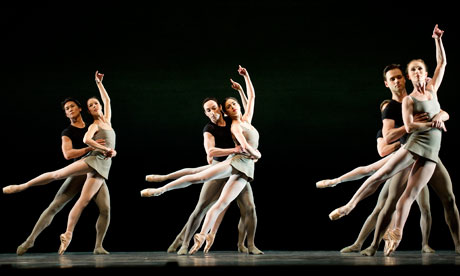
Song of the Earth (© Tristram Kenton for the Guardian)

“The wine already beckons in the golden goblet
but do not drink yet – first I will sing you
a song.
With a burst of laughter the song of sorrow 
shall sound into your soul.
When sorrow draws near, the gardens of the
soul lie waste,
Joy and singing wither and die.
Life and death alike are dark.”

I: The Drinking Song of Earth’s Misery

Song of the Earth

The dance perfectly reflected the themes of anguish, life, death and salvation intermittently explored by the singers and the score. The contemporary choreography was so artistically executed, it took my breath away, and words are not sufficient to describe the effect produced. Nonetheless, as I attempt to consider and put words to my emotional response, I am particularly struck by the staging – a stark bare stage, with the dancers lit from above and behind. This resulted in shadows forming on the front of the dancers’ bodies, so that every muscle and angle of their beautifully choreographed and moving forms could be appreciated with an enhanced focus. Also, the monochrome tones and use of identical costumes amongst male and female dancers respectively meant that the personality was taken out of the dancers, and the focus placed in the use of their bodies, and the shapes of their dance in narrating the emotions portrayed. Thus at times the dancers appeared to form the shape of temples, flowers, swinging pendulums and of twisting anguished souls, entangled in chains around each other as the dancers desperately sought to escape their inexorable link with death.
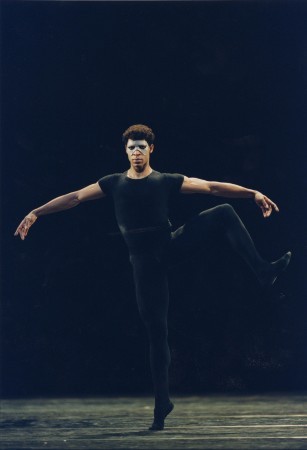
Carlos Acosta as the Messenger of Death (© ROH, Bill Cooper)

By contrast, the brooding masked persona of the characterised messenger of death, stunningly portrayed last night by Ballet favourite, Carlos Acosta, was omnipresent across the performance, a sinister undertone whose looming role in the tale was forebodingly clear. Particularly impressive also was the lead female ballerina Marianela Nuñes, exhibiting an almost superhuman control of her elegant form, specially when, during one movement, she danced en point backwards across the stage for what must have been almost a minute uninterrupted. The skill of dancing on show was staggering.

Ballet is one of those things you just have to see in action, alive and throbbing on the stage. Even Degas’ paintings can’t replicate the power and emotional draw of a real performance, and televised performances also lack the intensity of a live show. Now I have seen the real thing, I am a man converted.
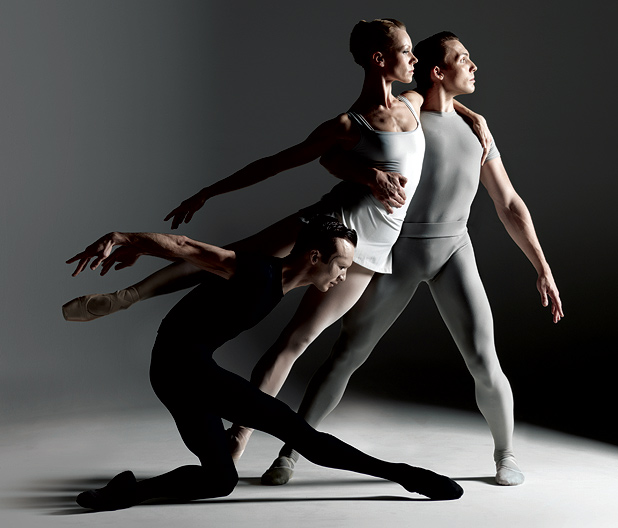
Monochrome colours and simple costumes to stunning effect: Song of the Earth

Postscript: Thanks go to my friend Siobhan, who took asked me along to the ballet last night, and particular congratulations go to Francesca Hayward, dancer of the Royal Ballet and member of the corps de ballet in last night’s performance of The Dream – it’s incredible to see a young face from my childhood up on the Royal Ballet stage having achieved so much as such an accomplished young dancer. I envisage a great future ahead for you.

Daily Norm Book Club: The Third Reich by Roberto Bolaño

“The water rose up the stairs from the beach and spilled over the sidewalk. Consider your next play very carefully, warned El Quemado, and he began to splash away toward the Del Mar…The water was black and now it came up to my ankles. A kind of paralysis so thoroughly prevented me from moving my arms and legs that I couldn’t rearrange my counters on the map…The die, white as the moon, sat with the 1 faceup. I could move my neck and I could talk (or at least whisper) but that was all. Soon the water swept the board off the wall, and it began to float away from me, along with the force pool and the counters. Where would they go? Toward the hotel or the old town? Would someone find them someday? And if they did, would they be able to see that it was a map of the battles of Third Reich, and that the counters were Third Reich armoured corps and infantry corps, the air force, the navy?…

Calmly, and with no hope of saving myself, I waited for the instant when the water would cover me. Then, emerging from under the streetlights, came El Quemado’s pedal boats. Falling into a wedge-shaped formation (one pedal boat at the head, six two-by-two behind, and three bringing up the rear), they glided noiselessly along, synchronised and gallant in their way, as if the flood were the perfect moment for a military parade. They took turn after turn around what had once been the beach, with my dumbstruck gaze fixed on them; if anyone was pedaling and steering, it must have been ghosts, because I couldn’t see a soul. Finally they moved out to sea, though not far, and changed formation…From my position all I could see was the nose of the first one, so perfect was their new alighnment. Suspecting nothing, I watched the blades cleave the water and the boats begin to move again. They were coming straight for me! Not very fast, but as relentlessly and ponderously as the old dreadnoughts of Jutland. Just before the floater of the first one, surely followed by the remaining nine, was about to smash into my head, I woke up.”

The Third Reich, Roberto Balaño (Picador, 2011) © heirs of Roberto Bolaño

The lastest posthumous publication from author Roberto Bolaño is a profoundly disturbing novel. Not because the novel is full of back-to-back gruesome descriptions of serial murder (as in Bolaño’s most celebrated offering, 2666) but because there is something intrinsically unsettling about the narrative, told from the point of view of a young 25 year old German tourist, Udo Berger, who appears to descend into some form of intellectually advanced emotional breakdown as the book goes on: From a lucid beginning, Udo, as narrator, spends more and more time preoccupied by the realms of his nightmares, while in the real world, his descriptions of the places and people around him become gradually more sinister and surreal.

The story starts relatively normally. Udo Berger, an aspiring writer and part-time gamer from Stuttgart, and his girlfriend Ingeborg, are on holiday in a typical tourist-pot resort on Spain’s Costa Brava. It isn’t clear when the book is set, but a reference to a split-Germany and the reliance on landline telephone communication (rather than mobiles or email) suggests that the story is probably 1980s at the latest.

Udo Berger is a war-games champion back in Germany, and consequently spends much of his time immersed in the slightly niche world of war gaming, both playing, and writing related articles which he publishes around the world. The game with which he is primarily preoccupied, and the one which gives the name to the novel, is Third Reich. The game, which is a real game released in 1974 by gamers Avalon Hill under the full title, Rise and Decline of the Third Reich, is a grand strategy wargame covering the European theatre of World War II in Europe. It’s a long running game (not your average Monopoly) which requires the players to take on the roles of the various major national powers at play in the war. The players then simulate the entire war effort from 1939 until it’s end, but with the opportunity to re-strategise the course of history and investigate different courses of military manoeuvre which may not have been undertaken in reality (for example a German invasion of Spain).

It is against the rather fractious setting of war that the story of a holiday in peace-time Spain plays out. Udo spends much of his time cooped up inside his hotel room strategising war, while his girlfriend attempts to enjoy normal holiday past times. It is on one such occasion that she meets another holidaying couple, Charly and Hanna, and a group of shady locals who introduce both Ingeborg and Udo to the darker side of town life beyond the tourist sheen. The new-found friendship between the couples does not end well, when Charly, after various tumultuous encounters, disappears without a trace. As the holiday comes to an end and Ingeborg decides to return to Germany, Udo is intent on remaining behind in Spain to make sense of Charly’s disappearance.

It is at this point that the heart of the novel begins to play out, and various factors combine to affect a mood of disintegration and melancholy in the mind and surroundings of Udo. As the hotel gradually empties, the once bustling resort takes on a ghostly feel. Udo describes noises in the corridor and mirrors without reflection as his mind becomes more and more troubled with nightmares. In the meantime he strikes up a gaming relationship with El Quemado – a severely disfigured and enigmatic local who runs a boat pedalling business by day, and sleeps in a fortress built from his boats at night. Once introduced to the rules of Third Reich, El Quemado becomes progressively more zealous in his role of allied strategist, until it becomes clear that his enthusiasm to play against a German is laced with more sinister undertones. Despite becoming aware of this risk, and long after the mystery of Charly’s disappearance is clear up, Udo Berger feels compelled to remain in Spain and play on, despite the seriousness of the potential consequences once the game of war is ended.

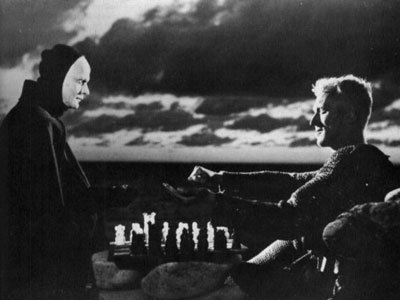
Scene from Ingmar Bergman’s The Seventh Seal

This is a story which is unsettling perhaps because of the many ironies it entails. Udo Berger is on holiday in peace-time Spain, but remains cooped up inside reliving the history which dogs his nation. He is adamant that he is no Nazi, yet he is obsessive in wanting to re-stage the second world war in order to improve its outcome. Meanwhile the core of the story plays out when the tourist season is over, when the hotel is tired, dilapidated and empty, ready to hibernate for the winter, when it’s owner is dying and its staff are rebelling, and when, instead of sun, the sandy beach is pitted with the patter of rainfall. The story is also unsettling because our access to it is through Udo Berger, a man who makes for an unreliable narrator, forever wavering between nightmare and reality, historical strategy and contemporary indecision. Yet this is what makes the book so edgy, electric and captivating.

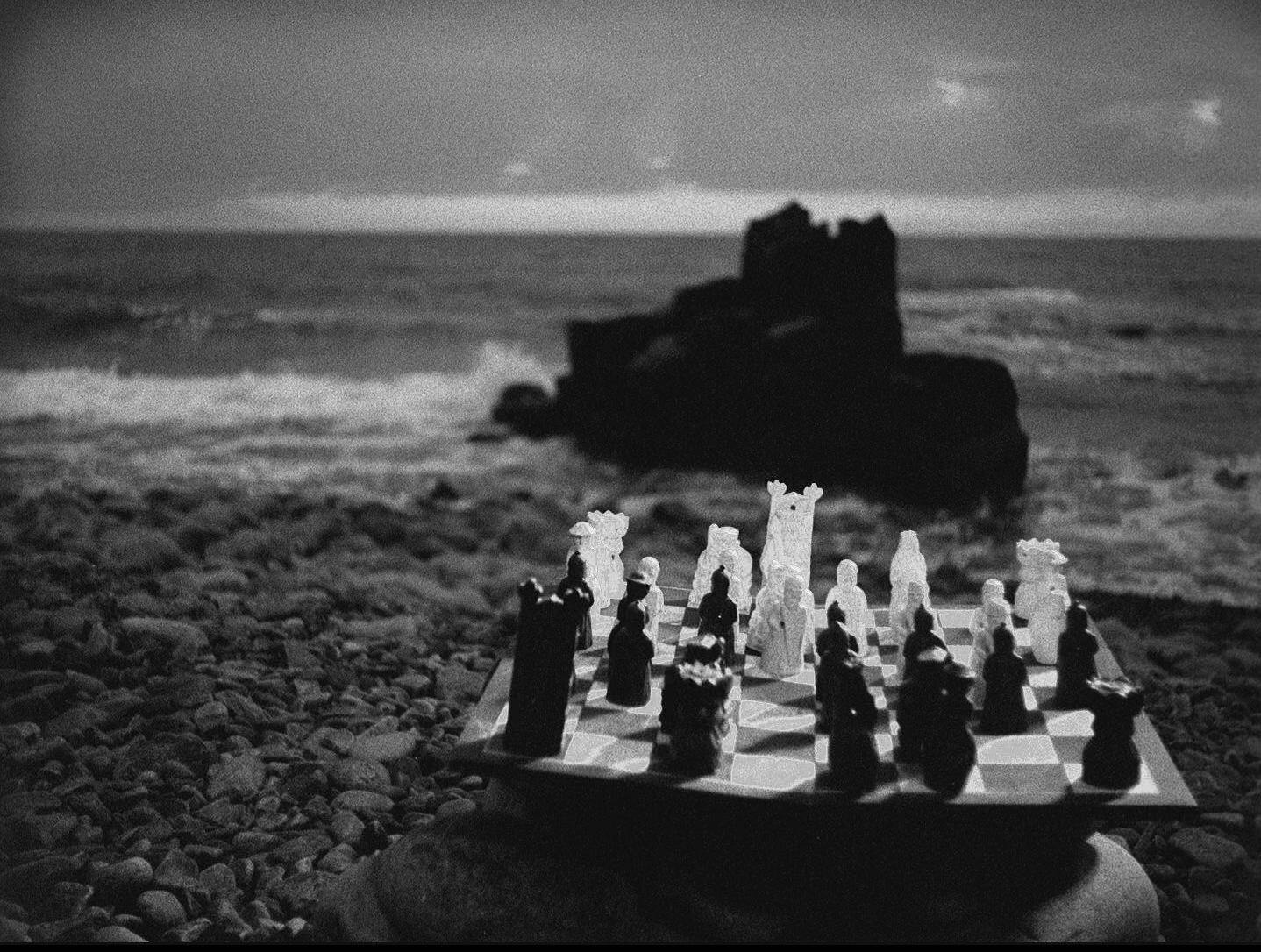
This book reminds me of Ingmar Bergman’s 1957 cinematic masterpiece, The Seventh Seal, particularly the scene when the protagonist, Antonio Block, plays a game of chess on the beach against Death. Enigmatic, eery, sinister yet compelling. It also reminds me of the surreal and slightly unsettling works of Rene Magritte – on the surface, he presents recognisable everyday situations, yet at their core, they unbalance and disconcert. Bolaño’s newly published novel is another such gothially-surreal success, which presents a further opportunity to discover the comprehensive and multifaceted oeuvre of Roberto Bolaño, much of which remained unpublished on his death in 2003. I urge anyone with a taste for the unusual to read this novel.

Lucian Freud Portraits

Roll up roll up for the 2012 London Cultural Olympiad. All the big wigs of the Brit-art A-list are in town, the banners are up, and the art posters line the saturated platforms of the underground as the PR machine goes into overdrive. As if in response to the cattle cry, the crowds have come to town –  the galleries are packed, the gallery restaurants have waiting times of over an hour, and the gallery shops are partitioned by huge queues of customers cashing in on memorabilia of these big-billed art shows. It’s all really quite stressful.

Next in line to meet my sampling eye was the Lucian Freud portraits retrospective at London’s National Portrait Gallery. Having been in the pipeline for some time, and organised in collaboration with the artist himself, the NPG’s exhibition gained additional poignance when, last July, Lucian Freud died at the ripe old age of 88. He did so working right up until the end, and his unfinished portrait of his studio assistant and dog hangs at the climax of the show.

Portrait of the Hound (2011)

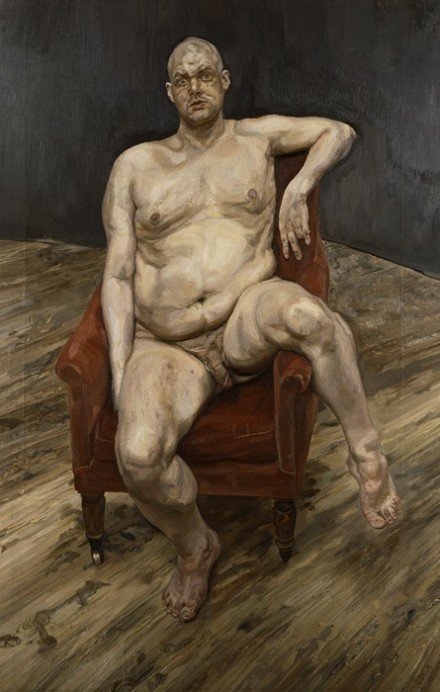
There is no doubting Freud’s stature as a preeminent star of British art. When his painting, Benefits Supervisor Sleeping, sold at Christie’s in New York for the sum of US$33.6million in 2008, it broke the record for the highest price paid for a painting by a living artist. It is consequently appropriate that he should be lined up along with the likes of David Hockney and Damien Hirst for blockbuster solo exhibitions which promise to showcase British art to the world. It is also appropriate that the show focuses on his portraits, for Lucian Freud is long associated with his unforgiving nudes, painted with a multi-layered impasto application of fleshy pale paint, striking often uncomfortable and usually unflattering poses, and portraying a deeply penetrated psychological profile cast free from boundaries, clutter or clothing for full and frank disclosure to the world.

Benefits Supervisor Sleeping (1995)

Leigh Bowery (Seated) (1990)

In this show, the NPG give us plenty of raw unabashed flesh to stare at, as Freud’s emboldened, unrepentant portraits confront the audience rather than seduce. In the galleries, there was an almost tangible electricity in the air, as the scale of the show and the sheer number of these awkwardly posed nudes threw light on the often disconcerting relationships between artist and model, the somewhat fragmented and awkward relationship between artist and children, and the range of dynamic but often slightly disturbing characters on show.

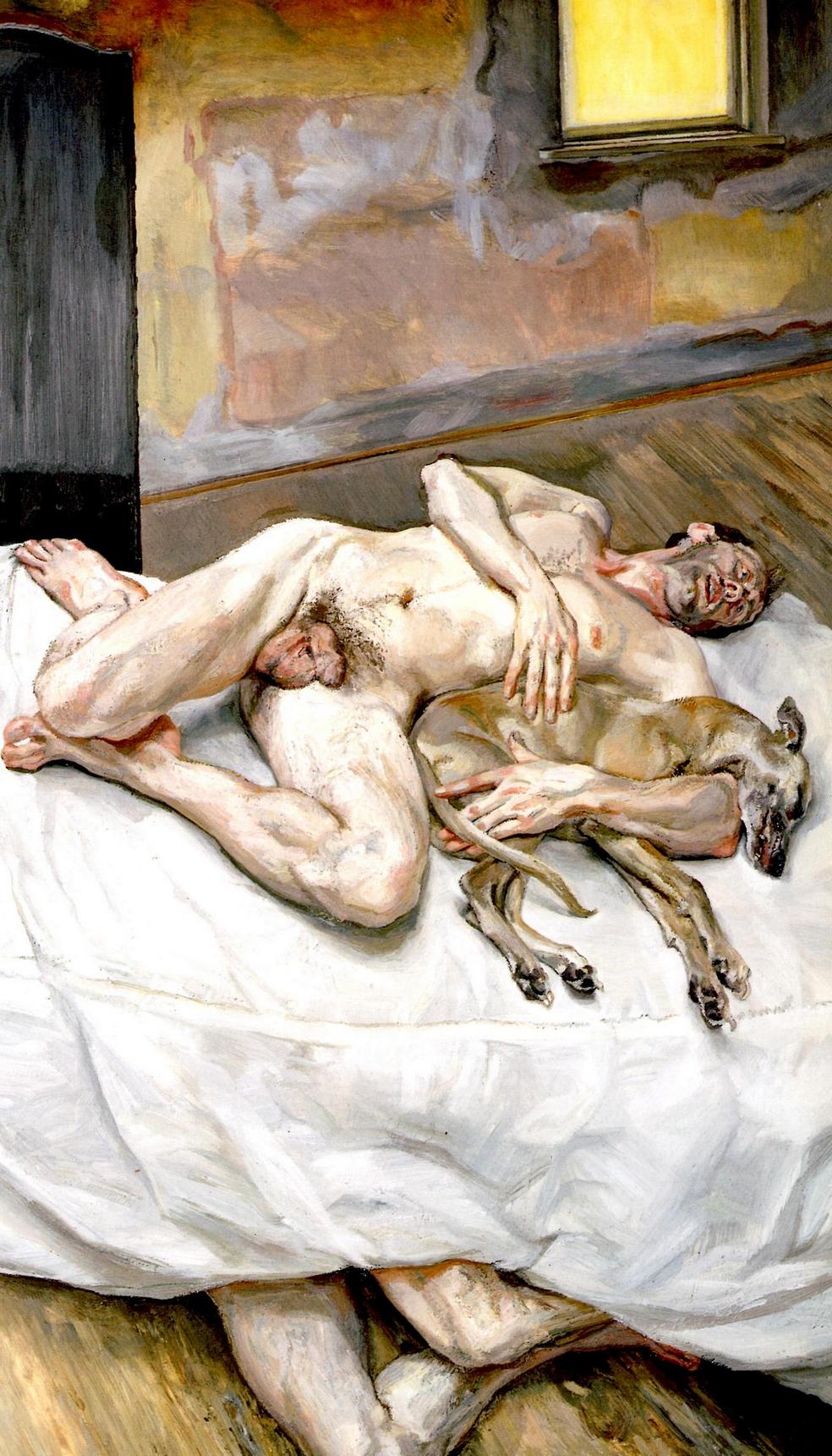
Sunny Morning - Eight Legs (1997)

The paintings are never going to be easy to look at, not least because these are not ideological nudes. This is not like looking at the beautifully blended, perfectly shaped backside of the Rokeby Venus (by Velazquez) and appreciating the aesthetics of the scene. These portraits depict ordinary people, with very ordinary bodies in no holds barred portrayal, pubic hair out, penises dangling, sagging flesh. It would be like walking along the street and seeing everyone naked, their legs parted awkwardly, their private parts on full view. It’s not easy to look at, but these portraits are undoubtedly fascinating to view, just because they are ordinary people – people who have bared all to the artist and, through him, to the world.

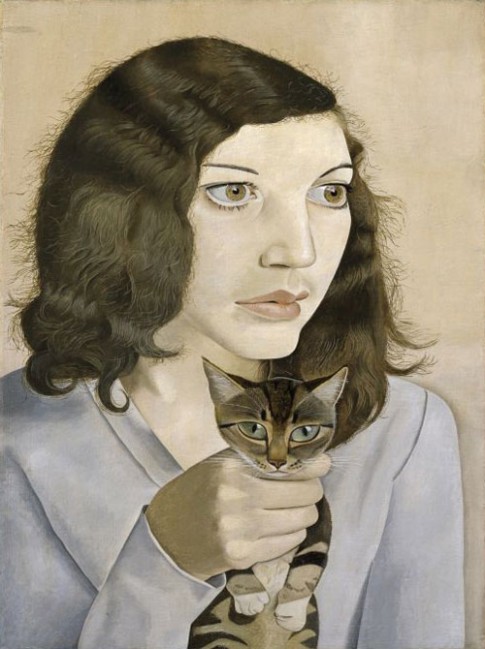
Girl with a Kitten (1947)

Nonetheless, emblematically Freudian impasto flesh asides, my favourite paintings were those from the beginning of Freud’s career. In this delightfully chronologically curated show, the first few galleries, while packed, showed Freud’s fastidiously executed, perfectly drafted early portraits, when he used very fine brushes and paid close attention to every detail. Thus in the portraits of his first wife, Kitty Garman, you can see every hair on her head, and in the portrait of her wearing a yellow gown (with boob unceremoniously flopping out), each fibre of that gown’s toweling texture is painted. As Freud’s portraits grew less detailed and Freud’s preference was for thicker sable brushes, he still paid close attention to a number of background factors in his work. In Interior with Plant, Reflection Listening (1968) for example, the leaves of the plant are painted with excruciating detail – every millimeter of the plant, from its shiny leaves and rough edges, to the dying leaves and dried up ends, are perfectly represented by Freud. His early paintings have lost none of their intensity in being scrupulously painted – the sitters look tense, and the widened eyes, typical of Freud’s portraits at that time, are full of emotional anxiety and unguarded vulnerability. From the very beginning, Freud had an exceptional talent for painting simple portraits loaded with dramatic tension and emotional complexity.

Girl with a White Dog (1950-51)

Interior with Plant, Reflection Listening (Self-Portrait) (1967-8)

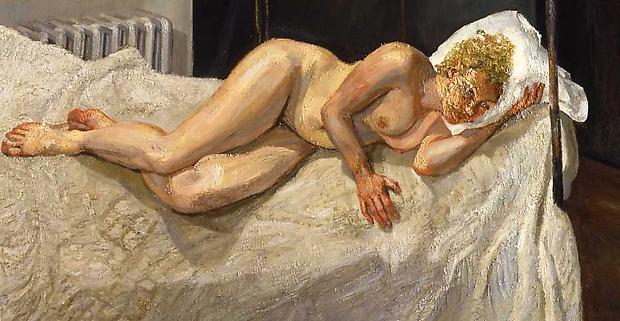
As the show goes on, the works become more ambitious and the nakedness more frequent. This is all very well, but what upset me was not the nudity, but the increased coarseness of Freud’s finish. From his Benefits Supervisor onwards, the texture of his paint finish becomes more and more lumpy which really made my stomach turn. In his 2007 portrait, Ria, Naked Portrait, the face of Ria appears disfigured by a mass of lumpy built up textured paint on her face, which looks more like the affliction of some terrible skin disease. The effect is the same in his final, unfinished painting, Portrait of the Hound (above) where the face of his studio assistant appears contaminated by the same warty contagion. It’s an unpleasant finish which rather repulsed me as I walked away from this show.

Ria, Naked Portrait (2006-7)

Still, this messy end did nothing to dissuade me of the overall merits of this show, and the superb skill which Freud demonstrated throughout his career. Through his paintings, he has created self-contained independent souls who appear to jump from the canvas and steal the attention of the viewer. In this way, Freud leaves behind a multifaceted legacy which will live on wherever his portraits hang. In the meantime, this opportunity to see so many hung together is truly a must-see, and so much more fulfilling than 5 million purple trees lauded down the road in Piccadilly.

Painter and Model (1986-7)

All images above are the copyright of Lucian Freud.

The Daily Sketch: Bikes, windmills, and other Dutch clichés

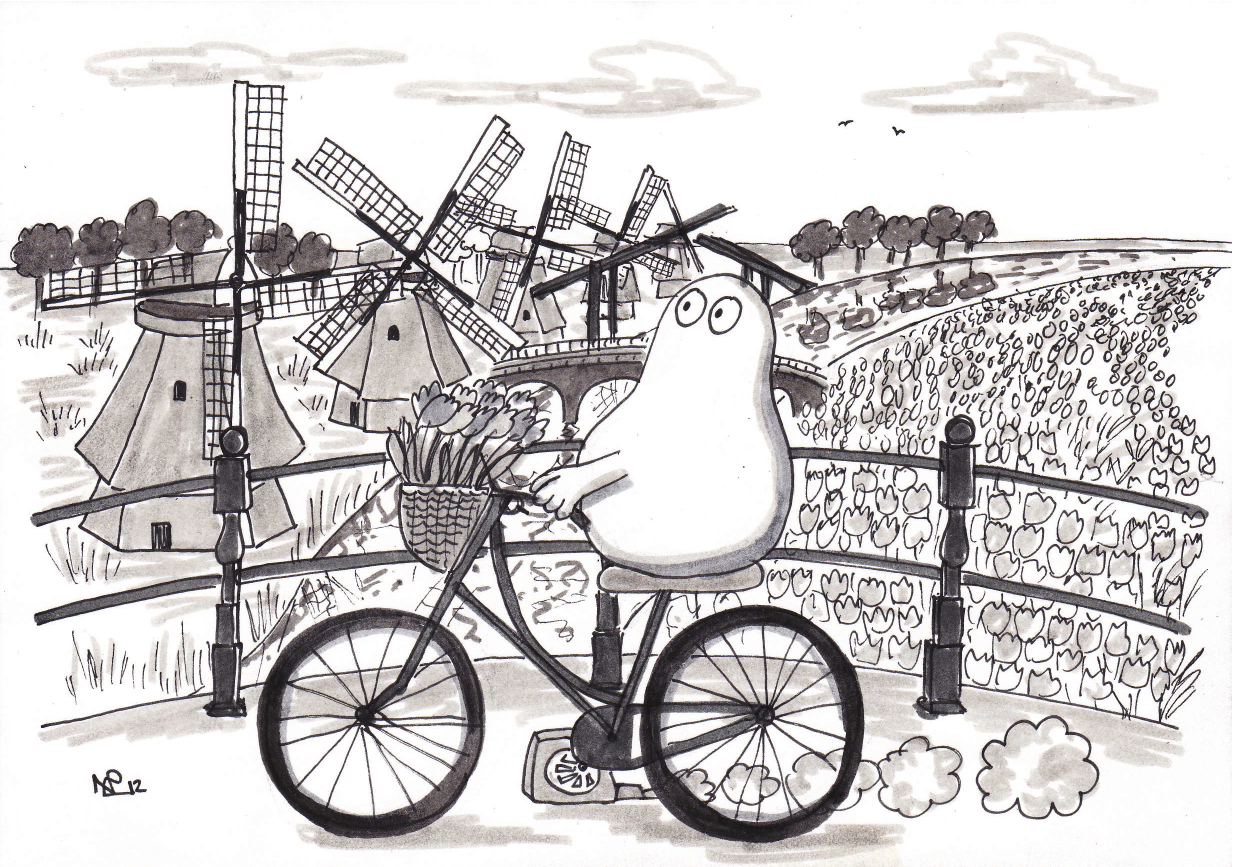
As clichés go, those adhered to The Netherlands aren’t bad at all. While the English are ascribed with being larger louts, football hooligans, eating big fry-ups for breakfast and  imperialistic tendencies (notably continuing into the modern day with the British takeover and generalised destruction of infamous beach resorts all over the Med such as Magaluf, Benidorm and Corfu) the emblematic symbols of The Netherlands include environmentally friendly windmills, fragrant and colourful tulips, and even more conscientious bicycle travel. All very appropriate at this time of year, when we seek to cast off our winter blankets and look forward to the Spring (it is March 1st after all!).

Being, as ever, the traditionalist, when Norm is in Rome, he does as the Romans do. Well then, in Holland, Norm has hopped on to a bicycle, purchased a bunch of tulips, and is surveying the local flat Dutch landscape with its fields full of multicoloured tulips and canal side working windmills. The only problem is, Norms can’t ride bicycles like the rest of us do by virtue of the fact that they don’t have legs. Their solution? Why, a motorised bike of course, puffing away, giving the bicycle all the kinetic energy it needs to traverse these pancake-flat lands. All the Norm has to do is steer  (although with only one arm, steering can be a struggle too I might add). That motor does somewhat takes the environmental out of cycling though. Well it was a good try Norm.

Norm on a bike in Holland (pen on paper, 2012 © Nicholas de Lacy-Brown)

The Daily Sketch: The age-old problem of how a Norm should wear a Clog

Today’s Daily Sketch deals with the age-old problem of how a Norm should wear the good old dutch clog. It certainly is a dilemma. They’re everywhere in Holland, in every souvenir shop and market, hanging from the ceiling in charismatic old cafés and flashed around on postcards as the ultimate emblem of jolly dutch heritage. They’re so tempting in their multicoloured curvaceous form, with their pointed toes and super reflective varnished finish. And the hollow clop-clop sound they make when they’re walked in is just glorious. You can understand the Norms’ disappointment then, upon buying said clog, full of promise, yet lacking instructions about how a Norm should utilise the wooden shoe to any kind of practical advantage. Norms don’t have feet you see, and try as they might to mould their bulging blobby form into feet shape, they just don’t fit. They’re tried balancing clogs on their heads, but invariably they fall off. Even worn as a dangly earring they are rather cumbersome.

The age-old problem of how a Norm should wear a clog (2012, pen on paper © Nicholas de Lacy-Brown)

The solution: why, buy an extra large clog of course (and they do come in all sorts of multifarious sizes). Then the clog really comes into its own! Here is a Norm using his clog as a skier-come-tabogan – the benefits are obvious, as that smooth varnished surface glides over the ice cold snow, the curvaceous form creating a streamlined surface built for speed, and the curved up middle providing Norm with the perfect protective wind shield. After all, how else could a Norm ski, sans feet? But this is just one example. Clog boat? Clog canoe? Clog bed? The possibilities are endless.

...And the Solution: Get a Large One (2012, pen on paper © Nicholas de Lacy-Brown)

The Daily Sketch: Norms in Amsterdam

When I don’t have time to paint, I try to sketch – at least once a day. I used to sketch a lot in my diaries which I have been keeping for 16 years. I still do in fact. But nowadays, my priority is to sketch on little cards which I hope one day to exhibit as a whole, or at least hang them collectively in my hall. In a week which may well include a few sketches (time permitting), I’m reliving last week’s Amsterdam trip through my Norms, keen not to let go of the memories of that trip which remain so strong and leave me caught in daydreams throughout the day, thinking of clogs, and canals, and those pesky cyclists. Here are Norms visiting Amsterdam. Now I’m going to ponder how a Norm would wear clogs. More on that later in the week.

Norms touring Amsterdam (pen on paper, 2012 © Nicholas de Lacy-Brown)

Amsterdam Part V: Photographs

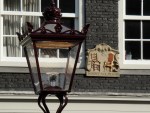
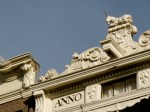
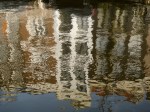
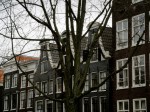
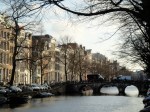
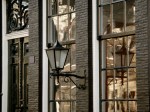
It’s my last Amsterdam post after four wonderful days in the city, and a couple of days reflection from my home in London, and probably my favourite of the bunch as I get to share with you my photographs of the trip. Amsterdam wasn’t always easy to photograph – when walking around, one is constantly wowed by the beauty of one canal after another, but what inspires at the time can be repetitive when the result is one canal shot after another. I’m hoping that in the selection I have posted, you will get to see more than just canals, although as ever, my obsession with street lamps continues throughout this bunch of photos. I only had my cybershot with me, leaving my bulkier SLR at home, but I’m pretty pleased with some of the resulting shots. It certainly wasn’t hard to be inspired by Amsterdam, even when the sun went in I was won over by beauty at every corner – so much so that it was hard not to have my camera permanently glued to my face. I will let the photos do the talking now and hope that you enjoy viewing them as much as I enjoyed taking them. Wishing you all a great weekend.

© Nicholas de Lacy-Brown and The Daily Norm, 2005-2012. Unauthorized use and/or duplication of the material, whether written work or artwork, included within The Daily Norm without express and written permission from The Daily Norm’s author and/or owner is strictly prohibited. Excerpts and links may be used, provided that full and clear credit is given to Nicholas de Lacy-Brown and The Daily Norm with appropriate and specific direction to the original content.

Amsterdam Part IV: The Hotel and the Restaurants

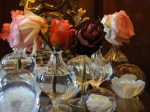
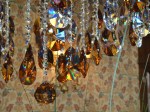
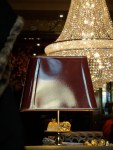
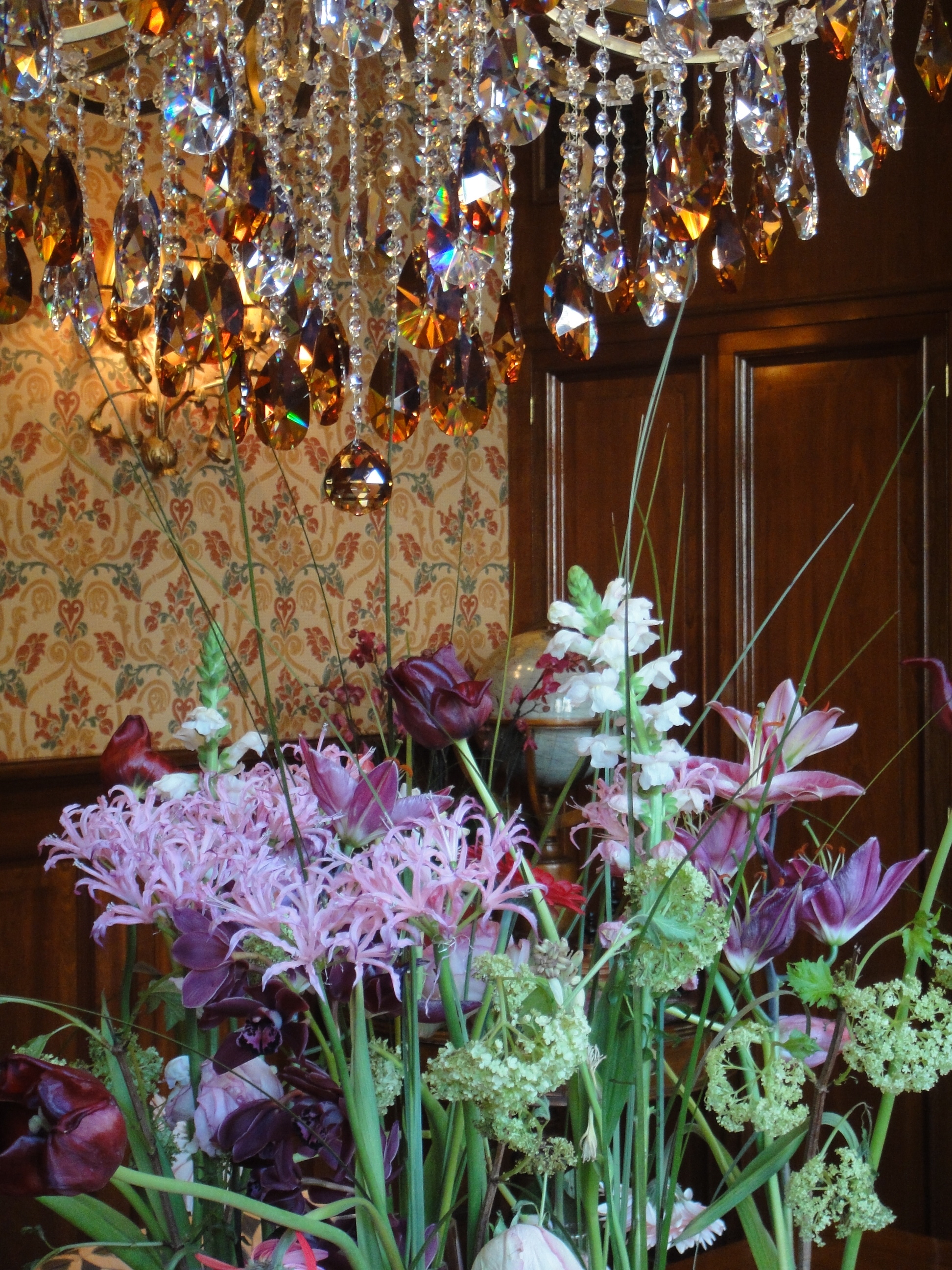
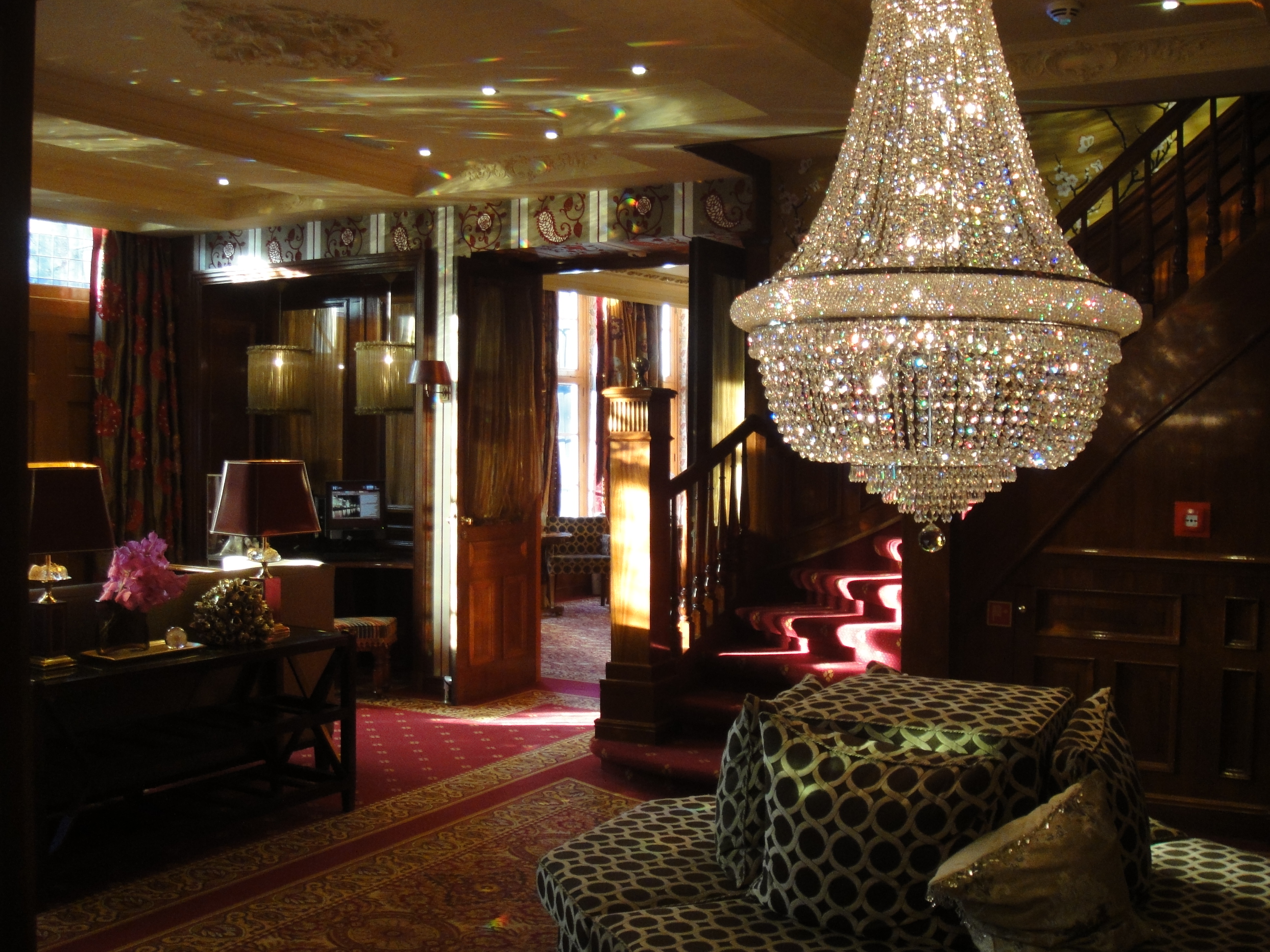
Fresh flowers and chandeliers in the Hotel Estheréa

I’m back from Amsterdam and pretty fed up about it. I find myself crossing the road looking out obsessively for cyclists and finding none. Here, the now familiar bong of the tram bell has been replaced by sirens, and these light filled transport carriages are superseded by the claustrophobic moving coffins of the London Underground. I look at buildings, thinking that something is wrong – then I realise that beneath them there is no reflection. But it’s always been my firm belief that part of the success of a holiday is how well you remember it. Consequently I have set about looking through and editing my prodigious collection of photographs, sorting through the postcards I buy obsessively whenever I go on holiday (with no intention to ever write, or send any) and recollecting the food experiences which filled by Amsterdamian days. With this in mind, I write today in an attempt to share my experience of the restaurants, and more importantly my accommodation while in Amsterdam.  As I’ve said before, in this time of the vindictive TripAdvisor professional complainant, where countless businesses in the hospitality industry are closing down because of picky, negative reviews posted online like school yard insults, I think it is only appropriate that a good experience is also applauded online, and shared so that fellow jetsetters can head off to a recommended restaurant or hotel, emboldened by some honest advice to temper their expectations.

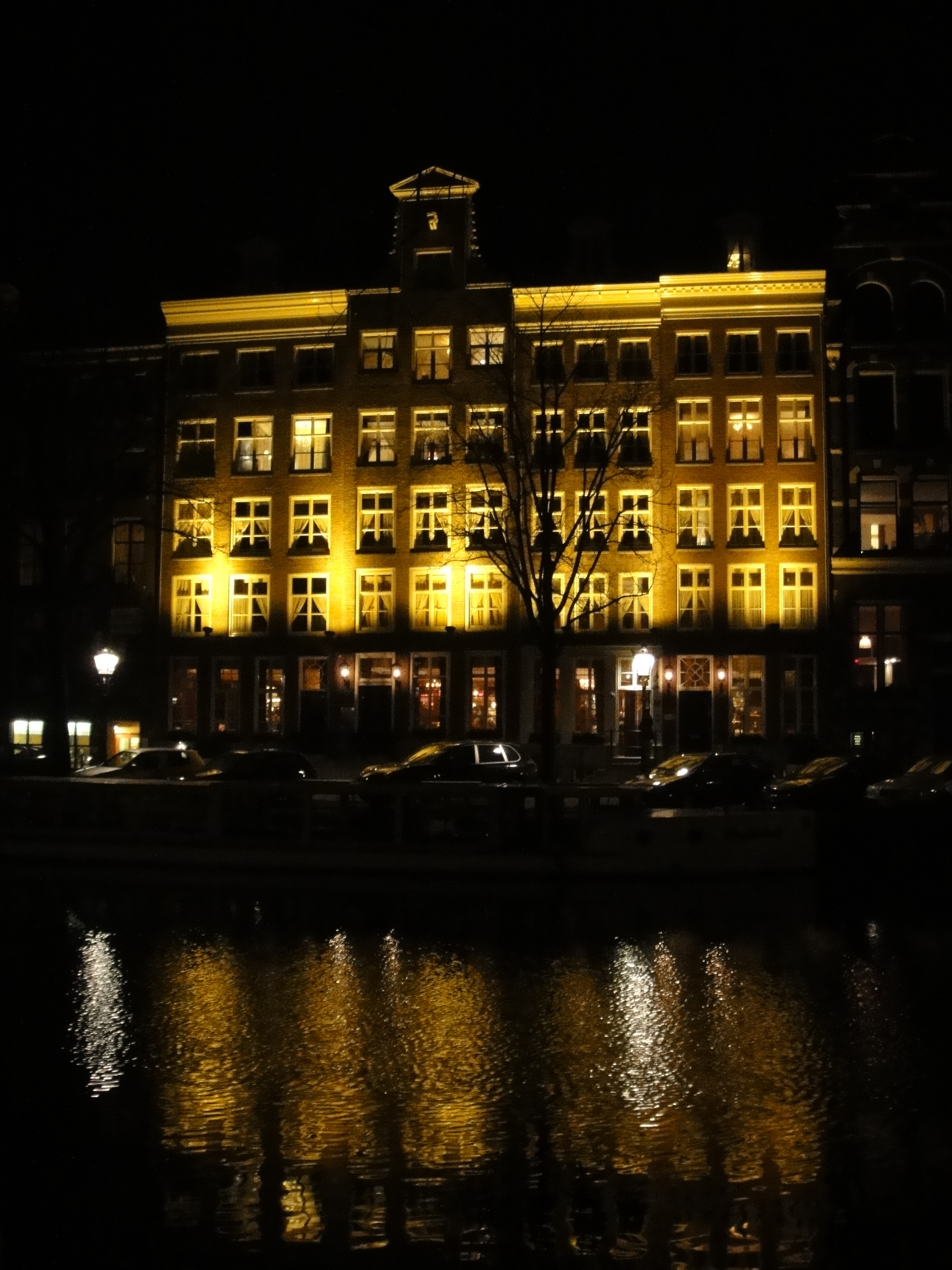
Exterior of the Hotel Estheréa

The hotel – Hotel Estheréa **** – Singel 303-9, Amsterdam

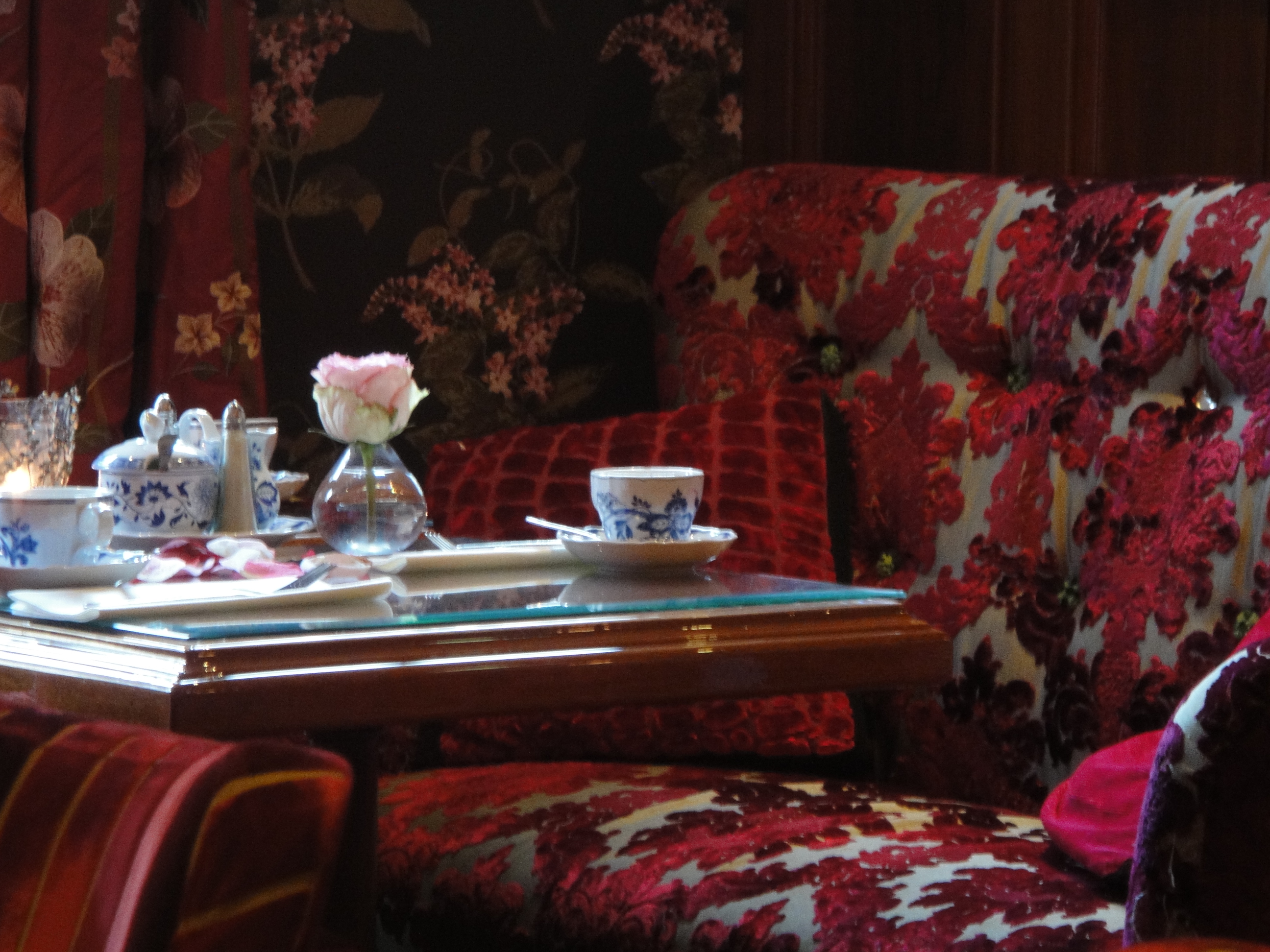
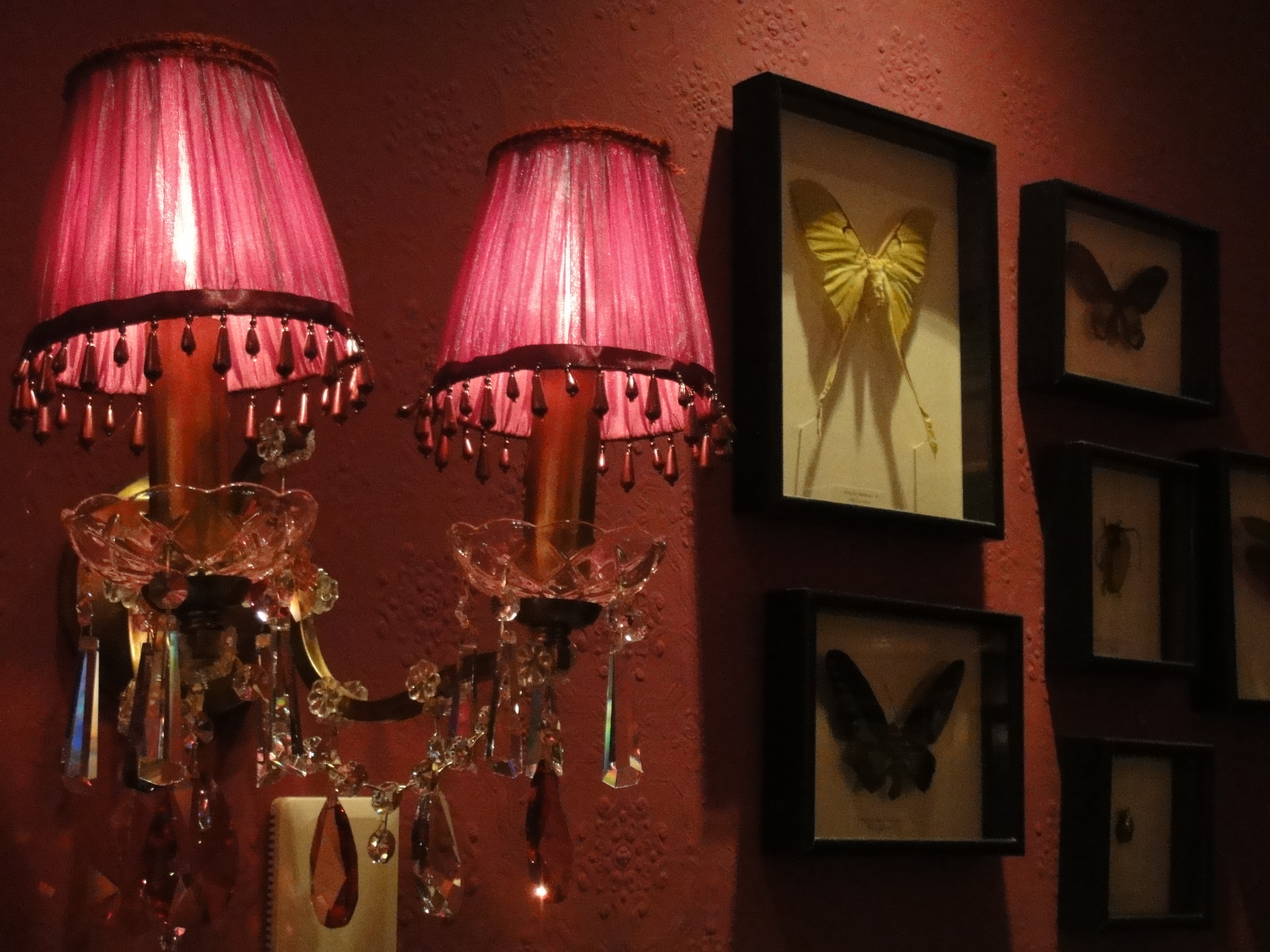
I could use almost every superlative in the thesaurus to describe the Hotel Estheréa and still not do it justice. This hotel, a child of the boutqiue revolution, but also the mother of all opulent sophistication, was a faultessly exquisite base for our Amsterdam stay. The reason, ultimately, for the success of this hotel is attention to detail. In the bedroom, two bottles of water would be provided free to guests everyday – a small thing, but often something which you really feel the need of at the end of a heavy evening and have to revert to what ever dodgyness flows from the tap. In the foyer, tea and coffee is provided all day, a huge range of teas being on offer, and complimentary cakes, biscuits, sweets and multivarious nibbles in retro glass jars. In the various reception rooms, the interior design is stunningly executed with an emphaisis on rejuvinated Victorian elegance – richly patterened wallpapers, huge low hanging chandeliers, various species of taxdermy under closhes and in frames, large damask covered arm chairs, a book-lined library and an array of fresh flowers embuing the air with their fragrance, single stems in collected ecclectic vases and huge bouquets greeting guests in the reception.

Our bedroom at the Hotel Estheréa

Head for the gold and glass lift to the rooms upstairs and you will find a range of bedrooms decorated in an impressive range of different schemes. Ours was a luxuriously drapped room in the roof – spacious, lined with a lavish chinese themed wallpaper of blues and gold, a sinfully comfortable bed loaded with embroidered cushions and a throw shot with blue and gold silk, and a stunning view looking over the Singel canal – one of the principal canals lined with the grand townhouses of former traders and merchants. Admittedly not all rooms benefit from a canal view, and you do have to pay more for the privilege. But I think it’s well worth it – and the premium is not much for the pleasure it provides. Finally the breakfast, while not cheap (18 euros per person) is the perfect set-me-up for the day, including champagne, cooked and continental selections and, best of all, various little pastries and cakes which look like they walked straight out of a Parisian patisserie. Finally I should mention location – it’s perfect, pretty much equidistant from all the main points of interest, so that Anne Frank’s house, the central station, the rosy red lights and the museum district are all within walking distance (though you need stamina – but there’s always that complimentary hotel tea to sustain you when the walking gets to much).

Main foyer in the Hotel Estheréa

Breakfast at the Hotel Estheréa

Lavish design at the Hotel Estheréa

Read more

Amsterdam Part III: Flemish art, Russian museum, Dutch hospitality

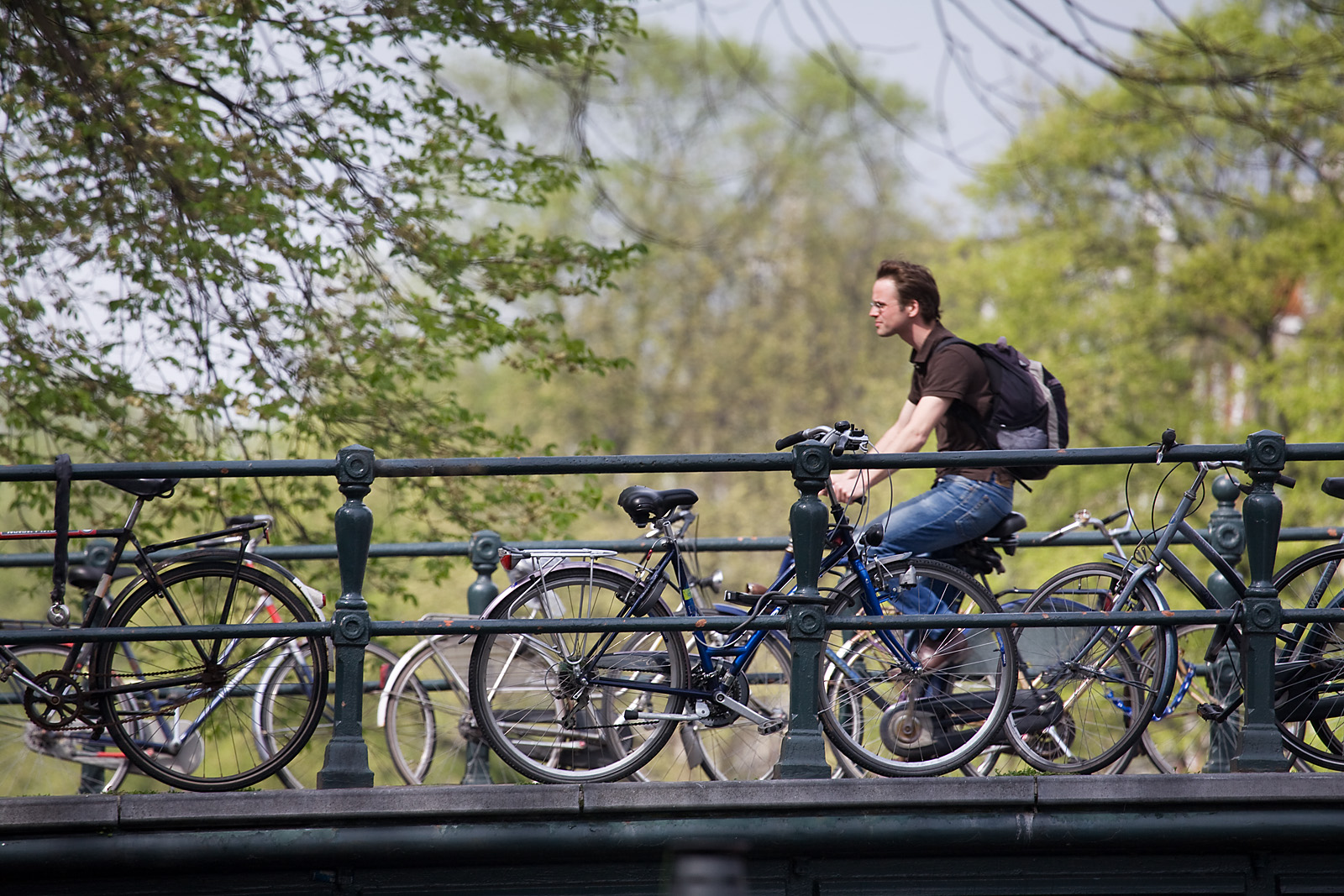
It was our last day in Amsterdam today, city of the silent assassins otherwise known as cyclists. Bicycles are everywhere here, chained to every bridge, every bollard, every railing, stacked and double stacked against every conceivable surface of the city – no wonder the bicycle has become emblematic of Amsterdam. It is clear too that the city authorities have actively encouraged this cyclist boom. Given over to cyclists are designated cycling lanes and crossings aplenty, but alongside these are normal roads and tram lines, as well as bizarre junctions where roads meet bridges, and I find myself walking around in a confused daze as to where I should be crossing the road and where I should be walking – there are plenty of cycle lanes, fewer pavements. It doesn’t of course help that cyclists here routinely ignore red lights, so the dutch green man roughly translates into: you can cross, by at your peril. Then you must navigate the roads with every sense attuned to your surroundings, since these bicycles are not only plentiful in number, but deathly silent in sound. Consequently I have narrowly avoided collisions with cyclists at least once every hour of my stay in Amsterdam, as cyclists, travelling at great speed, seem to come at me completely out of the blue. Of course the cyclists must be praised for keeping the town a lot fresher, and I particularly like the parents who cycle around with their children in a special basket at the front. Not sure how all these people get away with out wearing helmets though… I haven’t seen once since I arrived.

Anyway, once we had negotiated a series of cycle lanes, perilous junctions and even a bridge which opened to allow the longest barge through that I have ever seen, we eventually made it to the final stop on our Amsterdam cultural map: The Hermitage Amsterdam.

The Hermitage is the Amsterdam annex of the St Petersburg giant. The museum, which was first opened in 2004 and was the result of the apparent close historical bonds between Russia and the Netherlands, aims to show a revolving selection of works from the main Hermitage collection, works which would otherwise be relegated into storage alongside thousands of other gems of Catherine the Great’s amassed collection. The works are then displayed in a stunning new gallery space which opened in 2009. This former hospital has been renovated to an indubitably high standard. Large marbled floor space is flanked with spotlessly painted walls. Windows overlooking the sunny canals are partially blacked out but allow sufficient light to flood the spacious rooms. Glass stairs lead from the main galleries to a mezzanine level, and the museum cafe exudes New York hotel chic. Most importantly of all, the paintings appear to glow beneath all-enhancing LED lighting technology, and works are hung with sufficient surrounding space so as not to overwhelm.

Rubens, Descent from the Cross c.1617-18 (© State Hermitage Museum, St Petersburg)

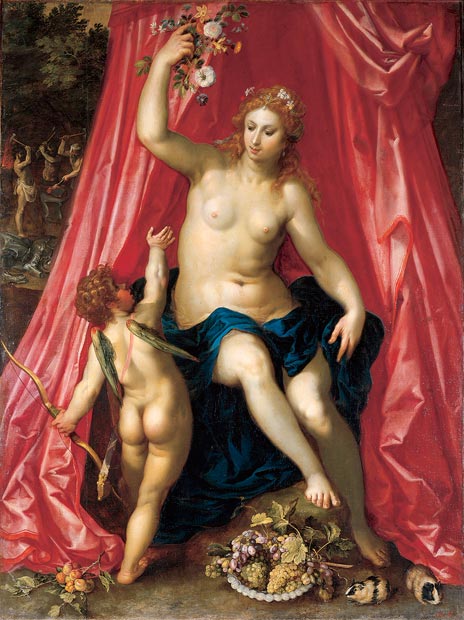
The current showing focuses on Flemish giants Rubens, Van Dyke and Jordaens, a show which has in fact proved so popular that its orignally planned run has been extended by three months. No wonder, since the collection on show is pretty stunning and enticing in equal measure. So often I look at masterpieces of the Golden Age with a blank stare, overwhelmed often by the detail of the depiction, or more often than not, by the vast numbers of such paintings squeezed side by side in repetitious national collections such as the Louvre or London’s National Gallery. But with the luxury of this focused show in a new airy art space came the opportunity to admire the astonishing talent of these master artists, such as the sumptuous folds of material against the musculature of Christ in Rubens’ Descent from the Cross, and the small details of sea shells or guinea pigs in The Union of Earth and Water by Rubens and Venus and Cupid by Hendrick Van Balen. While the contemporary movement of artistic trends seemed to focus progressively on the introspection of an artist, with these Flemish masterpieces, the intention was to wow, show off and astonish. The works succeed on these fronts, whether through the breadth of their sheer dimension or in the painterly skill of the intricate still lives. They are no less meritorious because they do not attest to the tortured soul of the artist, nor are they any less worthy of our attention. Through skill and insightful allegorical symbolism, these works are capable of transforming the audience into another world, to educate, and also, in the case of portraits, to immortalise people and lives for future generations. Sorry Van Gogh, but today Rubens beat you.
Rubens, The Union of Earth and Water c.1618-21 (© State Hermitage Museum, St Petersburg)

Hendrick van Balen, Venus and Cupid (1600) (© State Hermitage Museum, St Petersburg)

So leaving this impressive artistic institution (having been severely slighted in said chic cafe which was half reserved for some as yet unpresented favoured group leaving no space for our discerning custom), it was nearly time to wave adieu to this watery wonderland of Amsterdam. A quick stroll through the charismatic university quarter and the bustling shopping streets led us back to our hotel from where we headed, regretfully towards the station. Our walk back, past those elegant town houses, flanked by the transient reflections of Amsterdam in its canals, where red lights were being switched on for an evening’s work, and where familys and friends cycled energetically and happily over bridges and through the city’s quieter streets, served as a reminder of what a multifaceted city Amsterdam is, but also one where life seems a little more laid back, a little less tense, a sensation perhaps created by the water flowing like lifeblood throughout the city, bringing reflection, light and a fresh breeze to all.
Goodbye Amsterdam and thanks for a superb city break. Faithful Daily Norm readers – thanks for reading about my trip and therefore sharing the experience with me – come back tomorrow for all of my restaurant/ hotel reviews and on Friday for my photos!

Related articles

Amsterdam Part II: Insight into two masters of introspection: Van Gogh and Anne Frank

That familiar pang in my legs and feet, pulsing with a heavy burning sensation, is always a good sign at the end of a day spent exploring a new city. It tends to signify a heavy day’s sightseeing and usually a substantial intake of cultural enrichment… Galleries and museums are deceptively exhausting. Why hasn’t anyone invented a gallery on a conveyor belt, whereby the viewer takes a cinema-like reclining seat, and lets the art do the moving? Awaiting this invention, as we must, I nevertheless ensured that my second day in Amsterdam took in the remaining cultural hot points, despite the considerable walking distance between them.

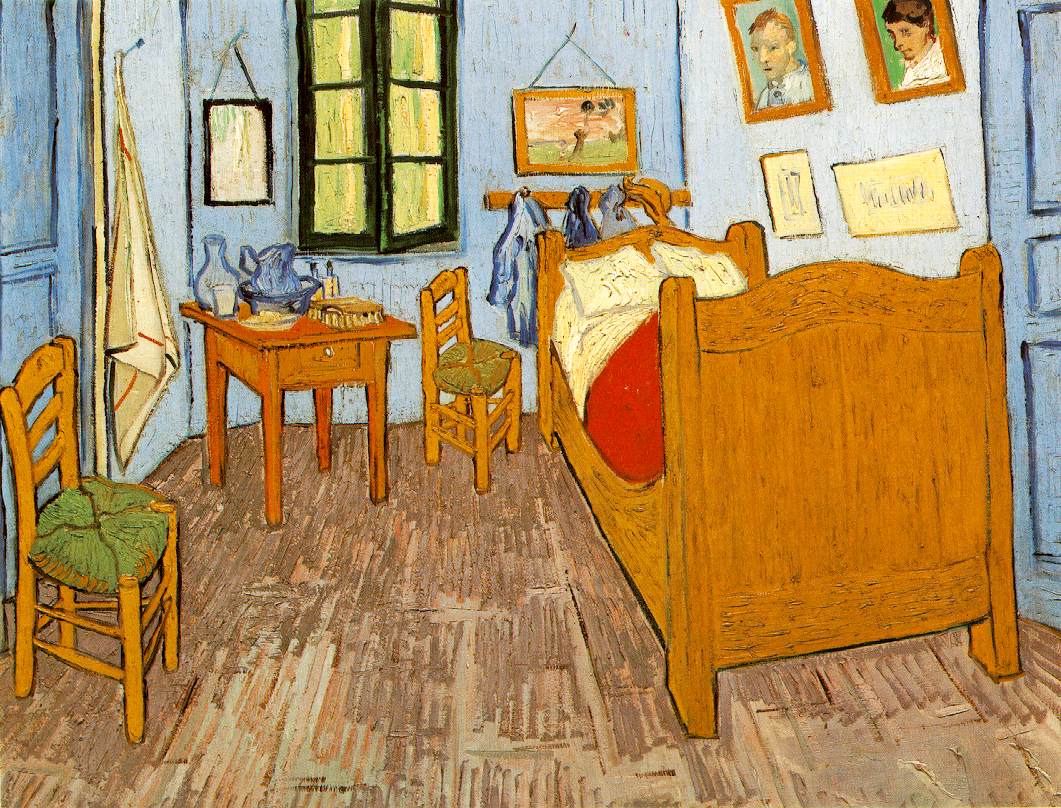
The Bedroom (1888)

Almond Blossom (1890)

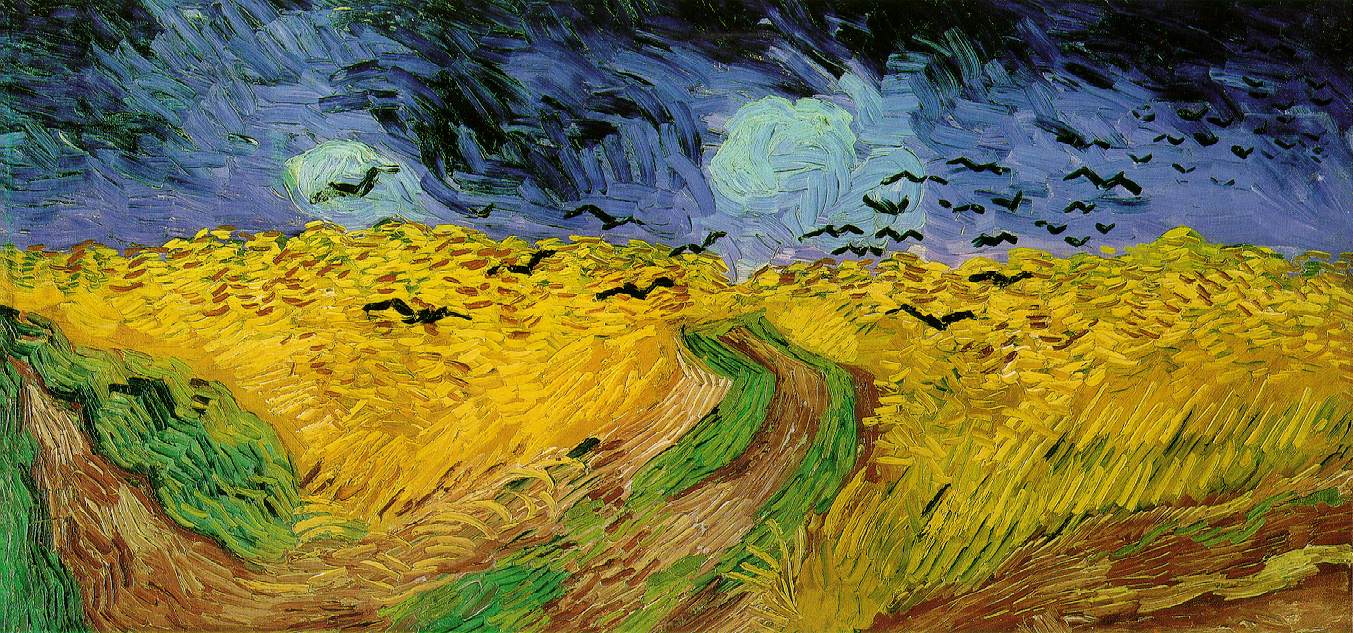
First on the list was the all important Van Gogh museum, which delivered masterpieces aplenty in a purpose built, airy space which more than catered for the influx of visitors present. Oh what a contrast to the last time I saw some of these works, at the Royal Academy’s Van Gogh exhibition, when all semblance of civility was lost somewhere around the Dutch peasant paintings, leading to all out war between Royal Academy Friends and foes alike as we scrambled to peak a view at Van Gogh’s chair or his whimsical poplars, not to mention get within an inch of that all important blood stained last letter to Theo. No, no, here one could more or less flit between paintings without too much fuss, leaving each room fully satisfied by the breadth of work on show, the logical chronological ordering of the works, and the provision of one masterpiece after another: The Potato Eaters, the Yellow House, Van Gogh’s bedroom, Gauguin’s chair, the Sunflowers and so on. I also left a little more informed about his technique. He had not adopted this often clumsy, thickly layered style of painting because of any lack of skill. Rather, he had been heavily influenced by the trends of Paris at that time, where pointillism had taken over from Impressionism, and figurative works were becoming more and more symbolic and abstracted. He was also influenced by Japanese art, with its flat, two dimensional representation and black outlines. By contrast, his first efforts – in which he concentrated on peasant portraits and bucolic landscapes – on the back of an absence of any professional training whatsoever, were really quite impressive. It seems he really did have naturally inherent talent, and plenty of it too.

I was of course thrilled to see the original of The Potato Eaters, which inspired me to paint my own family portrait last year. I was however rather frustrated that the work was displayed behind highly reflective glass which did no service to its dark, muddy shades, which were almost indistinguishable behind the glossy glare. None of the works were in fact that well lit, and the museum ought to take a leaf out of the Musee d’Orsay’s book in Paris, where new lighting set against dark blue walls makes the Van Gogh works glow beautifully.

Wheatfield with Crows (1890)

From one, forever active, always creative but troubled mind, to the youthful introspection of a girl in times of trouble – Anne Frank, whose house, always the site of long spiralling queues, we left until late to avoid the tourist crush. This we did with relative success, waiting only around 5 minutes to enter. Once inside, the excellent fusion of multimedia presentation with the old house still intact made for an effortless narrative, but did rather clog up the small space with tourists, most of whom would stay frozen to the spot until they had heard every word of the various video clips on show. This was particularly prevalent in the small annex itself, where Anne Frank, her family and four friends of the family, we’re hidden away for two years during the Nazi occupation of Holland. There, in tiny rooms and even tinier, almost vertical staircases, the tourist cram was uncomfortable, but served to emphasise how horrifically claustrophobic it must have been for the 8 persecuted Jews hidden away in these rooms without daylight and being unable to make any noise. Being able to walk through these rooms, still dressed in their original decor, Anne’s pictures of hollywood icons and even the British Queen and her sister pasted onto the walls, made for an intense and emotional experience, far more so than in a museum full of facts and figures.

Bookcase hiding the entrance to the Frank annex

So two of Amsterdam’s great minds have been explored and all that remains is a hot bath to sooth my now fizzing feet, plenty of tea and then dinner. Last night’s dinner, at a romantic art nouveau inspired canal-side brasserie, De Belhamel, was not entirely successful. We were rather pleased, at first, to have been seated up on the mezzanine, with a commanding view over the restaurant and the canal beyond. This advantage soon turned sour when, somewhat topped up with wine, I waved my arm enthusiastically, only to then knock my full wine glass off the edge of the balcony, whereupon it bounced off one railing before shattering, ceremoniously, across the entire ground floor of the restaurant, spraying several tables with its contents. After the crash came the complete shocked silence of the whole restaurant, and suddenly all eyes were on our little table up on the mezzanine. Oh the embarrassment. Oh the mortification. Oh the utmost humiliation. Needless to say, I insouciantly helped myself to more wine before taking a measured but fast retreat from the restaurant. Possibly won’t be returning there in a while.