Skip to content

Marbella Twenty-Thirteen | Life’s a Beach

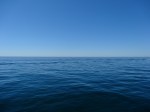
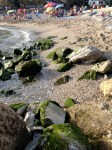
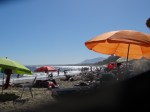
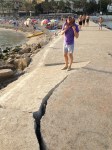
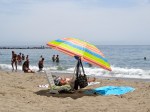
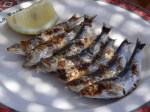
My second selection of photographs from my two week rendezvous in Spain’s Marbella is, for a town named after the beautiful sea which laps up along its sandy shores, rather appropriately collected around a beach theme. For without long days languishing along the plentiful sandy stretches, dipping in and out of the warm Mediterranean sea, and breathing in the mixed smells of sun tan cream, the salty sea breeze, and the acrid fishy smoke from barbequed sardines roasting upon one of the many beach chiringitos, a holiday in Marbella would lose its soul.

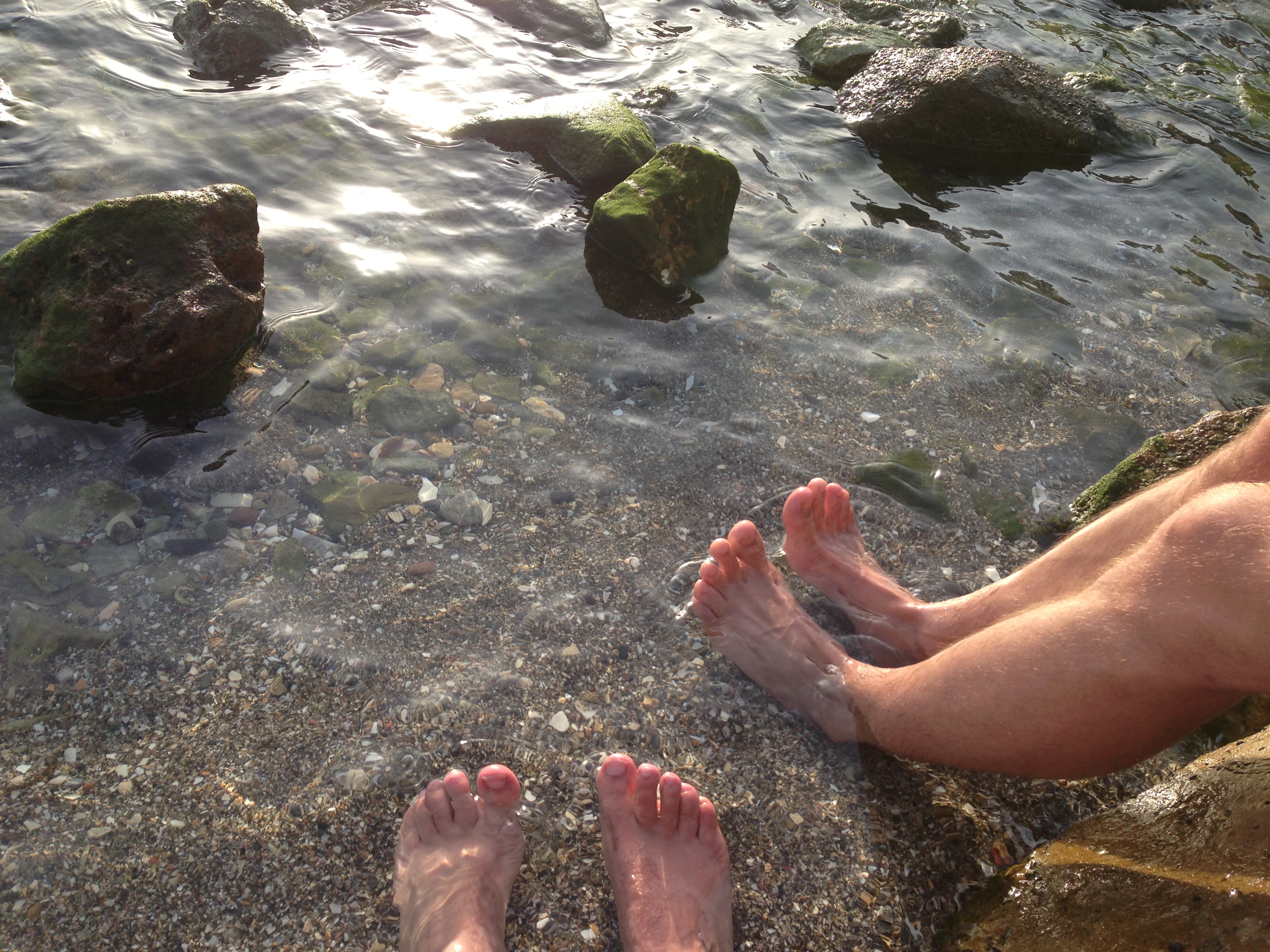
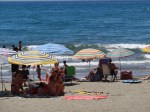
I didn’t take my camera to the beach nearly as much as we took ourselves along – after all, those pesky grains of sand tend to get everywhere, and a rogue sandy particle imbedding itself within the internal mechanisms of my camera is one holiday souvenir I can easily do without. However, those few occasions when my camera remained at my side were pretty active in the photography stakes. One feature of the beach which never failed to inspire me was the kaleidoscope of colours on offer.

DSC06453 DSC06298 IMG_4041

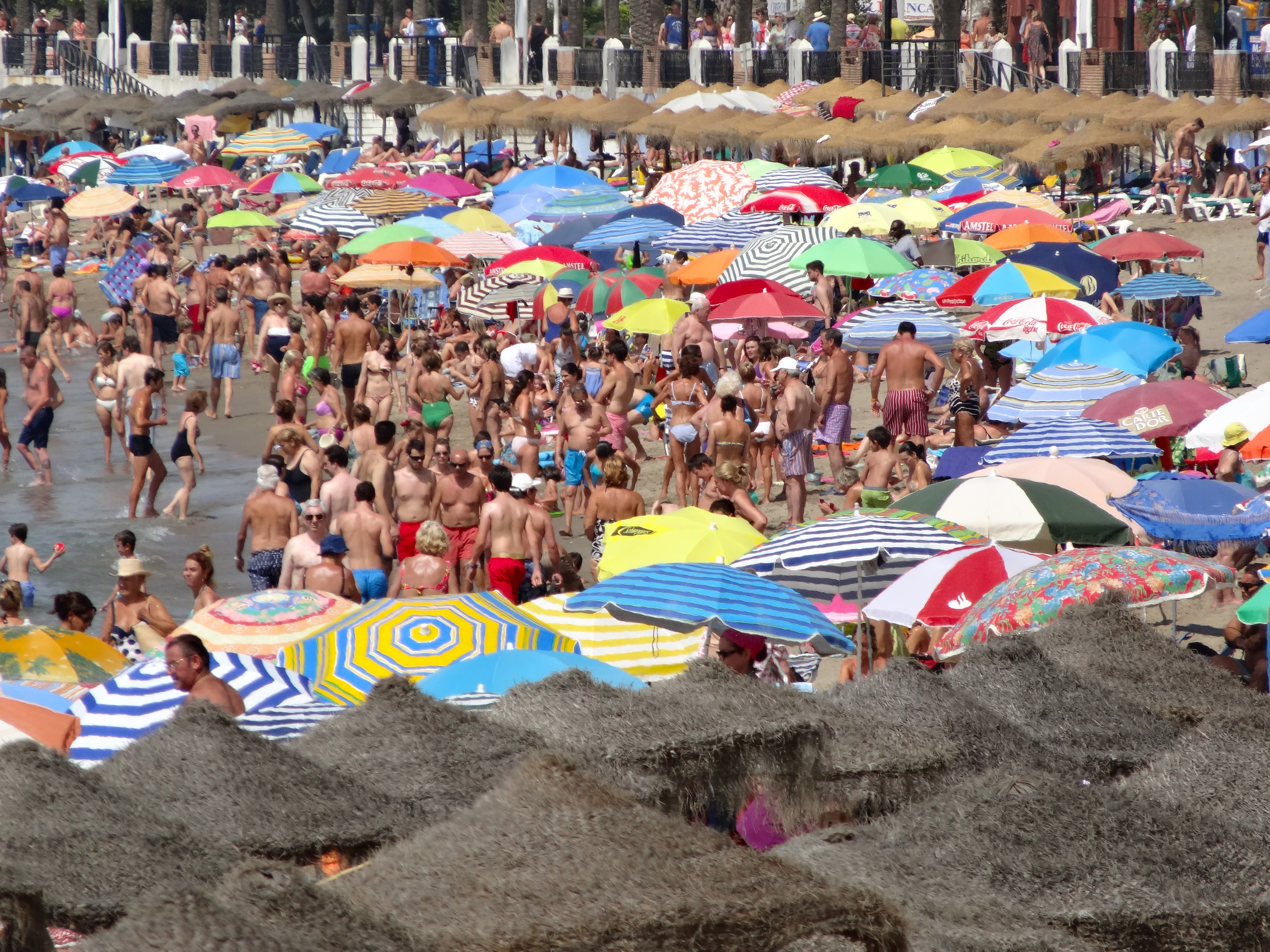
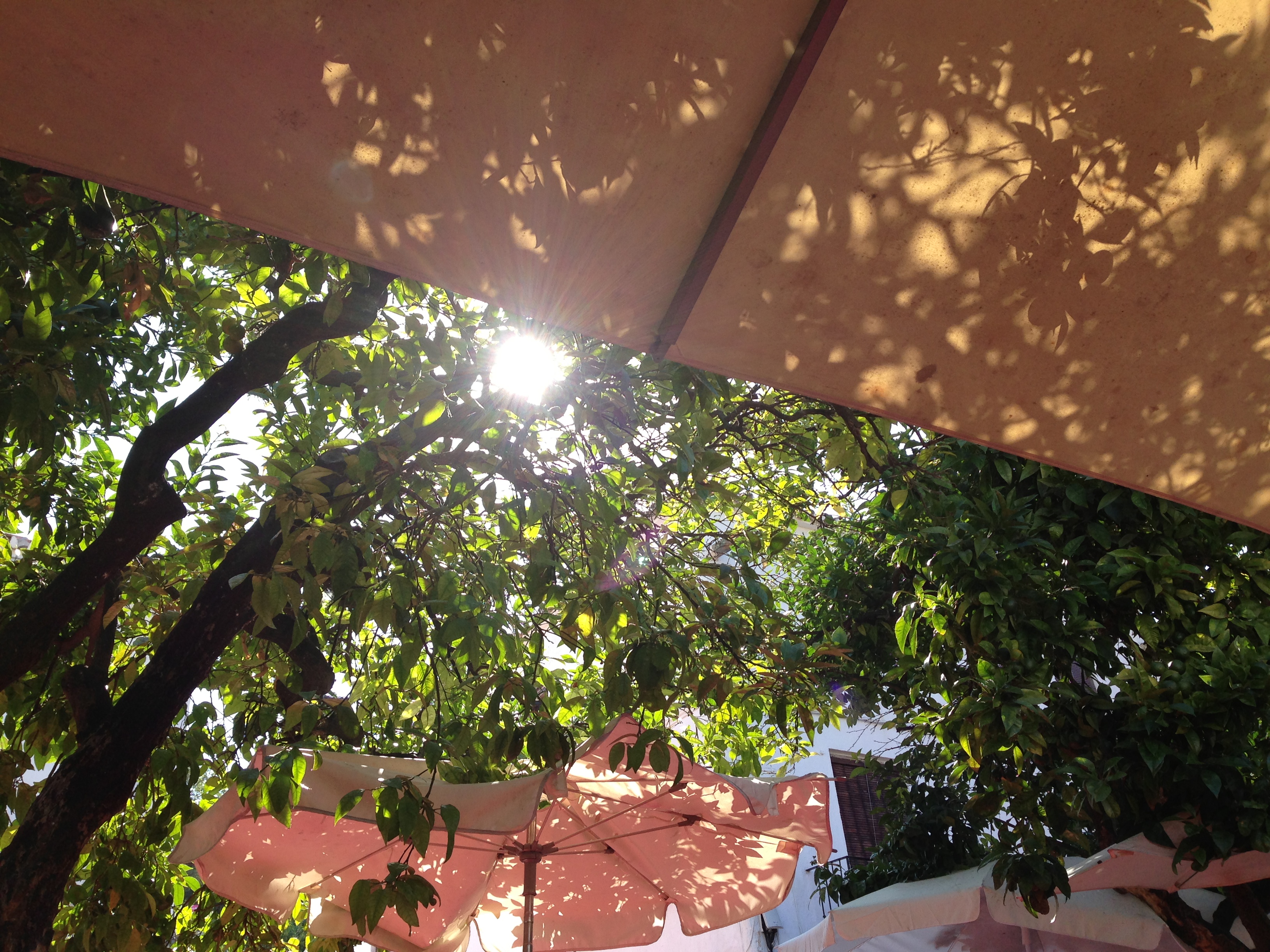
Under the bluest of blue skies, the sea took on a welcoming turquoise creaminess, while the sand glowed yellow and beige. Against that backdrop the hundreds of beach umbrellas brought along by the daily beach masses provided the finishing touches to what were an entire rainbow of vivid tones. One of my favourite photos just has to be the beach viewed from the paseo above, tanned crowds packing onto the sands and the swathe of multi-coloured umbrellas extending for as far as the eye can see – a vast snaking swirl of beach activity, and the very epitome of the Spanish summer season.

All photos and written content are strictly the copyright of Nicholas de Lacy-Brown © 2013 and The Daily Norm. All rights are reserved. Unauthorized use and/or duplication of the material, whether written work, photography or artwork, included within The Daily Norm without express and written permission from The Daily Norm’s author and/or owner is strictly prohibited. 

Marbella Twenty-Thirteen | Double-Starred Calima for the Big 3-0

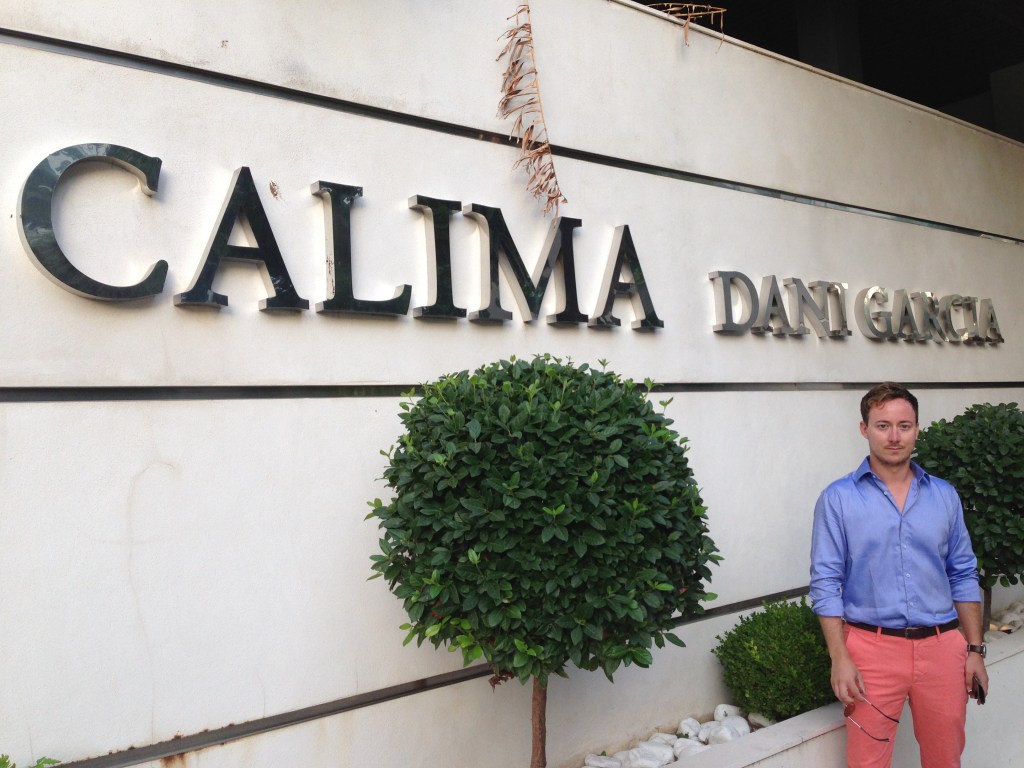
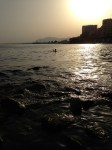
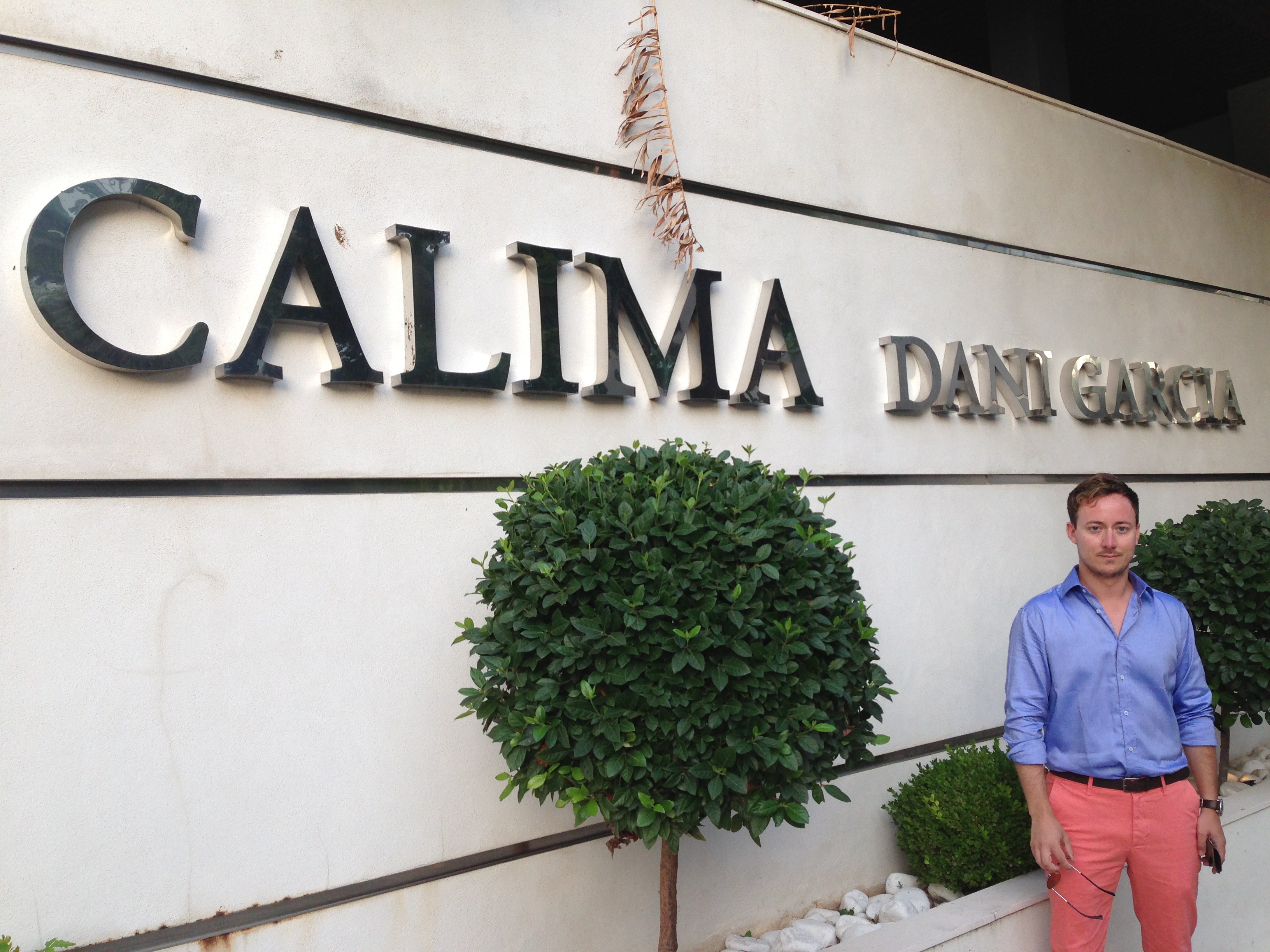
For a relatively small town sitting in the shadows of the larger cities of Malaga and Seville either side of it, Marbella has an astonishing number of restaurants to suit every taste, and of those a large proportion find themselves glowing at the higher end of the gastronomic echelons. Yet only one restaurant in the whole of Andalucia can boast the glittering accolade of two Michelin stars, and that sparkling temple to gastronomy is to be found tucked away in the pine-tree sheltered gardens of Marbella’s Gran Melia Don Pepe hotel, with its large open veranda facing straight onto the Mediterranean Sea. I am talking about Calima by Spanish extrovert chef Dani Garcia, a restaurant which many have called “Fat Duck by the Sea” in homage to Heston Blumenthal’s innovative cooking style, a testimony with which the judges at Michelin would surely agree. And having read rave reviews about the place in the UK press way back in the Spring, I knew that this glittering gem in Marbella’s foodie crown had to be sampled – and when better than on the evening of the biggest birthday in my life so far!

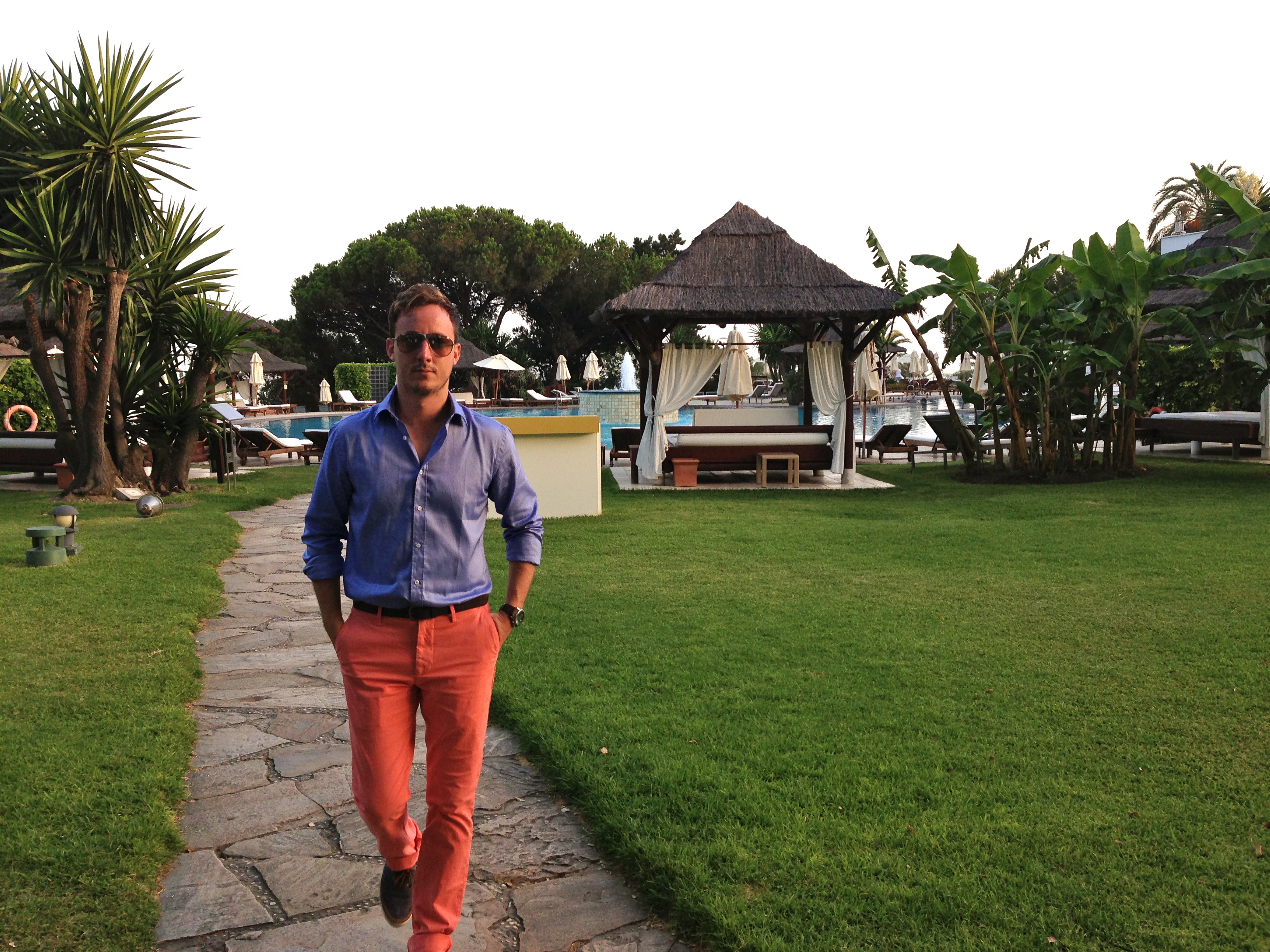
En route to Calima

IMG_3904 IMG_3913 IMG_3921

Working under the tag line “Cocina Contradicion” Dani Garcia promises to bring to the table cusine embracing multiple contrasts, while savouring traditional Andalucian flavours and exciting the senses. A quote on his website pretty much says it all:

“Into a tradition-based sauce, pour opposing and unique flavours, add a tablespoon of intense nuances, a pinch of talent and a sprig of innovation. Add a mixture of disconcerting textures and sprinkle with thrill.”

He promised food theatre, flavour sensation and gastronomic thrill, but would Dani Garcia’s cooking live up to the mark? Well as we sat down at our sumptuous table, one of only four enjoying the stunning Mediterranean view (that’s what booking 3 months in advance gets you!) and saw the 22 course tasting menu with its €139 price tag, we certainly hoped that we were in for a treat. And, on the whole, we were not disappointed.

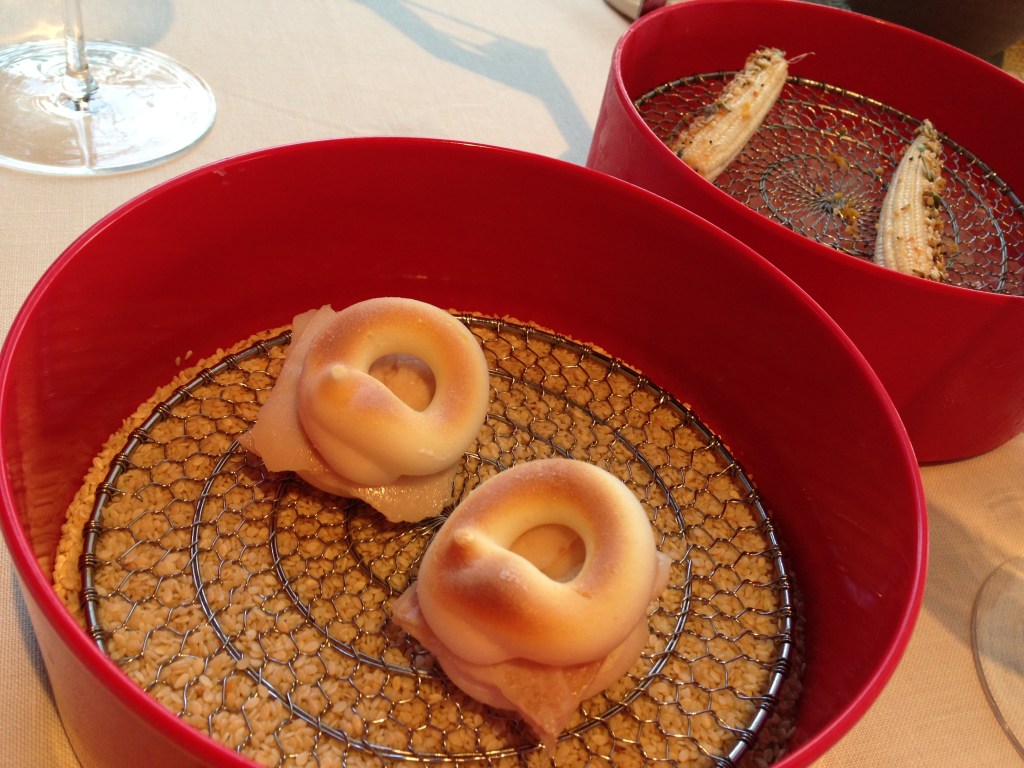
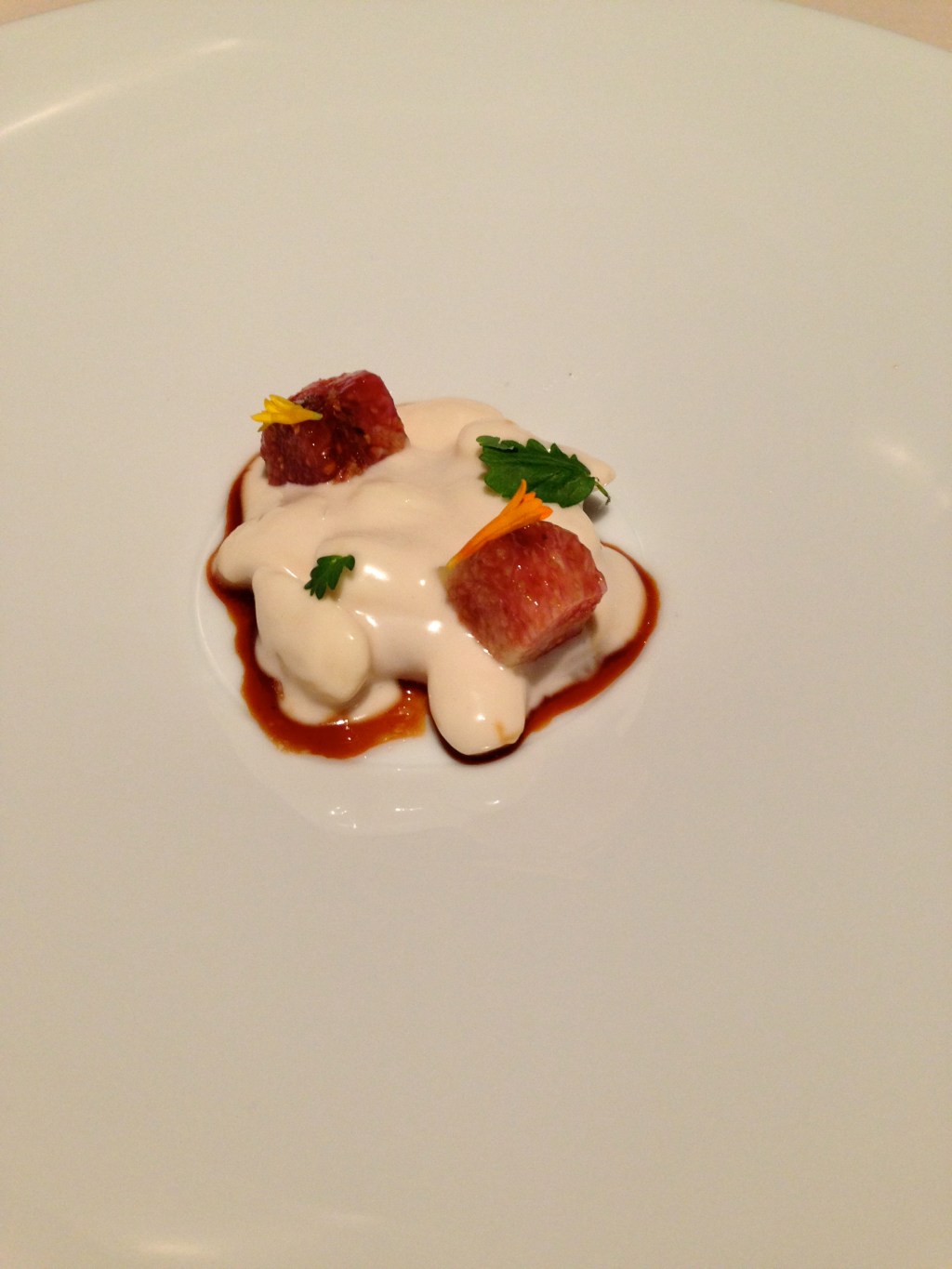
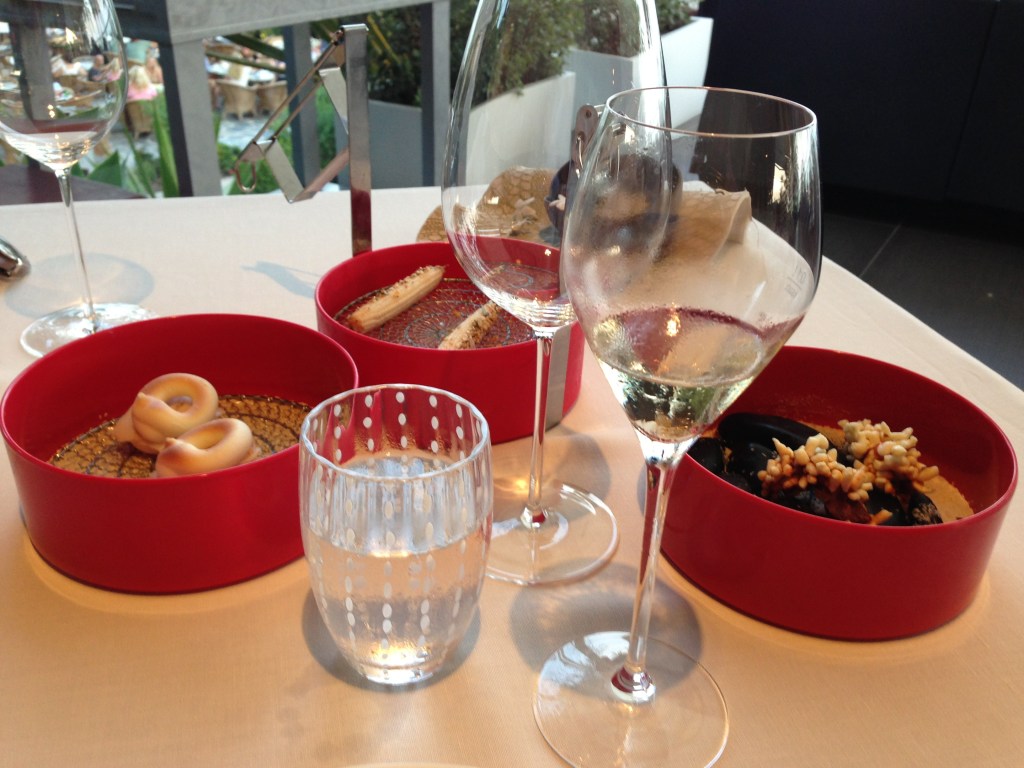
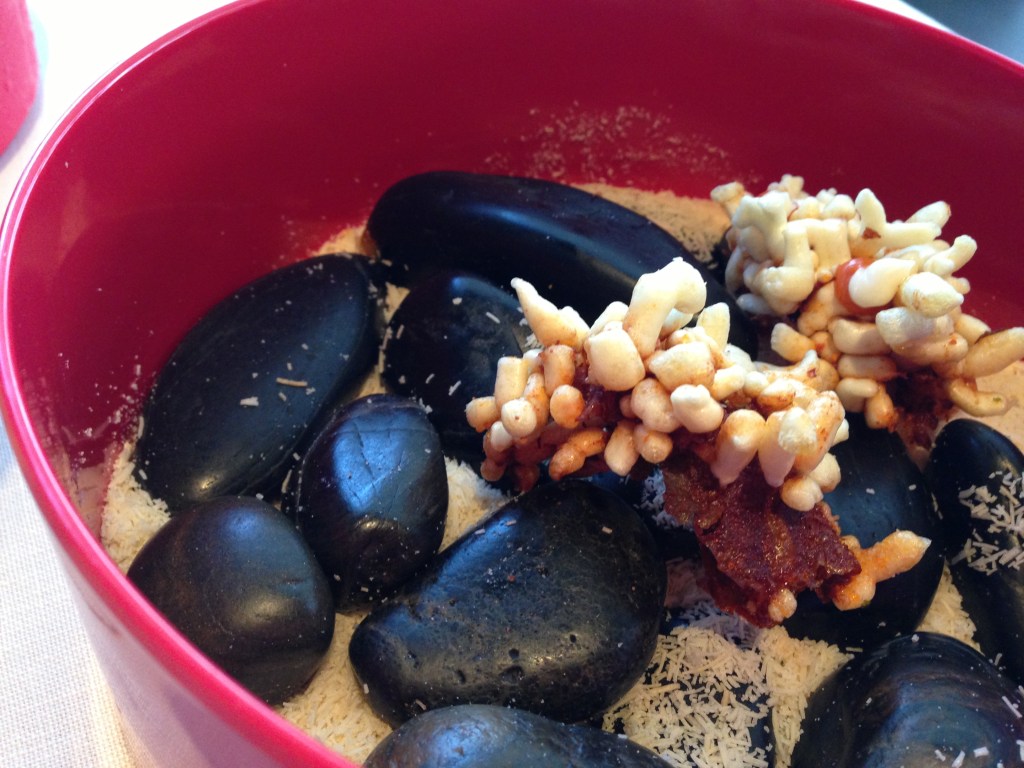
The prospect of eating 22 courses is somewhat alarming, until your realise that really, these courses can be called nothing really more than bitesize samplings. Consequently, by the end of the meal, it’s highly unlikely that you will feel full up. At Calima, it’s also highly likely that you would have forgotten much of what you have eaten. For while we were given a copy of the menu, we did at time feel as though we had a conveyor belt of food before us. No sooner had one course come, than it was whisked away by the very attentive waiting staff and another introduced. The overall result of this was that, first and foremost, we felt that the dining experience was too rushed to properly appreciate the complex flavours of each dish, and indeed to revel in the beautiful appearance of every course, but secondly, it means that in writing this review, my memory of the dishes consumed is scant to say the least. Luckily I took photos of each course, so that you can see, if not read about each tantalising sampling.
IMG_3932 IMG_3933 IMG_3935

So the tasting menu began with three little “snacks” – I felt a little disappointed that three courses had been served at once, but then that very much set the tenet for the evening: efficiency and speed. I wasn’t disappointed by the flavours however, starting with crunchy baby sweet corns layered with a “kimchi” seasoning which, much like Garcia had promised at the outset, popped and crackled on the palate with sweet and sour contradictions. Alongside that, a kind of aerated bagel seemed to melt in the mouth before I had properly appreciated what was inside, and a clustering of what can only be described as rice crispies enveloped deceptive flavours in their recreation of the traditional patatas bravas tapas dish.

IMG_3936 IMG_3938 IMG_3940

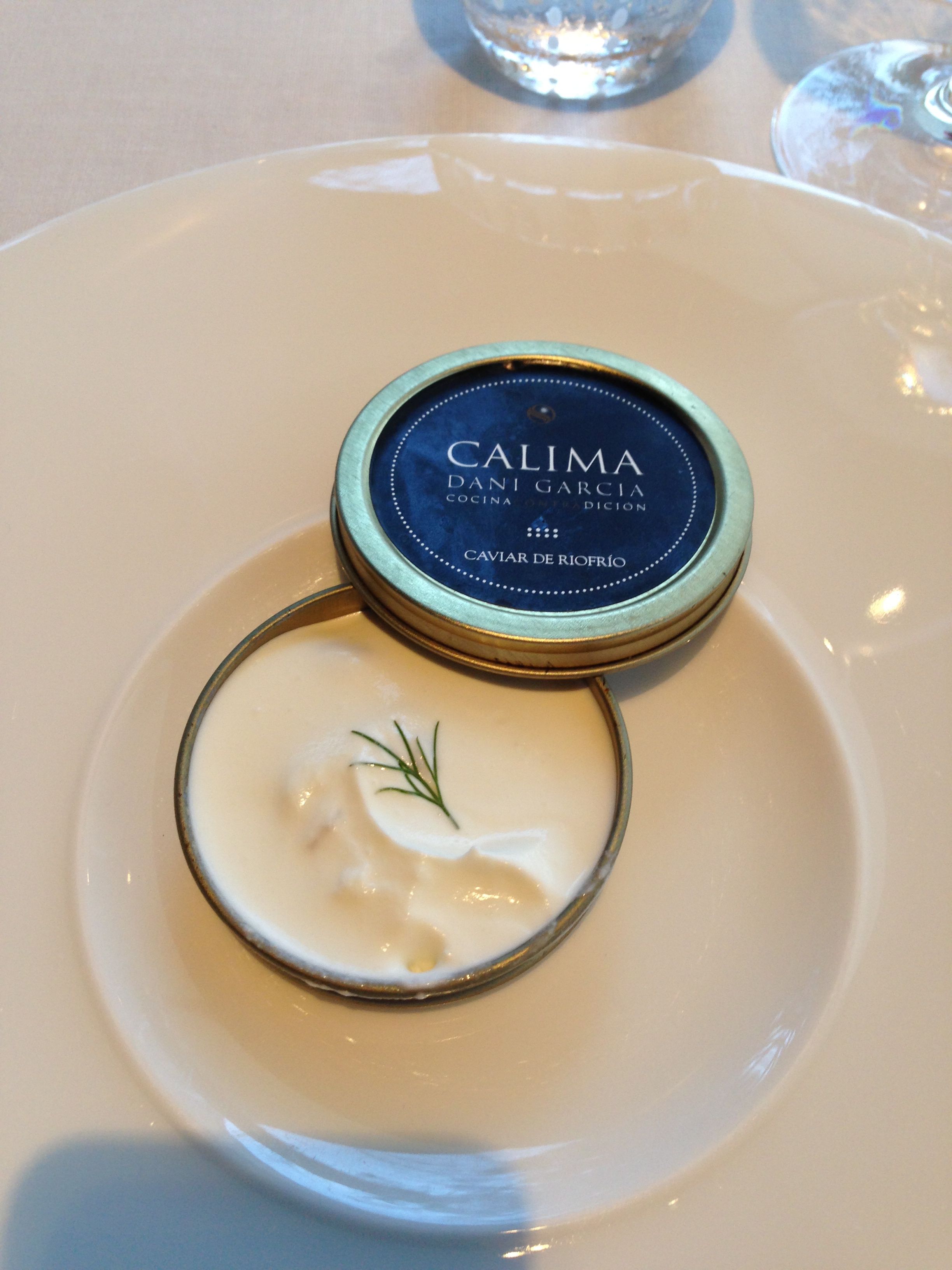
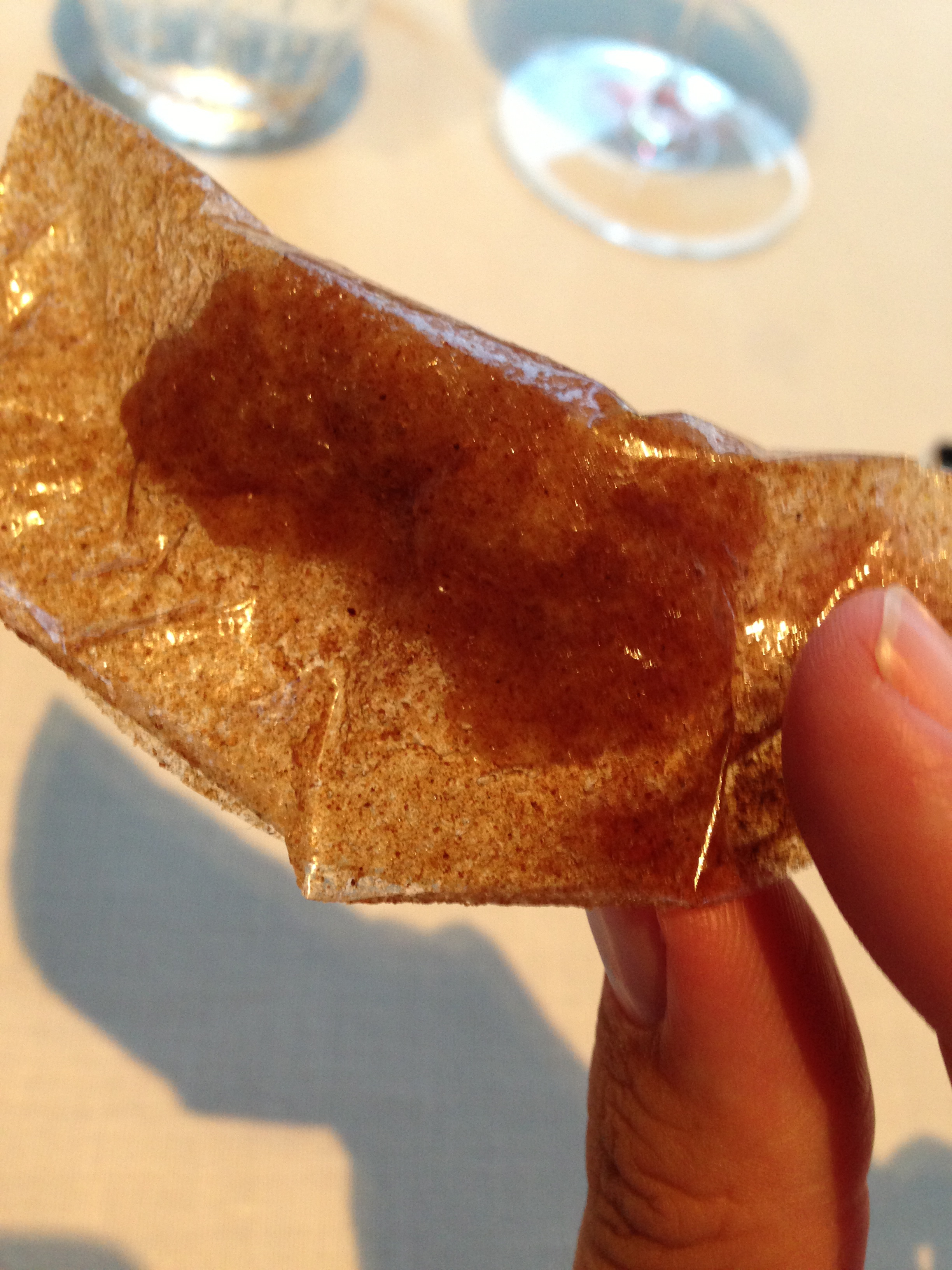
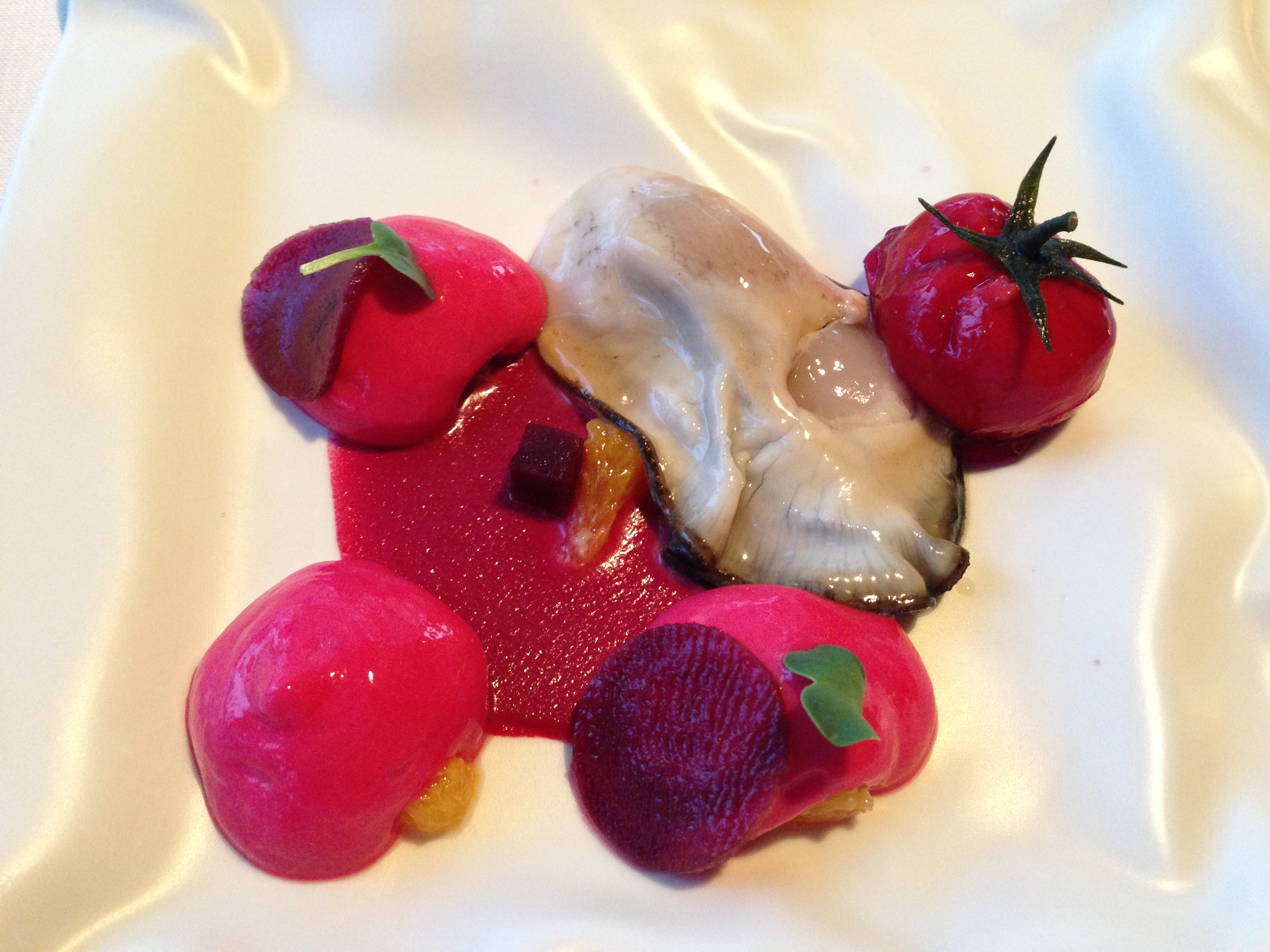
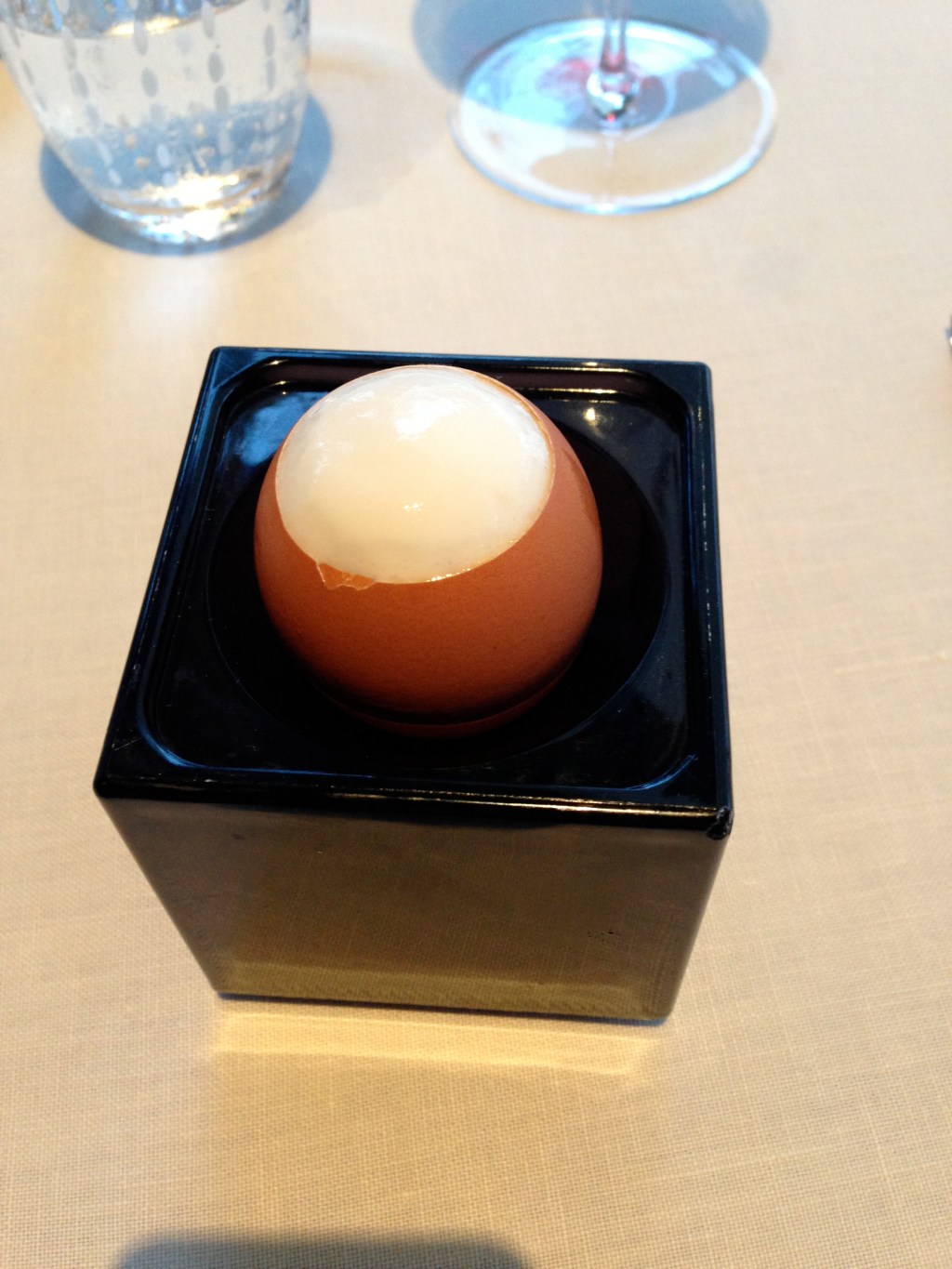
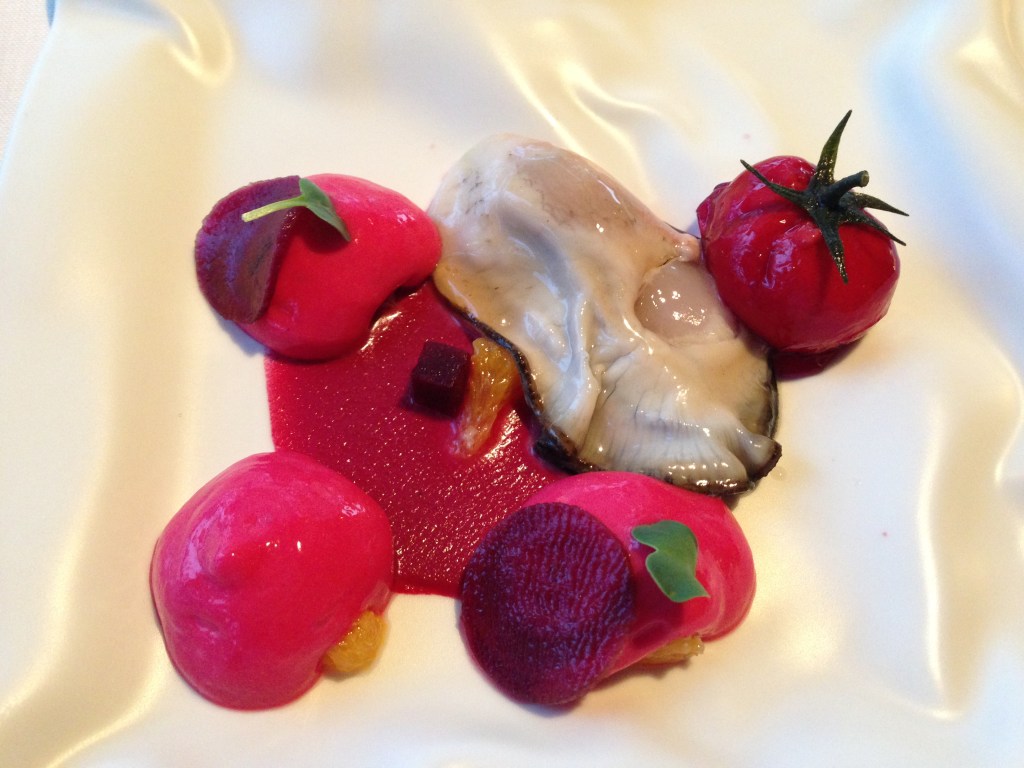
We moved onto a sensational reinvention of the typical caviar tin – this one filled with an unctuous cream combined with dates and caviar making for an incredible flavour balance, and something which should surely be tried at home. Following on, a little “empanadilla” again melted in the mouth owing to its “pastry” of sweet rice paper (contrasting deliciously with its smokey meaty interior). Next, the kind of theatre to be expected of a Michelin star eatery: “egg with no egg” – an apparently goey soft boiled egg which actually contained a foamy, fruity smoked fish concoction. Further theatre followed with a box full of almonds, two of which were frozen droplets of foie masquerading as almonds, but exploding in the mouth like a foie gras ice cream truffle. Serious yum. Such a beautifully multi-coloured fusion followed, as the vivid purples and sunshine yellows of tomatoes, and beetroot and oranges contrasted fantastically with the plumpest oyster of my acquaintance; while further theatre was presented in the form of a tomato which was actually a jelly-skinned fake containing a rich moussey interior.
IMG_3941 IMG_3943

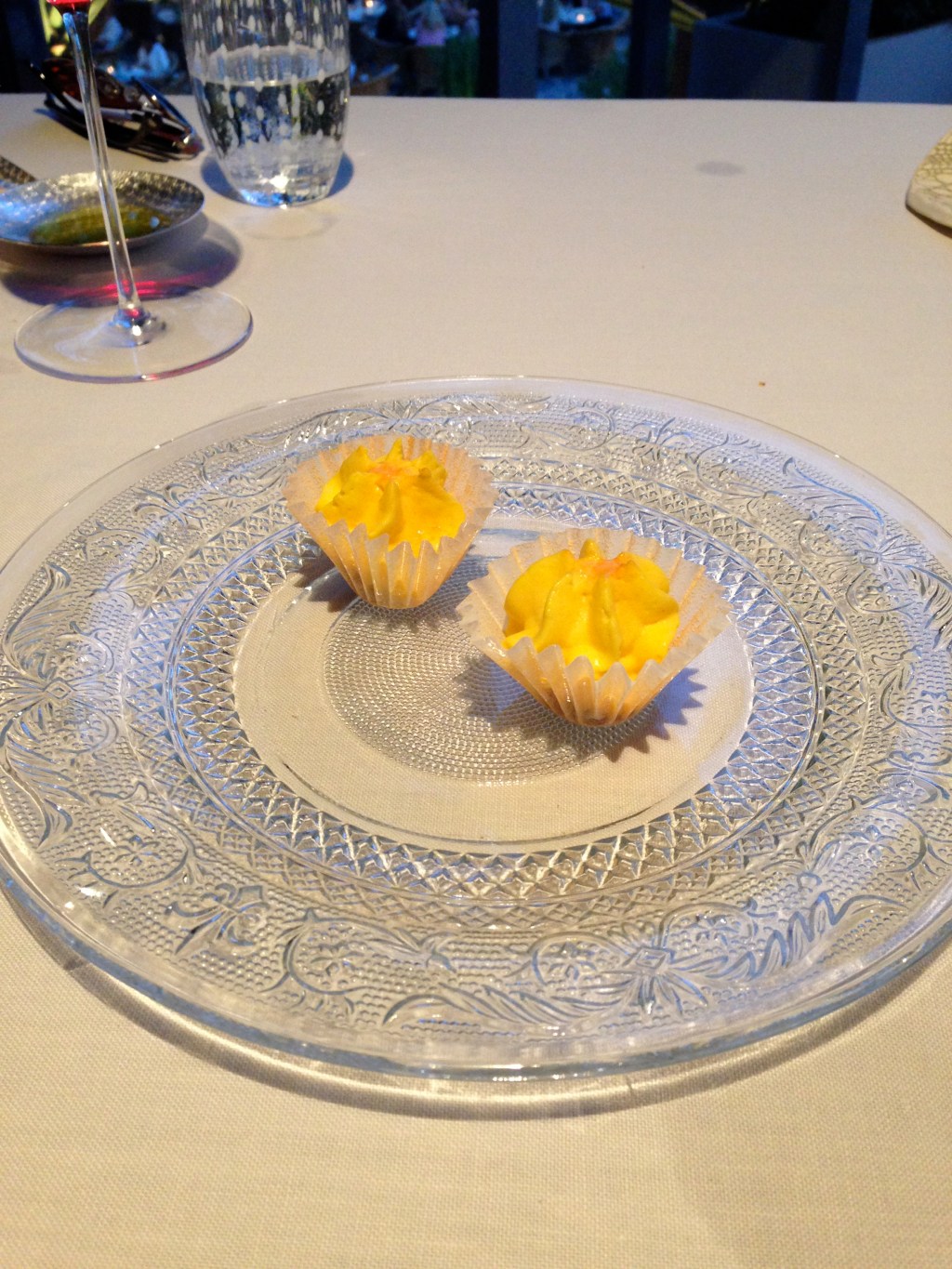
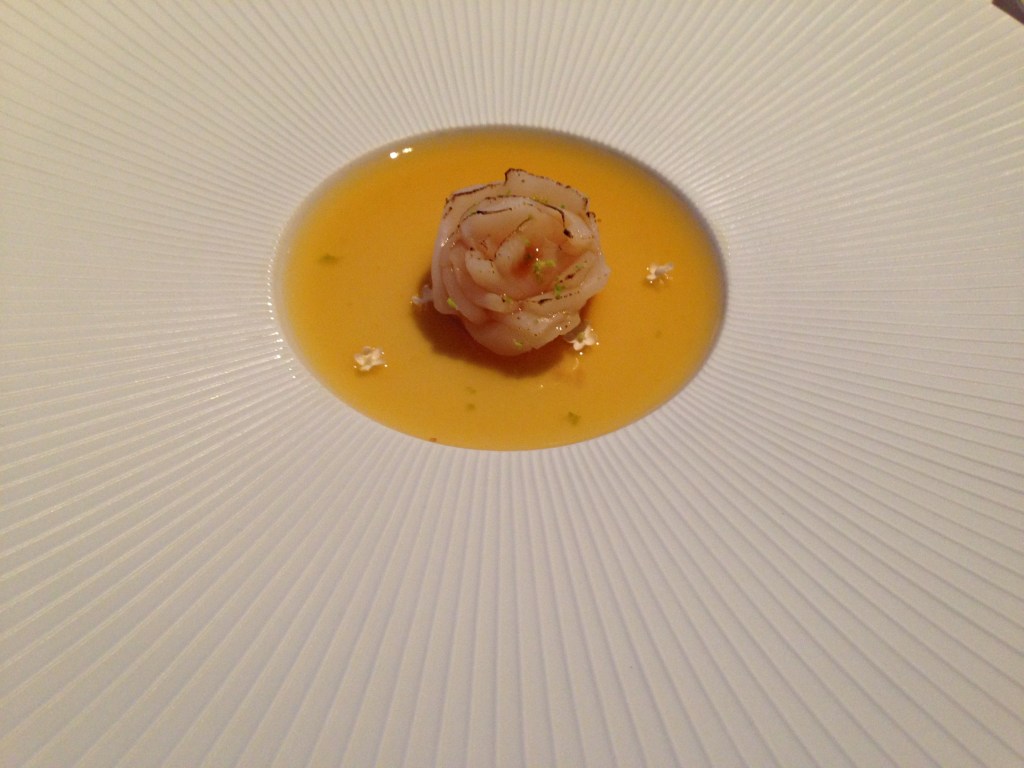
Probably the most beautiful dish of all followed on: entitled simply “Rocky Seabed”, it appeared to be a rock clustering of sea life served on a decorative box of shells and sea salt. It was in fact entirely edible – the rock collapsed and melted in the mouth like a wafer-thin rice cake, while the treats on top, including Marbella-fished baby shrimps were an exquisite cocktail of jellies and seasonings. My favourite dish of the lot. Then came the “muffins” which contained a yellow smoked fish cream and whose paper cases were also edible. This was followed by a sensationally presented scallop dish, in which thinly sliced scallops were presented like a rose, surrounded by tiny edible flowers and served with a sharp and sweet citrus cream.

IMG_3945 IMG_3951 IMG_3954 IMG_3959

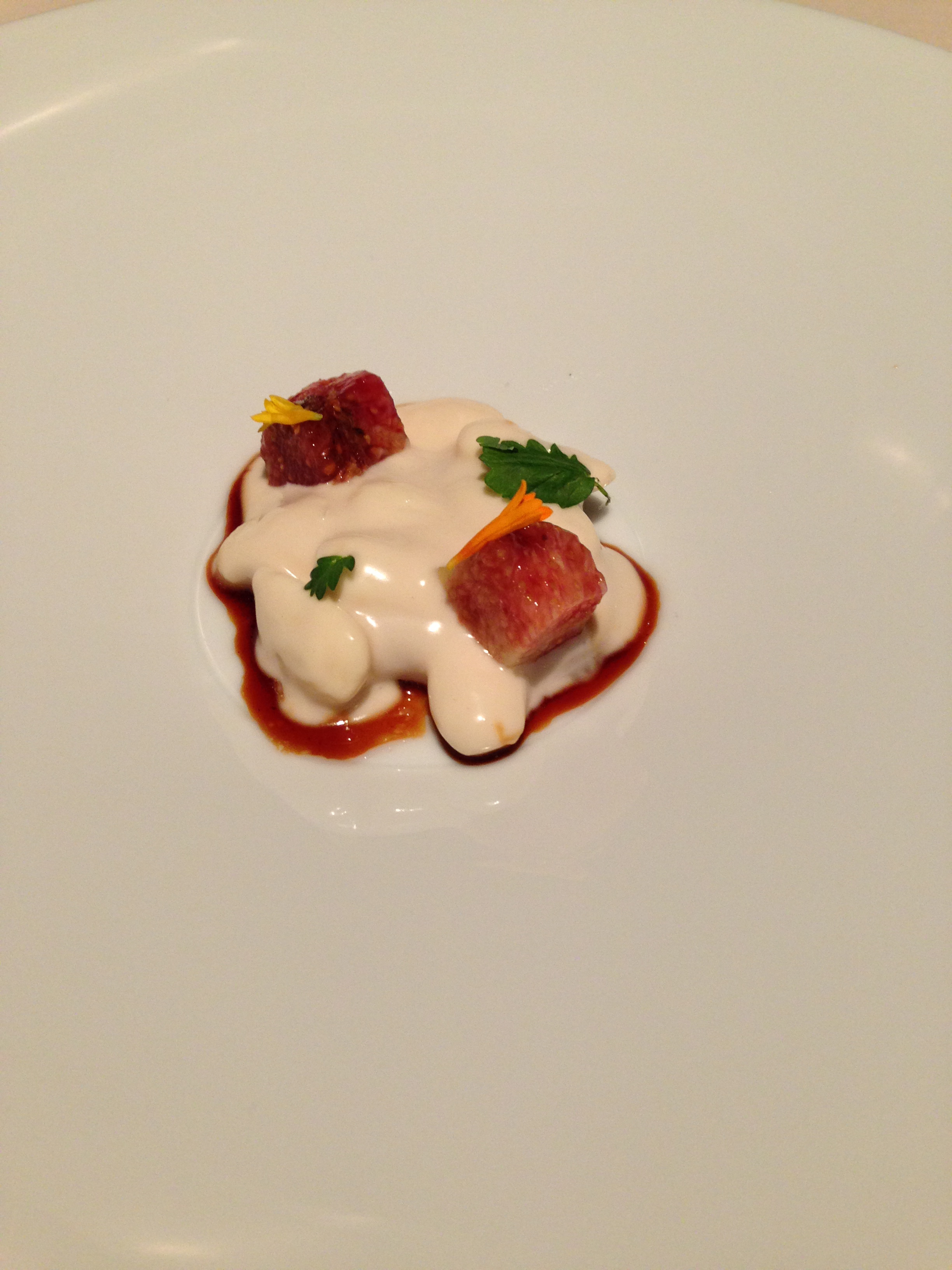
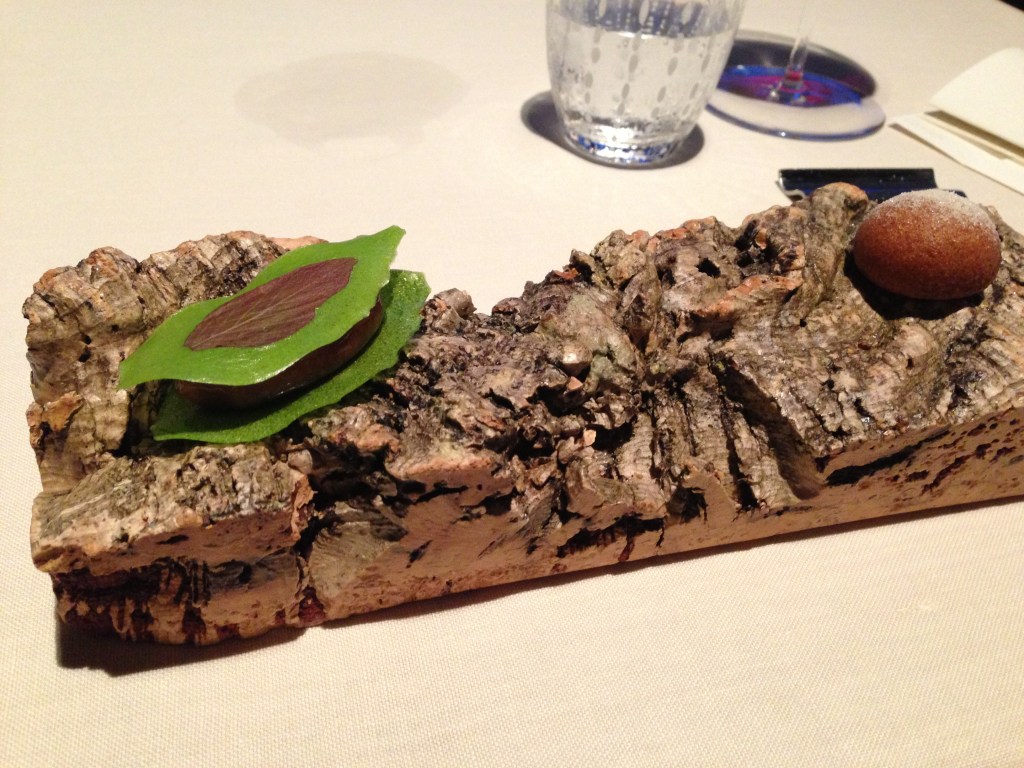
Up next, a partridge foie dish – two explorations on the foie theme, one like a round truffle, the other a soft mousse in between two crispy wafers, both presented elegantly on a block of real wood. Then another of my favourite dishes: wafer thin potato pillows scented with lemon flavourings and dipped into an exquisitely rich, salty meat gravy. Eel followed: tender slices of eel buried in an avalanche of garlic cream, balance with blood red orange and again decorated with edible flowers.
IMG_3965 IMG_3968 IMG_3971

Read more

Composition No. 7: Andalucía

As regular readers of The Daily Norm will know, over the past few months, my own art work has become dominated by a simplified use of flat tones, overlapping forms, and abstract compositions using as my newly preferred medium gouache paint on paper. What has resulted is a series of what I have loosely called “compositions” but which are progressively becoming more figurative rather than compositional, as these quasi abstract images are used more and more to provide a narrative of a scene, essence or depiction.
Following on from a series of compositions inspired by my holiday in Provence, and a single piece (Composition No.6) depicting a day at the seaside in Sussex, I had a feeling that once out in Marbella in Spain, I would again become inspired to pick up my fine-tipped paint brush and start producing another gouache piece. In fact so sure was I that inspiration would hit me that a box of gouache paints was one of the first things to make it into my suitcase.

And of course as soon as I reacquainted myself with the charming historic centre of Marbella, with its white washed houses basking in the sunshine, with the terracotta floor tiles and with the polka dots of flamenco whose rich chromatic melodies can be heard wafting in and out of households around the old town, I felt the urge to take out those very same paints and get to work.

Composition No. 7: Andalucía (2013 © Nicholas de Lacy-Brown, gouache on paper)

Composition No. 7: Andalucía (2013 © Nicholas de Lacy-Brown, gouache on paper)

The result is this piece: Composition No. 7: Andalucía – a simple title for what is a simple attempt to capture the essence of Andalucía, and the iconic symbols which have come to represent the region around the world – the Spanish fan, a necessary antidote to the searing summer heat; the polka dots and guitar of the flamenco passion which stirs the region’s hearts; the windows, always open to capture whatever breeze they can, the richly decorated iron bars providing both security and decoration while facilitating this necessary ventilation;  and pots of geraniums scattered across walls forming in themselves a kind of polka dot pattern of floral colour across a blank white canvas.

I really hope you like this latest addition to my Compositions series.

© Nicholas de Lacy-Brown and The Daily Norm, 2001-2013. Unauthorized use and/or duplication of the material, whether written work, photography or artwork, included within The Daily Norm without express and written permission from The Daily Norm’s author and/or owner is strictly prohibited. Excerpts and links may be used, provided that full and clear credit is given to Nicholas de Lacy-Brown and The Daily Norm with appropriate and specific direction to the original content.

Marbella Twenty-Thirteen | Andalucía’s Gem

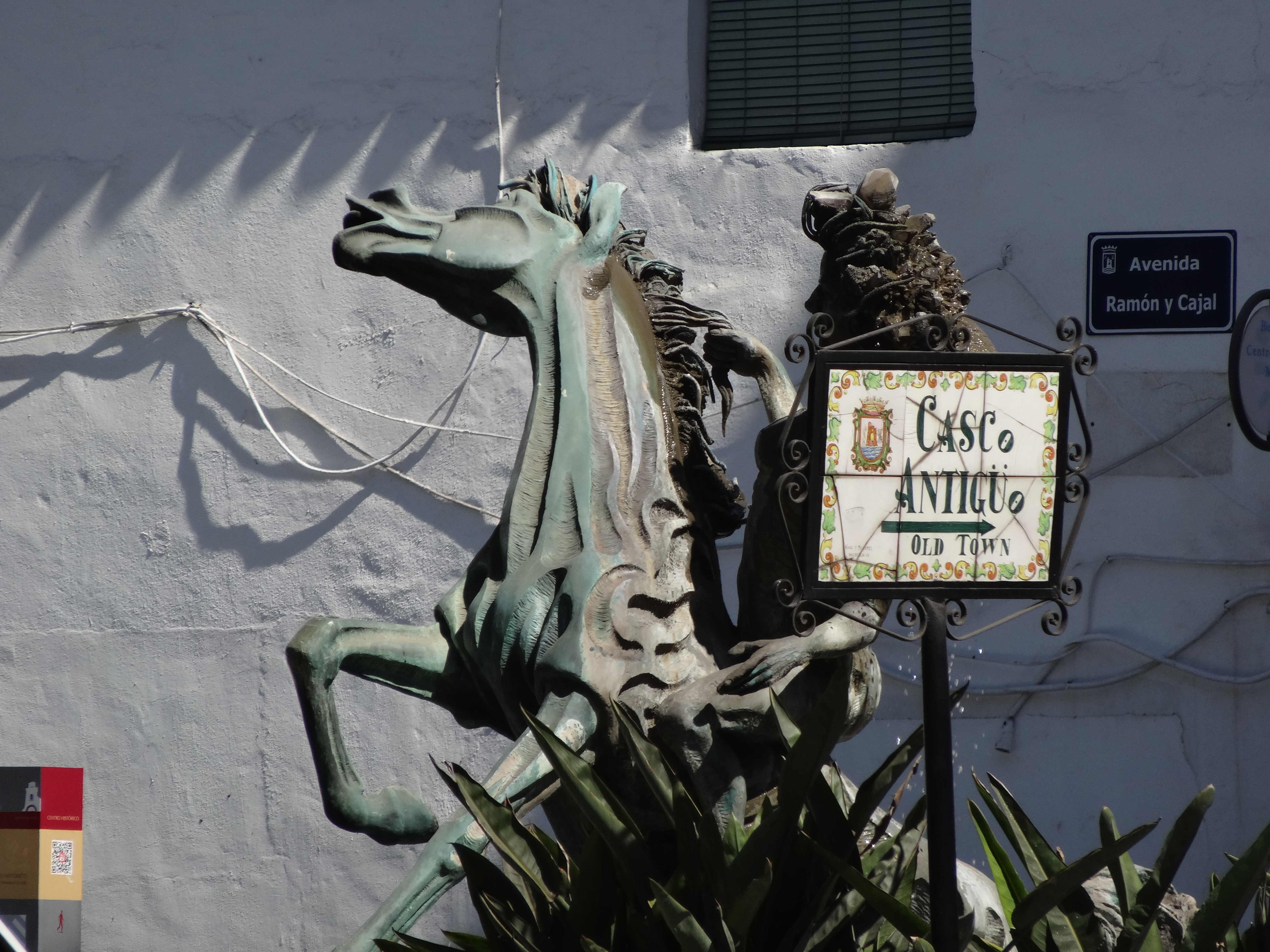
While Anglo-Spanish relations may have soured of late over that small little lump of rock Gibraltar which, like many such British overseas territories, remains rather bizarrely a part of the British Empire despite being actually attached to Southern Spain, the sun-baked Iberian Peninsula and in particular the Costa del Sol, remains the number one destination for sun-seeking Brits every summer. Now ordinarily, I would find the concept of coach-loads of drunken sunburnt Britons to be one so sufficiently abhorrent that it should be avoided at all costs. And indeed, along much of Spain’s coast, you wouldn’t see me amongst the larger louts and the empty fish and chips cartons for toffee. But happily there remains one bastion, in amongst this coast of over-developed tourist tat, where champagne, rather than San Miguel is the preferred tipple, and whose old town is so exquisite as to be a gem of Andalucía.

IMG_4185 DSC06497 DSC06240

I am of course talking about Marbella, which despite being more popularly labelled “Marbs” these days owing to the minor polluting influence of visits from the tack-happy residents of Essex, has remained a city synonymous with quality, with the good life, and with the beauty of its streets, its harbours, its beaches and its people. Marbella is undoubtedly one of my favourite cities in all the world, but not for its beaches and gold-plated yacht-filled marinas – rather I am seduced because with its Andalucían flavours, its embrace of Spanish heritage, its collections of art and clusters of small private galleries, and its offerings of some of the most charming plazas and cobbled streets in all of Spain, it is simply a paradise on earth.
Luckily for me, my family have a small old house right in the heart of the winding maze of streets which make up Marbella’s Casco Antiguo (old town), and as a result, over the 11 years in which we have owned the house, I have come to call Marbella my second home. Consequently, there could be no question that I would return to my sunny homeland when I turned the big 3-0 this summer – for two weeks of celebrations which would help to dilute the somewhat daunting horror felt at turning such a ripe old age.

DSC06522 DSC06542 DSC06517

What will follow, therefore, is a series of posts devoted to those two weeks of sea, sun and Spanish seduction, from several collections of photos and a visit to nearby Malaga, to the art works I painted, and the dinners I enjoyed. I start the series with my first set of snaps, these exploring the unhampered charm of Marbella’s old town.

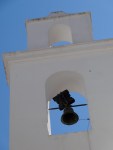
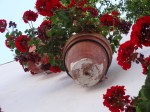
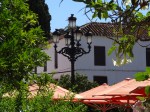
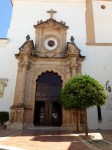
Sometimes, when I walk out of my own front door straight onto the white washed streets of Andalucía, dazzling in their white simplicity against the bluest of skies, and contrasting against the vivid pinks of the abundant floral sprays climbing up the old cracking walls, I have to pinch myself. For living inside of a postcard world always makes you feel a bit like you’re dreaming. Yet in this very knowledge, I cannot help but act like a tourist on every walk around Marbella, for even though I have seen these streets and sights several hundred times before, I cannot help but feel that in my own small way, I must pay homage to their stunning beauty.

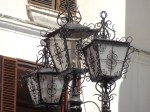
The photos on this post are a part of that homage, a dedication to the charming narrow streets, the squares bustling with parasol-covered restaurants and refreshed by the trickle and splatter of the old town’s many stone fountains, to the vivid colours of the richly painted facades, and to the simple glory of old churches, ancient stone walls, and neatly cobbled streets.

All photos and written content are strictly the copyright of Nicholas de Lacy-Brown © 2013 and The Daily Norm. All rights are reserved. Unauthorized use and/or duplication of the material, whether written work, photography or artwork, included within The Daily Norm without express and written permission from The Daily Norm’s author and/or owner is strictly prohibited. 

The Daily Norm’s Photo of the Week: The surprising beauty of the Spider

Spiders aren’t exactly the most popular creatures in the world. Of the many millions of people around the globe who cannot stand these creepy eight-legged arachnids, I am but one of the number. My inherent dislike for the little beasts grew all the worse when, in my bedroom as a teenager, I felt something crawl across my face during the night in a state of semi-consciousness, and when I turned on my light found the blackest, biggest of evil spiders sitting on the pillow next to me. Eugh, my skin crawls now thinking about it.

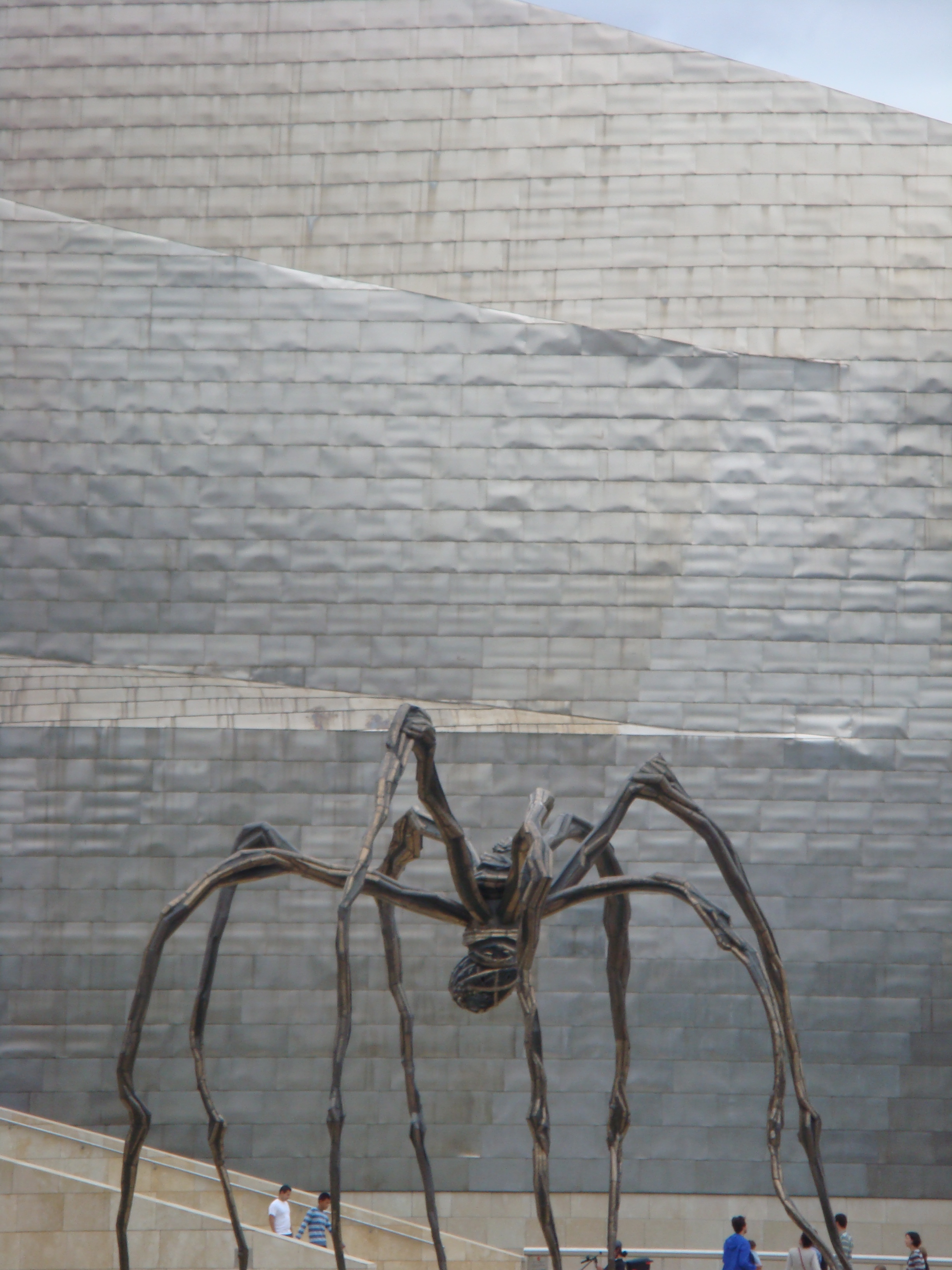
And yet when a spider is at arms breadth, and when you know exactly where it is (and therefore no nasty surprises creeping down your neck) there is something quite aesthetically beautiful about the spiders very symmetrical body, in its gangly, angly long-legged way, something which was perhaps proven most obviously by the artist Louise Bourgeois and her masterful larger-than life spider sculptures (my favourite being the one that is (or was at any rate) outside Frank Gehry’s stunning Guggenheim in Bilbao).
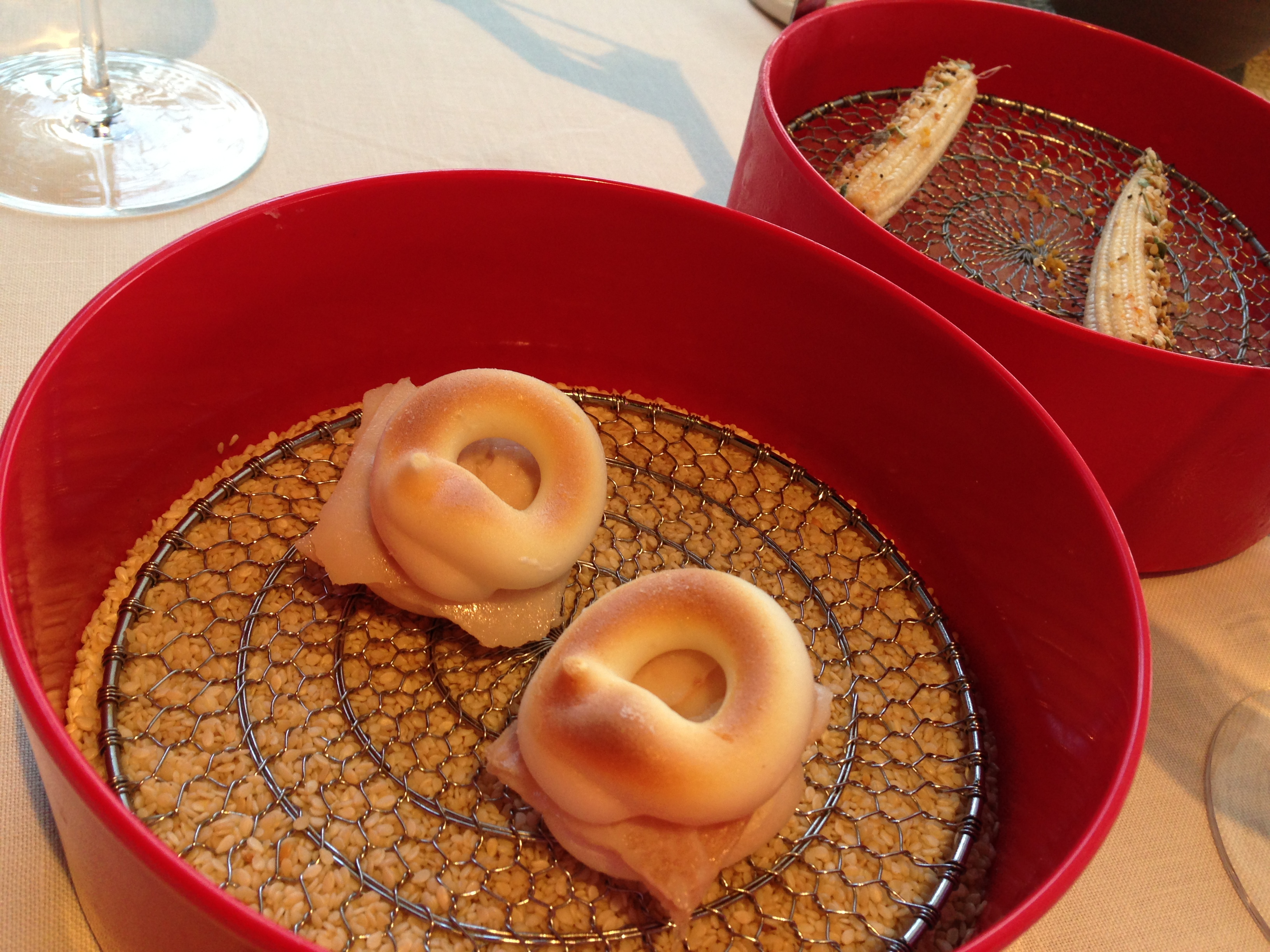
Photo of the week

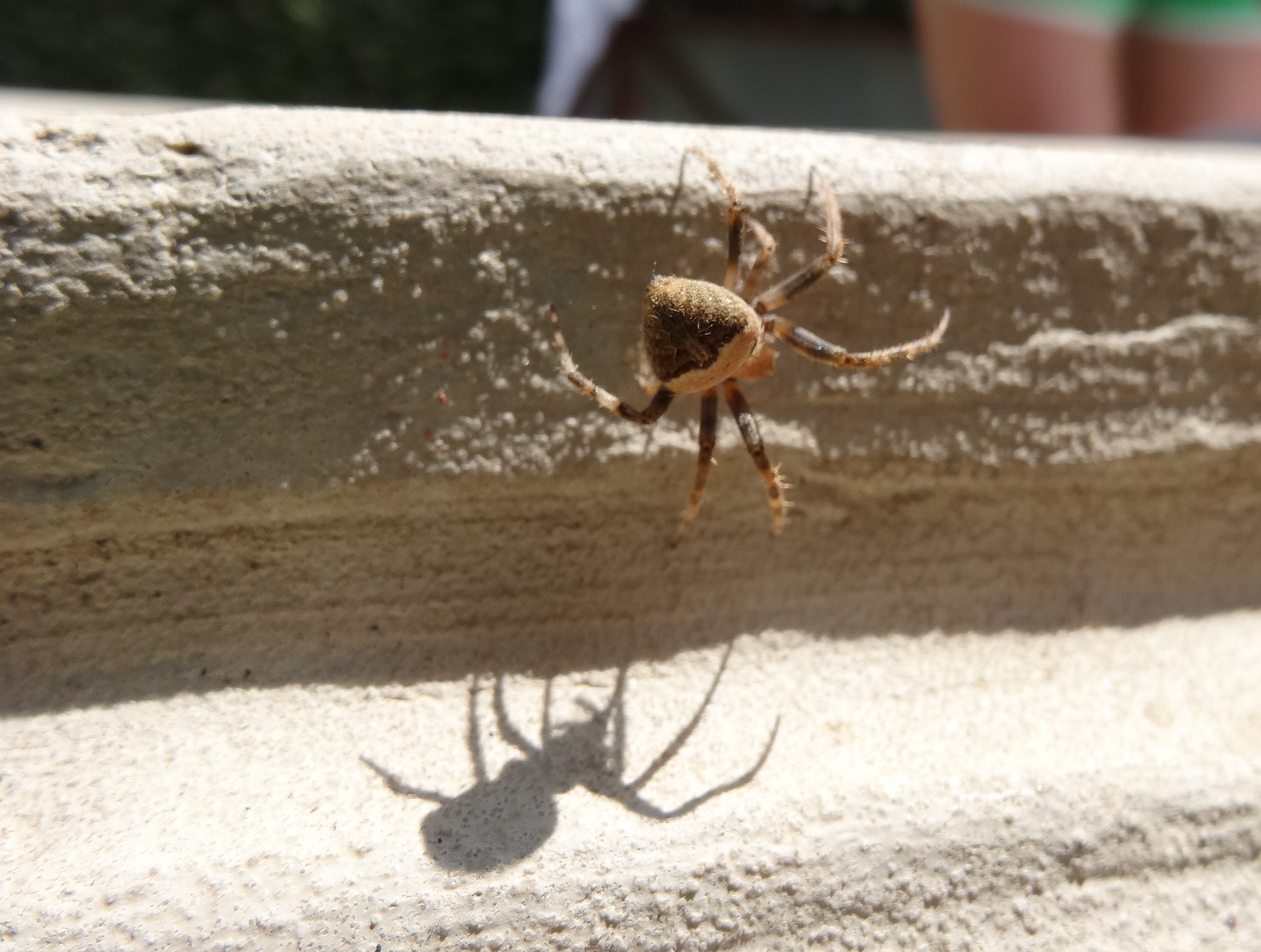
However what really captured my attention when I saw this rather gruesome spider on the side of the lavish garden swimming pool at the Hotel Particulier in Arles was not the spider herself, but the beautiful shadow cast diagonally from her body. Seen as a flattened single-toned image, the shadow made me appreciate the beauty of the spider’s shape in a way which I hadn’t properly noted previously. Its angular legs coupled with its round body, a creepy image but also something quite architectural, even floral. And that is why the photo I took is The Daily Norm’s Photo of the Week.

The Guggenheim Bourgeois

The Guggenheim Bourgeois

and another in Avignon

and another in Avignon

All photos and written content are strictly the copyright of Nicholas de Lacy-Brown © 2013 and The Daily Norm. All rights are reserved. Unauthorized use and/or duplication of the material, whether written work, photography or artwork, included within The Daily Norm without express and written permission from The Daily Norm’s author and/or owner is strictly prohibited. 

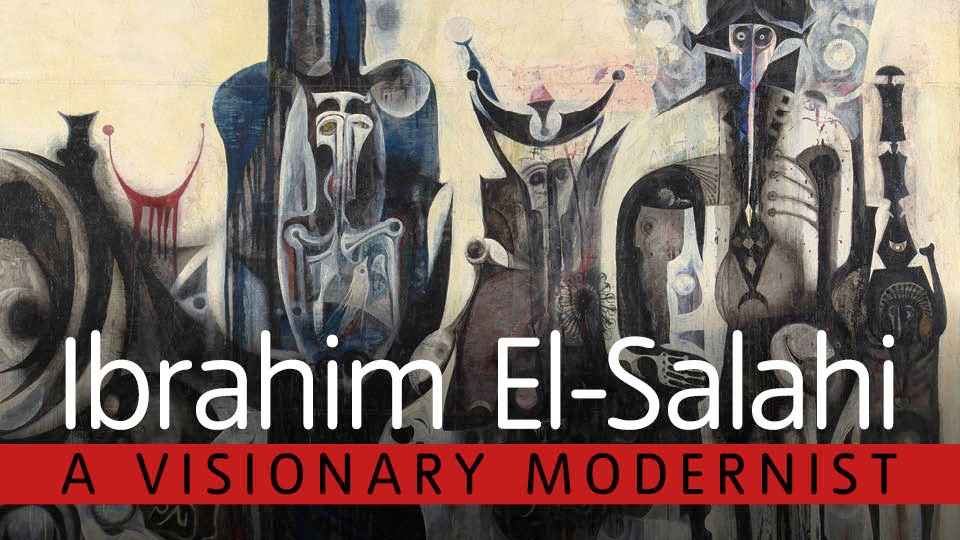
Ibrahim El-Salahi: A Visionary Modernist

Following hot on the heels of Tate’s superb mini-exhibition of Saloua Raouda Choucair, an artist previously unknown to so many art-buffs in the UK (but whose work completely revolutionised my approach to my work, and got me thinking about how I can use gouache in my paintings) comes another retrospective exhibition of a relative unknown as far as big art names go: Ibrahim El-Salahi, whose significant 7-room solo show has recently opened at Tate Modern in London. And what a success it is.

Coming from Sudan (born 1930), El-Salahi’s retrospective is Tate Modern’s first retrospective dedicated to an African modernist. It will also most likely be the first many visitors to the show will have heard of this Modernist artist. Yet El-Salahi’s work is nothing short of stunning – a visual delight of painting, drawing and calligraphy which comes together in a retrospective which exhibits a level of imaginative expression the likes of which I have not seen since discovering the works of Dali. The complexity of some of his drawn black and white images is nothing short of stunning – a mix of figurative and more expressive forms, but culminating to form a visual assault on the viewer whose eyes simply do not know where to begin in the appreciation of these works.

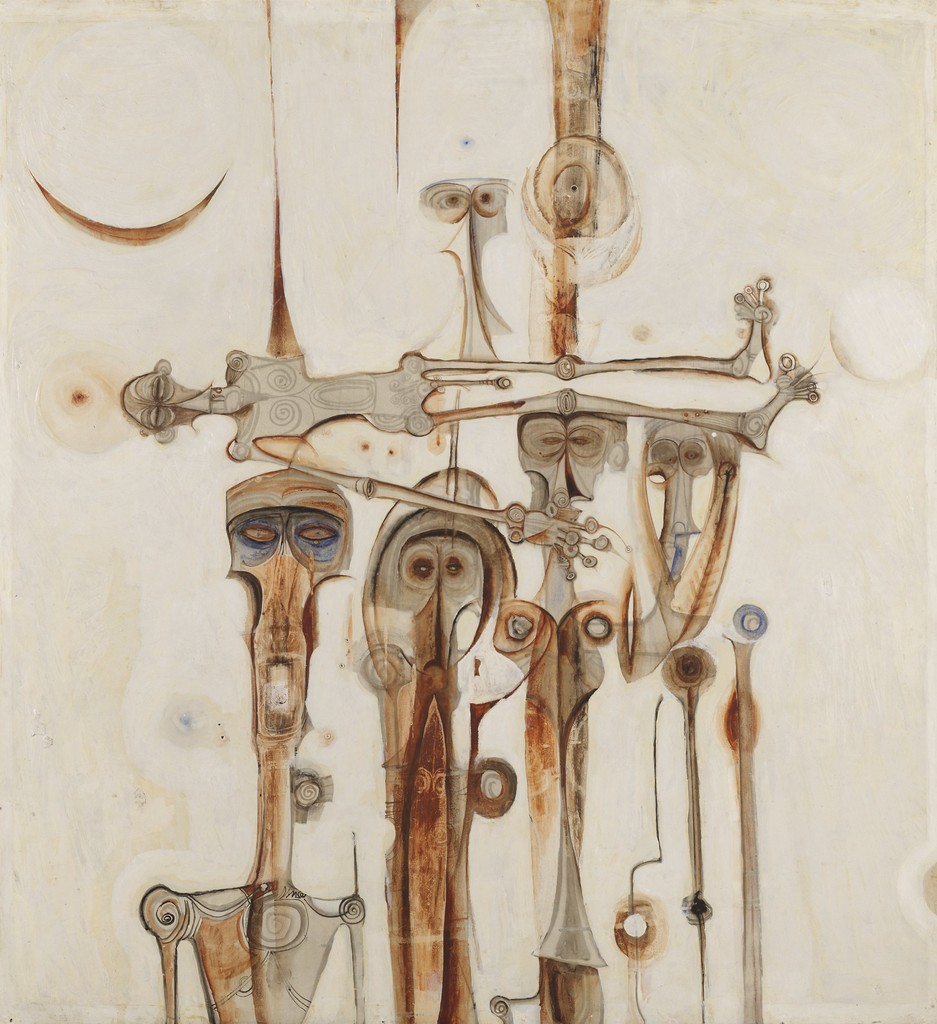
Reborn Sounds of Childhood Dreams I (1962-3) © Ibrahim El-Salahi

Reborn Sounds of Childhood Dreams I (1962-3) © Ibrahim El-Salahi

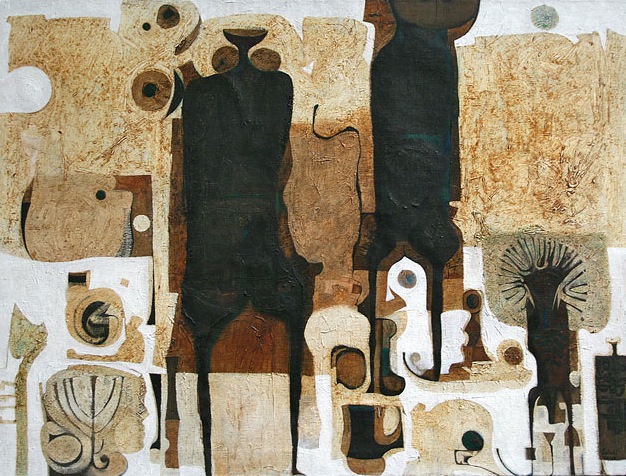
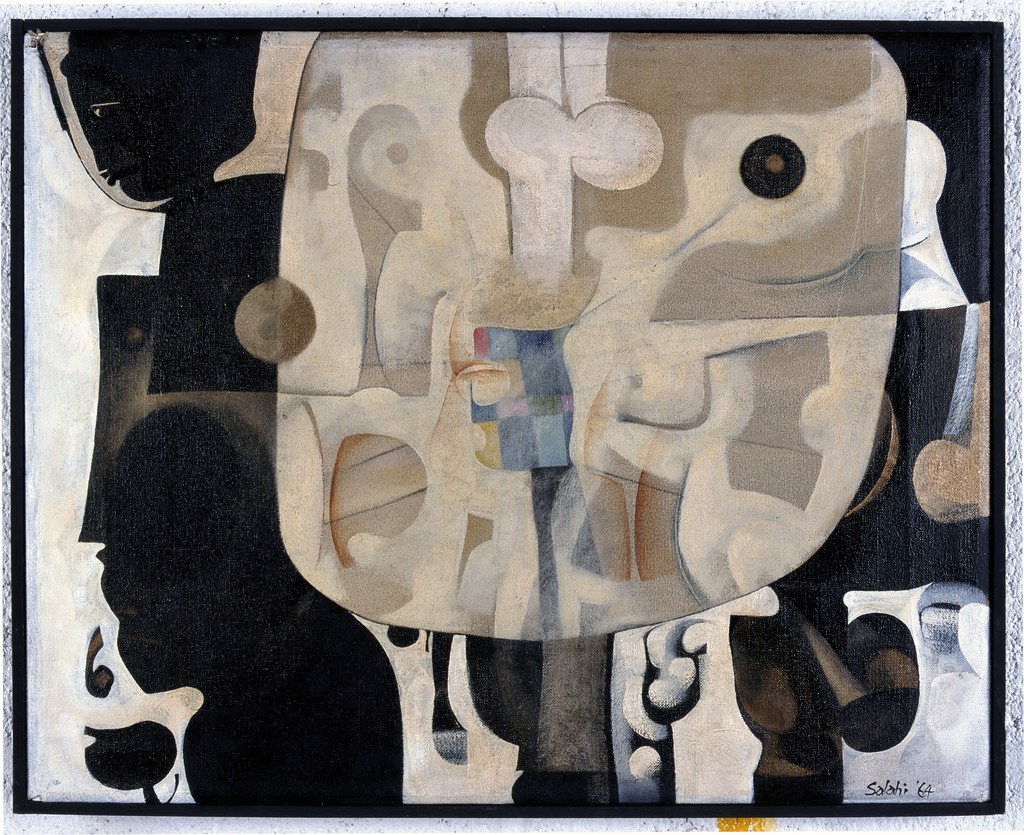
Centred on the recent acquisition of Tate Modern, the significant piece entitled Reborn Sounds of Childhood Dreams (1961-5), the exhibition starts off with the artist’s most recent works before delving backing in time to paintings loaded with African earthly brown tones, burnt umbers and yellow ochres representing, as El-Salahi himself says, the African foundations which pervade his work. But asides from the African earthy colours and the occasional tribal mask, El-Salahi’s early work exhibits a complexity of imagery which extends way beyond the continent which has so characterised his work. Islamic imagery, for example, is featured strongly, with Islamic lettering and the crescent moon prominent throughout the show, while perhaps the strongest influence comes from a surprisingly significant immersion in Western culture, an exposure encountered when El-Salahi won a scholarship to London’s Slade School of Art in the 1950s, with particular references to Picasso’s jarred cubist figures showing through from then onwards.

They Always Appear (1966-8) © Ibrahim El-Salahi

They Always Appear (1966-8) © Ibrahim El-Salahi

Al-Kas (1964) © Ibrahim El-Salahi

Al-Kas (1964) © Ibrahim El-Salahi

The Last Sound (1964)  © Ibrahim El-Salahi

The Last Sound (1964) © Ibrahim El-Salahi

Funeral and the Crescent (1963) © Ibrahim El-Salahi

Funeral and the Crescent (1963) © Ibrahim El-Salahi

Vision of the Tomb (1965) © Ibrahim El-Salahi

Vision of the Tomb (1965) © Ibrahim El-Salahi

The exhibition moves to the 1970s, a difficult time for El-Salahi when he was compelled to return from London to Sudan to take up the role of Deputy Undersecretary of Culture at the Sudanese Ministry of Information, under the military dictatorship of General Gaafar Nimeiry. However, his tenure ended abruptly in the mid-70s when, in the aftermath of a failed military coup, El-Salahi was accused of anti-governmental activities and imprisoned for 6 months. The art works which follow are abruptly different from the warm earthy umber works of the previous room. Stripped of colour, these black and white works, generally drawn in ink on paper, appear to reject the warm colours of El-Salahi’s African heritage, but are nevertheless some of the most powerful works in the show, demonstrating incredibly skilled draughtsmanship and imagination which is beyond what most of us are capable of. Apparently El-Salahi would begin these works by drawing a small image, the likes of which would gradually expand outwards as he would add paper to allow the image to spread.

The Inevitable (detail) (1984-4) © Ibrahim El-Salahi

The Inevitable (detail) (1984-4) © Ibrahim El-Salahi

21_reborn_sounds_2_full_1024x362

From Visual Diary of Time-Waste Palace (1996-7) © Ibrahim El-Salahi

From Visual Diary of Time-Waste Palace (1996-7) © Ibrahim El-Salahi

In the 1990s, El Salahi, now in self-imposed exile from Sudan, moved to Oxford, and there, inspired by the verdant British countryside began a series of tree-inspired images. With these, El Salahi injected colour back into his work, and also dappled in more linear, geometric forms. This in turn led to the present, where El Salahi appears to be returning to the earthier browns of his earlier period, but also dapples again in some of the more detailed black and white ink on paper works. But whether brown, black or white, these works, based on a recent trip to Granada in Spain and largely depicting Flamenco (which of course has its routes in Islamic culture, as does Granada itself) are without a doubt the most stunning works of the exhibition. I was held utterly spellbound by one work depicting Granada in those same umbres and ochres, but with a black and white clustered group of flamenco dancers at its centre, their arms thrust upwards in a burst of energy so reminiscent of that point of duende, their figures perfectly arched into the passionate hold of a flamenco dancer in her final crescendoed cry. Dazzling. Spectacular – one of the best works I have ever seen at Tate. Tragically, I can find no image of this work online, which makes it all the more important that you head along to the show to share in these incredible artworks.
exm-main-0012_elsalahi_web_banner_0

Ibrahim El-Salahi: A Visionary Modernist is on at Tate Modern until 22 September 2013

My Urban Balcony Garden – 2013

Last summer on this blog I wrote to tell you all about my secret urban paradise – the little balcony garden which runs alongside my South London flat and which has slowly metamorphosed into my own slice of the Mediterranean. Well one year later, this Elysium of urban-imported Andalucian countryside is as healthy and abundant as ever and surely worth another post. For this year, my balcony’s abundance is all the more worth celebrating for England suffered from what was one of the coldest and longest winters on record. Even in April, while I was luckily ambling along the warm cerulean beach at Pollença in Mallorca, they had snow back in the UK. These conditions my balcony disliked. Grumpily my plants began to waken from their interrupted, uncomfortable winter’s slumber, but some, like my vast tropical centrepiece – the bell flowered brugmansia – were stubborn until the very last. Having lost all of its leaves in the cold, I almost gave up hope of the plant ever recovering when in June still no shoots had been forthcoming.

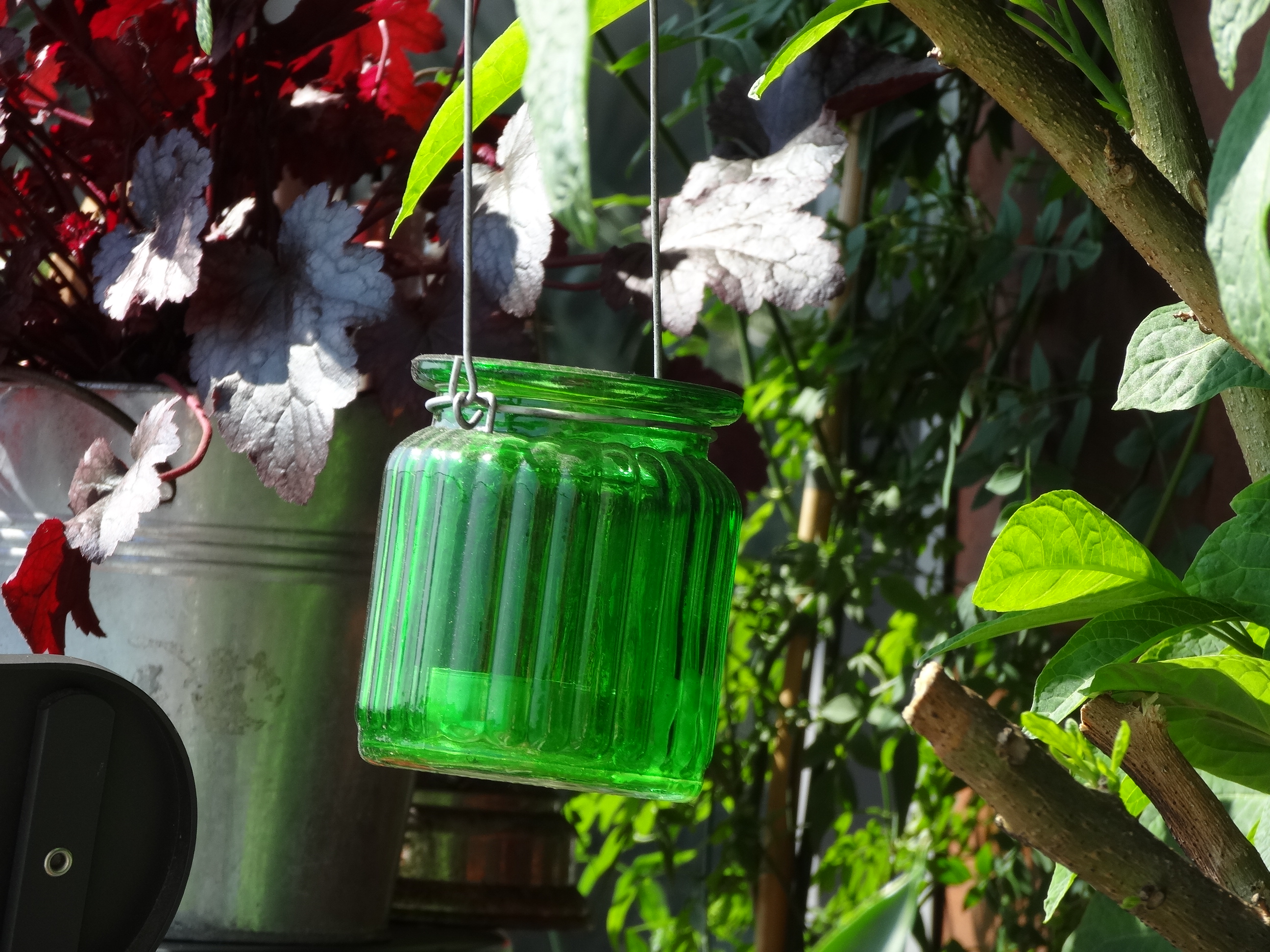
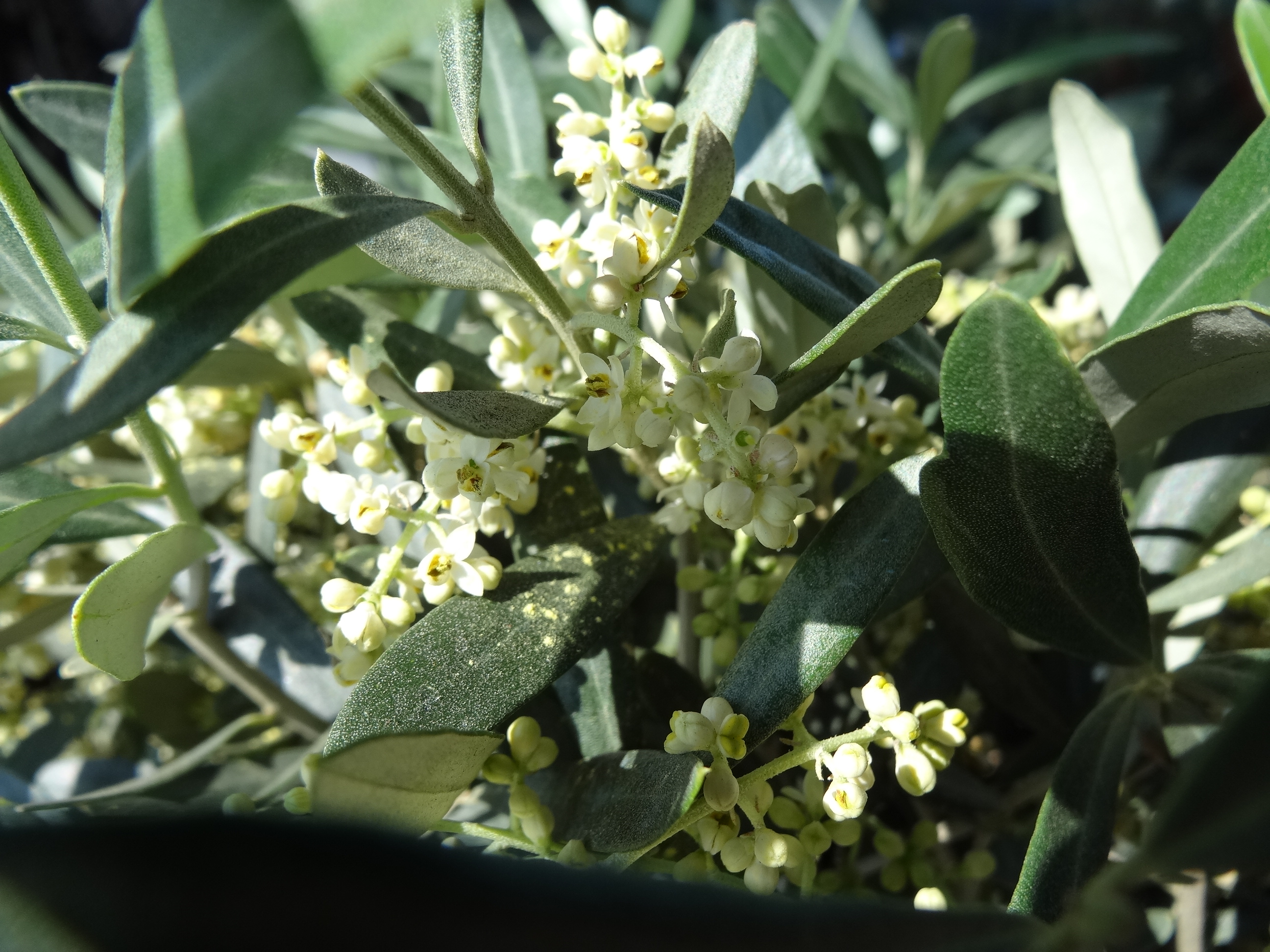
DSC04969 DSC04970DSC01535 DSC05098 DSC04957

Yet a month later the brugmansia, like the other plants on the balcony, is flourishing. This Mediterranean paradise is tightly designed in shades of black and red to match the interior design of my apartment, but is nonetheless allowed to expand autonomously, thus creating an ever cosier garden space. This year we have imported a fragrant jasmine to remind us of those paradisal nights in my family home in Marbella, where the sweet-smelling perfume is almost overwhelming. That joins the Palms, the wild Passion flower, the abundant olive trees and the vivid and voluptuous red geraniums to make this small balcony space perfectly reminiscent of a slice of Southern Spain, yet with contemporary touches suitable for London brought by black grasses, blood red lilies and other wine-coloured foliage.

My urban balcony garden really is my pride and joy, and this year I’m celebrating its success more than ever.

All photos and written content are strictly the copyright of Nicholas de Lacy-Brown © 2013 and The Daily Norm. All rights are reserved. Unauthorized use and/or duplication of the material, whether written work, photography or artwork, included within The Daily Norm without express and written permission from The Daily Norm’s author and/or owner is strictly prohibited. 

The Daily Norm’s Photo of the Week: Killer Bee!

Taking a winning photograph is very often more a matter of luck than intention, although that is not to say that compositional planning is not a crucial element to creating the right balance and backdrop for the image. So while I was content with composing a photograph of the fragrant purple lavender bushels which were lining the steep hilly path up to the ruins of the Chateau of Les Baux de Provence, I had no idea that in amongst the lavender in the photograph which would result, I would capture this quite brilliant image of a bee in full flight.

It was with gleeful surprise therefore that I looked back through my photographs of the day and found this little beauty, the furry bumble bee looking as though he is making straight for the viewer, almost like a war plane ready to pounce. The perfect symmetry of his wings spread sideways and his legs poised to land on some nearby flower make for an incredible and quite unique view of the humble bee going about its business. But the very symmetricality of his poise and the very definite forceful way with which the bee appears to be flying gives the whole image a sense of violence, putting the viewer in the anticipation of some forthcoming battle of the flowers. One of my favourite photos of my Provence trip, and definitely worthy of The Daily Norm’s Photo of the Week spot.

Photo of the week 2

All photos and written content are strictly the copyright of Nicholas de Lacy-Brown © 2013 and The Daily Norm. All rights are reserved. Unauthorized use and/or duplication of the material, whether written work, photography or artwork, included within The Daily Norm without express and written permission from The Daily Norm’s author and/or owner is strictly prohibited. 

Small pleasures of my walk to work

As most Londoners will tell you, the commute to work (for all except those who are lucky enough to live in the centre of the city) is very frequently something closely resembling Dante’s vision of hell: People everywhere, packed tightly into incredibly undersized train carriages rumbling slowly in the subterranean layers of the city,  all dignity lost in these sardine-can surrounds as you become very closely acquainted with the smallest details of your neighbour’s facial pores, their morning’s perfume (or lack of it), and more often than not the opportunity to guess at what they ate for breakfast. Being used now to the commute, I tend to take it in my stride, delving like most fellow commuters into the depths of my subconsciousness during travel, ears indoctrinated by the ipod headphones pushed firmly into my ears, and mind transported to the other-world of whichever novel I am reading at the tim. However, when the commute is particularly bad, it can really exert the potential to ruin the rest of the working day that follows, not least when problems on the journey make you late for work.

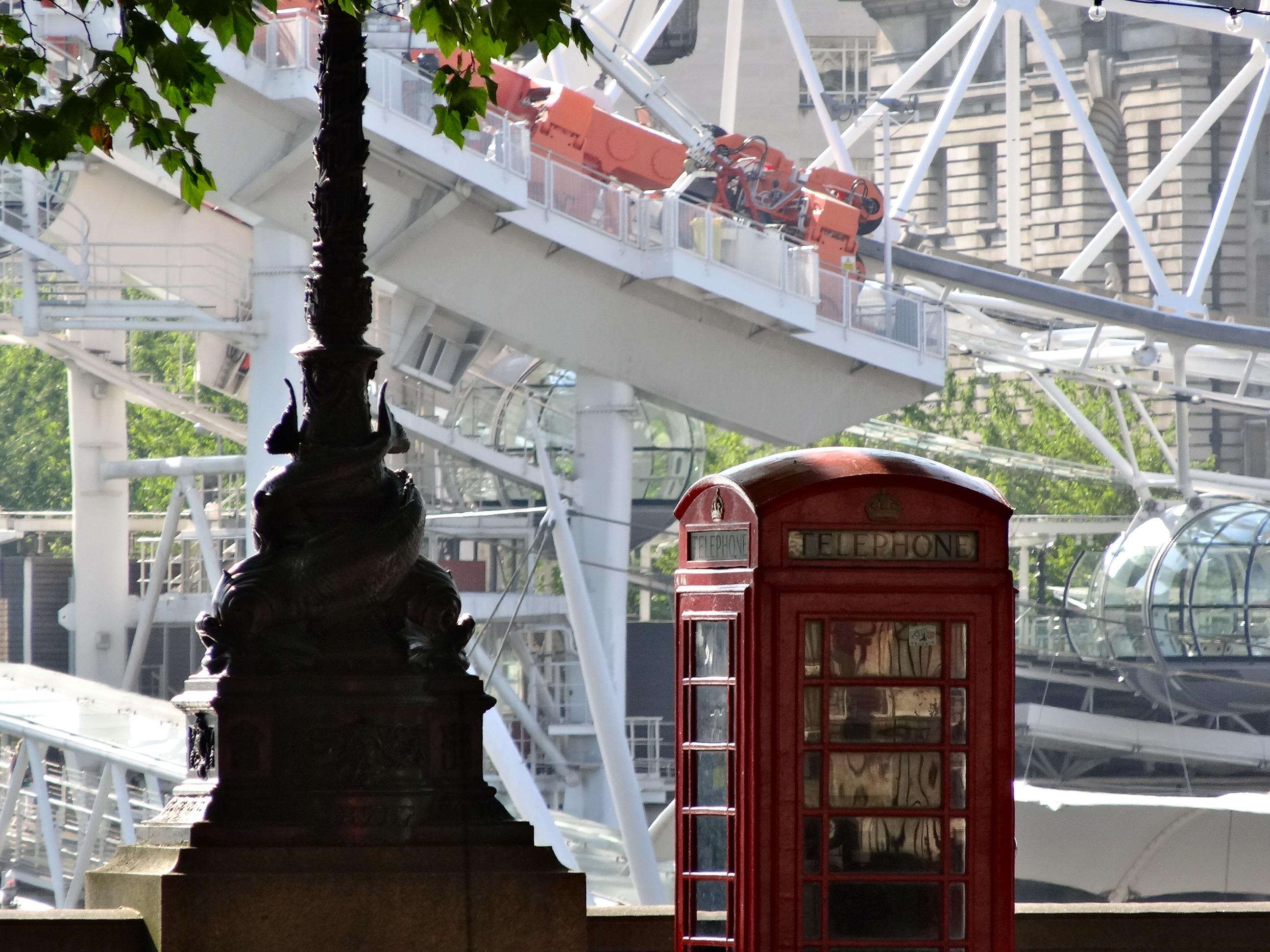
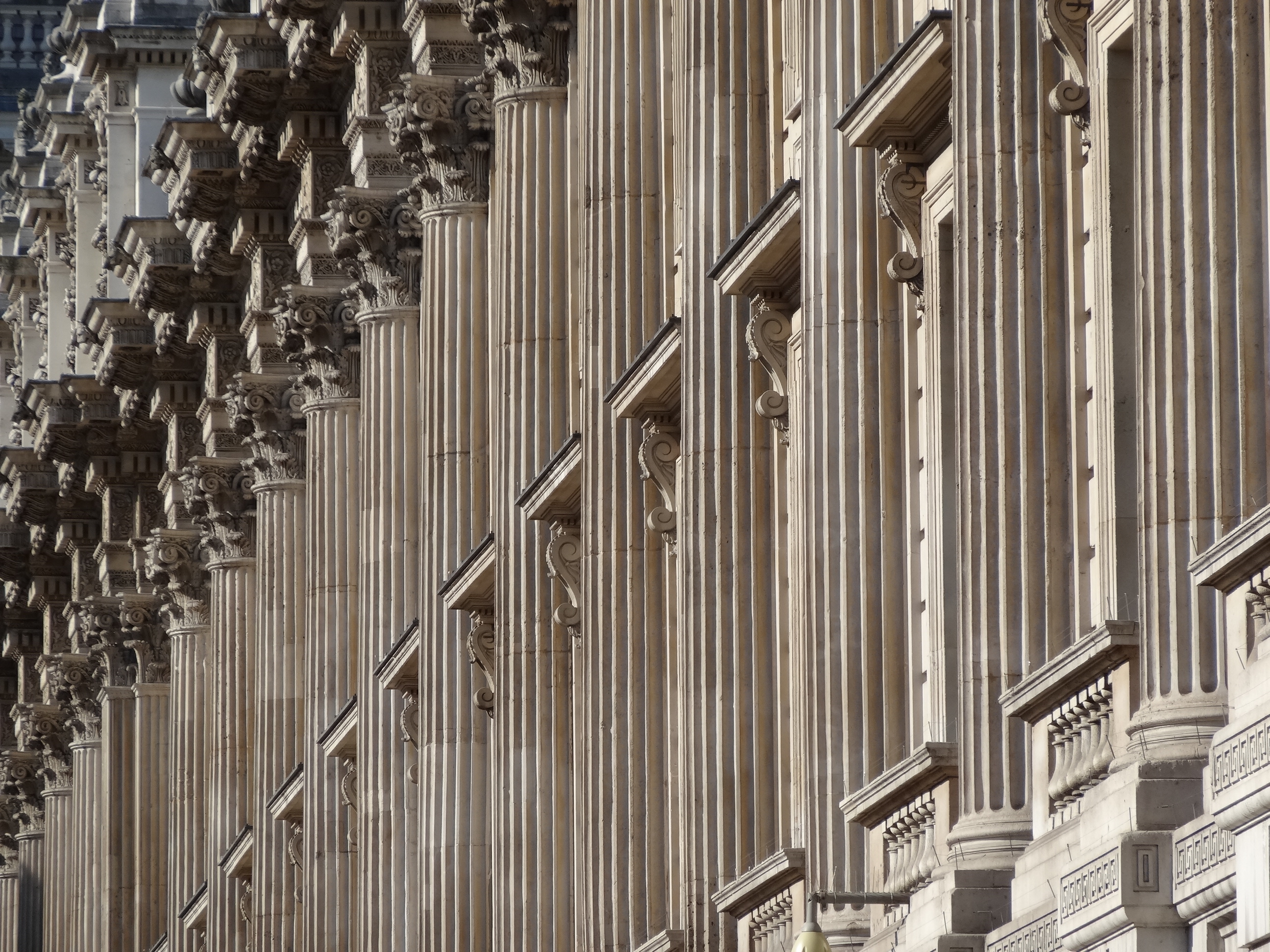
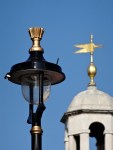
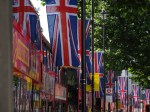
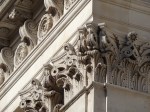
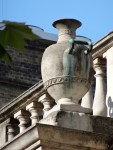
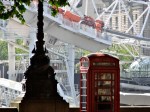
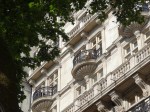
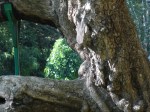
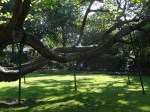
DSC05060 IMG_3390 DSC05046 DSC05064

As with so many of the benefits that come with summer, one of my greatest pleasures and equally my greatest of reliefs is to be able to hop off the tube a stop early when the weather is fine, and take the walk, from Embankment station on the River Thames, through the grand streets adjoining Whitehall, and amble along with my freshly made coffee to my place of work on Parliament Square. One of the best things about this walk is the route it takes me along, through the Whitehall gardens which adjoin the embankment, and continuing past some of the grandest of the Governmental buildings, including the infamous entrance to 10 Downing Street itself.

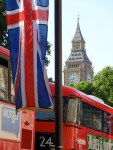
Despite taking the same route ever day, I never tire of the sites before me: the red phone boxes lining Whitehall, and the lines of red buses which so often pass along the same street; the highly ornamented lamp-posts and building facades; and the flowers and verdant grass in the river-side gardens, including the old twisted tree whose branches have to be held up by huge crutches reminiscent of a painting by Dali. The charm of these sights are, like so many things, increased in the sunshine, and as we have been having many  blissful sunny days in London recently, the photos which follow are a small selection of the shots I took one particular morning as I took my usual stroll to work; coffee in hand, and this time my camera in the other. 

All photos and written content are strictly the copyright of Nicholas de Lacy-Brown © 2013 and The Daily Norm. All rights are reserved. Unauthorized use and/or duplication of the material, whether written work, photography or artwork, included within The Daily Norm without express and written permission from The Daily Norm’s author and/or owner is strictly prohibited. 

Carl Randall steals the BP Portrait Show

Like so many of these annual open-submission art prizes, the annual BP sponsored National Portrait Gallery BP Portrait Award is very often a bit samey. Each year you get the same collection of oversized hyper-realistic magnified photo-like portraits, showing a person’s every vein and blood vessel, the sparkle in their eye and the grey in their hair. While these works undoubtedly demonstrate an often astonishing skill for painting photographically, the same does not automatically equate to a work’s having any artistic merit. Is it original? Does its composition have the power to move or inspire? Is the sitter’s story told in some original or dynamic way? Give me the coarsely applied brush strokes and unrealistic green-tinted skin of a Van Gogh portrait any day. If a painting looks like a photo, then in my view it should remain a photo.

This year’s BP show has its fair share of these oversized gormless faces filling the walls in all their unappetising detail, as well as a few rather questionable works – the kind which have been executed so badly that the old “my child could have done that” exasperated statement seems a little inadequate. But happily, this year’s BP Award also offers up some truly ground breaking and original work, paintings whose execution is so accomplished that you find yourself staring closely to find a single line of these meticulously detailed works out of place; works which have been composed with such imagination, insight and at times humour, that the entire collection of the National Portrait Gallery should be bypassed before first indulging in these paintings.

Hakone (oil on canvas © Carl Randall. Reproduced with the kind permission of Carl Randall/ www.carlrandall.com)

Hakone (oil on canvas © Carl Randall. Reproduced with the kind permission of Carl Randall)

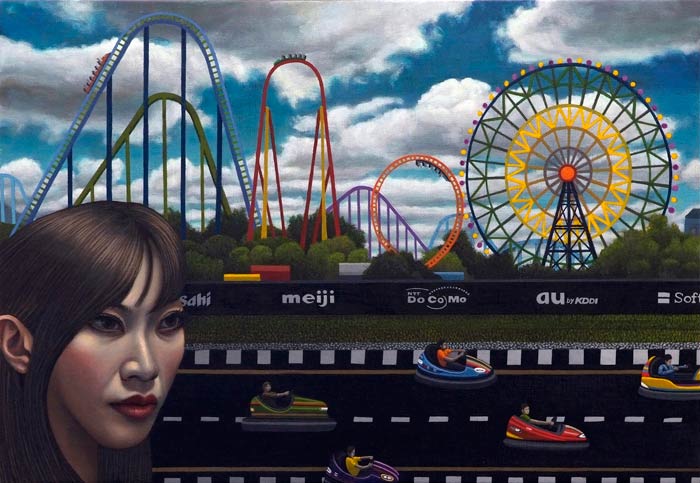
Amusement Park (oil on canvas © Carl Randall. Reproduced with the kind permission of Carl Randall/ www.carlrandall.com)

Amusement Park (oil on canvas © Carl Randall. Reproduced with the kind permission of Carl Randall)

Sushi (oil on canvas © Carl Randall. Reproduced with the kind permission of Carl Randall/ www.carlrandall.com)

Sushi (oil on canvas © Carl Randall. Reproduced with the kind permission of Carl Randall)

I am talking about the works of Carl Randall, a British born and trained artist, but whose work is so immersed in Japanese culture, that my assumption for at least the first 10 minutes of being mesmerised by his works was that he originated from Japan. For despite his London Slade training, Randall took inspiration when spending time in Japan following his receipt of the prestigious Daiwa Anglo-Japanese Foundation scholarship which he won in 2003. This enabled him to continue his painting career in Tokyo, during which time he was selected to be artist in residence in Hiroshima city (to document survivors of the Atomic Bomb) and he was chosen to represent Japan as artist in residence at the 2007 Formula 1 Races. From there continued what is quite evidently a love affair with modern Japanese culture, which he has since captured in multiple brilliant canvases and sketches which show Japan in all its quirky, colourful and inimitable character.

Shoe Shop (oil on canvas © Carl Randall. Reproduced with the kind permission of Carl Randall/ www.carlrandall.com)

Shoe Shop (oil on canvas © Carl Randall. Reproduced with the kind permission of Carl Randall)

Fireflies (oil on canvas © Carl Randall. Reproduced with the kind permission of Carl Randall/ www.carlrandall.com)

Fireflies (oil on canvas © Carl Randall. Reproduced with the kind permission of Carl Randall)

Electric Tokyo (oil on canvas © Carl Randall. Reproduced with the kind permission of Carl Randall/ www.carlrandall.com)

Electric Tokyo (oil on canvas © Carl Randall. Reproduced with the kind permission of Carl Randall)

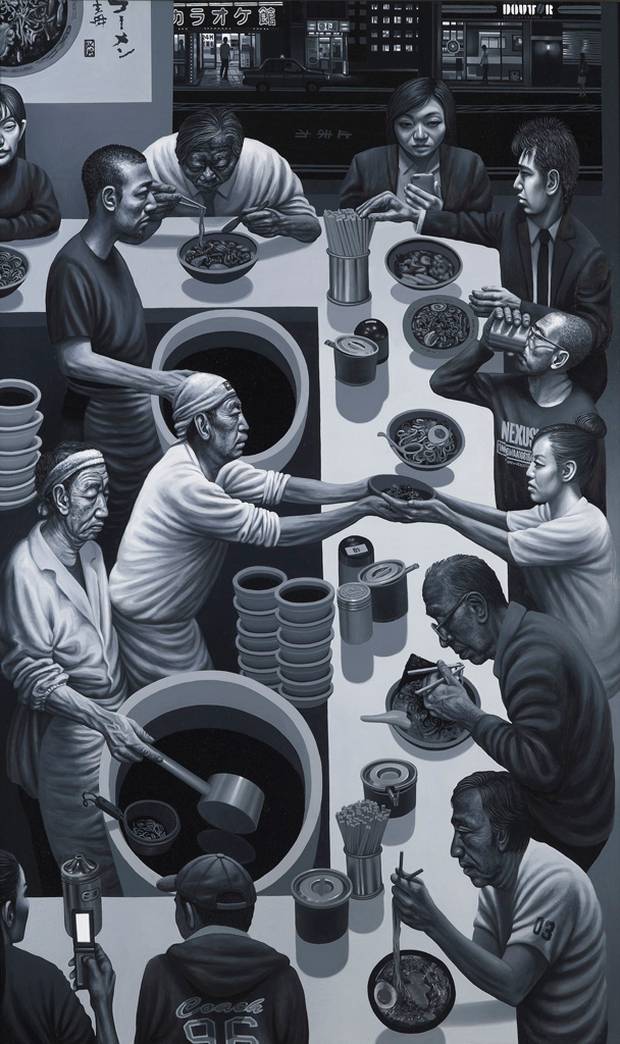
I was first acquainted with Randall’s work at last year’s BP Portrait Award, when his black and white painting of some glum-faced melancholic city residents sitting up at a sushi-bar on a commonplace working day (Mr.Kitazawa’s Noodle Bar) won him the BP 2012 Travel Award. This enabled Randall to return to Japan, and undertake a new artistic adventure, painting a new collection entitled ‘In the footsteps of Hiroshige: Portraits of Modern Japan’, which are exhibited at this year’s show.

Mr Kitazawa's Noodle Bar (oil on canvas © Carl Randall)

Mr Kitazawa’s Noodle Bar (oil on canvas © Carl Randall)

I urge all those living in, and passing through London to head to the BP Portrait Award just to look at these brilliant paintings which are both evocative of modern Japan, but also verge on the slightly surreal and idealistic, a sense captured by Randall’s portrayal of slightly deformed head shapes and frequently distorted proportions, as well as his use of vivid colouration and quixotic backdrops. This for me produces the perfect combination of compositional originality and skillful figurative narration. Some, like Randall’s cerulean-coloured Onsen almost remind me of Hockney but with, dare I say it, a more refined execution and altogether superior finish, while his homage to sumo wrestling (Sumo) contains an almost parodied exploration of light and shadow, the likes of which was so central to the atmosphere created in George Bellows’ boxing works, recently shown at the Royal Academy.

This slideshow requires JavaScript.

Photo-realistic, boring, overly magnified these are not – they are true art to my mind – portraiture that tells a real story beyond two eyes, a nose and a mouth. I truly hope that Carl Randall represents the future of British portraiture, and that more works like his will fill the BP Portrait Award in the future.

Shinjuku (oil on canvas © Carl Randall. Reproduced with the kind permission of Carl Randall/ www.carlrandall.com)

Shinjuku (oil on canvas © Carl Randall. Reproduced with the kind permission of Carl Randall)

The BP Portrait Award is showing at London’s National Portrait Gallery and entry is free. It runs until the 15 September 2013 before touring to the Aberdeen Art gallery from 2 November 2013 to 1 February 2014, followed by the Wolverhampton Art Gallery from 3 March to 14 June 2014.

Carl Randall’s website is well worth a visit – also check out the “Japan Portraits” documentary which provides a fascinating insight into the artist in action. You can also find Carl on facebook and twitter. I would finally recommend the superb book Carl Randall: Japan Portraits which is available from the NPG bookshop.

All images are reproduced from http://www.carlrandall.com with the kind permission of Carl Randall