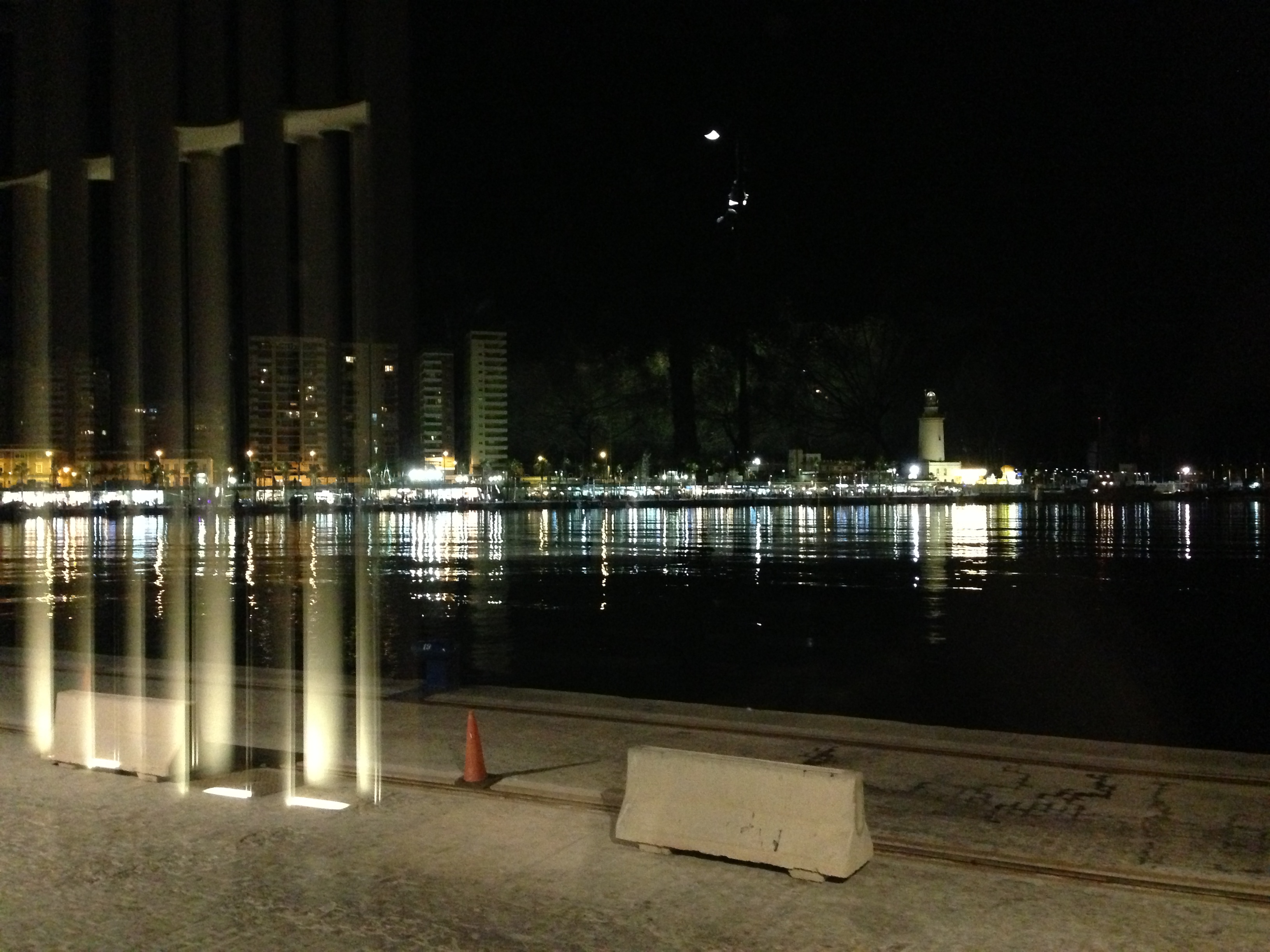
Skip to content

Posts tagged ‘Art’

Málaga | Part 2 – The Jungle and the Genius

It is said that Henri Rousseau, the post-impressionist famous for painting lush jungle scenes complete with hunting lions, terrified tigers and monkeys feasting off tropical fruits, never actually went to the jungle. Rather he took his inspiration from the plentiful species of tropical plants kept in greenhouses at the Jardins des Plantes in Paris. Yet had Rousseau travelled a little further south, to his neighbouring Spain and down to the Mediterranean city of Málaga, he might have stumbled there upon a jungle paradise so profuse in its verdant abundance despite being located right at the heart of the urban city, that he might truly have considered himself to have entered Amazonia.

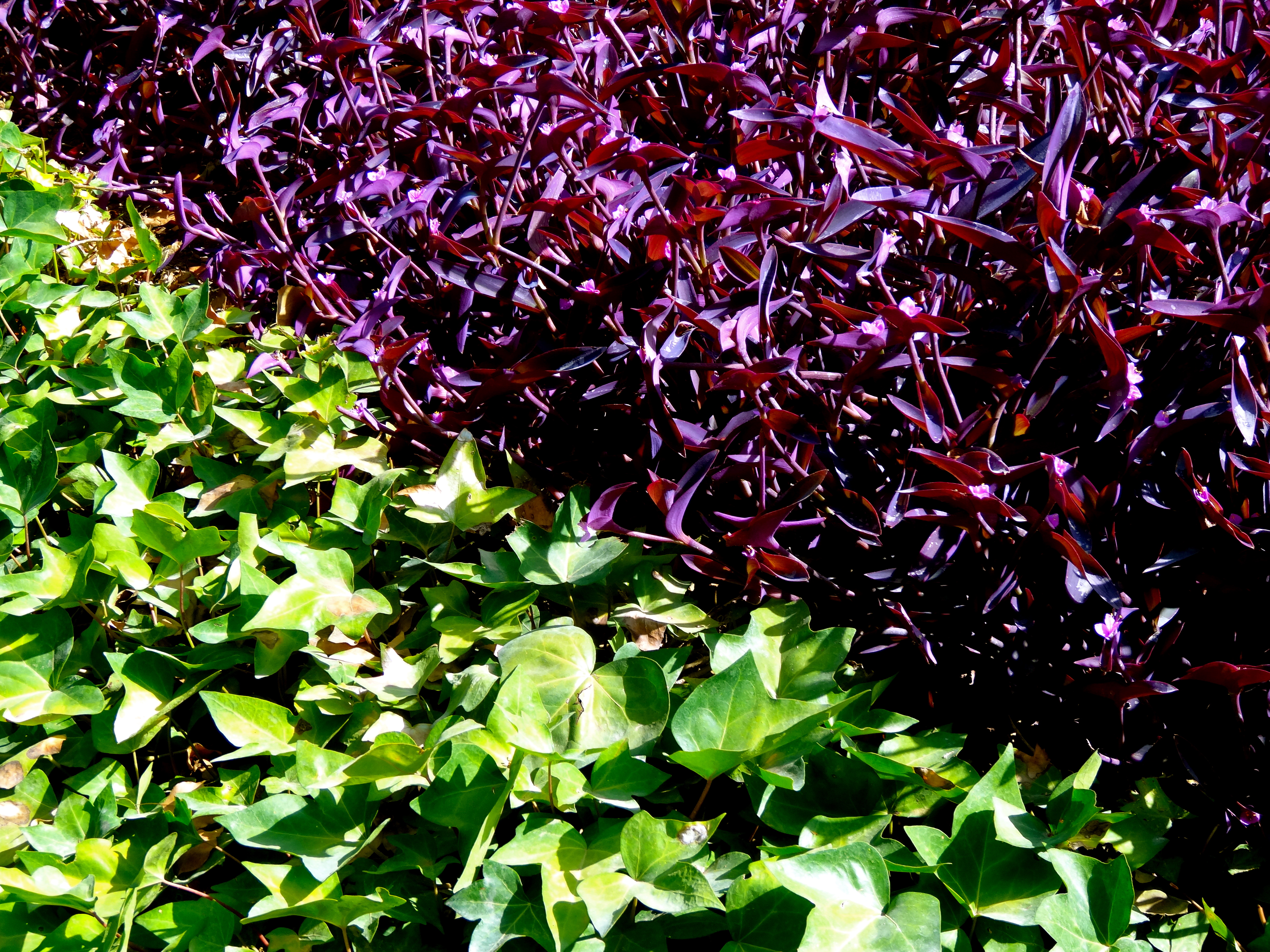
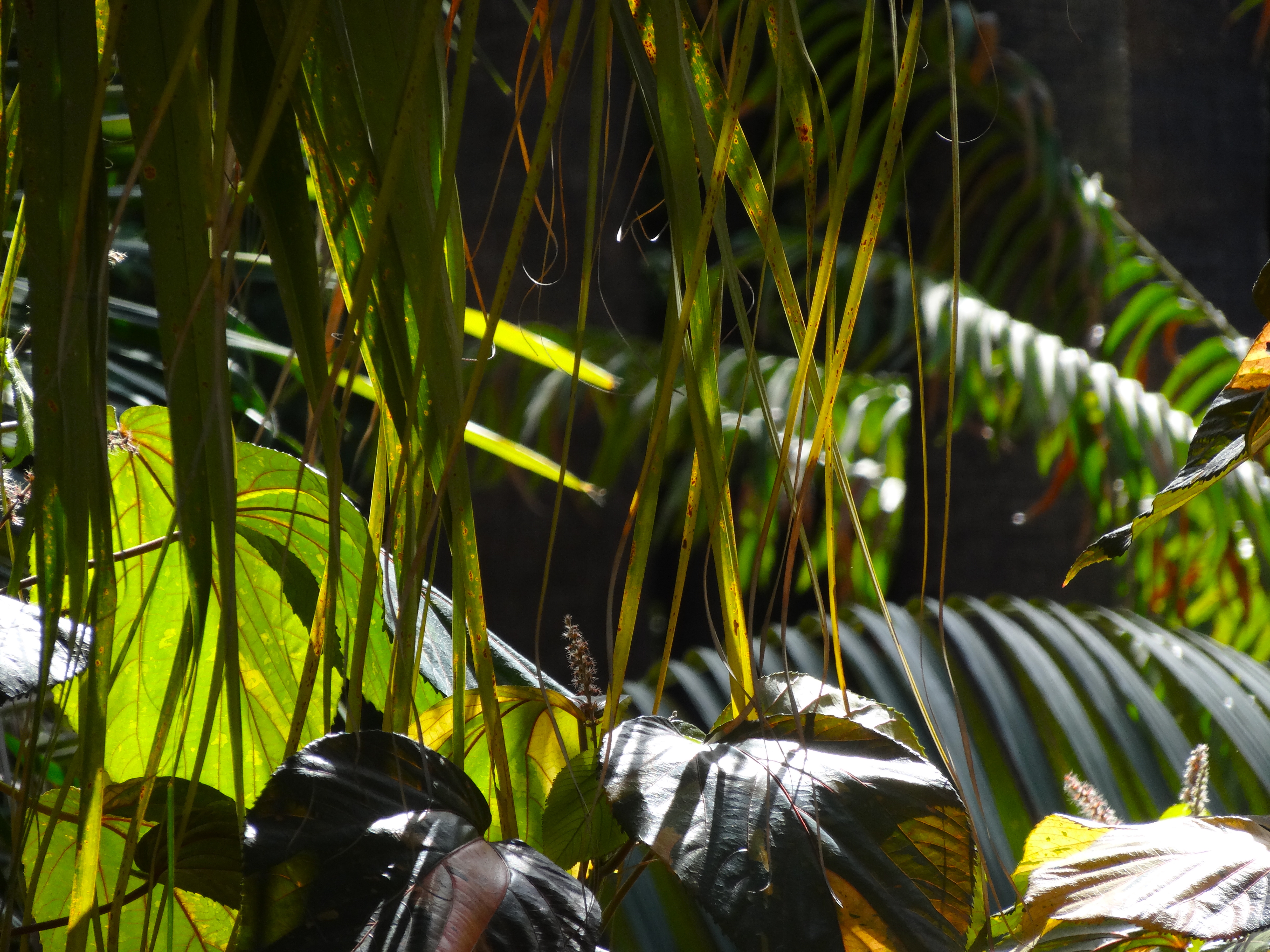
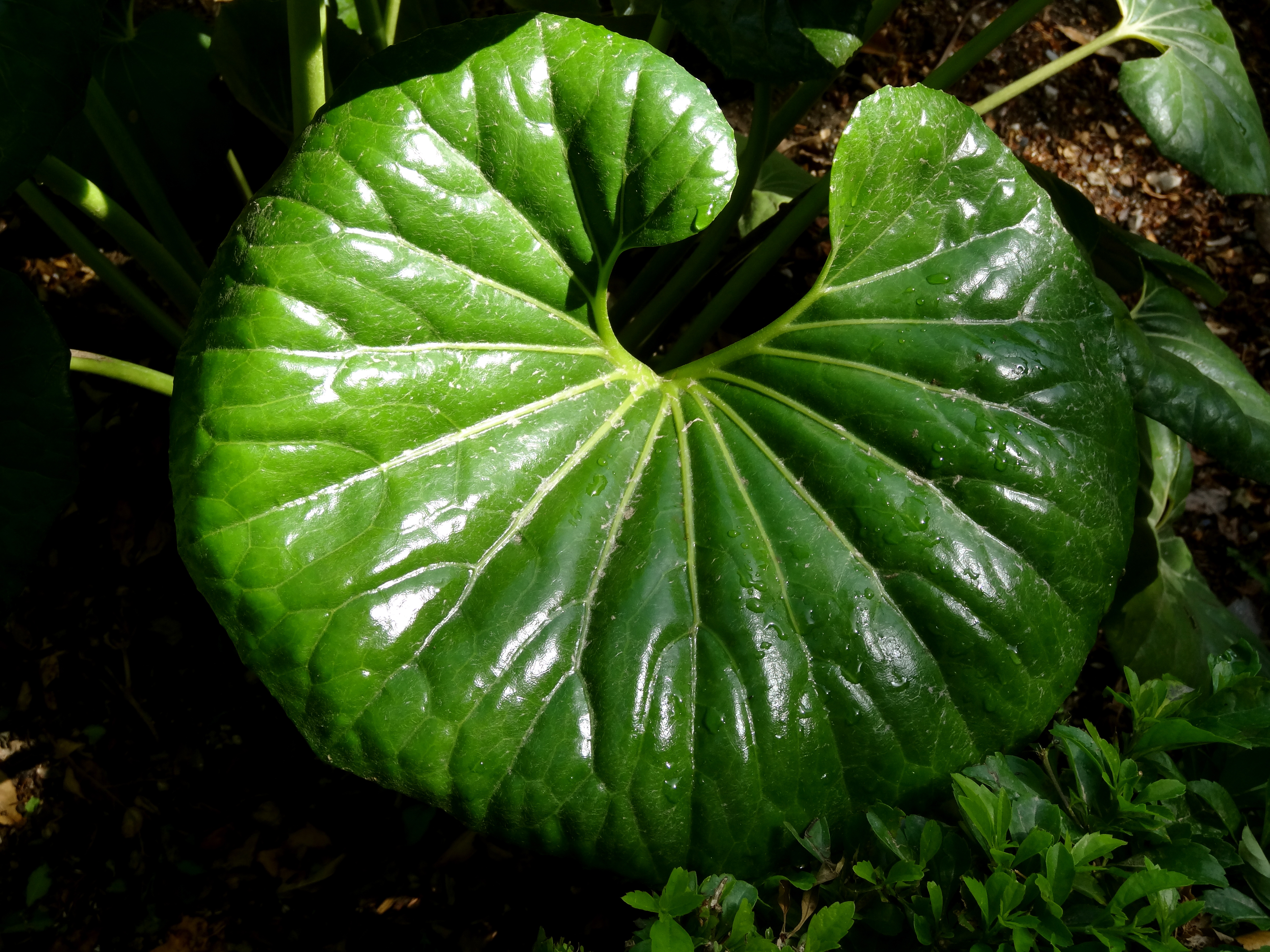
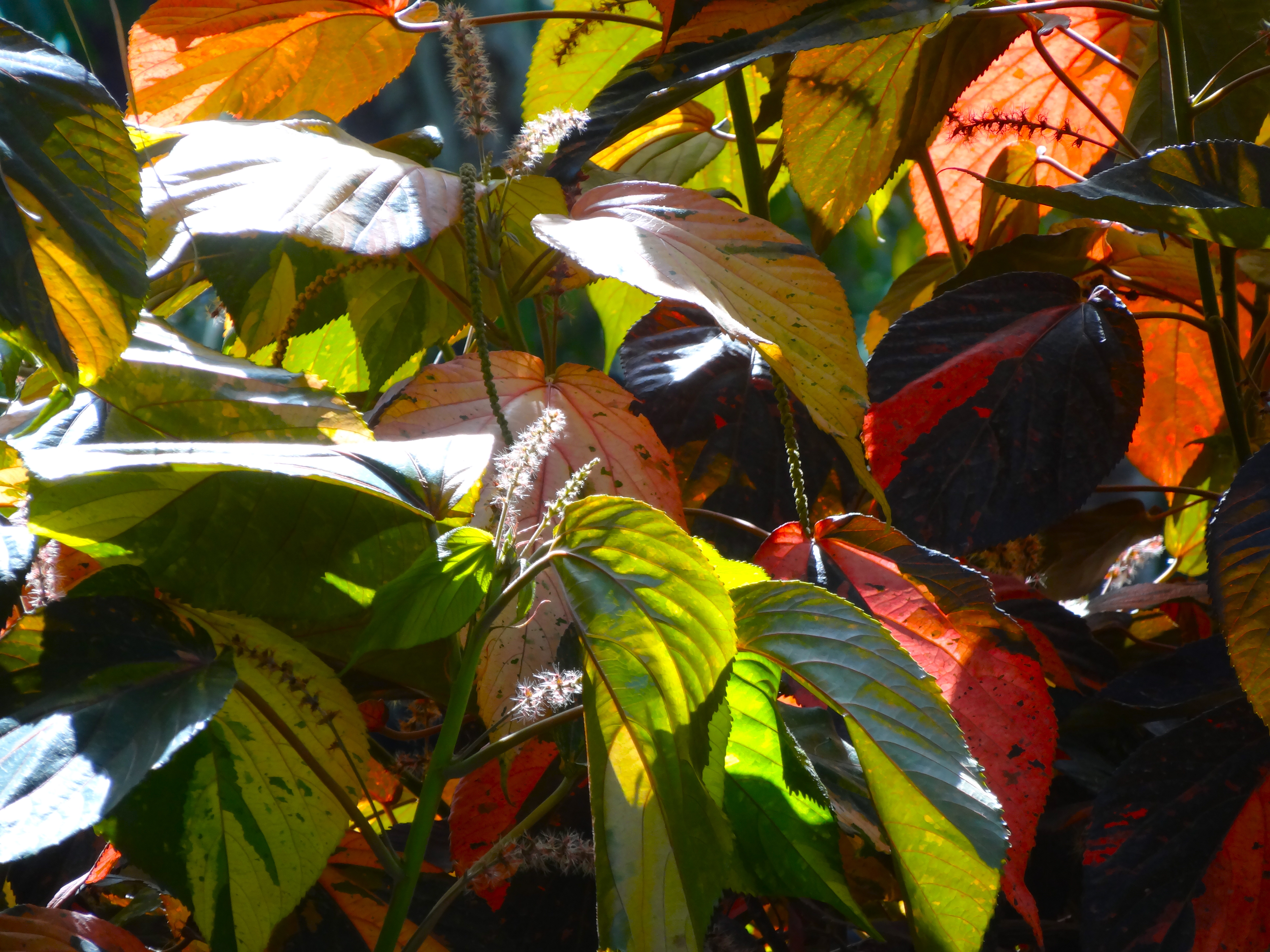
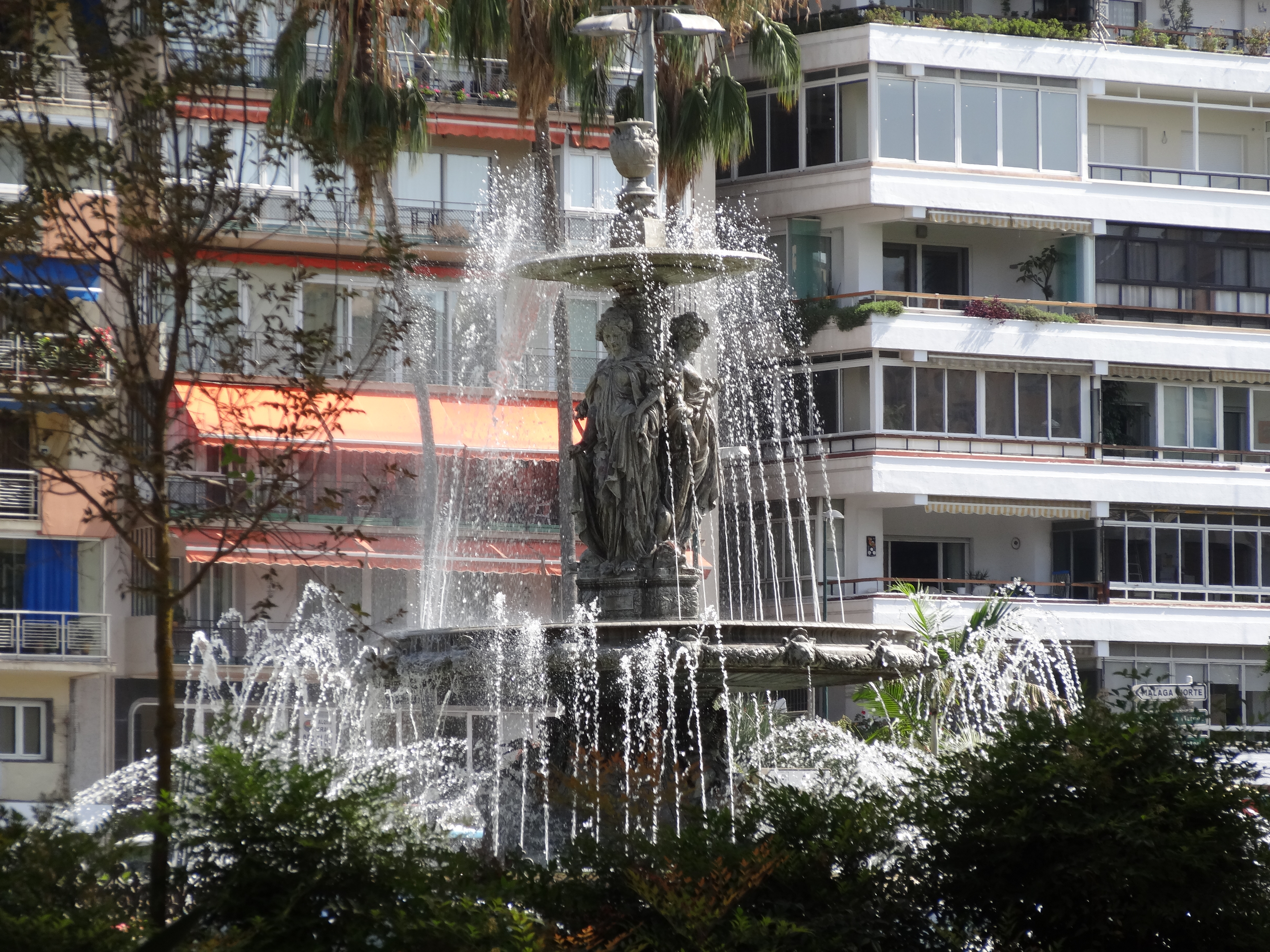
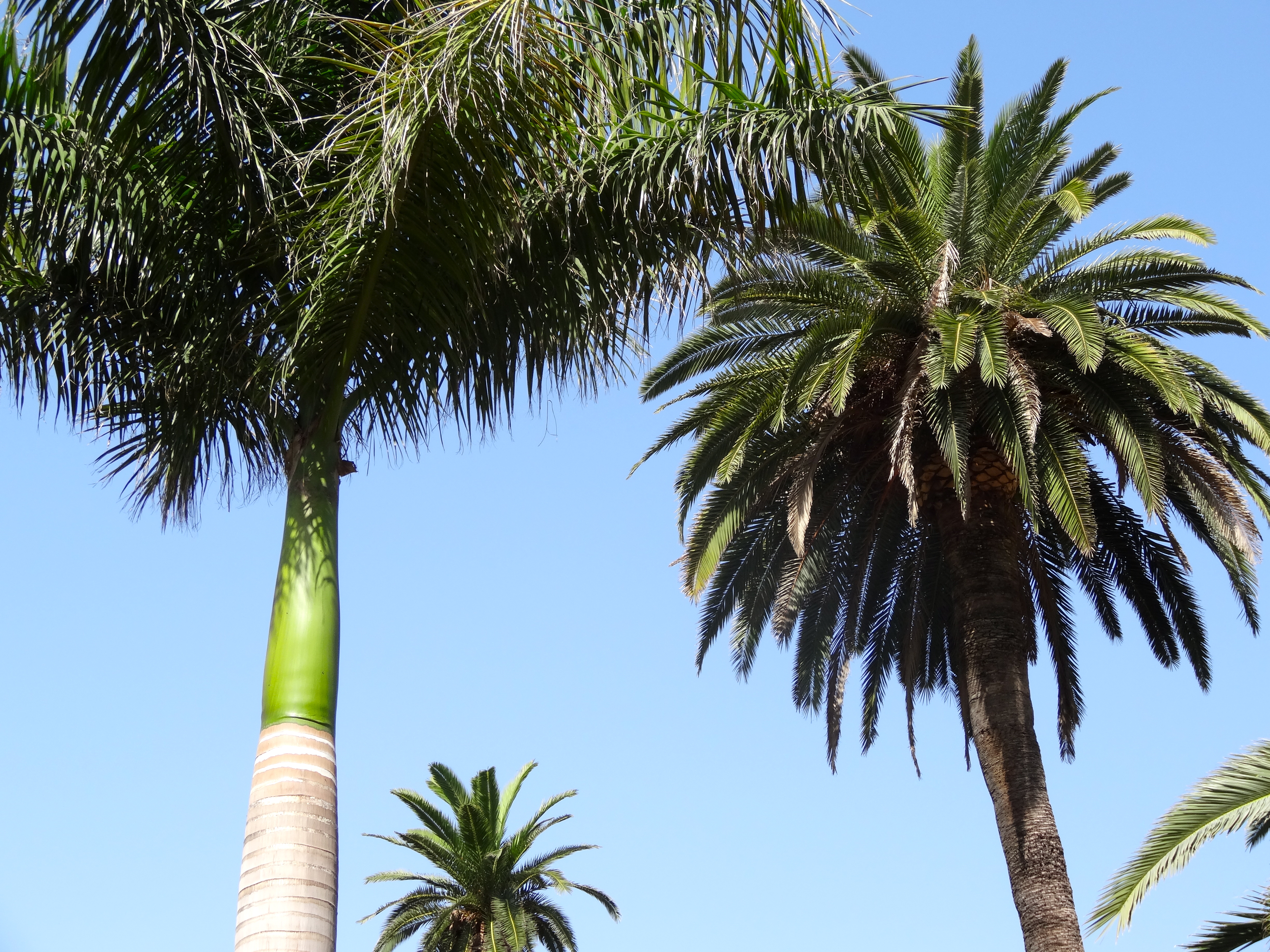
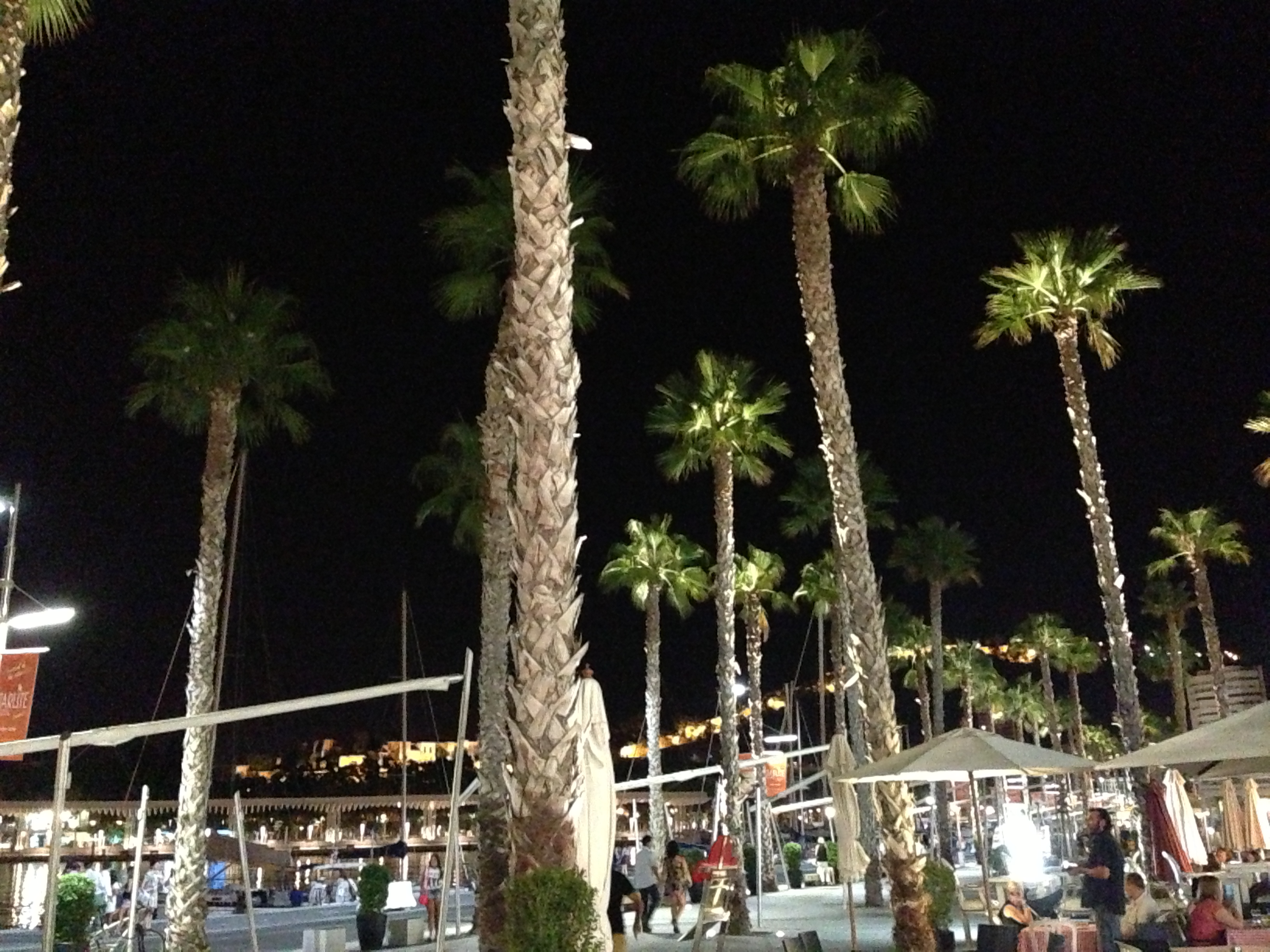
Yes, my thoughts could not help but stray to Rousseau, one of my favourite of all artists, as we strolled – my partner and I – through Málaga’s impressive centre at the start of our second day in the city, discovering there this inexhaustible cornucopia of botanical ravishment running alongside the port on one side, and the city’s main artery – the aptly named Paseo del Parque – on the other. So profuse in their scale and variety, palms and flowers, ferns and fronts burst from flower beds like an unplanned jungle paradise, with rich coloured leaves glowing red and pink and a vibrant lime green against the morning sunshine, while winding paths cutting through overhanging boughs and under a shelter of richly layered leafy canopy made for a walk which was both tranquil and invigorating.

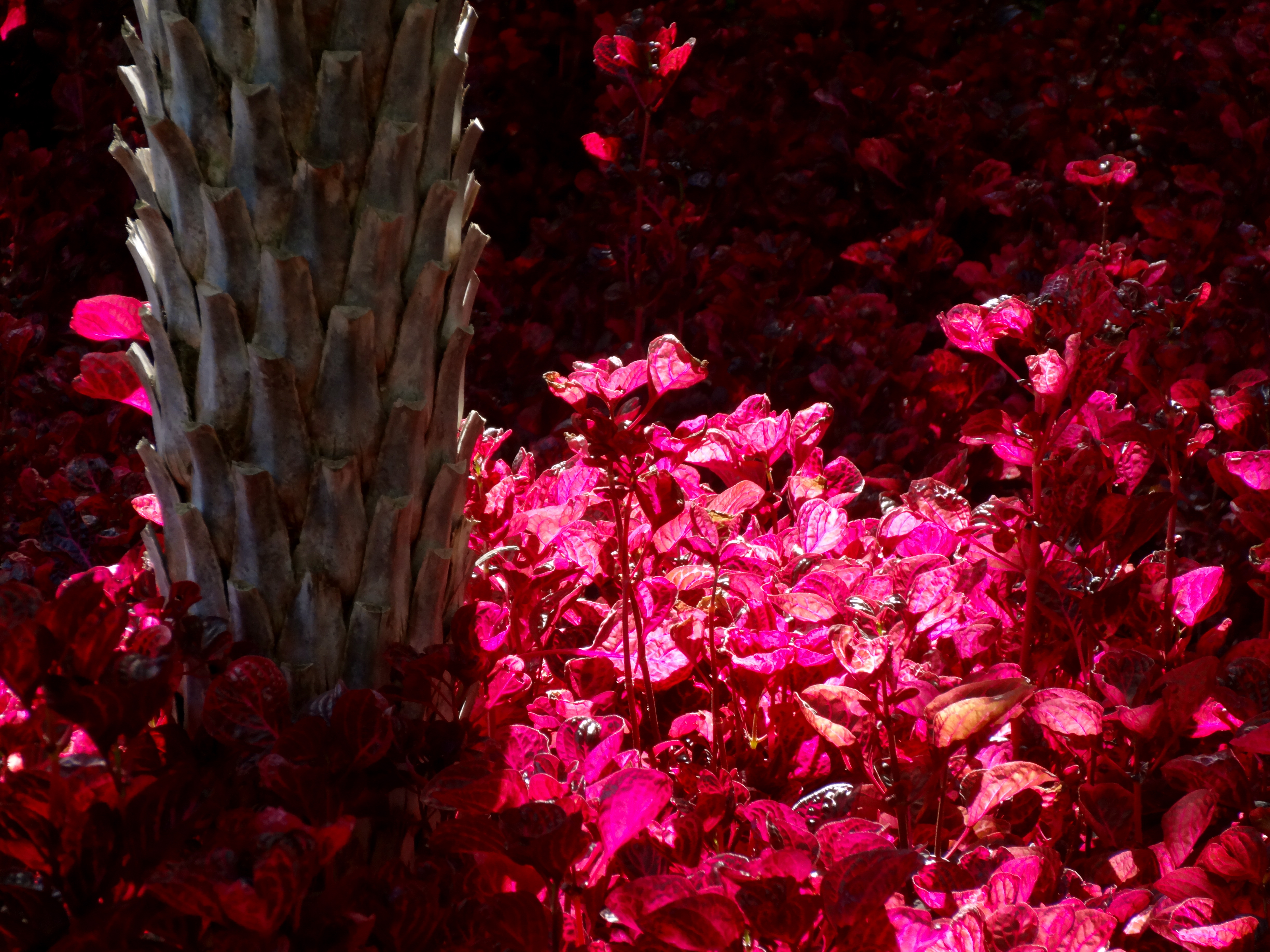
DSC06047 DSC06063 DSC06036 DSC06053 DSC06107 DSC06073 DSC06044 DSC06033 DSC06057 DSC06046 DSC06049

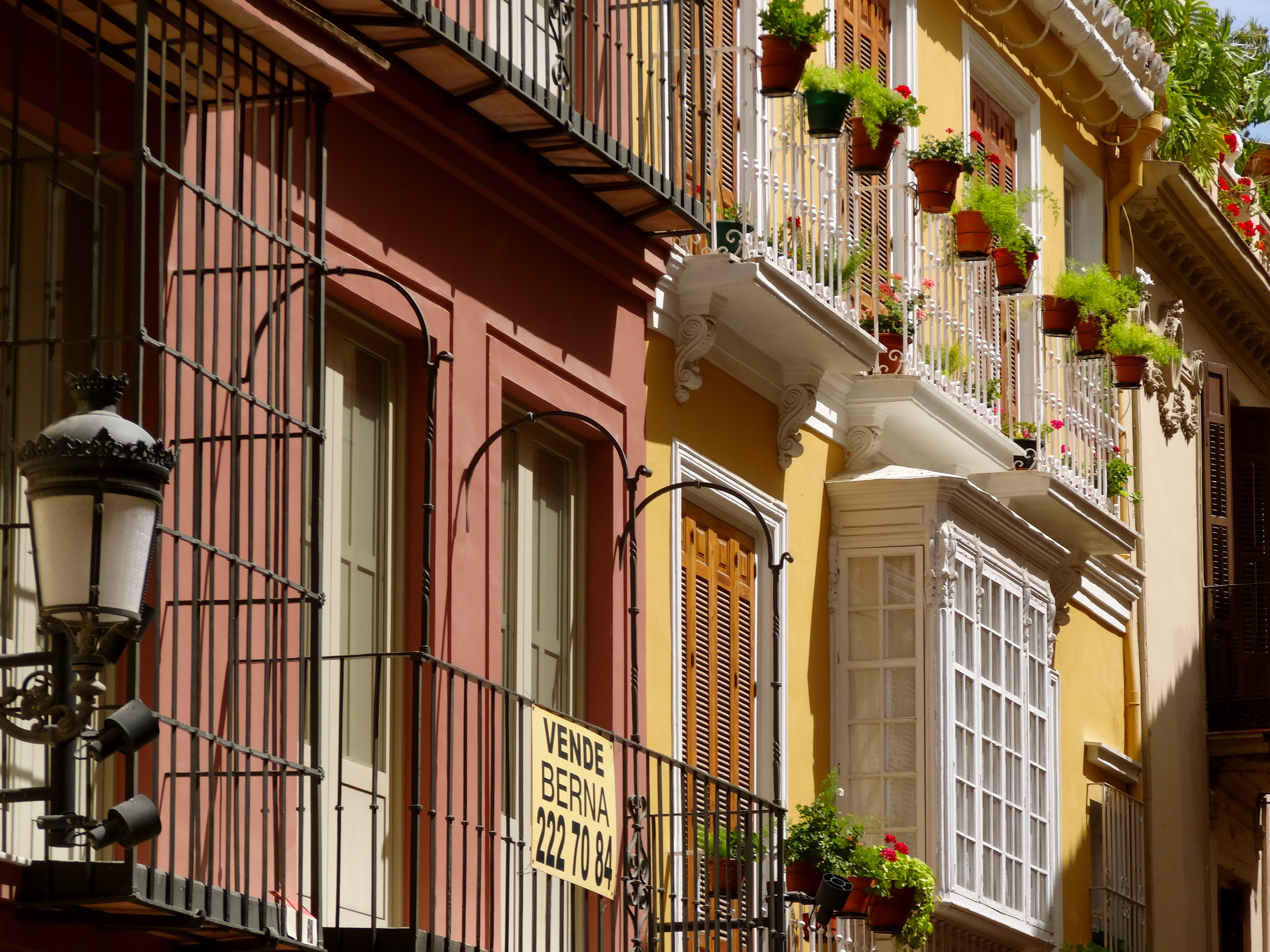
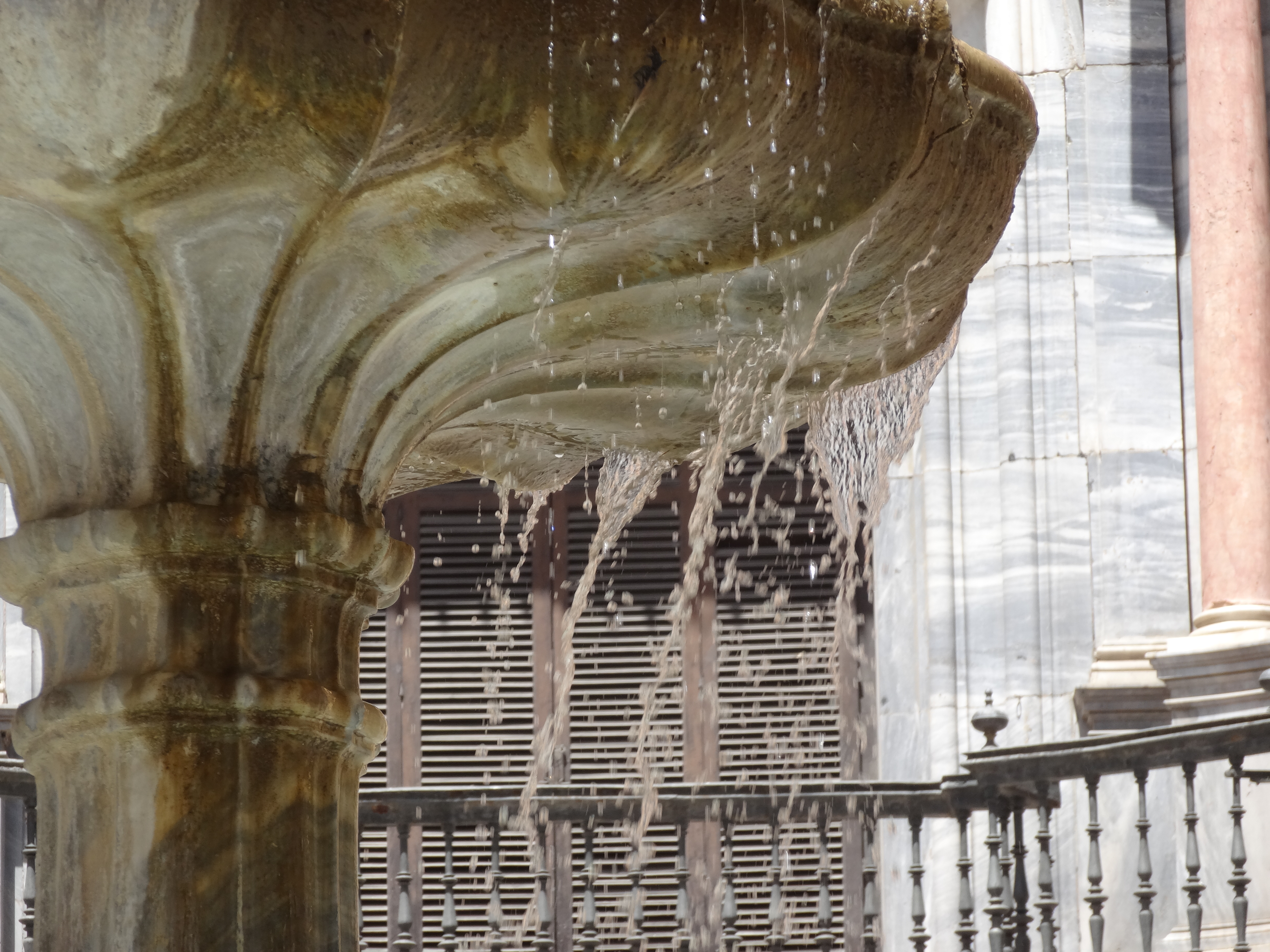
I could go on about that park all day, and I could show you so many more photos of the rich variety of plant life than I have featured on this page. Needless to say, the park – a free-to-access world of botanical discovery – is but one further feature which makes a visit to Málaga such a satisfying experience. For beyond the impressive galleries, the museums and the imposing cathedral lies a city whose natural landscape benefits from a glittering coastline, a wide sandy beach and a flashy new marina, as well as a backdrop of undulating mountains and a city centre bursting with plant life. And beyond the greenery, a city of elegant narrow winding streets and broad boulevards lined with shiny marble pavements has developed, with large squares and shops, cafes and restaurants to rival any of Spain’s more prominent cities.

DSC06100 DSC06088 DSC06110 DSC06077 DSC06104 DSC06076DSC06097

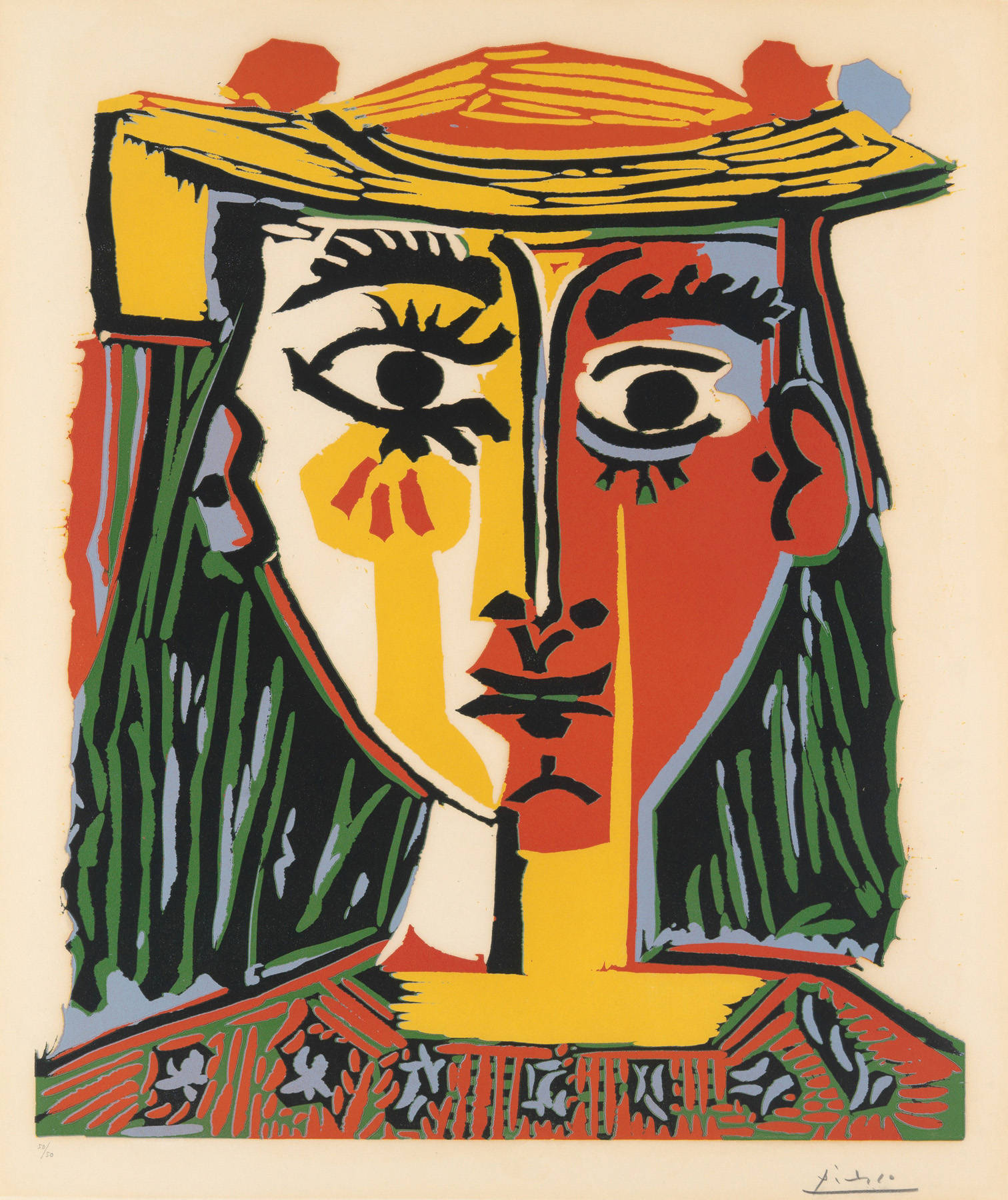
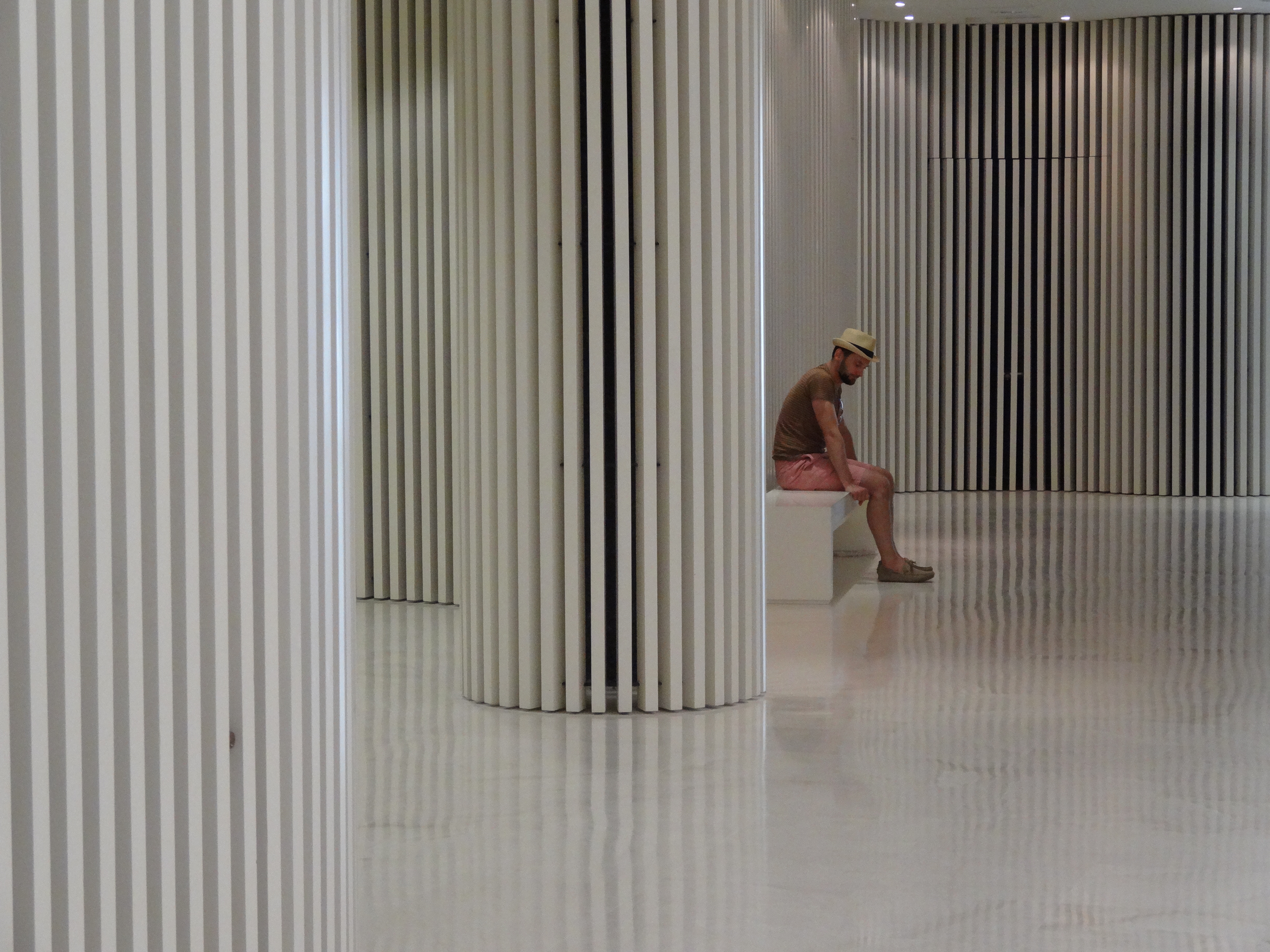
But there’s no denying that for all the history, the seaside location and the jungle which so entranced me, Málaga is perhaps best known for being the birthplace of perhaps the most famous artist of all times – the breaker of faces, father of cubism and all round genius Pablo Picasso. And unsurprisingly, the city’s superb Museo Picasso Málaga remains the number one attraction of the city. Located a mere block away from the cathedral, the museum is located in a former palace which has been so sympathetically but innovatively modernised to house the museum that I love visiting just to see the building alone. With its all white walls, preserved moorish ceilings, and groups of precisely aligned red geraniums all housed in black ceramic pots, it is the height of architectural chic, and the perfect backdrop to Picasso’s multi-coloured works.

The chic gardens of the Museo Picasso Málaga
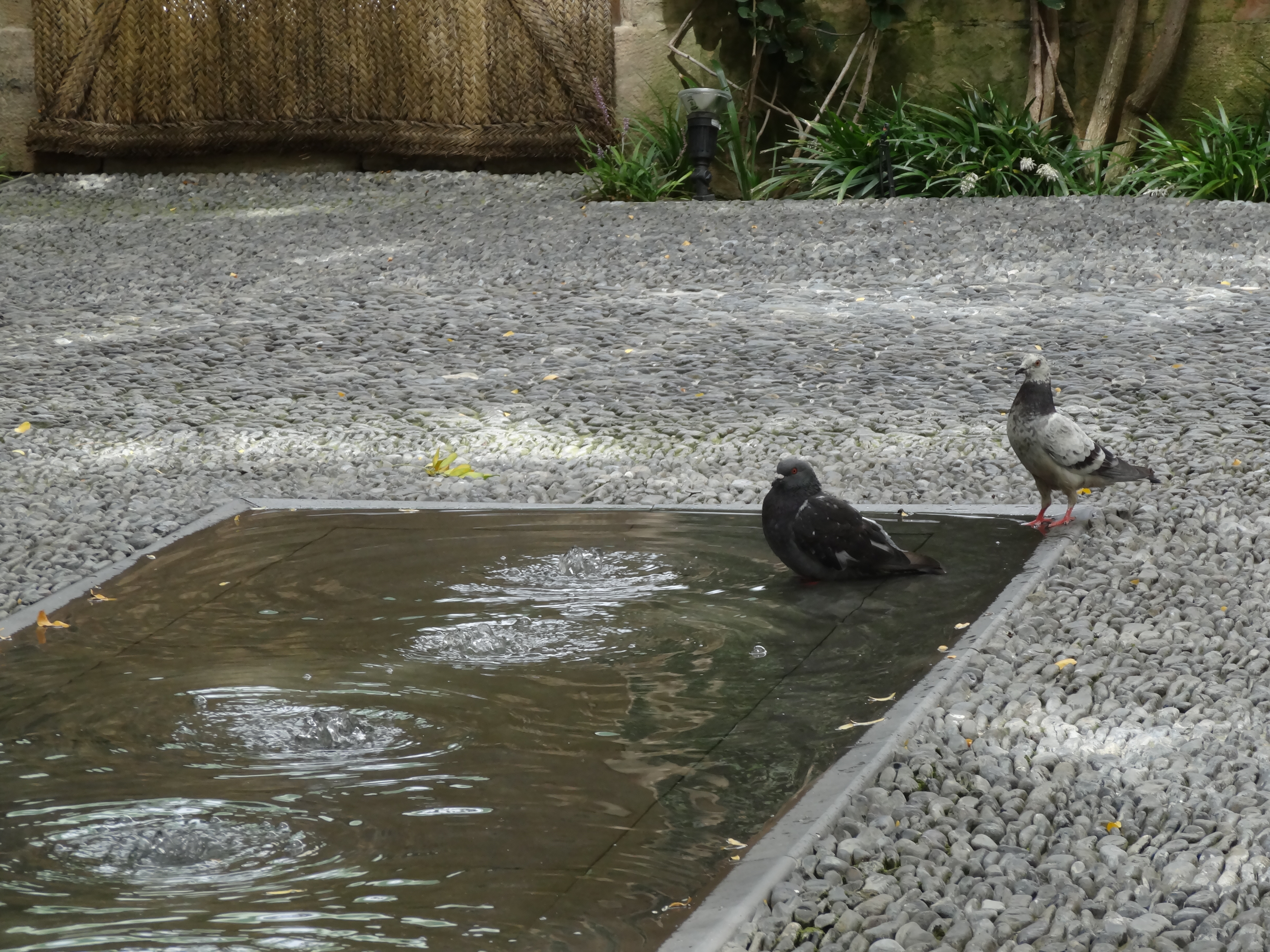
DSC06149 DSC06142 DSC06158 DSC06143

Although I must have been to the museum at least 3 times before, I could not resist returning on this trip to Málaga, not only to indulge in the beauty of the museum’s surrounds, but also to enjoy the temporary shows which have been organised in celebration of the museum’s 10th anniversary. The first was an exhibition dedicated to Picasso’s depiction of family – a show which proved to be comprehensive in scale and offered an expansive view across the whole of Picasso’s career, as his depictions of family and friends remained a consistently prominent theme running throughout his art, but one which became subjected to his ever changing styles, from fine art figuration, to cubism, from blue period to pink, and finally to the fragmented faces and naive representation for which Picasso is now most famous.
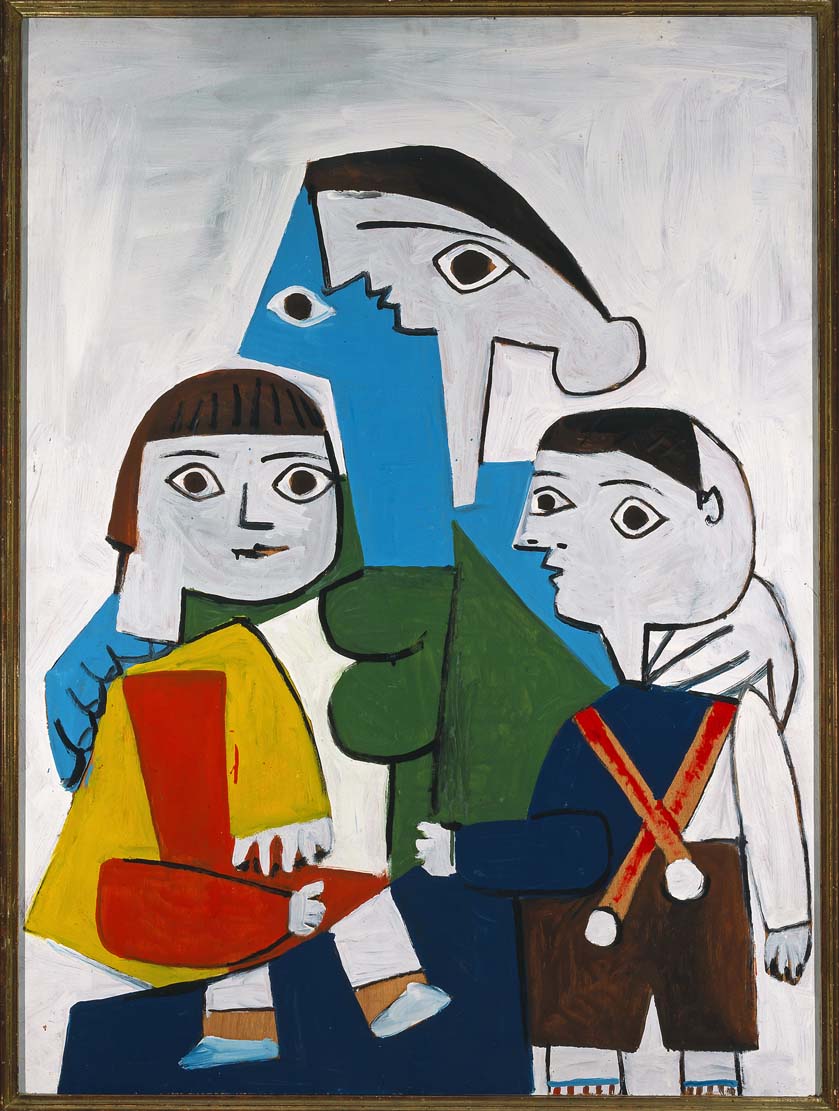
media-fotos-Maternidad sobre fondo blanco ampliada 20120819picasso-60 picasso-met-2010-32

The second temporary exhibition had very little to do with Picasso at all – rather concentrating on the actor come photographer come artist come director Dennis Hopper, who made for a superbly curated, dynamic show which explored not just the persona of Hopper but also the time in which he lived through photographs of 60s America, through his association with revolutionary artists such as Andy Warhol and David Hockney, and through his collection and contribution to the pop art movement. A brilliant show and demonstration that the Picasso museum is not just a one-trick pony, but an important contributor to Málaga’s dynamic cultural landscape.

Dennis Hopper by Andy Warhol

Dennis Hopper by Andy Warhol

But what with the culture, the ever beckoning elegant streets, the vast parks and the long seaside paseos, the Picasso Museum pretty much marked the end of the road for us, as our feet throbbed and our energies became exhausted in the hot August heat. For only 40 minutes away by bus, Marbella again awaited, amid promises of lazy beach days, of mint tea in the garden under the perfumed jasmine tree, of painting in the afternoons and long seaside coffees in the morning, and of a little old town house which, for its proximity to the stunning city of Málaga alone, I feel very lucky to call home.

Málaga | Part 1 – Capital of Culture

Whether it’s because the city was recently working towards a bid for European Capital of Culture (which disappointingly, was won instead by San Sebastian in Spain’s North – not entirely sure why), or just because it was sick of being forever overshadowed by the glitz and glamour of Marbella to the West, and the popularity of tourist spots such as Nerja and Granada to the East, Málaga – the 6th biggest city in Spain and the most southern large city in Europe – has certainly upped its game of late. Following on from the introduction of the phenomenal Picasso museum a decade ago (Málaga is the artist’s birth-town), the city has gone on leaps and bounds to develop its cultural and leisure landscape, making it easily one of the most enriching and enjoyable places to visit in Southern Spain.

Asides from the Picasso Museum and a host of other novel museums dedicated to the likes of Flamenco, bull fighting and Semana Santa, Málaga also boasts two major archaeological treasures – the Moorish Alcazaba, whose walls crown one of the prominent hills encircling the city, and an excavated Roman Theatre. Its wide sandy beach is now accompanied by a brand new leisure port, following a huge reconstruction of the area in which an industrial marina has been transformed into a glitzy promenade boasting glass fronted boutiques and restaurants and a palm-lined avenue. And as for its art scene – well it’s alive and kicking, with the CAC Contemporary Art Museum showing some of the most prominent artists of the contemporary art world, and the latest and most exciting addition of all: the new Carmen Thyssen museum, an outpost of the world-famous Thyssen-Bornemisza Museum which is one of the “big three” art galleries (together with the Prado and the Reina Sofia) drawing art lovers in their millions to Madrid.

The elegant streets of Málaga

DSC06190 DSC05825 DSC05832 DSC06137 DSC06130

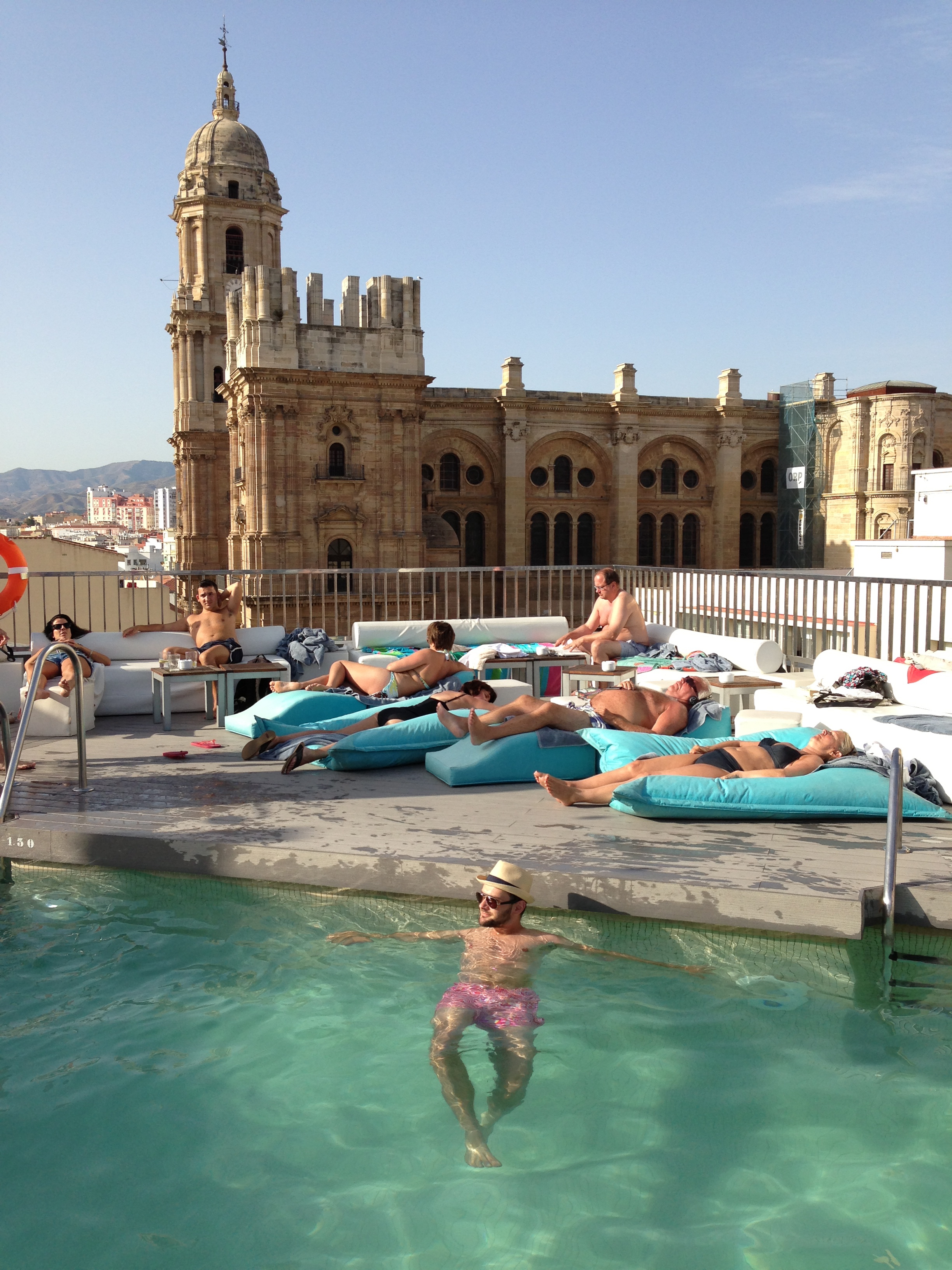
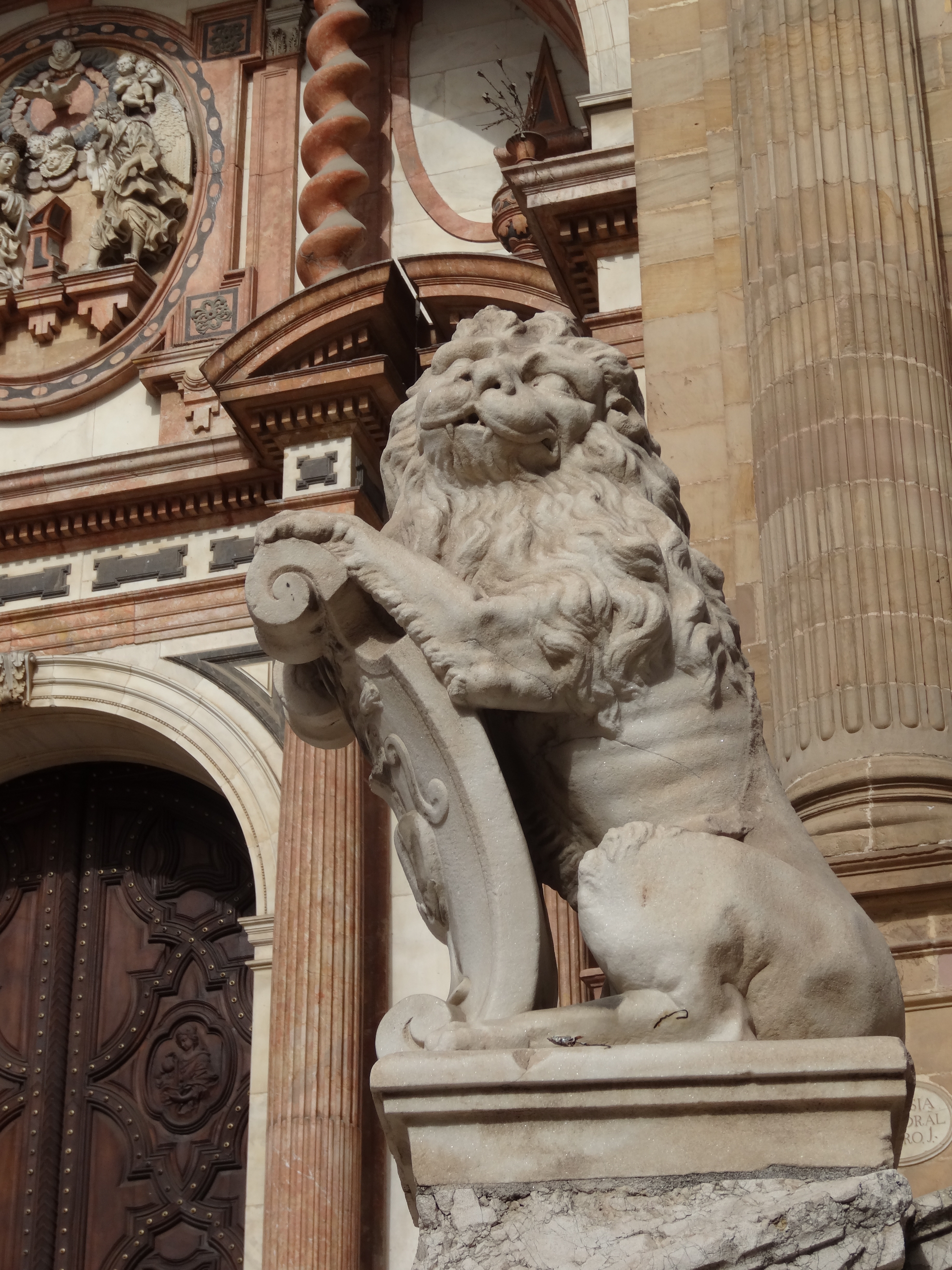
Having learnt that the Carmen Thyssen museum had now opened (it actually opened in 2011, but I was a bit slow in picking up on this), my partner and I were quick to arrange ourselves a little trip from Marbella to Málaga, leaving behind the beaches for a short immersion within Málaga’s cultural offerings. But what with the opening of the new port, and the attraction of Málaga’s elegant Modernista streets beckoning, we felt it only reasonable to turn our initial plans of a day trip into a one-night stay. And so it was that our trip to the city was enriched by the silky lining that only the comfort of a night in a splendid hotel can offer, comfort which comes no more so that at the hands of the Molina Lario Hotel which we made our home for the night, a newish hotel based in a hybrid renovation of modernist palace and brand new building, and which boasts a stunning rooftop pool with unbeatable views over Málaga’s “one-armed lady”: the Cathedral whose second bell tower was never finished owing to a lack of funds, and which today is the most famous icon of the city.

Now how about this for a pool with a view…

IMG_3705 DSC05953 DSC05890 DSC05956

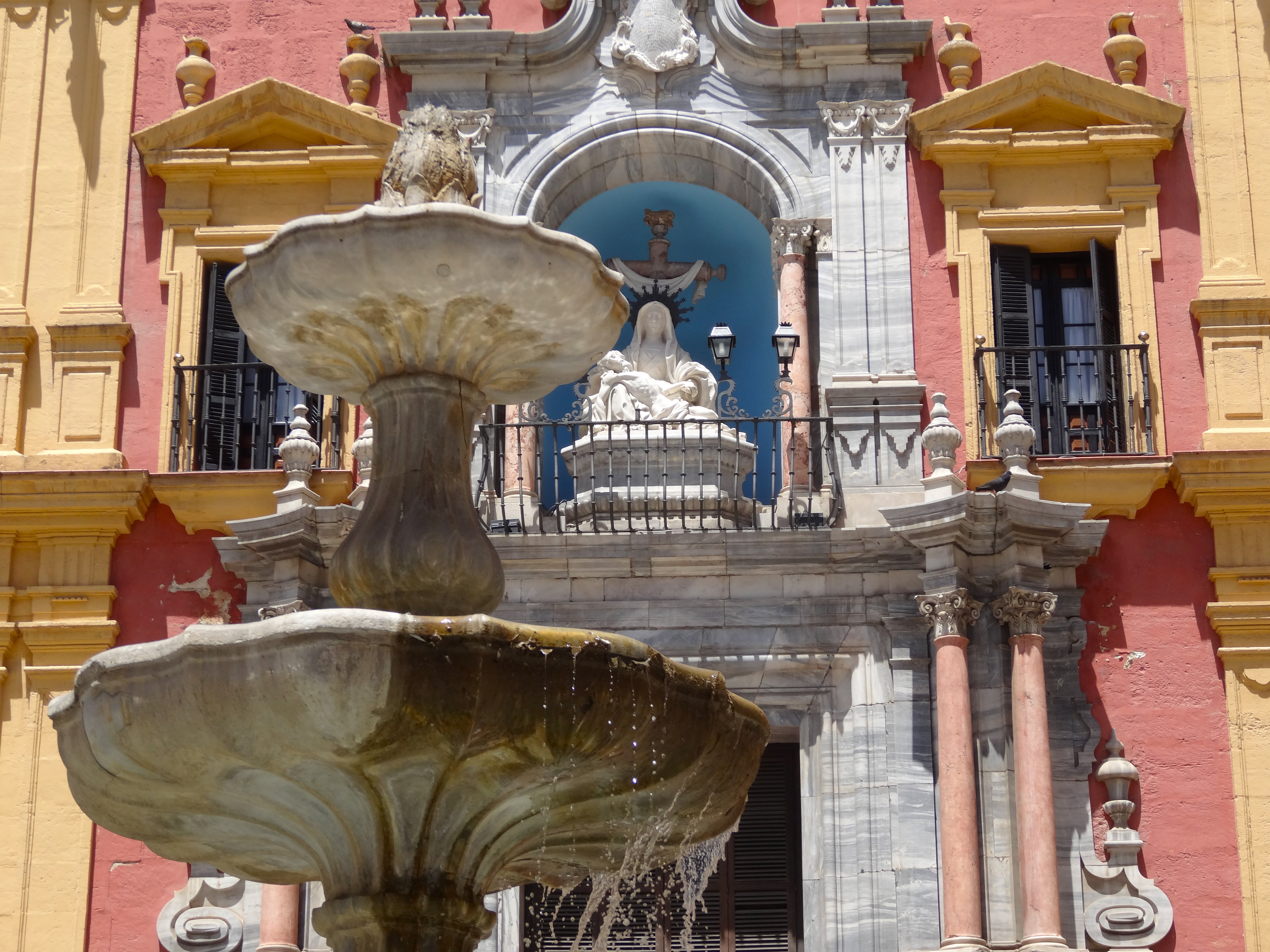
As the photos above will more than demonstrate, we certainly made the most of all that the hotel had to offer, and sipping wine on the pool side terrace overlooking a vast panorama of the city in the dying light of the day has to have been one of my highlights of the whole Spanish holiday. But what about that museum? Well once we had managed to pull ourselves away from the plentiful distractions which our hotel provided, we headed straight for the Thyssen, our passage being interrupted only once or twice by the pull of the beautiful Plaza del Obispo, whose iconic red and yellow Episcopal Palace and its viewpoint straight onto the façade of Málaga’s imposing Cathedral made a stop in the idyllic square for a glass of something ice cold and thirst quenching a practical prerequisite. But thanks to the Thyssen’s superb location, just west of the main Plaza de la Constitucion, we soon made it to this impressive new museum, whose architecture, based around the old Palacio de Vaillalon but benefiting from innovative new extensions is, in itself something to be admired before the collection is even surveyed.

The Plaza del Obispo

IMG_3653 DSC05758 DSC05757 DSC05766 DSC05853 DSC05762 IMG_3840

…and the Carmen Thyssen Museum

DSC05788 DSC05793 DSC05803 DSC05805

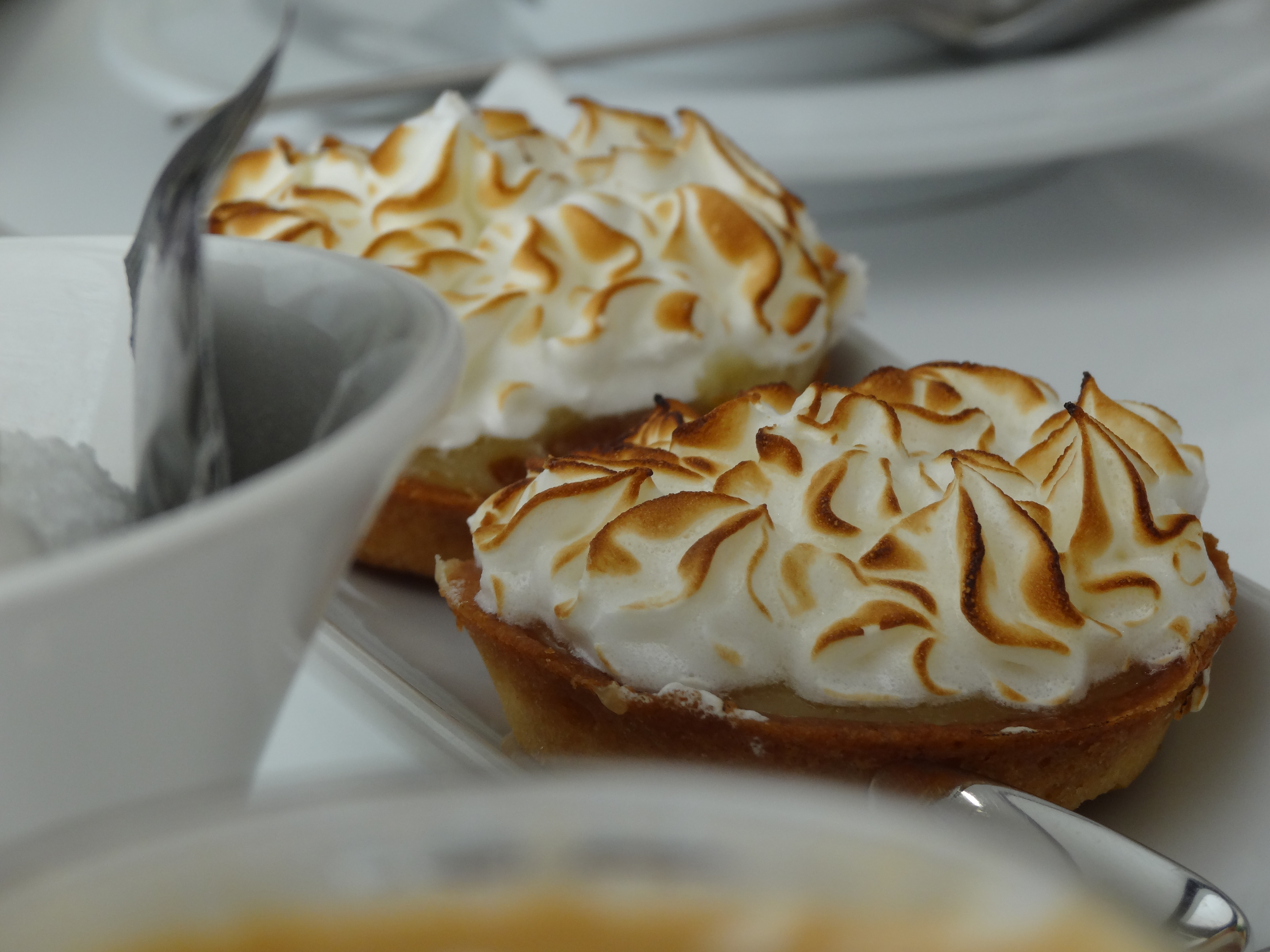
Having entered through the museum’s sun drenched traditional courtyard, and helped ourselves to a small cortado coffee and a miniature lemon meringue pie in the café, we slowly made our way around the museum’s four floors of Andalucía-based art, largely emanating from the 19th century. I have often heard this period of Spanish art, between the golden age greats of Velazquez and El Greco, the traumatic masterpieces of Goya, and the 20th century brilliance of Picasso and Dali, to be dismissed as insipid; even boring. But for those who love the rich history-rich culture of Southern Spain, this collection is a treat. From street scenes showing the Easter Semana Santa parades in all their lavish details, and almost impressionistic depictions of the Spanish coast, to stunningly detailed paintings of traditional Andaluz patios, and crowds bursting into local bull rings, there really is something for everyone in this perfectly located collection which really does beat to the rhythm of Andalucía’s heart.

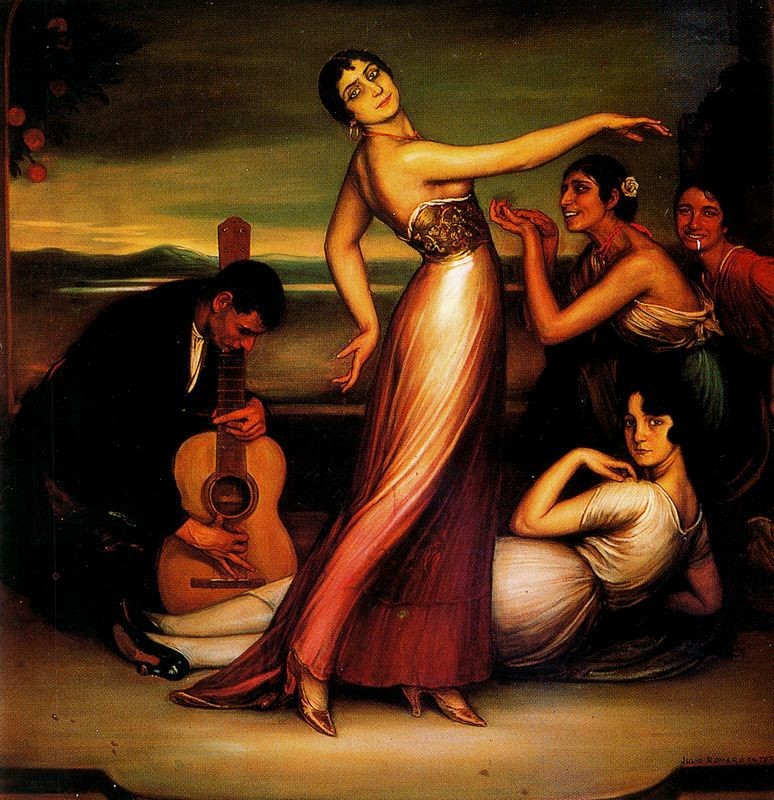
Our visit also coincided with a temporary exhibition of Cordoba based Julio Romero de Torres (1874-1930), a master of  Andalucían symbolism, with an oeuvre associated with popular and folk trends, interspersed with the wide-eyed females who languish so prominently and poetically across his canvases against strangely surreal, often looming skies.

A selection of Romero de Torres’ work

La_Buenaventura_by_Julio_Romero_de_Torres Julio_Romero_de_Torres_-_Venus_of_Poetry_-_Google_Art_Project Alegrías_by_Julio_Romero_de_Torres

Back at the hotel, our feet pulsating after an afternoon exploring both the Thyssen and the elegant streets and Plazas surrounding it, all that remained was to enjoy that incredible view from the comfort of our hotel’s rooftop swimming pool, and later to dine in the city’s bustling tapas-bar lined streets, with a stroll along the glittering new port before bed. The perfect end to a day as rich as Málaga is abundant – in culture, in architecture, in beauty, and in progress: No longer just the gateway to the Costa del Sol, Málaga has surely earned its place as one of Spain’s must-visit cultural centres.

Málaga’s glittering new port

IMG_3746IMG_3740 IMG_3764 IMG_3760

Details of the Carmen Thyssen Museum, including temporary exhibitions and future shows can be found here.

Composition No. 7: Andalucía

As regular readers of The Daily Norm will know, over the past few months, my own art work has become dominated by a simplified use of flat tones, overlapping forms, and abstract compositions using as my newly preferred medium gouache paint on paper. What has resulted is a series of what I have loosely called “compositions” but which are progressively becoming more figurative rather than compositional, as these quasi abstract images are used more and more to provide a narrative of a scene, essence or depiction.

Following on from a series of compositions inspired by my holiday in Provence, and a single piece (Composition No.6) depicting a day at the seaside in Sussex, I had a feeling that once out in Marbella in Spain, I would again become inspired to pick up my fine-tipped paint brush and start producing another gouache piece. In fact so sure was I that inspiration would hit me that a box of gouache paints was one of the first things to make it into my suitcase.

And of course as soon as I reacquainted myself with the charming historic centre of Marbella, with its white washed houses basking in the sunshine, with the terracotta floor tiles and with the polka dots of flamenco whose rich chromatic melodies can be heard wafting in and out of households around the old town, I felt the urge to take out those very same paints and get to work.

Composition No. 7: Andalucía (2013 © Nicholas de Lacy-Brown, gouache on paper)

Composition No. 7: Andalucía (2013 © Nicholas de Lacy-Brown, gouache on paper)

The result is this piece: Composition No. 7: Andalucía – a simple title for what is a simple attempt to capture the essence of Andalucía, and the iconic symbols which have come to represent the region around the world – the Spanish fan, a necessary antidote to the searing summer heat; the polka dots and guitar of the flamenco passion which stirs the region’s hearts; the windows, always open to capture whatever breeze they can, the richly decorated iron bars providing both security and decoration while facilitating this necessary ventilation;  and pots of geraniums scattered across walls forming in themselves a kind of polka dot pattern of floral colour across a blank white canvas.

I really hope you like this latest addition to my Compositions series.

© Nicholas de Lacy-Brown and The Daily Norm, 2001-2013. Unauthorized use and/or duplication of the material, whether written work, photography or artwork, included within The Daily Norm without express and written permission from The Daily Norm’s author and/or owner is strictly prohibited. Excerpts and links may be used, provided that full and clear credit is given to Nicholas de Lacy-Brown and The Daily Norm with appropriate and specific direction to the original content.

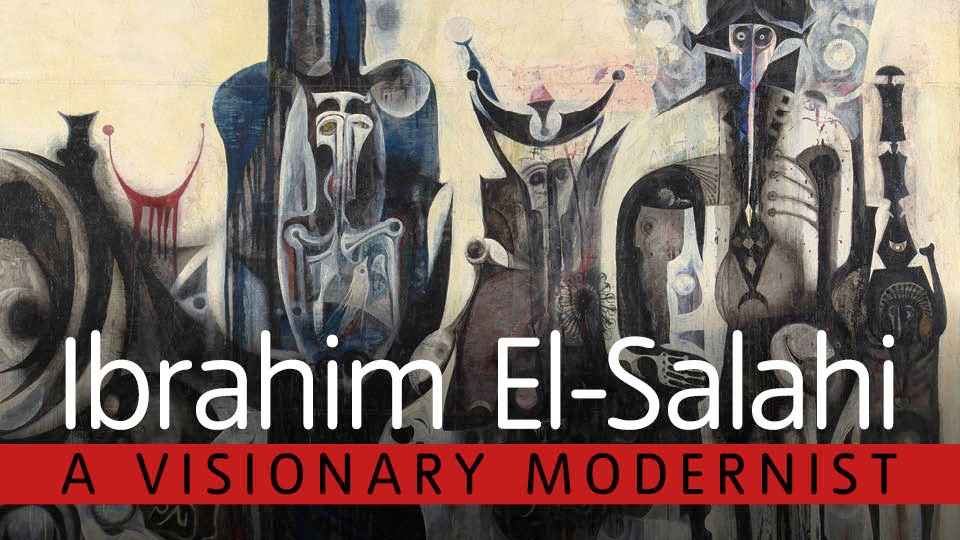
Ibrahim El-Salahi: A Visionary Modernist

Following hot on the heels of Tate’s superb mini-exhibition of Saloua Raouda Choucair, an artist previously unknown to so many art-buffs in the UK (but whose work completely revolutionised my approach to my work, and got me thinking about how I can use gouache in my paintings) comes another retrospective exhibition of a relative unknown as far as big art names go: Ibrahim El-Salahi, whose significant 7-room solo show has recently opened at Tate Modern in London. And what a success it is.

Coming from Sudan (born 1930), El-Salahi’s retrospective is Tate Modern’s first retrospective dedicated to an African modernist. It will also most likely be the first many visitors to the show will have heard of this Modernist artist. Yet El-Salahi’s work is nothing short of stunning – a visual delight of painting, drawing and calligraphy which comes together in a retrospective which exhibits a level of imaginative expression the likes of which I have not seen since discovering the works of Dali. The complexity of some of his drawn black and white images is nothing short of stunning – a mix of figurative and more expressive forms, but culminating to form a visual assault on the viewer whose eyes simply do not know where to begin in the appreciation of these works.

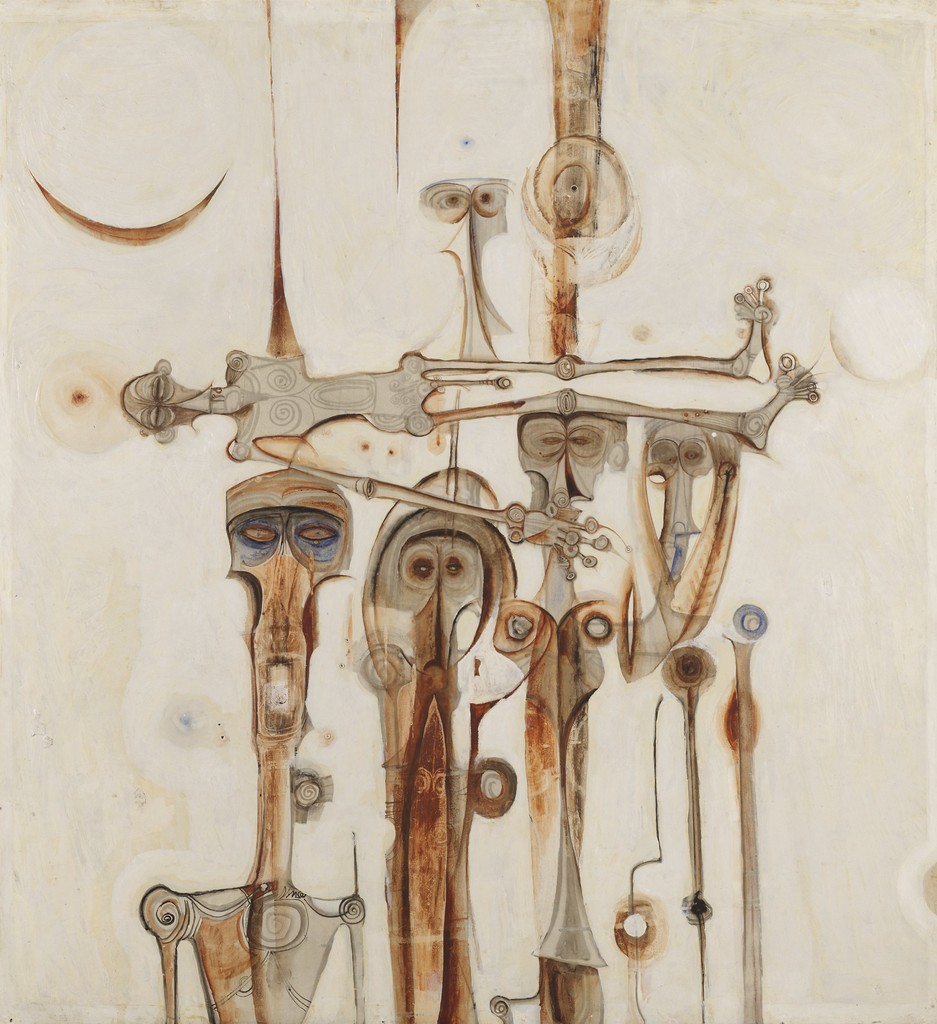
Reborn Sounds of Childhood Dreams I (1962-3) © Ibrahim El-Salahi

Reborn Sounds of Childhood Dreams I (1962-3) © Ibrahim El-Salahi

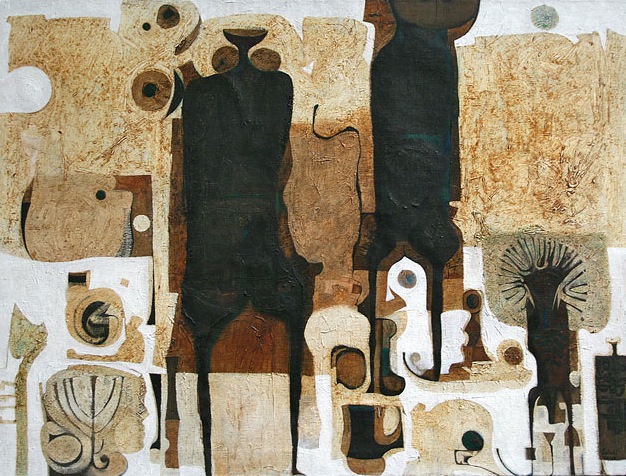
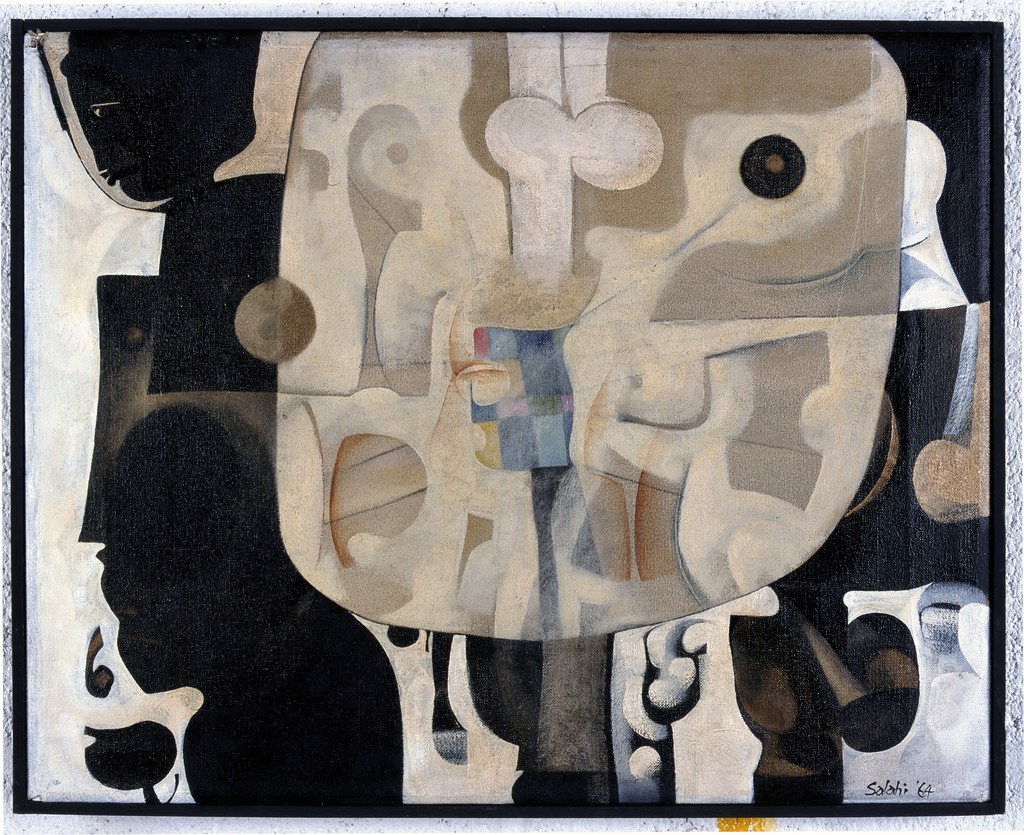
Centred on the recent acquisition of Tate Modern, the significant piece entitled Reborn Sounds of Childhood Dreams (1961-5), the exhibition starts off with the artist’s most recent works before delving backing in time to paintings loaded with African earthly brown tones, burnt umbers and yellow ochres representing, as El-Salahi himself says, the African foundations which pervade his work. But asides from the African earthy colours and the occasional tribal mask, El-Salahi’s early work exhibits a complexity of imagery which extends way beyond the continent which has so characterised his work. Islamic imagery, for example, is featured strongly, with Islamic lettering and the crescent moon prominent throughout the show, while perhaps the strongest influence comes from a surprisingly significant immersion in Western culture, an exposure encountered when El-Salahi won a scholarship to London’s Slade School of Art in the 1950s, with particular references to Picasso’s jarred cubist figures showing through from then onwards.

They Always Appear (1966-8) © Ibrahim El-Salahi

They Always Appear (1966-8) © Ibrahim El-Salahi

Al-Kas (1964) © Ibrahim El-Salahi

Al-Kas (1964) © Ibrahim El-Salahi

The Last Sound (1964)  © Ibrahim El-Salahi

The Last Sound (1964) © Ibrahim El-Salahi

Funeral and the Crescent (1963) © Ibrahim El-Salahi

Funeral and the Crescent (1963) © Ibrahim El-Salahi

Vision of the Tomb (1965) © Ibrahim El-Salahi

Vision of the Tomb (1965) © Ibrahim El-Salahi

The exhibition moves to the 1970s, a difficult time for El-Salahi when he was compelled to return from London to Sudan to take up the role of Deputy Undersecretary of Culture at the Sudanese Ministry of Information, under the military dictatorship of General Gaafar Nimeiry. However, his tenure ended abruptly in the mid-70s when, in the aftermath of a failed military coup, El-Salahi was accused of anti-governmental activities and imprisoned for 6 months. The art works which follow are abruptly different from the warm earthy umber works of the previous room. Stripped of colour, these black and white works, generally drawn in ink on paper, appear to reject the warm colours of El-Salahi’s African heritage, but are nevertheless some of the most powerful works in the show, demonstrating incredibly skilled draughtsmanship and imagination which is beyond what most of us are capable of. Apparently El-Salahi would begin these works by drawing a small image, the likes of which would gradually expand outwards as he would add paper to allow the image to spread.

The Inevitable (detail) (1984-4) © Ibrahim El-Salahi

The Inevitable (detail) (1984-4) © Ibrahim El-Salahi

21_reborn_sounds_2_full_1024x362

From Visual Diary of Time-Waste Palace (1996-7) © Ibrahim El-Salahi

From Visual Diary of Time-Waste Palace (1996-7) © Ibrahim El-Salahi

In the 1990s, El Salahi, now in self-imposed exile from Sudan, moved to Oxford, and there, inspired by the verdant British countryside began a series of tree-inspired images. With these, El Salahi injected colour back into his work, and also dappled in more linear, geometric forms. This in turn led to the present, where El Salahi appears to be returning to the earthier browns of his earlier period, but also dapples again in some of the more detailed black and white ink on paper works. But whether brown, black or white, these works, based on a recent trip to Granada in Spain and largely depicting Flamenco (which of course has its routes in Islamic culture, as does Granada itself) are without a doubt the most stunning works of the exhibition. I was held utterly spellbound by one work depicting Granada in those same umbres and ochres, but with a black and white clustered group of flamenco dancers at its centre, their arms thrust upwards in a burst of energy so reminiscent of that point of duende, their figures perfectly arched into the passionate hold of a flamenco dancer in her final crescendoed cry. Dazzling. Spectacular – one of the best works I have ever seen at Tate. Tragically, I can find no image of this work online, which makes it all the more important that you head along to the show to share in these incredible artworks.

exm-main-0012_elsalahi_web_banner_0

Ibrahim El-Salahi: A Visionary Modernist is on at Tate Modern until 22 September 2013

Carl Randall steals the BP Portrait Show

Like so many of these annual open-submission art prizes, the annual BP sponsored National Portrait Gallery BP Portrait Award is very often a bit samey. Each year you get the same collection of oversized hyper-realistic magnified photo-like portraits, showing a person’s every vein and blood vessel, the sparkle in their eye and the grey in their hair. While these works undoubtedly demonstrate an often astonishing skill for painting photographically, the same does not automatically equate to a work’s having any artistic merit. Is it original? Does its composition have the power to move or inspire? Is the sitter’s story told in some original or dynamic way? Give me the coarsely applied brush strokes and unrealistic green-tinted skin of a Van Gogh portrait any day. If a painting looks like a photo, then in my view it should remain a photo.

This year’s BP show has its fair share of these oversized gormless faces filling the walls in all their unappetising detail, as well as a few rather questionable works – the kind which have been executed so badly that the old “my child could have done that” exasperated statement seems a little inadequate. But happily, this year’s BP Award also offers up some truly ground breaking and original work, paintings whose execution is so accomplished that you find yourself staring closely to find a single line of these meticulously detailed works out of place; works which have been composed with such imagination, insight and at times humour, that the entire collection of the National Portrait Gallery should be bypassed before first indulging in these paintings.

Hakone (oil on canvas © Carl Randall. Reproduced with the kind permission of Carl Randall/ www.carlrandall.com)

Hakone (oil on canvas © Carl Randall. Reproduced with the kind permission of Carl Randall)

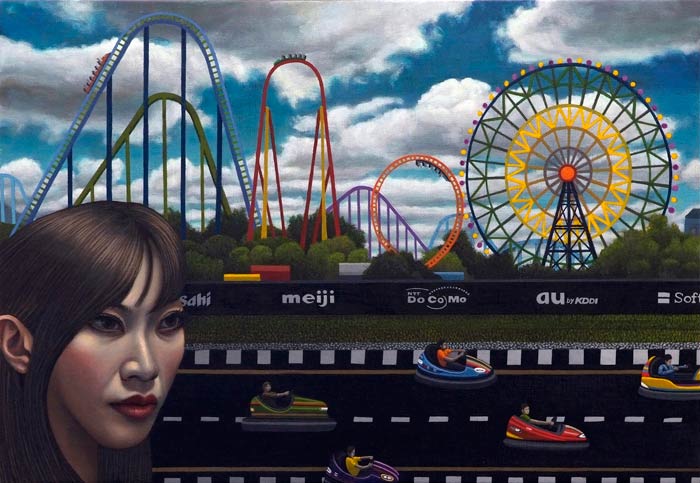
Amusement Park (oil on canvas © Carl Randall. Reproduced with the kind permission of Carl Randall/ www.carlrandall.com)
Amusement Park (oil on canvas © Carl Randall. Reproduced with the kind permission of Carl Randall)

Sushi (oil on canvas © Carl Randall. Reproduced with the kind permission of Carl Randall/ www.carlrandall.com)

Sushi (oil on canvas © Carl Randall. Reproduced with the kind permission of Carl Randall)

I am talking about the works of Carl Randall, a British born and trained artist, but whose work is so immersed in Japanese culture, that my assumption for at least the first 10 minutes of being mesmerised by his works was that he originated from Japan. For despite his London Slade training, Randall took inspiration when spending time in Japan following his receipt of the prestigious Daiwa Anglo-Japanese Foundation scholarship which he won in 2003. This enabled him to continue his painting career in Tokyo, during which time he was selected to be artist in residence in Hiroshima city (to document survivors of the Atomic Bomb) and he was chosen to represent Japan as artist in residence at the 2007 Formula 1 Races. From there continued what is quite evidently a love affair with modern Japanese culture, which he has since captured in multiple brilliant canvases and sketches which show Japan in all its quirky, colourful and inimitable character.

Shoe Shop (oil on canvas © Carl Randall. Reproduced with the kind permission of Carl Randall/ www.carlrandall.com)

Shoe Shop (oil on canvas © Carl Randall. Reproduced with the kind permission of Carl Randall)

Fireflies (oil on canvas © Carl Randall. Reproduced with the kind permission of Carl Randall/ www.carlrandall.com)

Fireflies (oil on canvas © Carl Randall. Reproduced with the kind permission of Carl Randall)

Electric Tokyo (oil on canvas © Carl Randall. Reproduced with the kind permission of Carl Randall/ www.carlrandall.com)
Electric Tokyo (oil on canvas © Carl Randall. Reproduced with the kind permission of Carl Randall)

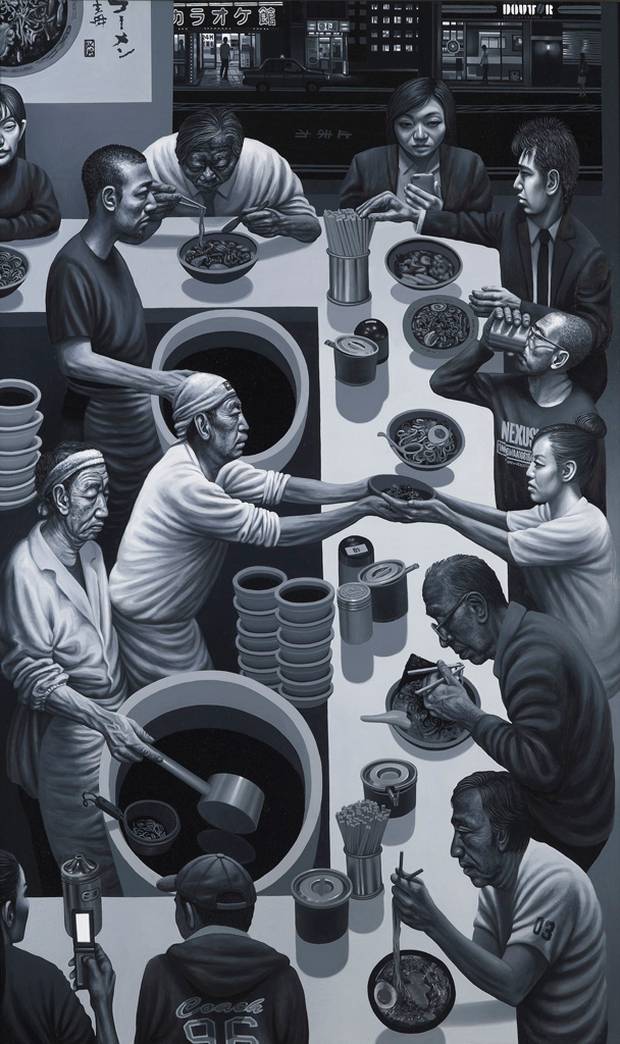
I was first acquainted with Randall’s work at last year’s BP Portrait Award, when his black and white painting of some glum-faced melancholic city residents sitting up at a sushi-bar on a commonplace working day (Mr.Kitazawa’s Noodle Bar) won him the BP 2012 Travel Award. This enabled Randall to return to Japan, and undertake a new artistic adventure, painting a new collection entitled ‘In the footsteps of Hiroshige: Portraits of Modern Japan’, which are exhibited at this year’s show.

Mr Kitazawa's Noodle Bar (oil on canvas © Carl Randall)

Mr Kitazawa’s Noodle Bar (oil on canvas © Carl Randall)

I urge all those living in, and passing through London to head to the BP Portrait Award just to look at these brilliant paintings which are both evocative of modern Japan, but also verge on the slightly surreal and idealistic, a sense captured by Randall’s portrayal of slightly deformed head shapes and frequently distorted proportions, as well as his use of vivid colouration and quixotic backdrops. This for me produces the perfect combination of compositional originality and skillful figurative narration. Some, like Randall’s cerulean-coloured Onsen almost remind me of Hockney but with, dare I say it, a more refined execution and altogether superior finish, while his homage to sumo wrestling (Sumo) contains an almost parodied exploration of light and shadow, the likes of which was so central to the atmosphere created in George Bellows’ boxing works, recently shown at the Royal Academy.

This slideshow requires JavaScript.

Photo-realistic, boring, overly magnified these are not – they are true art to my mind – portraiture that tells a real story beyond two eyes, a nose and a mouth. I truly hope that Carl Randall represents the future of British portraiture, and that more works like his will fill the BP Portrait Award in the future.

Shinjuku (oil on canvas © Carl Randall. Reproduced with the kind permission of Carl Randall/ www.carlrandall.com)
Shinjuku (oil on canvas © Carl Randall. Reproduced with the kind permission of Carl Randall)

The BP Portrait Award is showing at London’s National Portrait Gallery and entry is free. It runs until the 15 September 2013 before touring to the Aberdeen Art gallery from 2 November 2013 to 1 February 2014, followed by the Wolverhampton Art Gallery from 3 March to 14 June 2014.

Carl Randall’s website is well worth a visit – also check out the “Japan Portraits” documentary which provides a fascinating insight into the artist in action. You can also find Carl on facebook and twitter. I would finally recommend the superb book Carl Randall: Japan Portraits which is available from the NPG bookshop.

All images are reproduced from http://www.carlrandall.com with the kind permission of Carl Randall

Summertime Sussex (Part 1): Composition No. 6

One of the great things about gouache paint (the likes of which I rediscovered a few months back and am now totally in love with) is how quickly one can turn around a fairly detailed painting in a short space of time. Of course it helps that the paint dries within minutes of its application to the paper, allowing a detailed image to be swiftly executed. The result of this is that I am finding myself increasingly able to catalogue my life’s adventures in gouache paint, as well as through photography and the written word.

Consequently, no sooner had I finished off the last of my Provence-inspired gauche paintings, which in turned formed part of my “compositions series” (the idea behind the series being that the paintings follow a more abstract compositional styling rather than being constrained too heavily by accurate figurative representation), than I got to work on another, this time inspired by a short 24 hour trip I made to my home town of Worthing in Sussex for something of a pre-birthday celebration.

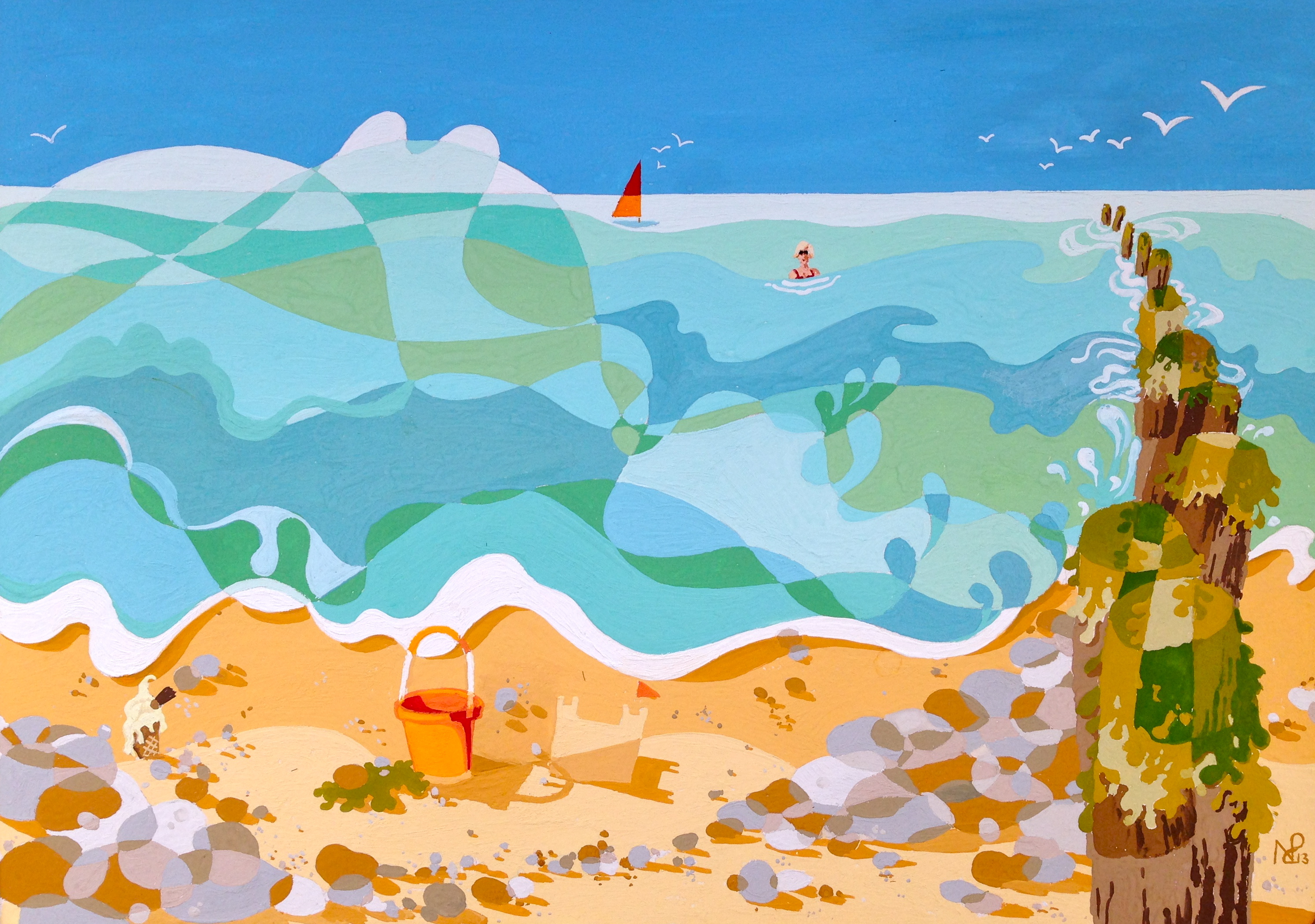
Composition No. 6 (Summertime Sussex: Taking a bathe) (2013 © Nicholas de Lacy-Brown, gauche on paper)

Composition No. 6 (Summertime Sussex: Taking a bathe) (2013 © Nicholas de Lacy-Brown, gouache on paper)

Having been languishing in the sultry summer sunshine of late, the UK has firmly entered the holiday season, and its many beaches have each become heavily populated by visitors taking dips in the English sea to cool off from the unseasonably high temperatures. The beach at Goring-by-Sea, the small suburb East of Worthing and where my family home is situated, is no exception. My mother and I headed down to the beach on a warm Saturday afternoon and, having made our way through the various groups of barbequing families, young children playing in the sand, and sun-lovers spreading themselves out in worship of the sun rays, we reached the shore whose waters were surprisingly warm and clear. Neither of us could resist a dip, and this 6th painting in my compositions series marks the moment when my mother was taking a bathe in the sea while I, looking after our things and taking in the surprisingly summery scene before me, sat on the water’s edge, this image building in my head.

The very next morning I began to sketch out the composition, complete with its curving wave-like forms and overlapping seaweed-covered groynes and within a few days it was done. The perfect testament to a perfect British summer’s day. I leave you with some photos of that little beach trip which, like my gouache, capture some essence of the British seaside in the summer.

© Nicholas de Lacy-Brown and The Daily Norm, 2001-2013. Unauthorized use and/or duplication of the material, whether written work, photography or artwork, included within The Daily Norm without express and written permission from The Daily Norm’s author and/or owner is strictly prohibited. Excerpts and links may be used, provided that full and clear credit is given to Nicholas de Lacy-Brown and The Daily Norm with appropriate and specific direction to the original content.

Provence Odyssey | My Journey in Paintings: Provence Patchwork

I have gone on endlessly about the Provençal landscape ever since this vast odyssey, not just across Southern France but also as depicted on this blog, first began some weeks ago, and now I will once again let my art do the talking. For somewhat suitably, as the end of the trip drew near, and four cities had been visited, I decided to start the fourth and final of the artworks completed while on our tour, this time inspired by the journey to Aix.

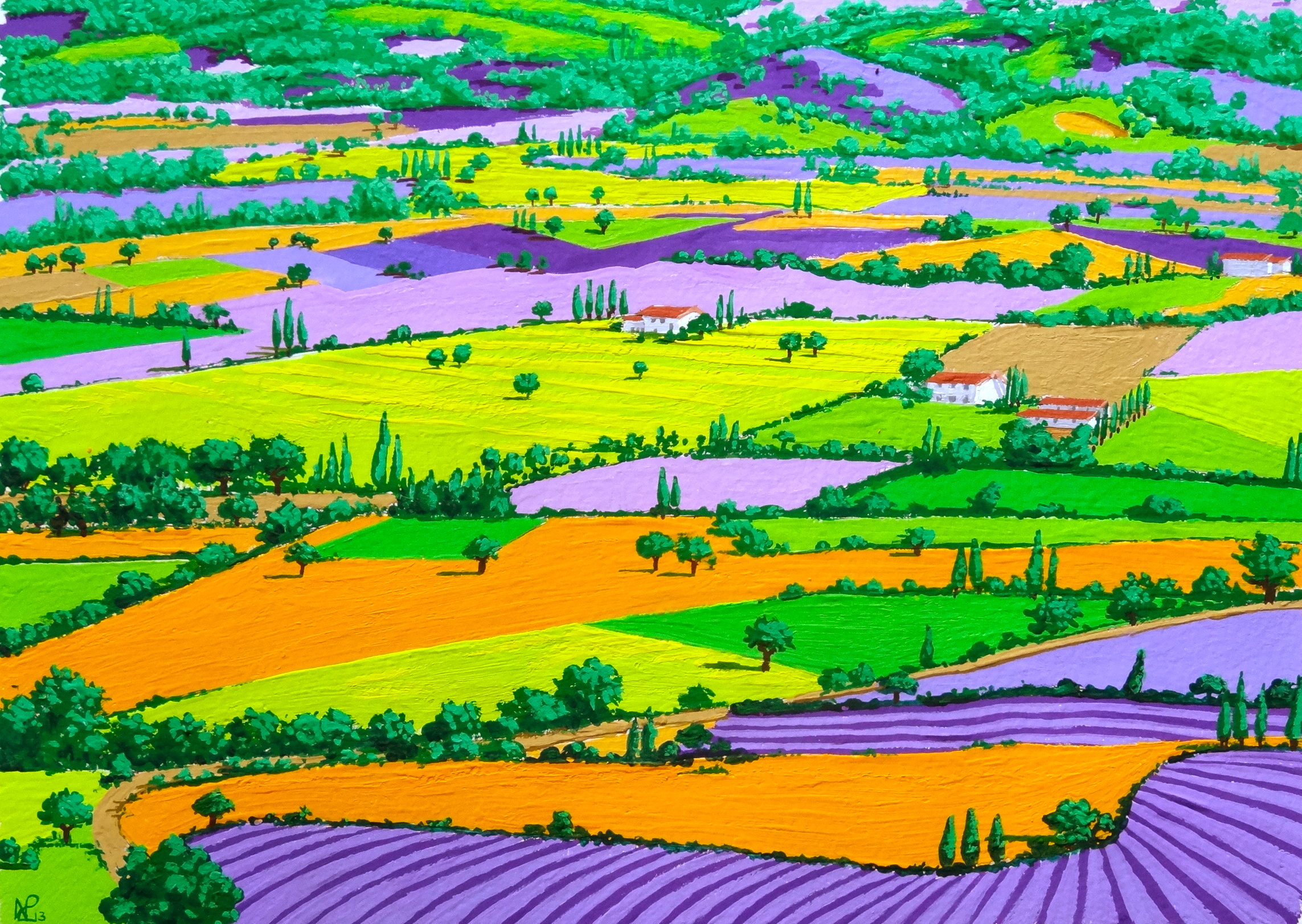
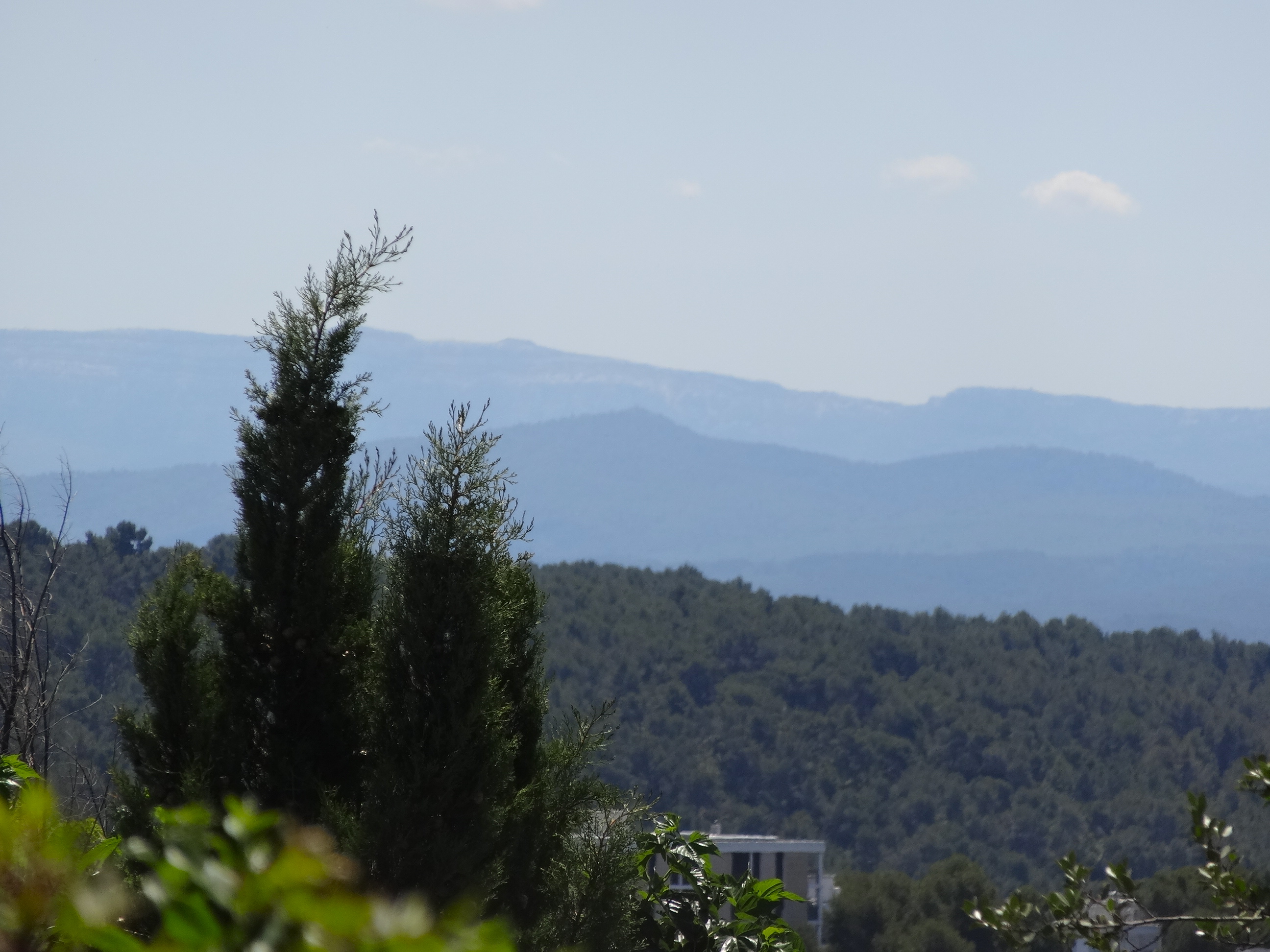
Taking the fast train from Avignon TGV down to Aix TGV in a mere 20 minutes meant for a lightening speed flight through the undulating topography of the Southern most reaches of the region, but it was nevertheless enough to make my eyes almost dewy with pleasure as they looked out onto the stunning scenery passing us by. The Provençal landscape is not complex, nor terribly unique – but it is beautiful nonetheless, because through the sheer beauty of a bucolic landscape marked by agricultural spaces pinned side by side and bordered by cypress trees and olives, the rolling countryside of the region looks like a patchwork quilt of earthy tones interspersed with the occasional splash of purple lavender or yellow corn.

Composition No. 5 (Provence Patchwork) (2013 © Nicholas de Lacy-Brown, gouache on paper)

Composition No. 5 (Provence Patchwork) (2013 © Nicholas de Lacy-Brown, gouache on paper)

It is this patchwork effect which inspired my final gouache work on the trip. Entitled Composition No.5 (Provence Patchwork), the work once again forms part of my Compositions series. I have used flat, blocks of colour to represent the varied agriculture of the region, and in composition have tried to represent what is almost a cubist landscape resulting from the complicated crisscross of fields and bordering trees that characterise the region. I hope you like it.

© Nicholas de Lacy-Brown and The Daily Norm, 2001-2013. Unauthorized use and/or duplication of the material, whether written work, photography or artwork, included within The Daily Norm without express and written permission from The Daily Norm’s author and/or owner is strictly prohibited. Excerpts and links may be used, provided that full and clear credit is given to Nicholas de Lacy-Brown and The Daily Norm with appropriate and specific direction to the original content.

Provence Odyssey | Aix: Day 9 – In search of Cézanne

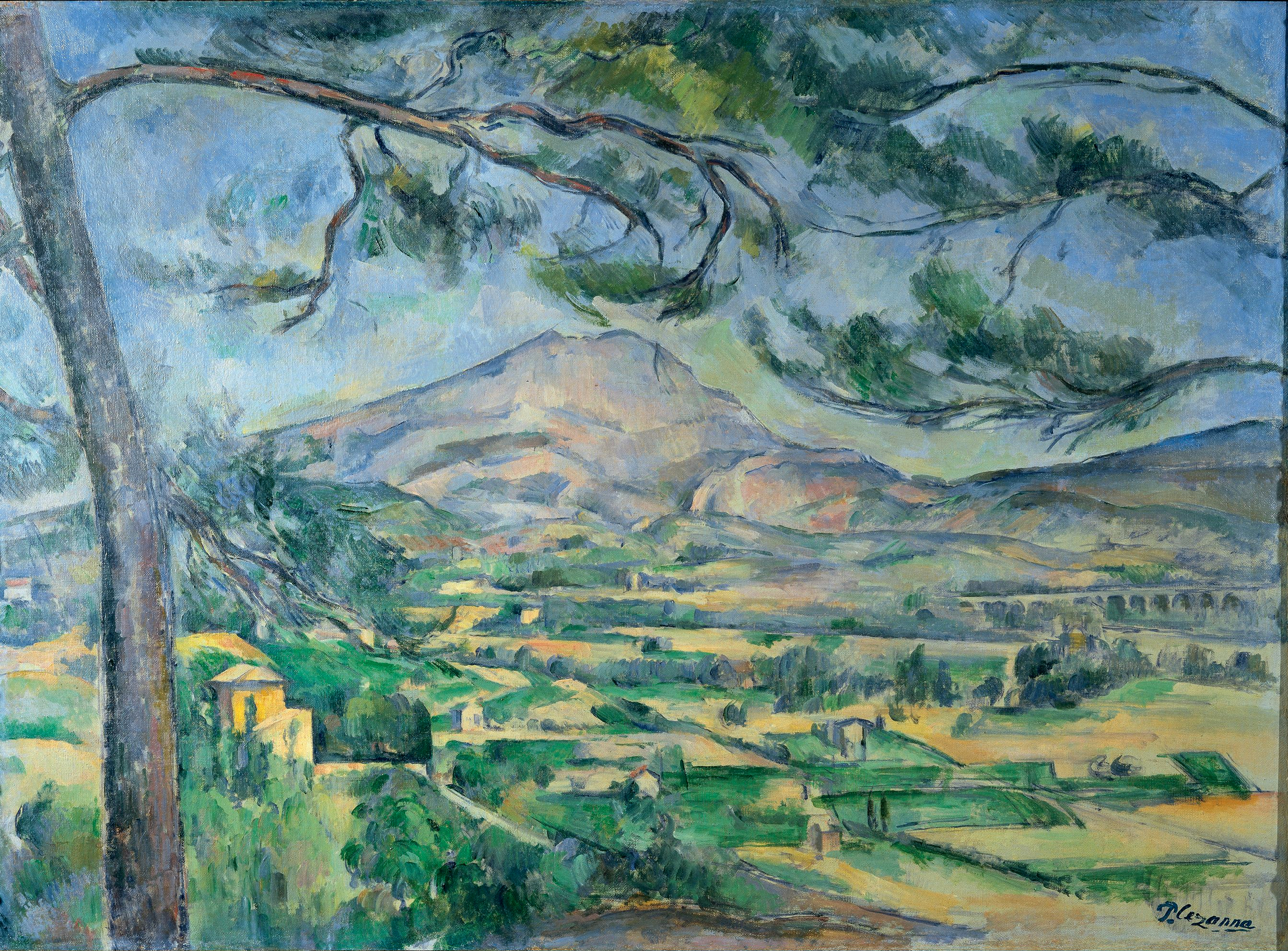
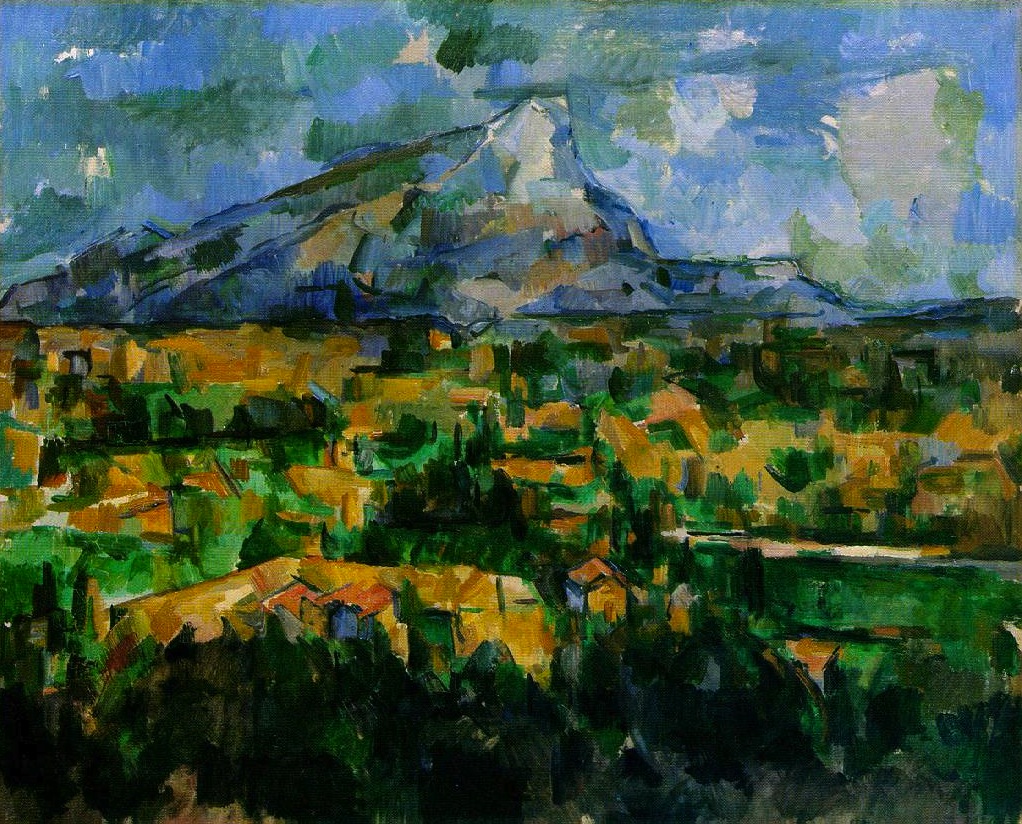
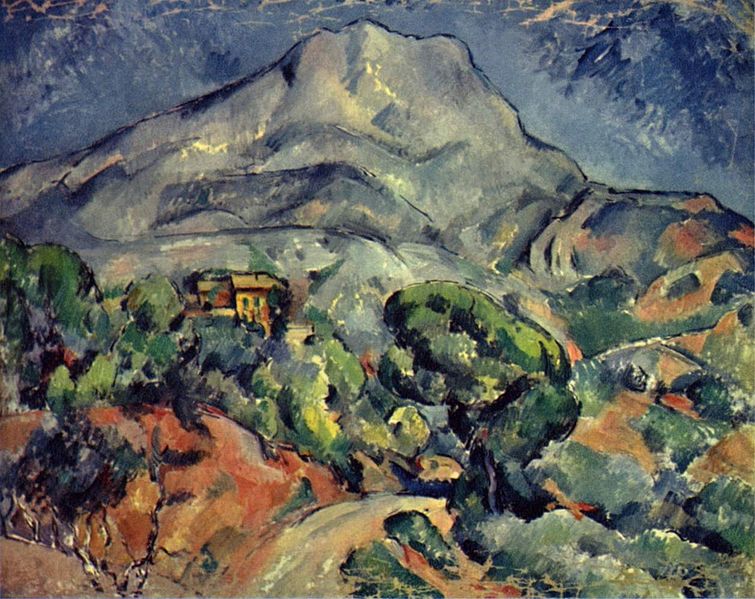
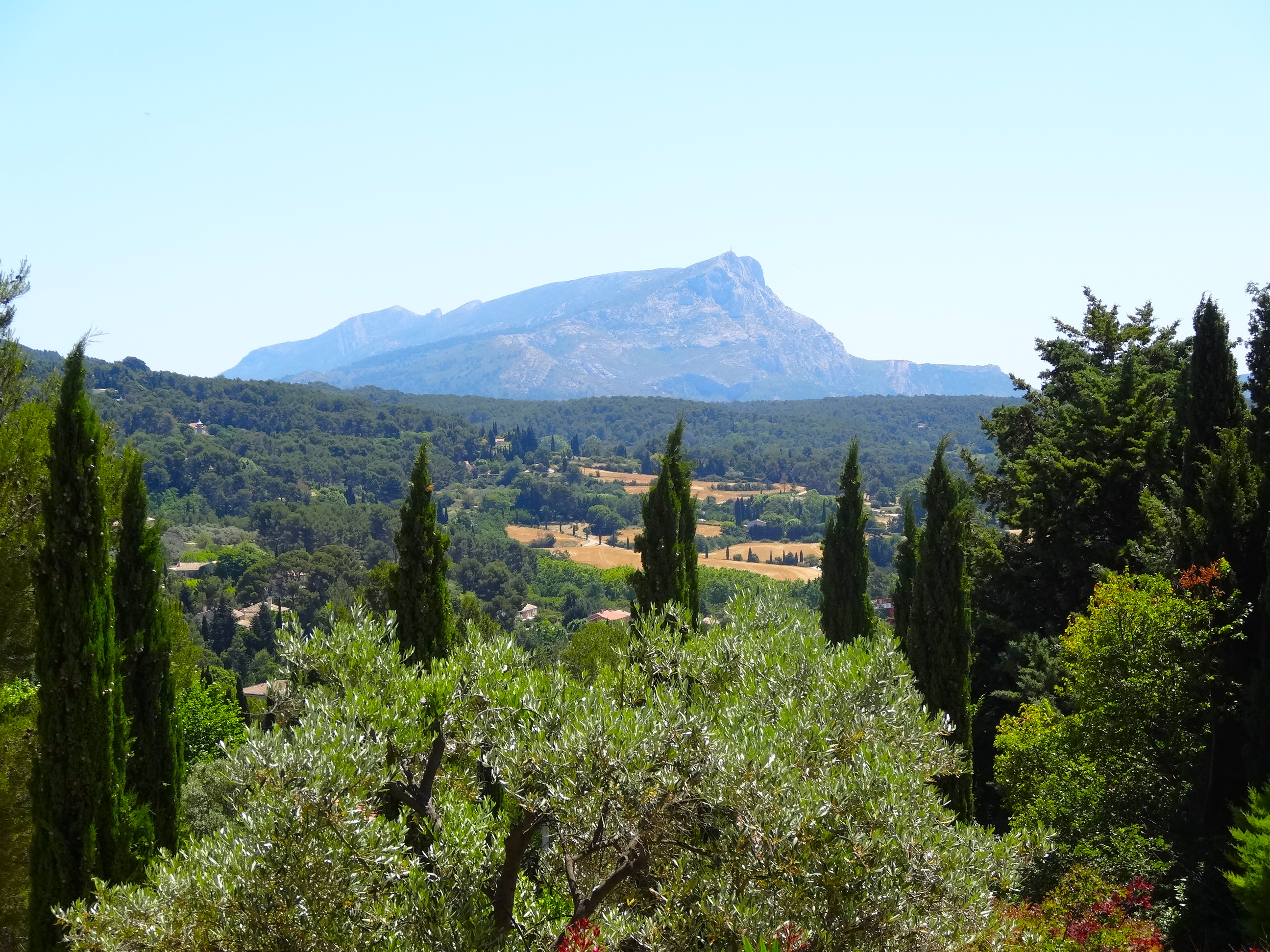
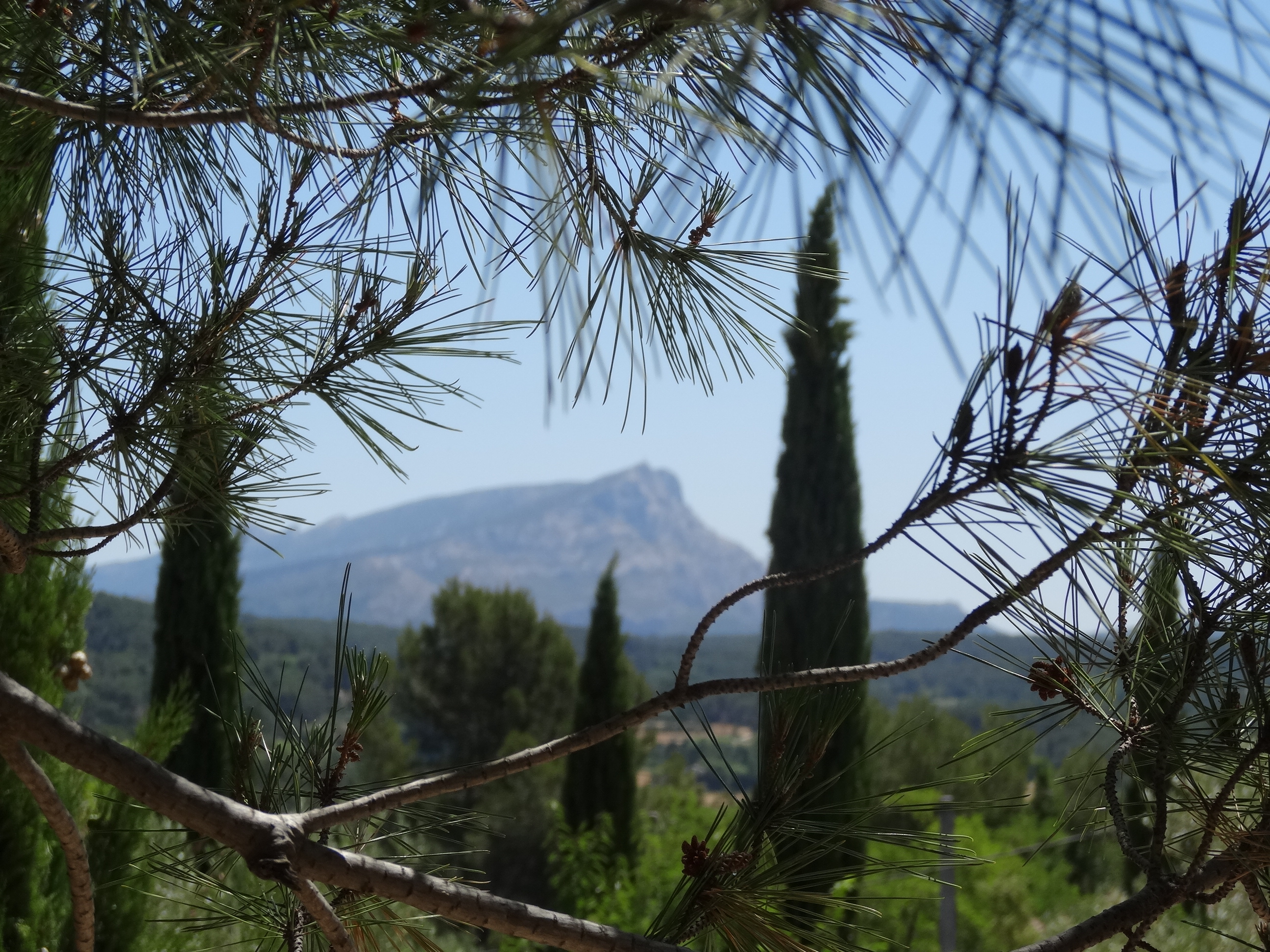
You know that you are approaching Aix when you see the looming multi-dimensional silhouette of the Mont Sainte-Victoire rising up over the horizon. Thanks to the multiple depictions of this magnificent mountain by the city’s most famous son, Post-Impressionist Paul Cézanne, the city of Aix-en-Provence, cosmopolitan gem of Southern France, together with its ever faithful mountainous backdrop, has been placed firmly on the cultural map of Europe. They say that one should leave the best till last, and this we surely did when we made Aix the last stop of our 10 day Provençal Odyssey.

DSC04320 DSC04567 DSC04513 DSC04293 DSC04327

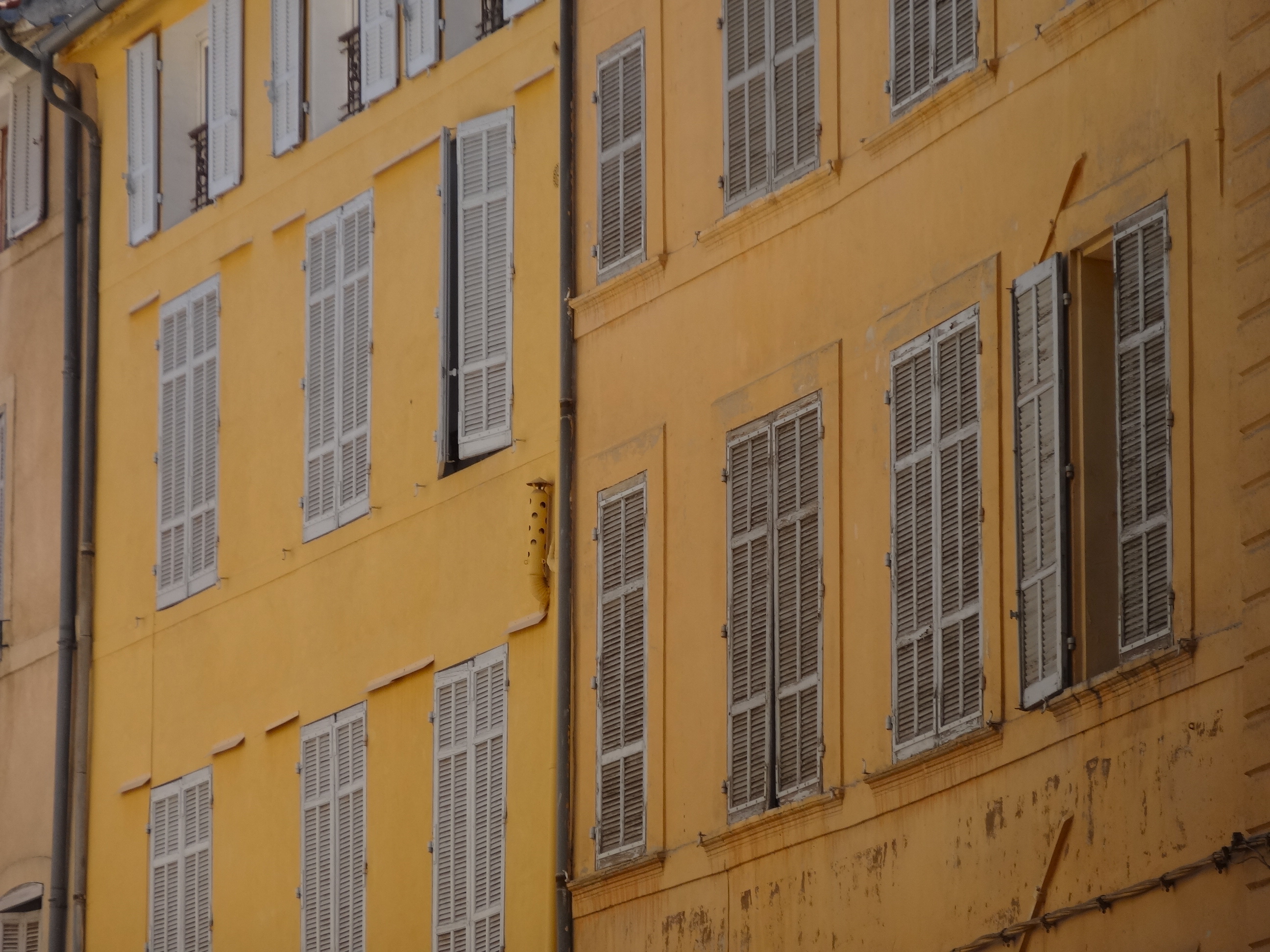
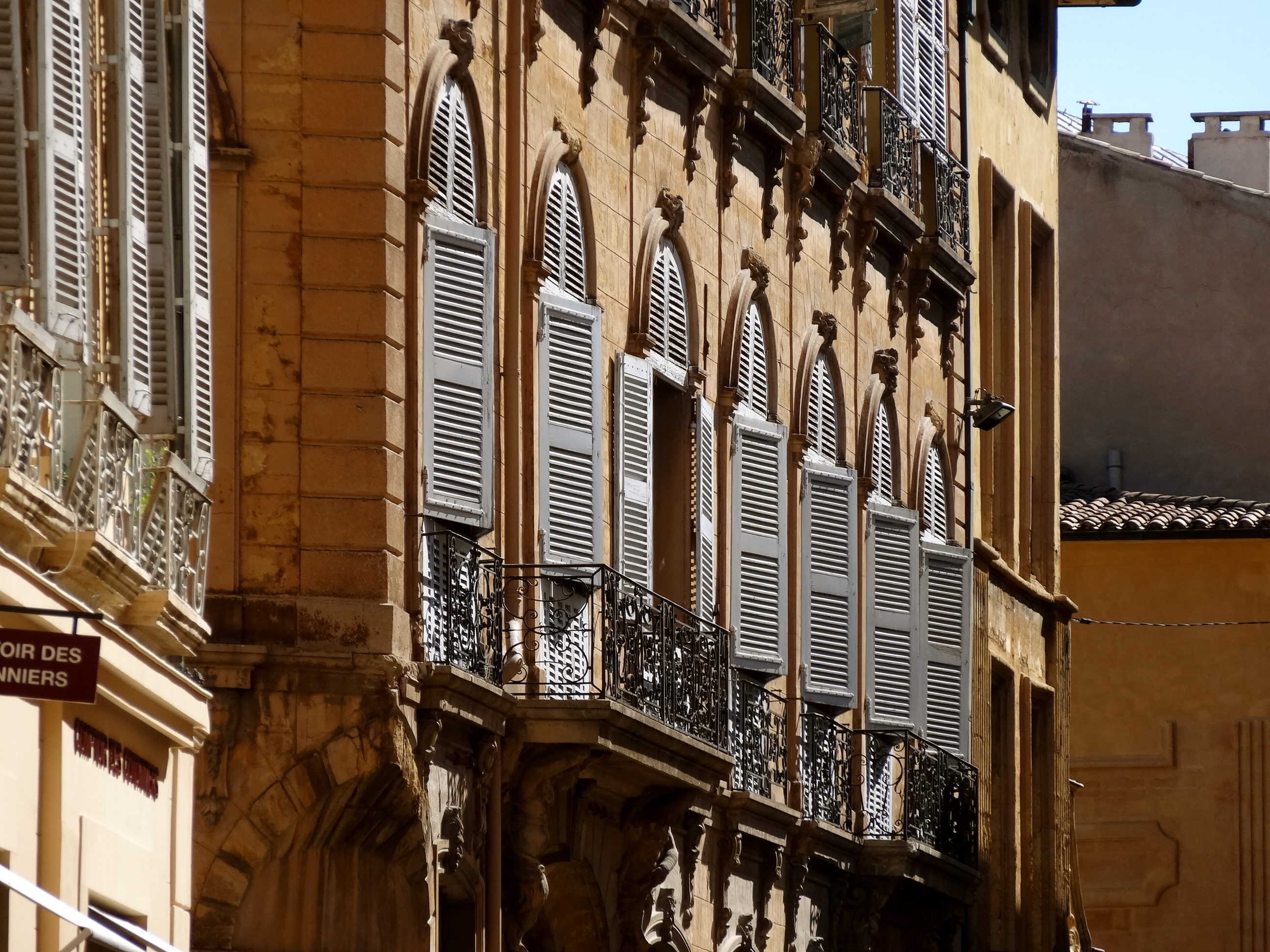
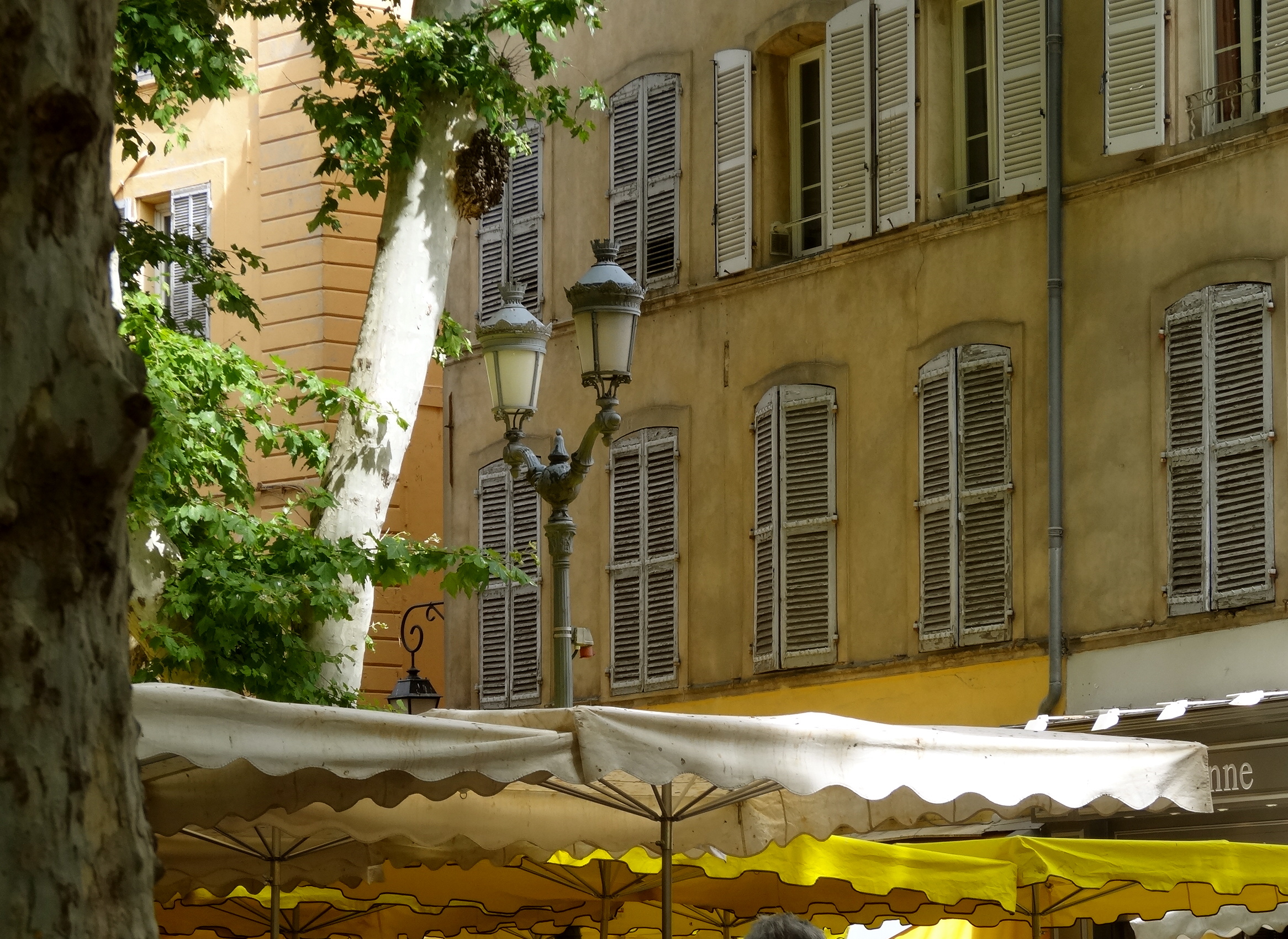
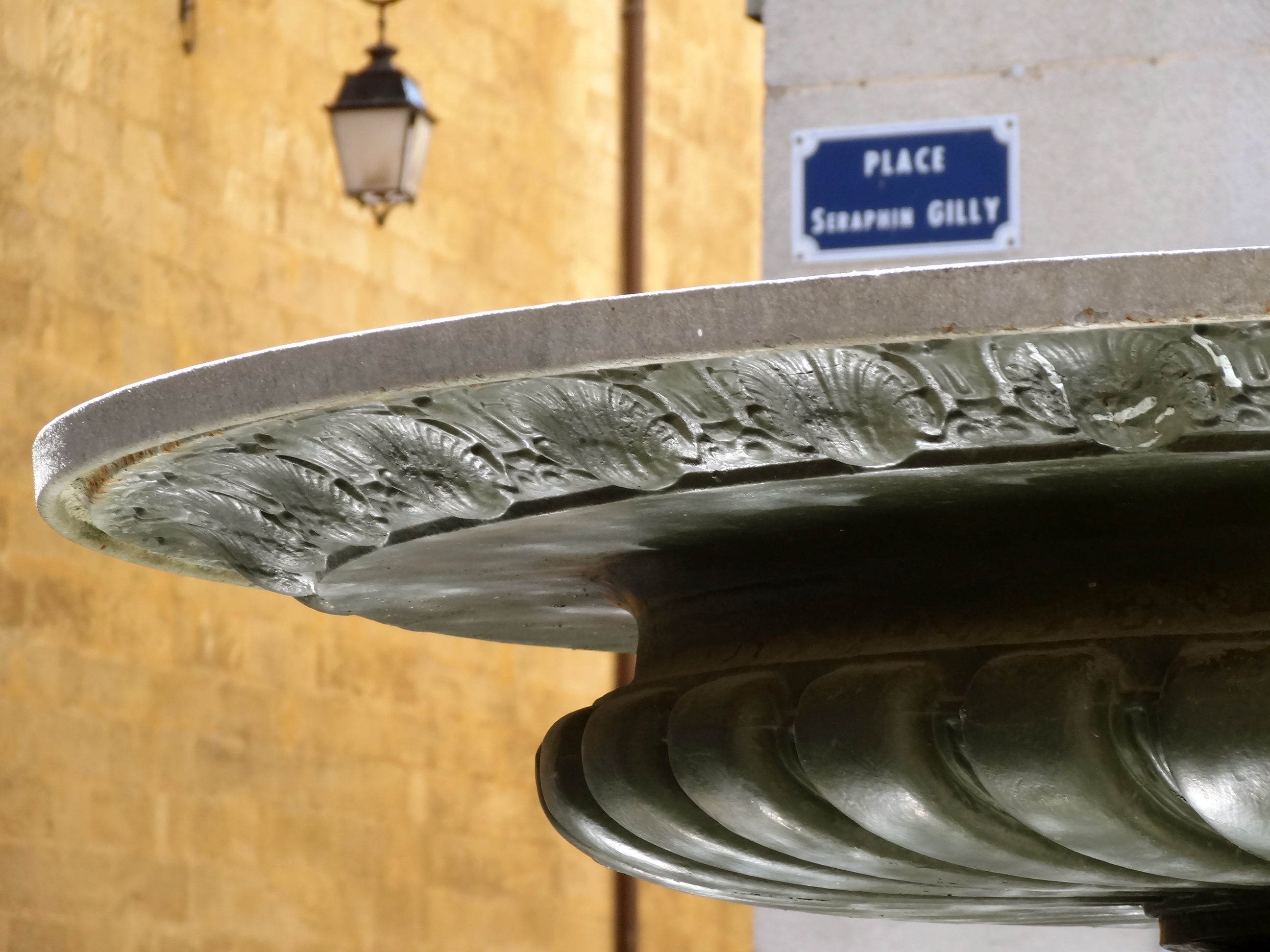
It became immediately clear that Aix is a busy, bustling city, with the sense of something chic and Parisian about it, but at the same time maintaining the sleepy charm of the Provence region. In Aix, the shutters and pastel colours seen across Provence are here in their multitudes, but instead of narrow little streets, here they decorate vast plazas and long tree-lined boulevards. Like the verdant rolling countryside around it, Aix is abundant with plan trees and cypresses, pine trees and olives, yet those trees cast their dappled light not upon fields, but over the exquisitely decorated facades of churches and palaces, of museums and grand cafes, and over the broad pavements which facilitate the art of strolling along shop-lined avenues. And best of all in Aix are the fountains. Said to be the “City of a Thousand Fountains”, the real number is thought to be closer to 100, but Aix is truly abundant in water, in dancing leaping and trickling water, all caught in the great basins of these baroque fountain sculptures, which are at the centre of every square and street.

Aix’s resplendent fountains…

DSC04911 DSC04773 DSC04912 DSC04418 DSC04831 DSC04509 DSC04402 DSC04738

No wonder Aix is so magnificent – it was the capital of Provence one upon a time, and today is an international students’ town, full of culture, cafes and a general air of excitement. And of course one of the greatest pleasures about visiting Aix is to indulge in all that excitement on offer, to perambulate along its fashionable streets, and to sit by its many fountains, sipping upon a coffee or cooling down with an ice cream or two – more about that later. But my first priority on visiting this city was to discover its most famous resident, the somewhat reclusive artist but often called the Father of Modern Art – Paul Cézanne.

Cézanne grew up and spent most of his life in Aix. Of course he did make a trip or two to Paris, and it was there that he first discovered impressionism. However, it was in the heartland of Southern France that Cézanne really felt at home, and it was undoubtedly the rugged scenery of Provence and the immediate surroundings of Aix that helped to characterise Cézanne’s development from the dappled light of Impressionist works, to the rugged geometric depictions of his Post-Impressionist oeuvre. The origins of cubism had been born.

Cézanne’s Mont Sainte-Victoire

Paul_Cézanne_107 mont-sainte-victoire-1897 mt_s-v_4 755px-Paul_Cézanne_210 Paul_Cezanne_La_Montagne_Saint_Victoire_Barnes

Aix, perhaps predictably, relishes its connection with this foremost artistic genius (although sadly it didn’t at the time Cézanne was painting in the city) and today its tourist office provides an excellent and very comprehensive walking tour both through and around the city, picking up on all of the various places of relevance to both Cézanne and his family along the way. Sadly we did not have time to do the whole tour (although I think we may survive not seeing where Cézanne’s mother’s brother’s friend lived), not least because with Aix basking under the reflective glory of nearby Marseille’s status as European Capital of Culture 2013, there were plenty of cultural activities we wanted to pack into our short two-night stay. However, what we did prioritise was two integral aspects of Cézanne’s life and work in Aix: His studio, and the view of Mont Sainte-Victoire itself.

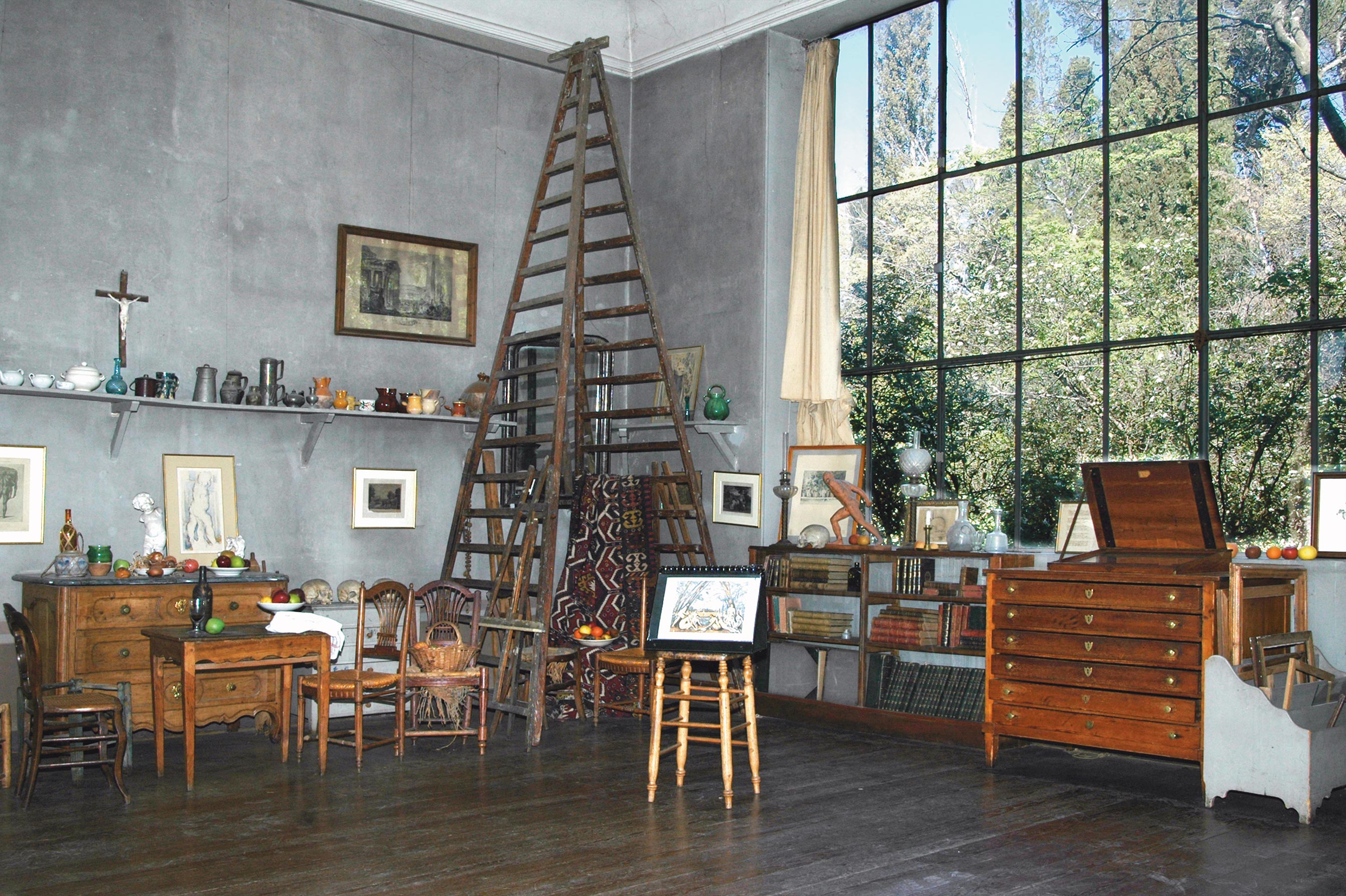
Cézanne’s studio 

3380_Atelier-Paul-Cezanne DSC04644 DSC04657

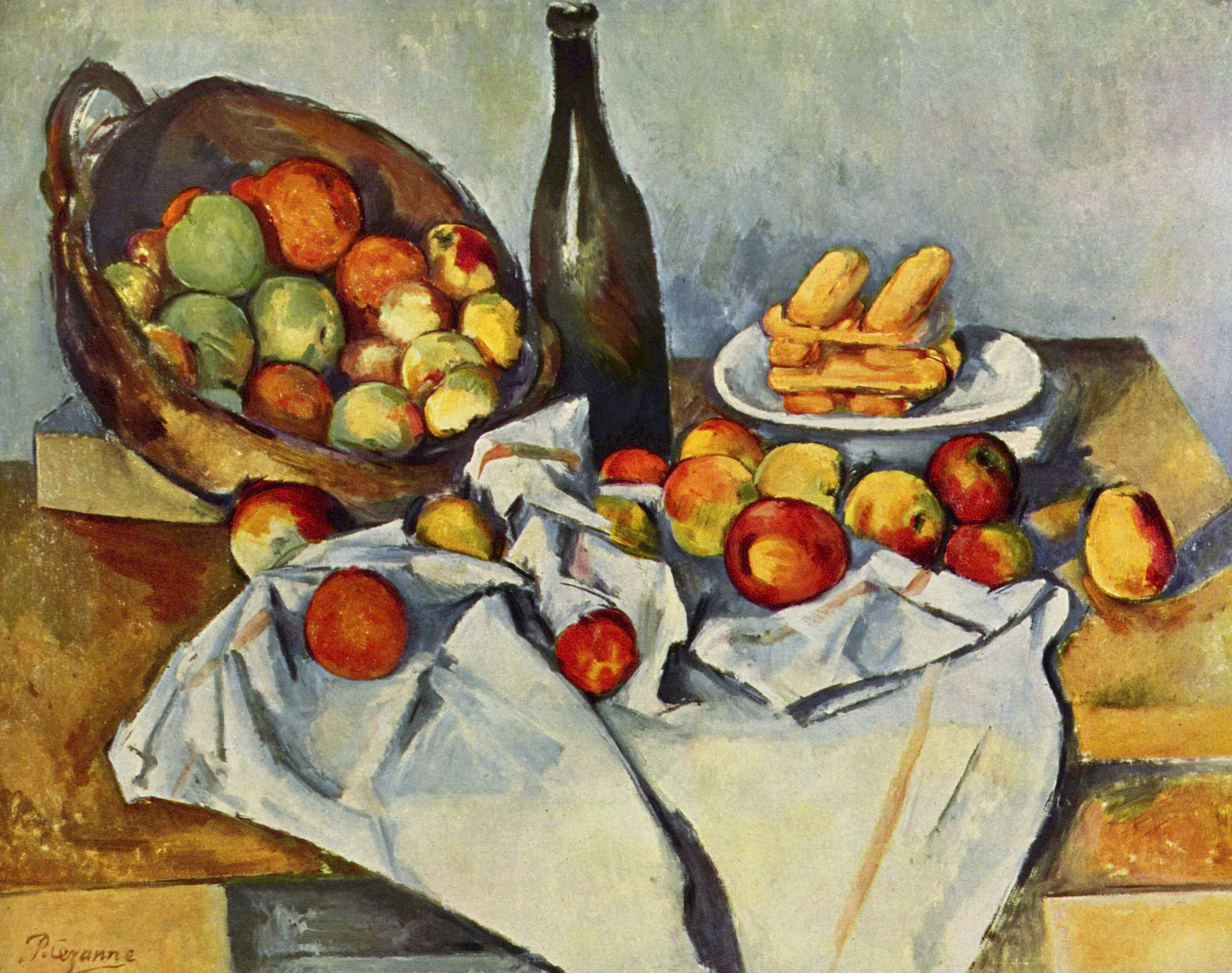
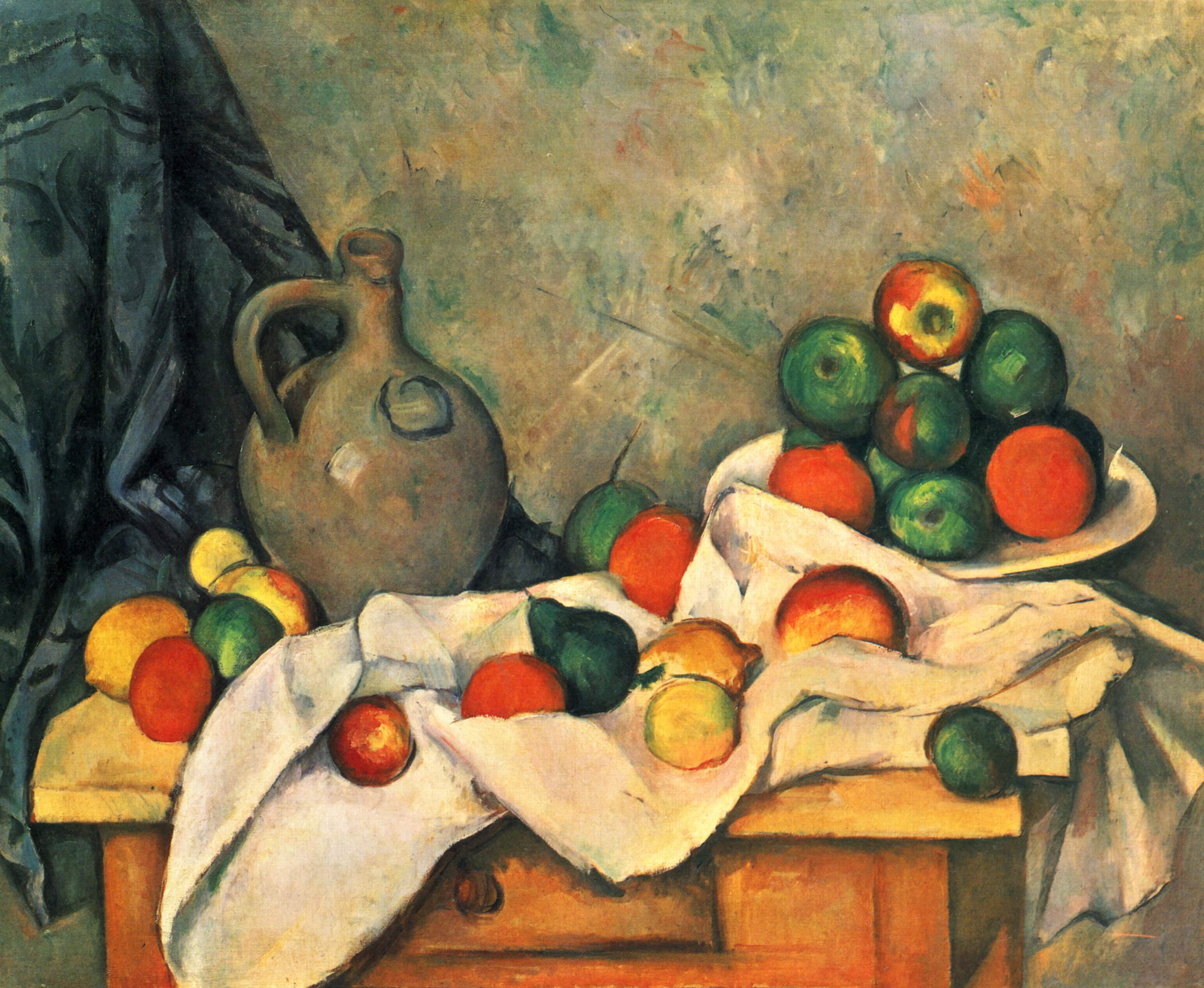
L’Atelier de Cézanne (the studio of Cézanne) is a good 20 minute walk uphill out of Aix, but it’s a walk taking the earnest visitor gradually out into the verdant pastures of suburban Aix, with views of the city growing gradually more impressive as the road rises. The studio itself provides an absolutely fascinating insight into Cézanne. It’s essentially just a one room museum devoted to Cézanne, but not a museum with story boards and animations – this is simply the artist’s studio, with the various props scattered around which he used in his many still life compositions. Of course Cézanne is as much famous for his still life depictions of apples and oranges as he is for the Mont Sainte-Victoire, but those paintings were more often than not depicting fruit clustered around other objects – old pots and bottles, and a broken mannequin.

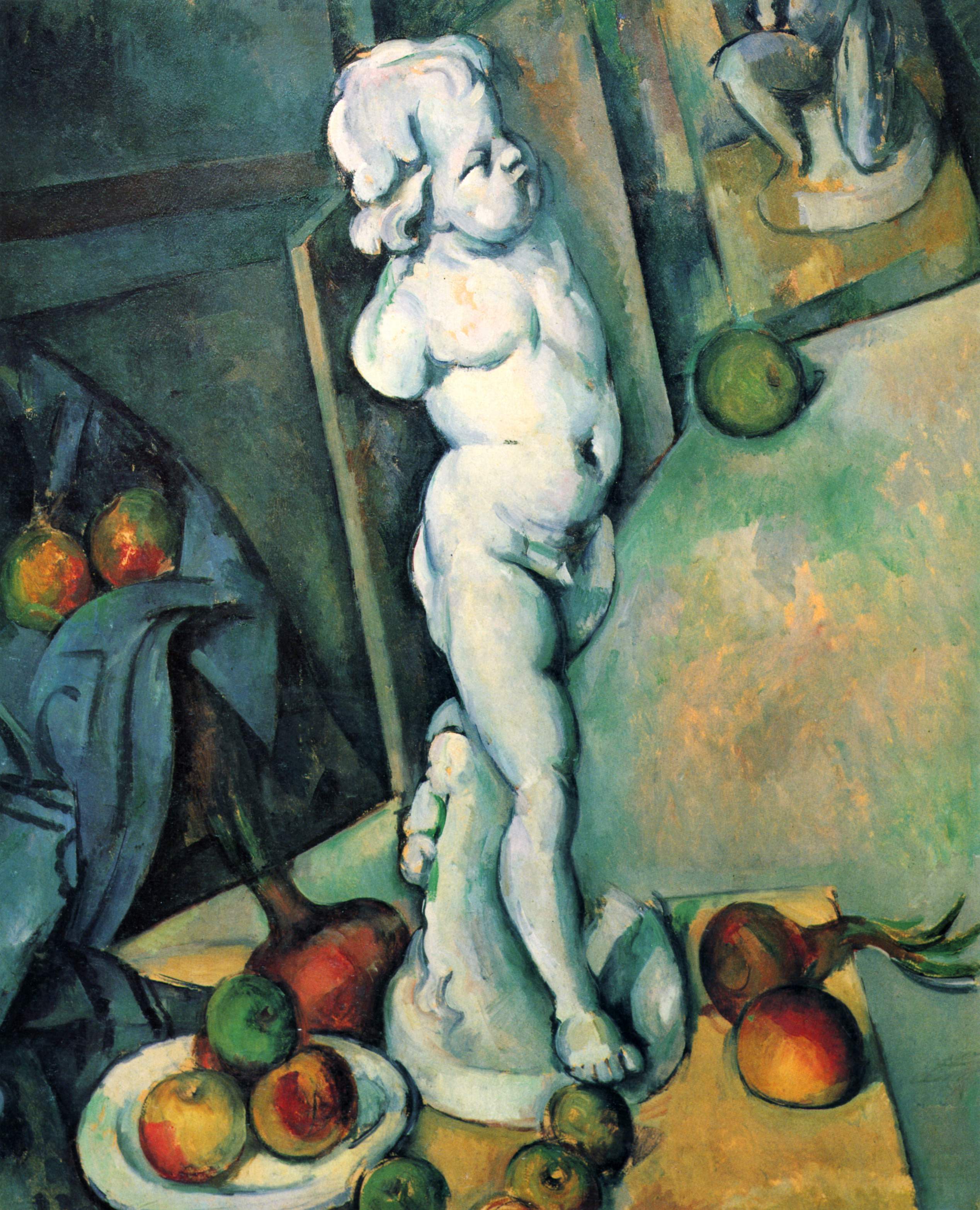
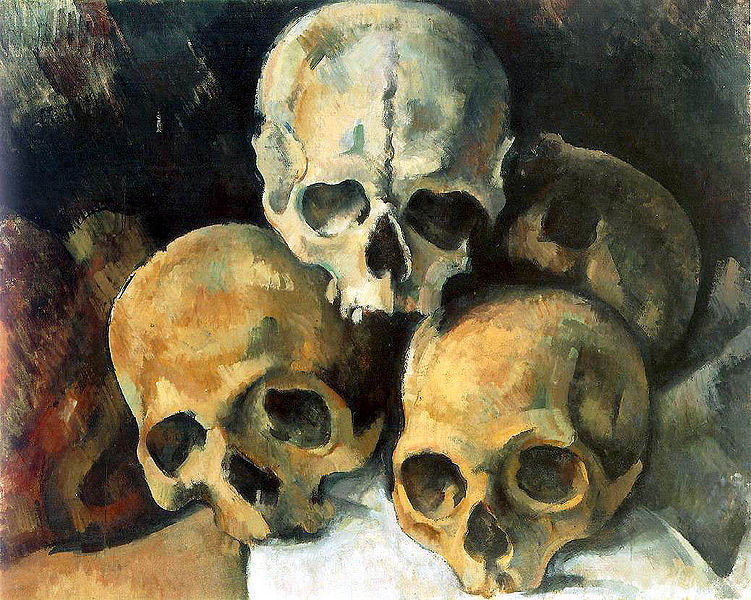
It was consequently fascinating to walk into the studio and see before you those same objects which have now become so well-known to the art lover through Cézanne’s works. That broken mannequin for example was immediately recognisable from the Courtauld’s Still Life with Cherub, and there too were the skulls from his Pyramid of Skulls. It was also fascinating to see the methods of his work in this studio which still smells of oil paint and turpentine – his tall ladder to work on larger paintings, and a large vertical hole in the wall through which larger canvases such as his Bathers series (which were painted at this studio) could travel in and out. Meanwhile, outside of the little studio house, the overgrown gardens really give the impression of the kind of solitude and reclusiveness which Cézanne preferred to maintain throughout most of his working life.

Still Life with Cherub (1895)

Still Life with Cherub (1895)

The Basket of Apples (1890-1894)

The Basket of Apples (1890-1894)

The Pyramid of Skulls (1901)

The Pyramid of Skulls (1901)

Still Life, draper, pitcher and fruit bowl (1893-4)

Still Life, draper, pitcher and fruit bowl (1893-4)

The Bathers (1898-1905)

The Bathers (1898-1905)

Studio done, and the creative air of Cézanne breathed in deeply, we headed up hill for about another 20 minutes to visit what is now called “Le Terrain des Peintres” – literally Painter’s Ground – said to be the exact spot where Cézanne would go to paint the magnificent view of the Mont Sainte-Victoire. Today, the space takes the form of pleasantly manicured garden, with some reproductions of his paintings set around the walls of the gardens. But other than that, it is a quiet spot, blissfully free from the tourist hoards who frequented his studio, probably because of its distance from the city, and its lack of parking for coaches.

And the view? Just stunning. In that moment, turning around and catching the view of the glorious pastel-shaded mountain rising out of the field-covered horizon, I felt my breath sucked away from me as in this moment of epiphany I felt myself somehow drawn back into an artistic past – a period of artistic revolution, when the dominance of nature was recognised, when shape was reinvented, and when colour rose to the fore. For me, it was a highpoint of this Provençal Odyssey (both physically and metaphorically), the moment when I realised that  a whole century of artistic progression and development owes its dept to this place, to this artist, to the path from impressionism to cubism which he opened up through his genius and his insight, starting as he did so perhaps one of the most important revolutions of all time.

The magnificent Mont Sainte-Victoire

DSC04670 DSC04674 DSC04694 DSC04698 DSC04715

More information on visiting Cézanne’s studio can be found here.

Provence Odyssey | My Journey in Paintings: Beau Les Baux

When I was planning my trip to Provence, I always had in mind the kind of imagined utopia, where Dominik and I would walk, carefree, into lavender fields and poppy fields, he taking a rest amongst the sweet smelling flowers, and me setting out my sketch book and paint box, beckoning the Provençal muse to meet my embrace, inspiring me to transfer the glory of Provence to the blank pages of the sketch book before me. In this sense I suppose I am similar to so many artists who have gone before me; such as Van Gogh, who was so driven by the concept of establishing an artistic community in the region that he painted some of his best works just as decoration for the house which would be at the centre of that movement.

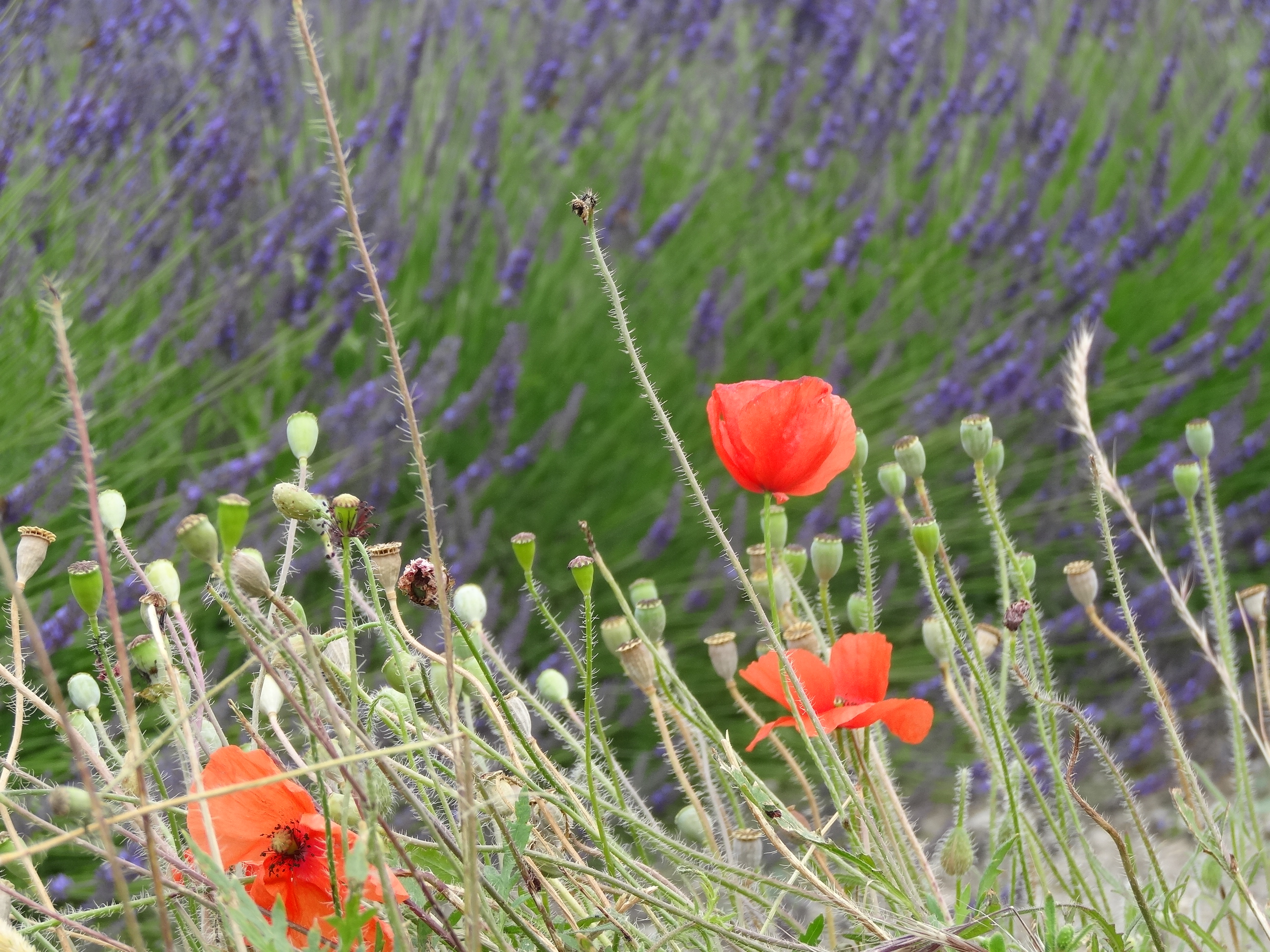
While Van Gogh’s dream was sadly never realised, my own artistic imaginings have, happily, come closer to fruition. After 6 days on the trip, I had already completed two works. As for my vision of utopia, well, Dominik had already found rest in amongst a Poppy field (as the photo below aptly demonstrates!), while in Saint-Rémy, we finally found the opportunity to stroll through lavender fields and olive groves, having got no closer to lavender in both Avignon and Arles than the bags of dried stuff littering up the souvenir shops.

Dominik takes a rest amongst the poppies, Oz style.

Dominik takes a rest amongst the poppies, Oz style.

But once Les Baux entered the equation, my artistic stirrings really began to take another stir, as with one glance at some of the most stunning mountain scenery in all of France, I became involuntarily, but very willingly sucked into another hypnosis of creative motivation, as the sweet-smelling lavender-haired Provence Muse took my hand in hers, and led me to a third page of my sketchbook to complete yet another ode to this paradise.

As I described yesterday, Les Baux-de-Provence could not help but inspire artists such as Yves Brayer to manifest the exquisite village and surroundings in paint, but then again Saint-Rémy’s impressive surroundings are surely worth their weight in inspirational gold also. So for my third painting, another of my freely-conceived “compositions” series, I couldn’t help but paint the limestone chateau-topped spur of Les Baux, its stunning surroundings of patchwork-quilt fields, and, in the distance, the ruins of St Remy’s great archaeological site, the Roman town of Glanum.

Composition No. 4 (Beau Les Baux) (© Nicholas de Lacy-Brown, 2013, guache on paper)

Composition No. 4 (Beau Les Baux) (© Nicholas de Lacy-Brown, 2013, guache on paper)

So there you have it: Composition No. 4 (Beau Les Baux). An undulating patchwork landscape, rocky citadel, blue skies and all topped off with a picnic of baguette, cheese, saucisson and of course a little wine. Ah…La Bonne Vie. I hope you enjoy it.

© Nicholas de Lacy-Brown and The Daily Norm, 2001-2013. Unauthorized use and/or duplication of the material, whether written work, photography or artwork, included within The Daily Norm without express and written permission from The Daily Norm’s author and/or owner is strictly prohibited. 

Provence Odyssey | Saint-Rémy: Day 6 – In search of Van Gogh (Part 2)

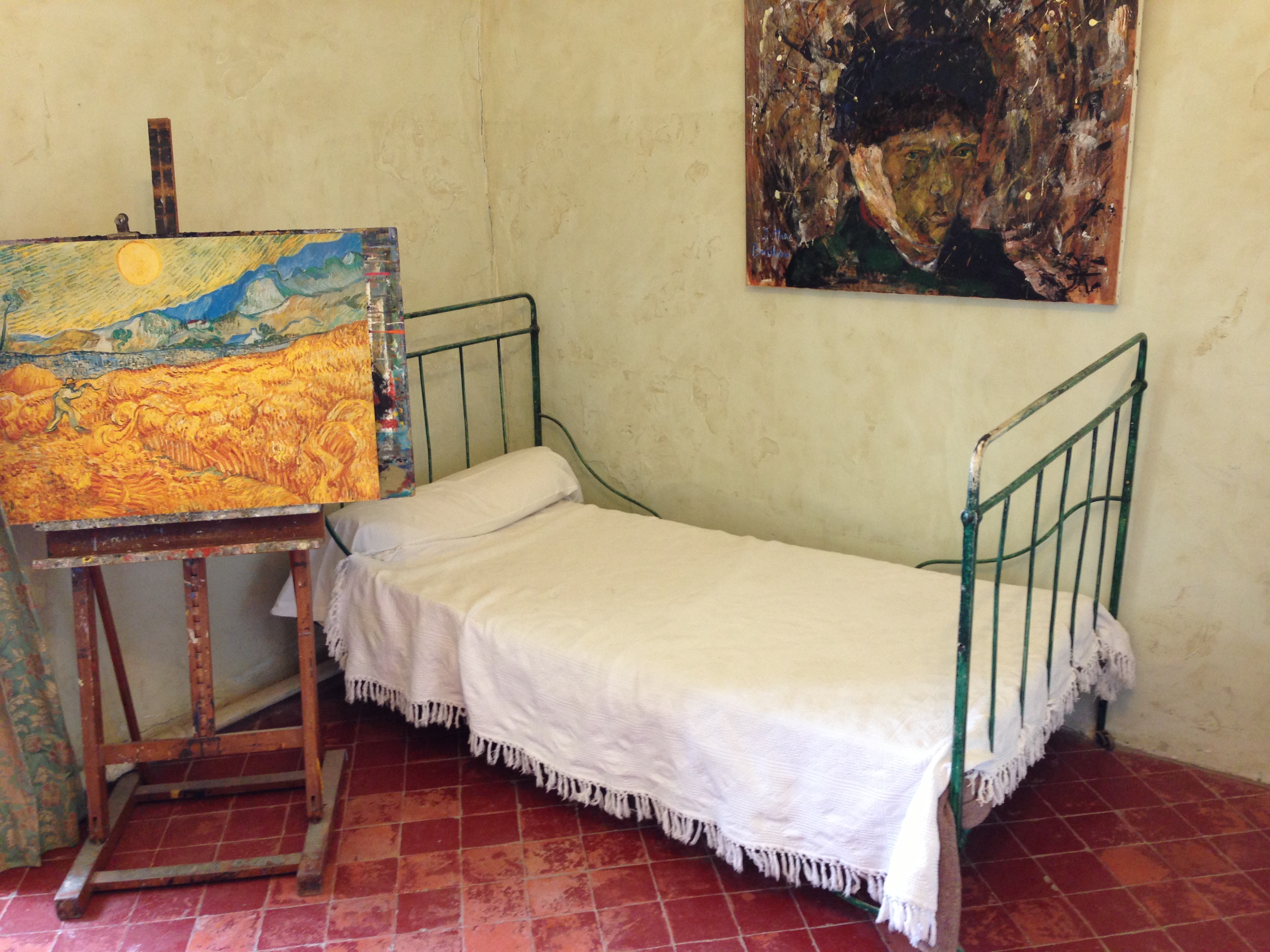
As Van Gogh neared the final climax of his prematurely shortened life, his movements around France, and the paintings which resulted, became more and more dominated by his health needs. In May 1889, after his famous ear self-mutilation incident in Arles and the hospital stay which followed, Van Gogh moved to Saint-Rémy-de-Provence, some 20 miles North-East of Arles in the foothills of the Alpilles mountains, in order to voluntarily commit himself into the care of an asylum. That asylum was the hospital of Saint Paul-de-Mausole, set within the tranquil grounds of a former monastery to the south of Saint Remy, and was where Van Gogh set up home, with one room and an adjoining studio, for the next year of his life. Come May 1890, Van Gogh was off again in pursuit of medical assistance, moving to his final destination of Auvers-sur-Oise, this time to be nearer to Dr Paul Gachet. He would be dead some 3 months later.

Despite the nature of what some could see as a mental crisis dictating Van Gogh’s relocation to Saint-Remy, there are two undeniable factors about his stay in the town and the output that resulted. The first is that the asylum and the town to which he relocated are both exceptionally beautiful examples of Provence at its finest. The second is that, understandably, the paintings which resulted from this time are some of Van Gogh’s very best.

Painted in Saint-Rémy…

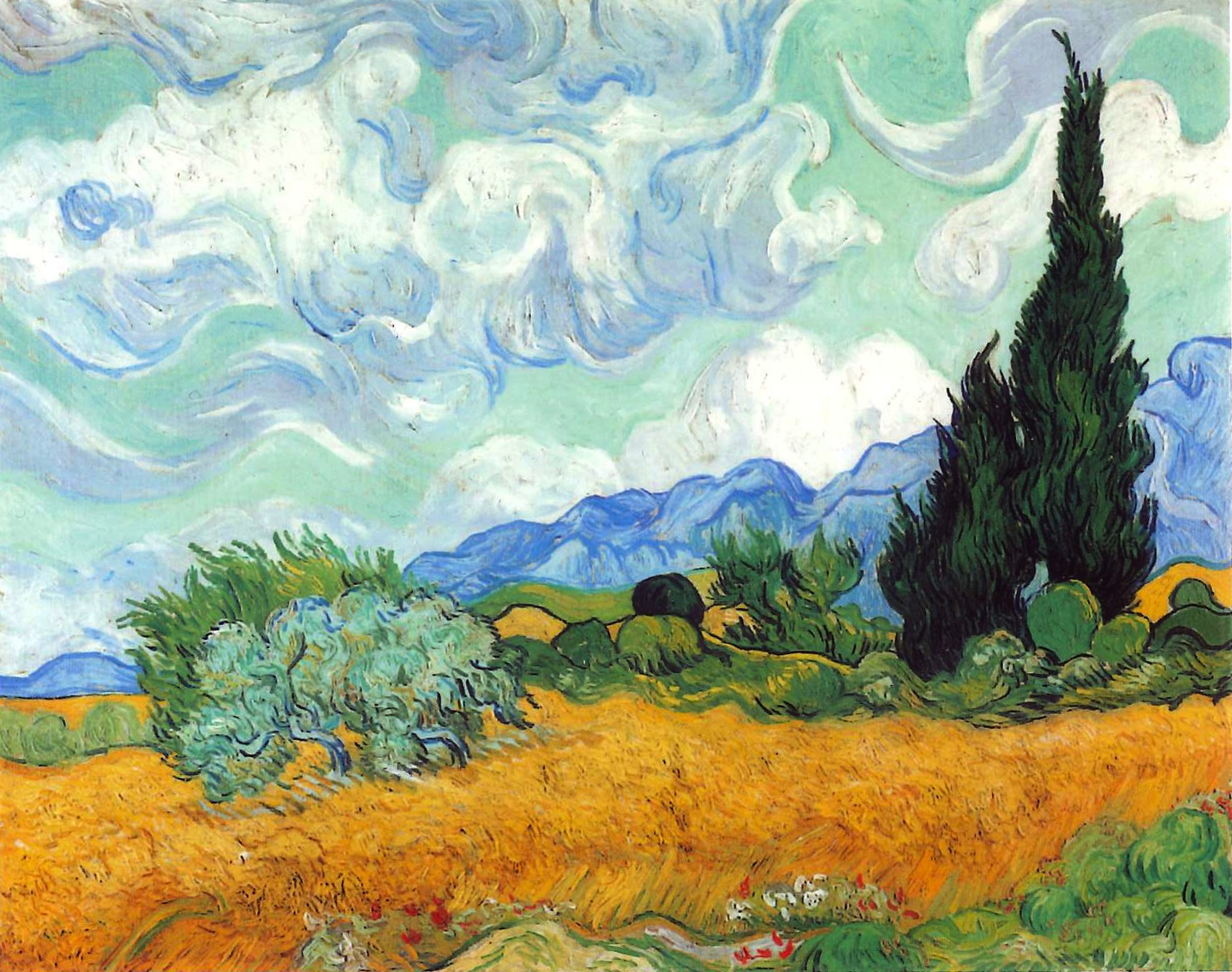
Wheatfield with Cypresses

Wheatfield with Cypresses

Irises

Irises

Mountainous landscape behind the hospital Saint Paul

Mountainous landscape behind the hospital Saint Paul

The Olive Trees

The Olive Trees

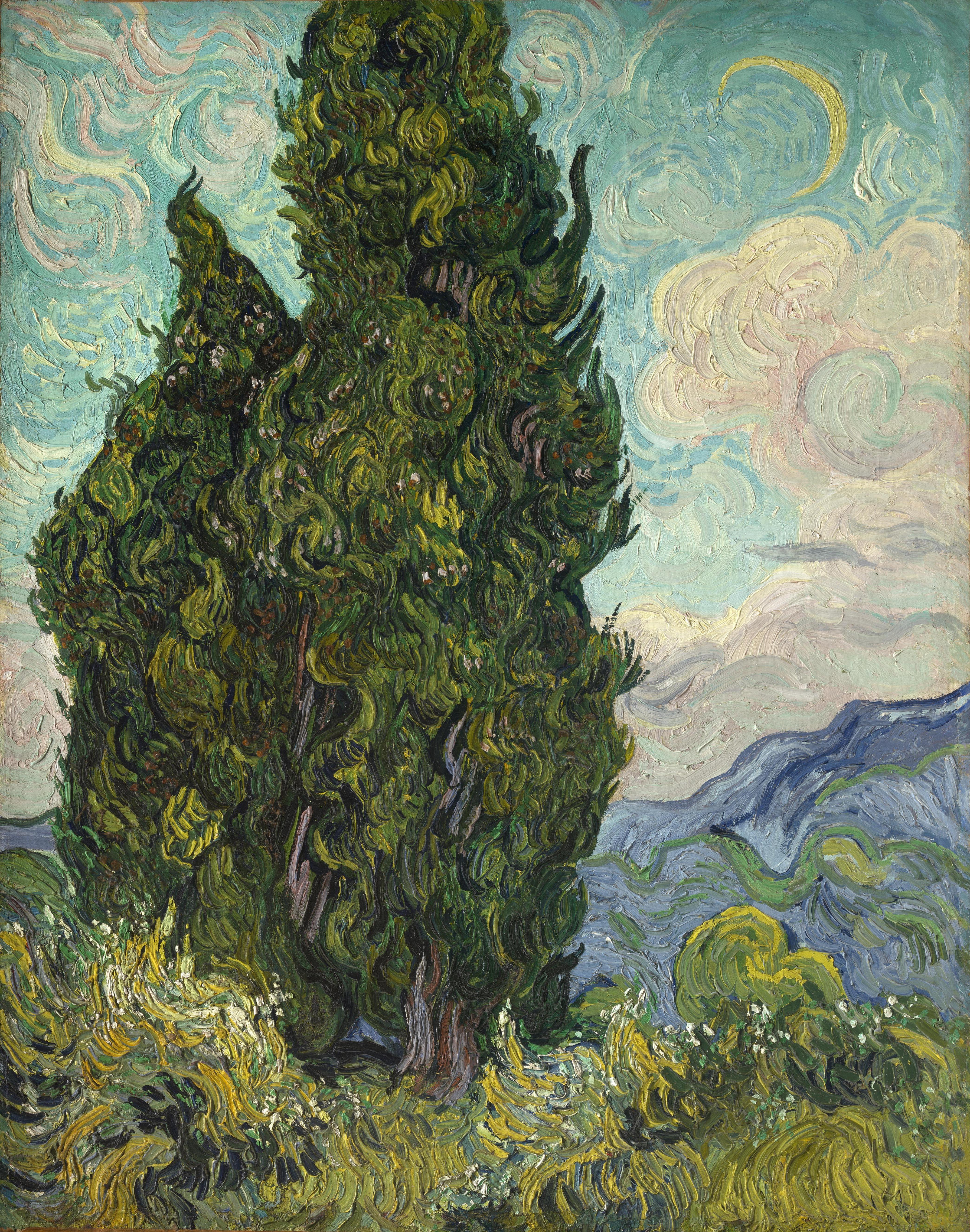
Cypresses

Cypresses

It was consequently to Saint Remy that we proceeded on this third leg of our Provence Odyssey, as much guided by the promise of a pretty mid-countryside town as by the legacy of Van Gogh which seeps into its very foundations. While a stroll around the pretty boutique-filled village proved that the town is abundant with its own Provençal charms, albeit on a far smaller scale than Avignon or Arles before it, it was in pursuance of Van Gogh’s story that we begun our explorations of Saint-Rémy, and the out of town stroll which this trail required.

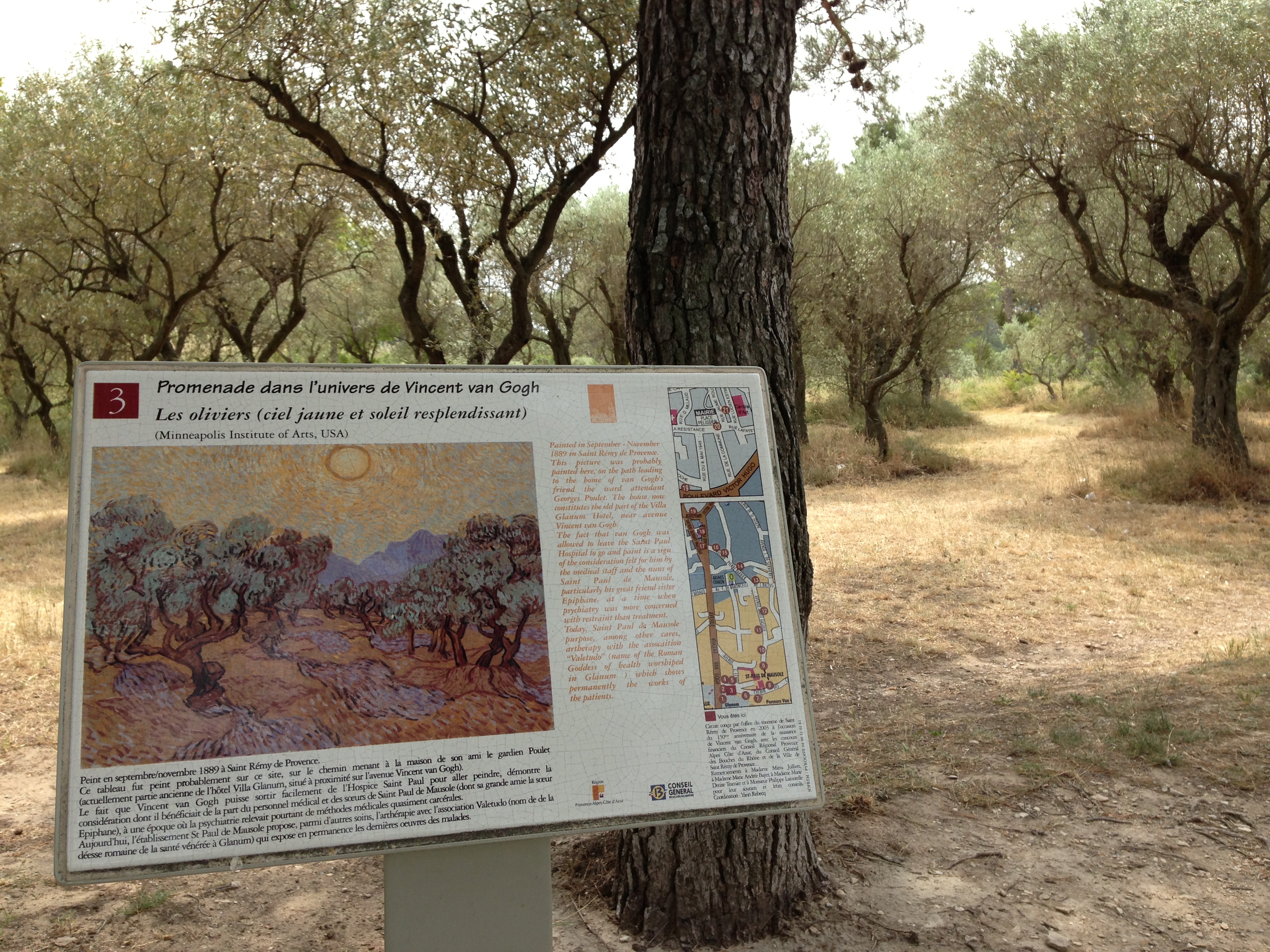
Unlike Arles, whose exploration of the Van Gogh story left me somewhat wanting (there were postcards sure, and a café mock up on the Place du Forum, but where were the museums, the recreations of paintings, the story?), Saint-Rémy’s small but ample tourist office provides an excellent self-guided Van Gogh walking tour, which takes you out of the village and into the stunning surrounding countryside, in order to visit the Saint Paul-de-Mausole asylum where Van Gogh lived, and see recreations of his many Saint-Rémy based paintings along the route.

Right where he painted it - the Van Gogh walk brings his paintings to life

Right where he painted it – the Van Gogh walk brings his paintings to life

Van Gogh's hospital bed and easel

Van Gogh’s hospital bed and easel

Taking this route, we were delighted with the pastures new before us, strolling as we were along small residential and field-lined roads which we may never otherwise have discovered. While much of the landscape is a little more developed now than it might have been in VG’s day, as we neared the asylum, wide expanses of olive tree-lined fields started to open up before us, and with the wild craggy outline of the Alpilles mountains in the backdrop, and swirly dark cypress trees popping up all over the landscape, it really started to feel as though some of Van Gogh’s most famous landscape paintings were coming to life before our very eyes. For as the little VG walk soon made clear, the artist produced some of his best works in this little town, painting at his swirliest (for example his famous Starry Night and his depiction of cypress trees and swirly leafed olive trees) and his most imaginative.

Painted in the Saint Paul hospital…

Trees in the Garden of the Hospital Saint Paul

Trees in the Garden of the Hospital Saint Paul

The gardens of Saint Paul hospital

The gardens of Saint Paul hospital

The gardens of Saint Paul hospital

The gardens of Saint Paul hospital

Stone Bench in the garden of Saint Paul

Stone Bench in the garden of Saint Paul

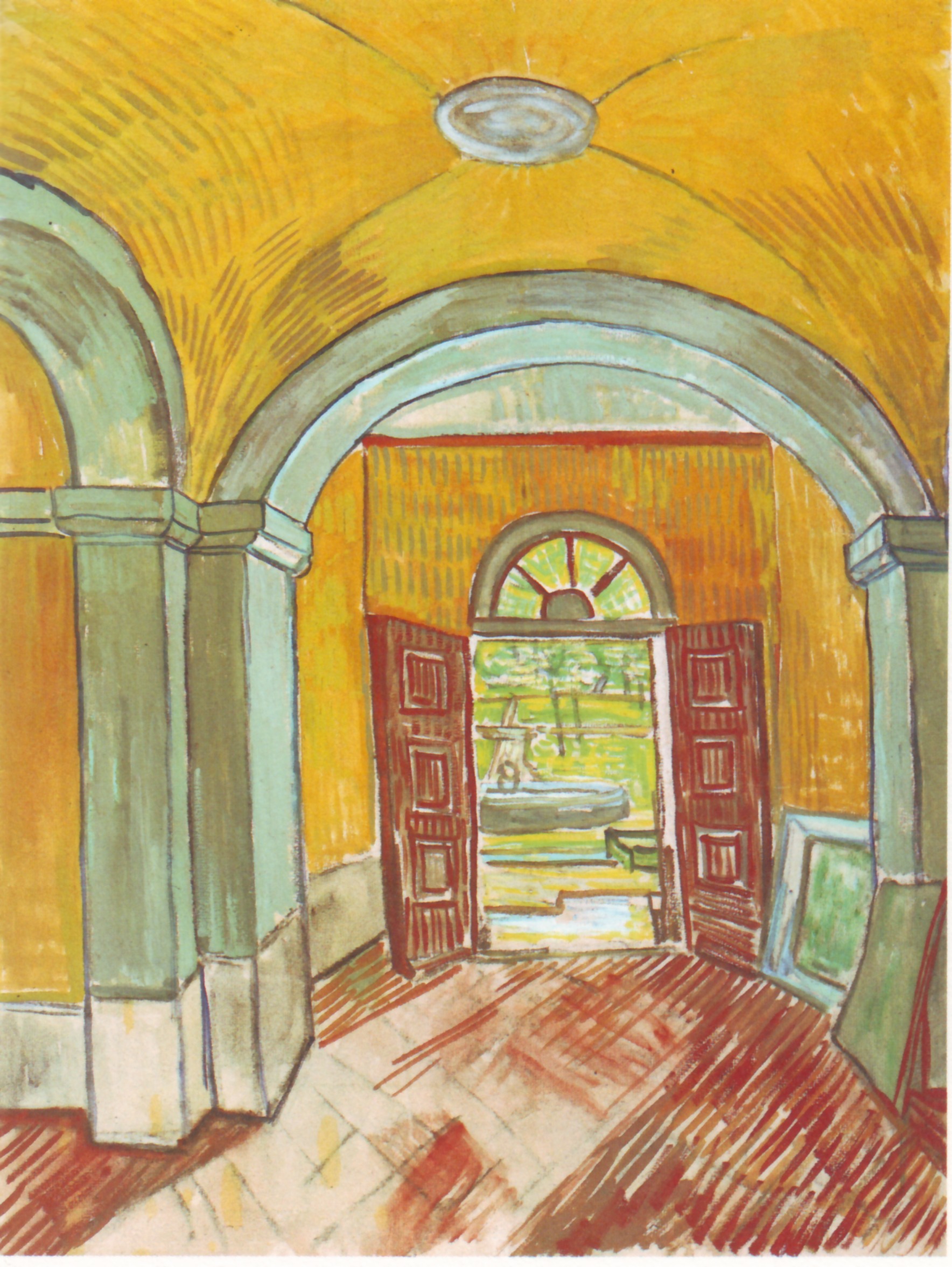
Entrance Hall of Saint Paul

Entrance Hall of Saint Paul

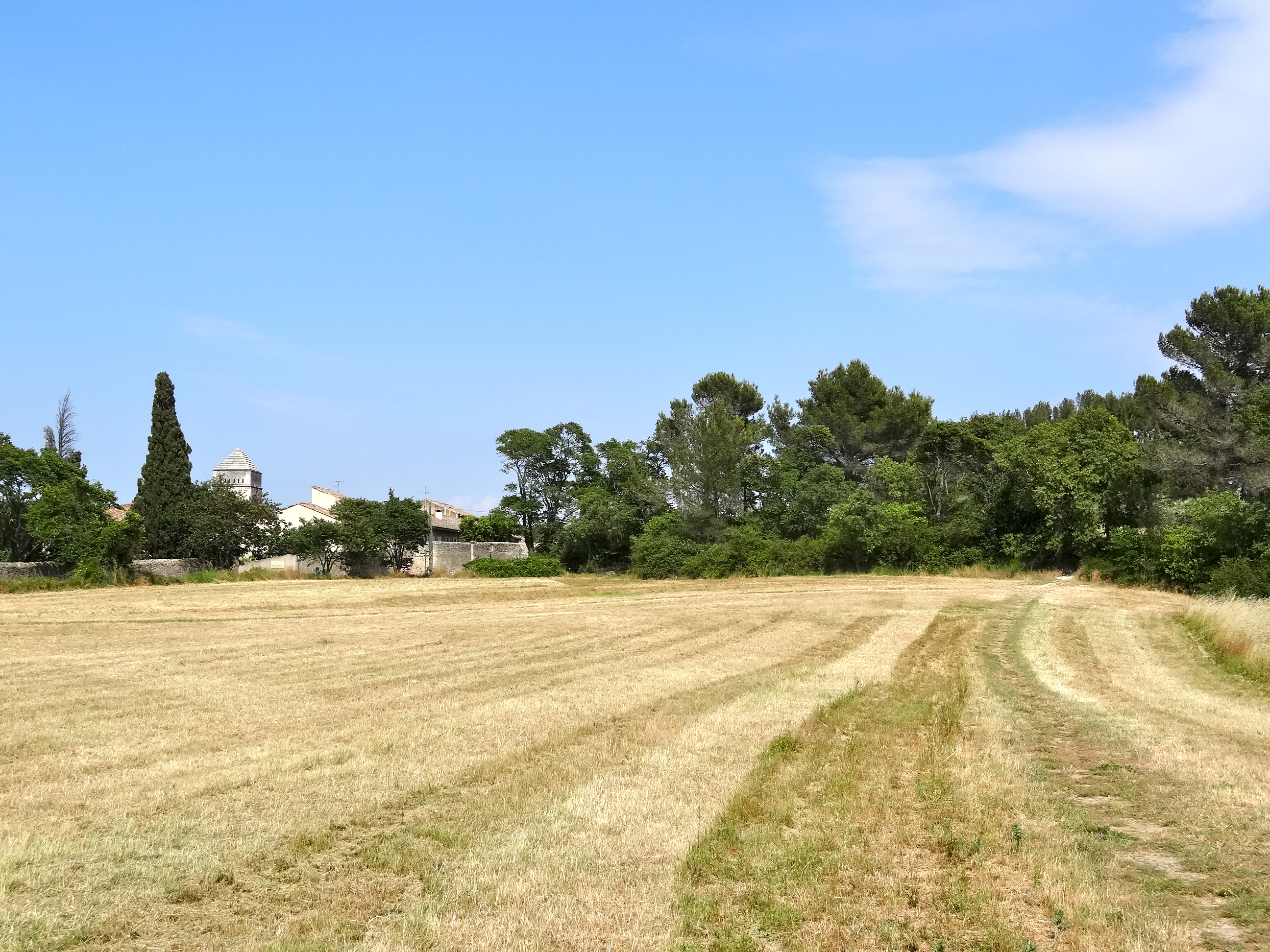
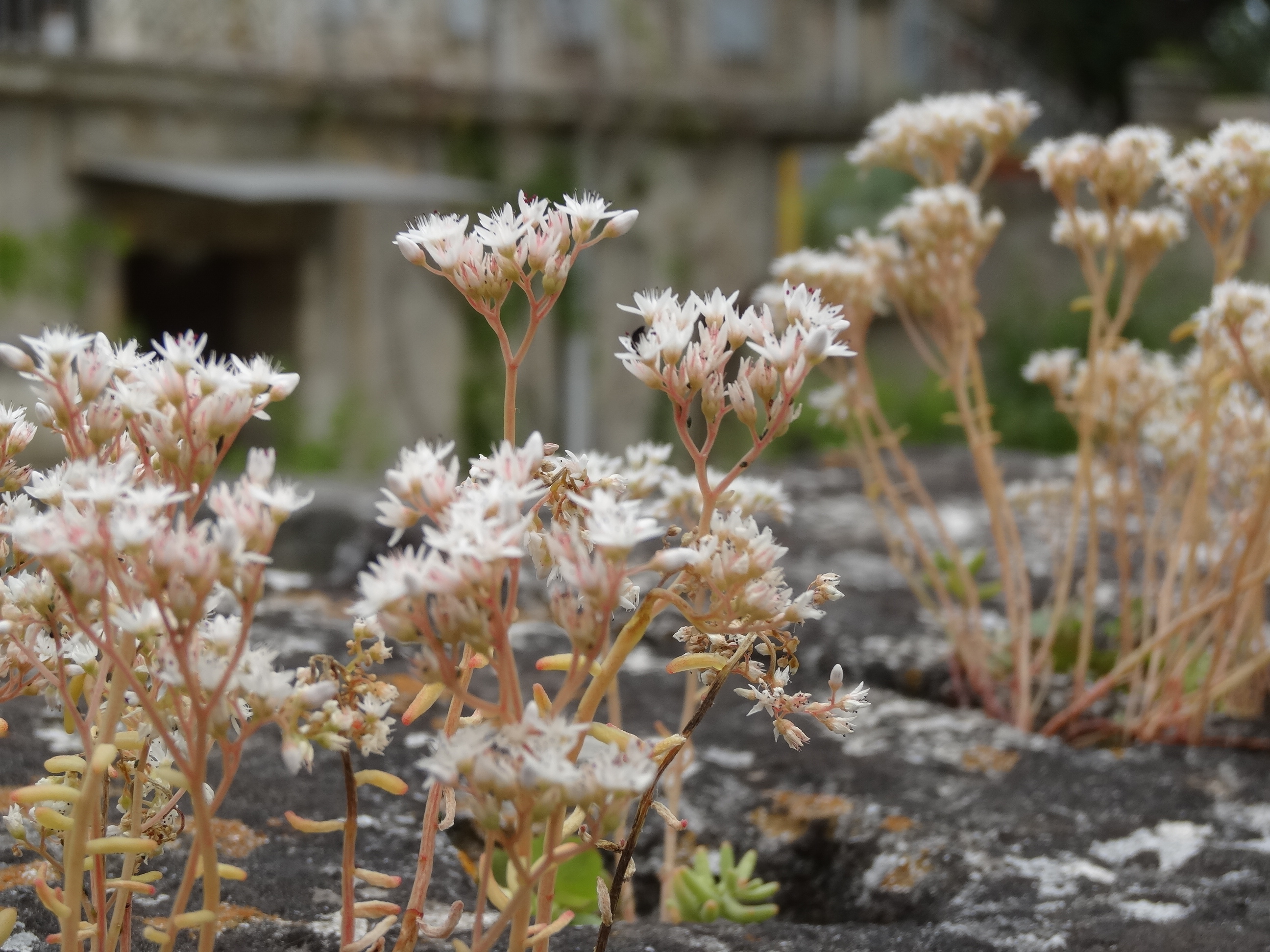
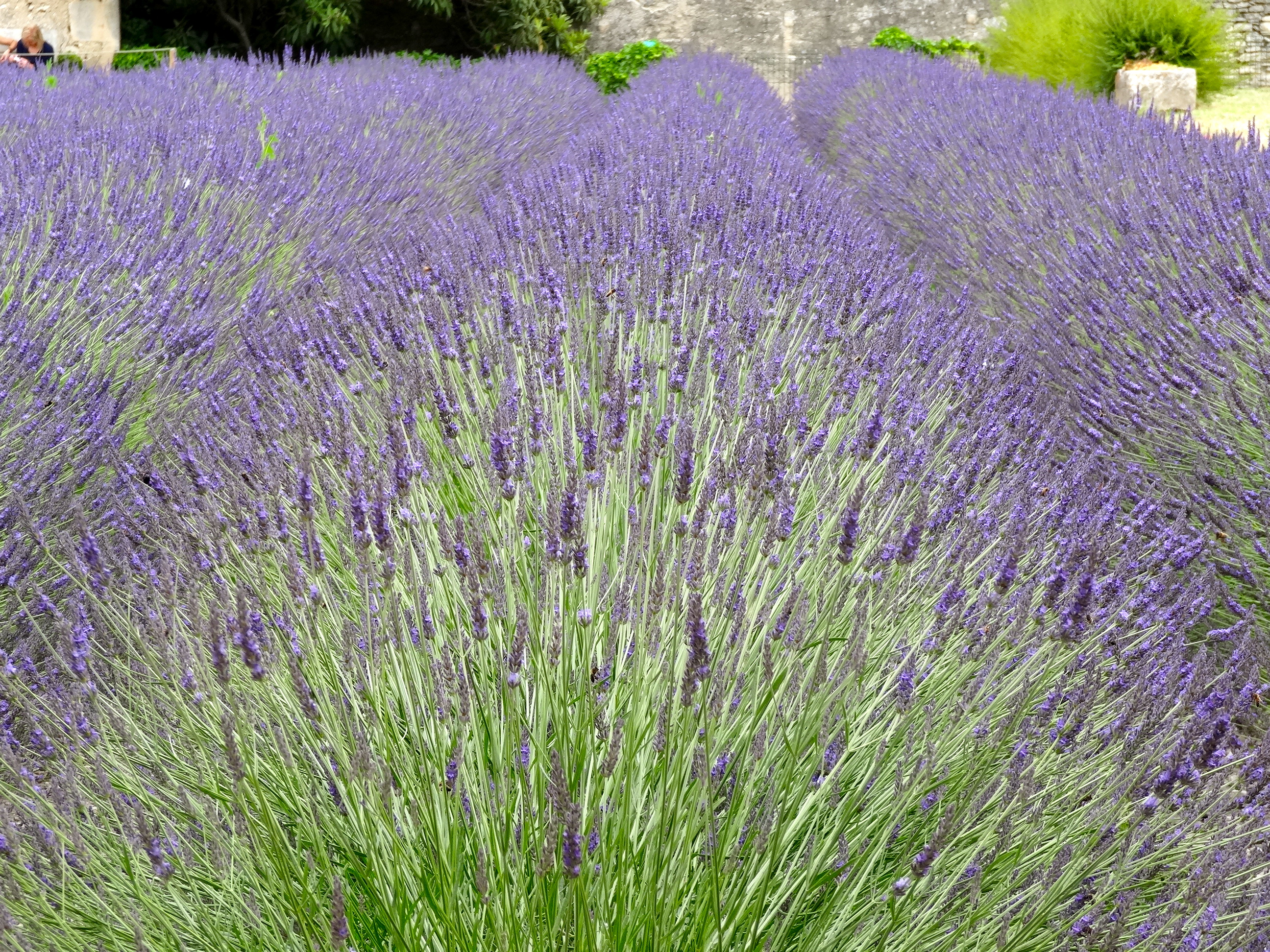
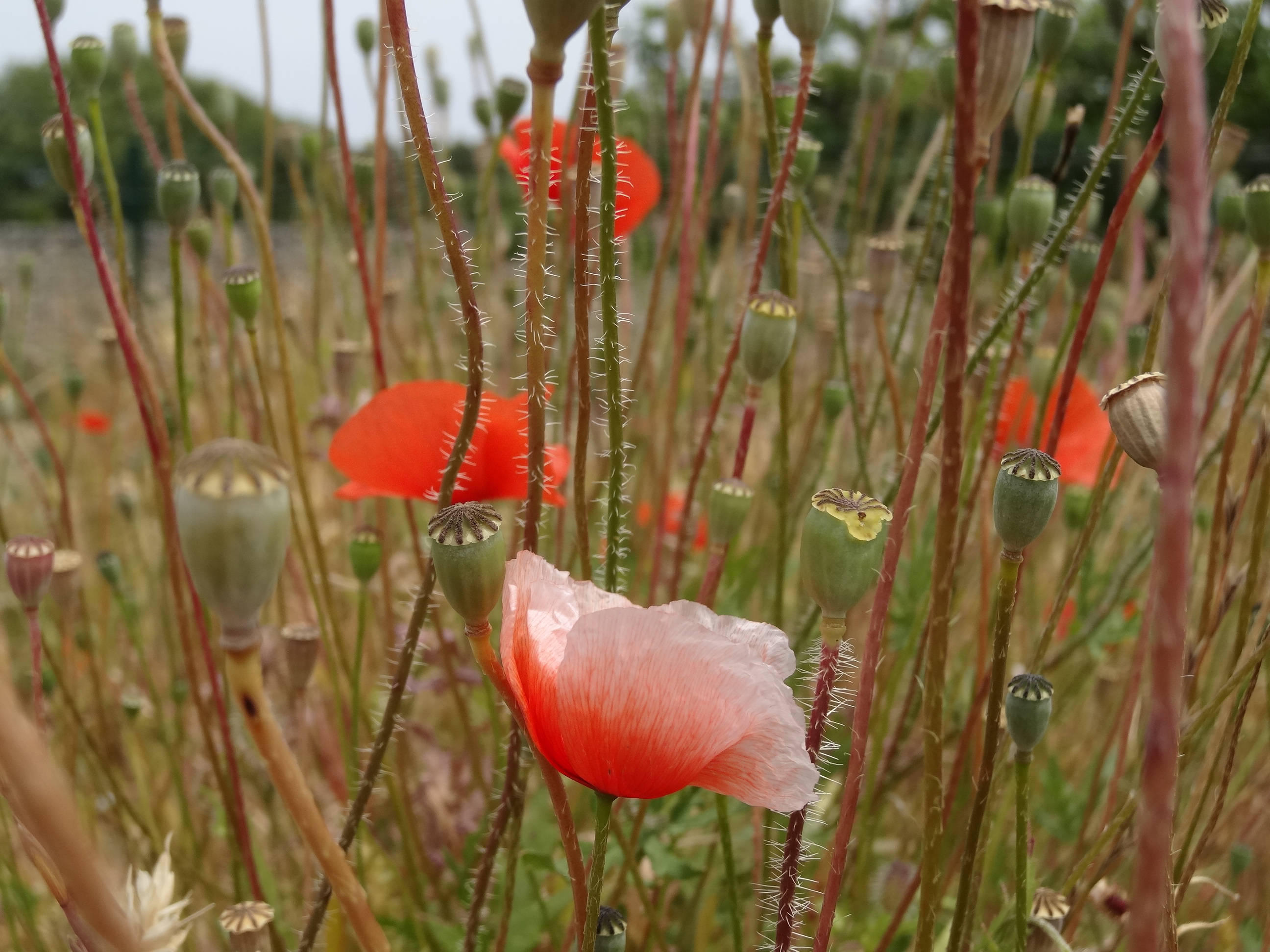
And no wonder. As we turned into the high-stone walled gardens of Saint Paul-de-Mausole, filled with multi-coloured flowers moving slowly in the light breeze, I could not help but feel inspired myself. This reaction only grew, as we wandered through the former monastery, gazing in wonder and the beautiful sun drenched cloister, and then, behind the building, the stunningly manicured Provencal gardens, loaded with rows of lavender, sunflowers and poppy fields, creating the kind of floral backdrop which would have had Van Gogh painting feverishly all day long.

The landscapes and the hospital that inspired Van Gogh…

DSC03698 DSC03273 DSC03294 DSC03699 DSC03305 DSC03319 DSC03317 DSC03296 DSC03231

With only a camera to hand, Dominik and I met our own inspiration through the medium of photography, taking hundreds of photos of the flowers, the lavender, the old monastery and the surrounding landscapes, strolling around the gardens, mesmerized by the scent of flowers, and the low murmuring of hundreds of bees buzzing around the lavender bushes. This was true Provence – the true stunning countryside that the guidebooks had all promised.

Eventually we broke away, not only from the asylum, but also from our Van Gogh trail, for what we found just down the road from Saint Paul was an entirely unexpected, quite stunning historical treat – a find of such exciting archeological proportions that I’m going to devote an entire post to it! For that – see you tomorrow. And in the meantime, I leave you with the lavender, the poppies, the olive trees and the sunflowers that so inspired Van Gogh, and now me in equal measure.

Provence at its finest…

DSC03344 DSC03431 DSC03310 DSC03451 DSC03468 DSC03367 DSC03354 DSC03401 DSC03488

A demain.

All photos and written content are strictly the copyright of Nicholas de Lacy-Brown © 2013 and The Daily Norm. All rights are reserved. Unauthorized use and/or duplication of the material, whether written work, photography or artwork, included within The Daily Norm without express and written permission from The Daily Norm’s author and/or owner is strictly prohibited.