Skip to content

Posts tagged ‘Art’

Paris: la visite d’art – Exhibition 2: Bohèmes

With a second day comes a second exhibition direct from the city of love, light, and above all things, art. Paris, inspiration to so many creatives over the years, is host to a sensational array of art exhibitions this Autumn/Winter season, and I could not wait to rush over on eurostar to get my fill.

Our second show, after Hopper, was also the second of two big blockbuster shows being held consecutively in the mammoth greenhouse-come-palace otherwise known as Le Grand Palais. Entitled Bohèmes, this exhibition promised to be an enriching exploration of the bohemian age of Paris, when pearly green absinthe dripped from sugar on a balanced spoon in little grimy bars on the step hillsides of Montmartre, when dandy artists courted flirty prostitutes and cabaret dancers, and when the true spirit of the artistic revolution was born.

L'Absinthe (Edgar Degas, 1876)

L’Absinthe (Edgar Degas, 1876)

It was the inevitable consequence of the impressionist age, when artists and intellectuals alike broke free from the shackles of Napoleonic Paris, zealously keen to explore the new modernised world, an age with re-written moral values, re-examined sensibilities, and artistically a blank-canvas ripe for the most extravagant exploration. It was the age of the bohemian revolution, the time of Toulouse Lautrec, the Moulin Rouge and the can-can, and surely the most charming age of all Parisian history.exposition_bohemes_grand_palais-470-wplok

It was with a high degree of excitement then that we entered our second expo in the Grand Palais, ready to indulge in Le Chat Noir, the decadence of dandyism, and the melancholy of alcoholic introspection. And yet what we were faced with was a huge long gallery full of dank old paintings…of gypsies! This was not at all what I had expected, and I must admit to being quite put out by this start to the show. Unenthusiastically, we browsed the nondescript works, before turning the corner, only to find more. Gypsies in Romania, Gypsies in Spanish Seville, all painted in a very classical, traditional fashion, each in turn failing to inspire me (I also thought it was rather ironic that this exhibition was even on show in Paris… after all, wasn’t France the country which was recently so caught up in a scandal with the Romani communities?).

However soon enough, the exhibition changed for the positive. Depictions of the gypsy communities became all the lighter, more colourful and lighthearted. Enter Van Gogh, with his fresh, turquoise skies and bright yellow gypsy caravan near Arles, and Renoir with his iconically idealistic portrayal of a gypsy girl. Then there was the great Courbet, the artist much lauded for kickstarting the spirit of the artistic revolution, and his highly original self-portrait, Bonjour Monsieur Courbet.

Gustav Courbet, La Recontre ou Bonjour M. Courbet (1854)

Gustav Courbet, La Recontre ou Bonjour M. Courbet (1854)

Van Gogh, Gypsy Camp near Arles

Van Gogh, Gypsy Camp near Arles

Auguste Renoir, En été / La bohémienne (1868)

Auguste Renoir, En été / La bohémienne (1868)

So why all the gypsies? Well apparently, the origin of the word “bohemian” is from the French word bohémien, which is the french word for gypsy, allegedly because the French believed the Romani people to have come either from or certainly through Bohemia (now the Czech Republic). From the gypsy connotations, the word gradually became used to describe people who were “socially unconventional” and so the bohemian concept was born – the art lovers, the dancers, the scandalous inhabitants of Montmartre – all were part of a mass bohemian revolution, where social conventions were cast to the weakening winds of the past, and free spirited minds were unleashed upon the world of art, love and leisure. And it was to this time, at the end of the 19th century, when bohemianism truly came into its own, that the exhibition finally wandered, casting behind the historical gypsy poses, and taking us to the heart of the bohemian insurrection of 19th century Paris.

From hereon in, I was in art heaven. From Courbet’s dashing self-portraits, and depictions of the artist’s arteliers (art studios), to the vibrant artistic community of Montmatre, with its cafés, its dance halls and its Moulins aplenty, these paintings unleashed an age of debauchery, of charm and of vivacious artistic liberty which was almost unique to the Montmartre region and a decisive factor in why I came to adore Paris as a young school boy first wandering into the Place du Tertre.

Paul Signac, Le Moulin de la Galette (1884)

Paul Signac, Le Moulin de la Galette (1884)

Van Gogh, Coin a Montmartre, le Moulin a poivre (1887)

Van Gogh, Coin a Montmartre, le Moulin a poivre (1887)

Ramon Casas, En Plein-air (1890)

Ramon Casas, En Plein-air (1890)

But not only did the exhibition feature the paintings of bohemianism, but also recreated their world. The café scenes were displayed in a mock up café with long benches, peeling walls and posters from the infamous cabaret Le Chat Noir and the artist’s hangout, Le Lapin Agile, while the depictions of the ateliers were hung on the walls of an artist’s studio. Playing in the background was the music of two operas – Bizet’s Carmen, the opera about Seville’s most famous gypsy protagonist, and of course Puccini’s La Bohéme, a story of the quintessential bohemians in 19th century Paris – the starving writer and his equally hungry artist friend, scraping together a living while falling in love with prostitutes and suffering the full potency of love, romance and the horrors of a poverty-ridden death.

Ramon Casas, Madeleine or Au Moulin de la Galette (1892)

Ramon Casas, Madeleine or Au Moulin de la Galette (1892)

Santiago Rusiñol, Café de Montmartre (1890)

Santiago Rusiñol, Café de Montmartre (1890)

Steinlein, poster for Le Chat Noir

Steinlein, poster for Le Chat Noir

The atmosphere conjured by the paintings of that time are like a snapshot onto an almost impossible age of charm. Of course it’s easy to romanticise poverty and decadence, in times which were hard, often miserable, and tragic, and yet there is something about that age which fills me with incredible inspiration, as though the artistic spirit which was kindled in that time has never burnt out, pervading through the centuries and igniting the artistic spirits of a millennia of new creative generations.

Ccharles Amable Lenoir, Rêverie (1893)

Ccharles Amable Lenoir, Rêverie (1893)

I only wish that you too could be inspired by the paintings on show… however these photos will have to be enough. Having just checked the website, I see that this great show finished at the weekend, drawing this fascinating study of bohemia to a close, but reopening a chapter of artistic revolution whose impact will live forever.

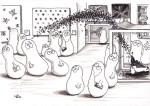
I leave you, for completeness, with the Norms’ very own version of Degas’ L’Absinthe (above)… it wasn’t featured in Bohémes, but clearly should have been.

L'Absinthe Norm (acrylic on canvas, 2011 © Nicholas de Lacy-Brown)

L’Absinthe Norm (acrylic on canvas, 2011 © Nicholas de Lacy-Brown)

À bientôt

Paris: la visite d’art – Exhibition 1: Hopper

I don’t need a reason to visit Paris. The beauty of the winding cobbled streets of Montmartre echoing with accordion melodies, the charm of the boutique-filled Marais, the glory of the sweeping River Seine, and the regal grandeur of the Louvre, the Napoleonic boulevards, the sandy parks and the super-sized fountains… I could just walk around the place, breathe in the atmosphere, and munch upon macarons year after year, month after month. I never grow tired of Paris.

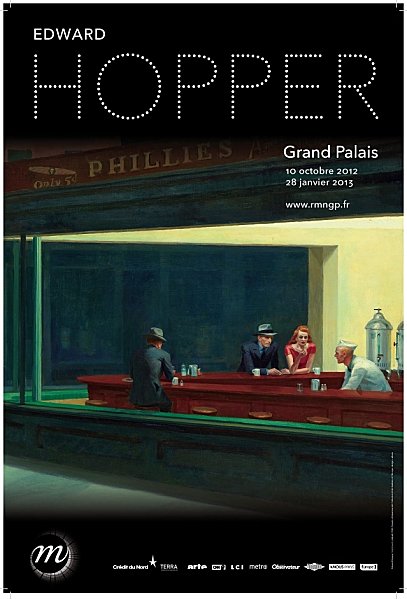
affiche-hopperAnd yet this year, Paris’ artistic offerings provided me not only with an excuse to make my second trip to the city in the space of 12 months, but made it a requirement. For the exhibitions which have graced the Paris art scene this autumn/winter have frankly been second to none – a Hopper retrospective at the Grand Palais, an exhibition focusing on the “bohemians” of 19th century Paris, also at the Grand Palais, a show of the significant artistic productivity, including Picassos aplenty, of occupied Paris during the second world war at the Modern Art Museum and, most significantly of all, a Salvador Dali retrospective at the Pompidou. I have waited all my life for that one. Yet by comparison, what did we have in London in the so called “cultural olympiad” of 2012? A show of Hockney’s “bigger picture”, which was always so crowded that the most you could see of his bigger pictures was his clumsy brushstrokes pushed almost up against your nose, a premature retrospective of the great pretender, Damien Hirst, and a further foray down the well-trodden path of the Pre-Raphaelites for the 5th time in as many years.

So off to Paris I went with my partner, full of anticipation for what lay ahead – 3 days; 3 exhibitions – an anticipation which was fulfilled many times over.

Now it would be an injustice to try and feature the three shows I saw all in one post – the Dali exhibition alone should have a whole blog of its own. So I will take you through the shows one by one, sharing the joy of Paris’ cultural agenda for those of you who cannot make the trip, and making a strong case for the prompt purchase of exhibition tickets for those who can.

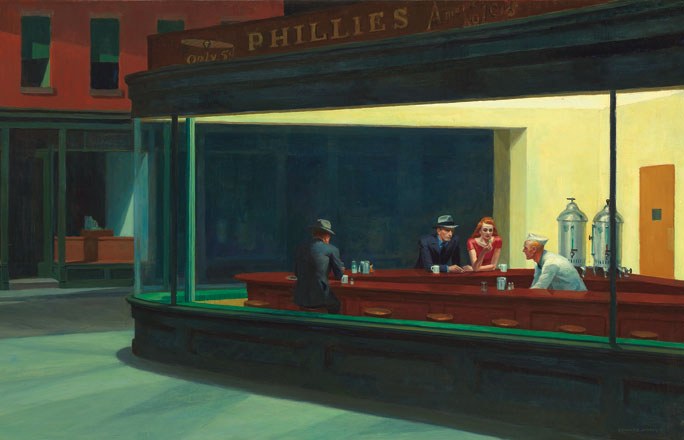
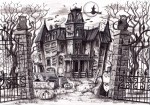
So up first – Edward Hopper at the Grand Palais. Hopper (1882-1967) the all-American painter, best known for his depictions of introspective early 20th century city dwellers, lost in a world of thought in an often artificial unnatural urban space, has long fascinated me, ever since I “accidently” hung on to a catalogue lent to me by my friends, Sarah and Truong, of this artist previously unknown to me. Of course at least two paintings are recognisable to us all – House by the Railroad (1925) – the quite reclusive, slightly sinister victorian house which is said to have inspired Hitchcock’s Psycho house, and a number of haunted house parodies ever since; and Nighthawks (1942), the quintessential Hopper masterpiece, with its four mysterious figures, enigmatic relationships, and strangely unnatural nighttime glare. But asides from those popular references, I did not know Hopper, yet wished to be better acquainted.

House by the Railroad, 1925 (© MOMA, NY)

House by the Railroad, 1925 (© MOMA, NY)

Nighthawks, 1942 (© Art Institute, Chicago)

Nighthawks, 1942 (© Art Institute, Chicago)

In staging this significant retrospective (featuring 160 works, that was almost Hopper’s entire life’s output – he was a notoriously fastidious and slow painter), the Grand Palais was providing the ultimate in Hopper shows, allowing not only an acquaintance with this fine artist, but a chronological embrace through each stage of his artistic career. 

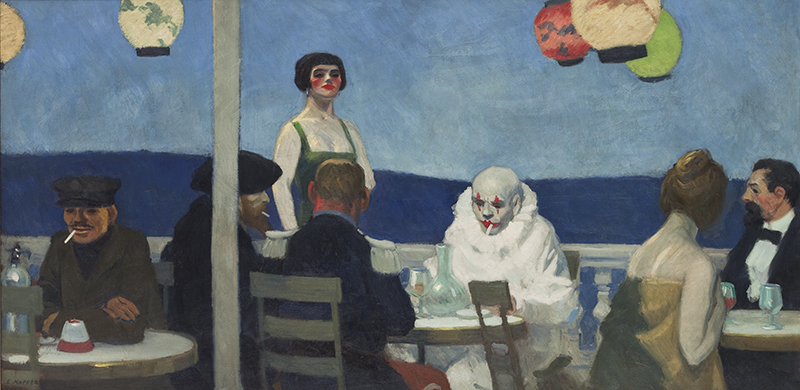
An early work - Soir Bleu, 1914 (© Whitney Museum of American Art)

An early work – Soir Bleu, 1914 (© Whitney Museum of American Art)

First up, we were shown his early works – painted around the beginning of the 20th century and suitably inspired by Paris and artists like Degas and Pissarro, Hopper dabbled in his earliest cityscapes – broad brushed meditations on a captivating city, yet rather subdued, although already mastering an effective contrast of sunlight and shadow. But soon enough, Hopper turned to illustration, finding that his paintings were not selling. Here, we see Hopper as the caricaturist and illustrator, both mediums in which he was able to demonstrate great skill as a draftsman and social commentator. It was only in the 20s that he began to paint seriously again, and finding greater success as he did so. From this point in the show onwards, there begins a vast array of Hopper paintings, spoiling the viewer with their breadth and sheer number.

Manhattan Bridge Loop, 1928 (© Addison Gallery of American Art)

Manhattan Bridge Loop, 1928 (© Addison Gallery of American Art)

The City, 1927 (© University of Arizona Museum of Art)

The City, 1927 (© University of Arizona Museum of Art)

From Williamsburg Bridge, 1928 (© Met Museum of Art, NY)

From Williamsburg Bridge, 1928 (© Met Museum of Art, NY)

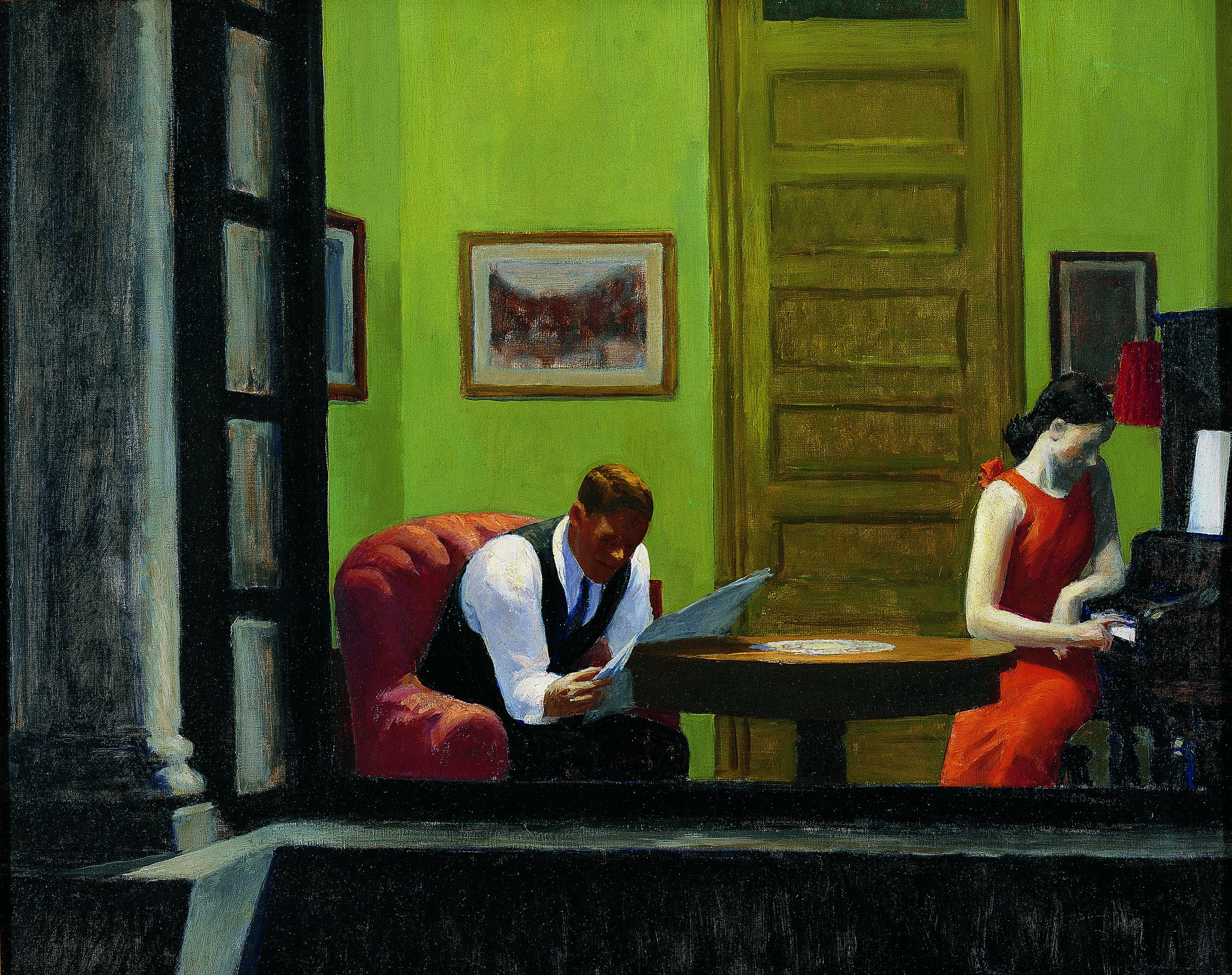
The paintings can almost be split, both chronologically and thematically. In the first set, Hopper’s paintings are conspicuous through their absence of people. Hopper had turned to urban scenes in his native America, concentrating on everyday scenes, roads, highways, lonely houses, and managing to capture the spirit of both suburban America and central city spaces, yet with the often noticeable lack of inhabitants. This then is to be contrasted by the later raft of works, in which the person takes centre stage in his paintings, as Hopper becomes almost voyeristic, appearing to intrude into scenes of great personal contemplation and introspection, as the characters he portrays stare, apparently into space, or couples appear together, yet both lost it seems in their own world.

Room in New York, 1932 (© Sheldon Museum of Art, University of Nebraska)

Room in New York, 1932 (© Sheldon Museum of Art, University of Nebraska)

Summertime, 1943 (© Delaware Art Museum)

Summertime, 1943 (© Delaware Art Museum)

These are the paintings which really made Hopper’s name – the lonely people – the built up urban scenes which nonetheless leave us with a feeling of emptiness and solitude. They are like a commentary on that time, as though Hopper is making a statement about the commercialisation and urban growth which was happening all around him – the more it grows, the lonelier the people caught up in the growth feel. The smaller the spaces, the inhabitants sink into themselves. In this respect, Hopper perhaps anticipated the pop-art of later years, yet doing so more as a resigned critic than as a celebrant of popular culture.

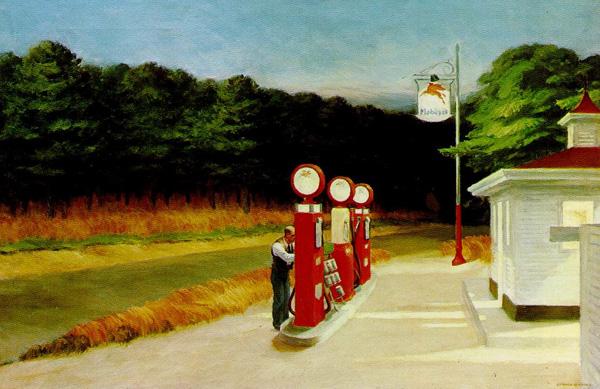
Gas, 1940 (© MOMA, NY)

Gas, 1940 (© MOMA, NY)

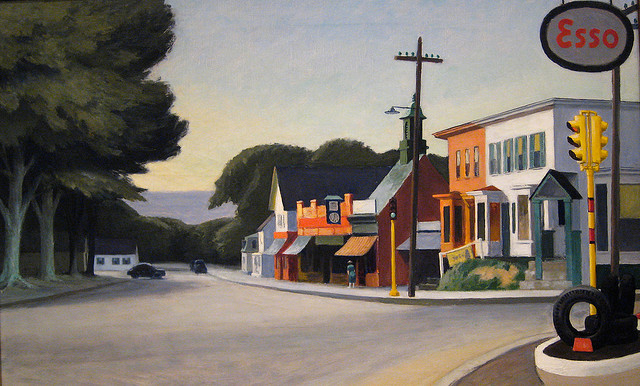
Portrait of Orleans, 1950 (© Fine Arts Museum of San Francisco)

Portrait of Orleans, 1950 (© Fine Arts Museum of San Francisco)

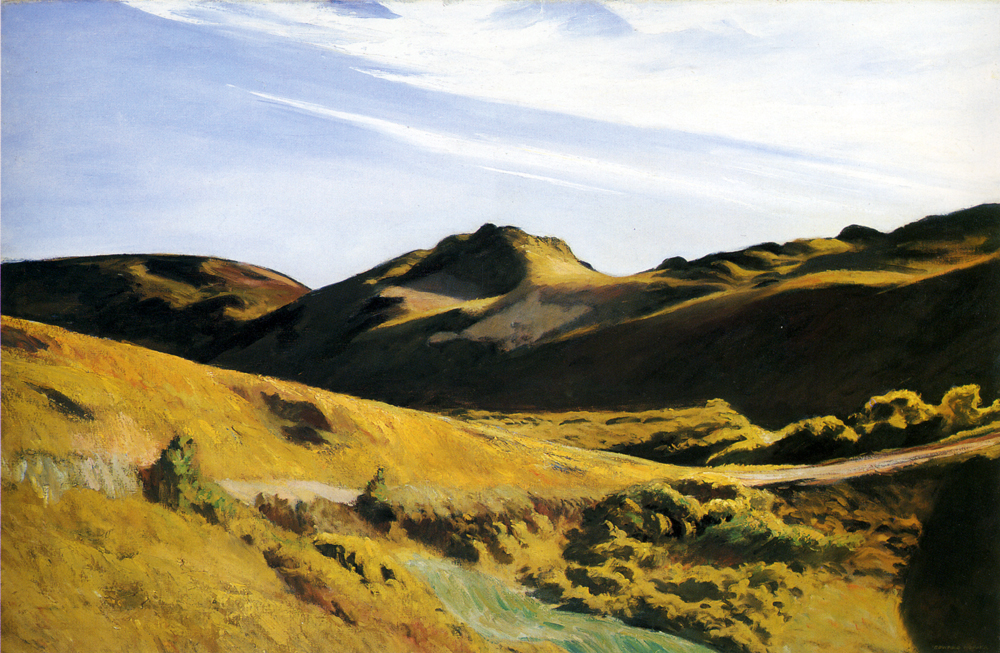
Personally, while I found Hopper’s people fascinating to consider, their stories open to so much interpretation, and Hopper’s intentions likewise, I couldn’t help but feel that too often his figures had something of a cartoony look about them, almost as though Hopper couldn’t quite kick the habit of his earlier days as an caricature artist. Rather, by far my favourite paintings were the solitary landscapes, the soulless cityscapes with not a person to be seen, the forest road interspersed with a jarring petrol station, the rolling landscape of The Camel’s Hump which was, by far, my favourite of his works.

Lighthouse Hill, 1927 (© Dallas Museum of Art)

Lighthouse Hill, 1927 (© Dallas Museum of Art)

The Camel's Hump, 1931 (© Utica (NY))

The Camel’s Hump, 1931 (© Utica (NY))

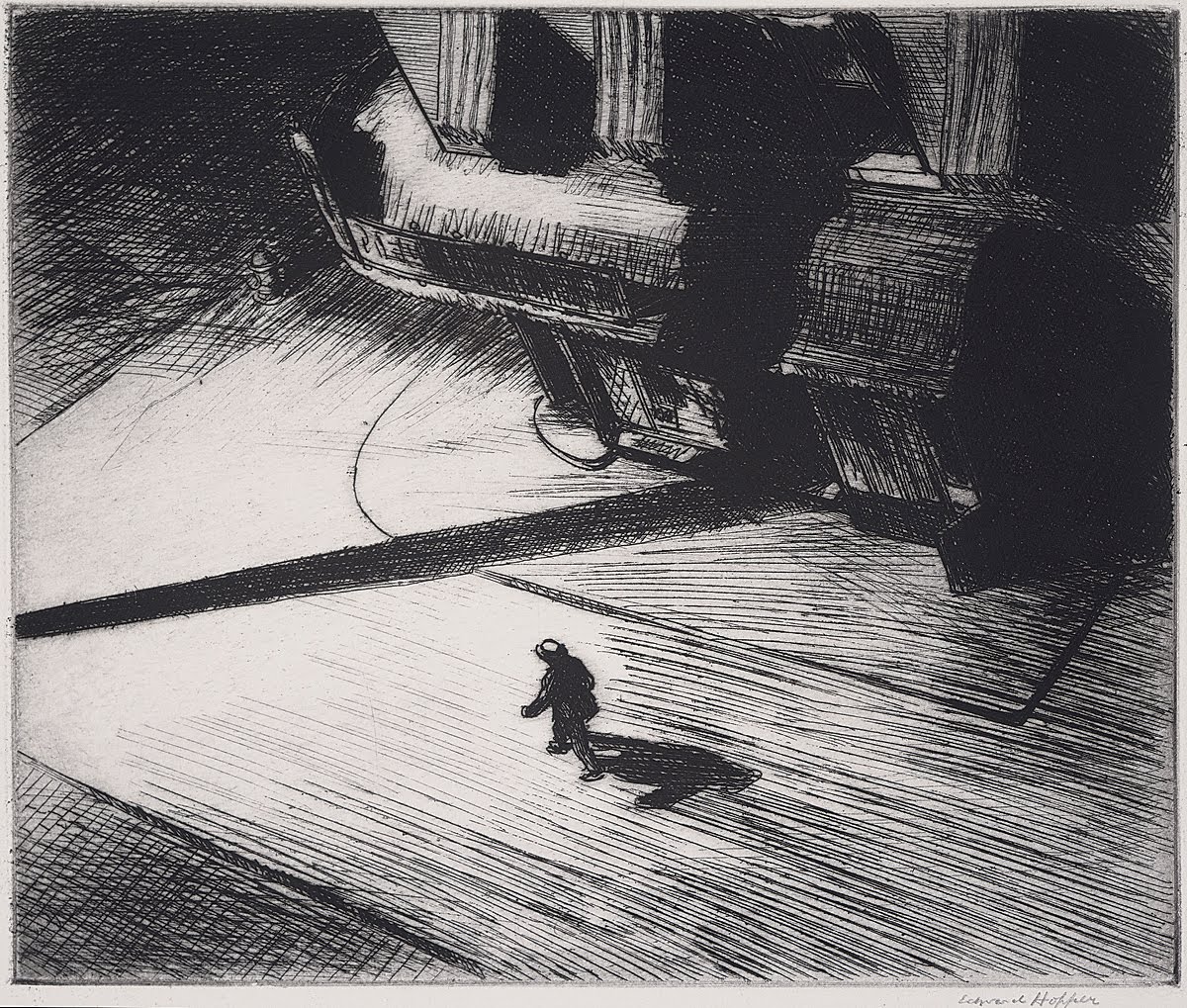
However likewise I loved a small gallery which showed some of Hopper’s etchings. This is quite bizarre, being that I have previously been drawn to Hopper by his great use of colour. Yet for me, Hopper’s etchings were more like a window onto his soul as an artist, whereas with his paintings, so often we look through opaque glass, misunderstanding his intentions and the messages he attempts to portray. Through his etchings we can enjoy his interaction with nature, appreciate the small details of life which fascinated him, and also track something of the thought process which underlay some of his later works. Take Night Shadows for example, which, in all its start Hitchcockian glory, appears to be something of a precursor to the enigmatic mystery which pervades many of his later paintings, especially the Nighthawks.

Night Shadows, 1921 (etching, © Philadelphia Museum of Art)

Night Shadows, 1921 (etching, © Philadelphia Museum of Art)

Whether it’s the inscrutable figures or the stark urban landscapes which do it for you, Hopper is a very likeable artist. His works are uncontroversial; they are inherently mysterious yet still very accessible; they beg questions, but provide no answers, and for that reason will continue to enagage audiences for many years to come. Yet so many of these works come from collections across America, and therefore for the European viewer, this is likely to be the best opportunity there will be for some years to engage with Hopper this side of the pond. So I urge you to go along, and make sure you book tickets in advance – did I mention that the show is so popular that we had to queue for almost an hour, just to get in on our pre-booked time slot?

The exhibition runs at Paris’ Grand Palais until 3 February 2013. You can buy your tickets here. Alternatively, if you can’t make it, the exhibition comes with its own mobile App which can be downloaded (at least from the itunes app store) and will guide you around the show with commentary and pictures – so even if you can’t make it to Paris, you’ll feel like you’ve done the show from the comfort and solitude of your very own armchair. Now Hopper would have loved that image.

On the Twelfth day of Christmas, my Normy gave to me…

…twelve drummers drumming

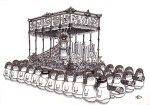
It’s 6 January, the 12th day of Christmas, and the crowds are out in force in Spain. Huge parades fill the streets, floats covered with flowers and Norms dressed as kings. Sweets are being thrown from the floats, littering the air like edible confetti, and on the roadside, little Norm children are scrambling to have their fill. This is not just any day, in the Christian world it’s the Epiphany, and in Spain and across South America, it’s “El Dia de los Reyes – the 3 Kings Festival! However this year, in one Spanish town, it’s not the floats containing the 3 kings which are getting all of the attention, but one particular float, upon which sits closely bound a Norm-man and a Norm-woman, happily in love, surrounded by 12 drummers celebrating their love-filled reunion…

…it’s Normy and Normette!

On the Twelfth day of Christmas, my Normy gave to me, 12 drummers drumming (© Nicholas de Lacy-Brown, pen on paper)

On the Twelfth day of Christmas, my Normy gave to me, 12 drummers drumming (© Nicholas de Lacy-Brown, pen on paper)

Yes, Normette is back! How could she possibly have resisted? Just one thought of those 11 pipers piping with their little tartan kilts, and what could possibly lay beneath (underwear or, as tradition dictates, au naturel) had her bouncing back to the UK as fast as the Eurostar to London could carry her (and to be fair, it does go quite fast). Why did she ever leave the fair rolling green pastures of the English lands, the verdant landscapes, the tartan fabrics, tea at 5 and of course Downton Abbey? But most of all, she had missed someone irreplaceable in her life, who had travelled up and down the UK just in an attempt to lure her back to him – why Normy of course.

In fact once they were reunited, Normette realised that it wasn’t really the UK she had missed at all, but dear Normy, and having taken one look at the rainy weather, she booked them both on a trip to Sunny Spain. And once there, what should they find, but the 3 Kings Festival itself. What better way to give Normette one final gift on the 12th day of Christmas, thought Normy, than to jump up on a float and celebrate their love surrounded by 12 drummers and a crowd of cheering admirers (Normette did miss her Moulin Rouge celebrity after all).

And so it is upon this moment of celebration and jubilation that on the 12th day of Christmas, we leave our lovers to it, back together, adoring, and ready to face the New Year as one. Here’s to a great 2013!!!

© Nicholas de Lacy-Brown and The Daily Norm, 2001-2012. Unauthorized use and/or duplication of the material, whether written work, photography or artwork, included within The Daily Norm without express and written permission from The Daily Norm’s author and/or owner is strictly prohibited. Excerpts and links may be used, provided that full and clear credit is given to Nicholas de Lacy-Brown and The Daily Norm with appropriate and specific direction to the original content.

On the Eleventh day of Christmas, my Normy gave to me…

…eleven pipers piping

It’s been several days since Normy made the mistake of introducing Normette to the glamorous razzmatazz of the Moulin Rouge, and she has still not come home. Not even since receiving Normy’s tantalising glimpse of 10 Lords-a-leaping over the boundary fences of Downton Abbey. How could she have resisted those bucksome young Norms, with all their wealth and privilege?! But no, Normette continues to thrive in the nocturnal shadows of the relentless revolution of Paris’ most famous red windmill. In fact so skilled a cabaret star has Normette become, that she has gone from Can-Can chorus-girl to show starlet, and the other day she even appeared on the front of the Paris Match, and it’s rumoured she will be invited onto the Ellen DeGeneres show any day now.

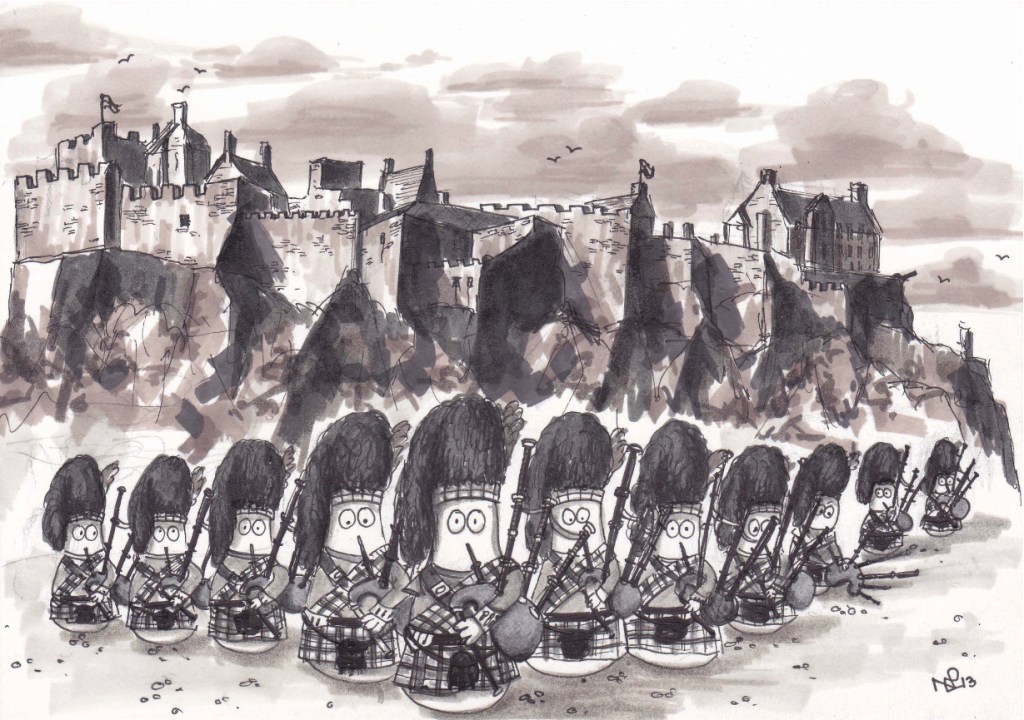
So with all this in mind, Normy, who is keenly aware that the 12th day of Christmas is fast approaching, has taken drastic measures to try and lure Normette back to the UK. In fact he traipsed all the way up to Bonny Scotland, to Edinburgh Castle, notorious location of New Year’s Eve celebrations, and on the very same night managed to persuade 11 hardy Norm bag-pipers to pose for a picture which he will now send to Normette (there were originally 14 on hand to play, but since Normy only wanted 11 for Normette’s 11th present, he got 3 drunk on Scotch Whisky, which turned out to be a pretty easy task). How can Normette possibly resist that Scottish charm, those flighty little tartan kilts, and those amazing furry hats? And the great advantage of this being a mere photo of the pipers, is that Normette needn’t hear the terrible drone of the bagpipes which poor Normy had to endure for some hours…!

On the eleventh day of Christmas, my Normy gave to me, 11 pipers piping (© Nicholas de Lacy-Brown, pen on paper)

On the eleventh day of Christmas, my Normy gave to me, 11 pipers piping (© Nicholas de Lacy-Brown, pen on paper)

But will Normy be successful in luring Normette back home this time?

© Nicholas de Lacy-Brown and The Daily Norm, 2001-2012. Unauthorized use and/or duplication of the material, whether written work, photography or artwork, included within The Daily Norm without express and written permission from The Daily Norm’s author and/or owner is strictly prohibited. Excerpts and links may be used, provided that full and clear credit is given to Nicholas de Lacy-Brown and The Daily Norm with appropriate and specific direction to the original content.

2012: the Norms review their year

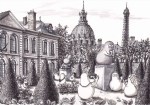
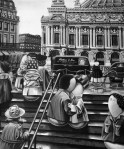
It’s been one hell of a year for the Norms. One could almost call 2012 the Year of the Norm, except to do so would be to presuppose that no subsequent year would be equally as Normy, something which, the Norms anticipate, will certainly not be the case. 2012 has nevertheless been a year of great Normy prowess and adventure. Why 2012 was the year when the Norms headed to Italy, to Spain, to Portugal, to Holland and to France. They sailed down canals, they took part in Easter Parades, they cycled over Amsterdam’s bridges and boarded Lisbon’s famous trams. In Paris, the Norms explored the sculptures of the Musée Rodin, while back in London, they milled around in the National Gallery, became covered with Yayoi Kusama’s polka dots and ran from a fly attack in Tate’s Damien Hirst exhibition. Oh yes, those Norms are cultured little blobs, but they proved themselves to be great sports-norms too, partaking in London’s hugely successful Olympic and Paralympic games, as well as mustering the energy to stand in crowds waving the flag for Queen Elizabeth Norm’s Diamond Jubilee. So you see 2012 really was the year of the Norm, and although you may have seen them all before, here is a little review of some of the sketches which captured the Norm’s adventures throughout the year.

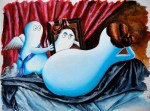
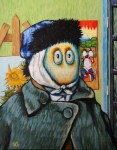
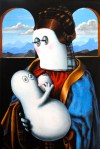
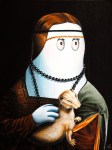
But that’s not all. 2012 was also the year when the Norms entered the history books, having themselves repainted in the image of some of the world’s most famous paintings. From Norms in the image of Manet’s Dejeuner sur l’herbe and, minus an ear (not that Norms have ears), in the guise of Van Gogh, to the Norm with a Pearl Earring, and the Norm with an Ermine, the Norms have recreated artistic greats such as Da Vinci, Frans Hals, Valezquez and Goya with their characteristic glowing blue complexion and their wide captivating eyes. What better time then, than at the end of the year of great Normular artistic endeavours, to take a look back at some of those paintings that made the year so artistically fruitful.

So that’s it – it was a year of fantastic Normic success, both in colour and black and white. Here’s to 2013, for a year of great creativity, activity, and a continuously abundant imagination with the power to carry both me, and the Norms to new and undiscovered heights. Happy New Year!

© Nicholas de Lacy-Brown and The Daily Norm, 2001-2012. Unauthorized use and/or duplication of the material, whether written work, photography or artwork, included within The Daily Norm without express and written permission from The Daily Norm’s author and/or owner is strictly prohibited. Excerpts and links may be used, provided that full and clear credit is given to Nicholas de Lacy-Brown and The Daily Norm with appropriate and specific direction to the original content.

On the Tenth day of Christmas, my Normy gave to me…

…ten lords a-leaping

So for those of you who missed the last instalment of Normy’s quest to give his lover, Normette, a gift for each of the 12 days of Christmas, well, you could say it has all backfired a little. Rather than to woo Normette into Normy’s one-armed embrace, his gift of 9 ladies dancing enticed a rather stressed-out Normette to join the Moulin Rouge’s dancing troop. As we speak, she is flashing her nether regions to the rich punters of the infamous nightclub, dancing provocatively with her ruffled skirt up and letting her hair down most unsuitably. One could say she is having the time of her life, but poor Normy, back in England, is in despair. Just how will he persuade Normette to come back to England?

It was when Normy was watching a review of 2012 on television that he had an idea – what with all those views of the Diamond Jubilee, and the UK’s victorious performance at the London 2012 olympics – why, what better way to persuade Normette back to England than to remind her of just what is so great about the country compared to France, which she has now made her home. He would visit the creme de la creme of the UK, taking photos of all of the best features of this wonderful nation, sending each in turn to Normette on the 10th, 11th and 12th days of Christmas respectively – he may even send more. Whatever it takes to get Normette back!

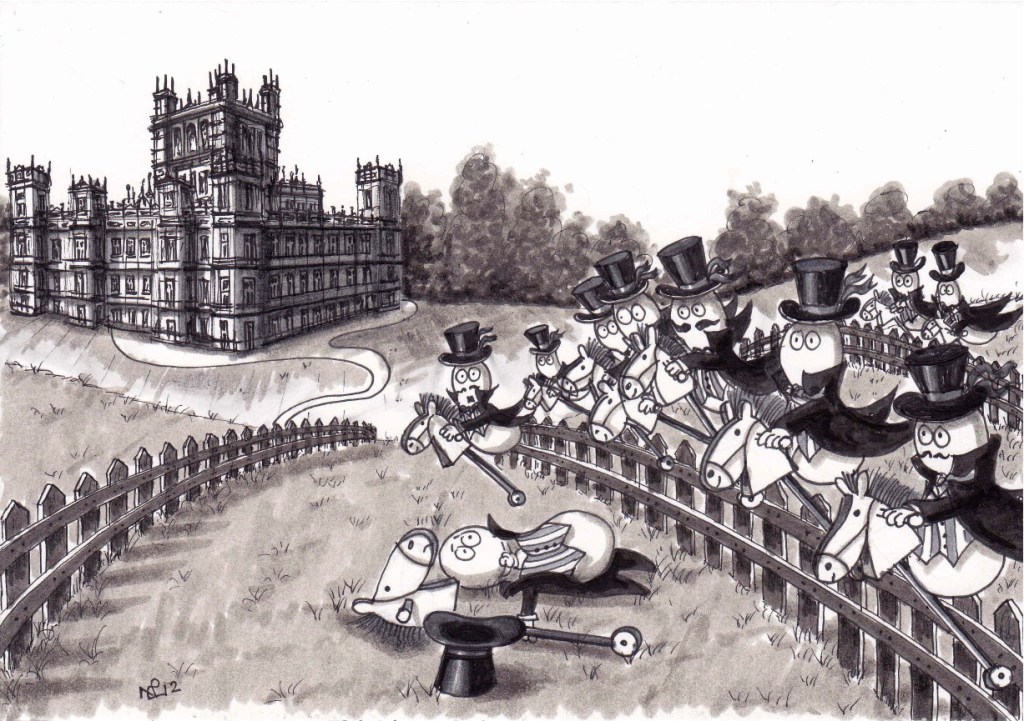
First up, Normy paid a visit to what is now widely considered to be the very paradigm of true England – none other than Downton Abbey. And just as Normy was approaching the great Abbey and the very aristocratic Norm family who live within, he came across a whole gang of posh Lords – ten in fact, who happened to be energetically engaged in their annual festive race around the Downton grounds. Basically, as part of this race, the Lords leap around the estate perimeters, jumping over gates and hedgerows, ha-has and rivers, riding upon their hobby horses (real horses are far too big for Norms who would surely lose their balance from fear and splat on the ground) in order to increase their chances of a speedy victory. Oh what fun! And how convenient, thought Normy, that there were ten handsome Lords – there could be no better image to photograph for Normette and send to her on the 10th day of Christmas. With a sight as iconically English as this, what better reason could there be for Normette to flee France and come home to England ? (And after all, Normy doubted that France has anything as classy as Downton Abbey on its TV screens).

On the 10th day of Christmas my Normy gave to me, 10 Lords a-leaping (2012 © Nicholas de Lacy-Brown, pen on paper)

On the 10th day of Christmas my Normy gave to me, 10 Lords a-leaping (2012 © Nicholas de Lacy-Brown, pen on paper)

But surely this in itself will not persuade Normette to give up her jocular life of dancing and debauchery. How will Normy lure Normette back in the 11th day of Christmas?

On the Ninth day of Christmas, my Normy gave to me…

… nine ladies dancing

Normette’s nerves are in shreds. After days of receiving disastrous presents from her lover Normy, she can no longer cope with the worst of them – those bloody French hens. Of all the snobby hens Normette has ever come across, those three are surely the worst! For example the hen with the beret refused point blank to eat the frogs legs Normette had imported in especially for them on account of the fact that they were frozen and not prepared by a chef of at least two michelin stars. Then there’s the cabaret hen – she’s such a little hussy that she’s been half way round the nearby farms flirting with all of the cockerals and showing off her fishnet stockings and best can-can moves. And as for the fashionista hen, well she refused to even sit on Normette’s sofa, let alone a nest, justifying her reticence by the fact the cushions were not “couture” enough and demanding that Normette buy some throws instead from Gautier’s most recent home collection before she would go anywhere near. No, that’s it, Normette has had enough. The hens have to go!

12 days - 2 french hens_2Now despite her frayed nerves, Normette, like most Norms, is fundamentally an animal-loving creature and agreed with Normy that the hens should, at least, be returned to Paris where they came. And at least this way Normette would get a glimpse of the city of love. So off they went, Normette, Normy, and the three hens in tow, on Eurostar direct to Paris Gare du Nord. But once they reached Paris, the problem then was where to take the hens. They had no idea where they were from, and the only clue they really had was the fact that the cabaret hen kept on clucking on about the Moulin Rouge. So to that same infamous night club they headed, in the risqué district of Pigalle with all of the sinful pleasures it entails.

When they were one metro stop away, Normy suddenly had another of his genius thoughts – wasn’t the 9th present he owed Normette supposed to be 9 ladies dancing?! Why, the Moulin Rouge was the home of perhaps some of the most famous dancers of the lot – the can-can dancers! Full of excitement, and dragging Normette (and the hens) up the steps of the Metro, Normy tried to rush Normette straight into the Moulin Rouge to see the dancers as a 9th day treat. But once the innocent and demure Normette caught sight of the nightclub, with its pictures of scantily-clad Norms and provocative dancers, she refused point-blank to go in! Undeterred, Normy rushed into the club, leaving Normette stood angrily on the pavement of the Rue Blanche (where she attracted quite a few admiring glances from nearby sex-shop punters I might add). Suddenly, out of the Moulin Rouge ran Normy, followed by a troup of 9 can-can dancers, who immediately started putting on a show for Normette! If he couldn’t get Normette inside, he’d darn well bring the inside out!

On the Ninth day of Christmas, my Normy gave to me, 9 dancers dancing (2012 © Nicholas de Lacy-Brown, pen on paper)

On the Ninth day of Christmas, my Normy gave to me, 9 dancers dancing (2012 © Nicholas de Lacy-Brown, pen on paper)

So there they were, 9 ladies of the night, dancing frivolously especially for Normette. Lifting their frilly dresses and showing off their provocatively placed garters, it couldn’t be denied that the dancers were enticing – even Normette couldn’t keep her eyes off them! In fact in those dancers, Normette began to gain a sense of solidarity, a promise of fun, of freedom, of frivolous joy day after day. And that is why, as the show ended and the dancers began to file back into the famous red-windmilled club, Normette found herself drawn in too, caught up in the excitement, the frills, the feathers, and so fast in fact that before he knew it Normy (and the hens) were left out in the cold, the doors of the Moulin Rouge slammed in his face, and Normette, perhaps, lost to him forever.

Can Normy attract Normette back, on the 10th day of Christmas??

© Nicholas de Lacy-Brown and The Daily Norm, 2001-2012. Unauthorized use and/or duplication of the material, whether written work, photography or artwork, included within The Daily Norm without express and written permission from The Daily Norm’s author and/or owner is strictly prohibited. Excerpts and links may be used, provided that full and clear credit is given to Nicholas de Lacy-Brown and The Daily Norm with appropriate and specific direction to the original content.

On the Eighth day of Christmas, my Normy gave to me…

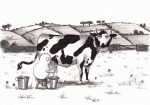
…eight maids a-milking

Normy and Normette haven’t had an easy ride as far as Christmas gifts have gone. Ever since trying to emulate the lyrics to the Twelve Days of Christmas in making daily gifts to Normette, Normy has gone from one disaster to the next, what with collie birds flapping all over the place, 5 golden rings which led Normette to accuse him of having an affair, and 6 geese who preferred to lie out on loungers in the Caribbean rather than lay eggs as the carol dictates.

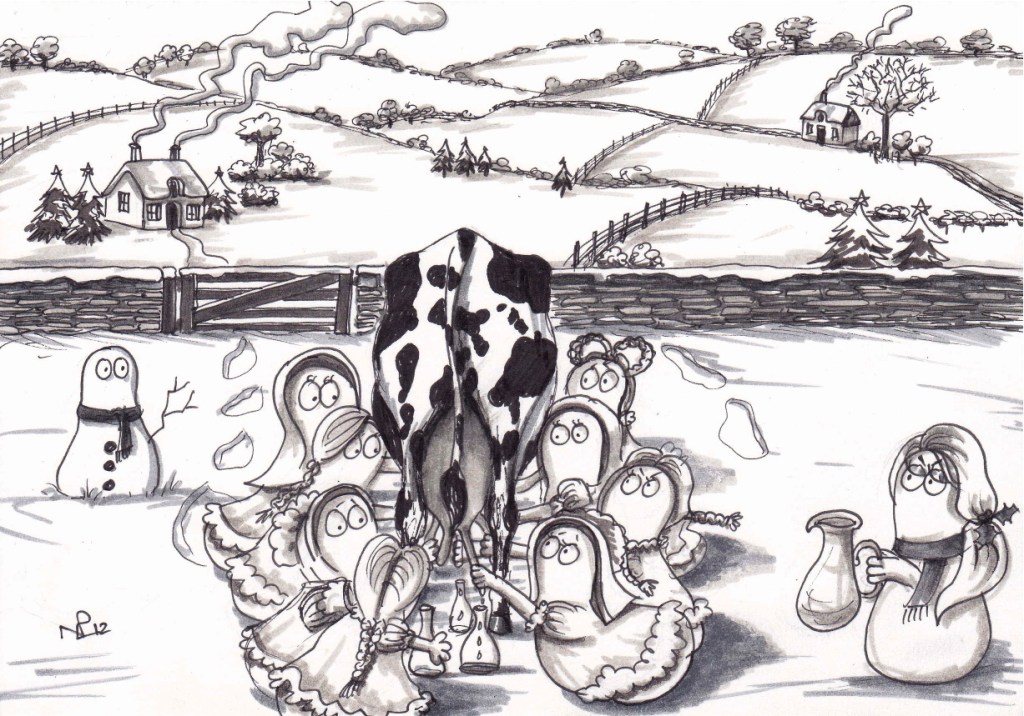
However, for the 8th day, Normy was sure he was onto a good thing. It’s Boxing Day, so it’s unsurprising that Normette, ever the fastidious cook, has run out of milk. It was all of those coffees yesterday, not to mention the custard that all her guests poured liberally over their Christmas pud. However, for today,  Normette wants to make her favourite of all desserts – a Norm-shaped blancmange – a traditional affair at Christmas time for all Norms who like the novelty of eating something as white and bouncy as they are. Imagine then Normette’s disdain that in preparing for the dessert she realised she had run out of milk! And with all the shops around her closed too! But on hearing the news, Normy was suddenly excited – he realised that at last the opportunity had arisen for him to shine and prove that he could give Normette a worthwhile present – for what had he prepared for her 8th Christmas gift? Why, none other than 8 maids a-milking!

Full of excitement, Normy brought each of the 8 maids he had acquired for Normette into the kitchen. Once Normette had unwrapped each maid, she too became excited at Normy’s ingenuity. It was only when she then asked for the milk that Normy realised the error of his ways. He had managed to lay his hands on 8 maids, but he had completely forgotten about the cows! And where on earth would he find 8 cows at this time of the year?!

After many phone calls and several expressions of anger from Normette, Normy managed to find a single cow, and out they trekked, deep into a snowy field, while all 8 milk maids set about milking that poor single cow. But so shocked was the cow at being grappled by no fewer than 8 milk maids at one time that she could barely produce a milliletre of milk. Normette was far from impressed. I wouldn’t want to be in Normy’s household tonight…

On the eight day of Christmas my Normy gave to me 8 maids a-milking (2012 © Nicholas de Lacy-Brown)

On the eight day of Christmas my Normy gave to me 8 maids a-milking (2012 © Nicholas de Lacy-Brown)

Will Normy finally do better on the 9th day of Christmas?

Wellcome Death: A Self-Portrait

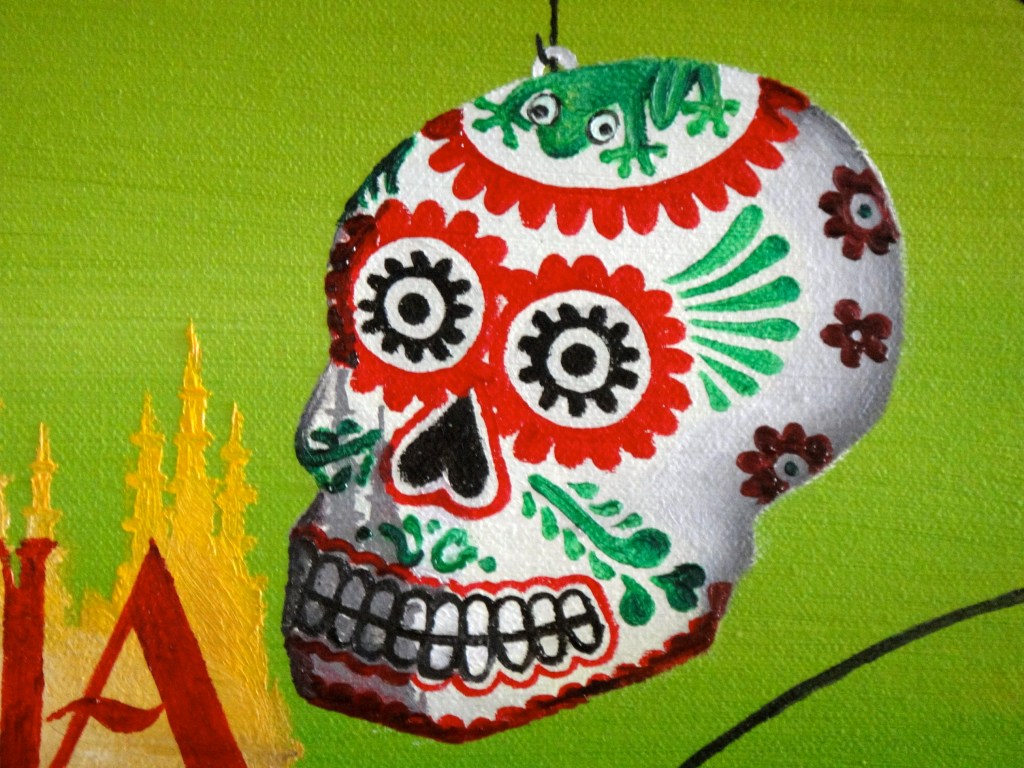
When one of my favourite friends, fellow blogger Celia, told me that she was going to spend her honeymoon in Mexico during “Dia de los Muertos” I got almost as excited as if I were going myself. Ever since developing an early obsession with the art of Frida Kahlo, and in turn the film Frida starring Salma Hayek, I have been fascinated by the Mexican celebration of the dead, in which they make and paint brightly coloured papier mache skulls, masks and skeletons, often adorned with hearts and flowers and all number of patterns, and parade them out in the streets. I even painted a Muertos skull in my recent painting of the city of Salamanca in Spain (below). Having never been to Mexico, I half-heartedly asked Celia to bring be back a “Muertos doll” never actually expecting that on her honeymoon, she would give me a second thought.

Salamanca (2012 © Nicholas de Lacy-Brown, oil on canvas, 105 cm x 90 cm)

Salamanca (2012 © Nicholas de Lacy-Brown, oil on canvas, 105 cm x 90 cm)

DSC08541But last week, amazing as she is, and freshly returned from the tropics of that South American paradise, she presented to me what must be the ultimate in double whammy presents – a Frida Kahlo doll with a Muertos skeleton face (pictured)! The doll is frankly amazing, combining all the fun and spirit of Kahlo’s works, including the occasional morbidity which creeps into her often pain-expressing paintings. No sooner had I lovingly placed said doll alongside my Frida Kahlo art catalogue on my book shelves (from the Tate Modern expo some years back), I then heard about another exhibition which has recently hit the streets of London – not of Kahlo, but of Death.

My Frida doll!

My Frida doll!

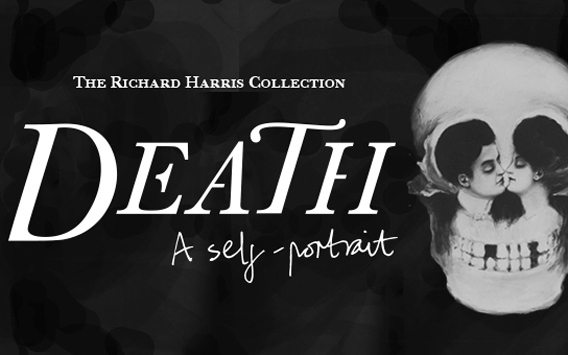
I know what you’re thinking, death, as the subject of an exhibition? Isn’t that likely to be morbid, or heartwrenching, or just plain scary? Well if you’re thinking those things, you probably don’t know the Wellcome Collection on Euston Road in London, a superb gallery adjunct of the Wellcome Trust, who regularly organises fascinating exhibitions of art and curiosities with a decidedly medical theme. The latest exhibition explores the theme of death and our preoccupation both with death, and combating death, in society.

WC_Death

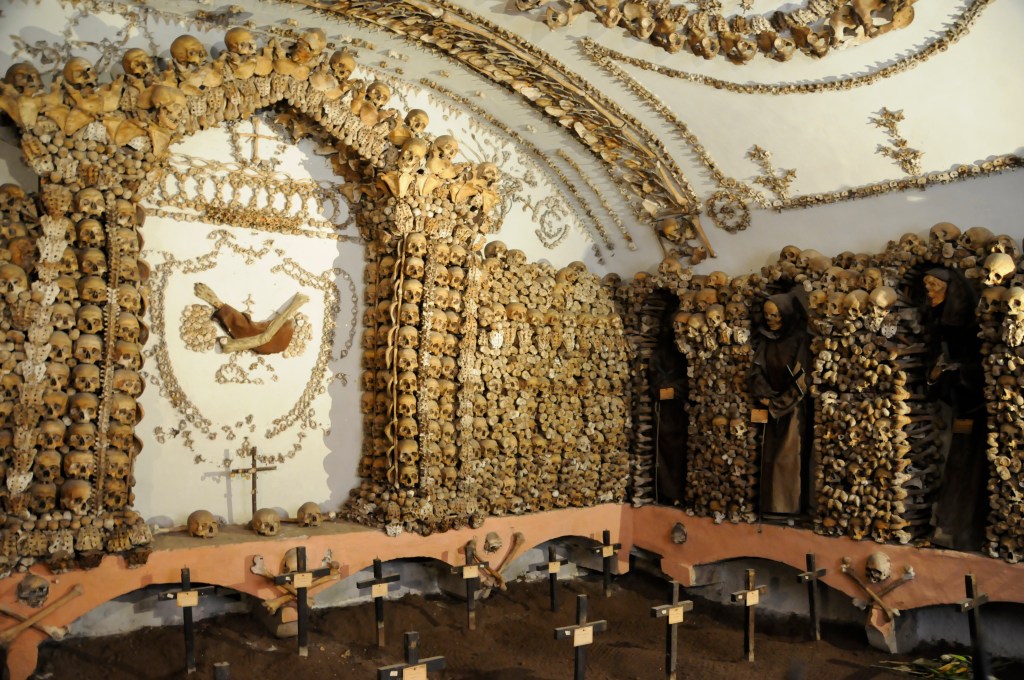
The exhibition comprises the vast and varied collection of Richard Harris, a former antique print dealer from Chicago and explores the subject in a brilliantly diverse array of mediums, themes and expressions. Upon entering the gallery, we were met by Jodie Carey’s 2009 work, In the Eyes of Others (2009), a giant chandelier made entirely of bones. Sadly, the bones were not real bones, but rather plastic reproductions, and therefore this did not have quite the same effect as a chapel I once visited in Rome, the Capuchin Crypt, made entirely from human bones (very morbid, but unusually architecturally beautiful). However, it set us up for a show which ranged from the oldest of 15th century art, to ambitious contemporary pieces.

In the Eyes of Others by Jodie Carey (2009)

In the Eyes of Others by Jodie Carey (2009)

The Capuchin Crypt, Rome

The Capuchin Crypt, Rome

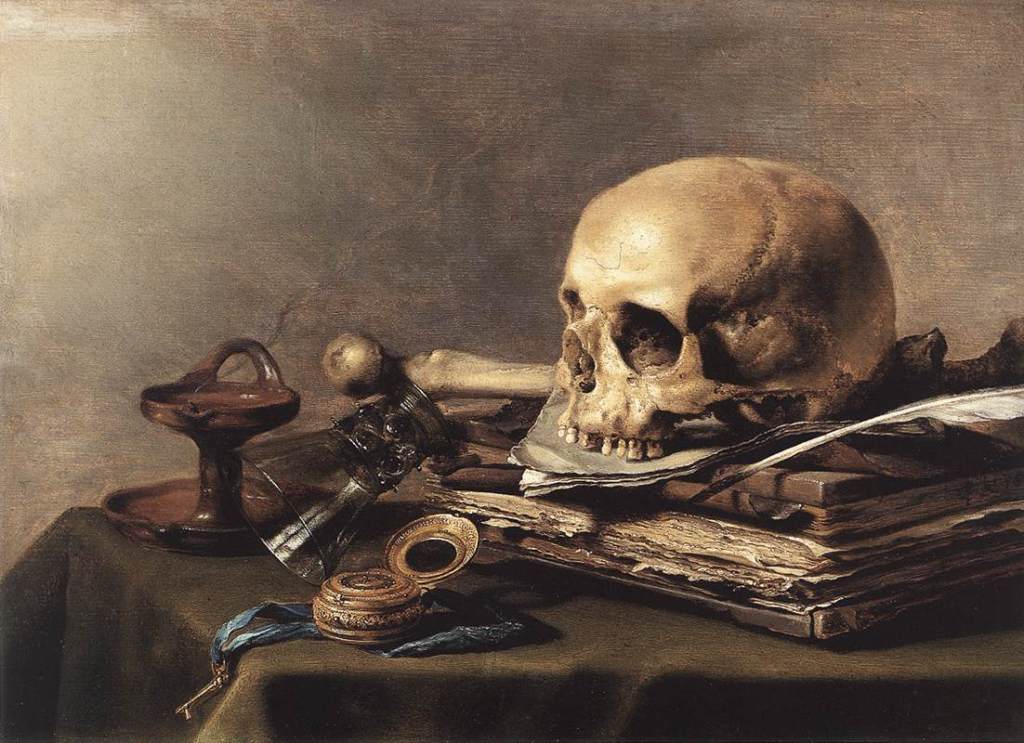
The first room explored the theme, Contemplating Death, comprising examples from throughout history of memento mori (Latin for “remember you will die”), the well-advised reminder to us all that we should seize the day because all of us, inevitably, will be dead one day. This ranged from the classically painted Vanitas still life from 16th century Belgium, the skull sat amongst the clutter of Saint Jerome’s cell by Dürer.

Vanitas still life

Vanitas still life

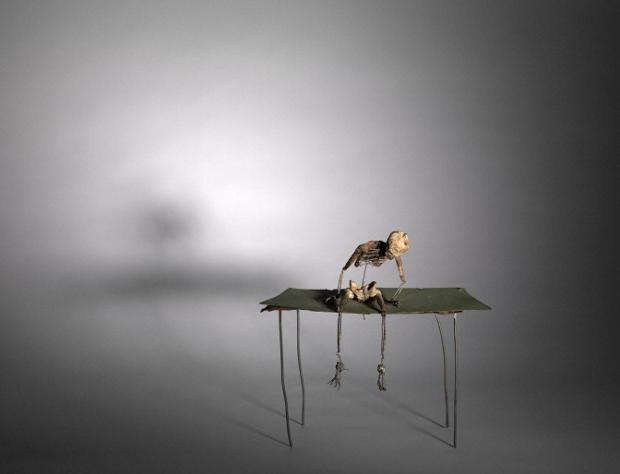
Up next was the Dance of Death, a room which focused on the universal certainty of death, regardless of status in life. This included many a depiction of the Danse Macabre, in which feverish revelry united humans with skeletons, works intended to dissuade people from self-indulgence and vanity in life. I loved the beautiful, almost introspective solace of the dead skeleton sat upon a table in June Leaf’s sculpture, Gentleman on Green Table (1999-2000), as well as the Mondongo Collective’s The Skull Series, in which a huge sculpted scull made from plasticine was, upon closer inspection, a detailed exploration of the influence of the US and Europe upon the world.

June Leaf, Gentleman on Green Table

June Leaf, Gentleman on Green Table


Mondongo Collective, The Skull Series. Number eight from a series of 12. Plasticine

Mondongo Collective, The Skull Series. Number eight from a series of 12. Plasticine

For me, the third room, which explored the representation of death in its most violent form, was by far the most powerful and engaging works of the lot. Featuring some examples of the series The Disasters of War (Los Desastres de la Guerra) by Francisco Goya, this room gave us confrontational and often hard-to-view representations of war and death agony. Goya’s etchings are a brilliant and deeply moving representation of Napoleon’s invasion of Spain at the beginning of the 19th Century. Seeing these images gives some indication of why Goya, having experienced the horrors of war, went from being sycophantic portrait painter of polite society, to creator of the stunning and deeply disturbing Black Paintings held within Madrid’s Prado gallery.

Goya, Tampoco (1810-20)

Goya, Tampoco (1810-20)

Detail from one of Goya's Black Paintings

Detail from one of Goya’s Black Paintings

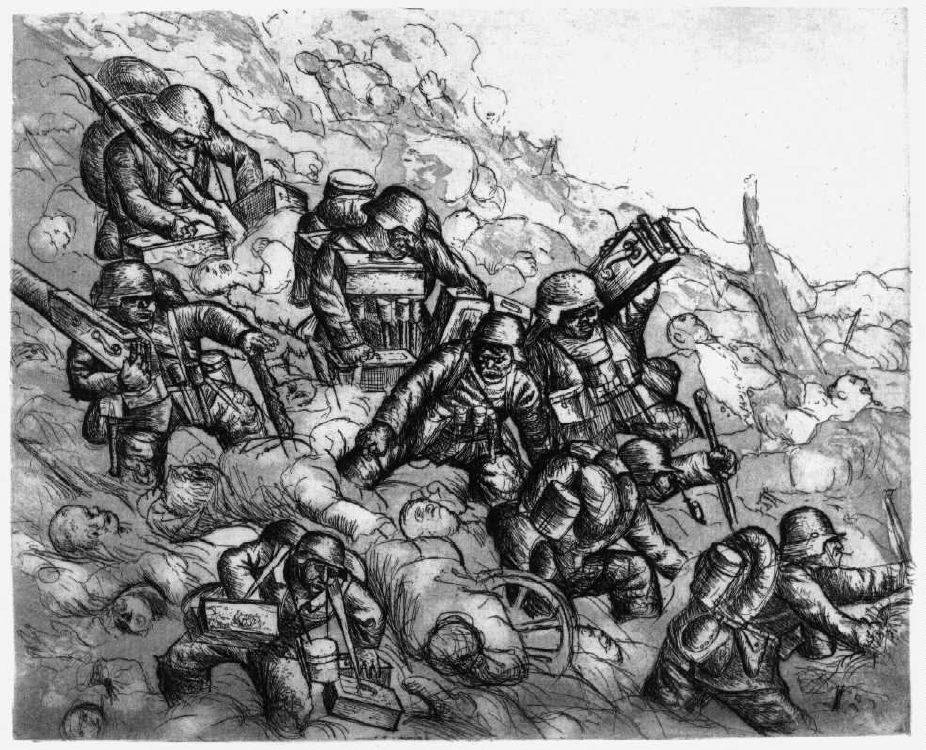
Goya’s etchings have since influenced a number of artists, including Picasso and the Chapman Brothers, but perhaps none more so than German artist Otto Dix, whose series of 51 etchings entitled Der Krieg (War) based on his gruesome experiences in the trenches during WW1, were also on display alongside the Goya works which inspired them. Dix’s etchings were incredibly moving, and unapologetic in their gruesome and violent portrayal of war, death, and devastating injury. All in black and white, these works didn’t need the vivid red of blood to convey the horror of the WW1 deathtol. Rather, in their monochromatic greys and blacks, they perfectly portrayed the grim horror of those times.

war301

Dix, Wounded Soldier

Dix, Wounded Soldier

Dix, Machine Gunners Advancing

Dix, Machine Gunners Advancing

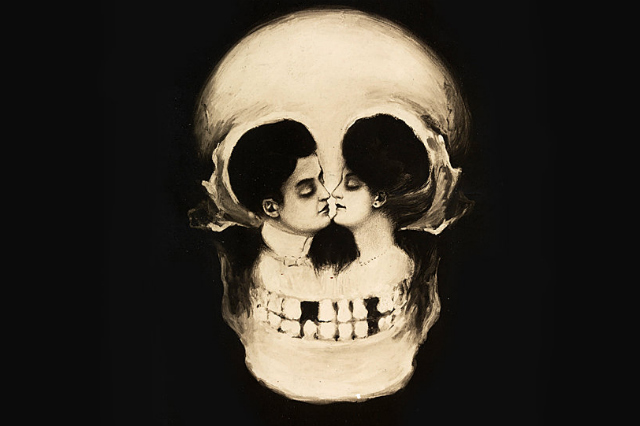
It was perhaps with some relief that the fourth gallery showed us a lighter view of death – in fact, rather unusually, death’s relationship with eroticism as representations of death were shown intertwined with the nude and appearing to infiltrate the embrace of lovers. In this room, I loved the little optical illusion postcards which reminded me a bit of Dali. The skull appears in each to be the most prominent symbol, but look again and you can see a perfectly innocent domestic scene, which bears no relation at all to the skull which it at first appears to represent.

deathwellcome

La Vie et la Mort, Leben und Tod (Postcard c.1900-10)

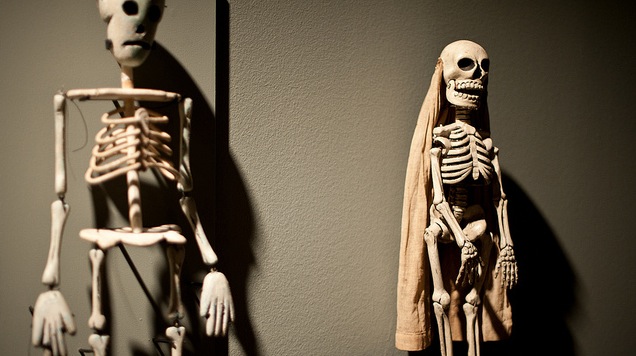
The final room was a representation of the Dia de los muertos festival which has so fascinated me, along with other cultural representations of death in society around the world. I was particularly drawn towards Dan Salvo’s photos of shrines and elaborate altars (known as ofrendas) which are designed to welcome the spirits of those who have departed. I also loved the wall of Muertos dolls straight out of Mexico.

Press+Preview+Death+Self+Portrait+Exhibition+IzQ7EoHlYYxl 8187392941_767eaca1e2_z 8187378029_e3d0f9c713

So with some greater sense of joy, we left the exhibition, full of joys of the Mexican carnival, that was at least until we saw the last wall of the show which gave statistics about the causes of death around the world. Then our joy turned to slightly less jovial stark realism mixed with scientific curiosity as, captivated, we spent a good 5 minutes fascinated by the statistics which show that, far from the horrors of war, the greatest killer of mankind is the role of disease, illness and other irreparable physical conditions. Now if that isn’t a reminder to seize the day, I don’t know what is.

Death: A Self-Portrait is on at the Wellcome Collection until 24 February 2013


On the Seventh day of Christmas, my Normy gave to me…

…seven swans a-swimming

So on the sixth day of Christmas, poor Normy never managed to give his loved one Normette any gift at all. Or, to put it accurately, he did give a gift, but Normette would have had to fly all the way out to the Caribbean to get her hands on it, and what she would do with 6 slightly sun-roasted geese complete with an underlying taste of sun tan lotion she didn’t know. So as for the seventh day of Christmas, Normy had all 3 of his fingers and his 1 thumb crossed in the hope that his next gift would be a success, and Normette had her carefully curled eyelashes equally crossed in the hope that this time she might actually receive something she could enjoy, or at the very least get her hands upon!

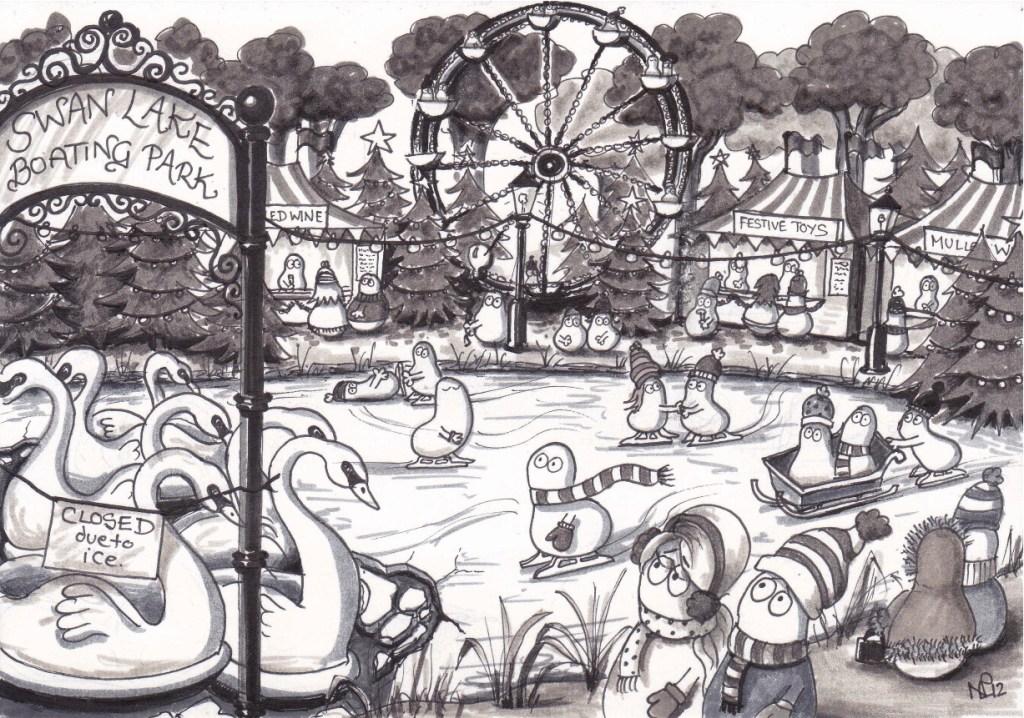
Up next in the 12 days carol is the seven swans a-swimming. Normy wasn’t overly sure how to go about gifting 7 swans. It seemed altogether rather extravagant to him, and what with there being some antiquated law about its being treason towards Her Majesty Queen Normabeth II if you kill a swan in her realm (allegedly she owns them all), Normy thought he had better steer clear of the real thing. Instead he had a brainwave! He could take Normette on a trip down to the local park, where, as luck would have it, there was a “Swan Lake boating park”, whereby those Norms who enjoy bobbing around on the water, could hire a swan-shaped boat and sail around the large lake to their hearts’ content. Why, he would even hire 7 of the things if he needed to!

So off they went, Normette barely containing her excitement as they went on their merry way to collect her latest present. However this excitement was, as ever, shortlived. No sooner had they arrived in the boating park, than they noticed an ugly large sign alerting them that Swan Lake was closed! The swan-shaped boats were there, but there was certainly no swimming, or boating to be done in them – the lake was frozen solid! Poor Normy! Poor Normette!

On the 7th day of Christmas my Normy gave to me, 7 swans a-swimming (2012 © Nicholas de Lacy-Brown, pen on paper)

On the 7th day of Christmas my Normy gave to me, 7 swans a-swimming (2012 © Nicholas de Lacy-Brown, pen on paper)

However there is surely a happy ending to this story… The lake may be frozen, but just look what a magical ice-skating rink it has become. As Norms young and old set out on their Norm-tailored skates, toboggans and sledges, dancing and skidding across the lake’s hardened surface, others enjoy the festive Christmas fair which has popped up around it, complete with mulled wine and traditional Christmas toys, and behind, a ferris wheel spins Norms around at a leisurely pace, affording them the best view of the frozen lake, the market and the woods beyond.

So no swans a-swimming, but this winter wonderland must be worth some brownie points surely? Well done Normy, you’re getting there! Let’s hope his luck continues on the eight day of Christmas…

© Nicholas de Lacy-Brown and The Daily Norm, 2001-2012. Unauthorized use and/or duplication of the material, whether written work, photography or artwork, included within The Daily Norm without express and written permission from The Daily Norm’s author and/or owner is strictly prohibited. Excerpts and links may be used, provided that full and clear credit is given to Nicholas de Lacy-Brown and The Daily Norm with appropriate and specific direction to the original content.