Skip to content

Posts tagged ‘Art’

On the Sixth day of Christmas, my Normy gave to me…

…six geese a-laying

Now Normette would be the first to admit that her presents from Normy haven’t exactly been a huge success so far. The Norm-pear tree was pretty good, albeit that it takes a lot of watering and doesn’t survive at all well in this chilly weather, oh and the partridge perched in it keeps on attempting to peck at the baby Norms; then there were the two turtle-doves who wouldn’t fly or fit in a dove cot; the three French hens were awfully chic but ever so demanding, and as for the four colly birds – by the time they had flown from their pie, shocked the guests and splattered gravy all over Normette’s living room, they then proved a devil to catch. And perhaps it’s better not to mention the five gold rings, one of which caused an irrevocable breakdown in Normette’s trust for Normy (despite his later protestations that the fifth ring was presented in homage to the carol, and not intended for another lover!). Despite all of this, when the sixth day of Christmas came, Normette was rather looking forward to receiving another gift, and Normy saw it as an opportunity to redeem himself.

Imagine their shock then when no present turned up! Let me explain… Next on the list in The Twelve Days of Christmas are the six geese a-laying. In pursuit of six egg-laying geese, Normy called his local farmer and explained what he wanted. Farmer Norm noted down the order, but was rather busy skinning some Turkeys for a mountain of Christmas orders, so he passed on the order to 6 geese on his farm explaining what Normy wanted.

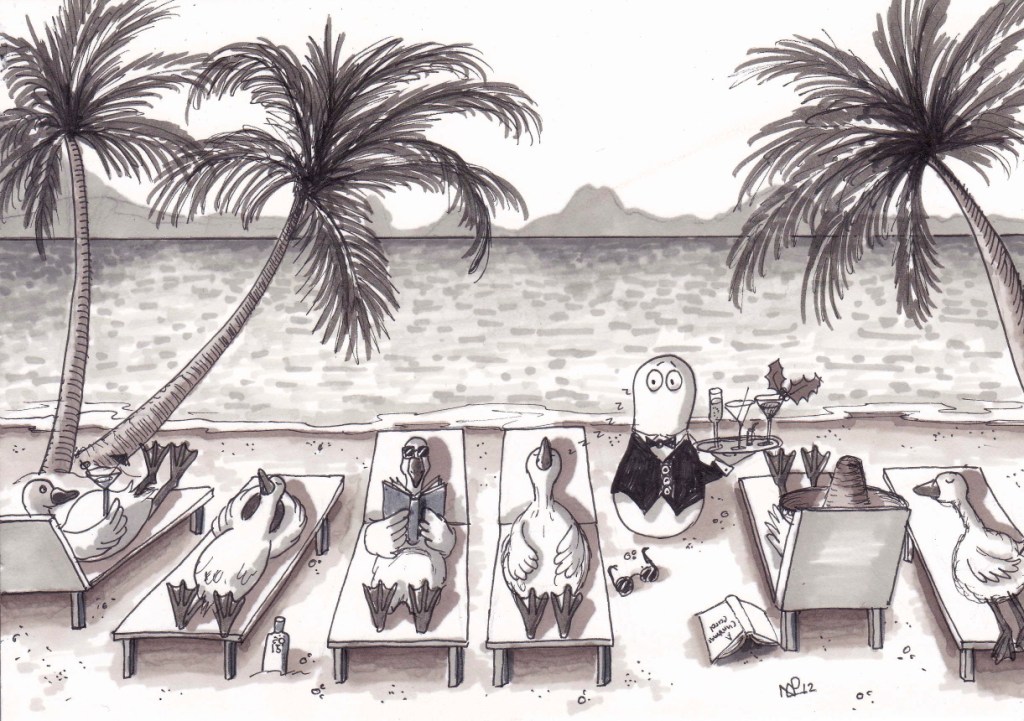
Now geese are not the cleverest of birds, and when they saw that Normy wanted “six geese a-laying”, they assumed he wanted six geese lying down. Now “lay” is the past tense of “lie”, so it’s not altogether surprising that they made this obvious grammatical mistake, especially as geese are not that used to reading… Anyway, the geese, being something of a group of opportunists, decided that since they were expected to present themselves lying down, they may as well do it somewhere nice. And seeing as Normy had already sent payment to the farmer for the geese, the very same pesky birds decided to take the cash and book themselves the first available flights to a location where lying back would be enjoyable.

And so, while the six geese should have been a-laying big eggs in Normette’s backyard, where do you think they ended up? Why, lying back having a splendid time on a beach in the caribbean, and not an egg or nest in sight!

On the Sixth day of Christmas my Normy gave to me six geese a-laying (2012 © Nicholas de Lacy-Brown, pen on paper)

On the Sixth day of Christmas my Normy gave to me six geese a-laying (2012 © Nicholas de Lacy-Brown, pen on paper)

Poor Normy. Poor Normette. Let’s cross our fingers and hope that Normy has better luck on the Seventh day of Christmas…

© Nicholas de Lacy-Brown and The Daily Norm, 2001-2012. Unauthorized use and/or duplication of the material, whether written work, photography or artwork, included within The Daily Norm without express and written permission from The Daily Norm’s author and/or owner is strictly prohibited. Excerpts and links may be used, provided that full and clear credit is given to Nicholas de Lacy-Brown and The Daily Norm with appropriate and specific direction to the original content.

On the Fifth day of Chritsmas my Normy gave to me…

…five gold rings

Poor Normy has got himself into a bit of a pickle over this one. Trying to remain as faithful as possible to the words of the traditional carol, The Twelve Days of Christmas, Normy decided to give to his loved one, Normette, five gold rings upon the fifth day of Christmas. Little could he foresee the trouble that would ensue.

On receiving the package containing her latest gift from Normy, Normette’s eyes grew wider and wider with delight as she uncovered one gold ring after another. However her happiness soon turned to consternation. You see Norms only have one arm, and four fingers – well, three fingers and a thumb to be exact. So having slipped one gold ring over each of her fingers and thumb respectively (they fitted like a glove), imagine her confusion when Normette found a further fifth ring at the bottom of the package. Why could this be? Norms only have four fingers, so what on earth would the other one be for, she thought. It was too small for her wrist, and Norms don’t have ears upon which a ring can be hung. Well then, there was only one conclusion she could make. With tears in her eyes, and filling up with rage and distress and utmost horror, Normette came to the only conclusion she considered to logically fit the facts…Normy must be having an affair!

On the 5th day of Christmas my Normy gave to me...5 gold rings (2012 © Nicholas de Lacy-Brown, pen on paper)

On the 5th day of Christmas my Normy gave to me…5 gold rings (2012 © Nicholas de Lacy-Brown, pen on paper)

Oh dear. Something tells me there won’t be “peace on earth and goodwill to all Norms” in the home of Normy and Normette this Christmas! Let’s hope Normy can make up for his faux pas with a suitably lavish gift on the sixth day of Christmas…

© Nicholas de Lacy-Brown and The Daily Norm, 2001-2012. Unauthorized use and/or duplication of the material, whether written work, photography or artwork, included within The Daily Norm without express and written permission from The Daily Norm’s author and/or owner is strictly prohibited. Excerpts and links may be used, provided that full and clear credit is given to Nicholas de Lacy-Brown and The Daily Norm with appropriate and specific direction to the original content.

On the Fourth day of Christmas, my Normy gave to me…

…four colly birds

I know what you’re thinking – is that a misprint – isn’t it 4 calling birds? Well, here’s the newsflash – 4 calling birds is wrong! And thank goodness for Normy, whose dedicated research uncovered this now largely unknown mistake!

Yes, persevering in his hunt of the gifts fabled to be given to a loved one in the carol, The Twelve Days of Christmas, Normy was researching online to find out where on earth he would find 4 calling birds to give to his dear Normette…only to discover that actually he should be giving her 4 colly birds. Various theories exist online as to why the colly of the 16th century verse gradually became mixed up and morphed into calling birds. But now that the mistake has firmly taken hold in the consciousness of so many, we at The Daily Norm thought it was about time the record was put straight. And not only that. Normy was adamant that he would give Normette a present representing the correct version of the carol.

However, despite his efforts, poor Normy got carried away with his internet research. Having discovered that the word colly derives from colliery, (which is a coal mine) and that a colly is actually another word for a blackbird, this nickname being given because of the blackbird’s coal-like black feathers, Normy then started researching where he could buy blackbirds. Sure enough, he came across that other popular verse, Sing a song of sixpence, A pocket full of rye. Four and twenty blackbirds, Baked in a pie, and quite forgetting which lyrics he was meant to be emulating, ordered 4 blackbirds baked in a pie! Imagine then the shock Normette experienced when she sat down to a Christmas feast with her friends and family only to break into a pie full of live blackbirds! I’m not sure she will ever get over the shock!

On the 4th day of Christmas my Normy gave to me 4 colly birds (2012 © Nicholas de Lacy-Brown, pen on paper)

On the 4th day of Christmas my Normy gave to me 4 colly birds (2012 © Nicholas de Lacy-Brown, pen on paper)

Let’s hope Normy does better on the fifth day of Christmas…

© Nicholas de Lacy-Brown and The Daily Norm, 2001-2012. Unauthorized use and/or duplication of the material, whether written work, photography or artwork, included within The Daily Norm without express and written permission from The Daily Norm’s author and/or owner is strictly prohibited. Excerpts and links may be used, provided that full and clear credit is given to Nicholas de Lacy-Brown and The Daily Norm with appropriate and specific direction to the original content.

On the Third day of Christmas, my Normy gave to me…

…three French hens

Now that’s more like it. A little bit of class, newly arrived straight from across the channel via eurostar. These three french hens are the height of chic. There’s the typically-French hen, sporting “le pullover” in iconic stripy blue and white, a string of onions and of course a little black beret; then fashionista-hen, draped with Coco Chanel’s characteristic long beads of pearls and a quilted chanel bag, along with louboutin shoes and a waft of Chanel No.5; and finally cabaret-hen, straight out of the Moulin Rouge herself, with a fetching outfit of fishnet and can-can frills, topped with an exuberant feathered head-dress (as if she needed more feathers).

Oh yes, these hens ought to perfectly reflect Normette’s stylish bearing, although she must remember that French hens aren’t just any old hens. Oh no. They require regular trips to the Harrods pet pampering salon, a cosy cashmere nest in which to lay their Fabergé eggs and a diet full of French delicacies such as oysters, baguette, moules-frites and, ewww, frogs legs… hmmm, good luck with sourcing those Normette.

On the third day of Christmas, my Normy gave to me...3 French Hens (2012 © Nicholas de Lacy-Brown, pen on paper)

On the third day of Christmas, my Normy gave to me…3 French Hens (2012 © Nicholas de Lacy-Brown, pen on paper)

What will Normy give her on day four?

© Nicholas de Lacy-Brown and The Daily Norm, 2001-2012. Unauthorized use and/or duplication of the material, whether written work, photography or artwork, included within The Daily Norm without express and written permission from The Daily Norm’s author and/or owner is strictly prohibited. Excerpts and links may be used, provided that full and clear credit is given to Nicholas de Lacy-Brown and The Daily Norm with appropriate and specific direction to the original content.

On the Second day of Christmas, my Normy gave to me…

… two turtle doves (and a partridge in a Norm-pear tree)

These extravagant Christmas presents on each of the 12 days of Christmas are all very well, but as Normette has quickly found out, some of them are more trouble than they’re worth. Take day two’s offering. Two turtle doves? What kind of a present is that? Not only are these strange creatures a kind of hybrid between dove and turtle, but sadly for Normette, who has all sorts of Christmas shopping to get on with (not to mention a manicure down at the local beauty salon) her turtle doves appear to have adopted all the sluggardly pace of a turtle, and none of the graceful speed of a dove. Not only that, but with a great lumbering shell on their backs, how ever is Normette supposed to fit the creatures into the dovecot provided by her lover on this second day of Christmas?

Let’s hope he does better on the third…

On the second day of Christmas my Normy gave to me...Two turtle doves (2012 © Nicholas de Lacy-Brown, pen on paper)

On the second day of Christmas my Normy gave to me…Two turtle doves (2012 © Nicholas de Lacy-Brown, pen on paper)

© Nicholas de Lacy-Brown and The Daily Norm, 2001-2012. Unauthorized use and/or duplication of the material, whether written work, photography or artwork, included within The Daily Norm without express and written permission from The Daily Norm’s author and/or owner is strictly prohibited. Excerpts and links may be used, provided that full and clear credit is given to Nicholas de Lacy-Brown and The Daily Norm with appropriate and specific direction to the original content.

On the First day of Christmas, my Normy gave to me…

…a partridge in a Norm-pear tree.

We’re into December and Christmas is but weeks away. Hard to believe really that it’s come around so quickly, but now that my decorations are up, it’s time to get the Norms into gear as well.

This year, as part of the Norms’ celebration of Christmas, the Norms have decided to recount one of their favourite Christmas carols: “The Twelve Days of Christmas” in illustrated form. Now before you say anything, I know that the 12 days of Christmas don’t start until after Christmas day itself, but let’s face facts here, no one is really interested in Christmas much after the Downton Abbey Christmas special has aired at around 10pm on the 25th. So it’s only appropriate that the Norms’ recollection of this much-loved carol is celebrated now, on these heady days leading up to Christmas.

So, as the familiar carol goes, on the 12 days of Christmas, Normy gave his lover a gift each day, the gift becoming more and more extravagant as the days went on.

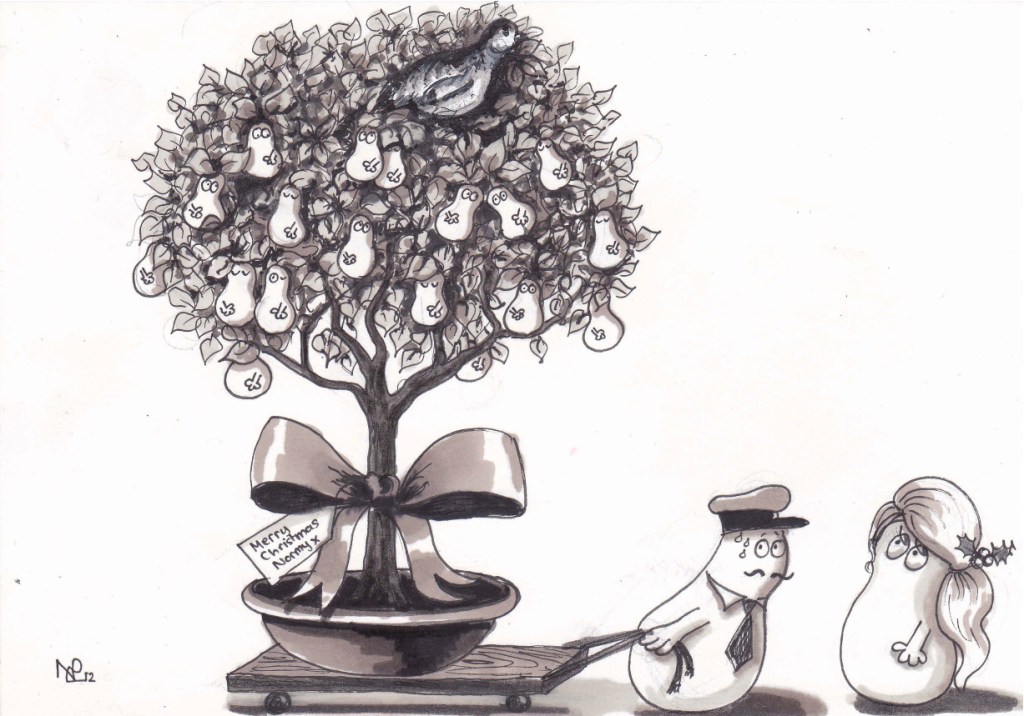
A partridge in a Norm-pear tree (2012 © Nicholas de Lacy-Brown, pen on paper)

A partridge in a Norm-pear tree (2012 © Nicholas de Lacy-Brown, pen on paper)

“On the first day of Christmas, my Normy gave to me, a partridge in a Norm-pear tree”.

Now this may be the first gift of many, but do not underestimate its value: the Norm-pear tree is a rare and interesting phenomenon, rarely seen by us humans. While scientists looking into the complex genealogy of the Norm species have yet to understand the true process by which a Norm is born, it is widely considered that Norms, who are by nature intrinsically pear-shaped, are actually born from the Norm-pear tree. Starting as flowers with a fragrance as sweet as honeyed nectar, and a colour the shade of azure-tinted white, the Norm-pears take several months to develop from a small round blob into the perfect curvaceous Norm-shape we love and know. In the final stages of gestation, the Norm develops his characteristic one arm and his wide eyes open to the light of day. At this point it is thought that the Norm will fall to the ground, leaving his leaves and stalk behind on the tree, and will, owing to his gelatinous form, bounce a little until coming to a stop. And so the Norm life begins.

So that’s the theory, and you will, no doubt, understand now what a precious gift Normy has given his lover on the first day of Christmas. The fact that there is a pesky partridge sitting inside it is by-the-by.

What will Normy give his lover on the second day of Christmas?

© Nicholas de Lacy-Brown and The Daily Norm, 2001-2012. Unauthorized use and/or duplication of the material, whether written work, photography or artwork, included within The Daily Norm without express and written permission from The Daily Norm’s author and/or owner is strictly prohibited. Excerpts and links may be used, provided that full and clear credit is given to Nicholas de Lacy-Brown and The Daily Norm with appropriate and specific direction to the original content.


Norms do… Gauguin

In the same way that an inquisitive child may like playing dress up in the clothes box of his or her parents, so too do the art-loving Norms love to emulate the works of the great artistic masters. In the past on The Daily Norm, the Norms have brought you Frans Hals, Van Gogh, Degas, Picasso, Klimt, Da Vinci and Vermeer to name but a few. Next in line to receive the Norm treatment is none other than the post-impressionist master, Paul Gauguin himself.

Gauguin, master of colour, and leader of the movement out of impressionist naturalism into the more expressionistic unreality, he is famous for his vibrant images of the Pacific island of Tahiti, and perhaps infamous for the rather suspect love affairs he had while on the island, allegedly with underage girls.

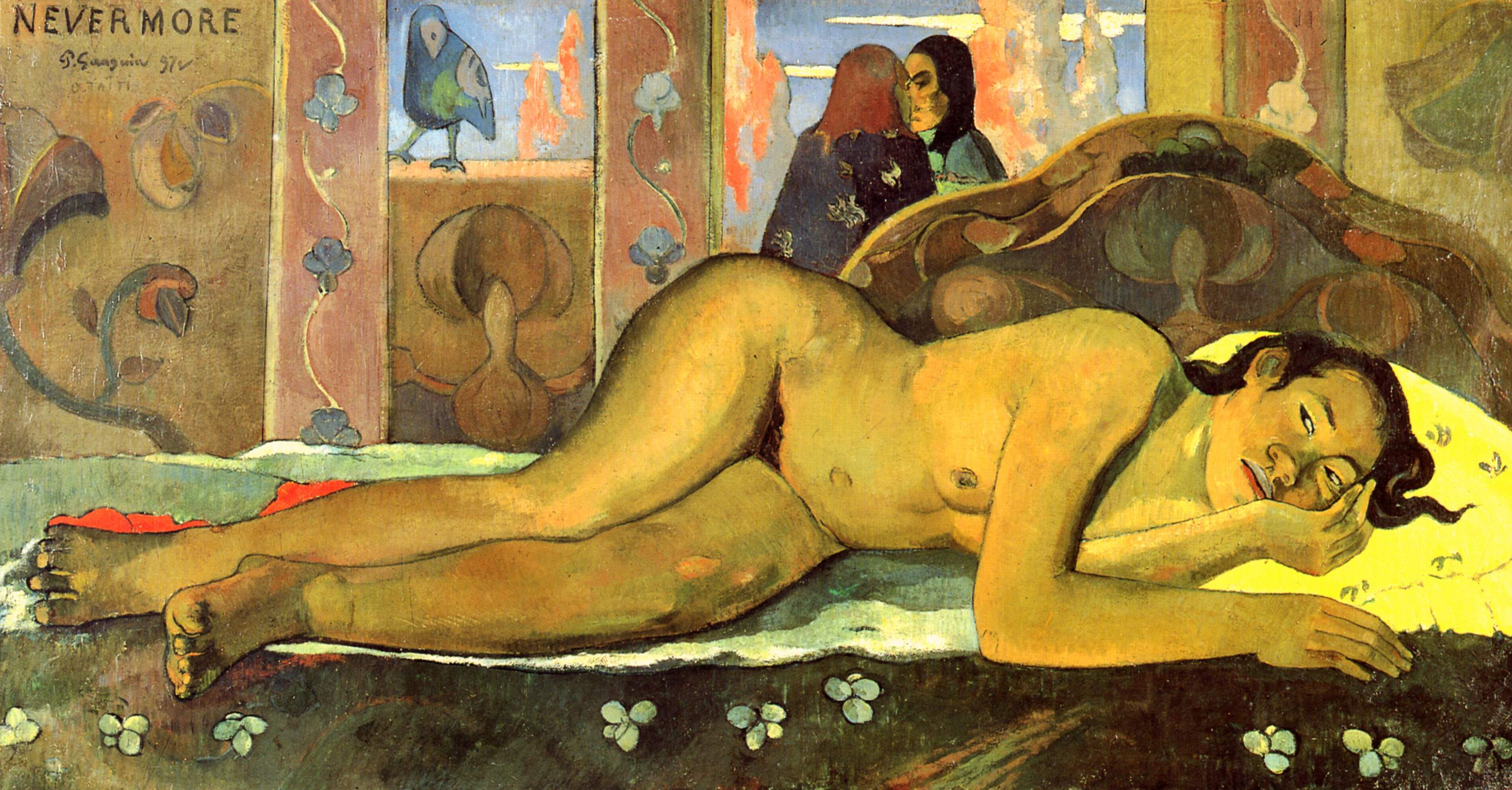
It is undoubtedly one such girl who is the subject of one of Gauguin’s most famous paintings, Nevermore O Tahiti, which today enthralls audiences at its home, the Courtauld Gallery in London’s Somerset House. With its striking bright yellow pillow, its richly coloured background, and the mysterious and melancholy gaze of the nude stretched out before us, it has long been one of my favourite paintings, not just by Gauguin, but in the richly constituted Courtauld collection.

It is hardly surprising then that the time would come when I could resist painting a Norm version of this enigmatic masterpiece no longer. So without further ado, I give you, Nevermore Norm…

Nevermore Norm (after Gauguin) (2012 © Nicholas de Lacy-Brown, acrylic on canvas)

Nevermore was painted by Gauguin in 1897 in Tahiti, the Polynesian island which the French artist made his home in the latter years of his career. The painting is highly enigmatic both in image and title. Asides from being painted onto the canvas, the title is potentially an allusion to the idea of paradise lost (Milton’s epic poem, with which Gauguin would have been familiar) but more likely refers to the poem by Edgar Allan Poe’s The Raven which Stéphane Mallarmé, a French poet, is said to have recited at the Café Voltaire around the time when Gauguin left Paris. In the poem, a man imagines that a bird flapping at the window repeating the word “nevermore” is the spirit of his dead lover. Hence, perhaps, why Gauguin, in his work, has painted the raven stood on the window sill of this colourful Tahitian room.

Nevermore O Taiti, Paul Gauguin (1897) (Courtauld Institute, London) (Source: wikipedia commons)

As for the rest of the painting, its meaning is less certain. The picture is dominated by a full length reclining Tahitian nude.  Her attention seems to be turned towards the figures and the raven in the background. She appears almost to be listening, bitterly aware that the two are gossiping maybe, or conspiring against her, but unwilling to rise from her repose and confront the pair. But could they, on the other hand, be figments of her imagination, together with the almost dreamlike two dimensional blue sky and yellow clouds, and the patterned walls of her home which feels and looks almost like a temporary stage set?

Whatever the meaning behind this elusive piece, it is characteristic of Gauguin’s pursuit, post-impressionism, not of reality, but of introspection. It was in fact Guiguin’s pursuit of inner vision, rather than external reality which led to his quarrel with Van Gogh in Arles which in turn culminated in the latter’s infamous ear-cutting incident. In Nevermore, we see Gauguin at his introspective, expressionist best, fabricating an image from a sense of unreality, while hinting at the tropical bounties of the lush Pacific surroundings in which he was painting.

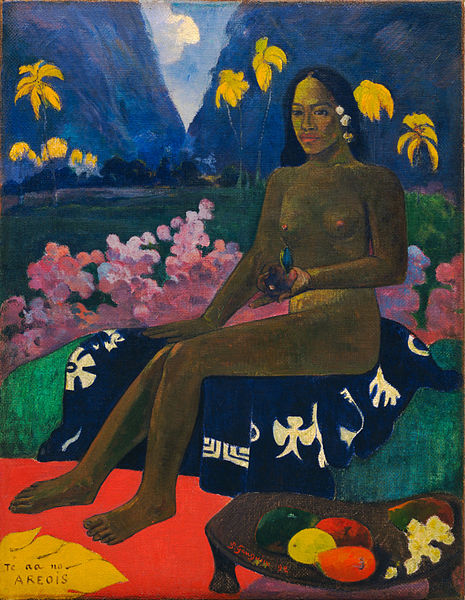
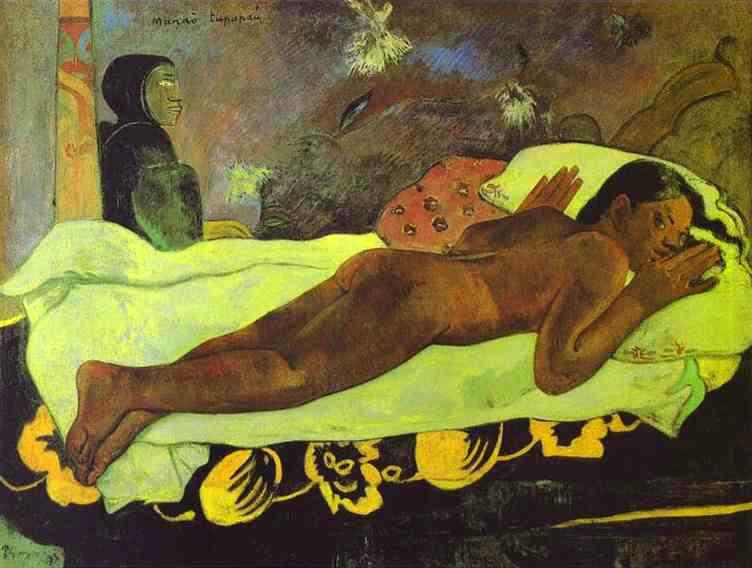
While Gauguin’s time on Tahiti has since been revealed to have been littered with sexual controversy and even a defamation wrangle with the governor of the Marquesas Islands, it is certain that the works he produced during his extensive stay on the island are amongst his best. Vivid, exploding with colour, as blue skies, tropical plants and the bronzed tones of his beautiful Tahitian women fill the canvas and make the viewer yearn to leave Europe, and its watery impressionistic landscapes behind forever. That is, in fact, what Gauguin did, dying not in his native France, but in Tahiti, of syphilis, alcoholism and all manner of other health problems. But what he left behind was an amazing collection of paintings which have since served to capture Tahiti in the hearts and minds of art lovers across the world.

Here are just a few to feast your eyes upon…

Paul Gauguin, Tahitian Women on the Beach (1891) (wikipedia commons)

Paul Gauguin, Where Do We Come From? What Are We? Where Are We Going?, (1897) (wikipedia commons)

Paul Gauguin, Tahitian: Te aa no areois (The Seed of the Areoi) (1892) (wikipedia commons)

Paul Gauguin, Manao tupapau (The Spirit of the Dead Keep Watch) (1892) source: wikipedia commons

The question now is, who will the Norms set their sights upon next?

© Nicholas de Lacy-Brown and The Daily Norm, 2001-2012. Unauthorized use and/or duplication of the material, whether written work, photography or artwork, included within The Daily Norm without express and written permission from The Daily Norm’s author and/or owner is strictly prohibited. Excerpts and links may be used, provided that full and clear credit is given to Nicholas de Lacy-Brown and The Daily Norm with appropriate and specific direction to the original content.

The Lisbon Sketch II – Norms on a Tram

It’s another busy day in Lisbon’s Praça do Comércio, bustling central square of Portugal’s capital city, and transport hub for the  many passing rambling little trams from Lisbon’s pre-war era. Here in the square which was the site of Lisbon’s former palace before revolution in 1910 made it the centre of the new Republic’s administration, Lisbon locals, business Norms, and tourist Norms alike mix, mingle and meander against the backdrop of the square’s vast geometric cobbled paving and its impressive triumphal arch.

But for these Norms, there is little time to gaze in wonder at the palatial surroundings. For now it’s time to board the number 83 tram which will take these little passengers straight along the coast to Belém, under the gigantic Ponte 25 de Abril and past the little residential districts sprawling in its ample shadow. It’s a busy day and there are plenty already on board, as as these Norms are about to find out, it doesn’t take much to fill these cute little vehicles. Best let them get on with it…

Norms on a Tram in the Praça do Comércio, Lisbon (2012 © Nicholas de Lacy-Brown, pen on paper)

© Nicholas de Lacy-Brown and The Daily Norm, 2001-2012. Unauthorized use and/or duplication of the material, whether written work, photography or artwork, included within The Daily Norm without express and written permission from The Daily Norm’s author and/or owner is strictly prohibited. Excerpts and links may be used, provided that full and clear credit is given to Nicholas de Lacy-Brown and The Daily Norm with appropriate and specific direction to the original content.

The Lisbon Sketch – Norm Monument to Discoveries

If there’s one thing that Norms do really well, it’s make a good old discovery. Why, only the other day, Henrique Norm discovered that he could eat 5 blackforest gateaux in one go, while Françoise Norm discovered that if she bounces really hard from Les Champs des Mars, she can make it almost as high as the first floor of the Tour Eiffel.

Of course Henrique and Françoise are not alone in the fascinating little discoveries made amongst Norms all over Normland every day. But the same too went for their ancestors, and it was in celebration of some of the great discoveries of the Portuguese Norms that at the beginning of the last century, the Norm Prime Minister of Portugal decided to build a great monument paying homage to their discoveries for all eternity. Why, up there on the “Padrão dos Descobrimentos” (as they call it) is Pedro Norm, who discovered that combining some eggs, pastry, sugar and a little cinnamon makes the most delicious little pastries, not to mention Bonifácio Norm, who single handedly circumnavigated the globe in search of exotic flavours for his favourite jellied desserts.

And here it is, the Norm Monument to Discoveries – discover it for yourself…

The Norm Monument to Discoveries, Lisbon (2012 © Nicholas de Lacy-Brown, pen on paper)

© Nicholas de Lacy-Brown and The Daily Norm, 2001-2012. Unauthorized use and/or duplication of the material, whether written work, photography or artwork, included within The Daily Norm without express and written permission from The Daily Norm’s author and/or owner is strictly prohibited. Excerpts and links may be used, provided that full and clear credit is given to Nicholas de Lacy-Brown and The Daily Norm with appropriate and specific direction to the original content.

Lisbon – Day Three: The Prince of Belém

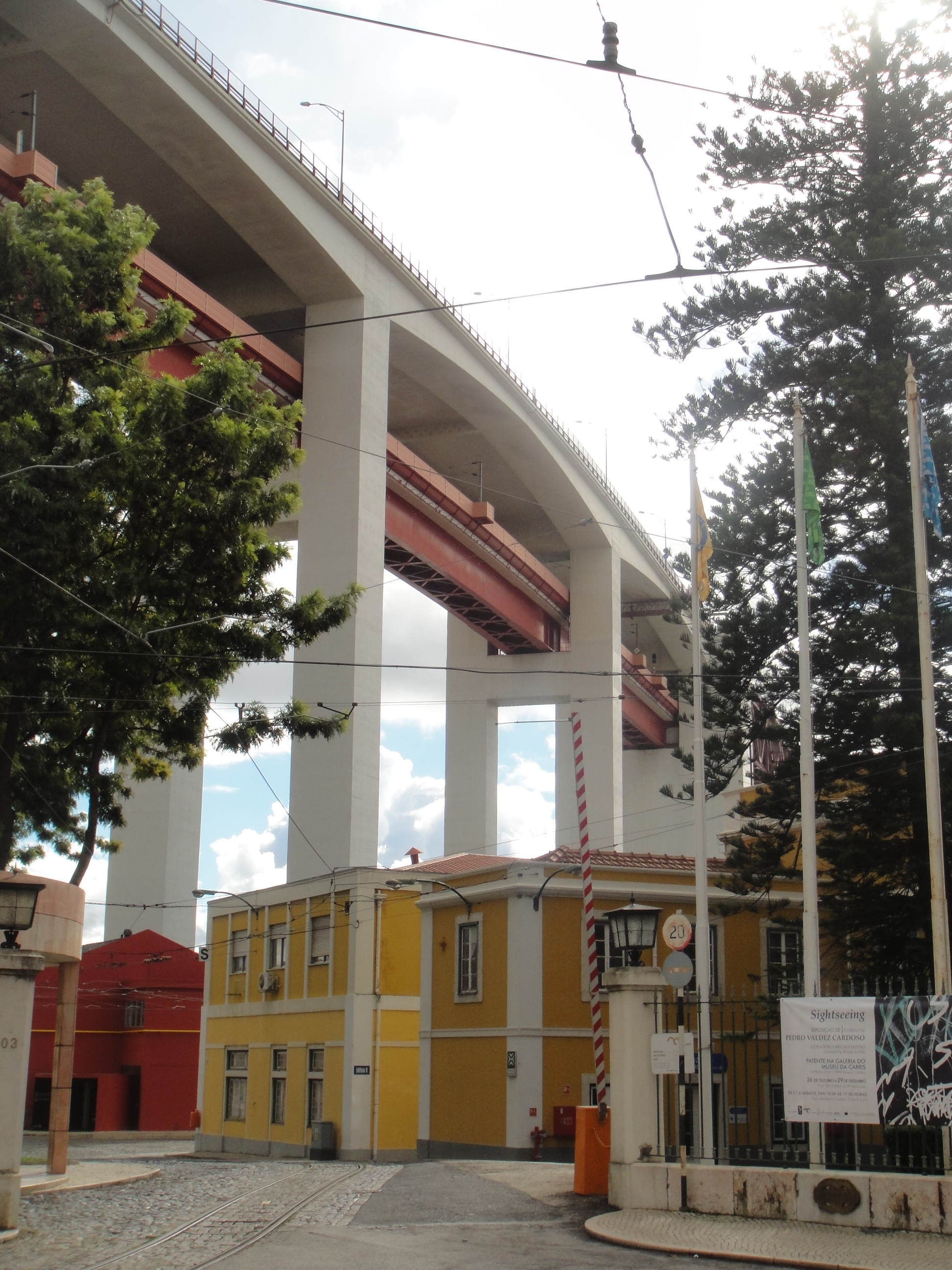
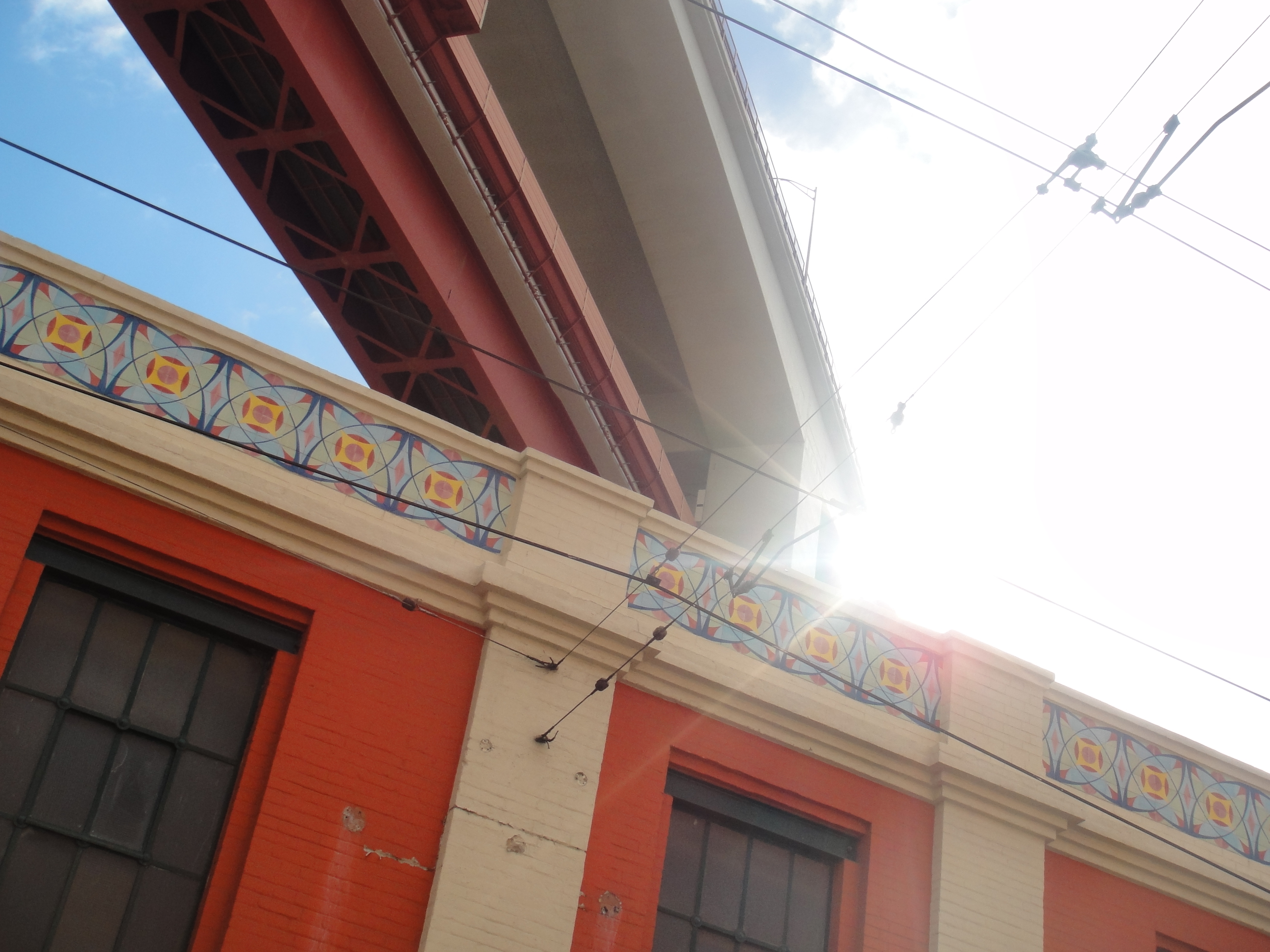
West of central Lisbon, in an area separated on the tourist map by a large swathe of un-chartered city (at least by the travel guides – presumably the neighbourhood is deemed unattractive to tourists) is the area of Belém. It’s quite a hassle to get to. You need to take a tram (or a taxi which actually, so we found, doesn’t cost all that much more) which, sadly, is not one of the rickety old pre-war types, but a modern sleeker affair (well I say sleek by way of comparison, but in fact most were covered with graffiti, their seats falling apart at the seams and the polythene sponge falling out). The tram journey we embarked upon was not altogether successful. The tram was rammed like the sardines for which Portugal is so famous, but the journey didn’t take us far. We got almost as far as the Ponte 25 de Abril before the tram stopped, without reason, and we were all unceremoniously ejected from the tram. Not knowing an alternative way to travel, and being literally shooed away by the driver of the equally packed tram behind, we set out on foot. This took us under the mightly Ponte 25 de Abril which literally towered above the streets of this Lisbon suburb. In fact it looked as though the various concrete plinths holding up the bridge were planted in people’s gardens, as the huge red metal form soared right above an entire residential district. It made for quite a paradoxical sight.

Having walked past the bridge, and with Belém still some distance away, we were lucky enough to coincide with the arrival of another, much emptier tram as it approached a bus stop. We were away. And we even got a seat, albeit no longer cushioned by the long disintegrated polythene padding that once sat upon it.

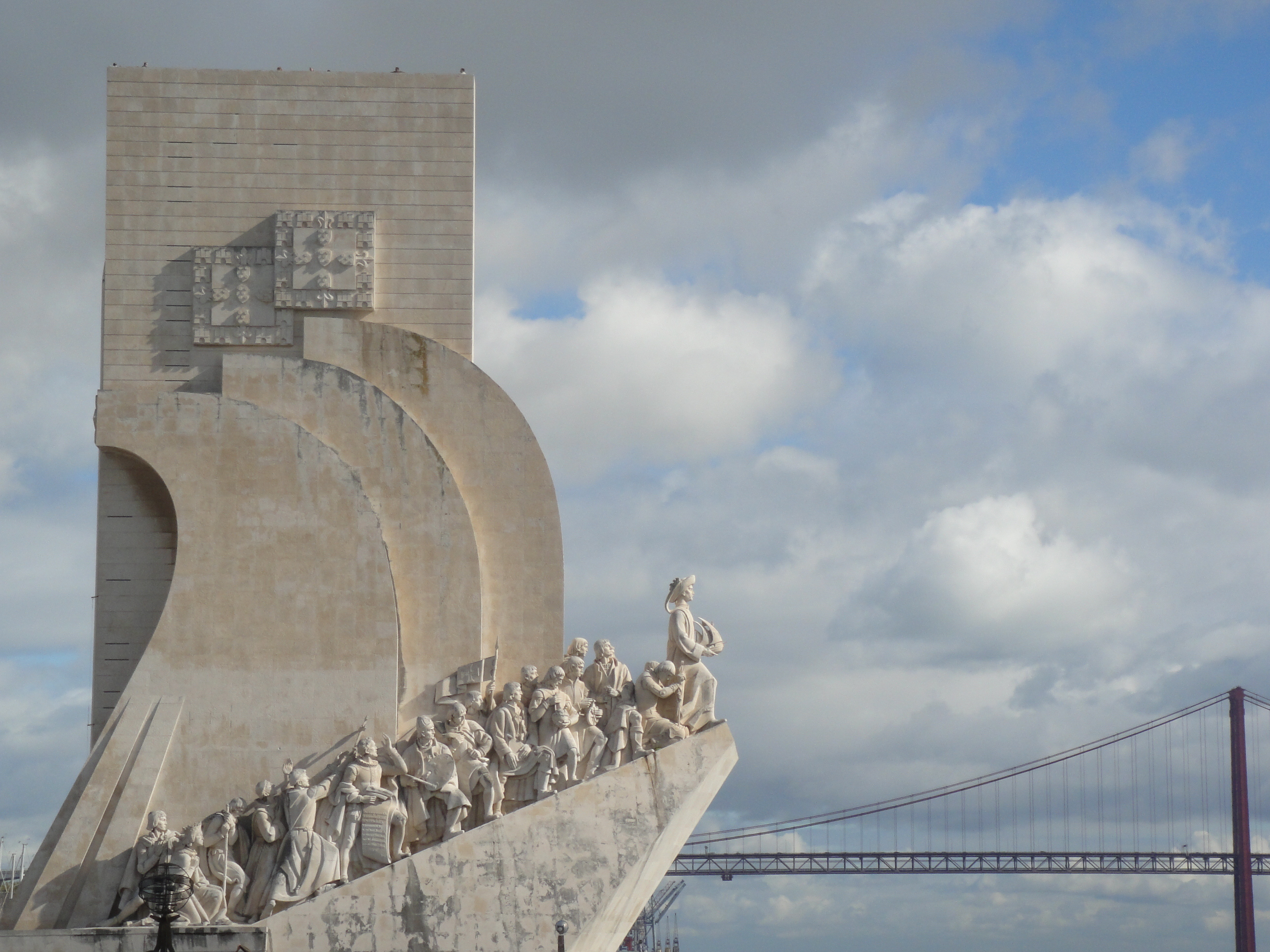
In no time we had arrived at Belém. Situated at the mouth of the River Tagus, where the river opens out into the vast Atlantic Ocean and the end of continental Europe, the region is inextricably linked with Portugal’s golden age of travel and discovery. As a result, the area has sprung up with a surprising wealth of monuments, churches and gardens despite its distance from central Lisbon, and is consequently a must of the tourist trail. Amongst those many monuments is the more contemporary and yet no less striking Monument to the Discoveries (Padrão dos Descobrimentos). Standing prominently on the Belém waterfront, the immense angular monument was built in the 1960s to mark the 500th anniversary of the death of Henry the Navigator and features likenesses of many of Portugal’s great Discoverers, including Vasco de Gama and Pedro Alvares Cabral (the discoverer of Brazil). Having been commissioned by the Salazar regime, it’s not surprising that it is quite blatantly arrogant in its prominence and unapologetic  historical propaganda, and it has something of a look of a communist monument about it. Still, there’s no denying its impact, nor the splendour of its location, overhanging the Tagus against a backdrop of the 25 de Abril bridge.

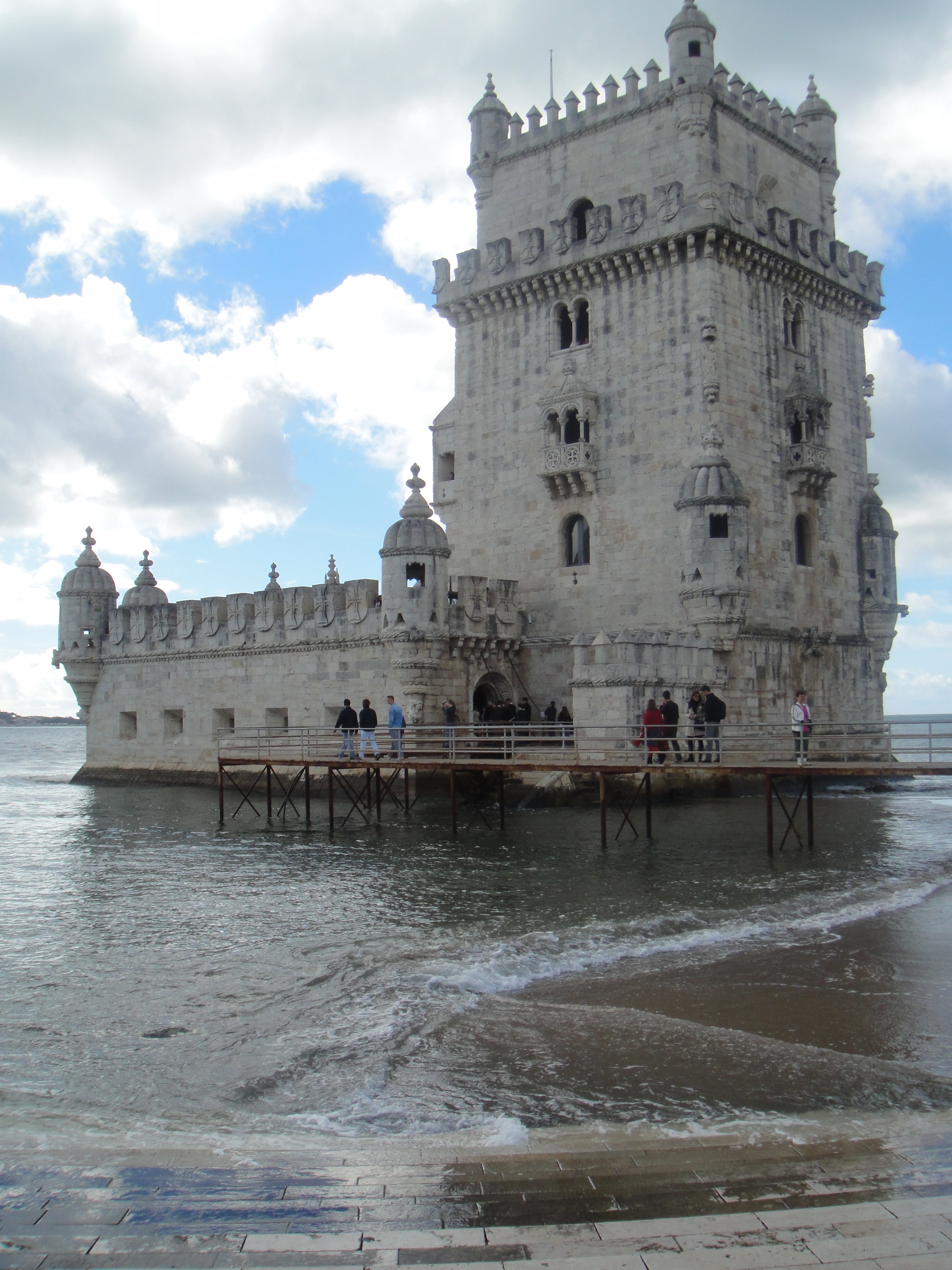
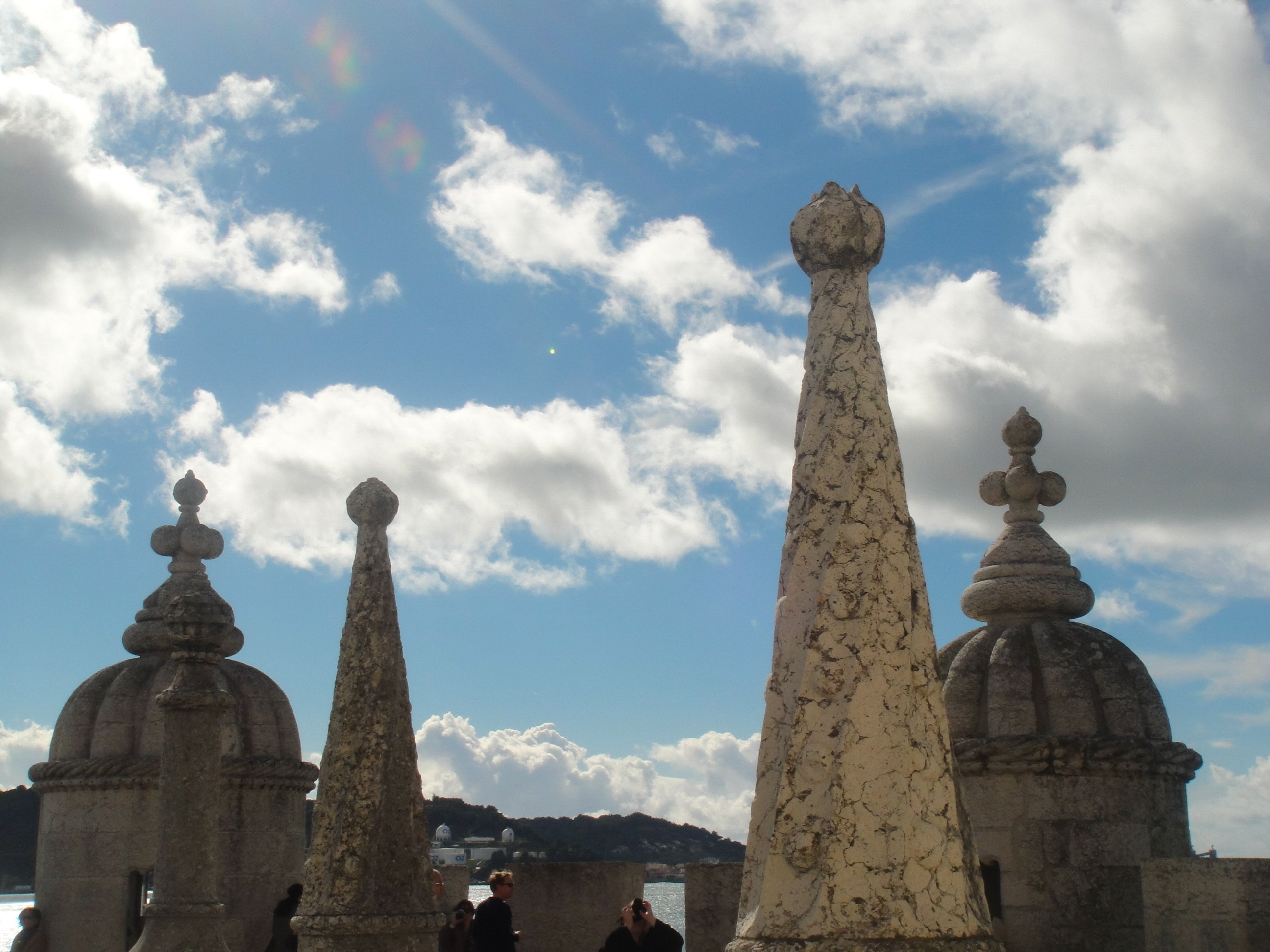
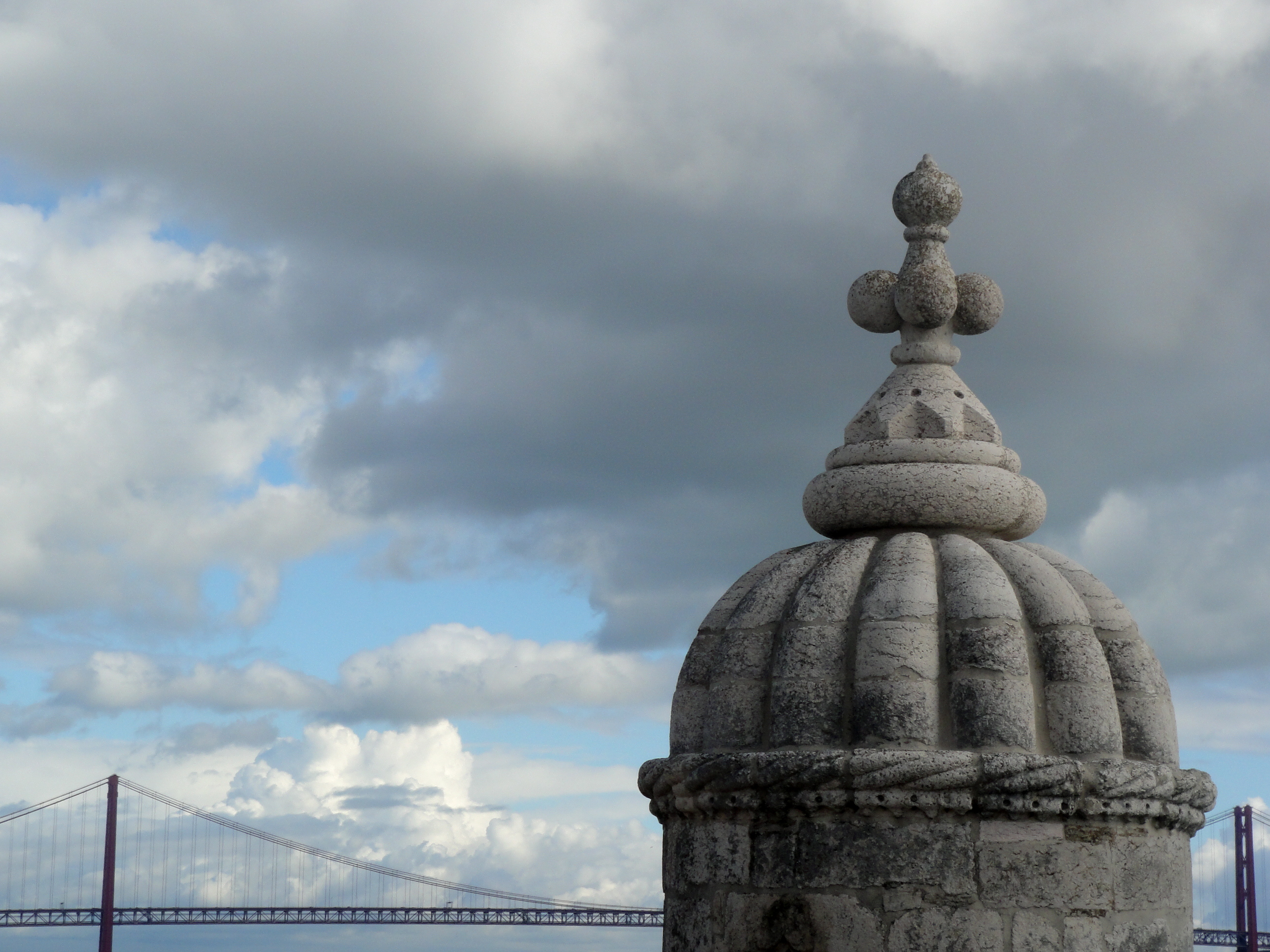
Bolstered by the good weather, and having gawped to our satisfaction at the Discoveries monument, we headed on a pleasant river-side stroll, stopping off at an Ibiza-esk all white chic waterfront bar for a requisite morning coffee and a touch of sun-inspired abandon. Next on the agenda though was the Torre de Belém, a little fortress emerging straight out of the sandy beach like a child’s sandcastle, but with all of the strength of the war machine and guardian of the city which was its design and purpose. For a fortress, the tower was surprisingly elegant in its intricate stone work and heavily adorned terrace, whose balustrades and battlements were of such varying shapes and sizes that they reminded me of the chimneyed rooftop of Gaudi’s Casa Mila in Barcelona.

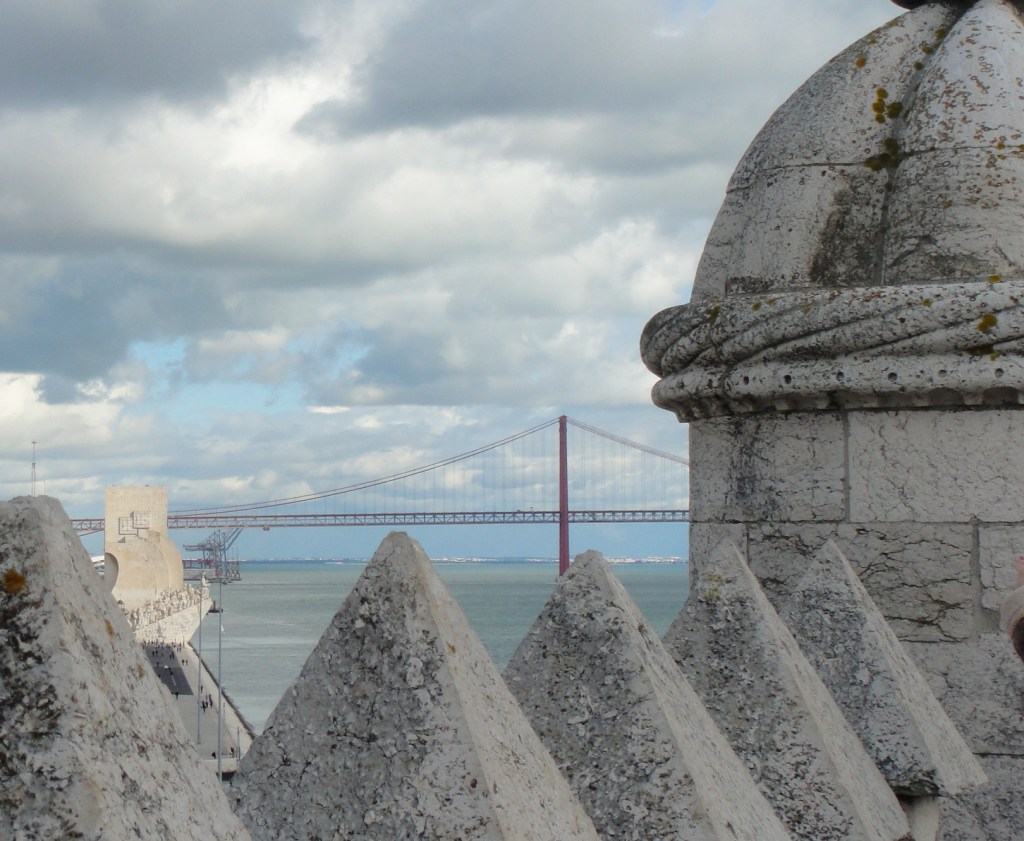
Up a very steep and very narrow winding staircase, with regular stops as tourists attempted to squeeze past each other with unfortunate proximity (there was sadly no one-way system – these castles weren’t built for tourists, after all) we eventually made it to the top terrace. Ahh, up there with the sun on my face and the brisk ocean wind ruffling my hair, with a view across the Atlantic, sweeping down towards central Lisbon and the vibrant red suspension bridge beyond, I felt like the Prince of Belém, guardian of the city, King of the Castle.
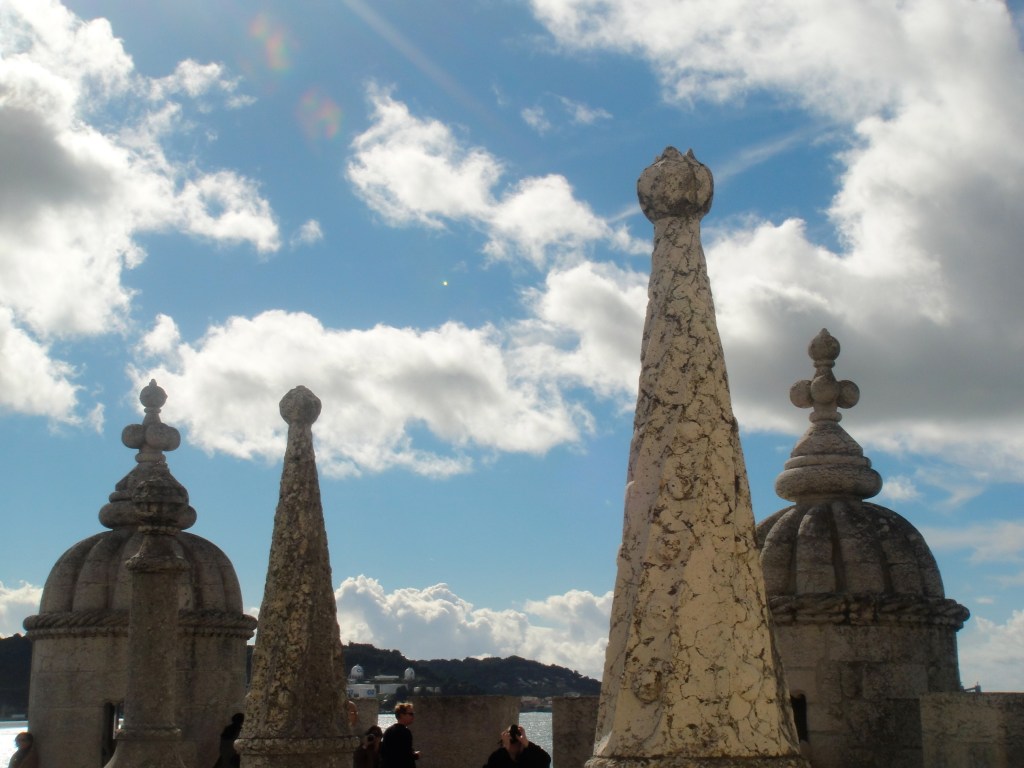
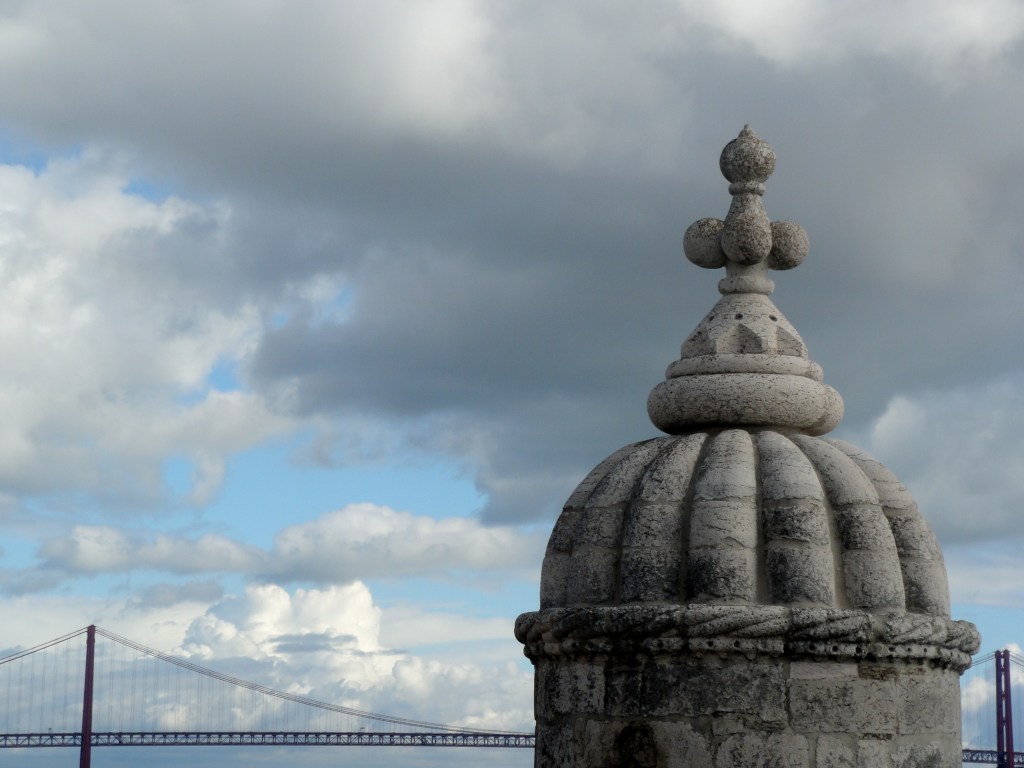
But of course all dreams must come to an end. I was, after all, being butted in the back by the large cameras of the bustle of overzealous tourists nearby, each one leaning over the battlements attempting to capture the best view of Lisbon and the Monument of Discoveries in the foreground. Time to leave, and back along the river, where a luncheon at Portugalia, a traditional affair, ensued, but with a picture perfect view of the Monument and a face full of sun. One can’t moan.

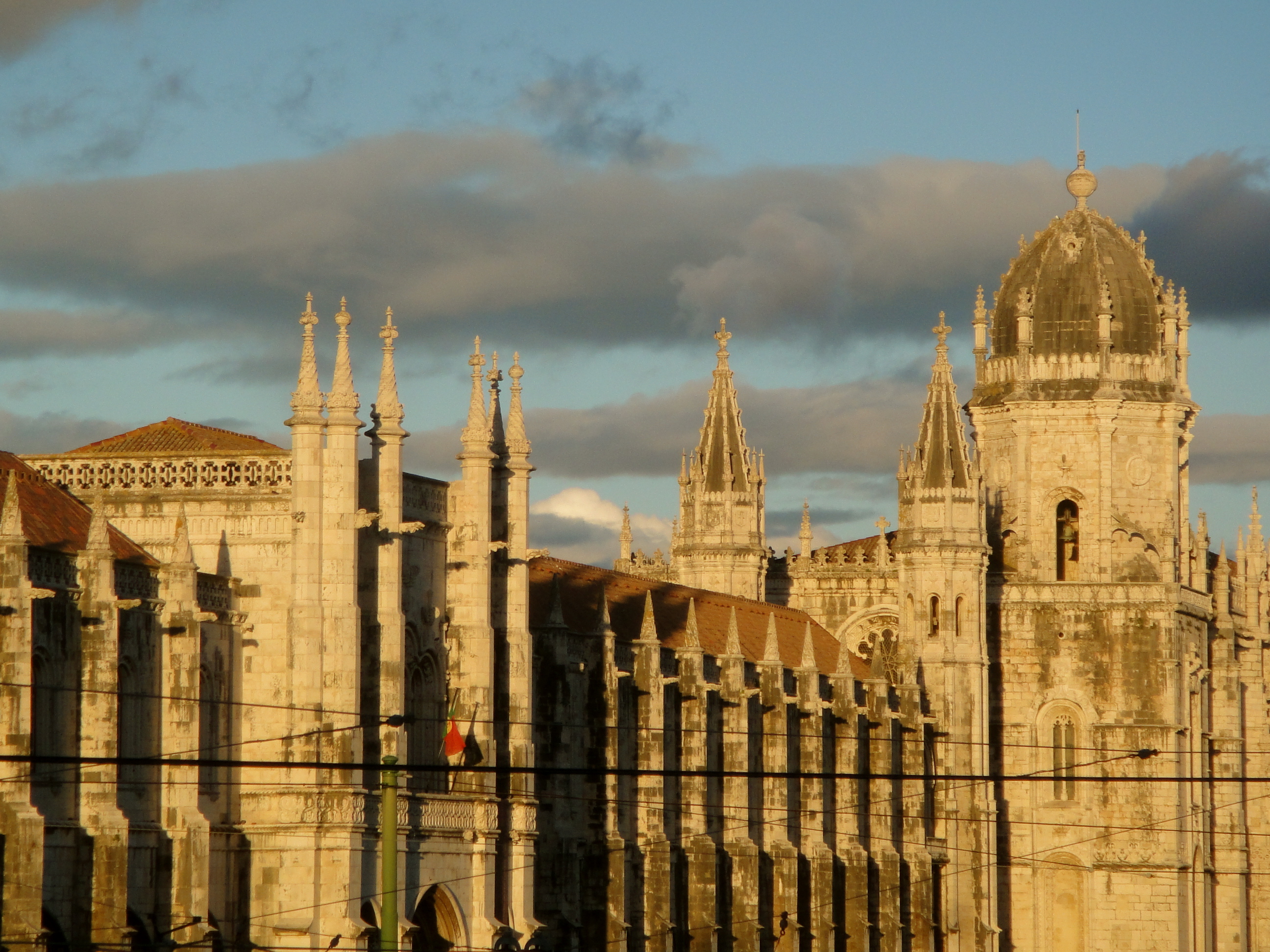
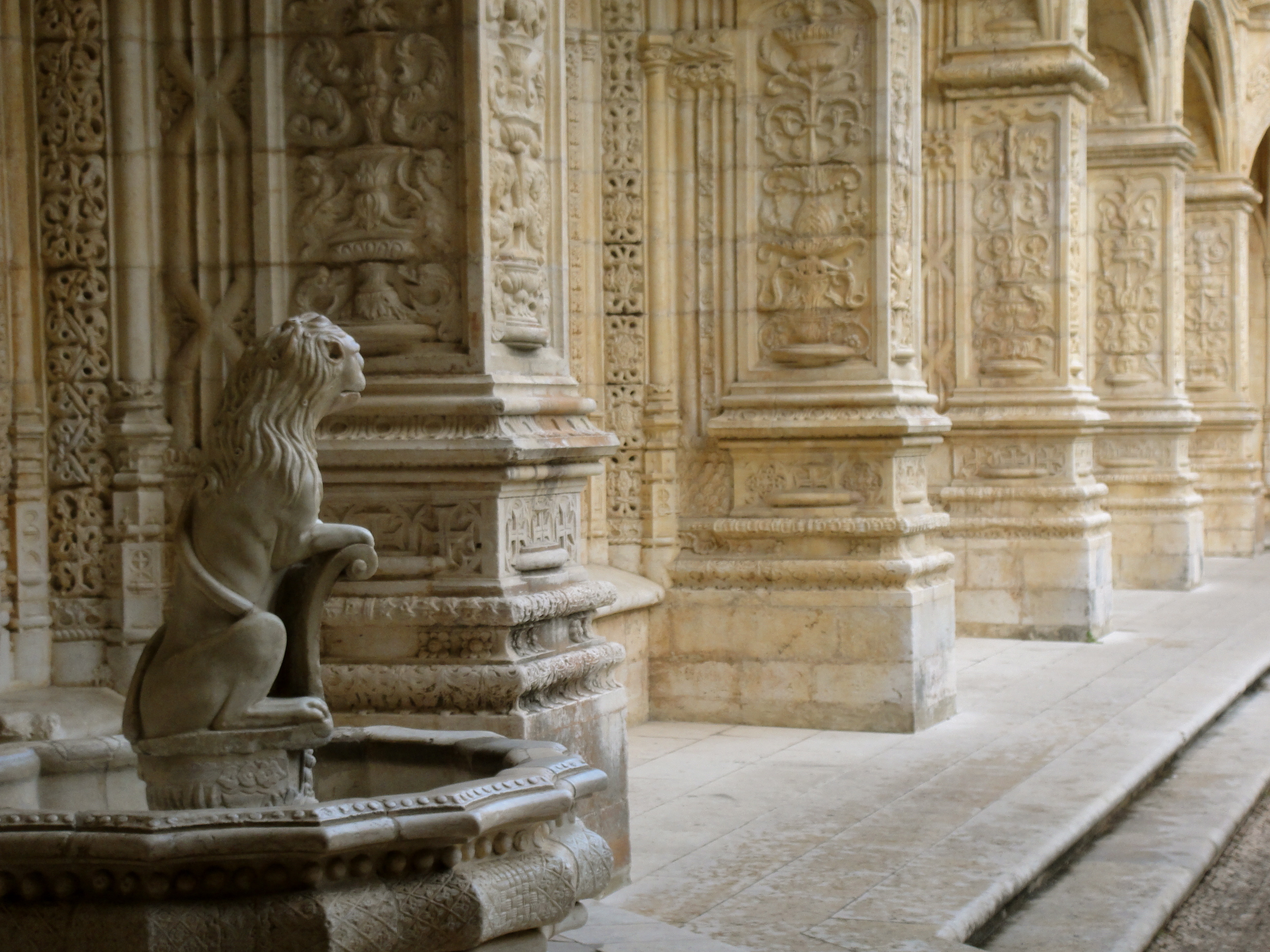
Belém is like a tourist paradise. There’s so much to see and do, and with light fading fast, we did not repose unduly. For the soaring towers and the elaborately crafted Mosterio dos Jerónimos awaited, a vast monastery complex which also benefited from the riches brought back to Portugal during the Age of Discovery, and rather appropriately hosting the burial place of one of the greatest discoverers of them all, Vasco de Gama. The Nave and the Portal of the large adjoining church were undoubtedly stunning, but my favourite area was the sun-soaked tranquility of the stone-wrought cloisters, engraved with a multitude of carved creatures and plants, geometric patterns and soaring gothic arches. Also there was the cute little lion-shaped fountain (dried up, like many of Lisbon’s water features), heraldic animal of St Jerome.

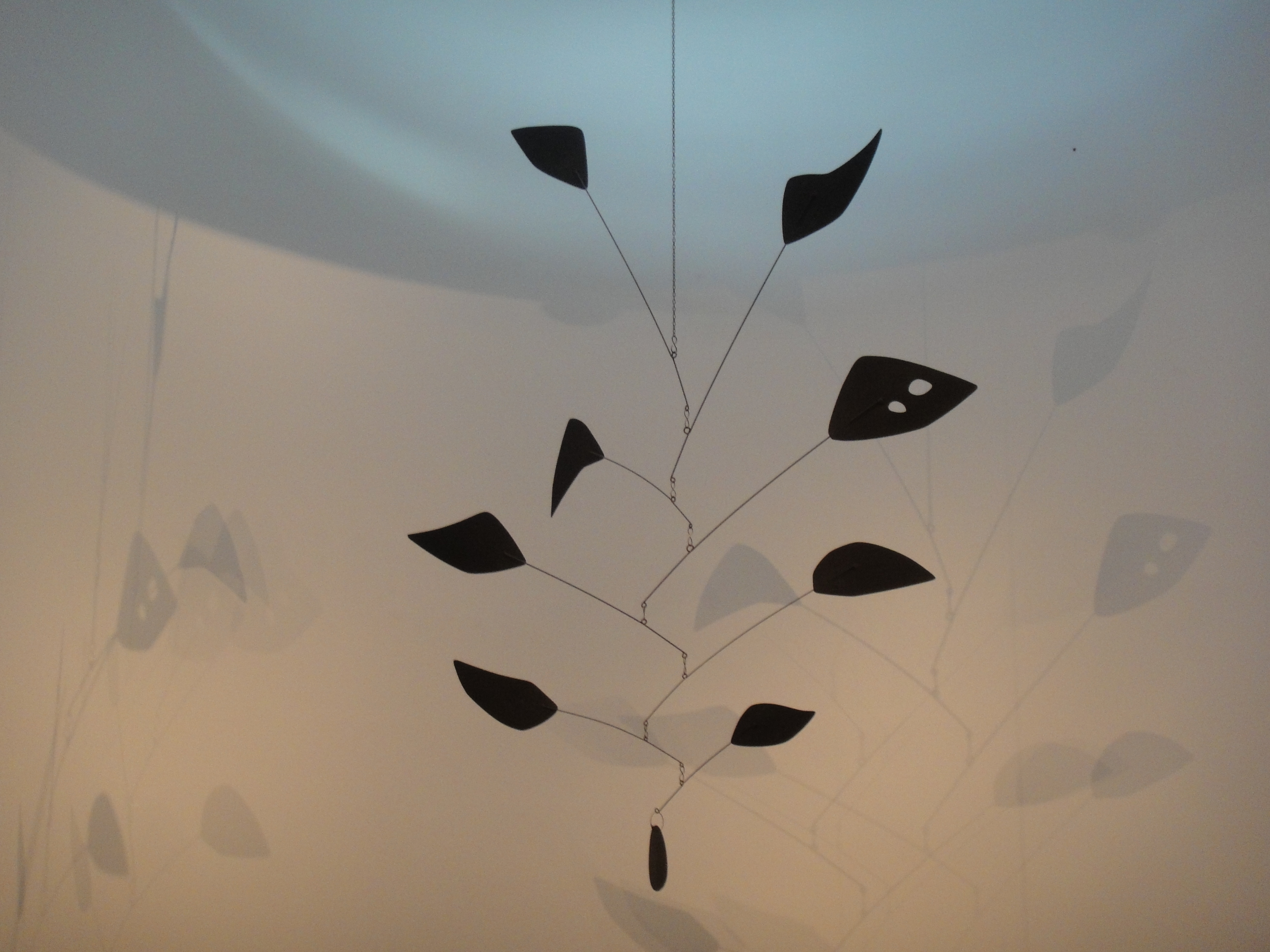
Almost ready to drop, but with one place more to go. The Museu Colecção Berardo Arte Moderna e Contemporânea is another cruicial stop on Lisbon’s art trail, an impressive collection of art from the business mogul and collector José Manuel Rodrigues Berardo which boasts some 1000 works and provides a rich compendium of a century of modern and contemporary art including Picasso, Dali, Warhol, Francis Bacon, Henry Moore, Jeff Koons and, to my great pleasure, a huge swinging mobile by Calder. The gallery could easily compete with the almost unconquerable Tate Modern, not least because in guiding visitors through a chronologically curated ordering of modern art, it presented all visitors with a visually interactive education of the multifaceted changes which rocked the world of contemporary aesthetics.

Henry Moore
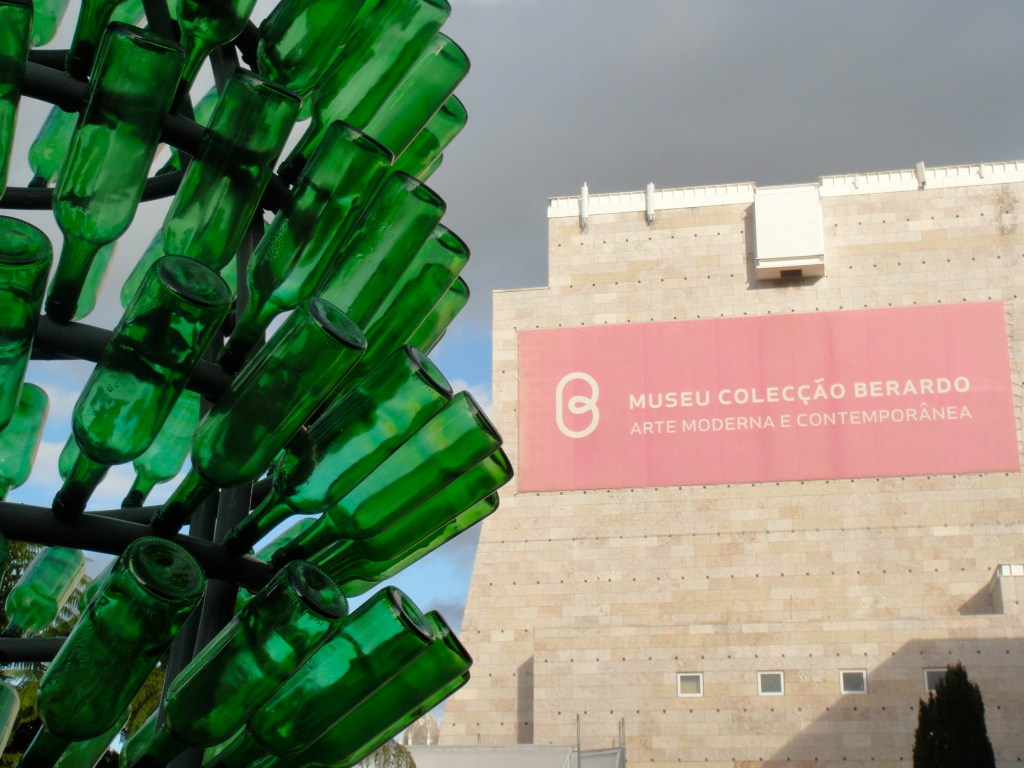
The Museum of Modern Art
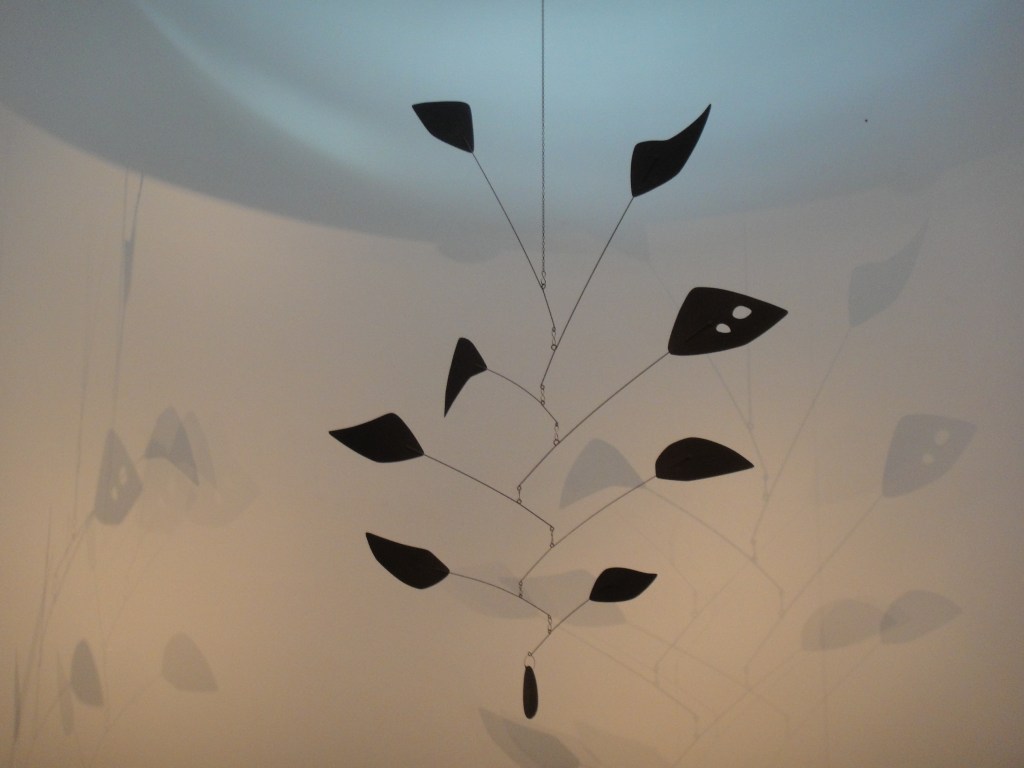
Calder Mobile

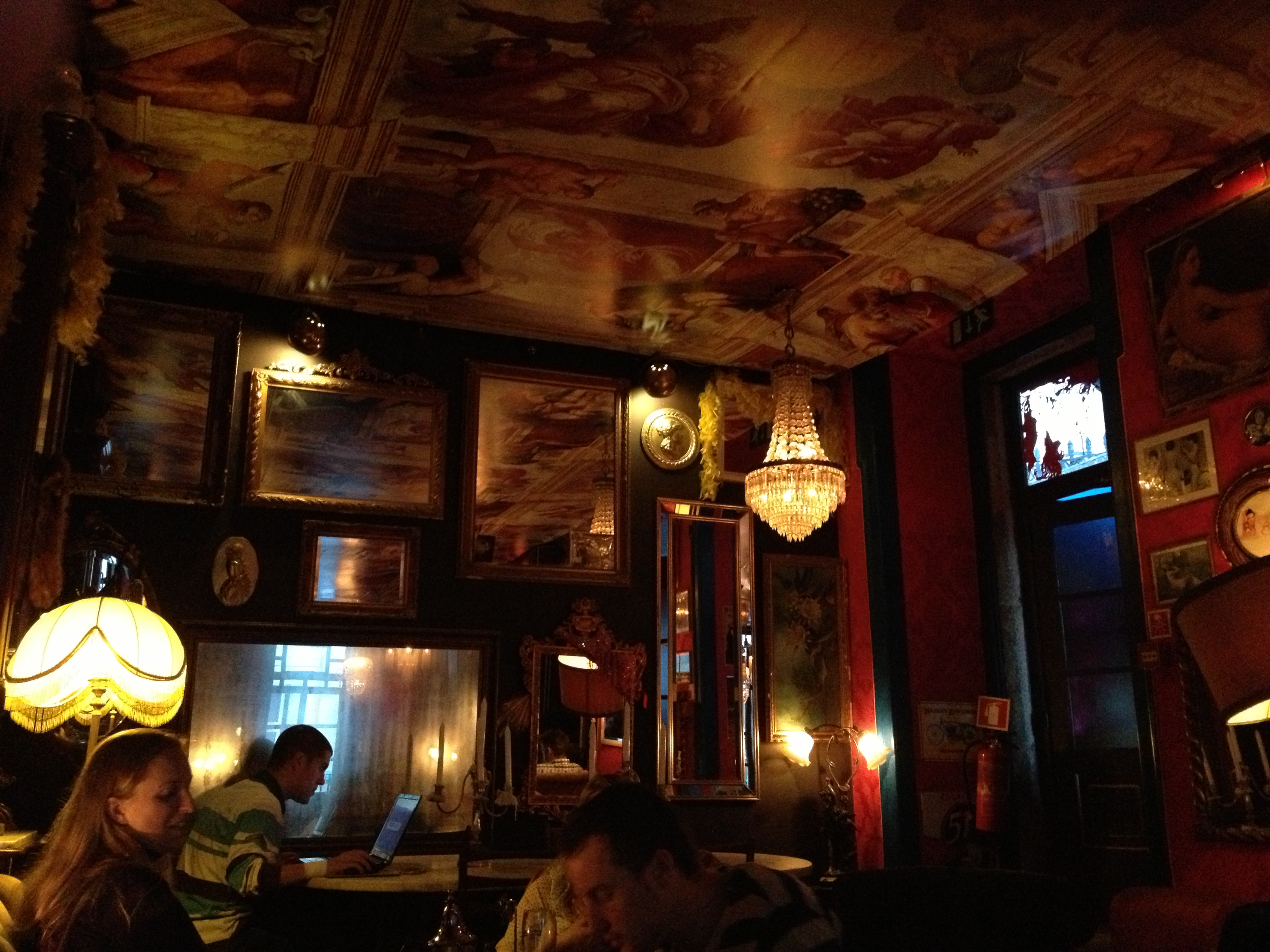
Quite exhausted, we were in no mood for the tram. Leaving a sunset-softened Monument of Discoveries behind us, we rushed off along the riverfront in a taxi which cost us only 20 centimos more than the tram, and refreshed by the comparative convenience of the journey were much buoyed to find opposite our hotel a bar of utterly indulgent romantic boudoir-resembling beauty. Draped with lavish scarlet damask wallpaper, and crammed full with gilt-framed mirrors, chandeliers and art nouveau lighting of every size and variety, statuettes, an amplitude of armchairs, flickering candles and all species of paraphernalia straight out of the Versailles court,  this bar (appropriate called the Pensão Amorlooked more like a Moulin Rouge brothel, but was so excessively indulgent that as I sat there drinking tea, and then (inevitably) port, I began to redesign my entire hallway in my head to emulate it.
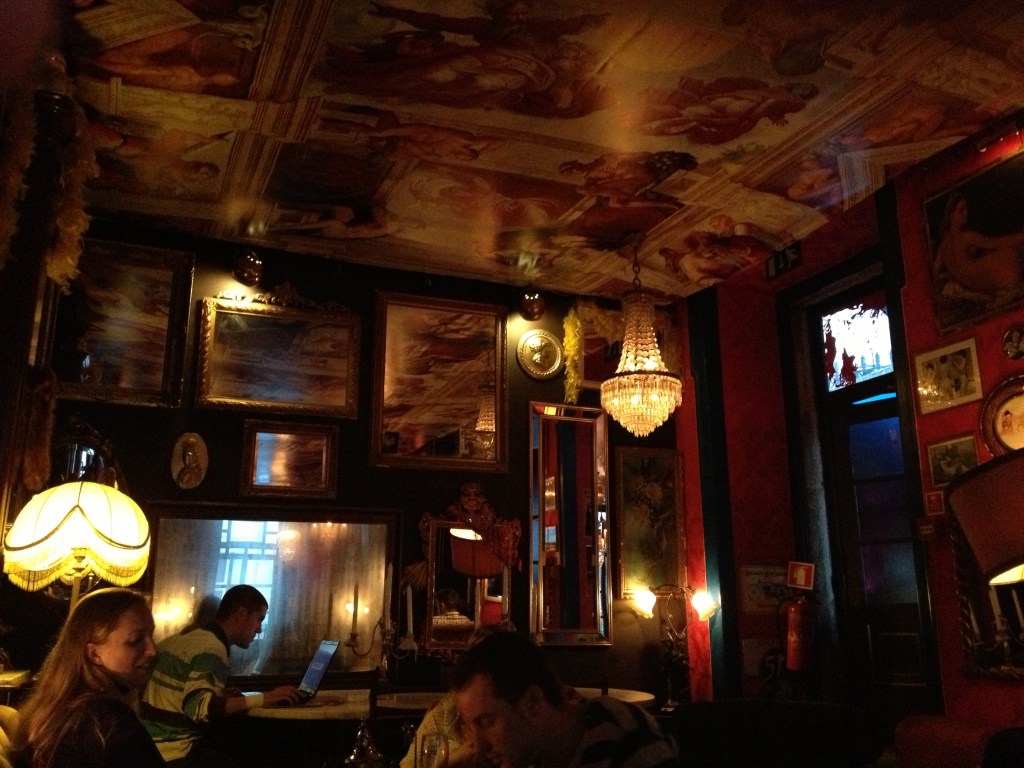
The lavish darkness of the Love Pensão

Can things get any better than this? Well they did at dinner – a feast fit for the Prince of Belém himself, in the restaurant of celebrity chef Henrique Sa Pessoa – AlmaBut let me lavish praise no further – that exquisite dinner needs a post all of its own. Until then… Let Lisbon sleep, and our feet recover in time for Day 4 of our own age of discoveries.
Photographs and content © Nicholas de Lacy-Brown and The Daily Norm, 2001-2012. Unauthorized use and/or duplication of the material, whether written work, photography or artwork, included within The Daily Norm without express and written permission from The Daily Norm’s author and/or owner is strictly prohibited. Excerpts and links may be used, provided that full and clear credit is given to Nicholas de Lacy-Brown and The Daily Norm with appropriate and specific direction to the original content.