Skip to content

Posts tagged ‘Art’

Sunday Supplement ITALIA – Cityscape IV: Rome

It’s ITALIA Season on the Daily Norm, and after a week of Norms’ adventures down the boot of Italy, and a showcase of my photos of the glorious country, it’s time to feature another of my paintings. I haven’t devoted nearly as much canvas space to Italy as I have to Spain or Paris for example. And now I come to think about it, that really should change. There is frankly so much beauty to inspire me that I could paint Italy for the rest of my life. Perhaps that’s why I have never really begun.

However one work which I did paint in homage to Italy was a simple reflection of Rome’s Forum Romano, against a rich orange and pink sunset. You can just about see St Peter’s Basilica in the Vatican in the background. The painting formed part of my “Cityscape” series which I painted back in 2007 when I was trying to teach myself how to master oil paints, having been painting for so many years in acrylics. Despite being only “studies”, the resulting collection was so popular that I transformed part of it into limited edition prints back in 2008.

Anyway, without further ado I give you Rome, in sultry silhouette.

Cityscape IV: Rome (2007 © Nicholas de Lacy-Brown, Oil on canvas)

© Nicholas de Lacy-Brown and The Daily Norm, 2001-2012. Unauthorized use and/or duplication of the material, whether written work, photography or artwork, included within The Daily Norm without express and written permission from The Daily Norm’s author and/or owner is strictly prohibited. Excerpts and links may be used, provided that full and clear credit is given to Nicholas de Lacy-Brown and The Daily Norm with appropriate and specific direction to the original content.

The Daily Sketch ITALIA – Norms in Rome

Travelling southwards, down the Mediterranean coast of Tuscany and taking a sharp inland turn from Civitavecchia, the Norms have finally found themselves in the renowned capital city of Italy, the one and only Roma. And what a city it is. Crammed full of antiquity, artistic and cultural heritage from centuries of history played out within its seven famous hills. From the great Roman Empire which once ruled the western world, and the remnants of which still litter the city unapologetically, to the great Religious heritage flowing from the foundation of the Catholic Church in the nearby Vatican City, and the catholic fervour and religious architectural splendour which has no doubt resulted. With its chic café culture near the Spanish Steps, the romantic brilliance of the Trevi Fountain, and the grandeur of the “wedding cake” Altare della Patria building, Rome is a city offering everything.

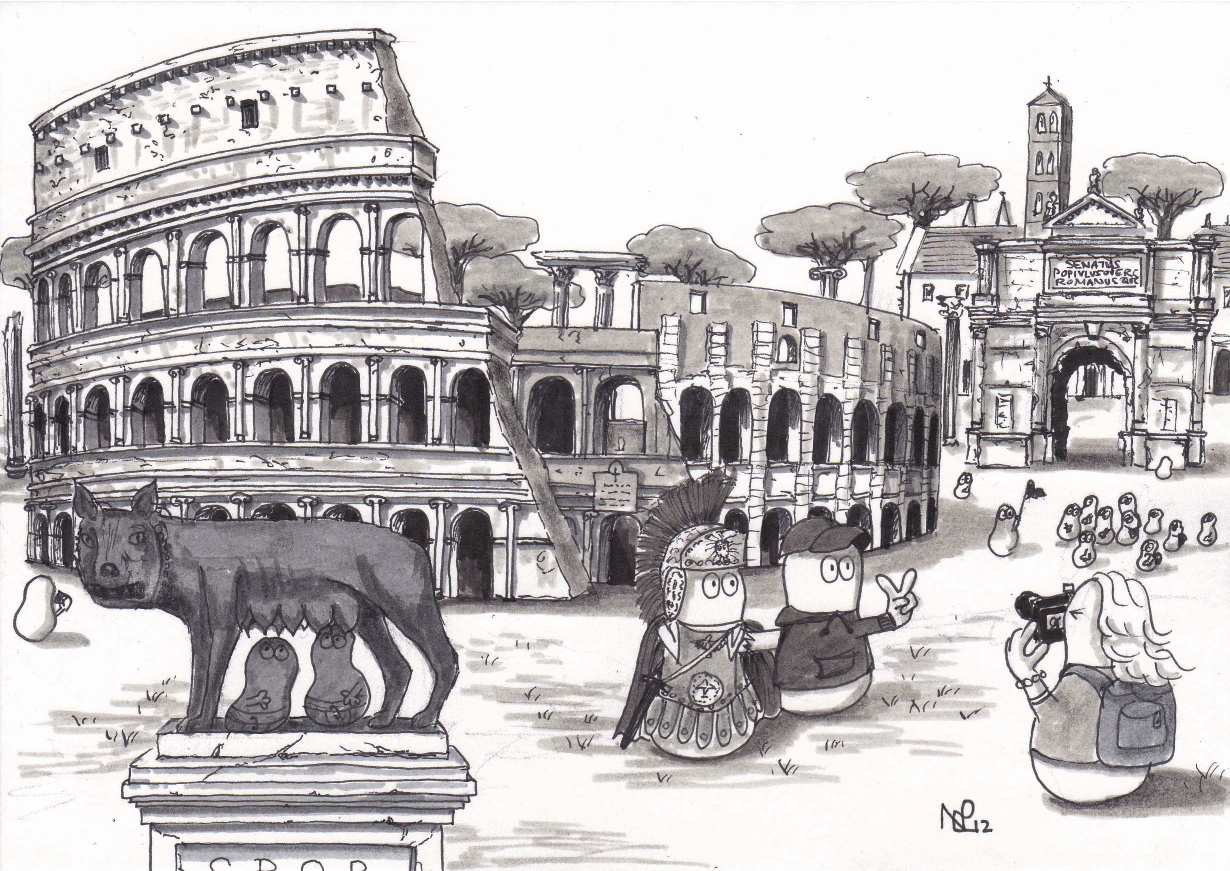
For the Norms, the centre of their visit (being that Gladiator is by far their favourite film) has to be Rome’s most famous symbol, the Coliseum, the spectacular amphitheatre straight out of Ancient Rome. Not so directly linked to Rome, but inspired, nonetheless by that great age, are the tourist-touting “centurion” dressed Norms who collect outside the great arena, posing for photos for a few extra coins in their purse. This less than soldierly activity has nonetheless attracted the attention of these tourist Norms who have their photo taken with one said Centurion with the great Coliseum providing the perfect Roman backdrop, alongside a sculpture of the founders of the great city, Romulus and Remus (Norms) suckling upon their mother wolf as tradition demands. You’ve gotta love it.

Norms in Rome (2012 © Nicholas de Lacy-Brown, pen and ink on paper)

© Nicholas de Lacy-Brown and The Daily Norm, 2001-2012. Unauthorized use and/or duplication of the material, whether written work, photography or artwork, included within The Daily Norm without express and written permission from The Daily Norm’s author and/or owner is strictly prohibited. Excerpts and links may be used, provided that full and clear credit is given to Nicholas de Lacy-Brown and The Daily Norm with appropriate and specific direction to the original content.

ITALIA Season – Rome: My Photographs

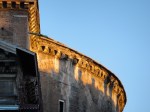
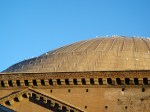
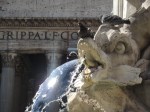
Rome: City of passion, where waves of heat flow ruggedly through bustling streets, where raised Italian voices and sustained hooting from haphazardly driven cars are the harmony and the melody, where painted church ceilings bring heaven to its closest interaction with the earth, and the Roman ruins all around remind the current thriving generation that on this same soil, a grand imperial history is sewn deep into the rich tapestry of Rome’s foundations. In Rome you can take a coffee in the shade of the Borghese gardens, or a people-watching cocktail by the Spanish steps. You can join the throng of tourists strolling around the Piazza Navona and the Coliseum, and you can tread the steps of Emperors as you gaze upwards to an almost fully intact Pantheon temple. Rome is living history – a city struggling to move forward while treading on the cherished egg shells of its past, but one which prioritises the Joie de Vivre, the good times, the passion of life. Rome: city of art, of colour, of culture, of style, of religious fervour, of architectural heritage, or pure Italian gastronomic brilliance. Rome – a city so unique that words alone will not suffice, and only photos, now, will do.

© Nicholas de Lacy-Brown and The Daily Norm, 2001-2012. Unauthorized use and/or duplication of the material, whether written work, photography or artwork, included within The Daily Norm without express and written permission from The Daily Norm’s author and/or owner is strictly prohibited. Excerpts and links may be used, provided that full and clear credit is given to Nicholas de Lacy-Brown and The Daily Norm with appropriate and specific direction to the original content.

The Daily Sketch ITALIA – Norms in Pisa

You don’t have to travel far from Firenze to hit the city’s Mediterranean neighbour: Pisa. These days everyone travels to Pisa for one reason – a certain leaning tower, built as the campanile to an equally stunning cathedral and baptistry all situated in the Piazza del Duomo of this otherwise basically nondescript city. The tower, which was built with only 3 metres of foundations on weak sub-soil, tilts some 5.5 degrees and is without a doubt probably the most famous symbol of Italy next to Rome’s Coliseum.

No wonder then that the Norms decided to give the tower a visit on their tour through Italy, but they did not anticipate quite how much the tower leans. In fact, when they stood in the tower’s shadow, they could have sworn that the tower was actually starting to lean closer and closer towards them. As other tourist Norms look by in shock and bemusement, some taking photos, others staring at the unique angle of the building, we are left to wonder, will the tower topple and squash those poor norms under the weight of its colonnaded majesty? Like all good stories, we are left on a cliff-edge at the point of this sketched snap-shot, with the leaning tower still intact to inspire the admiration and incredulity of us all.

Norms in Pisa (2012 © Nicholas de Lacy-Brown, pen and ink on paper)

© Nicholas de Lacy-Brown and The Daily Norm, 2001-2012. Unauthorized use and/or duplication of the material, whether written work, photography or artwork, included within The Daily Norm without express and written permission from The Daily Norm’s author and/or owner is strictly prohibited. Excerpts and links may be used, provided that full and clear credit is given to Nicholas de Lacy-Brown and The Daily Norm with appropriate and specific direction to the original content.

The Daily Sketch ITALIA – Norms in Florence

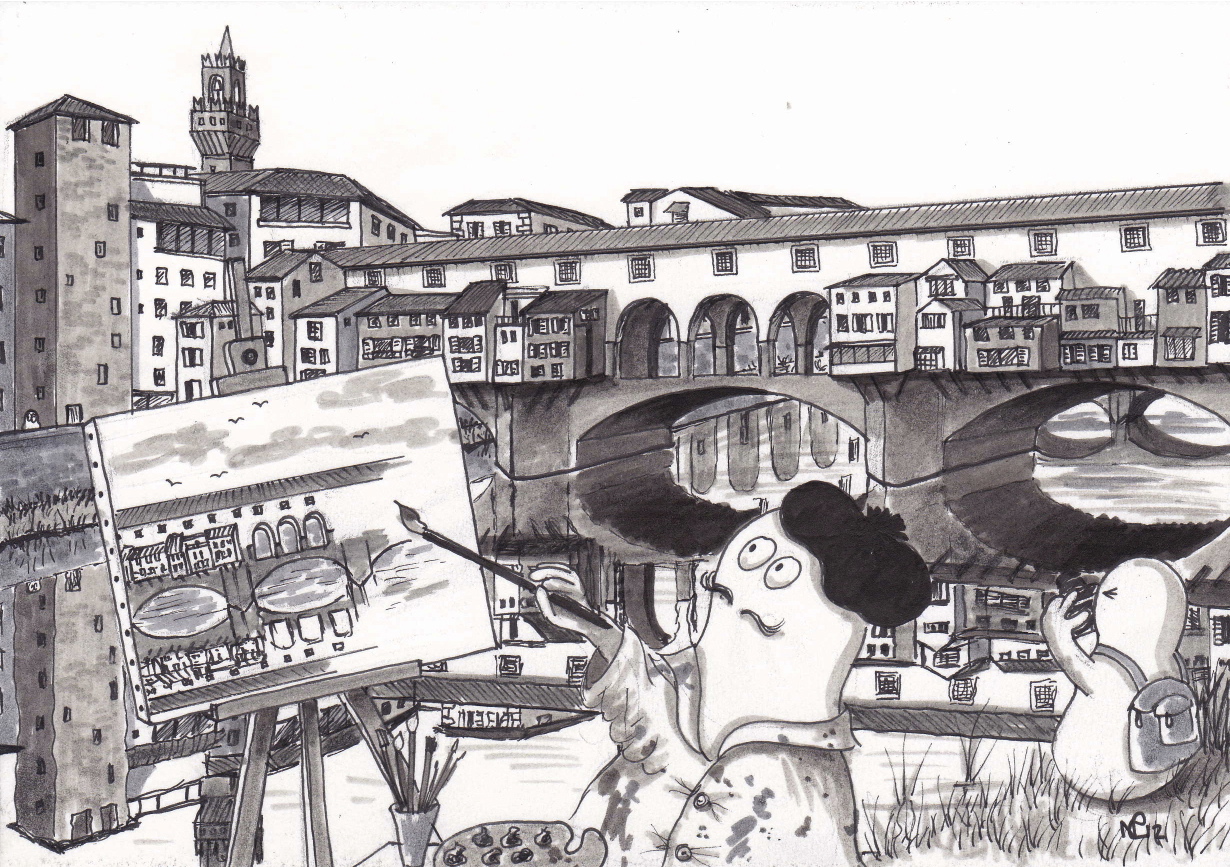
Next on the Italian tourist trail, the Norms have headed for Florence, for shopping in Milan was deemed inappropriate in the current economic climate. Taking inspiration from the significant artistic and architectural heritage of a city which was at the centre of the thriving artistic Renaissance, producing masterpieces such as Michelangelo’s David, the Giotto frescoes of Santa Croce, Botticelli’s Venus and the vast collections of the Medici tribe, this Norm has turned all artist, setting up his easel on the banks of the River Arno. From there he can enjoy a perfect view of the famous Ponte Vecchio, a street of merchants suspended across the river, and atop of which a secret corridor links the Palazzo Vecchio to the Palazzo Pitti – genius! Patiently, Artist Norm is recreating this magnificent view across the surface of his canvas, while a fellow tourist prefers the medium of photography to capture his impression of Florence, a city which is so beautiful, that it needed to be captured twice, reflected in double form in the waters which run peacefully through its centre.

Norms in Florence (2012 © Nicholas de Lacy-Brown, pen and ink on paper)

© Nicholas de Lacy-Brown and The Daily Norm, 2001-2012. Unauthorized use and/or duplication of the material, whether written work, photography or artwork, included within The Daily Norm without express and written permission from The Daily Norm’s author and/or owner is strictly prohibited. Excerpts and links may be used, provided that full and clear credit is given to Nicholas de Lacy-Brown and The Daily Norm with appropriate and specific direction to the original content.

The Daily Sketch ITALIA – Norms in Venice

The Daily Norm’s Italian season has officially kicked off, and as such is just another of the infamous PIIGS (Portugal, Ireland, Italy, Greece and Spain – the woe of the EU) which is getting the whole-hearted support of my blog. And of course, where The Daily Norm goes, so too must the Norms themselves, and this week you can join these little white blobs as they traverse the boot of Italia itself, bouncing from one destination to another, making their own “Grand Tour” through the country’s most famous sights.

It may make sense to go from South up to the North in the hope that as the summer months heat up, the Norms can catch the cooler breezes of Northern Italy as the days of July tick along. But Norms don’t really think logically, and as they don’t have feet, let alone legs, they can hardly be counted upon to understand the best way to navigate Europe’s most famous boot. The Norms therefore have started off in the North of Italy, and where best to commence their tourist trail, than in La Serenissima herself, undoubted Queen of the Adriatic, Venezia.

We join the Norms as they sample, as every well-moneyed tourist should do (I note at this point that I have never been able to afford the great privilege of a gondola ride, although I have used the vaporetto, the London bus equivalent of the stretch limousine), the glory of the Grand Canal by gondola, floating gently along this main watery artery of Venice, under the city’s most famous bridge, the Rialto. Need I say more? Welcome to Venice…

Norms in Venice (2012 © Nicholas de Lacy-Brown, pen and ink on paper)

© Nicholas de Lacy-Brown and The Daily Norm, 2001-2012. Unauthorized use and/or duplication of the material, whether written work, photography or artwork, included within The Daily Norm without express and written permission from The Daily Norm’s author and/or owner is strictly prohibited. Excerpts and links may be used, provided that full and clear credit is given to Nicholas de Lacy-Brown and The Daily Norm with appropriate and specific direction to the original content.

Sunday Supplement ITALIA – Tuscany Wharf: 15km to San Gimignano

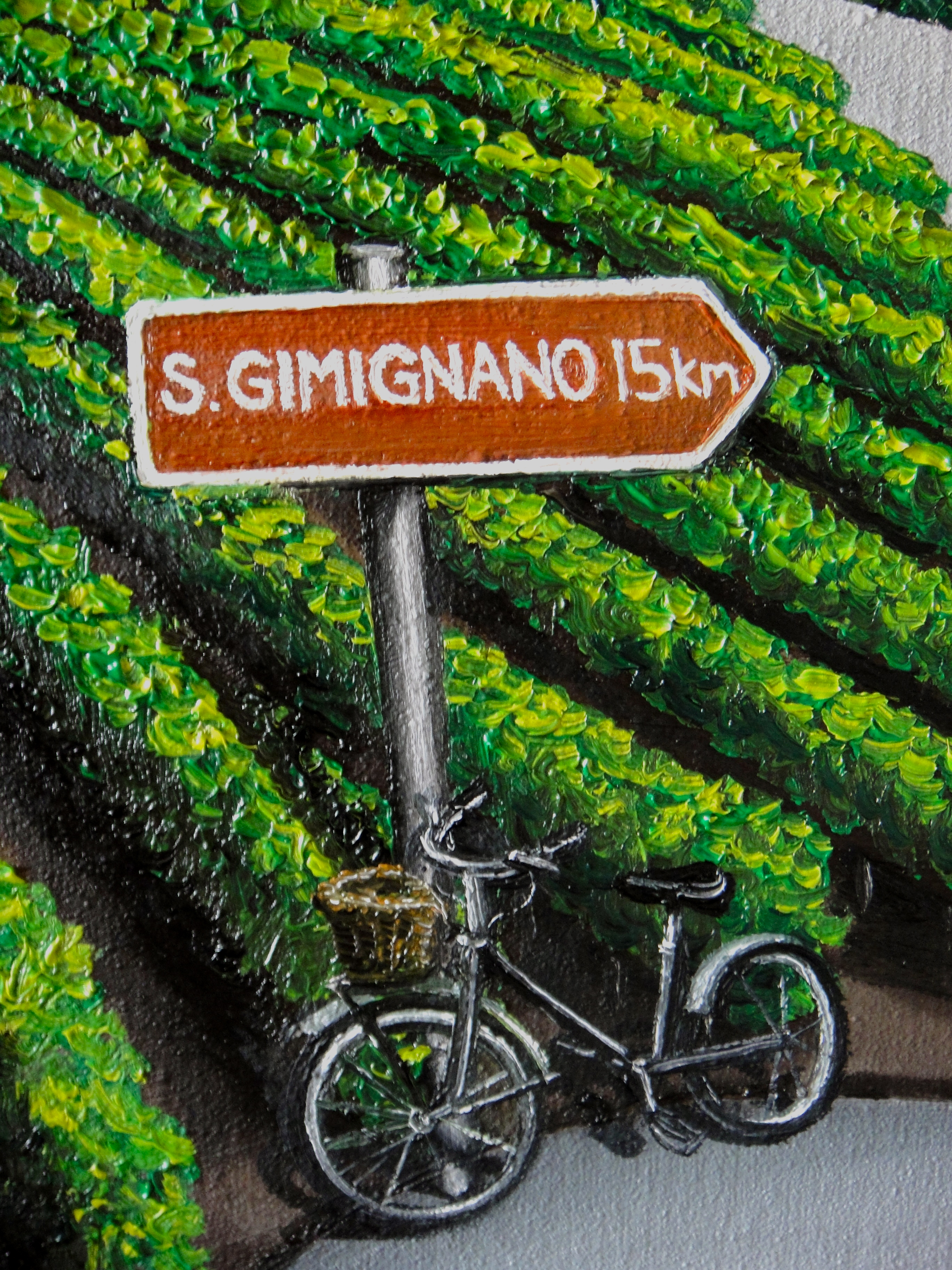
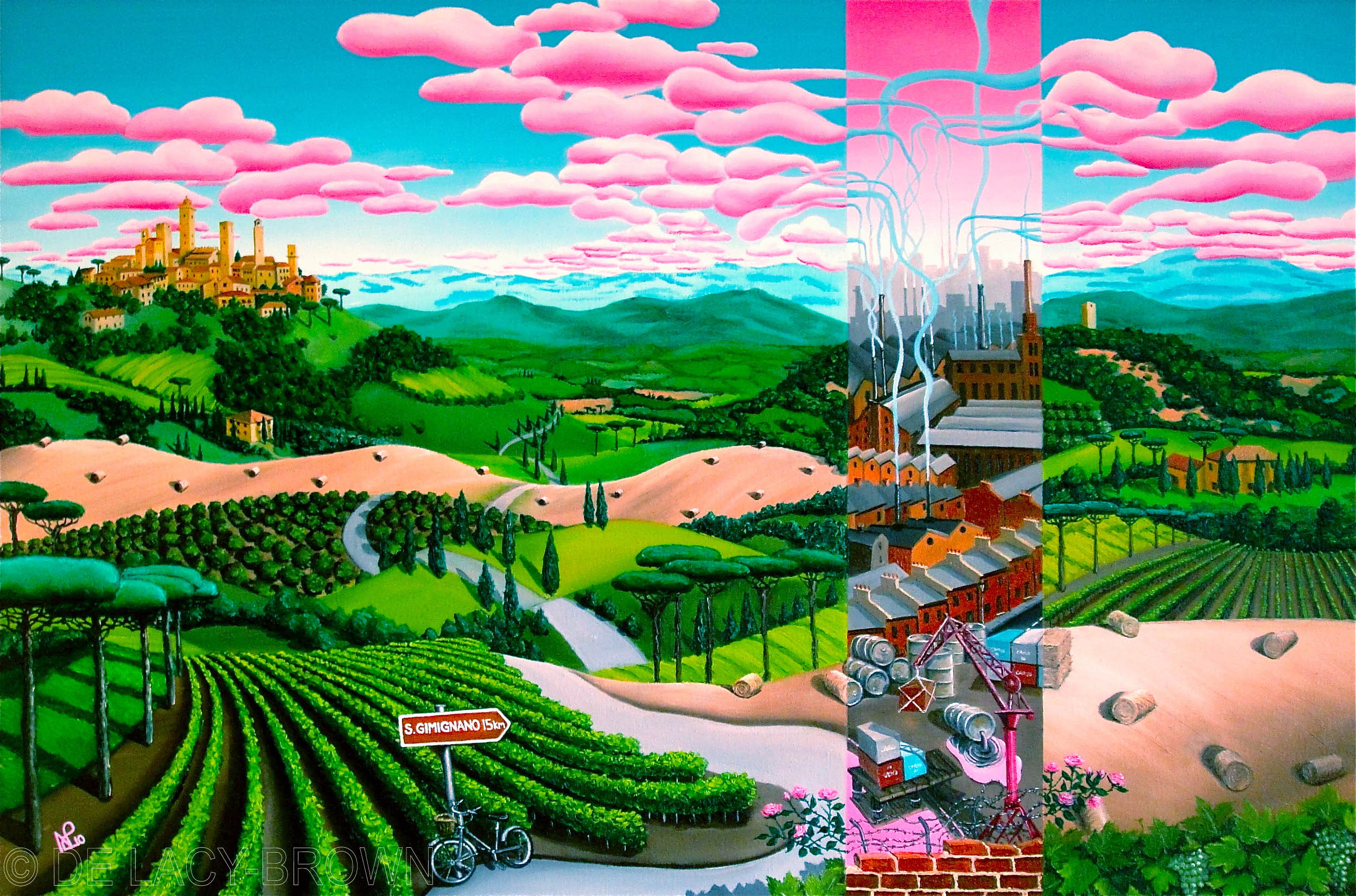
It’s ITALIA Season on the Daily Norm, celebrating, for at least two weeks, everything that’s fantastic about Italy. And to kick of the season, here on the Sunday Supplement, the weekly showcase of my art, I am featuring my 2010 painting, Tuscany Wharf: 15 km to San Gimignano. 

I was inspired to paint the scene when my Partner’s family and I were driving through the incredibly beautiful green and golden rolling hills of the Tuscan countryside. The journey, from Donoratico down on the coast up through the hills, past Volterra and on to San Gimignano involved so many curves and bends and meanders through the Tuscan countryside that when we reached a road sign advising us that after around 90 minutes of said meandering, we were finally within 15 km reach of our final destination, my Partner, whose face was very green by that point, breathed a huge sigh of relief, or as much of a sigh as could be mustered after a double dose of very soporific travel sickness tablets.

As we approached San Gimignano, a UNESCO world-heritage protected town, famous for its collection of medieval towers which grew taller with each new construction as rich merchant families sought to compete with one another, the view was better than ever. Approaching the town from some distance, seeing the iconic towers gradually emerging from behind the brow of a set of undulating hills, was quite a sight, and one which I have attempted to capture in my painting, which celebrates all the beauty of the Tuscan countryside from rows of perfectly lined up vineyards and golden fields with rolled up hay, to the curly-wurly road itself, rising and falling over and around the crests of hills, lined by cypress trees and Italian pines.

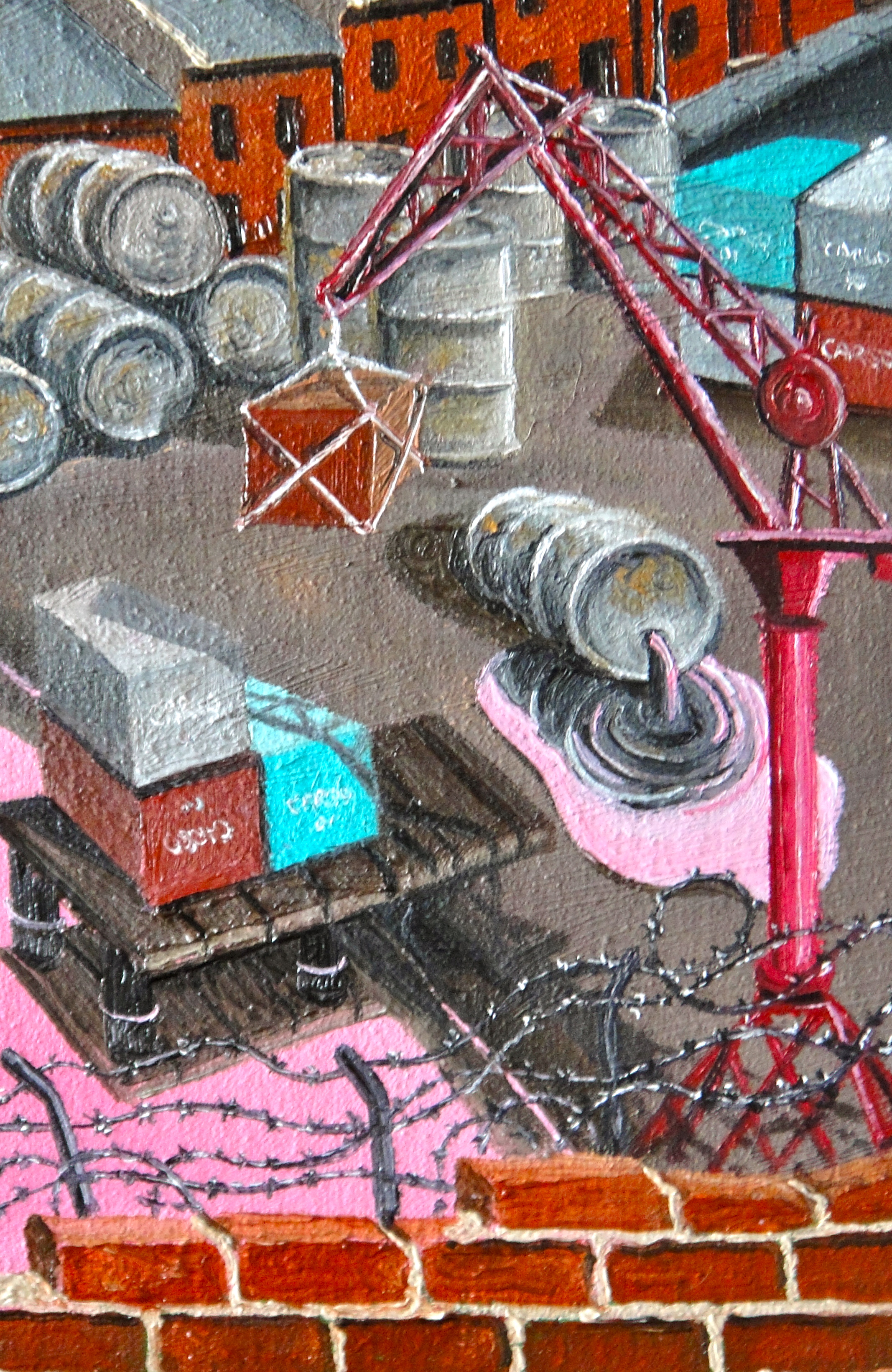
However what makes this representation of Tuscany different is that sliced through one part of the landscape is a vertical insight into another world. It’s industrial Northern England, a scene with such industrialised toxicity that the smoke bellowing out from the factory chimneys pour into the Tuscan scene, filling turquoise skies with a decided collection of clouds. The English scene, which was inspired by the works of L. S. Lowry, was inserted by way of marked contrast to the beauty of the Tuscan scenery. However both scenes appear to be in sync, as if they represent the same geography in a parallel universe. Where the tuscan hills roll upwards, the english scene follows the same trajectory, with a row of cramped terraced houses following the same incline of the Tuscan hill. Where in tuscany there is a round bail of hay, in the English scene, the bail of hay is replaced with a cylindrical oil container. Similarly the roses, planted next to a vineyard so the grape grower can detect disease early, is replaced by the barbed wire keeping trespassers off the industrial site. Thus it is that the two landscapes appear inescapably conflicting, and yet coexisting in perfect union.

Tuscany Wharf (15km to San Gimignano) (oil on canvas, 2010 © Nicholas de Lacy-Brown)

© Nicholas de Lacy-Brown and The Daily Norm, 2001-2012. Unauthorized use and/or duplication of the material, whether written work, photography or artwork, included within The Daily Norm without express and written permission from The Daily Norm’s author and/or owner is strictly prohibited. Excerpts and links may be used, provided that full and clear credit is given to Nicholas de Lacy-Brown and The Daily Norm with appropriate and specific direction to the original content.


Celebrating all things radiant in RED – a photographic homage to Louboutin

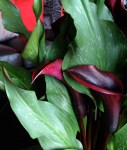
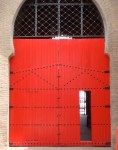
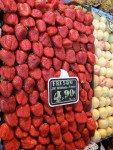
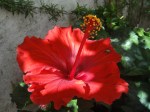
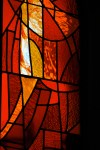
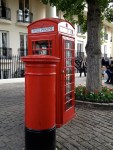
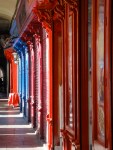
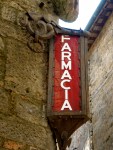
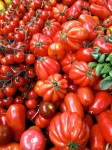
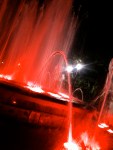
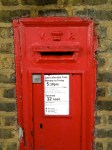
It was only yesterday that I was extolling the virtues of all things red. That vibrant, rich colour, instantly attractive to the human eye, seducer of souls, seller of sex, and now the renowned glossy seller of stilettos in the form of Louboutin’s red-soled masterpieces. And it is in homage to that said innovative shoe-maker-to-the-chic that I have taken inspiration from the rosiest, most ravishing reds I could find, scanning through my photos and picking out some of my favourite photos which all have that rich, vibrant colour in common. Welcome to my world of Red…

© Nicholas de Lacy-Brown and The Daily Norm, 2001-2012. Unauthorized use and/or duplication of the material, whether written work, photography or artwork, included within The Daily Norm without express and written permission from The Daily Norm’s author and/or owner is strictly prohibited. Excerpts and links may be used, provided that full and clear credit is given to Nicholas de Lacy-Brown and The Daily Norm with appropriate and specific direction to the original content.

It’s all in the Sole: Christian Louboutin celebrates 25 years at London’s Design Museum

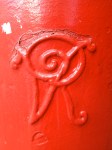
Glossy red lips, emblematic red telephone boxes, and the sumptuous vivid spiraling red of a voluptuous red rose. There is something about red which strikes a devilishly powerful impact. In fact scientists declare that red is the colour most instantaneously attractive to the human eye: and it’s true. Look around a room, survey the rainbow of colours and shades all around you, and the first colour you notice will always be red. No wonder then that throughout the ages, it’s the scarlet woman, the red lights of shady backstreets and the unctuous red-painted lips of Hollywood prima donnas that have become so indubitably emblematic of seduction, attraction and the height of munificent glamour.

No wonder then that when one, previously unknown French Cameroonian son of an ébéniste (ivory wood carver) turned shoe-maker decided to place a seamlessly lacquered vivid red sole on the bottom of his women’s shoes, he became an instant hit. When you see a woman in high polished black stilettos sauntering down the street, and as her shoes lift with each step, you see a hint of glossy red, you know that the woman has taste – instantly glamourous, emblematic of sexy chic and seductive sophistication, that red sole can only mean one thing, and have only one maker – it’s a work of art, and it’s made by Christian Louboutin.

Fetish shoes

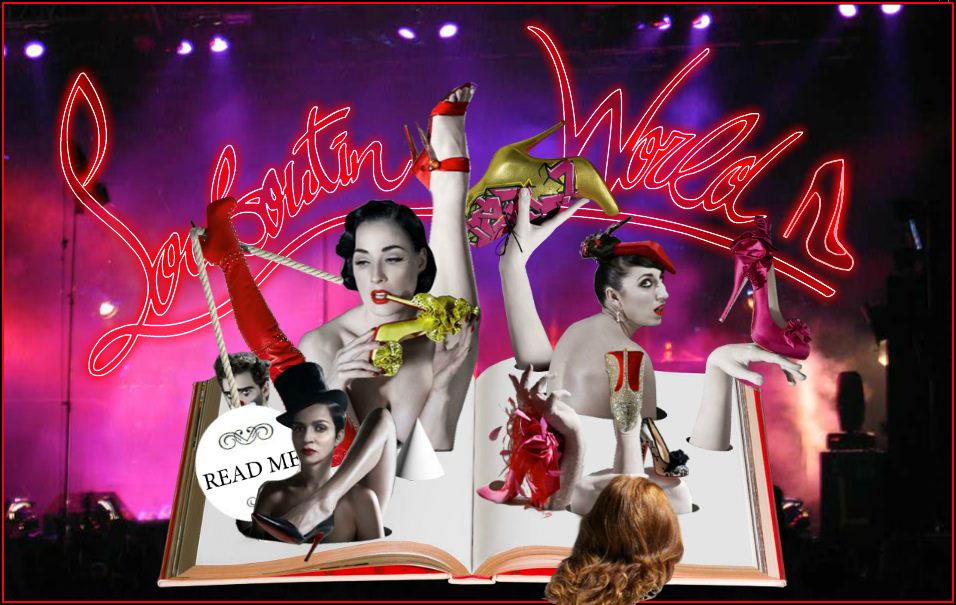
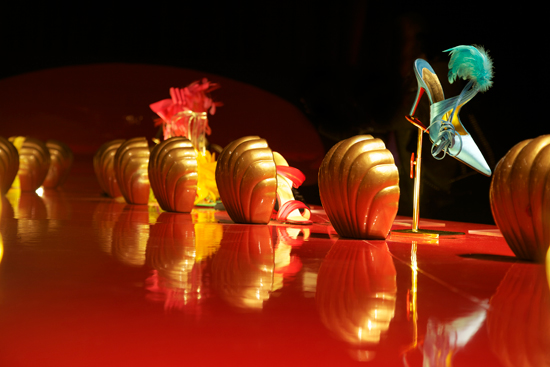
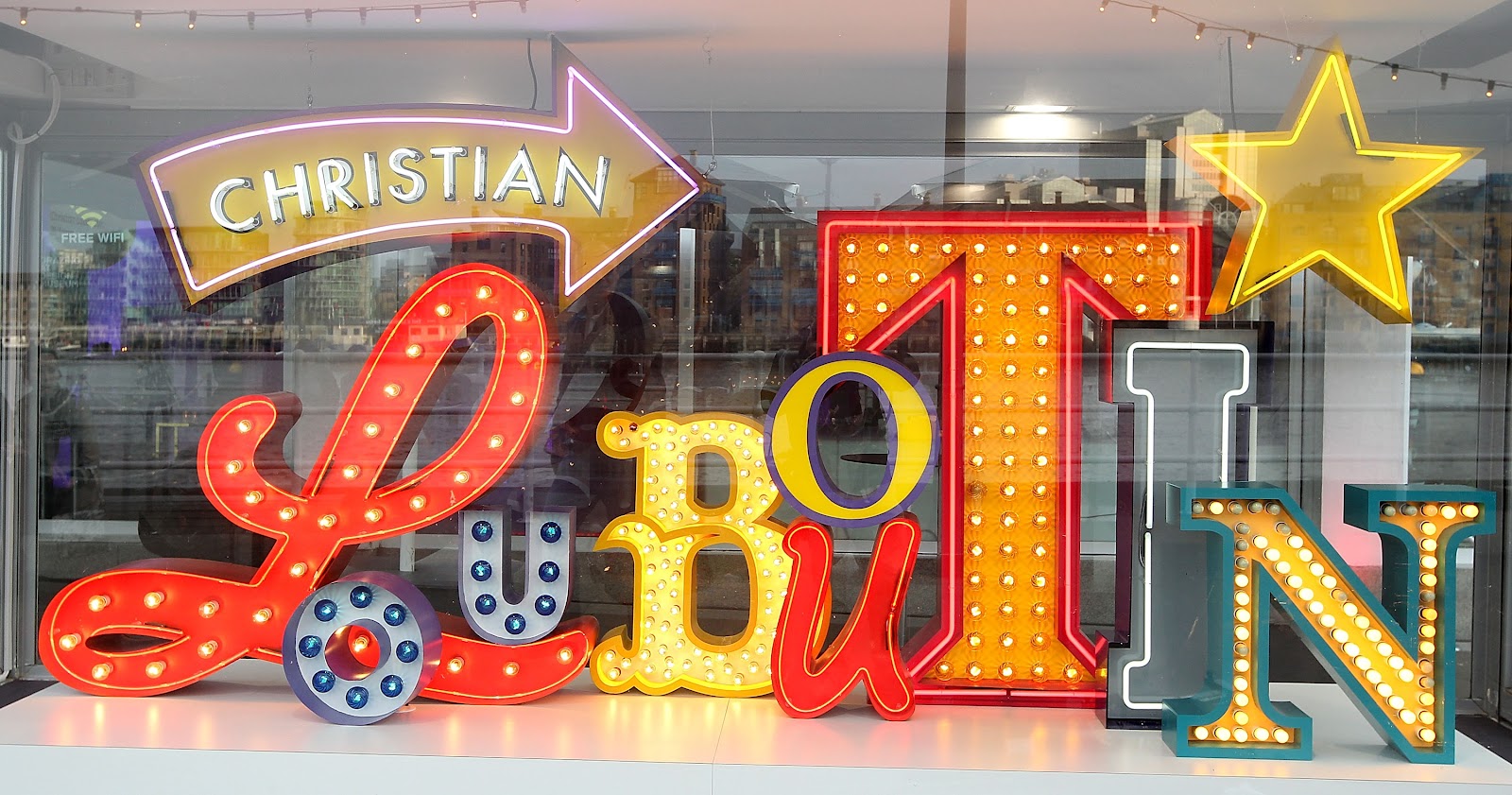
Yes, Louboutin, iconic French designer and the man who made red soles his signature, is now celebrating an illustrious 20 years of shoe design, during which time he seized the shoe, and in particular the daringly high stiletto, and lifted it into a new ascendancy of design significance, when, through darlingly innovative designs, and unhindered imaginative genius, he made the shoe the star of the show, as well as the means to make a woman’s legs, and figure, beautiful.  Such is the theatricality of his designs, that it comes as no surprise that in celebrating 20 years of iconic shoe design, London’s Design Museum on the South Bank has put on the show of all shows, like a retreat into the cabaret of 1900s Paris at the Moulin Rouge, as a vast illuminated stage, a playground carrousel, and a garden of delights play host to shoes and only shoes, singled out and exhibited in all their fantastically original glory.

The Dita Von Teese hologram

The exhibition exudes the playfulness of Louboutin. At its centre is a wonderfully raunchy Hologram video of the deliciously sexy Dita Von Teese, herself spectacularly bedazzled in a pair of sparkling diamond-encrusted Louboutin’s, demonstrating just how seductive a woman in these shoes can become. Meanwhile at the back of the show is a den of iniquity, a naughty display of fetish shoes designed to push a woman to the maximum of pain and pleasure and panda to every man (or woman’s) every sexual desire when shoes are their ultimate proclivity. I loved the little garden, when crazy platformed shoes were displayed like fantasy creatures in Alice’s wonderland, and the recreated studio of Louboutin himself, where a vast array of objects, instruments and other paraphernalia provide daily inspirations for his ingenious creations.

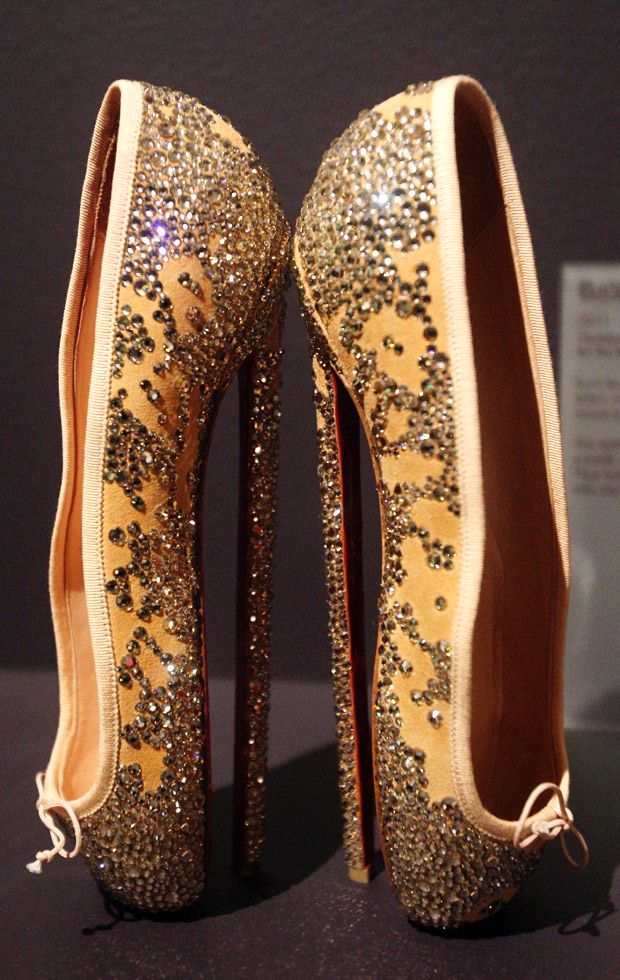
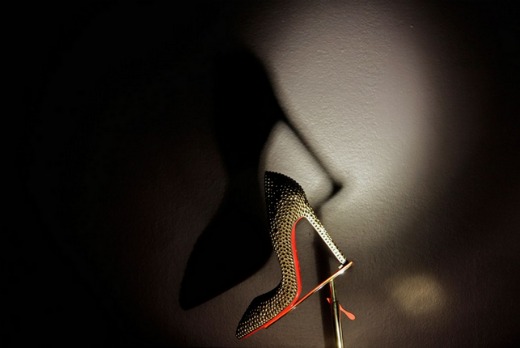
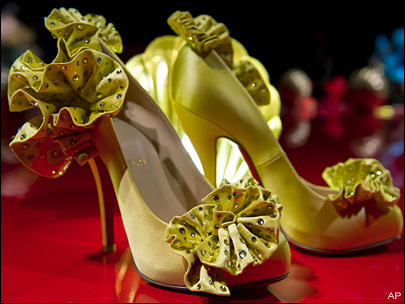
But amongst all of this showmanship, let us not forget that the stars of the show are the shoes – and there were so many beautiful designs it’s hard to choose from amongst them. But being something of a magpie, I was instantly attracted to all those which sparkled, while the delicate sophistication of shoes and boots covered in lace held a particular attraction. But amongst all of these design gems, from hugely built-up platform boots, with corset-style laces crisscrossing up to the thigh, to sleek yellow open-toed stilettos bursting with tropical flowers, perhaps one of my favourites was the most understated of all, the simple, sleep shiny black stiletto, albeit with that trademark red sole and a frighteningly high 5 inch heel.

The shoes amazed, the red soles seduced, and the diamonds and studs aplenty dazzled, yet when I left the exhibition, I still came out wondering why and how Louboutin had hit upon the red sole that has become his signature. How did he stumble upon it? What was his inspiration? All of this goes unexplained in the history of Louboutin’s 20 year retrospective, and at £125 a pop, I wasn’t about to put my hands in my pocket and pay for the vast (and admittedly very beautiful) exhibition catalogue to find out. Besides, I was too busy trying to escape from the unnecessarily copious groups of “girly” women, giggling all over the place and drooling over shoes they could barely ever afford, enjoying themselves far too much and occasionally yelping as though on a hen night. This is art darlings, take your window-shopping to Aldo.

So why is Louboutin worthy of my praise? I am after all a man. I’ve never worn a stiletto, let alone owned one, and, unless I undergo some kind of hither unanticipated breakdown in my life, never intend to. Well the answer is simple – it’s because Louboutin has suspended his shoes into a design ascendancy which goes way beyond dress choice. These shoes are art, pure and simple, and best seen encircled by a spot light, up on a little stage or under a glass cloche where they belong, preferably sans foot, sans sweat and definitely sans ground surface to scratch that perfect lacquered red sole.

Christian Louboutin is on at the Design Museum, Shad Thames, London until 9 July.

Summer Exhibition at the RA: How a private view can make the mediocre marvellous

I’ve said it before, and I’ll say it again: When the viewing conditions are right, even the most mediocre of art can appear wonderful. When your mood is carefully massaged by fortuitous circumstances, your mind will be opened, and you’ll look for the positives in everything. Look what happened a few months back with the huge David Hockney exhibition at London’s Royal Academy: On my first visit, the gallery was so packed I came out spitting blood (almost literally as the hustle in the giftshop between usually restrained “Friends” of the RA to grab as much Hockney merchandise as possible almost ended up in fisticuffs). What was all the fuss about Hockney? He can’t even paint, I thought, bitterly. However, when I went back a few weeks later at the behest of my partner, first thing in the morning, tactically skipping the first couple of rooms and emerging, victoriously from the crowds into an empty exhibition beyond, I began to see what all the fuss was about. The paintings were so atmospheric, airy, colourful, pleasing. It was all about the viewing conditions.
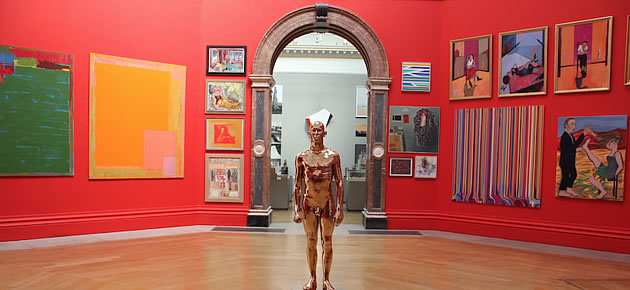
The central Matisse-red gallery complete with sculpture by Leonard McComb RA

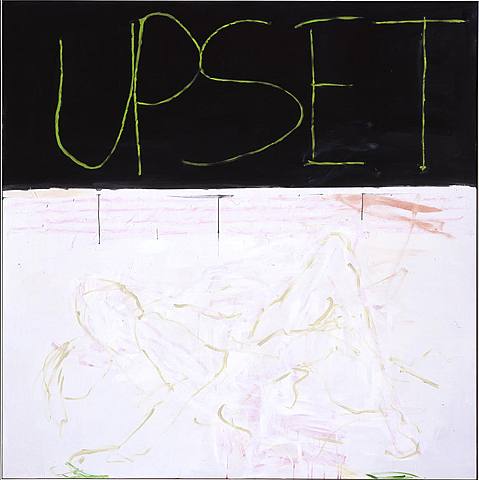
The same, now, can be said for my experience of the Royal Academy’s most famous annual offering, the Summer Exhibition, which I attended, with my mother, last night. So used to the unseemly crush of packed-in spectators, all vying for space in the Small Weston Room to see the small paintings squeezed unapologetically onto the wall from floor to ceiling, I would always leave the Summer Exhibition feeling resentful. Why had I just spent good money to go along and see a load of same-old mediocre paintings, small canvases of flowers and ovens and animals, not to mention Tracey Emin’s hideous, crass doodles and the repetitive works of the closed-club Royal Academicians? But not this year. Yes, the same old Royal Academicians still dominate, and yes, the ridiculously crap works of Tracey Emin, now named “Prof. Tracey Emin RA” after her recent ascendancy to the role of RA Professor of Drawing (what a joke) are still conspicuous by their unashamed lack of skill (and because of the hundreds of “sold” dots stuck to the frame because people seem to think scrawled depictions of half-vaginas are valuable), but the difference this year was that I attended on a private view. There were literally 80 of us in the entire venue, and those rooms are big. Once the small gathering had dispersed around the place, we frequently found ourselves quite alone in the huge Royal Academy galleries.

The “wave” hanging of small paintings

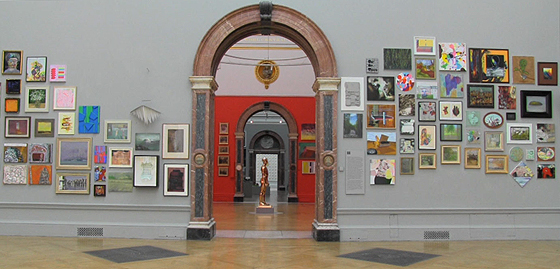
It was wonderful! Feeling so airy, ephemeral, and almost important, we glided around the galleries in such a good mood that we actually started to point out details of all the paintings, noticing the colours and the skill involved, complementing, and sometimes even tempted to buy and generally loving the whole affair. We were also treated to a talk by the charming Harry Baxter (an “artist educator” at the RA) whose insight into the exhibition made the whole thing instantly accessible and immediately unpretentious. This year’s show, the 244th in the RA’s history was, he explained, a homage to the small and the beautiful, an intentional contrast to the Hockney “Bigger Picture” exhibition where crowds had crammed into the galleries to see vast paintings made up from multiple small canvases. The focus on “small” can only be a good thing – it meant that rather than squeeze into the tiny rooms with hundreds of others to see all the small works, this year the huge central galleries were given over to countless small paintings (some 1,500 in all) which were hung around the walls like a wave of moving art. It wasn’t quite a Salon floor-to-ceiling hang, but it was an all-embracing journey from one artist’s expression to another’s.
So amidst all this good feeling, what were my favourite works? Top of the list has to be Buffalo Grill by Scottish artist Jock McFadyen, not least because I used to eat in one such of the French chain restaurant bang opposite the Moulin Rouge in Paris. This huge green canvas, with an off-centre, almost hazy image of the American-looking chain restaurant made for quite an impact in a gallery in which it easily dominated. It’s almost like the blur of the restaurant viewed from a fast-moving car, and yet the top of the restaurant is crisp and clear, like an after-image of the place stamped onto your retina.
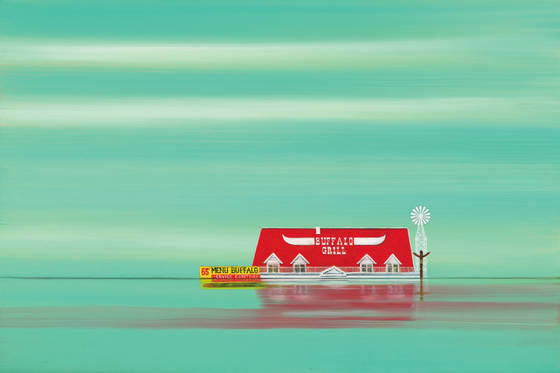
Buffalo Grill (2004) © Jock McFadyen

Top of my list of sculptures, meanwhile, was the super-shiny bronze creation by Leonard McComb RA, Portrait of a Young Man Standing. Only a shame that it has the very modest price tag of £600,000. Against a red painted central gallery (apparently painted as such in homage to Matisse) and reflecting in its polished surface the paintings hung all around it, the sculpture looked truly remarkable. Second place for sculpture had to be given to Professor David Mach RA, whose cheetah made from coathangers, Spike, is an incredible feat of innovation (as was the brilliant recreation of the head of Michelangelo’s David built from the heads of matches, also by David Mach).

Top half of Leonard McComb’s Portrait of a Young Man Standing
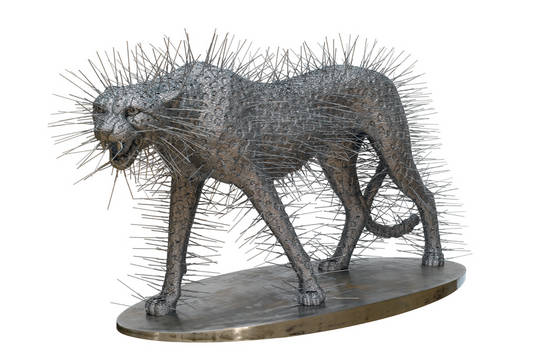
David Mach RA, Spike

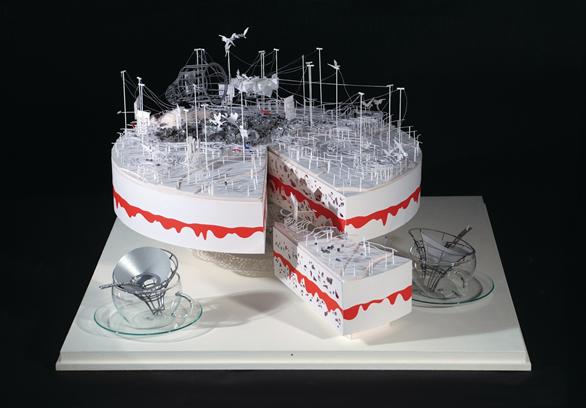
The architecture gallery was pretty interesting this year, bordering more on the surreal, not least with CJ Lim’s Dream Isle: London, the Victorian Sponge Cake which was a model imagining just that – a city shaped like a sponge cake! Also amongst the architecture were the predictable inclusions of Olympic stadiums and other Olympic buildings, as well as the new King’s Cross station concourse.

C J Lim, Dream Isle: London, the Victorian Sponge Cake

I also loved this by Graham Crowley…

Red Drift No. 3, © Graham Crowley

And this by one of my favourite Royal Academicians, Stephen Chambers RA
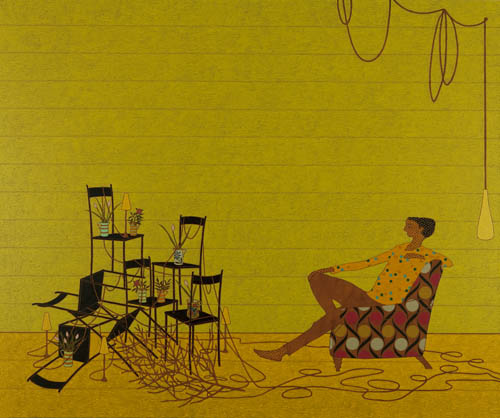
Stephen Chambers RA, I Know Trouble (And She’s My Friend)

While this, by Tracey Emin, appalled me…

Upset, by “Prof” Tracey Emin RA

I could go on, and there is of course plenty to look at, and to mention, but hopefully the photos I have included in this post will provide a hint of the wonders on show (except of course for Tracey Emin’s “Upset” which is included purely for the purposes of demonstrating how a totally talentless media novelty can rob some poor talented unknown of a huge amount of wall-space and all the opportunities that go with it).

The Royal Academy don’t always get it right, but with this year’s Summer Exhibition, they really seem to be progressing. Perhaps it’s because of the new president, Christopher Le Brun, or maybe it’s just because of the space all around me, the exclusivity and of course the complementary wine… It’s a question which remains as yet untested, but if you want to have a punt, go and visit the show – as the name suggests, it’s on all summer, and you can find out all of the details here.