Skip to content

Posts tagged ‘food’

Bologna: La Grassa – Phenomenal food without a Spaghetti Bolognese in sight

I’m going to pardon myself inadvance of a post which will be an unapologetic engorgement upon food glorious food. Bologna is after all the city that brought us Spaghetti Bolognese, tagliatelle, tortellini and mortadella among other Italian favourites. In fact, without Bologna, half of your standard Italian restaurant menu would disappear. And true to form, the city whose third and perhaps most appropriate epithet is La Grassa – the fat – delivered, delivered and delivered again. We made no plans, instead opting to wander into restaurants randomly as they took our fancy. And yet on every occasion we were surprised, enthralled and deeply satisfied by one consistently high quality meal after another. No wonder then that Mr Artusi, great master of culinary arts once wrote, “When you hear about Bologna’s cuisine, make a bow, for it deserves it”. I could eat in Bologna for ever – it may make me grassa, but hell, it’s worth it.

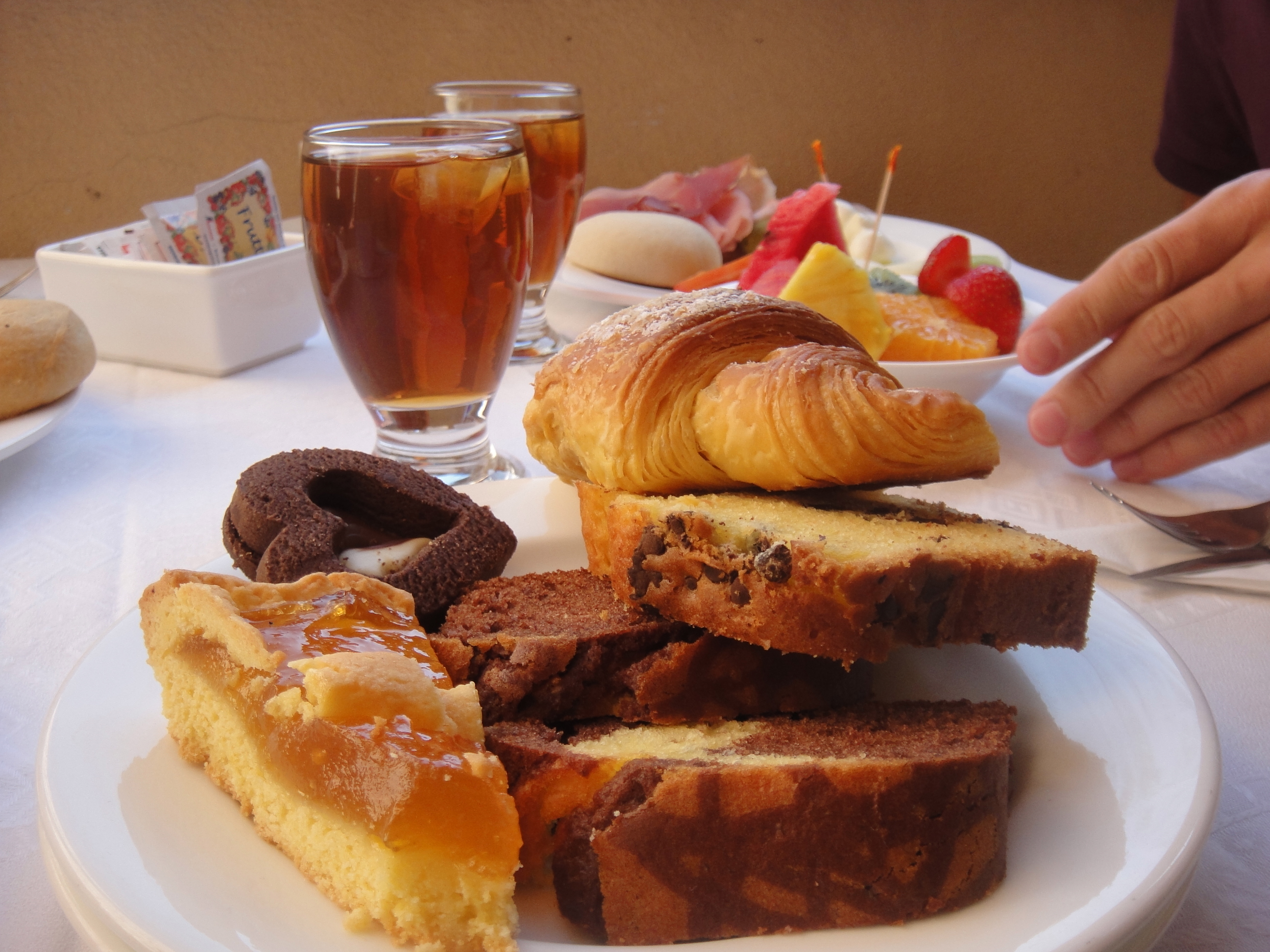
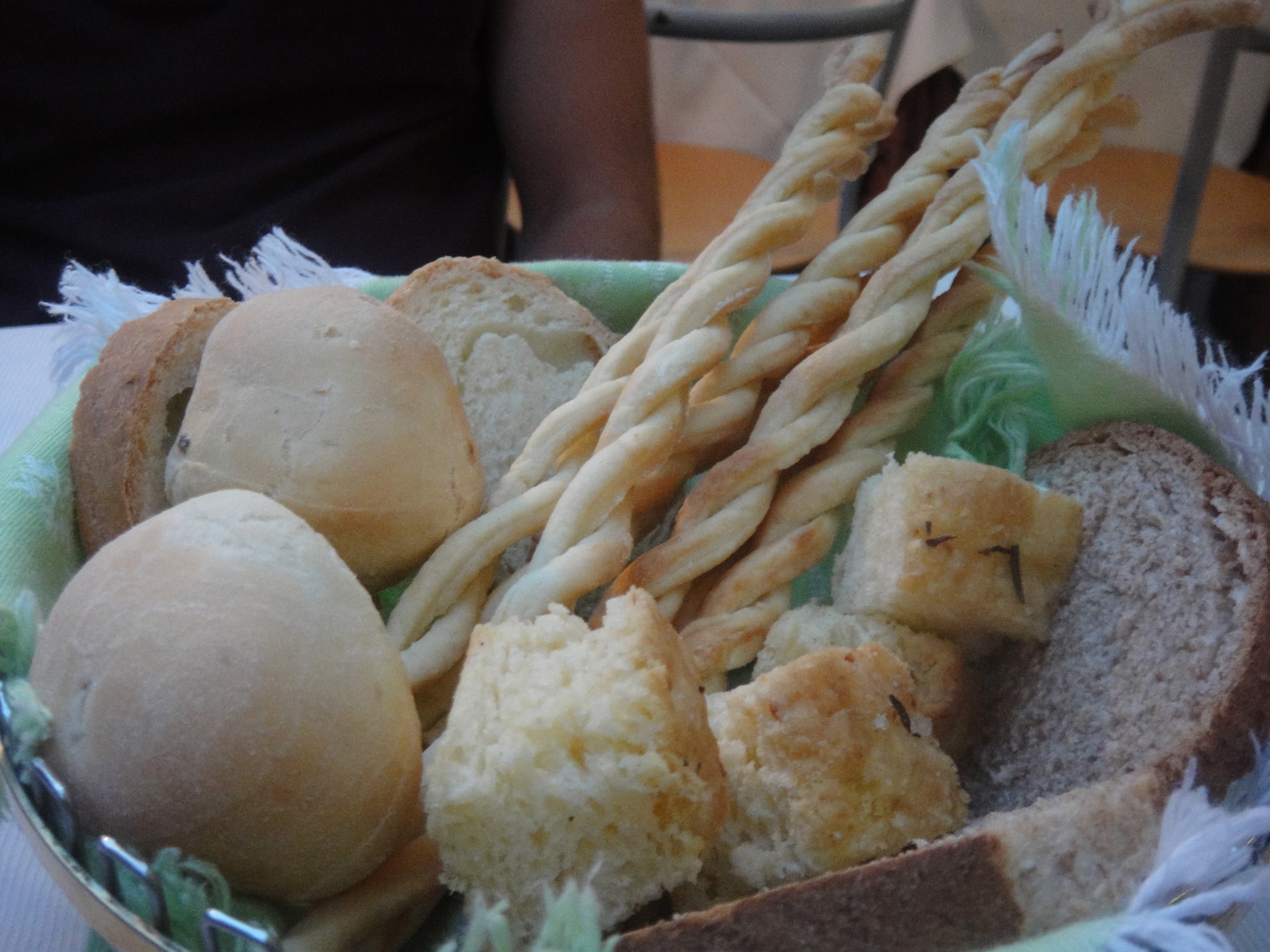
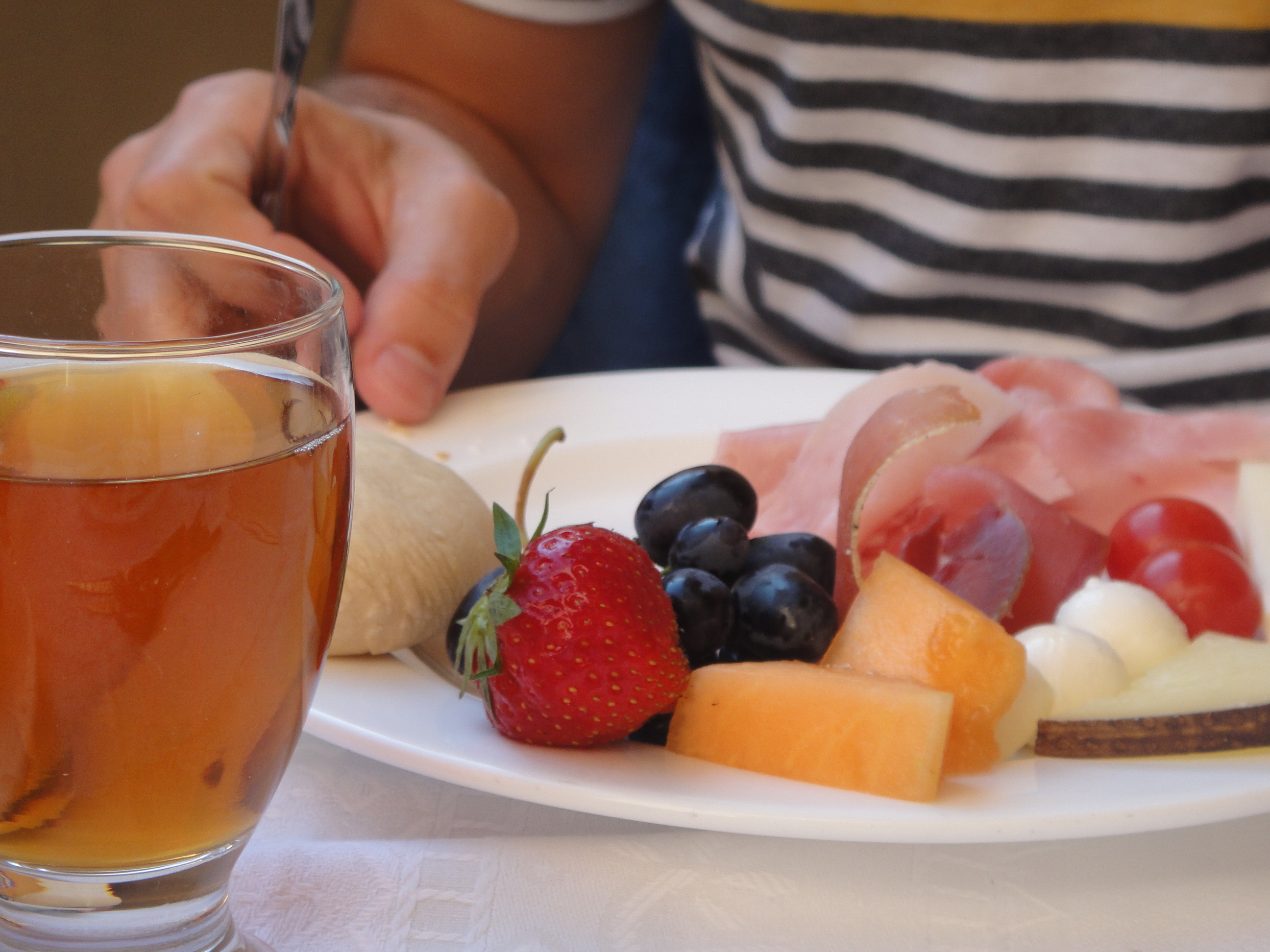
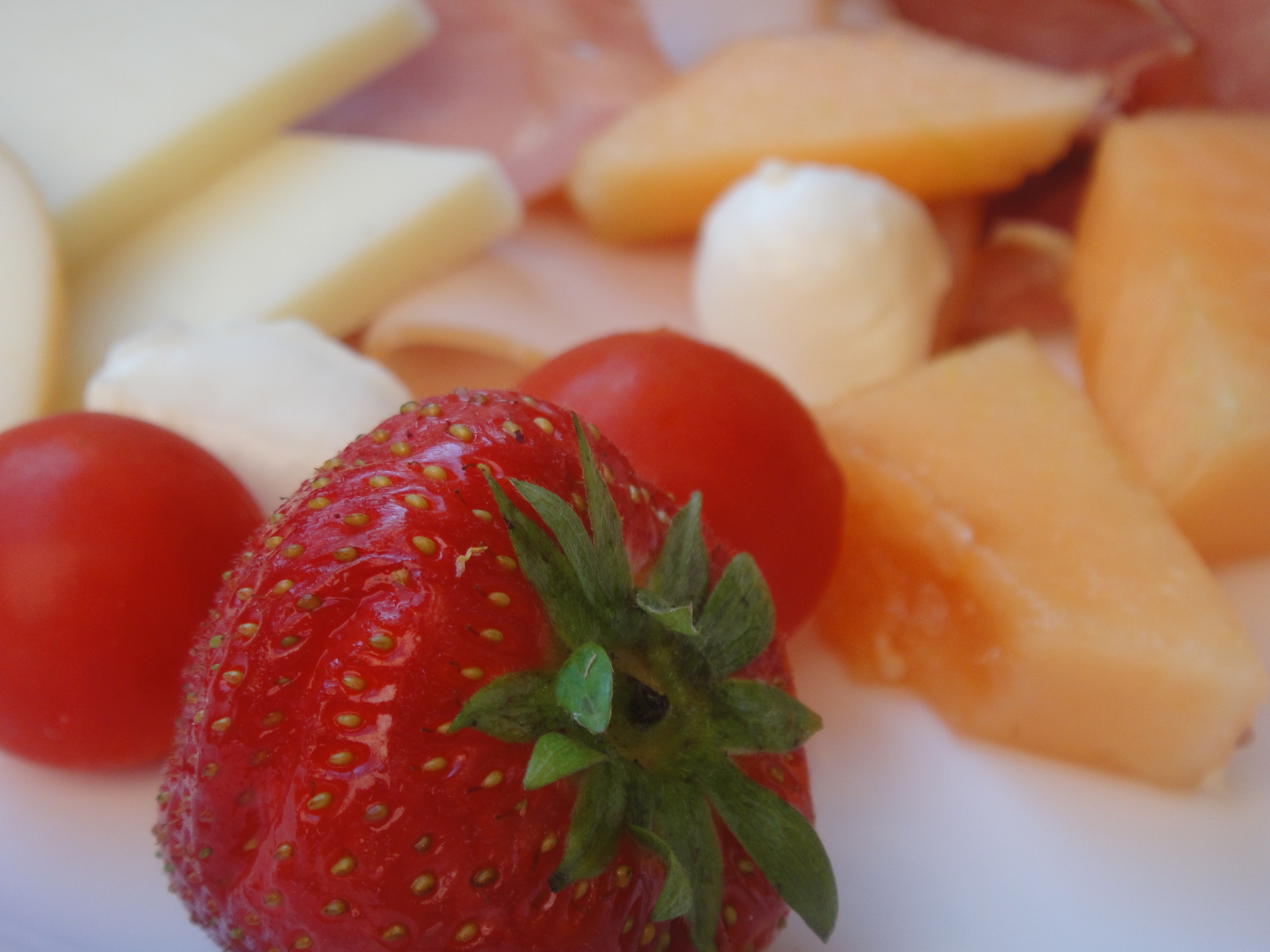
So where to begin. Well, breakfast I guess, a multi-coloured kaleidoscope of colour, as fresh ingredients collided into a cocktail of fruits and meats, soft greasy breads and sweet spongey cakes, all succulently fresh, strawberries as red as La Rossa herself, and mortadella, straight from the manufacturers, limply reclining across our plate. And we didn’t have to go far either. Breakfast was served upon our little terrace at the faultlessly stylish, centrally located  Art Hotel Novecento, a perfect start to each of our four days in Bologna.
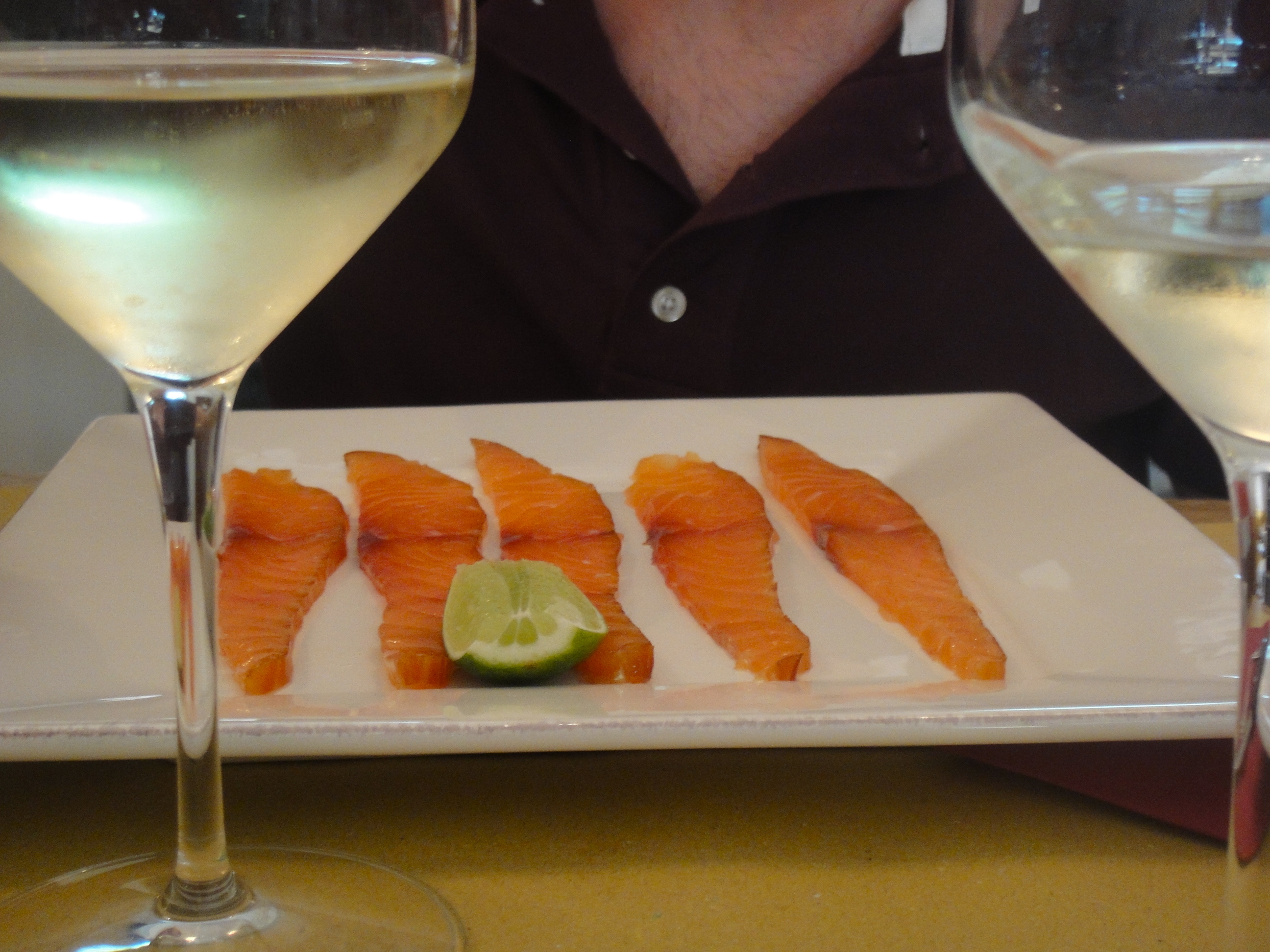
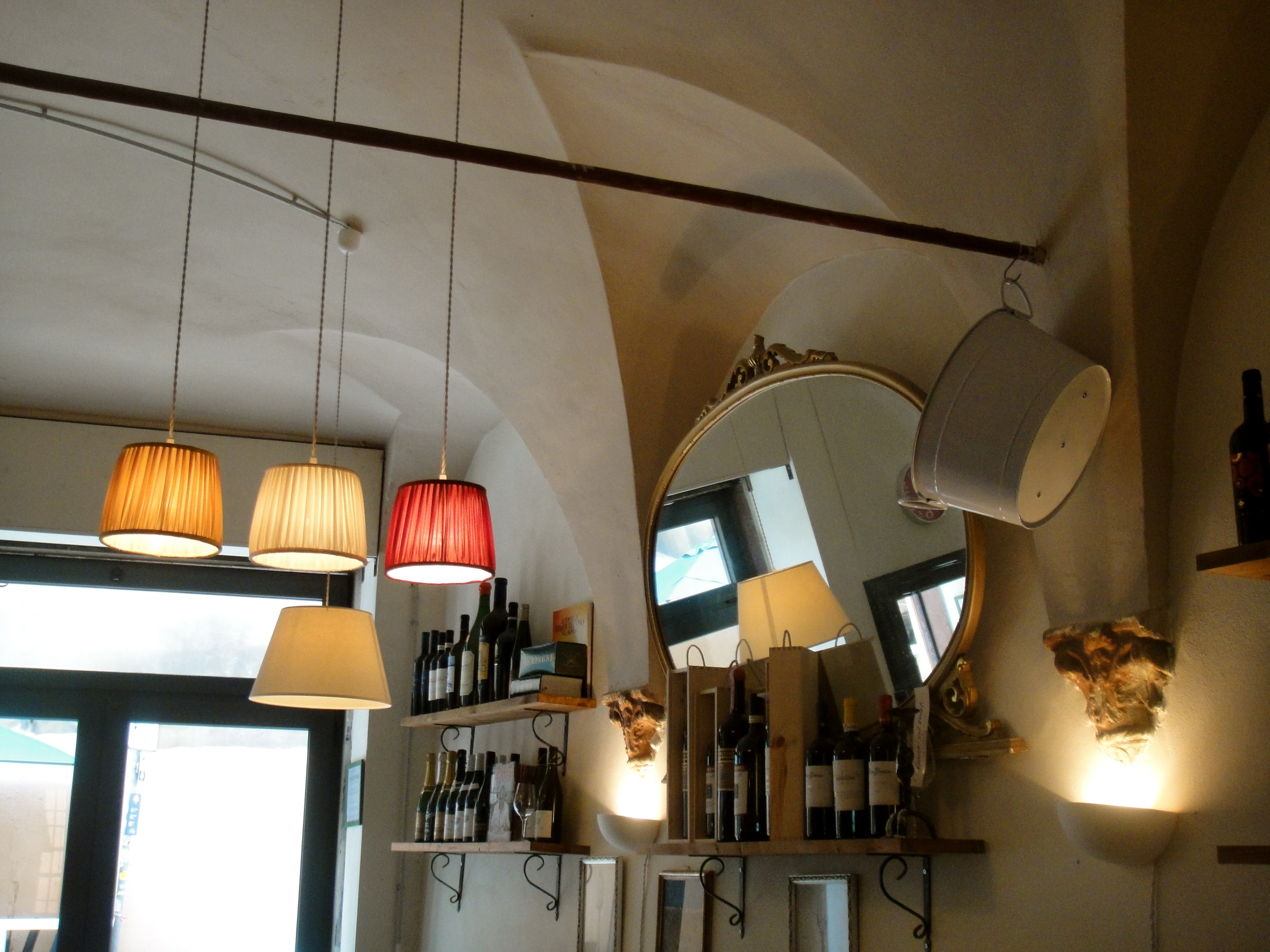
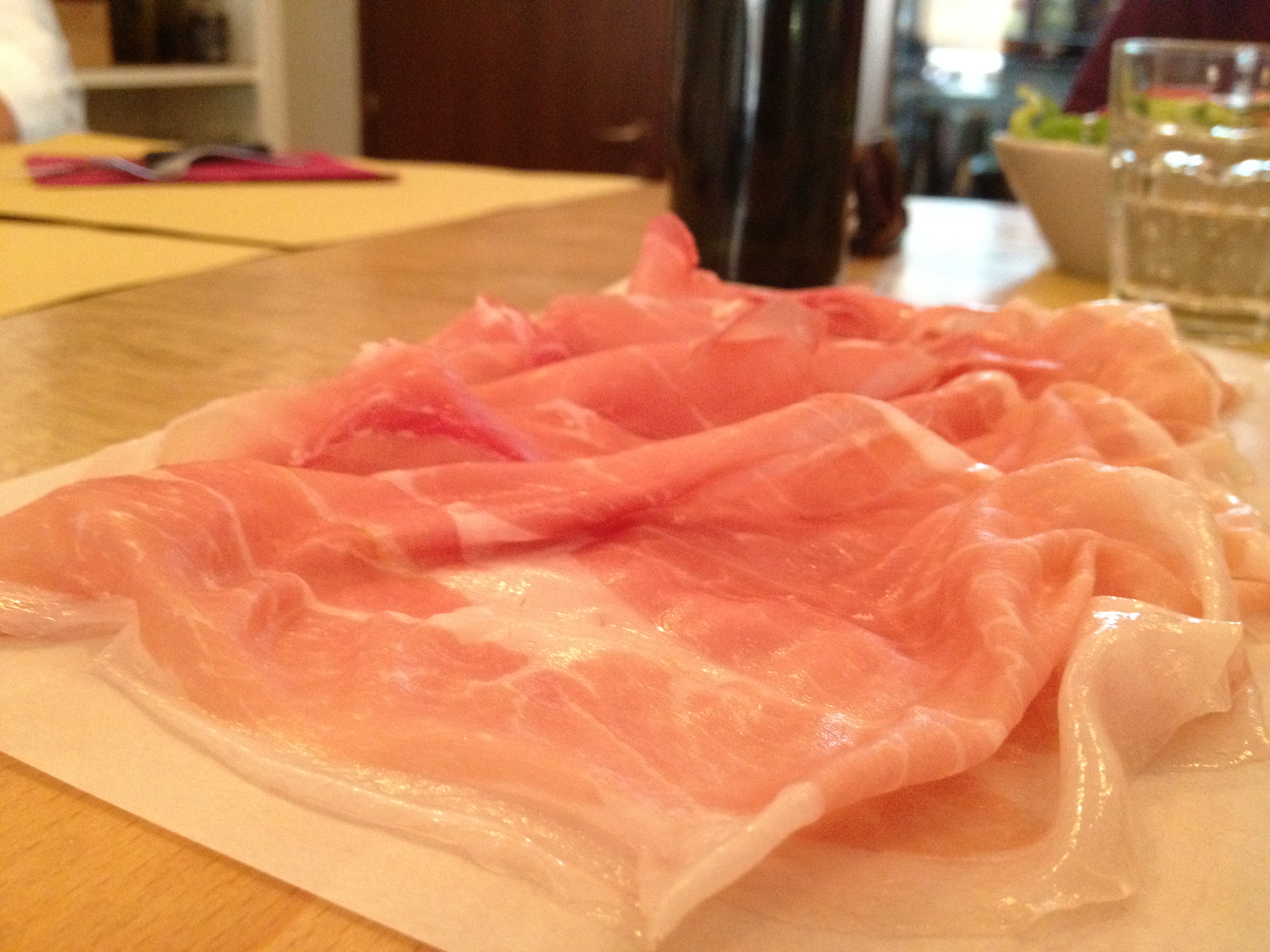
Next, lunch. We stumbled upon this place, Banca del Vino (Via Mantana), on the outskirts of the rough and tumble of Bologna’s ghetto. Here the pizza was amongst the best I have had in Italy. So fresh, so thin and crispy, with a plate of soft silky parma ham served on the side, so that it could be added to the richly endorsed buffalo mozzarella pizza at will. In the meantime, my partner sampled the delights of an equally fresh, thickly cut home-smoked salmon, with a palate-pleasing glass of local white wine on the side. This was rounded off with a rich chocolate parfait with accompanying white chocolate chunks.

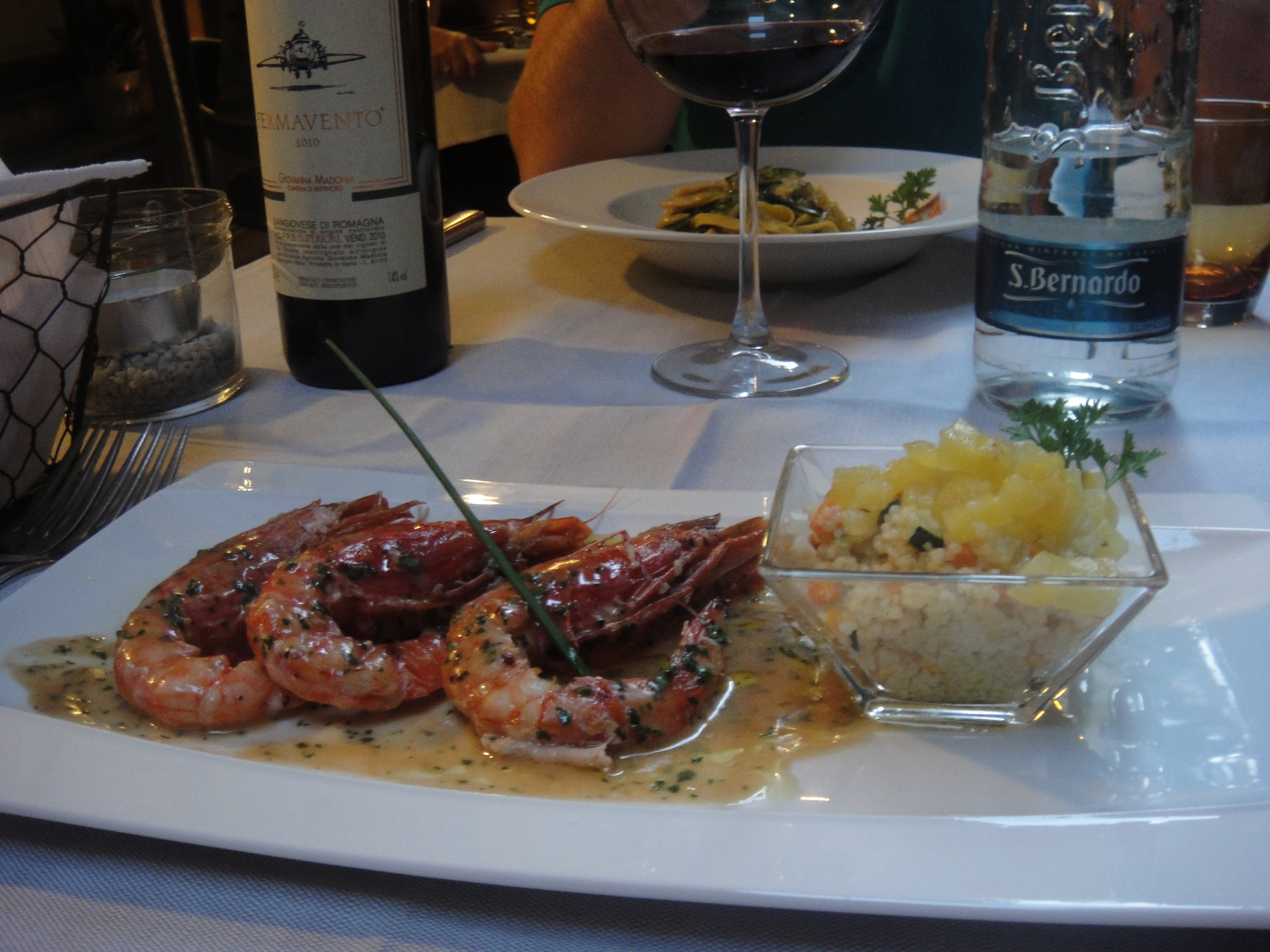
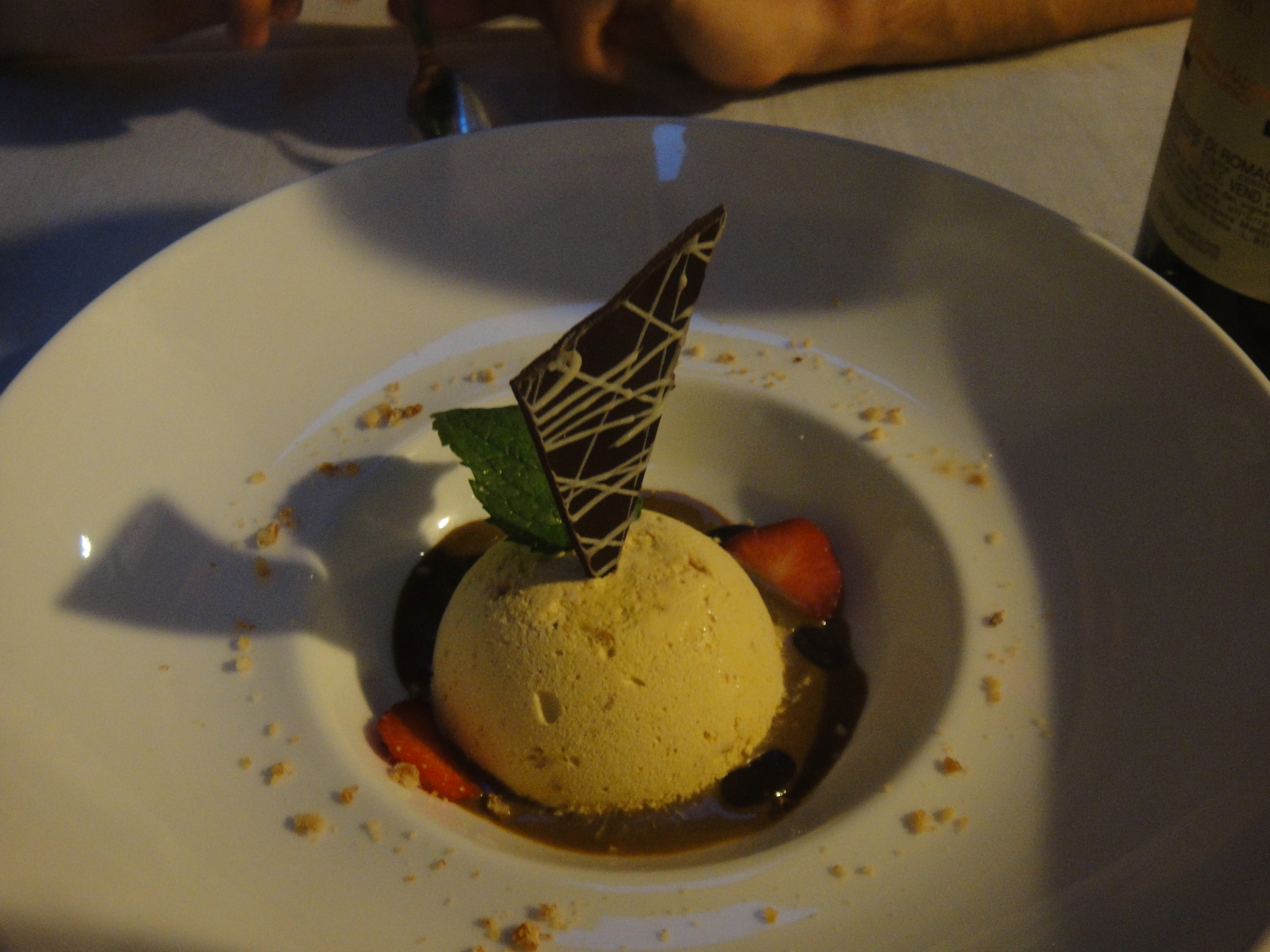
Our first dinner was at the stylish Trattoria Battibecco (Via Battibecco, 4), found down a tiny side street, just off the Piazza Galileo. The food was highly stylised and delicately balanced. I started with the Sformatino di ricotta con cuore di bacon e zucchine su crema di nocciole, a kind of ricotta-enrichend risotto cake, with courgette, bacon and the cream of nuts. Gamberoni rossi in padella leggermente piccanti con cous cous all’ananas was to follow for mains – lightly cooked prawns with pineapple couscous and a chilli hot sauce to balance, while for dessert, a semifreddo with cherry chocolate and a strawberry on the side foretold of the spectacular dinners which were to come.

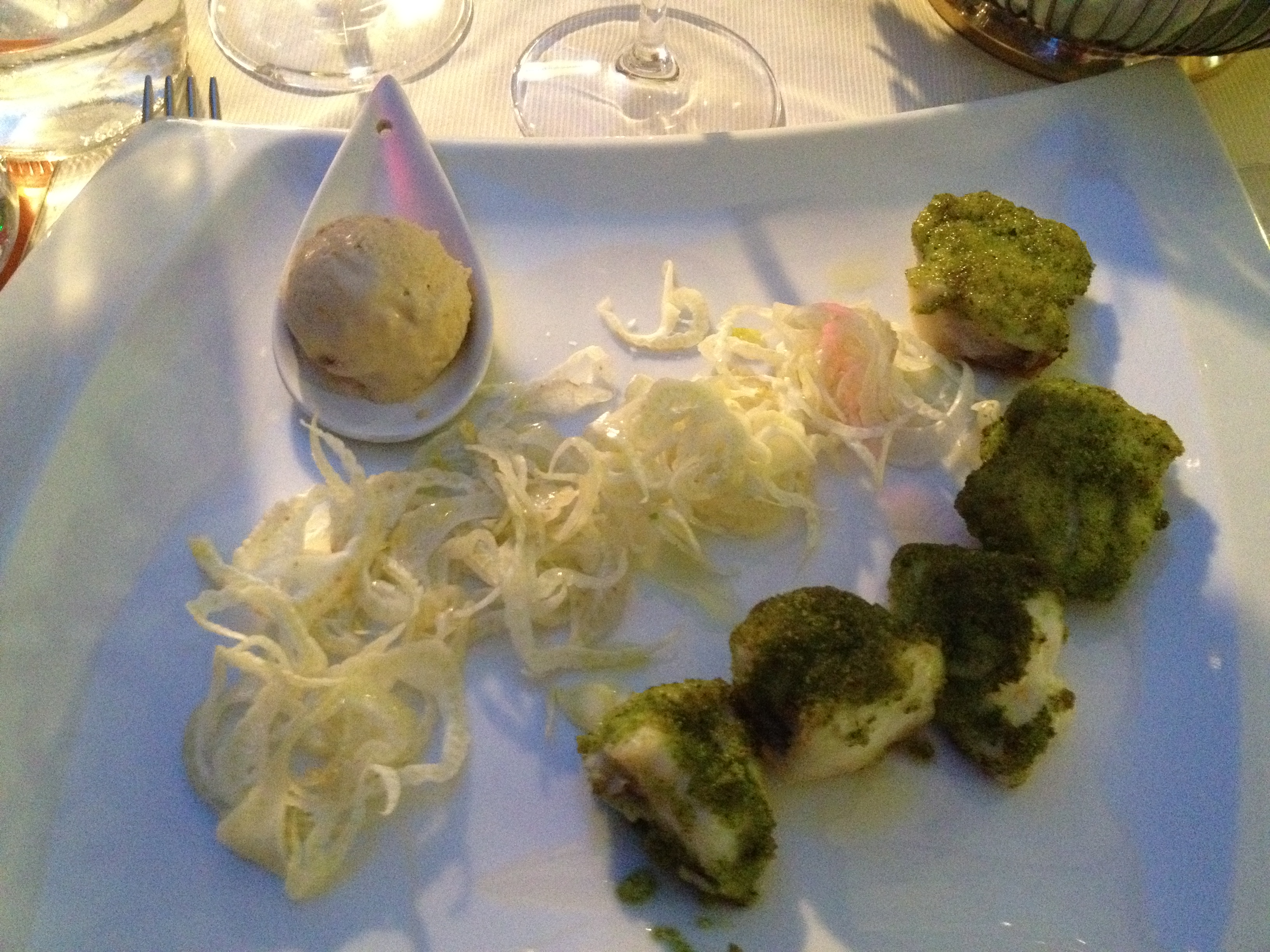
Our second dinner was at the Ristorante Ciacco (Via San Simone), another off-street secret which we stumbled upon having escaped the more tourist-focused affairs of the central Piazzas and cheaper offerings of the university quarter. Here we were treated to an innovation of ice cream, as almost every dish was served with some form of welcomingly-cool ice cream accompaniment. With my warm foie gras, an ice cream flavoured with orange and thyme provided both a sweet and sharp contrast to the rich meaty flavour of the foie, while my partner’s starter (a prawn and scallop club sandwich) was similarly accompanied with an ice cream of wholegrain mustard. For main course, I was treated to a dish of monkfish with liquorice flavoured ice cream – while the monkfish was, inevitably, a little lacking in flavour, the liquorice gave a punch to the dish, helped out in this objective by a light salad of finely sliced fennel. Unsurprisingly, there were innovative ice creams aplenty on the dessert menu, but we instead opted for a white chocolate parfait, accompanied by a vivid green fresh-mint coulis.

Our third dinner was at the super cute Ristorante Teresina di Fuggetta Sebastiano (Via Oberdan, 4), not so much on a side street as much as in a side alleyway – the tables were artfully squeezed in between one leaning old palazzo and another, and the affect was truly cosy and unique, and the later addition of a harp player added a further garnish of romance to the air. Sadly I neglected to take any photos capable of public consumption – the wine caused significant blurring on the old camera – damn that tempting Sangiovese! However the food was super-tempting too. We started with a pea and mint garnished prawn dish, followed by a succulent steak tagliata accompanied by rosemary potatoes. Dessert was a creme caramel of sorts, which my partner declared, with some audacity (clearly bolstered by the Sangiovese) to be better than mine! He was clearly drunk.

Our final instalment of Bolognese dining (as if there was any space left in our significantly lined stomachs by now) was the Ristorante Cesarina (Via Santa Stefano), a more traditional affair, set in the heart of one of Bologna’s most beautiful squares. What this place lacked in innovation, it excelled in traditional cuisine cooked with excellence. We’re talking stuffed Zucchini flowers, faultlessly grilled seafood and all washed down with a mega-strong bottle of Sangiovese. But never mind all of that. The starter I had was simply mind-blowing. I mean, we’re talking a world-stopped-turning moment of culinary ephiphany. And we’re only talking ravioli – and a pumpkin ravioli at that (and from the photo, it doesn’t look all that much either). But OMG, I can’t even begin to explain how good that pasta was – perfectly al dente, giving way to a salty-sweet pumpkin centre topped with a buttery sauce and – the crowning glory – a kind of marzipan/ caramalised/ honeycomb crumb which just set my mouth alight. If I could get the recipe for that dish and bring it back to the UK I could retire early.

It tasted so much better than it looks.

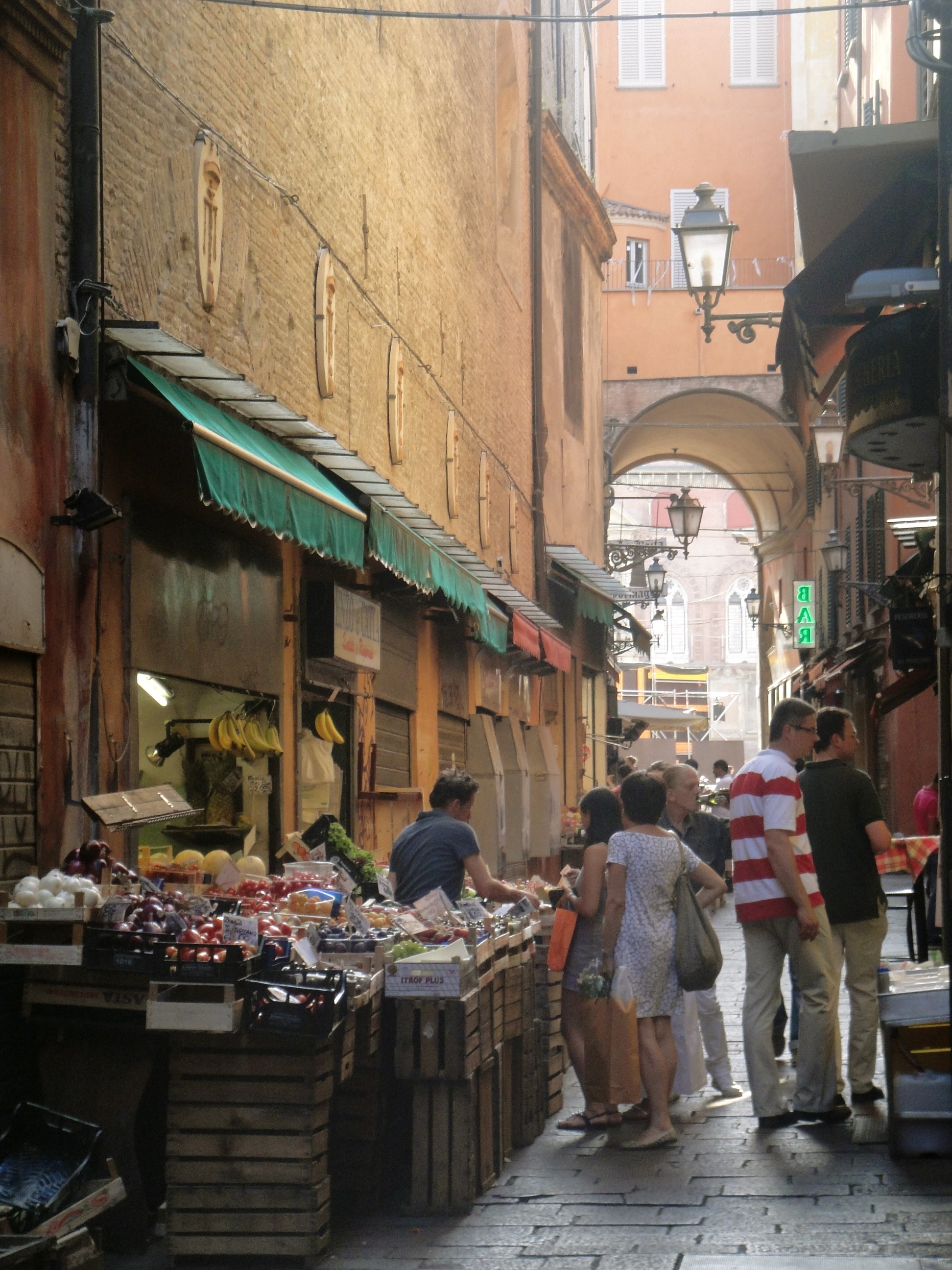
So there you go, a food explosion well worthy of all the fuss. There is no doubt in my mind that Bologna lives up to its reputation of food capital of Italy. And it’s not just the restaurants either. A short walk off the Piazza Maggiore, and you find yourself on the quaint Via Pescherie Vecchie, where a bustling food market continues to thrive and tempt passers by with the fragrant scent of ripe fruits, sea-fresh fish and sweet juicy cold meats. Meanwhile, head to any half-descent cafe, and we’re talking an affogato worth writing home about.

All this talk of food has made me hungry. I’m off to raid my nearest Italian deli. Hey, it’s not Bologna, but I will leave that crowning glory firmly where it belongs, carefully rested upon Bologna’s culinary pinnacle, amongst the perfect colonnades, the cinema under the stars and the perfectly leaning red-bricked towers. Bologna La Grassa, La Dotta, La Rossa: Te adoro.
All photos are strictly the copyright of Nicholas de Lacy-Brown © 2012 and The Daily Norm. All rights are reserved.

A night at Glyndebourne Part 2: Damp Grounds; Delicious Dinner

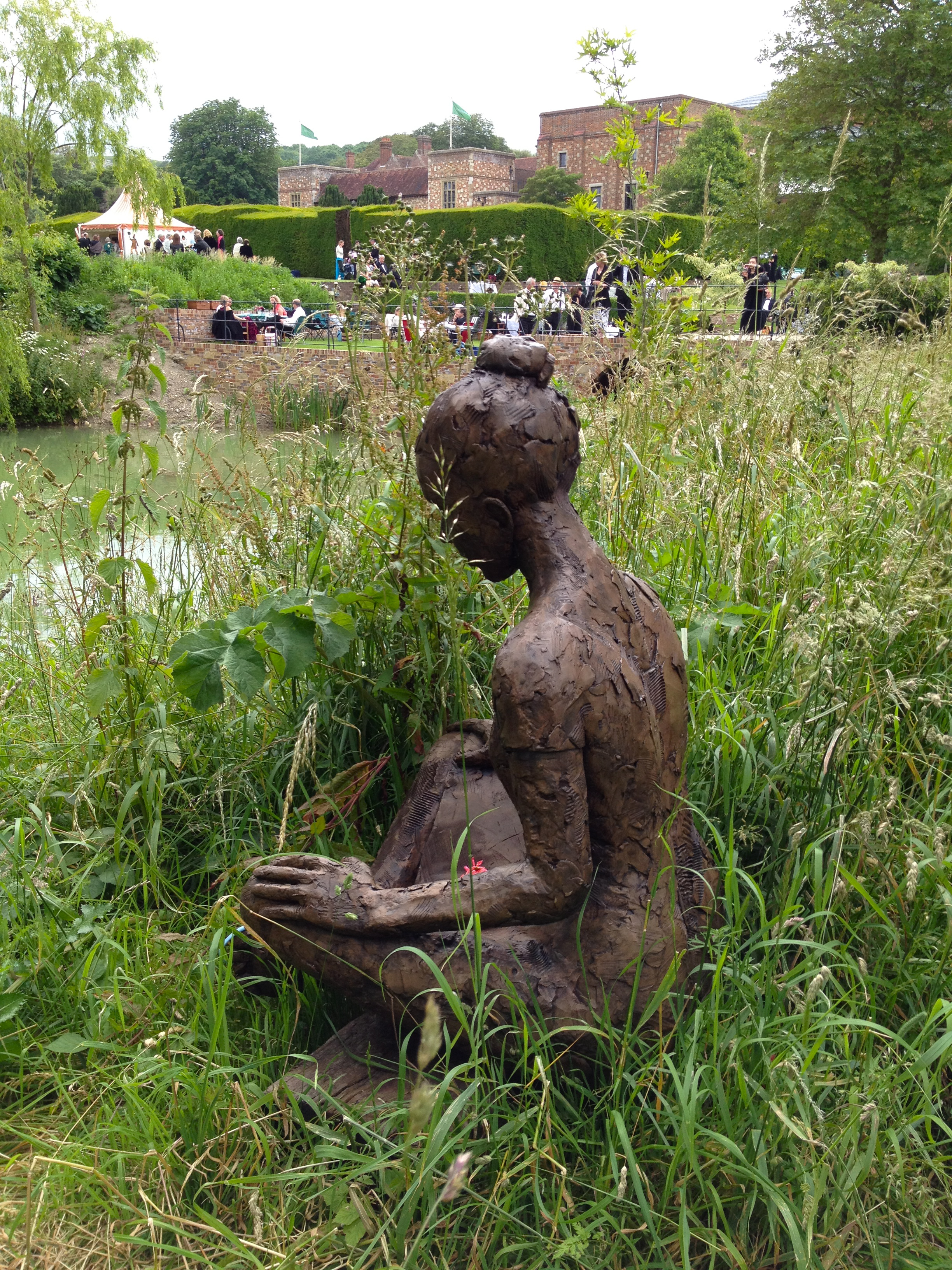
When you attend the opera in most theatres, doors will open half an hour before. No sooner have you arrived that the bell will go and you’ll hurry to your seats. The interval will provide at most, the opportunity for a rushed glass of something bubbly before your brisk return into the theatre again for the second half. Once the curtain goes down, it’s home as quick as your legs can carry you, avoiding the waves of leaving attendees wherever possible.

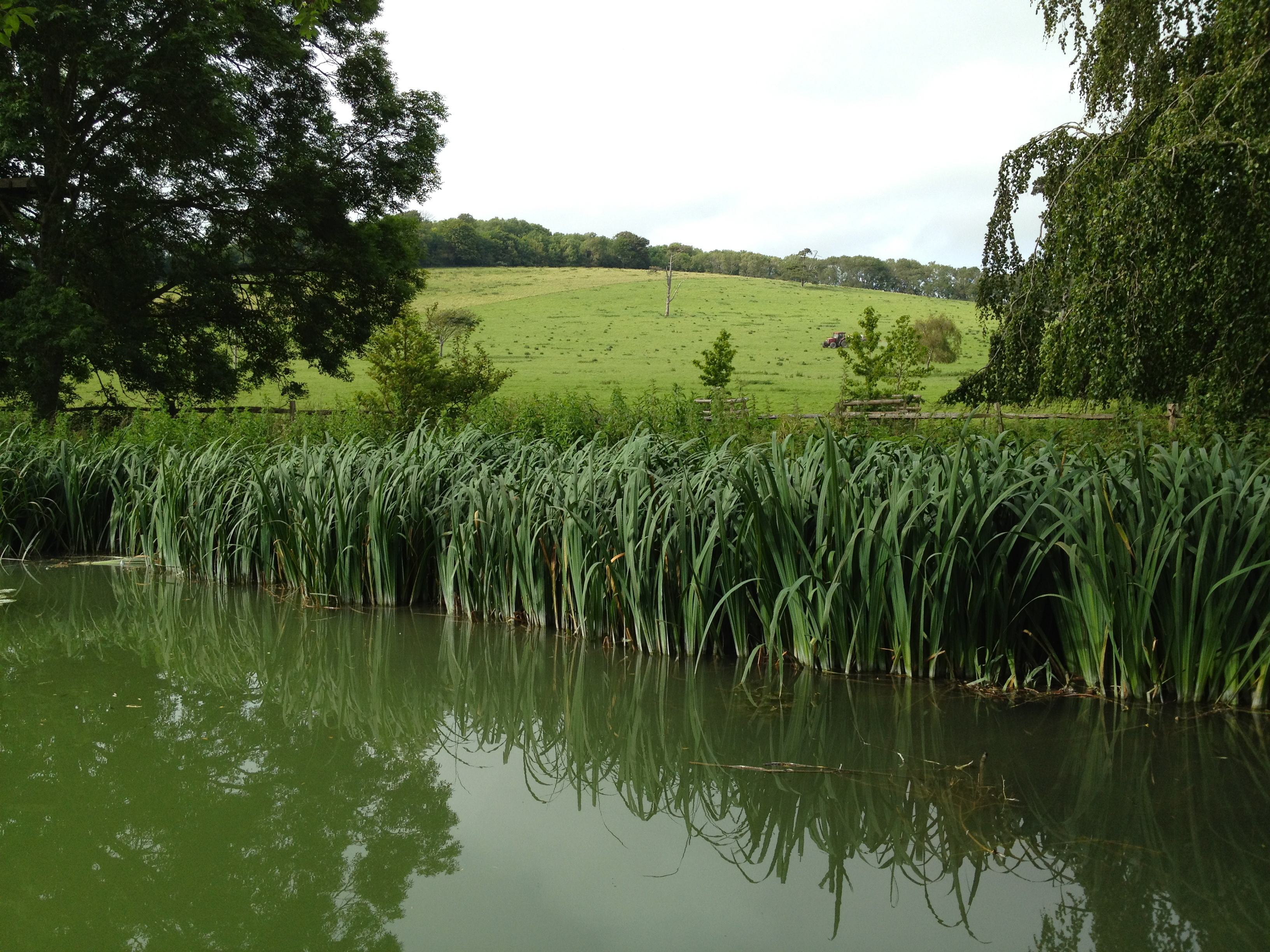
Going to see an opera at Glyndebourne is very different. It’s an event; it’s practically a day trip. Before the start of a performance, you can stroll around the grounds, walk around the dammed stream and look at the sheep, enjoy a glass of champagne on a bouncy lawn, or take high tea in one of the restaurants. There is even a small art gallery in the basement of the opera house for your entertainment, and walled gardens bursting with multi-coloured blooms. When it’s finally time for the Opera to begin you watch the first half followed by an interval of 80-90 minutes. It’s during this time that the spirit of Glyndebourne really comes alive, as picnics, already set up by opera-goers all over the perfectly maintained grounds are enjoyed, with time to sit back, sup, and discuss the first half of the performance.

A dammed stream in Glyndebourne’s extensive grounds

It’s the picnics that are, for me, emblematic of Glyndebourne, and offer a wonderful insight into a slice of English society. It’s hilarious to see how people subtly compete with one another. Far from picnicking out on a mere blanket, the Glyndebourne picnickers bring practically their whole dining room with them. They’ll be those who bring a fold up table and deck chairs which are fairly easy to carry and unpretentious. Of course they’ll have a Fortnums hamper with them, but then who doesn’t? They’ll be the ones with the plastic plates and food wrapped up in foil. But on the table next door they’ll be no such shortcuts. For those proud picnickers, the presentation of the picnic is a status symbol. So they bring chairs which are sturdy and firm. Their table is covered by a linen tablecloth with matching napkins. They’ll bring china plates and glass champagne flutes. And who could picnic without a crystal vase of flowers to set off the contents of the table? I wouldn’t be surprised if some of these picnickers bring a Butler too. I adore the charming pretention that comes with these picnics, seen equally as guests vie for the best spot on the grounds, marking their claimed territory with grand extensions of blankets and umbrellas, huge picnic baskets and other tokens of home. All done of course with a broad smile and exchanged pleasantries with the picnic table next door.

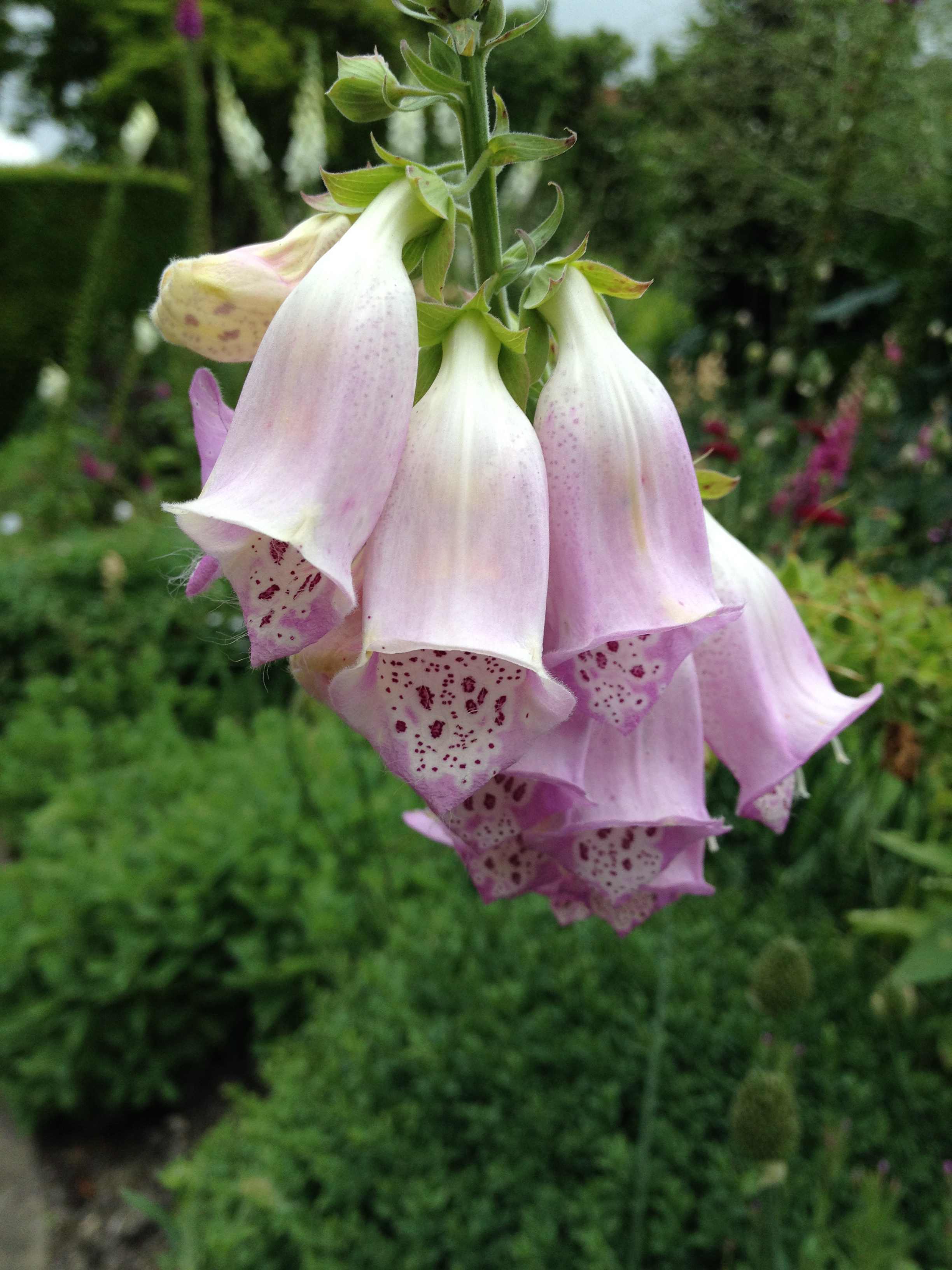
Flowers in the walled gardens

Sadly, of my four trips to Glyndebourne, I have never once been able to picnic in the grounds. I’m clearly cursed, as on each of my visits, it’s been either raining, perilously windy, or both. Such is the instability of the English summer. On good days it must be amazing in those grounds. Sadly I am yet to find out. On this visit my mother and I had long given up the hope of picnicking. We were travelling from London with minimal time to prepare, so we booked a table at the Middle & Over Wallop restaurant. As the day approached, we did not regret our decision. True, the rain just about held off, but with a keen wind and grey skies, picnicking conditions were not ideal. Yet still the majority of guests braved the conditions and stuck with their picnicking plans – another apt demonstration of Englishness – to stick it out, no matter what.

For we, perhaps more cynical diners, the Middle & Over Wallop restaurant, run during the season by Leiths with chef Albert Roux overseeing operations, provided a delicious mid-Opera feast in opulent surroundings (the restaurant must be hung with about 50 or so separate chandeliers) which was, most importantly, cosy and dry. What with time being on the short side, everything was chosen in advance, so a swift service was guaranteed.

The Middle and Over Wallop Restaurant

We both started with Hure of organic salmon, smoked salmon, crab and quail egg with watercress dressing. That dressing was light and peppery, and the smoked salmon delicate and moist. It was a fairly simple arrangement but full of flavour.

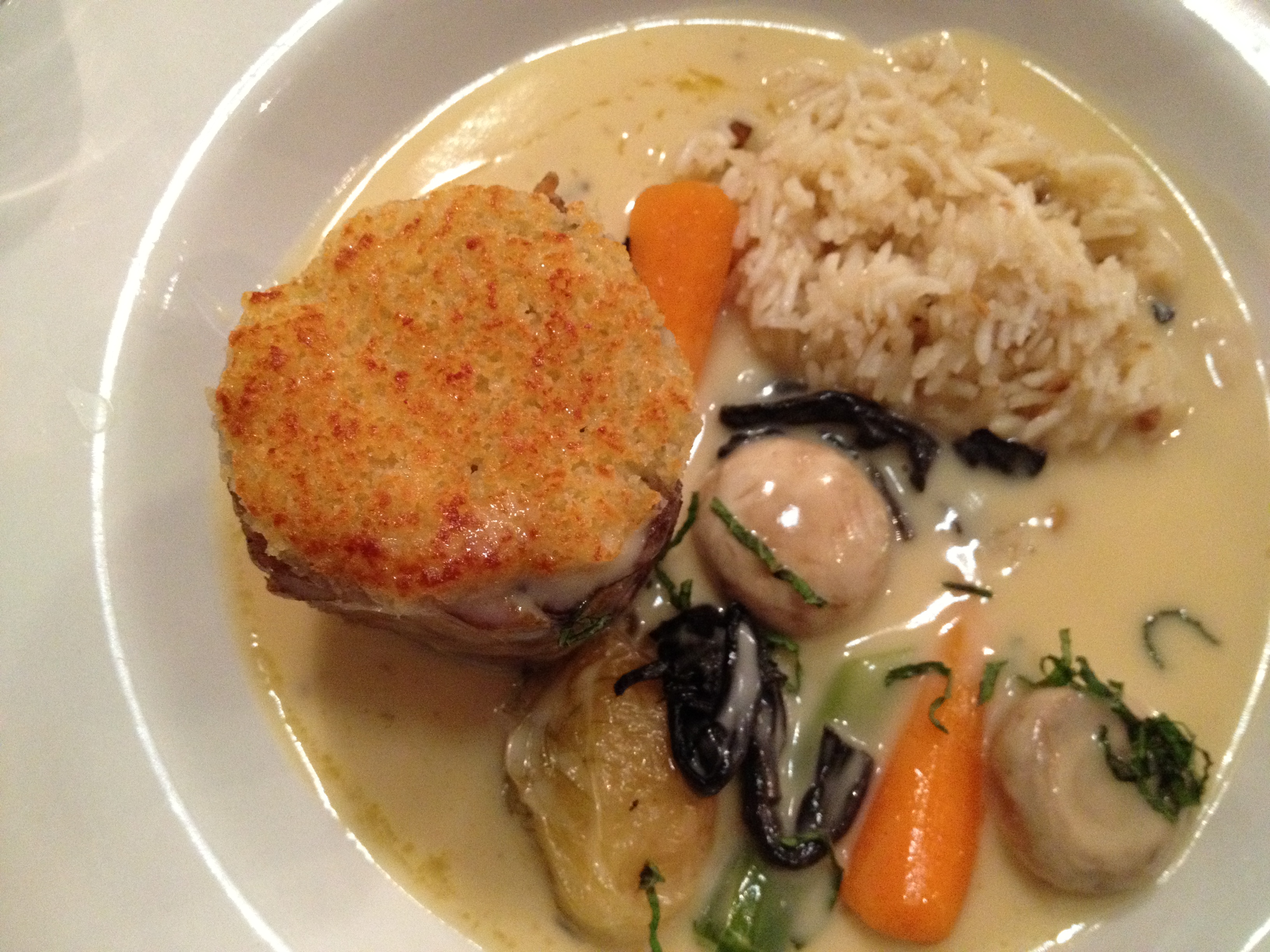
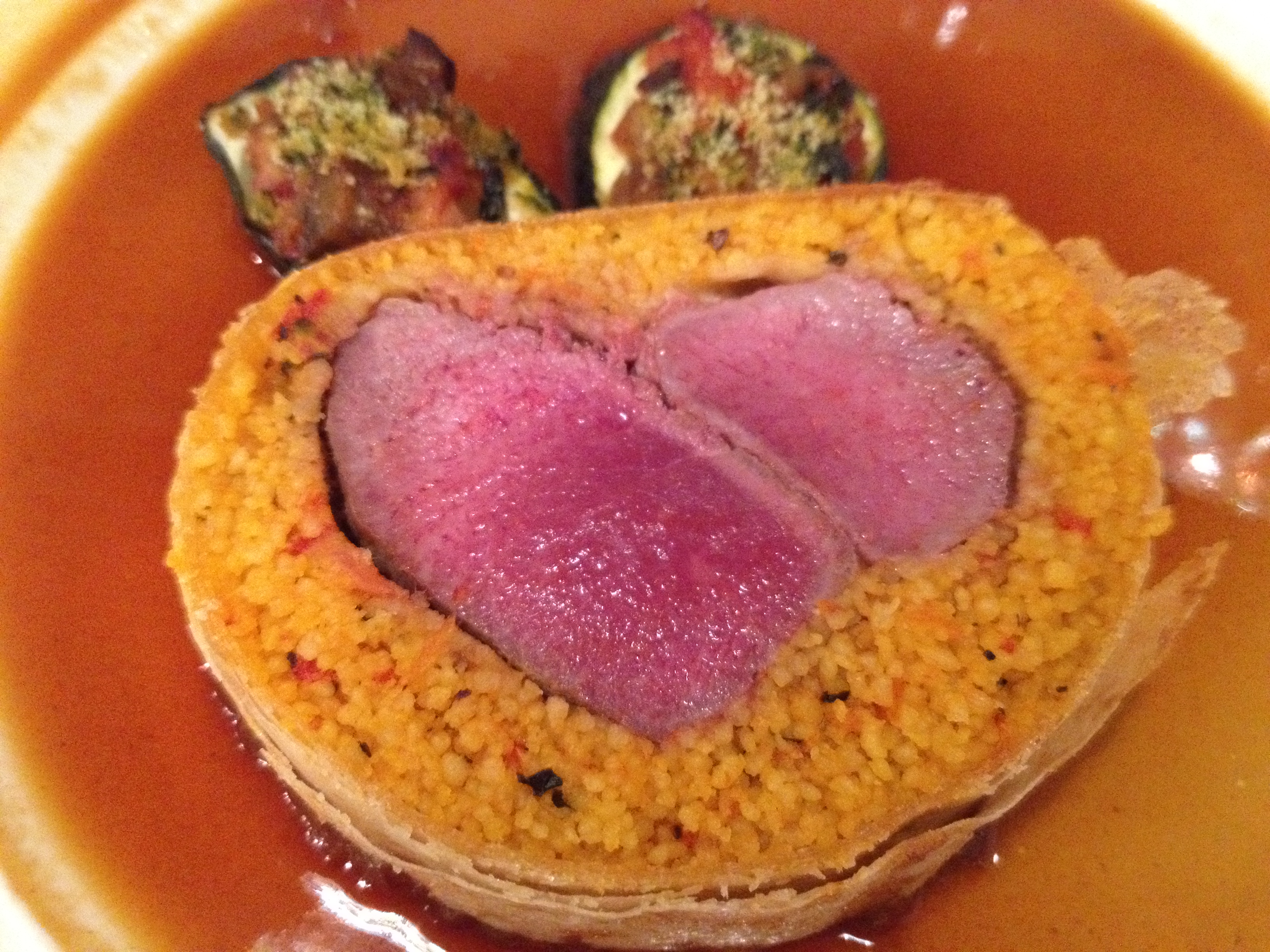
Next up for me was a blanquette of veal with mint, baby onions, Chanteney carrots and basmati rice. It was exquisite. The cheesy crumb on the top of the veal was to die for, while the meat just fell apart under my knife. Meanwhile my Mummy had a loin of Cumbria fell bred lamb wrapped with saffron couscous, and cumin rataouille. She too was aptly impressed, and this once can even be recreated at home – bonus!

Blanquette of Veal

Saffron couscous encrusted lamb

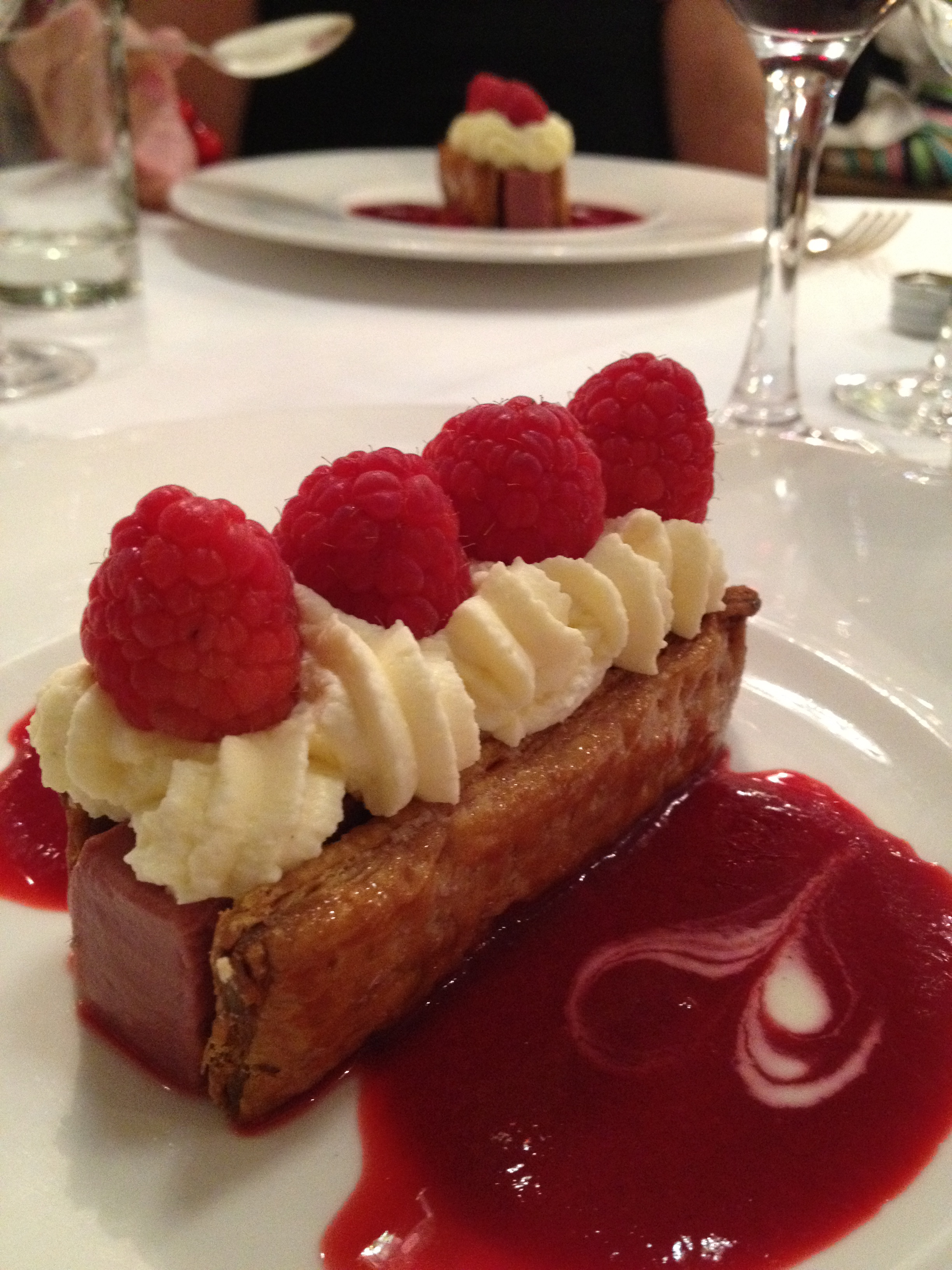
Dessert was a raspberry triple – a millefeuille of Kent raspberry, raspberry mousse and raspberry coulis. It tasted as good as it looked.

The raspberry triple

Luckily the food, while swiftly served, was light with fairly small portions – I was wearing a waist-repressing cummerbund after all!

So you see, Glyndebourne ain’t all about the Opera – it’s very much an occasion, and one which I cannot wait to repeat again. You never know, next time the sun may actually come out, and I might get to enjoy that picnic after all. But just watch me coming fellow picnickers if I get out on that lawn. Competitive is my middle name.

North Road Restaurant: Another notch in the Danish gastronomic revolution

Denmark, the country that brought us Lego, the Little Mermaid and a whole host of funky, fresh and chic interior design ideas is currently leading the world with its gastronomic innovation. René Redzepi’s two-Michelin starred extravaganza, Noma, has been awarded the ultimate accolade of Best Restaurant in the World for the last three years in a row, stealing the crown from the extended reign of El Bulli long before it closed.

While Noma will soon share its wiles with the best of British when it opens up in Claridge’s during the Olympics (i.e. those who could afford it/ were clever enough to buy a £195/head ticket before they sold out practically as soon as the event was announced), another star of culinary Denmark has drifted over to the British shores and, mercifully for we whose visits to Copenhagen are at best infrequent, is here to stay – I am of course talking about Christoffer Hruskova, whose restaurant, North Road is the bright new star of Smithfield’s market/ St John’s Road and was the location of my dinner on saturday night.

I booked up North Road upon the recommendation of my in-the-know foodie-friend Celia, whose nose for fine-dining is so refined that I would willing follow her blindfolded throughout my life, so long as she gave me plenty of slices of her fantastic Ombre cakes en route. It’s not a cheap option, but as it was the third anniversary of my first date with my partner, we at least had an excuse for a splash. And with the promise of a tree made from candy floss, who on earth could resist?

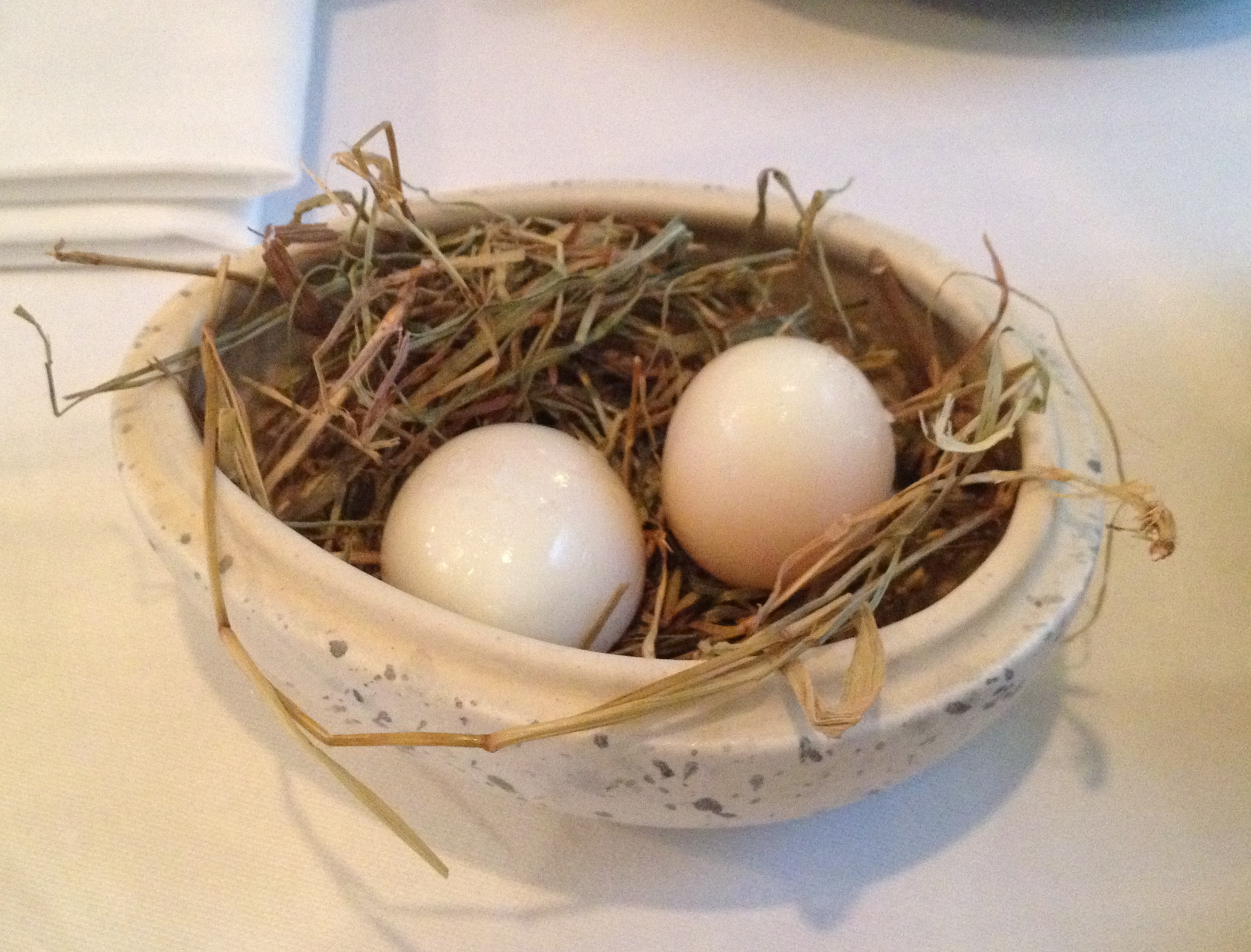
Just to start…”snacks” of quail eggs, smoking potatoes and pork crackers

Upon entering the restaurant, we were immediately struck by the sophisticated elegance of Denmark which so enthralled me upon visits to the Illum Bolighus department store in Copenhagen. So too were we instantly wooed by the attentive but very friendly welcome of the staff. Soon after being seated, the enticing smell of smoke filled our nostrils as we were treated to some starting snacks – Jersey Royal Potatoes smoked in hay and served with an exquisite mayonnaise, pickled quails’ eggs and pork crackling which was like a giant fluffy prawn cracker. My partner’s eyes met mine across the table and with that knowing look that occurs between couples who have gradually merged in one over the years of their relationship, we knew that this meal was going to be good. Very, very good.

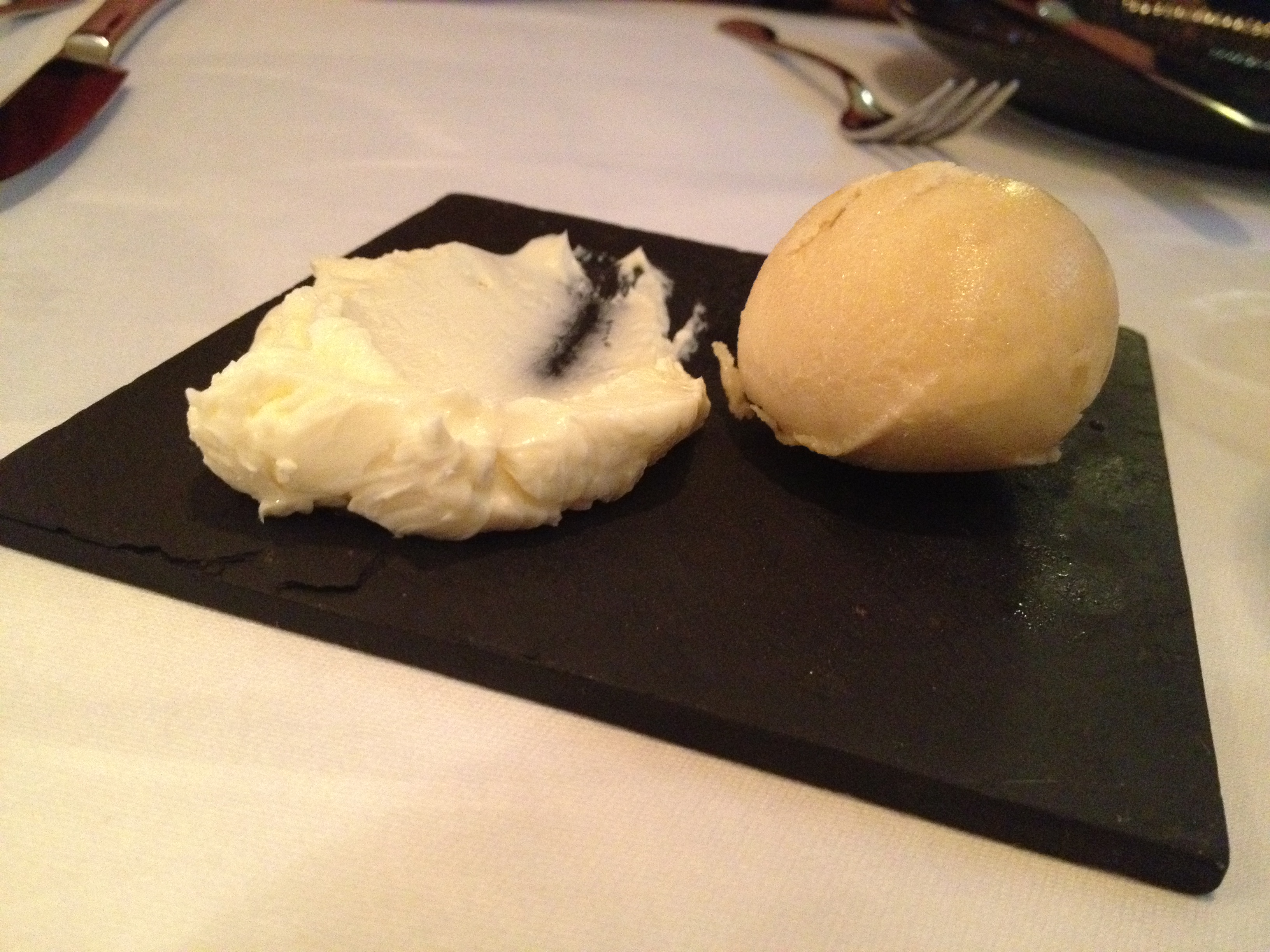
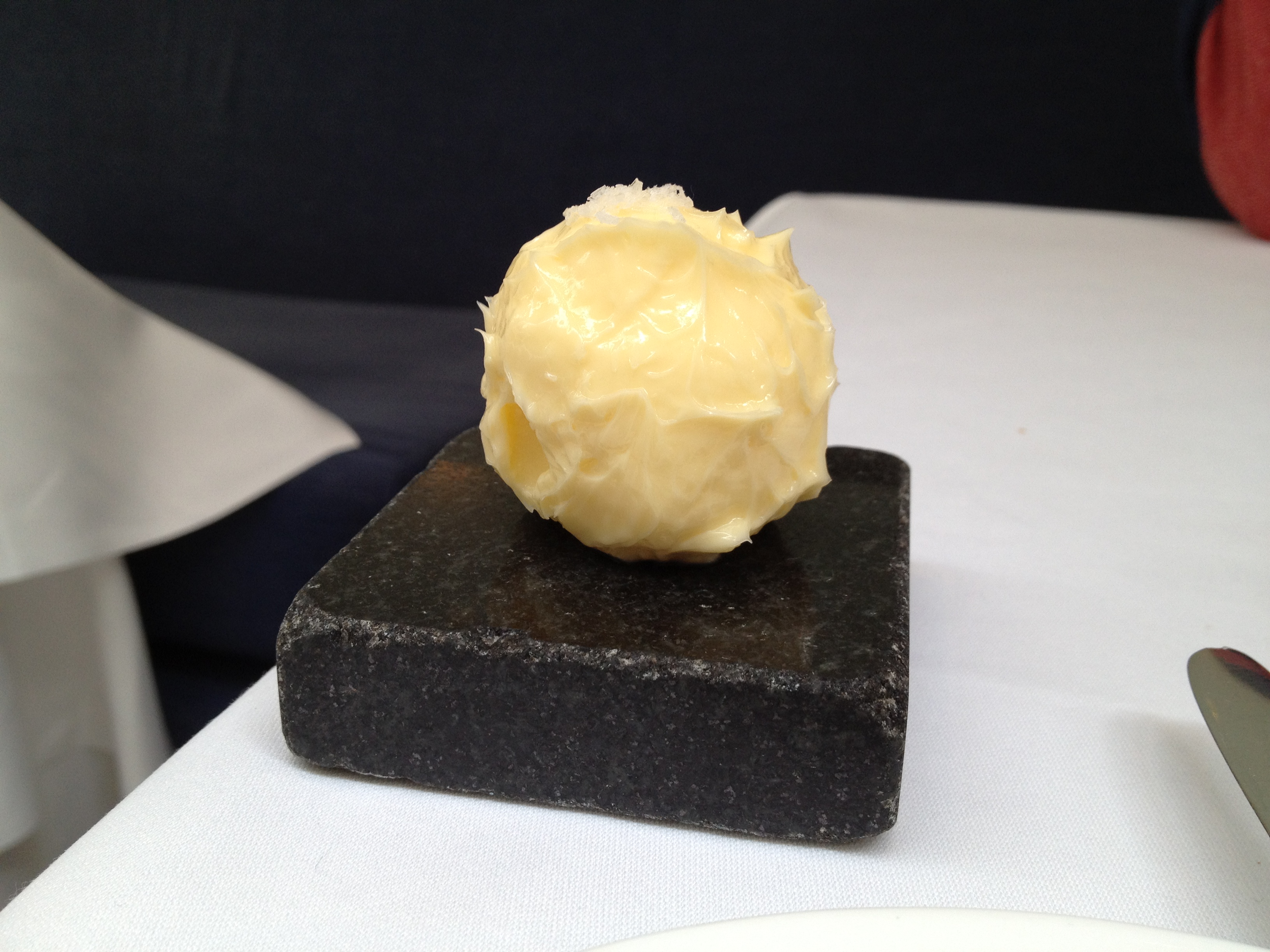
Caramalised butter…to die for

We opted for the 7 course tasting menu – it would be foolish not to, as 7 courses is only £7 more than the 5 course alternative. But before the dishes began rolling out with perfectly timed pauses between each, we were treated to a bag of little bread rolls and – wait for it – caramalised butter and a buttermilk butter. Oh dear god, let me tell you, that caramel butter was so exquisite in my mouth I almost ate the whole ball. It was crystallised and punctuated with occasional shards of salt – a rich sugary caramel which melted upon the palate before suddenly releasing a smooth butteriness. All I can say is that having enthused so fervently about this to the waiter, he told me how to make it, so future guests at my dinner parties – prepare to be wowed.

Razor claims – a masterpiece on a plate

Onto the food. First up was scottish razor clams with coastal herbs, organic cream and parsley. This was art on a plate. The exquisite marbling of the cream and the green parsley reduction was so beautiful, that even when lifted up on a spoon it made multi-marbled pictures worthy of a Turner prize. The clams were incredibly sweet and delicate – flavours of rose petals, the sea, and generalised freshness came flowing into my mouth in a way that shop-bought clams would never provide. And the flavour was perfectly matched by some wonderfully unusual coastal herbs which felt like my mouth was going off on a little adventure to some far off wind-swept seaside.

The lobster symphony

Upon that seaside I found myself engorging upon the next dish – an incredible lobster and buttermilk creation with baby cucumbers and nasturtium leaves.  As its forbearers had been, so too was this dish delicious to every degree. The nasturtium leaves were peppery, and the mini cucumbers refreshing and texturally distinctive from the succulent sweet lobster. Oh how my grandfather would have loved this dish! Once again the visual treat was tantalising, as pink undulations of soft-shelled lobster were punctuated with the star-burst leaves of the nasturtium, the hapless scatter of some sandy deliciousness, the drizzle of oil and the contrast of straight little cucumbers. Goodness, I sound like a Masterchef judge.

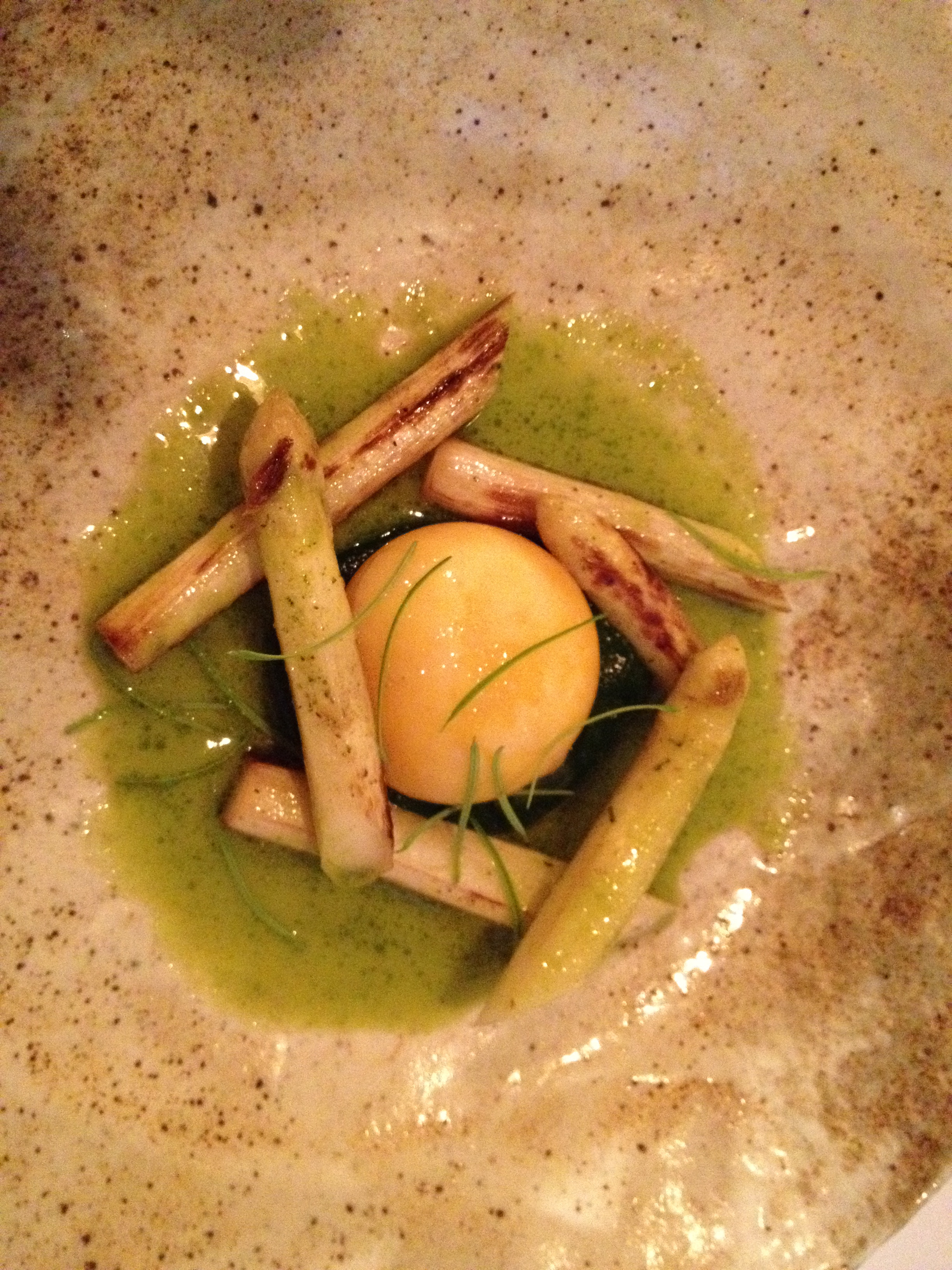
White asparagus with that perfect egg yolk pre explosion

Onwards on our trajectory towards gastronomic perfection, and up next was white kent asparagus with some revolutionary method of importing the taste of pine needles without having said needles needlessly slashing ones throat. Oh and spinach too. My goodness this was the dish of summer – a burst of summer garden freshness in every mouthful, and with a whole and masterfully served single egg-yolk at the centre, which looked so solid and yet, upon impact with the knife, burst into a flurry of sunshine yellow sweetness providing a syrupy soup in which the asparaguses floated like pale beautifies taking their first fill of sunshine.

A garden delight

Talking of summer freshness, the next course was the summer garden, placed on a plate in almost literal form. Jersey Royal potatoes, lovage and radishes were “planted” in amongst soil made from burnt butter in some brilliantly molecularly innovated form, while at the base of the dish, a creamy butter foam gave moisture and exquisite salty/creamy balance to the whole dish. The radishes provided a fresh crunch, and one potato was coated in hay ash to brilliant flavour-effect, like a barbecue and a summer potato salad all rolled into one (I note that the chef, Christoffer Hruskova, is quite keen on importing the flavour and smoke from burnt hay into his dishes which gives an incredible depth of flavour and scandinavian savour to the food).

The interior (photo: Sarah Lee)

Next up was the main course which, owing to my gradual state of inebriation by this stage I neglected to photograph. It was no less superb however – a selection of exquisitely tender Herdwick lamb cuts and little sweetbreads which were a revelation. When you think about the little lamb cheeks, tenderised by the sweet suckling of its mother’s milk, it’s a rather off-putting image, until you eat them that is, and the soft creamyness of that milk is reflected in this very soft, very rich little nugget. The dish was served with more seasonal summeryness – sea lettuce, sea blite and more coastal herbs, giving us all hope that despite a decided lack of sun outside, we may at least sample the summer through this bombardment of taste sensation in our mouthes, as well as discover the delicious, albeit slightly surreal symphony of a lamb lost somewhere on an ocean’s edge. Reminds me of that terrible movie scene when a load of lambs fell of a cliff edge – what film was that? Silence of the lambs or something?

Stone and Hay

Who knows, for up next was a plate of delicious vintage cheeses, again, neglectfully unphotographed, followed by the pure theatre of the evening. First “stone and hay” – basically a frozen stone, not to be eaten I might add, and another realistically executed stone resting on top, except this one was edible, flavoured delicately and covered convincingly with that favourite of the chef – hay soot. It wasn’t the most delicious dish of the evening, but made for a welcome palate cleanser and clever piece of gastronomic amusement.

Gorgeous gooseberries

Slightly full up by this point, we almost feared the onset of the dessert in case our dwindling appetite would not do this incredible food justice. But we oughtn’t have worried, as the dessert of english gooseberries with douglas fir and wood sorrel was fresh, bucolic and perfectly balanced between sharp and sweet with a wonderful variety of textures and again a very scandinavian, effortlessly green and glorious look.

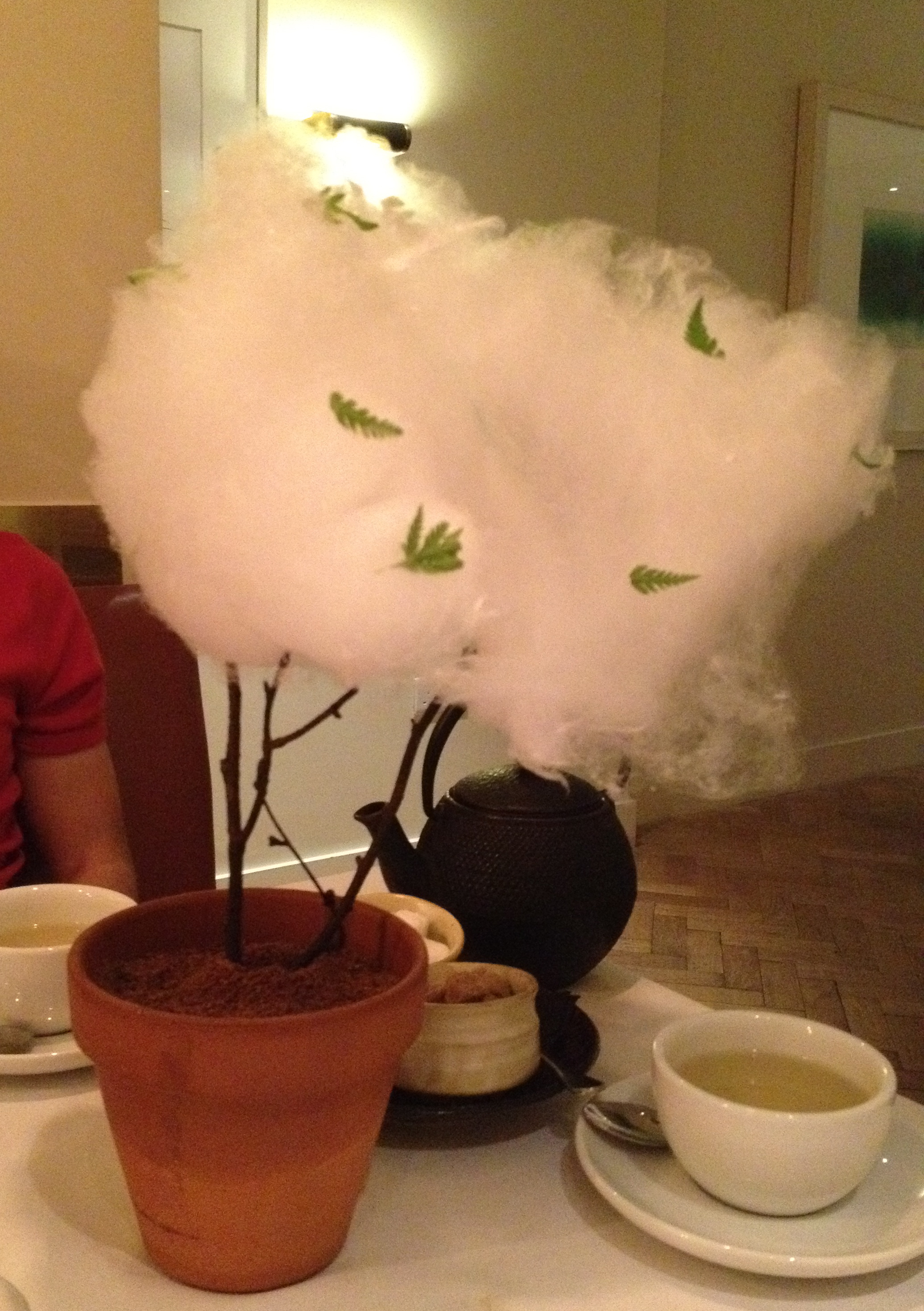
The candyfloss tree!!

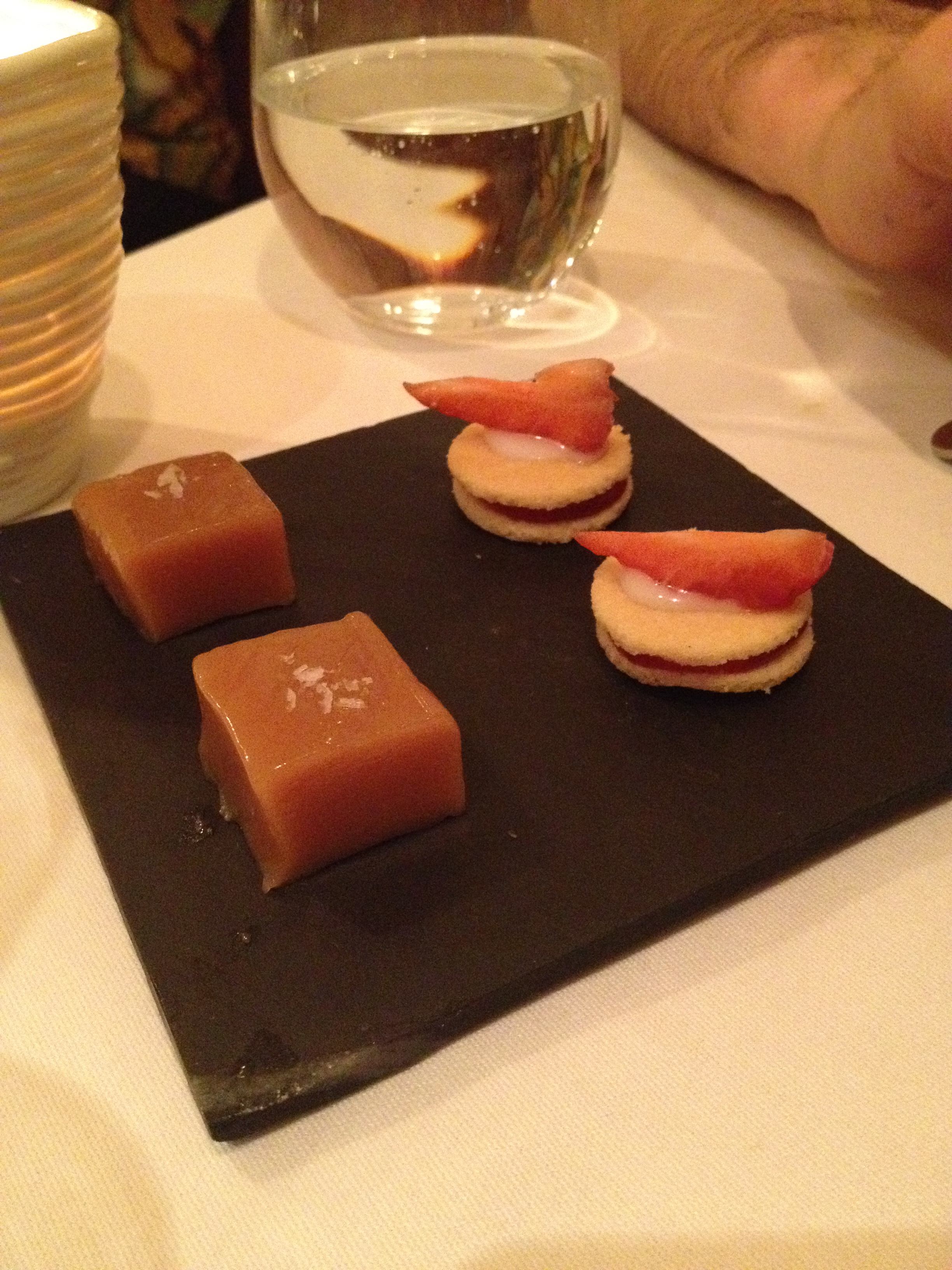
But finally, what we had all been waiting for. Emerging from the kitchen, in its unmistakable terracotta pot, the branches of a fine, blossomed candyfloss tree headed our way, complete with edible soil (made again from burnt butter which to my mind tasted of cocoa) and little petit fours of strawberry jam shortcake and fudge. Need I say more? My evening was complete. This meal was a twisting triumph with elegance, flavour exuberance and pure gastronomic sophistication throughout. Michelin star? This place deserves a galaxy!

Petit fours

So why is Danish gastronomy on such a high? In my opinion, its because Denmark offers us superb creative innovation without the stuffy anachronistic rulebook of the grand European tradition. It’s cuisine for a modern age – clean, unpretentious but effortlessly chic and fantastically clever. With the overflowing charm of the Scandinavians, you are made to feel welcome, looked after and indulged, rather than made to feel edgy and uncomfortable as is so often the atmosphere given off by the penguin waiters of the old-school. All the while, Danish food is injected with the same vitality and fun in its exploration of molecular gastronomy and thematic presentation that made the equally successful Heston Blumenthal such a star of the culinary world. In this way, Denmark is one step ahead of the rest of the world, soaring into its ascendancy where others must now follow. If they can ever catch up.

Sunday Supplement – The Joie de Vivre Triptych

The sun is shining in London, the olympic torch is gradually winding its way around the country to rapturous applause, and the nation is decking its streets in union jacks in anticipation of the Diamond Jubilee celebrations next weekend (you notice I’ve ignore the slight blip that was eurovision last night, when the UK came second from bottom in the results table – but no surprises there, it only goes to emphasise our disconnection from continental europe). So with spirits high, and with what looks like the arrival of summer (finally!) I have decided to showcase a triptych of paintings which I completed when the times were good, the sun was shining, and I was enjoying uninhibited zest for life. I was holidaying in Marbella, Spain at the time. I had just finished my law degree, and was spending almost a month in Spain. By day I would enjoy the freshness of the mediterranean sea, the heat of the beach, and the pleasure of seafood and of wine. In the balmy afternoons, I would retreat to our sun-dappled garden, under the shade of our fragrant jasmine tree, and rest, contemplate, and (being english, even when in Spain) drink tea.

It was in these times of ultimate afternoon delight that the Joie de Vivre triptych was born, three paintings which were unplanned, but which burst freely out of my paintbrush and straight onto canvas, an apt demonstration of my uninhibited happiness when life was good, the drinks flowed, the sea lapped upon the shore and my imagination came to life.

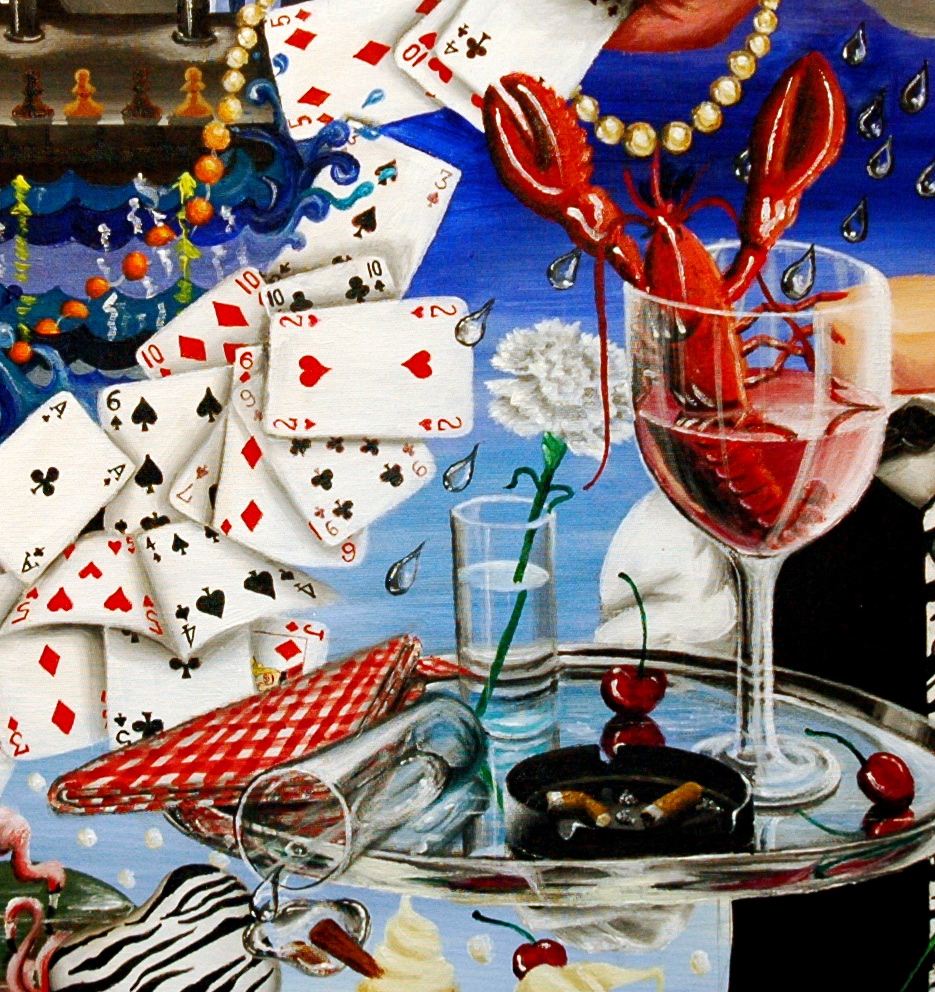
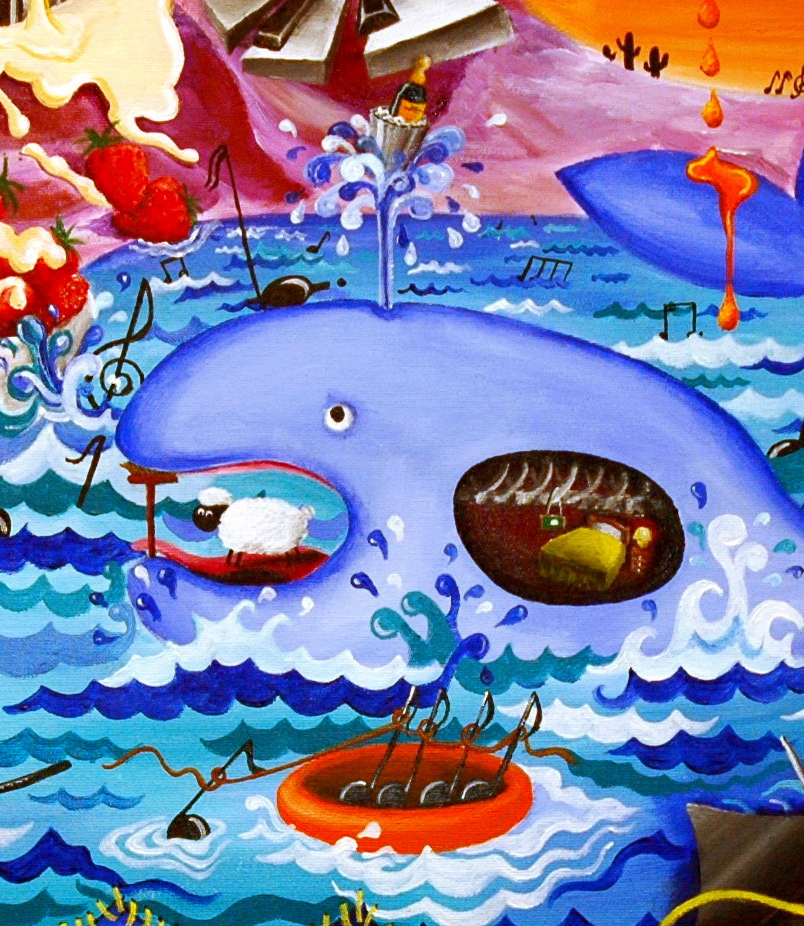
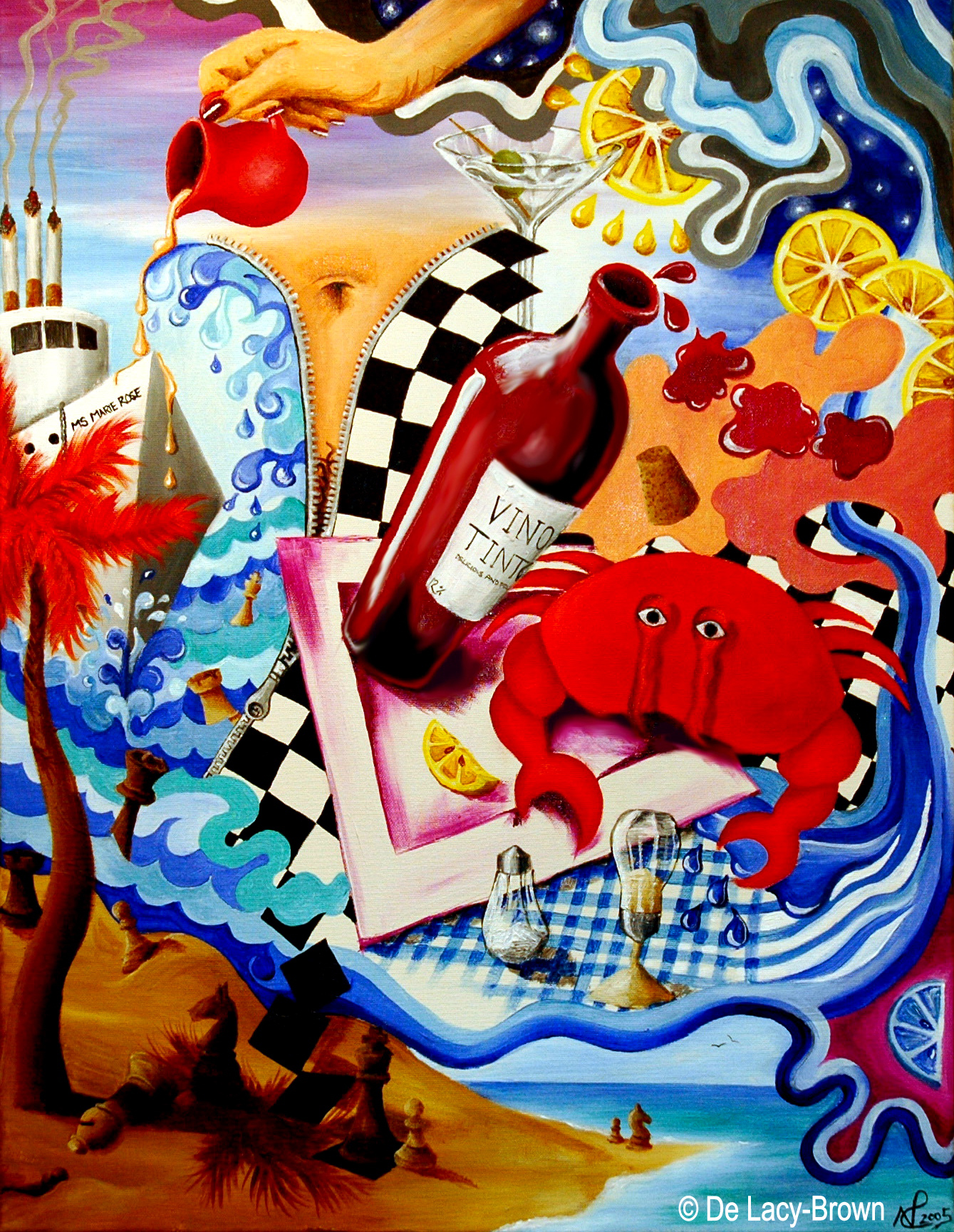
The resulting triptych sold at my 2006 exhibition, Between me and my Reflection and is now one of my best selling limited edition prints (with some still for sale on my Etsy store). It celebrates the ‘zest’ or joys of life through an illustration of the three stages of culinary and alcoholic indulgence during the day; lunchtime, afternoon tea and evening. Recreation and hedonism are central to the juxtaposed images with a further emphasis on home entertainment, namely piano/music, cards/gambling and chess. Opulence is illustrated by symbols of extravagance contained within all three images, as well as buried treasure and jewellery. Sea food is the culinary indulgence on the menu: many other life-forms or objects are anthropomorphised, for example, the sheep seen in the domestic setting of its whale-house, the musical notes struggling to save each other from the perils of a rough sea, and a snail which digs underground to retrieve the buried treasure. The ‘zest of life’ which these images embody is also specifically reflected by the citrus slices which radiate perfect weather conditions in each scene, while a human hand is always “on hand” to assist in the activities being illustrated, whether it be pouring the cream for the afternoon’s strawberries and the marie-rose sauce for the crab, or dealing out the cards for an evening of casino entertainment. The painted images flow and metamorphose from one object to another, as a string harbour-side lights becomes a string of pearls which in turn  becomes of floating buoys or a sudden rain shower becomes ice cream, piled on a cone to be enjoyed with a glass of rosé.

There’s a lot to explore in these paintings, which are typical of what happens when I set my mind loose, so without further ado I will let you enjoy the paintings in full, hoping that you take from them the optimism for life which they engender as you go about enjoying your sunny sunday and forthcoming summer.

Joie de Vivre/ Zest of Life 1: Crab Cocktail (2005 © Nicholas de Lacy-Brown, acrylic on canvas)

This print is available to purchase as a limited edition print at my Etsy store 

Joie de Vivre/ Zest of Life 2: Afternoon Sea (2005 © Nicholas de Lacy-Brown, acrylic on canvas)

This print is also available to purchase as a limited edition print at my Etsy store

Joie de Vivre/ Zest of Life 3: Casino Nights (2005 © Nicholas de Lacy-Brown, acrylic on canvas)

This print is also available to purchase as a limited edition print at my Etsy store

© Nicholas de Lacy-Brown and The Daily Norm, 2001-2012. Unauthorized use and/or duplication of the material, whether written work or artwork, included within The Daily Norm without express and written permission from The Daily Norm’s author and/or owner is strictly prohibited. Excerpts and links may be used, provided that full and clear credit is given to Nicholas de Lacy-Brown and The Daily Norm with appropriate and specific direction to the original content.

Monotone May = Culinary indulgence: The Orrery and The Delaunay

The good weather may have reached our shores at last this week in fair-weather Angleterre, but last weekend it was an altogether different picture. One gloomy weekend followed another, as almost 7 weeks after a hose-pipe ban was enforced, we in England were subjected to day upon day of grey rainy autumnal weather. So what can one do to keep happy in such weather? Why, self-indulge, naturally!

As a result of my very rare recourse to hedonism, I visited two superb restaurants in London, both of which deserve the Daily Norm review treatment.

Le beurre

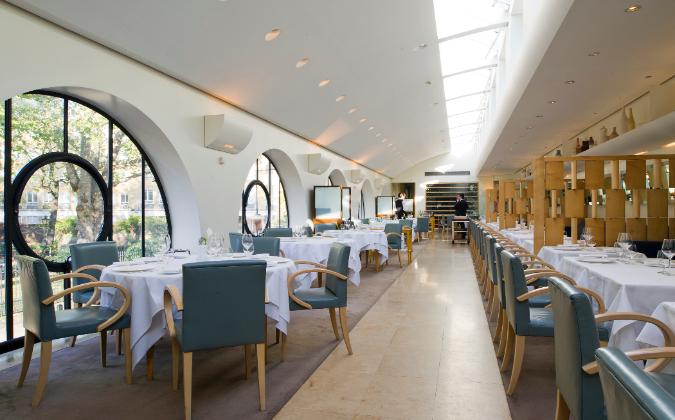
Stop one was Orrery, 55 Marylebone High Street, London, a classy first floor venue situated above the uber-chic Conran Store in Marylebone. I always think that a restaurant with an upstairs location possesses a certain superior exclusivity in the way in which it can go unnoticed so easily, and only those “in the know” get to sample it’s elevated delights. I did already know about the existence of this place, purely because on my frequent visits to Conran (I am interior design obsessed, not that I can afford many of the overblown prices in the place) I could never work out how from the front the shop appeared to have big first floor windows and yet when inside, there were no windows to look through. The secret to this great conundrum lay in a very slim line restaurant, set at the front of the building in a long gallery-like setting, but whose narrow floor-space barely registers owing to the excellent use of mirrors to reflect the large rounded windows which run along one side of the space. Having worked out where the restaurant was, I never in fact went along, that was until I saw it featured on the glitsy docu-soap Made in Chelsea last week. Anything they can do, I can do better, thought I, without anything remotely comparable to the stars of the show padding my wallet. And so it was, that having escaped quickly from Tate Modern on saturday in order to resist the temptations of dining in Tate’s expensive but view-spectacular restaurant, we ended up somewhere even pricer. Whoops.

Orrery’s interior

From the moment we walked into Orrery, we were treated like royalty. The service was exquisite – attentive and brisk, but we did not feel rushed, only well looked after. The menu we went for was the Menu du Jour, which at £25 for three courses didn’t seem bad, especially when the food then came out in a spectacular show-stopping fashion. But let me not rush this. Let us first concentrate on the unctuous fig-imbued bread with creamy home-churned butter, and a delicate amuse bouche of gazpacho – perfectly accompanied by the Catalan wine I had chosen from the wine list with all the bias of my Spain-conditioned heart.

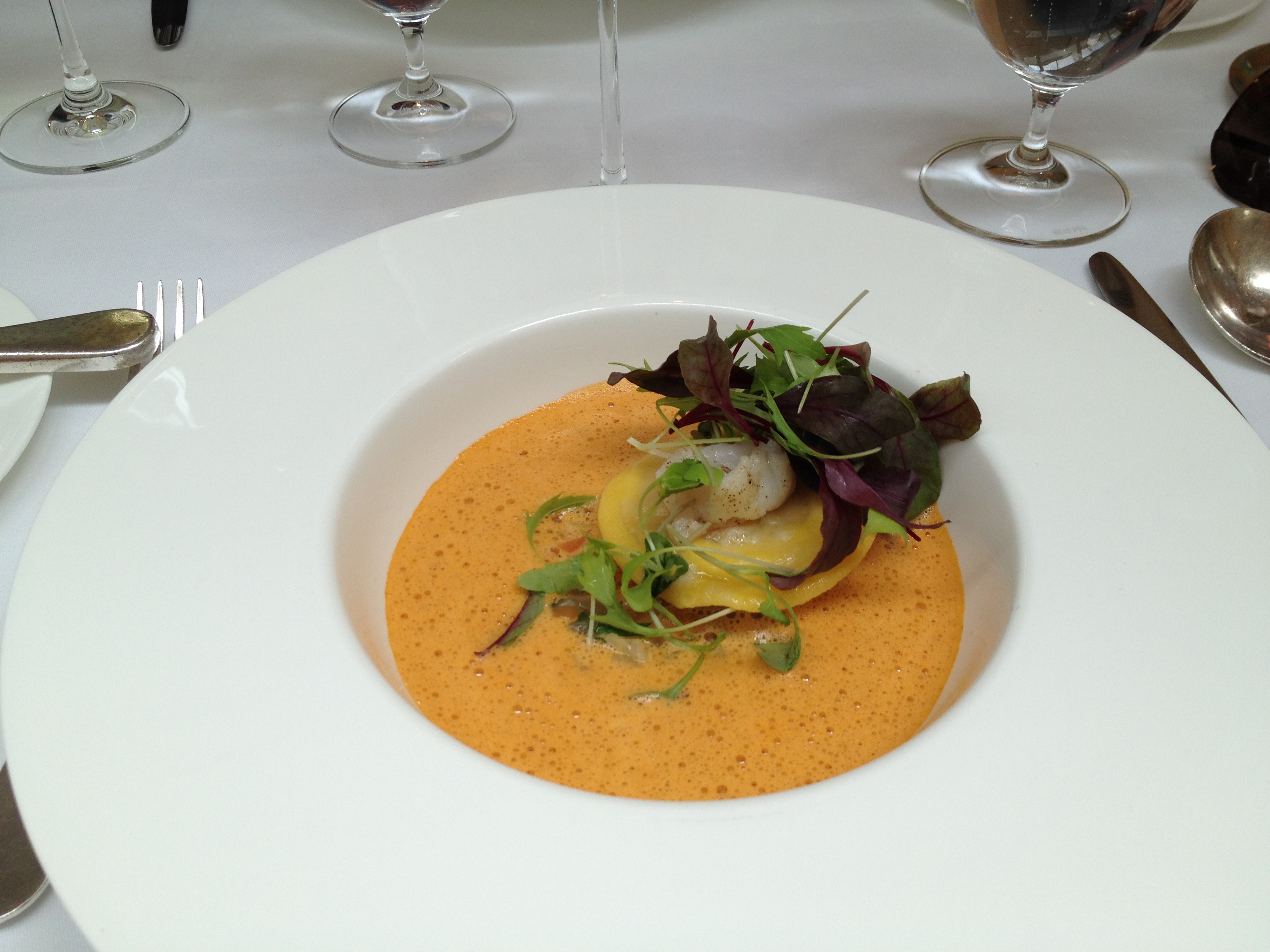
Raviolo

Up the next was the starter. We both went for the seafood raviolo (i.e. just one) surrounded by a frothy seafood bisque and served with a sweet, nutty pile of salad leaves and micro herbs. It was moist, well flavoured, delicate and perfectly seasoned, and the froth reminded of the incoming silky bubbles of a warm mediterranean seashore.

Feuilleté

Salmon

For mains I had the Feuilleté of wild mushroom, poached egg, sauce Hollandaise – it was the vegetarian option which I rarely go for but my goodness I’m glad I did. The puff pastry was golden and caramelised, the mushrooms rich and creamy, and the poached egg broke open to reveal a runny goey egg yolk which was a rich and perfect orange spilling sweetly to provide a silky sauce for the dish. My partner had salmon which, he says, was utterly moist and completely delicious. For dessert we were both unable to resist a chocolate mousse with champagne jelly and hazelnuts. Served in frosted little bowls reminiscent of 60s retro furniture, it was cool as well as classy. Finally before dragging ourselves away, we were given complimentary chocolate truffles which broke open in our mouth to reveal a super sweet but seductively sharp passion fruit syrup. Amazing.

Chocolate mousse with champagne jelly

Best of all, I discovered that the astronomers globe instrument I bought in Salamanca is actually called an “Orrery” named after the Earl of Orrery. You see, you learn a new thing every day.

Delaunay interior

The next day, a long-standing and much anticipated late-luncheon engagement with my delectable chic bride-to-be companion in all things gastronomique, Celia, was on the agenda. We were off to The Delaunay, on the Aldwych, London, a restaurant which describes itself as a Café restaurant in the Grand European Tradition. Grandeur was in fact expected – the restaurant is part of the Wolseley group, known for its old-style grandeur renowned of Paris and Vienna, more than London. And as far as grandeur goes, the Delaunay did not disappoint. As I entered, the place was heaving, veritably full with those who lunch, and those who wish that we could all live in the age when every restaurant was clad in brass and marble with giant wall clocks, wood panelling and snobby waiters just like this one (don’t we all, well, perhaps without the snobs). Luckily my exquisitely turned out lunch companion was a lady in red, guiding my eye across the crowded tables so that we could swiftly commence the important business of choosing wine. Slightly intimidated by the prices, we went for house white, which must have been fine, because we were onto prosecco in no time. The food menu at this time of the day was fairly brunchy, but had sufficient choice for us to be able to indulge in a three course feast which proved highly satisfying, in the Grand European traditional way, naturally.

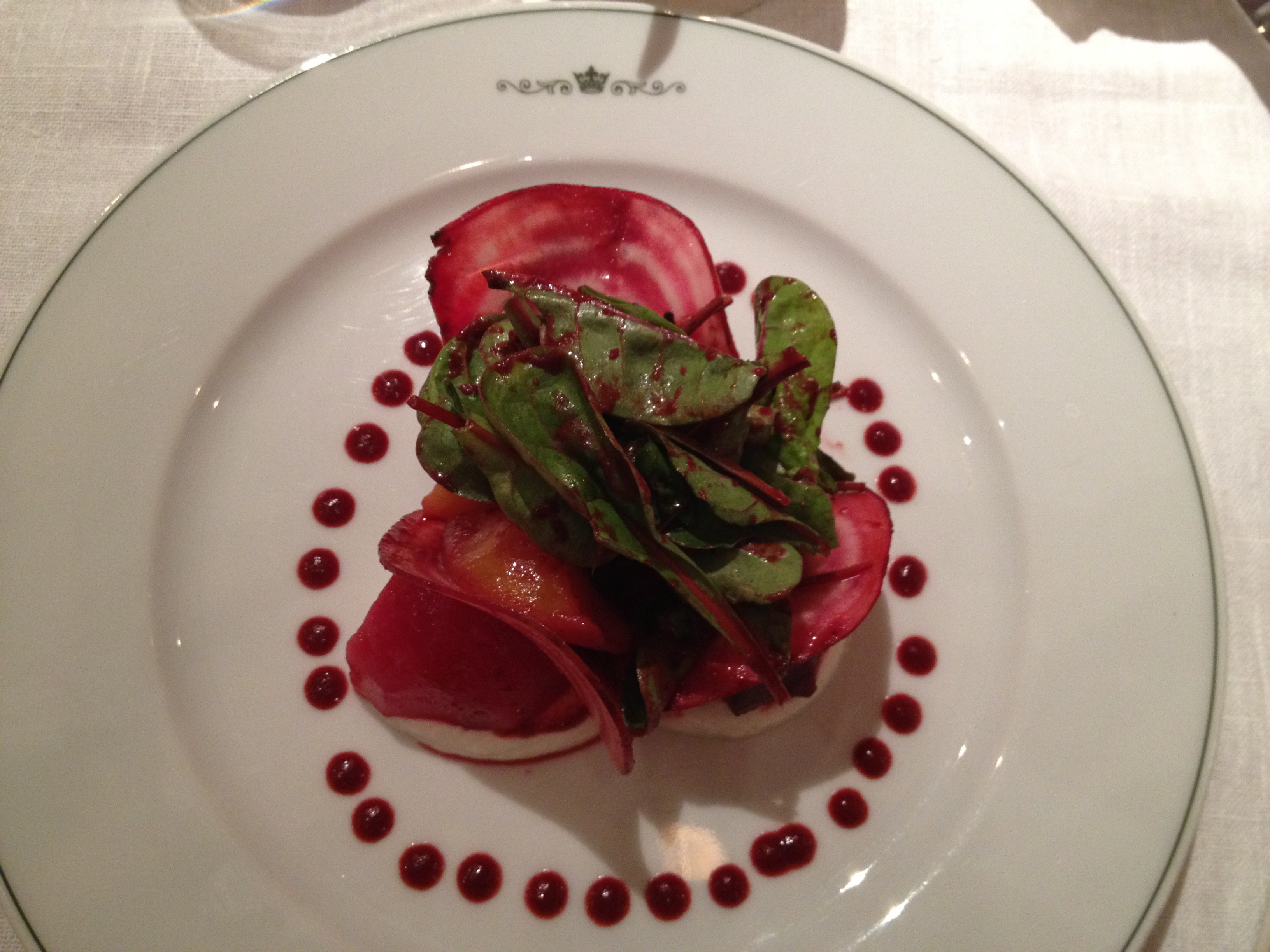
Beetroot and goat’s cheese curd salad

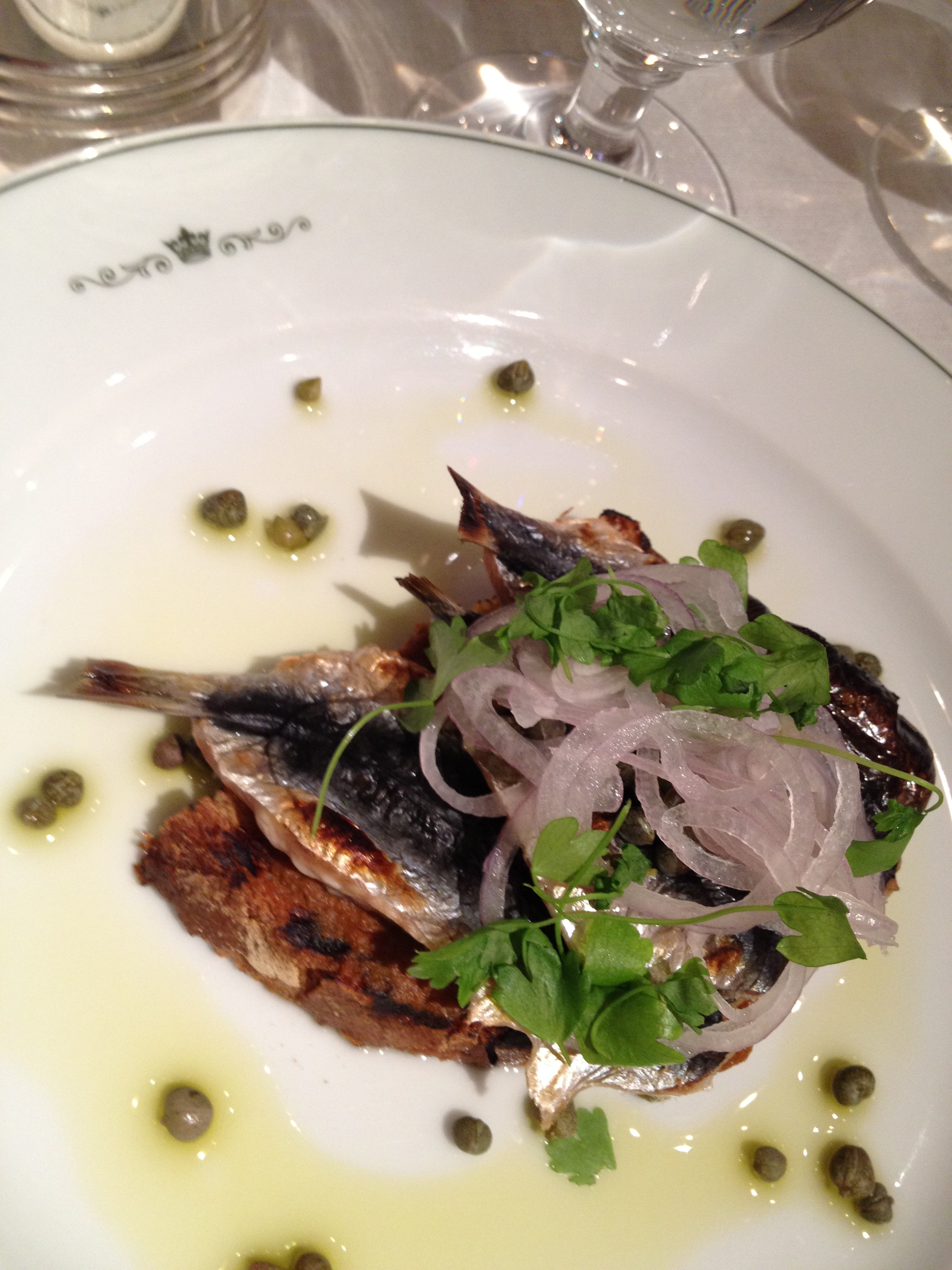
Something fishy

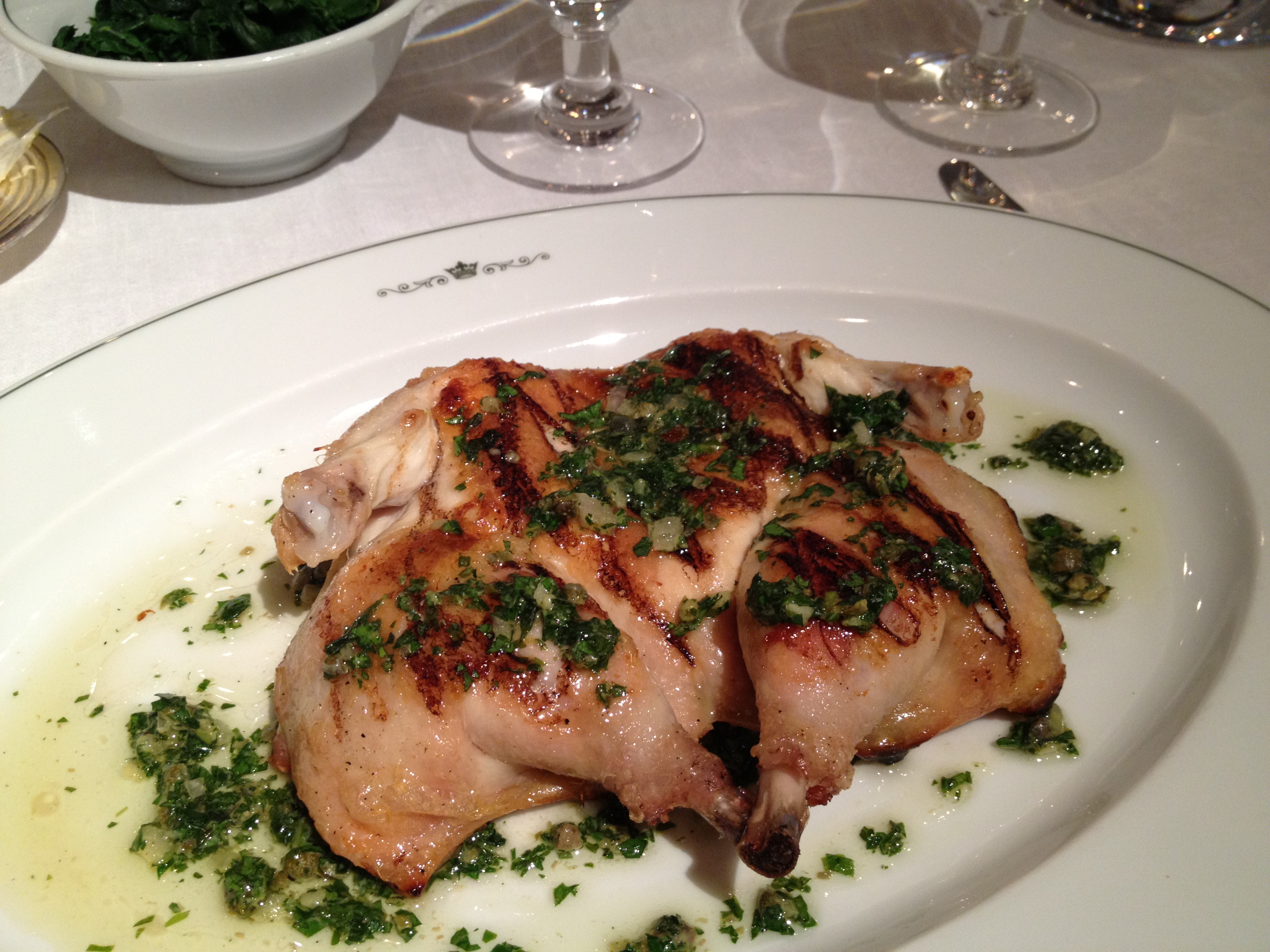
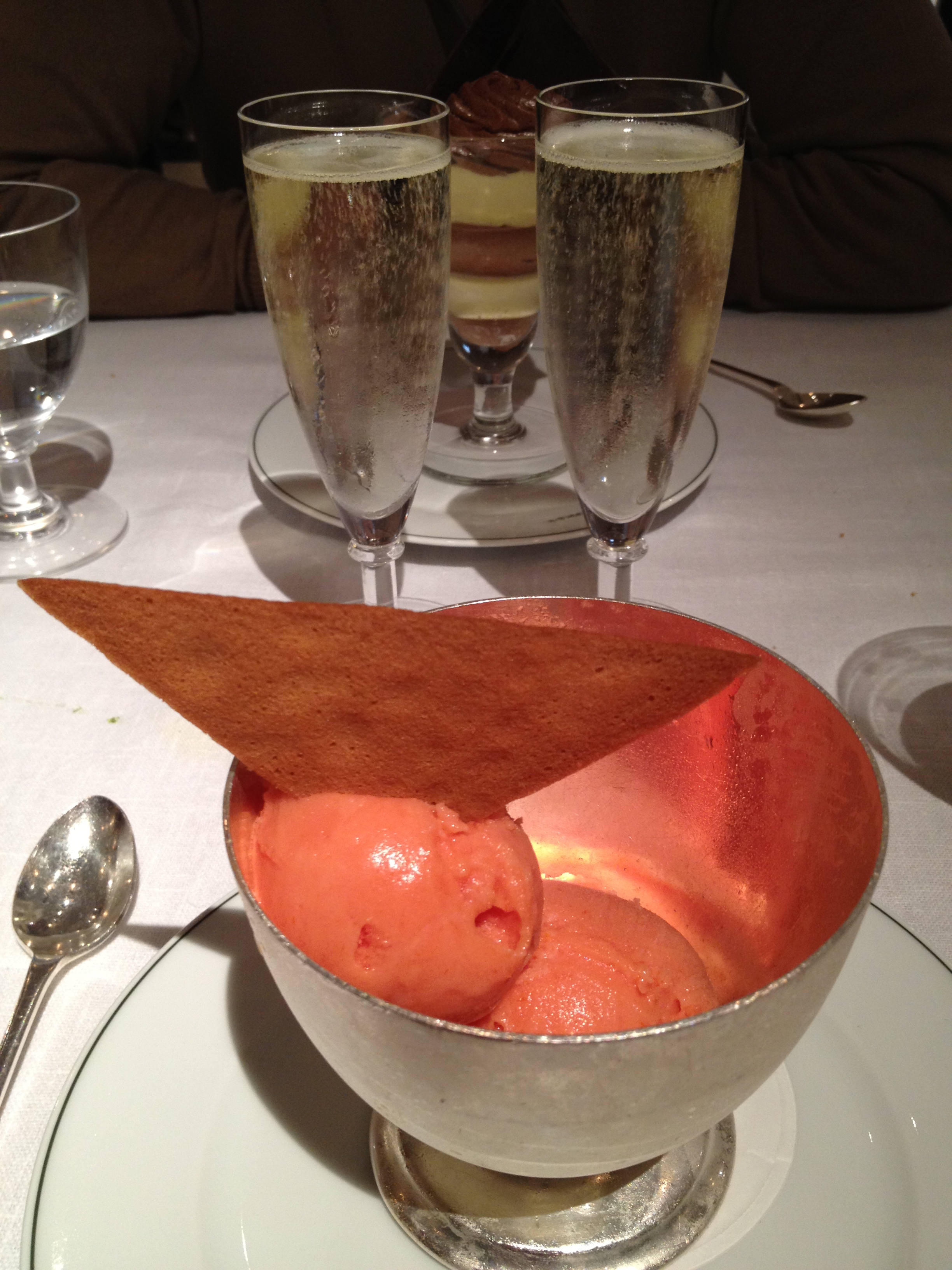
I started with a young beetroot salad with goat’s curd cheese. The flavour balance was perfect – a creamy cheese, not as heavy as it’s older, firmer counterpart, perfectly partnered by a series of different coloured and textured beetroots. Celia had something deliciously fishy. I can’t exactly remember what it was, but I’ll let her tell you on her superb food blog, Lady Aga. Next up I indulged in a golden crunched chicken schnitzel, which was incontrovertibly bad for my summer beach body attempts, but comforting on a grey May day (that rhymes so well, it must be why May turned out to be such a dire month). Celia won on this course though – her poussin with salsa verde was so moist and delicious and meaty I could have stolen the lot. For dessert I went for a white and dark chocolate mousse (I know, I know, second day running, but a boy knows what he likes) and Celia, undoubtedly feeling the pressure of my “hinted” suggestions whispered under my breath, went for a Sevillan orange sorbet which was like a walk along the sun-dappled paths of the Alcazar all over again.

Poussin

Seville orange sorbet, prosecco and a stripey chocolate mousse somewhere in the background.

The Delaunay does well in promoting the traditional grand café, particularly since it only opened recently. You could easily imagine Coco Chanel dropping in on a brief visit to London. And taking tradition seriously, I noted with bemusement that the maître d’ clicked his fingers when he wanted the attention of his waiters. Ouch. Mind you, the attention of the numerous waiters was often found wanting at our table too, which is surely one tradition Coco would not have approved of.

A Greek-inspired weekend feast without a single mention of austerity measures

It’s true. You can’t talk about Greece these days without the mention of austerity measures, riots in Athens, political instability and the potential crash of the Euro. All of this has had a knock-on effect on the Greek tourism industry, as families are put off by negative news pictures showing growing social unrest, and the current trend for “staycations” means tourists are setting their sights on local drafty beaches rather than the blue-domed, white-washed panoramas of Greece’s formerly favoured island attractions. While Greece loses its tourists, and its economy dwindles further, the tourists lose the opportunity to enjoy an affable burst of Grecian spirit in their lives, denied their chance to indulge in the mediterranean smells of garlic and basil, mint and spinach, flakey pastry and syrupy dessert, thick rich yoghurt and fresh just-caught seafood. So while Greece finds itself thrown into yet a further bout of political and social uncertainty, I have chosen, as always, to look on the brighter side of life, taking it upon myself to celebrate the sunshine-imbued gastronomic culture for which Greece should be making headlines, and importing the tastes and smells of a warm mediterranean evening into my flat. As such, I have been cooking up a storm of Greek-inspired food in my flat here in gloomy London, and the results have been so good, I feel compelled to share the results.

Most of the recipes are taken or adapted from Rick Stein’s Mediterranean Escapes (© Rick Stein 2007), but the cheese platter and stuffed squid dish are entirely my own creation (the chocolate fish is, sadly, so perfect as to be un-makeable – well, at least by my clumsy hands).

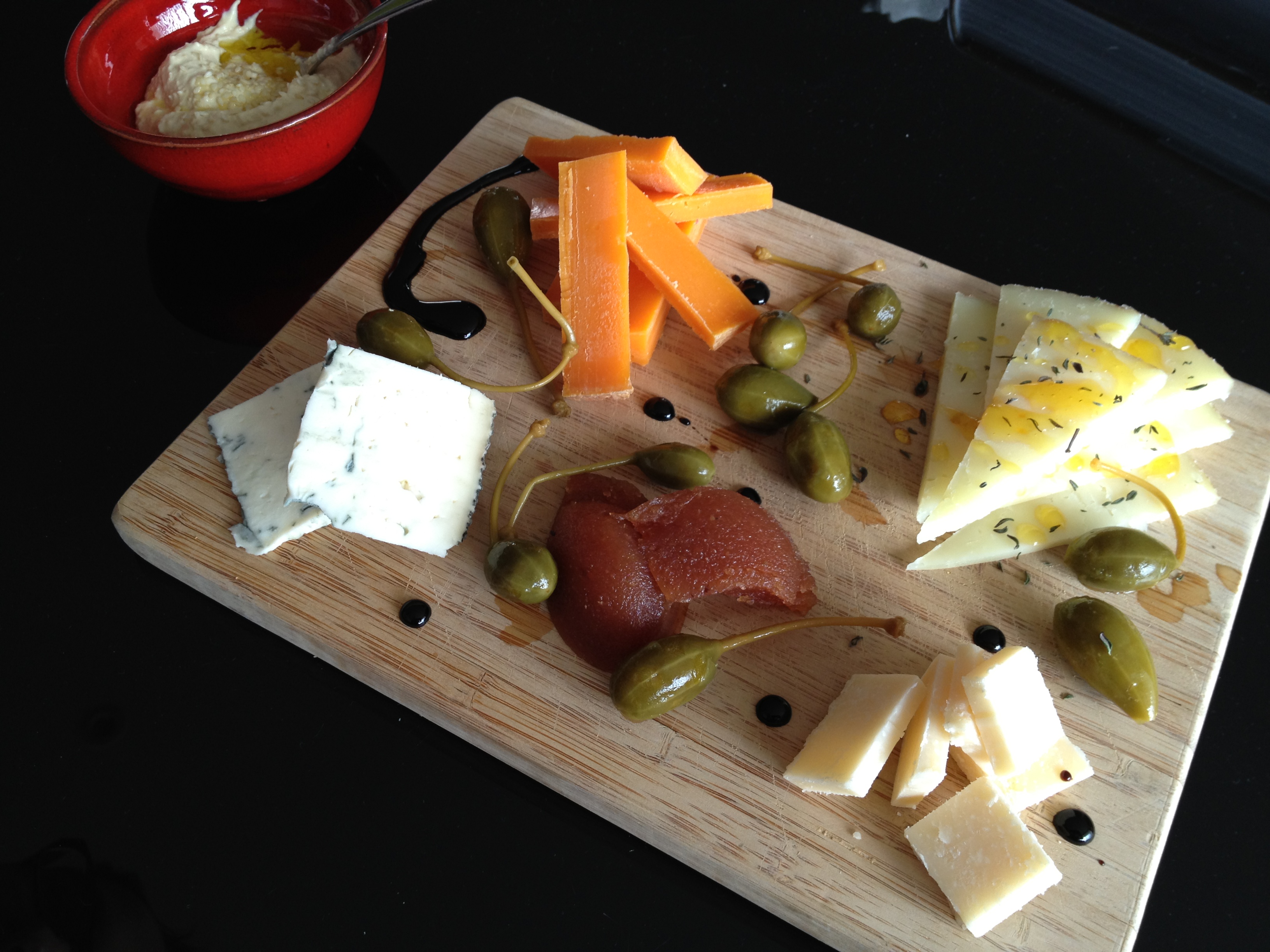
Feast 1 – light lunch cheese platter with a chicory salad

I started my greek food season (I should point out that i didn’t eat all of this at once – this was over a few days) with a light snack: a cheese platter with some greek (kefalotiri, halloumi and feta) and other mediterranean cheeses (there’s always space for my favourite Spanish cheese – manchego – drizzled with honey and sprinkled with thyme). With so many Greek cheeses out there you can go mad. I served my cheese board with a home made houmous sprinkled with sesame seeds, flat bread and rather large Greek capers, as well as a chicory, pomegranate and walnut salad.

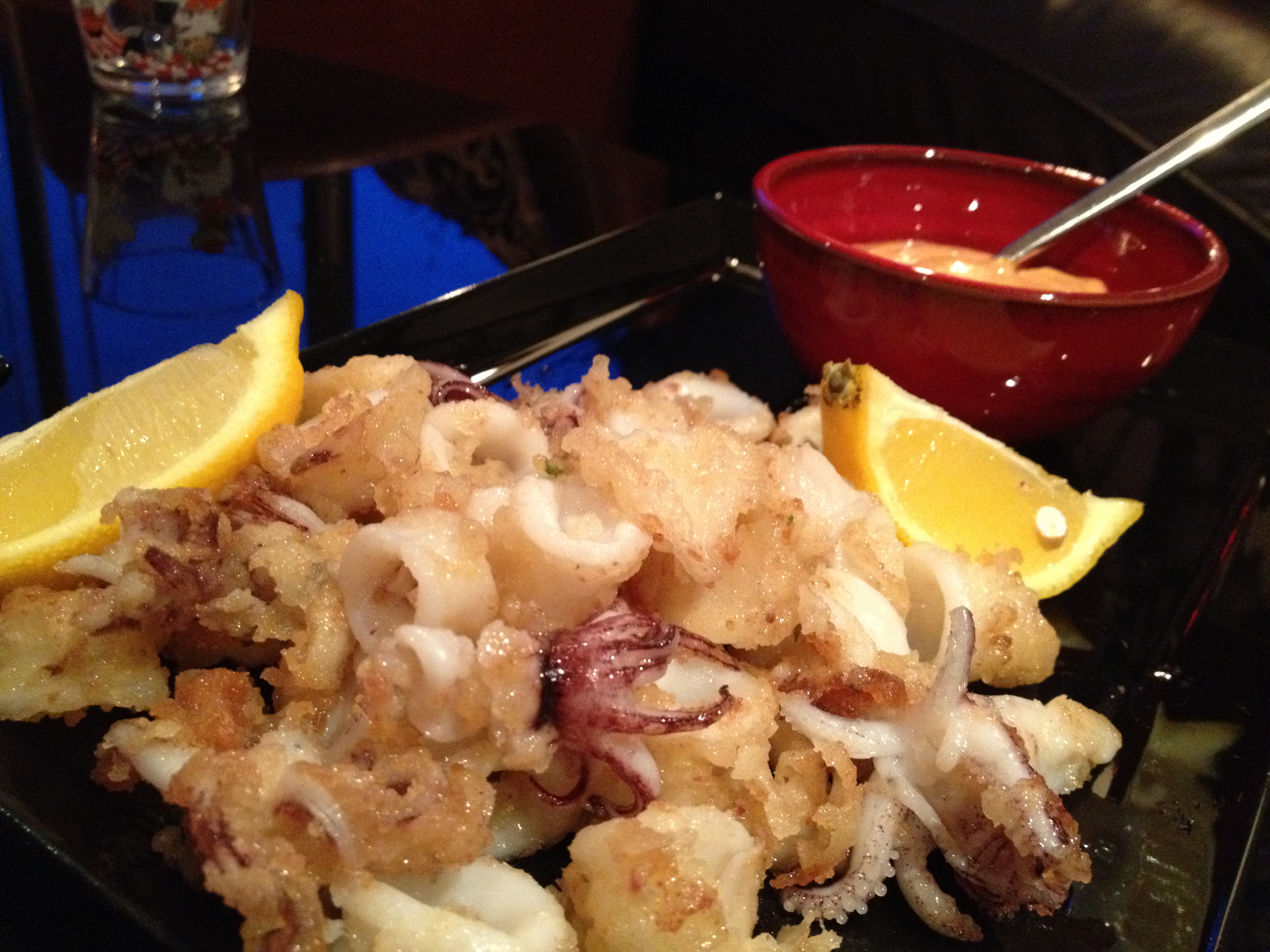
Feast 2 – Greek mezze: shallow-fried squid with a pimenton dipping sauce, Tzatziki, Baba Ghanoush, Spanakopita and pitta bread

For a real taste of the mediterranean, you can’t go wrong with some simple, lightly fried squid, dusted in well-seasoned flour and shallow fried. The key is to leave the flour-coated squid for a couple of minutes before frying as the damp flour will give a crispier finish. Then you just need to shallow-fry the squid in oil (I use olive-oil for a more rich mediterranean flavour) for around a minute. I served the squid with a wedge of lemon and a smoked pimenton mayonnaise – simply make up a standard mayonnaise with a little extra lemon. Finely chop some garlic and crush into a smooth paste with the flat blade of a knife. Add this and a teaspoon of smoked pimenton to the mayo and you have the perfect dipping sauce for the squid.

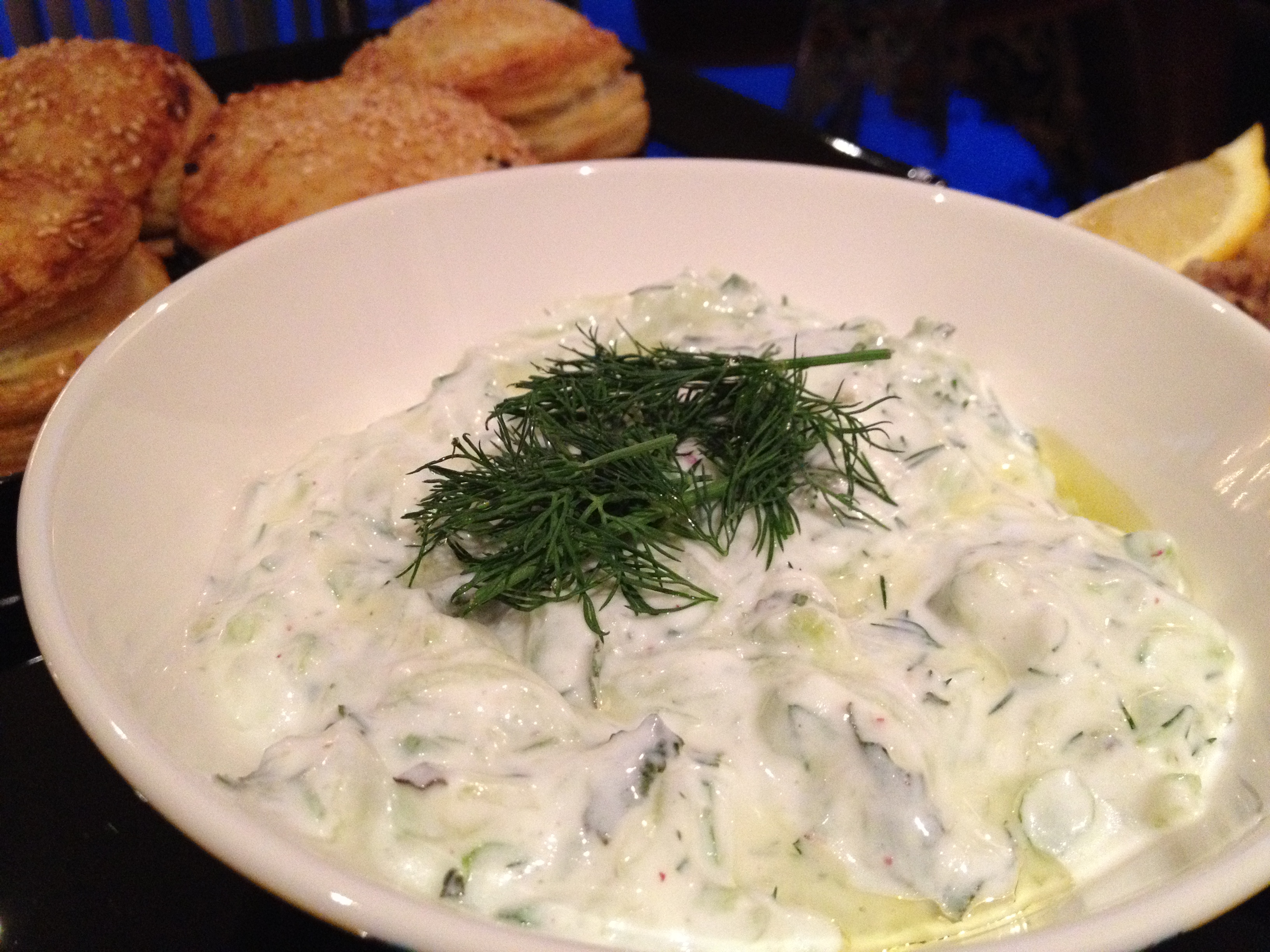
No mezze is complete without Greek favourite, Tzatziki, a cucumber and yoghurt dip perfect for eating with flat bread or pitta bread. There are various pools of thought as to how to make Tzatziki. My Cypriot friend swears by yoghurt with oregano, where as others will use mint. Rick Stein recommends dill. And frankly all of these herbs work well. Personally I’m a lover of mint, but I couldn’t resist adding a little dill as well, and I found the Tzatziki lost nothing for this herb combination. So you need to take a cucumber which should be coarsely grated (you can peel off the skin if you like, although I generally leave it for texture). Squeeze most of the juice out of the cucumber in a (clean, obviously) tea towel and add to 500g Greek yoghurt, 75g of finely chopped spring onions, 2-3 heaped tablespoons of your chopped herbs (mint, dill, and/or oregano as preferred), 2 tablespoons of good quality olive oil, a teaspoon of white wine vinegar, seasoning and 1-2 crushed garlic cloves (be careful here – the raw garlic can be surprisingly overpowering in this dish. In my experience it’s best to start with one clove and add more if you like a pungent garlic flavour).

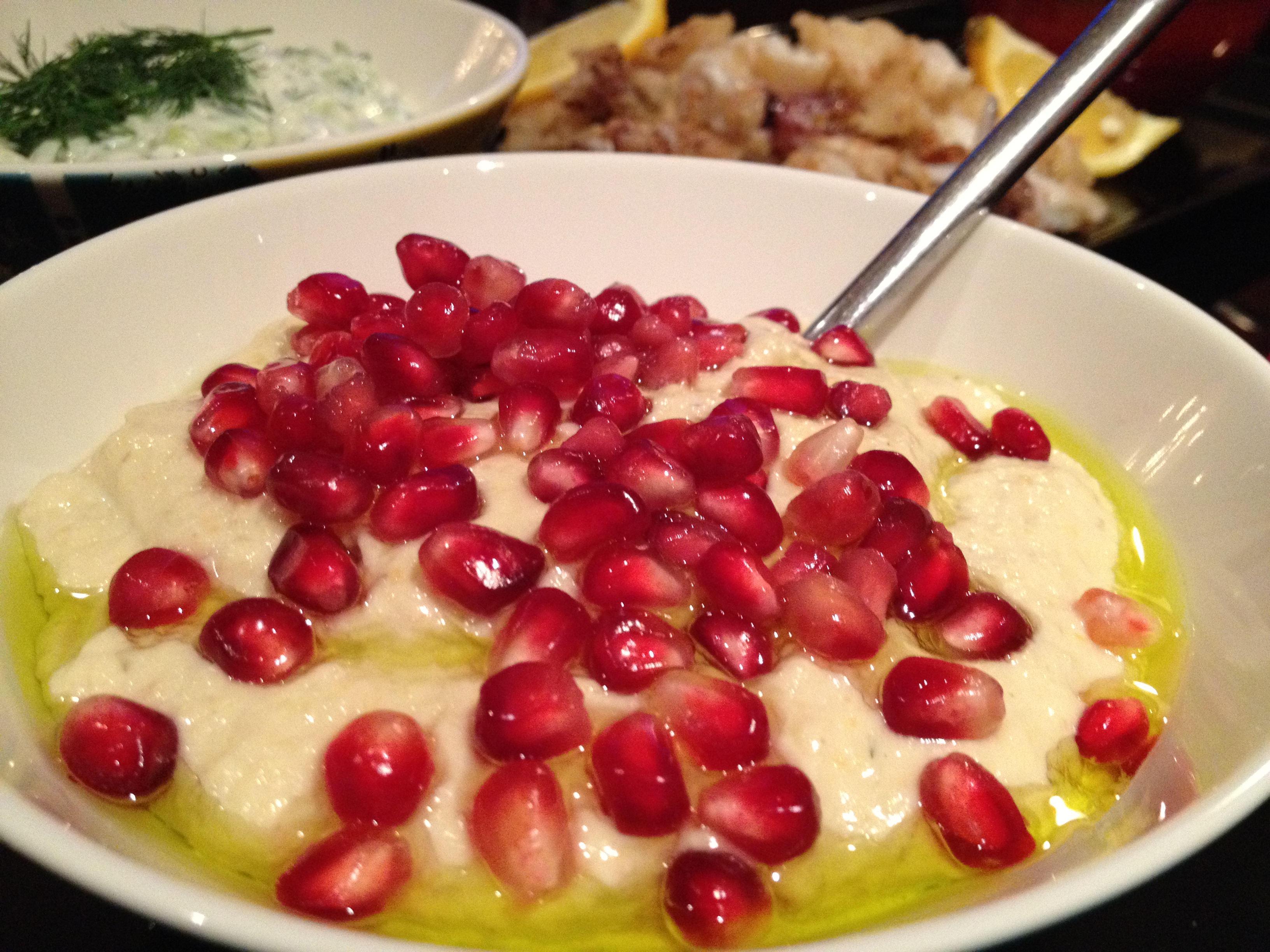
Typical mezze will include a houmous as well as a tzatziki, but I decided to import a dish from Turkey to add variation to the typical hummus dish. Baba Ghanoush has a similar texture to houmous but with a predominant flavour of smoked aubergine which is delicious, especially when served sprinkled with pomegranate. To make the Baba Ghanoush, take three large aubergines, and pierce them near the stalk to prevent them from bursting. Place them under a grill for around 40 minutes until black on the outside and soft in the middle. Once cool enough to handle, cut the aubergines lengthways and scoop out the flesh. This should be mashed up with a masher or fork, or for those who like a smoother texture, whizz it in the food processor. Time to add 2-3 garlic cloves, crushed (again, be careful about adding too much – it’s best to start with one and keep testing), plenty of salt, 3 tablespoons of light tahini paste, a drizzle of olive oil and half a teaspoon of sesame seed oil, a squeeze of lemon juice and some parsely to garnish. Serve with pomegranate and an extra drizzle of oil.

I completed my mezze with standard greek favourites, spanakopita  (I got over excited and forgot to photograph them). These are delicious crispy spinach and feta filled pastries and are wonderful when accompanied with the tzatziki or on their own. For the filling, sweat half a small onion and two finely chopped spring onions until soft. In a separate pan wilt 500g of spinach and press out the juices. Once cool, combine the spinach and sweated onions and add 100g of crumbled feta cheese, 1 large egg, 1 tablespoon of finely grated kefalotiri or parmesan cheese, a pinch of nutmeg, 2 -3 large tablespoons of fresh mint, and seasoning and mix well. For the pastry, buy a packet of pre-made filo pastry. Cut the stack of pastry into strips 7.5 cm wide. Brush the top layer with melted butter and place a heaped teaspoon of the spinach filling into the centre of one strip at the end nearest you. Then fold one bottom corner of the pastry diagonally over the filling so that the corner touches the opposite side to make a triangle. Then fold over the filled triangular corner, continuing to fold along the whole strip until a perfect triangular pastry is formed. Do the same for all the mixture. Brush the pastries with more butter (and, if you like, sprinkle with sesame seeds). Place on a lightly buttered baking tray and bake for 25 minutes at 180 degrees centigrade/ gas mark 4 until golden and crisp. I should note that you can make this recipe with puff pastry – I did it when I bought the wrong pastry and it was still delicious!

Feast 3 – Pot roasted chick with sun-dried tomatoes, cinnamon and oregano

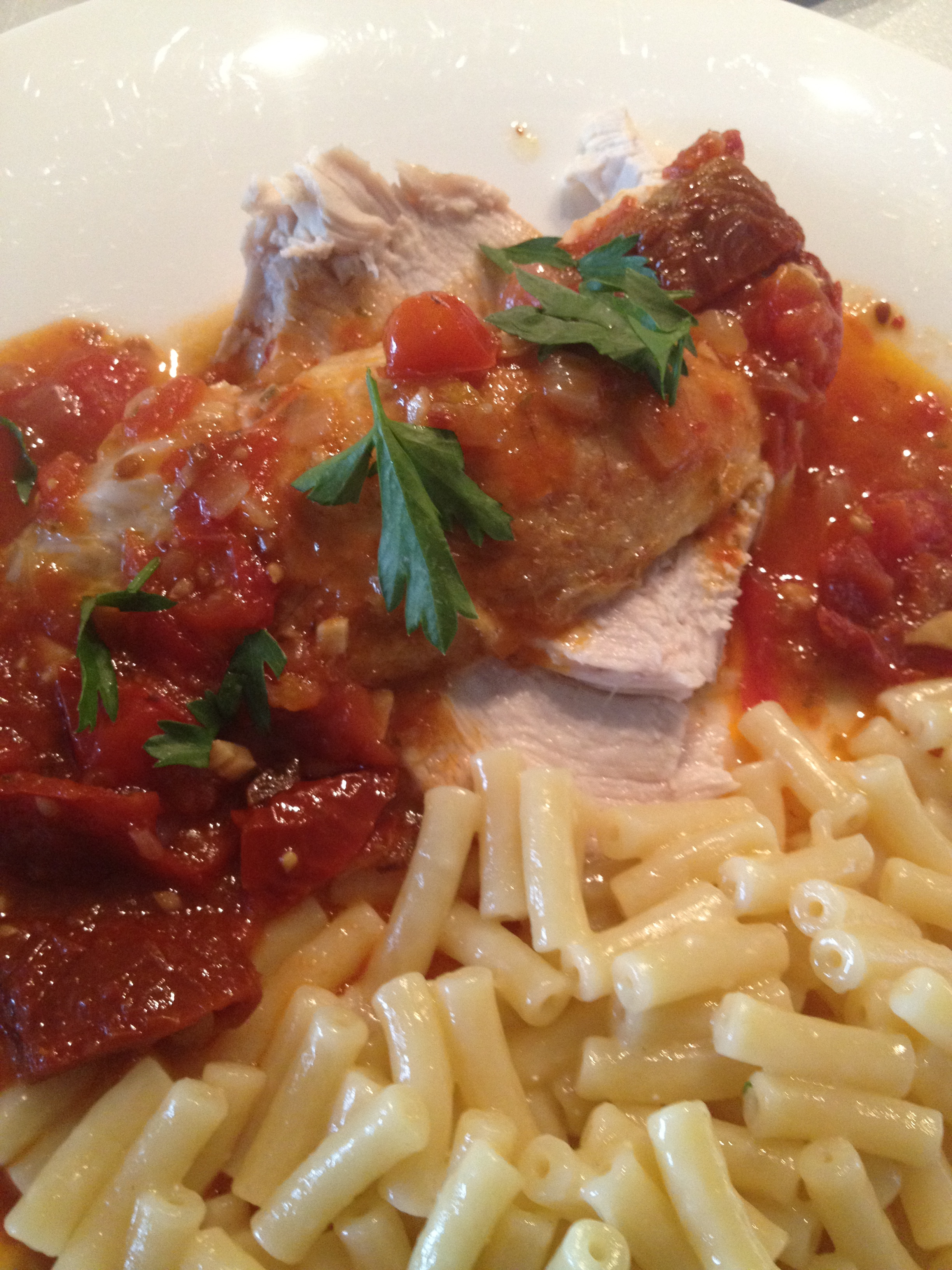
Next up an easy-cook chicken dish which imports the spices of the Aegean sea with a rich tomatoey mediterranean sauce. Simply take a whole chicken (around 2kg) and pan fry in a casserole for a few minutes on each side to brown. Remove the chicken and in the same pan gently brown a thinly sliced onion. Add 4 garlic cloves, thinly sliced, 60 g of sun-dried tomatoes, 500g of chopped vine tomatoes (or a tin of chopped tomatoes is fine), a cinnamon stick, 150ml of chicken stock, a generous pinch of dried chillies, 1 teaspoon of dried oregano and seasoning. Bring to a simmer and replace the chicken. Cover with a tight fitting lid and bake in the oven for 1.5 hours at 180 degrees celsius/ Gas Mark 4 and baste the chicken with the sauce every so often. Once the chicken is cooked and the juices run clear, lift the chicken onto a carving board and wrap in foil to keep warm. Then bring the tomato juices to a rapid simmer for around 10 minutes until slightly reduced and thickened. Remove the cinnamon stick and serve the tomato gravy in a generous flurry over the carved chicken. You’re meant to serve this dish with orzo (rice-shaped pasta) tossed in a handful of grated kefalotiri/ parmesan cheese, but since I couldn’t source any locally, I used macaroni – which worked surprisingly well!

Feast 4 – Grilled stuffed squid with a broccoli and beetroot salad (with a chocolate fish for dessert)

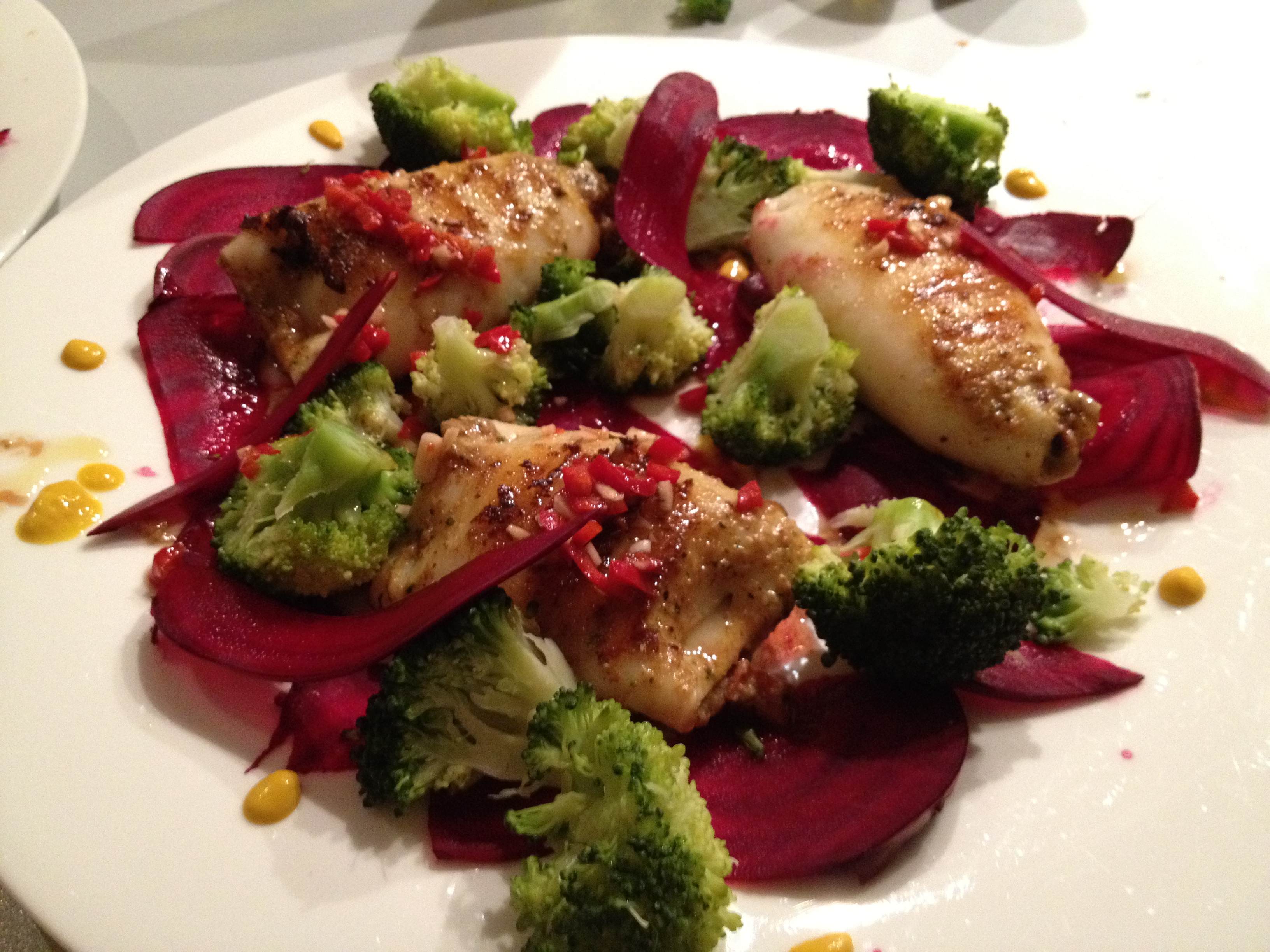
My final installment of Greek food was a stuffed squid dish which was an exercise in using up the contents of my fridge. I defrosted 6 frozen squids (they’re not currently in season) and stuffed them with a mixture of lightly toasted pine nuts, 50g or so of feta cheese, 50 g or so of mozarella cheese, a handful of basil, a good squeeze of lemon, some very finely chopped spanish chorizo sausage, seasoning and a lightly sauteed finely chopped shallot. I made a pesto-style paste from half the pine nuts by whizzing them in a food processor with the cheese and basil and added this to the gently friend chorizo and shallots along with the other half of the toasted pine nuts (I used a 100g bag in total). This made for a variety of textures. I stuffed each squid with the mixture and fastened the end shut with a toothpick for cooking. I then grilled the squid in a griddle pan for 2-3 minutes on each side. In the meantime I lightly steamed some broccoli and finely sliced a beautiful fresh raw beetroot which I scattered over the plate at random, along with a light dressing of chopped chilli, olive oil and a squeeze of lemon juice. I also dressed the plate with a few blobs of mustard for decoration and yet more flavour intensity.

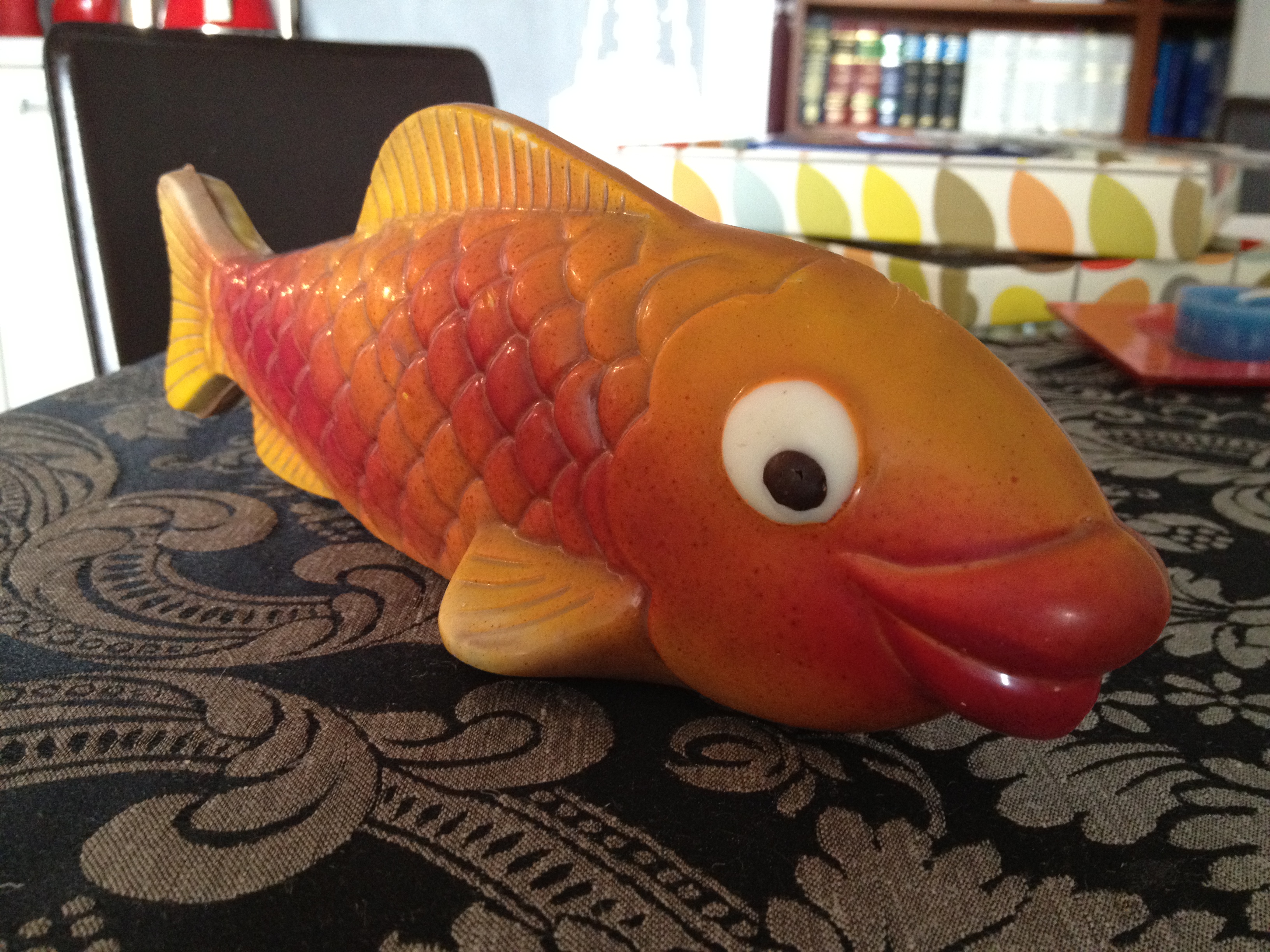
For dessert we ate something which has no remote connection to Greece whatsoever, but so beautiful was this chocolate fish which we gorged upon that he merits inclusion in this post. Bought in Salamanca, Spain a few weeks back, this fish is a chocolate beauty, so good that we resisted eating him for at least 3 weeks until finally succumbing to temptation last weekend. He tasted as good as he looked.

Salamanca – Restaurant Focus: El Alquimista and La Cocina de Toño

Ever since Salamanca placed itself on the European cultural map when it was named European Capital of Culture in 2002, the city has actively promoted itself as a capital of gastronomic prowess, advertising itself under the tag line “Salamanca para comérsela” which literally means “Salamanca to eat”. I’d heard about the frog, the glowing sandstone, and the brilliantly baroque Plaza Mayor. Nonetheless, for gastronomy, I would have told you to head up north to San Sebastian (which, by coincidence, will be European Capital of Culture in 2016). However, no sooner had I started investigating restaurant options using the likes of Trip Adviser before jetting off than I realised that Salamanca is jammed back with high quality, innovative restauranteurs, littered with menus degustaciones (taster menus), and brimming with pristine white hatted chefs with a fastidious attitude towards their picture-perfect cuisine. More than once I read that a Salamanca eatery had offered the reviewing diner the “best meal they had eaten in Spain”. Encouraged, I booked up the best of them and went along to enjoy the ride. Here are my two favourites:

El Alquimista, Plaza San Cristobal 6, 37001 Salamanca Tel 923 21 54 93

El Alquimista's "urban" interior

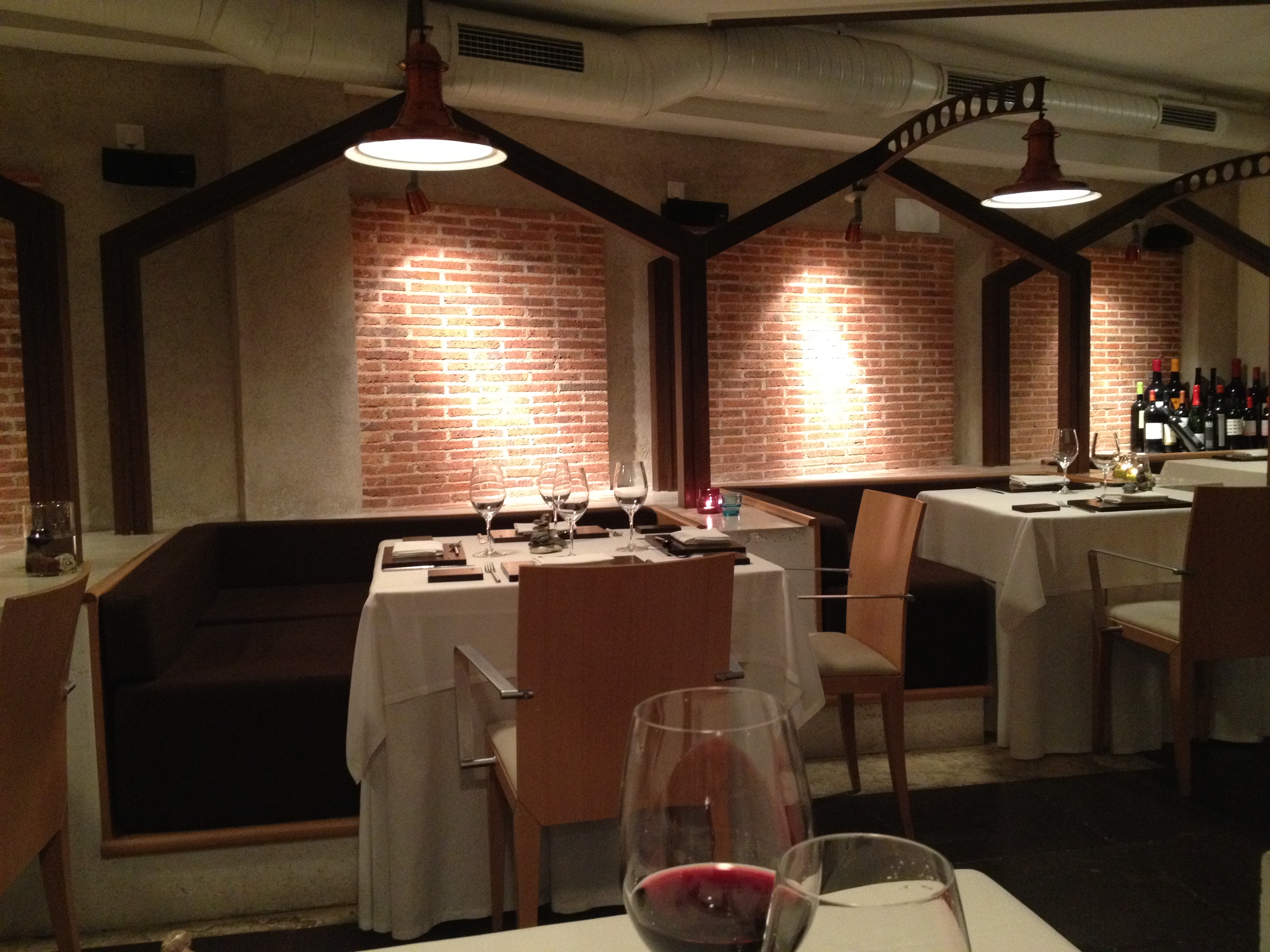
I reserved a table at this very unique restaurant on the back of excellent trip advisor reviews which had placed the restaurant in second place out of some 100 restaurants in the city. When I turned up, I began to doubt whether this had been such a good idea. To say the restaurant is off the beaten track is an understatement. Up a steep hill, in a very residential square (surrounded on one side by some dubious looking flats), with a small arrow pointing the way – the restaurant needed this signage, as it could very easily have been missed – approaching the restaurant, one had to double take – it looked like a garage for the flats above. And upon entering, this illusion was not shattered as we were taken through to one of the most unusual restaurant interiors I have ever sat in – with exposed brickwork (newly built) trimmed with concrete slabs to form booths, over which industrial lights hung casting a somewhat unflattering and certainly unromantic harsh light. What was more, when we entered (at around 9pm) the place was empty. The face of my partner probably mirrored my own – concern – although I was trying to put a brave smile on things, not least because my personal pride demanded that my choice be a success, particularly as I boast of being such a good organiser of holiday dining experiences.
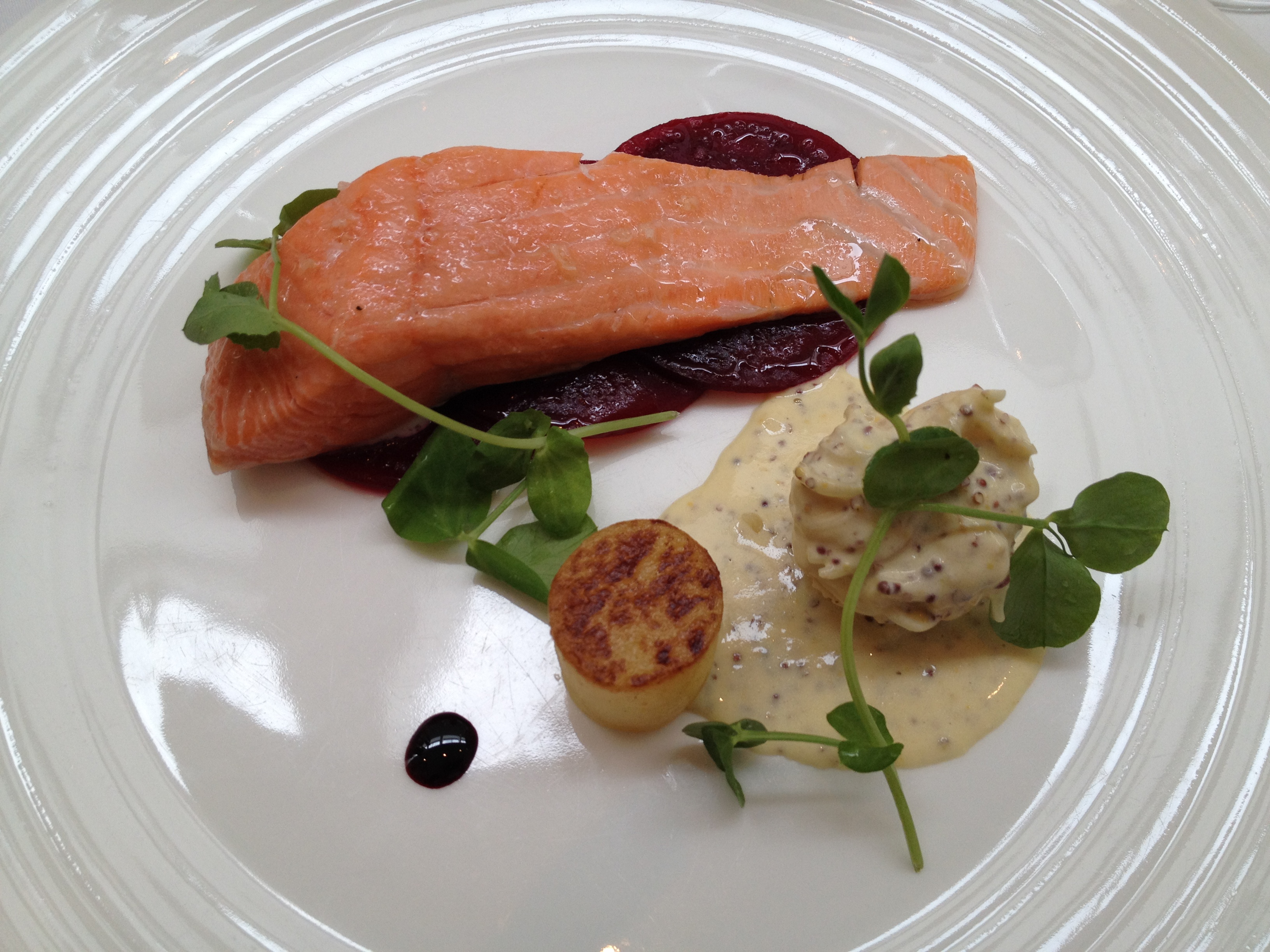
Verduras starter

They call the restaurant “the Alchemist” and at this point, it certainly looked as though some magic was needed. And as though the witching hour itself has come, we found ourselves becoming uncharacteristically merry. I think it was the wine we ordered – I wish I had taken a note of it – it was a Rioja with a mixed grape of around 90% tempranillo and 10% of something else – but it was so good that with one sip, the alchemist seemed to have cast his spell. It’s not that we were drunk – just merried, but certainly sober enough to appreciate the culinary joys which were suddenly to descend upon us, each dish one flurry of magic after another.

Tartar de salmon

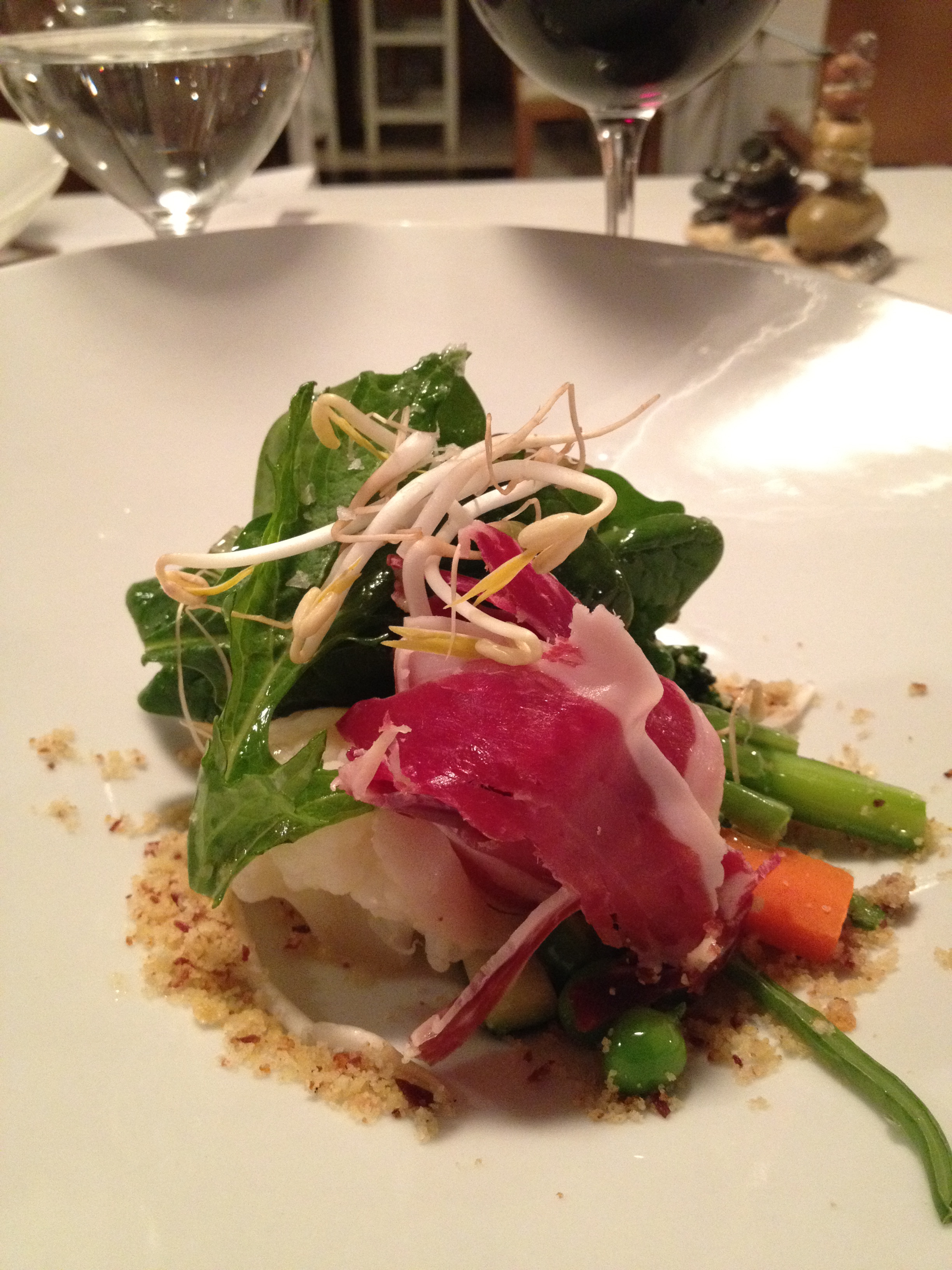
We went for the menu degustacion which, at only €36 per person, was half the price of the sum we are used to forking out for a similar taster menu in Marbella (and far below anything you would pay in London). The first dish was verduras, brotes y hortalizas tibias con lascas de jamon ibérico y migas (Vegetables, sprouts and vegetables with warm slices of Iberian ham and crumbs). The dish was exquisite – the vegetables crunched to perfection, the ham providing a salty undertone and the crumbs a textural variant which provided all round satisfaction with every mouthfull. The dish was one of those perfectly simple but precisely executed why-haven’t-I-thought-of-this kind of dish that you just know you could never recreate so well at home.

Monkfish

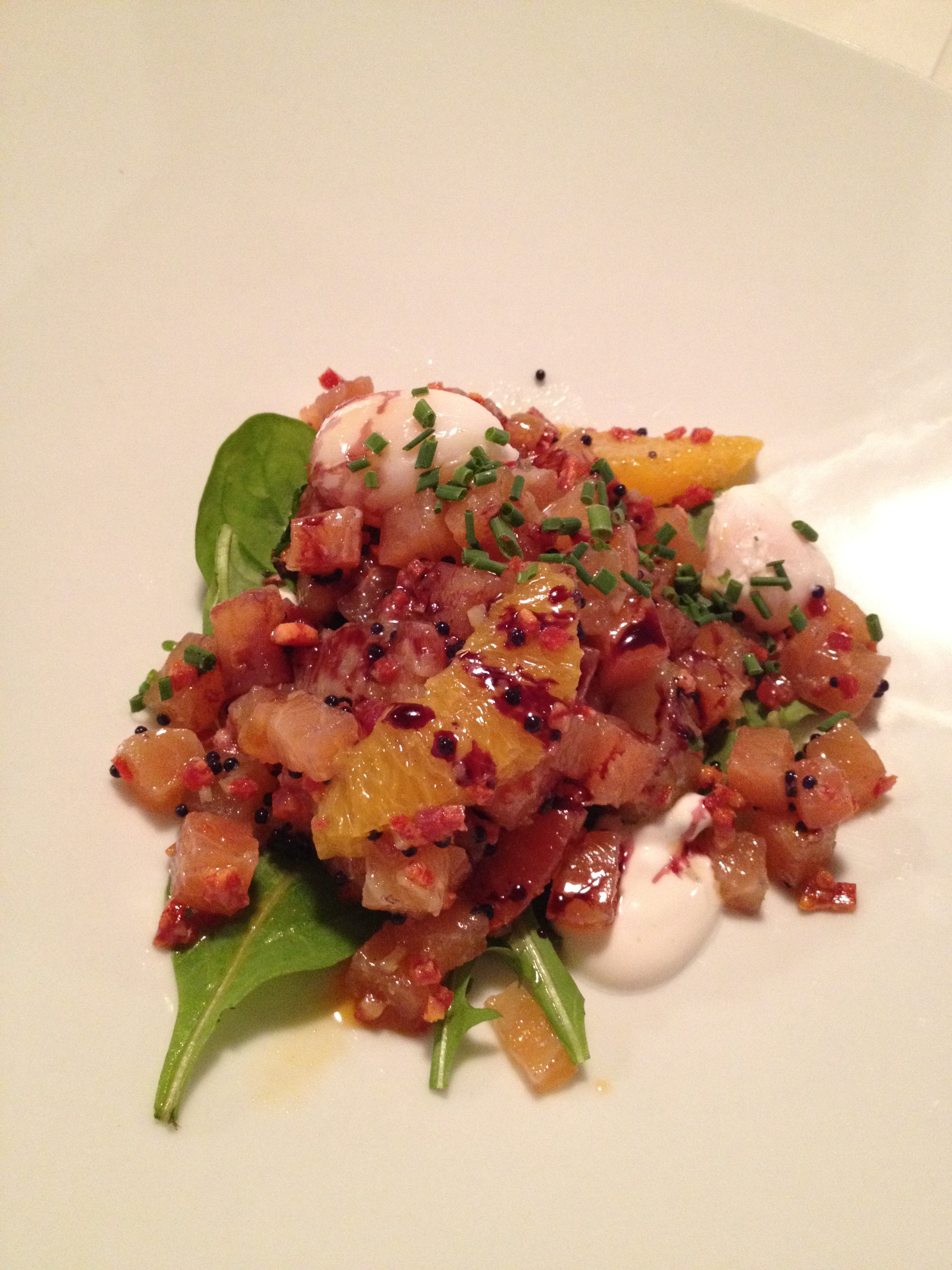
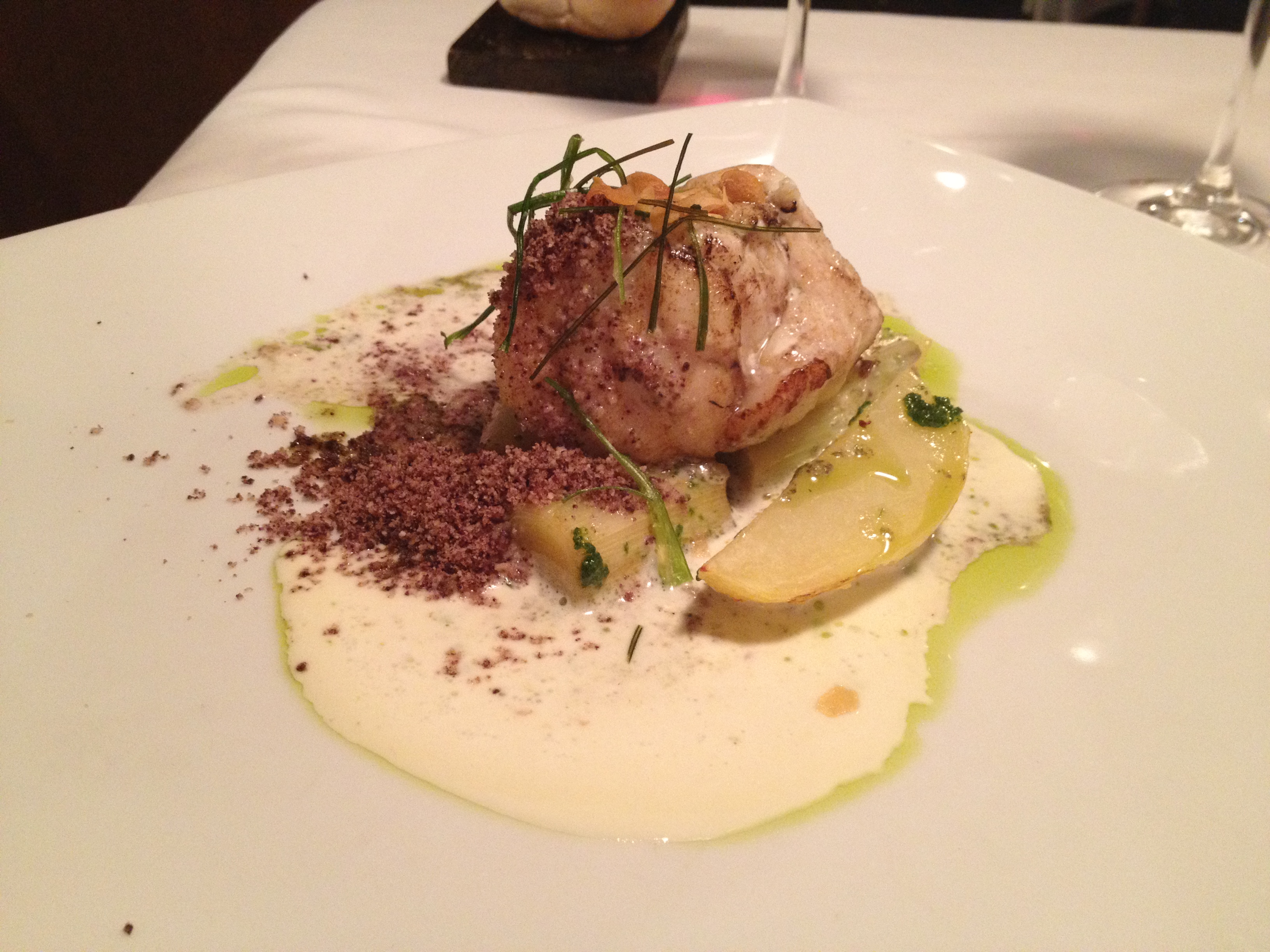
Up next was the tartar de salmon marinado con citricos, chorizo y huevo poché (tartar of salmon marinated in citrus, chorizo and poached egg), a variation on a traditional dish, we were told, where an unlikely fusion of marinated raw salmon with minuscule chorizo pieces scintillated all of the senses with a fresh citrus splash searing lemony acidity through the smokey pimenton of the chorizo. Meanwhile the poached eggs – tiny things – possibly pigeon’s, were perfectly runny, creamy and sweet. Further scintillation was to be provided in the form of rape asado con puerros y polvo de aceituna negra (roasted monkfish with leeks and black olive powder), a fresh and succulent cleansing dish with a seductively rich dusting of black olive to import mediterranean piquancy onto the plate.

The fatty pork

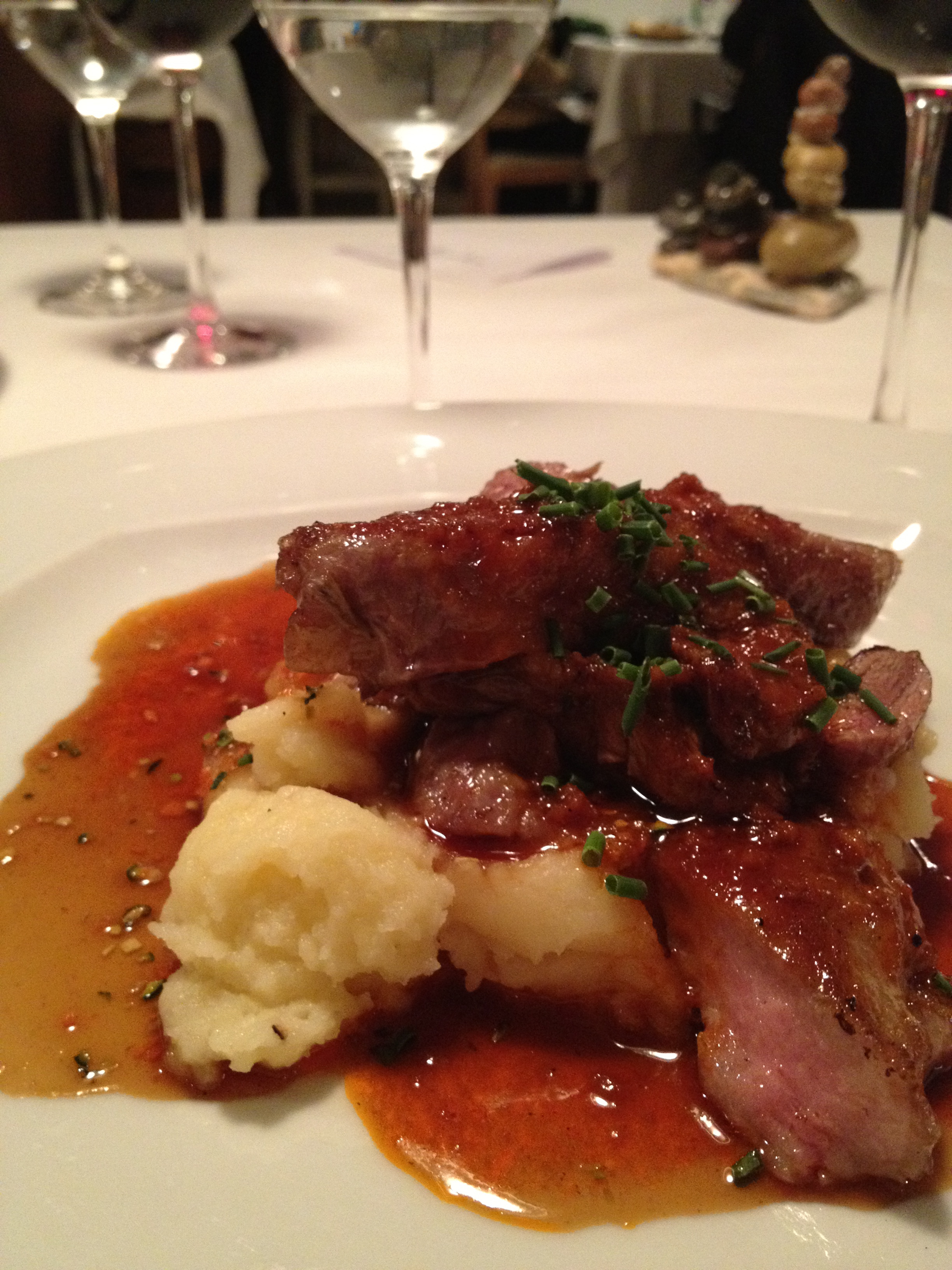
Things went a little awry while the main course of pluma de cerdo ibérico con ragout de verduras y salsa de miel (iberian pig “pen” with vegetable ragout and honey sauce) which was a little too fatty for us. Some people like fat, and crackling and all that porky sinfulness – I’m not a fan, and, embarrassed by my meek attempts at consumption (and by this point being a little tipsy) I then spent the next 20 minutes trying to hide much of the fatty pork in my napkin so as not to offend the chef. In hindsight, he probably would have forgiven me. He may not, however, forgive the pork-filled linen napkin which he finds in the toilet later.

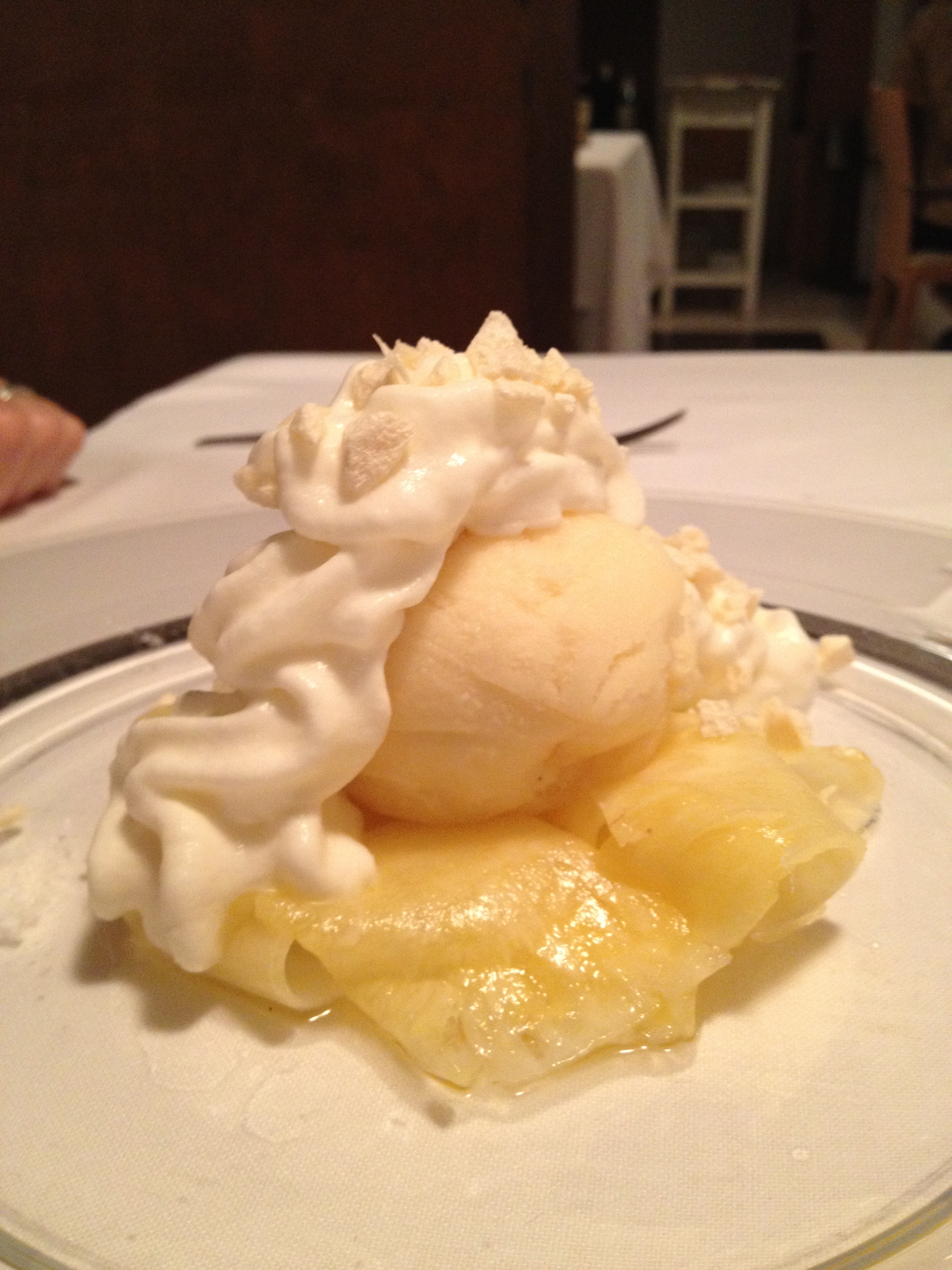
Back on track for piña a la piña con piña (Pineapple with pineappley pineapple), a dessert which presented pineapple three ways – sorbet, form and carpaccio. Not the most innovative dessert I’ve ever seen, but a welcome palate cleanser after all of that semi-masticated fatty pork.

Piña piña piña

La Cocina de Toñoc/ Gran Via, 20, Salamanca  Tel 923 263 977

Strawberry gazpacho

Number 1 on the trip adviser list is this restaurant, the kitchen of Toño, another location which, upon arrival, looked a little speculative – to get into the restaurant you first pass through a very local-looking tapas bar, with a TV, and plenty of old men chatting up at the Bar. Passing through into the restaurant, things get a little better, but the place remains very traditional – old wooden furniture, dark walls, dated decor and a few drinks refrigerators to boot. But the food, ahhh the food. Toño’s kitchen provided nothing short of a culinary spectacle, a carnival of flavours which danced upon the plate, a flurry of gastronomic fusion which was a pure festival for all the senses.

First up was the aperitivo de la casa, a new take on the traditional andalucian gazpacho, the cold tomato based creamy soup successfully fused in Toño’s imaginative kitchen with strawberries. It made for a tantalising combination accompanied by a delicate ricotta for added creamy indulgence. Next up was a bombon de foie relleno de higos (Foie gras bombons with figs), a starter of such flavoursome sophistication that I felt compelled to lose all of my well-bred english inhibitions and gorge upon the delicate creamy form in a few enthusiastic mouthfuls.

Foie gras bonbon

Ensalada de melon y langostinos

Pez mantequilla

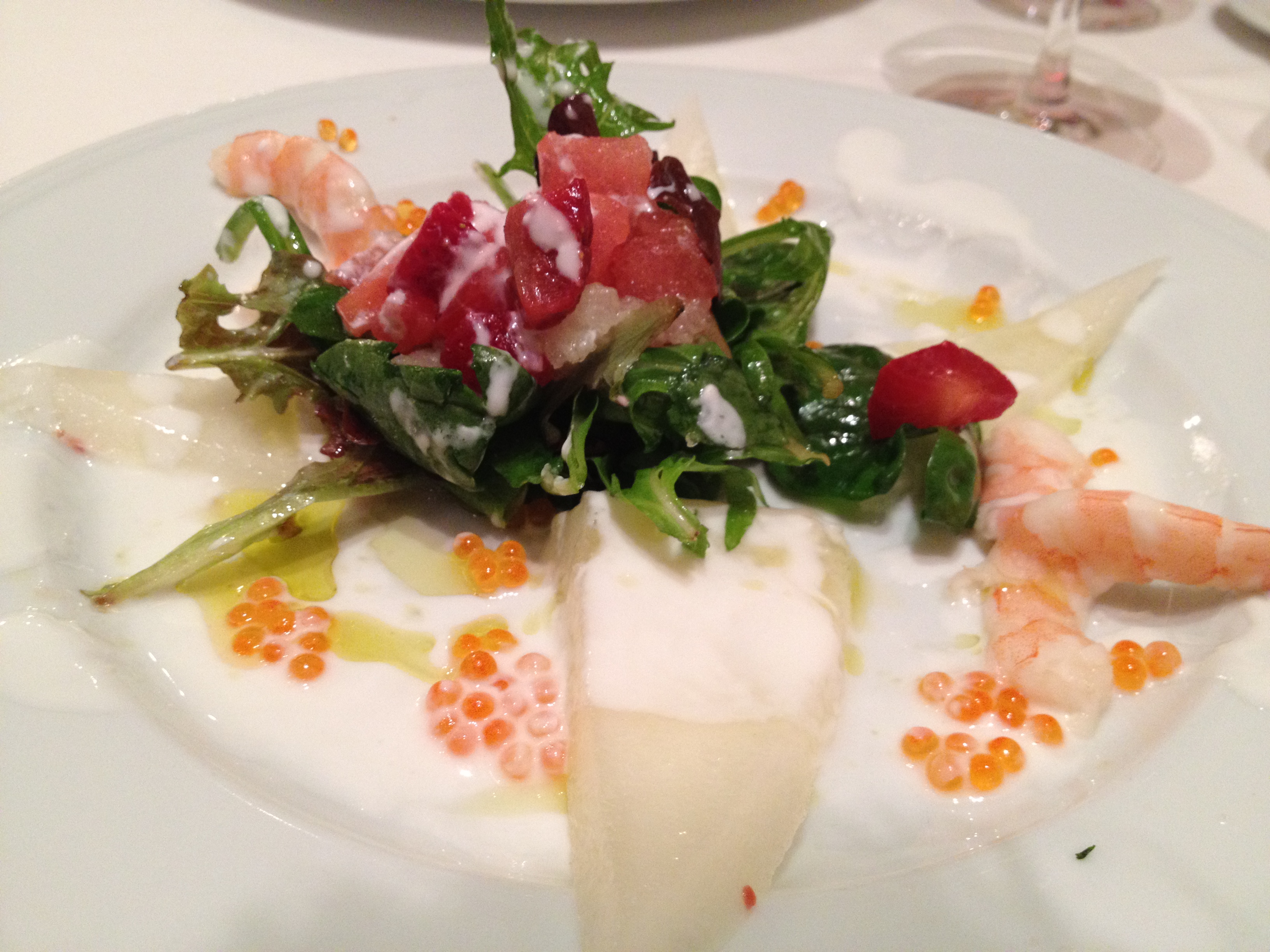
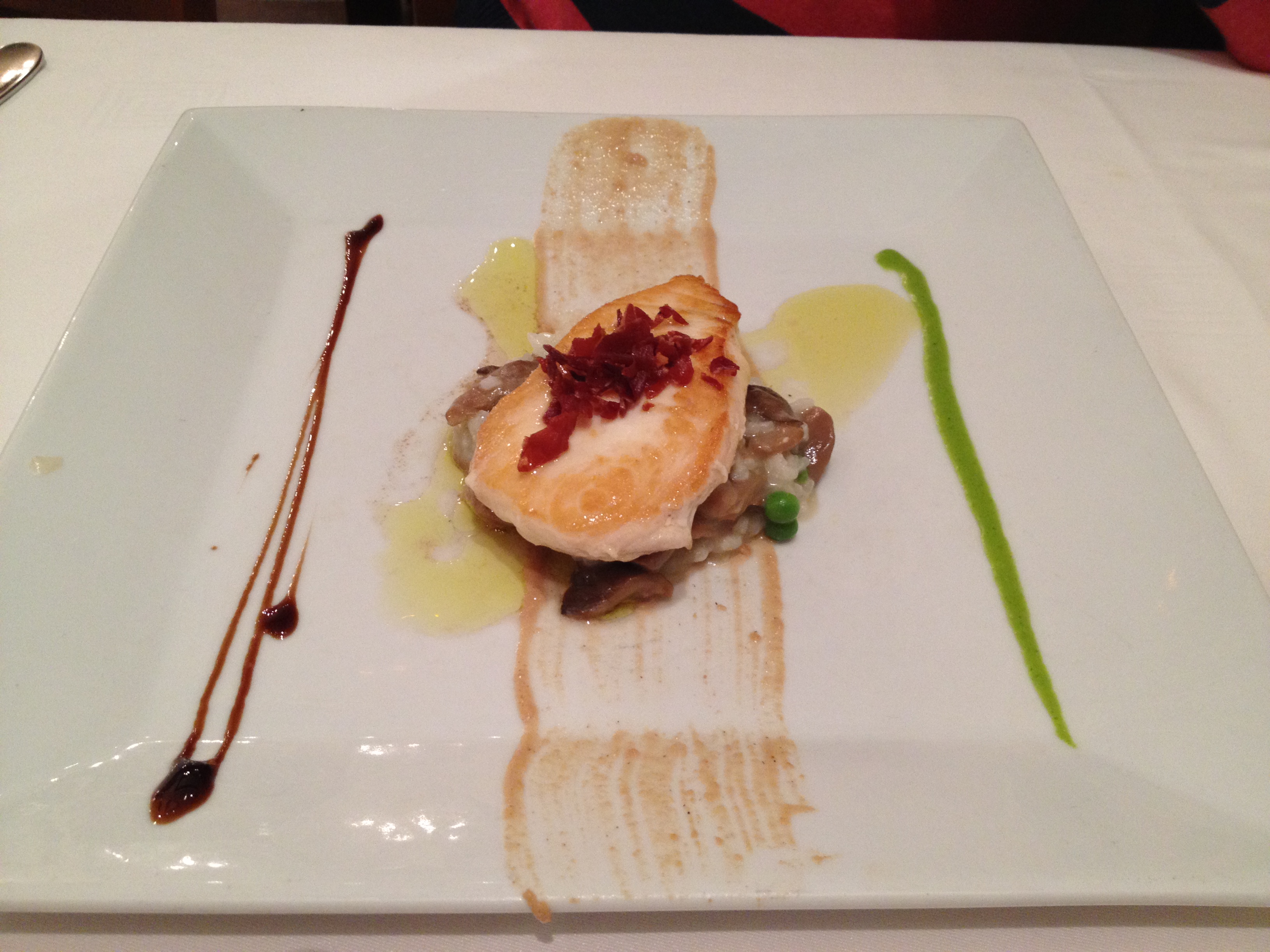
Onto the ensalada de melon con langostinos y vinagreta de yogur (melon salad with prawns and a yoghurt dressing), a delicate but multilayered combination of sweet unctuous prawns and a thirst quenching melon with silky, salty fish roe and sharp strawberries. The fish course came next, a pez mantequilla con arroz meloso con setas, vinagreta de vinagre de trufa y chip de jamon (fish in butter with sticky rice, mushrooms, truffle vinaigrette and a ham chip), a moist perfectly seasoned piece of fish on a creamy risotto base, with a salty ham accompaniment and sticky sweet viaigrette.

The main course spectacular

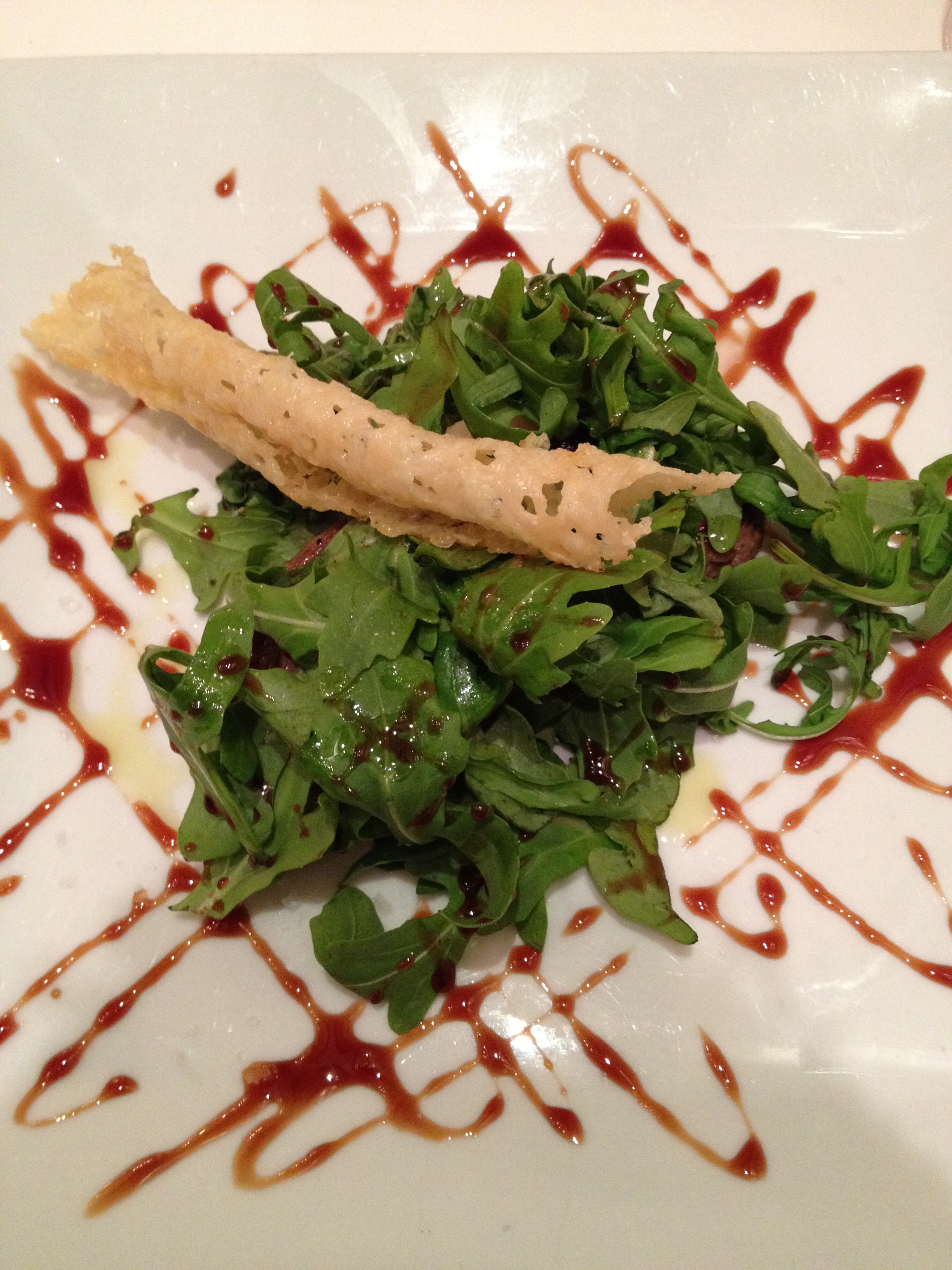
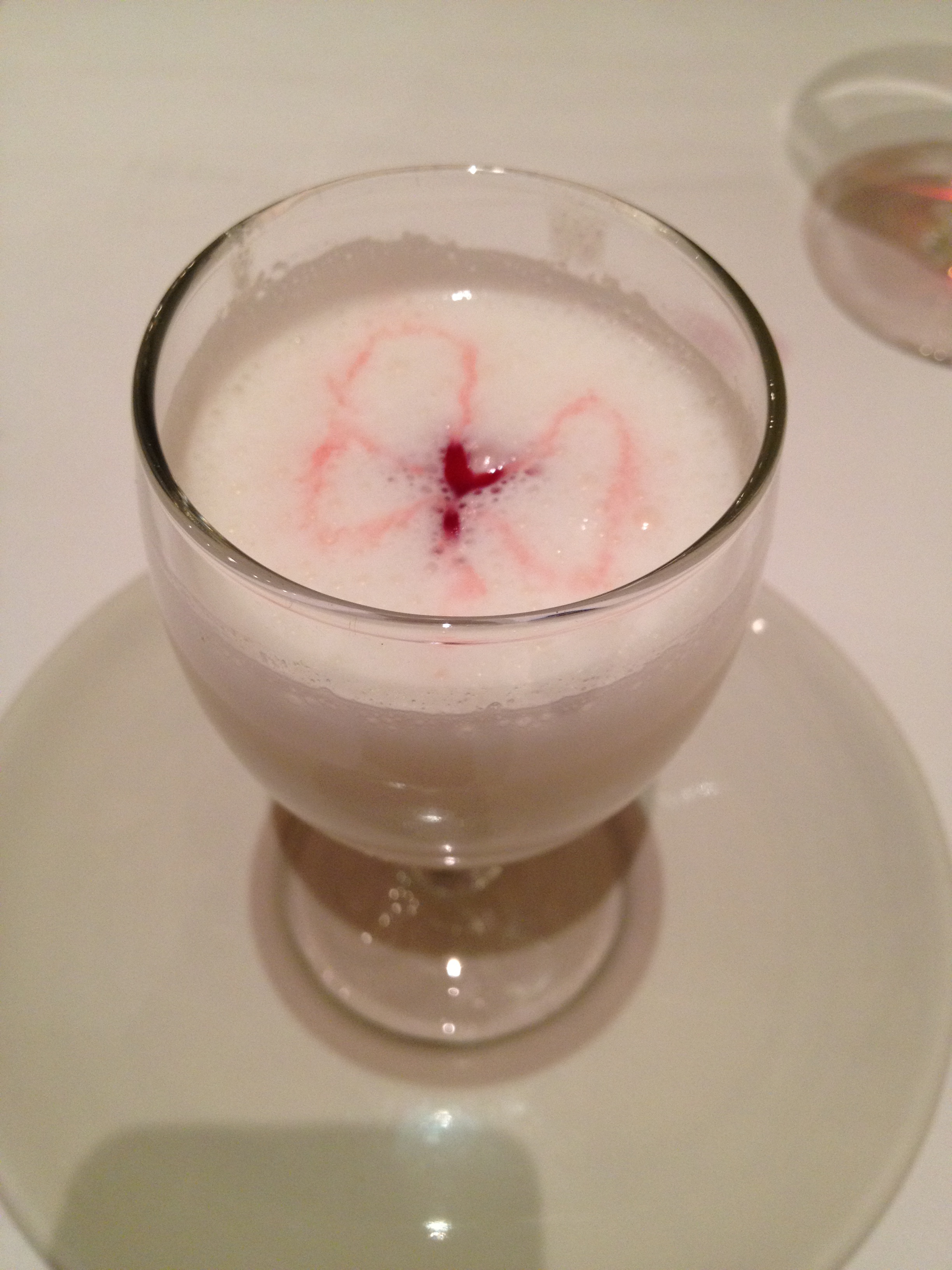
But at the Cocina de Toño, the piece de la résistance came with the main course, a dish which, upon first presentation, I didn’t think I would be able to eat, so full was my stomach and so little my remaining appetite. But as I cut beneath a bed of rocket and a perfectly crispy roll of melted cheese, I found a piece of meat so perfectly seasoned, so sensationally juicy and tender, that I could not help but scrape the plate clean – yes, Toño’s presa ibérica con cigala, canelon de queso y melaza de vino (iberico steak with rocket, cheese cannelloni and a wine reduction) was a sensation, a waltz of salts doing a tango on my tongue with a red wine reduction that was a syrupy sweet seduction. Not to be outdone, this was followed by a yoghurt “digestive”, a shot of fizzy, sparkling, sherbety, foamy pink delight, which was like being a child again. It reinvigorated senses which have long lost grown bored by adult life, and tingled down my throat and throughout my body making me shiver with delight. This was real willy wonker magic.

Fizzy yoghurt digestive

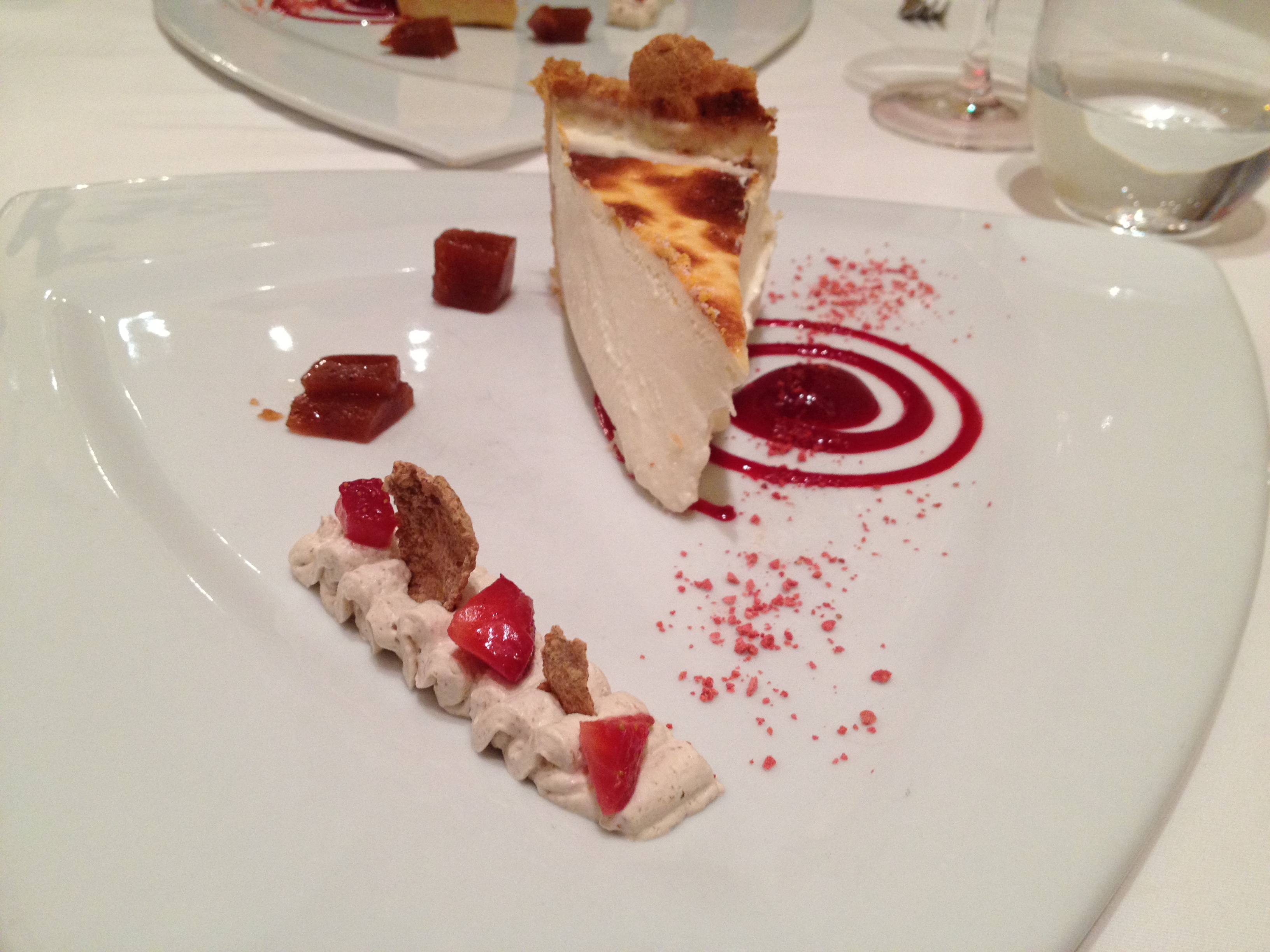
One dish more – a dessert of cheesecake, a surprisingly light springy construct, cross-pannacotta and creme brulee with a cheesecake touch. Delicious. But it beat me. This meal was spectacular. I feasted like a king. But felt roundly stuffed like Humpty Dumpty. I nonetheless was so excited, so almost emotional about the fine quality of the food that we had received that I actually kissed the waitress on my way out! Who can ever say that the english are inhibited? (She could I suppose just assume that I’m a typical english drunk).

Oh well, hats off to you Señor Toño. You’re certainly my Salamanca no. 1.

Cheesecake

So that’s it, my blog’s meandering journey through my trip from Madrid to Salamanca is at an end. I hope you’ve enjoyed it, at least as much as you can without actually sampling the gastronomic delights, the golden glow, and the distinctive smell of a town steeped in history at every masterfully stone-masoned house, church and lowly street corner. Time to start thinking about where comes next. Until then…

Madrid – Restaurant focus: Va de Baco and Ølsen

As far as gastronomic finesse goes, Madrid is not as renowned as some of its neighbouring Spanish cities. However the buzz word around Madrid is inevitably tapas, and an innovative approach to tapas is what Madrid does best. Upon arriving in Madrid, late on a Friday night, we knew that many of the most popular tapas bars would already be heaving with the hip young Madrillanean crowd.

Aperitif, croquetas and ensaladilla rusa

One of my favourite tapas bars is Lateral in the Plaza de Santa Ana, a trendy restaurant which offers a fresh and unpretentious approach to tapas classics and innovations alike. The problem is, its prices are so reasonable, and its flavourful offerings so delicious that the place is always packed. And cashing in on their popularity, the restaurant does pack you in into ridiculously tight spaces – generally four people will be crammed in around a corner table the size of a large computer monitor… there is barely room for your knees to squeeze under, let alone for the various tapas dishes to sit upon the table in unison. They also tend to rush you through the meal so that they can more swiftly eat into the lengthening queue which forms outside the restaurant each evening.

Spider crab and albondigas

Finding Lateral to be, predictably, pack out with queues stretching well into the buzzing Plaza de Santa Ana, we headed a few blocks down the road along the Calle del Prado, where we stumbled upon Va de Baco at 4 Calle del Prado 28013. The restaurant is seemingly quite new, decked out with chic lighting and cabinets brimming full of wine.  But the real star was the food. To start we were given a free aperitif which comprised a consommé style soup in which well-seasoned chickpeas bobbed gracefully, while on the side a super-creamy jamon croquette added some texture to the dish. Moving on to the tapas we ordered: simple, traditional favourites such as Ensaladilla Rusa (a mayonnaise-based potato salad with tuna a crunchy vegetables) and albondigas (meatballs) were served with contemporary twists such as the creamy curry sauce of the albondigas. More adventurous was a tapas of spider crab, delicately served with a potent wasabi mayonnaise, while the real star of the night was a ginger cream dessert with slices of mandarin and a passionfruit sorbet accompanying – exquisite. And best of all, the final bill, including a large carafe of Rioja plus two glasses extra at the end of the meal, was a mere €45 for the two of us.

Ginger cream

Bread stick...

On our second night in Madrid, we ditched the tapas trail for a hispanic-scandinavian fusion in the form of trendy new restaurant, Ølsen (15, Calle del Prado). The recently opened restaurant is already a firm favourite of the Madrid cool-crowd, with minimalist woods, low lighting and a chilled lounge soundtrack (I distinctly recognised Hotel Costes Volume 15 while we were dining) creating a very atmospheric dining ambience. As for the food, which for the most part pulls on Scandinavian influences, we were constantly thrilled by attention to detail and imaginative flavour fusions.

Sweet corn cakes with various fishy treats

To start we shared a fish sharing platter comprising sweet corn cakes and a selection of smoked salmon, smoked trout, caviar and a delicious taramasalata-styled smoked fish roe accompaniment. The combination of sweet, soft cakes and smokey fish was divine. On the side, bread was served in the form of various bagel-shaped creations, ranging from a sweeter glazed brioche to flat seeded cracker. For mains, we both chose a smoked lean brazed pork, with a red fruit and beer sauce and horseradish mashed potatoes. The meat was so tender and caramelised that along with the acidity of the red fruits and creaminess of the mashed potatoes, this dish took comfort to another level. A comfort which was then cranked up to a level of ridiculous self-indulgence when I had my dessert – a giant, soft and unctuous Oreo cookie with red fruits icecream. Oh god, I would return to Madrid just to have another one of those. Warmly recommended, if not stipulated as a necessary experience of the good life.

Giant Oreo!

But all this was just the start. Salamanca’s gastronomic offerings proved to be an altogether new level of culinary brilliance. Check out The Daily Norm tomorrow when I will try to put those incredible flavours into words!

Amsterdam Part IV: The Hotel and the Restaurants

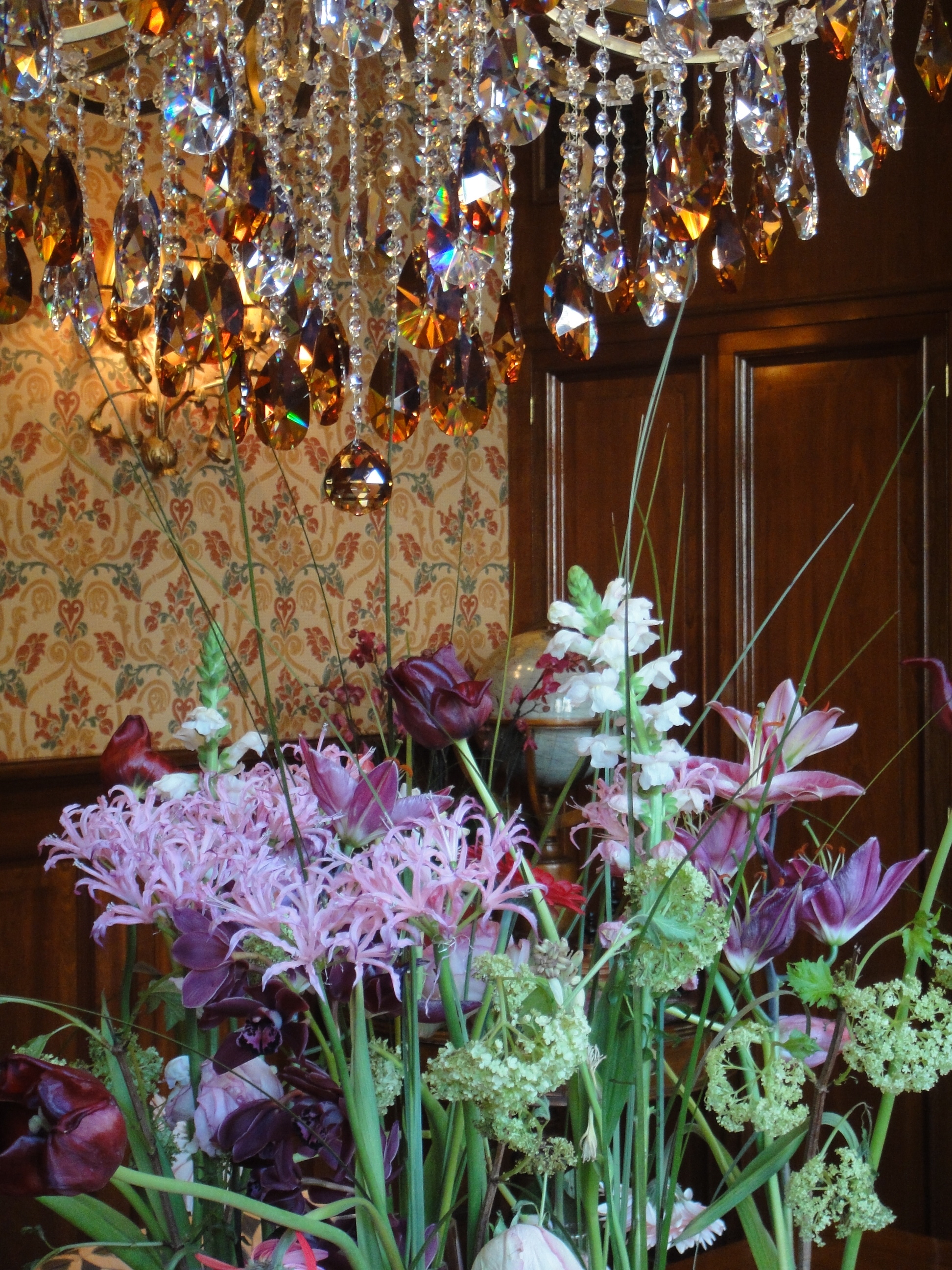
Fresh flowers and chandeliers in the Hotel Estheréa

I’m back from Amsterdam and pretty fed up about it. I find myself crossing the road looking out obsessively for cyclists and finding none. Here, the now familiar bong of the tram bell has been replaced by sirens, and these light filled transport carriages are superseded by the claustrophobic moving coffins of the London Underground. I look at buildings, thinking that something is wrong – then I realise that beneath them there is no reflection. But it’s always been my firm belief that part of the success of a holiday is how well you remember it. Consequently I have set about looking through and editing my prodigious collection of photographs, sorting through the postcards I buy obsessively whenever I go on holiday (with no intention to ever write, or send any) and recollecting the food experiences which filled by Amsterdamian days. With this in mind, I write today in an attempt to share my experience of the restaurants, and more importantly my accommodation while in Amsterdam.  As I’ve said before, in this time of the vindictive TripAdvisor professional complainant, where countless businesses in the hospitality industry are closing down because of picky, negative reviews posted online like school yard insults, I think it is only appropriate that a good experience is also applauded online, and shared so that fellow jetsetters can head off to a recommended restaurant or hotel, emboldened by some honest advice to temper their expectations.

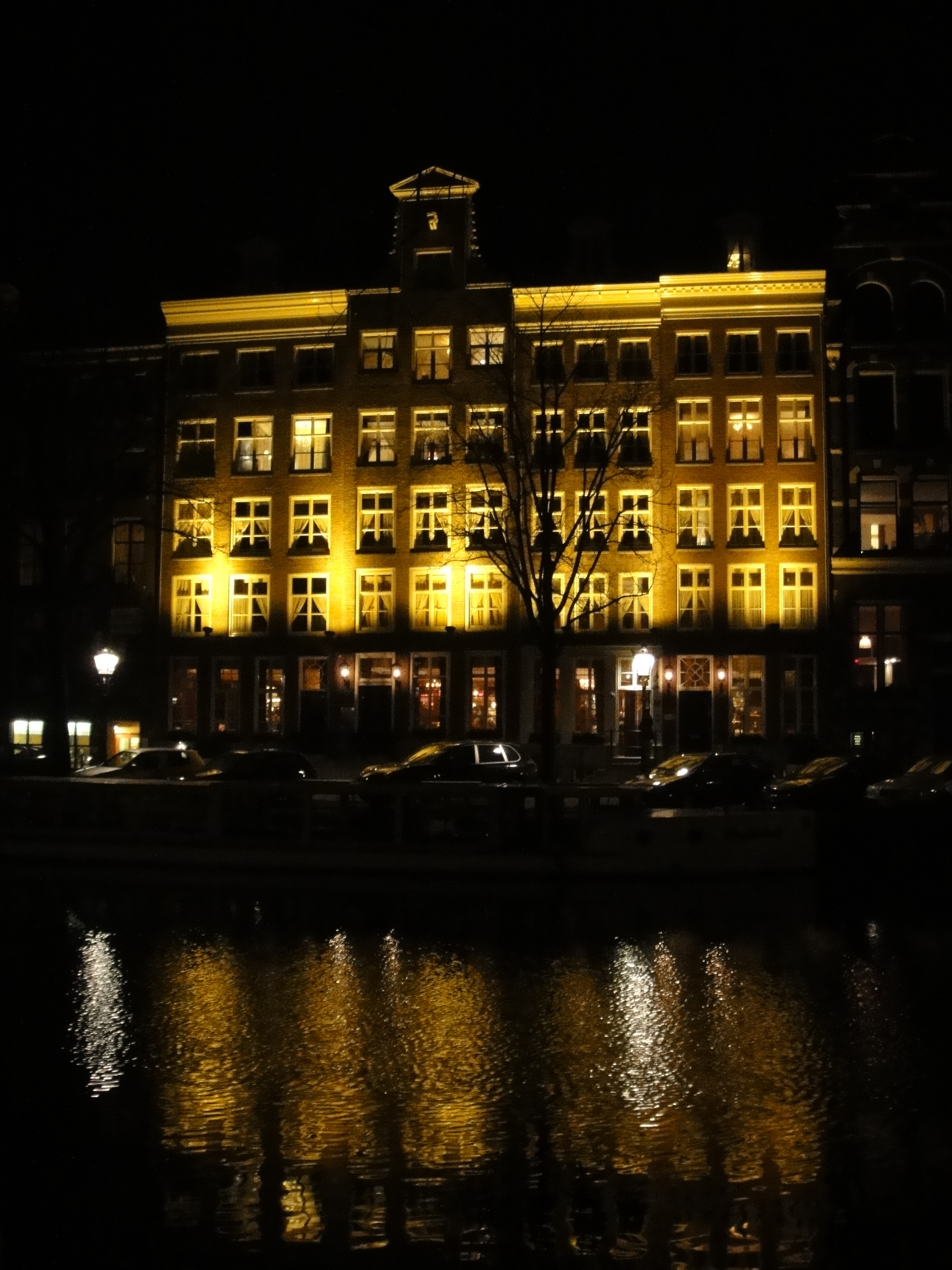
Exterior of the Hotel Estheréa

The hotel – Hotel Estheréa **** – Singel 303-9, Amsterdam

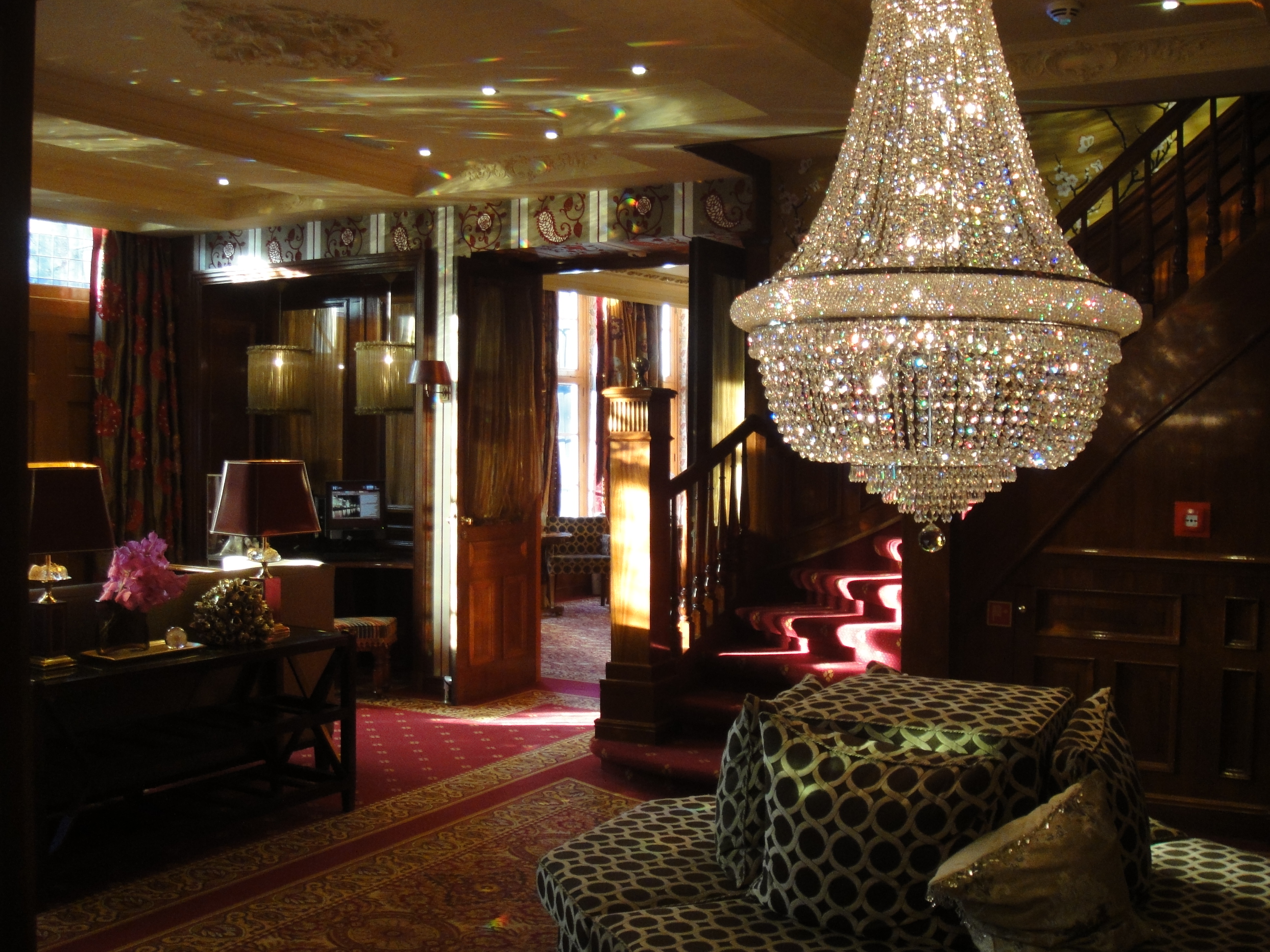
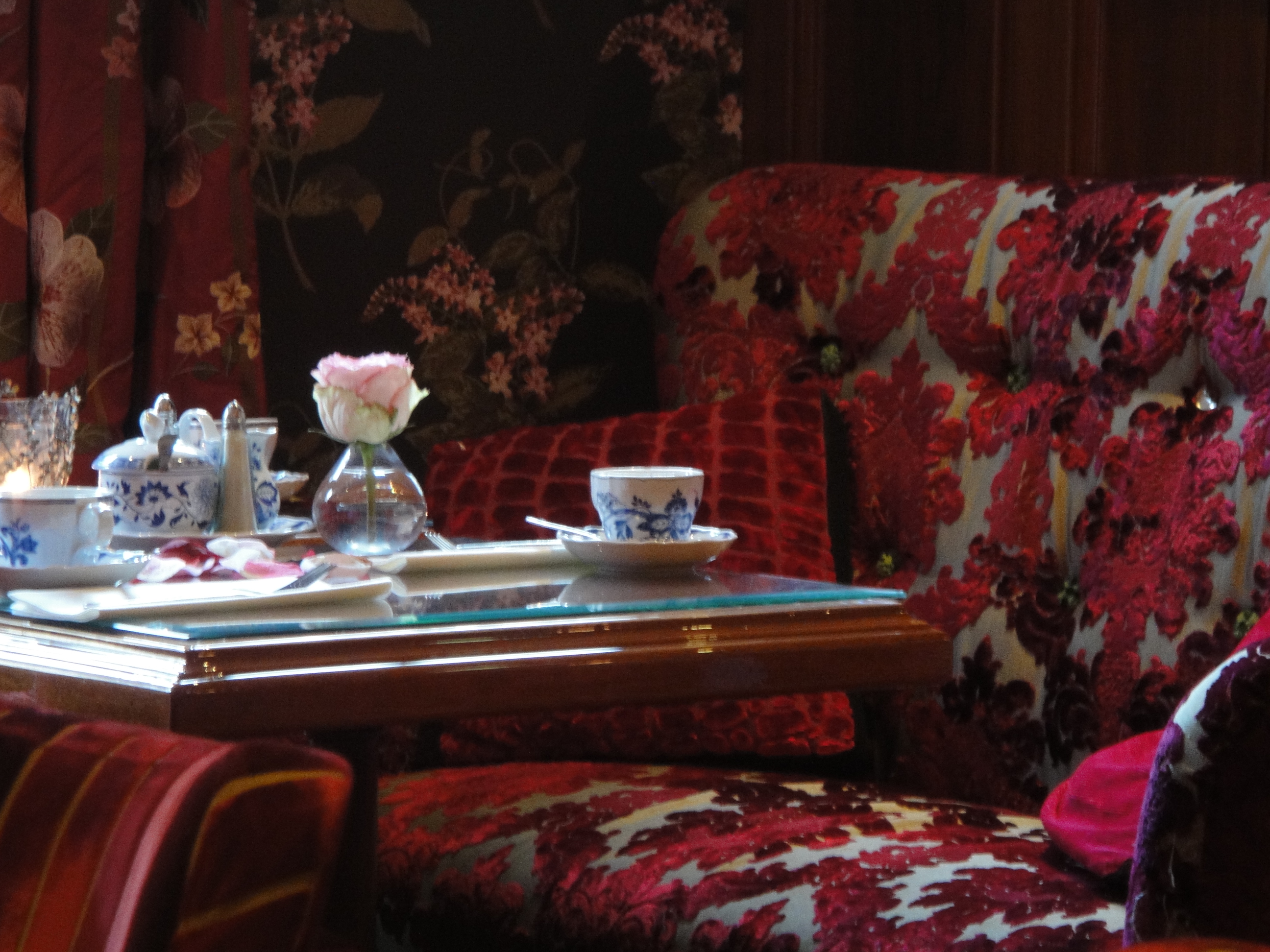
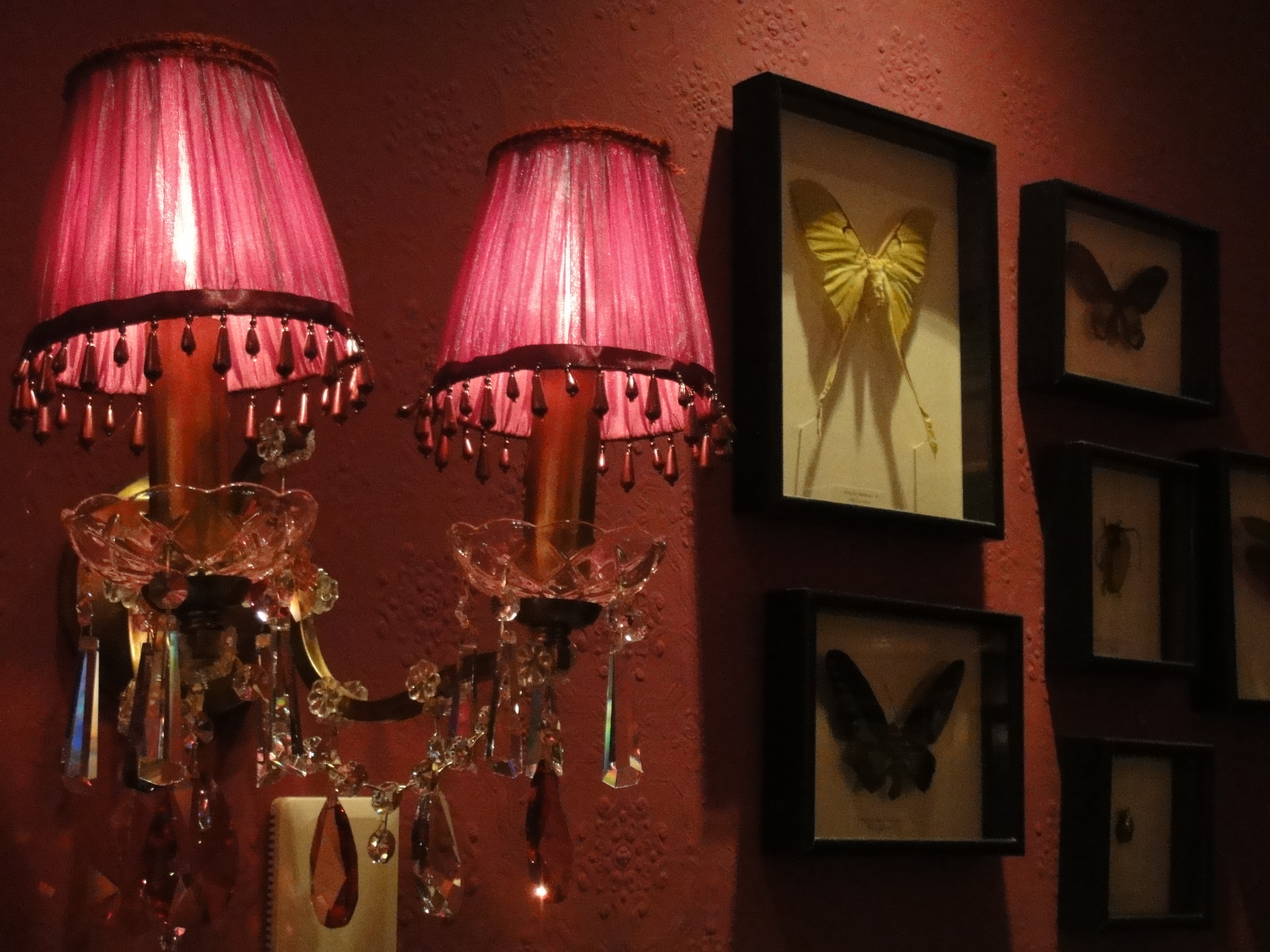
I could use almost every superlative in the thesaurus to describe the Hotel Estheréa and still not do it justice. This hotel, a child of the boutqiue revolution, but also the mother of all opulent sophistication, was a faultessly exquisite base for our Amsterdam stay. The reason, ultimately, for the success of this hotel is attention to detail. In the bedroom, two bottles of water would be provided free to guests everyday – a small thing, but often something which you really feel the need of at the end of a heavy evening and have to revert to what ever dodgyness flows from the tap. In the foyer, tea and coffee is provided all day, a huge range of teas being on offer, and complimentary cakes, biscuits, sweets and multivarious nibbles in retro glass jars. In the various reception rooms, the interior design is stunningly executed with an emphaisis on rejuvinated Victorian elegance – richly patterened wallpapers, huge low hanging chandeliers, various species of taxdermy under closhes and in frames, large damask covered arm chairs, a book-lined library and an array of fresh flowers embuing the air with their fragrance, single stems in collected ecclectic vases and huge bouquets greeting guests in the reception.

Our bedroom at the Hotel Estheréa

Head for the gold and glass lift to the rooms upstairs and you will find a range of bedrooms decorated in an impressive range of different schemes. Ours was a luxuriously drapped room in the roof – spacious, lined with a lavish chinese themed wallpaper of blues and gold, a sinfully comfortable bed loaded with embroidered cushions and a throw shot with blue and gold silk, and a stunning view looking over the Singel canal – one of the principal canals lined with the grand townhouses of former traders and merchants. Admittedly not all rooms benefit from a canal view, and you do have to pay more for the privilege. But I think it’s well worth it – and the premium is not much for the pleasure it provides. Finally the breakfast, while not cheap (18 euros per person) is the perfect set-me-up for the day, including champagne, cooked and continental selections and, best of all, various little pastries and cakes which look like they walked straight out of a Parisian patisserie. Finally I should mention location – it’s perfect, pretty much equidistant from all the main points of interest, so that Anne Frank’s house, the central station, the rosy red lights and the museum district are all within walking distance (though you need stamina – but there’s always that complimentary hotel tea to sustain you when the walking gets to much).

Main foyer in the Hotel Estheréa

Breakfast at the Hotel Estheréa

Lavish design at the Hotel Estheréa

Read more

Paris Part V: Restaurant Review

In my final instalment of The Daily Norm’s homage to Paris (I should add, this will probably be only the first Paris season of many… owing that I am unrepentantly obsessed with the place), I wanted to share my experience of three great restaurants encountered during my time in Paris. In this time of the vindictive TripAdvisor professional complainant, where countless businesses in the hospitality industry are closing down because of picky, negative reviews posted online like school yard insults, without a thought given to the livelihoods of the business men and women they effect, I think it is only appropriate that a good experience is also applauded online, and shared so that fellow Francophiles can also enjoy a great culinary experience to top off a day of Parisian indulgence in the City of Light.

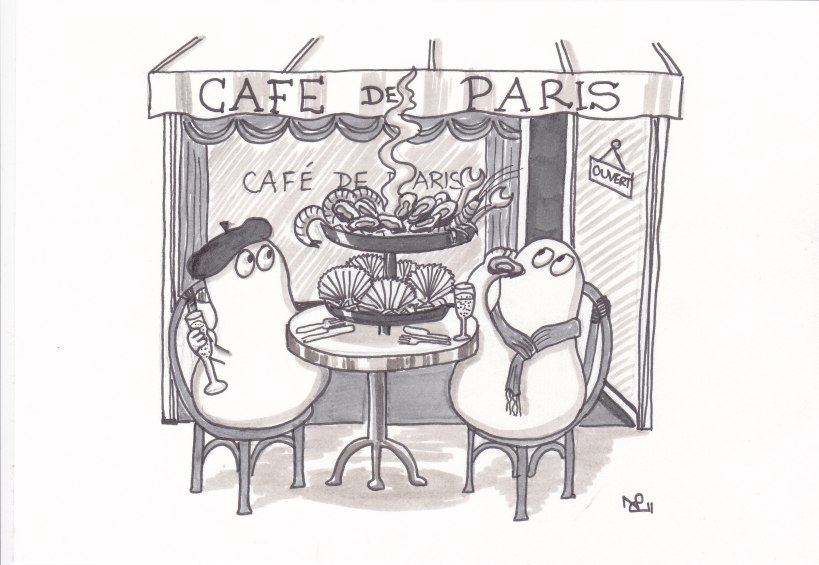
Norms at the Café de Paris (2011, pen on paper) © Nicholas de Lacy-Brown

Read more