Skip to content

Posts tagged ‘Review’

It’s all in the Sole: Christian Louboutin celebrates 25 years at London’s Design Museum

Glossy red lips, emblematic red telephone boxes, and the sumptuous vivid spiraling red of a voluptuous red rose. There is something about red which strikes a devilishly powerful impact. In fact scientists declare that red is the colour most instantaneously attractive to the human eye: and it’s true. Look around a room, survey the rainbow of colours and shades all around you, and the first colour you notice will always be red. No wonder then that throughout the ages, it’s the scarlet woman, the red lights of shady backstreets and the unctuous red-painted lips of Hollywood prima donnas that have become so indubitably emblematic of seduction, attraction and the height of munificent glamour.

No wonder then that when one, previously unknown French Cameroonian son of an ébéniste (ivory wood carver) turned shoe-maker decided to place a seamlessly lacquered vivid red sole on the bottom of his women’s shoes, he became an instant hit. When you see a woman in high polished black stilettos sauntering down the street, and as her shoes lift with each step, you see a hint of glossy red, you know that the woman has taste – instantly glamourous, emblematic of sexy chic and seductive sophistication, that red sole can only mean one thing, and have only one maker – it’s a work of art, and it’s made by Christian Louboutin.
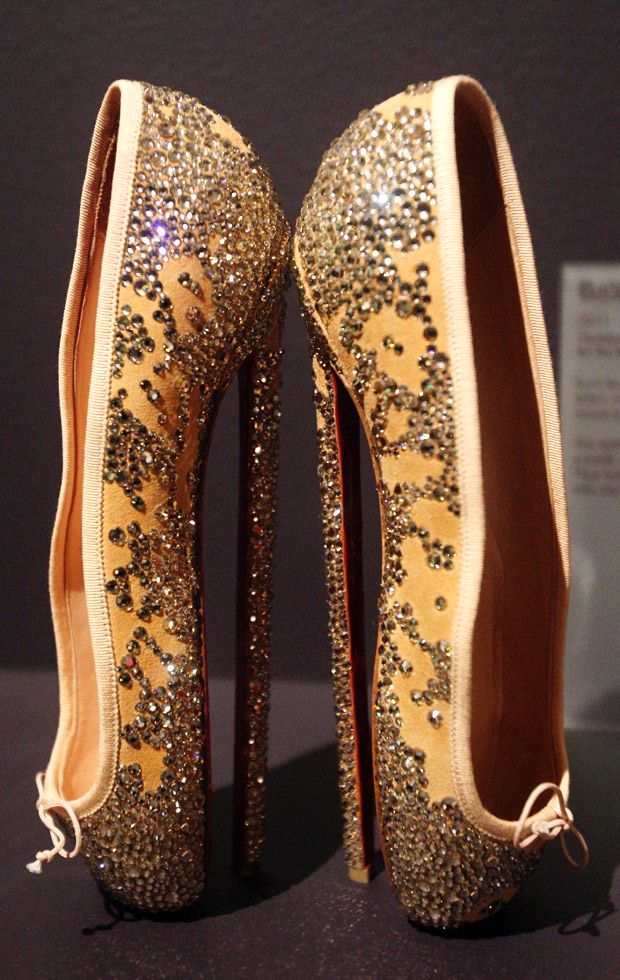
Fetish shoes

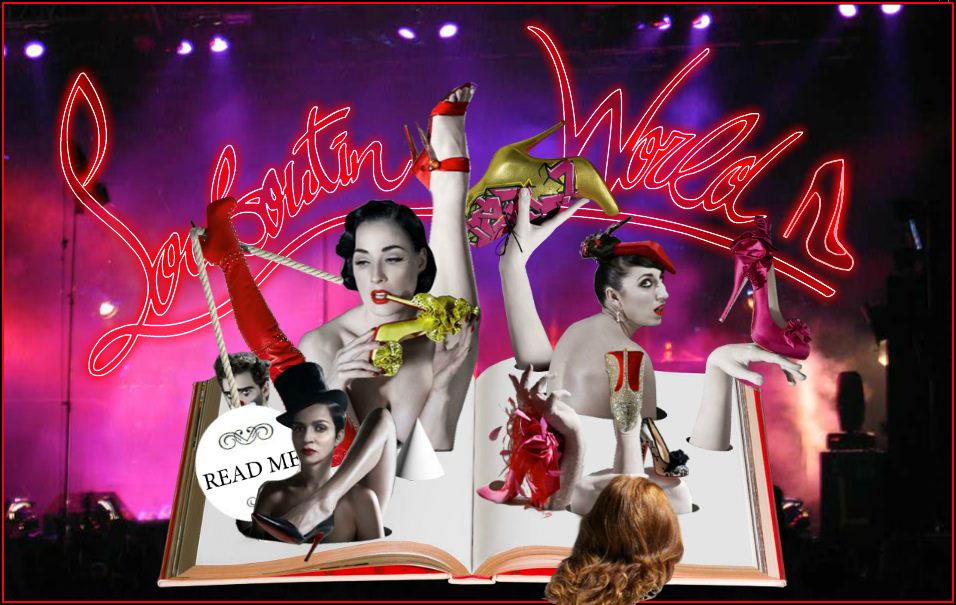
Yes, Louboutin, iconic French designer and the man who made red soles his signature, is now celebrating an illustrious 20 years of shoe design, during which time he seized the shoe, and in particular the daringly high stiletto, and lifted it into a new ascendancy of design significance, when, through darlingly innovative designs, and unhindered imaginative genius, he made the shoe the star of the show, as well as the means to make a woman’s legs, and figure, beautiful.  Such is the theatricality of his designs, that it comes as no surprise that in celebrating 20 years of iconic shoe design, London’s Design Museum on the South Bank has put on the show of all shows, like a retreat into the cabaret of 1900s Paris at the Moulin Rouge, as a vast illuminated stage, a playground carrousel, and a garden of delights play host to shoes and only shoes, singled out and exhibited in all their fantastically original glory.

The Dita Von Teese hologram

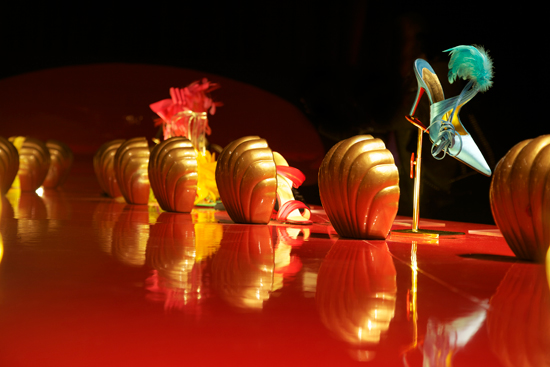
The exhibition exudes the playfulness of Louboutin. At its centre is a wonderfully raunchy Hologram video of the deliciously sexy Dita Von Teese, herself spectacularly bedazzled in a pair of sparkling diamond-encrusted Louboutin’s, demonstrating just how seductive a woman in these shoes can become. Meanwhile at the back of the show is a den of iniquity, a naughty display of fetish shoes designed to push a woman to the maximum of pain and pleasure and panda to every man (or woman’s) every sexual desire when shoes are their ultimate proclivity. I loved the little garden, when crazy platformed shoes were displayed like fantasy creatures in Alice’s wonderland, and the recreated studio of Louboutin himself, where a vast array of objects, instruments and other paraphernalia provide daily inspirations for his ingenious creations.
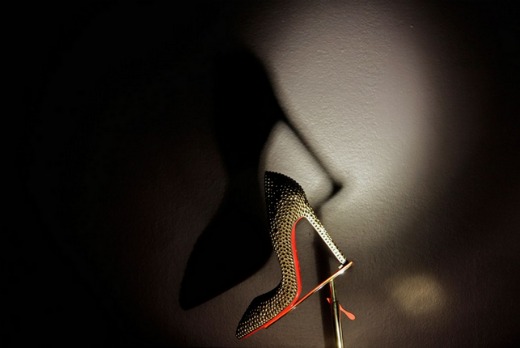
But amongst all of this showmanship, let us not forget that the stars of the show are the shoes – and there were so many beautiful designs it’s hard to choose from amongst them. But being something of a magpie, I was instantly attracted to all those which sparkled, while the delicate sophistication of shoes and boots covered in lace held a particular attraction. But amongst all of these design gems, from hugely built-up platform boots, with corset-style laces crisscrossing up to the thigh, to sleek yellow open-toed stilettos bursting with tropical flowers, perhaps one of my favourites was the most understated of all, the simple, sleep shiny black stiletto, albeit with that trademark red sole and a frighteningly high 5 inch heel.
The shoes amazed, the red soles seduced, and the diamonds and studs aplenty dazzled, yet when I left the exhibition, I still came out wondering why and how Louboutin had hit upon the red sole that has become his signature. How did he stumble upon it? What was his inspiration? All of this goes unexplained in the history of Louboutin’s 20 year retrospective, and at £125 a pop, I wasn’t about to put my hands in my pocket and pay for the vast (and admittedly very beautiful) exhibition catalogue to find out. Besides, I was too busy trying to escape from the unnecessarily copious groups of “girly” women, giggling all over the place and drooling over shoes they could barely ever afford, enjoying themselves far too much and occasionally yelping as though on a hen night. This is art darlings, take your window-shopping to Aldo.
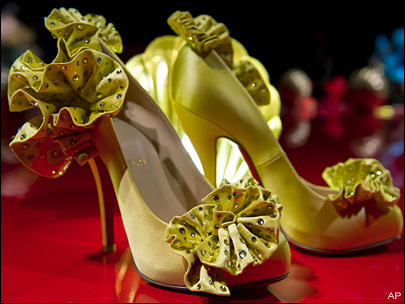
So why is Louboutin worthy of my praise? I am after all a man. I’ve never worn a stiletto, let alone owned one, and, unless I undergo some kind of hither unanticipated breakdown in my life, never intend to. Well the answer is simple – it’s because Louboutin has suspended his shoes into a design ascendancy which goes way beyond dress choice. These shoes are art, pure and simple, and best seen encircled by a spot light, up on a little stage or under a glass cloche where they belong, preferably sans foot, sans sweat and definitely sans ground surface to scratch that perfect lacquered red sole.
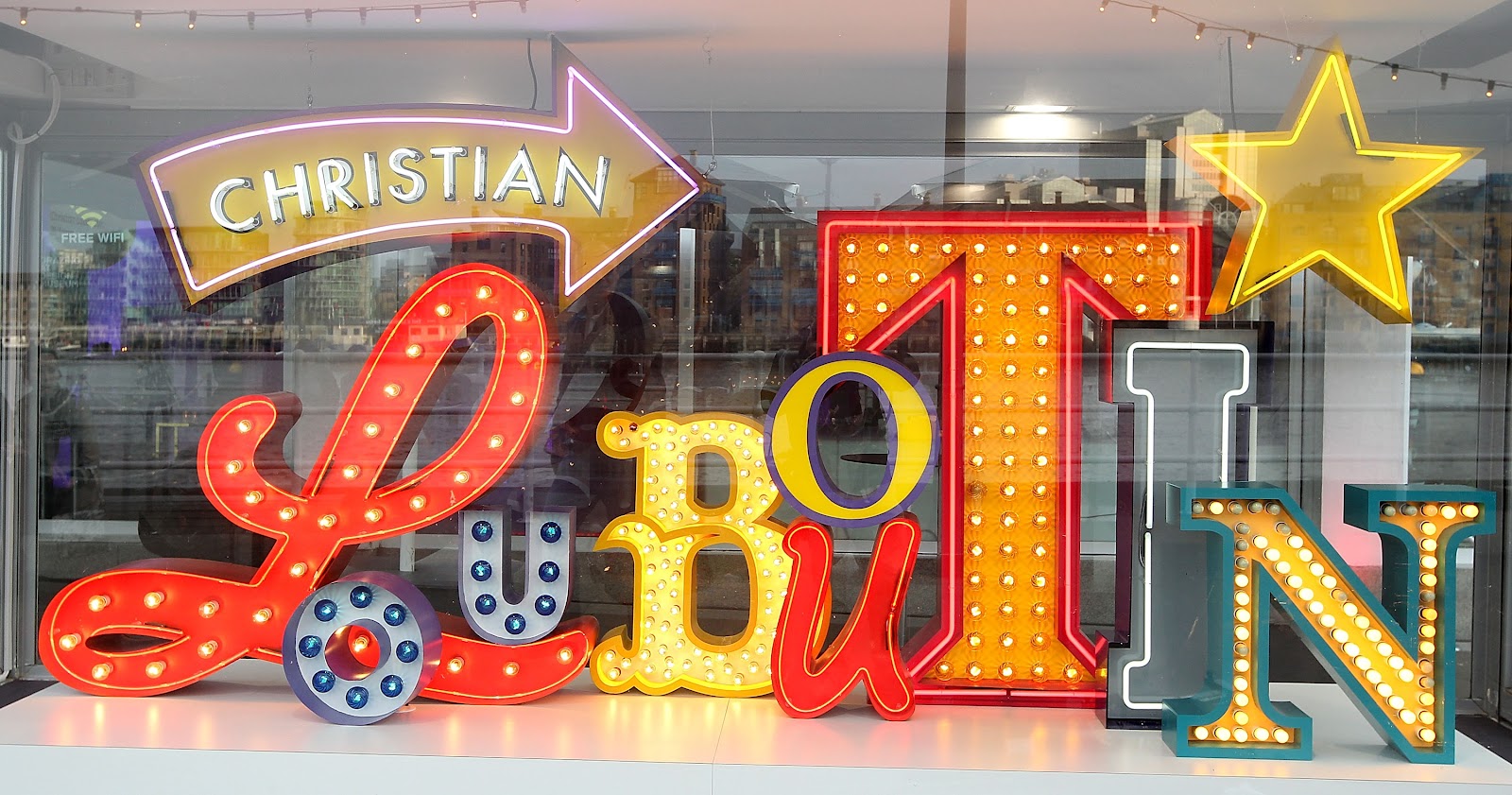
Christian Louboutin is on at the Design Museum, Shad Thames, London until 9 July.

Summer Exhibition at the RA: How a private view can make the mediocre marvellous

I’ve said it before, and I’ll say it again: When the viewing conditions are right, even the most mediocre of art can appear wonderful. When your mood is carefully massaged by fortuitous circumstances, your mind will be opened, and you’ll look for the positives in everything. Look what happened a few months back with the huge David Hockney exhibition at London’s Royal Academy: On my first visit, the gallery was so packed I came out spitting blood (almost literally as the hustle in the giftshop between usually restrained “Friends” of the RA to grab as much Hockney merchandise as possible almost ended up in fisticuffs). What was all the fuss about Hockney? He can’t even paint, I thought, bitterly. However, when I went back a few weeks later at the behest of my partner, first thing in the morning, tactically skipping the first couple of rooms and emerging, victoriously from the crowds into an empty exhibition beyond, I began to see what all the fuss was about. The paintings were so atmospheric, airy, colourful, pleasing. It was all about the viewing conditions.

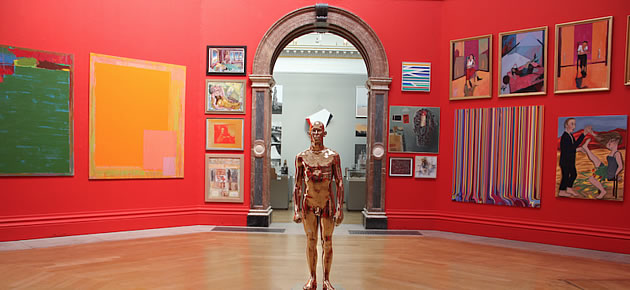
The central Matisse-red gallery complete with sculpture by Leonard McComb RA

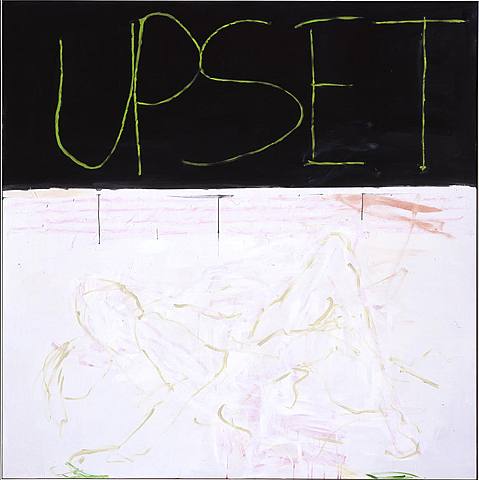
The same, now, can be said for my experience of the Royal Academy’s most famous annual offering, the Summer Exhibition, which I attended, with my mother, last night. So used to the unseemly crush of packed-in spectators, all vying for space in the Small Weston Room to see the small paintings squeezed unapologetically onto the wall from floor to ceiling, I would always leave the Summer Exhibition feeling resentful. Why had I just spent good money to go along and see a load of same-old mediocre paintings, small canvases of flowers and ovens and animals, not to mention Tracey Emin’s hideous, crass doodles and the repetitive works of the closed-club Royal Academicians? But not this year. Yes, the same old Royal Academicians still dominate, and yes, the ridiculously crap works of Tracey Emin, now named “Prof. Tracey Emin RA” after her recent ascendancy to the role of RA Professor of Drawing (what a joke) are still conspicuous by their unashamed lack of skill (and because of the hundreds of “sold” dots stuck to the frame because people seem to think scrawled depictions of half-vaginas are valuable), but the difference this year was that I attended on a private view. There were literally 80 of us in the entire venue, and those rooms are big. Once the small gathering had dispersed around the place, we frequently found ourselves quite alone in the huge Royal Academy galleries.

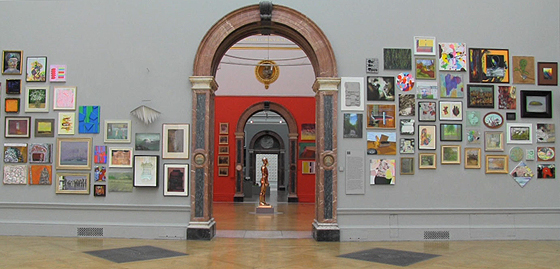
The “wave” hanging of small paintings

It was wonderful! Feeling so airy, ephemeral, and almost important, we glided around the galleries in such a good mood that we actually started to point out details of all the paintings, noticing the colours and the skill involved, complementing, and sometimes even tempted to buy and generally loving the whole affair. We were also treated to a talk by the charming Harry Baxter (an “artist educator” at the RA) whose insight into the exhibition made the whole thing instantly accessible and immediately unpretentious. This year’s show, the 244th in the RA’s history was, he explained, a homage to the small and the beautiful, an intentional contrast to the Hockney “Bigger Picture” exhibition where crowds had crammed into the galleries to see vast paintings made up from multiple small canvases. The focus on “small” can only be a good thing – it meant that rather than squeeze into the tiny rooms with hundreds of others to see all the small works, this year the huge central galleries were given over to countless small paintings (some 1,500 in all) which were hung around the walls like a wave of moving art. It wasn’t quite a Salon floor-to-ceiling hang, but it was an all-embracing journey from one artist’s expression to another’s.

So amidst all this good feeling, what were my favourite works? Top of the list has to be Buffalo Grill by Scottish artist Jock McFadyen, not least because I used to eat in one such of the French chain restaurant bang opposite the Moulin Rouge in Paris. This huge green canvas, with an off-centre, almost hazy image of the American-looking chain restaurant made for quite an impact in a gallery in which it easily dominated. It’s almost like the blur of the restaurant viewed from a fast-moving car, and yet the top of the restaurant is crisp and clear, like an after-image of the place stamped onto your retina.

Buffalo Grill (2004) © Jock McFadyen

Top of my list of sculptures, meanwhile, was the super-shiny bronze creation by Leonard McComb RA, Portrait of a Young Man Standing. Only a shame that it has the very modest price tag of £600,000. Against a red painted central gallery (apparently painted as such in homage to Matisse) and reflecting in its polished surface the paintings hung all around it, the sculpture looked truly remarkable. Second place for sculpture had to be given to Professor David Mach RA, whose cheetah made from coathangers, Spike, is an incredible feat of innovation (as was the brilliant recreation of the head of Michelangelo’s David built from the heads of matches, also by David Mach).

Top half of Leonard McComb’s Portrait of a Young Man Standing

David Mach RA, Spike

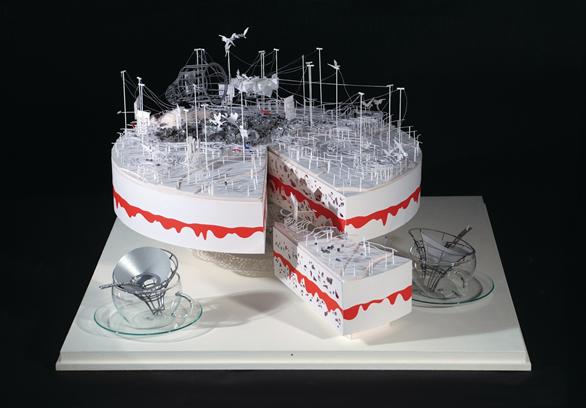
The architecture gallery was pretty interesting this year, bordering more on the surreal, not least with CJ Lim’s Dream Isle: London, the Victorian Sponge Cake which was a model imagining just that – a city shaped like a sponge cake! Also amongst the architecture were the predictable inclusions of Olympic stadiums and other Olympic buildings, as well as the new King’s Cross station concourse.

C J Lim, Dream Isle: London, the Victorian Sponge Cake

I also loved this by Graham Crowley…

Red Drift No. 3, © Graham Crowley

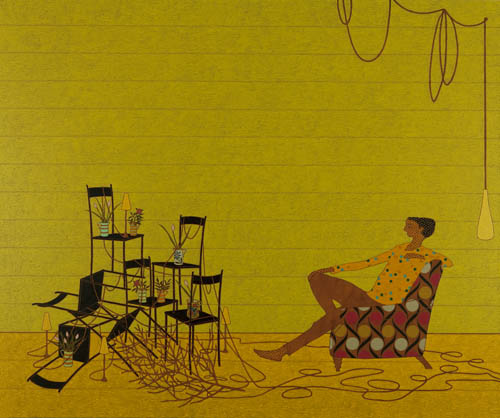
And this by one of my favourite Royal Academicians, Stephen Chambers RA

Stephen Chambers RA, I Know Trouble (And She’s My Friend)

While this, by Tracey Emin, appalled me…

Upset, by “Prof” Tracey Emin RA

I could go on, and there is of course plenty to look at, and to mention, but hopefully the photos I have included in this post will provide a hint of the wonders on show (except of course for Tracey Emin’s “Upset” which is included purely for the purposes of demonstrating how a totally talentless media novelty can rob some poor talented unknown of a huge amount of wall-space and all the opportunities that go with it).

The Royal Academy don’t always get it right, but with this year’s Summer Exhibition, they really seem to be progressing. Perhaps it’s because of the new president, Christopher Le Brun, or maybe it’s just because of the space all around me, the exclusivity and of course the complementary wine… It’s a question which remains as yet untested, but if you want to have a punt, go and visit the show – as the name suggests, it’s on all summer, and you can find out all of the details here.

Twelfth Night at the Roundhouse: Laugh-out-loud funny with a Fawlty Towers twist

As a Director, being given one of Shakespeare’s best known plays to direct must be a bit like being handed a gift-wrapped life time of Christmases all at once: On the one hand you get the most spectacular array of gifts to play with, but on the other, there’s always the risk, as comes with the familiar, that the experience will descend into Family warfare, as new generations upset the old fogies in the corner, and traditional conservative values give way to brash commercialisation.

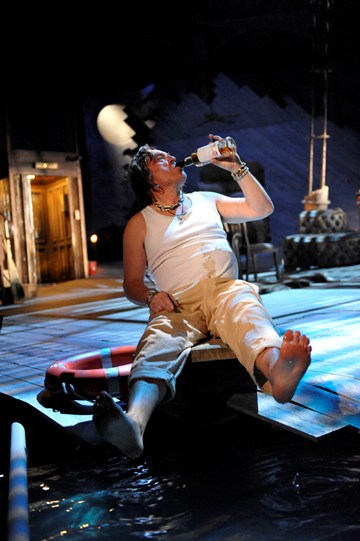
Nicholas Day as Sir Toby Belch in Twelfth Night. Photograph by Keith Pattison.

So it is with Shakespeare. You get those who turn up expecting ruffs and garters, men playing all the parts and the accompaniment of Greensleeves or some other suitably Tudor refrain in the background. Then there are those who want to see a familiar tale, with the same dialogue and characters, but retold in a totally reinvented way. I must admit to being one for the latter category. Admittedly, reinvented Shakespeare doesn’t always work. Shakespeare played out in the modern age can jar. Often directors are so intent on modernising that they lose all essence of the story they are reinterpreting. But the RSC’s latest offering, Twelfth Night, now commencing its London season at Camden’s Roundhouse, faces no such problems. Reinvented in a brilliantly original way, but losing none of the charm of the characters nor the tale, this new production, directed by David Farr is, in my refined Shakespearean experience, a phenomenal success.

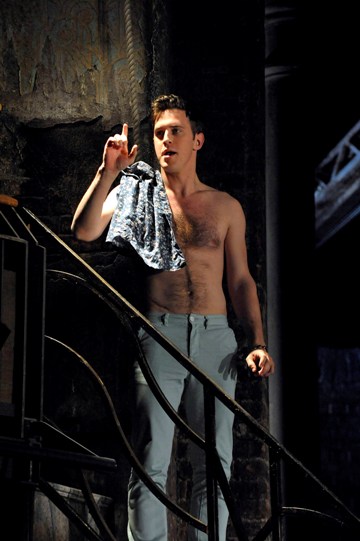
Stephen Hagan as Sebastian in Twelfth Night. Photograph by Keith Pattison.

First off, the scenery. It’s brilliant. How to stage Twelfth Night, which on paper is part set in Orsino’s palace, part set in Olivia’s and part set on a beach? Well David Farr and designer Jon Bausor came up with an original solution. They set the play in a rickety old hotel, reminiscent of  Fawlty Towers age hostelries, with a rattling old lift, swing doors, a dusty set of pigeon-holes containing all the room keys, and old-style air con in the form of a single fan with ribbons attach so that they flicker limply in the air whenever the fan is switched on. This hotel setting is in turn amalgamated into a sweeping curved wooden floor, which at the foot of the stage dips limply into a pool of water before curving across the stage into a steep incline at the back of the space, upon which a bed, a bath and other paraphernalia hang steeply suspended, and over which the darting shadows of a ceiling fan spin and flicker. In short, there isn’t a straight line anywhere on the stage, and this gives the set a dilapidated charm perfect for the 70s/80s reinvention.

Cecilia Noble as Maria in Twelfth Night. Photograph by Keith Pattison

Meanwhile the hotel setting is adapted to both the homes of Olivia and Orsino respectively through subtle lighting changes, all of which give the impression that these people live on some expat seaside resort, where the drunkenness of Sir Toby Belch and co. and the electro-keyboard cabaret of Feste the fool seem perfectly pertinent, like the tragic faded grandeur of Benidorm, or Blackpool on a good day.

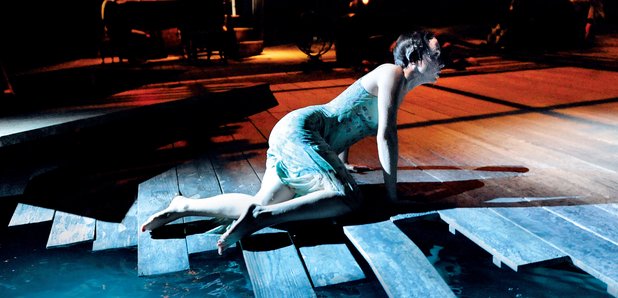
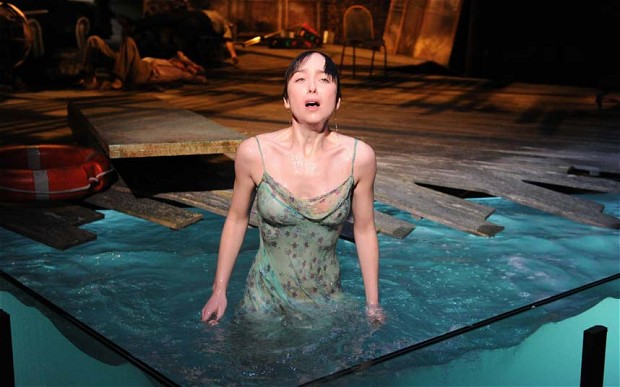
The best part of the set however has to be the pool filled with real water at the corner of the stage. It is from this pool that at the most unexpected moment, both Viola and a little later Sebastian, the shipwrecked protagonists of the play, emerge, gasping for breath, in the most fantastically realistic staging of a shipwrecked twosome. After this initial use of the pool, that same watery expanse is not forgotten. It provides the backdrop for some brilliant slapstick comedy by the likes of Bruce Mackinnon as a fantastically dippy Sir Andrew Aguecheek, and is a suitable space into which the phlegmatic Olivia can discard the unwanted gifts given to her by love-struck Orsino as she shuns his many indefatigable advances. True, the first few rows of the audience did get relentlessly splashed as the pool slowly emptied upon each dramatic entrance and exit by the actors, but at least they can’t moan that the play isn’t inclusive.

Emily Taaffe as Viola – Photo: Alastair Muir

Kirsty Bushell as Olivia and Kevin McMonagle as Feste in Twelfth Night. Photograph by Keith Pattison.

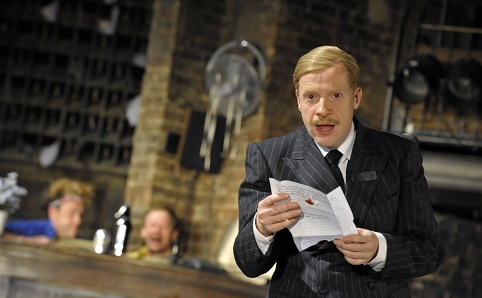
This brings me to the actors themselves, all of whom were brilliant, but with a few standout stars. Number 1 for me was Jonathan Slinger as the odious steward, Malvolio. The hotel setting worked best for Slinger’s character, as Malvolio went from palace porter to over-inflated Hotel Manager with a very heavy dose of small-man syndrome, complete with a clip board and name tag – you know the kind. This made for some genius comedy moments, not least when he travelled across the stage in a golf buggy marked “for management use only”  and as for the famous scene with yellow stockings and cross-garters – this production took the stockings to an all new level of risqué. It was laugh-out-loud hilarious. And it takes a lot to get me almost doubled over with hysteria.

Jonathan Slinger – brilliant as Malvolio – Photo: Jillian Edelstein

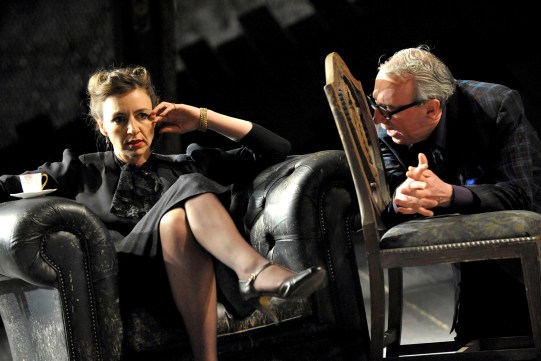
Second standout for me had to be Cecilia Noble as a diva-Queen Maria, the brilliant matriarch in amongst the drunken debauchery of Sir Toby’s den, wonderfully complicit as she was in the grand plan to bring the malevolent Malvolio to his shame. Brilliant too were the energetic Kirsty Bushell as Olivia, Bruce Mackinnon as Sir Andrew, and Nicholas Day as Sir Toby. I was a little disappointed by Emily Taafee as Viola, whose delicate Irish accent seemed a little strained in her efforts to be heard amidst the tomfoolery of her fellow cast members, and more often than not I found it difficult to decipher what she was saying. However that too is a problem with theatre (almost) “in the round” which meant that more often than not, we found ourselves facing the back of an actor whose voice simply didn’t carry.

Sir Toby, Sir Andrew and Fabian

No matter – as is often the case with Shakespeare, the old english is frequently difficult to understand in its totality. Which is why the role of a director, in translating that hyperbolic verse into the modern age, is so important. David Farr’s Twelfth Night not only translated brilliantly, but it lived, breathed and pulsated energy and jocularity which was contagious across the Roundhouse audience – even the wet ones at the front.

Twelfth Night continues at the Roundhouse until 5 July.

Monotone May = Culinary indulgence: The Orrery and The Delaunay

The good weather may have reached our shores at last this week in fair-weather Angleterre, but last weekend it was an altogether different picture. One gloomy weekend followed another, as almost 7 weeks after a hose-pipe ban was enforced, we in England were subjected to day upon day of grey rainy autumnal weather. So what can one do to keep happy in such weather? Why, self-indulge, naturally!

As a result of my very rare recourse to hedonism, I visited two superb restaurants in London, both of which deserve the Daily Norm review treatment.

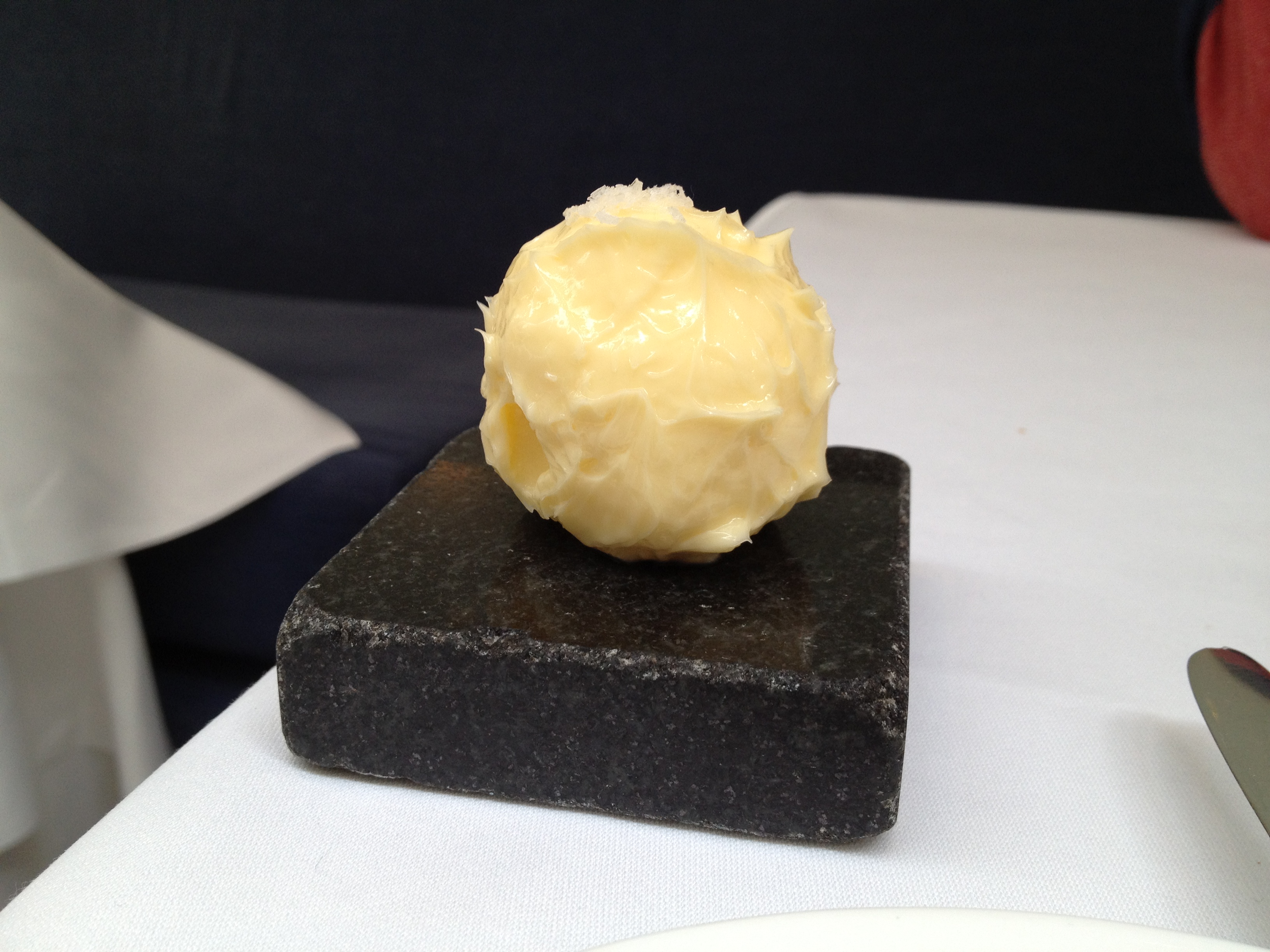
Le beurre

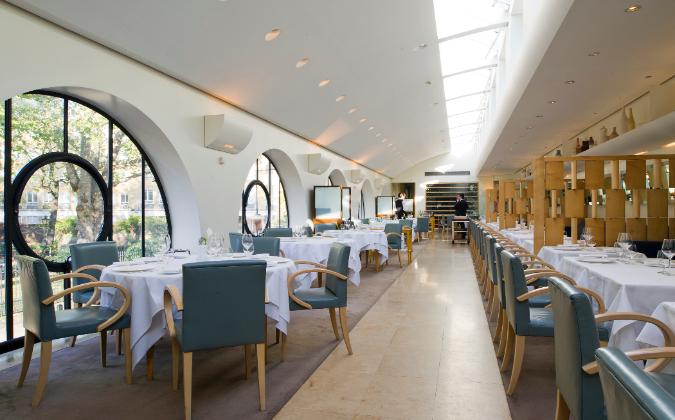
Stop one was Orrery, 55 Marylebone High Street, London, a classy first floor venue situated above the uber-chic Conran Store in Marylebone. I always think that a restaurant with an upstairs location possesses a certain superior exclusivity in the way in which it can go unnoticed so easily, and only those “in the know” get to sample it’s elevated delights. I did already know about the existence of this place, purely because on my frequent visits to Conran (I am interior design obsessed, not that I can afford many of the overblown prices in the place) I could never work out how from the front the shop appeared to have big first floor windows and yet when inside, there were no windows to look through. The secret to this great conundrum lay in a very slim line restaurant, set at the front of the building in a long gallery-like setting, but whose narrow floor-space barely registers owing to the excellent use of mirrors to reflect the large rounded windows which run along one side of the space. Having worked out where the restaurant was, I never in fact went along, that was until I saw it featured on the glitsy docu-soap Made in Chelsea last week. Anything they can do, I can do better, thought I, without anything remotely comparable to the stars of the show padding my wallet. And so it was, that having escaped quickly from Tate Modern on saturday in order to resist the temptations of dining in Tate’s expensive but view-spectacular restaurant, we ended up somewhere even pricer. Whoops.

Orrery’s interior

From the moment we walked into Orrery, we were treated like royalty. The service was exquisite – attentive and brisk, but we did not feel rushed, only well looked after. The menu we went for was the Menu du Jour, which at £25 for three courses didn’t seem bad, especially when the food then came out in a spectacular show-stopping fashion. But let me not rush this. Let us first concentrate on the unctuous fig-imbued bread with creamy home-churned butter, and a delicate amuse bouche of gazpacho – perfectly accompanied by the Catalan wine I had chosen from the wine list with all the bias of my Spain-conditioned heart.

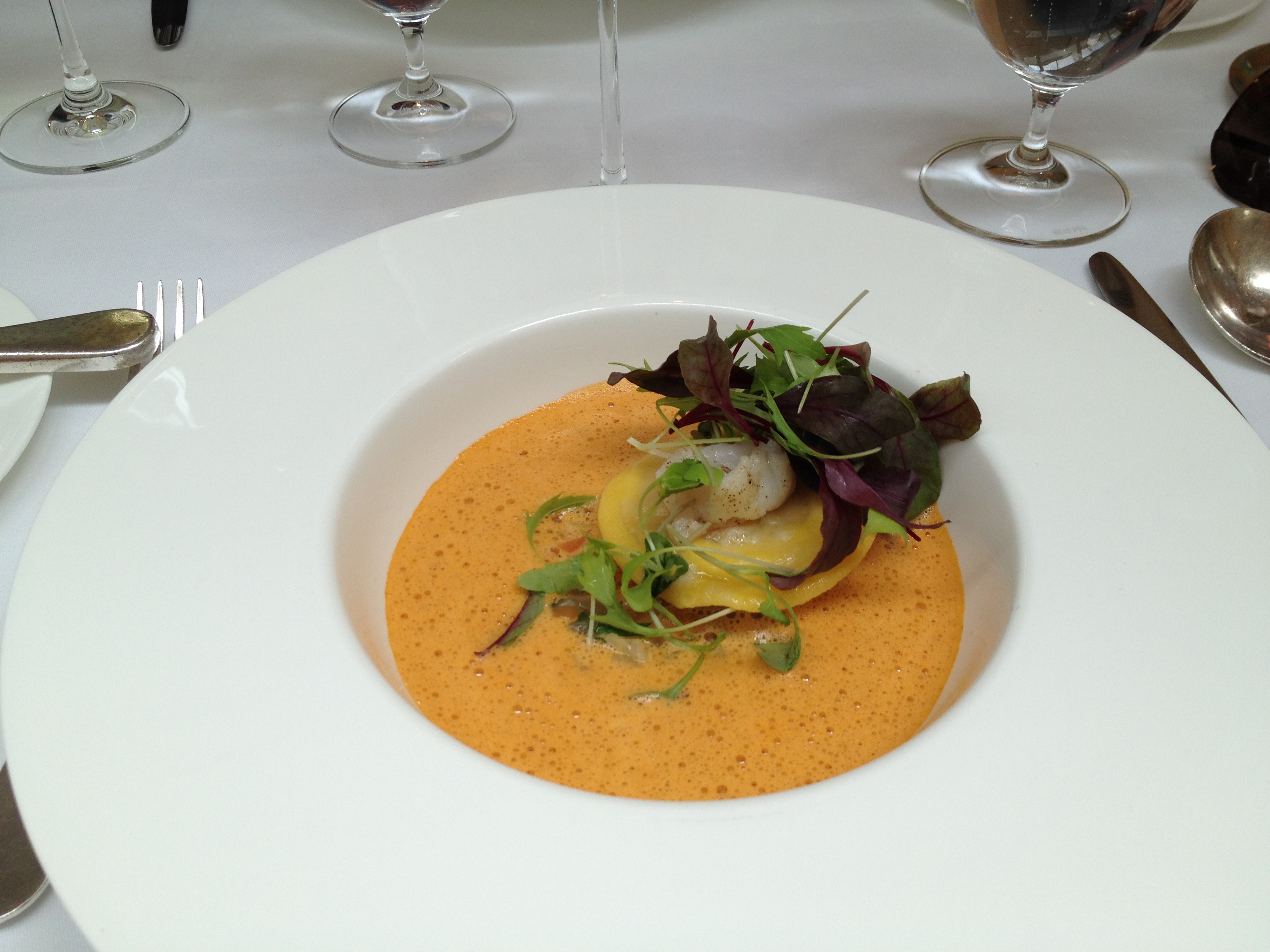
Raviolo

Up the next was the starter. We both went for the seafood raviolo (i.e. just one) surrounded by a frothy seafood bisque and served with a sweet, nutty pile of salad leaves and micro herbs. It was moist, well flavoured, delicate and perfectly seasoned, and the froth reminded of the incoming silky bubbles of a warm mediterranean seashore.

Feuilleté

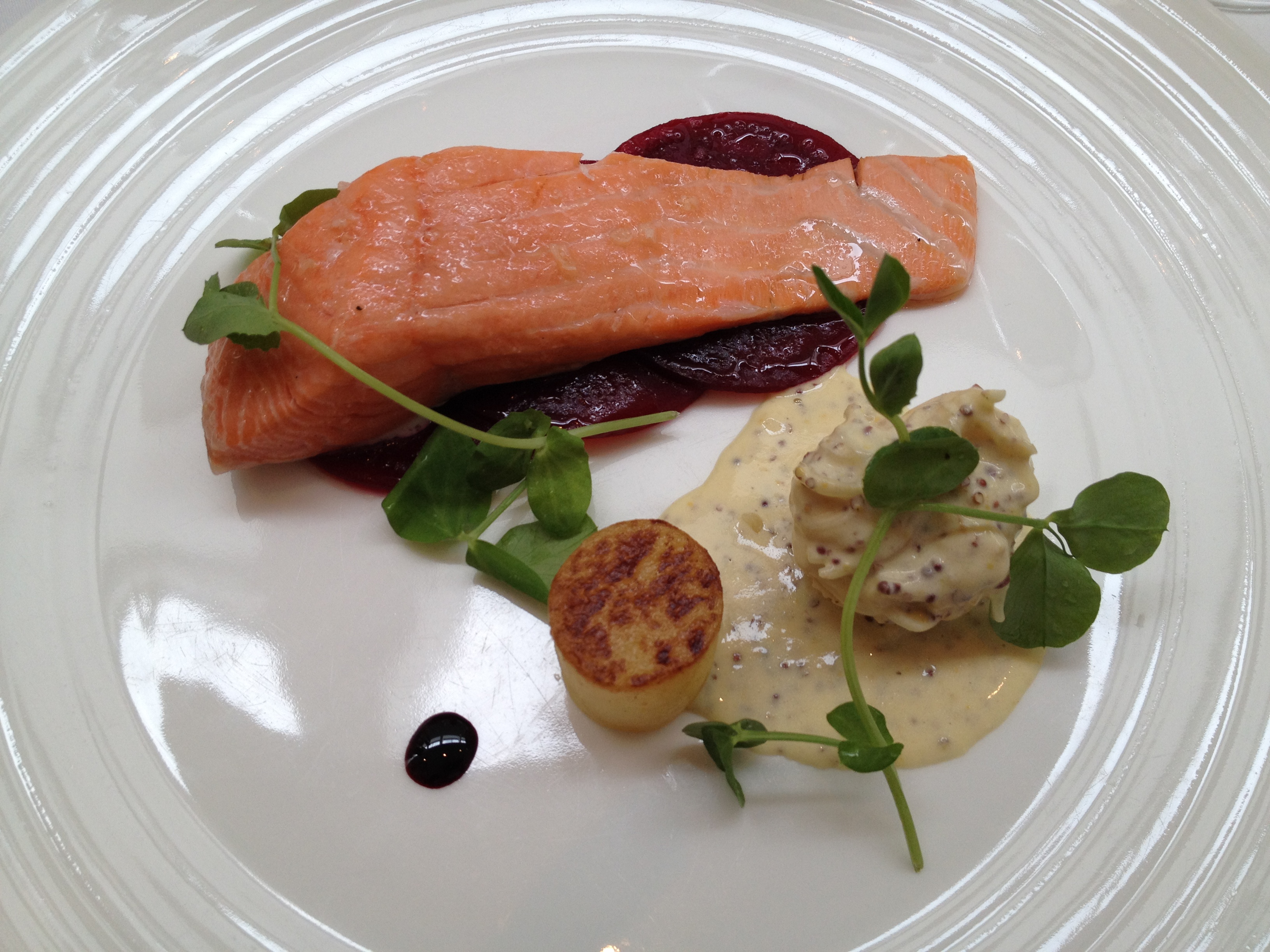
Salmon

For mains I had the Feuilleté of wild mushroom, poached egg, sauce Hollandaise – it was the vegetarian option which I rarely go for but my goodness I’m glad I did. The puff pastry was golden and caramelised, the mushrooms rich and creamy, and the poached egg broke open to reveal a runny goey egg yolk which was a rich and perfect orange spilling sweetly to provide a silky sauce for the dish. My partner had salmon which, he says, was utterly moist and completely delicious. For dessert we were both unable to resist a chocolate mousse with champagne jelly and hazelnuts. Served in frosted little bowls reminiscent of 60s retro furniture, it was cool as well as classy. Finally before dragging ourselves away, we were given complimentary chocolate truffles which broke open in our mouth to reveal a super sweet but seductively sharp passion fruit syrup. Amazing.

Chocolate mousse with champagne jelly

Best of all, I discovered that the astronomers globe instrument I bought in Salamanca is actually called an “Orrery” named after the Earl of Orrery. You see, you learn a new thing every day.

Delaunay interior

The next day, a long-standing and much anticipated late-luncheon engagement with my delectable chic bride-to-be companion in all things gastronomique, Celia, was on the agenda. We were off to The Delaunay, on the Aldwych, London, a restaurant which describes itself as a Café restaurant in the Grand European Tradition. Grandeur was in fact expected – the restaurant is part of the Wolseley group, known for its old-style grandeur renowned of Paris and Vienna, more than London. And as far as grandeur goes, the Delaunay did not disappoint. As I entered, the place was heaving, veritably full with those who lunch, and those who wish that we could all live in the age when every restaurant was clad in brass and marble with giant wall clocks, wood panelling and snobby waiters just like this one (don’t we all, well, perhaps without the snobs). Luckily my exquisitely turned out lunch companion was a lady in red, guiding my eye across the crowded tables so that we could swiftly commence the important business of choosing wine. Slightly intimidated by the prices, we went for house white, which must have been fine, because we were onto prosecco in no time. The food menu at this time of the day was fairly brunchy, but had sufficient choice for us to be able to indulge in a three course feast which proved highly satisfying, in the Grand European traditional way, naturally.

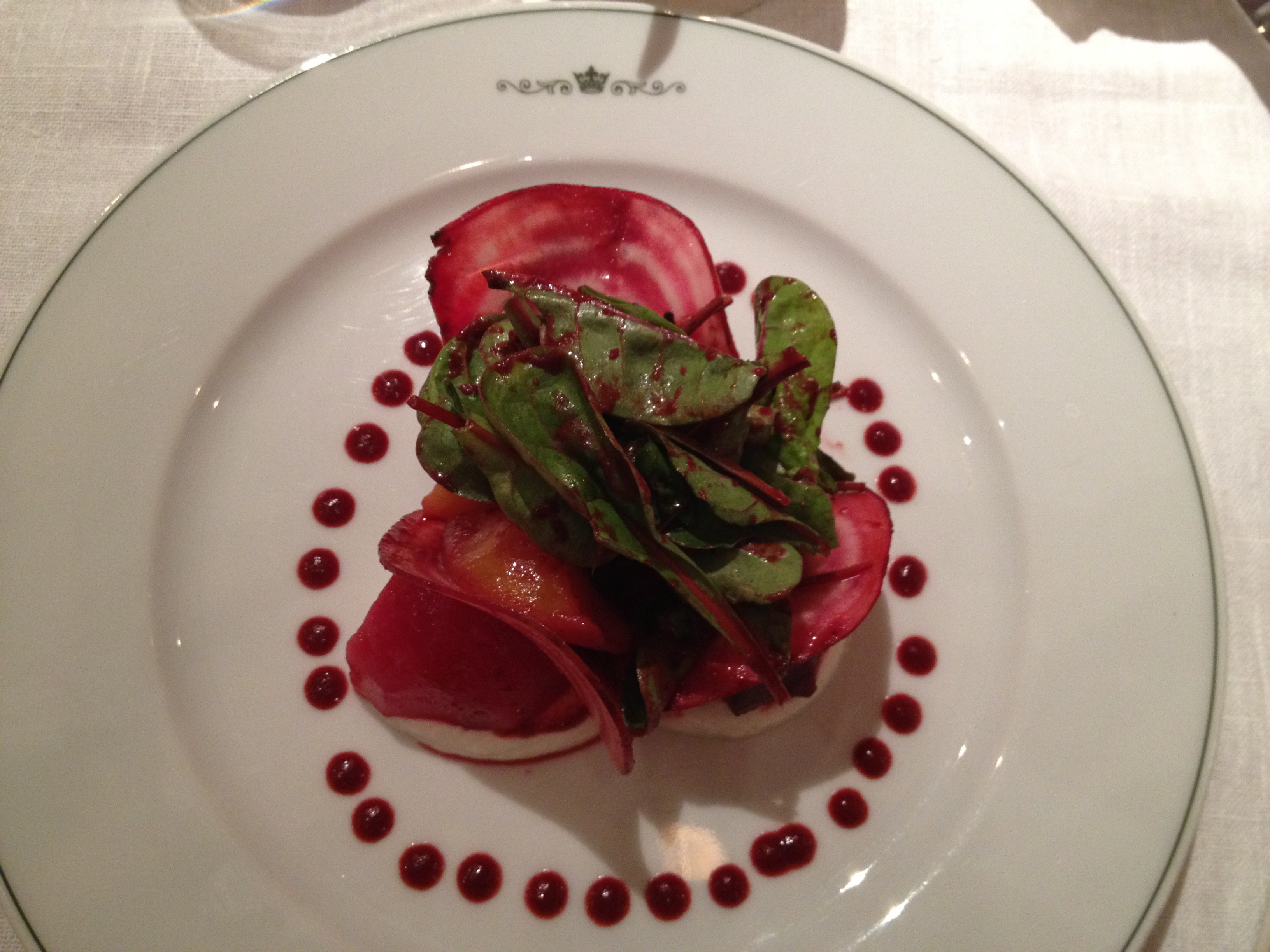
Beetroot and goat’s cheese curd salad

Something fishy

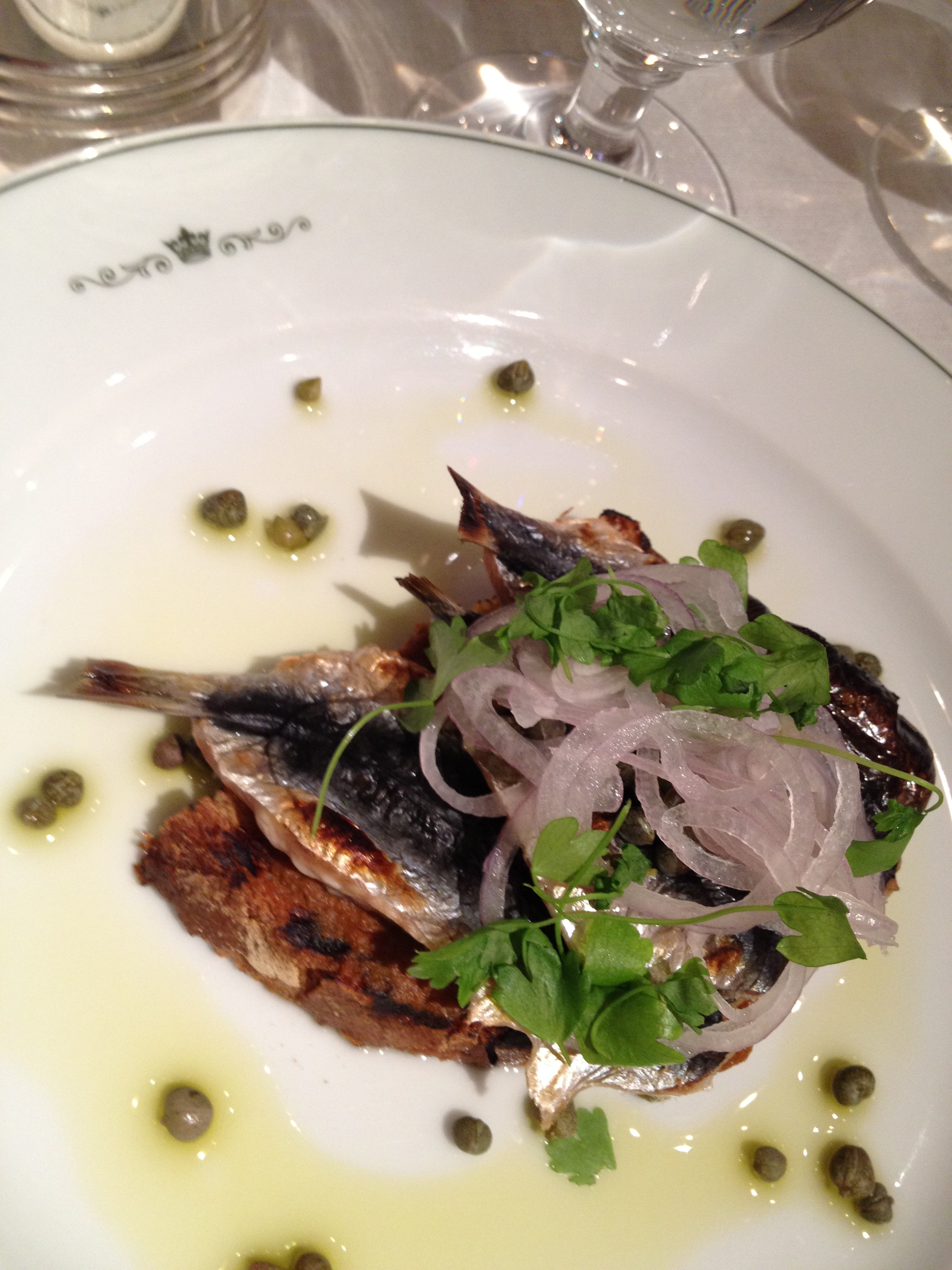
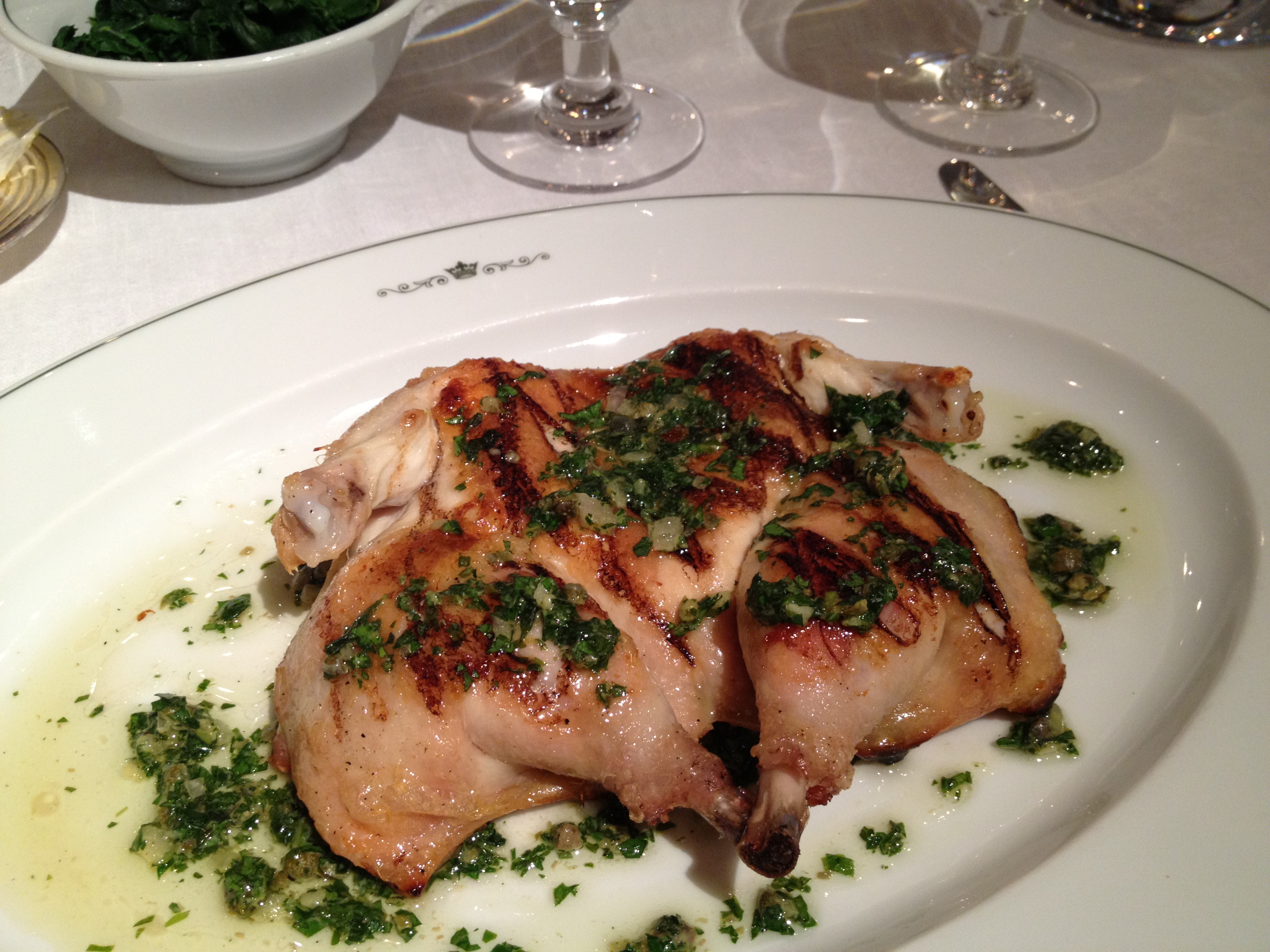
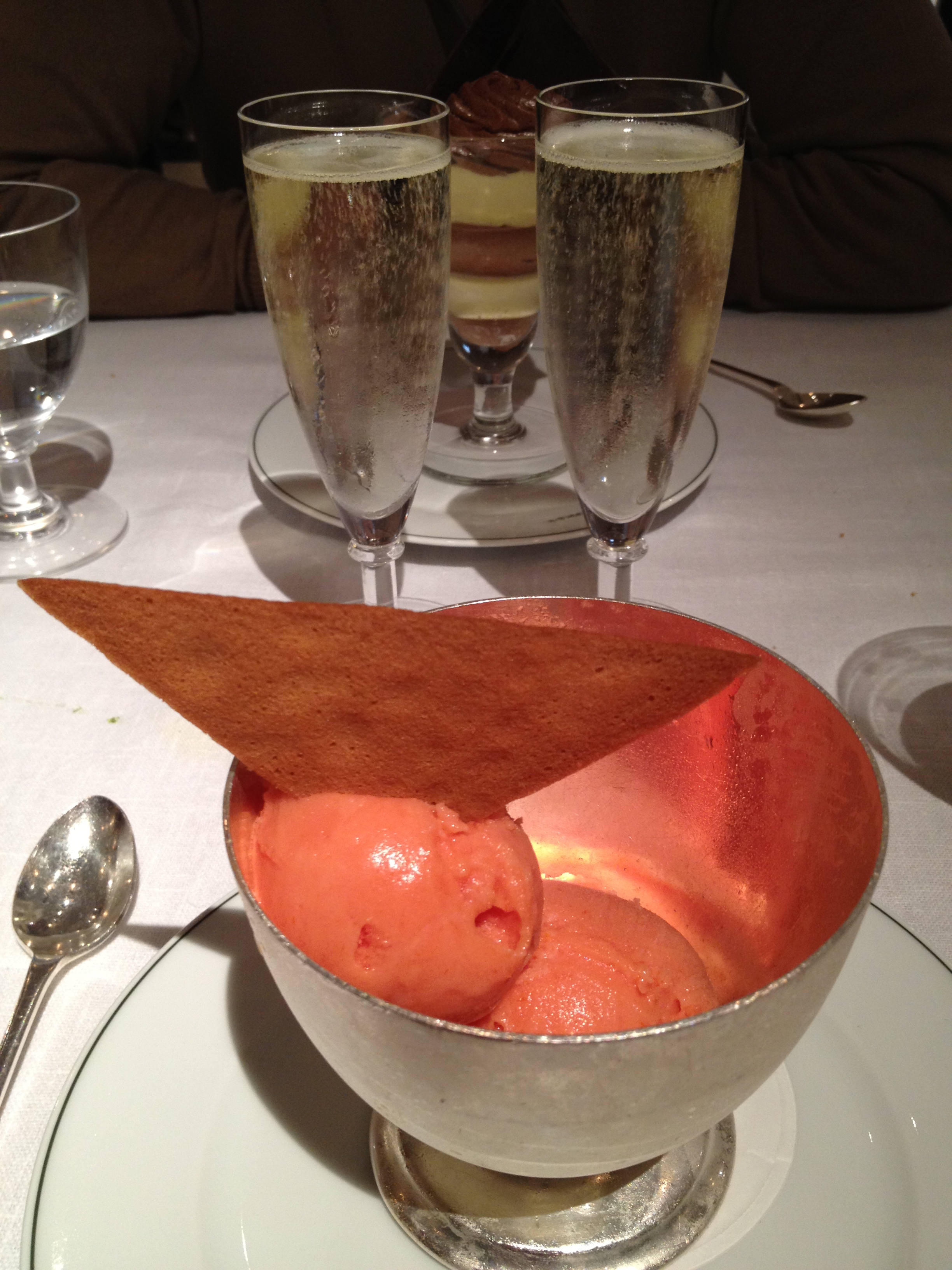
I started with a young beetroot salad with goat’s curd cheese. The flavour balance was perfect – a creamy cheese, not as heavy as it’s older, firmer counterpart, perfectly partnered by a series of different coloured and textured beetroots. Celia had something deliciously fishy. I can’t exactly remember what it was, but I’ll let her tell you on her superb food blog, Lady Aga. Next up I indulged in a golden crunched chicken schnitzel, which was incontrovertibly bad for my summer beach body attempts, but comforting on a grey May day (that rhymes so well, it must be why May turned out to be such a dire month). Celia won on this course though – her poussin with salsa verde was so moist and delicious and meaty I could have stolen the lot. For dessert I went for a white and dark chocolate mousse (I know, I know, second day running, but a boy knows what he likes) and Celia, undoubtedly feeling the pressure of my “hinted” suggestions whispered under my breath, went for a Sevillan orange sorbet which was like a walk along the sun-dappled paths of the Alcazar all over again.

Poussin

Seville orange sorbet, prosecco and a stripey chocolate mousse somewhere in the background.

The Delaunay does well in promoting the traditional grand café, particularly since it only opened recently. You could easily imagine Coco Chanel dropping in on a brief visit to London. And taking tradition seriously, I noted with bemusement that the maître d’ clicked his fingers when he wanted the attention of his waiters. Ouch. Mind you, the attention of the numerous waiters was often found wanting at our table too, which is surely one tradition Coco would not have approved of.

Damien Hirst at Tate: Repetitive, super-sensationalised science-show which is strangely enjoyable

The blockbuster show of Tate’s annual exhibition calendar, a retrospective to YBA supremo Damien Hirst, has been long anticipated by London’s art scene as well as the purveyors of trashy gossip magazines and followers of The Only Way is Essex alike. And such is the pull of Damien Hirst – this isn’t highbrow fine art, it’s not oil paintings fastidiously executed or sculptures miraculously carved from marble. This is a highly-commercialised , over-exposed fair ground of cut up creatures and stomach-churning curiosities, highly laminated multi-coloured, multi-formed collected lacquered lustre and sparkling, extravagant and utterly pointless bling. And where there is bling, that twinkle to attract the masses, you don’t need to be erudite and sophisticated to pull in the crowds. This is Tate doing household gloss paint, not oil paint.

Damien Hirst, Lullaby, the Seasons (2002) (detail)

Damien Hirst, Arg-Glu (1994)

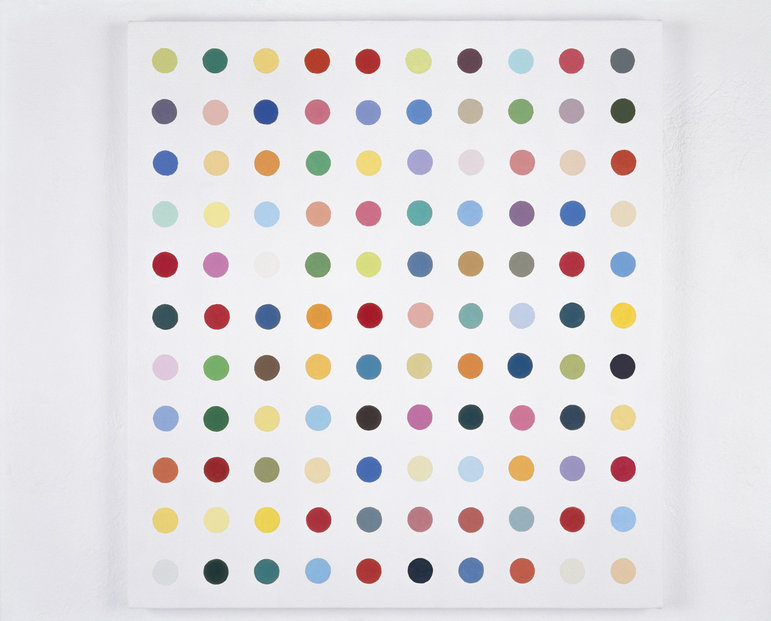
To give him is due, Mr Hirst is unapologetically tawdry . He doesn’t at least pretend to be the next Caravaggio. He makes art for a modern generation, a generation which consumes weekly updates on Katie Price’s deflating boobs rather than a good Jane Austen, who are only too aware of drug culture, who over use and abuse pharmacies in their hypochondriacal self-obsession, and are ultimately attracted by the latest trend, sensation or sparkle. No wonder Damien Hirst has been successful. He only had to stick diamonds to the fatalistically familiar skull and reproductions started springing up in homewear stores up and down the country. He took polka dots and made them uber-cool. Yet the Spanish have been celebrating the steadfast spot in their flamenco garb for centuries. Commercially clever Damien Hirst surely is. Super-skilled artist? I have my doubts. Yet without the guise and mystique of art to promote him, wouldn’t all of Damien Hirst’s oeuvre fall into a science museum/ interior design shop/ chemist/ butchers/ fishmongers where it belongs?

Damien Hirst, In and Out of Love (White Paintings and Live Butterflies) (1991) (detail)

There weren’t many surprises in the show. Such has been the success of Hirst’s publicity machine that almost every work is almost instantly recognisable.The dot paintings were predictable, and there were an AWFUL lot of them.  The great shark looms menacingly at the centre of the show. Either side of the shark, the sliced-in-half cow and calf, a few other fluffy sheep and birds (all in formaldehyde) are flanked by those repugnant rotting flies. All around the animal detritus, the repetitive spot motif translates into the pharmacy cabinets with row upon row of pill bottles, and then to the pills themselves, painstakingly laid out on shelf upon shelf, while next door you have fish, all laid out in the same direction, apparently “for the purpose of understanding”. Then you move on to the butterflies – the simpler butterfly pictures were a disappointment – the beautiful creatures had been clumsily placed onto thick gloss paint which messily spilled onto their delicate features.

Damien Hirst, Doorways to the Kingdom of Heaven (2007)

Much more impressive were the complex butterfly collages which were symmetrically placed to form incredible stained-glass window formations, not to mention the room which was full of live butterflies, their chrysalises forming their own kind of natural art as they attached themselves onto the blank canvases hung on the walls. There too were the “spin paintings” (basically paint chucked onto a fast moving canvas) and then, as though to emphasise the repetitive nature of Hirst’s work, a “bling” version of everything – the pill cabinet replaced with crystals, the coloured spots painted on a gold background, a smaller shark floating in a black tank rather than white, and butterflies stuck onto a gold canvas. There was also a superfluous obsession with cigarettes and ashtrays, used in Hirst’s art to make the oh-so novel point that one day we might die. Clever.

Damien Hirst, Judgement Day (2009)

Damien Hirst, The Physical Impossibility of Death in the Mind of Someone Living (1991)

So it was all rather predictable, and very repetitive, but strangely, and I hate to admit this, enjoyable. The insides of a cow are fascinating, not least when you get to walk in between the two halves of a once unified body. Looking down the huge throat of a shark at close quarters, shivering with horror when faced with its ghastly serrated teeth and menacing empty eyes is a unique experience, and the opportunity to appreciate the startling natural beauty of a multi-coloured catalogue of butterflies was a wonder. So too is it fun to look upon row upon row of multi-coloured pills and reflect on how many beautiful colours exists amongst a group of medicines which appear so mundane when viewed in isolation, or to appreciate the great skill of gravity in making such vivid and striking splashes when paint is spun around a canvas.

One of the spin paintings

However one can’t help but conclude, upon later analysis, that all the things you enjoyed at the exhibition were just   examples of the splendour of nature itself – the beauty of butterflies, the complexity of animal organs, the results of a spinning mechanism whose beauty is owed simply to chance. And yet if we had seen these things in a science museum, would we have given them a second glance? The isolation of the mundane within an artistic context certainly gives the objects the mystique and glamour which makes them deserving of our attention. But it is ironic that so much of what is praised of Damien Hirst’s work is what has simply been left to nature, or to chance.

Damien Hirst, No Feelings (1989)

Damien Hirst, For the Love of God (2007)

I cannot overly bemoan Hirst for creating a show which offers the chance to interact with his work, to engage with nature, and to enjoy thinking about what is, and what is not, art. I was also pleased that Tate did not try to swamp the visitor with overtly complex and inevitably meaningless lectures on what the art is supposed to mean and how it should be interpreted. Rather, on the whole the visitor was left to enjoy the show relatively uninterrupted, although Hirst’s titles are quite often unnecessarily convoluted and embarrassingly pretentious, not to mention barely related to the work titled.  But what really does make me feel uneasy is the knowledge that hardly any of the work on show has been made or created by Hirst himself, that there is no indication of any artistic talent, only of clever ideas.

Damien Hirst, The Anatomy of an Angel, 2008 – but who sculpted it??

As an artist myself, the most enjoyable thing about an exhibition for me is the chance to interact with it, to look at the art works and learn from the techniques, to appreciate the variation in skill and representation. In this exhibition that opportunity to interact with the work was lost. There is only so far you can be captivated by a medicine cabinet or a canvas packed with dead flies. In the latter butterflies gallery for example, where butterflies were used like stained glass windows, there was a sculpture of an angel, partially cut open to reveal the anatomy underneath. The sculpture was at first captivating, but the fact that I did not know who sculpted it, and whose skill I was appreciating really left something missing for me. The fact that most of these works are made my some factory process leaves me dead inside, just as I would be if someone asked me to study supermarket shelves for an hour.

For me, much of what is produced under the “Damien Hirst” brand will never be true art. It may be design, it may be the work of some unknown worker in the Hirst factory, or it may just be well preserved science, but it so often lacks the prerequisite skill to be art. Others will fiercely oppose my view, but that’s the great thing about the creative world. It makes us think, and in that respect alone, Damien Hirst is undoubtedly successful.

Damien Hirst, Sympathy in White Major – Absolution II (2006)

Damien Hirst at Tate Modern, London, is on until 9 September 2012.

Night at the Royal Ballet: The Dream/ Song of the Earth

When I was invited to spend the evening at London’s Royal Opera House to see a double-bill Royal Ballet performance of The Dream and Song of the Earth, I was more excited by the prospect of enjoying the sumptuous surroundings of the Royal Opera House (which, owing to hefty prices, I rarely get to enjoy) rather than the ballet itself. I’ve always considered myself more of an opera man dismissing the love of ballet as being confined to those fanatics with a familiarity of and appreciation for the technical aspects of dance. Last night I found the Royal Opera House to be as stunning as anticipated. From the startlingly modern, elegantly dazzling Paul Hamlyn Hall, where champagne takes centre stage, and the glass and iron structure is like a diamond preserved from the Victorian era, to the sumptuous surroundings of the plush red and gold auditorium: this theatre is without a doubt the jewel in London’s crown. But for me, the real stunner of the evening was, to my surprise, but quite appropriately, the preserve of the performance on stage.

The stunning Paul Hamlyn ("floral") hall interior

The Dream

In their performance of The Dream, set to the well known music of Mendelssohn (the wedding march now being played out all over the world as a newly married couple descend magnificently down the church aisle) the Royal Ballet provided a whimsical, tight and aesthetically joyous production, a cornucopia of visual delights, and a perfectly danced narrative of Shakespeare’s renowned Midsummer Night’s Dream tale. But in Song of the Earth, the Royal Ballet did not just present a ballet performance, but an indubitable work of art, a stunning rendering of moving sculpture, a work of poetry told through the human form. It was mesmerising, haunting and moving all in one. I left the ballet a changed man.

Oberon and Puck - The Dream

So why was it so good? Well I am a quite the philistine when it comes to the technical adroitness of a ballet dancer, but it was immediately obvious from both performances that the Royal Ballet does not cut corners when it comes to quality. In their performance of The Dream, the ballerinas danced with such poise and light delicacy that the distinction between dream and reality blurred as a stage full of flitting fairies appeared to come to life. This was no doubt enhanced by the beautiful and complex scenery coupled with low misty lighting which perfectly epitomised the fairytale grotto of childhood imaginings. This performance was definitely the more traditional of the two, but it did not lack allure because of it. Rather, the charm of the corps de ballet, identically dressed in diaphanous luminescent little tutus, tinged with forest shades of greens and turquoise, was like the coming to life of a Degas pastel. The romance of the ballet was thereafter confirmed, as I imagined myself as something of a Degas, ready to leap up into the wings and paint the dancers at work.

Edgar Degas, Blue Dancers (1893)

But in Song of the Earth, greater forces combined to conjure a startling production of mesmeric power. Here the music, the lighting, the stark scenery, the stripped down costumes and the athletic skill of the dancers all joined forces to create an awe-inspiring tour de force of emotional exploration. Song of the Earth is a ballet choreographed by the ballet supremo Kenneth Macmillan (1929-92). It is set to the haunting, often chromatic and deeply stirring score by Mahler. His 1908 composition (“Das Lied von der Erde”), was itself based upon six ancient chinese poems which had been translated into German the previous year by Hans Bethge. The poems, which dealt with themes of living, parting and salvation touched Mahler deeply at a time when he was embroiled in his own personal melancholy, having lost one of his children to scarlet fever and diphtheria and being himself close to death with a significant heart defect. The significant emotional journey along which Mahler was relentlessly embarking during this time bleeds through, in every tender and painful detail, into the score. In the Royal Ballet’s performance, the songs are intermittently sung by a tenor and contralto. When combined with dance, the result is magical.

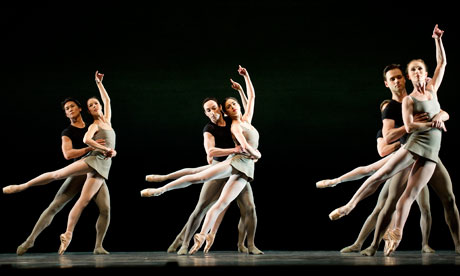
Song of the Earth (© Tristram Kenton for the Guardian)

“The wine already beckons in the golden goblet
but do not drink yet – first I will sing you
a song.
With a burst of laughter the song of sorrow 
shall sound into your soul.
When sorrow draws near, the gardens of the
soul lie waste,
Joy and singing wither and die.
Life and death alike are dark.”

I: The Drinking Song of Earth’s Misery

Song of the Earth

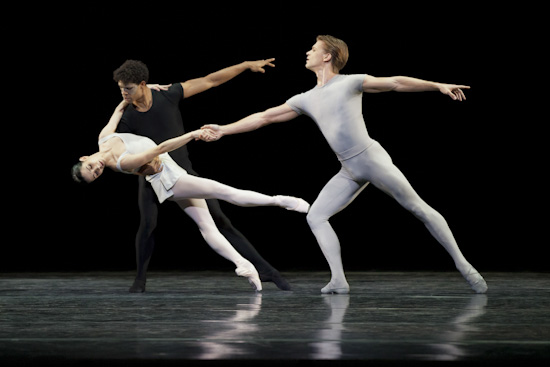
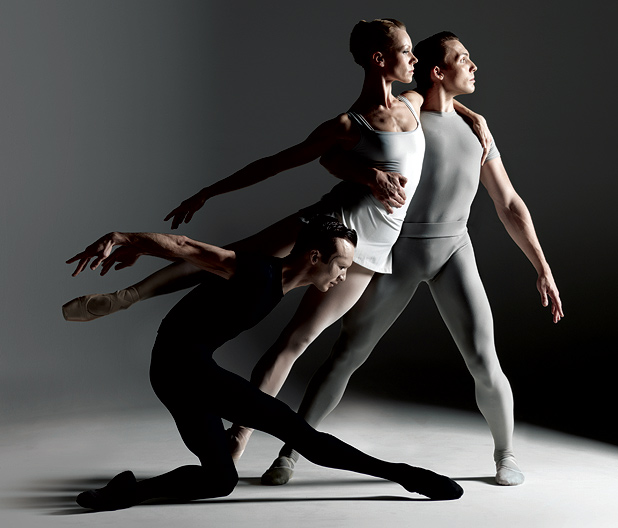
The dance perfectly reflected the themes of anguish, life, death and salvation intermittently explored by the singers and the score. The contemporary choreography was so artistically executed, it took my breath away, and words are not sufficient to describe the effect produced. Nonetheless, as I attempt to consider and put words to my emotional response, I am particularly struck by the staging – a stark bare stage, with the dancers lit from above and behind. This resulted in shadows forming on the front of the dancers’ bodies, so that every muscle and angle of their beautifully choreographed and moving forms could be appreciated with an enhanced focus. Also, the monochrome tones and use of identical costumes amongst male and female dancers respectively meant that the personality was taken out of the dancers, and the focus placed in the use of their bodies, and the shapes of their dance in narrating the emotions portrayed. Thus at times the dancers appeared to form the shape of temples, flowers, swinging pendulums and of twisting anguished souls, entangled in chains around each other as the dancers desperately sought to escape their inexorable link with death.

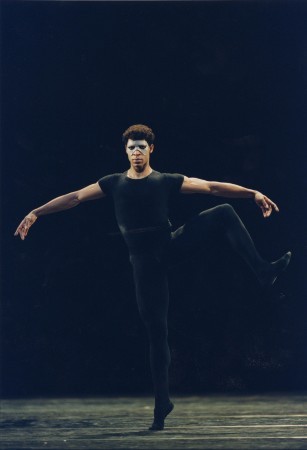
Carlos Acosta as the Messenger of Death (© ROH, Bill Cooper)

By contrast, the brooding masked persona of the characterised messenger of death, stunningly portrayed last night by Ballet favourite, Carlos Acosta, was omnipresent across the performance, a sinister undertone whose looming role in the tale was forebodingly clear. Particularly impressive also was the lead female ballerina Marianela Nuñes, exhibiting an almost superhuman control of her elegant form, specially when, during one movement, she danced en point backwards across the stage for what must have been almost a minute uninterrupted. The skill of dancing on show was staggering.

Ballet is one of those things you just have to see in action, alive and throbbing on the stage. Even Degas’ paintings can’t replicate the power and emotional draw of a real performance, and televised performances also lack the intensity of a live show. Now I have seen the real thing, I am a man converted.

Monochrome colours and simple costumes to stunning effect: Song of the Earth

Postscript: Thanks go to my friend Siobhan, who took asked me along to the ballet last night, and particular congratulations go to Francesca Hayward, dancer of the Royal Ballet and member of the corps de ballet in last night’s performance of The Dream – it’s incredible to see a young face from my childhood up on the Royal Ballet stage having achieved so much as such an accomplished young dancer. I envisage a great future ahead for you.

Daily Norm Book Club: The Third Reich by Roberto Bolaño

“The water rose up the stairs from the beach and spilled over the sidewalk. Consider your next play very carefully, warned El Quemado, and he began to splash away toward the Del Mar…The water was black and now it came up to my ankles. A kind of paralysis so thoroughly prevented me from moving my arms and legs that I couldn’t rearrange my counters on the map…The die, white as the moon, sat with the 1 faceup. I could move my neck and I could talk (or at least whisper) but that was all. Soon the water swept the board off the wall, and it began to float away from me, along with the force pool and the counters. Where would they go? Toward the hotel or the old town? Would someone find them someday? And if they did, would they be able to see that it was a map of the battles of Third Reich, and that the counters were Third Reich armoured corps and infantry corps, the air force, the navy?…

Calmly, and with no hope of saving myself, I waited for the instant when the water would cover me. Then, emerging from under the streetlights, came El Quemado’s pedal boats. Falling into a wedge-shaped formation (one pedal boat at the head, six two-by-two behind, and three bringing up the rear), they glided noiselessly along, synchronised and gallant in their way, as if the flood were the perfect moment for a military parade. They took turn after turn around what had once been the beach, with my dumbstruck gaze fixed on them; if anyone was pedaling and steering, it must have been ghosts, because I couldn’t see a soul. Finally they moved out to sea, though not far, and changed formation…From my position all I could see was the nose of the first one, so perfect was their new alighnment. Suspecting nothing, I watched the blades cleave the water and the boats begin to move again. They were coming straight for me! Not very fast, but as relentlessly and ponderously as the old dreadnoughts of Jutland. Just before the floater of the first one, surely followed by the remaining nine, was about to smash into my head, I woke up.”

The Third Reich, Roberto Balaño (Picador, 2011) © heirs of Roberto Bolaño

The lastest posthumous publication from author Roberto Bolaño is a profoundly disturbing novel. Not because the novel is full of back-to-back gruesome descriptions of serial murder (as in Bolaño’s most celebrated offering, 2666) but because there is something intrinsically unsettling about the narrative, told from the point of view of a young 25 year old German tourist, Udo Berger, who appears to descend into some form of intellectually advanced emotional breakdown as the book goes on: From a lucid beginning, Udo, as narrator, spends more and more time preoccupied by the realms of his nightmares, while in the real world, his descriptions of the places and people around him become gradually more sinister and surreal.

The story starts relatively normally. Udo Berger, an aspiring writer and part-time gamer from Stuttgart, and his girlfriend Ingeborg, are on holiday in a typical tourist-pot resort on Spain’s Costa Brava. It isn’t clear when the book is set, but a reference to a split-Germany and the reliance on landline telephone communication (rather than mobiles or email) suggests that the story is probably 1980s at the latest.

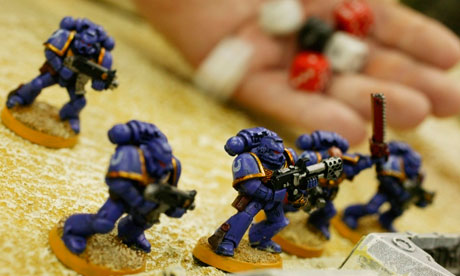
Udo Berger is a war-games champion back in Germany, and consequently spends much of his time immersed in the slightly niche world of war gaming, both playing, and writing related articles which he publishes around the world. The game with which he is primarily preoccupied, and the one which gives the name to the novel, is Third Reich. The game, which is a real game released in 1974 by gamers Avalon Hill under the full title, Rise and Decline of the Third Reich, is a grand strategy wargame covering the European theatre of World War II in Europe. It’s a long running game (not your average Monopoly) which requires the players to take on the roles of the various major national powers at play in the war. The players then simulate the entire war effort from 1939 until it’s end, but with the opportunity to re-strategise the course of history and investigate different courses of military manoeuvre which may not have been undertaken in reality (for example a German invasion of Spain).

It is against the rather fractious setting of war that the story of a holiday in peace-time Spain plays out. Udo spends much of his time cooped up inside his hotel room strategising war, while his girlfriend attempts to enjoy normal holiday past times. It is on one such occasion that she meets another holidaying couple, Charly and Hanna, and a group of shady locals who introduce both Ingeborg and Udo to the darker side of town life beyond the tourist sheen. The new-found friendship between the couples does not end well, when Charly, after various tumultuous encounters, disappears without a trace. As the holiday comes to an end and Ingeborg decides to return to Germany, Udo is intent on remaining behind in Spain to make sense of Charly’s disappearance.

It is at this point that the heart of the novel begins to play out, and various factors combine to affect a mood of disintegration and melancholy in the mind and surroundings of Udo. As the hotel gradually empties, the once bustling resort takes on a ghostly feel. Udo describes noises in the corridor and mirrors without reflection as his mind becomes more and more troubled with nightmares. In the meantime he strikes up a gaming relationship with El Quemado – a severely disfigured and enigmatic local who runs a boat pedalling business by day, and sleeps in a fortress built from his boats at night. Once introduced to the rules of Third Reich, El Quemado becomes progressively more zealous in his role of allied strategist, until it becomes clear that his enthusiasm to play against a German is laced with more sinister undertones. Despite becoming aware of this risk, and long after the mystery of Charly’s disappearance is clear up, Udo Berger feels compelled to remain in Spain and play on, despite the seriousness of the potential consequences once the game of war is ended.

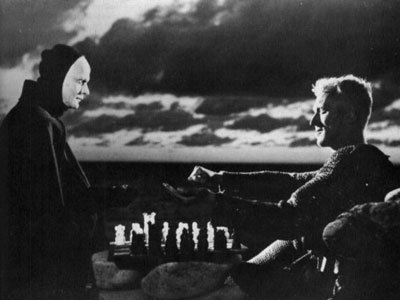
Scene from Ingmar Bergman’s The Seventh Seal

This is a story which is unsettling perhaps because of the many ironies it entails. Udo Berger is on holiday in peace-time Spain, but remains cooped up inside reliving the history which dogs his nation. He is adamant that he is no Nazi, yet he is obsessive in wanting to re-stage the second world war in order to improve its outcome. Meanwhile the core of the story plays out when the tourist season is over, when the hotel is tired, dilapidated and empty, ready to hibernate for the winter, when it’s owner is dying and its staff are rebelling, and when, instead of sun, the sandy beach is pitted with the patter of rainfall. The story is also unsettling because our access to it is through Udo Berger, a man who makes for an unreliable narrator, forever wavering between nightmare and reality, historical strategy and contemporary indecision. Yet this is what makes the book so edgy, electric and captivating.

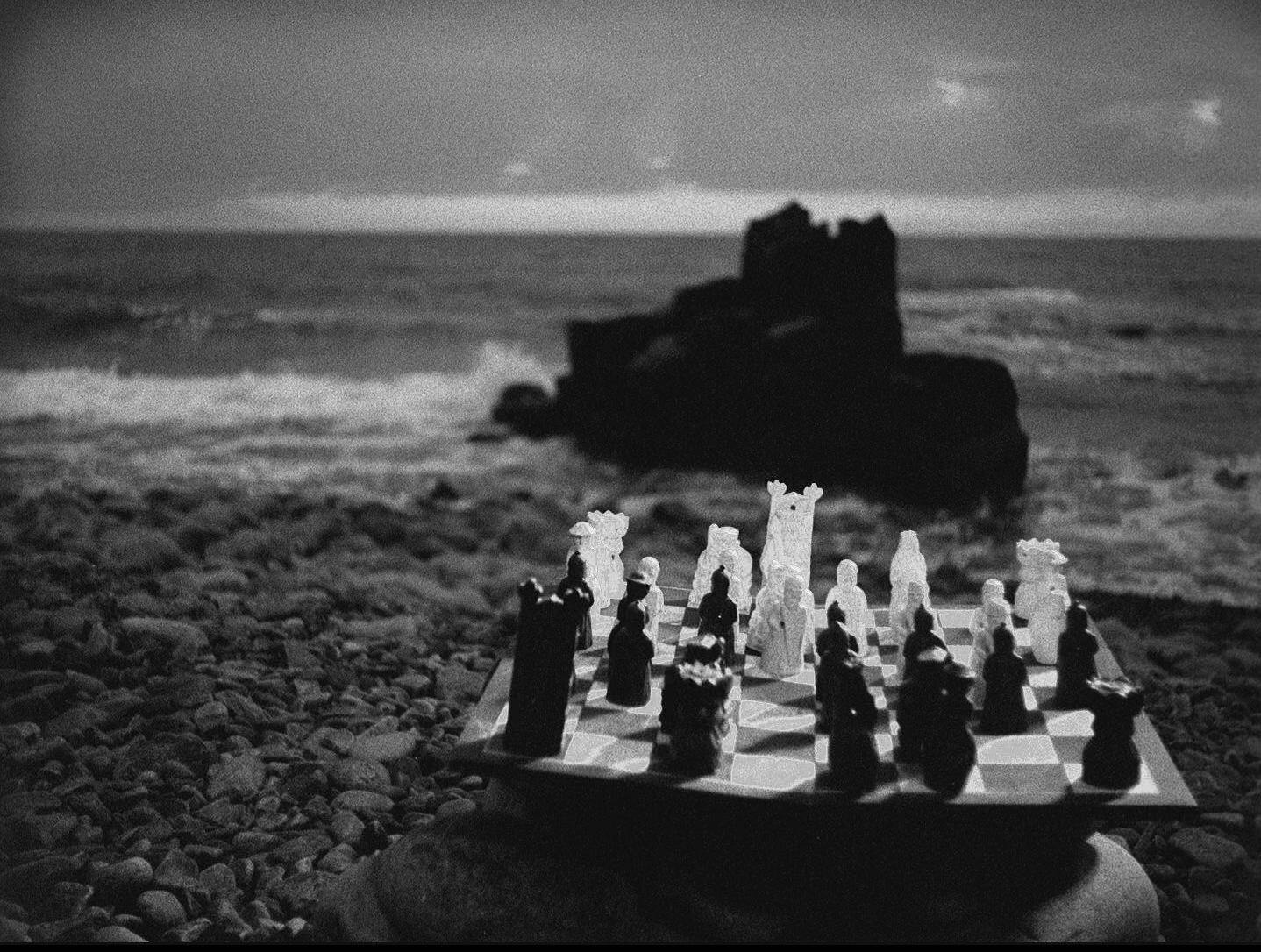
This book reminds me of Ingmar Bergman’s 1957 cinematic masterpiece, The Seventh Seal, particularly the scene when the protagonist, Antonio Block, plays a game of chess on the beach against Death. Enigmatic, eery, sinister yet compelling. It also reminds me of the surreal and slightly unsettling works of Rene Magritte – on the surface, he presents recognisable everyday situations, yet at their core, they unbalance and disconcert. Bolaño’s newly published novel is another such gothially-surreal success, which presents a further opportunity to discover the comprehensive and multifaceted oeuvre of Roberto Bolaño, much of which remained unpublished on his death in 2003. I urge anyone with a taste for the unusual to read this novel.

Lucian Freud Portraits

Roll up roll up for the 2012 London Cultural Olympiad. All the big wigs of the Brit-art A-list are in town, the banners are up, and the art posters line the saturated platforms of the underground as the PR machine goes into overdrive. As if in response to the cattle cry, the crowds have come to town –  the galleries are packed, the gallery restaurants have waiting times of over an hour, and the gallery shops are partitioned by huge queues of customers cashing in on memorabilia of these big-billed art shows. It’s all really quite stressful.

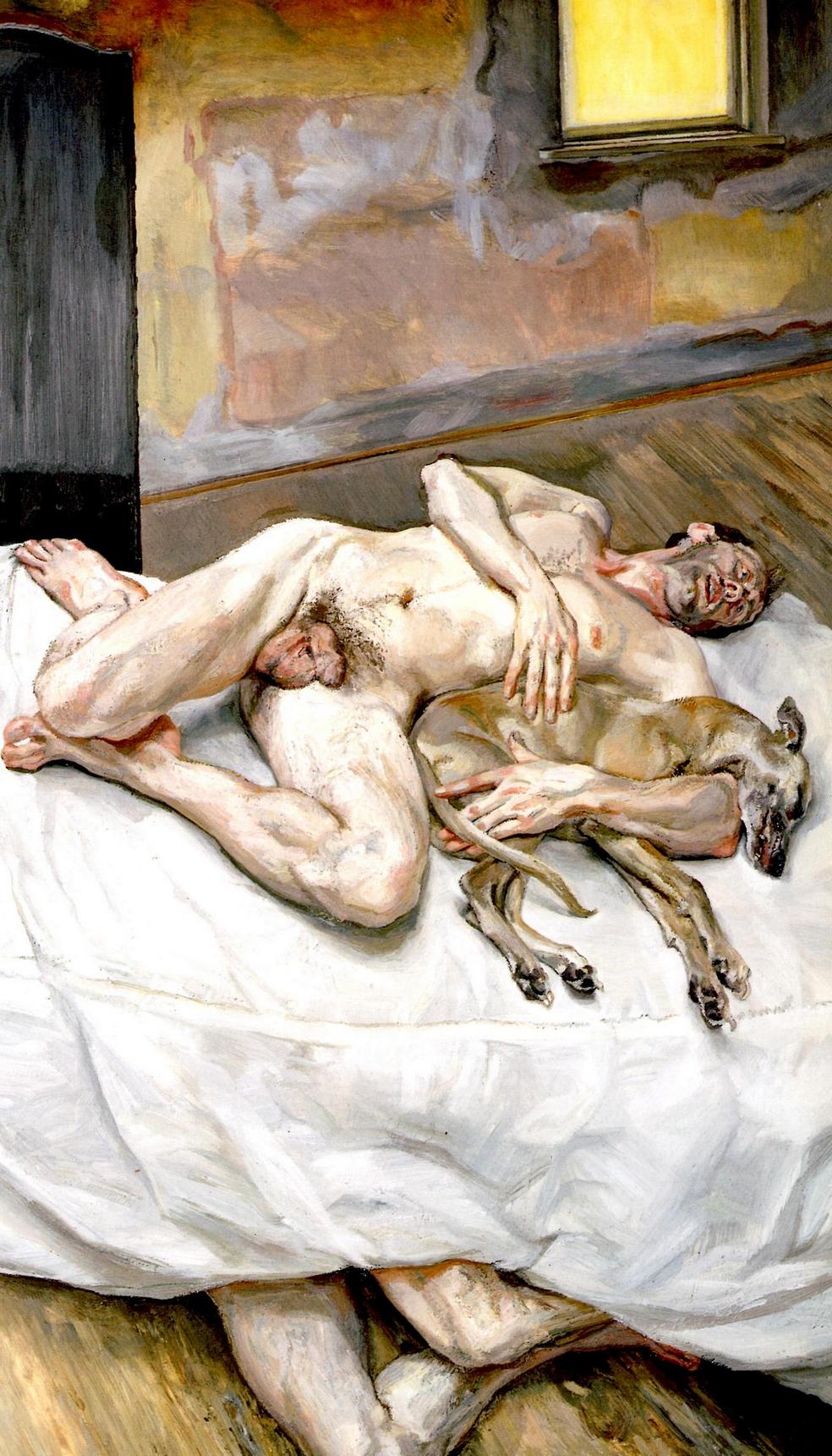
Next in line to meet my sampling eye was the Lucian Freud portraits retrospective at London’s National Portrait Gallery. Having been in the pipeline for some time, and organised in collaboration with the artist himself, the NPG’s exhibition gained additional poignance when, last July, Lucian Freud died at the ripe old age of 88. He did so working right up until the end, and his unfinished portrait of his studio assistant and dog hangs at the climax of the show.

Portrait of the Hound (2011)

There is no doubting Freud’s stature as a preeminent star of British art. When his painting, Benefits Supervisor Sleeping, sold at Christie’s in New York for the sum of US$33.6million in 2008, it broke the record for the highest price paid for a painting by a living artist. It is consequently appropriate that he should be lined up along with the likes of David Hockney and Damien Hirst for blockbuster solo exhibitions which promise to showcase British art to the world. It is also appropriate that the show focuses on his portraits, for Lucian Freud is long associated with his unforgiving nudes, painted with a multi-layered impasto application of fleshy pale paint, striking often uncomfortable and usually unflattering poses, and portraying a deeply penetrated psychological profile cast free from boundaries, clutter or clothing for full and frank disclosure to the world.

Benefits Supervisor Sleeping (1995)

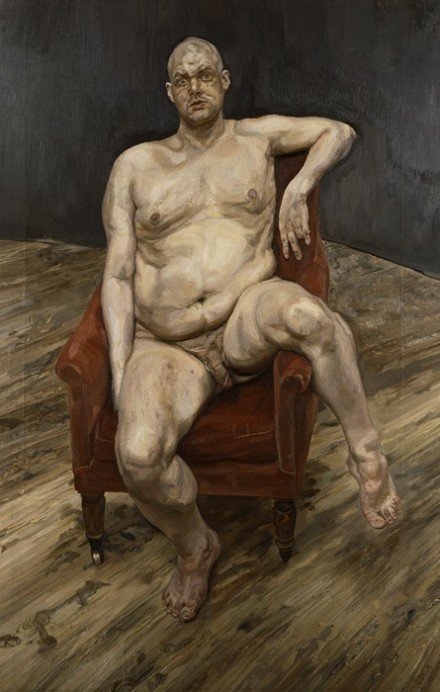
Leigh Bowery (Seated) (1990)

In this show, the NPG give us plenty of raw unabashed flesh to stare at, as Freud’s emboldened, unrepentant portraits confront the audience rather than seduce. In the galleries, there was an almost tangible electricity in the air, as the scale of the show and the sheer number of these awkwardly posed nudes threw light on the often disconcerting relationships between artist and model, the somewhat fragmented and awkward relationship between artist and children, and the range of dynamic but often slightly disturbing characters on show.

Sunny Morning - Eight Legs (1997)

The paintings are never going to be easy to look at, not least because these are not ideological nudes. This is not like looking at the beautifully blended, perfectly shaped backside of the Rokeby Venus (by Velazquez) and appreciating the aesthetics of the scene. These portraits depict ordinary people, with very ordinary bodies in no holds barred portrayal, pubic hair out, penises dangling, sagging flesh. It would be like walking along the street and seeing everyone naked, their legs parted awkwardly, their private parts on full view. It’s not easy to look at, but these portraits are undoubtedly fascinating to view, just because they are ordinary people – people who have bared all to the artist and, through him, to the world.

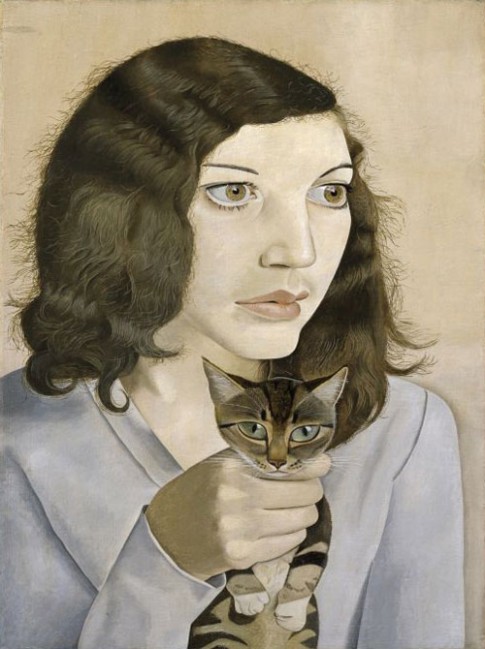
Girl with a Kitten (1947)

Nonetheless, emblematically Freudian impasto flesh asides, my favourite paintings were those from the beginning of Freud’s career. In this delightfully chronologically curated show, the first few galleries, while packed, showed Freud’s fastidiously executed, perfectly drafted early portraits, when he used very fine brushes and paid close attention to every detail. Thus in the portraits of his first wife, Kitty Garman, you can see every hair on her head, and in the portrait of her wearing a yellow gown (with boob unceremoniously flopping out), each fibre of that gown’s toweling texture is painted. As Freud’s portraits grew less detailed and Freud’s preference was for thicker sable brushes, he still paid close attention to a number of background factors in his work. In Interior with Plant, Reflection Listening (1968) for example, the leaves of the plant are painted with excruciating detail – every millimeter of the plant, from its shiny leaves and rough edges, to the dying leaves and dried up ends, are perfectly represented by Freud. His early paintings have lost none of their intensity in being scrupulously painted – the sitters look tense, and the widened eyes, typical of Freud’s portraits at that time, are full of emotional anxiety and unguarded vulnerability. From the very beginning, Freud had an exceptional talent for painting simple portraits loaded with dramatic tension and emotional complexity.

Girl with a White Dog (1950-51)

Interior with Plant, Reflection Listening (Self-Portrait) (1967-8)

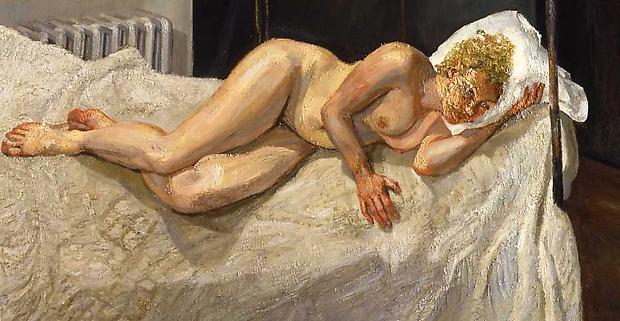
As the show goes on, the works become more ambitious and the nakedness more frequent. This is all very well, but what upset me was not the nudity, but the increased coarseness of Freud’s finish. From his Benefits Supervisor onwards, the texture of his paint finish becomes more and more lumpy which really made my stomach turn. In his 2007 portrait, Ria, Naked Portrait, the face of Ria appears disfigured by a mass of lumpy built up textured paint on her face, which looks more like the affliction of some terrible skin disease. The effect is the same in his final, unfinished painting, Portrait of the Hound (above) where the face of his studio assistant appears contaminated by the same warty contagion. It’s an unpleasant finish which rather repulsed me as I walked away from this show.

Ria, Naked Portrait (2006-7)

Still, this messy end did nothing to dissuade me of the overall merits of this show, and the superb skill which Freud demonstrated throughout his career. Through his paintings, he has created self-contained independent souls who appear to jump from the canvas and steal the attention of the viewer. In this way, Freud leaves behind a multifaceted legacy which will live on wherever his portraits hang. In the meantime, this opportunity to see so many hung together is truly a must-see, and so much more fulfilling than 5 million purple trees lauded down the road in Piccadilly.

Painter and Model (1986-7)

All images above are the copyright of Lucian Freud.