Skip to content

Posts from the ‘Art’ Category

Roman Holiday

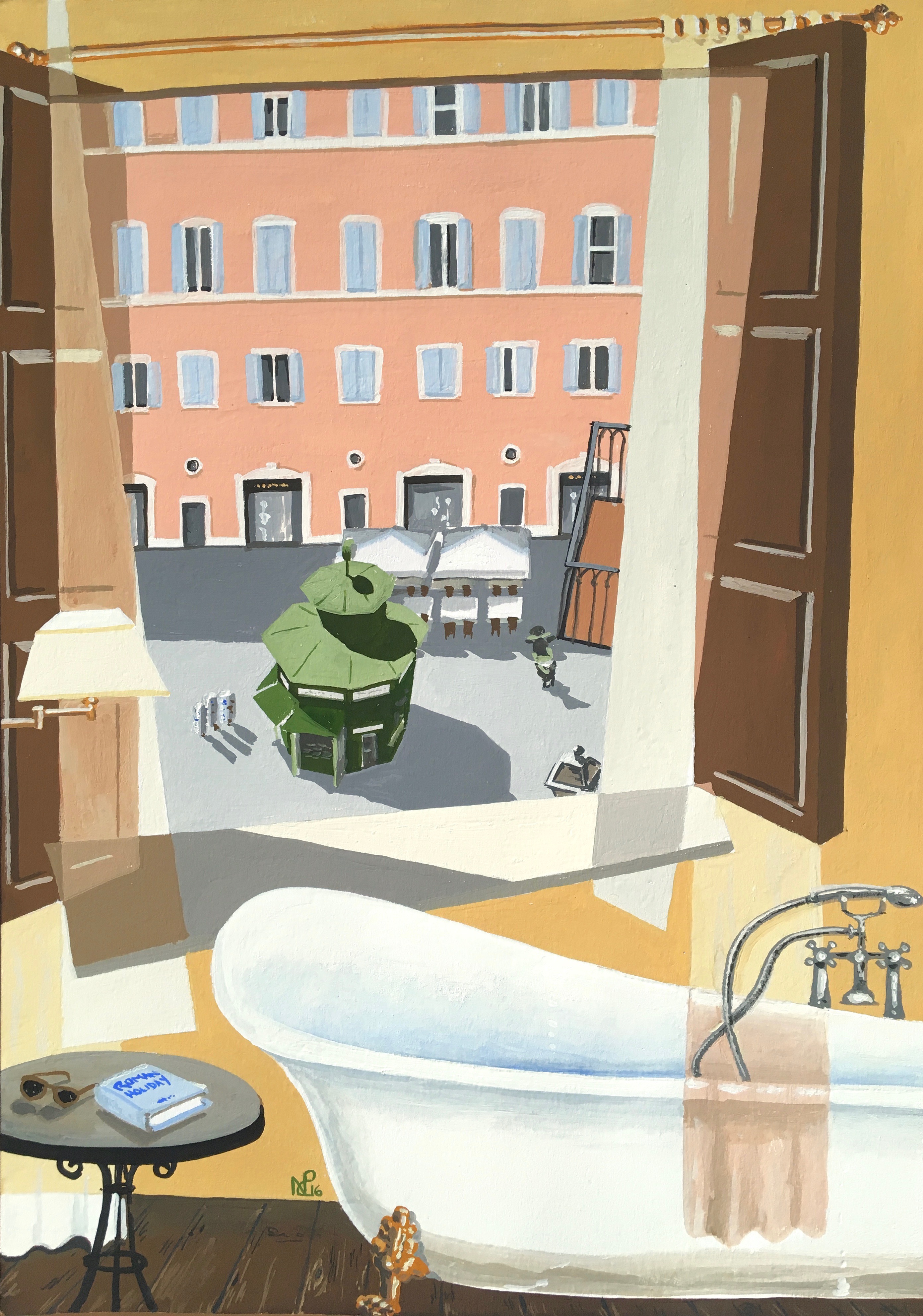
There was something intrinsically Roman about the place we briefly called home in Rome. We were staying in the Relais Leone, not so much a hotel as a converted apartment, whose reception was open only a few hours a day, and which otherwise bore all the appearance of a series of private apartments. This, together with an entrance through a very grand (and extremely heavy) great gilded door and up three flights of marble stairs, made the whole adventure feel all very colloquial, as though we were residents of that great Italian city. When in Rome, do as the Romans do, or so the great adage goes, and in our little corner apartment, we felt Roman to the core.

While we immediately fell in love with a bedroom decorated in a simple yet instantaneously lavish baroque design, together with the kind of free-standing bath which makes frequent languishing appearances in my dreams, the highlight of the room was its views. Not the most spectacular – here we did not exactly have Diocletian’s palace as in Split – but whose grace was founded in the simple expanse of the terracotta building ahead, elegant in its embellishment of pale blue shutters. And if the building itself were not enticing enough, beneath it, the bustling Piazza di San Lorenzo in Lucina spread out before us, two cafes spilling onto its cobbled pavement, and a little press-pergola crowning its centre.
Roman Holiday FINAL

Roman Holiday (2016 ©Nicholas de Lacy-Brown, gouache on paper)

One year ago, at about this time, I completed a collection of small gouache views onto the various bedrooms, or honeymoon suites, we had enjoyed after our marriage. A year later, it felt only appropriate that I should capture this Roman bedroom in gouache on paper, with the various dimensions of the room, its view, and of course that all important free standing bath included. It’s a scene which for me sums up both our experience and the elegance of this Spagna region of the city – lined with boutiques and posing Romans sipping Aperol Spritz in the shade, it felt iconically Roman, and us very comfortable guests within it.

© Nicholas de Lacy-Brown and The Daily Norm, 2001-2016. Unauthorized use and/or duplication of the material, whether written work, photography or artwork, included within The Daily Norm without express and written permission from The Daily Norm’s author and/or owner is strictly prohibited. For more information on the work of Nicholas de Lacy-Brown, head to his art website at www.delacybrown.com

Inspired by my surroundings: Paseo Mallorca 1

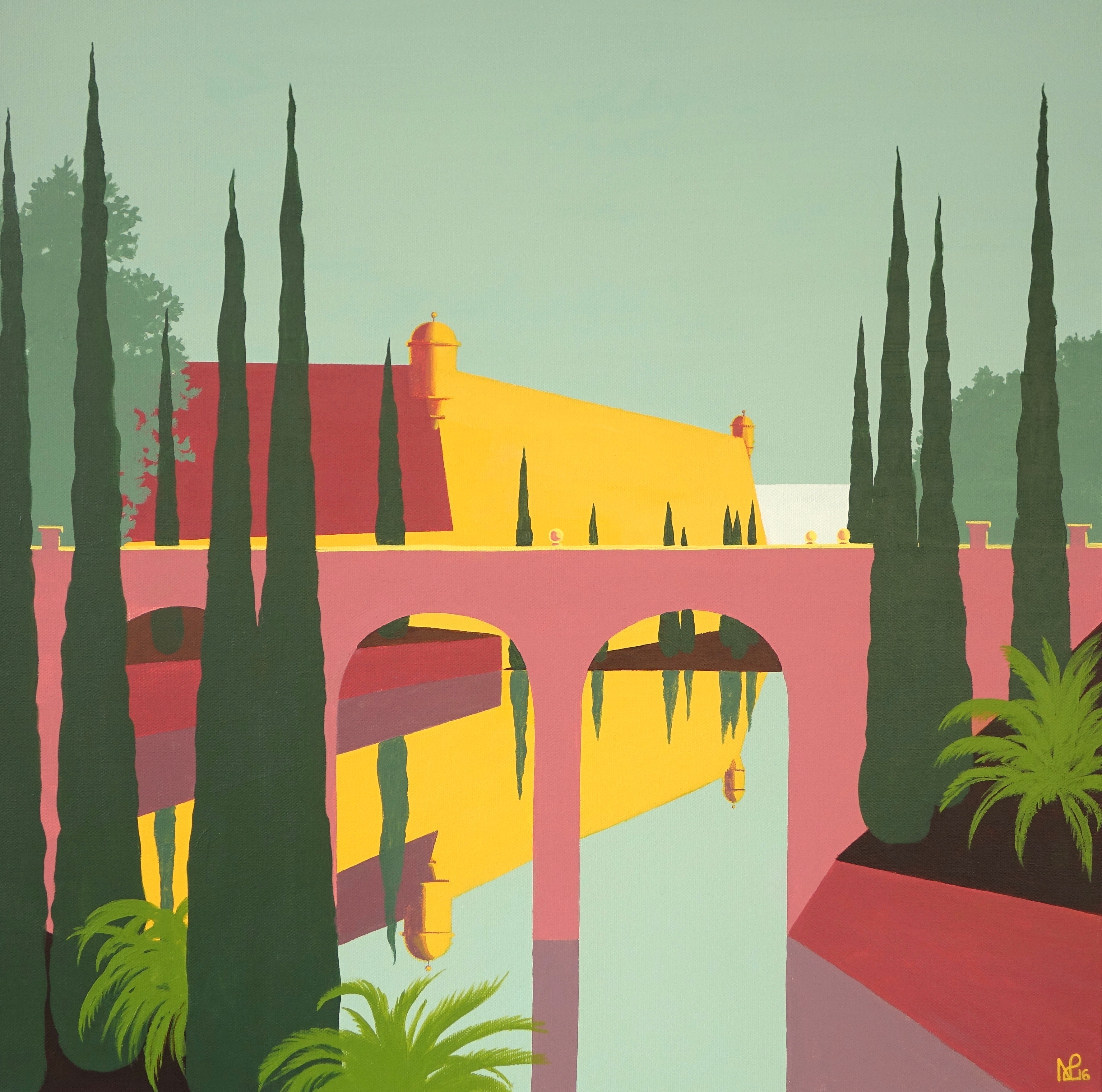
I cannot help but be inspired by my surroundings. How could it be otherwise? Not only do I live in Mallorca, one of the most beautiful islands in the world, but in its capital in Palma. There, I live on a riverside street so loaded with leafy trees, radiant palms and majestic cypresses, all flourishing at the exact level of our windows, that I feel as though I am perpetually installed within a luscious jungle. Our street, the Paseo Mallorca, is undoubtedly one of the most beautiful residential spots in town. Lined with apartment blocks making the most of the stunning views, as well as hotels and a panoply of restaurants spilling out onto the streets Paris-style, it reminds me of the enviable upmarket apartment blocks lined up along Hyde Park in London, or Central Park in New York.

But even more appealing than the greenery running along the Paseo Mallorca is the river running down the middle of it, all the way down the hill, past the ancient city walls, and out into the sea. While the river is rarely running rapidly (we are somewhat happily devoid of regular rainfall), the presence of water, and the natural accompaniment of ducks and other birds, adds a real sense of tranquility to the area. And where there is water, so too there are bridges, and here they are as elegant as the ancient city centre to which they lead.

Paseo Mallorca 1 FINAL

Paaseo Mallorca 1 (2016 ©Nicholas de Lacy-Brown, acrylic on canvas)

So for my latest set of paintings, I have taken the simplicity of my interpretative abstract style, and adapted it to the landscape genre, something which I think works well, especially when layering up different colour planes of trees and architecture. This first painting is of one such bridge crossing the river of the Paseo Mallorca, with the ancient walls of Es Baluard, the contemporary art gallery, glowing in the sun on the left. However for me, the stars of this painting and its real protagonists are those incredibly graceful cypress trees which for me give the Paseo the glorious character it exhibits.

But this is just one view of this wonderful street I call home. I guarantee that more will swiftly follow.

© Nicholas de Lacy-Brown and The Daily Norm, 2001-2016. Unauthorized use and/or duplication of the material, whether written work, photography or artwork, included within The Daily Norm without express and written permission from The Daily Norm’s author and/or owner is strictly prohibited. For more information on the work of Nicholas de Lacy-Brown, head to his art website at www.delacybrown.com
From Illyria to Italy, Part 2: Muzeji Ivan Meštrović

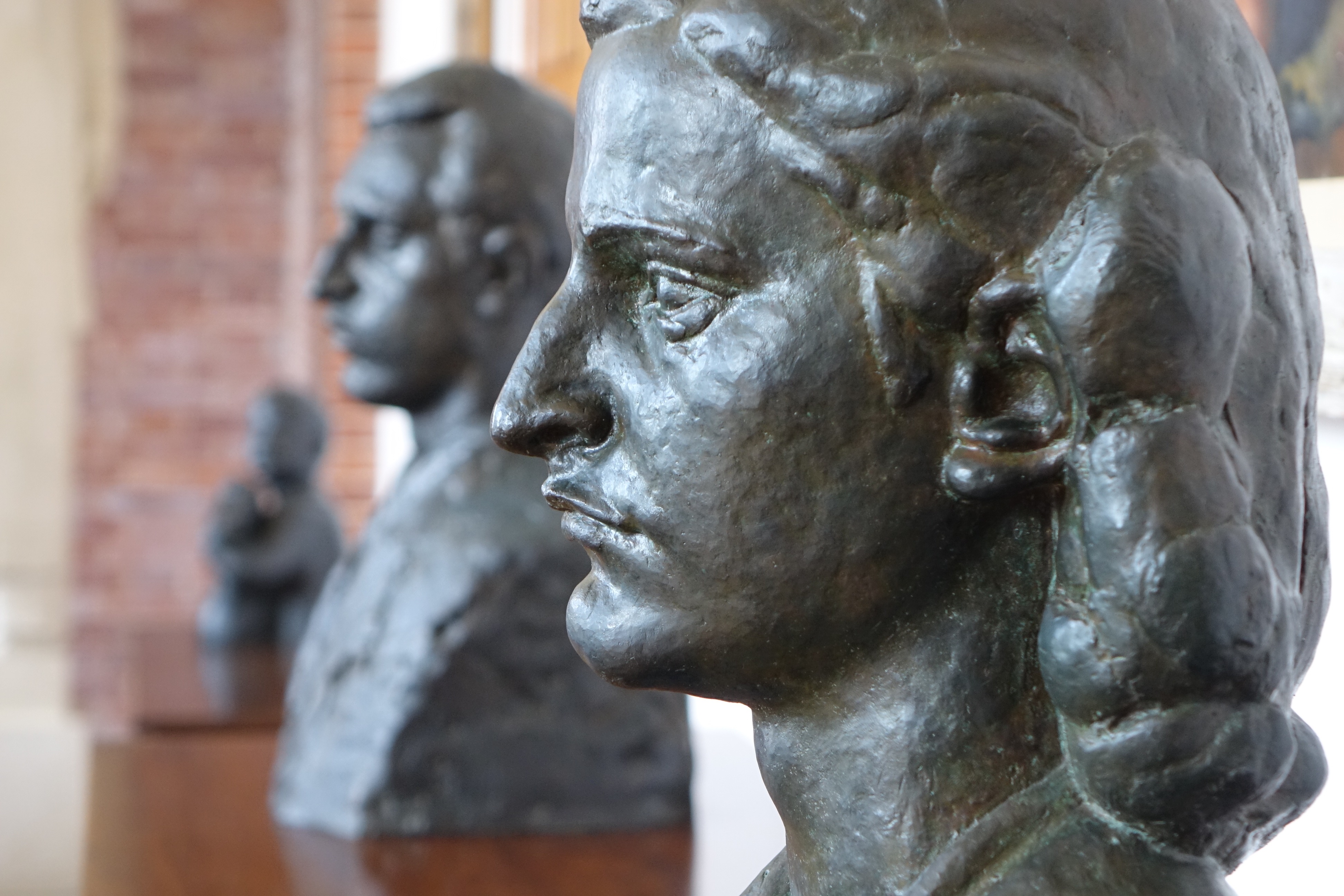
Day two of our holiday in the beautiful Adriatic city of Split on the Croatian coast, and scandalously, it started cloudy. Panic stricken at the lack of blue skies, our first question to our hotel receptionist, after choosing a hearty dish of fresh pancakes for breakfast (a recurring gym-body busting pattern I might add) was to ask what we could do in such weather. For culture vultures like ourselves, she recommended the Muzeji Ivan Meštrović, that is the museum of the renowned Croatian sculptor, a fine cultural beacon in the city where he made his name.

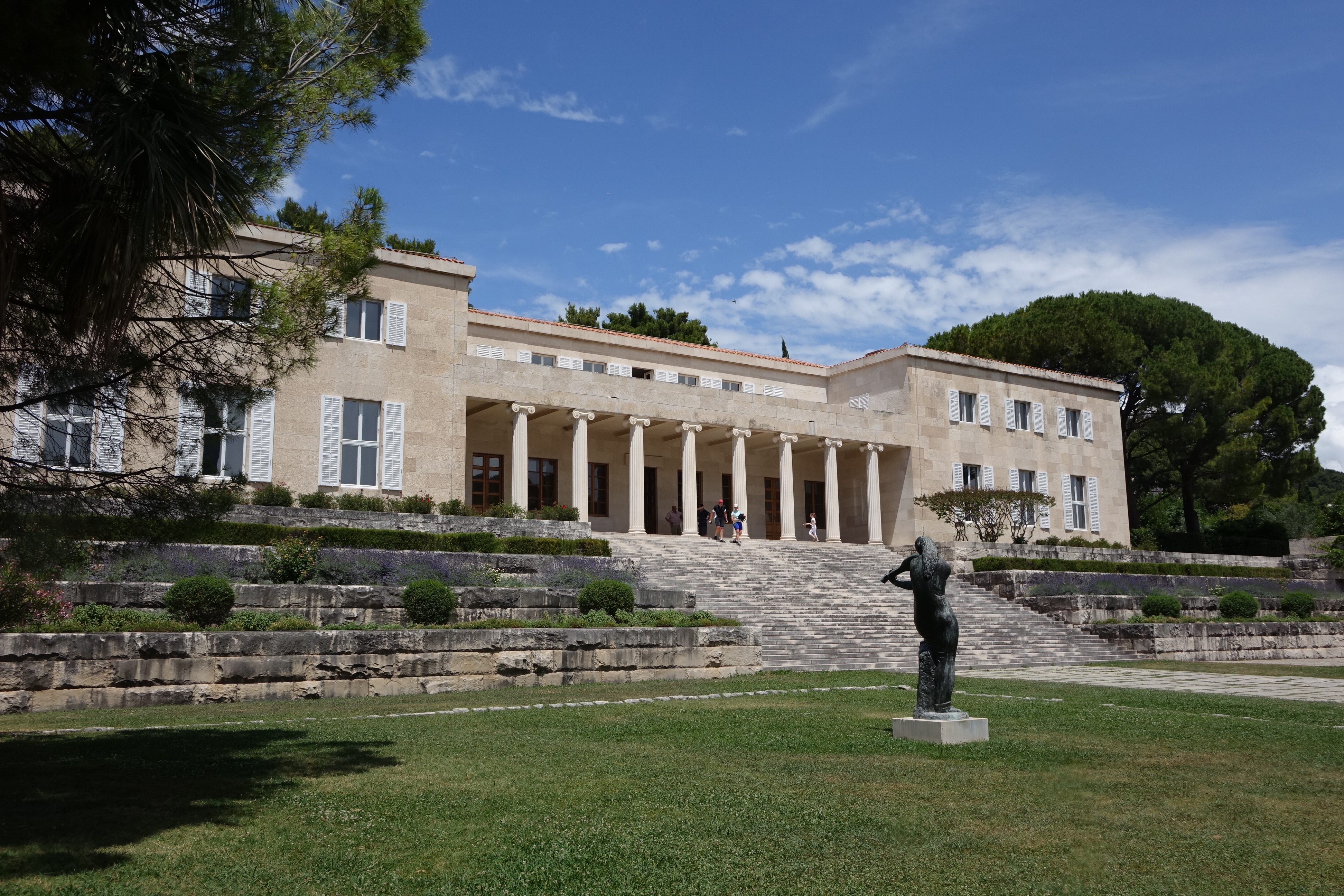
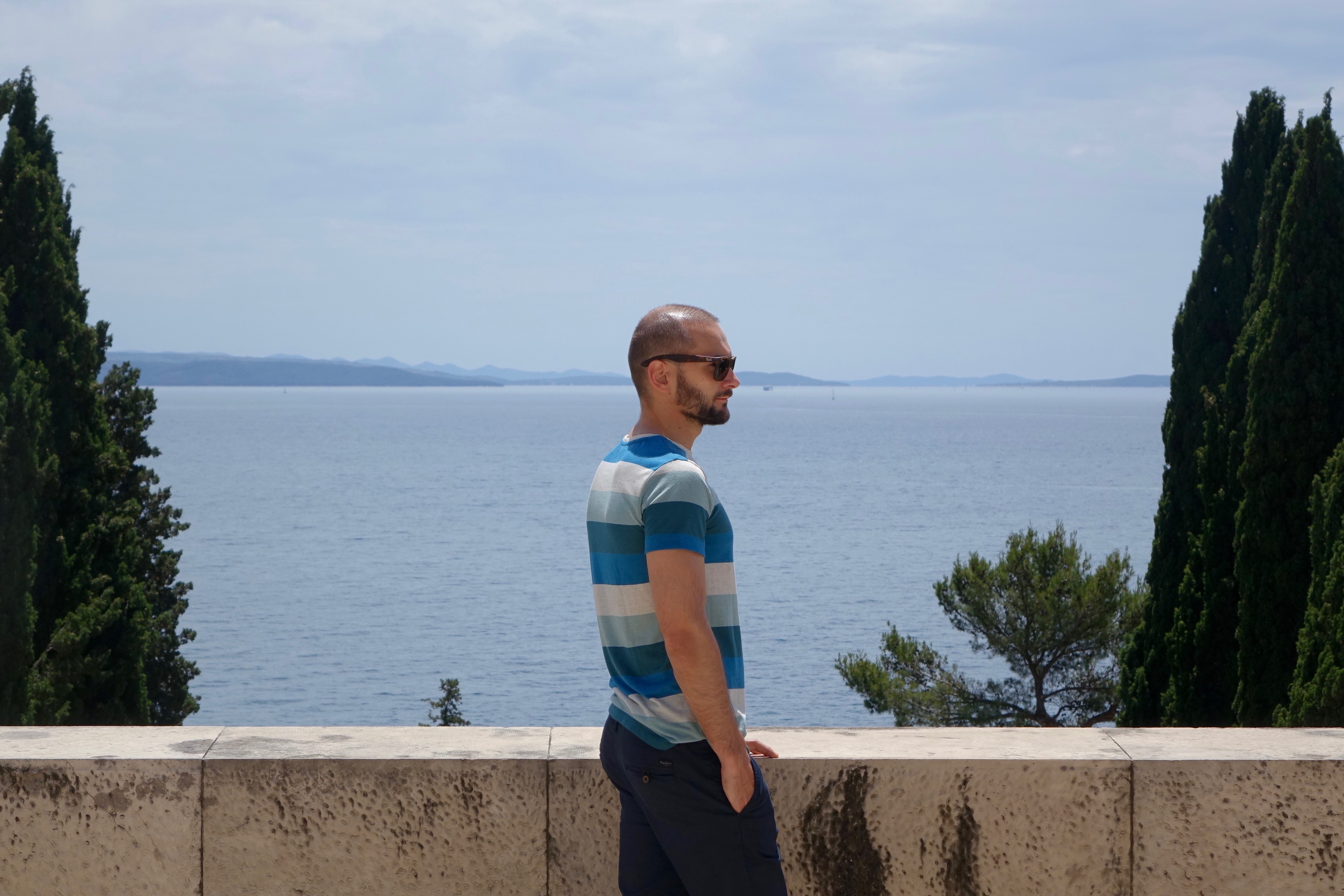
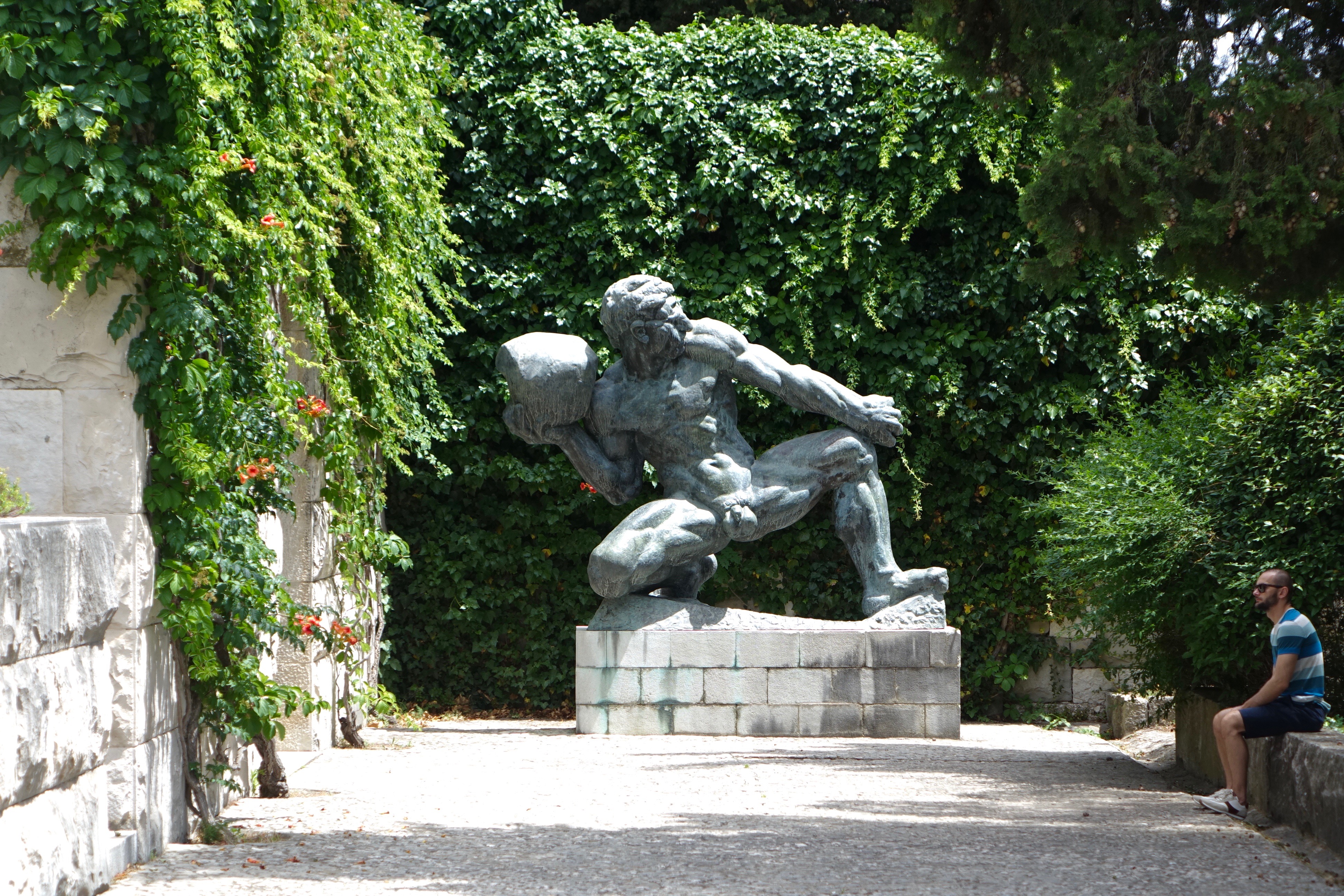
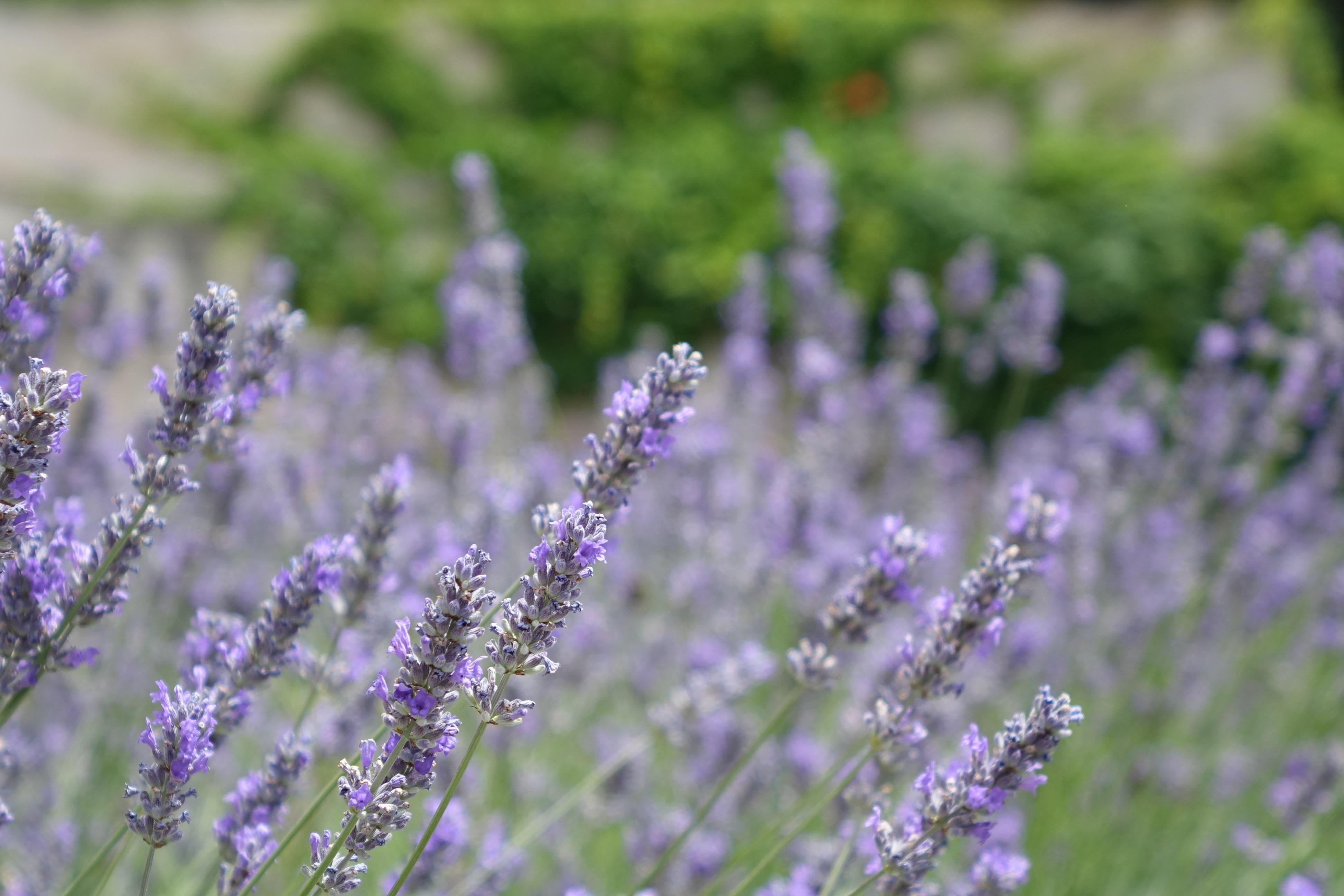
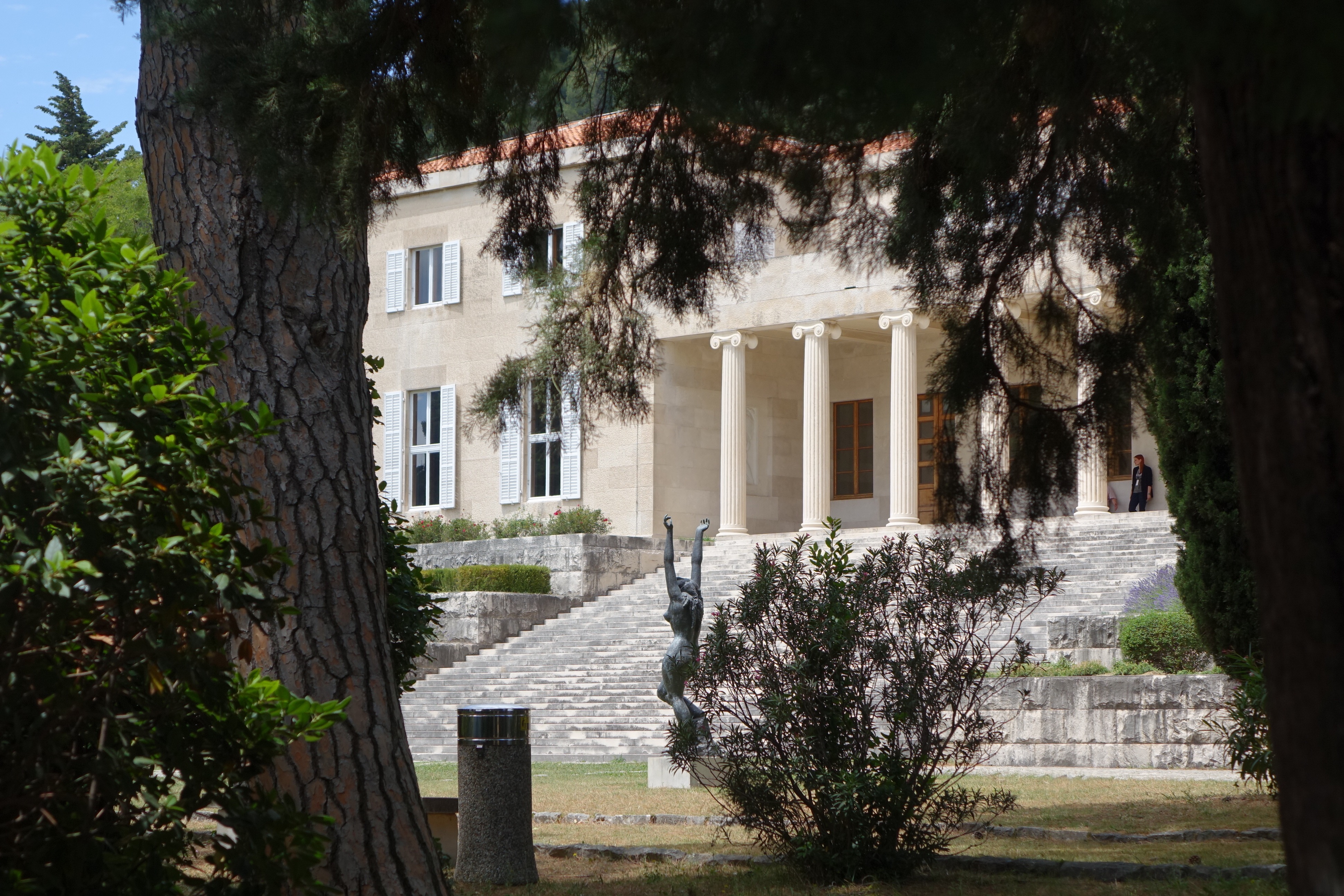
The sun had actually come out again by the time we walked along Split’s sunny promenade and made it to the museum set within the lush leafy suburbs of the city. But just as well, or we might have missed out on enjoying the exteriors of the museum which are every bit as stunning as the inside. Surrounding the impressive facade of the perfectly imposing museum building (I tried to find out the history of the building… to me it looks like a fine palace from the Communist era, but it’s hard to tell exactly when it was built) were gardens bounteous in dancing lavender, aromatic pine trees, and a ground scattered with a bed of pine needles, and the best surprise of all, baby little tortoises!

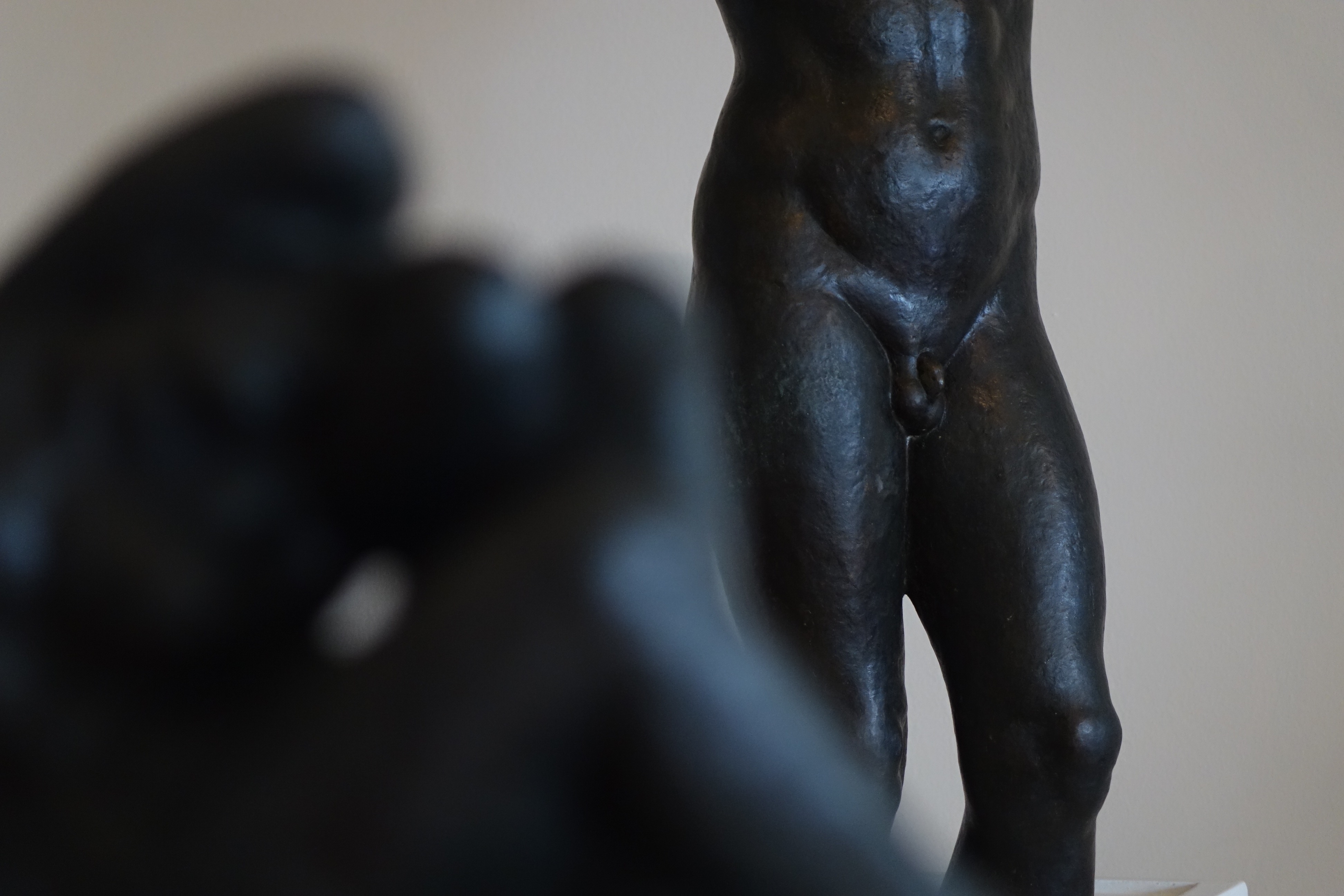
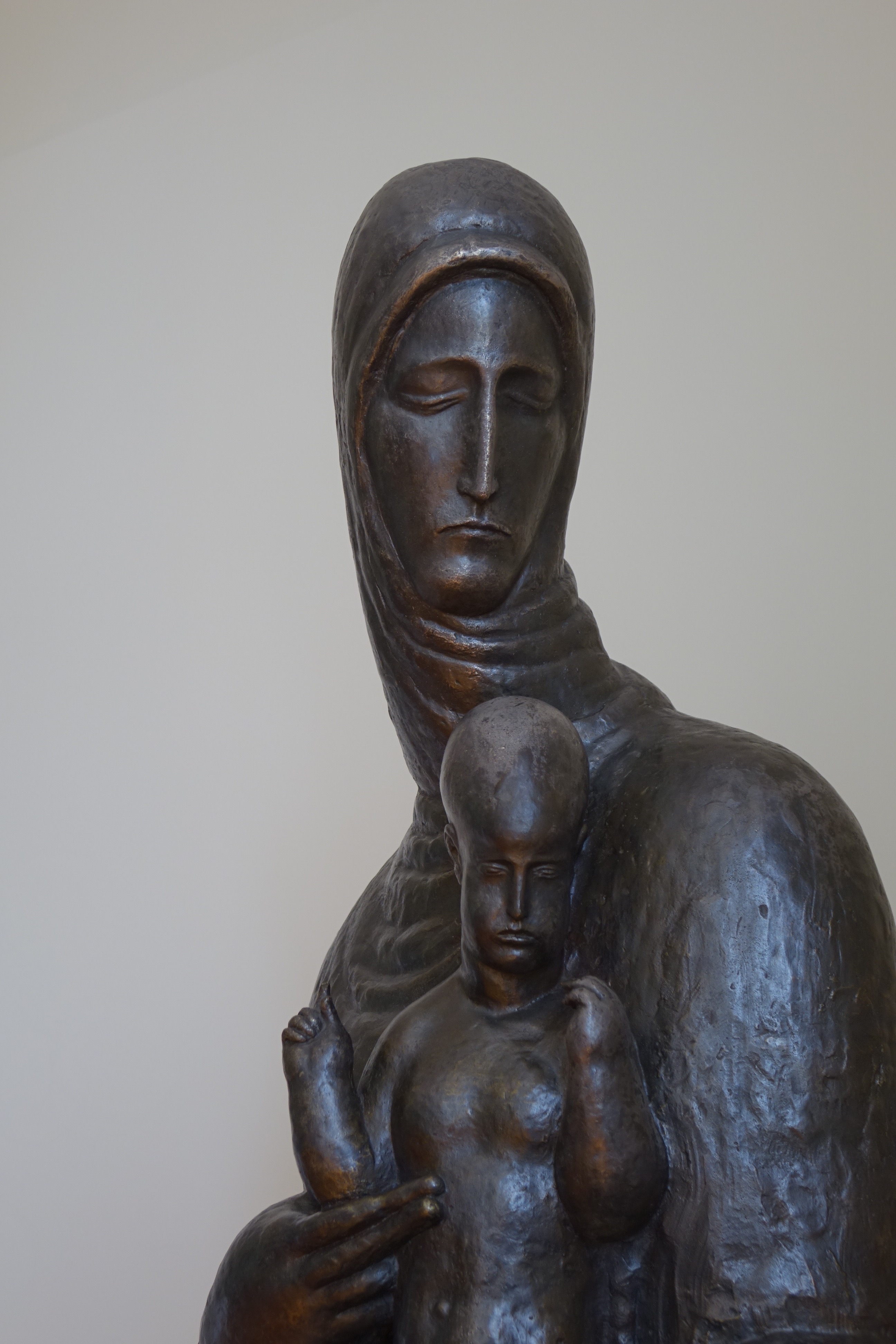
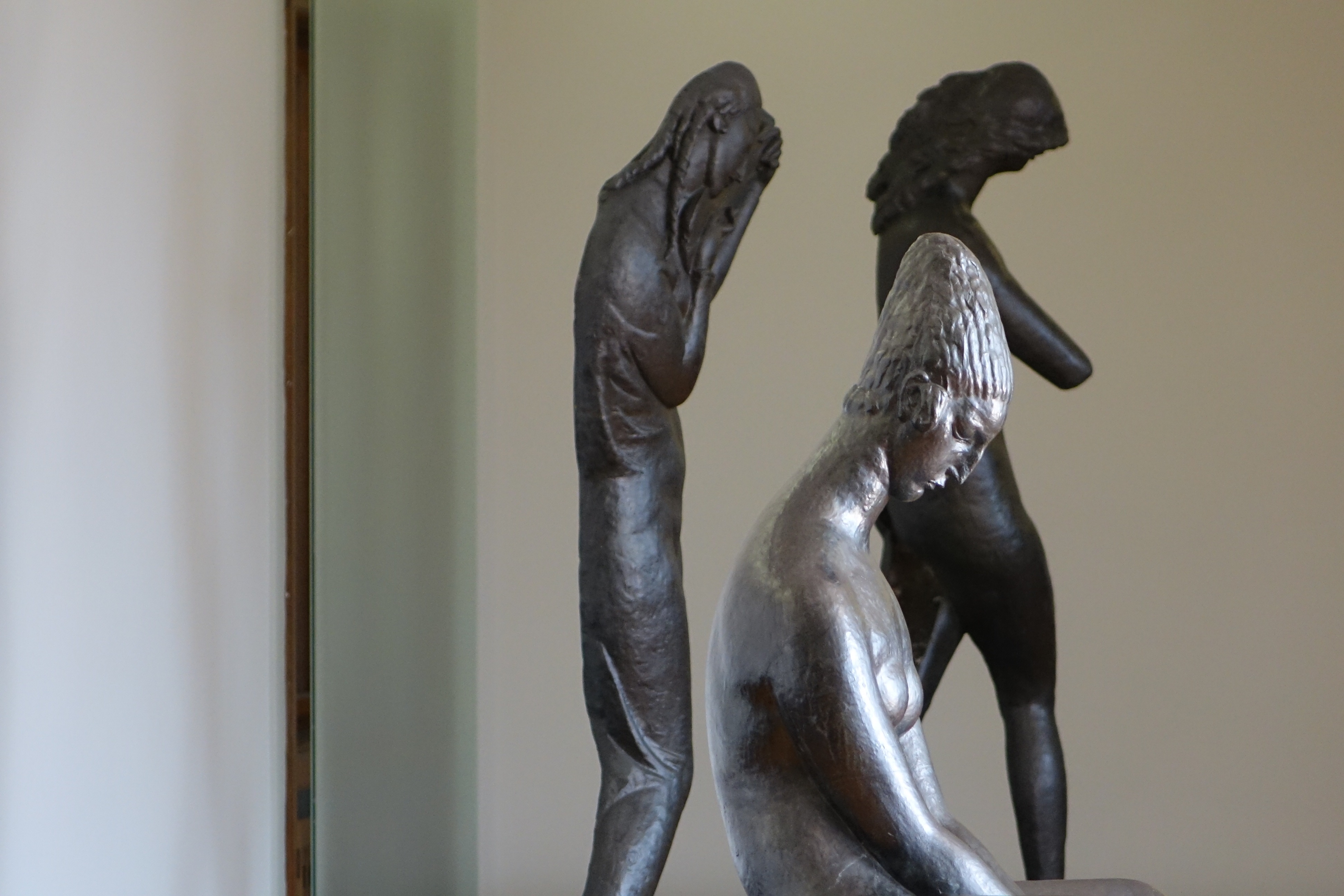
DSC02637DSC02629DSC02625DSC02649DSC02643DSC02647DSC02674DSC02651DSC02609DSC02588

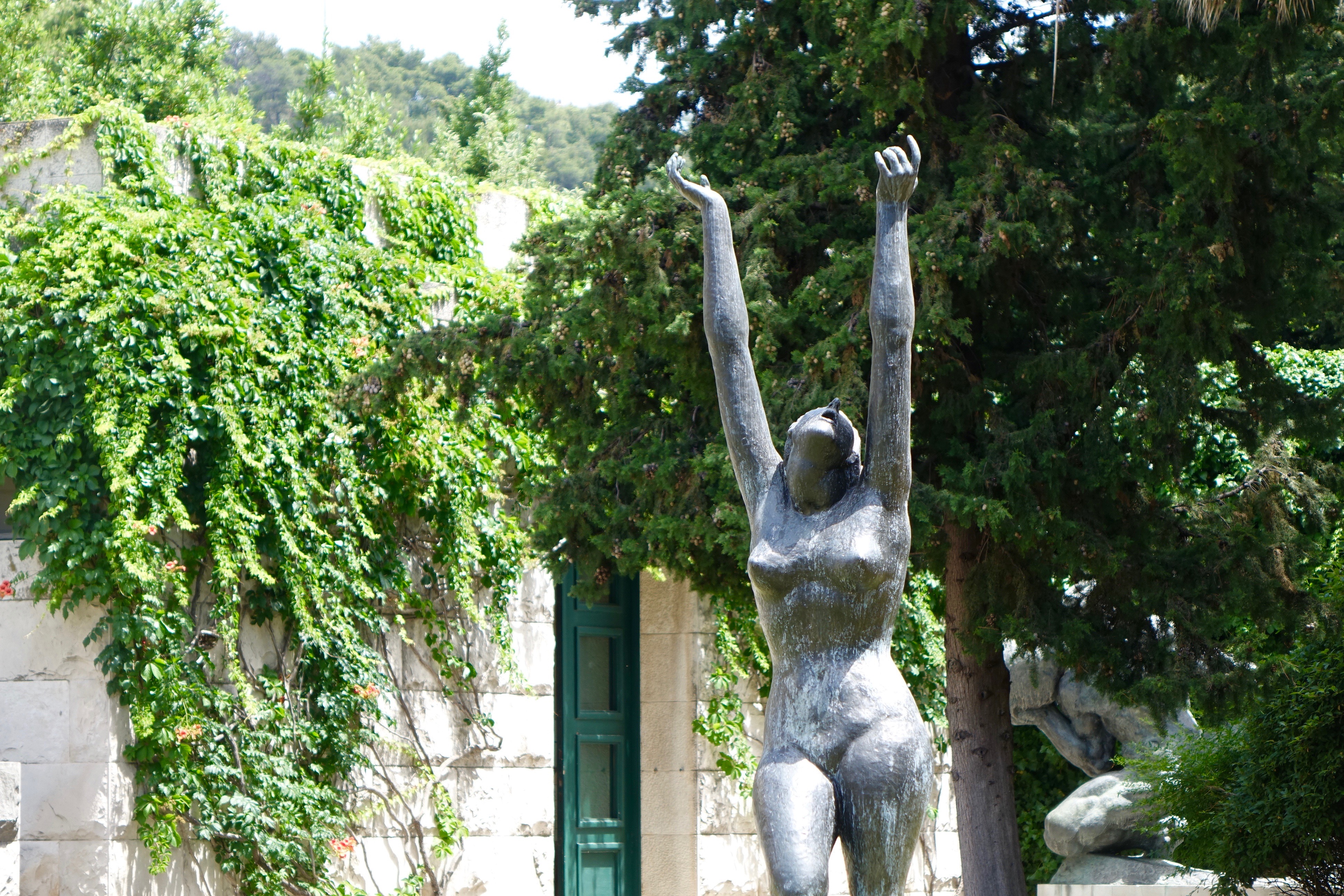
Much charmed by these garden residents, we almost forgot what we had come to see, however the various sculptures created by one of Croatia’s most renowned creatives led us up through the garden, and into the museum itself. Born in 1883 in the small village of Vrpolje, Meštrović completed his artistic training at the Academy of Fine Arts in Vienna, where he fell under the influence of the art nouveau era, and debuted in the first Secessionist exhibition.His work quickly became popular, even with the likes of Auguste Rodin who is reported to have declared Meštrović to be the greatest phenomenon among sculptors and, with characteristic modesty, an even greater sculptor than he was. This early popularity sewed the seeds of his career success, and the sculptor was soon exhibiting internationally as well as setting up home in the city of Split.

His success in the city was not enough to guarantee his safety during the Second World War, and after a brief spell in jail in order to prevent his escape from Croatia, Meštrović eventually secured himself a visa via friends in the Vatican and in Switzerland, emigrating to the US where he was to remain for the rest of his life, unwilling to live under communism. However upon his death he remembered his country, leaving a legacy of some 400 works to Croatia, many of which today form the collection of the Meštrović museum.

DSC02604DSC02601DSC02603DSC02619DSC02596DSC02597DSC02617DSC02620DSC02616DSC02621DSC02615DSC02607

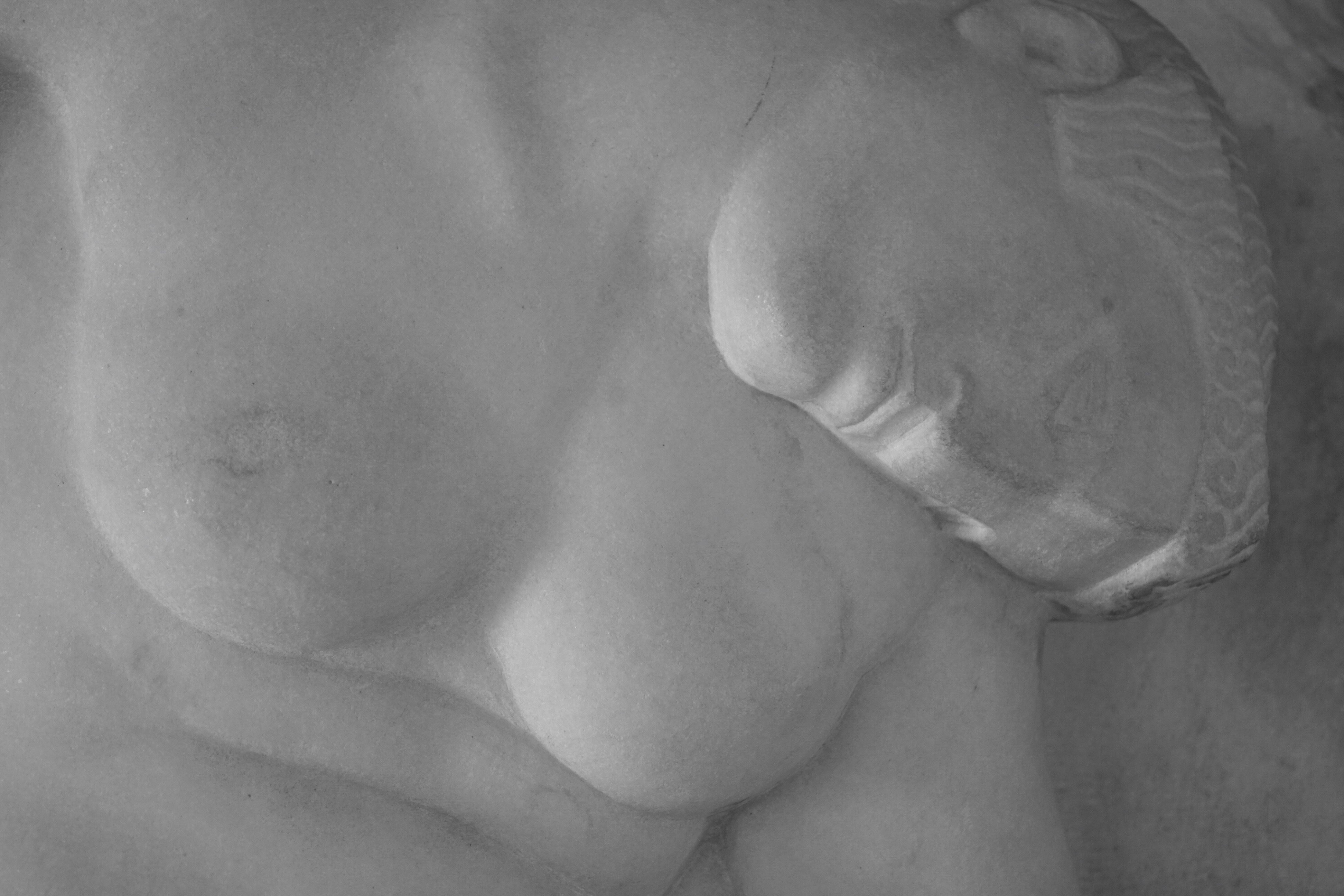
What struck us as we traversed the lofty space of this palatial museum were the viscerally real emotions the sculptor managed to capture in sculptures made of plaster and bronze. In the faces of Christ, or Mary, or in the portraits he made of friends, you are struck by an intensity of emotion, as though metal could talk, or scream, or cry. There is a sensitivity to these sculptures which is truly hyperreal even though, with their elongated heads and exaggerated features, there is a very painterly, interpretative aspect to the works.

We didn’t know the work of Meštrović before our hotel suggested we visit the museum, but as the days in Split continued we started to notice the presence of his work all around the city. And enjoying those works both in his museum, its gardens and in stunning locations in and around Split, it was not at all difficult to imagine why the city has adopted Meštrović as its favourite adopted son.

DSC02652DSC02669DSC02658

All photos and written content are strictly the copyright of Nicholas de Lacy-Brown © 2016 and The Daily Norm. All rights are reserved. Unauthorized use and/or duplication of the material, whether written work, photography or artwork, included within The Daily Norm without express and written permission from The Daily Norm’s author and/or owner is strictly prohibited. 

Melancholy Woman: Lament for a Broken Union

Sometimes in life you receive news that shocks you to the core. News which wrenches the inside of the stomach, infiltrates the heart and mind, brings tears to the eyes and fills your life, your hopes and your ambitions with darkness. I have lived through the pain of death, and the anguish of heartbreak. And all I can say is that that same physical reaction as I had experienced before once again engaged with my total metal and corporal being when last Friday I awoke to the news that the UK had voted to leave the European Union.

There is much that can be said of a Union which has grown too big, of laws unruly, of an organisation stretched beyond its limits, but there is very little which can justify the decision of 52% of the UK’s voting population opting to leave the EU for what were utterly anachronistic, completely unintelligent and sickeningly ignorant reasons. A  wave of xenophobia, which has long infiltrated English society, was normalised by a leave campaign which popularised an exit from the EU as being an excuse to cleanse the country of foreigners and in so doing exercise what they lauded to be the action of “taking the country back”. Such a move does not enable Britain to become in any way stronger, nor more progressive. It is a retrograde step which will see the nation isolated, deprived economically and falling far outside the progressive benefits of a globalised society.

It is a move which has already seen the value of the pound plummet, the political system spiral into disarray, and the relationship of the UK notably deteriorate with its neighbours and allies near and far. In leaving the EU, those who wished to reinstate an England of the past have robbed its future generations of an actively mobile, economically stable future, all the while forgetting, with an unfathomable level of hypocrisy, that the England of the past was a country whose very success and global position had been marked by its own breed of imperialism and abuse of other countries and cultures overseas.

Little more can be said to best express my feelings of dismay at this time. Embarrassment of being English is coupled with my fears of being like a disconnected refuge living abroad without the rights and the freedoms to which I have become so easily accustomed all my life.

Melancholy Woman FINAL

Melancholy Woman: Lament for a Broken Union (after Picasso) (2016, acrylic on canvas ©Nicholas de Lacy-Brown)

In reflecting on this time, I turned to art, as I always have in times of happiness and grief. When I saw the painting by Picasso, Melancholy Woman (1902), I felt engaged by a work of art which appeared to me to sum up the emotions of the moment. Taking a spare canvas, and moving immediately to paint an interpretation of the work, I created my own Melancholy Woman in the abstractive interpretative style which has shaped the body of my recent creations. In repainting this work, I have kept to Picasso’s expertly chosen colour palette, founded of his famously melancholic blue period, replacing his forms with a more geometric gathering.

http://art-picasso.com

Melancholy Woman: Lament for a Broken Union (after Picasso) (2016, acrylic on canvas ©Nicholas de Lacy-Brown)


My melancholy woman laments, like Picasso’s, for an intense heartbreak. I imagine his protagonist wept over some lover, some union lost. My woman also weeps for a broken union. The European Union. Broken by those who entirely misunderstood the modern world, proactively destroying the future of those who might still have benefitted from it. What happens next, no one knows.

© Nicholas de Lacy-Brown and The Daily Norm, 2001-2016. Unauthorized use and/or duplication of the material, whether written work, photography or artwork, included within The Daily Norm without express and written permission from The Daily Norm’s author and/or owner is strictly prohibited. For more information on the work of Nicholas de Lacy-Brown, head to his art website at www.delacybrown.com

Shakespeare 400: A Midsummer Night’s Dream

2016 is the year of Shakespeare. It is a festival which marks the great Bard’s birth, and his death, and above all things a celebration of his incredible works, masterpieces which have shaped generations, been interpreted and reinterpreted across the centuries, and which are a core of both British and global theatre. In exploring my own reinterpretations of his plays, some 20 years after I completed my first Shakespeare collection at the age of 13, I have moved onto my second work, painted in my new interpretative abstract style.

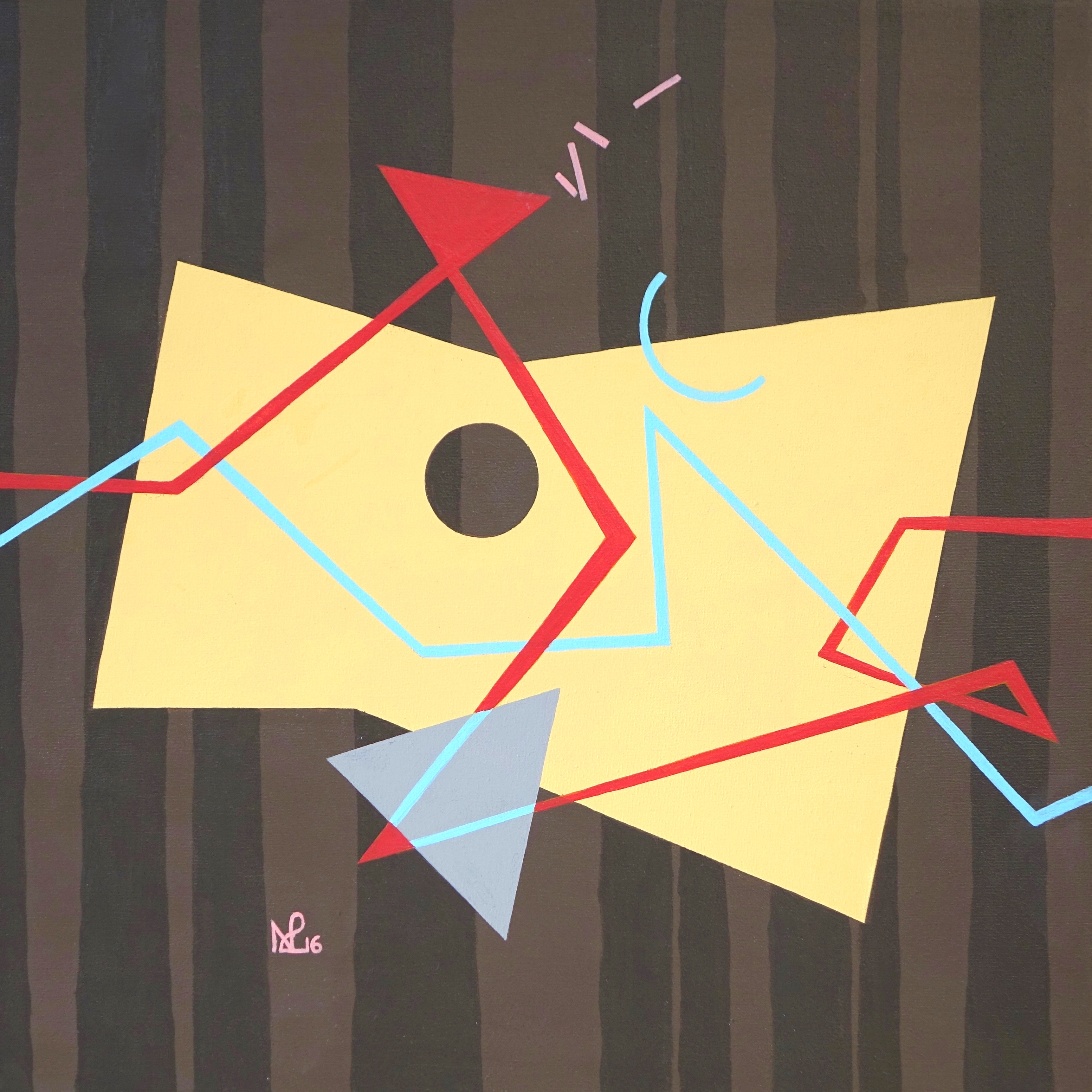
The play is A Midsummer Night’s Dream, a comic frolic of cross-purpose love affairs, mischievous spells, sparkling forest fairies and of course the famous Donkey metamorphosis of Bottom, all set between the trees of a forest near Athens. That wonderfully magical forest setting forms the background of my work, a simplified design of vertical brown stripes, creating a sense of the darkness and depth of the forest which characterises the tone of that mystical Midsummer’s Night.

Midsummer FINAL

A Midsummer Night’s Dream (2016 ©Nicholas de Lacy-Brown, acrylic on canvas)

Central to the piece is a large yellow shape, representing the wall in the story of Pyramus and Thisbe, whose chink provides the only channel for communication for the two forbidden lovers after whom the story is named. Creating something of a play within a play, the tale of Pyramus and Thisbe (originally told by Ovid) is acted out at the end of the play by the theatre troupe from whom the actor-turned-donkey Bottom comes, and which likewise reflects the theme of forbidden love which is played out in the forbidden love between Hermia and Lysander.

It is in fact that disallowed love affair which sends Hermia and Lysander fleeing to the forest, where in their wake Helena, Hermia’s friend, and Demetrius, the man Hermia’s father wishes her to marry, follow. These four characters then become the pawn of Oberon and Titania, the King and Queen of the forest fairies whose own conflict results in a series of magical mischief which in turn results in the four youngsters of Athens variously falling in and out of love with one another while under the bewitchment of the “love-in-idleness” flower. That same juice is used to bewitch Titania, who in turn is caused to fall in love with the metamorphosed Bottom.

All this is represented by my painting of shapes and lines. The energetic lines which cross the canvas are those of Titania and Oberon, whose ballet of magical conflict weaves in and out of the play’s plot. Where they meet, and form shapes within their overlaps, these shapes represent the four young lovers, Helena, Hermia, Lysander and Demetrius. The grey triangle is of course the donkey head of Bottom, and when Titania’s “line” traverses the space, it is transformed blue, as though bewitched by Oberon. Meanwhile above Oberon’s line, the blue curve represents his faithful assistant Puck, the cheeky little fairy who mischievously applies the love-potion, and above the red triangle of Titania, the four little pink lines are her flying little fairy assistants, Peaseblosom, Cobweb, Moth and Mustardseed.

For those unaware of this brilliant play, the description above may bamboozle the mind. Where that is the case, please enjoy the painting instead, whose simplified lines and structure make, in themselves, what I hope is a thoroughly pleasing image for Midsummer’s Night.

© Nicholas de Lacy-Brown and The Daily Norm, 2001-2016. Unauthorized use and/or duplication of the material, whether written work, photography or artwork, included within The Daily Norm without express and written permission from The Daily Norm’s author and/or owner is strictly prohibited. For more information on the work of Nicholas de Lacy-Brown, head to his art website at www.delacybrown.com

My Van Gogh Bedroom heads for Beijing!

A few months ago, I was on the brink of being inspired by another great artist in creating a further painting in my interpretative abstract collection when I received an important email. It was an artist who has inspired me several times before, the one and only master of colour and of passionately applied brush strokes, Vincent Van Gogh. The email I received flew into my inbox almost at the moment when I applied my signature to canvas. I had been contacted by the prestigious Van Gogh museum in Amsterdam. An opportunity had arisen, they told me, to submit contemporary artworks inspired by Van Gogh to be considered for a new globally important project. I did not hesitate to apply, and amongst those works I sent was the new work I had been working on when their email had been received: Vincent’s Bedroom, an abstractive interpretation of Van Gogh’s most famous work depicting his bedroom in the Yellow House in Arles, and presented here on The Daily Norm for the first time.

Vincent Bedroom FINAL

Vincent’s Bedroom (after Van Gogh) (2016, ©Nicholas de Lacy-Brown, acrylic on canvas)

A few weeks passed, and I was delighted to receive the news that not only had this new painting been accepted by the prestigious museum, but likewise two others painted when the same Dutch genius inspired me in the past: The Sweet Potato Eaters (based on Van Gogh’s famous The Potato Eaters) and my Norm version of his Self-Portrait with bandaged ear.

The months rolled by, during which time I waited in excited anticipation to hear from the museum what would happen to the images of my work. Thrillingly, it has now been announced that digital reproductions of my paintings will be included as part of a brand new interactive exhibition, the Meet Vincent Van Gogh experience, which will premier in Beijing in China before going off on tour. I may not have travelled anywhere near as far, but I am overwhelmed with pride that images of my paintings will be going in my place to the other side of the globe.

Vincent_van_Gogh_-_De_slaapkamer_-_Google_Art_Project

The original inspiration: Bedroom in Arles by Vincent Van Gogh (first version, 1888 – Van Gogh Museum, Amsterdam)

All that remains is to wish the Van Gogh Museum the best of luck in this exiting new venture, and to thank them in turn for their incredible support of my work. It’s not the first time I have been lucky enough to have my work included in an installation by that world-renowned museum, but it is a uniquely new experience for my works to go to Asia. You never know, I may get over to China myself to see them.

© Nicholas de Lacy-Brown and The Daily Norm, 2001-2016. Unauthorized use and/or duplication of the material, whether written work, photography or artwork, included within The Daily Norm without express and written permission from The Daily Norm’s author and/or owner is strictly prohibited. For more information on the work of Nicholas de Lacy-Brown, head to his art website at www.delacybrown.com
The Wrestlers (after Courbet)

I adore art, especially the masterpieces of old, and I spend a lot of my time gazing in admiration at the works of the old masters and the more recently celebrated artists of the 20th century. However, of all the works I see, only a few inspire me to recreate the work in my own way. Velázquez´s Las MeninasTitian’s Bacchus and Ariadne and Rubens’ Descent from the Cross are three such works which have recently driven me to paint the old masterpieces afresh, and a few weeks ago, another chance encounter had a similar effect.

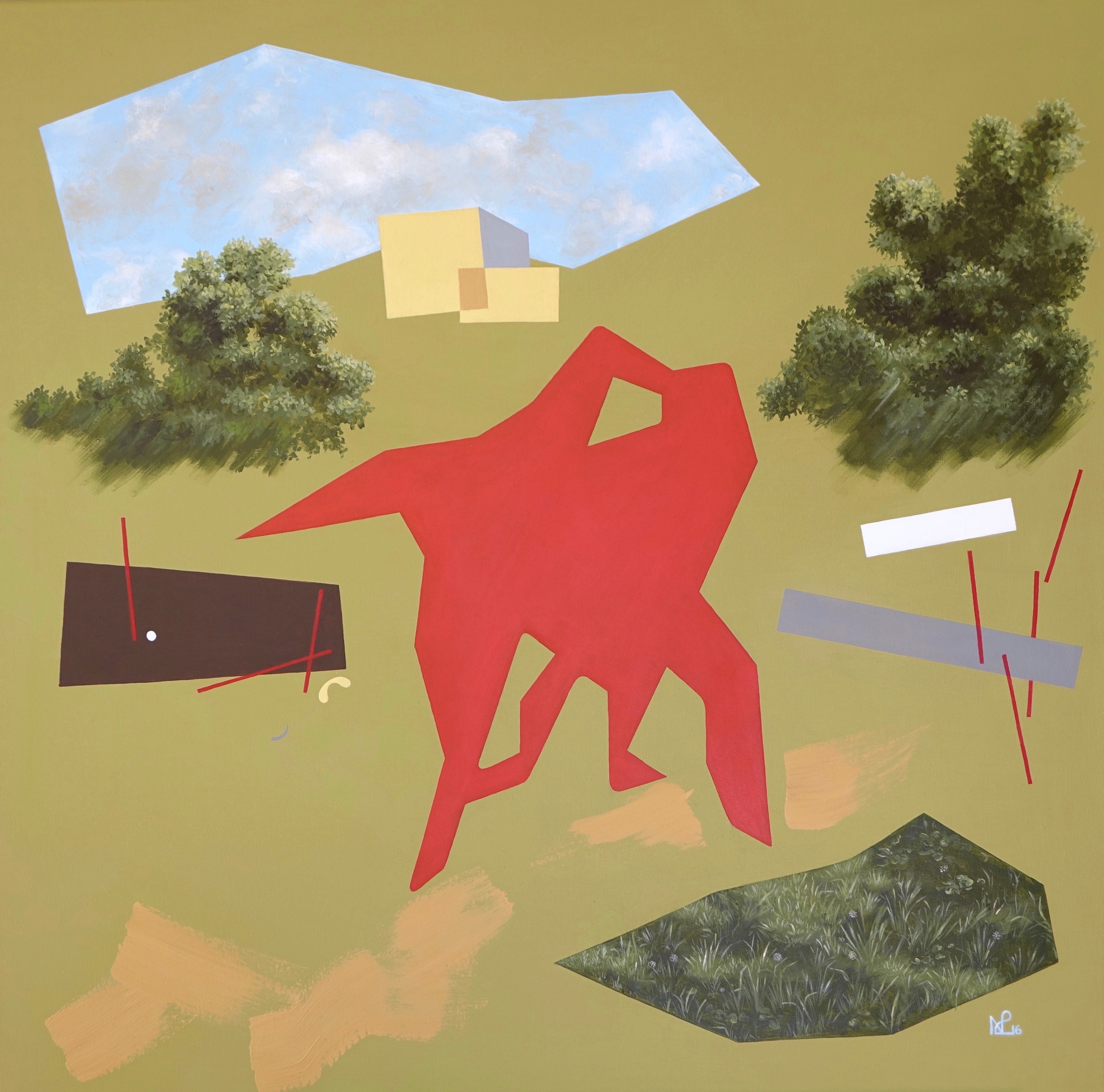
It was on Instagram in fact that I stumbled across this most recent inspiration – a work by the French master, Gustave Courbet, The Wrestlers – which the instagram user had also discovered for the first time. Painted in 1853, in the typical realist style for which Courbet was best known, and which saw him break away from the classical genre style of painting which was predominant in the mid-19th century, the work is not one I have seen before, perhaps because it is housed in the Fine Arts Museum in Budapest. But as soon as I saw it on the screen of my iPhone, I was struck by the incredible energy of the wrestlers, and the brilliant realism of their taught muscles, interlinked as they strain and struggle against each other – a fantastically visceral image in contrast with the refined crowds watching them from civilised stands in the background.

The Wrestlers FINAL

The Wrestlers (after Courbet), 2016 ©Nicholas de Lacy-Brown, acrylic on canvas

It didn’t take long for my own version of the image to form in my head, following my new interpretative abstract style with which to give the work a new treatment. I have included some realistic elements myself, in homage to Courbet, but for the most part my reinterpretation is highly abstracted, not least the central figures themselves. This was by far the most difficult element to complete, and it took me some 20+ attempts before I was happy with the final abstract form. Unsure whether to separate the figures, or paint them as one, I latterly settled on a unified form, since the wrestlers in Courbet’s original are so obviously, almost erotically combined into a single star-like figure. The cadmium red colour however was clear as soon as I saw, around the same time as discovering the Courbet work, a photo of a brilliant red Alexander Calder mobile against a green grassy background. I knew from that moment that my wrestlers had to be red, creating a central contrast which is key to the balance of the painting. And so it was born.

Gustave_Courbet_-_The_Wrestlers_-_WGA5462

The Wrestlers (1853) by Gustave Courbet (Fine Arts Museum, Budapest)

© Nicholas de Lacy-Brown and The Daily Norm, 2001-2016. Unauthorized use and/or duplication of the material, whether written work, photography or artwork, included within The Daily Norm without express and written permission from The Daily Norm’s author and/or owner is strictly prohibited. For more information on the work of Nicholas de Lacy-Brown, head to his art website at www.delacybrown.com
Shakespeare 400: Richard III

It probably will not have escaped your notice (particularly if you live in the UK) that this year marks 400 years since the death of Britain’s most famous ever playwright and poet, William Shakespeare. And across the country and beyond there has been something of a resurgence of interest in his work. This, together with the coincided discovery of a Shakespearian theatre troupe out here in Mallorca aroused my own Bard reawakening, not least because I have a little anniversary all of my own – some 20 years since I painted, at the tender age of 13, my first ever substantial collection of paintings which just happened to be a scene from every one of Shakespeare’s 37 plays.

So with one thing leading to another, it wasn’t long before I felt old inspirations stir up, and the decision to once again tackle Shakespeare as an inspiration for my art took hold.

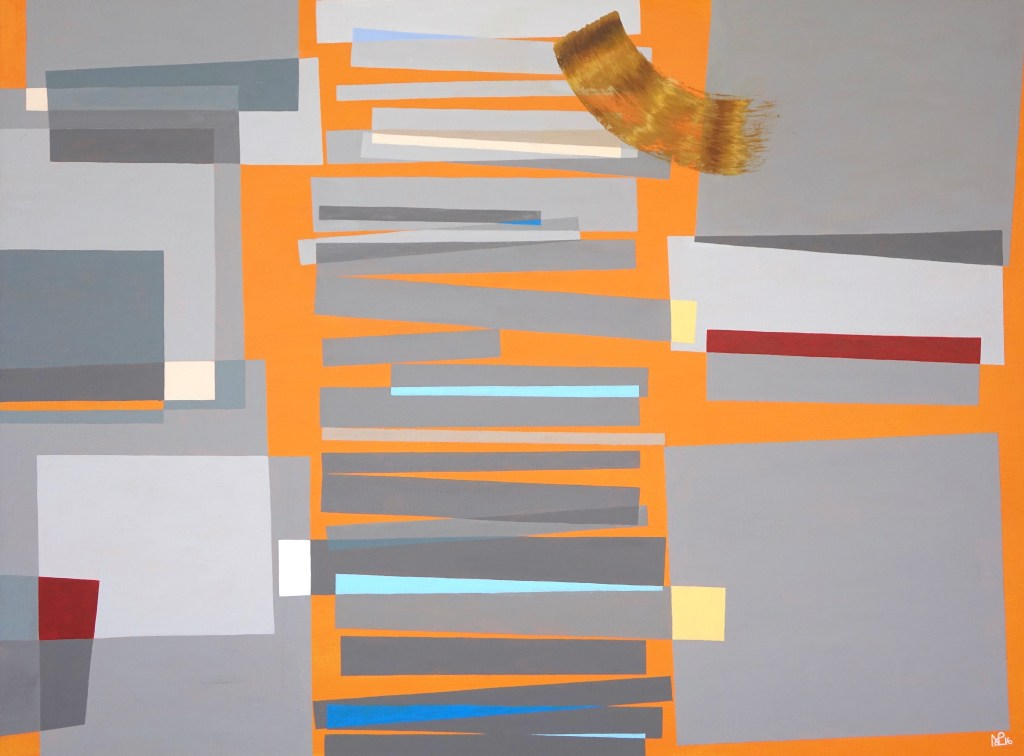
Richard III (2016 ©Nicholas de Lacy-Brown, acrylic on canvas)

Richard III (2016 ©Nicholas de Lacy-Brown, acrylic on canvas)

First off the rack is this painting of one of the Bard’s history plays, Richard III. Painted in my new style, interpretative abstraction, the work appears simple but in fact represents the story of Richard III in three clear aspects. First, the three piles of what one could mistake for bricks or books represents, at the painting’s most simplistic visual level, the “III” of Richard in roman numerals. The second meaning is the allusion to the famous scene whereby the Duchess of York (Richard’s mother), Queen Elizabeth (his dead brother’s wife) and Queen Margaret (the previously exiled wife of the former King Henry VI) meet together and bemoan and curse the Machiavellian rise of Richard III to power.

That rise is finally, and most importantly represented by the same three pillars of blocks, each of which depict an important part of the story: The central column is the staircase which tracks Richard’s bloody ascent through the rungs of power to be King, with the slash of the golden crown shining boldly at the top; the column on the right is the Tower of London and in it the two yellow cubes are the two blond princes, the true heirs to the throne who Richard famously kills in the tower in order to clear his path to the crown; and the column on the left, with its overlapping grey forms like medieval armour, represents the Battle of Bosworth at which Richard was finally defeated.

It seems remarkable that some 20 years have passed since I painted my teenage Shakespeare collection, especially now as I rediscover the same excitement which his plays engendered in me all those years ago. Now I’m looking forward to the challenge of finding them again, and painting them afresh (albeit perhaps not all 37…!).

© Nicholas de Lacy-Brown and The Daily Norm, 2001-2016. Unauthorized use and/or duplication of the material, whether written work, photography or artwork, included within The Daily Norm without express and written permission from The Daily Norm’s author and/or owner is strictly prohibited. For more information on the work of Nicholas de Lacy-Brown, head to his art website at www.delacybrown.com

Interpretative Abstract: Cala Sant Vicenç

After some months now of pursuing a new artistic style, I think I’ve finally hit upon a way to describe it. In cleansing my forms and decluttering my method of expression, there is something decidedly abstract about my new work. But by its nature, painting the abstract is to strip an image of almost any recognisable qualities, and instead to create something entirely without figuration. My paintings do not do that –  more often than not they aim to reinterpret something recognisably visual, whether it be an famous painting from the history of art, or an Easter parade. Yet those interpretations are in many ways decidedly abstract – simplistic, geometric. And therefore I think that the best way to describe them would be to call them Interpretative Abstracts. That way, at least, I feel I am on my way to understanding what it is I am setting out to create.

Interpretative Abstract: Cala Sant Vicenç (2016 ©Nicholas de Lacy-Brown, acrylic on canvas)

Interpretative Abstract: Cala Sant Vicenç (2016 ©Nicholas de Lacy-Brown, acrylic on canvas)

This week I am featuring the newest work off my easel, in which I have attempted to extend my new interpretative abstract style to the simple landscape. Taking one of the most generic views in Mallorca, the jagged rocks of the Cala Sant Vicenç, and simplifying every aspect of the landscape, the result is a painting which is at once a place, and at the same time a simple composition.

 Nicholas de Lacy-Brown and The Daily Norm, 2001-2016. Unauthorized use and/or duplication of the material, whether written work, photography or artwork, included within The Daily Norm without express and written permission from The Daily Norm’s author and/or owner is strictly prohibited. For more information on the work of Nicholas de Lacy-Brown, head to his art website at www.delacybrown.com
 

Abstract #26: Todos Rectos

I have long been inspired by the Semana Santa parades which fill the streets of Spain with their melancholic processions at Easter time. Too many times I have berated the confusion of ignorant outsiders who see the parades as anachronistic, or worse still, reminiscent of the unthinkable 3Ks. In truth, they make for a stirring spectacle, no matter that their devotional repercussions are undoubtedly far weaker than they might have been 100, even 50 years ago. Yet with the sinister pointed masks of the nazareños, the swinging thrones lifted on high allowing a precious statue of Jesus or the Madonna to make its annual outing into the streets, and their moving brass band harmonies resonating throughout cobbled streets, Spain’s Easter parades are for me a highlight of the annual calendar.

Readers familiar with my blog will know that this will not be the first time I have painted Spain’s Easter parades. They feature in my Seville Triptych, my study of Domingo de Ramos, my Semana Santa code, and my painting Catholicism CatholicismBut these solemn spectacles never fail to move me, and it was during the afternoon in the week immediately preceding the parades that a moment’s reflection on what was to come brought this image sweeping before my eyes. That same evening I bought my canvas and set to work.

Abstract #26: Todos Rectos (2016 ©Nicholas de Lacy-Brown, acrylic on canvas)

Abstract #26: Todos Rectos (2016 ©Nicholas de Lacy-Brown, acrylic on canvas)

Featuring all of the various characteristics of the parades; the pointed hats of the nazareños, the enthroned statues of Jesus and Mary, the candles, trumpets and incense smoke, this new painting encapsulates Semana Santa, with each aspect reduced into an abstract form typical of my new style, and with a highly limited colour palette of deep blood red, yellows and touches of blue.

Asides from the forms, the title of the piece is something of a play on words. Todo recto in Spanish means straight on, like the direction of the parade, led by the trumpet. But to be todos rectos is to be literally all right, referring not only to the moral righteousness of those involved in the procession, but also eluding to the right wing politics with which the Spanish Catholic church was always historically associated. And of course to be recto is also to be straight. Enough said.
It’s a painting with which I am wholeheartedly delighted. A finely balanced addition to my new collection, and the many of my works which have been inspired by Easter in Spain.

© Nicholas de Lacy-Brown and The Daily Norm, 2001-2016. Unauthorized use and/or duplication of the material, whether written work, photography or artwork, included within The Daily Norm without express and written permission from The Daily Norm’s author and/or owner is strictly prohibited. For more information on the work of Nicholas de Lacy-Brown, head to his art website at www.delacybrown.com