Skip to content

Posts from the ‘Travel’ Category

Semana Santa – inspiration for my art

Yesterday, I introduced you to the endlessly fascinating and enduringly captivating Spanish processions which run through the streets of countless Spanish towns during this special week, Semana Santa, approaching Easter Sunday. From the moment I first saw one of these processions, I was overwhelmed by the spectacle. On the one hand, the hooded figures, marching by candlelight besides a wax figure of a dead or dying Christ make for a disturbing, slightly sinister sight. But look beyond the costume, to the breadth of participants involved, and to the widespread interaction of all of Spanish society which comes out to see the processions, and one is filled with an overwhelming sense of warmth and emotion. All of this combined makes for a substantial source of inspiration, and it is for this reason that Semana Santa has cropped up in my art work so often. I’ve now featured the parades in four of my major works and several smaller works. Nonetheless, I still don’t feel like I have truly captured the sheer scale and wonder of the spectacle, but hope that one day I will create a piece with which I can be truly satisfied.
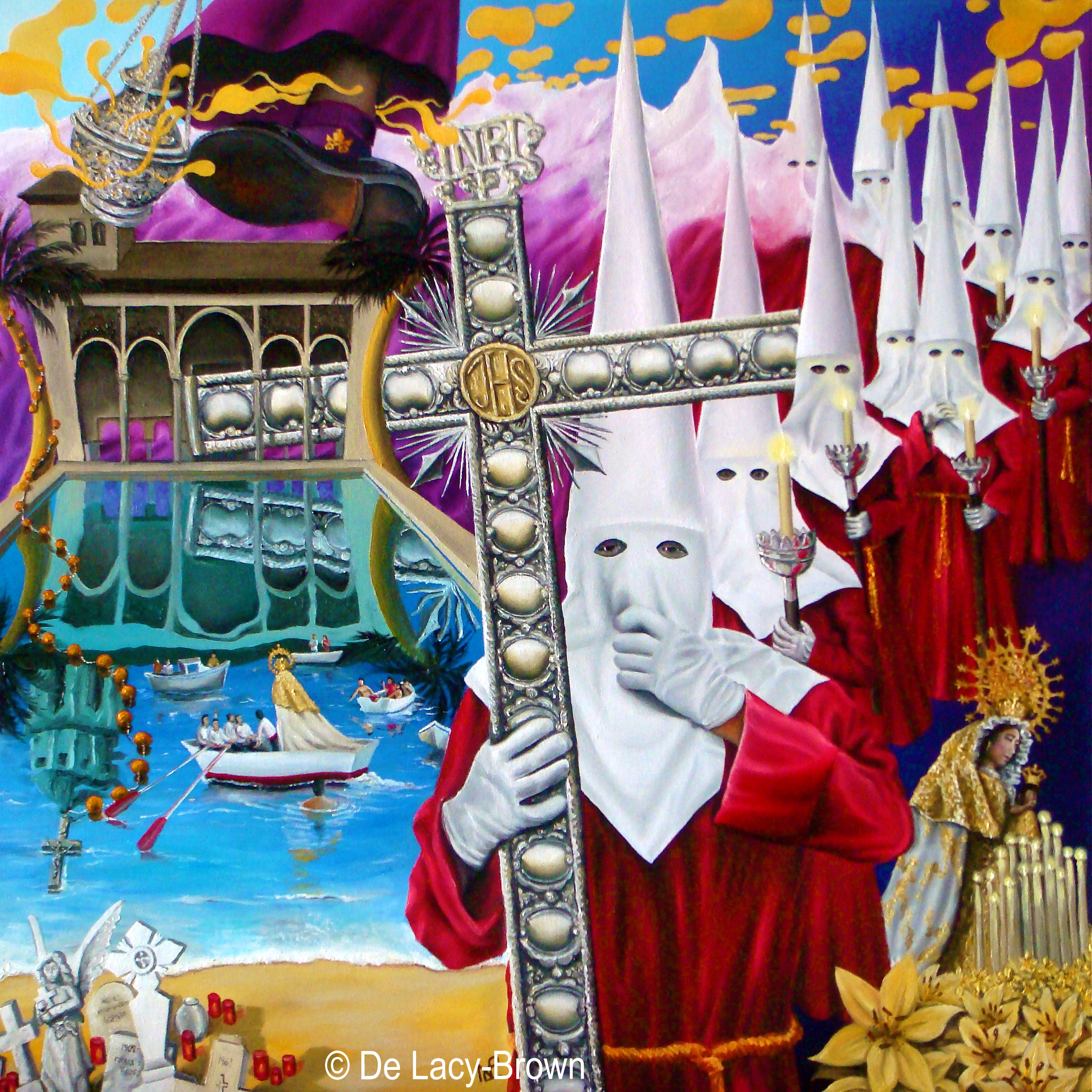
Catholicism, Catholicism (España Volver II) (2009 © Nicholas de Lacy-Brown) Oil on canvas

In this, the second canvas from my España Volver collection, Catholicism, Catholicism,  the Semana Santa processions forms the centrepiece of what is a generalised depiction of the continuing importance of Catholicism in Spain’s current culture, as well as its historical significance. Here the nazareños are shown metamorphosing from the Sierra mountains behind the city of Granada, the site of one of Catholicism’s most significant defeats over Muslim rule during the reconquista. To the right of the nazareños is a typical statue of Mary as paraded through the streets on tronos. This is not to be confused with the Mary sent out to sea by fishermen as depicted on the left on the canvas, this detail depicting the festival of Maria del Carmen, whereupon fishermen across the Costa del Sol give thanks to Mary for keeping them safe every July.

My depiction of Semana Santa in Catholicism, Catholicism was in turn based upon this study I made a few months before of a group of nazareños during Marbella’s Domingo de Ramos (palm sunday) procession.

Grupo de Nazareños (2009 © Nicholas de Lacy-Brown) Oil on canvas

A Semana Santa procession also features rather prominently in the third canvas of my Seville Tryptic, appropriately so since the Semana Santa processions in Seville are by far the most famous.

Seville Triptych - Canvas III (Oil on canvas, 2010 © Nicholas de Lacy-Brown)
It surprises me that so few people outside of Spain actually know what these processions are. When most English people see my paintings, they think I’ve portrayed the Ku Klux Klan – as if. This observation causes me relentless frustration, and I hope that through my art, photography and now my blog, I can help to share Spain’s Easter spectacles around the world.

That’s all for now. But check The Daily Norm this Easter Sunday, where a special Sunday Supplement will feature my most substantial (and recent) depiction of Semana Santa.
© Nicholas de Lacy-Brown and The Daily Norm, 2005-2012. Unauthorized use and/or duplication of the material, whether written work or artwork, included within The Daily Norm without express and written permission from The Daily Norm’s author and/or owner is strictly prohibited. Excerpts and links may be used, provided that full and clear credit is given to Nicholas de Lacy-Brown and The Daily Norm with appropriate and specific direction to the original content.

Semana Santa – Easter Spanish Style

Here in the UK, you know when Easter is coming because, from around January time, they start stocking mini eggs, cream eggs and progressively greater and greater stocks of foil covered novelty eggs, bunnies and other such creatures until the day itself, after which time the egg prices are cut savagely before picnic and gardening gear replaces its space on the shelves. This is all very well, but when celebrated through an egg count alone, Easter becomes merely an excuse to take a few days off work, and an attempted resistance to the chocolate influx all around. By contrast, in Spain, and in particular in the region of Andalucia, the festival of Easter, and in particular this week – Holy Week (“Semana Santa”) – brings with it a uniquely special feeling of celebration, family and spirituality.  I am not trying to say that every household around the world should celebrate the Christian story when the Easter festival comes along. Nonetheless, there is something deeply emotional, integral and raw about the outward manifestation of the Catholic celebrations of the Easter story in Spain, and I can’t help but wish that these celebrations were mirrored elsewhere.

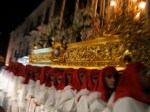
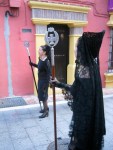
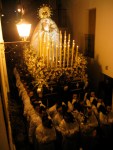
After a decade of attending Spain’s lavish Easter celebrations, the Spanish Semana Santa festivities have become emblematic, to my mind, of Easter time. The celebrations largely comprise long processions of brotherhoods (“hermandades”) from a town’s local churches, each of whom carry “pasos” or “tronos” –  lifelike wood or plaster sculptures of individual scenes of the events that happened between Jesus’ arrest and his burial – throughout the town. The tronos, which are usually huge, golden, elaborately carved constructions topped with candles aplenty, are then physically carried on the necks of costaleros. The tronos are accompanied by nazareños – penitents who, most strikingly of all, are usually to be found wearing conical hats with covered faces called “capirotes”, and by brass and military bands.  What with the moving emotional accompaniment of the bands, and the vast numbers of nazareños and costaleros making up the parade, carrying candles, often walking on bare feet to demonstrate penitence and faith, and the pasos, glowing in candlelight, swaying from side to side to the rhythm of the marching costaleros, these parades make for stunning viewing. And what is perhaps even more stunning, is the way in which these parades bring communities together – hundreds of families, couples, tourists and visitors old and young alike crowd the streets of Spain to see these parades – and involved in the parades themselves are people of all ages. How beautiful to see these processions taken so seriously, especially by teenagers – in the UK they’d most likely be looting the shops for Easter Eggs.

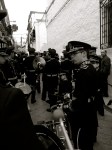
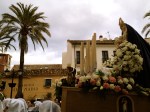
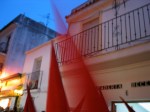
I leave you, without further ado, with a selection of my photos from the parades I have seen over the years, largely in Marbella. For the most spectacular parades of all, Seville is the place to go, but I have not yet had that fortune. Nevertheless, the processions of Semana Santa have remained a constant inspiration to me, and this week, I will feature a number of my art works which have taken their inspiration directly from these stunning parades. Hasta lugeo.


© Nicholas de Lacy-Brown and The Daily Norm, 2005-2012. Unauthorized use and/or duplication of the material, whether written work or artwork/ photographs, included within The Daily Norm without express and written permission from The Daily Norm’s author and/or owner is strictly prohibited. Excerpts and links may be used, provided that full and clear credit is given to Nicholas de Lacy-Brown and The Daily Norm with appropriate and specific direction to the original content.

Norms do… Amsterdam’s Red Light District

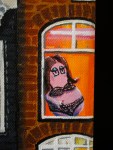
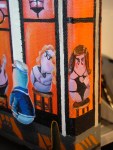
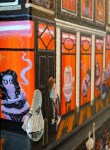
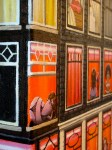
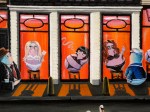
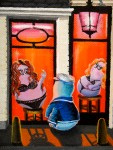
Before I had even booked my trip to Amsterdam, I couldn’t help but plan a Norm representation of what must be Amsterdam’s most renowned attraction: its red light district. Some people see Norms as being child-friendly. This painting may persuade them otherwise. Here Norms are dressed in sex head to…err…round base, with lacey bras, thongs and other revealing lingerie. On their hands, acrylic nails to tap against the glass windows help them to attract the attention of their shy customers, while heavy makeup and perfectly coiffed hair complete a carefully manicured look. As for the customers, they come from all walks of life. Here is a business man, skulking away from work, hoping for a “quickie” before he goes home to his affluent home, his wife and children. There too is a sailor, desperate after weeks away at sea for a lady’s touch. And finally we have the Norm chav, covered in tattoos and a dirty vest – he can’t afford these classy scarlet women of the night, but he can stare, and wish.

Norms in Amsterdam's Red Light District (2012 © Nicholas de Lacy-Brown, acrylic on canvas)

The canvas is a box canvas, so I have painted around the sides to feature more buildings, and a few more of those lovely ladies. You can see the sides, and some detailed shots of the canvas below. Enjoy!


© Nicholas de Lacy-Brown and The Daily Norm, 2005-2012. Unauthorized use and/or duplication of the material, whether written work or artwork, included within The Daily Norm without express and written permission from The Daily Norm’s author and/or owner is strictly prohibited. Excerpts and links may be used, provided that full and clear credit is given to Nicholas de Lacy-Brown and The Daily Norm with appropriate and specific direction to the original content.

Simple floral display which makes a contemporary statement

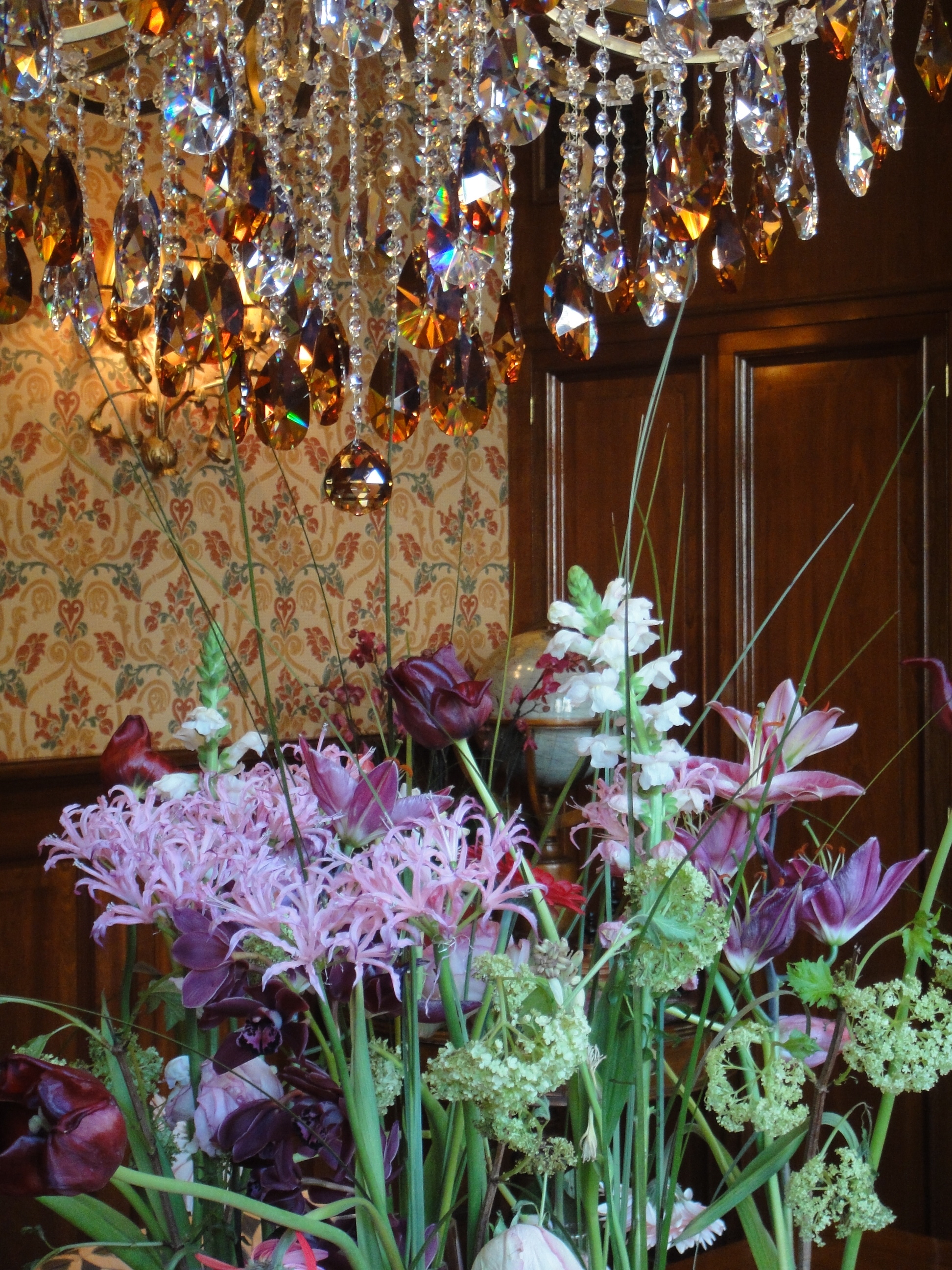
The good thing about a small city trip in a vibrant city is that with the relatively moderate expense of a short trip, so much can be loaded into a short expanse of time that the trip provides all of the ingredients for a sustained period of inspiration and multifaceted memories which live on indefinitely. My recent trip to Amsterdam is one such trip which was worth its weight in gold. Already I’ve been painting Dutch-inspired parody pieces, sketching Norms all over The Netherlands, regularly revisiting my substantial collection of photographs and I am about to embark on a suitably Amsterdam-inspired new Norm canvas. However, one of the greatest inspirations for me was the elegance and sumptuosity of our Amsterdam hotel –  the Hotel Estheréa. The interior design of the hotel was faultless both in the downstairs public spaces and in the bedrooms. Since my return, I have scanned the web seeking out the various grand design wallpapers used, the beautiful butterflies which adorned their walls, and am seriously considering whether I too should import an oversized pink chandelier into my home. All of this comes at a price I can currently only dream of, however one important aspect of their design, which I have found cheaper to replicate, is their stunning floral displays. The hotel paid attention to every tiny detail, and during our stay, a fresh import of new flowers were installed throughout the hotel (presumably they do this on a fairly regular basis). One of the most effective displays of flowers, installed variously on several large and small tables alike, was the grouping of numerous small and single-stem vases, each containing one or two stems only. The look which resulted was far more contemporary than a normal vase of flowers.

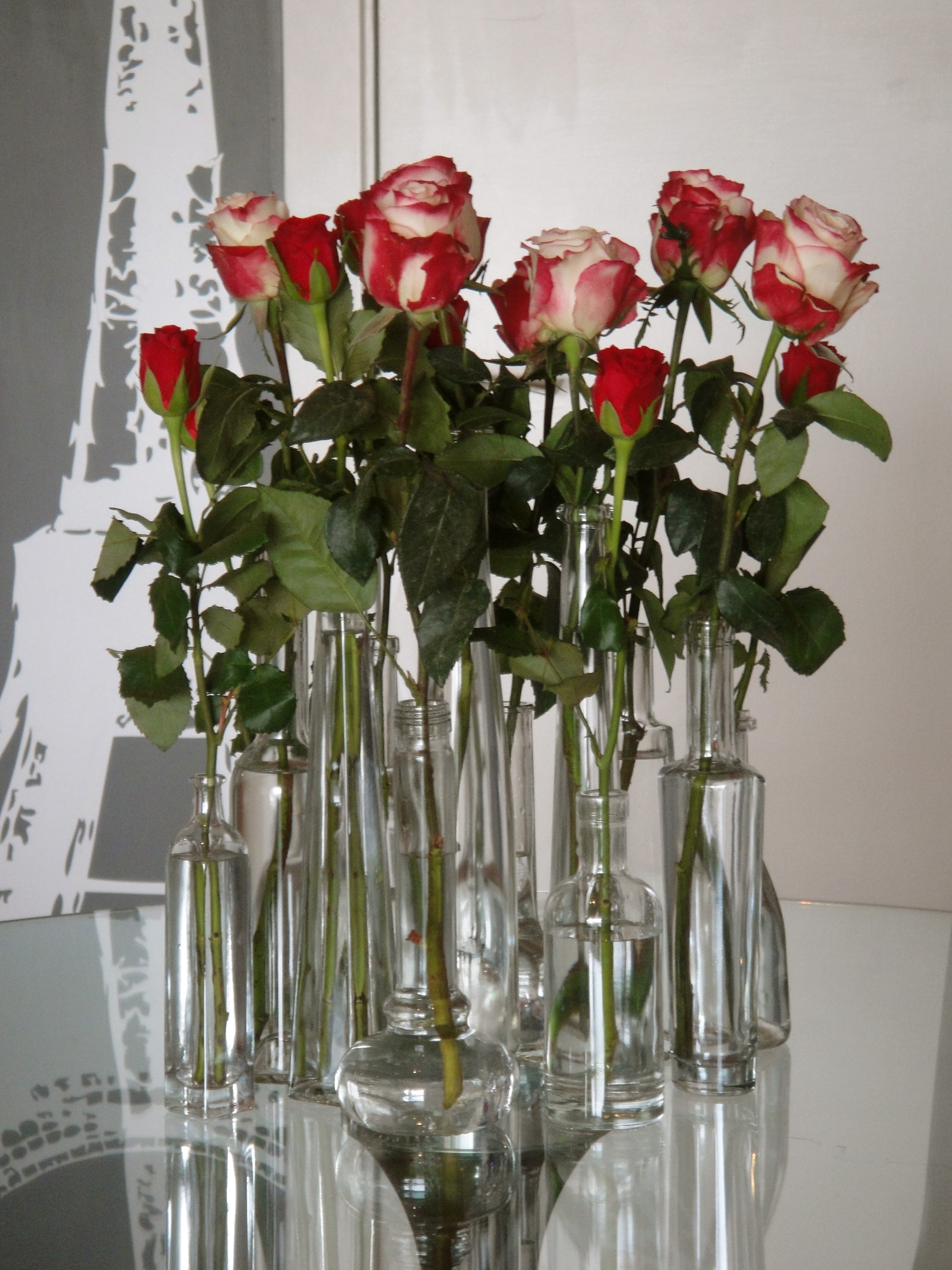
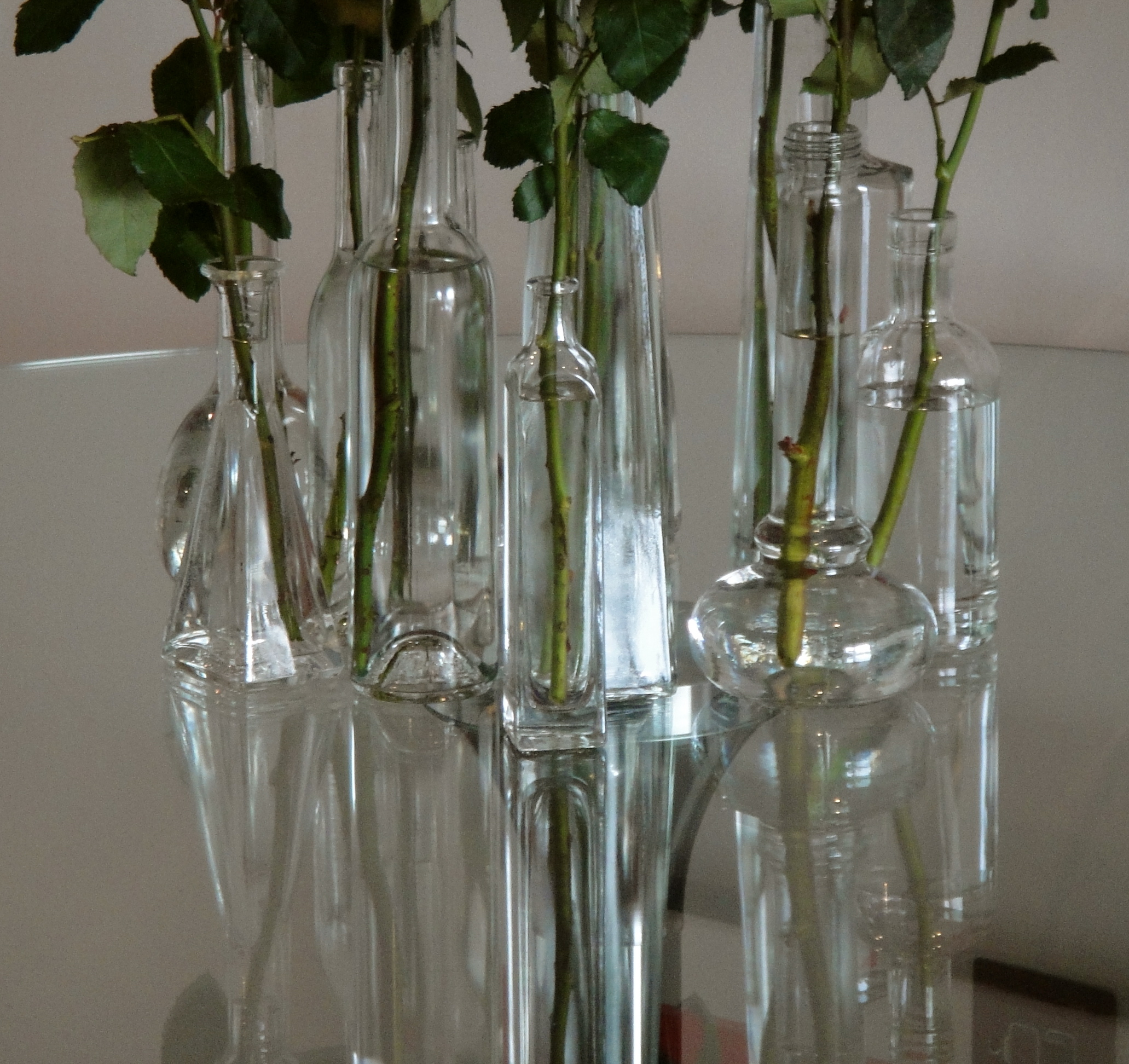
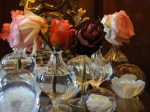
So, returning home to London, my head buzzing with ideas, I set about searching out a variety of single-stem vases. To collect a small group of 6 or 7 would, I soon discovered, cost well over £100 and involve as many separate orders and correlating shipping charges as I would find vases. So I decided to revert my search to glass bottles. I then found one website which sells a huge range of different shaped bottles, all costing only around €2-€3 each. And so I managed to purchase myself some 14 different shaped and sized bottles, all from the same site, for a total cost of €30 including shipping. They arrived a couple of days later. I bought two cheap(ish) bunches of roses from the local supermarket (which are in plentiful supply at the moment in the lead up to mother’s day). This is the result:

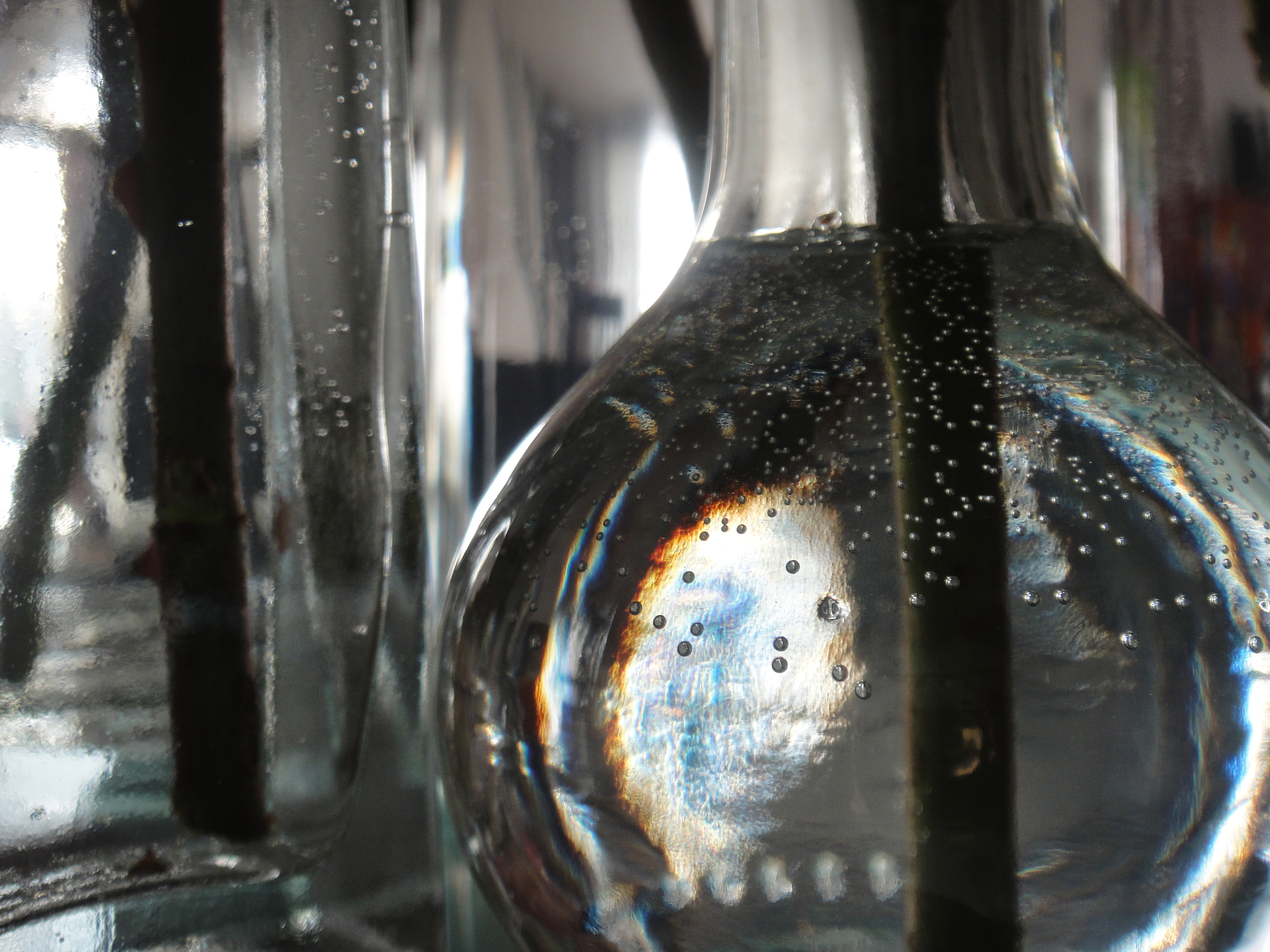
The look is contemporary and fresh. The differently shaped bottles add variety, but the use of a monochrome clear coloured glass ensures a contemporary feel is maintained. The display also feels modern because the flowers are controlled, all standing up straight rather than flopping around en masse in a vase. This control is even better achieved using bottles, since most have a fairly narrow opening.

It’s a great look for my dining table, and one that really wows as a contemporary floral display with a very boutique-chic look. But best of all, the price was definitely not boutique.

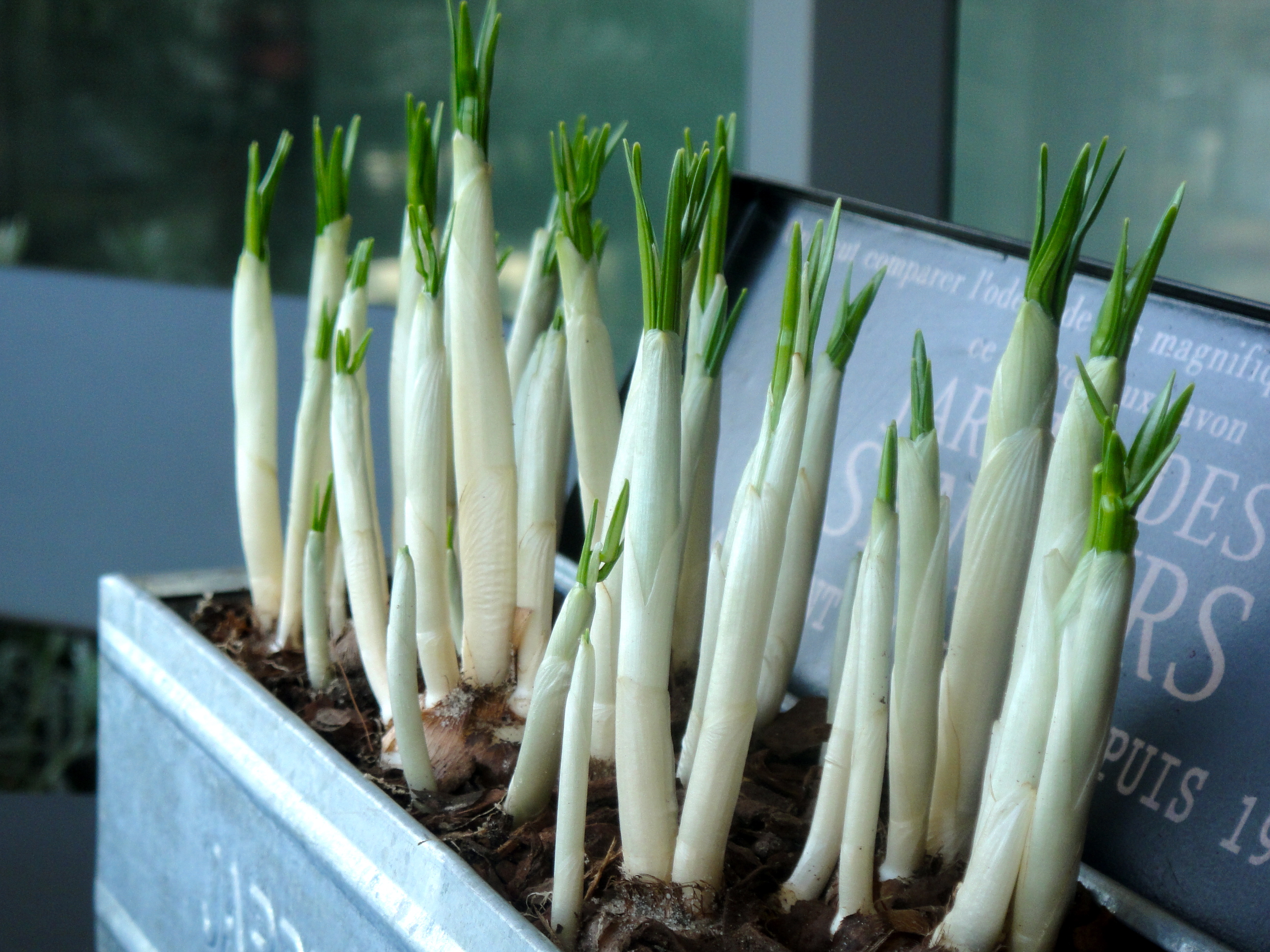
Talking of contemporary, check out my other recent acquisition – white crocuses set in an attractive metal box adorned with french writing. This brings gallic finesse to an otherwise industrial tin, while the yet unopened crocuses provide another modern sleek display piece which I kind of wish wouldn’t flower at all.

In conclusion, Spring is on its way, and in my opinion, there is no better way to breath a bit of life into your home that with fresh flowers, however displayed. Give flowers to your mother this sunday – and if you’re not a mother, remember to keep some back for yourself!

Amsterdam Part V: Photographs

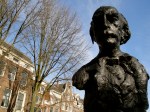
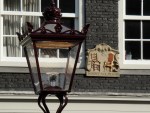
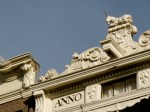
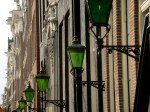
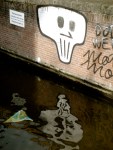
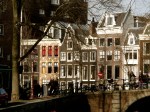
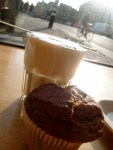
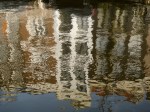
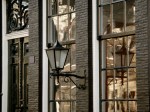
It’s my last Amsterdam post after four wonderful days in the city, and a couple of days reflection from my home in London, and probably my favourite of the bunch as I get to share with you my photographs of the trip. Amsterdam wasn’t always easy to photograph – when walking around, one is constantly wowed by the beauty of one canal after another, but what inspires at the time can be repetitive when the result is one canal shot after another. I’m hoping that in the selection I have posted, you will get to see more than just canals, although as ever, my obsession with street lamps continues throughout this bunch of photos. I only had my cybershot with me, leaving my bulkier SLR at home, but I’m pretty pleased with some of the resulting shots. It certainly wasn’t hard to be inspired by Amsterdam, even when the sun went in I was won over by beauty at every corner – so much so that it was hard not to have my camera permanently glued to my face. I will let the photos do the talking now and hope that you enjoy viewing them as much as I enjoyed taking them. Wishing you all a great weekend.

© Nicholas de Lacy-Brown and The Daily Norm, 2005-2012. Unauthorized use and/or duplication of the material, whether written work or artwork, included within The Daily Norm without express and written permission from The Daily Norm’s author and/or owner is strictly prohibited. Excerpts and links may be used, provided that full and clear credit is given to Nicholas de Lacy-Brown and The Daily Norm with appropriate and specific direction to the original content.

Amsterdam Part IV: The Hotel and the Restaurants

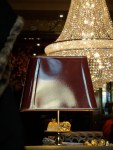
Fresh flowers and chandeliers in the Hotel Estheréa

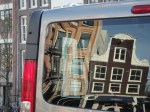
I’m back from Amsterdam and pretty fed up about it. I find myself crossing the road looking out obsessively for cyclists and finding none. Here, the now familiar bong of the tram bell has been replaced by sirens, and these light filled transport carriages are superseded by the claustrophobic moving coffins of the London Underground. I look at buildings, thinking that something is wrong – then I realise that beneath them there is no reflection. But it’s always been my firm belief that part of the success of a holiday is how well you remember it. Consequently I have set about looking through and editing my prodigious collection of photographs, sorting through the postcards I buy obsessively whenever I go on holiday (with no intention to ever write, or send any) and recollecting the food experiences which filled by Amsterdamian days. With this in mind, I write today in an attempt to share my experience of the restaurants, and more importantly my accommodation while in Amsterdam.  As I’ve said before, in this time of the vindictive TripAdvisor professional complainant, where countless businesses in the hospitality industry are closing down because of picky, negative reviews posted online like school yard insults, I think it is only appropriate that a good experience is also applauded online, and shared so that fellow jetsetters can head off to a recommended restaurant or hotel, emboldened by some honest advice to temper their expectations.

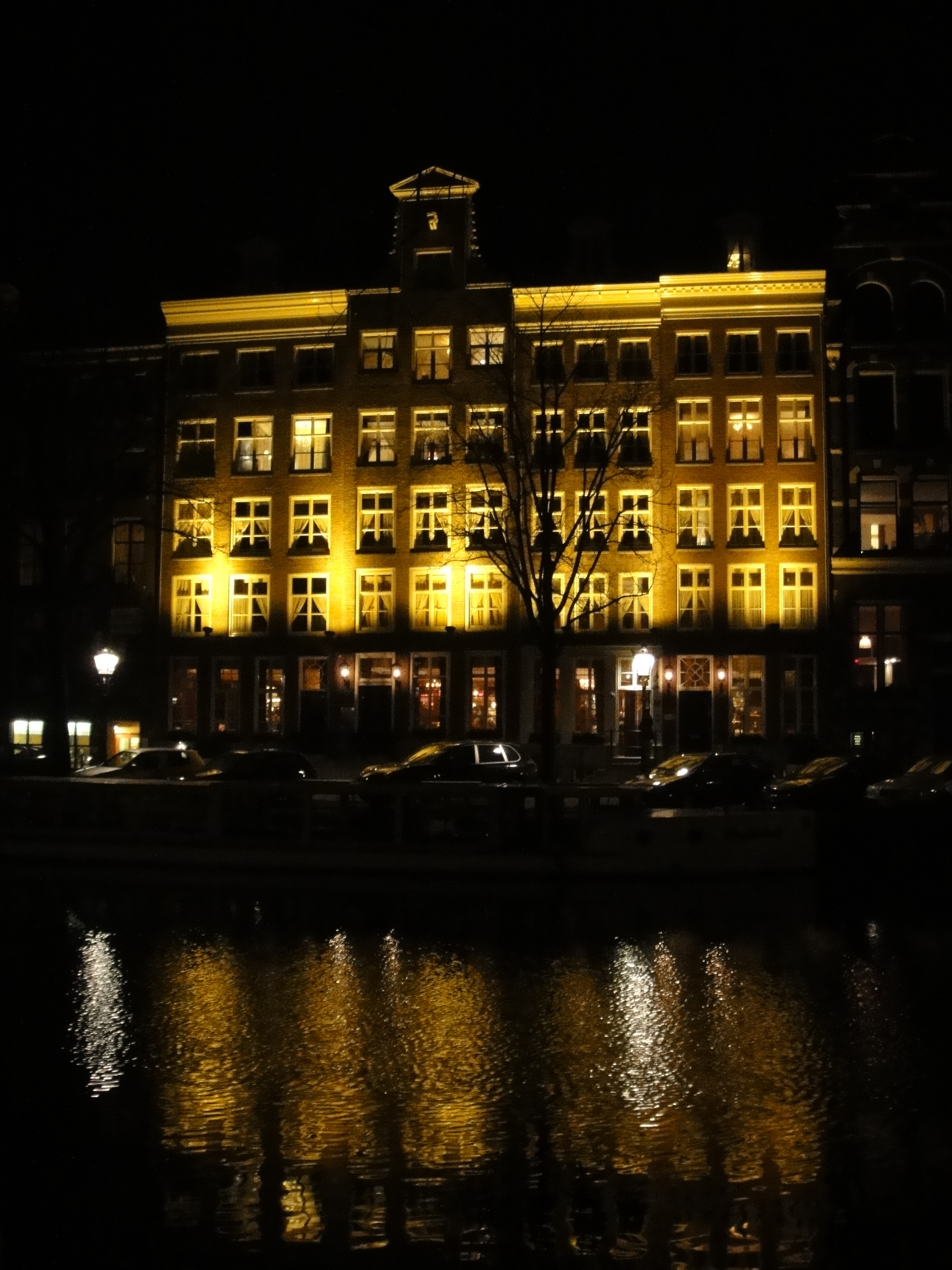
Exterior of the Hotel Estheréa

The hotel – Hotel Estheréa **** – Singel 303-9, Amsterdam

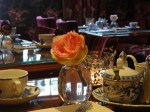
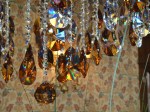
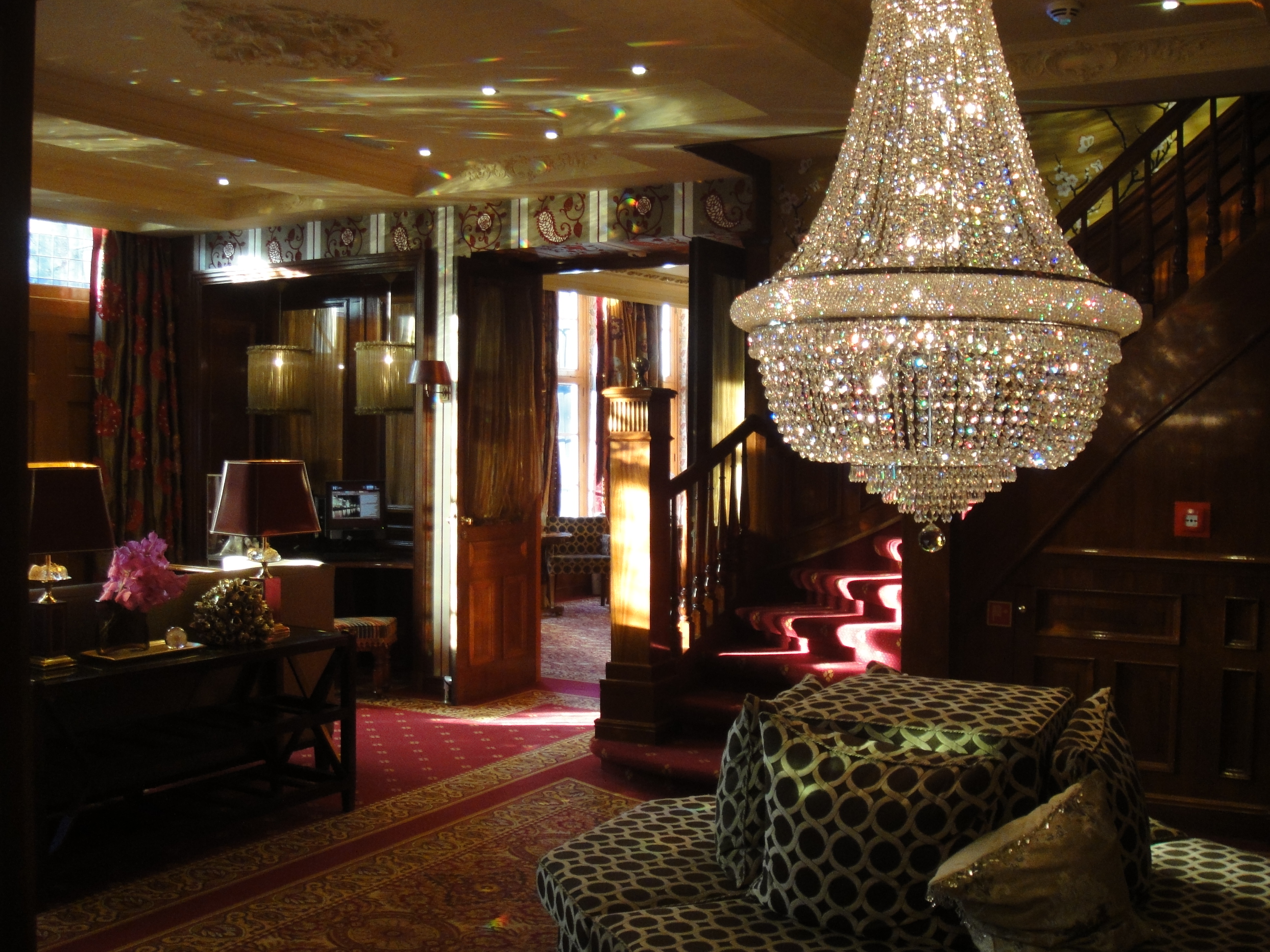
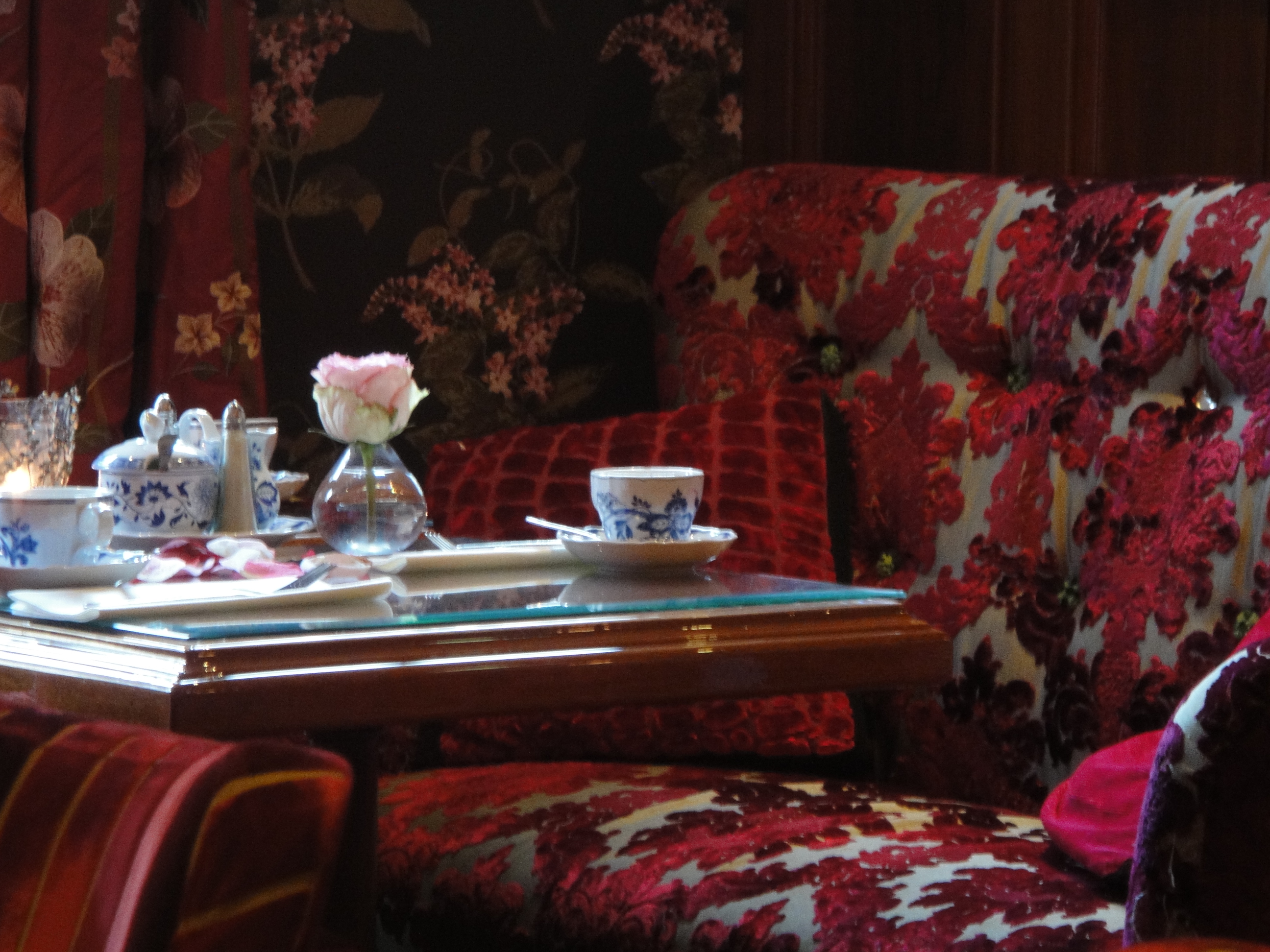
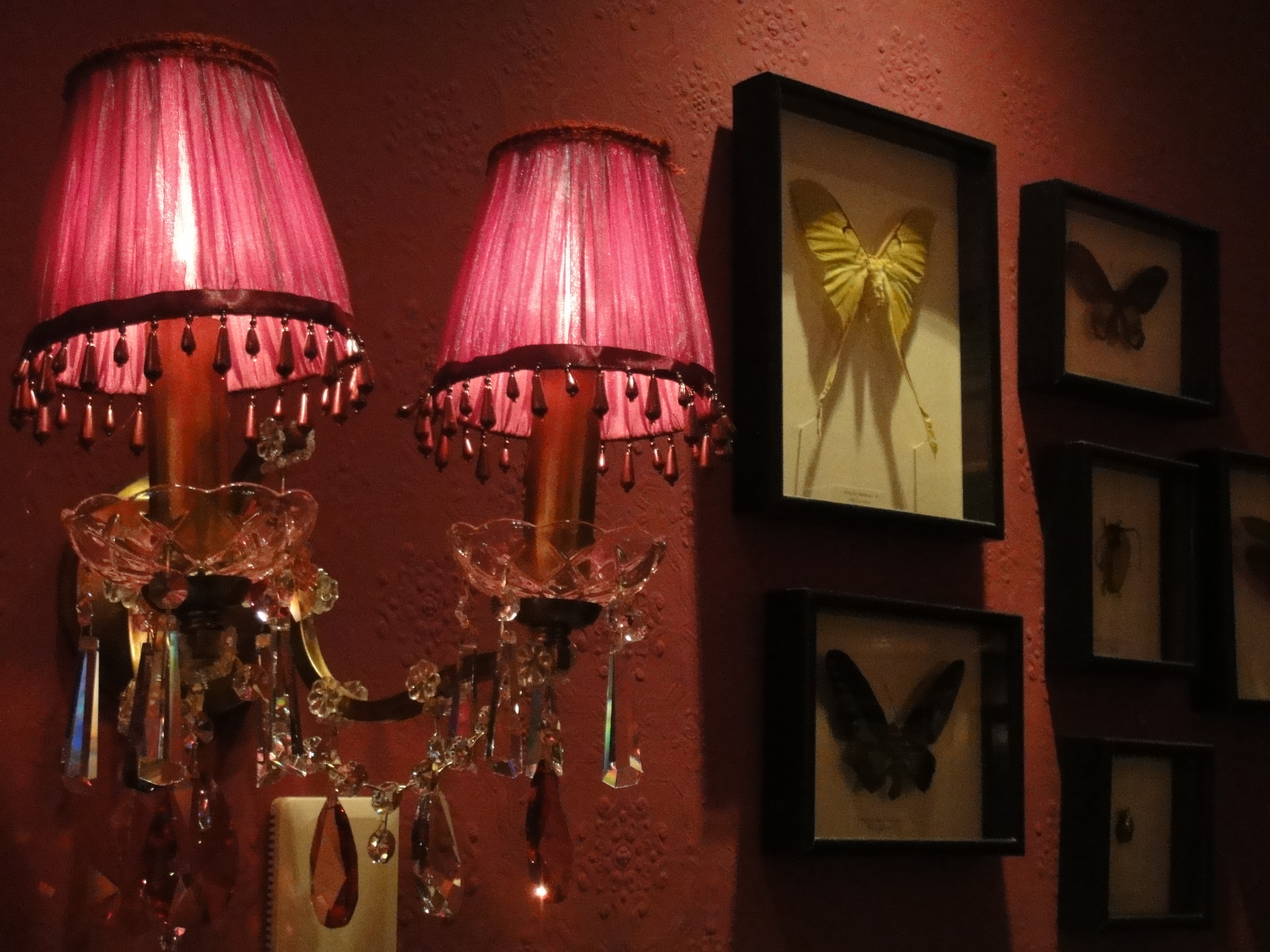
I could use almost every superlative in the thesaurus to describe the Hotel Estheréa and still not do it justice. This hotel, a child of the boutqiue revolution, but also the mother of all opulent sophistication, was a faultessly exquisite base for our Amsterdam stay. The reason, ultimately, for the success of this hotel is attention to detail. In the bedroom, two bottles of water would be provided free to guests everyday – a small thing, but often something which you really feel the need of at the end of a heavy evening and have to revert to what ever dodgyness flows from the tap. In the foyer, tea and coffee is provided all day, a huge range of teas being on offer, and complimentary cakes, biscuits, sweets and multivarious nibbles in retro glass jars. In the various reception rooms, the interior design is stunningly executed with an emphaisis on rejuvinated Victorian elegance – richly patterened wallpapers, huge low hanging chandeliers, various species of taxdermy under closhes and in frames, large damask covered arm chairs, a book-lined library and an array of fresh flowers embuing the air with their fragrance, single stems in collected ecclectic vases and huge bouquets greeting guests in the reception.

Our bedroom at the Hotel Estheréa

Head for the gold and glass lift to the rooms upstairs and you will find a range of bedrooms decorated in an impressive range of different schemes. Ours was a luxuriously drapped room in the roof – spacious, lined with a lavish chinese themed wallpaper of blues and gold, a sinfully comfortable bed loaded with embroidered cushions and a throw shot with blue and gold silk, and a stunning view looking over the Singel canal – one of the principal canals lined with the grand townhouses of former traders and merchants. Admittedly not all rooms benefit from a canal view, and you do have to pay more for the privilege. But I think it’s well worth it – and the premium is not much for the pleasure it provides. Finally the breakfast, while not cheap (18 euros per person) is the perfect set-me-up for the day, including champagne, cooked and continental selections and, best of all, various little pastries and cakes which look like they walked straight out of a Parisian patisserie. Finally I should mention location – it’s perfect, pretty much equidistant from all the main points of interest, so that Anne Frank’s house, the central station, the rosy red lights and the museum district are all within walking distance (though you need stamina – but there’s always that complimentary hotel tea to sustain you when the walking gets to much).

Main foyer in the Hotel Estheréa

Breakfast at the Hotel Estheréa

Lavish design at the Hotel Estheréa

Read more

Amsterdam Part III: Flemish art, Russian museum, Dutch hospitality

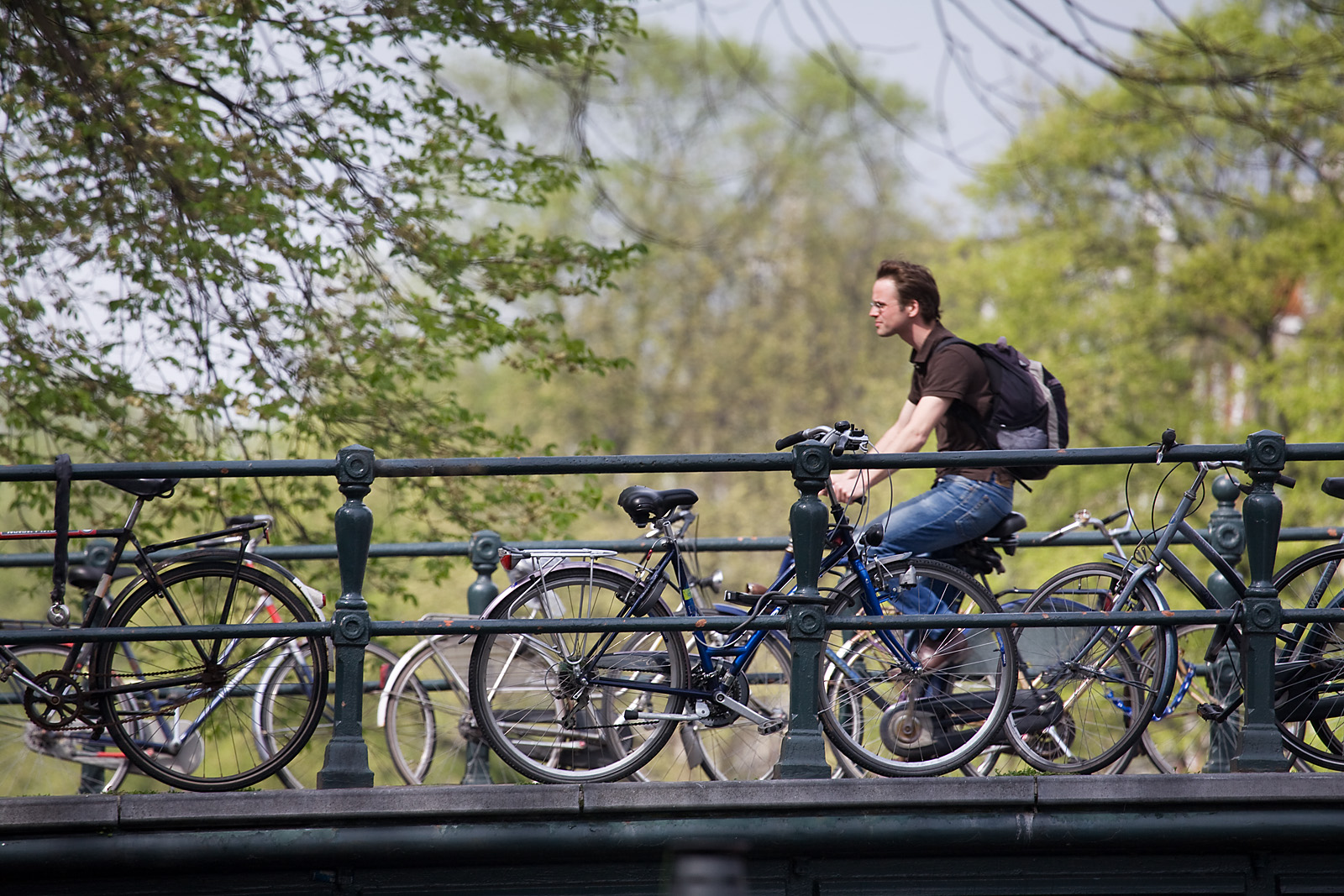
It was our last day in Amsterdam today, city of the silent assassins otherwise known as cyclists. Bicycles are everywhere here, chained to every bridge, every bollard, every railing, stacked and double stacked against every conceivable surface of the city – no wonder the bicycle has become emblematic of Amsterdam. It is clear too that the city authorities have actively encouraged this cyclist boom. Given over to cyclists are designated cycling lanes and crossings aplenty, but alongside these are normal roads and tram lines, as well as bizarre junctions where roads meet bridges, and I find myself walking around in a confused daze as to where I should be crossing the road and where I should be walking – there are plenty of cycle lanes, fewer pavements. It doesn’t of course help that cyclists here routinely ignore red lights, so the dutch green man roughly translates into: you can cross, by at your peril. Then you must navigate the roads with every sense attuned to your surroundings, since these bicycles are not only plentiful in number, but deathly silent in sound. Consequently I have narrowly avoided collisions with cyclists at least once every hour of my stay in Amsterdam, as cyclists, travelling at great speed, seem to come at me completely out of the blue. Of course the cyclists must be praised for keeping the town a lot fresher, and I particularly like the parents who cycle around with their children in a special basket at the front. Not sure how all these people get away with out wearing helmets though… I haven’t seen once since I arrived.

Anyway, once we had negotiated a series of cycle lanes, perilous junctions and even a bridge which opened to allow the longest barge through that I have ever seen, we eventually made it to the final stop on our Amsterdam cultural map: The Hermitage Amsterdam.

The Hermitage is the Amsterdam annex of the St Petersburg giant. The museum, which was first opened in 2004 and was the result of the apparent close historical bonds between Russia and the Netherlands, aims to show a revolving selection of works from the main Hermitage collection, works which would otherwise be relegated into storage alongside thousands of other gems of Catherine the Great’s amassed collection. The works are then displayed in a stunning new gallery space which opened in 2009. This former hospital has been renovated to an indubitably high standard. Large marbled floor space is flanked with spotlessly painted walls. Windows overlooking the sunny canals are partially blacked out but allow sufficient light to flood the spacious rooms. Glass stairs lead from the main galleries to a mezzanine level, and the museum cafe exudes New York hotel chic. Most importantly of all, the paintings appear to glow beneath all-enhancing LED lighting technology, and works are hung with sufficient surrounding space so as not to overwhelm.

Rubens, Descent from the Cross c.1617-18 (© State Hermitage Museum, St Petersburg)

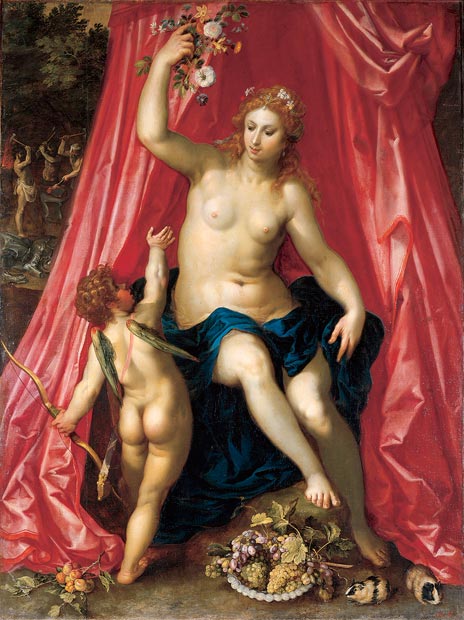
The current showing focuses on Flemish giants Rubens, Van Dyke and Jordaens, a show which has in fact proved so popular that its orignally planned run has been extended by three months. No wonder, since the collection on show is pretty stunning and enticing in equal measure. So often I look at masterpieces of the Golden Age with a blank stare, overwhelmed often by the detail of the depiction, or more often than not, by the vast numbers of such paintings squeezed side by side in repetitious national collections such as the Louvre or London’s National Gallery. But with the luxury of this focused show in a new airy art space came the opportunity to admire the astonishing talent of these master artists, such as the sumptuous folds of material against the musculature of Christ in Rubens’ Descent from the Cross, and the small details of sea shells or guinea pigs in The Union of Earth and Water by Rubens and Venus and Cupid by Hendrick Van Balen. While the contemporary movement of artistic trends seemed to focus progressively on the introspection of an artist, with these Flemish masterpieces, the intention was to wow, show off and astonish. The works succeed on these fronts, whether through the breadth of their sheer dimension or in the painterly skill of the intricate still lives. They are no less meritorious because they do not attest to the tortured soul of the artist, nor are they any less worthy of our attention. Through skill and insightful allegorical symbolism, these works are capable of transforming the audience into another world, to educate, and also, in the case of portraits, to immortalise people and lives for future generations. Sorry Van Gogh, but today Rubens beat you.

Rubens, The Union of Earth and Water c.1618-21 (© State Hermitage Museum, St Petersburg)

Hendrick van Balen, Venus and Cupid (1600) (© State Hermitage Museum, St Petersburg)

So leaving this impressive artistic institution (having been severely slighted in said chic cafe which was half reserved for some as yet unpresented favoured group leaving no space for our discerning custom), it was nearly time to wave adieu to this watery wonderland of Amsterdam. A quick stroll through the charismatic university quarter and the bustling shopping streets led us back to our hotel from where we headed, regretfully towards the station. Our walk back, past those elegant town houses, flanked by the transient reflections of Amsterdam in its canals, where red lights were being switched on for an evening’s work, and where familys and friends cycled energetically and happily over bridges and through the city’s quieter streets, served as a reminder of what a multifaceted city Amsterdam is, but also one where life seems a little more laid back, a little less tense, a sensation perhaps created by the water flowing like lifeblood throughout the city, bringing reflection, light and a fresh breeze to all.

Goodbye Amsterdam and thanks for a superb city break. Faithful Daily Norm readers – thanks for reading about my trip and therefore sharing the experience with me – come back tomorrow for all of my restaurant/ hotel reviews and on Friday for my photos!

Related articles

Amsterdam Part II: Insight into two masters of introspection: Van Gogh and Anne Frank

That familiar pang in my legs and feet, pulsing with a heavy burning sensation, is always a good sign at the end of a day spent exploring a new city. It tends to signify a heavy day’s sightseeing and usually a substantial intake of cultural enrichment… Galleries and museums are deceptively exhausting. Why hasn’t anyone invented a gallery on a conveyor belt, whereby the viewer takes a cinema-like reclining seat, and lets the art do the moving? Awaiting this invention, as we must, I nevertheless ensured that my second day in Amsterdam took in the remaining cultural hot points, despite the considerable walking distance between them.

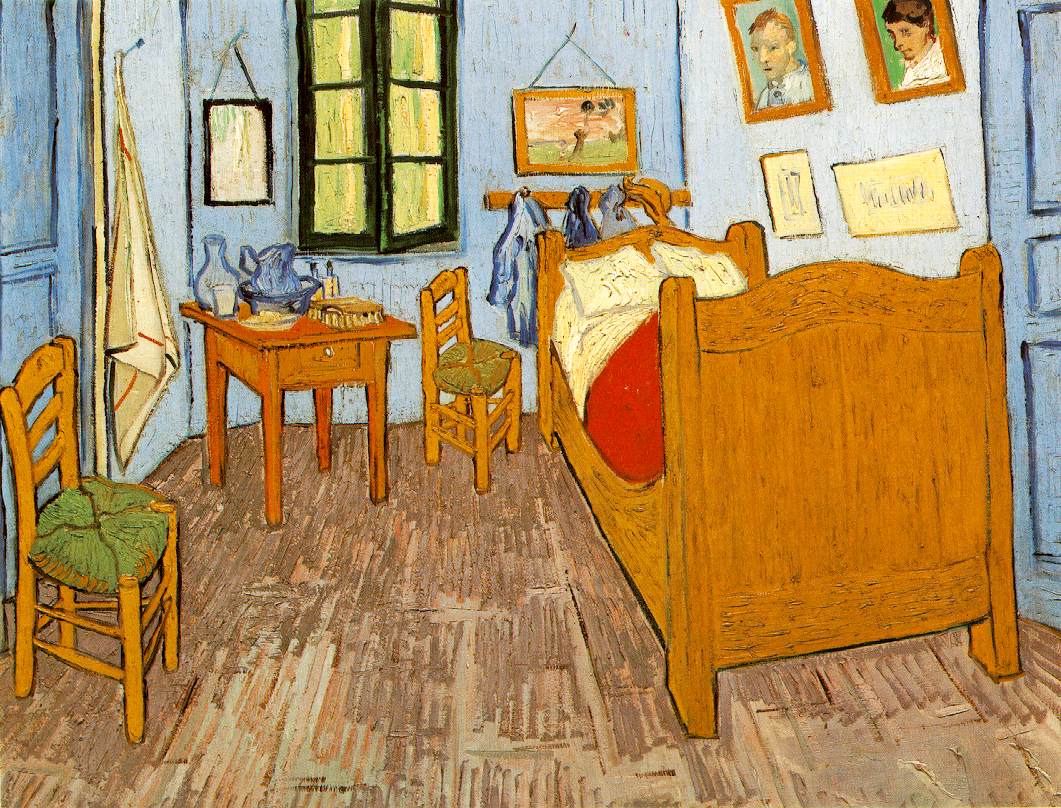
The Bedroom (1888)

Almond Blossom (1890)

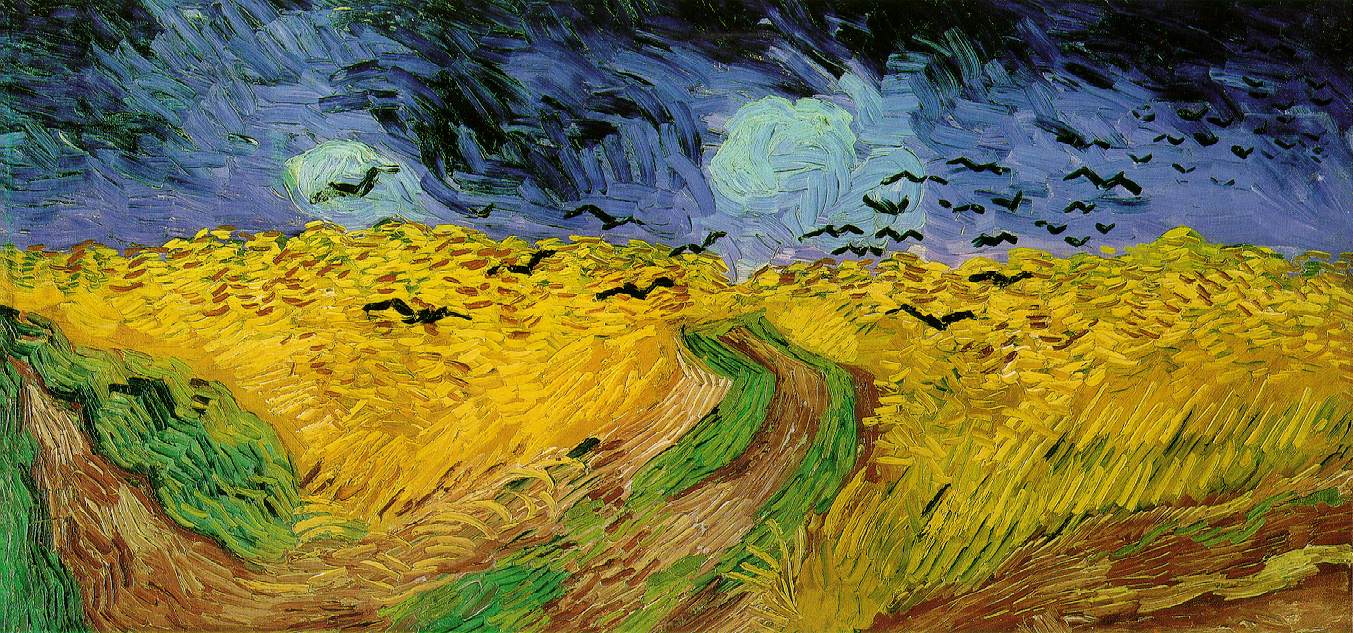
First on the list was the all important Van Gogh museum, which delivered masterpieces aplenty in a purpose built, airy space which more than catered for the influx of visitors present. Oh what a contrast to the last time I saw some of these works, at the Royal Academy’s Van Gogh exhibition, when all semblance of civility was lost somewhere around the Dutch peasant paintings, leading to all out war between Royal Academy Friends and foes alike as we scrambled to peak a view at Van Gogh’s chair or his whimsical poplars, not to mention get within an inch of that all important blood stained last letter to Theo. No, no, here one could more or less flit between paintings without too much fuss, leaving each room fully satisfied by the breadth of work on show, the logical chronological ordering of the works, and the provision of one masterpiece after another: The Potato Eaters, the Yellow House, Van Gogh’s bedroom, Gauguin’s chair, the Sunflowers and so on. I also left a little more informed about his technique. He had not adopted this often clumsy, thickly layered style of painting because of any lack of skill. Rather, he had been heavily influenced by the trends of Paris at that time, where pointillism had taken over from Impressionism, and figurative works were becoming more and more symbolic and abstracted. He was also influenced by Japanese art, with its flat, two dimensional representation and black outlines. By contrast, his first efforts – in which he concentrated on peasant portraits and bucolic landscapes – on the back of an absence of any professional training whatsoever, were really quite impressive. It seems he really did have naturally inherent talent, and plenty of it too.

I was of course thrilled to see the original of The Potato Eaters, which inspired me to paint my own family portrait last year. I was however rather frustrated that the work was displayed behind highly reflective glass which did no service to its dark, muddy shades, which were almost indistinguishable behind the glossy glare. None of the works were in fact that well lit, and the museum ought to take a leaf out of the Musee d’Orsay’s book in Paris, where new lighting set against dark blue walls makes the Van Gogh works glow beautifully.

Wheatfield with Crows (1890)

From one, forever active, always creative but troubled mind, to the youthful introspection of a girl in times of trouble – Anne Frank, whose house, always the site of long spiralling queues, we left until late to avoid the tourist crush. This we did with relative success, waiting only around 5 minutes to enter. Once inside, the excellent fusion of multimedia presentation with the old house still intact made for an effortless narrative, but did rather clog up the small space with tourists, most of whom would stay frozen to the spot until they had heard every word of the various video clips on show. This was particularly prevalent in the small annex itself, where Anne Frank, her family and four friends of the family, we’re hidden away for two years during the Nazi occupation of Holland. There, in tiny rooms and even tinier, almost vertical staircases, the tourist cram was uncomfortable, but served to emphasise how horrifically claustrophobic it must have been for the 8 persecuted Jews hidden away in these rooms without daylight and being unable to make any noise. Being able to walk through these rooms, still dressed in their original decor, Anne’s pictures of hollywood icons and even the British Queen and her sister pasted onto the walls, made for an intense and emotional experience, far more so than in a museum full of facts and figures.

Bookcase hiding the entrance to the Frank annex

So two of Amsterdam’s great minds have been explored and all that remains is a hot bath to sooth my now fizzing feet, plenty of tea and then dinner. Last night’s dinner, at a romantic art nouveau inspired canal-side brasserie, De Belhamel, was not entirely successful. We were rather pleased, at first, to have been seated up on the mezzanine, with a commanding view over the restaurant and the canal beyond. This advantage soon turned sour when, somewhat topped up with wine, I waved my arm enthusiastically, only to then knock my full wine glass off the edge of the balcony, whereupon it bounced off one railing before shattering, ceremoniously, across the entire ground floor of the restaurant, spraying several tables with its contents. After the crash came the complete shocked silence of the whole restaurant, and suddenly all eyes were on our little table up on the mezzanine. Oh the embarrassment. Oh the mortification. Oh the utmost humiliation. Needless to say, I insouciantly helped myself to more wine before taking a measured but fast retreat from the restaurant. Possibly won’t be returning there in a while.

Amsterdam Part I: Red Lights and the Rijksmuseum

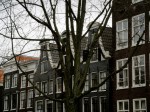
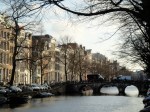
Flying to Amsterdam yesterday afternoon, it dawned on me how close the city is to London. Barely were we up in the air than we began our descent again. Yet as far as the two cities go, Amsterdam is another world. With all the charm of an old Vermeer painting, town houses line the canals side by side like ballroom beauties jostling for attention. Row after row of consistently elegant canals are uninterrupted by the blot of modernity, while in the canals a near perfect reflection provides a mirrored second city interspersed with ducks and houseboats. I love the way some of the houses lean forward (allegedly to hoist objects to the upper floors rather than brave narrow staircases) and others are formed of slanting, crooked windows, doors and roofs… In Amsterdam it’s hard to find a regular angle anywhere.

Vermeer, The Milkmaid (De Melkmeid) c 1658-1661

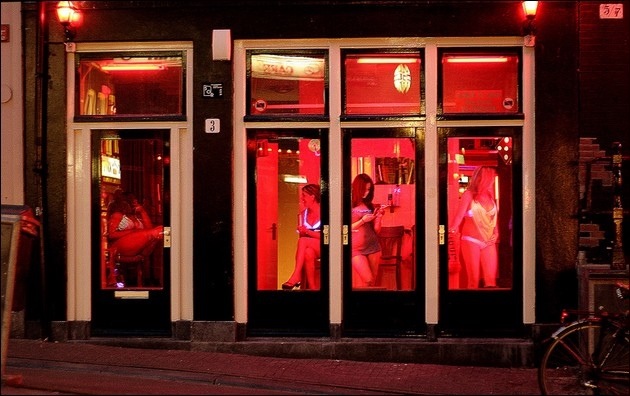
No wonder it left me feeling dizzy this morning. Or perhaps that dizziness was testament to our first tourist stop last night… The red light district. Now I know, heading straight to the sexy sector borders on the cliche, but as we arrived in the evening, and had time of our hands after dinner, a trip to the red lights seemed the obvious choice. At first we couldn’t find it. Catching sight of a red glow in the distance, we headed towards them only to find they were the neon lights of a pub. Ready almost to give up, we stumbled upon a tiny narrow alleyway also glowing red. Full of anticipation we crept down and suddenly, my heart skipped a beat as we came across a woman, in black laced underwear, leaning against the glass of a doorway, touching herself. Being ever the modest kind of male, I wasn’t sure where to look! It was so surreal to be faced so unapologetically with this display of sexual advancement. This initial alleyway opened up into a labyrinth of scarlet tinted shop fronts. There were countless prostitutes, someone for everyone, fat, thin, big breasts, small breasts, all on show. It became quite intimidating when, walking past a whole row, you’d hear plastic nails tapping on the window, gesticulating that you should approach. At the same time it was a fascinating display. The women each posed differently, some smiled, some scowled “seductively”. Some were coy, others all out sluttish. I felt almost embarrassed that I was treating them as a tourist attraction when they vied so hard for my attention, but they were certainly busy. We saw numerous gentlemen walking in and out, curtains of each window being pulled shut when the lady was busy, open again when a client left with a satisfied smile.

So in the end, after the initial collision course with this advanced outward show of sexual wares, I found the district enriching, adding to the Amsterdam experience. However I felt sorry for some of the ladies who were often faced with aggressive, loutish customers. And it was this element of the area that appalled – groups of men, often english thugs, ogling at the women right up in their faces, throwing insults, banging on the glass, showing outright aggression and a complete lack of respect to these women as human beings. Perhaps, after all, this is a problem with legalising prostitution. In allowing the profession to be advertised so publicly, it encourages men to so easily exploit the situation, to commodify women, to treat them as subhuman.

Red lights were superseded by the glow of a bright winter sunshine as we embarked on our first morning in the city today. Leaving our chic boutique base (the wonderful Hotel Estherea) to wander the western canals, we enjoyed coffee by one picturesque canal, and pancakes with banana, bacon and syrup by another. All canals led to the Rijksmuseum, which, despite undergoing major restoration works, has opened it’s most prominent masterpieces to the public in a very polished modern extension to the rear. The collection on show was still vast in breadth and I rather enjoyed the fact that this was a select exhibition – if this is only a small portion, the whole collection must be vast, and exhausting. Instead, we got to see all the important works, while retaining sufficient energy to get back go to the hotel. This included Vermeer’s The Milkmaid, which is romantic in a haze of dreamy light floating through a townhouse window onto the calm woman dressed in rich yellows and blue. The light and shade of Rembrandt’s masterpiece, The Nigh Watch, was even more dramatic, and the vast work was suitably installed as the climax of this impressive show.

Rembrant: The Night Watch (1642)

As the sun goes down over a chilly bustling city, the refinement of the city’s cultural offerings will again make way for the emergence of its prominent underworld. Staying open at all hours however are the multitude of souvenir shops, the likes of which we just sampled in their plenty at the Bloemenmarkt (flower market). We weren’t overly impressed with the rows of multicoloured clogs, wooden tulips, ceramic windmills or magnets of whores in windows (not one, I think, for my grandmother’s magnet collection) but not to be left out, I walked away with a pair of soft clog-shaped slippers ready to comfort my feet after a first thorough days navigation of Amsterdam. Sure beats the wooden kind. See you tomorrow!

Córdoba: The city which inspired the painting

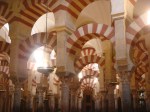
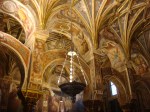
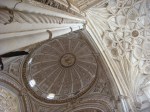
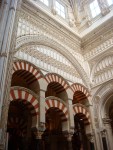
It’s my last dip into the Iberian peninsular before I go all Valentines on you… Following yesterday’s Sunday Supplement in which I introduced my painting, Córdoba, here are my photos of the city which inspired the work.

Córdoba is a unique little place. It doesn’t share the same thriving spirit as Seville or Granada for example, at least not in the very self-contained old town which looks and feels very much like a living museum given over to the tourists. Asides from La Mezquita at its centre, there are a few quaint art museums and an excellent archeological museum, but otherwise there is not a huge amount to see. Surprisingly, it did make the short list for Spain’s European Capital of Culture in 2016 which scandalously Malaga, home of the great Picasso Museum, a flashy new airport, a thriving city and a contemporary art museum, did not. Having said this, Córdoba is a crucial visit for those with an interest in Spain’s rich cultural heritage, and in particular its Moorish past. Should you go, be sure to sample Berejenas Fritas – deep fried aubergine served with a syrupy sauce – divine.

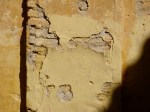
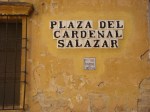
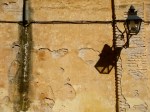
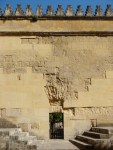
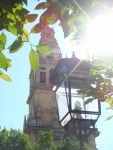
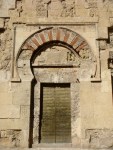
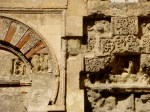
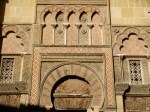
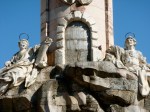
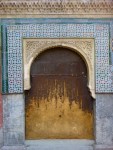
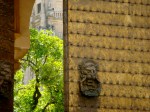
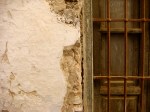
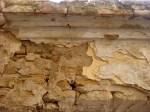
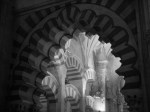
Below are a selection of the photos I took when in Córdoba. If you saw my post yesterday, you’ll recognise the crumbling facades, elegant wrought-iron lamps, the quenching relief of a hotel swimming pool, and that shameful architectural vandalism which took place in the great mosque after the Christian reconquista. This is a city where history is not only preserved, but the wounds of the past are still uncomfortably evident.

© Nicholas de Lacy-Brown and The Daily Norm, 2005-2012. Unauthorized use and/or duplication of the material, whether written work or artwork, included within The Daily Norm without express and written permission from The Daily Norm’s author and/or owner is strictly prohibited. Excerpts and links may be used, provided that full and clear credit is given to Nicholas de Lacy-Brown and The Daily Norm with appropriate and specific direction to the original content.