Skip to content

Discovering Mallorca: Palma’s secret city

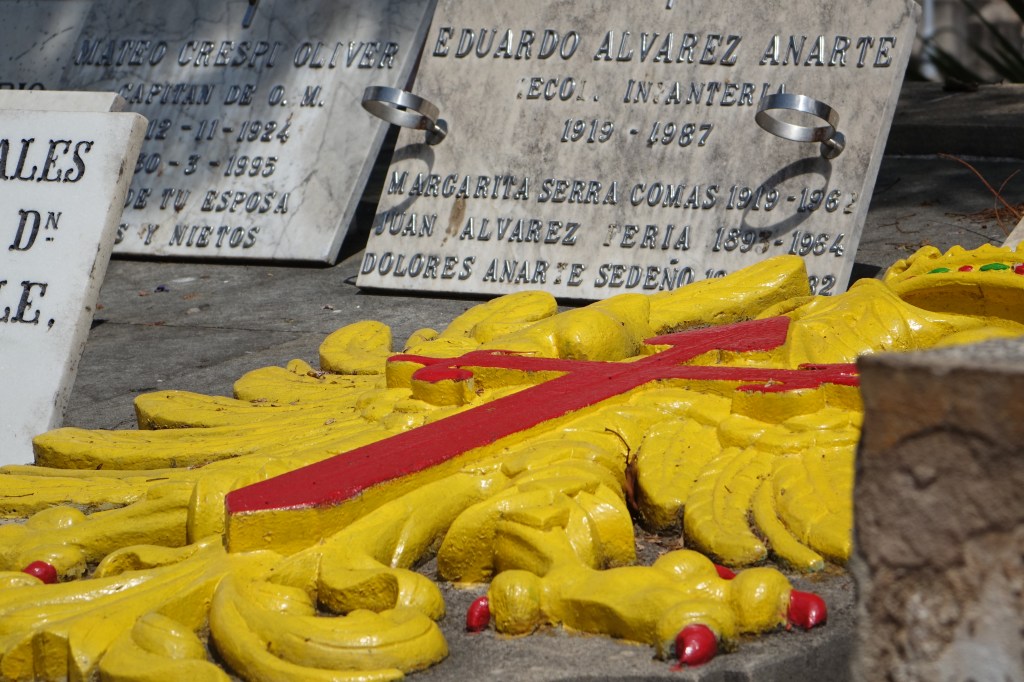
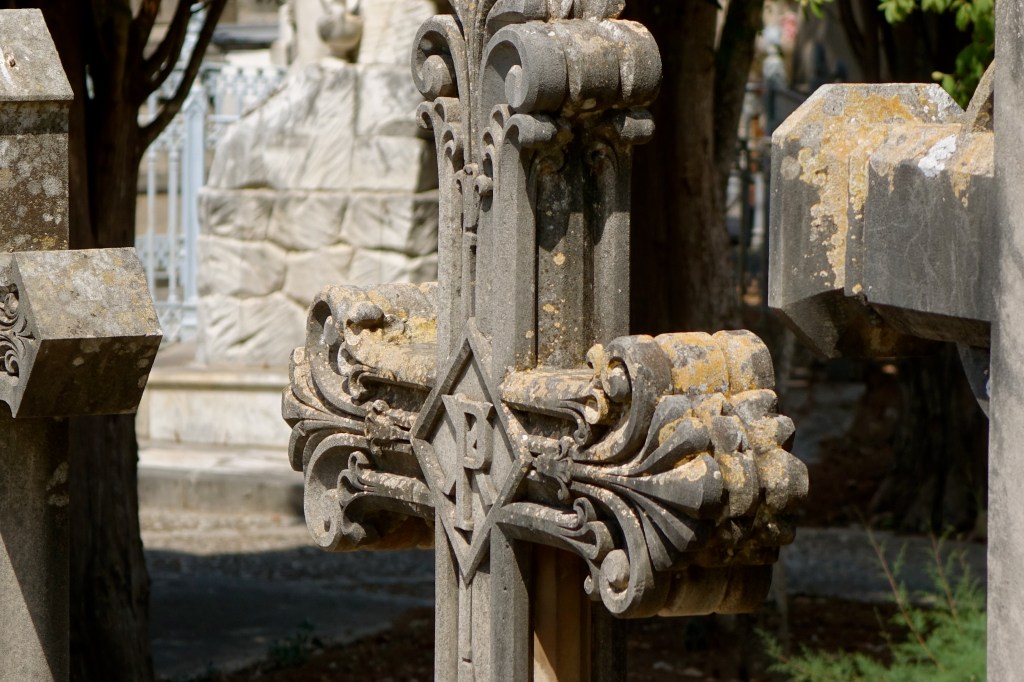
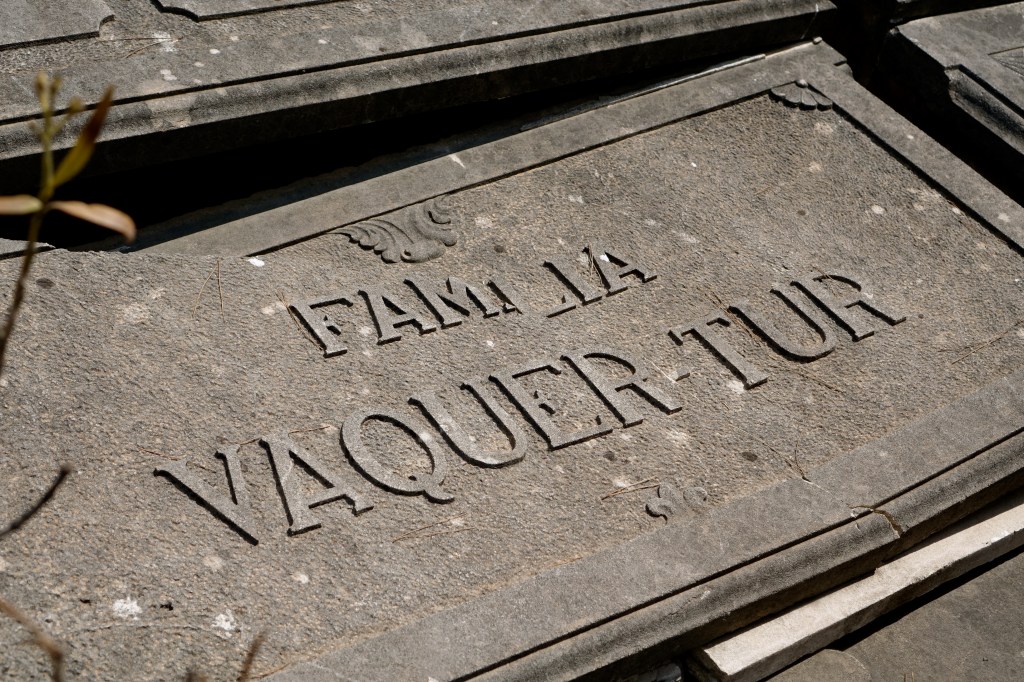
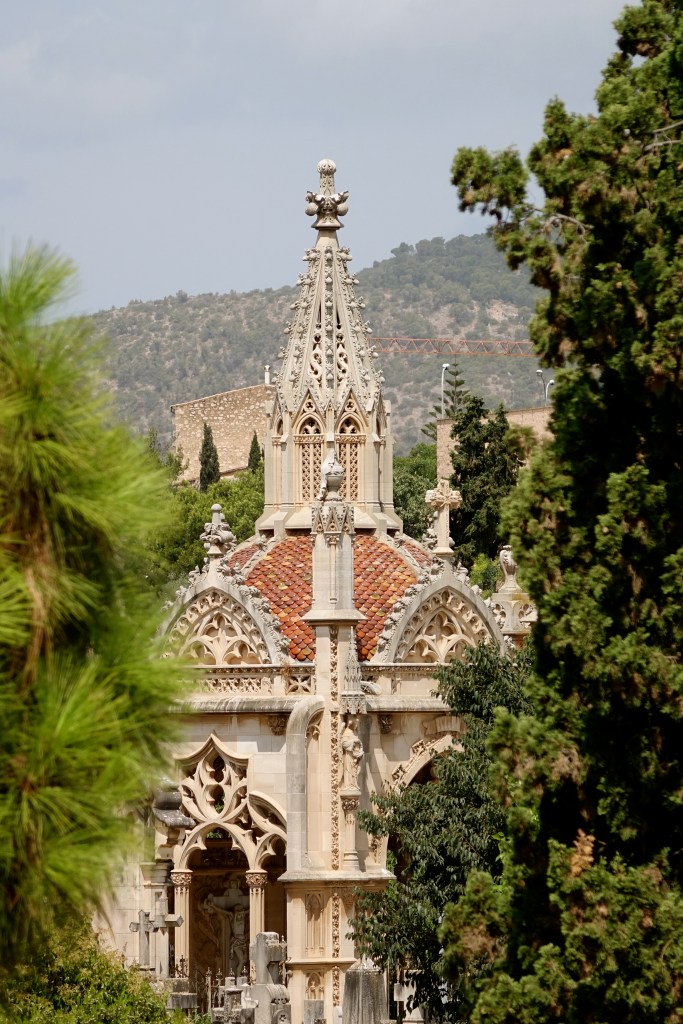
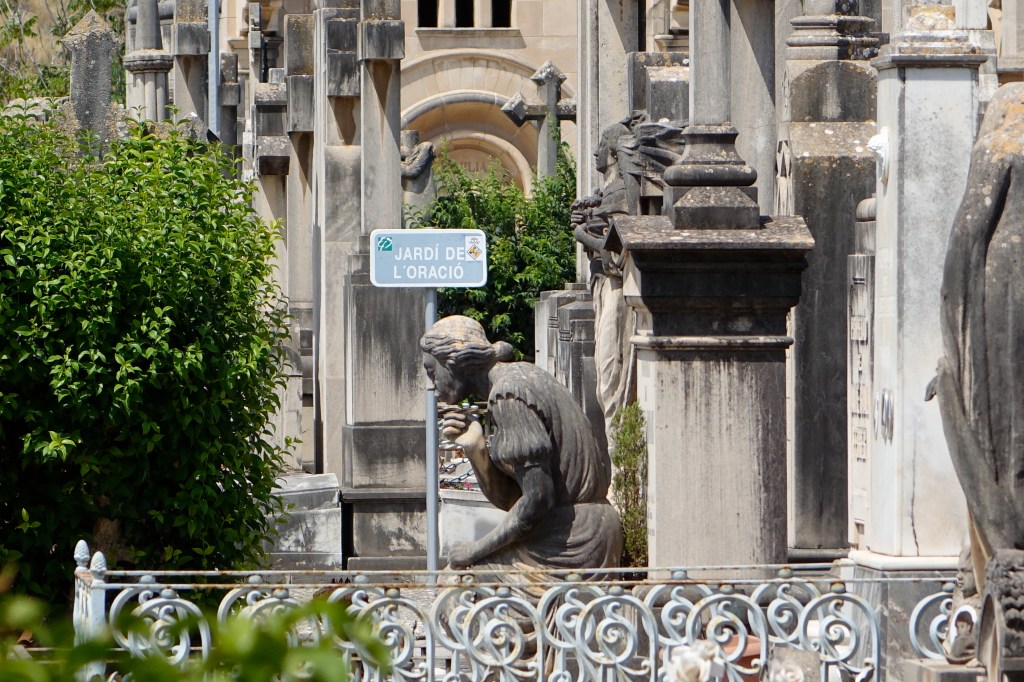
Regular readers of The Daily Norm will remember that I am utterly captivated by the charms of a cemetery. It’s not a morbid fascination – far from it. For me, cemeteries are amongst the most beautiful and thought-provoking places you can visit. Somewhere to escape the noise of life, to reflect on the emotional strength of people’s devotion to their families, and to admire some of the most startling sculptures you are likely to see in a small compact space. I have been to many cemeteries in my time, not least here in Spain where the mix of sunshine strained through shady cypress trees is particularly poetic. But if the cemeteries I have seen here before were works of poetry, the municipal cemetery in Palma de Mallorca was nothing short of a masterpiece of theatre.

DSC09924 DSC09982 DSC09967 DSC09960 DSC09926 DSC09932

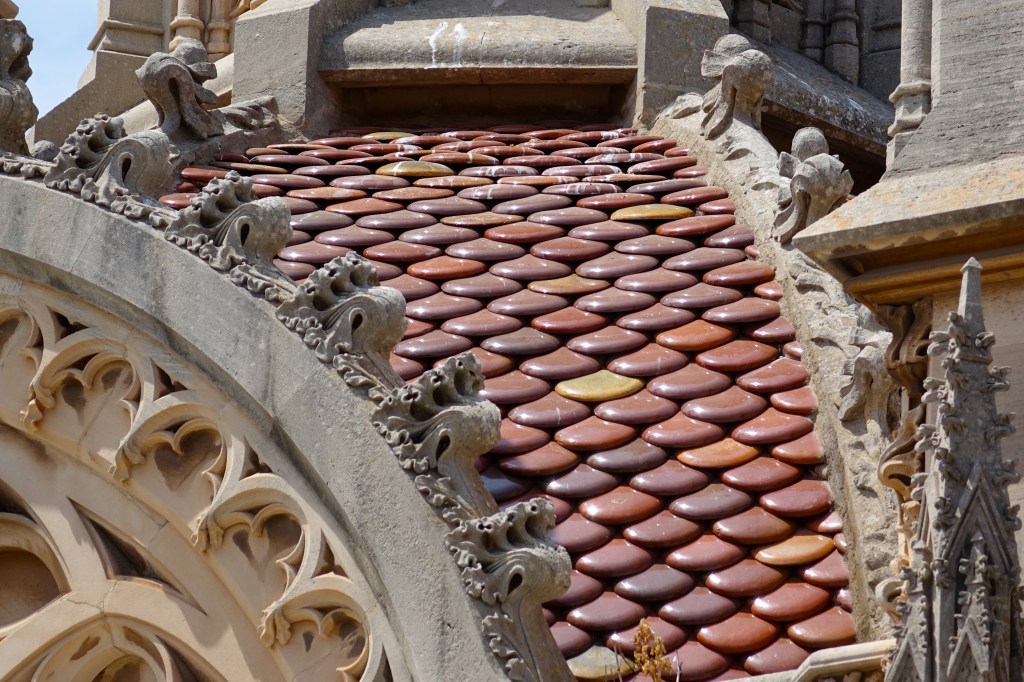
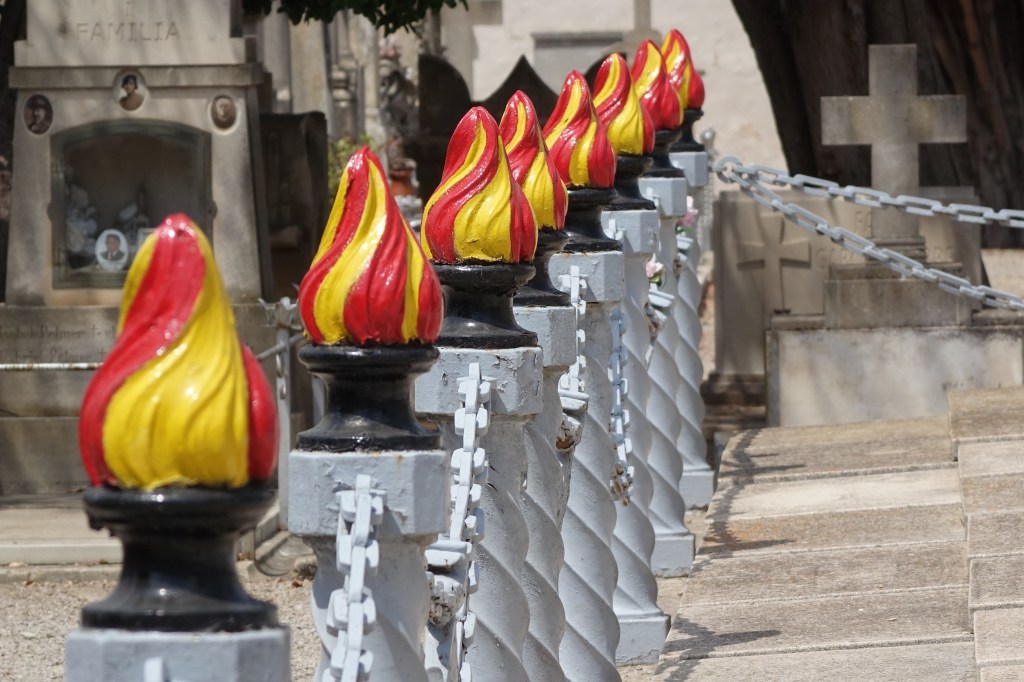
Located close to the outer ring road, the cemetery is not exactly walkable from the centre of town, and as a result, it was not until now, with a hire care at our disposal, that we were able to pass by. But this cemetery was worth the wait. Never in all my life have I ever seen such a vast collection of intricately crafted, magnificently devotional sculpture and stunning architecture in such a compact space. The cemetery is probably the biggest I have ever been in, but it is also amongst the most crowded, and row after row and row after row of tombstones are loaded not with simple flat graves, but elegantly and theatrically decorated with stone crosses, angels and other elaborate sculptures so that the result is a veritable forest of ancient stone.

DSC09941 DSC09984 DSC09985 DSC09914 DSC09930 DSC00005

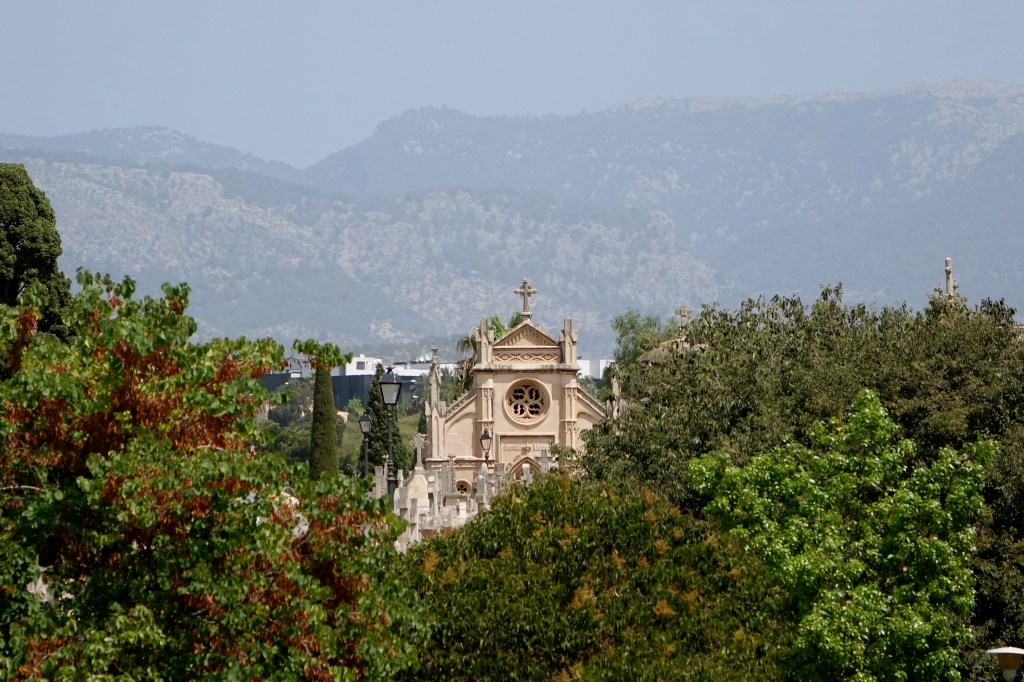
And most magnificently of all are the series of lavish little side chapels which line the perimeters of the cemetery. Utterly elaborate, constructed in a number of styles from baroque to classical and even 20th century modernist, this collection of buildings looks like an ancient empire, resembling the kind of spectacle which may have been found when entering a roman forum lined with temples.

DSC09966 DSC09974 DSC09944 DSC09950 DSC09929DSC09953

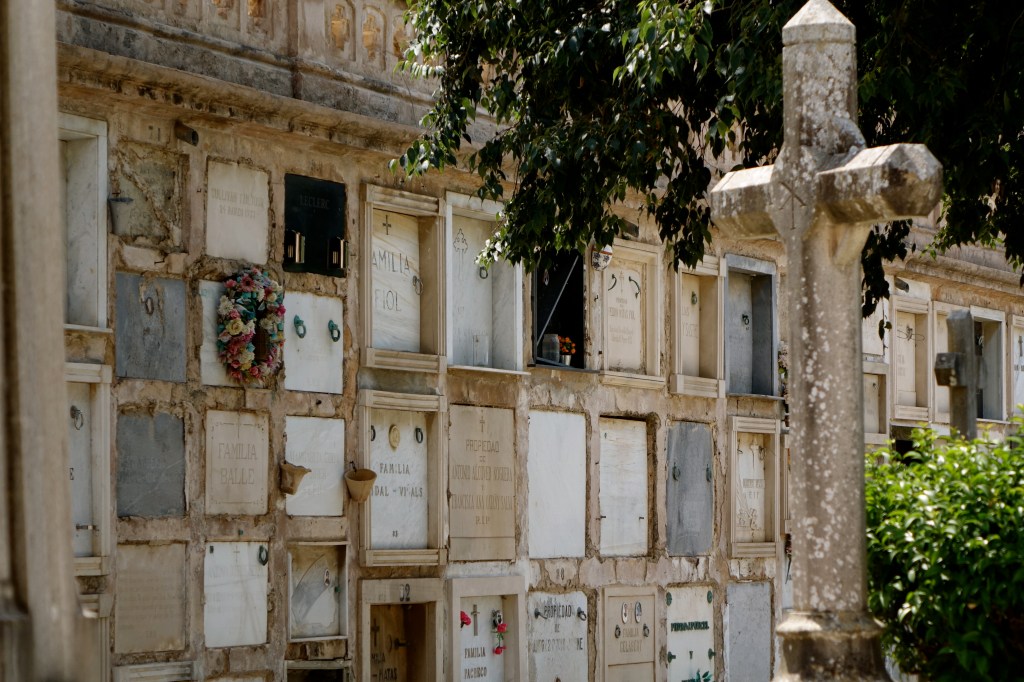
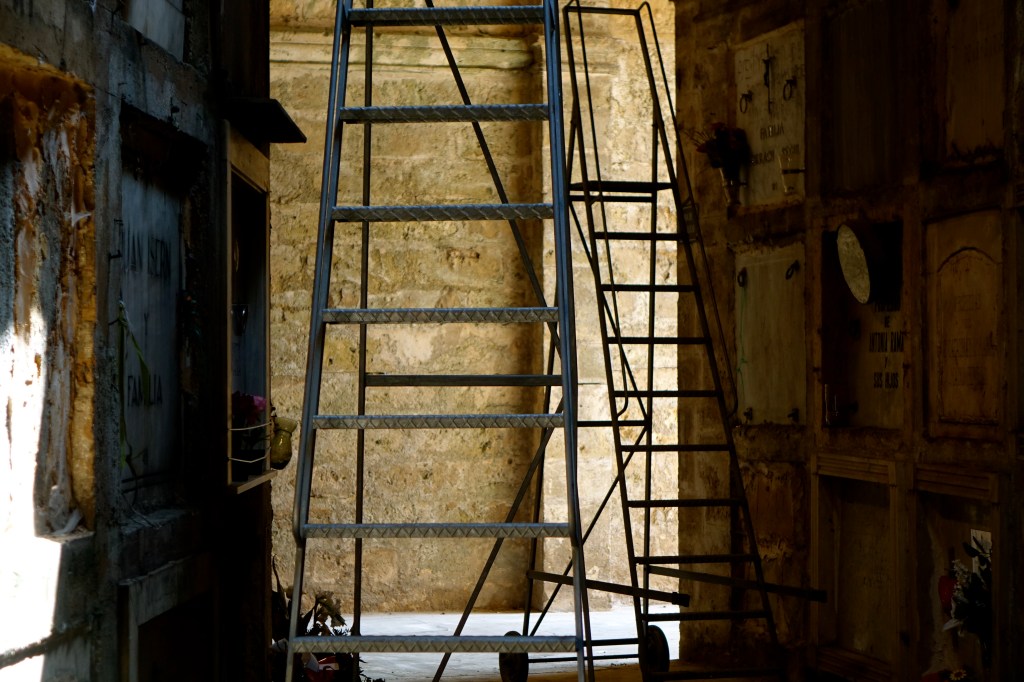
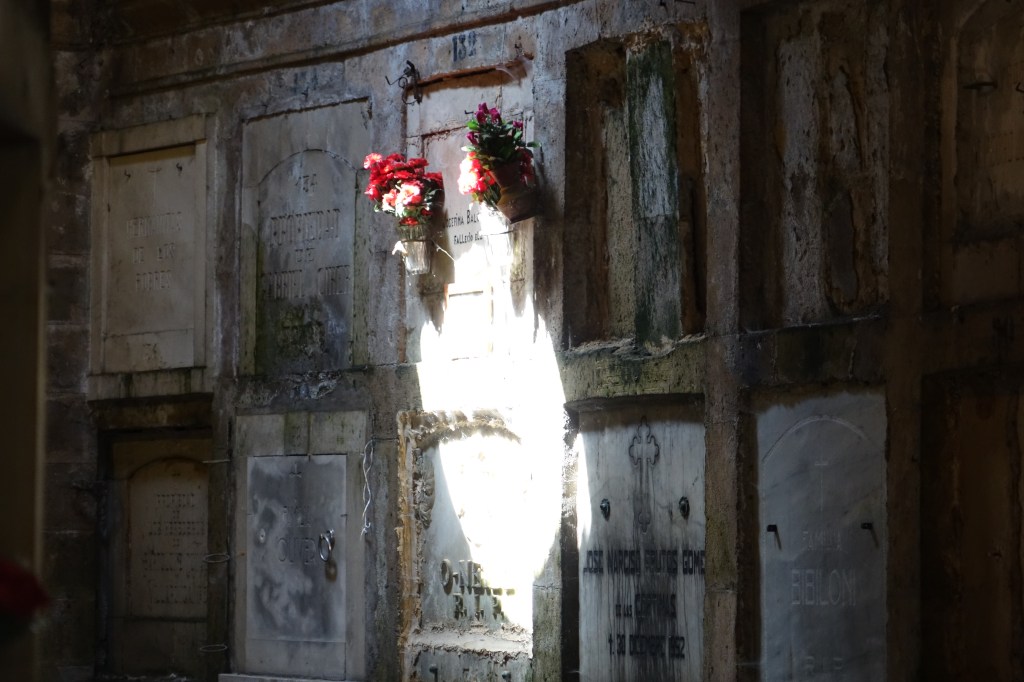
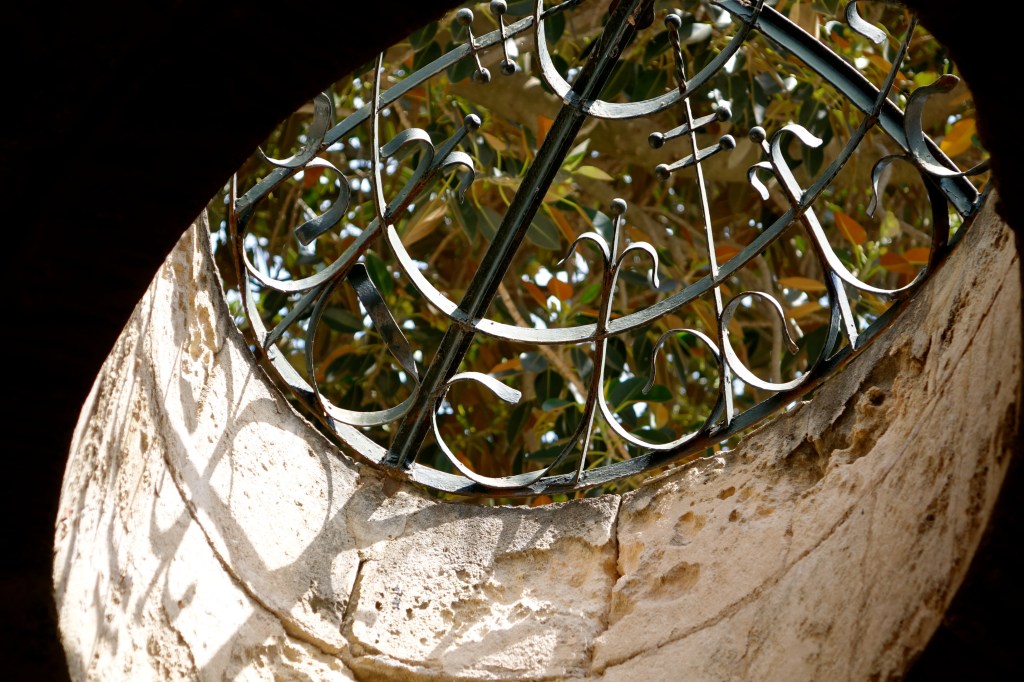
But that was not all. For beneath ground level, a secret staircase led down into what was probably the most spectacular aspect of the whole cemetery – a vast double horseshoe-shaped catacomb itself lined with tombs from floor to ceiling, flooded with light from holes in the ceiling, and slowly sprinkled with dust gently falling in the rays of sunshine. It was like something from Indiana Jones, and with road names engraved in latin we felt like we have been catapulted centuries back to an ancient civilisation.

DSC09987 DSC00003 DSC09990 DSC09998 DSC09997 DSC09992

It was only when we emerged back into the heat of the Mallorca day, the sounds of the nearby ring-road resounding nearby, that we realised we had just found Palma’s secret city.

All photos and written content are strictly the copyright of Nicholas de Lacy-Brown © 2015 and The Daily Norm. All rights are reserved. Unauthorized use and/or duplication of the material, whether written work, photography or artwork, included within The Daily Norm without express and written permission from The Daily Norm’s author and/or owner is strictly prohibited.

Mallorca Landscape (Chiringuitos)

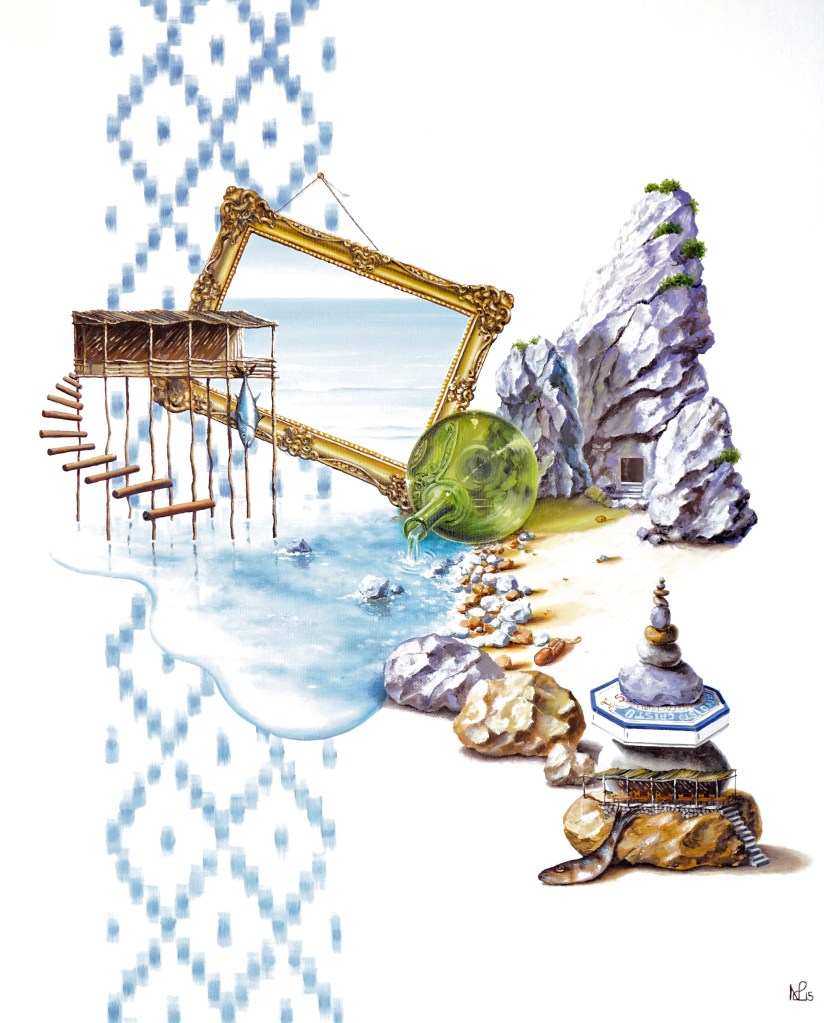
Last Friday I was thrilled and proud to have one of my paintings featured on the front cover of the food magazine supplement of Diario de Mallorca, the island’s principal daily newspaper. The work was painted especially for the monthly supplement, which included a special feature on chiringuitos, the uniquely haphazard little beach cafe-grills which pop up all over the island on some of the most hard to reach beaches and calas and serve up the freshest fish to those lucky enough to reach them.

Mallorca Landscape (Chiringuitos) (2015 © Nicholas de Lacy-Brown, oil on canvas)

Mallorca Landscape (Chiringuitos) (2015 © Nicholas de Lacy-Brown, oil on canvas)

But my painting represents more than just chiringuitos, although it features two, one precariously balanced on long spindly legs, and the other nestled against the side of a pile of rocks. This painting is also my homage to Mallorca, with a backdrop of the famous blue and white lenguas material which has been a protagonist of traditional Mallorquin design for centuries, and with a rocky beach setting closely resembling the kind of mysteriously surreal craggy rock forms which characterise Mallorca’s consistently surprising rocky coast.

Returning somewhat to my more surreal style, but injecting a fresh whiteness which I have not exhibited much in previous works, this feels like both a welcome reprise of a favourite style, and a new departure onto artistic pastures new, and in all things a devoted homage to the island I now love to call home.

© Nicholas de Lacy-Brown 2000-2015. Unauthorised use and/or duplication of the material, whether written work, photography or artwork, included on this website without express and written permission from Nicholas de Lacy-Brown is strictly prohibited. For more information on the work of Nicholas de Lacy-Brown, head to his art website at www.delacy-brown.com

Like snow in summertime

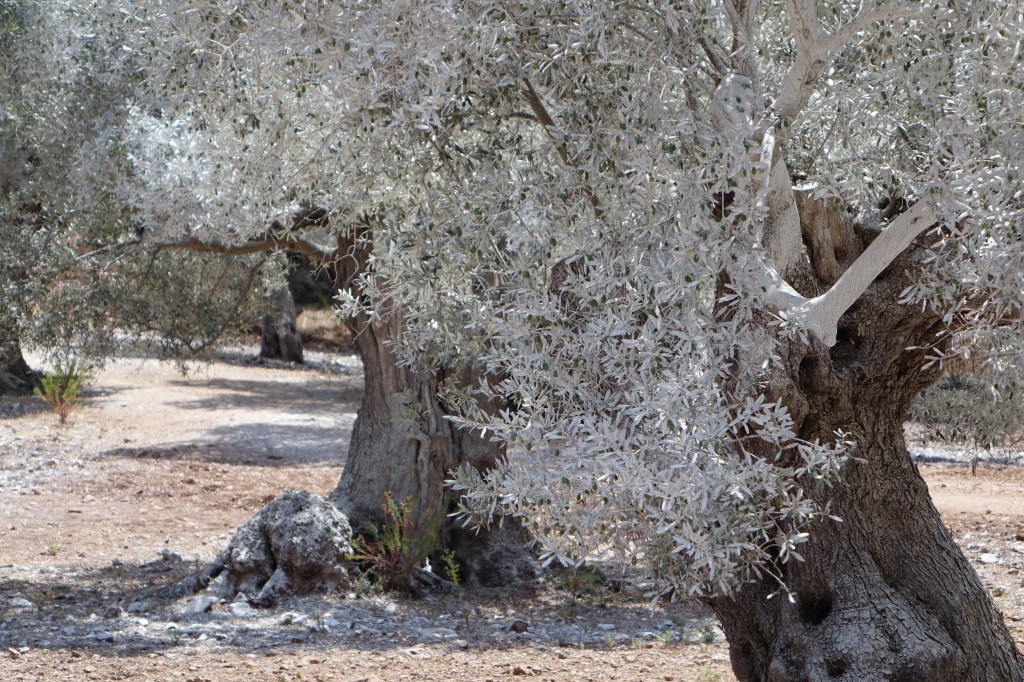
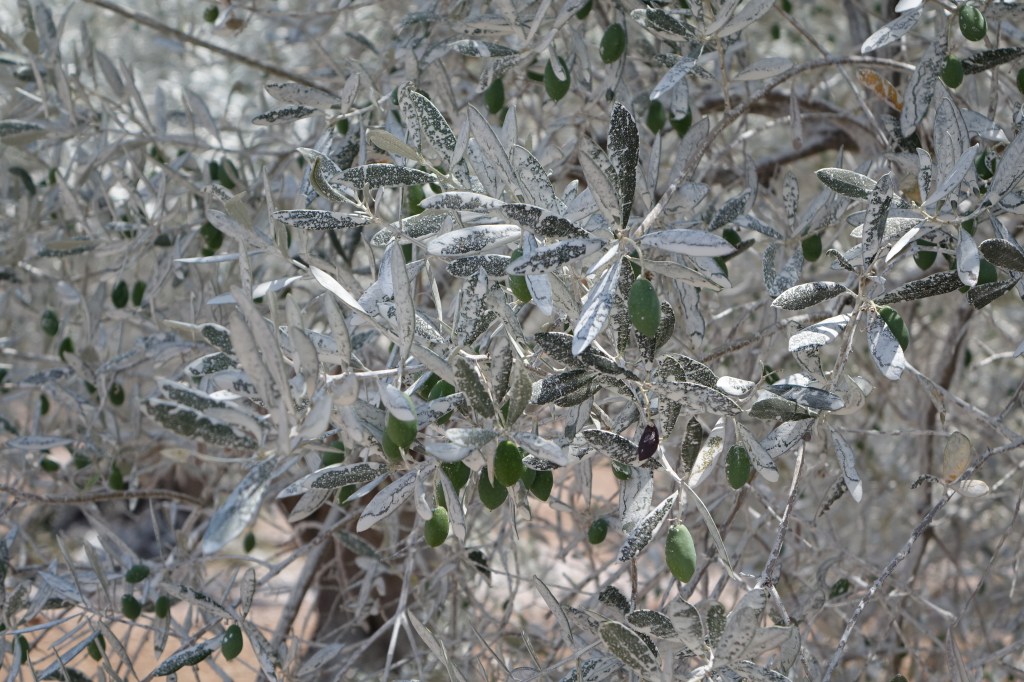
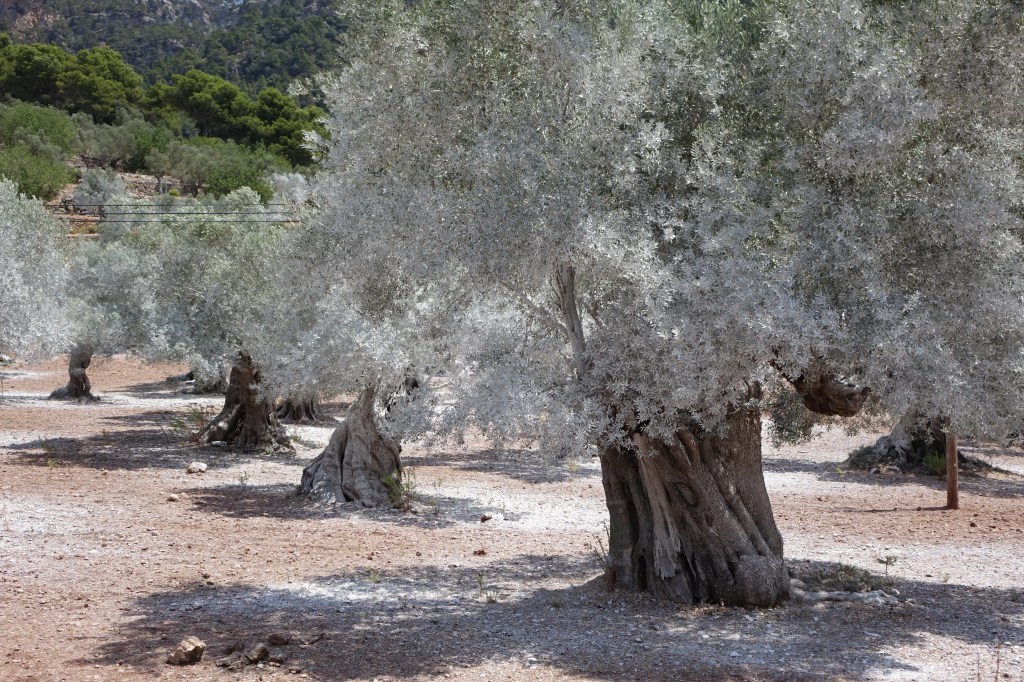
You’d have been forgiven for thinking that the photos below, taken the other day, showed freak climatic conditions – of snow freshly laid on olive trees ripe with fruit, freshly laid in the middle of the summer. But on closer sight, another thing becomes noticeable: the startling contrast between icy white and vivid summertime greens, not to mention the rich rusty coloured ground which had largely escaped a white covering, nor the cerulean blue sky glimmering brightly under an intense sunshine.

DSC00015 DSC00028 DSC00021 DSC00037

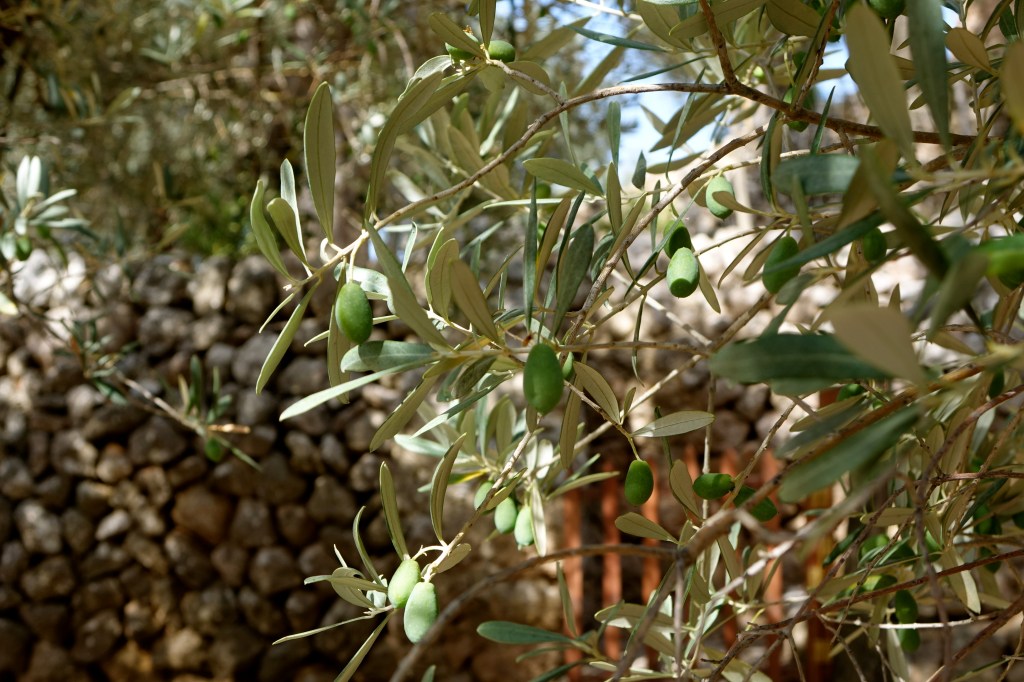
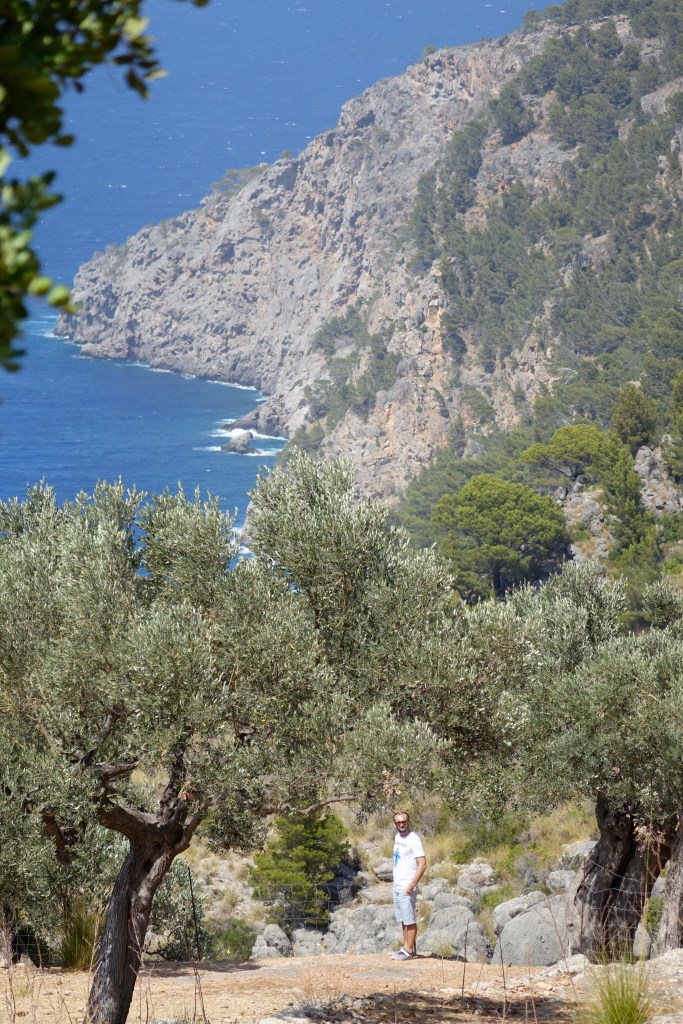
Rather than snow in summer, these photos show one of the most interesting sights which can currently be discovered on the road from Valldemossa to Deia in Mallorca: olive trees densely sprayed in a covering of chalky white, their fruit still intact beneath it. Why this winter coat has been applied I have no idea: I can only guess that it is some kind of insecticide applied at the crucial time when the olives are almost ripe. Whatever the reason, the colour contrast presented is undoubtedly striking, and as ripe an inspiration for my camera as the juicy round olives steadily growing on those white branches.

DSC00013DSC00019DSC00045DSC00007

All photos and written content are strictly the copyright of Nicholas de Lacy-Brown © 2015 and The Daily Norm. All rights are reserved. Unauthorized use and/or duplication of the material, whether written work, photography or artwork, included within The Daily Norm without express and written permission from The Daily Norm’s author and/or owner is strictly prohibited.

On the trail of S’Arxiduc (Part 2): Monestir de Miramar

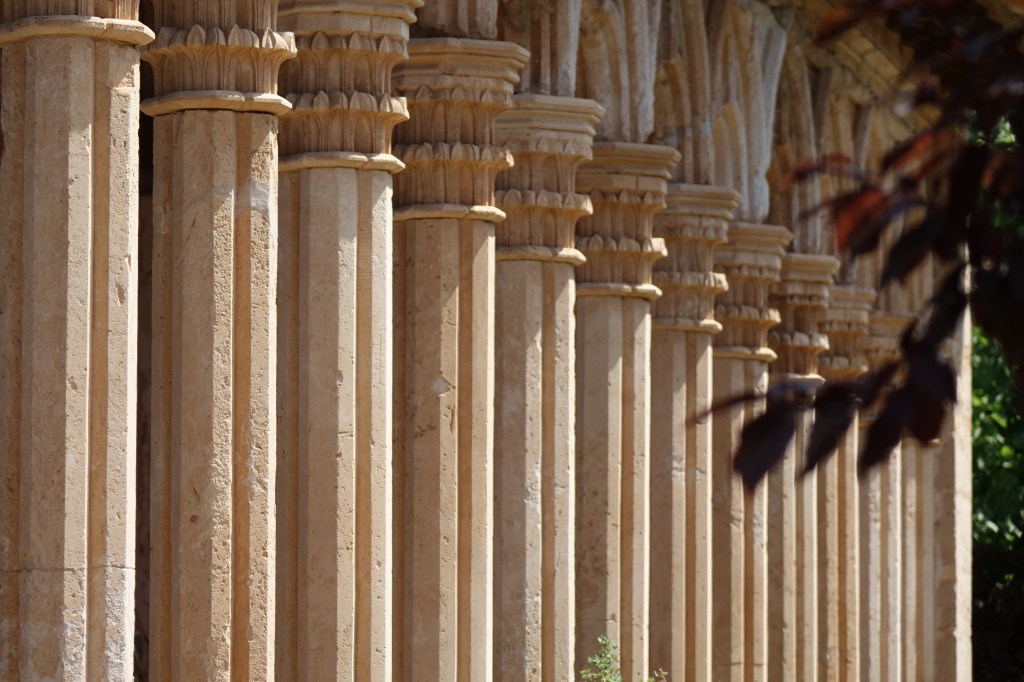
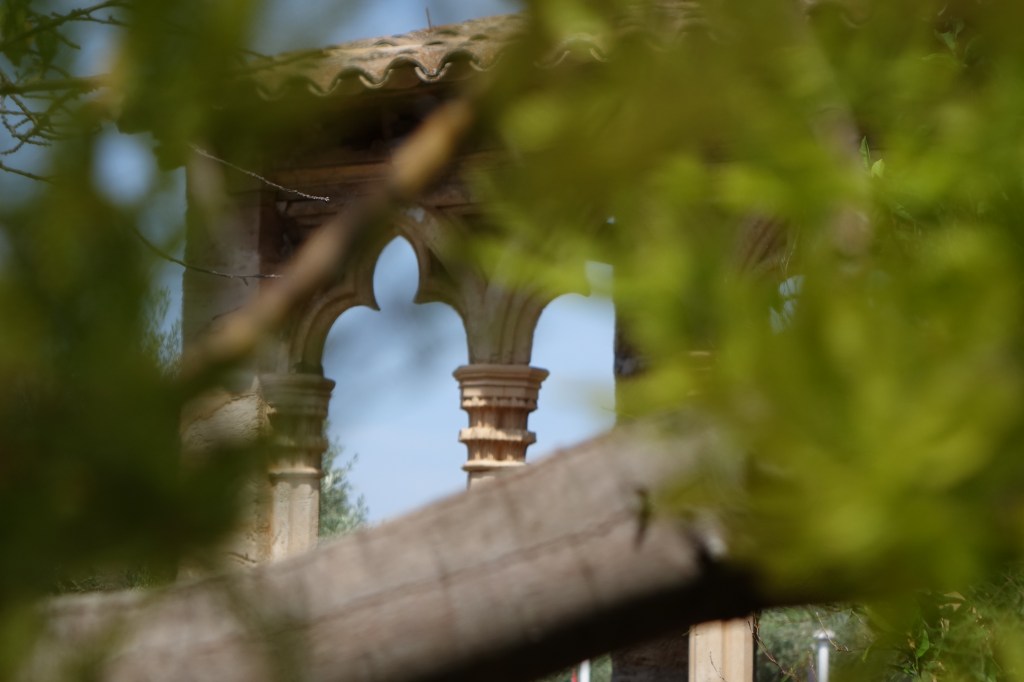
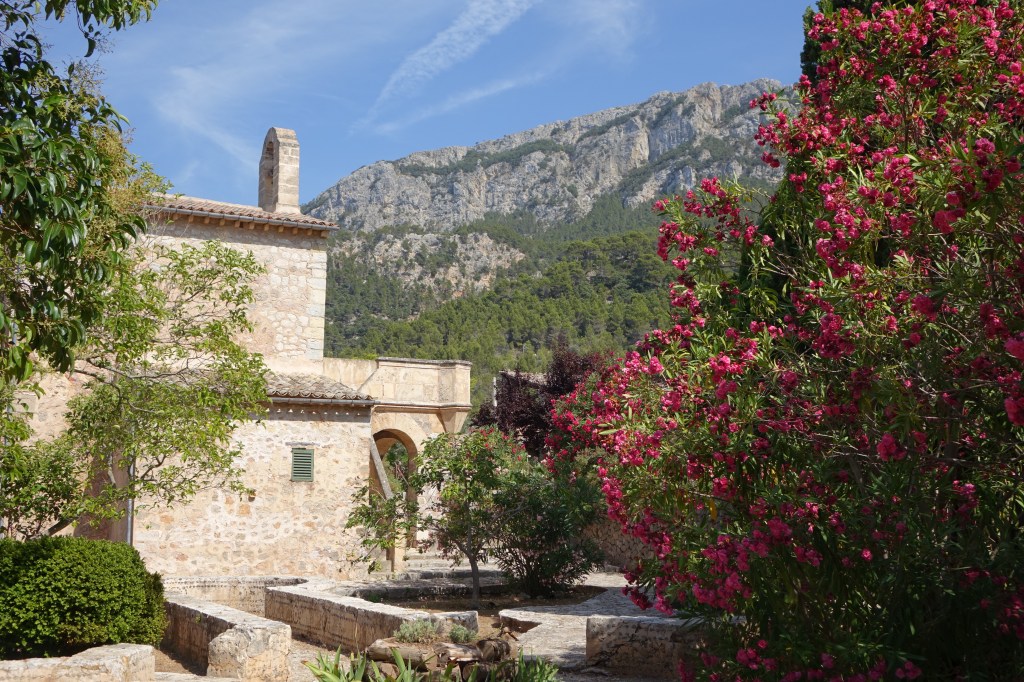
Following on from our visit to Son Marroig, our tour of the Deia coast on the trail of S’Arxiduc, the Archduke Ludwig Salvador, took us back towards Valldemossa and to the Miramar Monastery. Contrary to the name, there is very little left of the 13th Century monastery which once stood on the site, other than one length of what must have been a stunning cloister, now to be found almost floating amidst a garden full of flowers. However what was left of the monastery was purchased by the Archduke in 1872 when he fell head over heels in love with the coast, and there he converted the site into another of his great coastal houses.

The old monastery, the house an its gardens

DSC00206 DSC00217 DSC00353 DSC00250 DSC00226 DSC00202 DSC00218 DSC00264 DSC00356 DSC00262

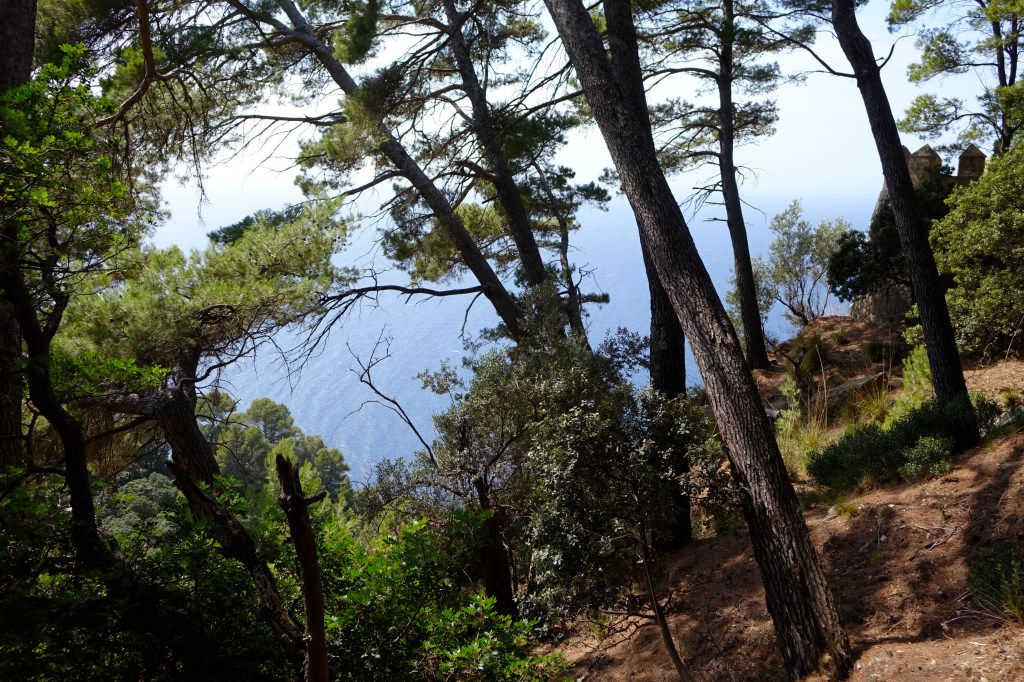
Today the main attraction of the house is undoubtedly the gardens and land which surround it. As the Archduke himself declared: “Without doubt no other place on earth deserves with more reason the name Miramar”. And on this count, I could not disagree, for just beyond the more formal gardens which surround the ancient chapel and old cloister remains, extensive land takes the visitor all the way to a cliff edge which benefits from utterly breathtaking views over to Son Marroig and the stunning emerald sea below. From there, the grounds lead on to a mysterious Italianate pool, and beyond a series of canals and mills which appear to be left over from the ingenious reign of the Moors whose engineering innovations managed to tame this otherwise uninhabitable land long before the Archduke arrived.

Views and aspects of the land beyond

DSC00324 DSC00350 DSC00276 DSC00316 DSC00319 DSC00335 DSC00348 DSC00345 DSC00212 DSC00328 DSC00308 DSC00303 DSC00292 DSC00287

It is not at all hard to appreciate why the Archduke fell so in love with this incredible strip of coastline, and it is thanks to him that much of the coast today remains unspoilt and unashamedly beautiful for us all to enjoy today.

All photos and written content are strictly the copyright of Nicholas de Lacy-Brown © 2015 and The Daily Norm. All rights are reserved. Unauthorized use and/or duplication of the material, whether written work, photography or artwork, included within The Daily Norm without express and written permission from The Daily Norm’s author and/or owner is strictly prohibited.

On the trail of S’Arxiduc (Part 1): Son Marroig

Mallorca is a well-known magnet for people from all nations, and of all the famous foreigners attracted to the island, none has been so well admired locally as ‘S’Arxiduc’, Archduke Ludwig Salvador. Born in 1847 in the Pitti Palace, Florence, the son of Leopold III of Tuscany and Marie Antoinette de Bourbon, he came to Mallorca 20 years later to escape from Viennese court life and immediately fell in love with the island.

Championing conservation before the word even had a meaning, the Archduke was a passionate admirer of the wild beauty of the North-Western Tramuntana coast, and very quickly bought up estates along the coast (including S’estaca which today belongs to Michael Douglas) in an effort to save them from development. Once saved, he devoted himself to studying and recording Mallorcan wildlife and traditions along the land, and his seven volume Las Baleares remains an authority on the subject today.

Na Foradada and the famous marble rotunda

DSC00154 DSC00055 DSC00272 DSC00160 DSC00172 DSC00061

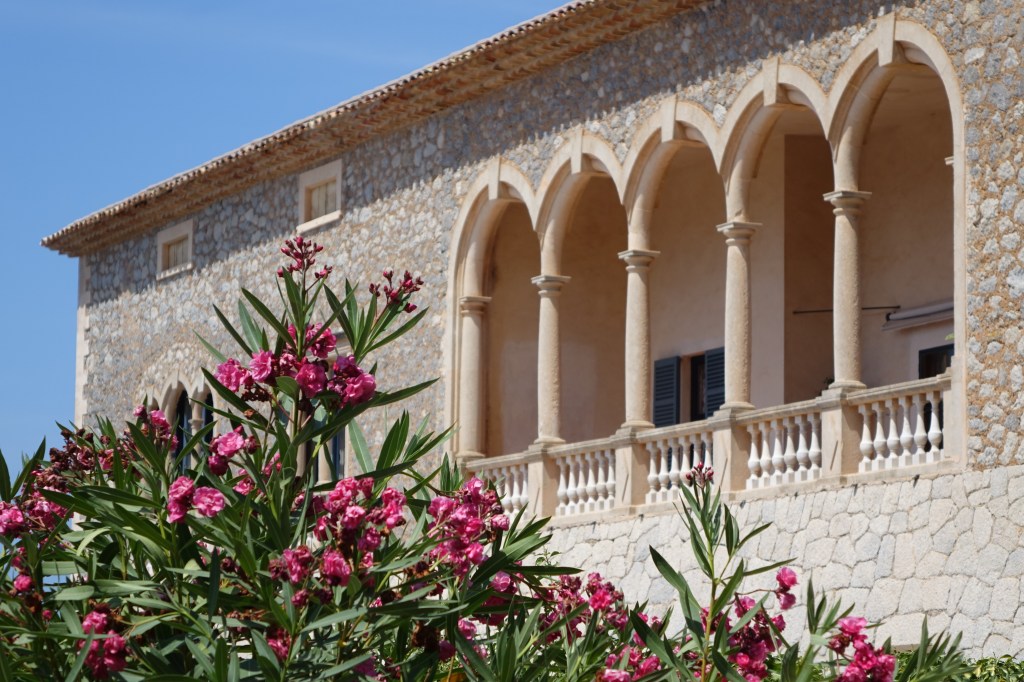
100 years after the centenary of his death, the island of Mallorca is marking the life of this critically important Mallorca enthusiast, including a large exhibition devoted to his life in the Casal Solleric on Palma’s leafy Borne boulevard. So with S’Arxiduc very much on the brain, it felt like the perfect time to visit two of his former properties, which I have so often seen on the way to my beloved Deia and never explored. The first, Son Marroig, was the Archduke’s home and has today been turned into a shrine in his memory.

Son Marroig inside

DSC00058 DSC00065 DSC00063 DSC00083

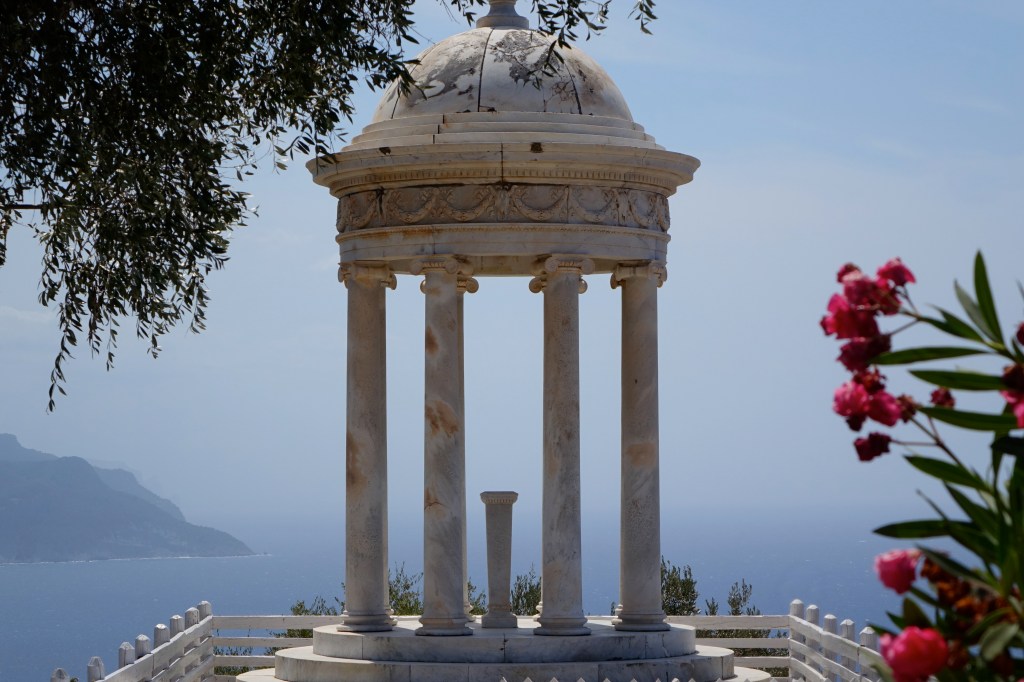
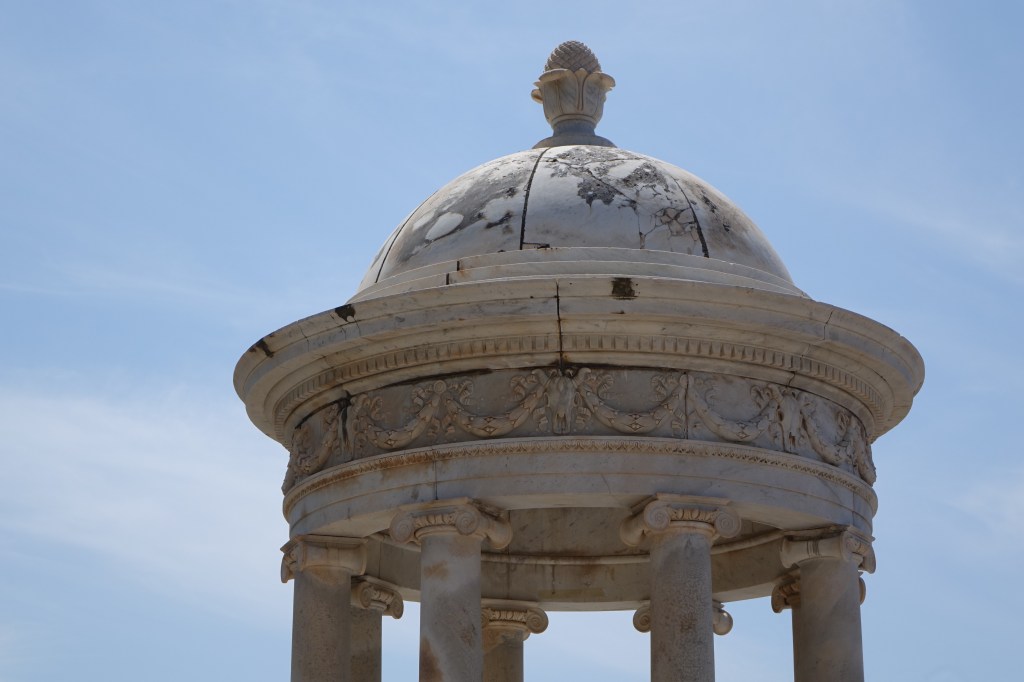
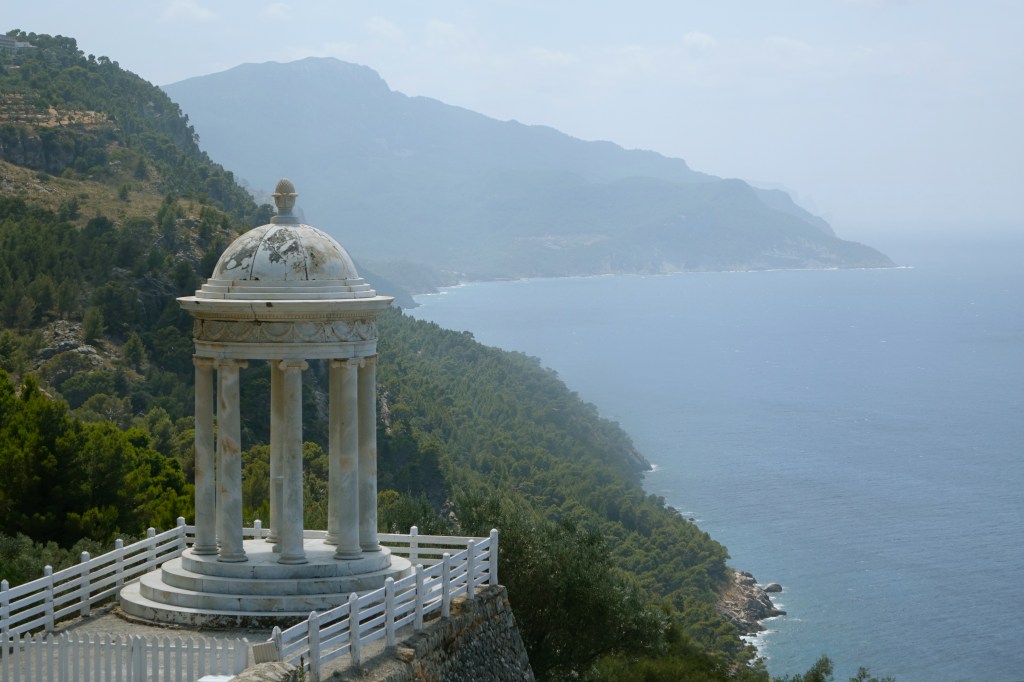
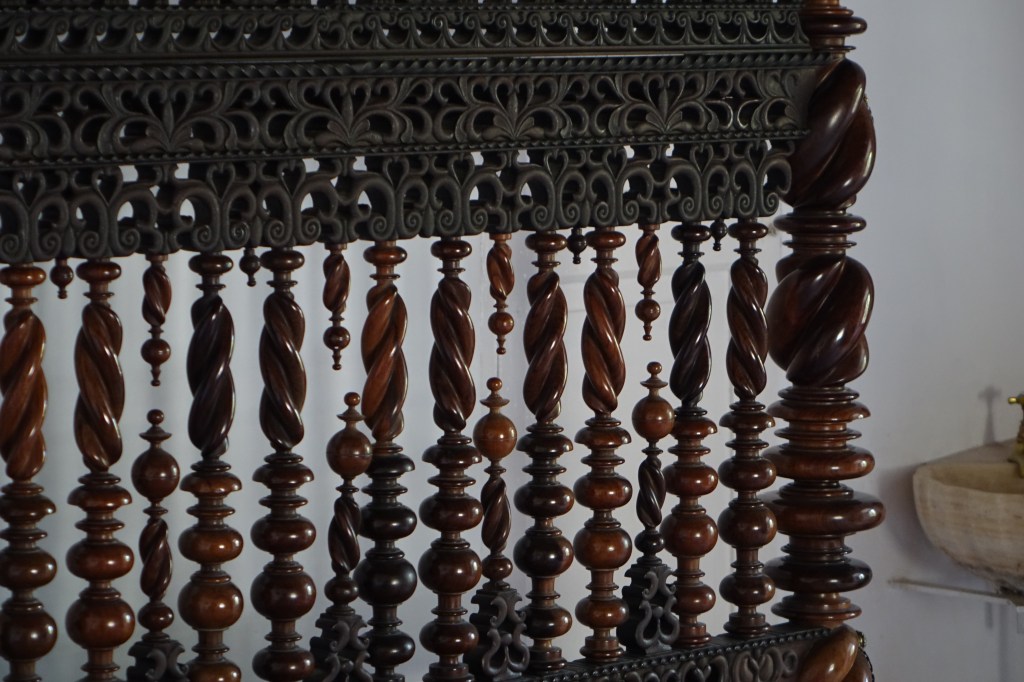
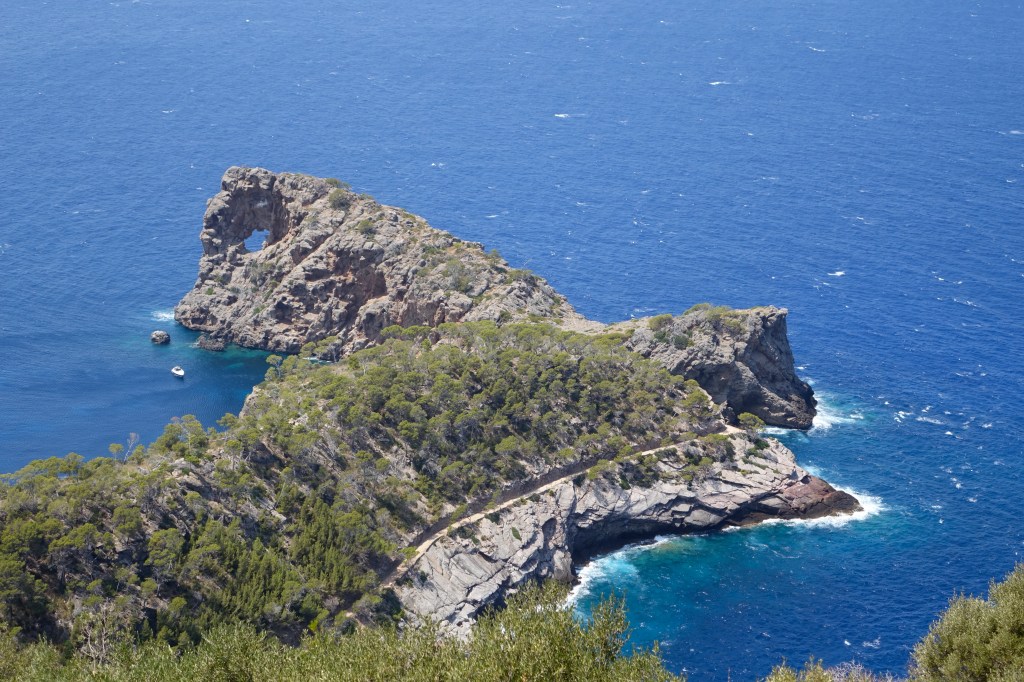
While the house is rich in S’Arxiduc memorabilia together with impressive antique furniture and traditional Mallorquin upholstery, the real gem for me is the outside: sun dappled gardens cooled by a small pond and a lavish array of plants, and beyond them his famous white marble rotunda, made from Carrara marble and imported from Italy, from where you can sit and gaze at the Na Foradada (‘pierced rock’) peninsula, jutting out to sea with a gaping 18-m hole at its centre. It’s a poetic structure from a man who, like no other before, appreciated the true poetry which resounds in this most stunning and unique of Mediterranean coasts.

Gardens of San Marroig

DSC00107 DSC00116 DSC00114 DSC00113 DSC00106 DSC00126 DSC00094 DSC00104 DSC00095 DSC00091 DSC00093 DSC00088

All photos are strictly the copyright of Nicholas de Lacy-Brown © 2015 and The Daily Norm. All rights are reserved. Unauthorized use and/or duplication of the material, whether written work, photography or artwork, included within The Daily Norm without express and written permission from The Daily Norm’s author and/or owner is strictly prohibited.

Mallorca Sketchbook: Garden at the Son Viscos

Readers of my post yesterday will not be surprised that my short stay at the Son Viscos bed and breakfast in Valldemossa provided sufficient inspiration for the creation of a little souvenir artwork. For in that hour or so we spent in the fresh, sun-dappled leafy garden alongside the beautiful light-infused farmhouse kitchen, clutching a glass of chilled white wine in one hand and a book in the other, we felt utterly tranquil. It was as though time had stood still, and there was certainly enough to make this little sketch of the kitchen door, framed by creeping plants, with a rustic set of steps leading up to it from the verdant garden below. Precious memories, now enshrined in this page of my sketchbook.

Garden at the Son VIscos (2015, © Nicholas de Lacy-Brown, pen on paper)

Garden at the Son VIscos (2015, © Nicholas de Lacy-Brown, pen on paper)

© Nicholas de Lacy-Brown and The Daily Norm, 2001-2015. Unauthorized use and/or duplication of the material, whether written work, photography or artwork, included within The Daily Norm without express and written permission from The Daily Norm’s author and/or owner is strictly prohibited.

Mallorca’s ultimate eden: The Son Viscos Bed & Breakfast

Many may smirk when the inhabitants of paradise complain, but even we locals of Mallorca know when enough is enough. And having lived now for almost two months of temperatures in excess of 35 degrees, every so often, one just has to get away from it all. Nothing extreme mind you – I’m not talking the 20 degrees drop which a visit to London may entail, but rather a drive up into the stunning Tramuntana mountains where, at night at least, the air is notably fresher than city life in Palma and sumptuously comfortable. And as this very hot weather happened to coincide with my 32nd birthday (yesterday!) it seemed like the perfect excuse to treat ourselves a little, and book a little night away in a cooler, lusher paradise.

The location we chose could not have been more perfect. Located in the footfalls of the Tramuntana in the valley which gives the magical town of Valldemossa its name, the Son Viscos Bed and Breakfast was like a home from home, but we’re talking the kind of home which only the most avid readers of interior design magazines could wish for.

Interiors of the Son Viscos

DSC00407 DSC00374 DSC00413 DSC00507 DSC00369 DSC00510 DSC00424 DSC00372 DSC00373 DSC00381 DSC00367

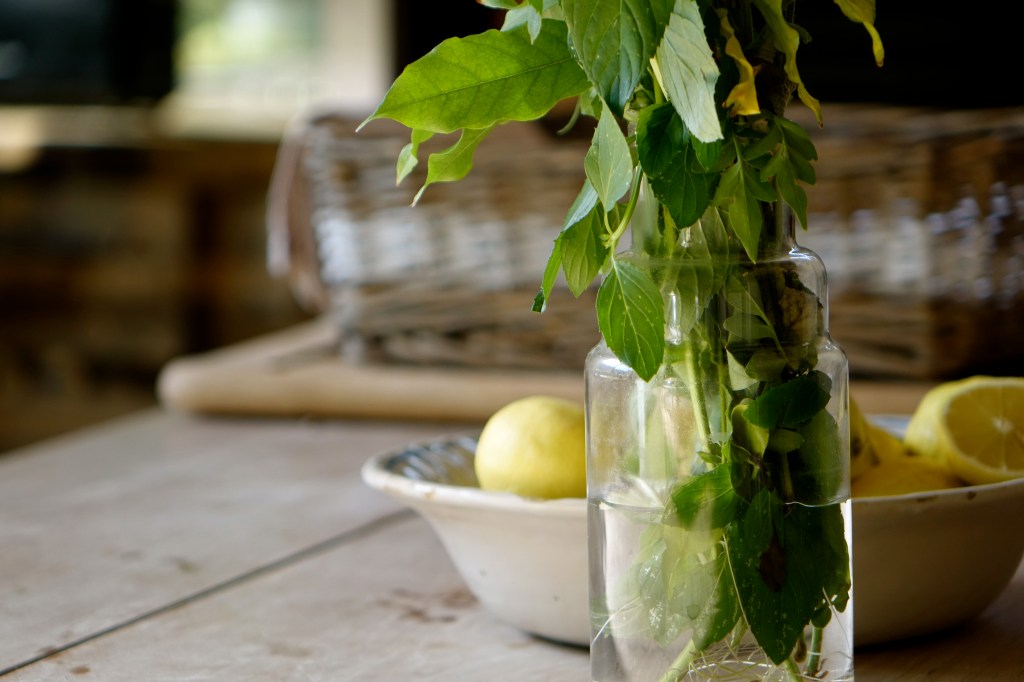
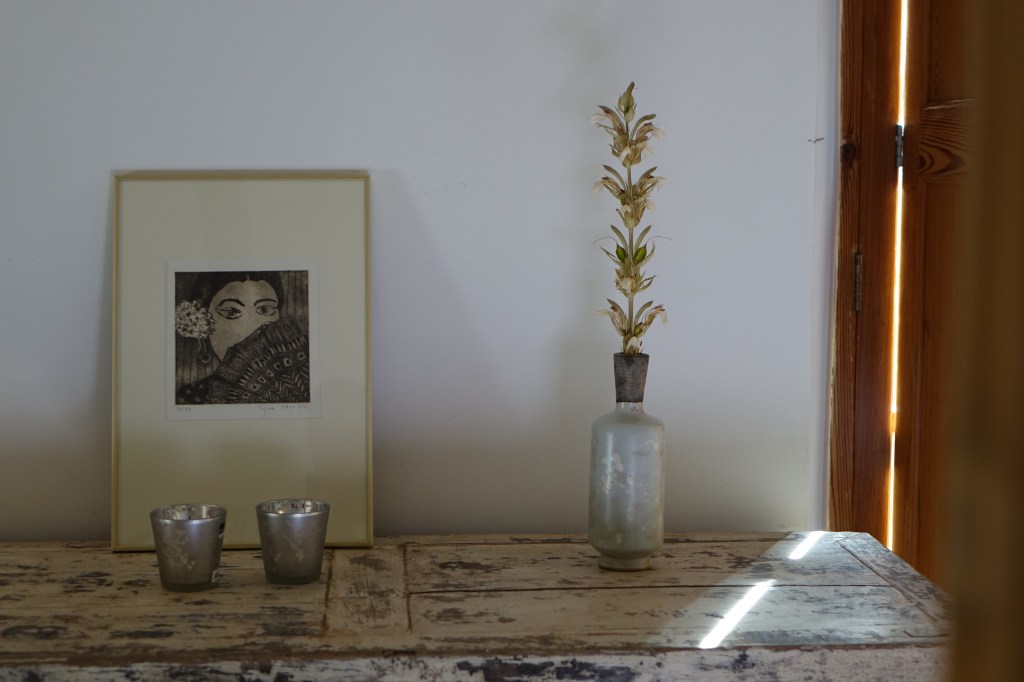
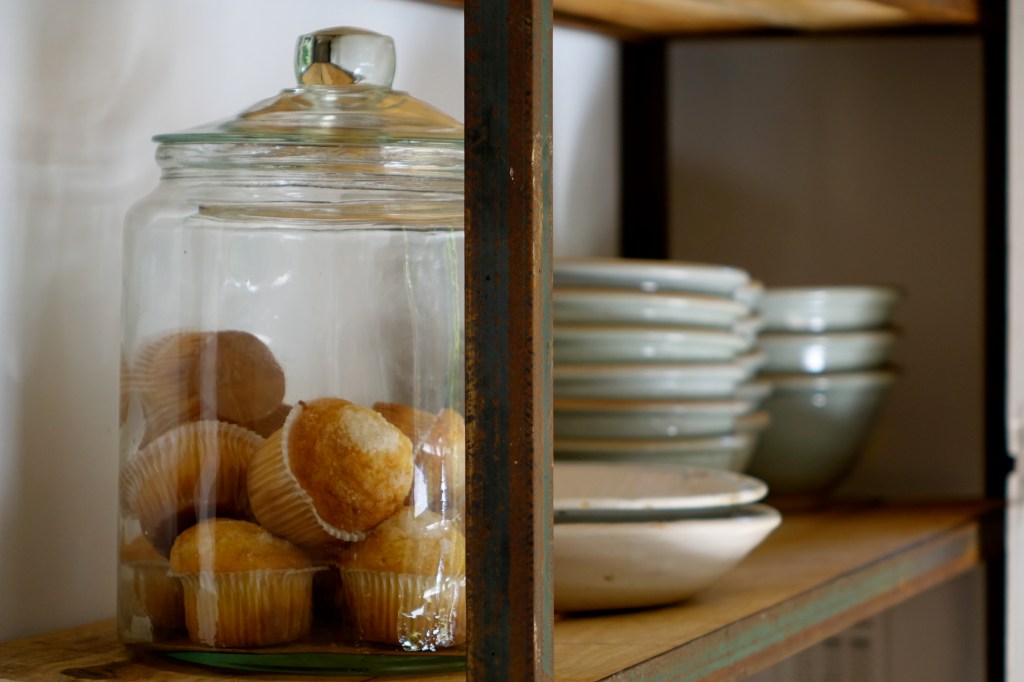
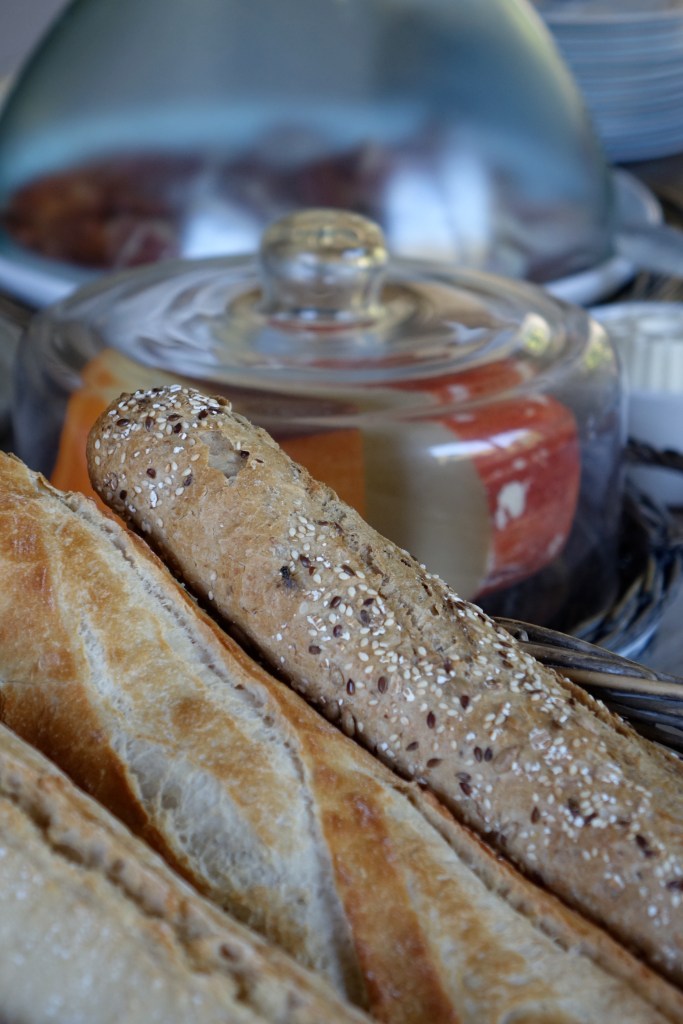
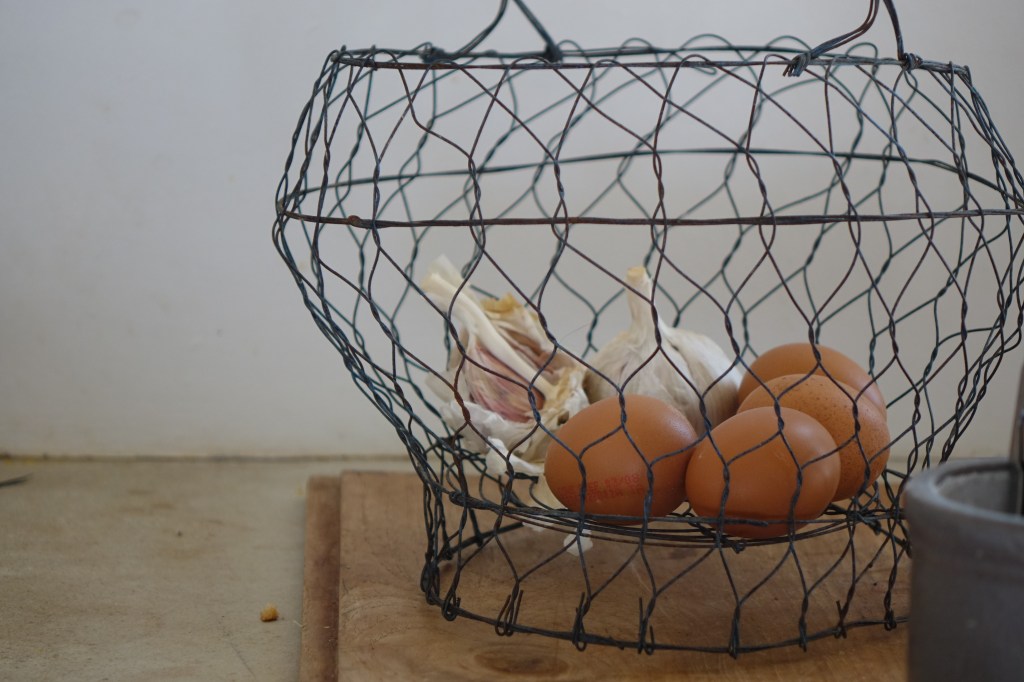
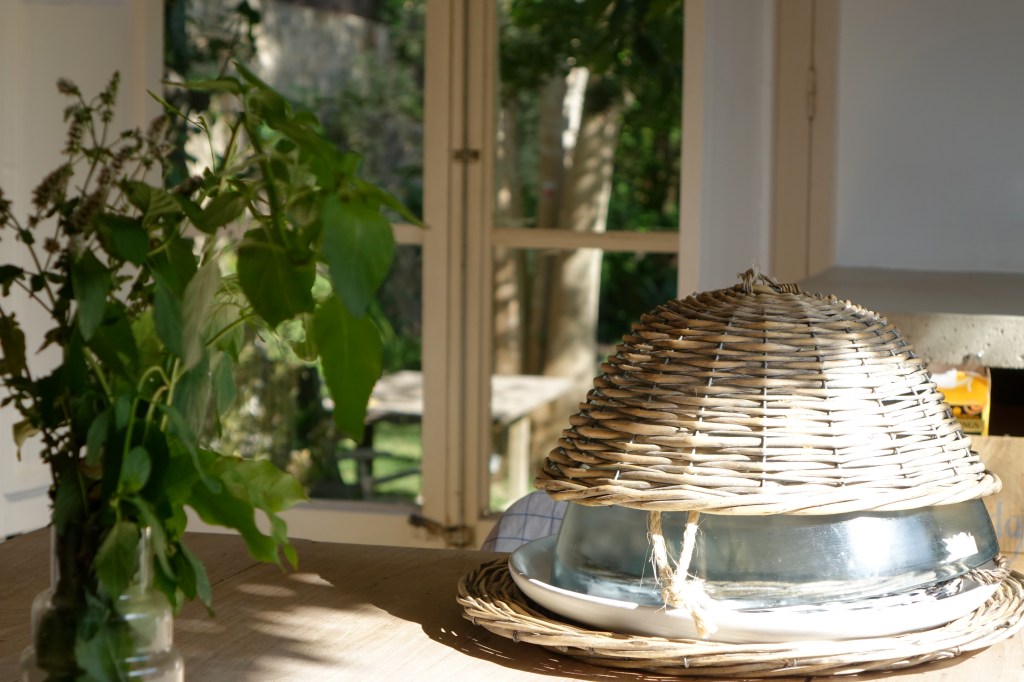
Owned by the proprietors of the popular interior design store, Mosaic, located in cool Santa Catalina in Palma, the Son Viscos hotel is a euphoria of design harmony, with understated muted tones and natural woods offsetting perfectly amongst carefully chosen rustic antiques and ceramic items. The west-facing kitchen, which was flooded with light in the afternoon, and filled with a bounteous feast of the freshest breakfast produce in the morning, was the beating heart of a guesthouse which maintained all of the characteristics of the most welcoming of family homes.

The Son Viscos garden

DSC00389 DSC00533 DSC00398 DSC00396 DSC00388 DSC00485 DSC00382 DSC00434

Our room, the Menta suite, offered the very best of comfort with a lavish but pared down minimalist wooden four poster bed, together with haphazardly placed original art, design arm chairs and super soft towels. Flooded with light from an ample terrace, the room boasted enviable views of the Valldemossa monastery, and benefited from all of the freshness of the lush mountains opposite.

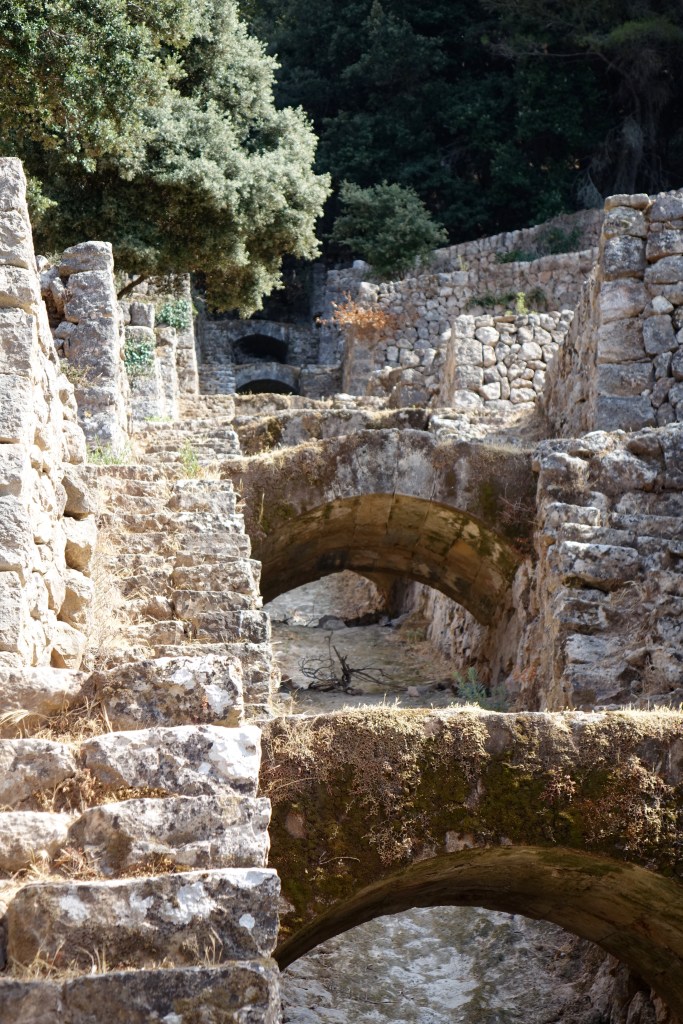
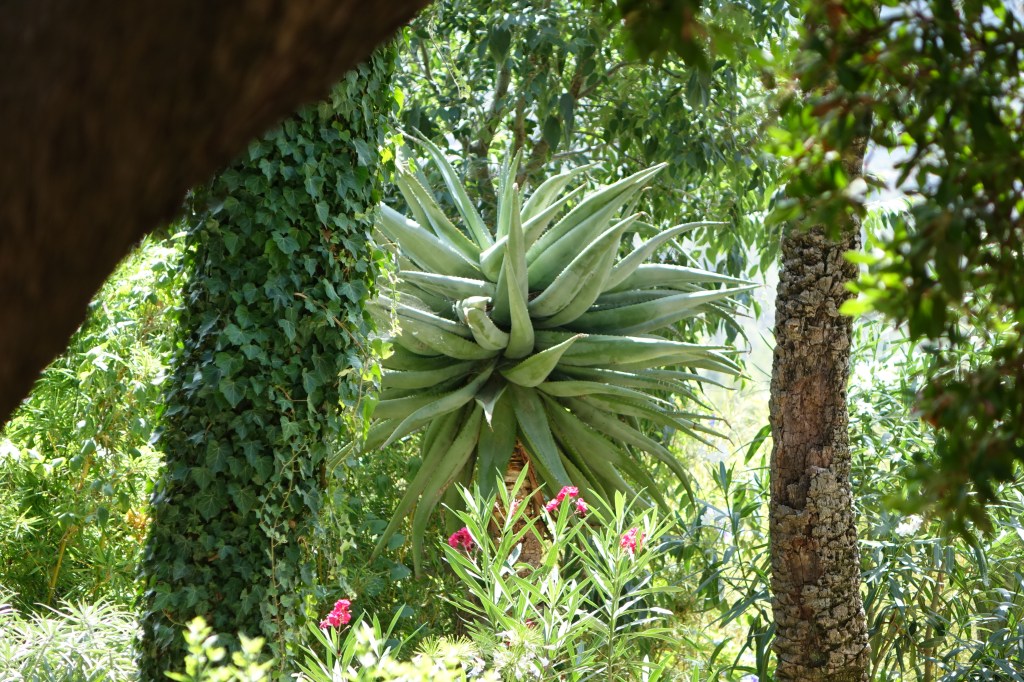
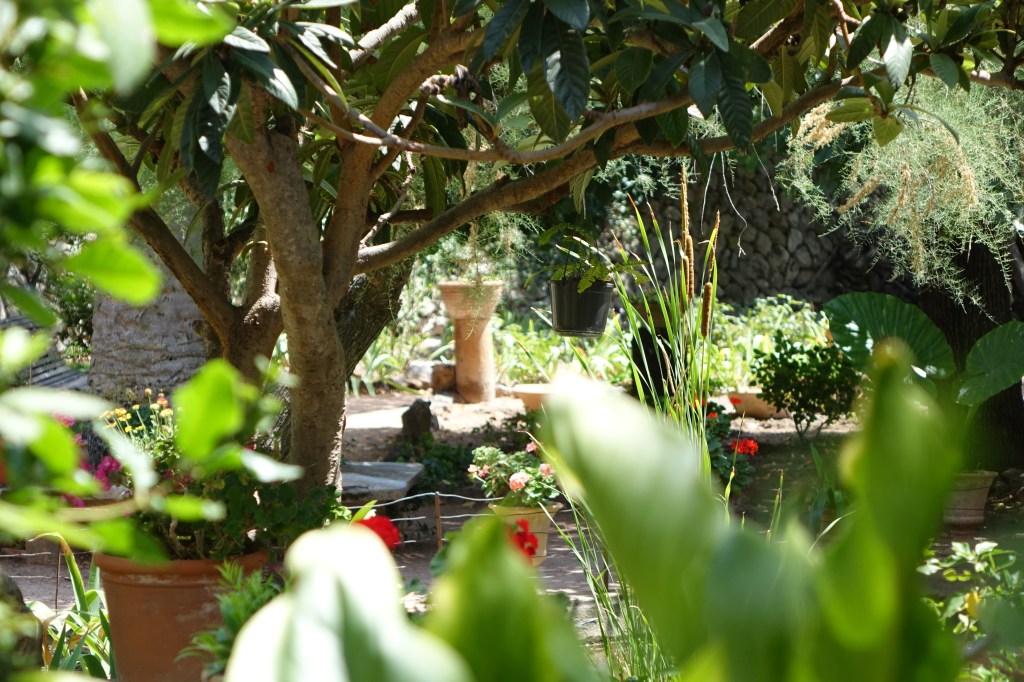
And it was precisely that fresh air which so loving nurtured us as we settled down for our night at the Son Viscos, finally able to escape the suffocating heat which had tampered with our dreams for months. Waking enlivened and refreshed, we had yet more pleasures to discover, for opposite the Son Viscos, the hotel’s extensive grounds extended to sun dappled woods hugging the side of the valley, and included fresh water streams, ancient moorish mills and even a dainty stone bridge which had more than survived the tests of time.

The Son Viscos’ sumptuous grounds

DSC00618 DSC00535 DSC00588 DSC00566 DSC00486DSC00549 DSC00521 DSC00532 DSC00550 DSC00586 DSC00580 DSC00579 DSC00525 DSC00612 DSC00600

The Son Viscos hotel was frankly an experience in a million, for its meticulously conceived design, its perfectly bucolic location, and for the sheer welcoming comfort it offered. As I sit here now, back in hot Palma, recounting my time there I long to return. Something tells me it won’t be long.

All photos and written content are strictly the copyright of Nicholas de Lacy-Brown © 2015 and The Daily Norm. All rights are reserved. Unauthorized use and/or duplication of the material, whether written work, photography or artwork, included within The Daily Norm without express and written permission from The Daily Norm’s author and/or owner is strictly prohibited.

Soller lemon posset with gold-covered raspberries and a ginger crunch

It’s been a long time since I shared a recipe on The Daily Norm, but the recent occasion of a dinner party with special friends Alejandro and Maria in our new Mallorquin home meant that it was time to take out my pots, pans and finest dinnerware and to show my Spanish friends what the English do best. And with that in mind, and after a locally-inspired starter of Mallorcan tumbet on puff pastry, and a main of pistachio-stuffed chicken with caramelised oranges, I decided to give the final course an English twist, with a theme characterised by the delicacy of afternoon tea, all brought together in a bone china tea cup.

DSC09661

The dessert was a lemon posset, certainly an English favourite, although given the Mallorquin twist thanks to the abundance of citrus fruit grown on the island (I used lemons from the lush mountain valleys of Soller).  It’s awfully simple to make – in a small saucepan you simply bring 300ml double cream and 75g of caster sugar slowly to the boil, stirring constantly to dissolve the sugar, and allowing the cream to bubble for 3 minutes, while stirring, once it has come to the boil. This mix should then be removed from the heat, and the juice of 1-2 lemons added (adapted to your taste – sweet and tangy is best) while continuing to stir. At this point the mix should thicken slightly and can be poured into containers of your choice and refrigerated over night.

I gave this indulgent creamy dessert a much needed crunch with some crushed spiced ginger biscuits, and topped this with a few golden covered raspberries. Refined English elegance for a sultry Spanish summer’s evening.

The Honeymoon Suite III: Bedroom at the Arai Barcelona

My Honeymoon Suite series was never intended to be a suite of paintings as such – it all started with a moment’s inspiration at La Colombe d’Or which then led to a second manifestation when we moved hotels to Cagnes-sur-Mer. Having therefore established, in that second work, something of a trend, I knew that a third and final addition to the series was inevitable when we moved from France to our final honeymoon destination of Barcelona.

With its beautifully designed bedrooms characterised by exposed brick walls and classic detailings, the Aparthotel Arai Superior in Barcelona certainly provided the perfect backdrop for this third part of my Honeymoon Suite series. However in this painting the real action comes from the Plaça George Orwell, a bustling triangular square set in the heart of Barcelona’s historic gothic quarter, and positioned right outside our hotel bedroom. With its countless elegant buildings, shuttered windows and small balconies, together with its leafy trees filling the space, the square made for an inspirational view to match the indisputably chic interiors of our final honeymoon suite.

The Honeymoon Suite 3: Bedroom at the Arai Barcelona

The Honeymoon Suite 3: Bedroom at the Arai Barcelona, 2015 © Nicholas de Lacy-Brown, gouache on paper

© Nicholas de Lacy-Brown and The Daily Norm, 2001-2015. Unauthorized use and/or duplication of the material, whether written work, photography or artwork, included within The Daily Norm without express and written permission from The Daily Norm’s author and/or owner is strictly prohibited. Excerpts and links may be used, provided that full and clear credit is given to Nicholas de Lacy-Brown and The Daily Norm with appropriate and specific direction to the original content. For more information on the work of Nicholas de Lacy-Brown, head to his art website at www.delacy-brown.com

The Gaudi which eluded me: Palau Güell

While I am as familiar with the works of Catalan architect Antoni Gaudi as the next Barcelona aficionado, there is one Gaudi masterpiece which has managed to elude me in all of the years I have been visiting the city: the Palau Güell. For many years this was due to extensive renovations of the property which saw it closed to the public both partially and entirely for some 7 years. But latterly I just never seemed to be in the city when the palace was open to the public. But no longer is this unsatisfactory position the case! As soon as our Barcelona trip was booked, the first thing I did was to reserve our entrance to the Gaudi masterpiece, and within hours of our arrival in the city, we had entered its impressive lofty interior. 

The Palau Güell

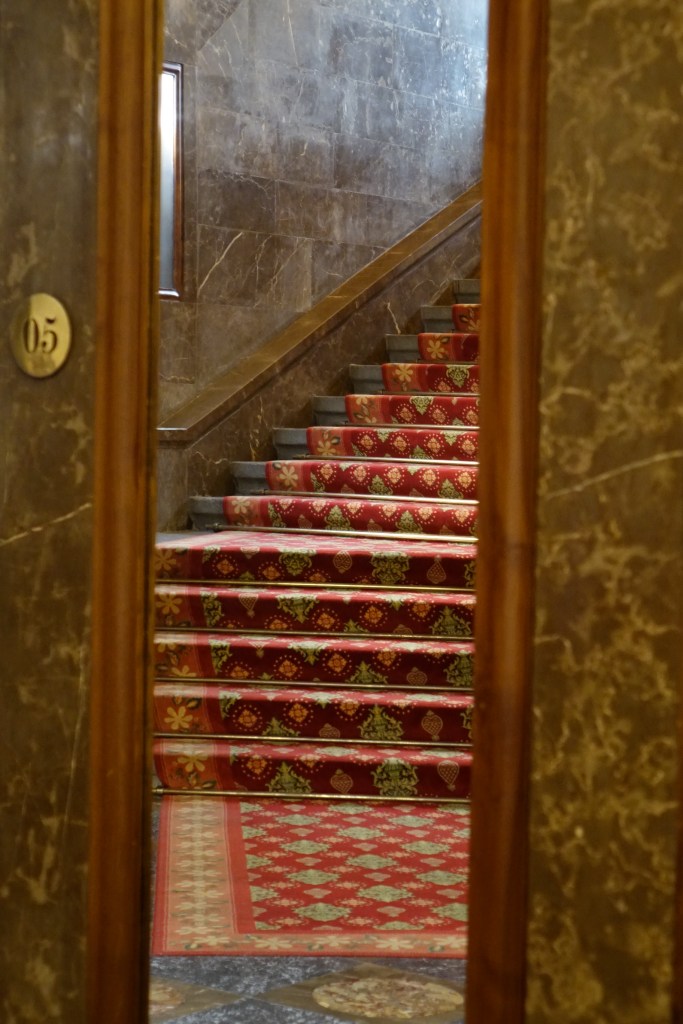
DSC08044 DSC07979 DSC08041 DSC07952 DSC07929 DSC08046 DSC07943 DSC07951 DSC07953 DSC07930

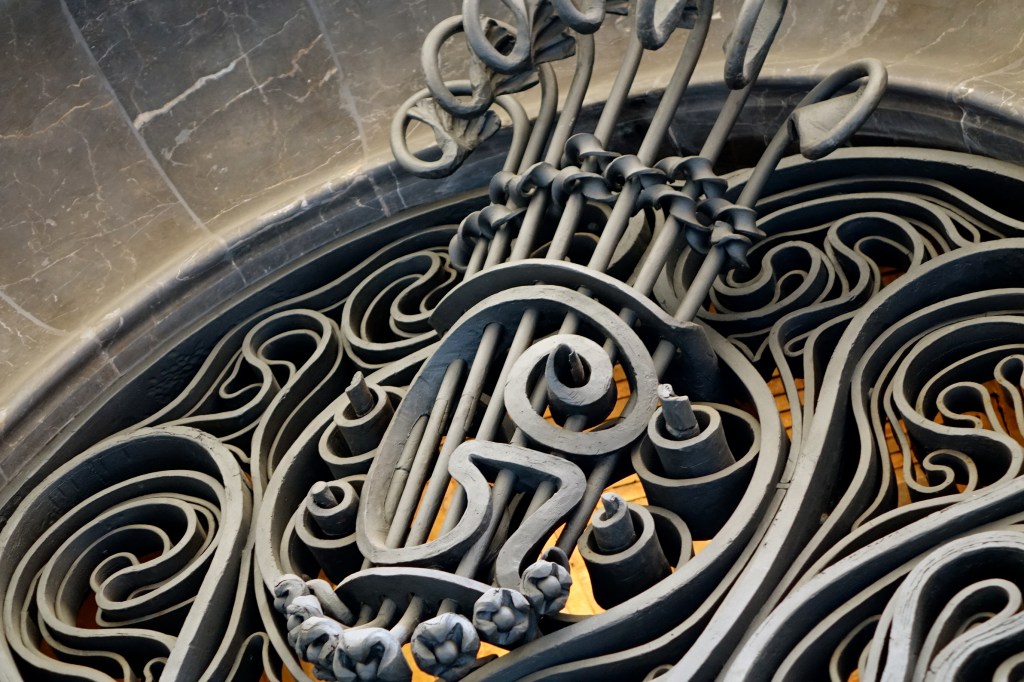
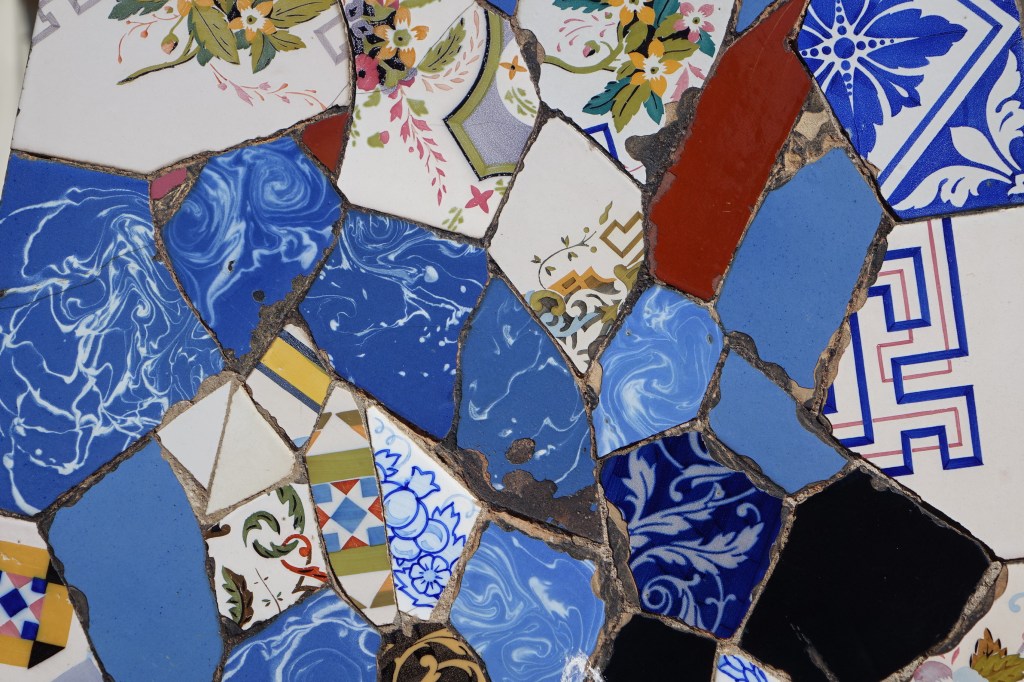
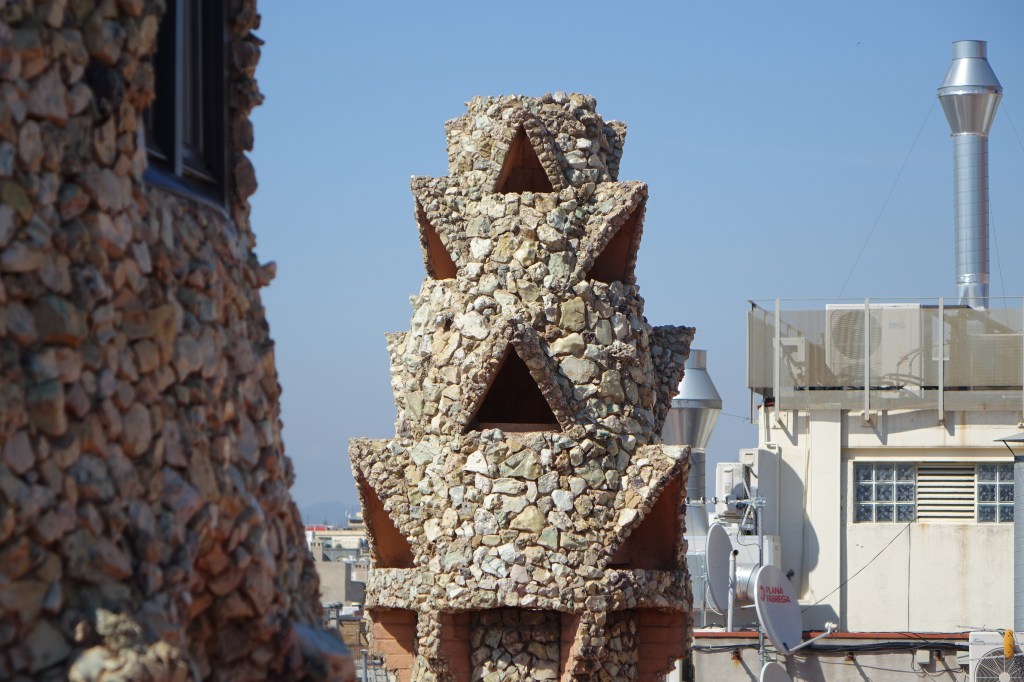
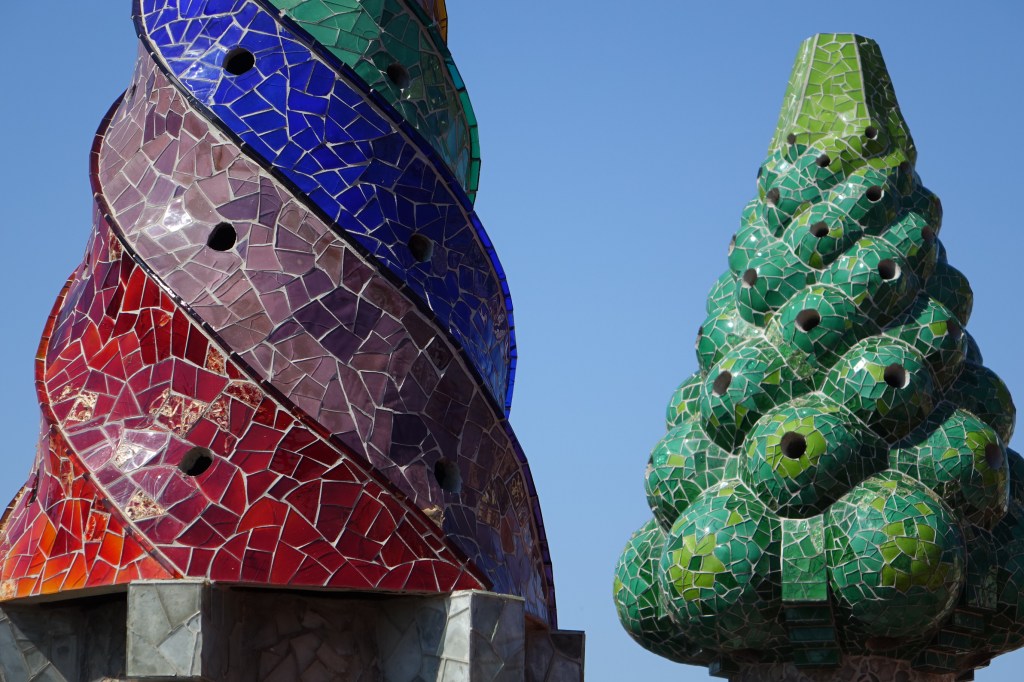
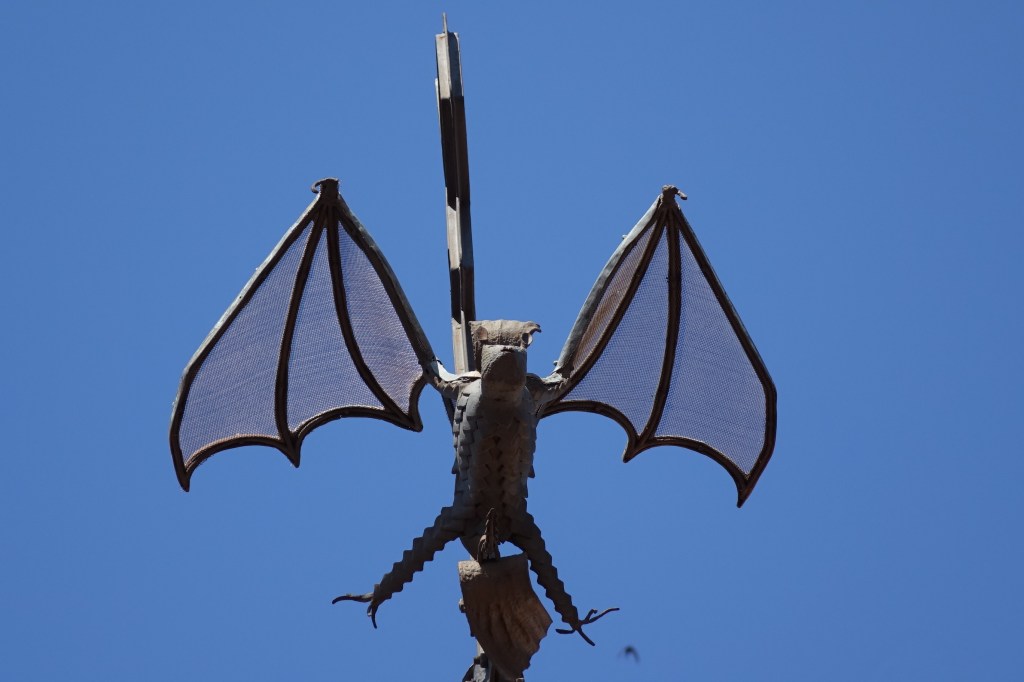
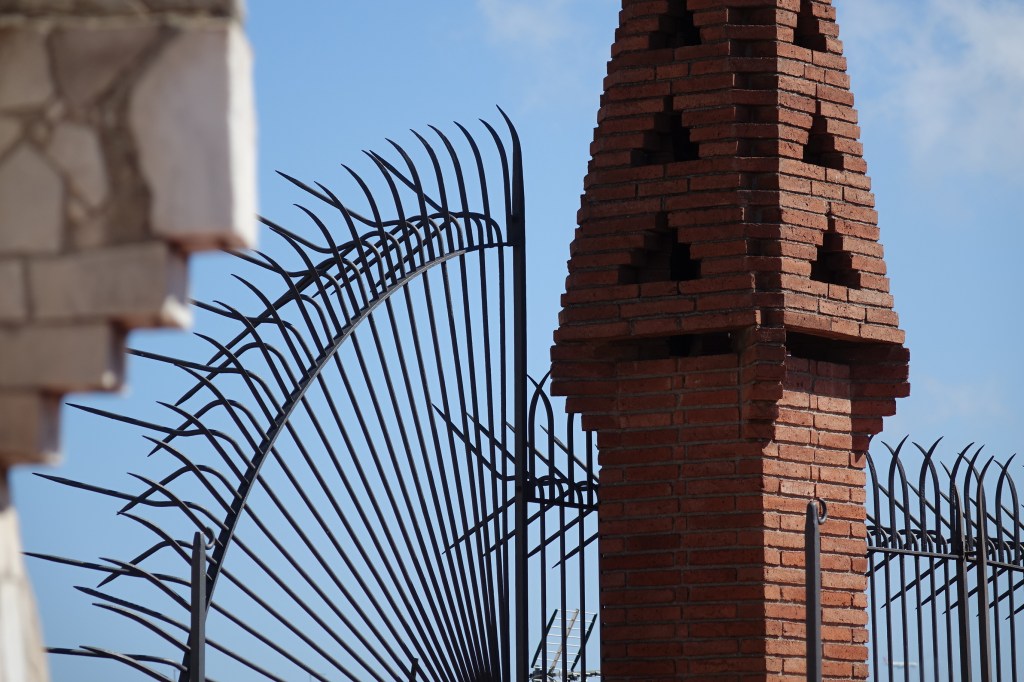
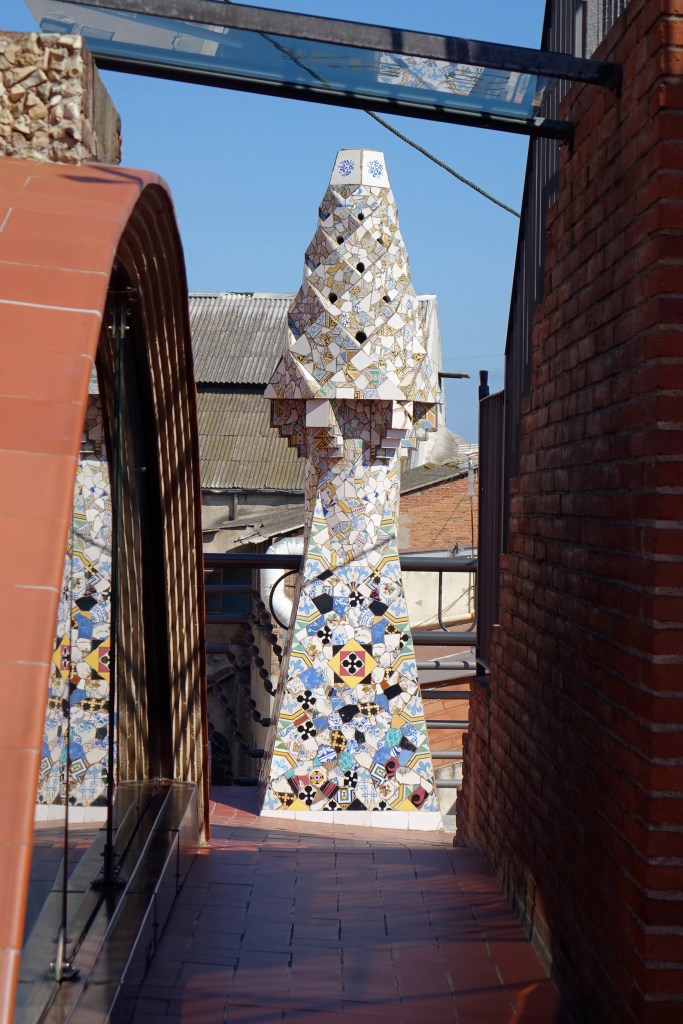
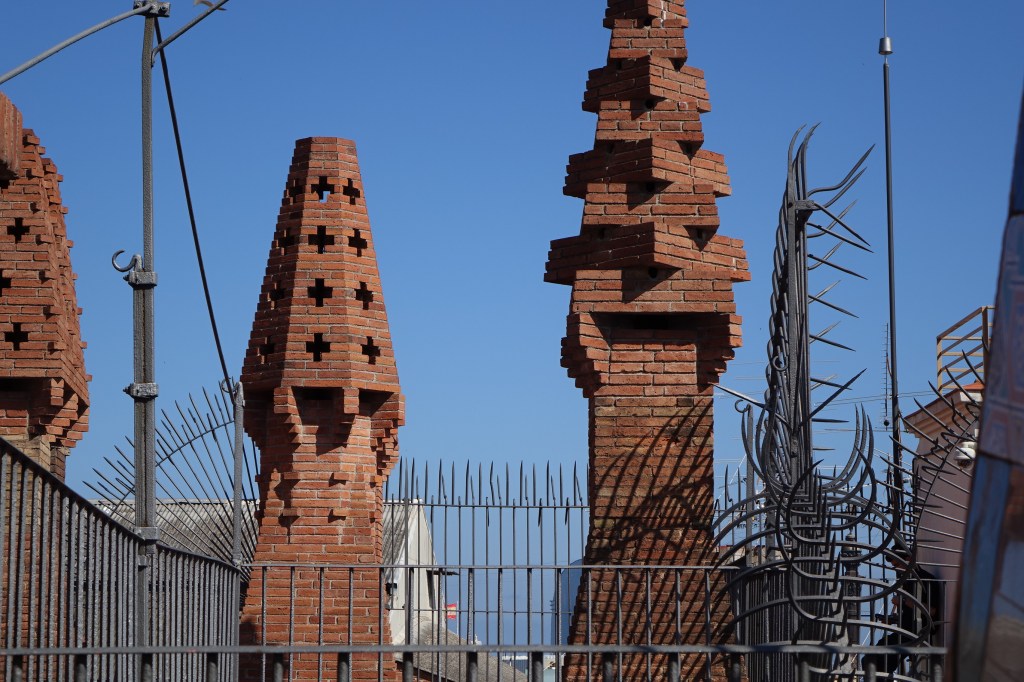
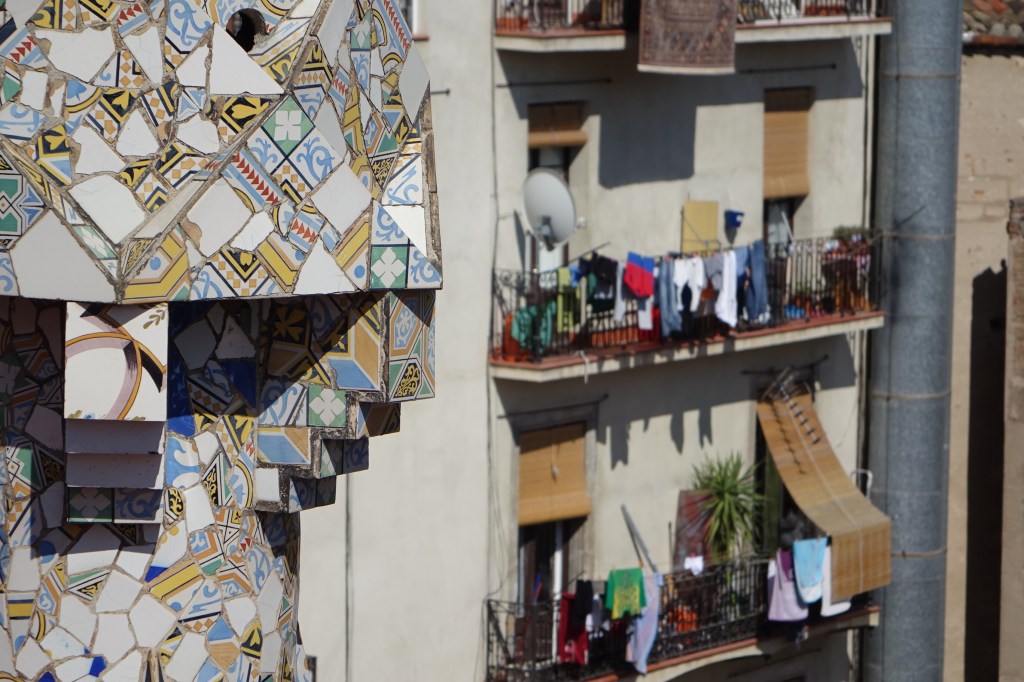
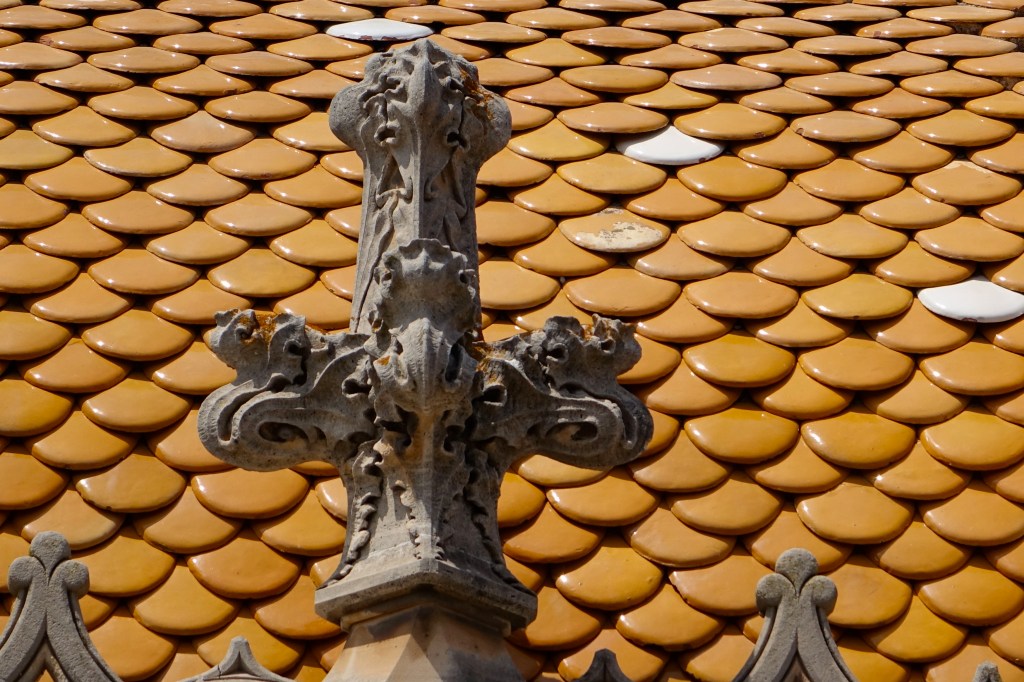
Built between 1886 and 1888 in the El Raval neighbourhood of Barcelona, the Palau Güell was in fact one of Gaudi’s earliest works, and the first major collaboration with the industrialist Eusebi Güell who was to become Gaudi’s most significant patron. Although its sombre interiors show somewhat more restraint from the man who was later to go on to design such fantastical masterpieces as the Sagrada Familia and the Casa Mila, the exterior of the house already showed the young architect pushing the boundaries of socially acceptable architecture, filling his facade with magnificently twisted wrought iron, animal forms, and his terrace with his now iconic multi-coloured tile chimneys. 

The famous terrace

DSC07992 DSC08013 DSC08022 DSC07991 DSC08015 DSC08029 DSC08016 DSC08037 DSC07989 DSC08021

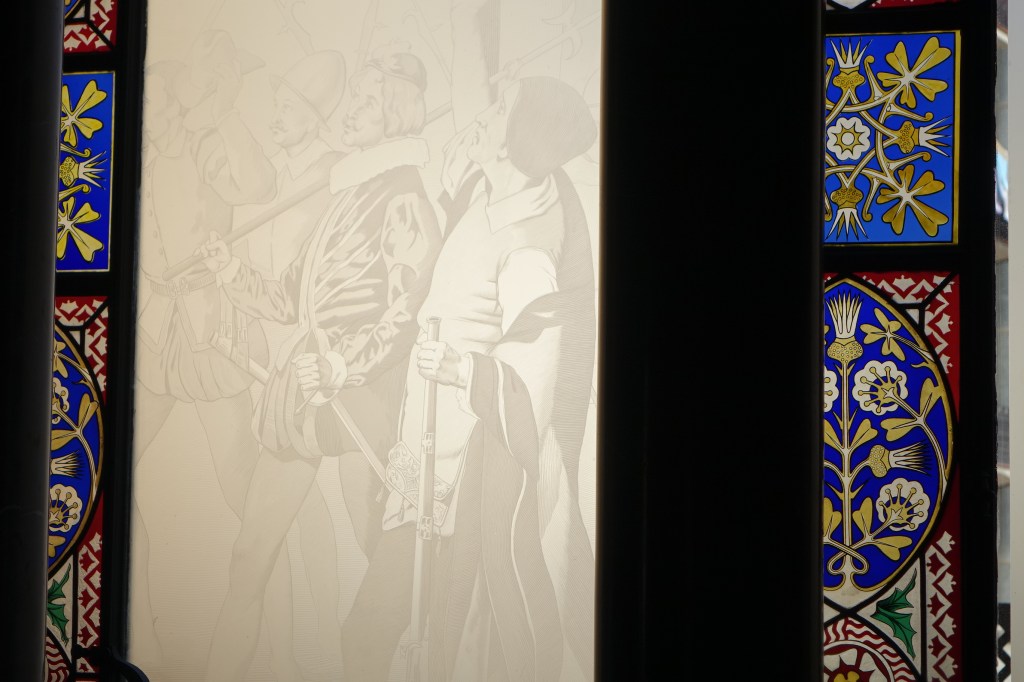
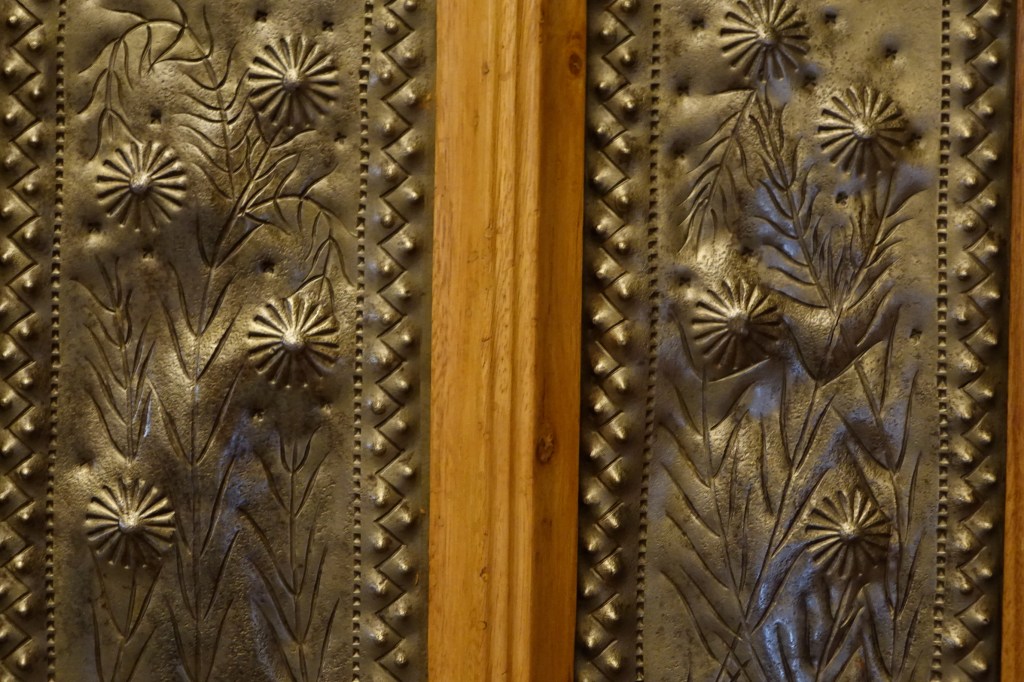
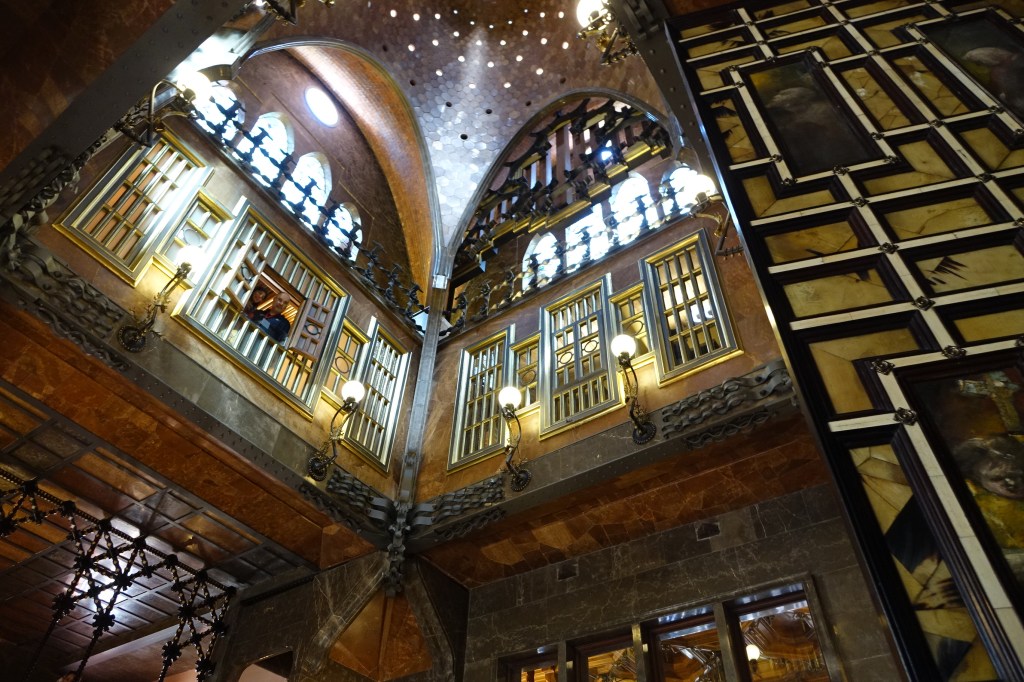
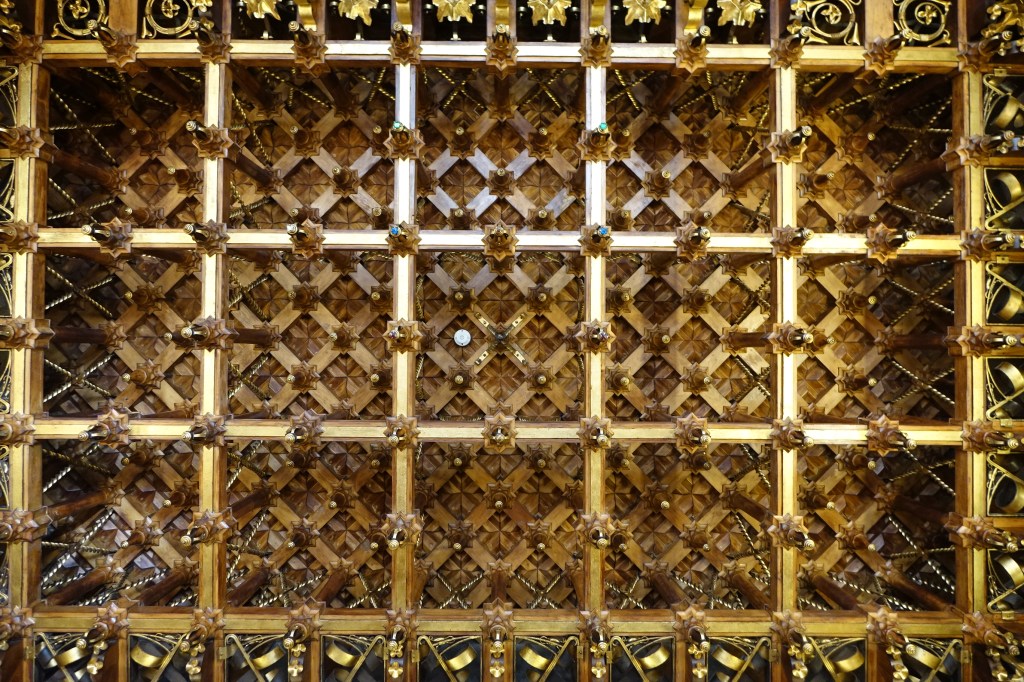
That is not to say that the interiors were boring. Far from it. Past the initial somewhat gloomy entrance which was intended to be the preserve of carriages, the upstairs rooms showed every sign of the virtuosity for which the architect would become know, with magnificently intricate woodwork, wrought iron and personalised furniture heavily influenced by the Moorish design which is so prevalent in Spain as well as the innovations of line and shape which were becoming modish in what was to be known as the modernist or art nouveau era. By far the most spectacular feature of the house is the main atrium: a dazzling space which cuts through the entire height of the house, topped with a dome into which little holes cut are like stars twinkling in space.

The impressive central atrium

DSC07962 DSC07941 DSC07965 DSC07972 DSC07975DSC07982

So the house which had long eluded me did its best to impress, and certainly received from me the admiration it deserved. I did however leave somewhat concerned by some of the renovation works undertaken, not least the extent to which staircases have been modernised, for example, with swish inlayed lighting which is clearly out of character with the original house, and worst of all the adaptation of the roof’s famous chimneys such that on one, a contemporary artist has shamelessly attached a tacky toy lizard as some kind of new interpretation of an otherwise perfect Gaudi icon. Why this was allowed I will never know. As they say: if it ain’t broke, don’t fix it.
DSC07999DSC08042