Skip to content

Posts tagged ‘Painting’

Autobiographical Mobile: The finished article

C’est fini! At last, my autobiographical mobile is complete! Started in June last year and completed right at the end of April of this year, the maths alone dictates that this has been a long project in the making. While my blog account of the work has been posted in respect of 25 full days of painting, a great number of evenings and hours grabbed in otherwise hectic weeks have been spent working on this piece, one of the most comprehensive projects of my art career so far. Yet the protracted length of the project (augmented by the fact I work full-time and have been undertaking a whole host of other artistic projects in the meantime) has also been one of its benefits – feeling no rush, I managed to achieve a more perfected finish on each of the areas I was working on, and likewise, owing to the passage of time, the painting has become something of a developing story in itself – a true artistic reflection of the changing circumstances of my life.

Autorretrato (Autobiographical Mobile) 2013 © Nicholas de Lacy-Brown, oil on canvas
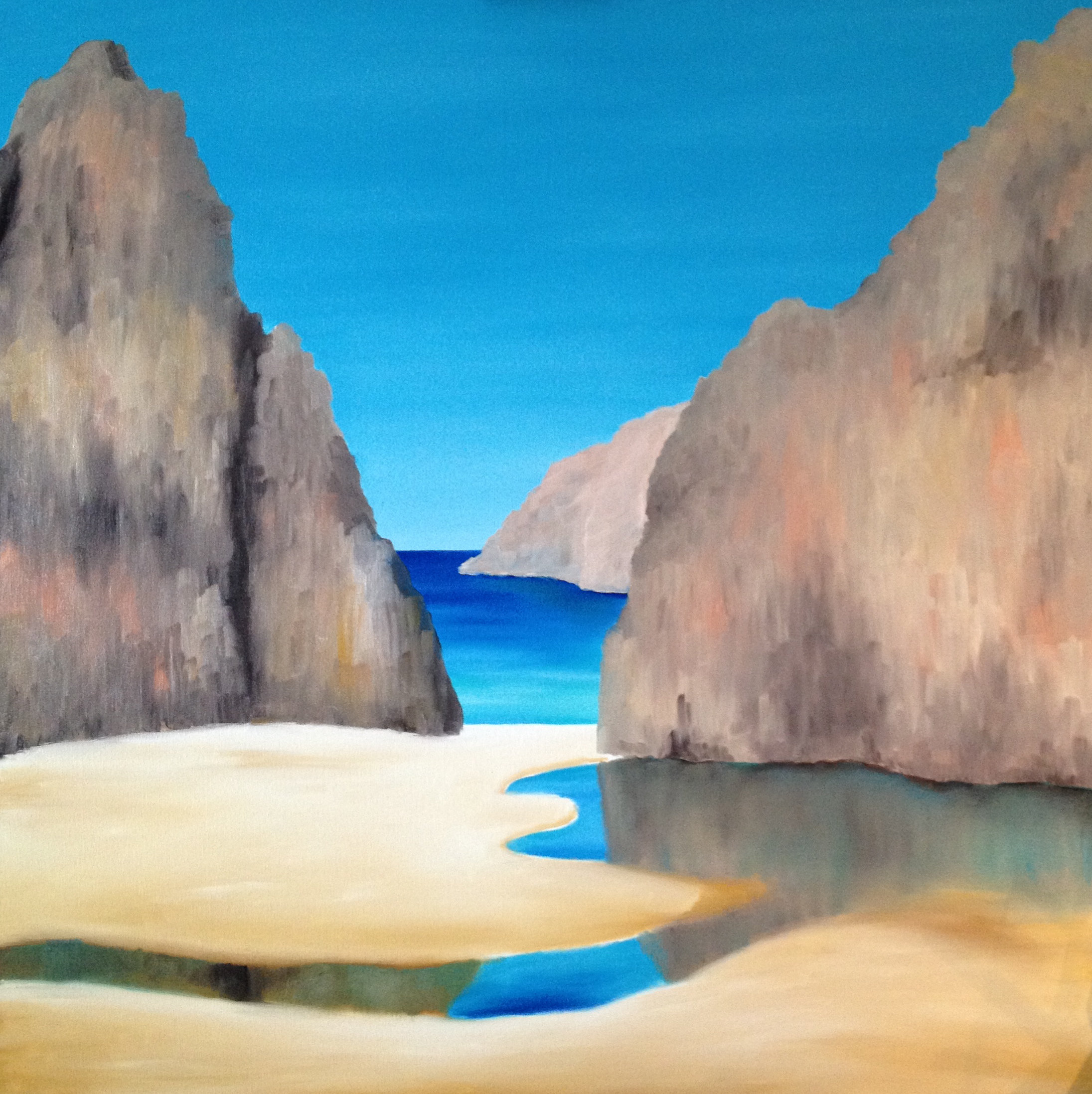
Autorretrato (Autobiographical Mobile) 2013 © Nicholas de Lacy-Brown, oil on canvas

And how it looked on the first day of painting

And how it looked on the first day of painting

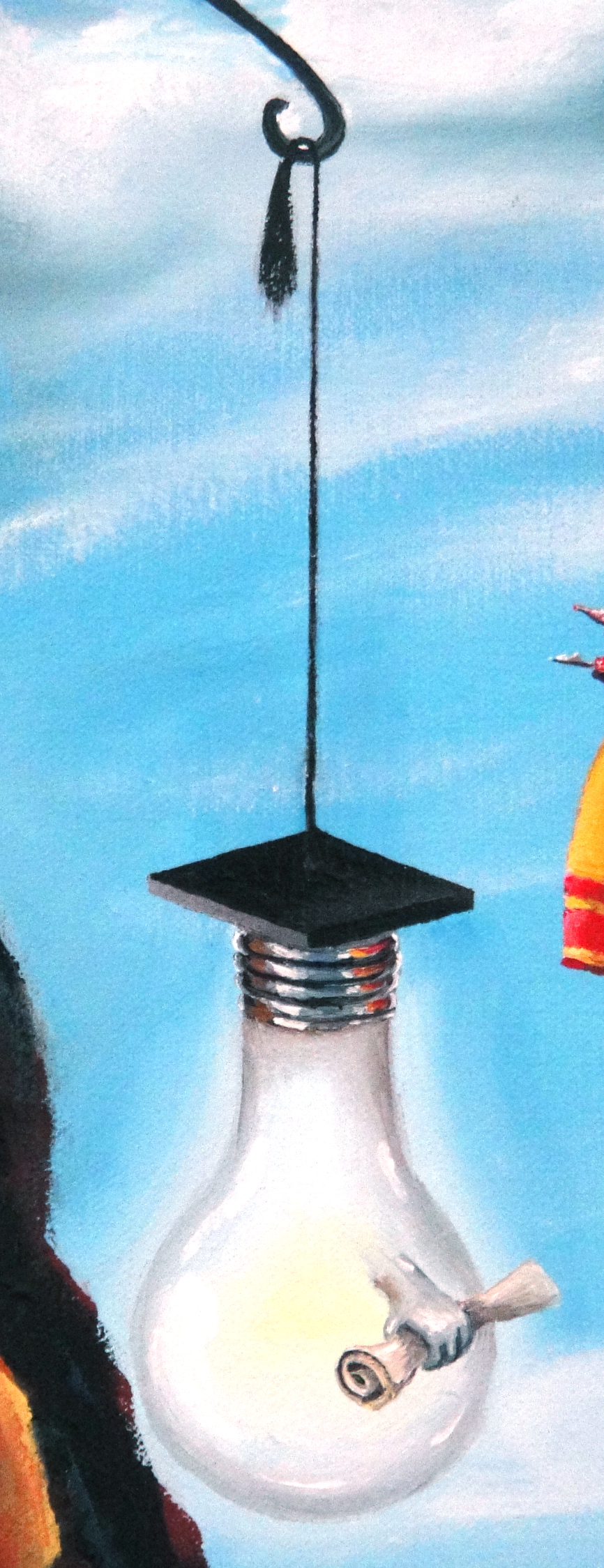
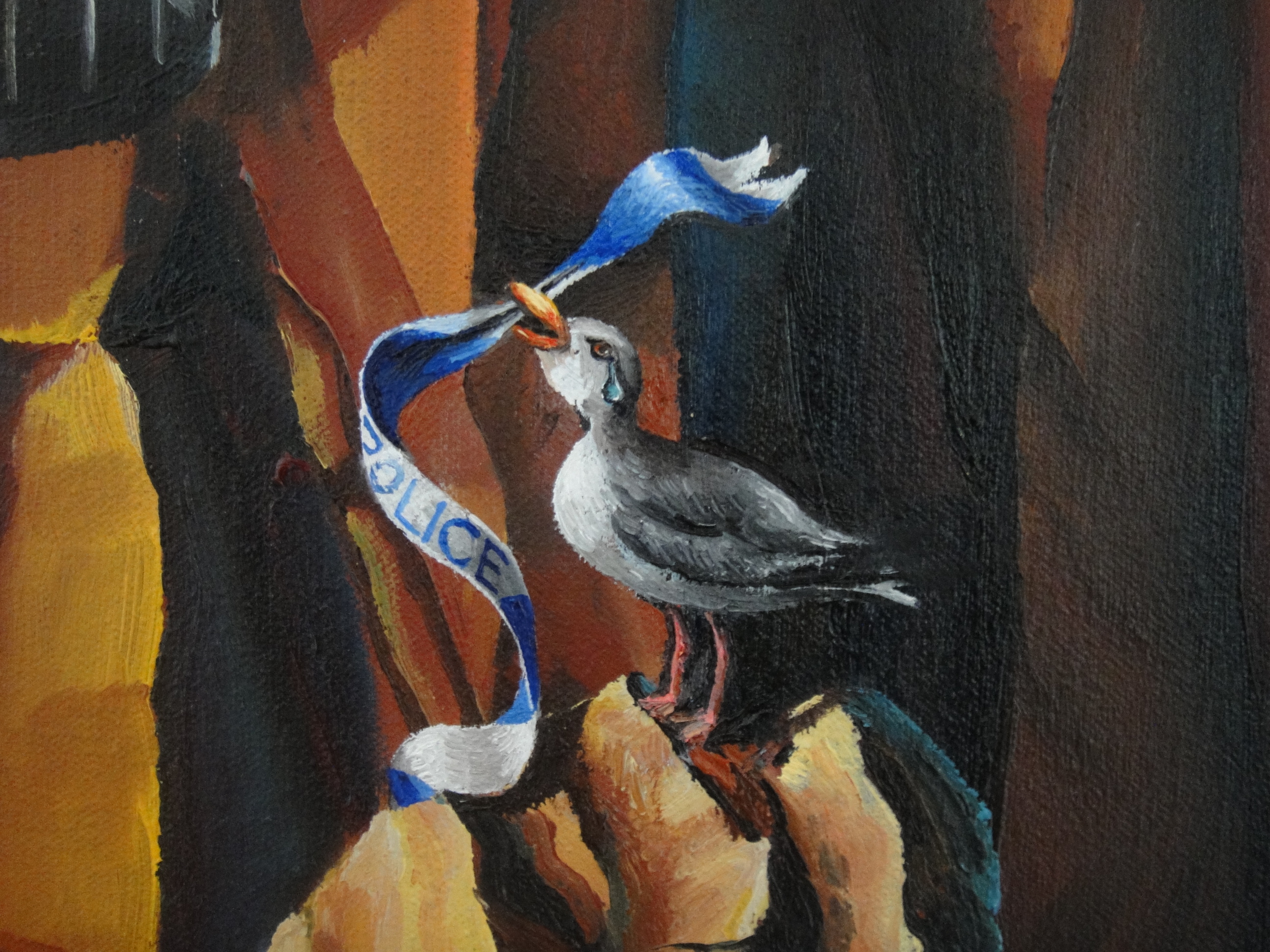
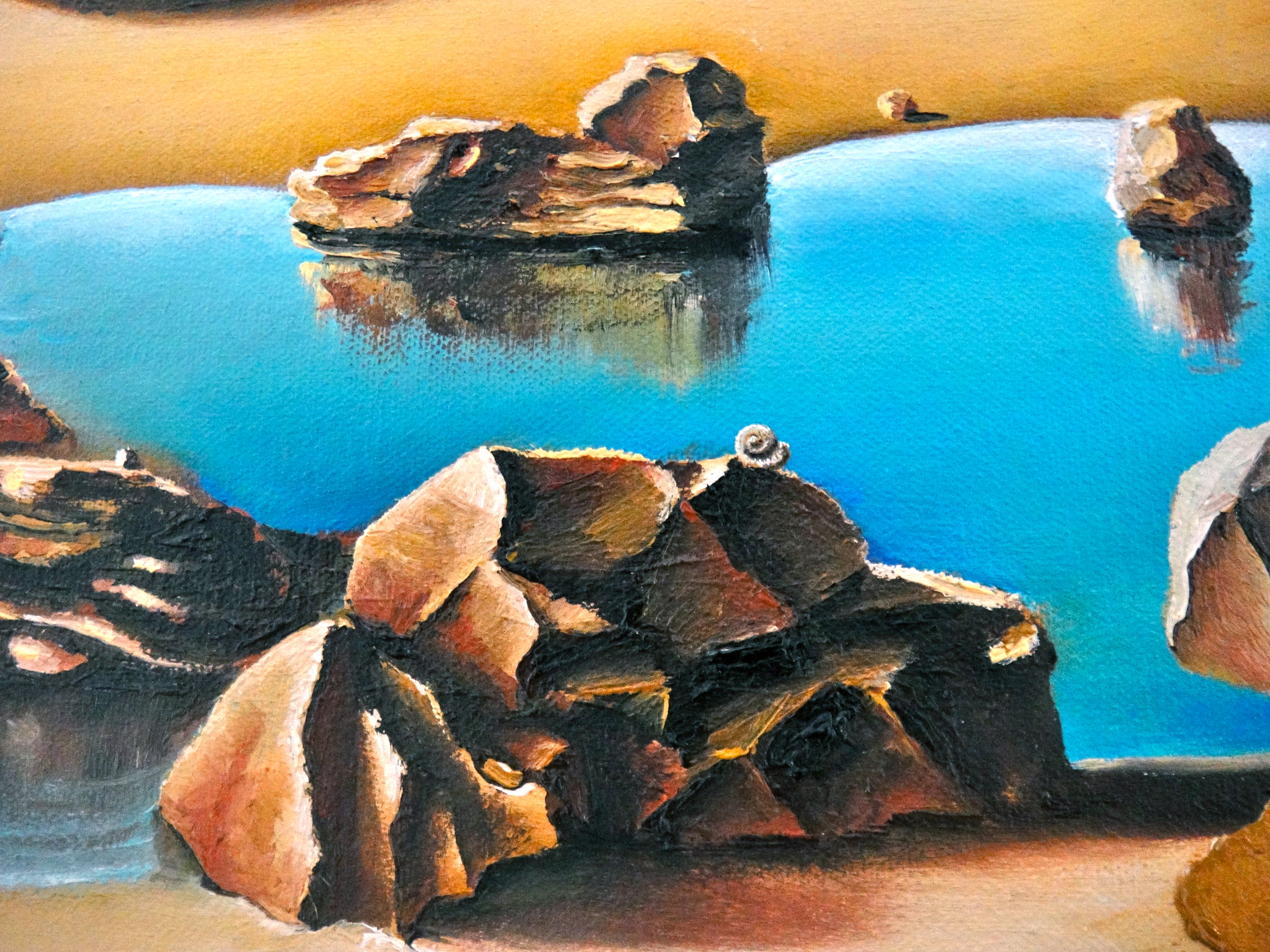
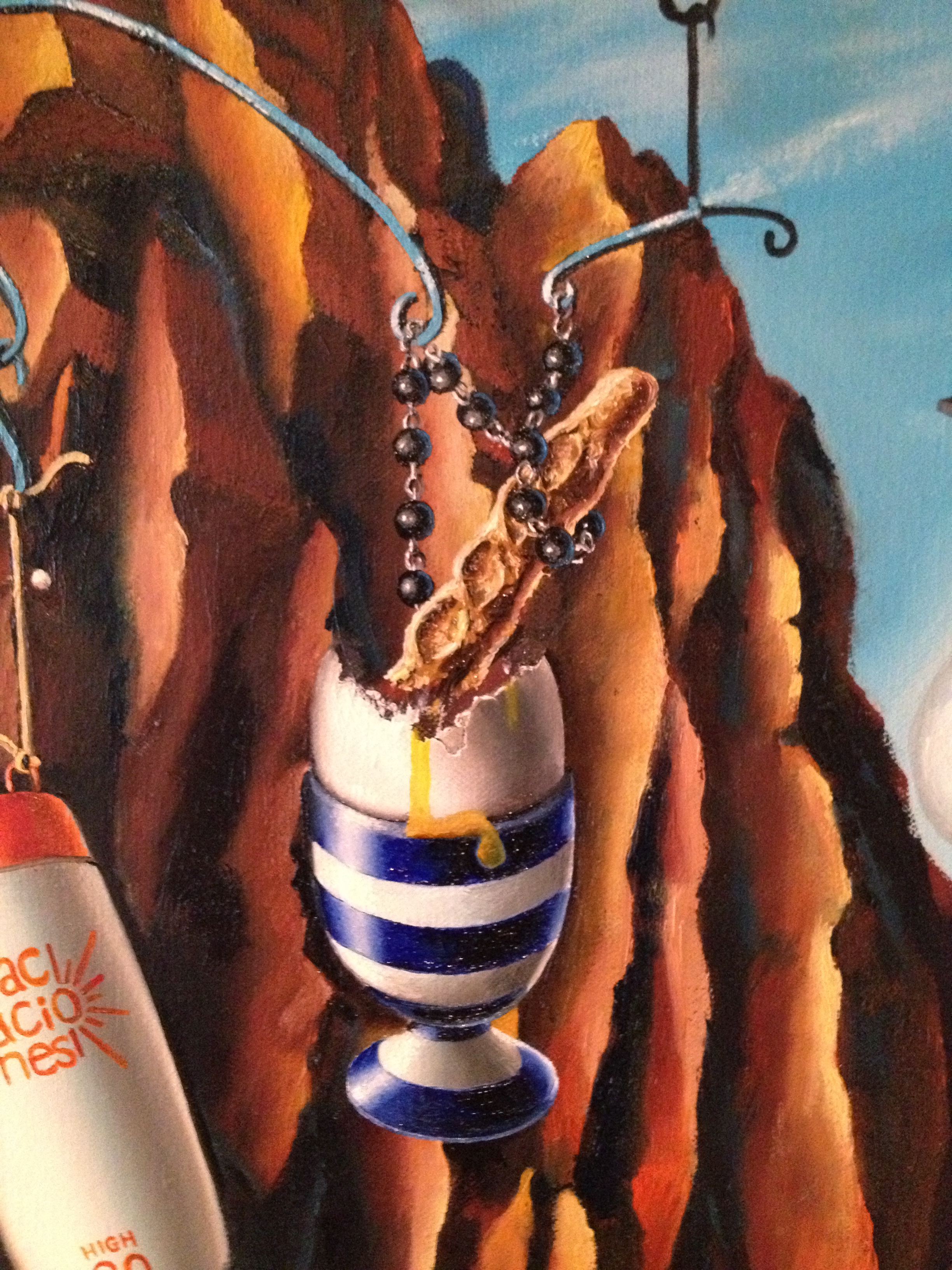
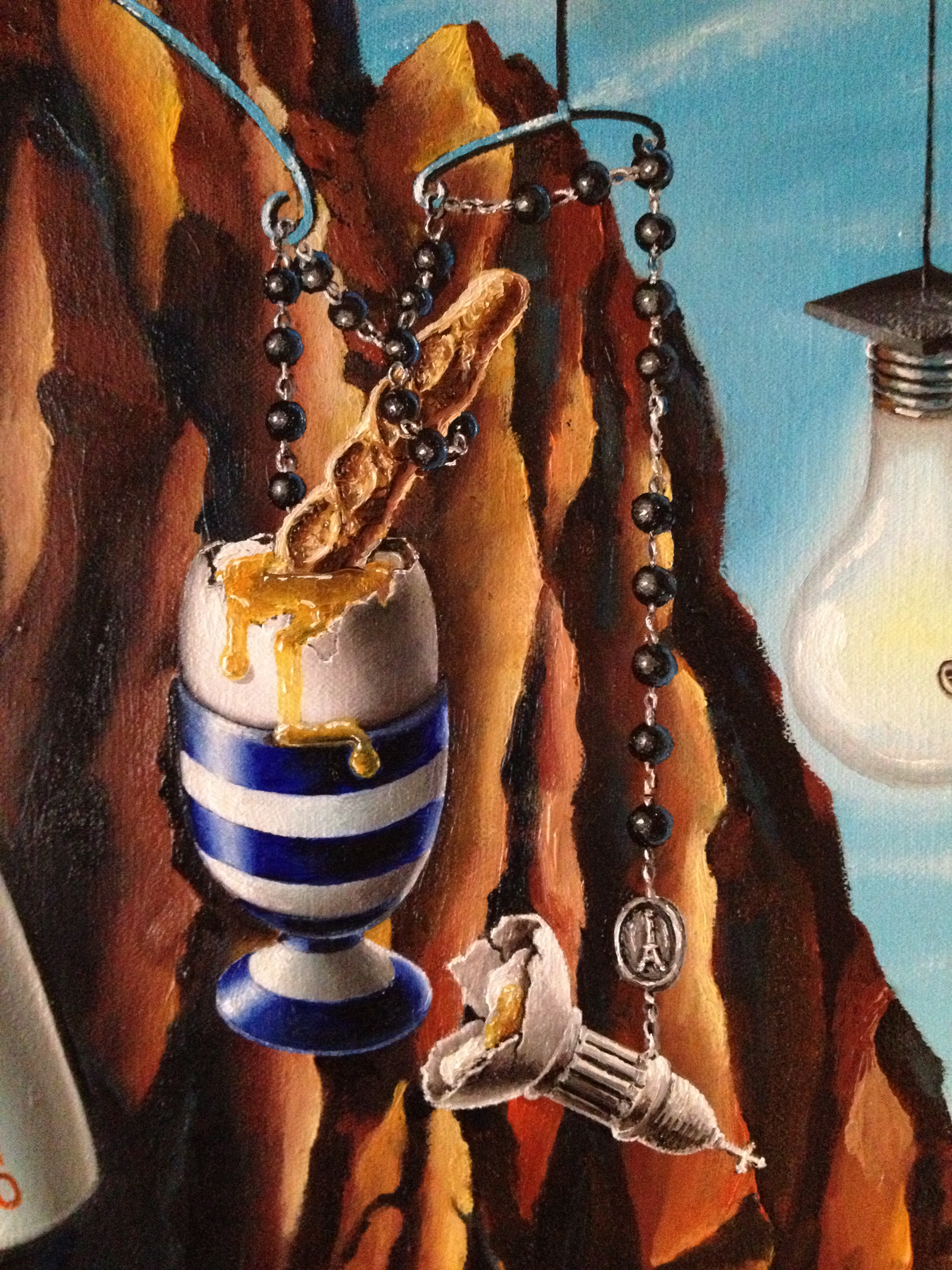
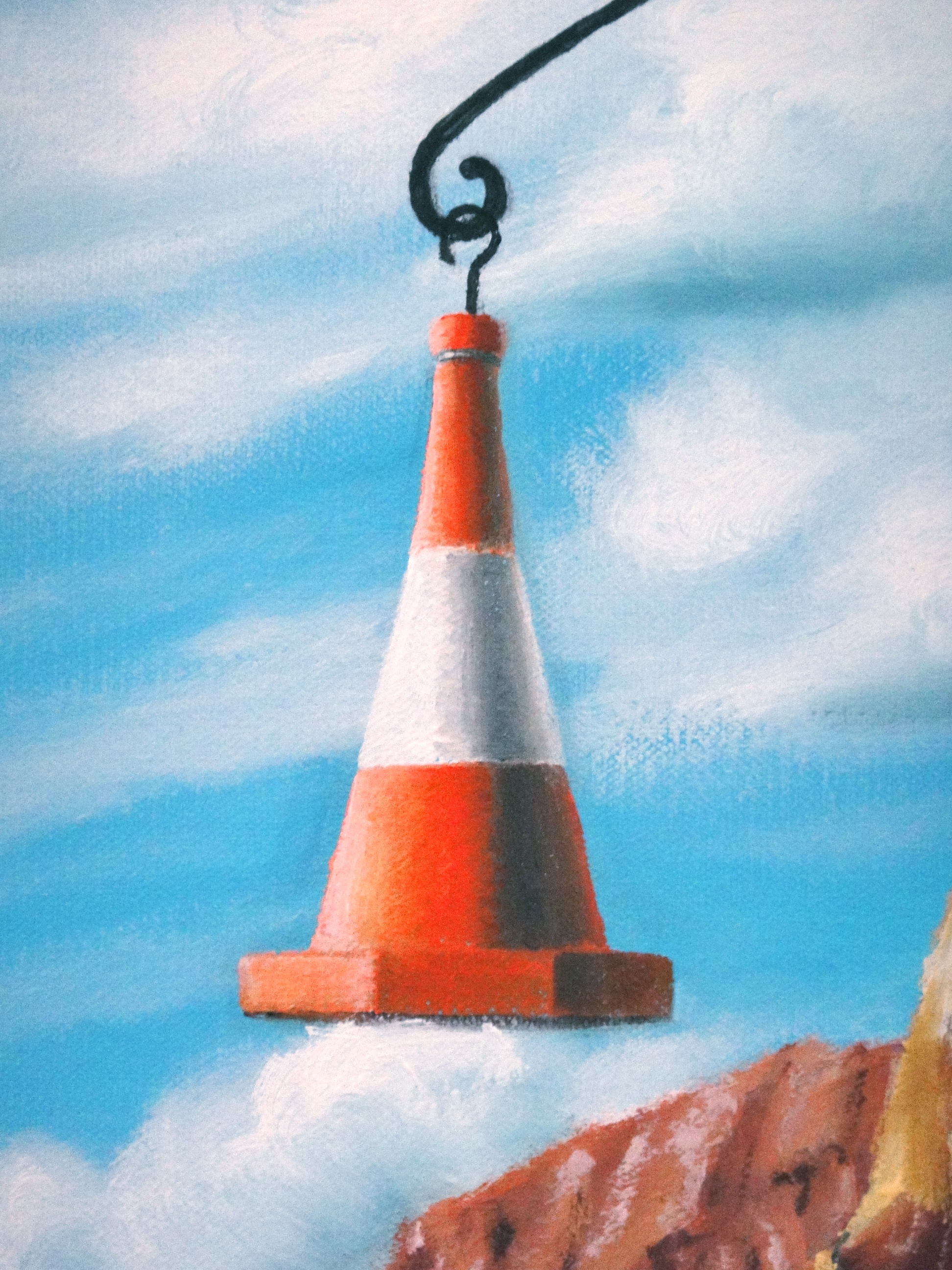
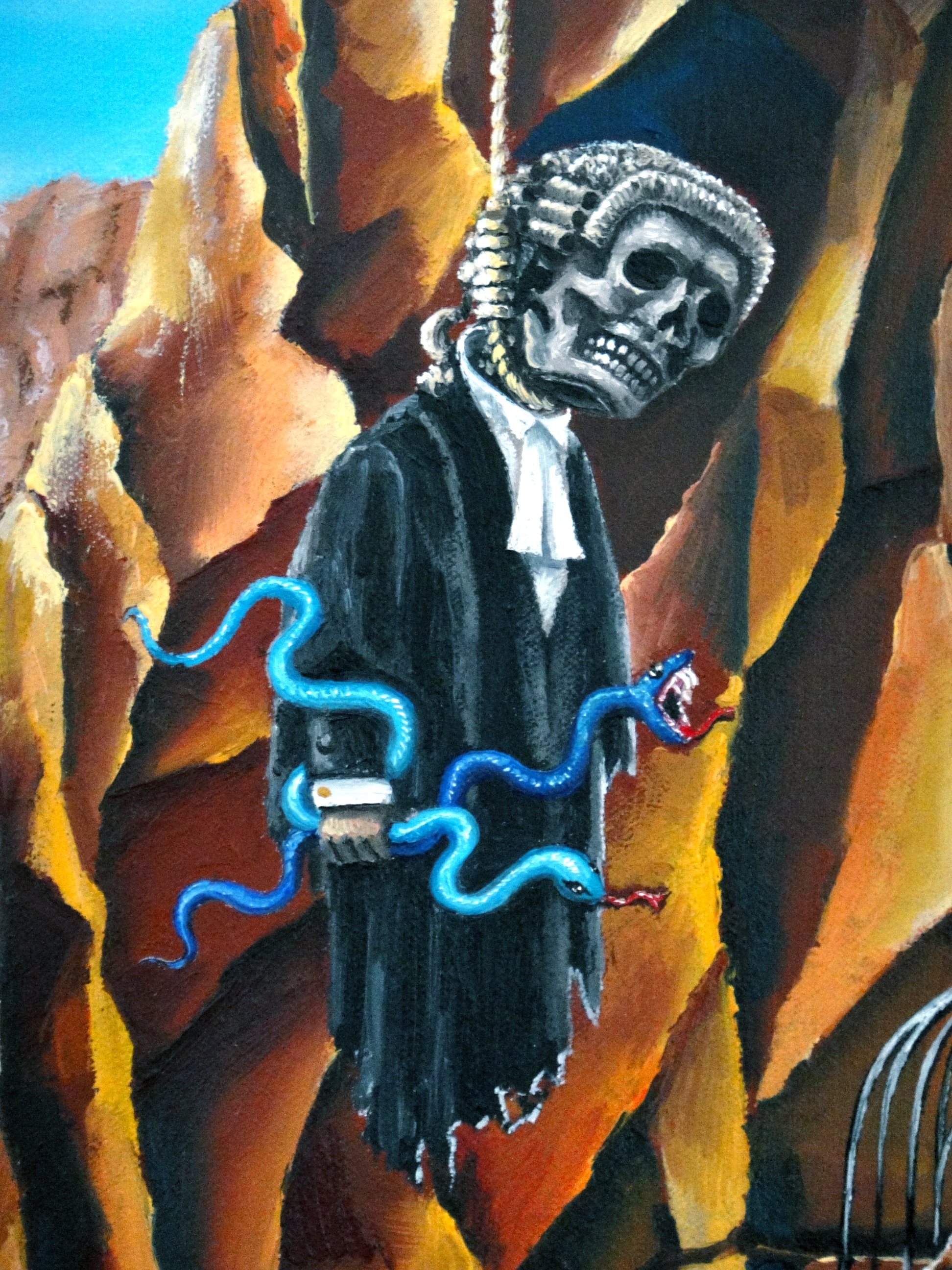
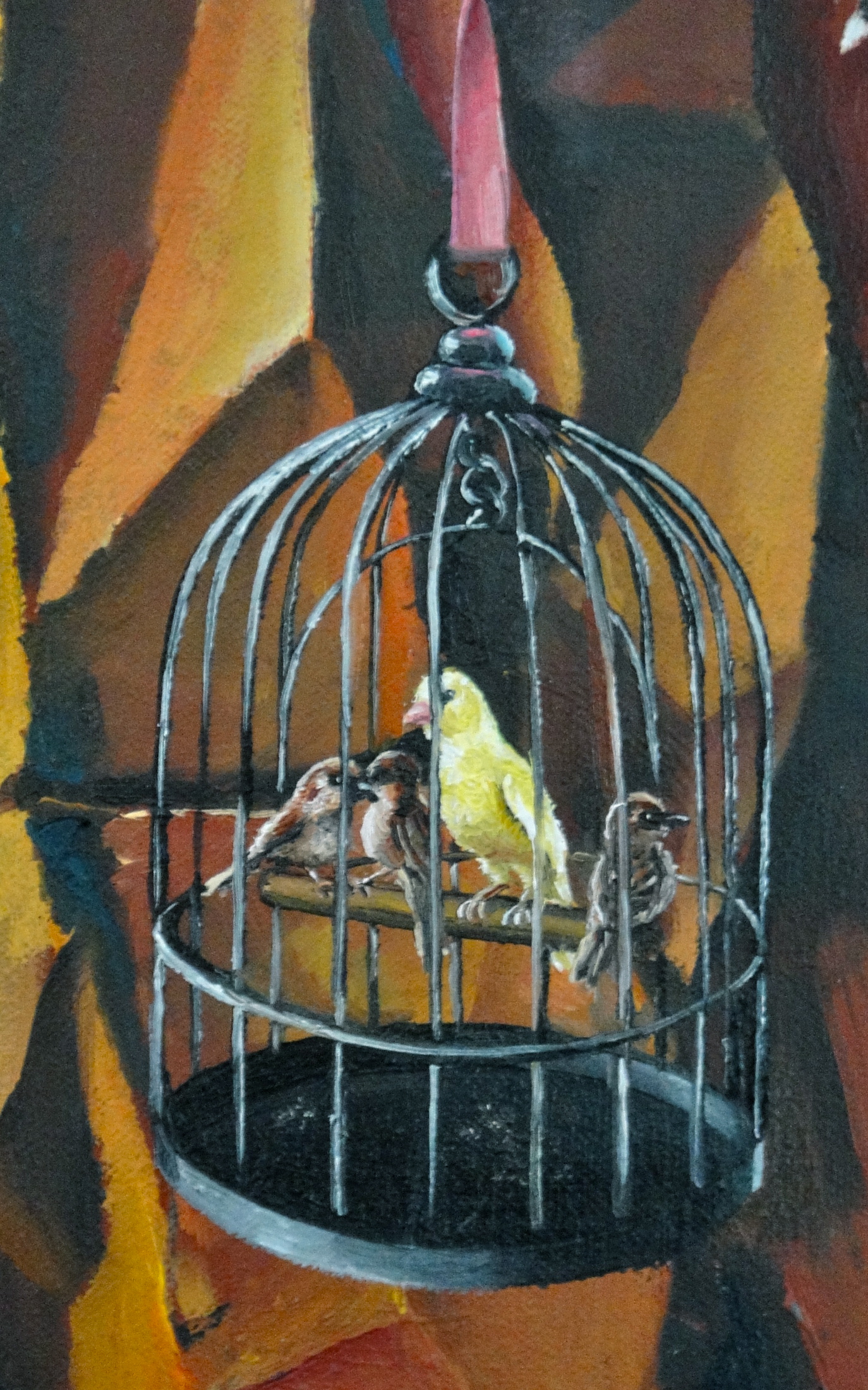
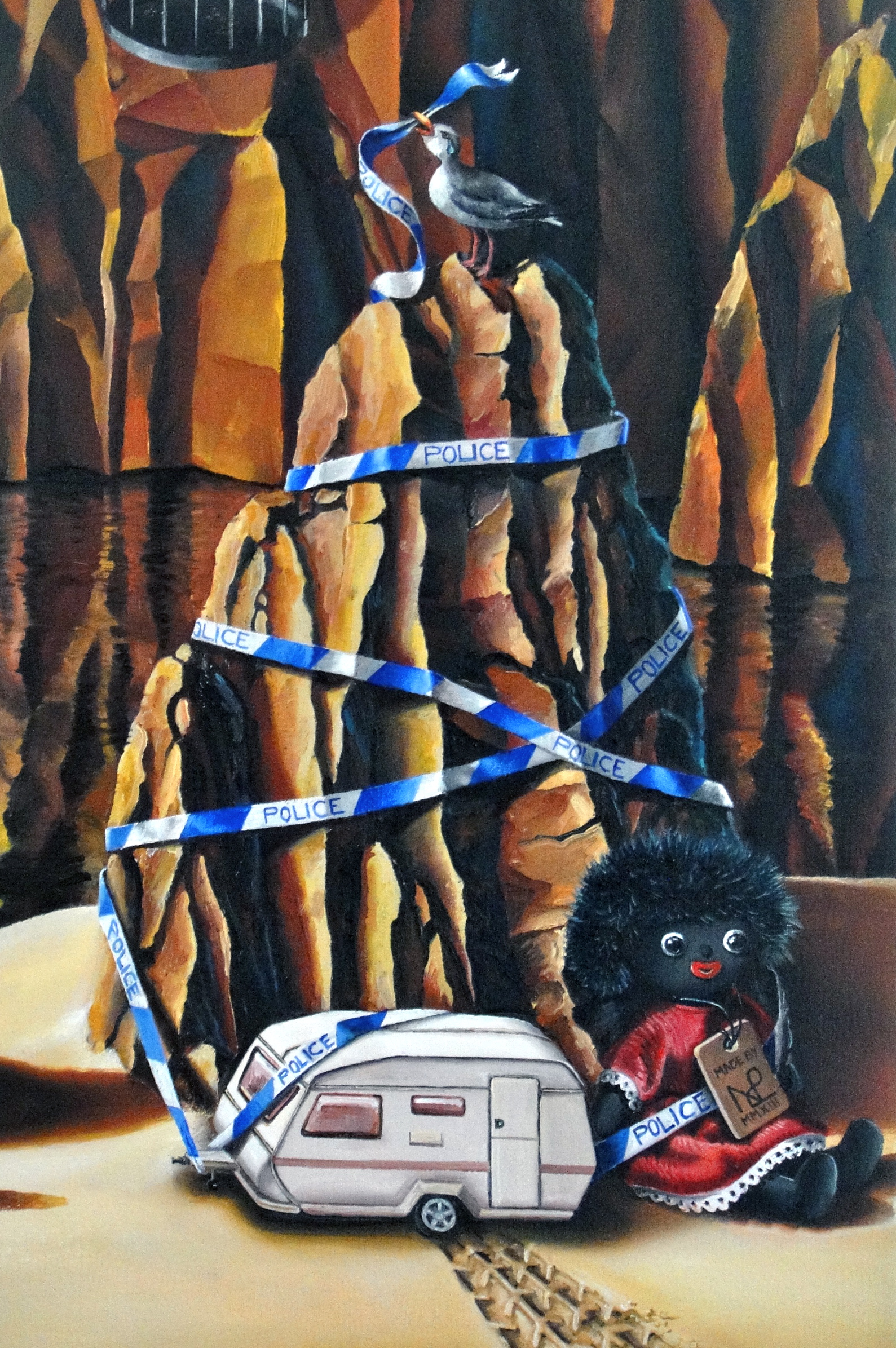
I have extrapolated upon most of the details in the painting in former posts explaining my progress, however in very brief terms, the painting is an autobiographical self-portrait told through symbols and metaphors rather than a head and shoulders portrait. At the centre of the canvas, a large free-standing mobile, in the style of the great mobile-artist Alexander Calder, represents my life. At its base, my constant companions, Fluffy and Bilbao, teddies given by my Partner and me to one another shortly after we first started dating, represent the very consistent, anchoring and significant role of our relationship in my life. Then above, the mobile acts as an autobiography balancing out the various positives and negatives in my life so far. DSC07673 On the left: the positives – all the stuff I love and which has helped to shape me into the person I am today. First up, Spain and art history, symbolised through the iconic image of one of Span’s master-artist’s Infanta portraits, whose dress is in turn decked out to resemble the sandy colours of a Spanish bull ring, while her sunglasses represent Spanish tourism, the industry which has been so important in bolstering the economy of modern day Spain. DSC07623 DSC07619Next, the symbol of enlightenment and creative/ academic success: This is a Norm-shaped lightbulb decked out in a graduation mortar-board and holding a graduation scroll. This hybrid Norm/ bulb character represents my achievements both as an illustrator-blogger and as a lawyer, and stands for the importance of learning and development in my life. Further along, the egg: This is a representation of my art career, and also my love of Paris (where I was engaged and from which I have been inseparable for at least 15 years). Paris was the inspiration for my first major painting, Le Paris Formidable, a creation which I consider to be a milestone in my artistic career and the moment I began to take painting seriously. In that image I painted the Sacre Coeur church as a series of eggs and egg cups (the white domes of the basilica reminding me of eggs), while plunging into the egg, an egg soldier is replaced by a French baguette, held up by a rosary, representing that for me, art is like my religion. DSC07613 Finally in the positives, a sun cream bottle represents my love of travel, and spurting from it, a representation of my love of gastronomy as shown through a mixed and bounteous flow of prawns, marie rose sauce, chorizo, strawberries and wine, all combined together through a meandering strand of spaghetti which in itself metamorphoses from the Fortnum and Masons hamper sat on a rock below it – the hamper representing my love of the finer things in life. DSC07617 Onto the negatives, and up first my 2008 accident – the life-changing event was informed so much of my art and altered my life, both physically and mentally forever. DSC07624 Then the death of my career at the self-employed bar, a hugely difficult time when I suffered stress close to mental breakdown, prejudice, bullying and was effectively cast out of the profession because of the small-minded prejudices which come of a profession in which survival, without fitting into the Oxbridge stereotype (the blue snakes), is all but impossible. DSC07630 Then the birdcage, a symbol of entrapment, both for my sister trapped by the grave fate which arose upon the death of her husband leaving her to bring up three toddlers alone, and for me in my career. DSC07634 Finally the Apprentice – a direct reference to another of my paintings, Nicholas in the Renaissance, a tongue-in-cheek self-portrait in which I parodied a depiction of Saint Sebastian to represent the injustices I felt I had suffered when I appeared in the acclaimed BBC television series, The Apprentice series 4. The sugar cube of course alludes to Lord Sugar, the famous business man for whom the “Apprentices” seek to work under the television format. DSC07645 Meanwhile in the foreground, an expanse of water separates my current life from my childhood, albeit only marginally, and that youth is symbolised my a self-standing rock in the bottom right of the canvas representing my family, a symbol which took on a whole new poignancy when my brother-in-law was killed last December. Meanwhile, in the rock pools to the left, also representative of my childhood, the smallest of shells represents the heady days of my youth when climbing over coastal rocks I would collect shells, affixing them onto little snails I had modelled which I would then sell at local fairs. Some could say it was the start of my art career. They were certainly formative years. DSC07582 DSC07648 DSC07610 So there we have it, my life on a large (120cm x 120cm) canvas in oil paint. I’m awfully proud of this painting, and also glad to have persevered over such a protracted period. The result is a truly reflective glimpse of my life as it stands and also acts for me as a kind of closure on all that is past. Now I look forward to a whole new chapter of my life, with all the artistic expression which will inevitably go hand in hand alongside it.DSC07661 © Nicholas de Lacy-Brown and The Daily Norm, 2001-2013. Unauthorized use and/or duplication of the material, whether written work, photography or artwork, included within The Daily Norm without express and written permission from The Daily Norm’s author and/or owner is strictly prohibited. Excerpts and links may be used, provided that full and clear credit is given to Nicholas de Lacy-Brown and The Daily Norm with appropriate and specific direction to the original content.
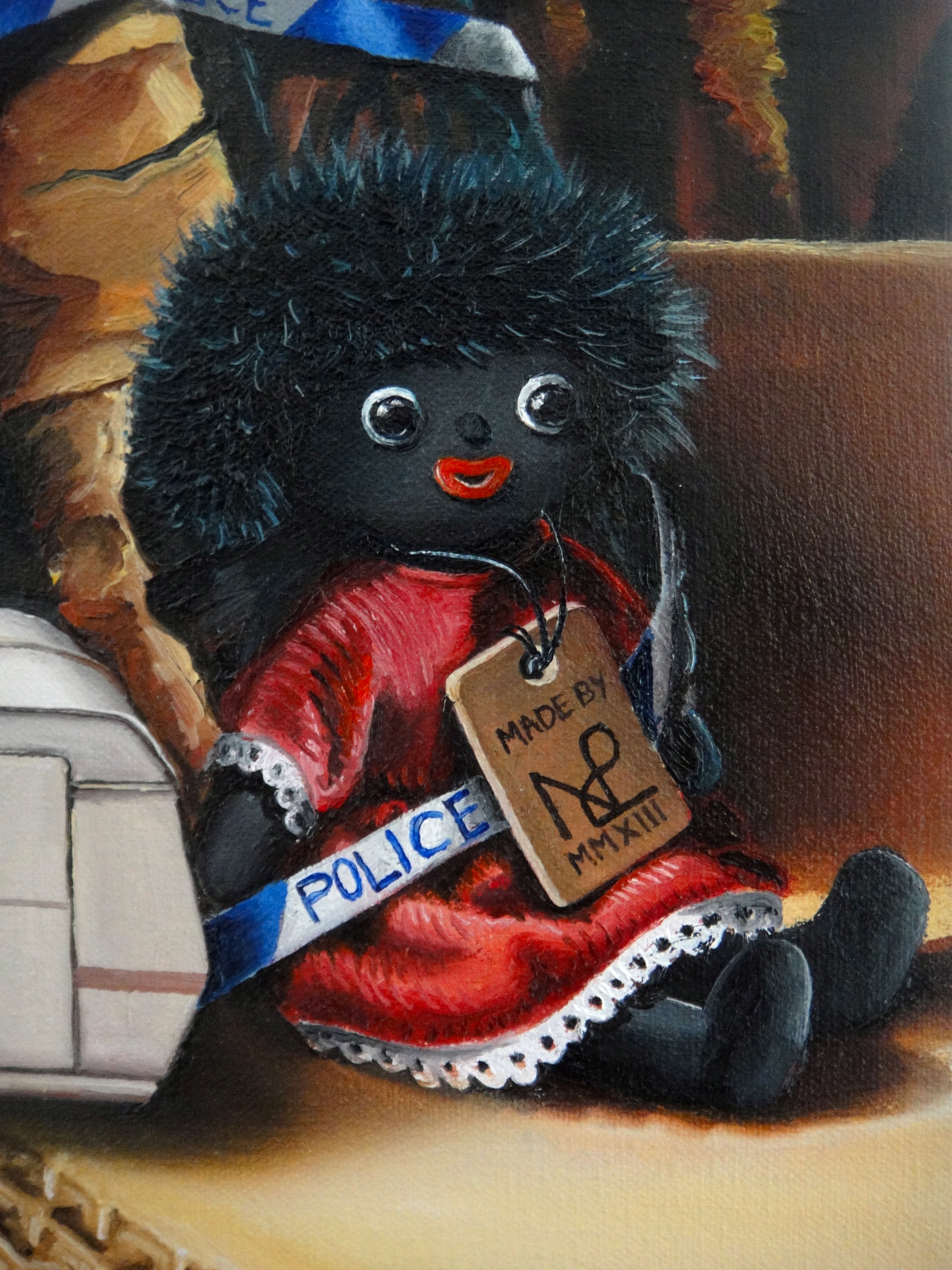
Autobiographical Mobile: My painting diary – Days 20-23: Rock pools

It’s hard to believe that this post represents only days 20-23 of this painting. Something surely has to have gone wrong with this account, for in only now approaching the end of this vast project, it feels like I have been painting for months. I have, in fact, been working on this canvas for sometime – since June last year in fact (albeit intermittently) which just goes to show how little time I actually have to paint now that I am a full time lawyer, blogger and new found sketcher and printmaker.

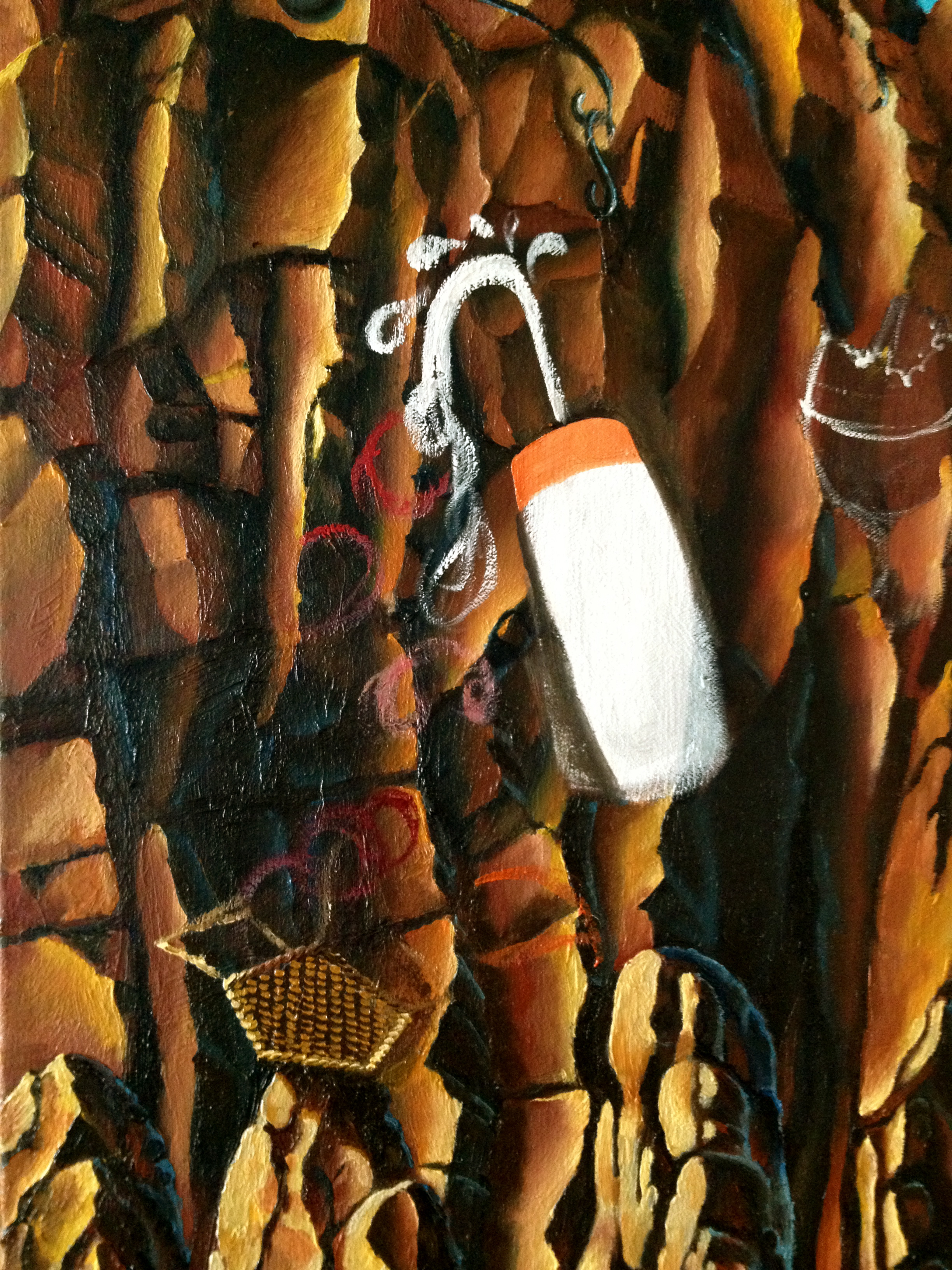
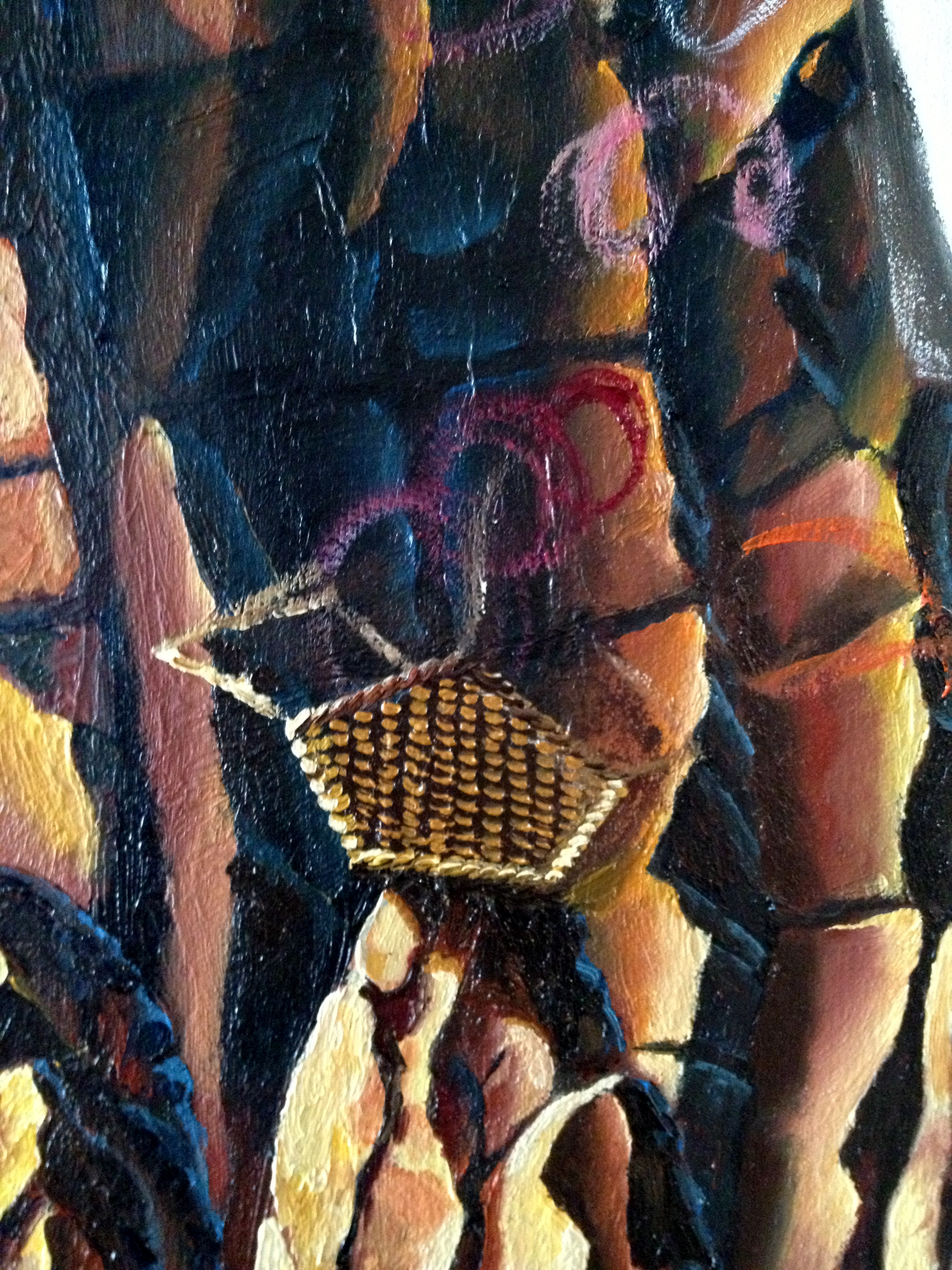
All the same, sometimes the best results are achieved with a little patience and plenty of hard work, and this aphorism is no better proved than with the latest additions to my autobiographical canvas – 4 days painting rock pools. Hard to believe that they would take so long, but each of the little rock forms, which create balance at the foot of my canvas, reflecting the large mountainous forms above in the sandy stretch below, has its own peculiar shape and character. And since each rock comes straight from my imagination, this isn’t a simple case of painting what’s in front of me. Rather, a process of trial and error commences as I try to paint rocks straight from the soul, with a lightness of approach at first as I allow the naturalistic forms to almost metamorphose innately from a wider brush stroke. Then once I feel and see a shape begin to form, I start filling in the painstaking details with a small brush.

This slideshow requires JavaScript.

The result is a satisfying swathe of rocks and water which add shape and texture to the lower foreground of my work. Reminding me of the hours spent climbing in amongst the various rock pools of the beaches of Jersey in the Channel Islands every summer throughout my childhood, collecting little shells which I later made into little models of snails, these rock forms are an important reflection on the younger years of my life as I explore my story so far on this autobiographical canvas.

© Nicholas de Lacy-Brown and The Daily Norm, 2001-2013. Unauthorized use and/or duplication of the material, whether written work, photography or artwork, included within The Daily Norm without express and written permission from The Daily Norm’s author and/or owner is strictly prohibited. Excerpts and links may be used, provided that full and clear credit is given to Nicholas de Lacy-Brown and The Daily Norm with appropriate and specific direction to the original content.

Autobiographical Mobile: My painting diary – Day 18: My Art and my Paris

I couldn’t be much more passionate about the second of my painted “favourite things” if I tried. The next metaphor of my life’s great loves to make it onto my latest large canvas – my Autobiographical Mobile – is Art, and Paris.

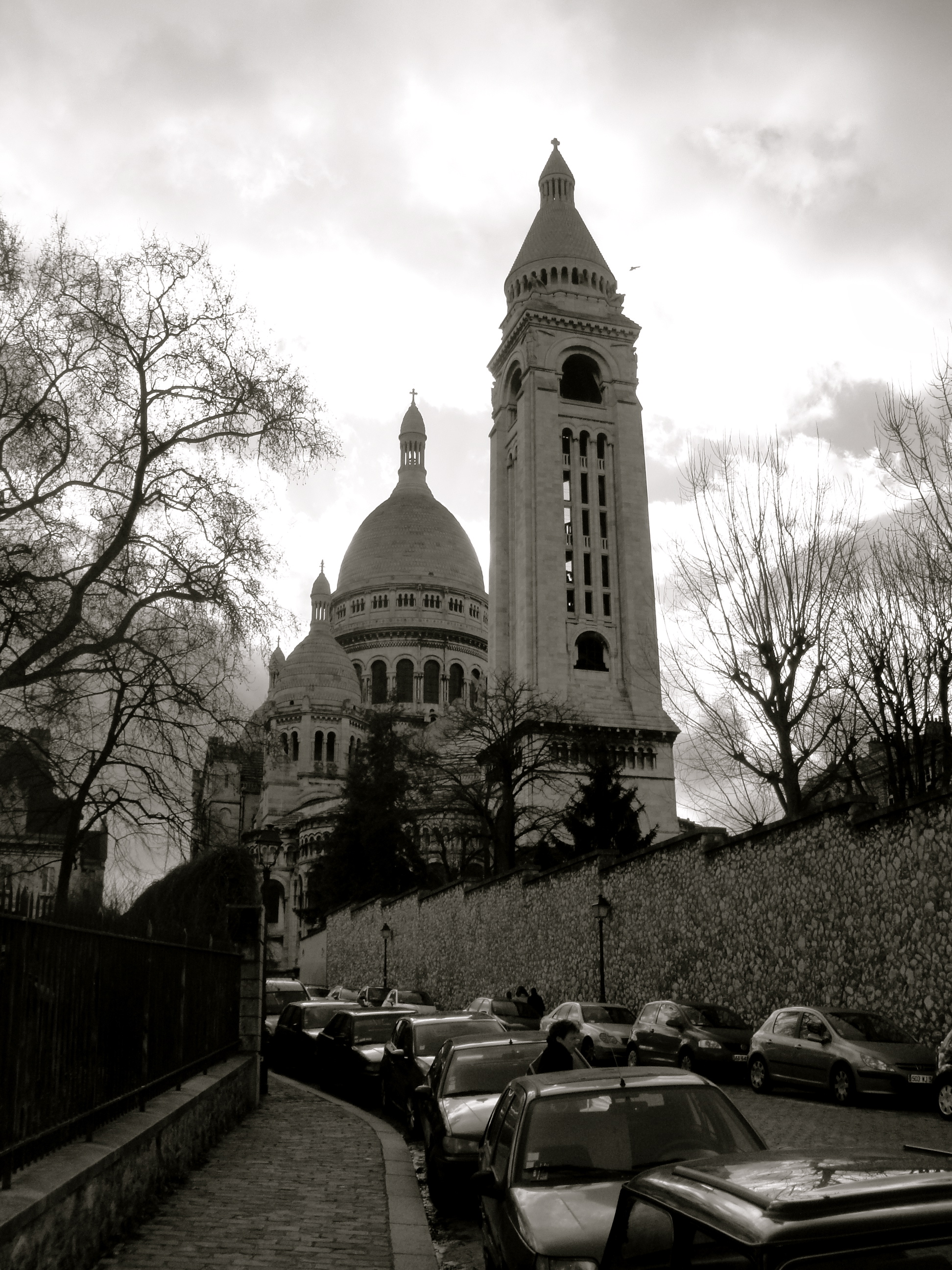
Paris was the city that made me who I am today. It started on a school trip, when my teacher led me, her hands covering my eyes, into the Place du Tertre atop the Butte de Montmartre, and quickly uncovering them, revealed a scene of such lavish character, such indubitable gyrating ecstatic energy and historical charm that I fell in love. My heart dropped to the cobbled paving beneath my feet, and has stayed in the heart of Montmartre, beating there ever since. Now, when I plug myself into the city on an almost annual basis, I cannot help but swarm mesmerised around the quaint streets, meander around the boutique-lined boulevards, and lounge like a flaneur outside the street cafes and in leafy parks, gazing in never-ending admiration at the beauty of the urban landscape around me.

Le Paris Formidable (2000, acrylic on canvas) © Nicholas de Lacy-Brown

Le Paris Formidable (2000, acrylic on canvas) © Nicholas de Lacy-Brown

With Paris came Art. For not only does the city ooze creativity from its every crack and surface, but it has also inspired some of the most illustrious artists in recent art history. As well as the slightly less illustrious ones, like me. While I had been painting for some years, the real turning point of my career, when I went from doodles and watercolours to large scale canvases, was when at the age of 16 I embarked on one of my greatest projects, and still my second biggest canvas ever, Le Paris Formidable.

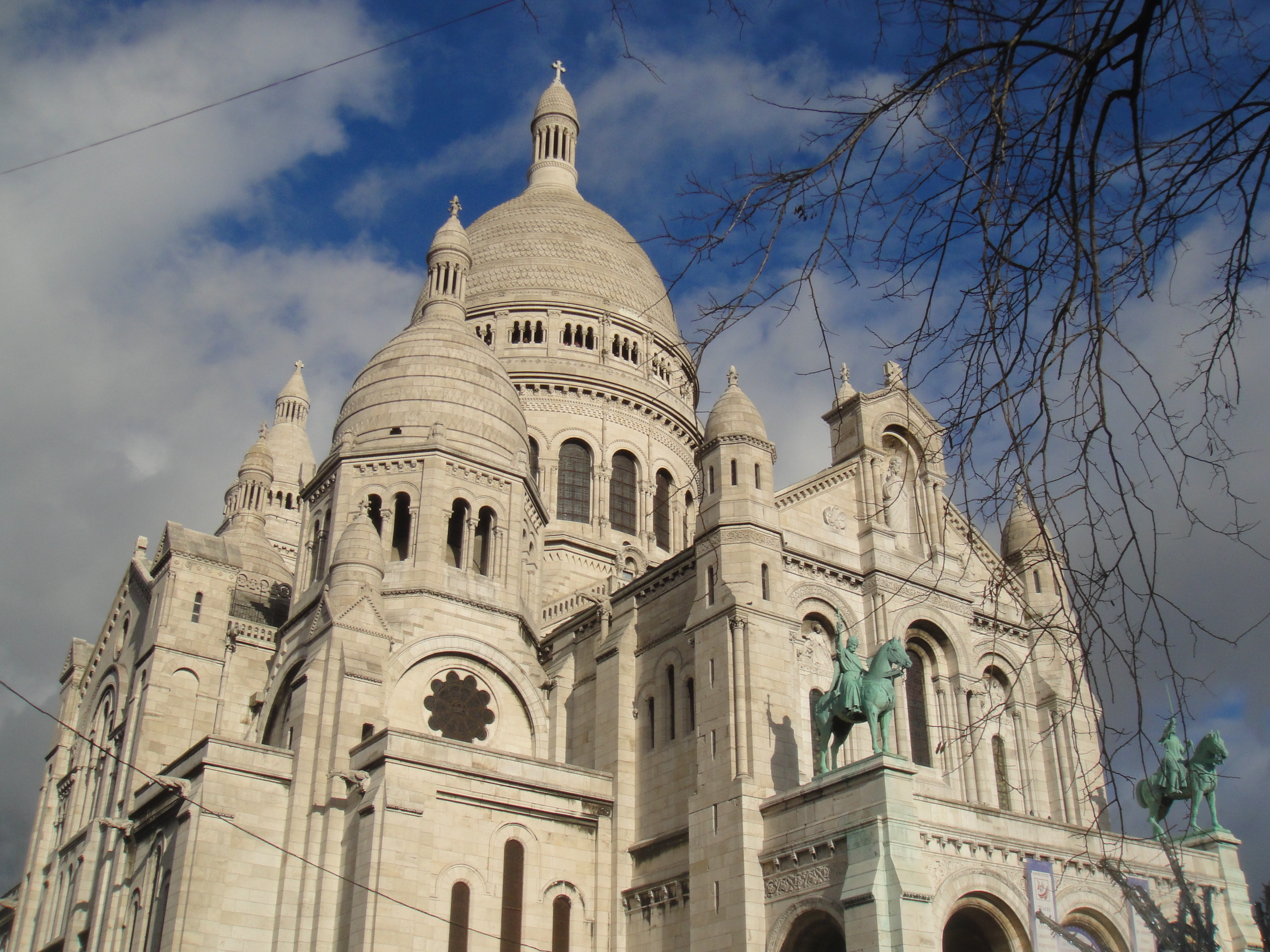
Le Paris aimed to show my beloved Paris from various unusual standpoints, and one of my favourite images was my depiction of the Sacre Coeur, the church atop Montmartre, as a series of eggs in egg cups and split open lavishing the surrounding blue canvas with their eggy contents. The image spoke both of the architectural charisma of this multi-domed church, as well as the inherent fragility of a 21st century Catholic Church. In one dome in particular, a French baguette plunged into the waiting yolky contents like an egg soldier, but also the body of Christ, while his blood, the wine, was represented by the main dome upturned like a communion chalice.

The real thing…

DSC04826 DSC04821 DSC04844

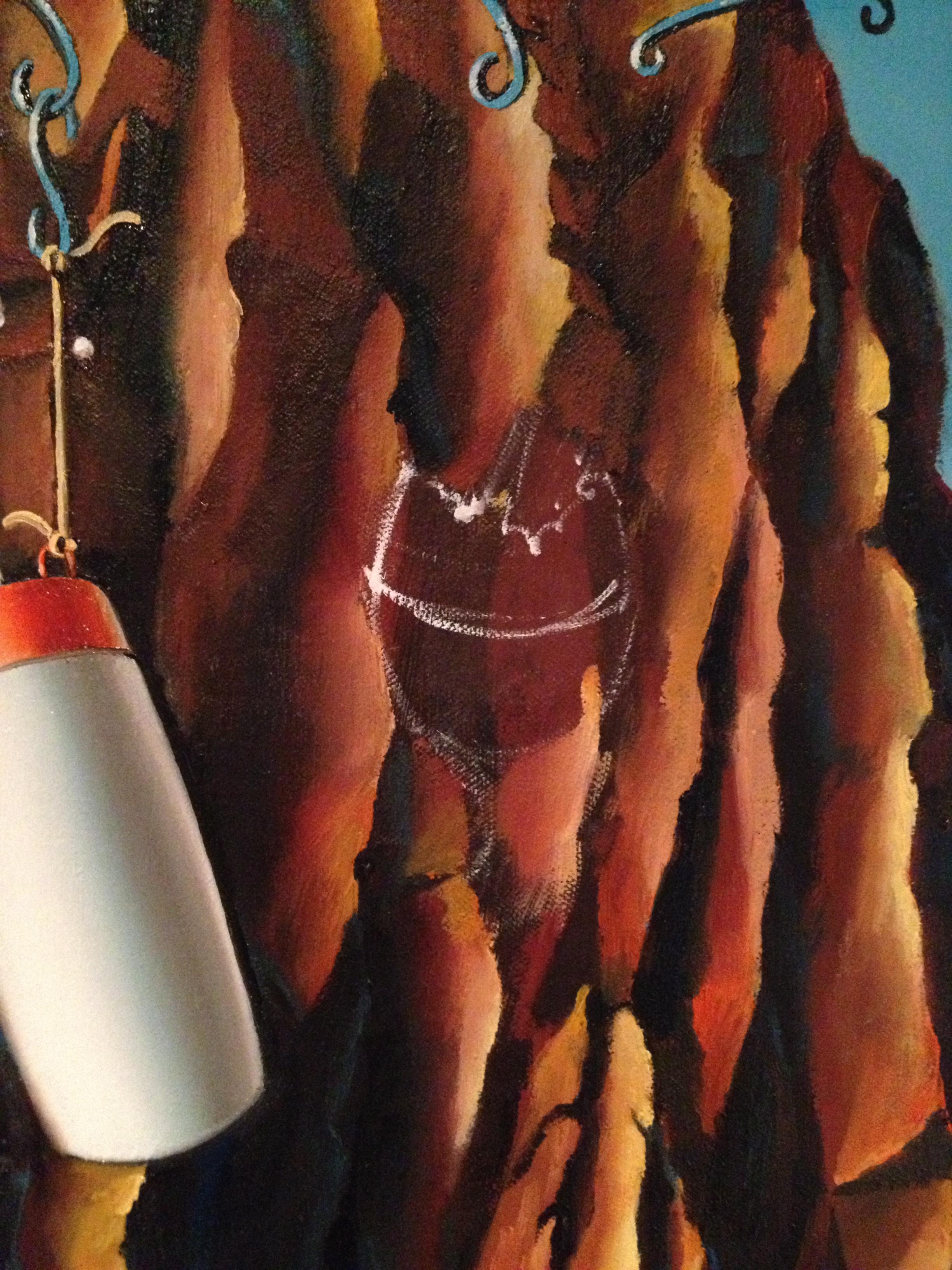
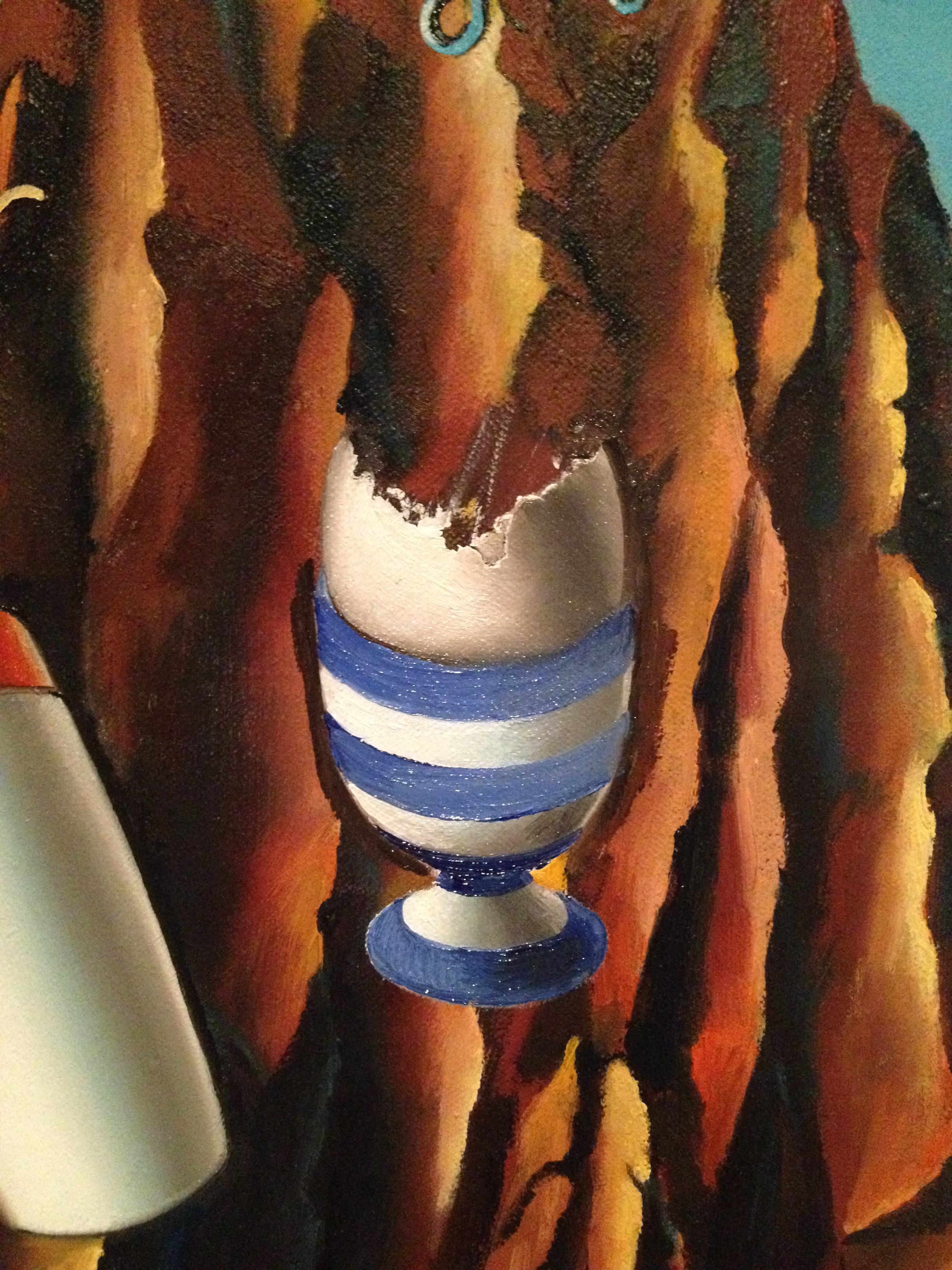
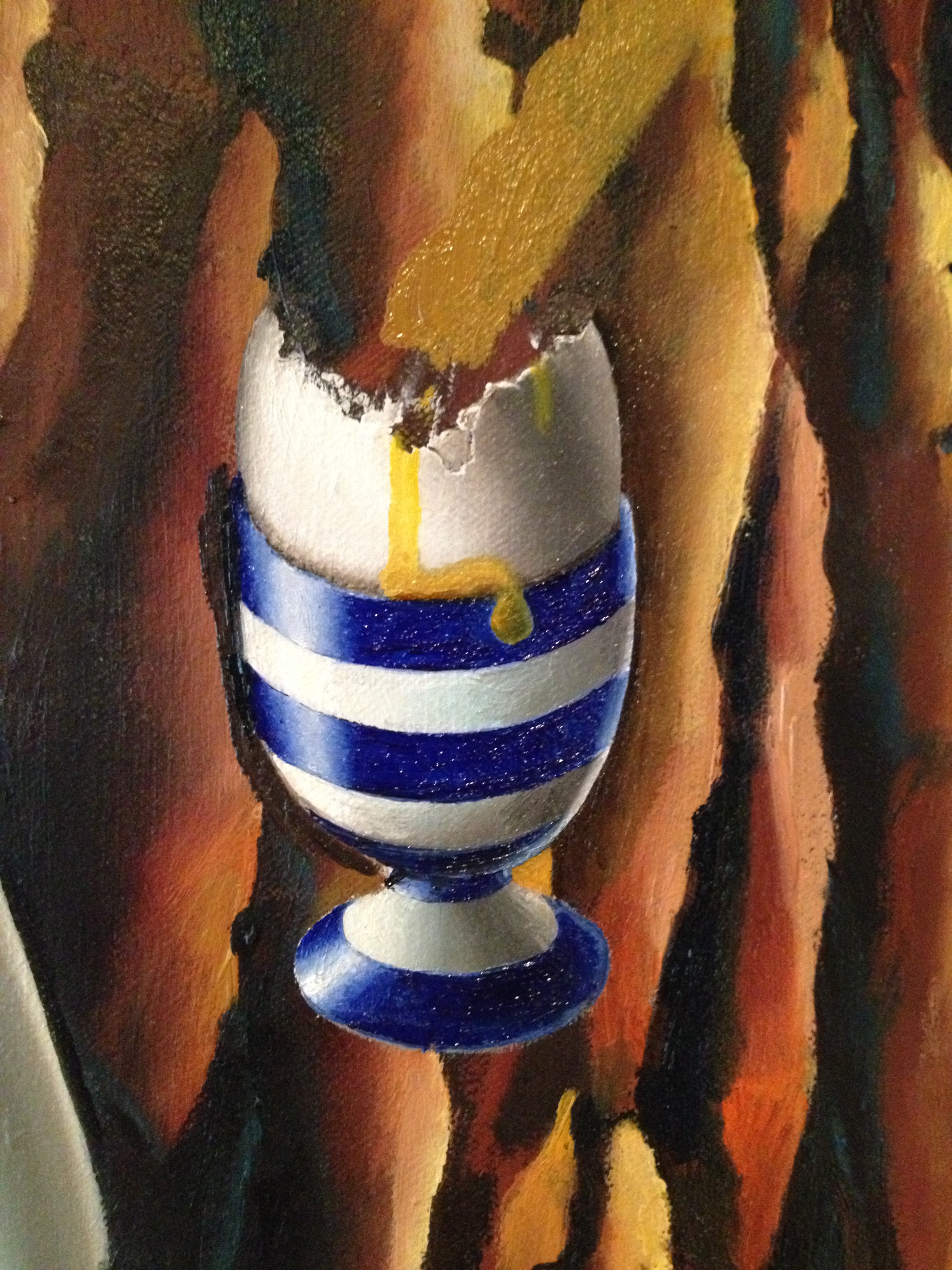
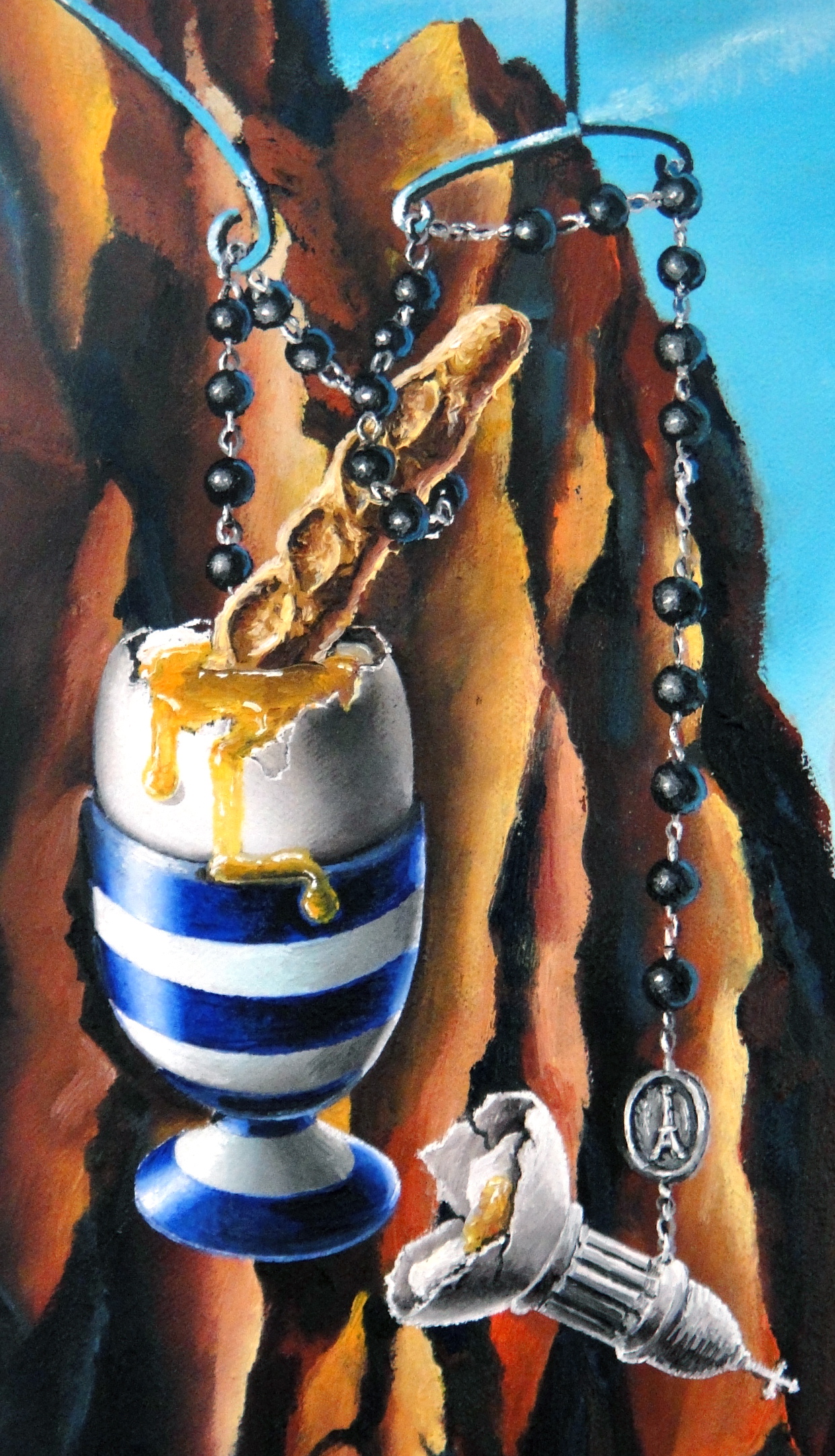
In this new painting I have replicated the egg soldier image, but with some extra frills. Both parts of the egg, and the baguette, are connected to the mobile by what looks like rosary beads, but whose religious imagery is replaced by symbols of Paris – the iconic Eiffel Tower proclaiming that Art and Paris are my ultimate passion: My Religion.

My progress

IMG_3559 IMG_3560 IMG_3562 IMG_3566 IMG_3577 IMG_3579 IMG_3583 IMG_3585 IMG_3588 IMG_3593IMG_3615

The finished image

The finished image

I find it particularly satisfying to compare both this egg and the egg of my 16 year old self – a first great painting, when my untrained skills we still naive. My skills now (although still untrained) have improved, and I feel confident in my ability to better understand light and shadow and dimension so much better than 13 years ago. Yet the idea of my 16 year old self – the Sacre Coeur as eggs – is almost surprisingly impressive to me, innovation which my adult self may struggle to come up with, but which works so well now in this revolution of my art – art revisited for this autobiographical expression of my life, on canvas.

...and the 2000 image

…and the 2000 image

© Nicholas de Lacy-Brown and The Daily Norm, 2001-2013. Unauthorized use and/or duplication of the material, whether written work, photography or artwork, included within The Daily Norm without express and written permission from The Daily Norm’s author and/or owner is strictly prohibited. Excerpts and links may be used, provided that full and clear credit is given to Nicholas de Lacy-Brown and The Daily Norm with appropriate and specific direction to the original content.

Autobiographical Mobile: My painting diary – Day 17: Travel/ Gastronomy

After what felt like months of working and reworking the Mallorcan beach background of my latest large-scale painting, my Autobiographical Mobile, I have finally started to complete some of the finer details of the work and find myself galloping into the final stretch (albeit over the hurdles which are inexorably cast into my path by a full-time job working in the law). Those details are, arguably, the most important sections of the painting, as they are the series of symbols and metaphors which hang from a large Calder-style mobile representing a biography of my life. On one side, the mobile balances my great loves and passions, on the other, the black spots and bad experiences I have encountered and, in some cases, which continue to cast their dark shadow over my life.

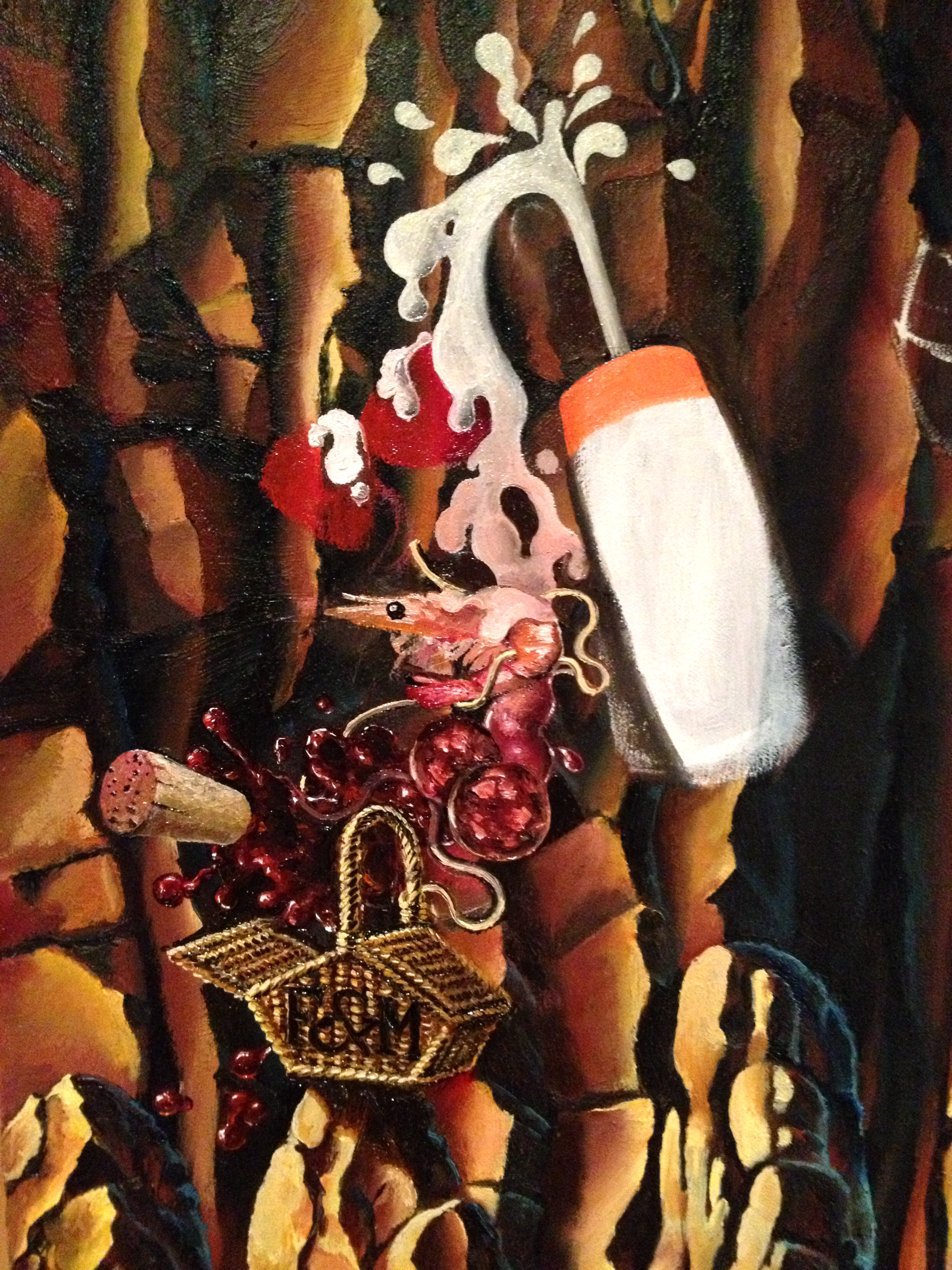
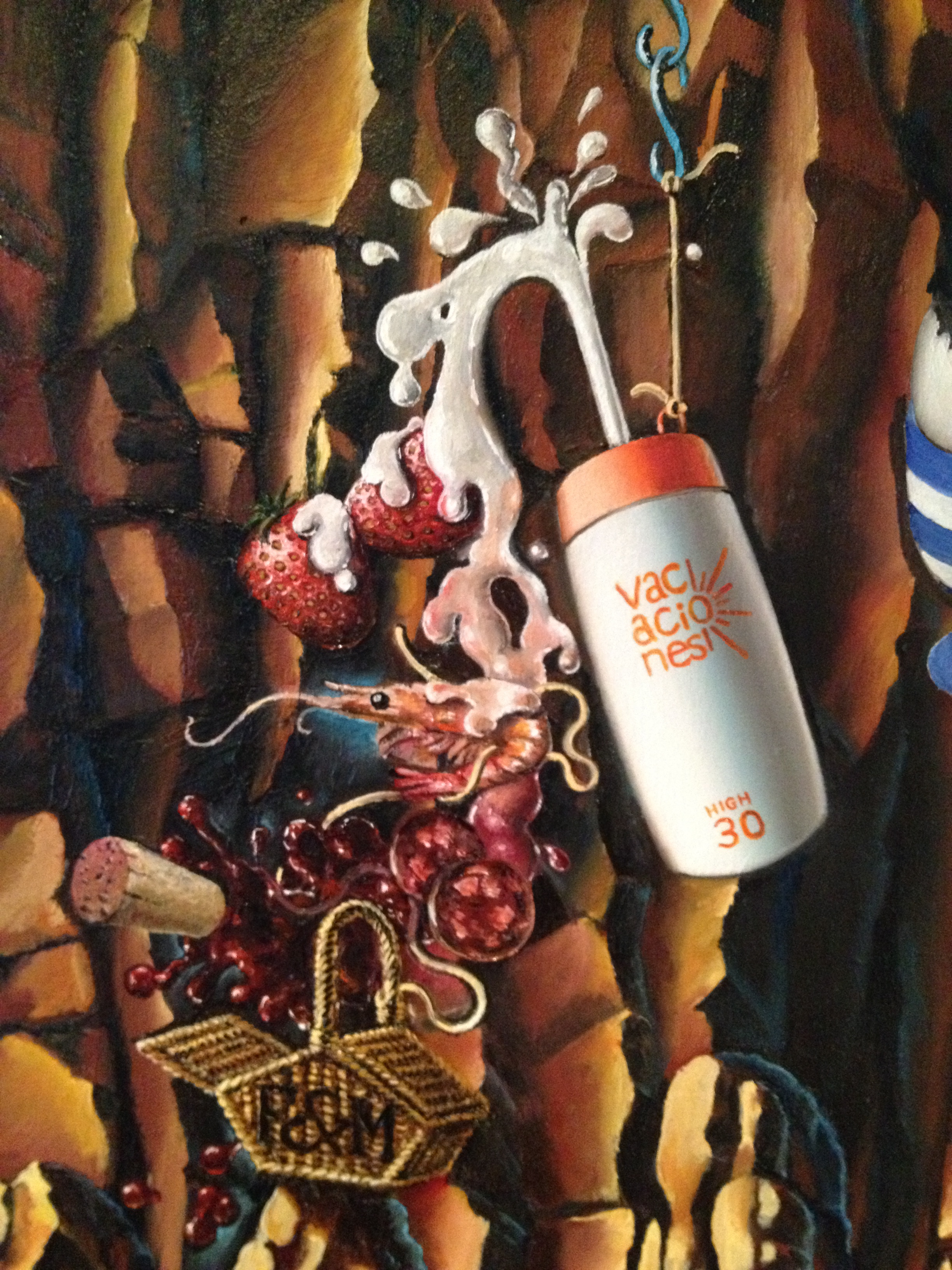
Over the last few days, I have concentrated on the jocular manifestation of my life’s favourite things, the section of the painting which reads a bit like the song from The Sound of Music. Of the four symbols hanging on the positive side of the mobile, the first I tackled was my symbol of travel and gastronomy. I should start by explaining that each of my symbols have a double meaning, encompassing at least two of my passions (and therefore giving the metaphors more complexity and freeing up space on the canvas). As regular readers of The Daily Norm will have noticed, I am inexcusably fond of both travel, and of food (both cooking, and of course, of eating) and particularly enjoy both pursuits when they have something of a Spanish flavour.

Progress on my travel/ gastronomy metaphor…

IMG_3523 IMG_3525 IMG_3526 IMG_3530 IMG_3545 IMG_3555 IMG_3576

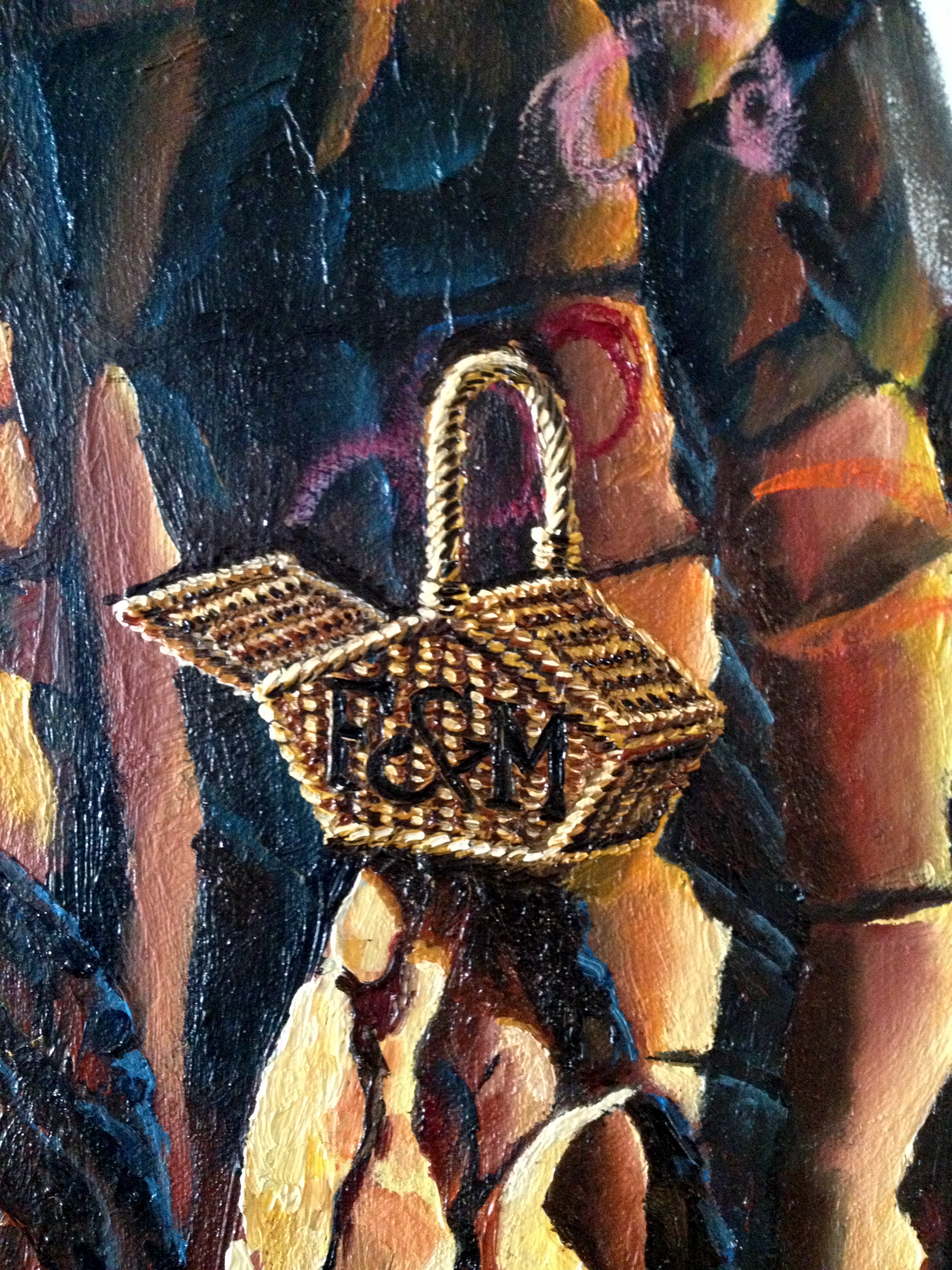
Representing both passions therefore, I have painted a bottle of sun-cream. It has a high protection level (30) which also happens to be my impending next birthday-age. On the bottle, the word “vacaciones” which is Spanish for “holidays” is suitably branded, surrounded by sun-rays (I’m quite pleased with this – I clearly should have been a brand designer!). Squirting from the bottle, the sun-cream becomes edible cream which itself swathes around two juicy strawberries – a representation of fresh, ripe summery food. The cream, graduating downwards, becomes a pinker marie-rose sauce, which in turn accompanies some succulent prawns. These in turn are accompanied by two slices of my favourite of all meats – Spanish chorizo sausage (chorizo and prawns are often to be found together in a great big pan of Spanish paella) and the chorizo is in turn doused in a delicious red wine (thus making the popular tapas dish, Chorizo al Vino) which has metamorphosed out of the marie-rose sauce. The final item on the flurry of food then is wine, as ever a subject of my most tender affection, and represented by an energetic splash and a wine bottle cork. All of this falls into a Fortnum and Mason’s picnic hamper (an icon of my favourite London department store), whose basket twine starts to unravel, curling like a piece of spaghetti around the food suspended above it.

It’s a rather complex image, but I have always had a penchant for images which metamorphose, as one object becomes another, and an image builds in complexity and entendre. Check out the third painting of my 2005 Joie de Vivre series for example. Amongst the metamorphoses there are harbour lights which become pearls which become buoys floating in the water, and rain which becomes snow which becomes ice cream.

Joie de Vivre/ Zest of Life 3: Casino Nights (2005 © Nicholas de Lacy-Brown, acrylic on canvas)

Joie de Vivre/ Zest of Life 3: Casino Nights (2005 © Nicholas de Lacy-Brown, acrylic on canvas)

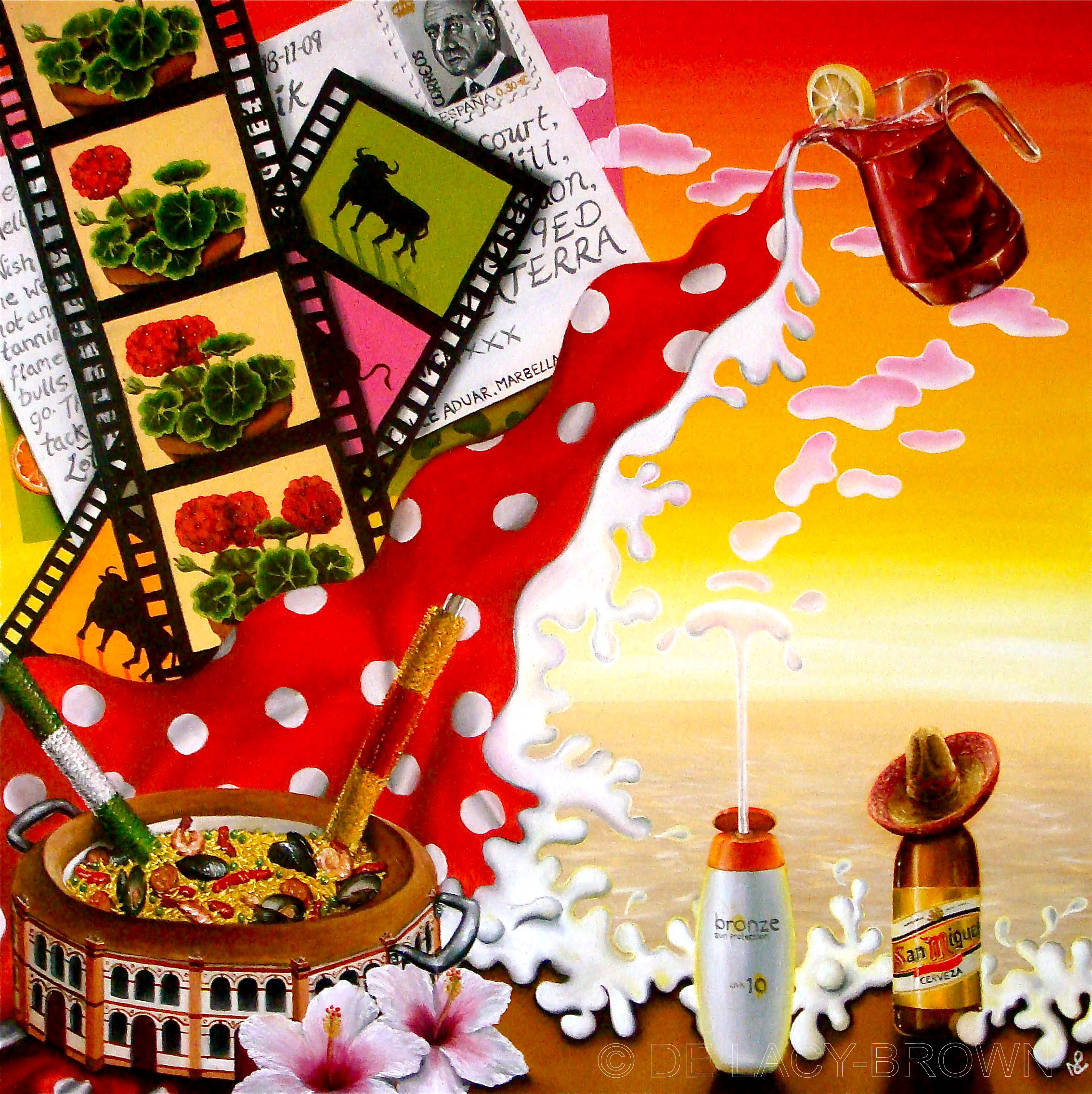
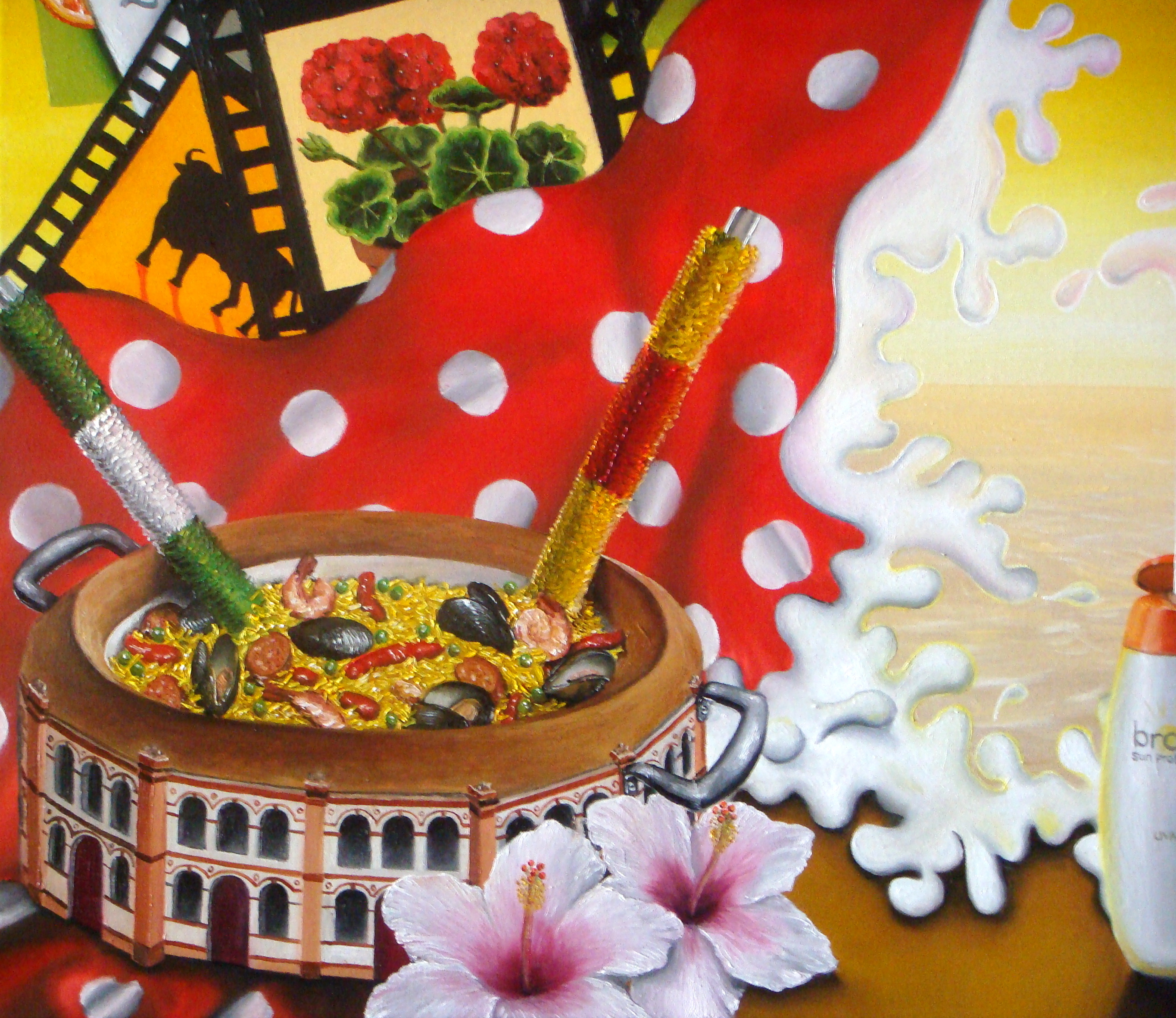
As much of the current painting deals with my life, it’s unsurprising that many of my symbols which make direct reference back to my past body of art work. In painting the sun-cream bottle, for example, I make direct reference to my 2009 painting, Souvenir of Spain, which deals with the tourist stereotypes of my favourite country. Amongst them is the general consensus of the ignorant British tourists that Spain is all about “sea, sand, sex and sangria” hence the symbols of sunbathing which permeate the piece. Here’s that painting and some detailed shots of the work, including, as you will see, my previous depiction of Spanish cuisine, namely the iconic paella, a fodder of Spanish tourist haunts all over the world, and which here is painted inside of a bullfighting ring.

Souvenir of Spain (2009 © Nicholas de Lacy-Brown)

Souvenir of Spain (2009 © Nicholas de Lacy-Brown)

DSC08783 DSC08796 DSC08789

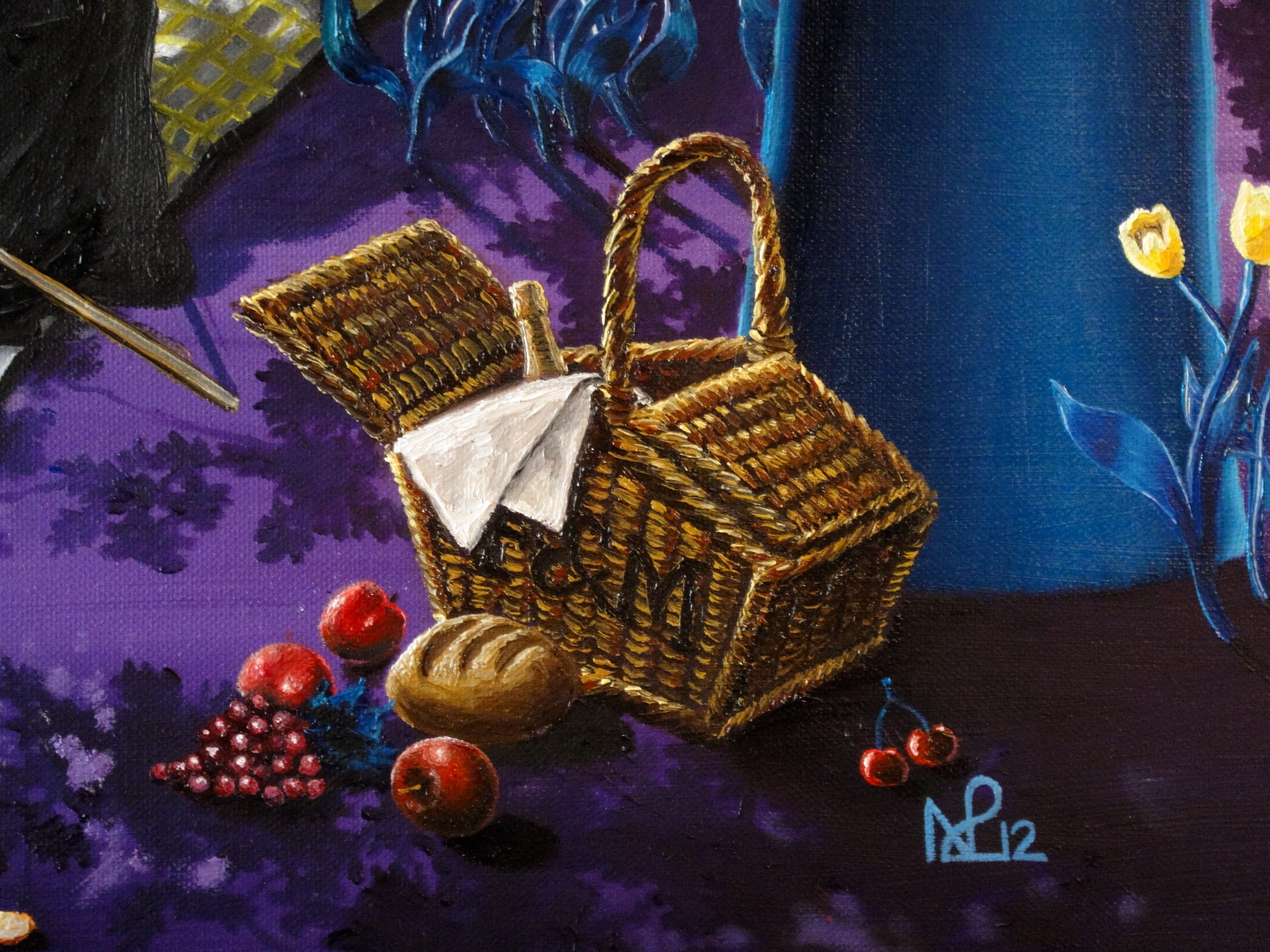
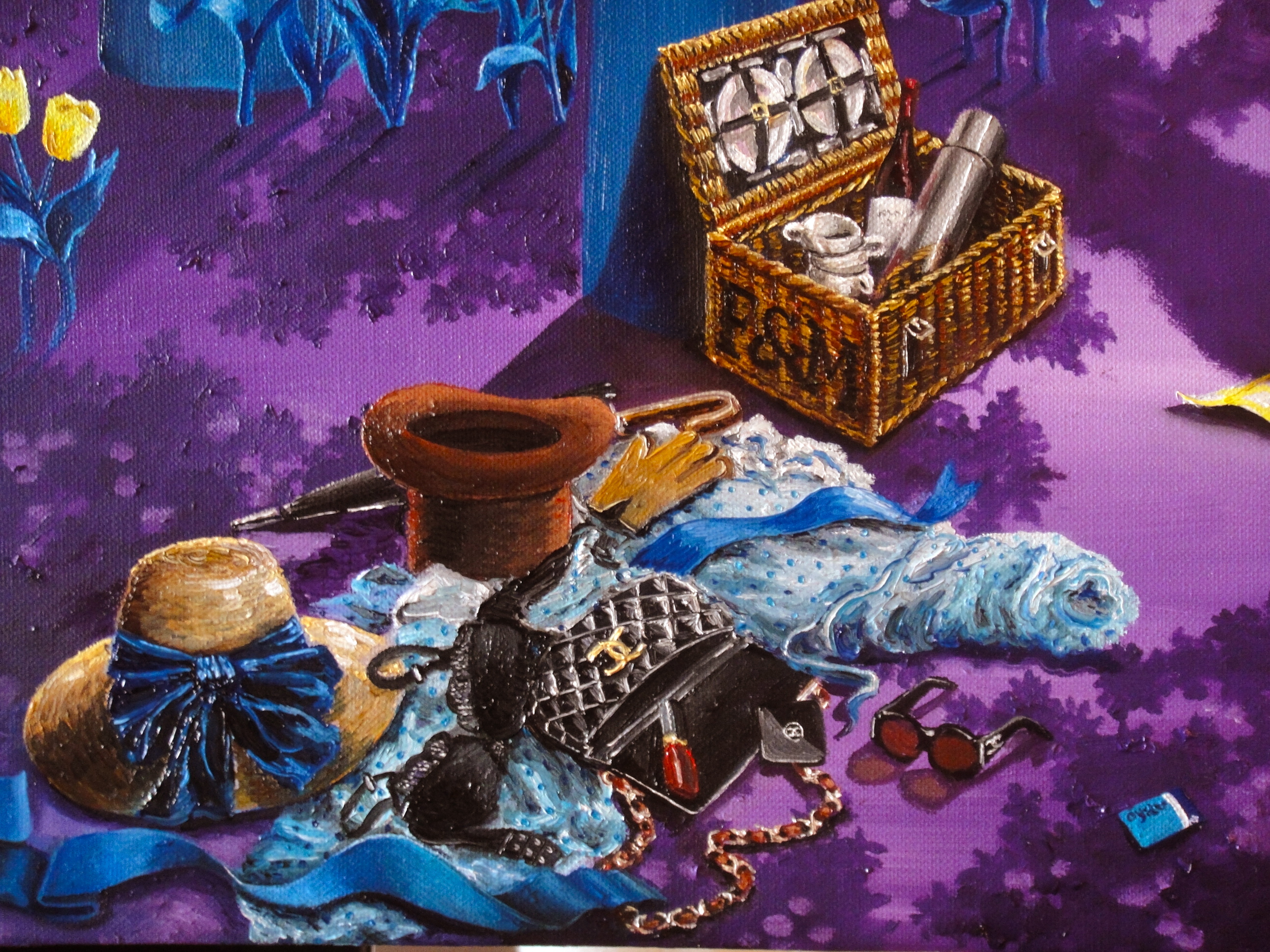
This image also references back to my Norm depiction of Manet’s Le Dejeuner sur l’Herbe, and the two Fortnum and Mason’s hampers I included in that fine picnicking piece. For me the idea of being out in the summer warmth, feasting of the grass out of a decadent Fortnum’s hamper is amongst the most pleasant of all thoughts. Ironically I have never owned a Fortnum’s hamper (they’re not cheap…) but my ambition to get my hands on one (preferably a full one!) lives on. Maybe as a present to myself when this large painting is finally complete?

Le Déjeuner sur l'herbe (after Manet) 2012 © Nicholas de Lacy-Brown, Oil on canvas

Le Déjeuner sur l’herbe (after Manet) 2012 © Nicholas de Lacy-Brown, Oil on canvas

Fortnum and Masons Hamper with bread, grapes, apples and cherries

Fortnum and Masons Hamper with bread, grapes, apples and cherries

The Norms' discarded clothes and handbag

The Norms’ discarded clothes and handbag

Up next time… My art and my adored Paris.

© Nicholas de Lacy-Brown and The Daily Norm, 2001-2013. Unauthorized use and/or duplication of the material, whether written work, photography or artwork, included within The Daily Norm without express and written permission from The Daily Norm’s author and/or owner is strictly prohibited. Excerpts and links may be used, provided that full and clear credit is given to Nicholas de Lacy-Brown and The Daily Norm with appropriate and specific direction to the original content.

Norms do… Gauguin

In the same way that an inquisitive child may like playing dress up in the clothes box of his or her parents, so too do the art-loving Norms love to emulate the works of the great artistic masters. In the past on The Daily Norm, the Norms have brought you Frans Hals, Van Gogh, Degas, Picasso, Klimt, Da Vinci and Vermeer to name but a few. Next in line to receive the Norm treatment is none other than the post-impressionist master, Paul Gauguin himself.

Gauguin, master of colour, and leader of the movement out of impressionist naturalism into the more expressionistic unreality, he is famous for his vibrant images of the Pacific island of Tahiti, and perhaps infamous for the rather suspect love affairs he had while on the island, allegedly with underage girls.

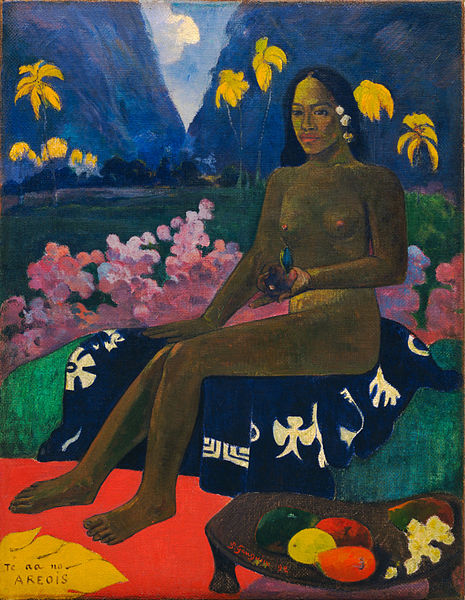
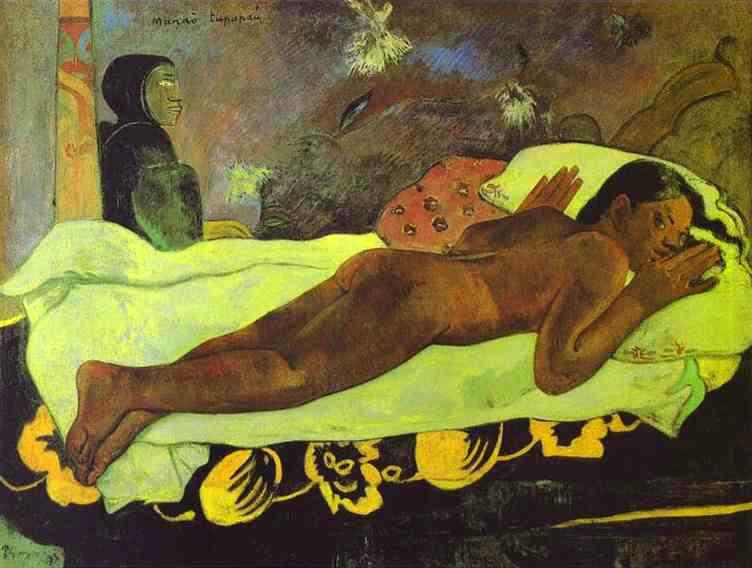
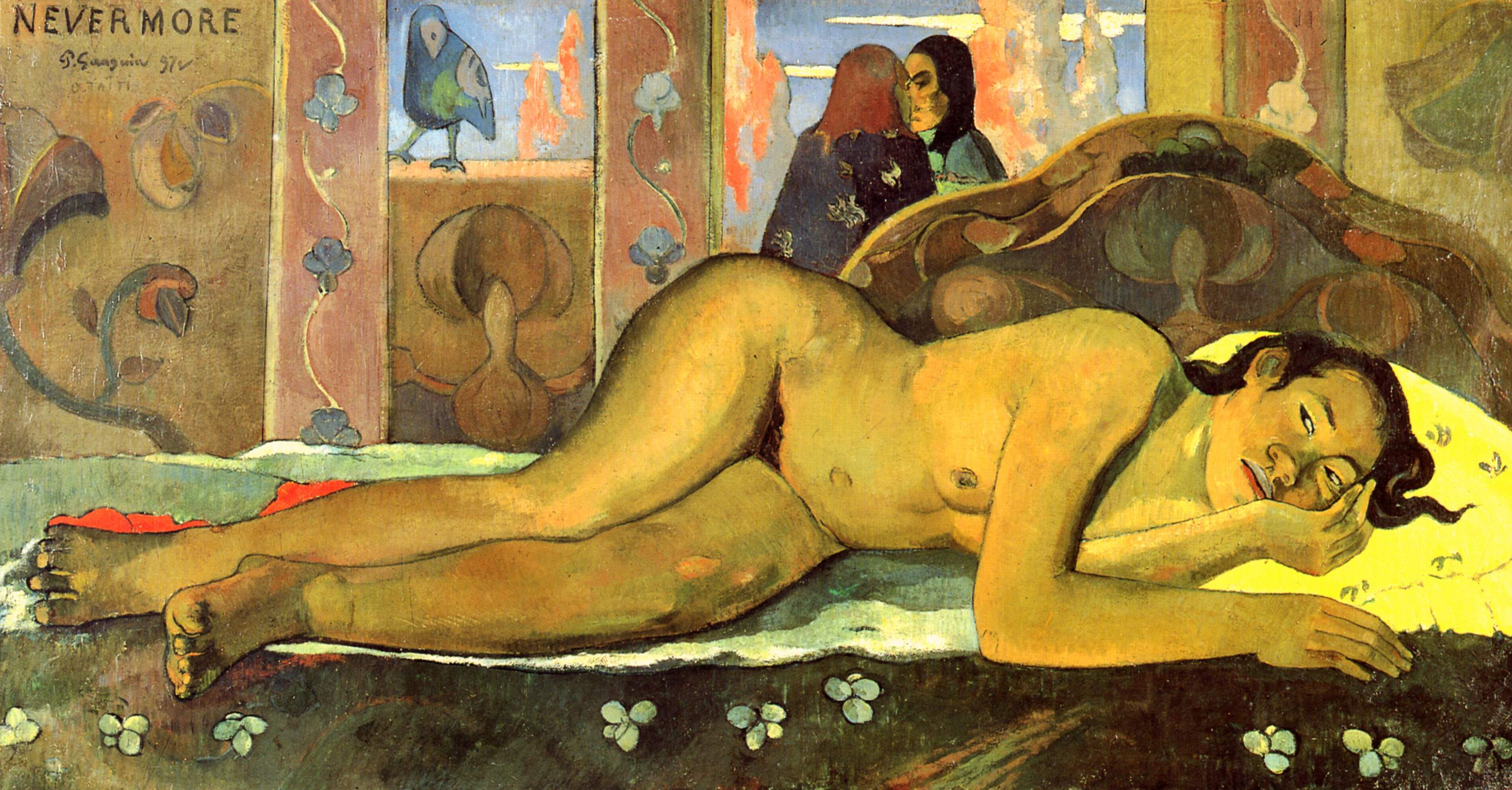
It is undoubtedly one such girl who is the subject of one of Gauguin’s most famous paintings, Nevermore O Tahiti, which today enthralls audiences at its home, the Courtauld Gallery in London’s Somerset House. With its striking bright yellow pillow, its richly coloured background, and the mysterious and melancholy gaze of the nude stretched out before us, it has long been one of my favourite paintings, not just by Gauguin, but in the richly constituted Courtauld collection.

It is hardly surprising then that the time would come when I could resist painting a Norm version of this enigmatic masterpiece no longer. So without further ado, I give you, Nevermore Norm…

Nevermore Norm (after Gauguin) (2012 © Nicholas de Lacy-Brown, acrylic on canvas)

Nevermore was painted by Gauguin in 1897 in Tahiti, the Polynesian island which the French artist made his home in the latter years of his career. The painting is highly enigmatic both in image and title. Asides from being painted onto the canvas, the title is potentially an allusion to the idea of paradise lost (Milton’s epic poem, with which Gauguin would have been familiar) but more likely refers to the poem by Edgar Allan Poe’s The Raven which Stéphane Mallarmé, a French poet, is said to have recited at the Café Voltaire around the time when Gauguin left Paris. In the poem, a man imagines that a bird flapping at the window repeating the word “nevermore” is the spirit of his dead lover. Hence, perhaps, why Gauguin, in his work, has painted the raven stood on the window sill of this colourful Tahitian room.

Nevermore O Taiti, Paul Gauguin (1897) (Courtauld Institute, London) (Source: wikipedia commons)

As for the rest of the painting, its meaning is less certain. The picture is dominated by a full length reclining Tahitian nude.  Her attention seems to be turned towards the figures and the raven in the background. She appears almost to be listening, bitterly aware that the two are gossiping maybe, or conspiring against her, but unwilling to rise from her repose and confront the pair. But could they, on the other hand, be figments of her imagination, together with the almost dreamlike two dimensional blue sky and yellow clouds, and the patterned walls of her home which feels and looks almost like a temporary stage set?

Whatever the meaning behind this elusive piece, it is characteristic of Gauguin’s pursuit, post-impressionism, not of reality, but of introspection. It was in fact Guiguin’s pursuit of inner vision, rather than external reality which led to his quarrel with Van Gogh in Arles which in turn culminated in the latter’s infamous ear-cutting incident. In Nevermore, we see Gauguin at his introspective, expressionist best, fabricating an image from a sense of unreality, while hinting at the tropical bounties of the lush Pacific surroundings in which he was painting.

While Gauguin’s time on Tahiti has since been revealed to have been littered with sexual controversy and even a defamation wrangle with the governor of the Marquesas Islands, it is certain that the works he produced during his extensive stay on the island are amongst his best. Vivid, exploding with colour, as blue skies, tropical plants and the bronzed tones of his beautiful Tahitian women fill the canvas and make the viewer yearn to leave Europe, and its watery impressionistic landscapes behind forever. That is, in fact, what Gauguin did, dying not in his native France, but in Tahiti, of syphilis, alcoholism and all manner of other health problems. But what he left behind was an amazing collection of paintings which have since served to capture Tahiti in the hearts and minds of art lovers across the world.

Here are just a few to feast your eyes upon…

Paul Gauguin, Tahitian Women on the Beach (1891) (wikipedia commons)

Paul Gauguin, Where Do We Come From? What Are We? Where Are We Going?, (1897) (wikipedia commons)

Paul Gauguin, Tahitian: Te aa no areois (The Seed of the Areoi) (1892) (wikipedia commons)

Paul Gauguin, Manao tupapau (The Spirit of the Dead Keep Watch) (1892) source: wikipedia commons

The question now is, who will the Norms set their sights upon next?

© Nicholas de Lacy-Brown and The Daily Norm, 2001-2012. Unauthorized use and/or duplication of the material, whether written work, photography or artwork, included within The Daily Norm without express and written permission from The Daily Norm’s author and/or owner is strictly prohibited. Excerpts and links may be used, provided that full and clear credit is given to Nicholas de Lacy-Brown and The Daily Norm with appropriate and specific direction to the original content.

Sunday Supplement – The Spanish Double

For the last few weeks on a Sunday, I have been exploring the collection of 10 paintings I created during my convalescence from an accident between 2008-2010. True, the subject matter is not easy to write about, nor, possibly, easy to read, but I hope you will agree that these paintings are amongst the most worthy of my works for further exploration and examination. They are, after all, a representation of a potent threshold in my life. When I underwent not just physical change but mentally was forced to mature and re-evaluate life in a way I have never before considered necessary.

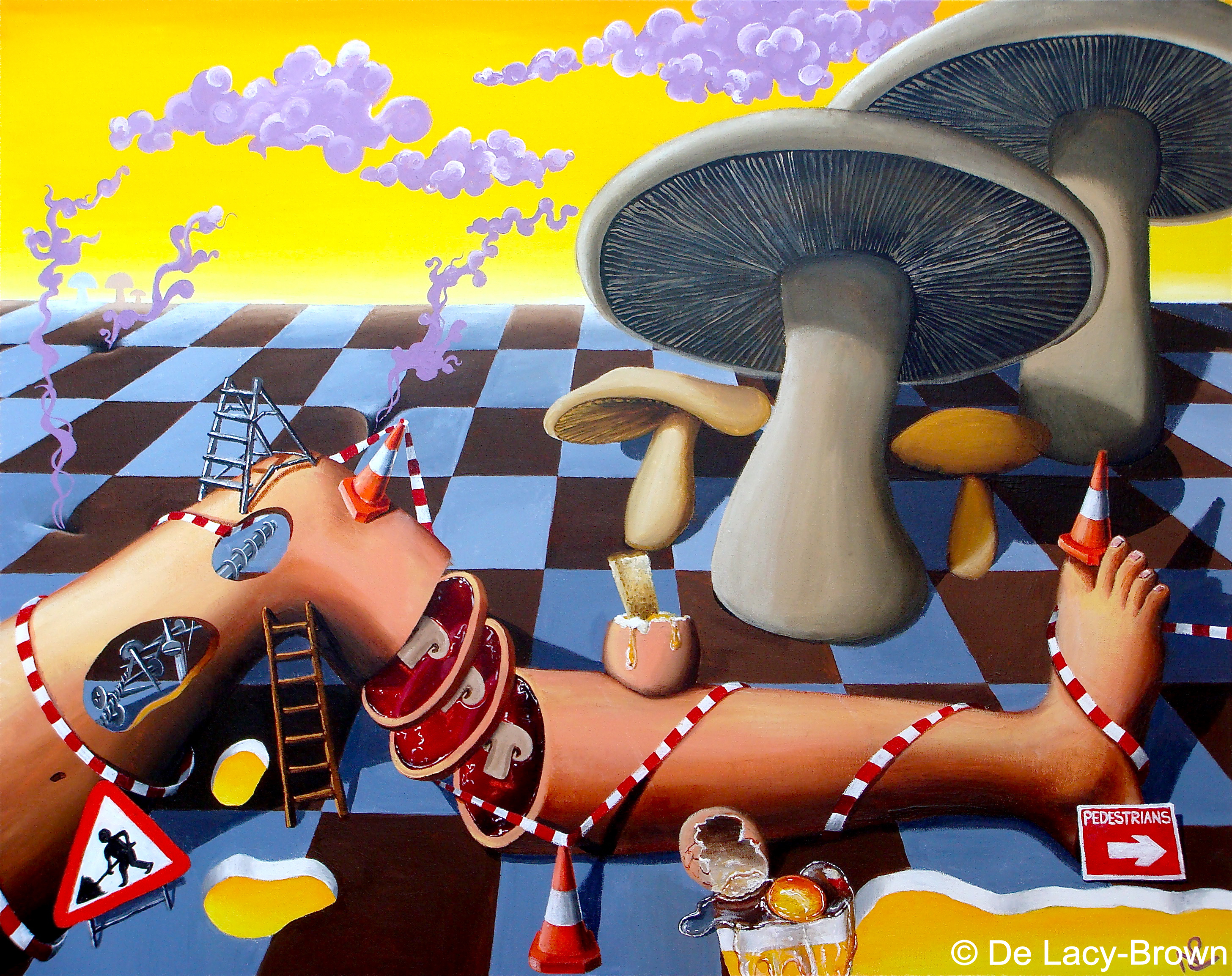
In today’s Sunday Supplement, I am featuring two of my accident paintings which almost formed a sub-category of their own. Both were painted, unlike the other 8, when I was convalescing in Spain, both have Spanish titles, both are painted with acrylic paints, rather than oil, and the result of the colours used makes them, in my opinion, a bit more “pop art” in finish.

Desayuno del Norte

Desayuno del Norte (2008 © Nicholas de Lacy-Brown, acrylic on canvas)

In the first of the two, Desayuno del Norte (“Breakfast of the North”), I cross-referenced a Lowry-inspired Northern industrial landscape with symbols of breakfast “desayuno”, while mixing in images direct from the legal world to which, at the point of painting this work, I had prematurely returned. Of all my accident paintings, this is perhaps the hardest to explain. It was a mood, a time experienced – a collection of various representations which at that time drove me to paint. In the purple-grey background, a sense of my depression and frustration at that time is shown, a time which is appropriately catalogued as Christmas by the holly on a jug of sticky dark gravy which pervades the piece. The industrial landscape is proliferated with an abundance of mauve smoke, while from one of the bigger chimneys in the foreground, the question “why me?” looms large.

While in the accident paintings before this one, I had painted feet, here, I paint a trainer – the specially fitted trainers which were integral to enabling me to travel into work and get around each day, along with the crutch, whose presence cuts across the canvas on the right. Meanwhile, in referencing breakfast throughout the painting, the eggs mark a note of the fragility of my recovery, the blood-like jelly pouring from the trainer suggests my continuing pain, the orange represents my location at the time of painting – Marbella in Southern Spain – and the Marmite gives a clue as to my fading appetite and loss of weight  – it was the only thing I could often bring myself to eat, spread on the toast hovering somewhere below it. Meanwhile, running throughout the painting are the double yellow lines of road markings – these representing prohibition and interdiction – a cessation of my liberty, both physically and in my profession in the overtly constrictive legal world of London’s Bar.

La Marcha de los Champiñones 

La Marcha de los Champiñones (2009 © Nicholas de Lacy-Brown, acrylic on canvas)

Road traffic symbols are continued in the second painting of this series, La Marcha de los Champiñones (“The March of the Mushrooms”), which represents two major events of my continuing convalescence a year after the original accident – first the fact that my leg became wracked with infection, and secondly that I was required to have my leg re-broken, in order to correct a fixed flexion deformity which had occurred during the healing process (in other words, the leg had healed at a fixed angle, and was unable to lie straight). In this work, I show my leg being re-broken, cut here into slices, each slice revealing, by way of the mushroom-symbol, the spread of infection throughout the limb. Meanwhile, on the outside, huge mushrooms loom over the slightly surreal scene, as the spread of infection becomes worse.

The road traffic symbols in the meantime become more prevalent in this piece. The leg is cordoned off behind road-works ribbon and a road-works warning sign, while the tools and paraphernalia of the workman are all around, including the various pins which were, in reality, holding my leg together (as shown by “windows” allowing the viewer to peer into my metal-ridden leg). A sign diverts pedestrians past the works, but also reminds viewers that throughout my convalescence, one of the worst experiences encountered was the continuous stares of pedestrians on the street, forever gawping at my leg encased in its pins and illizarov frame and covered with dressings and scars.

Meanwhile, the egg which was solid in Desayuno del Norte, has now cracked. The fragility of my steady recovery had given way, and I was back to square one.

© Nicholas de Lacy-Brown and The Daily Norm, 2001-2012. Unauthorized use and/or duplication of the material, whether written work, photography or artwork, included within The Daily Norm without express and written permission from The Daily Norm’s author and/or owner is strictly prohibited. Excerpts and links may be used, provided that full and clear credit is given to Nicholas de Lacy-Brown and The Daily Norm with appropriate and specific direction to the original content.

Introducing my new painting: The Gentleman (in Paris)

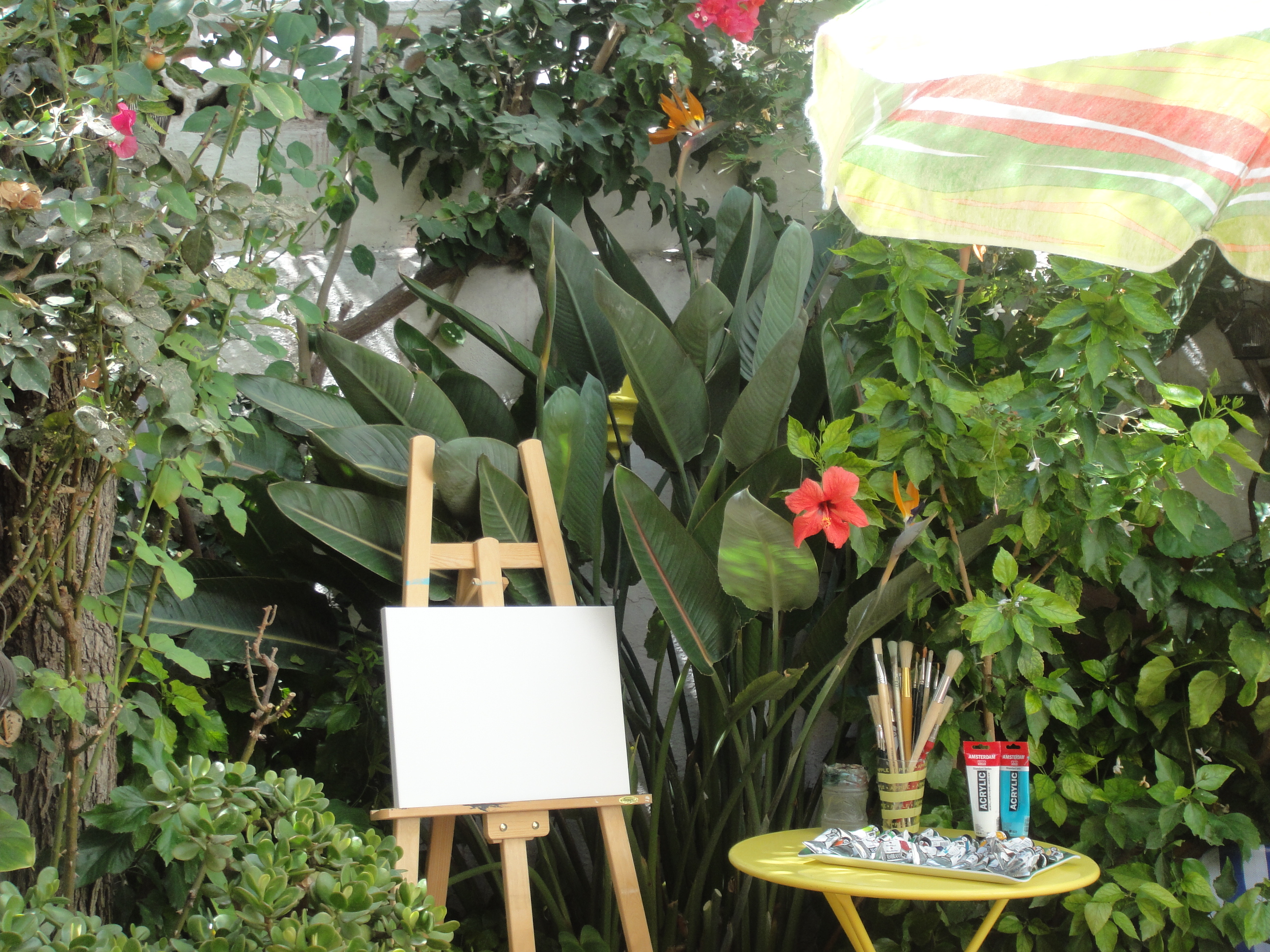
For those keen-eyed amongst you, particularly those reading my recent Spanish posts and my various tapas recipes, you may have noticed (as I know a couple of my regular readers did) in the background in the garden of my Marbella house stood a little easel and upon it a small canvas – from the early photos, when just a blank canvas was present, to the latter shots which showed me making some progress on the work as the balmy days of my holiday whiled onwards.

A canvas awaits me – in my garden in Spain

As the idea developed, and owing to the sad reality that our holiday was only 9 days long, my painting became more compelx, and when I left Marbella, the work was only half done. Luckily the canvas fit in my case (although no doubt contributed to my excess of baggage weight for which the ever unreasonable British Airways charged me a 50 euros flat penalty fee, even though my partner’s luggage was massively underweight) and I continued work in London. Be my life in London as it is – full of work and busyness, it has taken me some time to complete the painting, even though I rushed home most evenings to fit in a few hours of work.

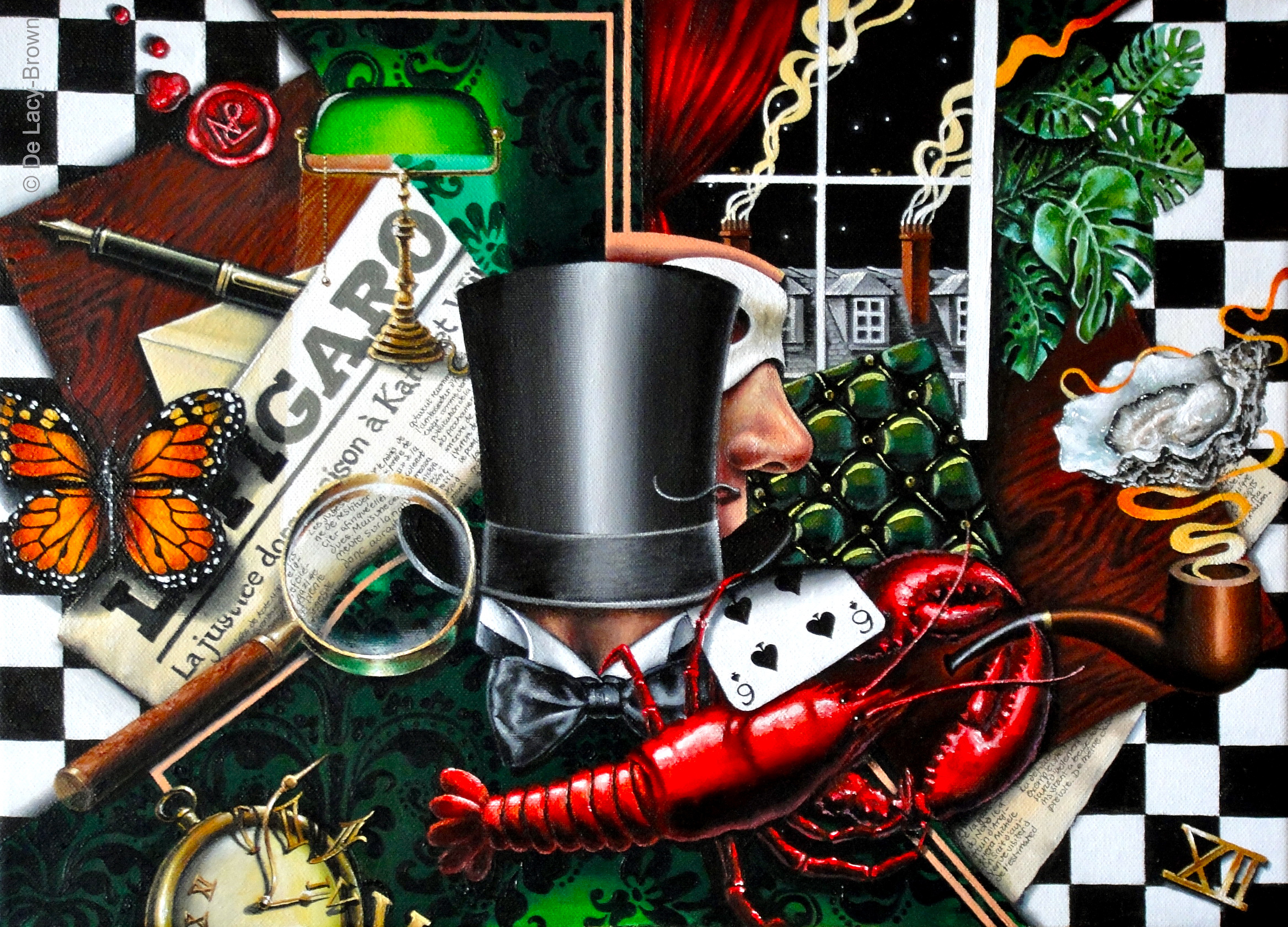
However, having had last weekend to myself, I finally managed to complete the work, a work which I now call The Gentleman (in Paris).

The Gentleman (in Paris) 2012 © Nicholas de Lacy-Brown, acrylic on canvas

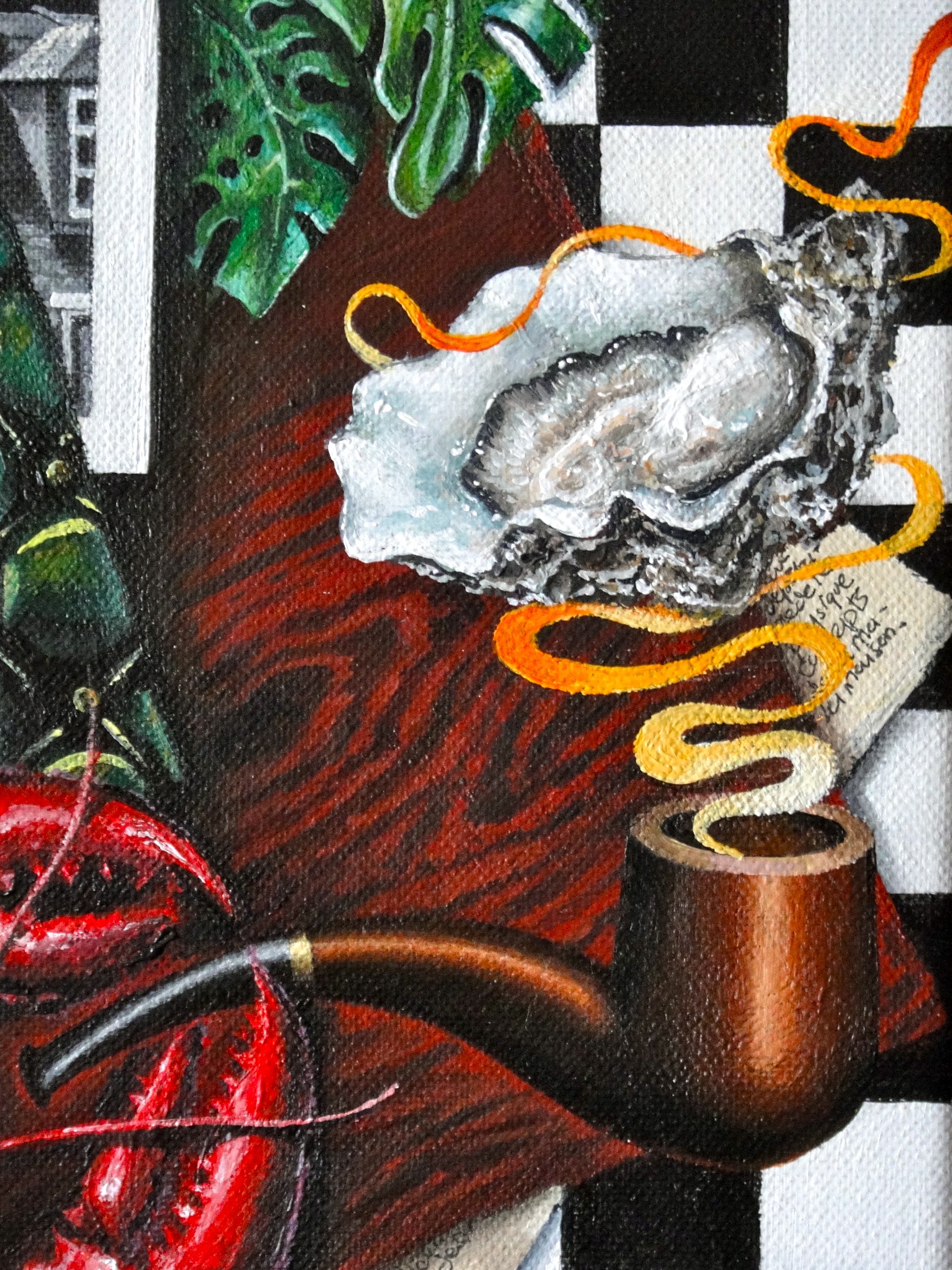
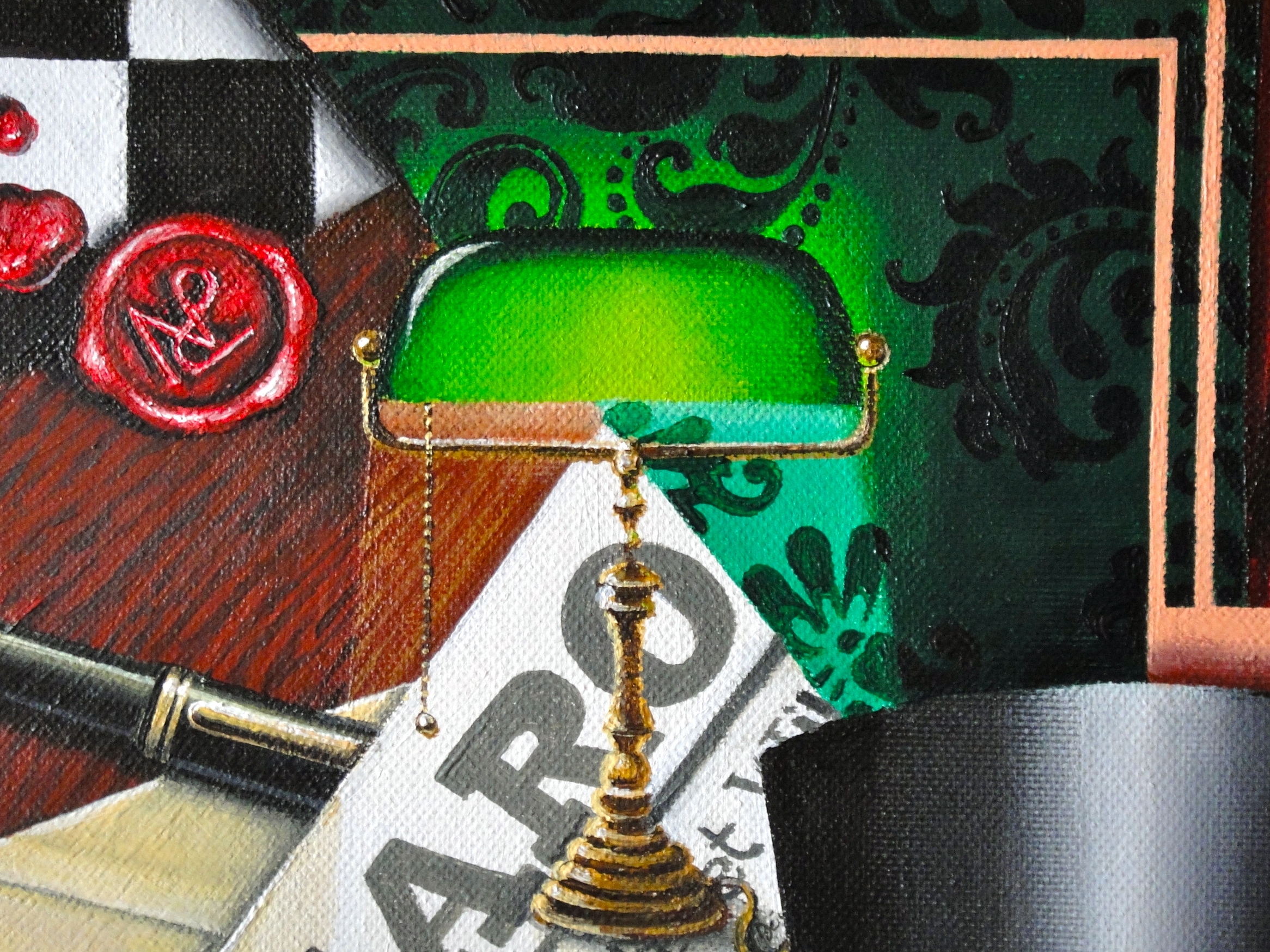
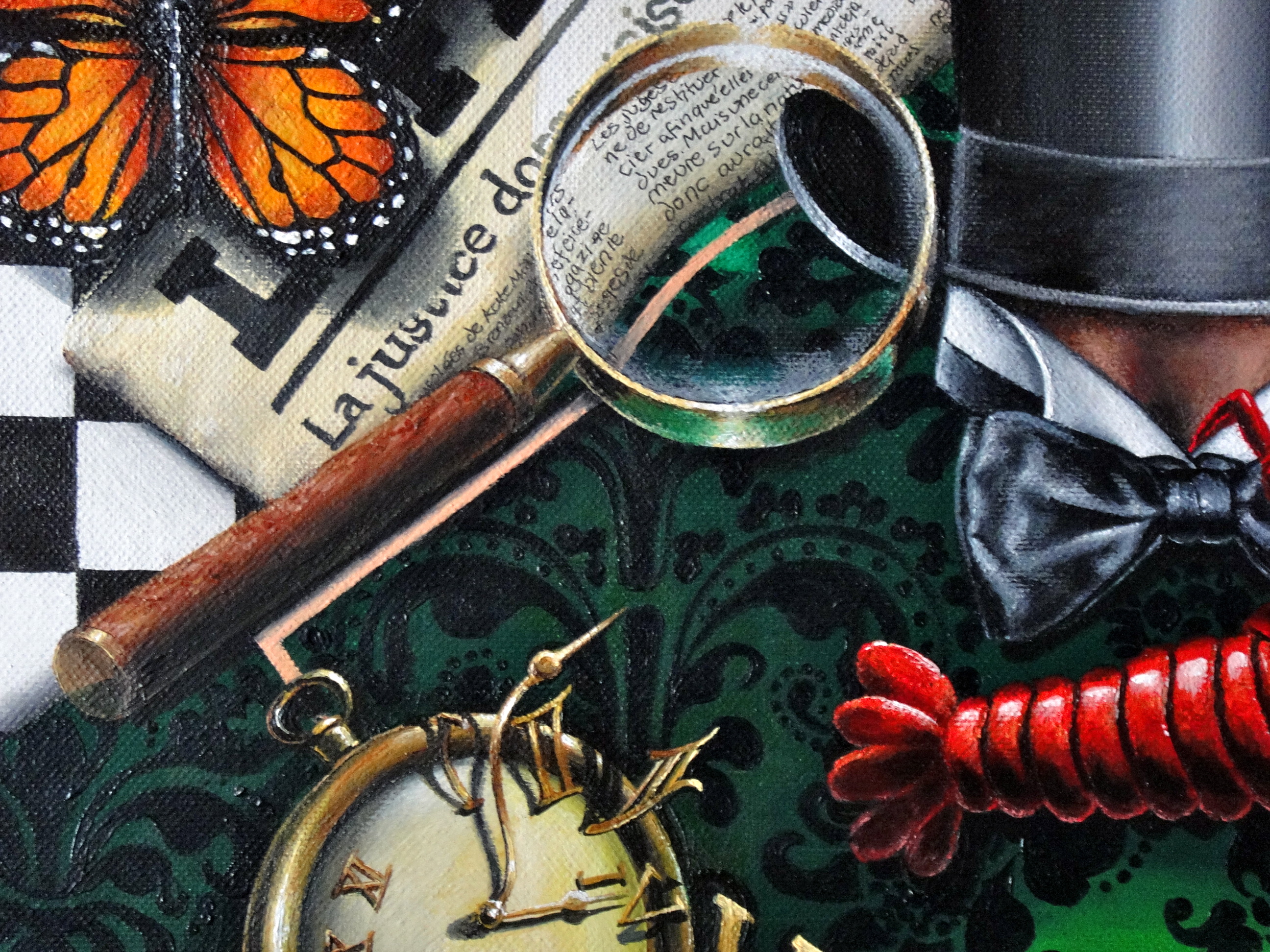
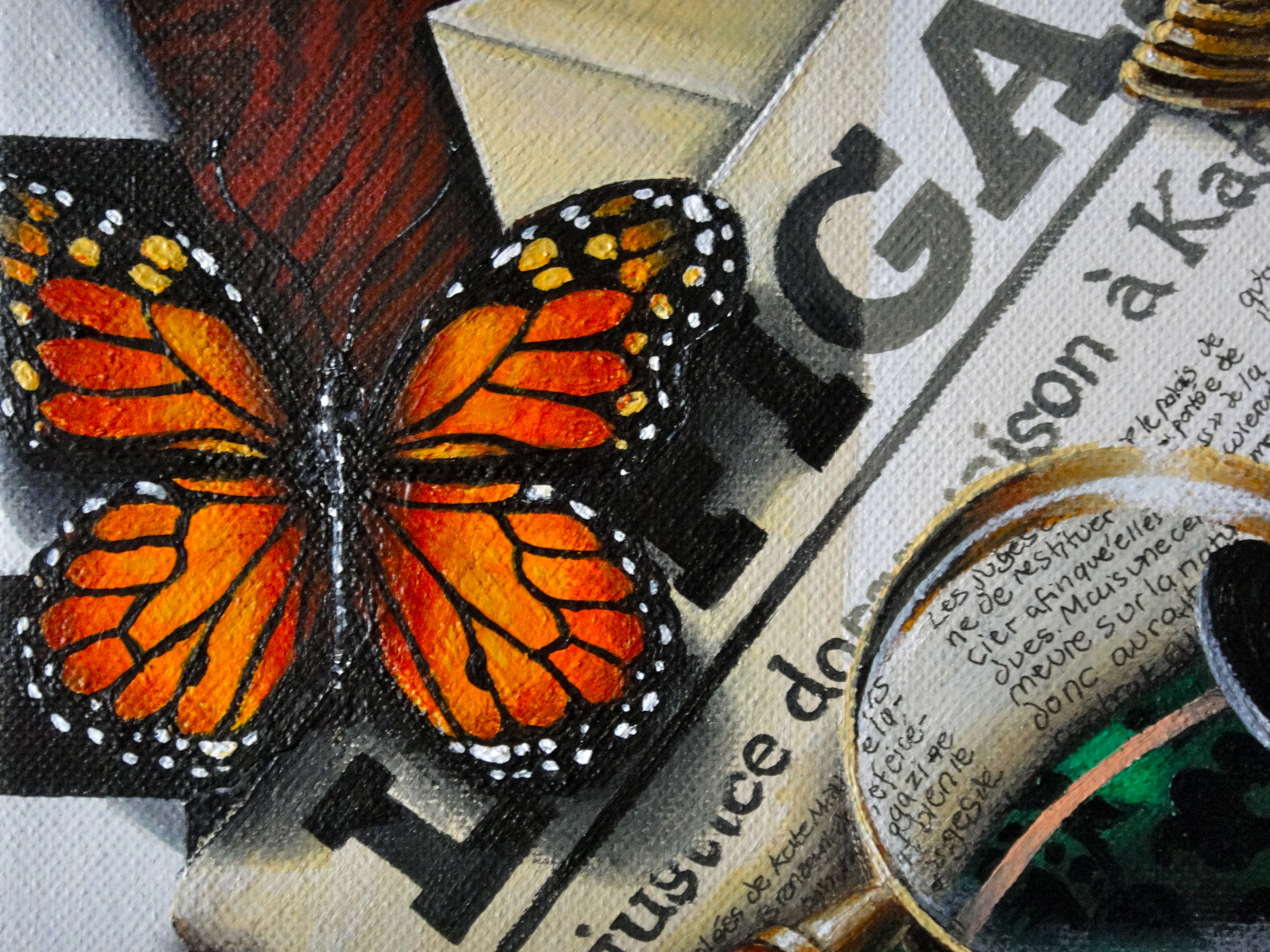
Inspired by the icons of a time I hold dear, a yesteryear when men were gentlemen, when to go out to dinner was a time of dressing up in a top hat and gloves, when chivalry was at the forefront of society and manners were a thing held in the highest of esteem. It was a time when in a Gentleman’s study, such as this one, a Chesterton desk chair would be found amidst the paraphernalia of a professional’s equipage: a pipe, a magnifying glass, a pocket watch, some butterfly specimen and an emerald green desk lamp, an expensive fountain pen and even more expensive culinary delicacies such as lobster and oysters, all set against a black and white floor, a hefty wooden desk, rich damask green wallpaper, verdant plant life and a floor to ceiling window view of the Paris chimneys beyond. And of course, because it’s Paris, the Gentleman has to keep up with the French news in Le Figaro. Meanwhile at the heart of the image, representations of the Gentleman himself: his top hat, a bowtie and wing-collared shirt, and his face, masked in the enigmatic disguise of a masquerade ball.

Explaining this painting is a little like explaining one’s impulses. This is an image which came to my mind in Spain which always provides me with sufficient relaxation and creative stimulation to get my artistic juices running. And even though the resulting painting is far from Spanish, it nonetheless digs deep in my imagination, placing on canvas a time, a place with which I can feel an inexplicable evocation, like an experience which recalls the strongest of emotions, even though it never happened. In this way, I use painting to make sense of the deepest of subconscious sentimentality, helping me to both explore myself, and pay homage to the depth of my creativity.

I leave you with a few shots of the painting’s details. I hope you like it.

© Nicholas de Lacy-Brown and The Daily Norm, 2001-2012. Unauthorized use and/or duplication of the material, whether written work, photography or artwork, included within The Daily Norm without express and written permission from The Daily Norm’s author and/or owner is strictly prohibited. Excerpts and links may be used, provided that full and clear credit is given to Nicholas de Lacy-Brown and The Daily Norm with appropriate and specific direction to the original content.

Sunday Supplement: Dicing with Death (La Pieta)

On last week’s Sunday Supplement, I got the ball rolling with an exploration of some of my more traumatic paintings, created while in the immediate and protracted recovery from my nasty life-changing collision with a collapsing wall. In today’s Sunday Supplement, I am featuring the fourth of my accident paintings, and perhaps the most intimate and private of them all.

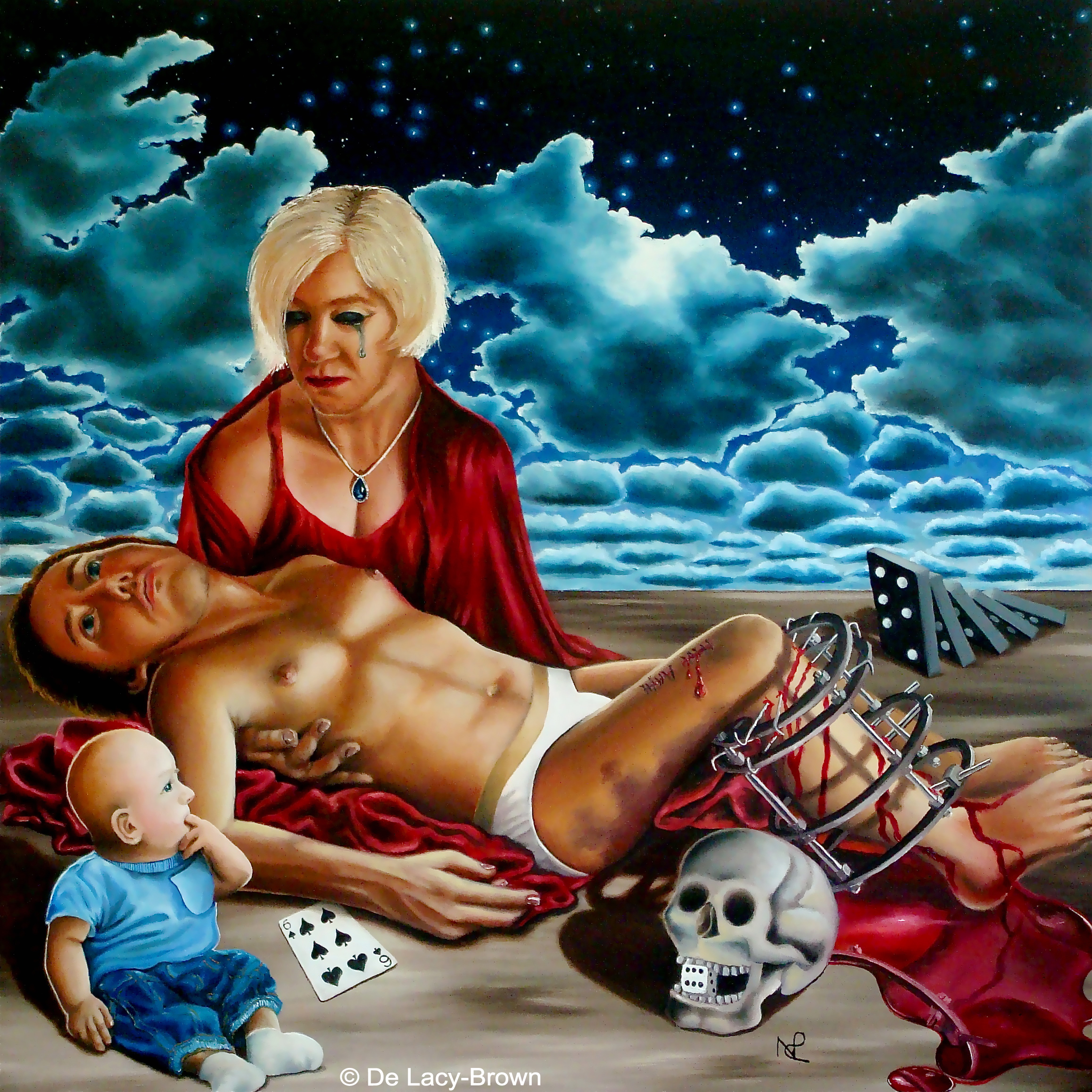
Dicing with Death (La Pieta de l’accident) explores the nursing roll undertaken by my mother is the aftermath of my accident. While as a family, we had always been close, post-accident, a new extent of proximity was forced upon us, as I went back to being practically a baby in the everyday attention I required. Recovery in hospital was one thing, but three weeks later when I was discharged to my family home in Sussex, the real horrors of my convalescence begun. The daily trauma of wearing an illazarov frame, having to clean around the pin entry point, waking up to sheets soaked in blood, screams of agony when I tried to move from bed to the bathroom, and in the middle of the night when I could stand the pain no longer. All of this was for my parents to bear, and for my mother in particular, who was compelled to be a nurse as well as a physio, feeder and grieving mother, and once again become physically intimate with me when I needed help dressing, cleaning, even going to the toilet, it was a huge ordeal to experience.

Dicing with Death (La Pieta de l’accident) 2008 © Nicholas de Lacy-Brown, oil on canvas 120cm x 120cm

The worry, the concern and the strain this had on both of my parents was plain to see, even through the fog of pain which clouded my eyes during those terrible months. My attempt at expressing the uncontrollable spread of the effects of my accident upon my family was to paint this work. It is loosely based on the famous La Pieta sculpture by Michelangelo, which poingantly portrays the grieving Mary cradling, with disbelief and agony, the limp dead body of her son. How different this pose is from the celebratory felicity of the typical mother and child pose, the glowing Mary with her new baby Jesus.

Michelangelo’s La Pieta

It was tapping into the great pathos portrayed by La Pieta that I chose to reflect the pose in my Mother, cradling me, the wounded young adult in her arms, not dead, but so close to it as I practically embraced my end under the weight of a crushing collapsed 10ft concrete wall. There too is my baby nephew, born only a few days before the accident, representing both innocence and the cross-generational effect of my trauma, and also in the scene, a skull, reminding me of how close to death I came. The playing cards, the falling dominoes and the dice all go to represent the great gamble we take every day of our life – when everything appears normal until one, life-changing event occurs and alters everything for ever: Look then how the dominoes will fall and the effects of the event begin to traverse every facet of your existence.

Michelangelo’s La Piete is not unique of course, and I leave you with two other variations on the theme – Bellini’s painting, and Picasso’s heart-wrenching study for his great masterpiece of grief and tragedy, Guernica. 

Bellini’s La Pieta

Mother and Child by Picasso

© Nicholas de Lacy-Brown and The Daily Norm, 2001-2012. Unauthorized use and/or duplication of the material, whether written work, photography or artwork, included within The Daily Norm without express and written permission from The Daily Norm’s author and/or owner is strictly prohibited. Excerpts and links may be used, provided that full and clear credit is given to Nicholas de Lacy-Brown and The Daily Norm with appropriate and specific direction to the original content.

Autobiographical Mobile: My painting diary – Day 6: The Calder Mobile

The main pretext of my new autobiographical paintings is the mobile which sits at its centre. Stranded in the middle of my coved Mallorcan beach, a large mobile sits surreally on 3 metal legs, and from its iron frame will hang the symbols which, on my autobiographical mobile, represent what significant events have both enhanced and damaged my life, all having a changing impact, whether for better or for worse. In this way, my mobile seeks to balance out the good with the bad, demonstrating the idea of equilibrium in life, the silver lining to every cloud, taking the rough with the smooth, while in undertaking the balancing act, the mobile resembles a scales of justice. Which is no coincidence – I am a qualified lawyer after all.

The Calder room at Washington DC National Gallery

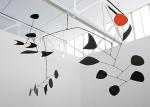
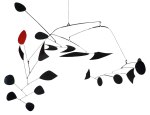
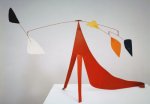
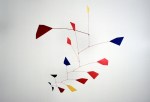
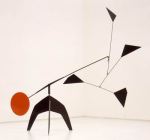
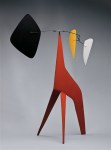
My mobile takes inspiration from one of my all time favourite artist/ sculptors: Alexander Calder. American born Calder (July 22, 1898 – November 11, 1976) was best known as the originator of the mobile. His works were graceful, kinetic structures, delicately balanced or suspended, their components moving in response to the environment in which they were situated (or occasionally by motor). The word “mobile” is said to have originated from Duchamp who, as a friend to Calder during the 20s in Paris, named Calder’s sculptures such to reflect their continuous movement and mobility. In 1929 Calder held his first show of wire sculptures and never looked back. His works are now regarded as being amongst the earliest manifestations of an art that consciously departed from the traditional notion of the art work as a static object and integrated the ideas of motion and change as aesthetic factors. His mobiles contained elements of largely abstract, monochrome shapes and plain colours, creating beauty in shape rather than detail. As his popularity grew, so did his mobiles become greater, and more and more appeared in public places all over the world, from JFK Airport (1957) to UNESCO in Paris (1958) and the Olympic Stadium for the Mexico games (1968). Needless to say, they are now a staple of early 20th century art history.

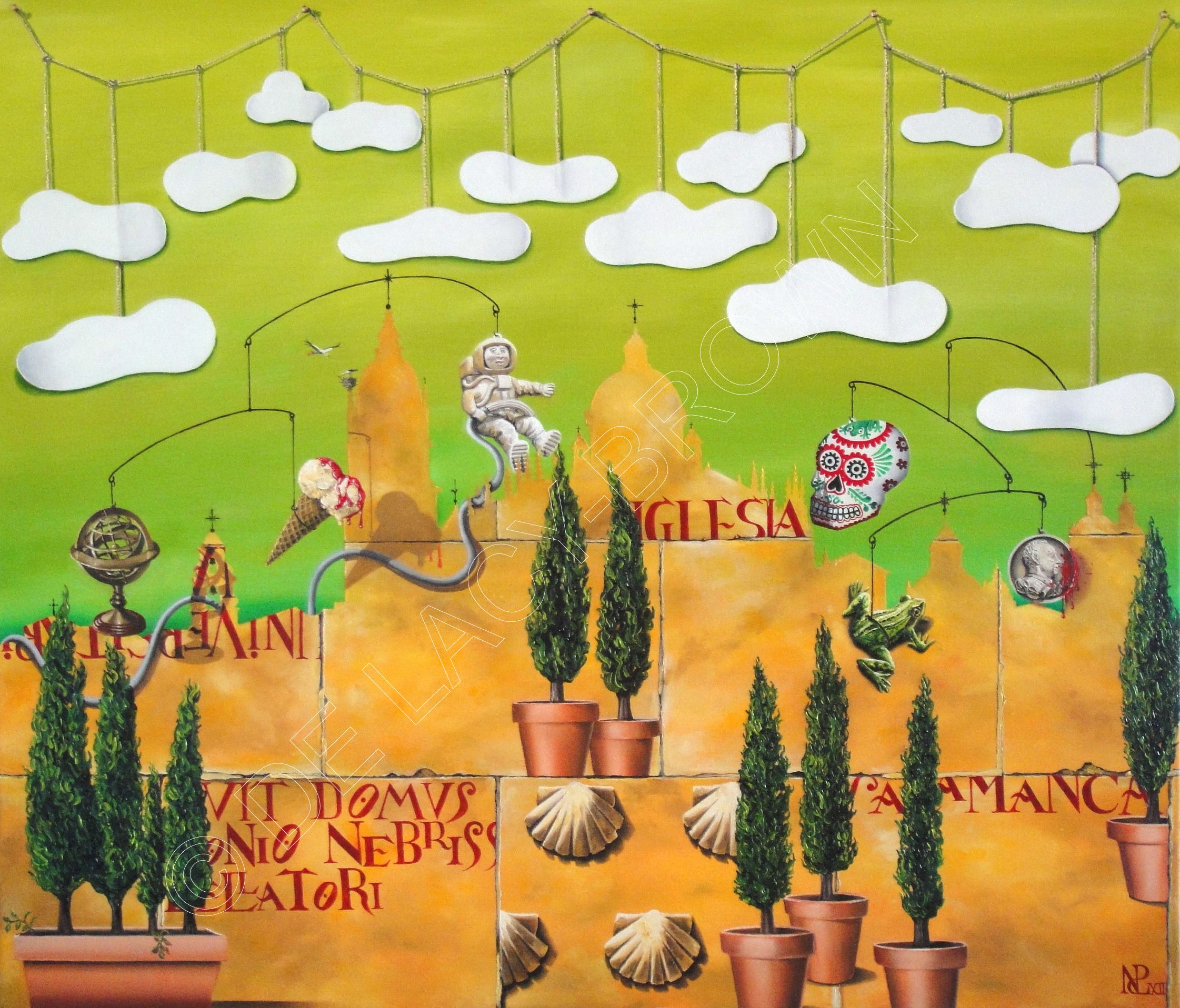
I first imported the notion of the mobile into my paintings earlier this year when I set about painting the city of Salamanca following my visit there in the Spring. There were so many features of the city which I wanted to represent, but to simply paint them without purpose or context would have been, to my mind, an artificial exercise. I therefore decided to paint the features of the city suspended from mobiles which in turn metamorphosed out of the iron crosses atop both the Cathedral and the University. In this way I was able to paint the various images of the city upon two competing mobiles, representing the age-long conflict between the traditionalist Church and the Enlightenment.

Salamanca (2012 © Nicholas de Lacy-Brown, oil on canvas, 105 cm x 90 cm)
This painting in turn inspired my current work which will centralise the idea of the mobile yet further, promoting it as a balancer of my life’s story so far. It is perhaps ironic that the mobile, beautiful by reason of its three dimensional form and capacity to move is, in my paintings, fixed in time. Yet the beauty of this slender armature loses none of its grace by reason of its immobility.

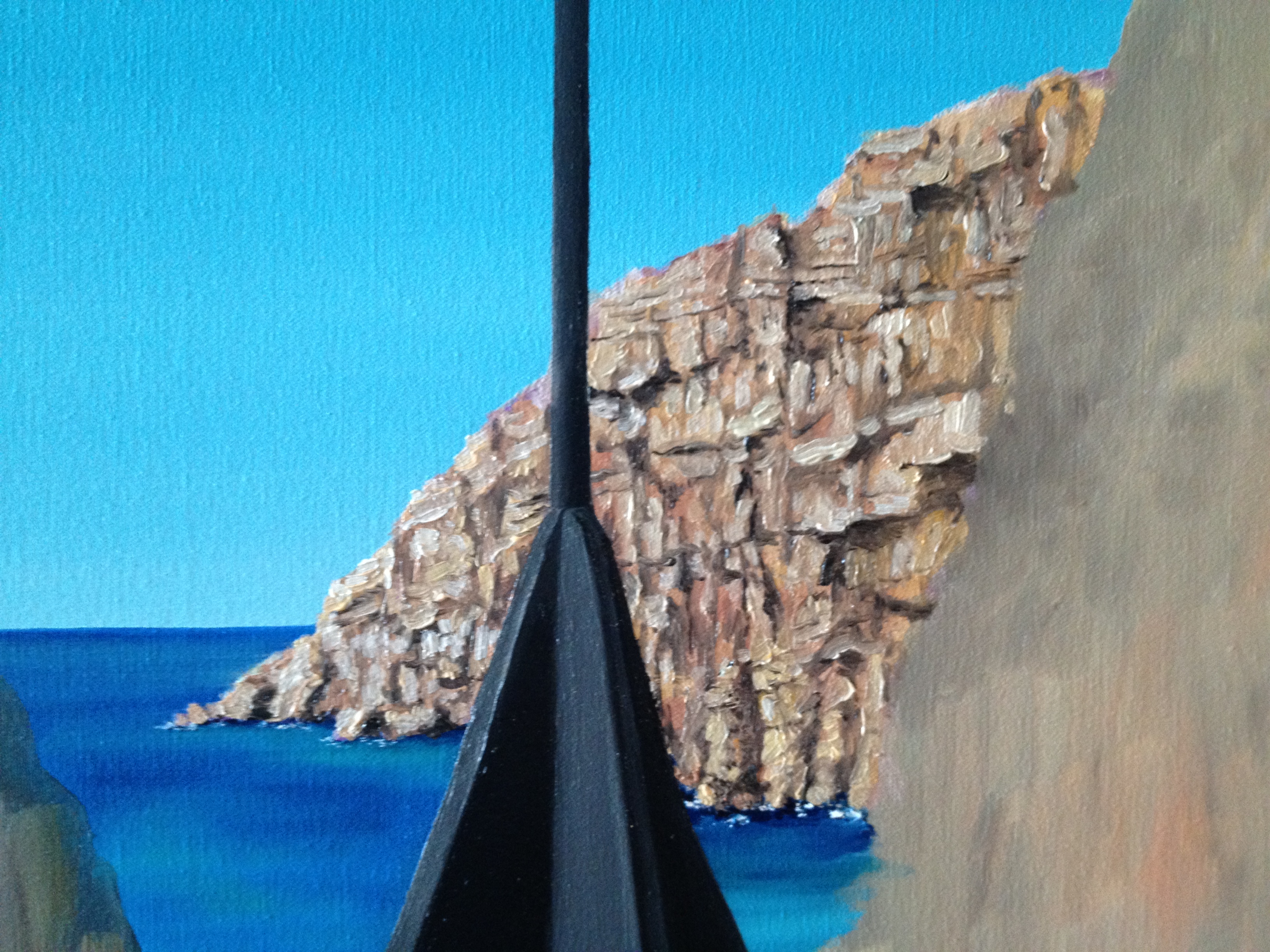
I painted the base of the mobile first, and then the arms. It was so difficult to paint those black lines straight. My hand was shaking all over the place. Oh, I also painted the little rocky cliffs in the background too.

Up next will be the various items hanging from the mobile. I move onto them this week.

In the meantime, here is a gallery of some of my favourite Calder mobiles. Until next time…

© Nicholas de Lacy-Brown and The Daily Norm, 2001-2012. Unauthorized use and/or duplication of the material, whether written work, photography or artwork, included within The Daily Norm without express and written permission from The Daily Norm’s author and/or owner is strictly prohibited. Excerpts and links may be used, provided that full and clear credit is given to Nicholas de Lacy-Brown and The Daily Norm with appropriate and specific direction to the original content.

Autobiographical Mobile: My painting diary – Days 2-5: Bilbao and Fluffy

For those of you who are long term readers of The Daily Norm, you may remember, either from my post in which I extolled the virtues of a good teddy bear, or from their occasional appearance in my photos of daily life, that I have two very important little teddies who follow me around in my life – Bilbao, a little dog, given to me by my Partner as I came round from a rather hideous sixth leg operation semi-conscious in my hospital bed, and Fluffy, a little teddy (once far fluffier than he is now, much loved and slightly matted) who I gave to my partner as a thanks for all those bedside vigils and the much required care which followed by post-operative state. Ever since, these two little characters have been our constant companions in life, and inevitably, they have crept into my art too.

Bilbao and Fluffy, pose for their portraits

Last week I started my painting diary in what will be almost like an autobiography on canvas – a large painting which aims to explore various components of my life, past and present. Because they represent the contentment and stability of my home life, Bilbao and Fluffy are integral features of my story, and were therefore the first characters to make it onto canvas as my painting progressed to the semi-finished Mallorcan background of last week’s post, to the more detailed work which I have now started.

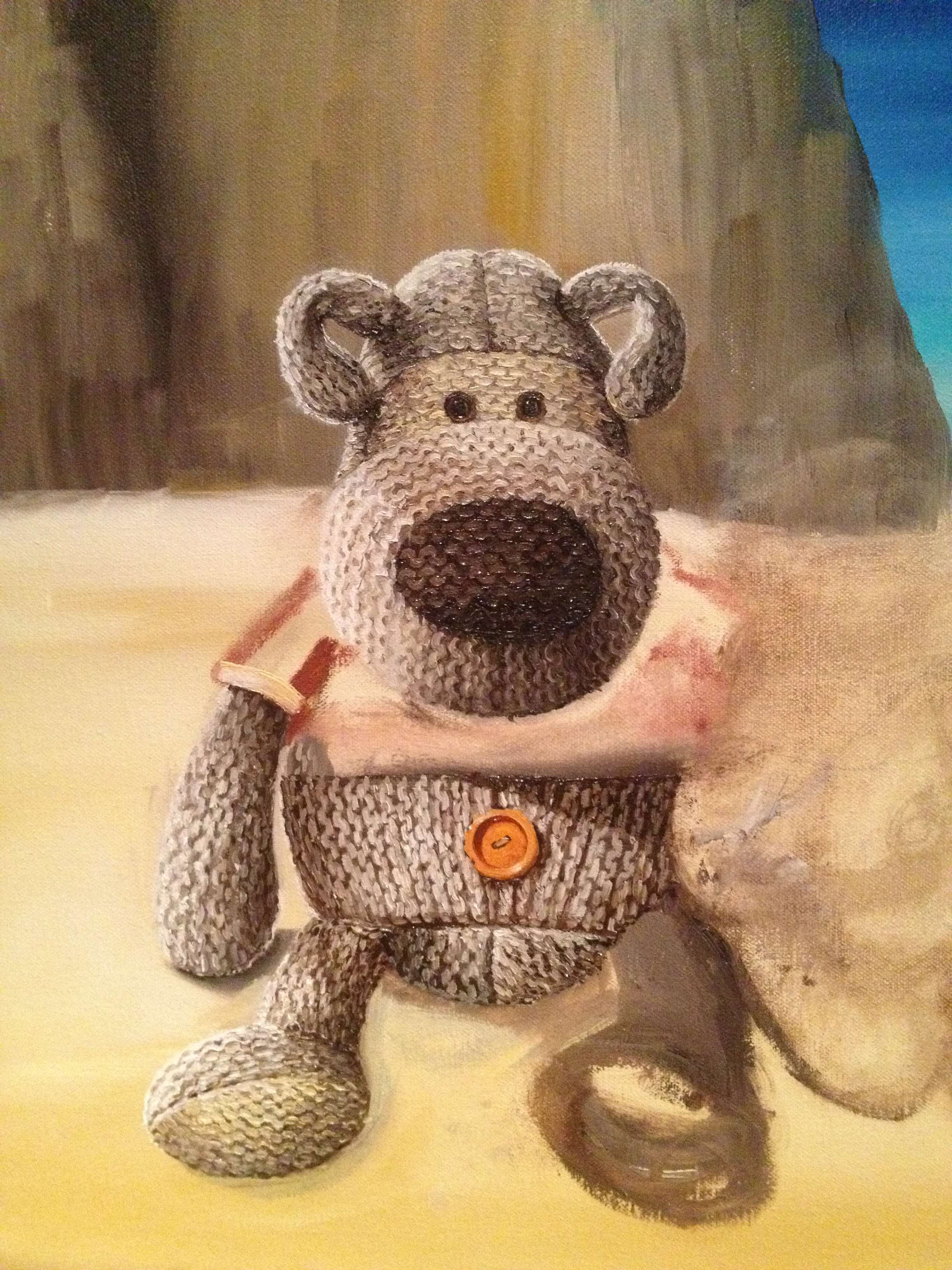
I thought this would take me around a day to achieve, but as I started to paint Bilbao, it soon dawned on me what a daunting undertaking it would be to paint all of his knitted body. He took me FOREVER to paint. At the end of day two I had managed to paint his head, which then floated around disconcertingly bodyless for a whole night, all the more freaky for having successfully captured that twinkle in his eye.

By the end of day three, I had done most of his body (bar one leg, the angle of which I found difficult) and his little red t-shirt (I needed to be careful this didn’t bleed into the beige of his knitting).

Bilbao was finished on day four, comme ça…

And Fluffy, thank goodness, didn’t take half as long, and I completed him, together with crumpled little ribbon, pretty swiftly on day five.

So there you have it, the painting so far, slowly progressing and presenting patience-trying technical demands from the start. Who would have thought that two cute teddies would prove to be such a painting challenge?

I leave you with a few photos of Fluffy and Bilbao in different locations throughout the world, just in case you weren’t already convinced that I am slightly eccentric.

Hoping to be able to update you with more painting progress soon. Until then…

© Nicholas de Lacy-Brown and The Daily Norm, 2001-2012. Unauthorized use and/or duplication of the material, whether written work, photography or artwork, included within The Daily Norm without express and written permission from The Daily Norm’s author and/or owner is strictly prohibited. Excerpts and links may be used, provided that full and clear credit is given to Nicholas de Lacy-Brown and The Daily Norm with appropriate and specific direction to the original content.