Skip to content

Posts tagged ‘Spain’

Patatas a lo Pobre

Sometimes the best things in life are the simplest. One of the greatest pleasures for me is going along to a classic family-run Spanish restaurant on the corner of the Paseo Maritimo in Marbella heading East towards Cable Beach. It’s off the tourist track, and far from the glitz and glamour of the Golden Mile and Puerto Banus, and that is why the restaurant, frequented as it is by the Spanish locals, serves some of the best food along the Marbellan coast, albeit cheaply and without pomp or ceremony.

Pretty much every Sunday when I am in Marbella (and how I wish I was right now) I head to that café on the corner, to eat a simple serving of squid with salad and, on the side, a large plate of oily, simple Patatas a lo Pobre. Literally translated as potatoes of the poor man, this typical Andalusian dish is awfully simple (it comprises mainly potatoes, onions and peppers), but completely delicious. And so, when a cold chill nipped at my spine this week, and when all I did was yearn for my beloved España basked in the summer heat, I set about recreating my favourite Sunday lunch.

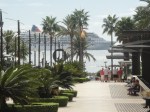
My adored Marbella

My adored Marbella

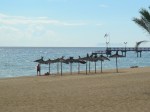
Its calm winter beaches

Its calm winter beaches

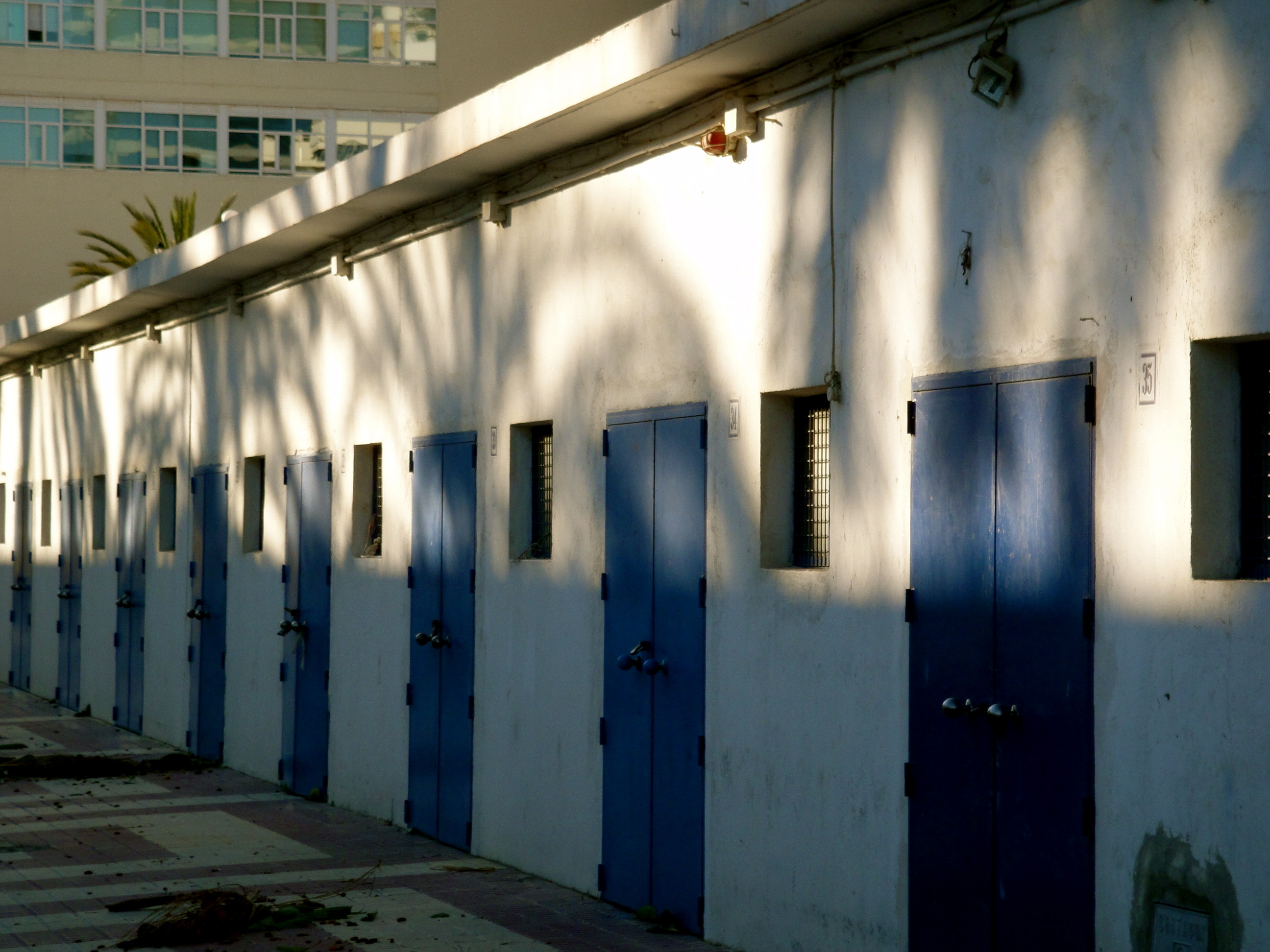
The fisherman's huts of Cable Beach

The fisherman’s huts of Cable Beach

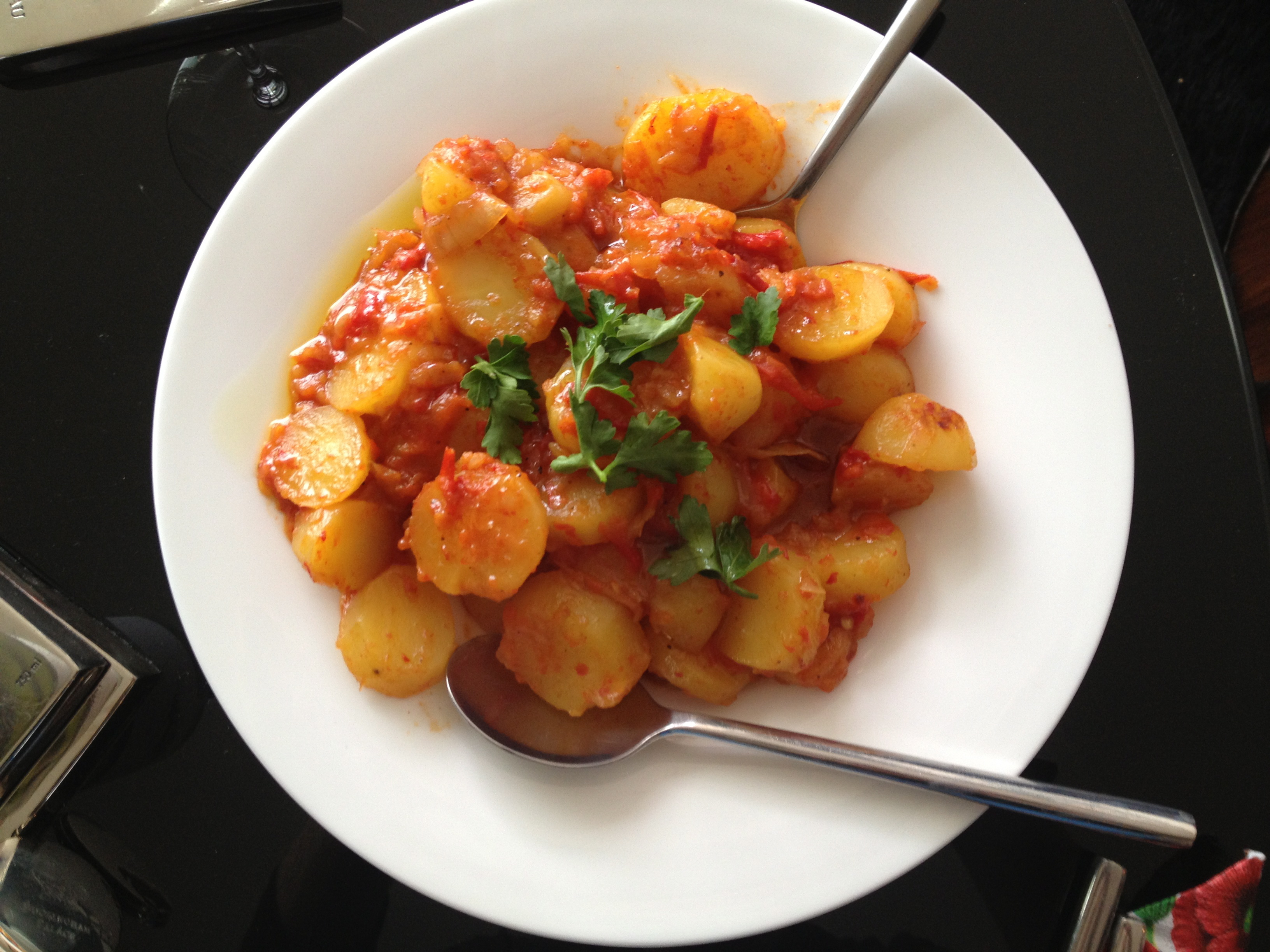
The patatas are really simple to make. Take one large onion and slice. Sauté the onion gently in oil until it softens, and add to that two chopped red peppers (deseeded), 2-3 cloves of garlic, chopped finely, seasoning, a small teaspoon of pimenton and a few bay leaves. This should all be cooked, again,  until the pepper is softened. To that, add around 6-8 peeled potatoes chopped into bitesize pieces and a good glug more of olive oil, and cook the whole dish further until the potatoes are tender, but not falling apart (I find that peeled new potatoes work best for this as they can be sliced into neat round disks and keep their shape easily).

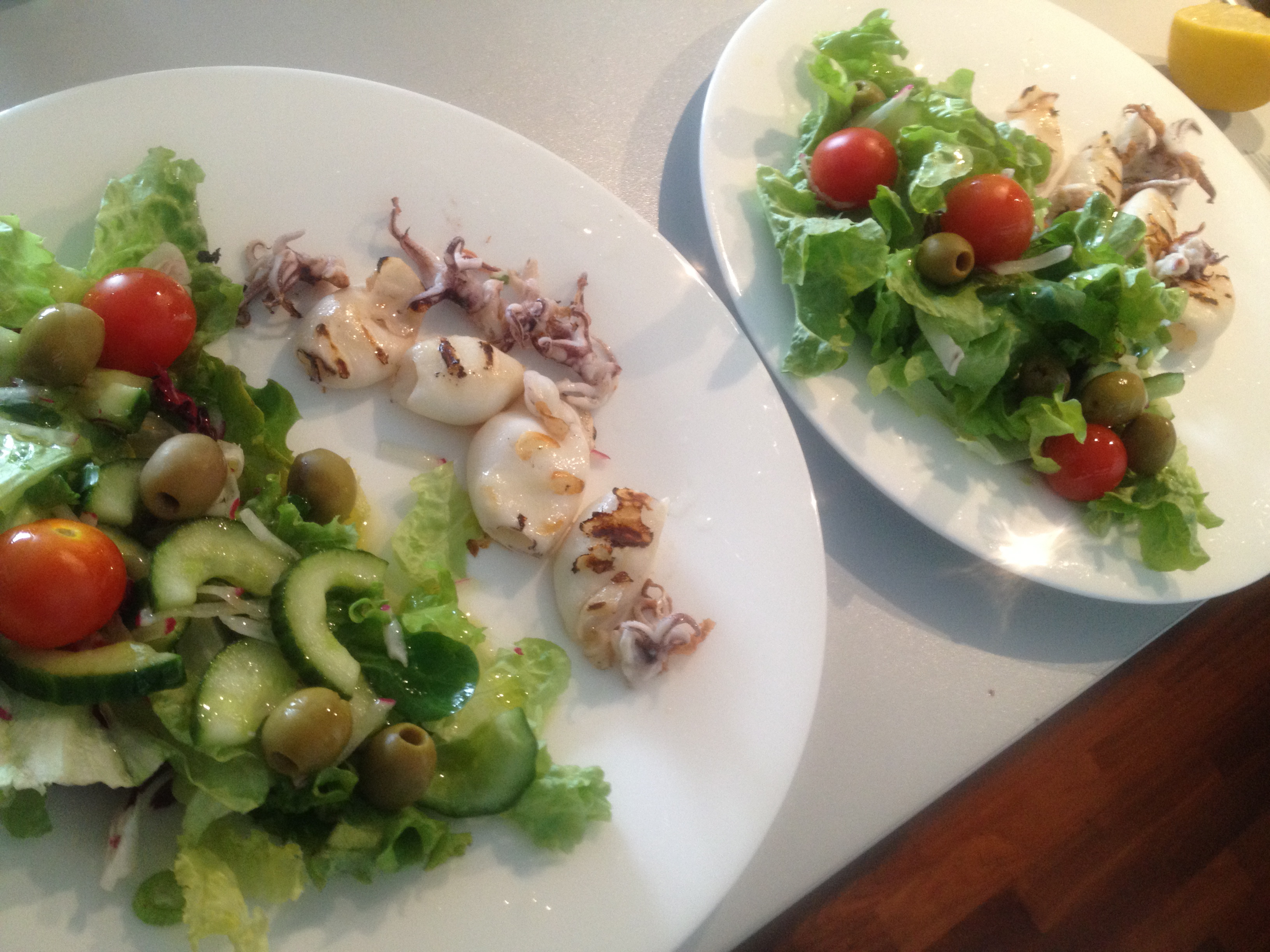
Serve your patatas drizzled in further good quality olive oil and, if you want to recreate the whole experience, some grilled squid and a hearty side salad (sadly I was unable to get my hands on any huge squids like those so frequently available on the Med, but when in London…well, we have to put up with seafood on the smaller side). This dish guarantees a burst of Spanish flavour with the added benefit that, as the name suggests, it’s really very cheap to make – highly suitable for that post-Christmas poor man’s January then.

My patatas

My patatas

And some very small squid!

And some very small squid!

¡Buen Provecho!

On the Twelfth day of Christmas, my Normy gave to me…

…twelve drummers drumming

It’s 6 January, the 12th day of Christmas, and the crowds are out in force in Spain. Huge parades fill the streets, floats covered with flowers and Norms dressed as kings. Sweets are being thrown from the floats, littering the air like edible confetti, and on the roadside, little Norm children are scrambling to have their fill. This is not just any day, in the Christian world it’s the Epiphany, and in Spain and across South America, it’s “El Dia de los Reyes – the 3 Kings Festival! However this year, in one Spanish town, it’s not the floats containing the 3 kings which are getting all of the attention, but one particular float, upon which sits closely bound a Norm-man and a Norm-woman, happily in love, surrounded by 12 drummers celebrating their love-filled reunion…

…it’s Normy and Normette!

On the Twelfth day of Christmas, my Normy gave to me, 12 drummers drumming (© Nicholas de Lacy-Brown, pen on paper)

On the Twelfth day of Christmas, my Normy gave to me, 12 drummers drumming (© Nicholas de Lacy-Brown, pen on paper)

Yes, Normette is back! How could she possibly have resisted? Just one thought of those 11 pipers piping with their little tartan kilts, and what could possibly lay beneath (underwear or, as tradition dictates, au naturel) had her bouncing back to the UK as fast as the Eurostar to London could carry her (and to be fair, it does go quite fast). Why did she ever leave the fair rolling green pastures of the English lands, the verdant landscapes, the tartan fabrics, tea at 5 and of course Downton Abbey? But most of all, she had missed someone irreplaceable in her life, who had travelled up and down the UK just in an attempt to lure her back to him – why Normy of course.

In fact once they were reunited, Normette realised that it wasn’t really the UK she had missed at all, but dear Normy, and having taken one look at the rainy weather, she booked them both on a trip to Sunny Spain. And once there, what should they find, but the 3 Kings Festival itself. What better way to give Normette one final gift on the 12th day of Christmas, thought Normy, than to jump up on a float and celebrate their love surrounded by 12 drummers and a crowd of cheering admirers (Normette did miss her Moulin Rouge celebrity after all).

And so it is upon this moment of celebration and jubilation that on the 12th day of Christmas, we leave our lovers to it, back together, adoring, and ready to face the New Year as one. Here’s to a great 2013!!!

© Nicholas de Lacy-Brown and The Daily Norm, 2001-2012. Unauthorized use and/or duplication of the material, whether written work, photography or artwork, included within The Daily Norm without express and written permission from The Daily Norm’s author and/or owner is strictly prohibited. Excerpts and links may be used, provided that full and clear credit is given to Nicholas de Lacy-Brown and The Daily Norm with appropriate and specific direction to the original content.

Flavours of Spain – Part 2: Tapas

When most people think of Spanish cuisine, they think of tapas, and why not? These little dishes are a fantastic excuse to sample as many tastes and flavours of dishes from all over Spain as you can manage, while encouraging the shared social environment which the small dish concept inspires. Unable to decide what large dishes to cook when I was over in Spain, and with no recipe books close to hand, I decided to opt for a few simple tapas dishes which I could remember off the top of my head and which are inspired by my own tapas experiences in Andalucia and beyond. Having cooked these tapas creations, you can then supplement your tapas feast with olives, bread with delicious olive oil and different flavoured dipping salts and platters piled high with fresh serrano hams and manchego cheese (see mine at the bottom). You’ll find yourself with way too much food (unless you’re feeding a small army), but the beauty with tapas is that much of it will last for days – bonus!

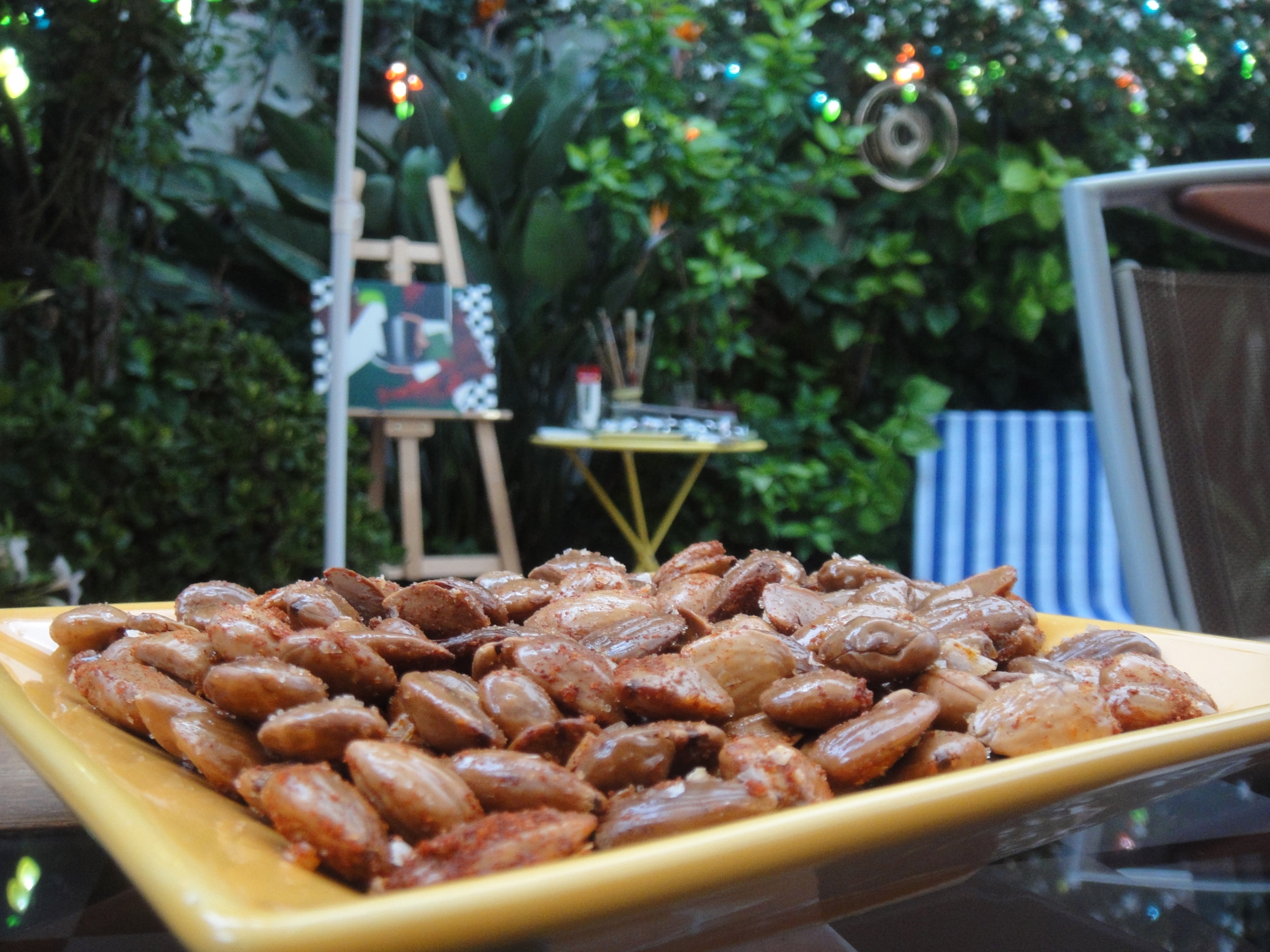
Salted almonds

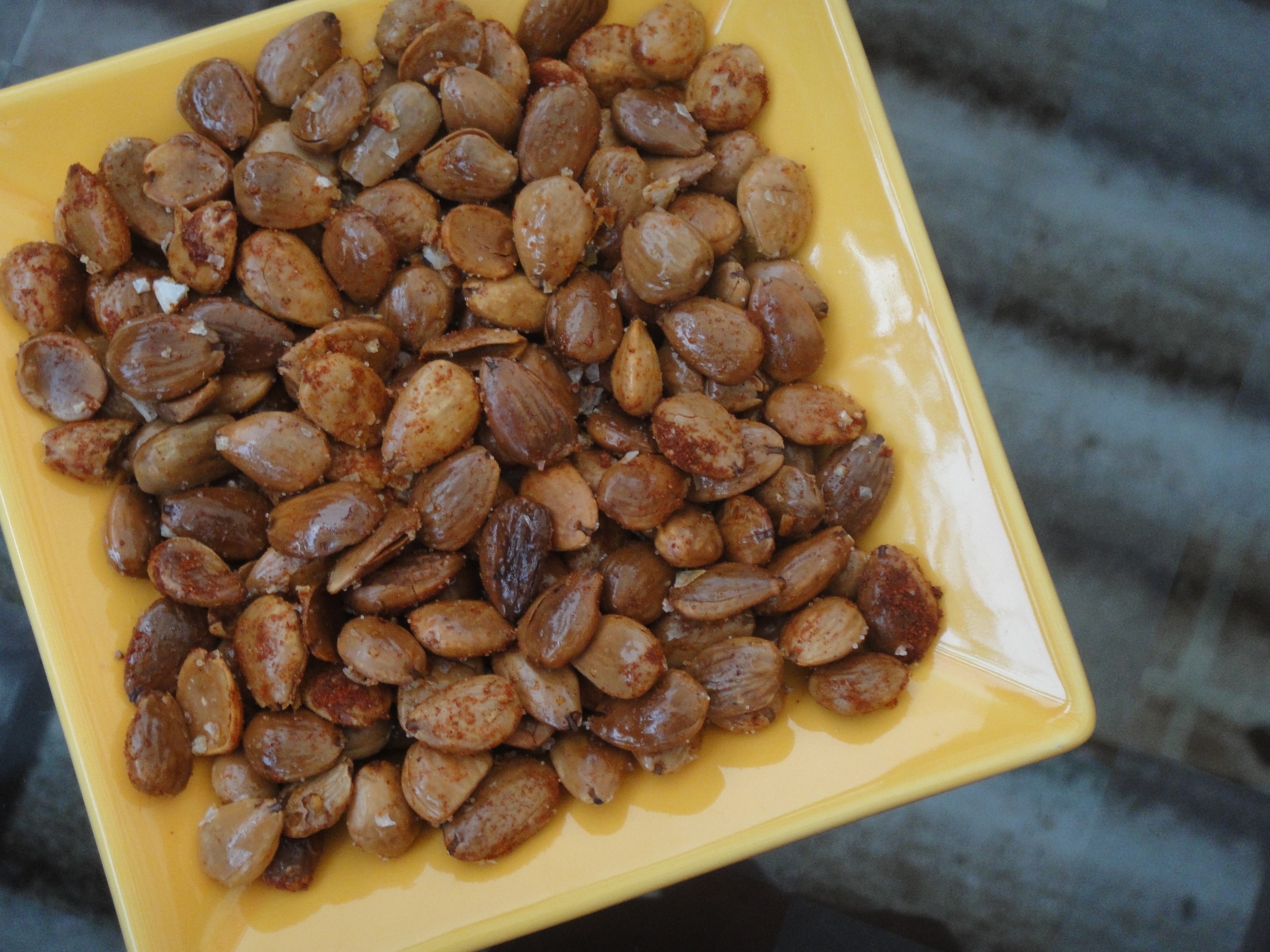
Great to kick of your evening as a moorish accompaniment to a glass of wine or two, these salted almonds are really easy to make. Take a baking tray and pour in enough olive oil to cover the base. Then throw into it (carefully – I’m not encouraging kitchen recklessness you do understand) 250g of blanched almonds, and sprinkle them with some good quality sea salt and a teaspoon of smoked pimenton. Give the whole lot a good toss, and place in the oven at 180 degrees c for around 20 minutes, tossing every so often during cooking. Be careful not to leave them in for too long – they may look ok on the outside but they can become burnt on the inside if the cooking is overdone.

Salted almonds

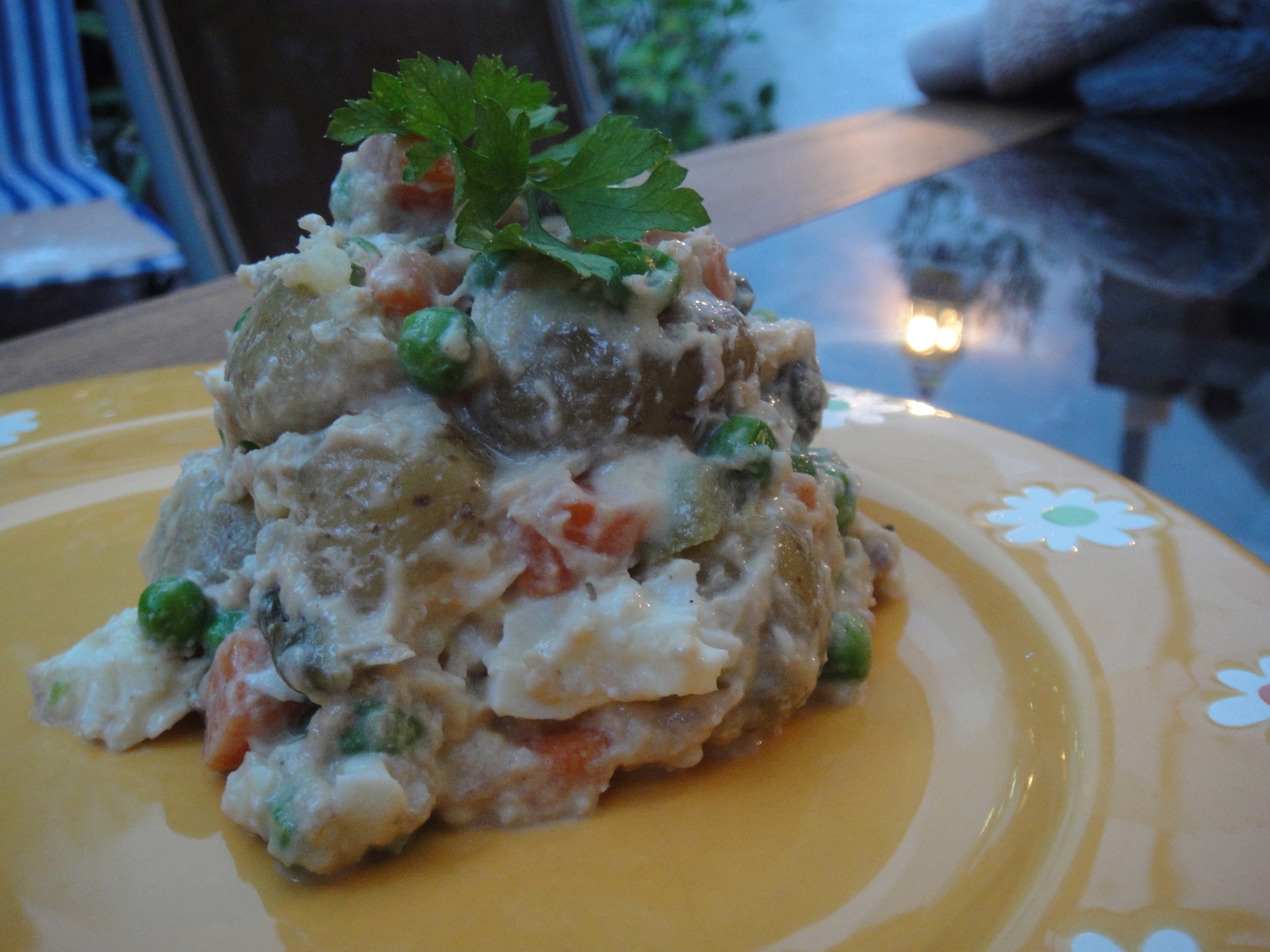
Ensalada Rusa

Russian salad is a tapas staple in traditional tapas bars all over Spain. You can alter the amounts of ingredients below depending on how many you’re cooking for. This made enough for a good 6-8 small tapas-sized helpings.

Start by making your own mayonnaise (if you can be bothered). Whisk up a large egg with a teaspoon of dijon mustard, 2 teaspoons of white wine vinegar and half a teaspoon of salt. Then to this very very gradually whisk in 300ml of oil – for those who like a mild flavour, use sunflower oil, but for a traditional Spanish flavour, extra virgin olive oil is a must. Doing this in a food processor is definitely the easiest way, but for those like me who are in a little holiday home in Spain without the best equipped of kitchens, the good old balloon whisk and a determined wrist can still do the job. Once you have made a nice thick mayonnaise, squirt in the juice of half a lemon (to taste) and 1-2 crushed cloves of garlic.

My homemade mayonnaise

Meanwhile have around 1kg of small new potatoes boiling away nicely (chop them as necessary so they’re roughly the same size). Once tender, leave to cool. Once the potatoes have reached room temperature you need to add a good 4-6 tablespoons of mayonnaise, two tins of tuna (preferably in oil), a one or two of cooked diced carrots and a good handful garden peas, 4-6 chopped gherkins, two tablespoons of capers and some chopped parsely. Then whack in a good dose of seasoning to taste, and play around with flavour – you can add more mayo, more garlic, more lemon, different herbs – whatever you like. I guarantee it will be delicious whatever you try (within reason – obv).

A small portion of Ensalada Rusa

Read more

Flavours of Spain – Part 1: Almejas con hinojos

Regulars of The Daily Norm will know that in my heart of hearts, I am no happier in my kitchen than when cooking up some Spanish flavours to tantalise the taste buds and enliven the corazon. To recreate the rich smells imbued with garlic and pimenton, shellfish and saffron in London is one thing, but to cook in a Spanish kitchen, when already surrounded by a cacophony of those same scents wafting in the air from the nearby houses of my Spanish old town neighbours is an entirely different experience. It is hard not to be inspired, not least by the nearby market, where fresh fish is in abundance, rich meaty steaks are plentiful and vibrantly coloured fruit, vegetables and the spices intrinsic to the flavours of Al Andalus are in bountiful supply in the mercado in the next door street to my house. That is not to say that I felt totally free to indulge. The price of food in Marbella, together with the inflation of the euro, has seen a really hike in food prices – some days I found it more expensive to eat at home than out in a local fish bar. Consequently I had to indulge my culinary ambition with a more limited budget for ingredients.

Samplings of the Marbella market

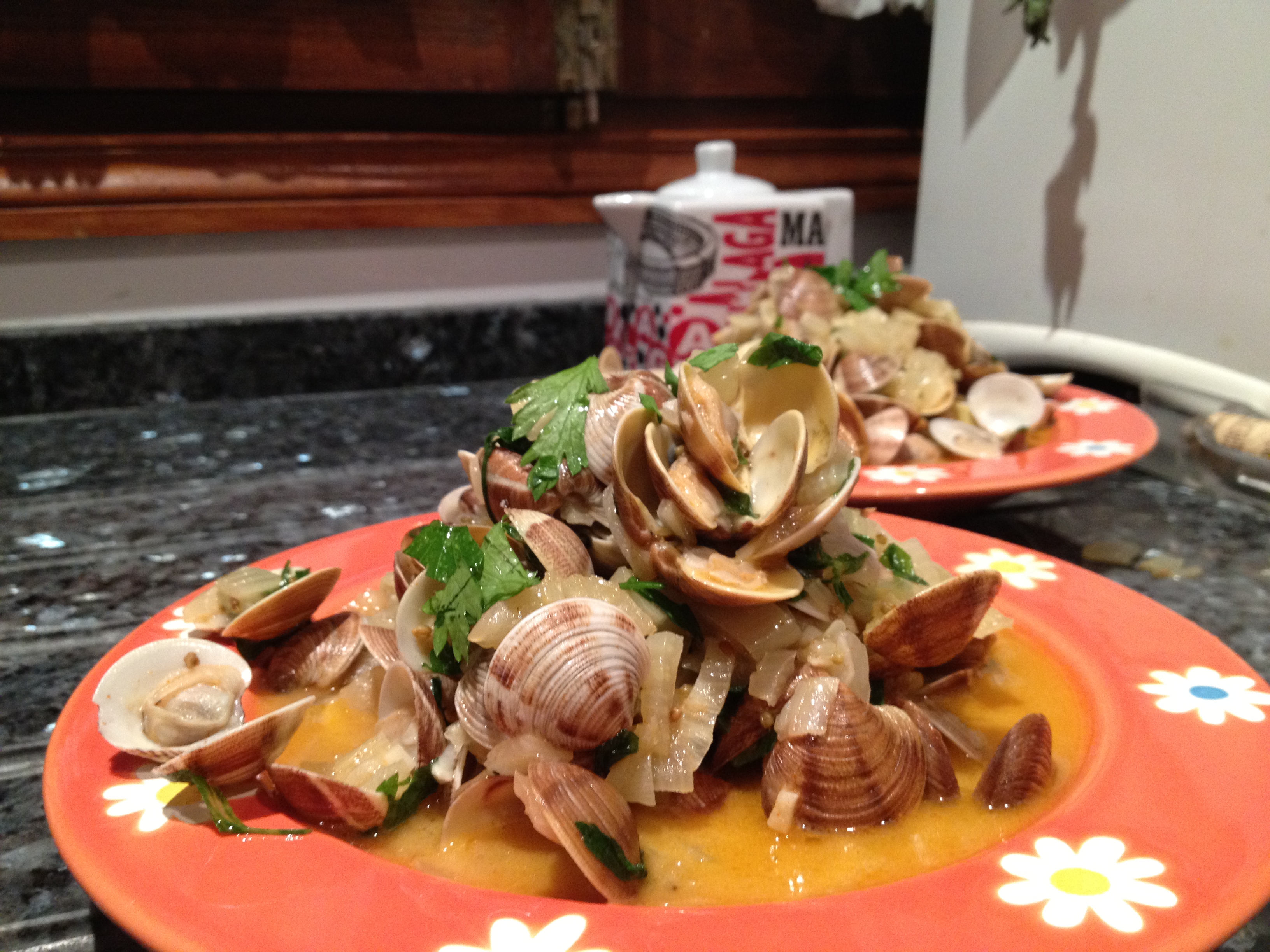
This dish is perfect for the prudent shopper. Buy yourself a kilo of clams (or almejas) and a fennel bulb and you’ve got the main components of the dish. I made this dish up, having bought myself a fennel bulb (purely because of my love for the liquorice taste) and upon a bounty of clams so fresh that they were popping and moving before my very eyes. Some white wine, an onion, and a few spices later, and I created this dish, Almejas con hinojos – clams with fennel.

Clams cooking in the pot

Almejas con hinojos

Chop one onion and 2-3 cloves of garlic finely, as well as a bulb of fennel. Sweat the ingredients together in a large pan on a low heat in a good glug of oil and a good dose of seasoning and a teaspoon of fennel seeds for about 15-20 minutes until the onions/garlic/fennel are soft and near translucent, but not browned. Turn the heat up to medium, and add a teaspoon of smoked pimenton (paprika) and the washed clams. Place a lid over the pan and cook until the clams have opened (around 4-5 minutes depending on their size). Once opened, turn up the heat a little more and add a good glass or two of dry white wine, along with a good handful of chopped parsely and stir so the clams get a good dose of alcoholic indulgence. Cook for a further 5 minutes, just to cook off the wine a bit and that’s it. Your clams are ready. Serve with a few hunks of fresh bread, a glass more of that white wine, and remember to discard any clams which have not opened.

And served up

Enjoy the flavours of Spain, as a burst of mediterranean freshness mixes with the smokey garlic pungency of arid España all in a single mouthful. Surely there is no better way to escape the onset of autumn?

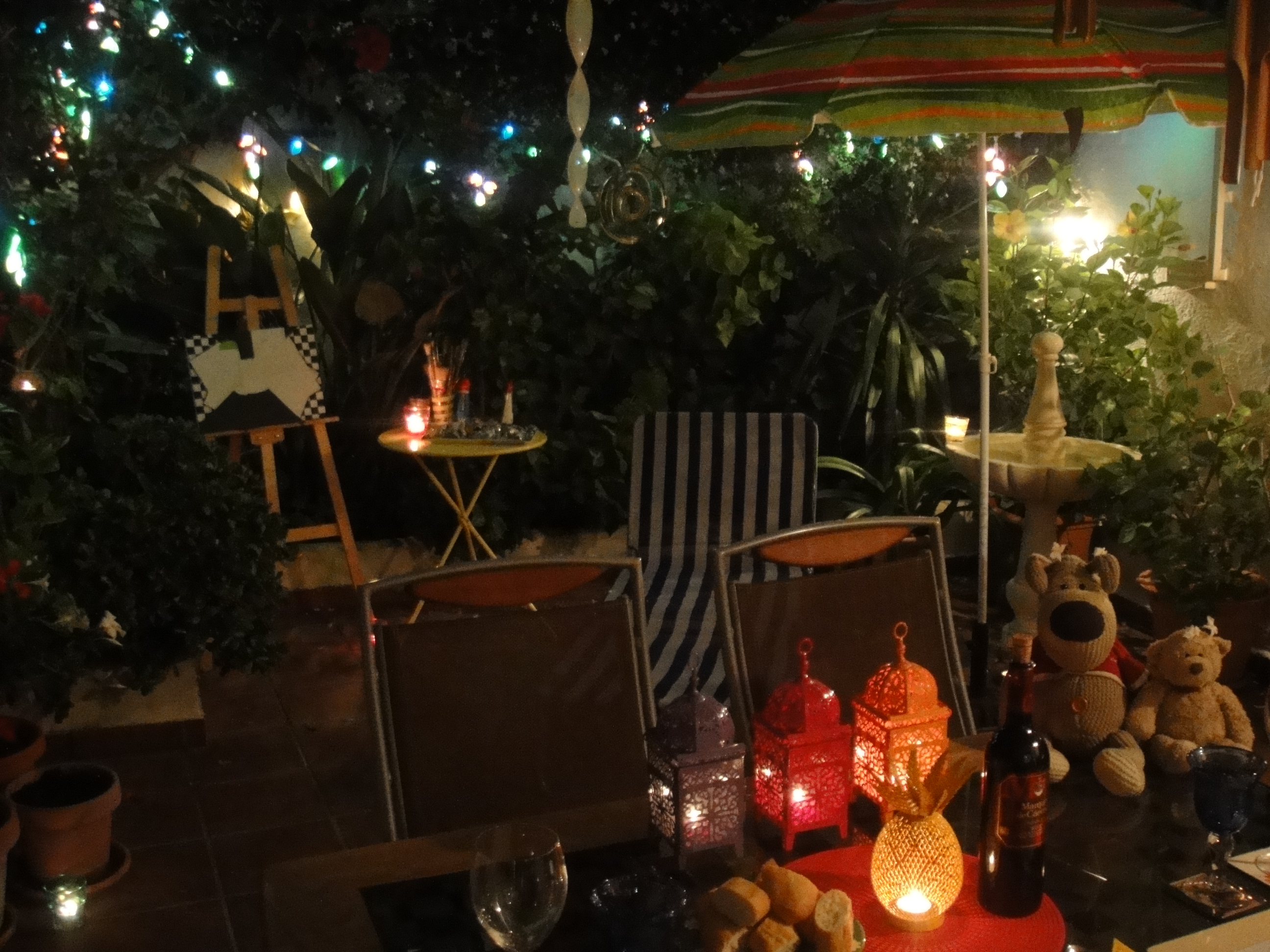
And a candlelit garden full of summer evening warmth in which to eat the clams


Marbella en Realidad: True charm behind the gloss

You must excuse what has been a far from daily Daily Norm of late… for I have been away on my holidays, happily installed far away from the plummeting temperatures of England in the 30s of Southern Spain, desperately gripping onto the last rays of summer, enjoying my ultimate fill of vitamin D, wafting carelessly in the warm clemency of Spanish evenings before, with autumn descending, my body becomes bedecked in layer upon layer of winter woolies.

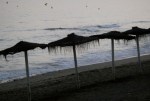
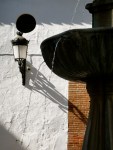
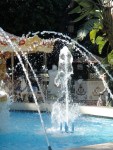
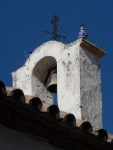
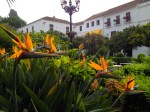
Yes, I’ve been back in Marbella, the town on the Costa del Sol renowned for its jetset reputation, for its yachts, designer stores, fake boobs and fast cars. And yet this reputation, while perhaps not the worst one can bestow, is far from justified, and certainly misses the point of what this town has to offer. For from the first minute I wandered into the old town of Marbella – the Casco Antiguo – a good 5 miles or so from Puerto Banus and the ritzy hotels and bars of tabloid fodder, I was totally entranced by a historic centre which exudes a cornucopia of Andalucian charm, whose tranquil silence is broken only by the dapple of water splashing from their old stone fountains, or the chirping of birds flitting from one orange tree to another, whose air is fragranced with the sweet seductive notes of Brugmansia trumpets and jasmine buds, and whose white washed buildings are in turn spattered with the vibrant colours of bourganvilla, terracotta pots containing bursts of red geraniums, balconies framed by intricately curled wrought iron balconies, and exquisitely painted local ceramics.

Marbella’s old town is undeservedly overshadowed by the superficial seductions of its modern suburbs, and perhaps this is what helps to maintain its charm and relative exclusivity. But as an artist, and being lucky enough to call the Casco Antiguo my second home, I cannot help but extoll the exquisite aesthetic virtues of this picture-perfect Andalucian town. I’m a resident, not a tourist, so my photos, perhaps sadly, do not depict the obvious – the squares, the cobbled narrow streets, the flamenco dancers or the restaurants. But hopefully through this selection of some of the little details which interested me on this, my early Autumn return to the town, you will gauge some idea of the idealistic charm of Marbella, and in so doing share in a cyber-shot slice of the beauty exuded from the heart of this very misunderstood town.

© Nicholas de Lacy-Brown and The Daily Norm, 2001-2012. Unauthorized use and/or duplication of the material, whether written work, photography or artwork, included within The Daily Norm without express and written permission from The Daily Norm’s author and/or owner is strictly prohibited. Excerpts and links may be used, provided that full and clear credit is given to Nicholas de Lacy-Brown and The Daily Norm with appropriate and specific direction to the original content.

Daily Norm Book Club: The Skating Rink by Roberto Bolaño

In the murky world of Roberto Bolaño, the sadly deceased Mexican author, many of whose masterpieces are only now, posthumously, seeing the light of day, a new storm is brewing. In the noncommittally named Costa Brava seaside resort of “Z”, the catalogue of shady locals, from El Quemado to the elusive German hotelier, Frau Else introduced to us in Bolaño’s recently published The Third Reich, is expanded further, as a second “Z”-based novel, The Skating Rink, delves into the layers of denigration, frustration and prejudice subsisting, never far from reach, beneath the soft sands of this beachside society in post civil-war Spain.

The novel is a short, punchy exploration of a Spain pressing forwards but continuing to struggle against Catalan discrimination, a flagging economy post summer-season (sound familiar?) and the progressive rise of a bureaucratically managed insular society. These frustrations are played out by the few principal characters around whom the story circulates. There is Nuria Marti, the beautiful ice skater, previously an Olympian skater representing Spain, but recently thrown off the national team because of her Catalan heritage. Obsessed with her is Enric Rosquelles, a pompous civil servant, who, in a desperate attempt to capture the attention and then the affection of this starlet skater, abuses his power and embezzles pesetas by the thousand to build Nuria her very own skating rink in the grounds of a deserted seaside villa.

Nuria’s affections are elsewhere however, in part with a local entrepreneur, Remo Moran – the poor boy done good – who has become owner of the hotel which formed the backdrop of The Third Reach, and who is now sleeping with the skater. He would love there to be more than sex between them, but he cannot crack the icy glaze which so often falls over Nuria, protecting her from the prying attentions of those who get too close. Working for Remo is Gaspar Heredia, a solitary, beleaguered romantic and old friend of Remo from their native Mexico. He too is in love, with an equally elusive, silent and cold societal outcast, Caridad, who has found the ice rink and lives amongst the ruins of the villa beyond. That is until tragedy strikes and all concerned are forced to abandon the ice rink which has sealed their fate forever.

We know there will be a murder. We’re told at the start, and in short captivating chapters, the three narrators, Enric, Remo and Gaspar, successively take the story gradually closer and closer to the murder which was forewarned, circling progressively nearer to the tragic event, like a skater encircles an ice rink before arabesquing into a pirouetted climax at its bloody cold centre. In this way, Bolaño’s brilliant structure ensnares the audience and drags them into the tale, captivating like a dancing routine, enriching the reader with a tale told on ice.

Yet within a speedy narrative hoisting in the reader with its intrigue and drama, the sombre mood, typical of Bolaño’s work, prevails, as surreal and disquieting descriptions create a deeper profile of his often troubled characters: the toilet cleaners who agonise after the faeces sculptor whose daily offerings torment them, the old singer, who moves from bar to bar in a pitiful attempt to busk for drink-money, the poet, taken to insomnia and dizzily distracted by his love for a girl who won’t even speak to him. It is these characters who make the story, who create a mood which is as distant from the sunshine and sangria costa setting as a seagull from the Sahara. This is the same unsettling irony which characterised The Third Reach – holiday makers playing war games, away from the sun, in the darkness of a hotel bedroom, a paddleboat seller, who builds a home on dry land from boats, and whose skin is burnt by fire, yet exposed all day to the continuing damage of the sun, and the tourists who were drunk with joy, and then distressed when one disappeared forever. These dark undertones are what makes Bolaño’s summer time so enticing; a hot Spanish resort with an ice-cold undertone, a wintery chill traversed by the pointed blade of a skater’s boots, the razor sharp kitchen knife carried in the waistband of a silent night-walker, the inscrutable personality of the leading skating star. 

This is my third Bolaño read and I’m eager to read more. Bolaño gives us crime, but not crime fiction, he gives us Mediterranean sun, with none of its warmth. He gives us speechless characters, full of detail. In other words, his books are atypical, original and inescapably captivating. I’m off to buy the next one…

Eating España, again – Part II: The sweet stuff

So after a heavy dose of savoury Spain and seductive Salamanca you’d be forgive for thinking that this week, the week in which Spain was once again splashed over the headlines as a bank bailout was agreed, that The Daily Norm couldn’t get any more Spanish. Well you would be wrong, for today, it’s time for the ever-so-tempting waist-line enlarging pudding-perfect postres, all of which I cooked, and ate, at the weekend (I am now avoiding my bathroom scales – I feel that our current acquaintance could lead to a small falling out).

First up, something for afternoon tea, and as cakes go, this one is more almond than butter, which must make it healthy, right? It’s the very traditional Santiago Almond Cake, a firm Spanish favourite, moist in its naturally oily almond component, with a delicate and delicious simplicity.

Tarta de Santiago (Almond cake)

I first ate this delicious cake in Cappuccino Grand Café is the stunning hill-top town of Valldemossa in Mallorca. No sooner had I returned home than I was buying up the local supply of ground almonds and sampling my own.

This recipe is from the collection of Spanish desserts by the vivacious and frequently tipsy TV chef favourite, the late Keith Floyd. His recipe is so simple you have no excuse not to make this cake. In fact probably the trickiest part of the whole operation is lining a 20cm cake tin (I use a spring form to make the operation even simpler at the end). Once you’ve done that, all you need to do is get yourself a food processor and all the work will be done for you – Just whizz up 3 eggs with 225g caster sugar, 100g butter, 175g self-raising flour and 125ml water until all of the ingredients are well blended.Then add 225g ground almonds and the grated zest of 1/2 a lemon. Whizz for a few seconds only, just to mix (if you overwork the almonds the mixture will become too oily). And that’s it! Tip the mixture into your greased and preferably lined tin and bake at 180 degrees centigrade for an hour. Test with a skewer and when it comes out clean, you’re done. Once the cake is cooled, sprinkle with icing sugar and enjoy.

Flan de naranja (Orange Crème caramel) 

Next up are Rick Stein’s Orange Flans (the Spanish equivalent of the French Crème caramel, or if you want to entirely strip the words of their glamour, Caramel Creams). But these have an orange twist which provides an exquisite burst of Sevillian sunshine in your mouth. I’ve cooked these a few times now and they’ve gone down ravishingly well on each occasion. They’re not that fiddly either – just be careful not to burn the sugar.

Ok, so you need to start by preparing your space. You’re going to need around 6 ramekins which should be ready placed in a roasting tin so you can make a bain marie later (this needs to be ready because once you’ve made your caramel, you need to pour it directly into the ramekins otherwise it will turn rock hard in your pan).

Onto the caramel then. This is where you need to be careful. Place 100g caster sugar and 45ml of water in a heavy-based pan and leave over a very low heat until the sugar has completely dissolved (I stir it a bit to ease the process, but old Rick doesn’t tell you to). Once the sugar has dissolved, whack the heat up to high and leave to boil rapidly, without stiffing, until the syrup starts to turn orange, orangier, red and then a pale brown brick red colour (tends to take around 5 minutes). Be careful here. If you let it go too far into the red zone, it will very quickly burn – I’m talking seconds here. So as soon as it starts to go a brick red, whip it off the heat and pour straight into the ramekins, distributing it evenly between them. You can leave them there as you turn your attention to the orange cream.

Finely grate the zest from 2 oranges and squeeze the juice out of these and 2 others until you have around 400ml of fresh orange juice. Pour this, the zest and 300g caster sugar into a pan and bring to the boil over a low heat, stirring now and then to dissolve the sugar.

In the meantime separate out 14 (yes, fourteen!) egg yolks (discard the egg white – or save it for a nice pavlova (see below)) and place with two whole eggs (this hen has been busy) in a mixing bowl and whisk. When the orange juice comes to the boil, turn down the heat and allow it to simmer rapidly for 2 minutes. Then, through a sieve, pour the orange juice mixture into the eggs and mix.

Now it’s time to pour the mixture into your ramekins on top of the caramel. Once this is done, pour boiling water into the baking tin so it comes to two-thirds of the way up the sides of the ramekins. Place in the oven at 160 degrees centigrade for around 15 minutes for small ramekins, and 20 minutes if they’re a bit bigger. Once out of the oven lift out of the water (being careful, obv) and allow to cool before placing in the fridge. Ensure they are refidgerated for at least 4 hours before eating, but preferably overnight.

When serving, carefully invert each dish onto a small serving plate. With a bit of jigging they should plop out quite easily, but you can always eaze around the side with a knife if they’re being obstinate. Some caramel will come out on the top, but if you want more from the mass that is stuck to the bottom of your ramekin, place back in a roasting tin filled with boiling water and leave until the caramel melts a bit. Now go and eat the divine things – you’ll be booking flights straight to Andalucia in no time.

And one for luck… a very un-Spanish mini strawberry pavlova

Wasting all of those egg whites from the Flan would have been a crying shame, so I decided to make a few meringues, just to soothe my guilt at pouring so much of a hen’s hard work down the sink. I used Raymond Blanc’s simple meringue recipe which can be found here except I made mine smaller. The original intention was to crush up the meringue and make an Eton Mess but the meringues turned out so surprisingly beautifully that I made them into mini pavlovas. Here are the fruits of my labour, and well worth the extra effort.Happy cooking!


Salamanca: My Painting – Homage to a sandstone city in oil on canvas

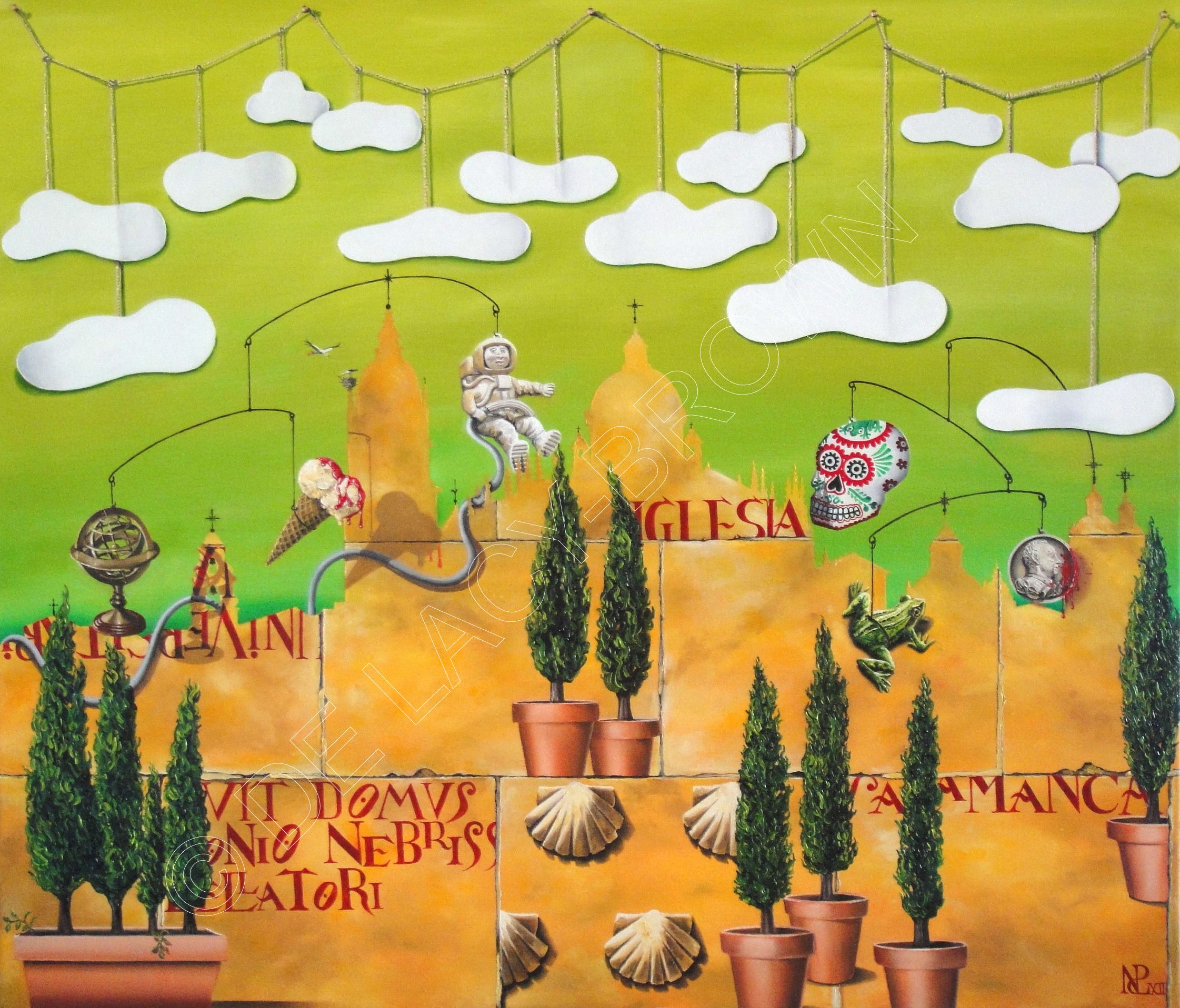
It’s been two months since I returned from the golden glowing sandstone Spanish city of Salamanca. There was so much to inspire me when I walked those elegant historical streets. When I gazed, mesmerised through my hotel window onto the stunning baroque Cathedral, the sun setting upon its orange stonework, and cypress trees gently waving from side to side in the evening breeze before it, a painting came to my mind. I rushed to make a quick sketch which I still have on the back of a reservation print out for the restaurant we were dining at that night. My painting of Salamanca was to contain what to my mind was the essence of the city – a kaleidoscope of dappled, marbled oranges and golds in a landscape uniquely built from the local Villamayor sandstone, a city bursting with historical artefacts flowing from the dual powerhouses of church and university. It is a city which is elegant in its antiquity, and yet bursting with fresh new life from its greenery, its strong local life, the pull of tourism and the thriving university population which resides there. This was my inspiration and shortly after returning from Spain I set to work on a large 105 cm x 90 cm canvas. I finally finished  the work over the long Jubilee Weekend. And here, exclusively, is the result, as I present my first (non-Norm) painting of 2012…

Salamanca (2012 © Nicholas de Lacy-Brown, oil on canvas, 105 cm x 90 cm)

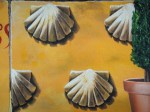
Dominating the centre of the canvas is a silhouetted skyline of the city, recognisable by the Cathedral spires and the intricate turrets, domes and baroque roofing of the nearby University. Rather than paint the detail of the buildings, I constructed the skyline out of a wall of villamayor sandstone bricks, in the same way that each building of the city is constructed. Those individual bricks act as a window onto different features of the city. On one brick you see the conch shells of the famous Casa de las Conchas, while on others, parts of the hand painted street letterings are featured, infamous for their historical use of pigs blood and olive oil.

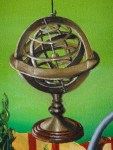
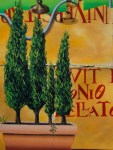
In the meantime, out of the Cathedral and the university, the ironwork crosses become large mobile-like structures, inspired by the great maker of mobile art, Alexander Calder. On these mobiles hang various symbols of the city. The astronaut and the ice cream which are usually imbedded in the intricate plateresque facades of the Cathedral and the University’s famous sandstone frog are all featured, as well as the skull upon which the frog sits (my painted skull is inspired by the Mexican Dia de los Muertos celebrations for which houses and graves are adorned with beautifully decorated hand painted skulls like this one). Represented too is the tradition of learning at the University, embodied in the Orrery (one of which I bought while in Salamanca as a souvenir of the city) as well as the famous Plaza Mayor, represented by the infamous bust of Fascist leader Franco which can be found amongst the busts of Spanish rulers around the square, and the inclusion of which causes such controversy that it is regularly vandalised. My Franco too has been vandalised, but is that paint on his face or blood on his hands? Finally the painting is generously sprinkled with various groups of cypress trees, tidily placed in terracotta pots at various spots across the canvas as well as a curtain of clouds sweeping across a clear green sky. Ooh and look out for the little stork’s nest embedded amongst the spires of the cathedral – the storks are a customary feature of the city and do not appear to cause the residents any hassle – in fact some churches have baskets placed on top of their spires to aid the storks in building a safe and secure nest!

So there it is, and above, so you don’t miss the details, are more photos showing the various individual aspects of the painting. I hope you like the painting and, more importantly, let me know what you think! I’ve already started a new work, so look out for that over the coming months.

© Nicholas de Lacy-Brown and The Daily Norm, 2001-2012. Unauthorized use and/or duplication of the material, whether written work or artwork, included within The Daily Norm without express and written permission from The Daily Norm’s author and/or owner is strictly prohibited. Excerpts and links may be used, provided that full and clear credit is given to Nicholas de Lacy-Brown and The Daily Norm with appropriate and specific direction to the original content.

Eating España, again – Part I: One starter and two mains

Ever the diplomat, and clearly qualified for a high powered job in the Foreign Office, whenever a country get’s a bit of bad press, I try to do my bit to remind all the cynics out there that despite financial plight, banking crises, and the incessant need for multi-billion euro bailouts from reticent cash-strapped neighbours, the culture which made these economically shaky countries great survives through the monetary meltdown. This is no more so than in my beloved Spain, where the great flavours and platos ricos were born from poverty, using basic and cheap ingredients which, when combined, produce a flavour sensation which captures in its aroma, colour and savour the very essence of that culturally diverse country. Consequently, just like I did for poor old Greece a few weeks ago, I’ve returned to my London kitchen, and cooked up a feast in honour of Spain’s great gastronomic heritage.

Here are just a few dishes I tried out over the weekend. In this post I’m going to share three great savoury dishes from apple-lush Asturia, seafood-filled Catalonia and the once-moorish highly spiced lands of Andalucia. Later in the week, I’m moving on to the sweet stuff, when I’ll share a traditional Santiago almond cake, and some divinely Sevillan orange-burst creme-caramels.

Centollo a la sidra (Baked crab with cider)
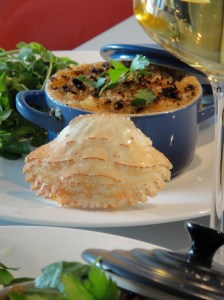
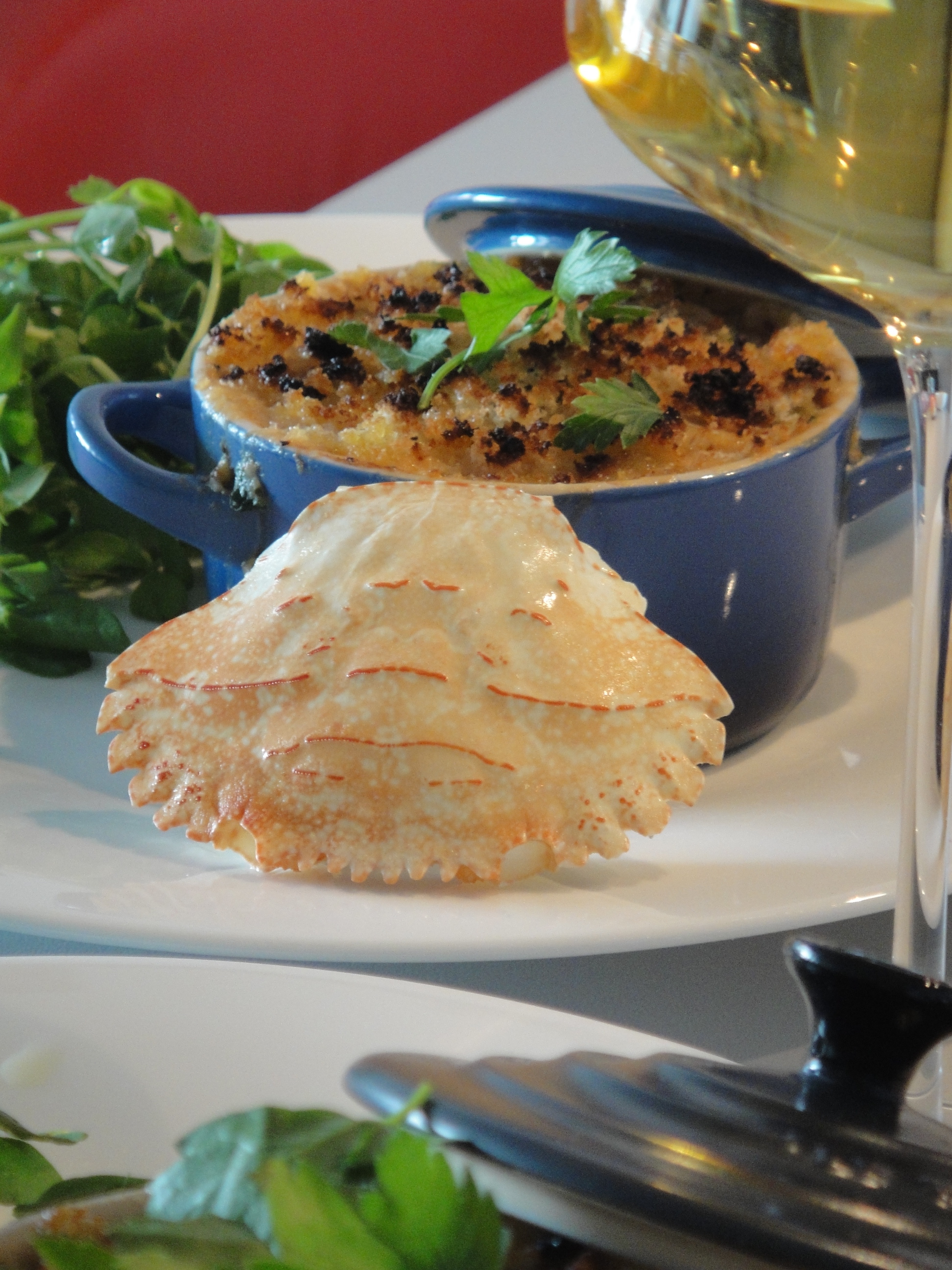
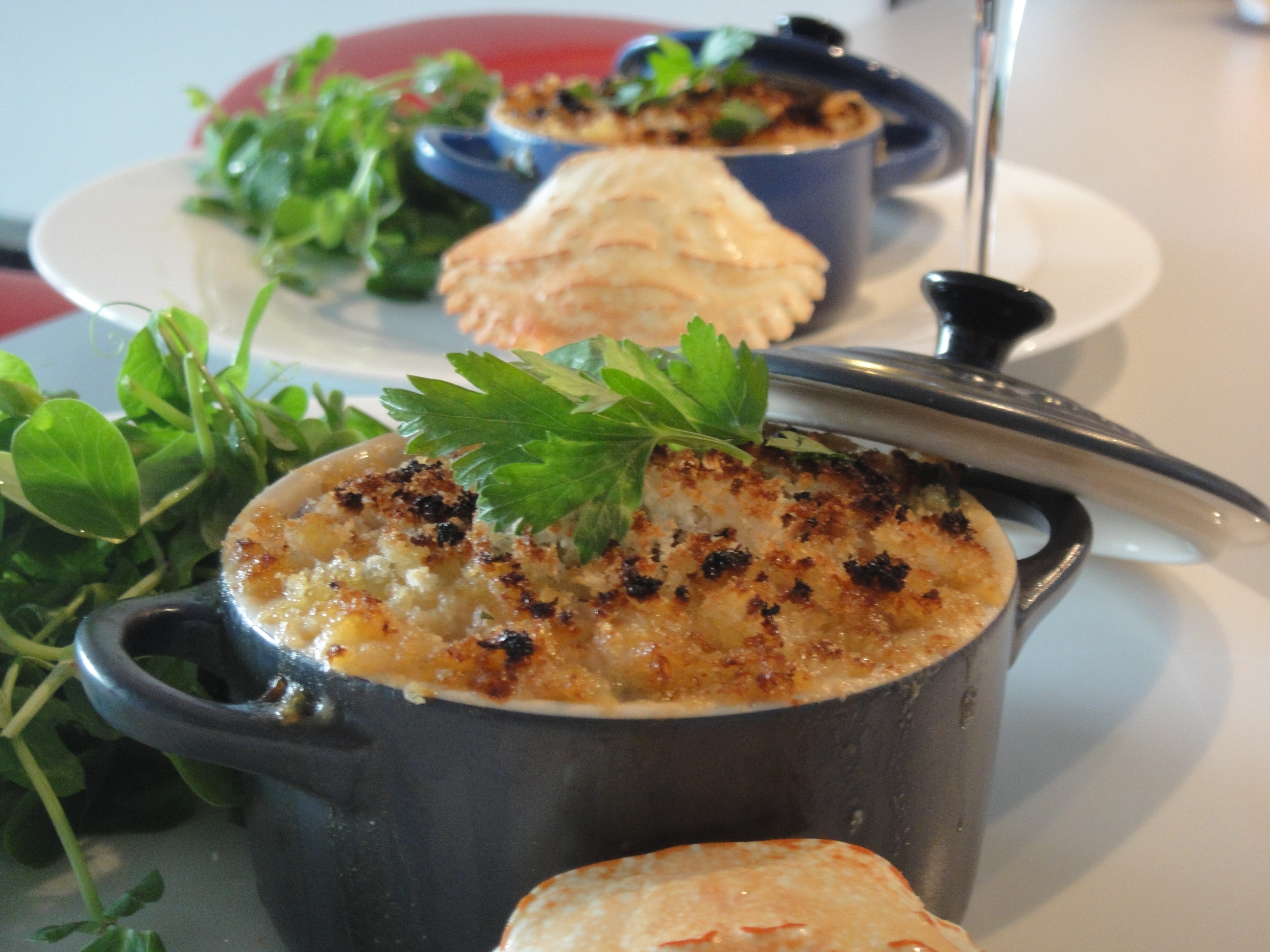
This recipe takes its inspiration from the Asturias region of Spain, where Cider is the drink of choice and sidrerias can be found in every town and village. My take is in turn based on the recipe by Claudia Roden in her fantastic book, The Food of Spain: A Celebration (Penguin, 2012) so all credit must go to her. These little ramekin filled dishes make a perfect starter or, as I did, served as a light lunch with a little side salad. In Asturias, they make this filling and stuff it back inside the shell of their txangurro spider crabs. While not attempting any such culinary craftsmanship, I paid homage to their skills by serving my dish in a mini le creuset pot with a little crab shell on the side, just for decoration (you eat with your eyes before your mouth etc etc).

To make your own crab dish (whatsoever you may chose to stuff it in) take a chopped medium onion which should be sauteed over a low heat until soft. Add to it one peeled and chopped tomato, a pinch of chilli powder (or cayenne pepper) and another pinch of salt and cook over a medium heat for around 8 minutes. Next take a fillet of cod (around 150-250 g depending on how many ramekins you want to fill) and cook for about 5 minutes or until it begins to flake, turning it once. Flake the cooked fish and add 250g of cooked white and dark crab meat, 175ml of dry cider and 2 tablespoons of chopped flat-leaf parsley. Cook for around a minute. Oil 4 small ramekins or two big mini casseroles (like mine) and spoon the mixture in. Sprinkle with fresh breadcrumbs, a few blobs of butter and place under the grill until the breadcrumbs are browned. It’s probably best you leave the ramekins to cool for a couple of minutes once they come out of the grill before you serve them!

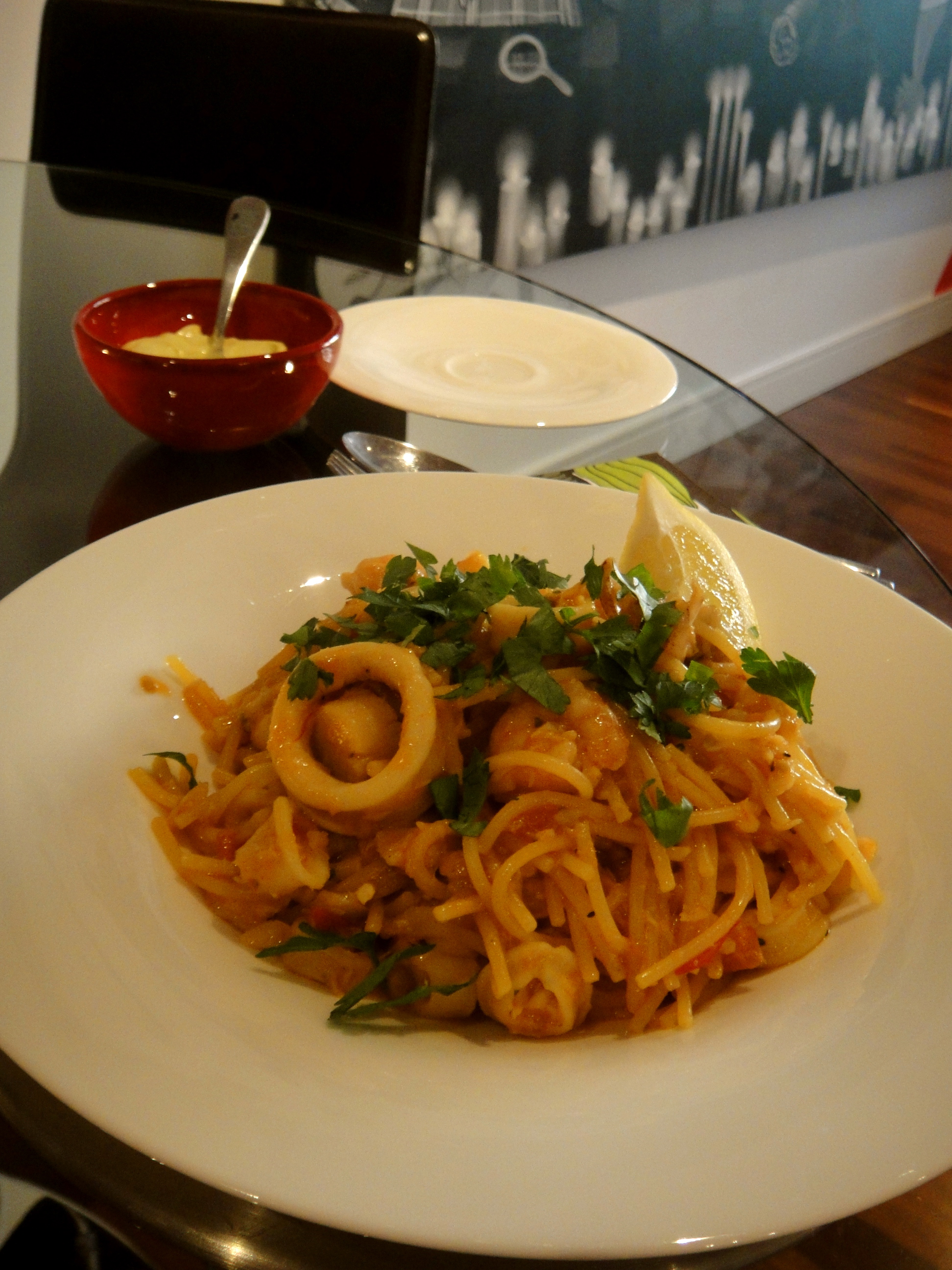
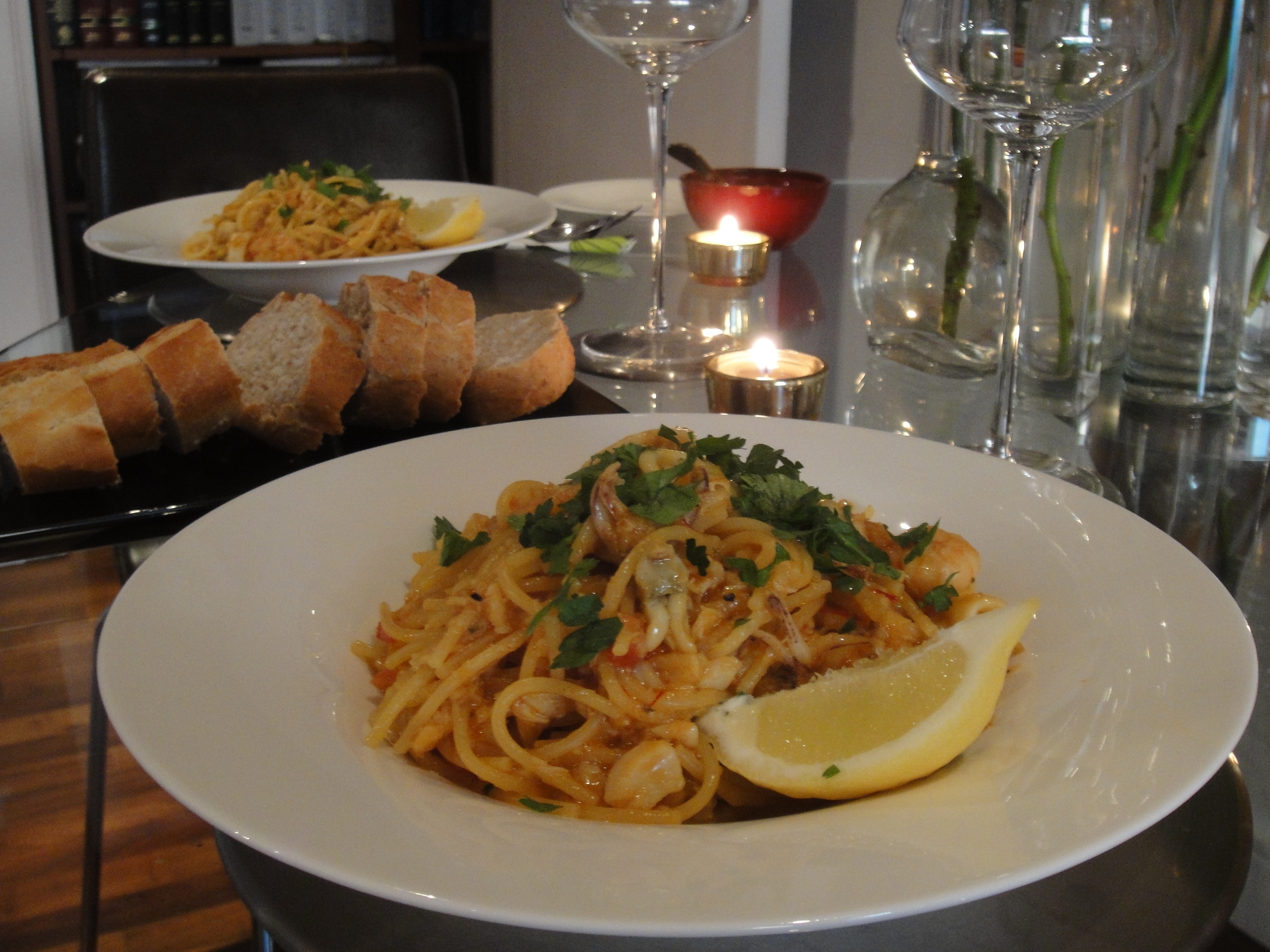
Fideuada del señorito – (smoked) seafood pasta

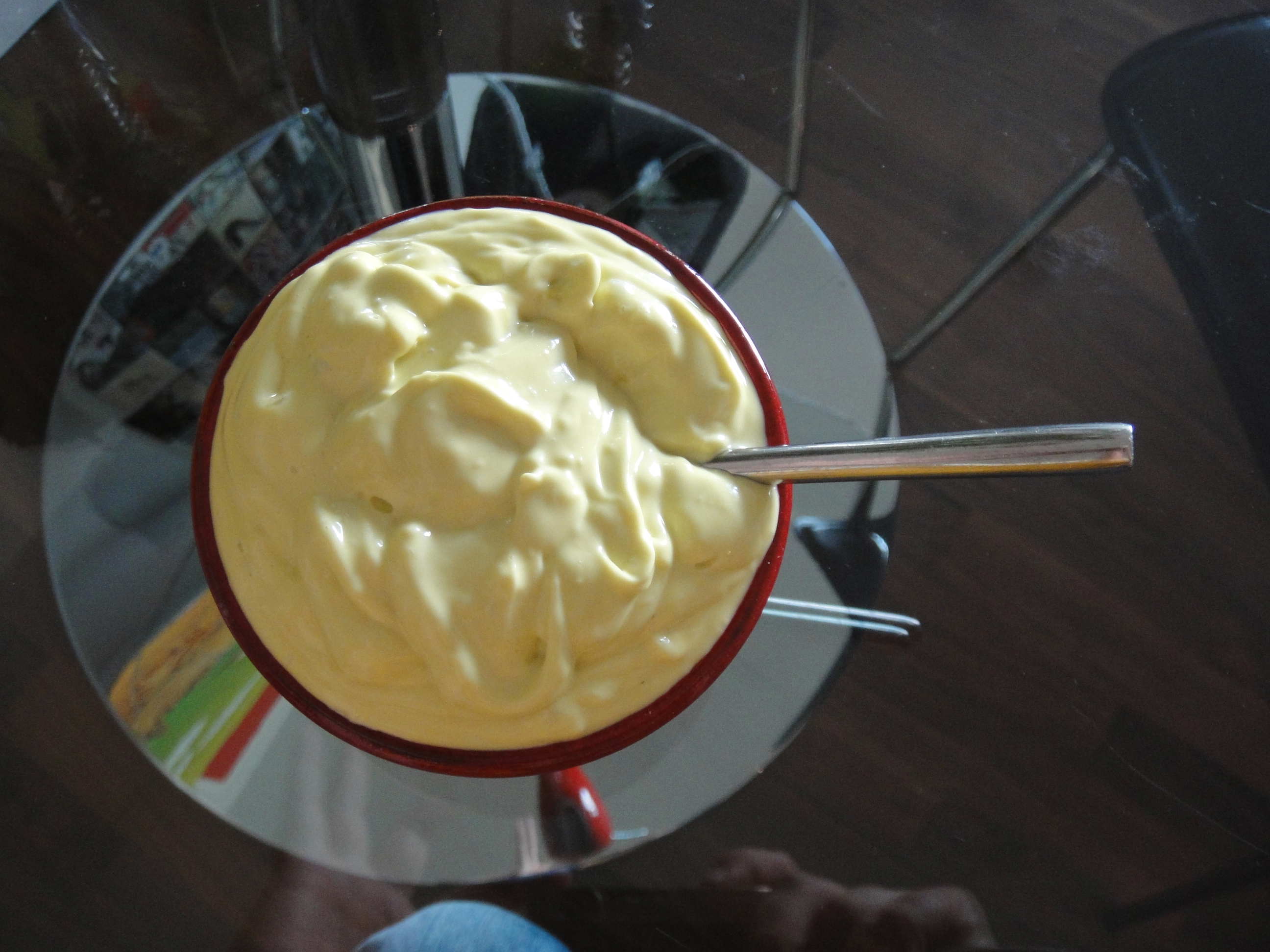
This is a pasta dish straight from the gutsy seafood-filled region of Catalonia, and brought to my attention, once again, by Claudia Roden although once again, I’ve gone my own way with it and shaken it up a bit (sorry Claudia). The dish, for no apparent reason, translates as “of the young gentleman”, perhaps because the short pieces of pasta and shelled prawns make the dish particularly easy for young senoritos and senoritas to eat. Either way its truly delicious for us adults too. You should service it with a good blob of alioli (garlic mayonnaise). If you can’t be bothered to make you own mayo, just add crushed garlic to shop bought mayonnaise. Mine is thick and yellow because I made it with extra virgin olive oil straight from a vineyard next to my Partner’s family home in Tuscany (yes yes, I know, it’s not Spain) so well worth the rather tedious effort of making it from scratch.

My alioli

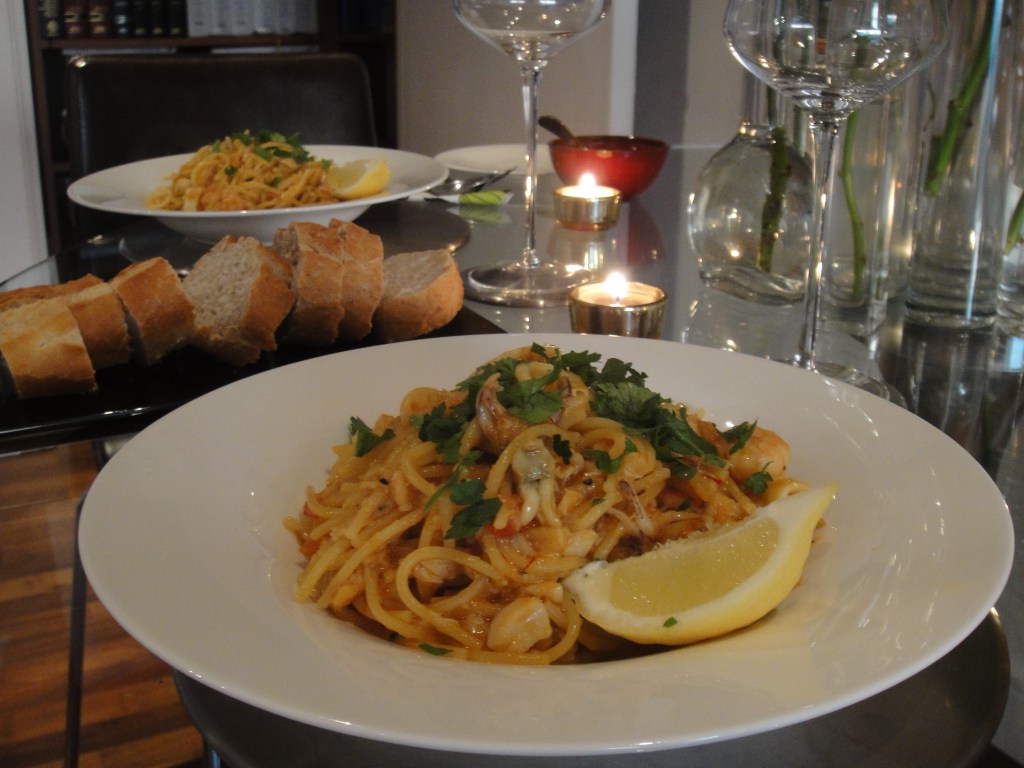
To make the pasta, heat 4 tablespoons of oil in a large frying pan (or paella pan if you have one). Cook around 400g of cubed smoked haddock (Claudia Roden uses monkfish, but I didn’t have any to hand – I adore smoked haddock and loved the results in this dish – it gives a subtle smokey flavour which works amazingly well with the alioli on the side) and cook on a medium heat for around 3-5 minutes. Next add 4-6 baby squids, sliced into rings, cooking for a further couple of minutes before adding a dozen or so peeled king prawns and an equal number of scallops. Cook until the prawns are nice and pink (1-2 mins). Place all the cooked seafood to one side in a separate dish, keeping it warm. Preserve any liquid. Using the same pan, heat 2 tablespoons of oil and stir in 1-2 crushed cloves of garlic. Just before the garlic colours, add 3 chopped tomatoes, 1 heaped teaspoon of pimenton dulce (or sweet paprika), a little salt and a good pinch of saffron threads (and at this point pause and indulge in the aroma of Spain, a warm mediterranean evening wafting past your nose, a magical culinary noche brought to life in your kitchen, wherever it may be). Sorry, where was I… ah yes, The tomato will quickly thicken so at this point I added 120ml of oloroso dry sherry (although dry white wine will work too). Wait for that to reduce down, cooking for around 10 minutes.
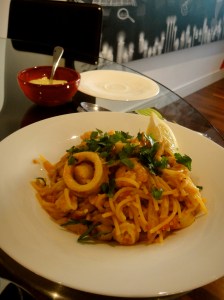
Add around 300g (for 2-3 people) of spaghetti, broken into 3-4cm pieces to the tomato mixture, making sure it is well coated. Then add around a pint of boiling chicken stock and add back the cooked seafood, stirring it into the pasta/ tomato mix. Cook until the pasta is al dente. This should use up all the stock, but add a little more if the liquid dries up before the pasta is cooked. The dish should be moist when its finished.

And that’s it! Serve with some sprinkled parsley and a good dollop of alioli – the mixture of smoked fish and pimenton with delicate seafood and a pungent winey tomato sauce is to die for, I promise. Oh and don’t forget to give the whole thing a good squeeze of lemon juice – the acid cuts across the strong salty smokeyness perfectly.
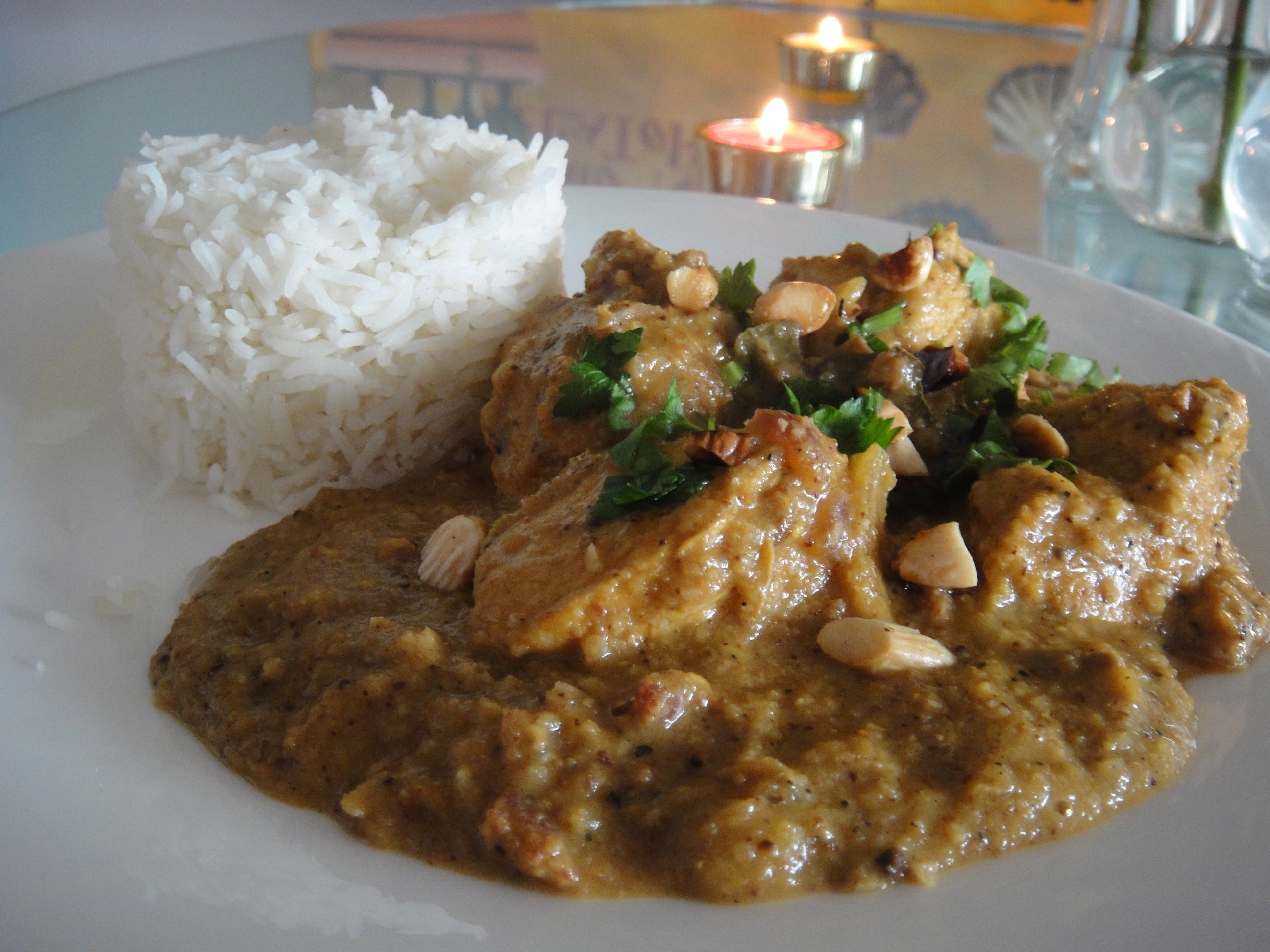
Pollo en pepitoria (Chicken in a mildly spiced saffron, pine nut and almond sauce)

Last up it’s down to the Med and the region of Andalucia where the influence of 700 years of Islamic rule can still be felt from the rafting voices and spasmodic dancing of gypsy culture emanating from Seville, to the use of mild moroccan spices in their food. This dish is no exception. It was first cooked for me by my mother, who in turn got it from chef Rick Stein, who in turn nicked it from Australian chef Luke Mangan who opened a restaurant specialising in a mixture of Spanish and Moorish cuisine. Despite this chinese-whisper-like chain of chefs, all of whom have no doubt made changes here and there, the dish is nonetheless emblematic of Southern spanish cooking, with its warm aromatic spices and plentiful use of almonds. Moreover, the use of a “picada”, that is a nutty paste stirred into the chicken, is popular across the whole of the Iberian peninsula.

Start off by hard boiling two large eggs for 10 minutes. You’ll need these later. Allow them to cool and then peel off the shell.

Next deal with your chicken. Some people will use a whole chicken, in which case they’ll chop up and use the legs, wings, breasts etc. I only really like chicken breasts and am not therefore much help on how to use these other bits of the bird – but you can. I use four chicken breasts. Cut these into fairly large pieces (probably three from each breast) so they remain moist.
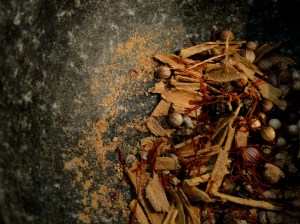
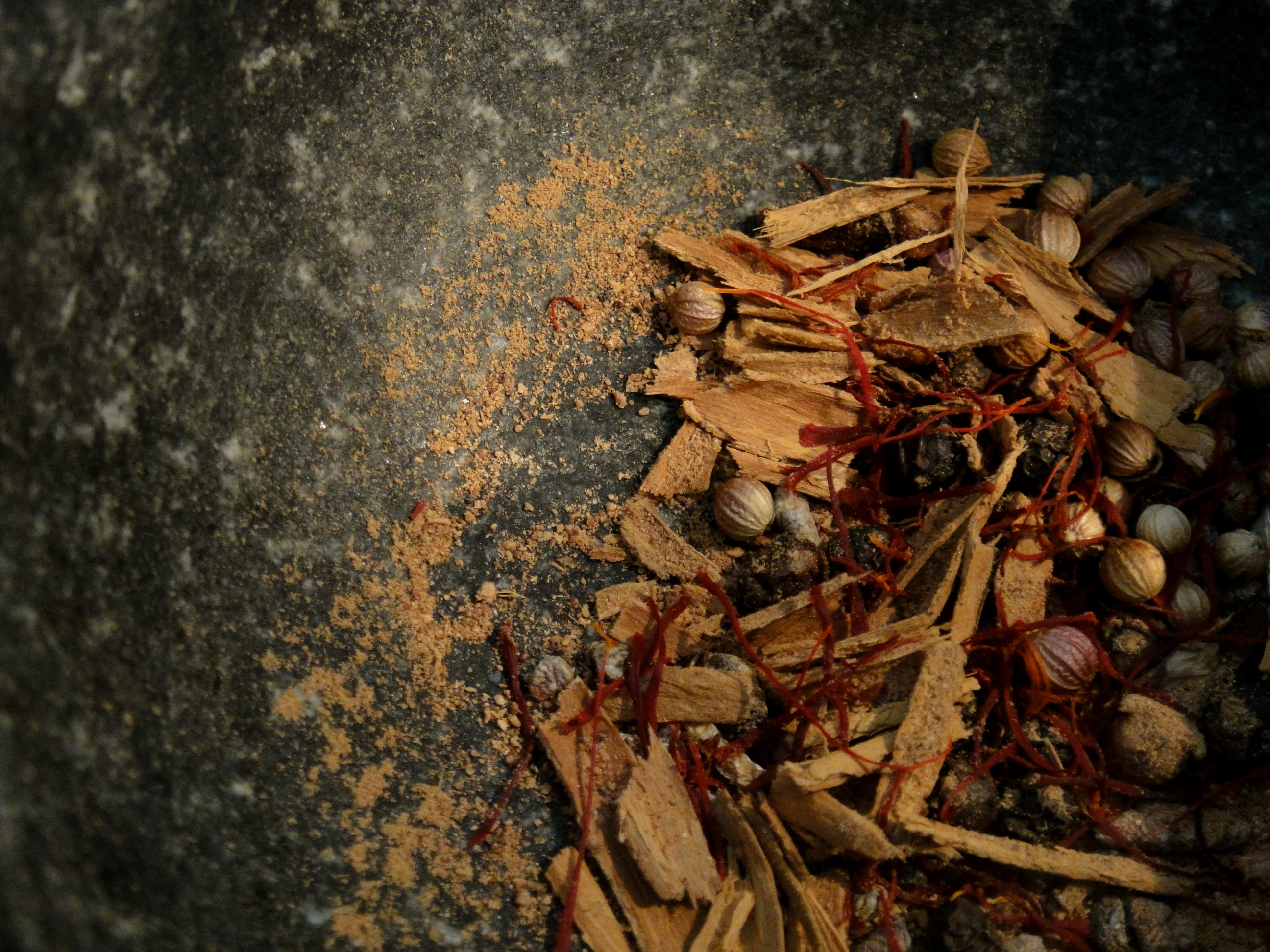
My spices: they smell as good as they look

Onto spices. Lightly crush approximately 10 cardamom pods and remove the seeds from inside (this is fairly tedious but worth it, I promise). Discard the shells and add the seeds to a pestle and mortar into which should also go 1/2 teaspoon of coriander seeds, 1/2 teaspoon saffron strands, 2 cloves, 1 cm piece of cinnamon stick, 1/4 teaspoon of nutmeg and around 10 peppercorns. Grind to a fine powder and enjoy the aromas while you’re doing so.

Now heat around 4 tablespoons of oil in a casserole. Add two peeled whole garlic cloves and a slice of white bread. Fry on both sides until golden. Transfer to a food processor. Now season the chicken lightly and fry until golden on the sides. Remove and set aside. Now in another tablespoon of oil, add 1 large onion, finely chopped and fry lightly until soft and sweetened but not brown. Stir in the spices, cooking for 1 minute and then stir in 200ml of dry oloroso (or other) sherry or white wine and 200ml of chicken stock. Return the chicken to the pan with 2 bay leaves, a handful of raisins or dates (these are my addition, but are optional) and a pinch of salt. Bring to a simmer and cook gently for around 20 minutes (40 minutes is probably necessary for chicken legs etc).

In the meantime heat a frying pan and dry roast 40g pine nuts for 1 minute and 40g blanched almonds for 2 minutes. Leave to cool. Add the nuts and the yolks from the hardboiled eggs to the bread in the food processor along with 10-12 tablespoons of cooking liquid from the chicken. Grind to a paste (this is the “picada”). Chop 20g more of blanched almonds to sprinkle over the dish at the end.

Once the chicken is cooked, stir in the picada paste and simmer for a couple of minutes longer until thickened. Stir in 1 tablespoon of lemon juice approx and make sure your seasoning is on course. Finally, in a separate pan, stir fry those remaining chopped almonds for a couple of minutes in a little oil until golden. Serve your chicken with the sauce and sprinkle the almonds on the top with some parsley.

OK, we’re done. Three dishes bringing the flavours and character of Spain directly into your house. On second thoughts maybe this post isn’t so helpful to the Spanish economy after all – once these amazing cooking aromas fill your home, you’ll have no need to go on holiday again!

Sunday Supplement – The Joie de Vivre Triptych

The sun is shining in London, the olympic torch is gradually winding its way around the country to rapturous applause, and the nation is decking its streets in union jacks in anticipation of the Diamond Jubilee celebrations next weekend (you notice I’ve ignore the slight blip that was eurovision last night, when the UK came second from bottom in the results table – but no surprises there, it only goes to emphasise our disconnection from continental europe). So with spirits high, and with what looks like the arrival of summer (finally!) I have decided to showcase a triptych of paintings which I completed when the times were good, the sun was shining, and I was enjoying uninhibited zest for life. I was holidaying in Marbella, Spain at the time. I had just finished my law degree, and was spending almost a month in Spain. By day I would enjoy the freshness of the mediterranean sea, the heat of the beach, and the pleasure of seafood and of wine. In the balmy afternoons, I would retreat to our sun-dappled garden, under the shade of our fragrant jasmine tree, and rest, contemplate, and (being english, even when in Spain) drink tea.

It was in these times of ultimate afternoon delight that the Joie de Vivre triptych was born, three paintings which were unplanned, but which burst freely out of my paintbrush and straight onto canvas, an apt demonstration of my uninhibited happiness when life was good, the drinks flowed, the sea lapped upon the shore and my imagination came to life.

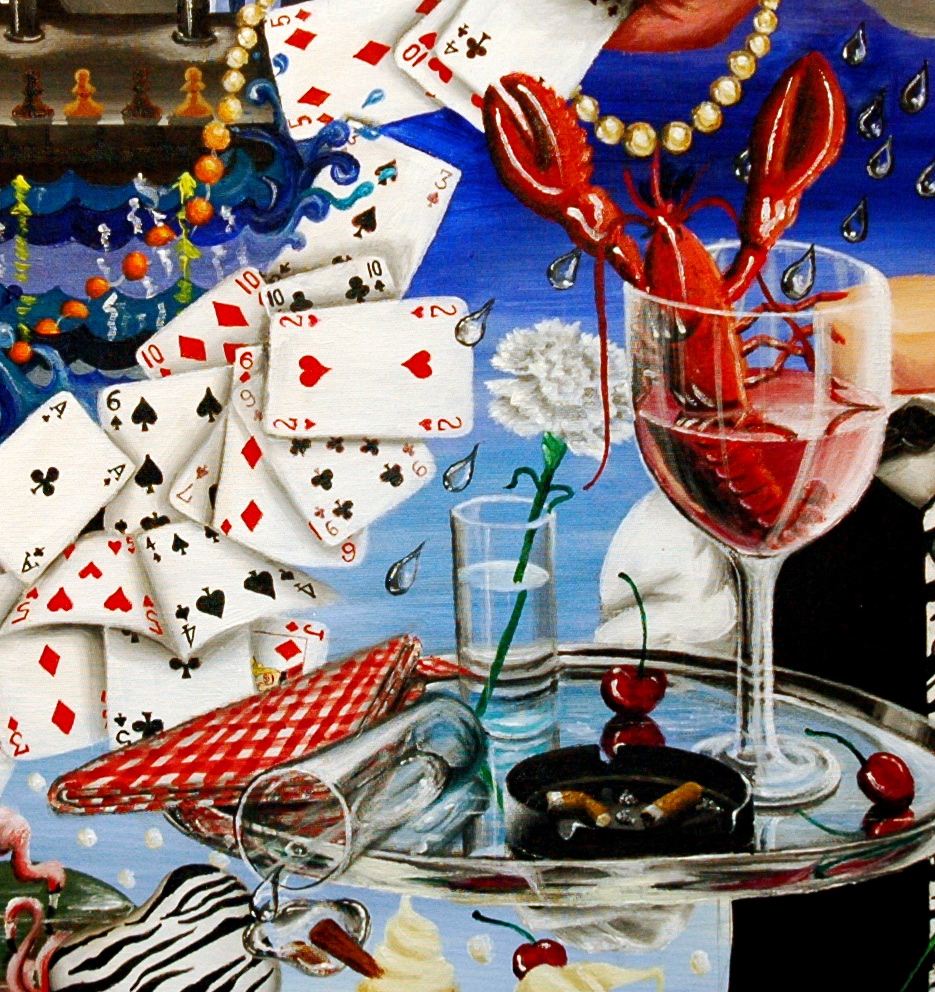
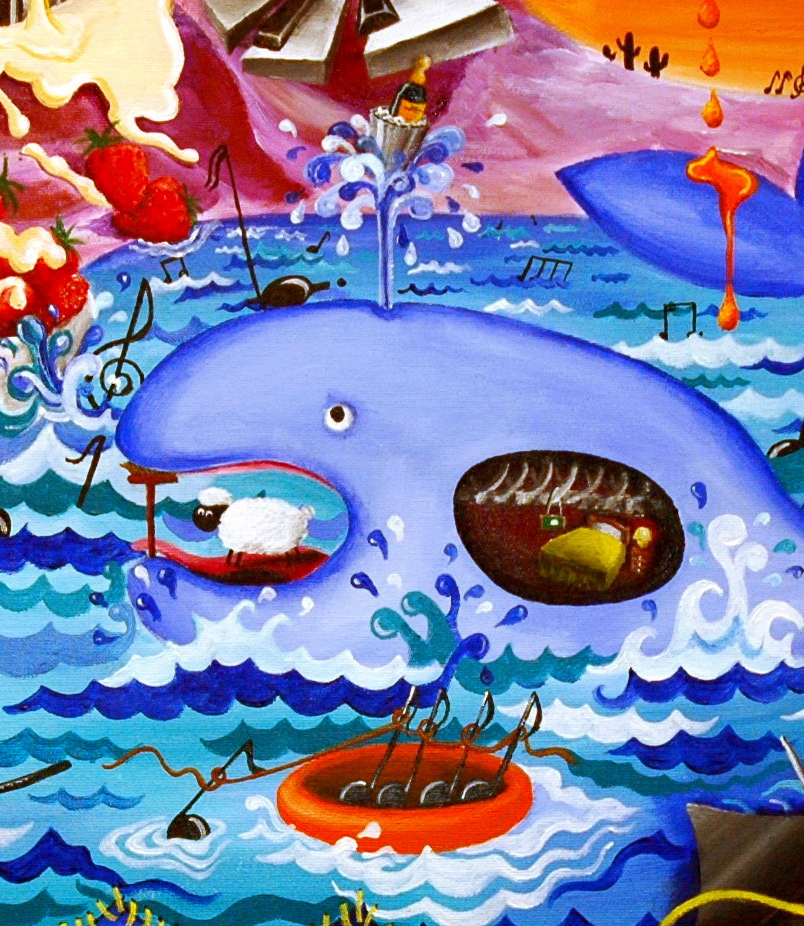
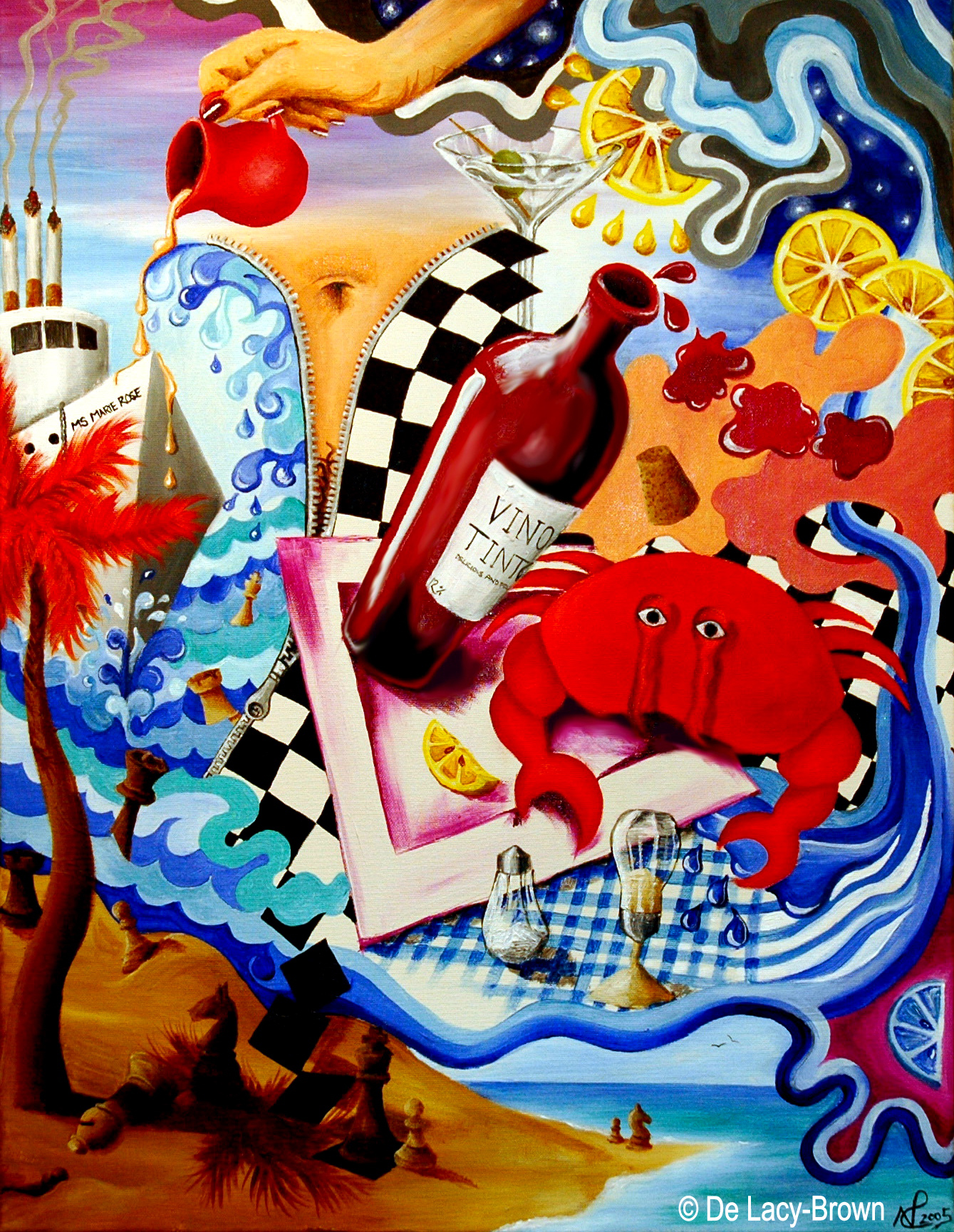
The resulting triptych sold at my 2006 exhibition, Between me and my Reflection and is now one of my best selling limited edition prints (with some still for sale on my Etsy store). It celebrates the ‘zest’ or joys of life through an illustration of the three stages of culinary and alcoholic indulgence during the day; lunchtime, afternoon tea and evening. Recreation and hedonism are central to the juxtaposed images with a further emphasis on home entertainment, namely piano/music, cards/gambling and chess. Opulence is illustrated by symbols of extravagance contained within all three images, as well as buried treasure and jewellery. Sea food is the culinary indulgence on the menu: many other life-forms or objects are anthropomorphised, for example, the sheep seen in the domestic setting of its whale-house, the musical notes struggling to save each other from the perils of a rough sea, and a snail which digs underground to retrieve the buried treasure. The ‘zest of life’ which these images embody is also specifically reflected by the citrus slices which radiate perfect weather conditions in each scene, while a human hand is always “on hand” to assist in the activities being illustrated, whether it be pouring the cream for the afternoon’s strawberries and the marie-rose sauce for the crab, or dealing out the cards for an evening of casino entertainment. The painted images flow and metamorphose from one object to another, as a string harbour-side lights becomes a string of pearls which in turn  becomes of floating buoys or a sudden rain shower becomes ice cream, piled on a cone to be enjoyed with a glass of rosé.

There’s a lot to explore in these paintings, which are typical of what happens when I set my mind loose, so without further ado I will let you enjoy the paintings in full, hoping that you take from them the optimism for life which they engender as you go about enjoying your sunny sunday and forthcoming summer.

Joie de Vivre/ Zest of Life 1: Crab Cocktail (2005 © Nicholas de Lacy-Brown, acrylic on canvas)

This print is available to purchase as a limited edition print at my Etsy store 

Joie de Vivre/ Zest of Life 2: Afternoon Sea (2005 © Nicholas de Lacy-Brown, acrylic on canvas)

This print is also available to purchase as a limited edition print at my Etsy store

Joie de Vivre/ Zest of Life 3: Casino Nights (2005 © Nicholas de Lacy-Brown, acrylic on canvas)

This print is also available to purchase as a limited edition print at my Etsy store

© Nicholas de Lacy-Brown and The Daily Norm, 2001-2012. Unauthorized use and/or duplication of the material, whether written work or artwork, included within The Daily Norm without express and written permission from The Daily Norm’s author and/or owner is strictly prohibited. Excerpts and links may be used, provided that full and clear credit is given to Nicholas de Lacy-Brown and The Daily Norm with appropriate and specific direction to the original content.