Skip to content

Posts tagged ‘Spain’

Barcelona | Day One: A tale of two cathedrals

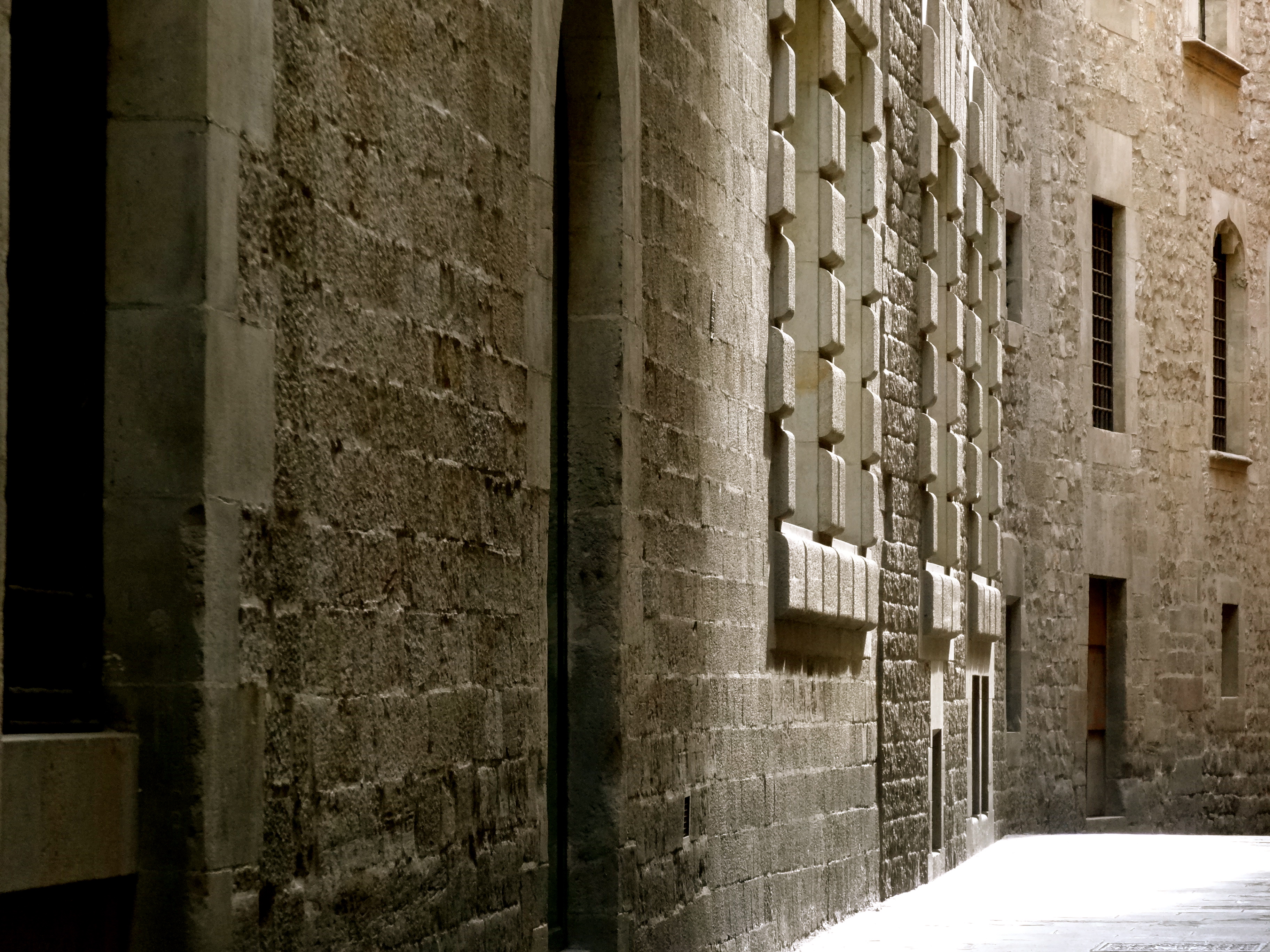
Despite all of the travelling I have been lucky enough to do over the years, there is one city which has always topped the bill as far as I am concerned: Barcelona. From the stunning medieval squares and dark narrow streets of its gothic quarter, and the café culture and art vibe of La Ribera surrounding the Picasso museum; to the elegant grid of shopping streets and modernist palaces in the Eixample, and the expansive Port Vell and its white sandy beach, Barcelona is one of these cities which just about has everything a city could offer. If you were asked to sit down at a drawing board and design the perfect city, surely Barcelona would be it: It’s a cultural hot spot, a city bursting with sites of historical importance, a shopping mecca, a business centre, a bustling port and a beach resort rolled into one. Coupled with that is a predominant party spirit, a sense of cultural and political freedom and an exuberance of chic and style which is unrivalled, in my opinion, elsewhere in Spain.

So while a trip to this most incredible of cities last weekend may have been my 7th trip to the city, Barcelona’s multifaceted nature meant that there was still a huge amount to discover, and a pleasant opportunity to re-embrace sites and experiences otherwise more familiar to me. And most importantly of all it was an opportunity to properly inject my partner with the same enthusiasm I have always had for the city – after all, how else can I ever persuade him to move there? 😉

The atmospheric Barri Gotic

DSC02677 DSC02494 DSC02615 DSC02581 DSC02498 DSC02614 DSC02478 DSC02622 DSC02634

Day One in Barcelona provided such a chance to discover the city afresh. After years of staying in the Eixample region, I switched allegiances, choosing instead the super-chic boutique haven: the Hotel Neri as my base – a hotel which sits at the beating heart of Barcelona’s gothic quarter, and which is but metres from the imposing gothic cathedral. This super central location meant that I could explore this most characterful of Barcelona neighbourhoods with the ease of breathing; a discovery which began on this first sunny morning with the old cathedral which is at its heart.

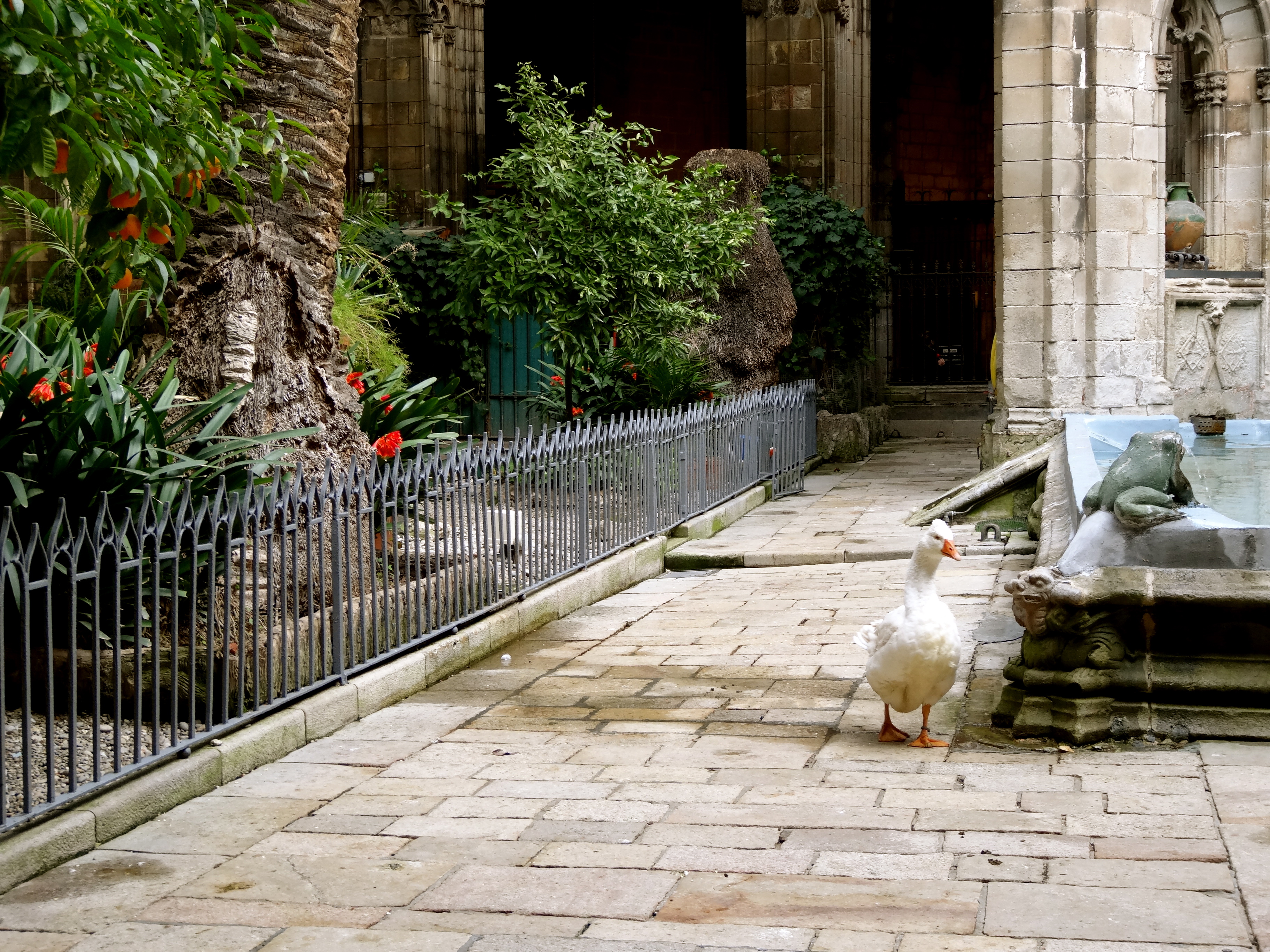
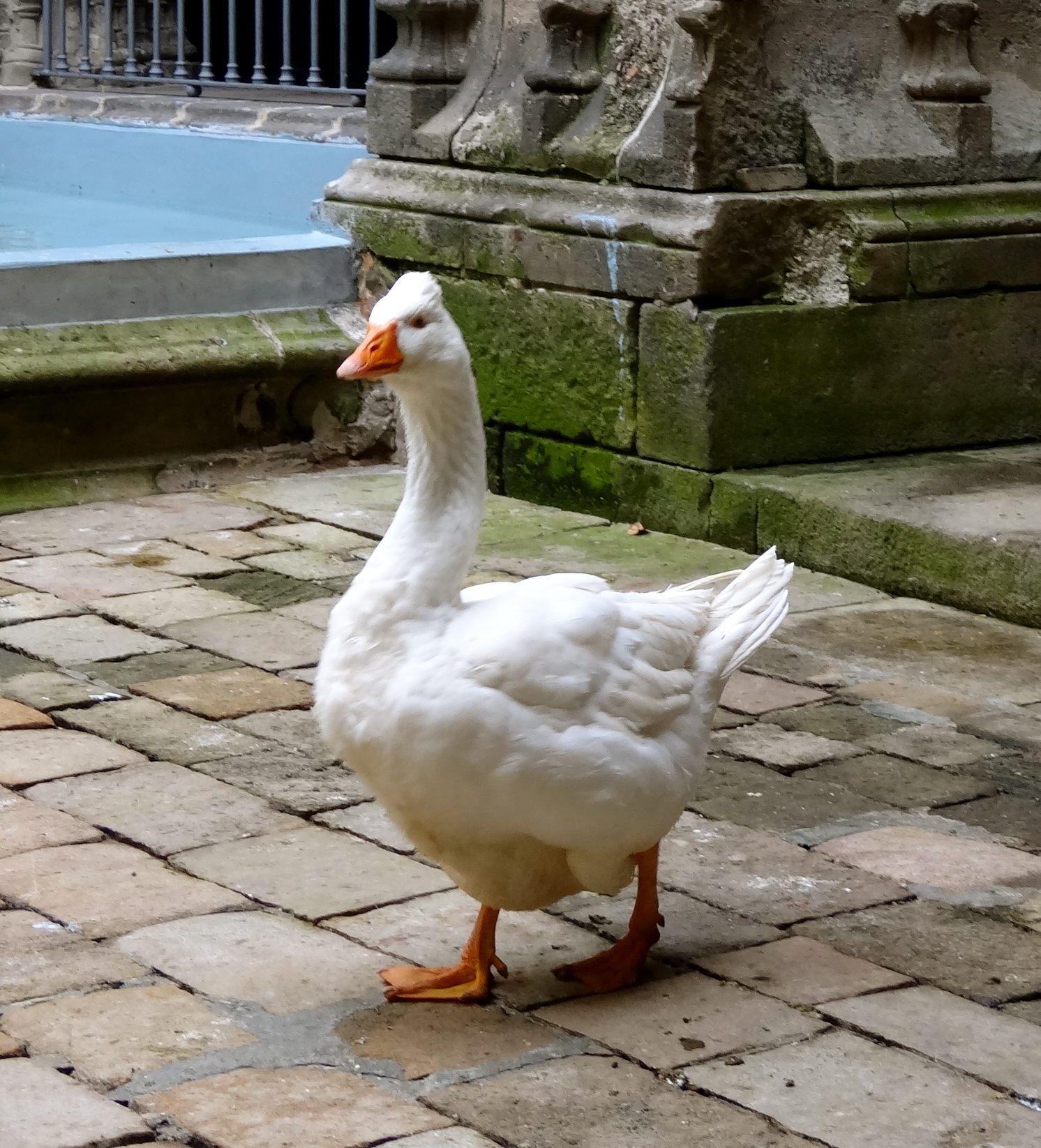
For all its incredibly imposing gothic structure, its lavish golden choir stalls and its equally elaborate gold-fringed side chapels, the thing I love about Barcelona’s cathedral is the little cloister bolted onto its side which, either by way of tradition or for some other more logical reason of which I remain ignorant, is the home of a lovely gabble of squawking, inquisitive and cheeky white geese. This lively bunch of orange-beaked beauties are just one feature of what has to be one of the most tranquil corners of this otherwise lively city; a space where everything seems perfectly in tune with each other, from the lush green plants which are grown in the cloister’s centre and through which sunlight dapples over the gothic stonework, to the orange trees which are seemingly reflected in the beaks of the geese, whether by design or coincidence. It’s a beautiful space, and easily one of my favourites in the city. But we could not linger – for we had the rest of the old town and the city to explore.

The Cathedral’s geese-filled cloisters…

DSC02518 DSC02516 DSC02573 IMG_3922 DSC02507 DSC02523 DSC02515 DSC02502

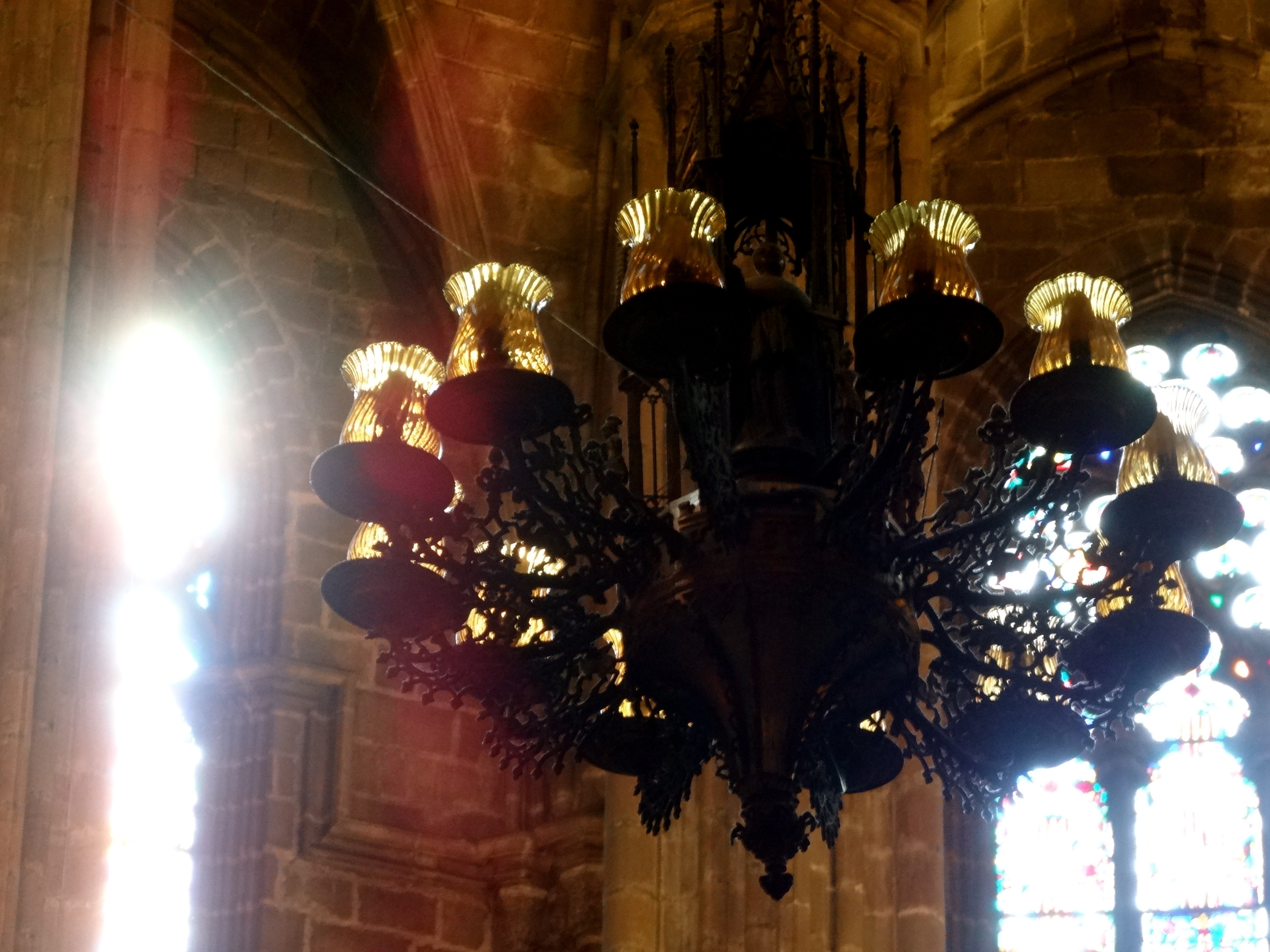
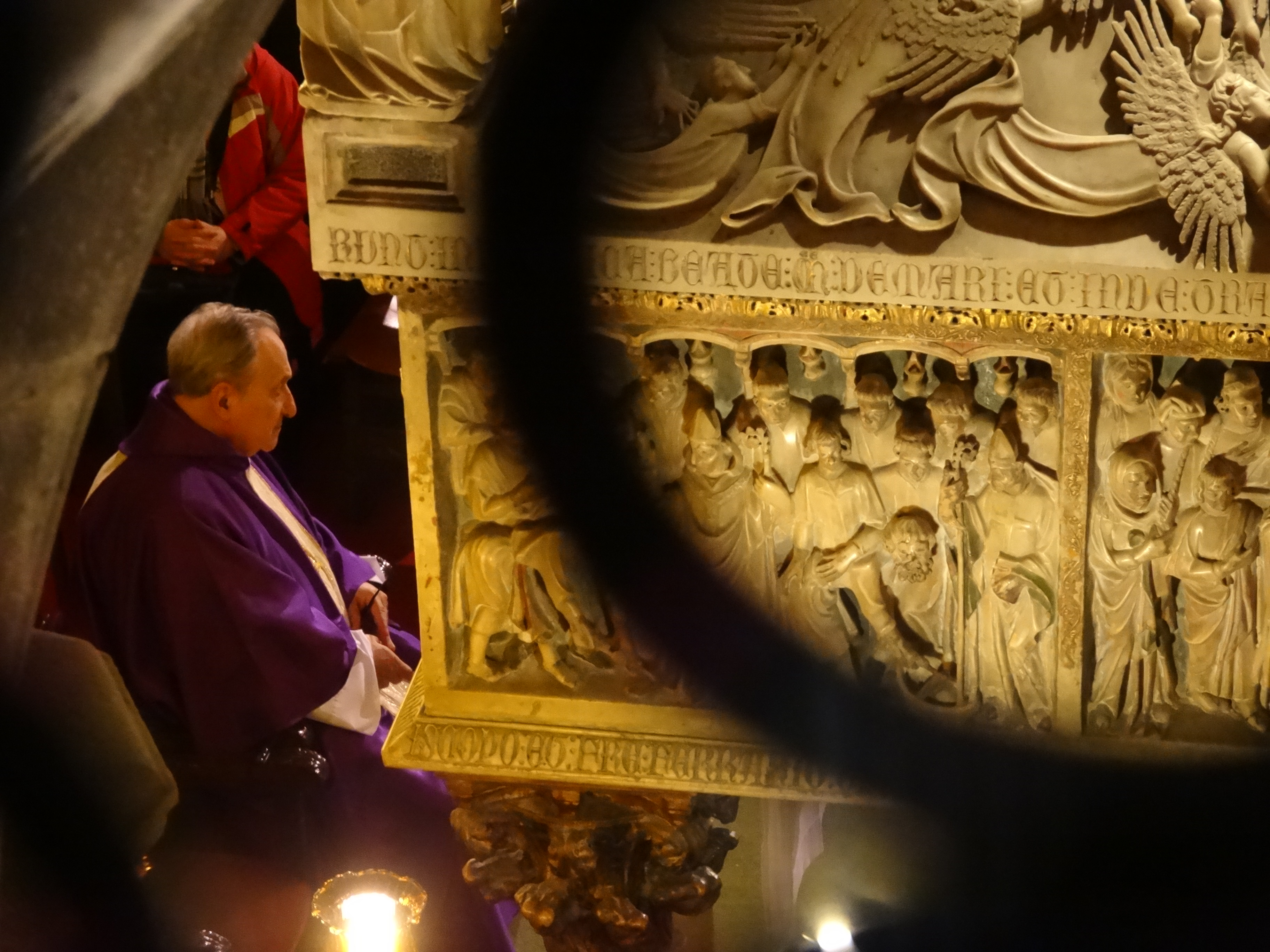
…and its imposing gothic interior

DSC02550 DSC02556 DSC02601 DSC02552 DSC02554 DSC02610 DSC02630

Read more

Second Chance Summer – a weekend in Marbella

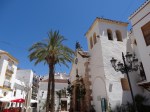
Having spent last week extolling the virtues of the recently arrived season of Autumn, those posts followed a pleasant Sunday walk, on which the sun shined and magnified the kaleidoscope of autumn’s palette to magnificent effect. Come the end of the week, when the wind direction turned swiftly northern, lambasting all who stood in its path with a wintery chill, I upped sticks and left the British to it, flying out of London’s Gatwick and heading south for still-sunny Spain. There, arriving into the balmy evening warmth of Mediterranean Marbella, you would have been excused for thinking that it was the height of summer still, a conclusion confirmed when, 5 minutes into our walk from bus station to family home down in the core of Marbella’s Andalucian old town, we were shedding British jacket and jumper, stuffing our newly aired scarves back into our bags, and swiftly replacing trousers with shorts, despite the late hour of the day.

DSC08257 DSC08228 IMG_5262 DSC08236 DSC08245

And so, as a long weekend proceeded in these indisputably superior climes, (it’s primary intention being to celebrate the birthday of my mother who, like me, cannot bear the thought of spending a birthday in any weather other than guaranteed sunshine), we enjoyed what felt like a second chance of summer, albeit just for a couple of days. Naturally enough, where we strolled in the relentlessly charming town of Marbella, my camera came with me, and the photos which result show Marbella still glowing in the late summer sunshine, but itself showing a few signs that the season is coming to an end: green tiled roof tops for example are partially covered by a scattering of golden leaves; and beaches, their sparkling glow perfected by a stronger winter’s sun, are emptier and more sedate. But these signs are but small when compared with the seasonal variety which descends upon England’s landscapes at this time of year, and in my photos you will once again see a city which, but for a few days exception, is a perfect summertime paradise, all year round.
All photos and written content are strictly the copyright of Nicholas de Lacy-Brown © 2013 and The Daily Norm. All rights are reserved. Unauthorized use and/or duplication of the material, whether written work, photography or artwork, included within The Daily Norm without express and written permission from The Daily Norm’s author and/or owner is strictly prohibited. 

Norm’s Autumn Banoffee at Palau March

As the green leaves of summer turn gradually to shades of auburn and brown, it’s time again to reflect on that sunny island of Mallorca, where the higher temperatures of summer live on, and the sun’s midday warmth embraces all locals and visitors alike with its life-enhancing optimism. But even Mallorca and the Mediterranean is not immune from the seasonal momentum of the planetary system, and as evenings draw in before winter descends, and the sunlight hours diminish, the locals and Norms of Mallorca’s capital Palma look to the cosier pursuits in life.

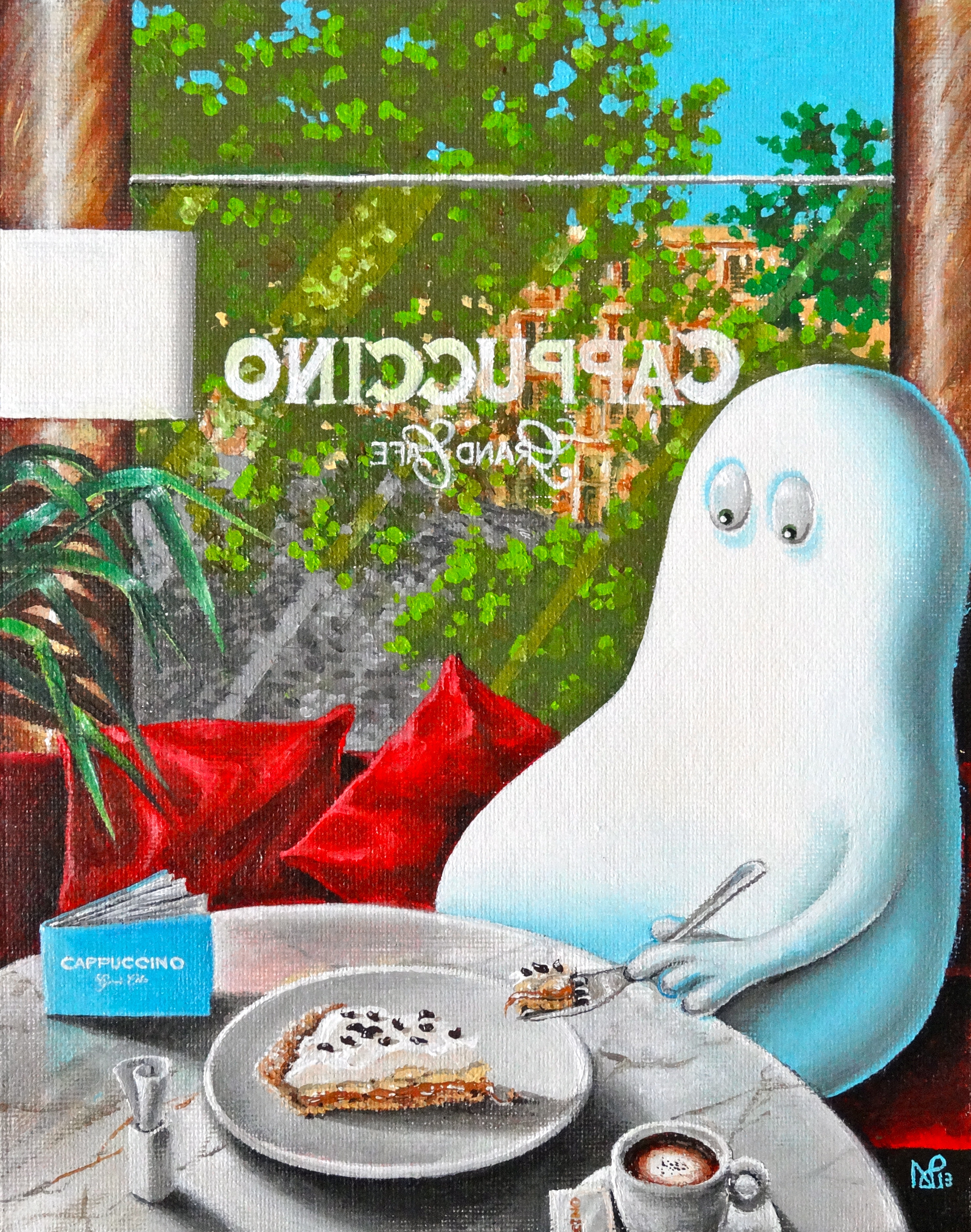
And can there be anything cosier in the emerging autumn than a late afternoon tea, with a slice of Cappuccino Grand Café’s classic banoffee pie, consumed while sitting on the comfy sofas of the Palau March café under the colonnades ofthis elegant city palace? This little Norm certainly does not think so, and indulging in the very height of afternoon delight, he sips upon his coffee and digs into his oozing caramel-filled banana and cream tart with a gusto which is more than justified when exposed to such an exquisite dessert. His little heart beating to the sumptuous sounds of Cappuccino’s jazzy sound track, and his eyes otherwise entertained by the unbeatable views of Palma’s historic centre beyond the colonnades, this Norm is all set up for an autumn afternoon of insurmountable delight, and is frankly the envy of all of us who can not be there with him.

Norm at Cappuccino Palau March (2013 © Nicholas de Lacy-Brown, acrylic on canvas)

Norm at Cappuccino Palau March (2013 © Nicholas de Lacy-Brown, acrylic on canvas)

My little Norm painting is acrylic on canvas and currently hangs, so I gather, in the stunning Ibiza Botafoch café of the Grupo Cappuccino. Now that’s got to be a double whammy for this little Norm.

Check out more Norm paintings in the new Norm galleries of my (almost) completed new website.

© Nicholas de Lacy-Brown and The Daily Norm, 2001-2013. Unauthorized use and/or duplication of the material, whether written work, photography or artwork, included within The Daily Norm without express and written permission from The Daily Norm’s author and/or owner is strictly prohibited. Excerpts and links may be used, provided that full and clear credit is given to Nicholas de Lacy-Brown and The Daily Norm with appropriate and specific direction to the original content.

Mallorca Map Commission Part 2 – Palma

If I thought the first of my Mallorca maps was a complex undertaking, with its representation of iconic Mallorca filled with the towns and terrain that characterise that Mediterranean gem of an island, then things weren’t going to get any easier when it came to commencing the second of the two commissions undertaken for Cappuccino Grand Cafe this Summer. This time round it was the capital city of Mallorca (and the Balearics) Palma de Mallorca which needed to be put on the map, as it were, a requisite for Cappuccino’s Mallorcan representation, seeing as the popular café chain has some 5 restaurants and two takeaway branches in the city alone.

Map of Palma de Mallorca (2013 © Nicholas de Lacy-Brown)

Map of Palma de Mallorca (2013 © Nicholas de Lacy-Brown)

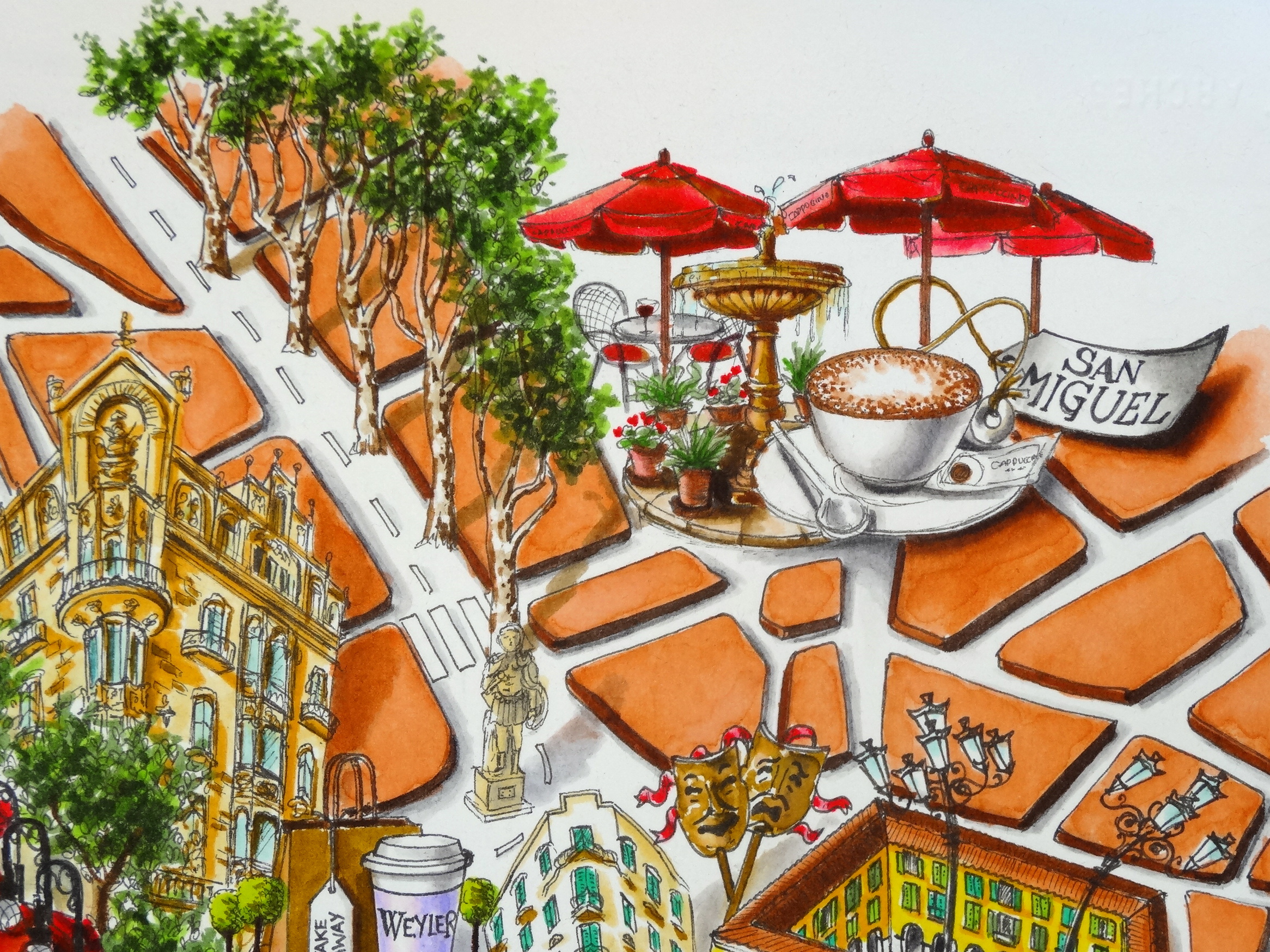
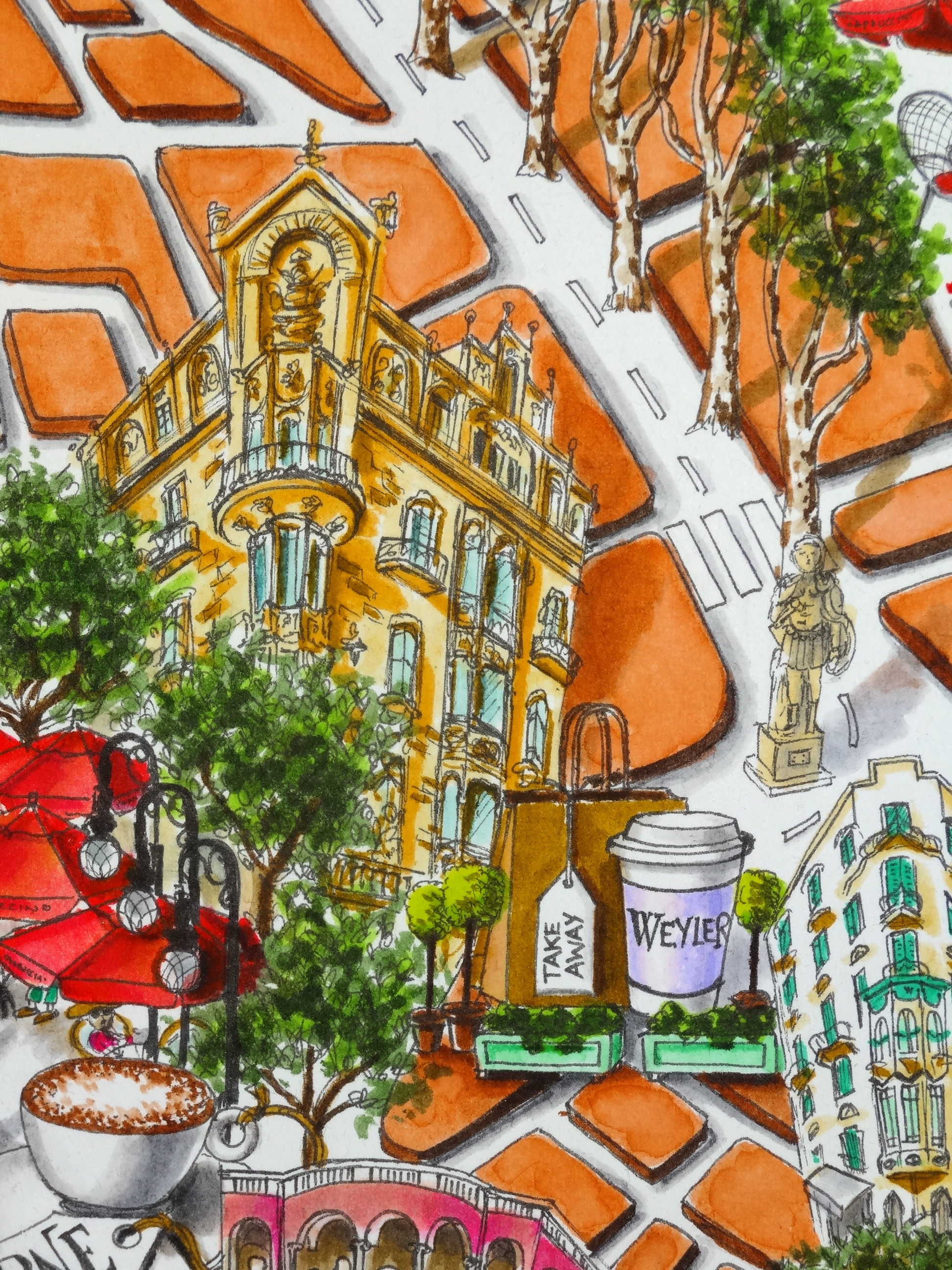
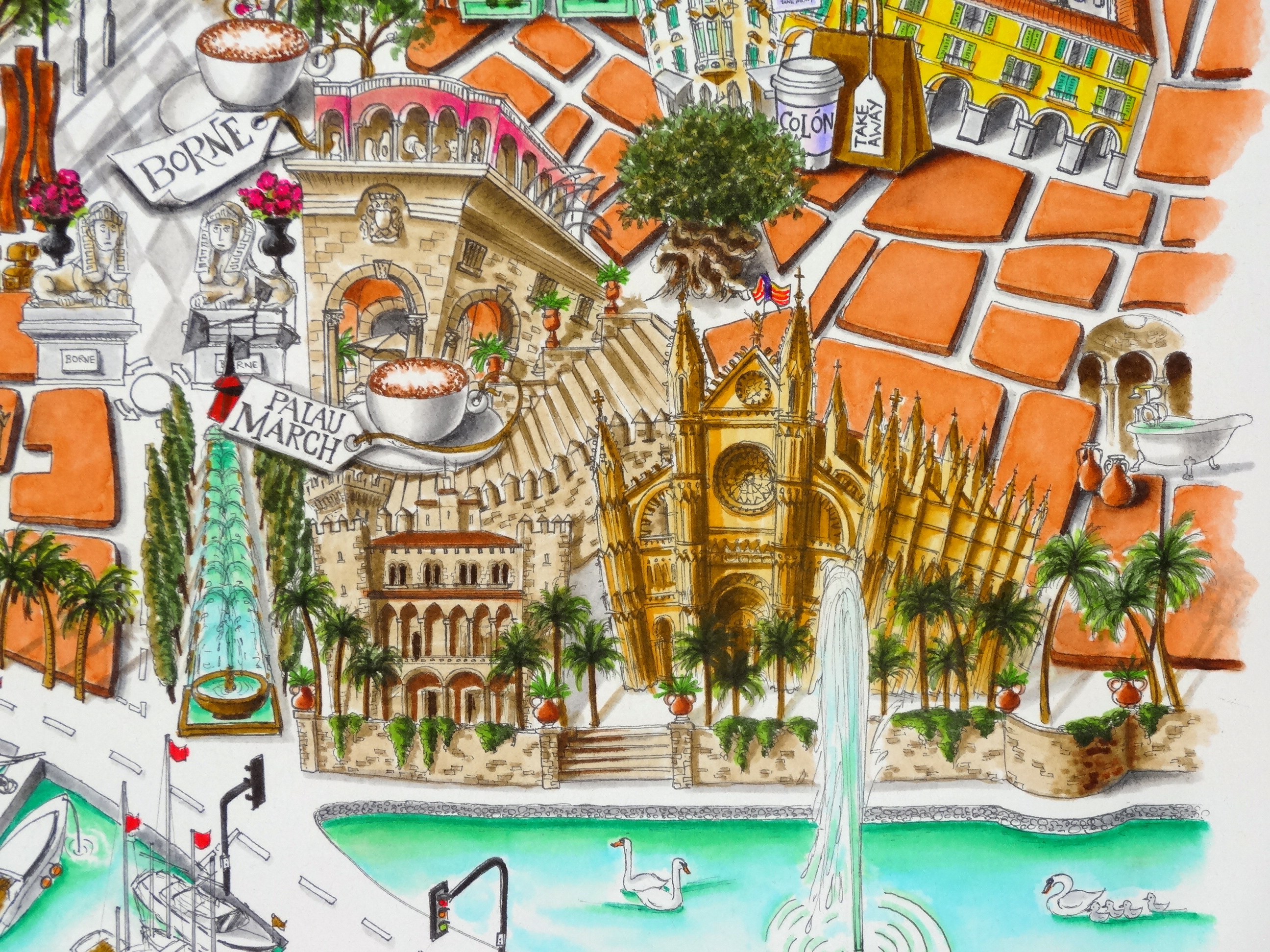
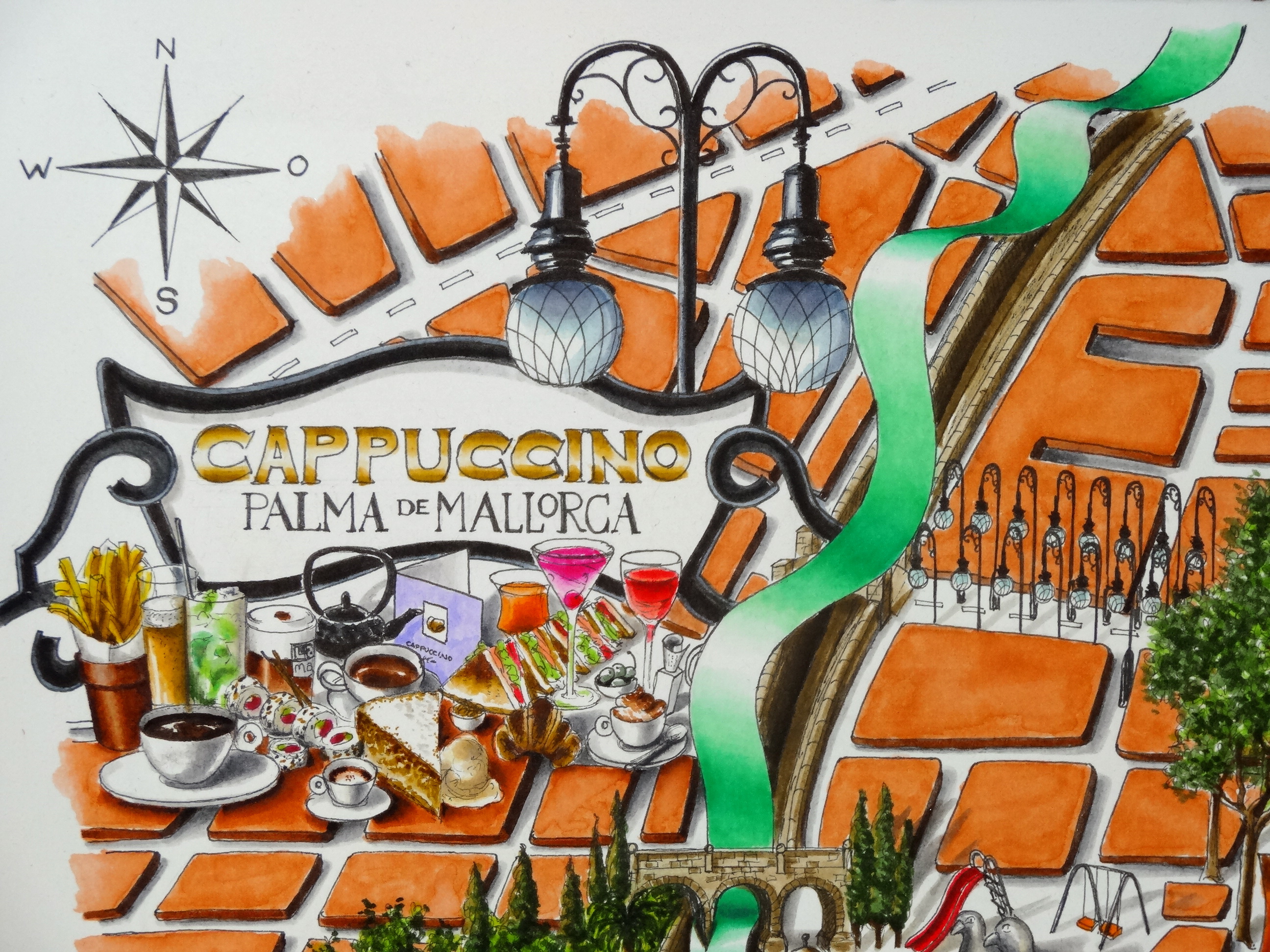
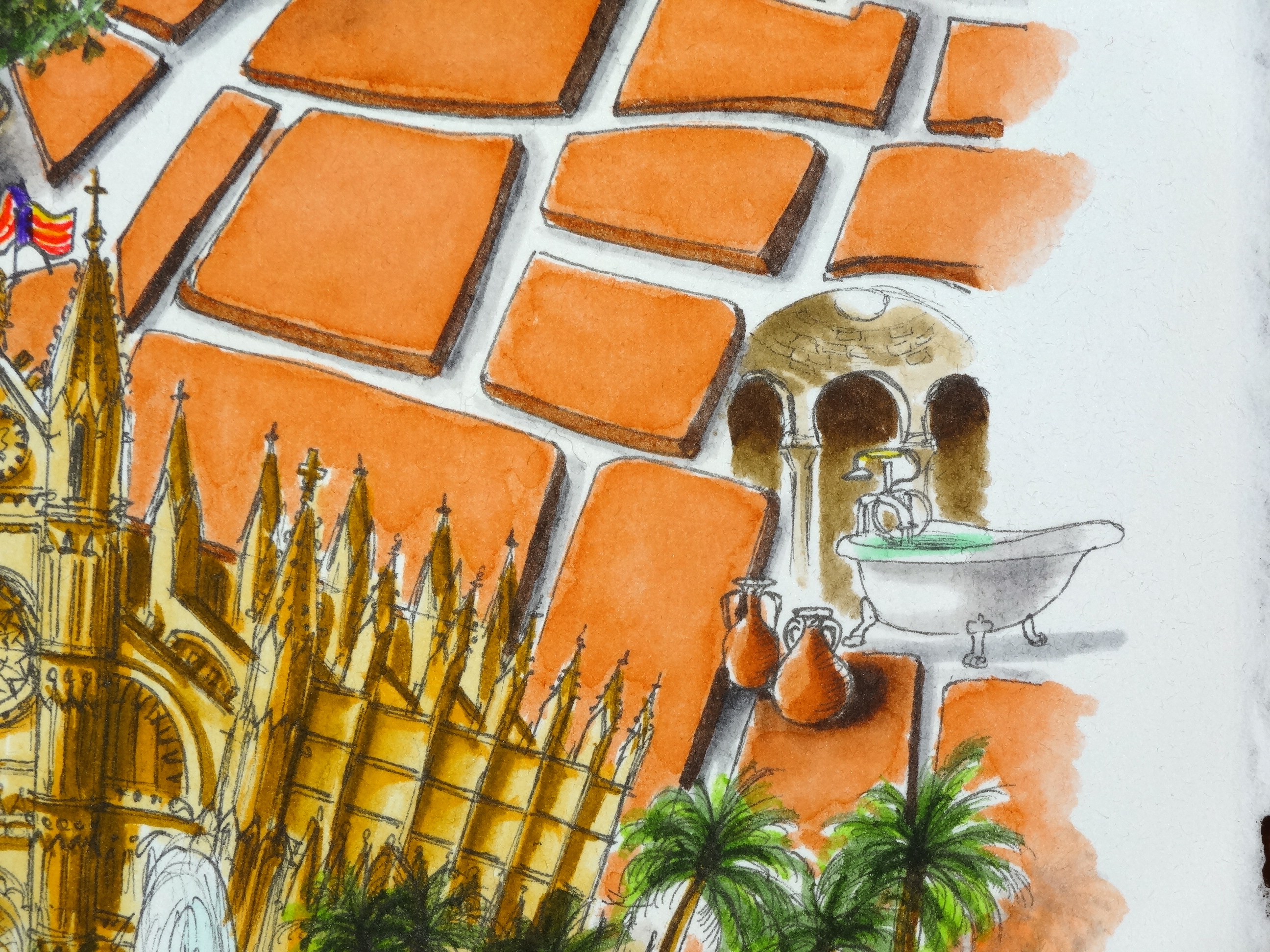
But quite asides from illustrating the cafés characteristically prime locations, the real dilemma for me, when I set about designing the map, was how best to represent the stunning city of Palma in all its architectural and nautical glory, while ensuring that the illustrations of the Cappuccino cafes did not become overshadowed. My solution was to focus on the areas and the architecture which makes the locations of the Cappuccino cafés so desirable, contributing inexorably to the simple joys of visiting one of their branches, sipping a coffee in the vicinity of the ancient Palau March for example, or overlooking Palma’s yacht-crammed marina; and to otherwise reflect the great mass of this sprawling city with simplified terracotta blocks, these hinting at the architectural maturity of the city, while also resembling the terracotta floors which are characteristic of the Med. However, I suppose the pièce de résistance of the map for me is my representation of the River Borne, cutting through the Western half of the city as it makes its way down to the marina beyond. I could not resist the temptation to give this map a surreal twist, lifting the river like a satin ribbon, out of its river bank, undulating and flapping through the air as it approaches the sea.

Cafes in the Borne and Palau March

Cafes in the Borne and Palau March

The Cappuccino HQ at San MIguel

The Cappuccino HQ at San MIguel

The Colon takeaway

The Colon takeaway

The Weyler takeaway

The Weyler takeaway

The Borne - detail

The Borne – detail

The Paseo Maritimo Cappuccino

The Paseo Maritimo Cappuccino

The result of all this is a map which must surely represent a satisfying climax of my Balearic maps, and one whose result is the self-evident result of hours of laborious and detailed work. But with Mallorca, Ibiza and Palma under my belt, the question has to be: where will my map making take me next? With their capacity to capture the essence and character of a place, while reflecting the topography and geography of a location, I have now realised the potential that a map can have for artistic illustration, while reflecting an accurate representation of location and terrain – and frankly, I cannot wait to explore the medium further.

Detail of the cathedral

Detail of the cathedral

Detail of the Marina and the River Borne

Detail of the Marina and the River Borne

The Cappuccino Brand Fusion placed in an iconic modernista shop sign (now home to Colon takeaway)

The Cappuccino Brand Fusion placed in an iconic modernista shop sign (now part of the decor of the Colon takeaway)

Detail of the Cathedral roof and nearby arab baths

Detail of the Cathedral roof and nearby arab baths

Detail of the Es Baluard museum of contemporary art

Detail of the Es Baluard museum of contemporary art

You can see all of my Balearic maps in the Cappuccino Grand Papier, available online, and in everyone of the cafés irresistibly indulgent branches. What other excuse do you need for a weekend in the sun?

© Nicholas de Lacy-Brown and The Daily Norm, 2001-2013. Unauthorized use and/or duplication of the material, whether written work, photography or artwork, included within The Daily Norm without express and written permission from The Daily Norm’s author and/or owner is strictly prohibited. Excerpts and links may be used, provided that full and clear credit is given to Nicholas de Lacy-Brown and The Daily Norm with appropriate and specific direction to the original content.

Marbella Twenty-Thirteen | Favourite Photos

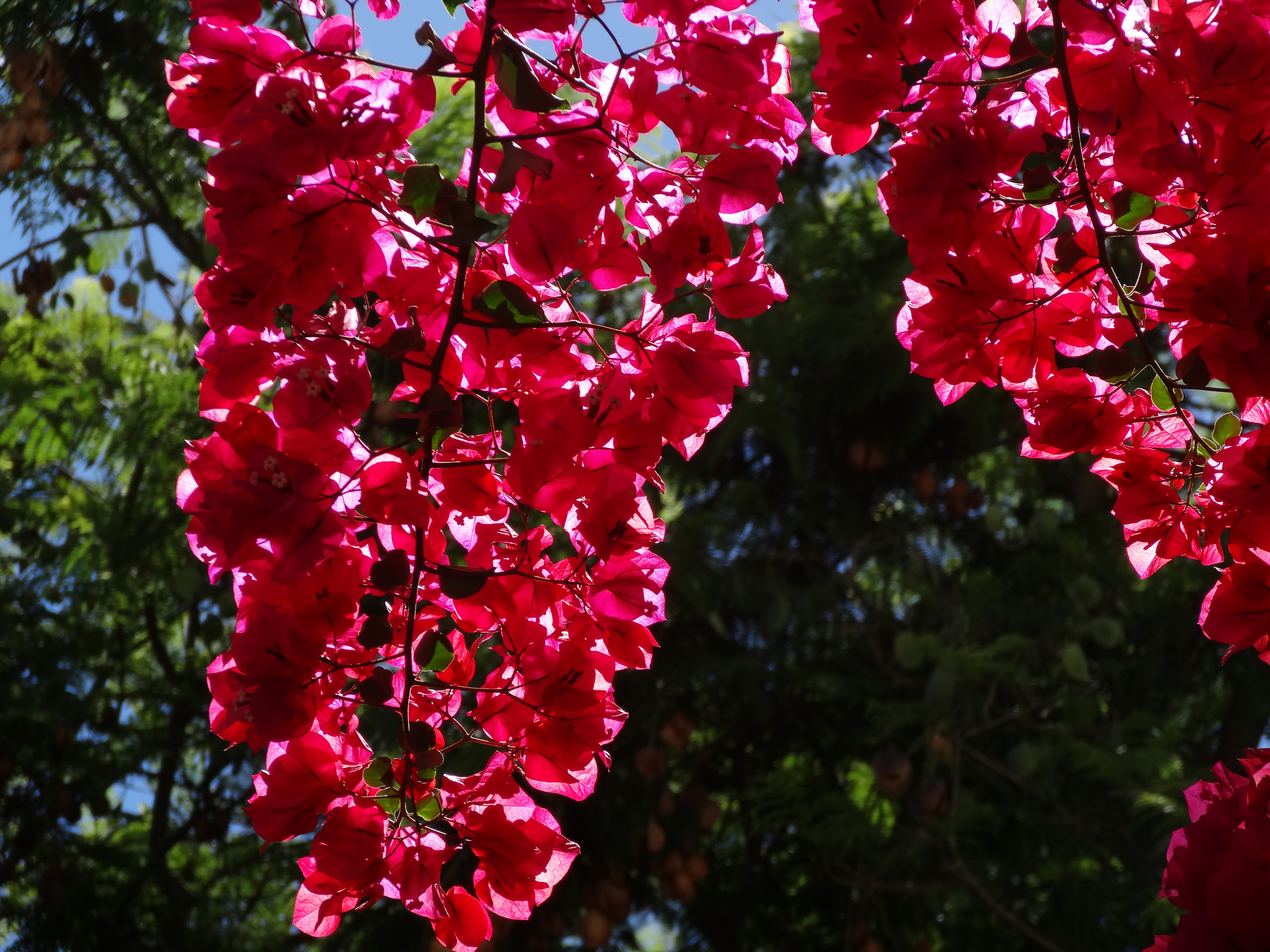
As my Marbella season comes to an end, and the third of my summer-time travel tripartite waits eagerly in the wings for Daily Norm exploration  (yes, Poland is on its way…!) I wanted to end this series of Summer Spain posts, as I so often do, with a series of some of my favourite miscellaneous photos. Like always, these photos really are a hodgepodge selection, from beautiful stained-glass butterflies and fuchsia pink bourganvilla, to crazy curly street lamps and olive oil bottles glinting in the sun. I love the smaller details which have been captured in this set, such as the tiny little yellow ladybird who appeared like a birthday good luck charm on my 30th when I sat sipping champagne by the sea; and the amazing black and white polka dot body of that incredible butterfly whose startling orange wings glowed like a light suspended in midair when caught by the rays of the sun. But some of these photos also capture wider planes and more general atmospheres, such as the cafe scene in orange square and that fatty delicious churros I ate on my birthday.

DSC05481 DSC06467 DSC05557 DSC05619DSC06560

As ever these are a set of photographic memories which I will always cherish as something to look back on in the privacy of my own home, but which are somehow all the richer, for my being able now to share them with you. Enjoy.

All photos and written content are strictly the copyright of Nicholas de Lacy-Brown © 2013 and The Daily Norm. All rights are reserved. Unauthorized use and/or duplication of the material, whether written work, photography or artwork, included within The Daily Norm without express and written permission from The Daily Norm’s author and/or owner is strictly prohibited. 

Composition No. 9: Ojén Rooftops

I’ve always loved terracotta tiled roofs, for the same reason I suppose that I love palm trees and the chirping sound of cicadas in the heat – because they remind me of the Mediterranean, of the sunshine, of the summer. And is there a sight more conceivably Mediterranean than a little hill top village, a cluster of white washed walls when seen from the side, and a angular hodgepodge of terracotta roofs when viewed from above?

It was exactly this kind of collective village feel that I tried to emulate when I moved onto my 9th gouache composition in the dying days of my Spanish holiday, and having visited the hilltop village of Ojén up in the mountains behind Marbella. The lower section of the village, when seen from the upper road which cuts through its centre makes for a rather breathtaking spectacle; its terracotta roofs uniform apart from the odd turquoise ceramic exception; this consistent sea of peachy-red marking a wonderful contrast against the undulating hillsides which form a backdrop against the village, rolling steadily down the mountain as they fade outwards towards the sea. I was particularly enamoured by the hills around Ojén, not least because, whether it be by reason of agriculture or just because of the natural lie of the land, the hillsides appeared to be almost spotty on the one hand with olive trees, like the polka dot traje de flamencas of the flamenco dancers, and crossed with horizontal stripes on the other.

Composition No. 9: Ojén Rooftops (2013 © Nicholas de Lacy-Brown, gouache on paper)

Composition No. 9: Ojén Rooftops (2013 © Nicholas de Lacy-Brown, gouache on paper)

Naturally I couldn’t resist but reflect these patternings in my latest gouache composition, the likes of which I present, fresh from my artist’s sketchbook, terracotta roofs (and those odd turquoise exceptions) included. I hope you like it.

© Nicholas de Lacy-Brown and The Daily Norm, 2001-2013. Unauthorized use and/or duplication of the material, whether written work, photography or artwork, included within The Daily Norm without express and written permission from The Daily Norm’s author and/or owner is strictly prohibited. Excerpts and links may be used, provided that full and clear credit is given to Nicholas de Lacy-Brown and The Daily Norm with appropriate and specific direction to the original content.

Marbella Twenty-Thirteen | Ojén

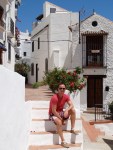
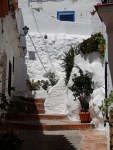
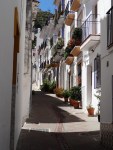
When I think Andalucía, I think narrow white washed streets clinging to steep mountain sides; seas of terracotta tiled roofs jostling for space in a crowded maze of twisting ancient streets; houses almost spilling from inside out, as residents take to sitting outside in the cooler evening air; and those white washed walls being intermittently punctuated by rich floral sprays such as the vivid pinks of brugmansia and the fragrant perfume of jasmine. And while Marbella, the location of my ultimate of August holidays, has its fair share of white washed wonders collected together in the winding cobbled streets of its stunning old town, it’s the little hilltop Andalus villages which for me characterise the very epitome of Southern Spanish charm.

So to discover these little hilltop gems one has to leave Marbella, and the sprawling Costa del Sol behind, but this isn’t exactly easy to do for the likes of me who has no car – the Costa, unbelievably is not on the Spanish train network, and the destinations served by the local bus service are limited. Happily however, there is one exception to this sorry state of transportation – every few hours, a bus leaves from Marbella centre and makes the 30 minute journey, up into the mountains, to the nearby hilltop village of Ojén, home to none other than Julio Iglesias himself.

Scenery from Marbella to Ojén

DSC06308 DSC06316 DSC06330

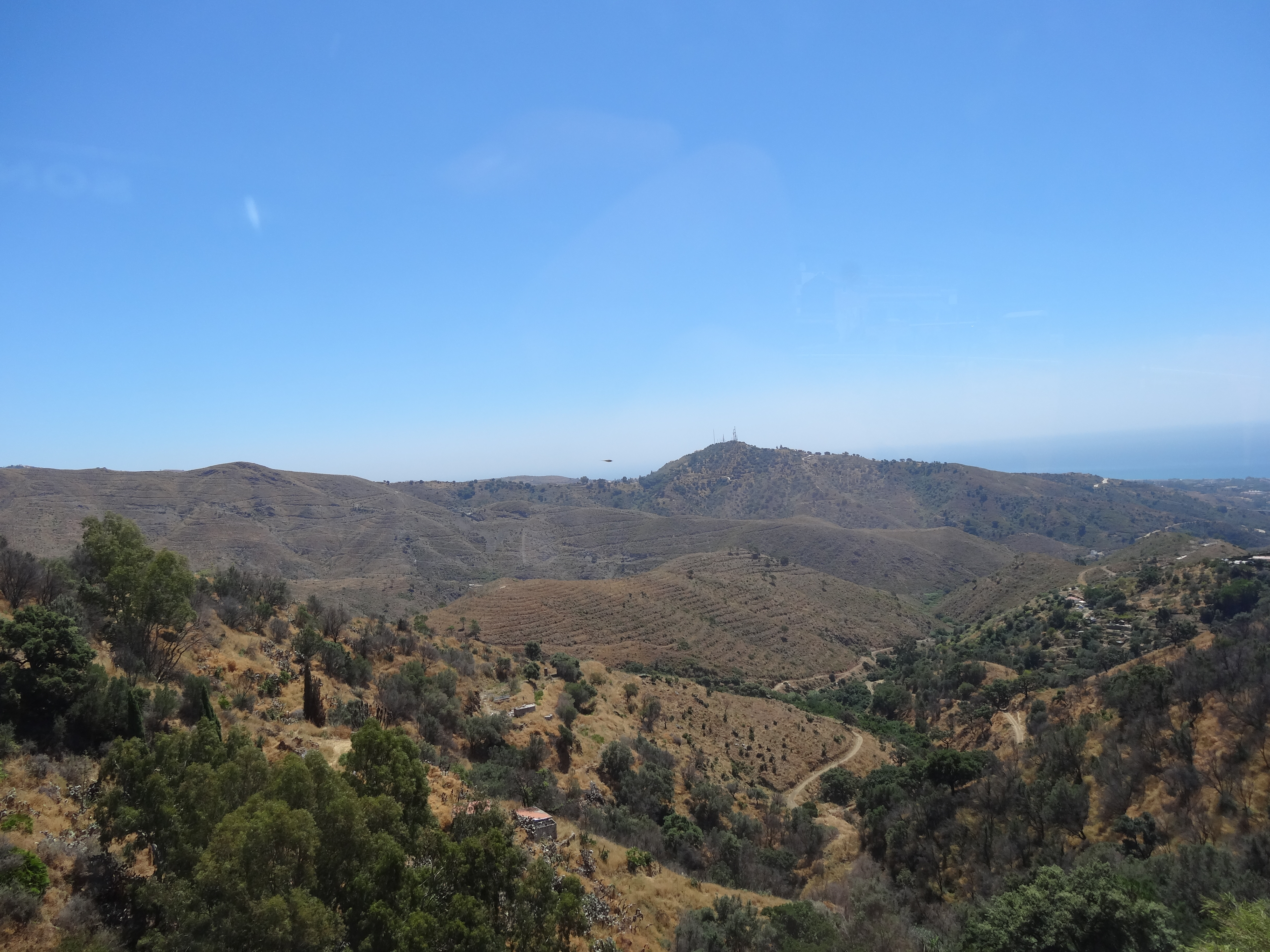
As soon as you leave Marbella’s centre and begin to ascend the main road into the Sierra Blanca mountain range which rises so prominently behind the town, you notice the scenery begin to change. As the bus descends and the road skirts the steepening mountain sides, the landscape opens up before you so that urban dwellings are replaced by vast ochre planes, their rocky arid topography punctuated by olive trees and the odd cypress. At this time of year the landscapes are particularly dry, but this year they retain the black charred scarring which a devastating forest fire caused last year when it spread across the planes of Andalucía. This does nothing to distract from the beauty of the landscape however, whose slopes and pastures meander and undulate downwards towards a stunning view of the Mediterranean sea and Marbella some 1000 metres below.

A few minutes of winding roads later, and the little village of Ojén appears. Home to around 1000 people, it is a cluster of dazzling white set against the ochres and browns of the surrounding hillsides. Those hillsides are reflected in the streets and homes of the village which, in places, appear to be almost precariously clinging to the hillsides and near vertical angles, the stone sloping streets following suit and making a climb upwards under the midday sun a challenging prospect. But my goodness me, what a gem of a town this is – a magical collection of Andalucía’s best – those white washed houses and little tiled roofs, old woven chairs left outside tiny town houses, windows open in a vain attempt to catch a little breeze.

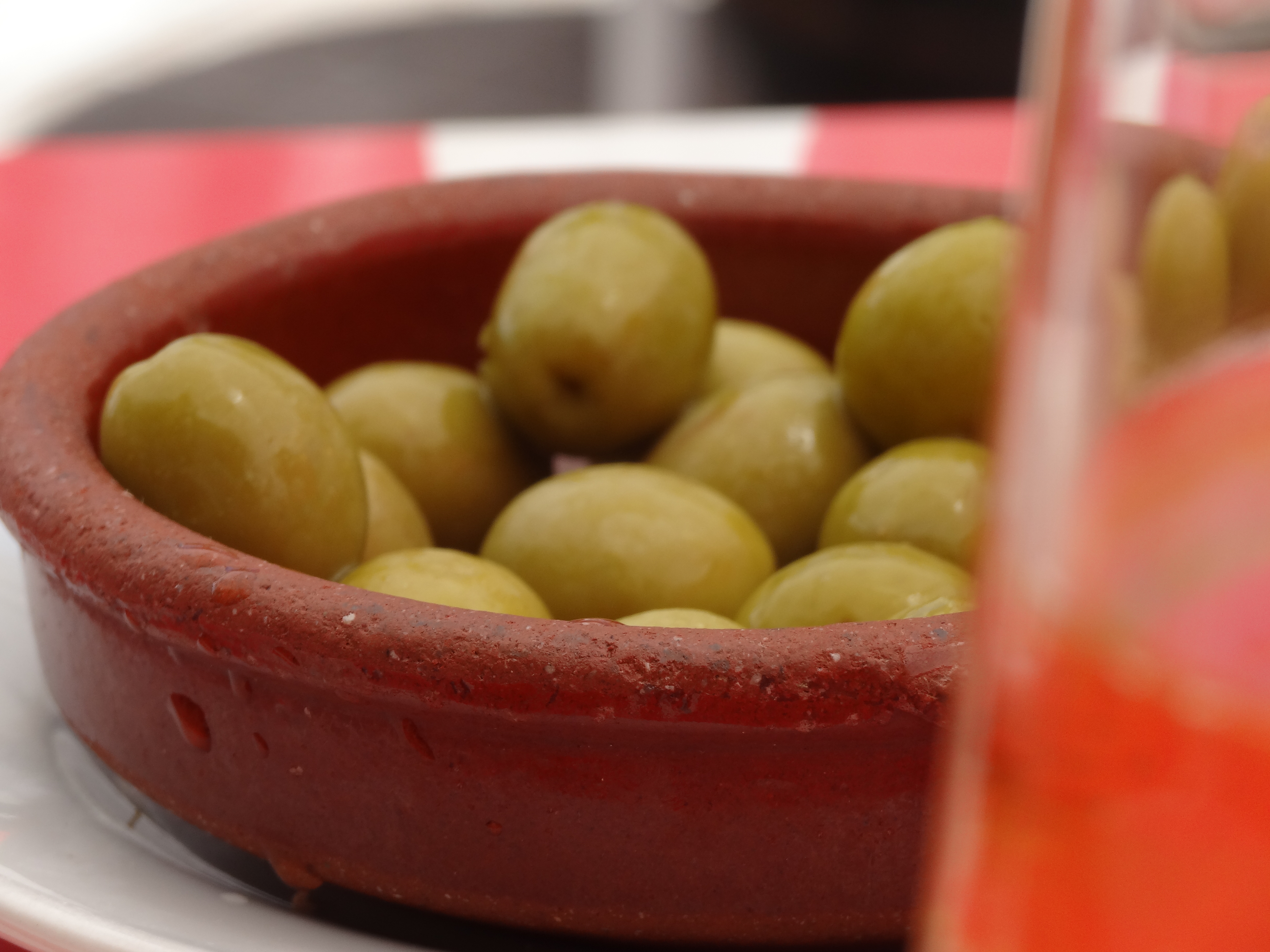
Perhaps the highlight of this town is the central square, surrounded by little bars and a tiny church at its centre, the baking marble pavements cooled slightly by the sound and spray of trickling water from a large fountain which remains remarkably cold even in the average 40 degrees of a typical summer’s day. It was there that my partner and I headed one lunchtime, braving the heat in order to recapture a moment we had enjoyed in the village a few years before, when we ate a plate of Spanish ham in the cheapest of cafes, but whose flavour was so intensely salty and rich that no tapas has lived up to it since. This time round, the ham did not disappoint, and basking in the almost oven-like heat of the square, we revelled in the soft melting fat and unctuous meaty texture of that ham, washed down with a small cerveza, some bread and olives. Surely as typically, simply delicious as Andalucía gets.

DSC06343 DSC06345

I leave these reflections with some photos from the day; a collection of images straight from the heart of Andalucía.

All photos and written content are strictly the copyright of Nicholas de Lacy-Brown © 2013 and The Daily Norm. 

Marbella Twenty-Thirteen | Puerto Banús

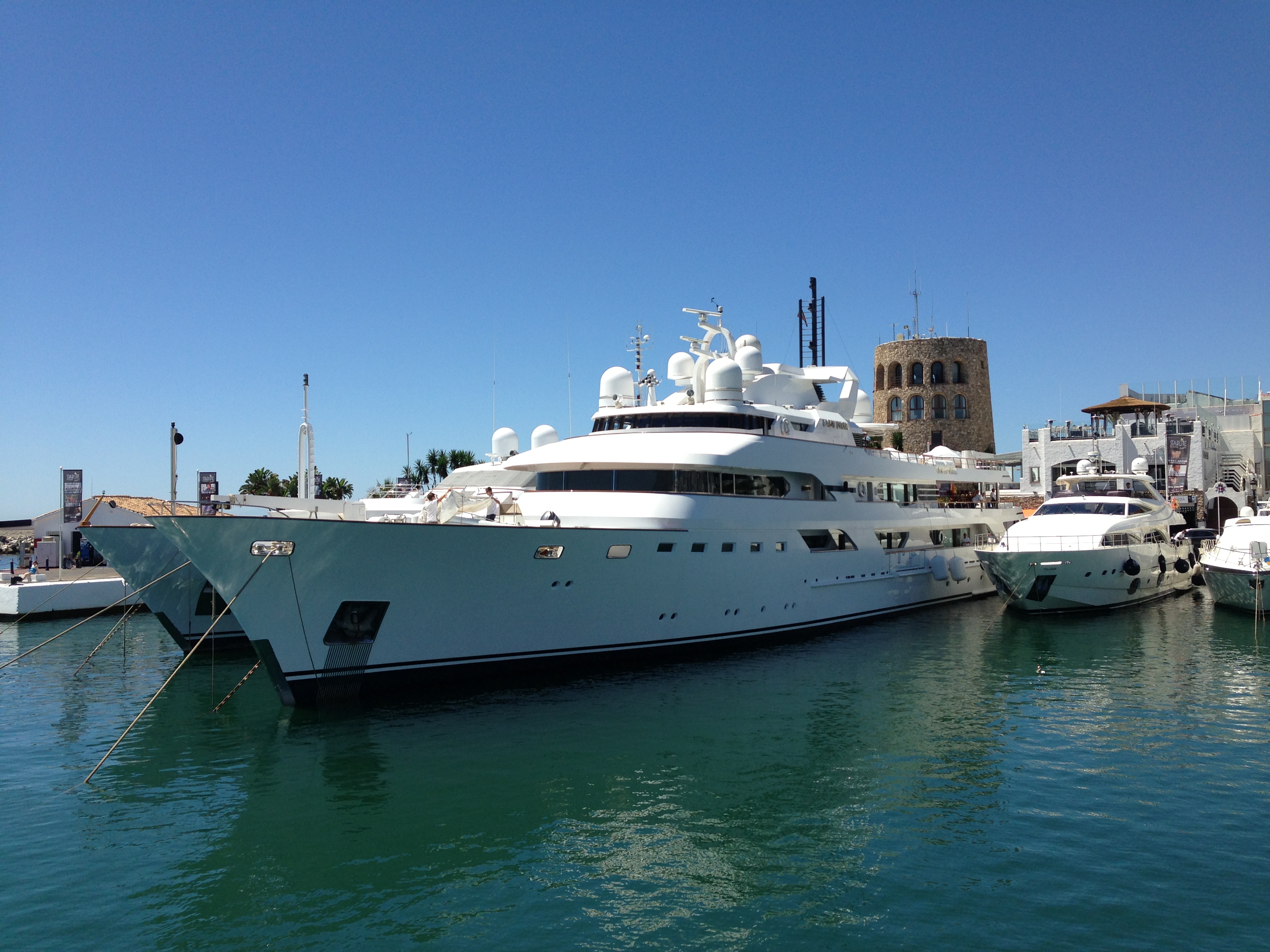
While Marbella is pretty much famous throughout the world for its richer, glitzier suburb marina of Puerto Banus, about 10km along the coast from the centre, the port, which houses the big gaudy yachts, the high end fashion boutiques and the boy-toy roof-off sports cars is far removed from the true Marbella, which at its heart has a gem of an old town, and in the streets around it extends a charm of a bustling Spanish town, but one which has authenticity and a feel of Spanish community running through its every vein. Puerto Banus is a different kettle of fish altogether. If superficial needed a dictionary definition, Puerto Banus would be it. Constructed from scratch in the late 1960s by Jose Banus, and opened at a lavish 1970 gala with attendees such as Grace Kelly, then Princess of Monaco present, the port very quickly became the favourite destination of the jet set and those with plenty of cash to splash. Today, the port retains its self-indulgent character, albeit that the occupants have probably become richer, and almost certainly tackier, with their fake bodily parts, hideously botoxed blown-up lips, overly worked tans and hair extensions. The lack of taste in the place really does grate, and after an hour or so amongst the nouveau riche, I am rarely happier to get back to the Andalus authenticity and charm of Marbella’s old town.

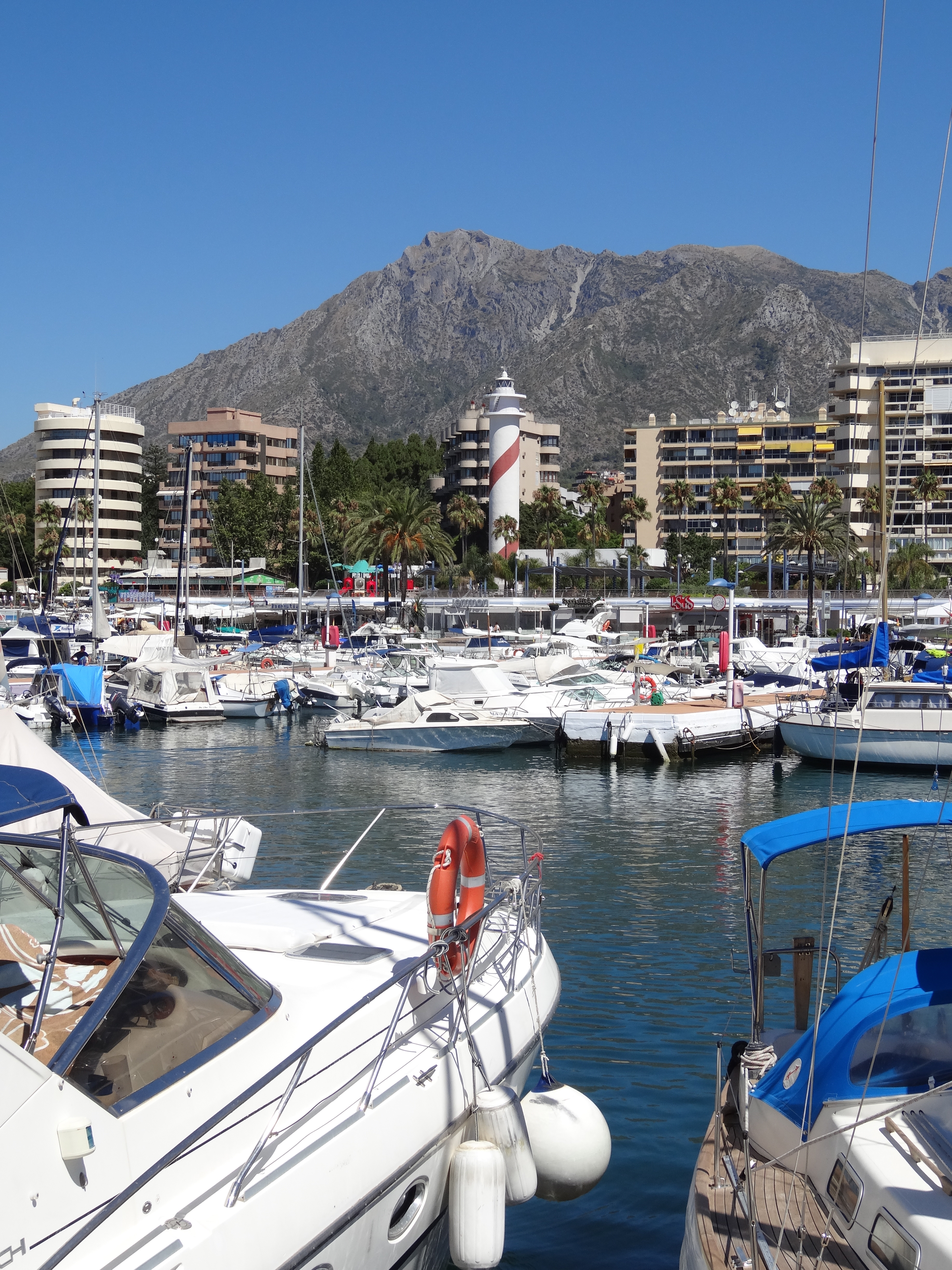
Taking the boat from Marbella to Banus…

Marbella's port

Marbella’s port

DSC05632

The catamaran taking us to Banus

The catamaran taking us to Banus

IMG_4075

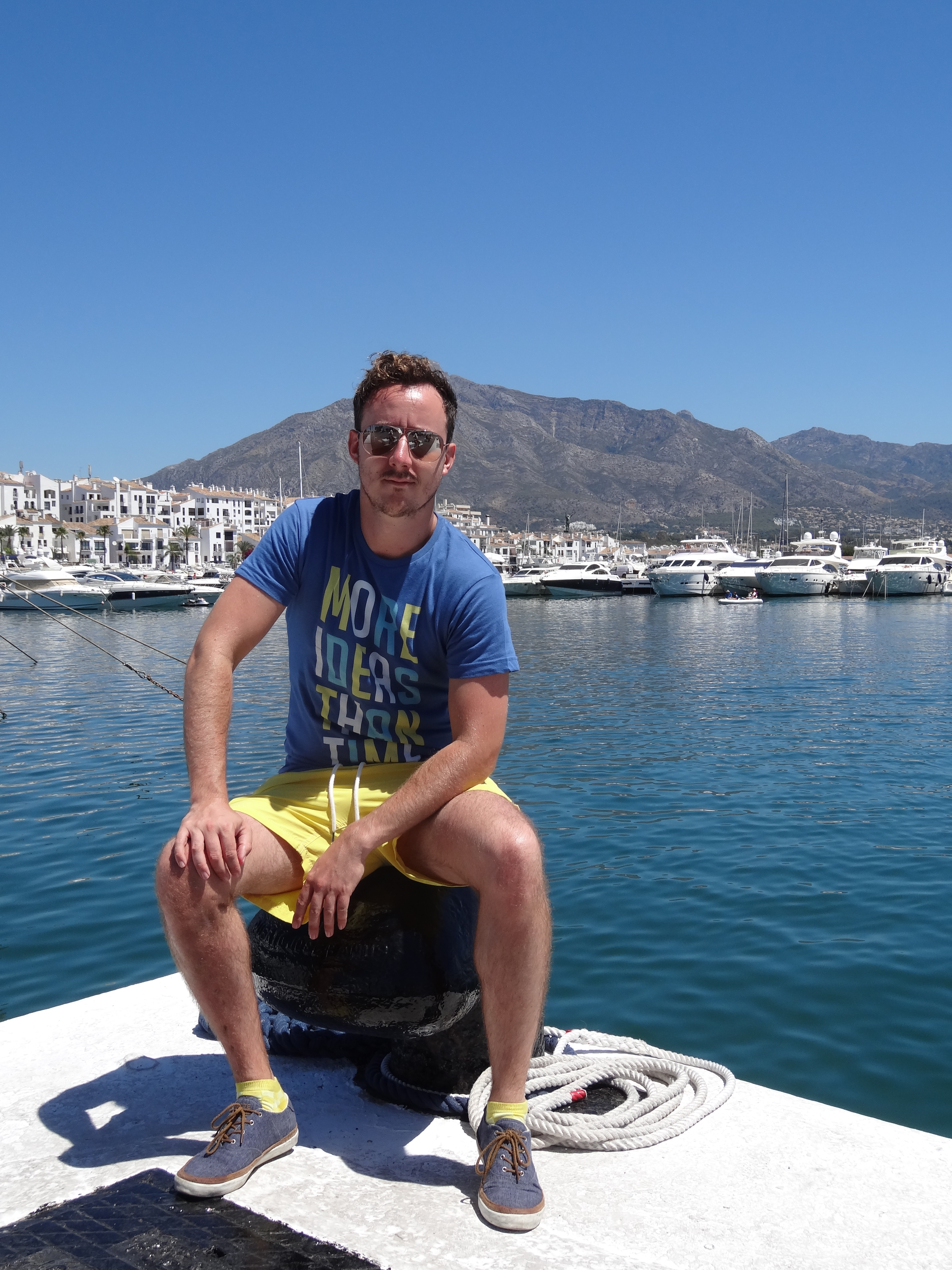
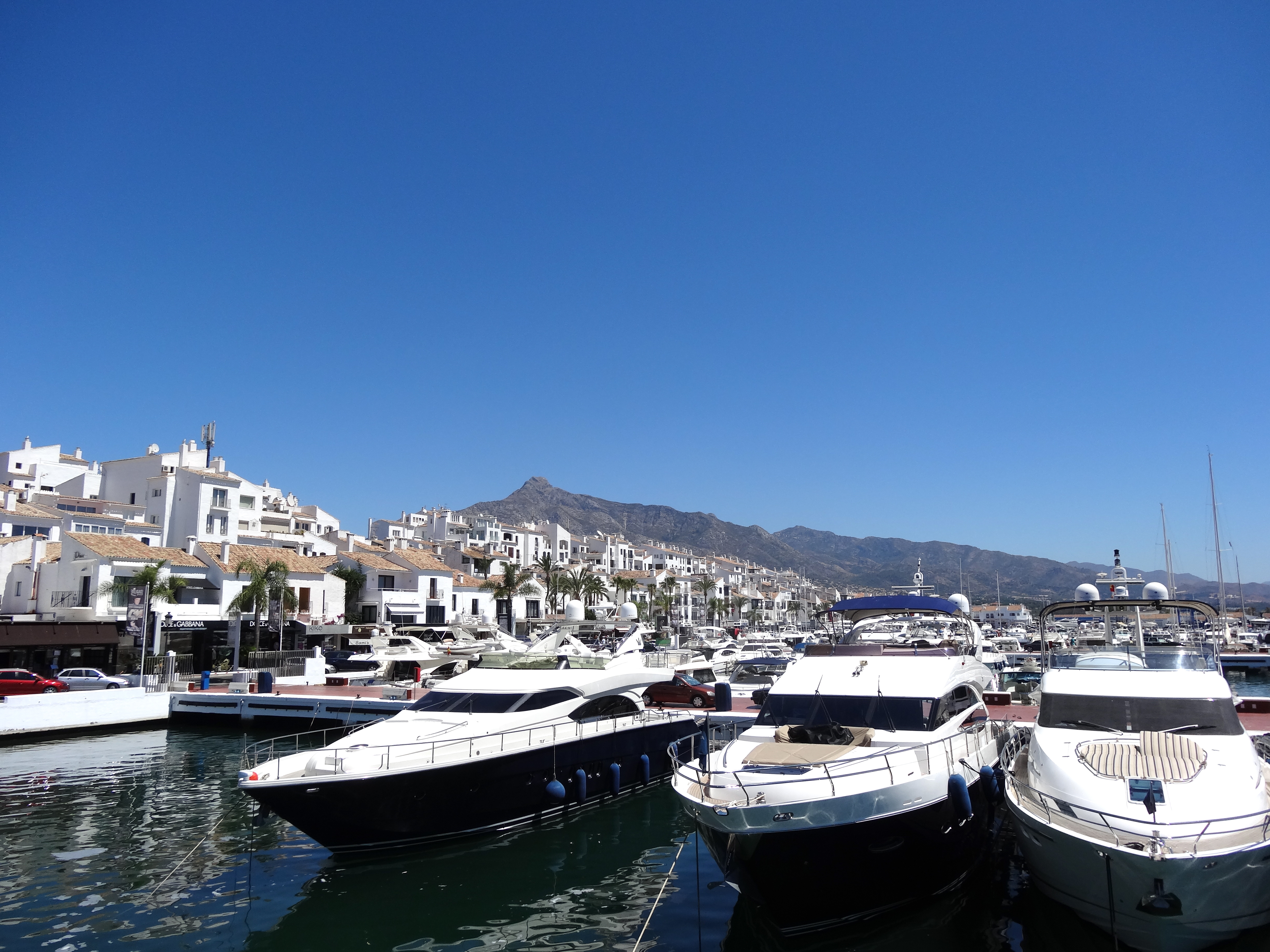
But get away from the tacky masses, and block out the drones of Essex accents and other unsavoury lingos, and the fact remains that Puerto Banus, built in a uniform dazzling low-rise white, with similarly sparkling white yachts before it and the stupendously beautiful Marbella mountain rising up behind it, is really very beautiful. And there is no better way to approach the port and therefore regard it from a safe distance in all its peopleless beauty than to take a boat from Marbella’s slightly less salubrious marina, to Banus. At the cost of only 8 euros one way, it’s almost the same price as a taxi, but the trip affords stunning views of the Marbellan coastline, reminding passengers of just why the town was named “Sea Beautiful”.

Puerto Banus in all its glory

DSC05679 DSC05685 DSC05674 DSC05663 DSC05672

Once in Puerto Banus, a few restaurants round the corner from the main boutique-filled thoroughfare enable quiet al fresco dining with a stunning port-side location, while just outside of Puerto Banus, in the stretch between Banus and Marbella are situated some of the most stunning, tranquil and quiet beaches in all of Marbella. So when my partner and I headed to Banus by boat this summer, we were surprised how much of an enjoyable experience we could extract from a Port which we have formerly declared a no-go zone. Not only did the lunch trip and the boat over afford us stunning views of the marina and the coast, but our return journey provided us with the most beautiful vistas of them all. Because for those with the energy and the appetite for a long walk, the walk on foot, along Marbella’s amble seaside-promenades from Banus back to the centre of Marbella, is undoubtedly the most stunning walk to be had on all of the Costa del Sol. While it takes a good 90 minutes without stopping, and longer when you stop to take advantage of the tranquil beaches and the well-situated seaside cafes, the path takes you past bounteous plump cacti, extravagant private villas, luxury hotels and quiet beaches which resemble something out of paradise. The walk is in fact so close to my heart that a couple of years back it inspired me to paint “Paseo Banus” (see below).

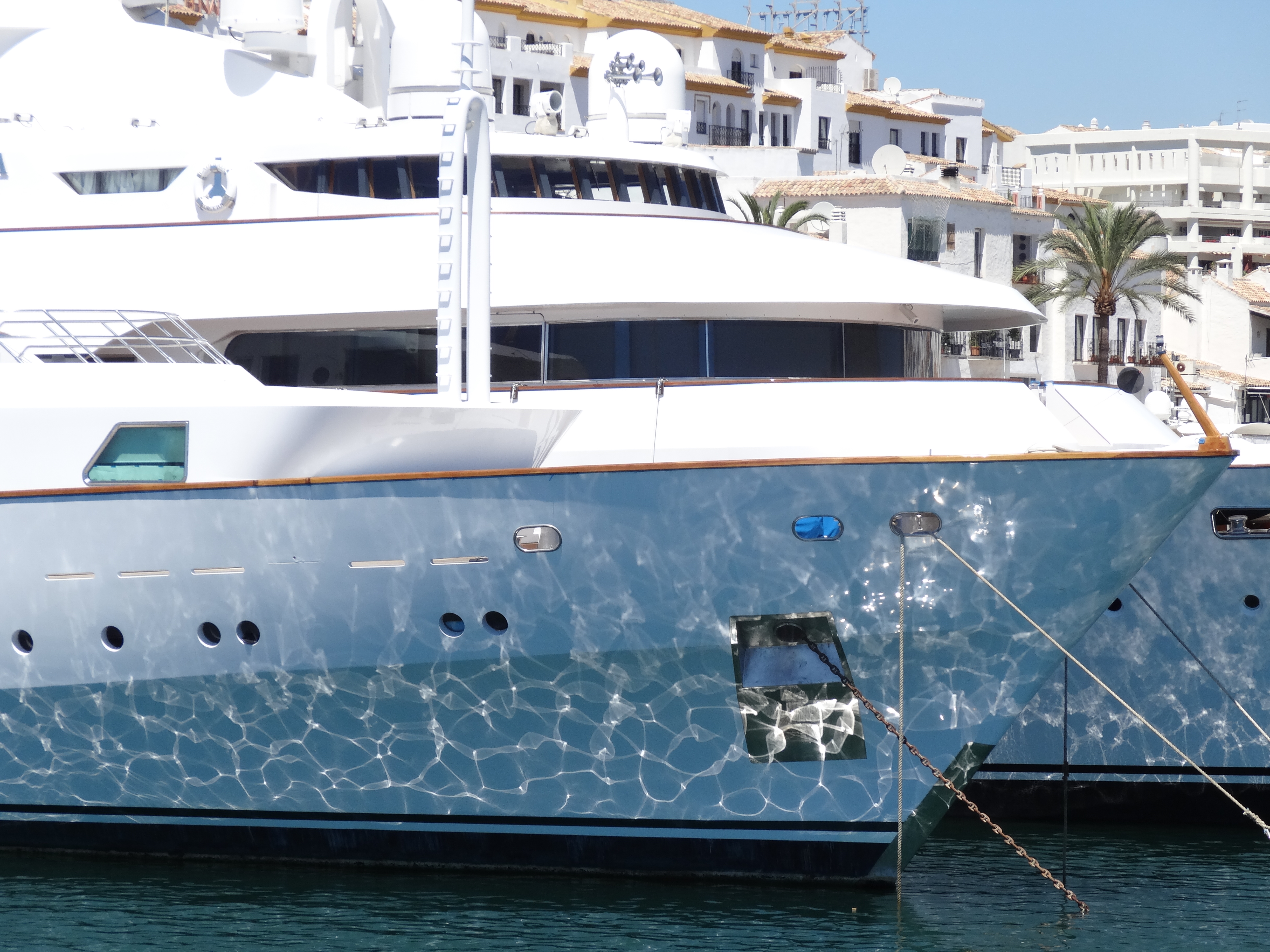
The famous Banus yachts

DSC05657 IMG_3586 DSC05662 DSC05687 DSC05669

The photos which you now see are from our trip to Banus, and the stunning walk home to Marbella’s centre which followed. Our walk probably took around 3 hours by the time we had stopped off at our favourite café Cappuccino Grand Café (and on another occasion Ibiza’s favourite – Café del Mar) and also spent a good hour dipping in and out of the super-calm sea, revelling in being the only people on a very quiet beach. But what an afternoon it was – sunny, hot, tranquil, beautiful – the riches of Marbella reserved for those who make the effort to walk out to them.

Walking from Banus back to Marbella

DSC05689 DSC05698 DSC05693 DSC05706 DSC05692 DSC05703 DSC05718 DSC05713 DSC05705

…and the painting it inspired

Paseo Banus (2011 © Nicholas de Lacy-Brown, Acrylic on canvas)

Paseo Banus (2011 © Nicholas de Lacy-Brown, Acrylic on canvas)

All photos and written content are strictly the copyright of Nicholas de Lacy-Brown © 2013 and The Daily Norm. All rights are reserved. Unauthorized use and/or duplication of the material, whether written work, photography or artwork, included within The Daily Norm without express and written permission from The Daily Norm’s author and/or owner is strictly prohibited. 

Composition No. 8: La Flamenca

Enrapturing, passionate, chromatic; clapping hands, a deep pulsating rhythm manifested in stamping feet, forceful bursts at the hip, all the way up to the twisting, extending, angular movements in the fingers; her face revels in an outward disclosure of passion felt deep within; her wailing, harsh swansong sings of deep sorrow; of inherent, historical pain; her dress, an abundant effluvia cascade of polka dots and frills moves to the same captivating rhythm as the dancer, its multiple layers swaying and bouncing, augmenting the dazzling mirage of a tangible passion climaxing towards its duende.

The dance of flamenco has long fascinated me, captivated my very heart and soul as it leaves me spell bound, pinned to the spot, enraptured by the raw materialisation of an emotional depth and cultural heritage which is so different from any dance ever made in the polite ballrooms of the west. When I went to see a concert of Estrella Morenete this Spring in London, I sat throughout much of the performance in tears. There is something about flamenco – its melodies and rhythms just as much as its dance which has the power to transport directly into the heart of Spain, and I think for this reason alone, I am in love with it.

Composition No. 8 - La Flamenca (2013 © Nicholas de Lacy-Brown, gouache on paper)

Composition No. 8 (La Flamenca) (2013 © Nicholas de Lacy-Brown, gouache on paper)

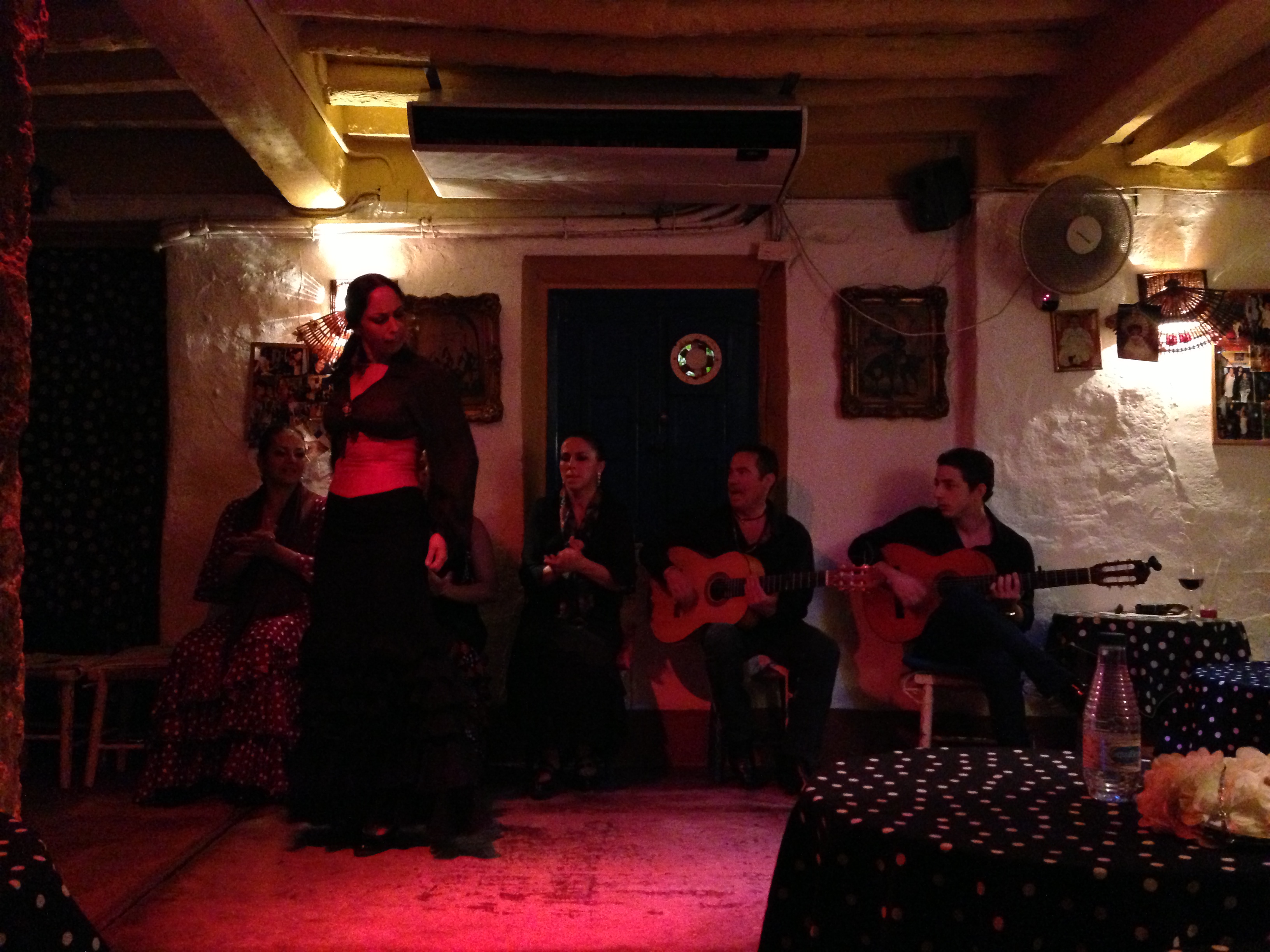
This summer’s return to Spain of course never failed to inspire me artistically as the last few posts on The Daily Norm will demonstrate – and where that inspiration led to paintings, I continued to explore the medium of gouache which I first started using a few months back. When I headed along to the Flamenco Ana Maria in Marbella’s old town on the night before my birthday, and was again entranced by the exquisitely spontaneous emotional outpouring of the music and the dance, I knew that Flamenco would inspire my next gouache. So following on from my series of “compositions” in which I take more of an abstract attitude to otherwise figurative works, I constructed my dancer (on a page twice the size of my other compositions numbers 3-7) utilising the idea of an overlapping construct which I have been exploring in my other works, something which worked well when I was unable to settle on one pose, and so instead depicted several poses, all overlapping into a collective exploration of the electric impassioned movements of a flamenco dancer.

Her dress, my favourite feature, is a cornucopia of different reds, polka dots and of course those lacey frills, while the background attempts to reflect not only the angular, chromatic, discordant sounds of the flamenco rhythms and moves of the dance, but also echoes the kind of rich elaborate Moorish wooden ceilings which were introduced in Spain during the Islamic occupation of Al Andalus, and are now an iconic feature of the Islamic architecture which has helped to shape the cultural character of the South, and is indeed accredited to having given birth to the songs and movements of the Flamenco we know and love.

So without further ado, I leave you to look at my new composition, and also, below, a series of photographs from our recent visit to the Flamenco in Marbella. Hasta luego.

IMG_3861 IMG_3859 IMG_3852 IMG_3864 IMG_3849

© Nicholas de Lacy-Brown and The Daily Norm, 2001-2013. Unauthorized use and/or duplication of the material, whether written work, photography or artwork, included within The Daily Norm without express and written permission from The Daily Norm’s author and/or owner is strictly prohibited. Excerpts and links may be used, provided that full and clear credit is given to Nicholas de Lacy-Brown and The Daily Norm with appropriate and specific direction to the original content.

Málaga | Part 3 – Photographic Miscellany

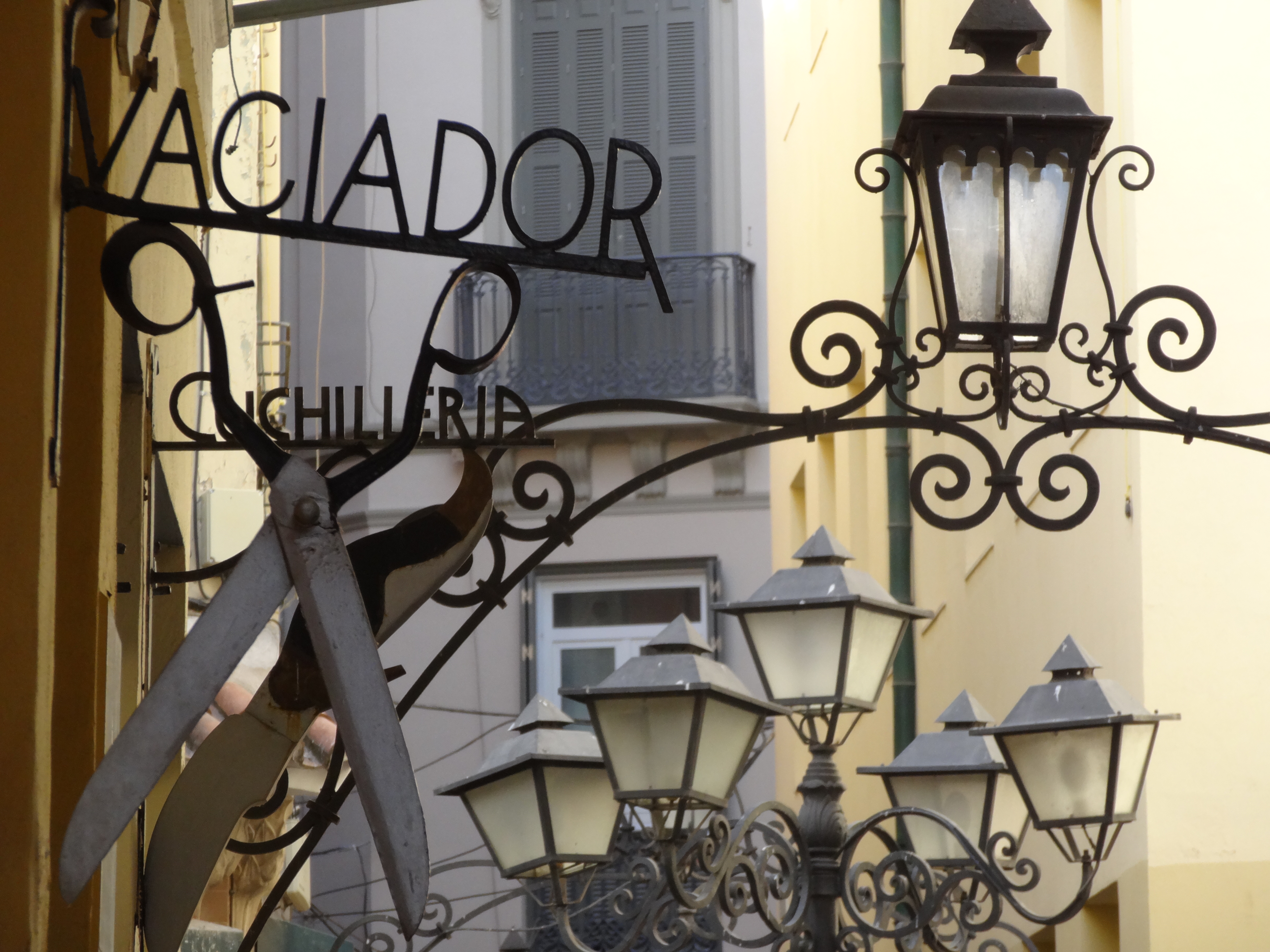
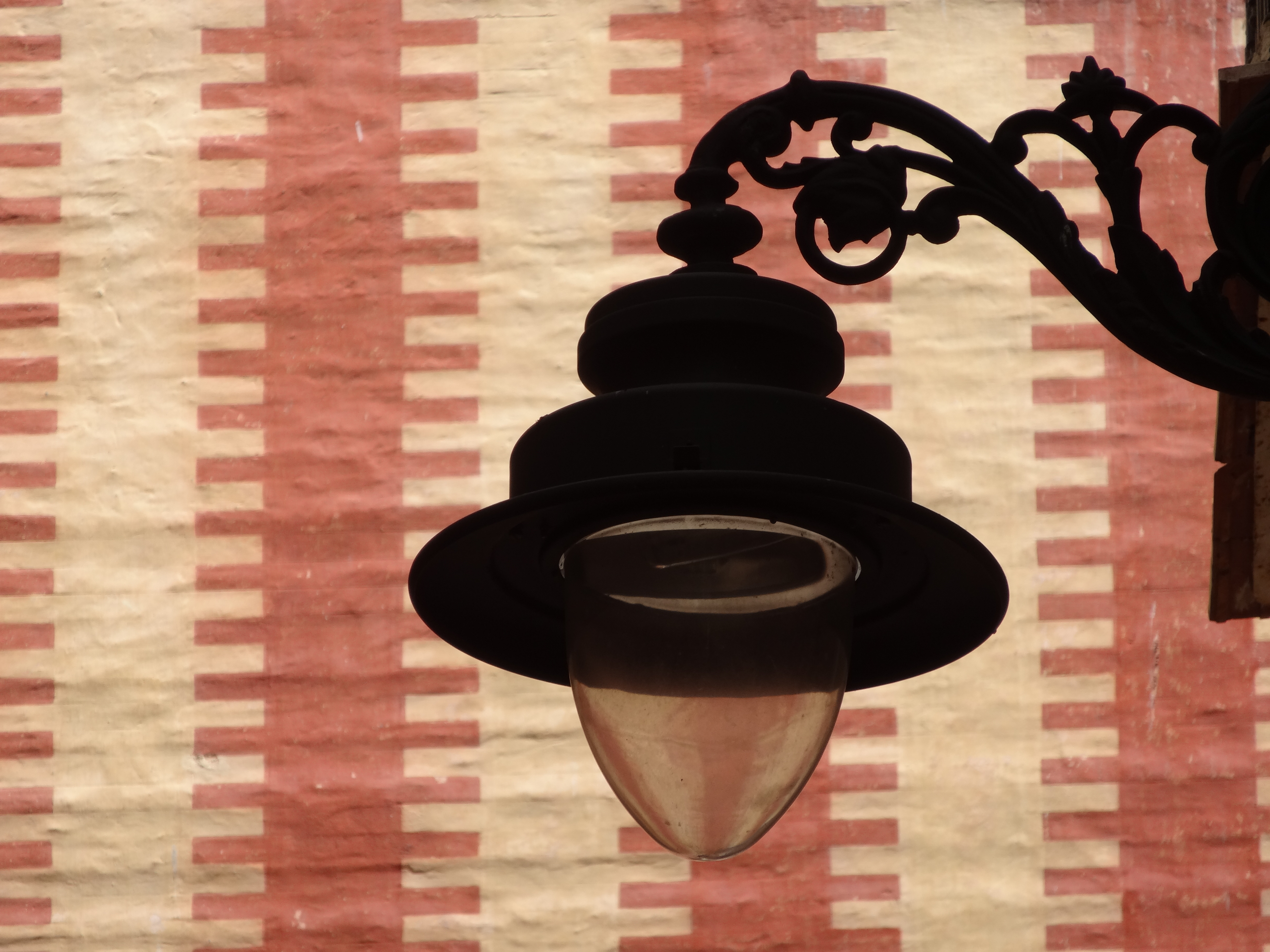
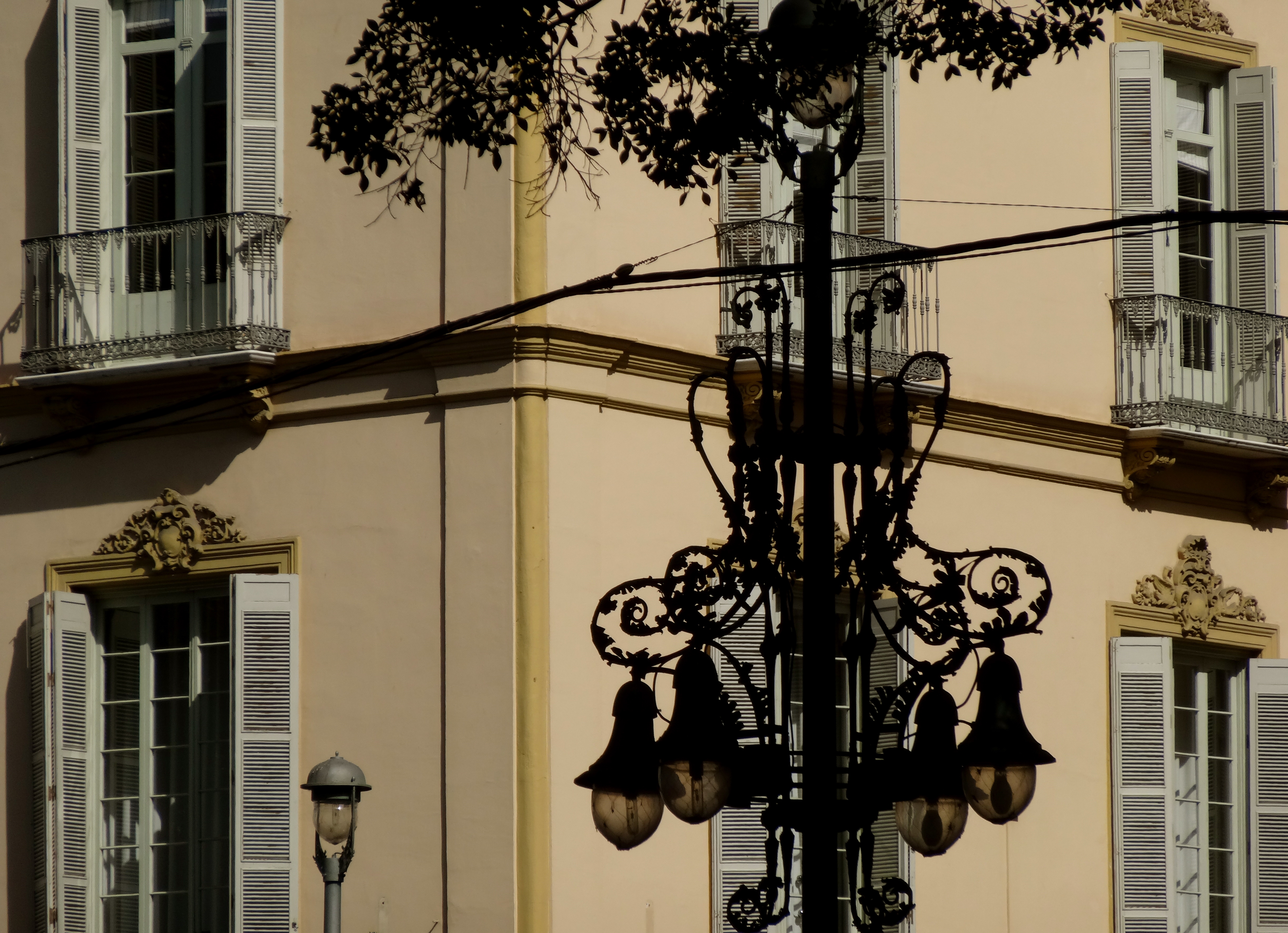
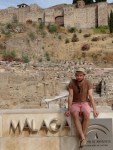
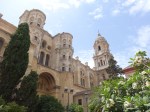
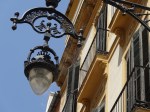
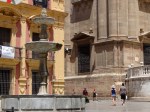
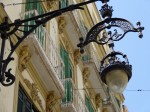
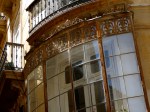
Oh vivid Málaga, city of Mediterranean light, upon whose sandy shores the sun shines bright, casting its yellow glow across fading evening skies, and in paint on the facades of its insuperably elegant streets. Málaga is a city upon which the embrace of nature has not been scared off by the growth of civilisation; as abundant botanic gardens overhang paths perfect for strolling, and the sea air wafts into the hot shopping streets. It is a city where both big and small co-exist in perfect harmony: the vast one-armed cathedral and the tiny new pink growths of a tropical baby plant; the large public plazas and the tiny winding streets of the city’s oldest district. And like so many of Spain’s great cities, Málaga is another whose buildings have been sprinkled with the wand of architectural elegance, as the glass plated balconies and curled wrought iron details of the Modernista era have found their place so comfortably in this most Southern of cities, offsetting 1920s western refinement against the robust remains of the Moorish East.

DSC06005 DSC06207 DSC05961 DSC05783 DSC06023_2

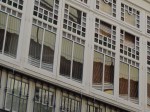
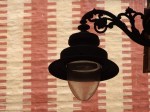
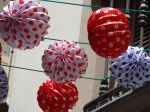
Málaga is a city so rich in photographic inspiration that in a mere 24 hours in the city, I managed to capture some 500 shots on my camera. Don’t worry – I’m not planning to bore you with them all here, but below are 33 of my favourites: From graceful street lamps and multi-coloured facades, to tranquil moorish gardens and the paper lanterns of a small street fiesta – here are my memories of Málaga on camera.

All photos and written content are strictly the copyright of Nicholas de Lacy-Brown © 2013 and The Daily Norm. All rights are reserved. Unauthorized use and/or duplication of the material, whether written work, photography or artwork, included within The Daily Norm without express and written permission from The Daily Norm’s author and/or owner is strictly prohibited.